 NUTRITIONAL COMPOSITION OF CHLORELLA SUPPLEMENTS IN THE BRAZILIAN MARKET
Abstract
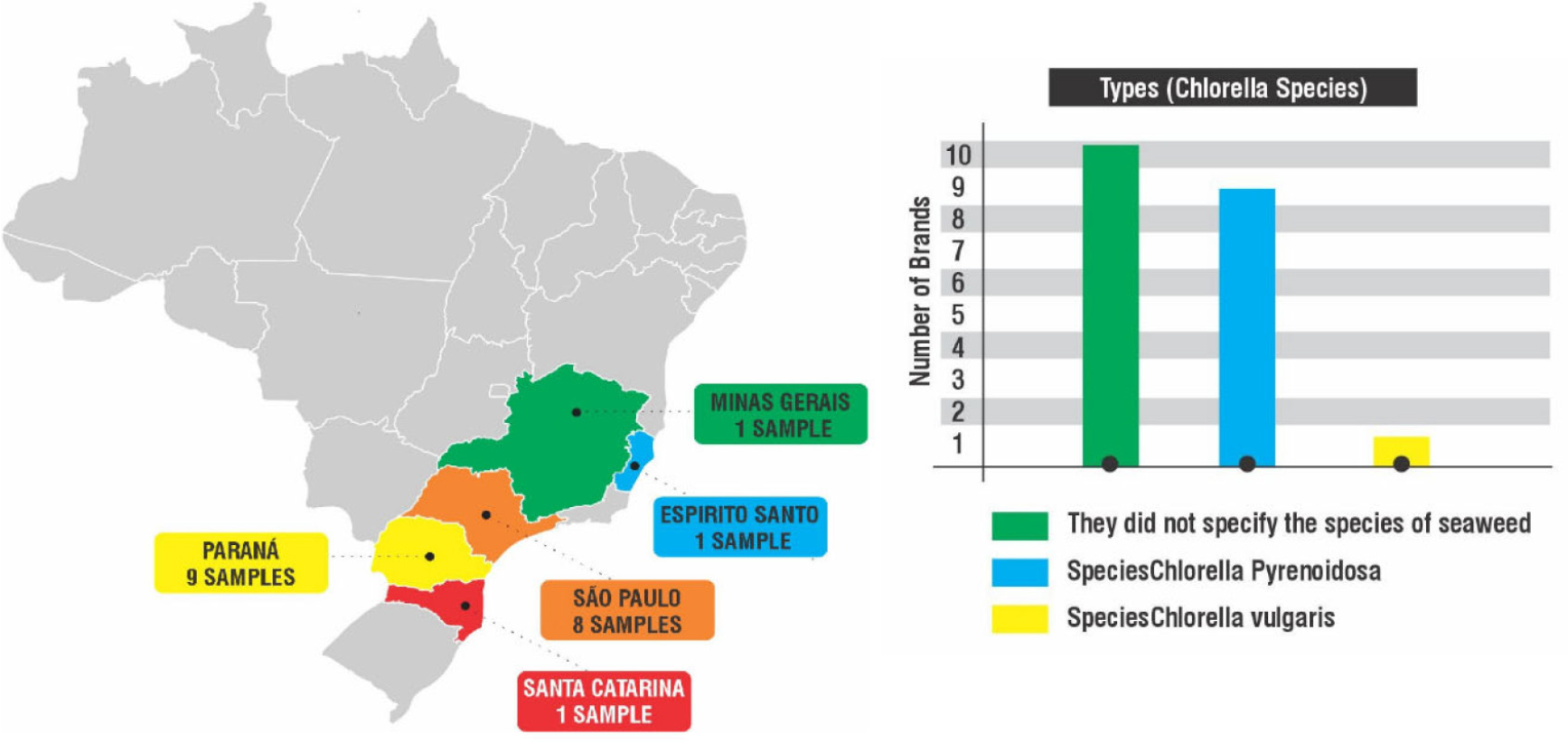
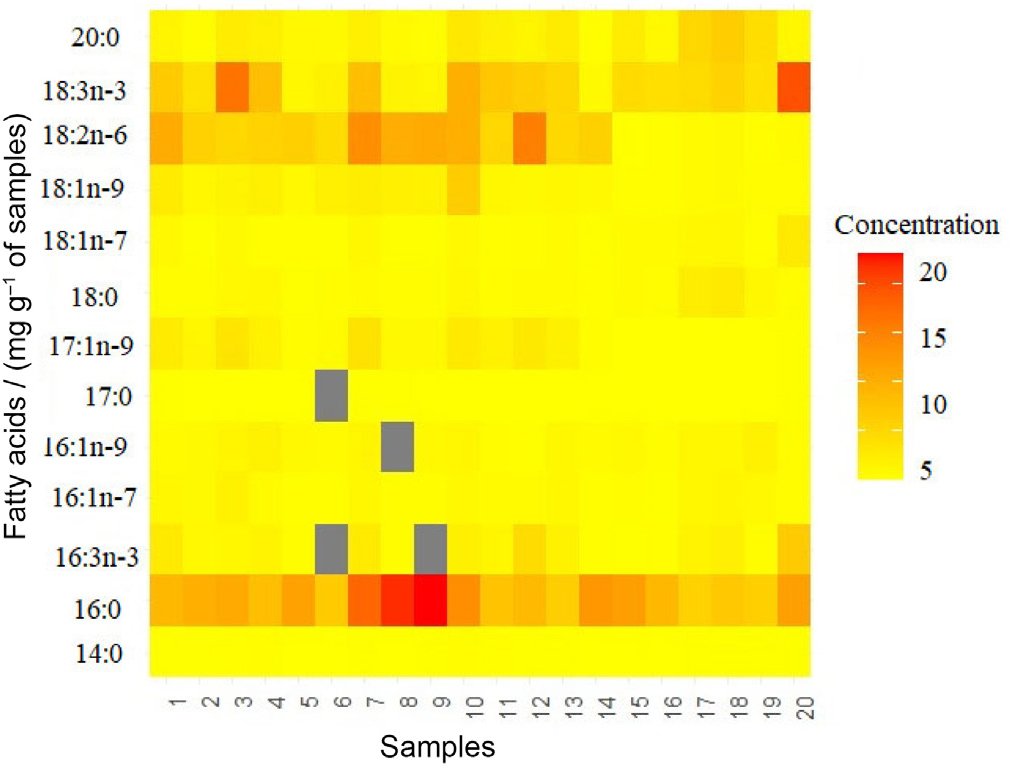
The microalgae Chlorella is known for its high photosynthetic capacity and rich nutritional profile. This study analyzed the fatty acid composition of twenty brands of Chlorella supplements available in the Brazilian market. The results revealed significant differences. Palmitic acid (16:0) exhibited the highest concentrations in samples 8 and 9. In contrast, samples 4, 13, 17 and 19 presented lower levels of palmitic acid. The concentration of linoleic acid (18:2n-6) peaked at 19.67 mg in sample 12, while sample 19 recorded the lowest level of 3.9 mg. Alpha-linolenic acid (18:3n-3) was the most abundant. Antioxidant capacity was evaluated using 2,2-diphenyl-1 picrylhydrazyl (DPPH) and 2,2’-azino-bis(3-ethylbenzothiazoline-6-sulfonic acid) (ABTS) assays. The results showed varying levels of free radical scavenging, with sample 4 exhibiting the highest values in ABTS (319.17 ± 16.57 µmol Trolox equivalents (TE) g-1) and DPPH (525.43 ± 24.04 µmol TE g-1) assays, followed by samples 19 and 12. Mineral analysis revealed significant variations in iron and zinc concentrations among samples. Iron content ranged from 49.8 to 770 mg 100 g-1, and zinc concentrations ranged from 2.38 to 12.2 mg 100 g-1. These findings highlight the nutritional value of Chlorella as a supplement, offering antioxidant protection and essential minerals that may aid in the prevention of chronic diseases.
Keywords:
fatty acids; phenolic compounds; iron; zinc; antioxidants.
 Thumbnail
 Thumbnail