 REMEDIATION OF TANNERY AND ELECTROPLATING WASTEWATERS: ADSORPTION OF HEAVY METALS BY Chlorella sorokiniana AND Heterochlorella luteoviridis
Abstract
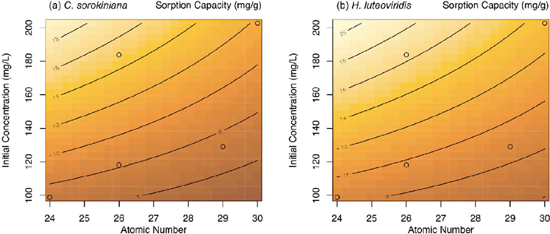
The activities of tanneries and electroplating industries are hazardous in the context of water and soil contamination by heavy metals. The use of biological materials for the adsorption of heavy metals presents as an important treatment alternative. This work evaluated the capacity of Chlorella sorokiniana and Heterochlorella luteoviridis biomasses to absorb heavy metals commonly found in these industrial wastewaters. The heavy metal uptakes were 61.4% Cu2+, 90.2% Cr3+, 6.9% Cr6+, 93.7% Fe2+, 90.6%, Fe3+ and 70.3% Zn2+ for H. luteoviridis, and 65.6% Cu2+, 75.7% Cr3+, 5.4% Cr6+, 86.0% Fe2+, 63.5%, Fe3+ and 62.7% Zn2+ for C. sorokiniana. Regression analysis showed that sorption capacity was dependent on the microalga, the heavy metal concentration in solution and the atomic number of the adsorbate. These results indicated that the use of microalgae as biosorbents is a promising alternative technology, and the efficient removal of iron has been highlighted.
Keywords:
microalgae; adsorption; heavy metals; tannery; electroplating
 Thumbnail
 Thumbnail