 O QUE O POTENCIAL DE CIRCUITO ABERTO PODE NOS INFORMAR SOBRE A RESISTÊNCIA À CORROSÃO DE LIGAS DE ALUMÍNIO?
Resumo
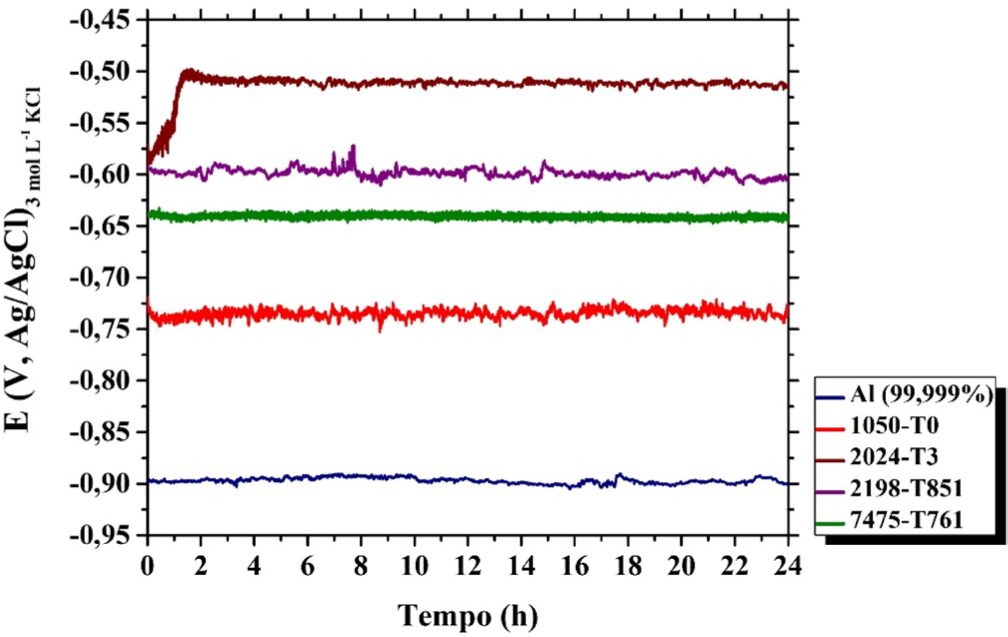
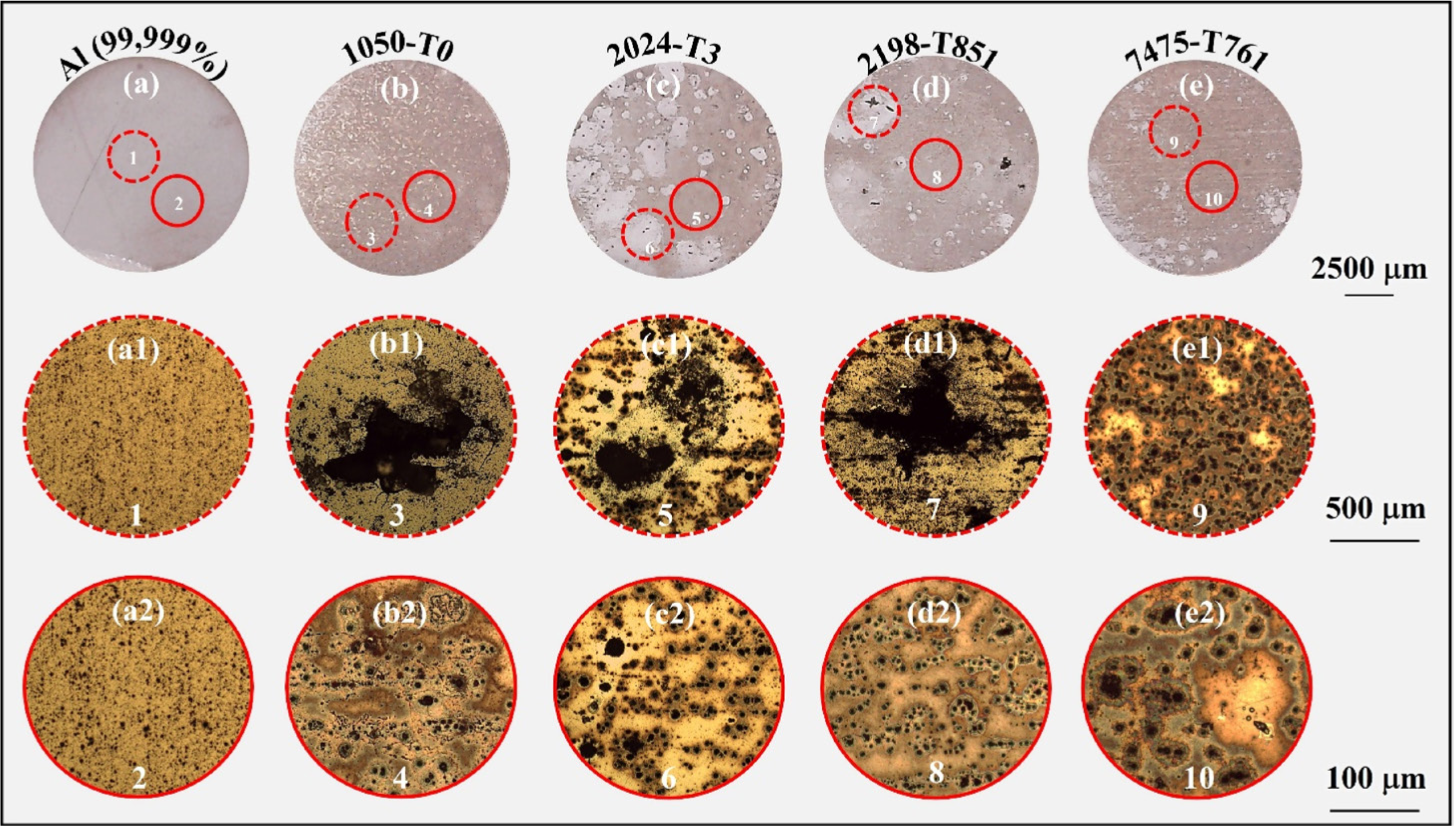
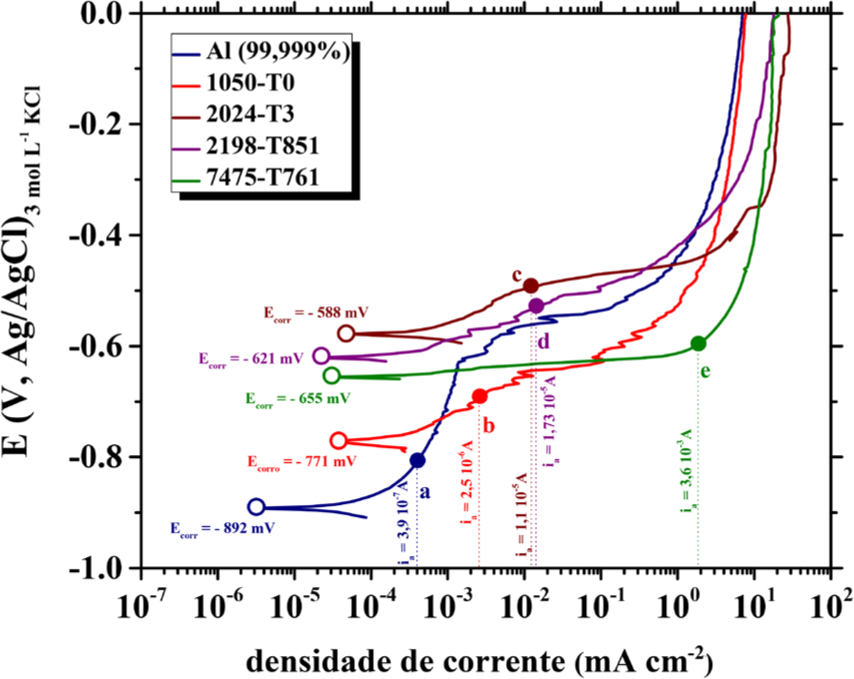
This paper examines the effectiveness of using open circuit potential measurements as a standalone technique to assess the corrosion resistance of metals. As a case study, we used different brands of aluminum alloys exposed to 0.1 mol L–1 NaCl solution. Five materials were compared: high-purity aluminium (99.999%) and four commercial alloys (1050-T0, 2024-T3, 2198-T851, and 7475-T761). Open circuit potential (OCP) monitoring as a function of time, potentiodynamic polarization tests, surface and cross-sectional microscopy were employed to investigate the electrochemical behaviour and the localized corrosion resistance of these alloys. Despite exhibiting nobler OCP values, 2024-T3 and 2198-T851 showed severe localized attack, including intergranular and crystallographic pitting. In contrast, only high-purity aluminium developed a stable passive film. Depth measurements revealed that 2024-T3 experienced the deepest attack (121 ± 15 μm), followed by high-purity aluminium (91 ± 12 μm), 2198 (36 ± 7 μm), 1050 (31 ± 6 μm), and 7475 (26 ± 5 μm). These findings demonstrate that OCP measurements, being dominated by the matrix-average potential, do not reflect critical microstructural features that influence localized corrosion. Therefore, while OCP may be useful for preliminary assessment and educational applications, it should be supplemented with kinetic and morphological analyses for a reliable evaluation of corrosion in complex alloy systems.
 Thumbnail
 Thumbnail
 Thumbnail
 Thumbnail
 Thumbnail
 Thumbnail
 Thumbnail