 Development and characterization of a post-dipping disinfectant from Origanum vulgare oil
ABSTRACT:
Bovine mastitis is characterized by inflammation of the mammary gland, caused by a lack of hygiene or injury to the teat and by the presence of pathogenic microorganisms such as the bacterium Staphlococcus aureus, which can cause infections and lead to milk being discarded. This study proposes a post-dipping teat disinfection product made of Origanum vulgare essential oil, loaded with Carbopol, for topical use. In in vitro tests, the treatment for preventing mastitis inhibited the Staphylococcus aureus strain (ATCC 25923), and the material’s rheological characterization exhibited pseudoclassical thixotropy. In terms of texture characterization, the post-dipping emulgel of Origanum vulgare essential oil (EFOV) showed no significant differences compared to Iodine in hardness (in Newtons - N), compressibility (in Newton-seconds - N-s) and adhesiveness (N-s). In ex vivo studies, the EFOV was more bioadhesive than the Iodine. In the animal test, the EFOV was used for eight weeks. During its use, the animals showed no significant differences in the somatic cell count. Therefore, the treatment was able to prevent the onset of mastitis by acting as an antimicrobial film on the animal’s teat, making it an alternative for veterinary use.
INDEX TERMS:
Origanum vulgare L. essential oil; lactating cows; disinfectant; Carbopol; phytotherapy
RESUMO:
A mastite bovina é caracterizada pela inflamação da glândula mamária, causada por lesão no teto ou falta de higiene, ocasionada pela presença de microrganismos patogênicos como a bactéria Staphylococcus aureus, cuja presença gera infecções que levam ao descarte do leite. Este estudo propõe o desenvolvimento de um produto desinfetante para pós-dipping de tetos, composto de óleo essencial de Origanum vulgare contendo Carbopol para uso tópico. Em testes in vitro, o tratamento para prevenção da mastite foi capaz de inibir a cepa Staphylococcus aureus (ATCC 25923) e a caracterização reológica do material é pseudoclássica com comportamento tixotrópico. Em termos de caracterização da textura, o emulgel pós-dipping de óleo essencial de Origanum vulgare (EFOV) não apresentou diferenças significativas em relação ao Iodo em termos de dureza (em Newtons - N), compressibilidade (em Newton-segundos - N-s) e adesividade (N-s). Para os estudos ex vivo, o EFOV foi mais bioadesivo que o Iodo. Para os testes com animais, o EFOV foi utilizado durante oito semanas e, durante a sua utilização, os animais não apresentaram diferenças significativas na contagem de células somáticas. Portanto, o tratamento foi capaz de prevenir o aparecimento da mastite, atuando como filme antimicrobiano no teto do animal, tornando-se uma alternativa para uso veterinário.
TERMOS DE INDEXAÇÃO:
Óleo essencial de Origanum vulgare L.; vacas em lactação; desinfetante; Carbopol; fitoterapia
Introduction
Bovine mastitis reduces milk production and results in poor milk quality. It is the most common disease causing economic losses and a major concern for the dairy cattle community worldwide (Motaung et al. 2017). Brazil is the third-largest milk producer in the world, behind only the United States and India. Hence, the milk production chain is one of the main economic activities in these countries. It generates employment, has a significant impact on the economy, and requires success in the production chain to avoid negative economic impacts (Barros et al. 2022).
The economic growth of the dairy market has led to studies seeking to develop ways of increasing food safety and ecologically sustainable dairy production. To this end, scientists have used plant extracts and essential oils (EOs) as an alternative for developing medicines (Lopes et al. 2020).
Phytotherapy medicines can replace antibiotics (Silva Junior et al. 2022), which are currently the main treatment for mastitis, with an efficacy of up to 60% in eliminating the pathogens that cause the disease (Caneschi et al. 2023). Mastitis is caused by Streptococcus uberis, Escherichia coli, and staphylococci that can be found in environments or milking equipment; therefore, it is extremely important to disinfect equipment after milking, for it reduces the risk of developing this disease caused by environmental bacteria (Schwenker et al. 2022).
Currently, teat and udder cleaning and disinfection are carried out with disinfectants such as benzyl alcohol, chlorhexidine, and iodine compounds. However, these compounds can cause environmental contamination, interact with anionic substances and organic matter, and be deactivated by them, creating risks of milk contamination. To avoid these effects, essential oils are strong candidates to replace the usual treatments, as they have antibacterial effects at low concentrations and are sustainable alternatives.
Several studies examining the effects of chlorhexidine on the animal’s body have shown its ability to disinfect teats, resulting in a significant reduction in bacterial species (Schwenker et al. 2022). However, its use can pose risks such as cross-resistance of pathogens after the use of chlorhexidine and various antibiotics (Kõljalg et al. 2002). Based on this premise, research into alternative methods to prevent and treat mastitis is necessary.
Essential oils have antibacterial properties, but studies on the use of EOs for the application and prevention of bovine mastitis are still scarce (Dal Pozzo et al. 2011, Budri et al. 2015, Cerioli et al. 2018), especially in the case of film-forming solutions with antimicrobial properties using EO as the bioactive compound.
Studies of the antibacterial activity of EOs have generated promising results. The EO of Melaleuca armillaris and cloxacillin have pharmacodynamic interactions and are effective against a strain of Staphylococcus aureus isolated from cows with subclinical mastitis. The concentration of the antibiotic required to inhibit bacterial growth was accentuated when it was used in the presence of the oil (Buldain et al. 2018).
Oregano essential oil has antimicrobial activity against the pathogen S. aureus in bovine mastitis isolates (Dal Pozzo et al. 2011). The composition of Origanum vulgare essential oil varies depending on the region where it was grown and the time of year when the samples were collected. However, its composition has two characteristic major products, thymol and carvacrol (Enayatifard et al. 2021). Other compounds can be found in the composition, such as terpinolene, γ-terpinene, and orthocymene (Pimenta et al. 2024). Compounds such as β-pinene, p-menthane, benzene, 1,8-cineole, o-cymene, gamma-terpinene, trans-beta-ocimene, sabinene, and beta-phellandrene can also be found at lower concentrations than the major characteristic products of the plant (Enayatifard et al. 2021).
There are implications for the use of plant extracts and essential oils, including large-scale industrial manufacturing methods and potential concentrations. However, these are not limiting factors for using the product and obtaining antibacterial effects (Avila et al. 2022). The aim of this study was to develop a post-dipping emulgel of Origanum vulgare essential oil (EFOV) for topical application by immersion, composed of Carbopol, a bioadhesive polymer, and oregano essential oil, which was subjected to mechanical, rheological, textural, microbiological and bioadhesive characterization, as well as in vivo studies.
Materials and Methods
Ethical approval. The research project is registered with the Animal Ethics Council (CEUA) of the “Universidade Estadual de Maringá” (UEM), under protocol number 3425280722.
Materials. Carbopol® 934P NF polymer from IMCD Brasil Farma® (Lot 0000073563), Origanum vulgare essential oil (EO) was purchased from Ferquima®, Vargem Grande Paulista, Brazil, (Lot 221); triethanolamine from Química Moderna®; Staphylococcus aureus bacteria strain (ATCC 25923); antibiotic “Pentabiótico Veterinário” (Fort Dodge Saúde Animal Ltda, Brazil); brain heart broth (BHC) and peptone water were purchased from Himedia (São Paulo, Brazil); Kasvi brand Muller Hilton agar (São José dos Pinhais, Brazil); phenolphthalein; sodium hydroxide in micro pearl - NaOH (Neon®) at 0.1 M; oxalic acid; ekoprim (EON TRADING®). The solvents methanol, n-heptane and potassium hydroxide were purchased from Synth (São Paulo, Brazil). The analytical standard methyl tricosanoate (23:0me) from Sigma Aldrich (Darmstadt, Germany). Thymol (GRASP®, Brazil); Carvacrol (GRASP®, Brazil).
Determination of the lipid composition (fatty acids) of EO by gas chromatography with flame ionization detector (GC-FID). The fatty acid composition of the EO samples was obtained using a Shimadzu GC-2010 Plus gas chromatograph equipped with a split/splitless injector, fused silica capillary column (Select FAME, 100 m x 0.25 mm i.d. x 0.25 μm cyanopropyl film as the stationary phase) and flame ionization detector (FID). Prior to injection into the GC-FID, a derivatization reaction was carried out on the samples to convert fatty acids into fatty acid methyl esters (FAMEs). The fatty acid esterification and transesterification reactions were carried out according to ISO 5509 methodology.
The fatty acids of methyl esters were identified by comparing the retention times of the constituents of the samples with the analytical standards (FAME Mix, C4-C24) purchased from Sigma-Aldrich (Darmstadt, Germany). The results were processed using LabSolutions Software and expressed as a relative percentage of total fatty acids. All samples were analyzed in triplicate.
Determination of the composition of volatile substances in EO by GC-FID. GC-FID analysis was carried out following the method proposed by Reyhani et al. (2022) with some modifications. A Shimadzu GC-2010 Plus gas chromatograph equipped with a flame ionization detector, DB fused silica capillary column (100 m x 0.25 mm i.d. x 0.25 μm film thickness), and a split/splitless injection system was used. The carrier gas was N2 at a flow rate of 1.1 mL min-1. The oven temperature was increased from 60 °C to 250 °C at a rate of 5 °C min-1. The injection and detection systems (FID) were set to 250 and 280 °C, respectively (Reyhani et al. 2022), and the analysis was carried out in triplicate.
In vitro antimicrobial activity of EO by the disk diffusion method. The EO microbial susceptibility test used the disc diffusion technique. Sterile 6 mm diameter paper disks were placed on water soaked in a suspension of 108log according to the McFarland scale: CFU of S. aureus (ATCC 25923), pentabiotics 30 µg per disc were used as a positive control added to disc 1, and 10 µg of oregano EO were added to disc 2 (Silva et al. 2014, Pimenta et al. 2024).
Development of post-dipping product. Two formulations were prepared for characterization. The control gel, called White, consisted only of polymer and water, and was used in comparison with the post-dipping phytotherapeutic emulgel of Origanum vulgare essential oil (EFOV). The White formulation and the post-dipping EFOV were prepared according to the composition described in Table 1. Carbopol® 934PNF was added to distilled water and stirred continuously for 5 hours using a mechanical stirrer. Afterward, it was refrigerated for 24 hours, after which the hydrated polymer platform was ready. For the development of the White, the hydrated polymer platform was stirred for 10 minutes in a mechanical stirrer, then the pH was adjusted to 7.0 using triethanolamine and stirred for an additional 10 minutes for complete homogenization. To develop the EFOV, Origanum vulgare EO (Ferquimia®) was added drop by drop to the hydrated polymer platform and stirred for 10 minutes in a mechanical stirrer.
In vitro studies of post-dipping product. The antimicrobial activity of the post-dipping EFOV against the S. aureus strain (ATCC 25923) was carried out by diluting the EFOV in Mueller-Hinton (MH) agar. Proportions of 5% and 10% v/v of the EFOV were used (Campanholi et al. 2022b).
Continuous shear rheology. The samples were left to rest before analysis with a MARS II rheometer (Thermo-Haake, Thermo Fisher Scientific Inc., Newington, Germany) - shear analysis in flow mode at temperatures of 37 °C. The sample was carefully placed on the lower plate of the rheometer and allowed to rest for 1 minute before each analysis. The upward and downward flow curves for each formulation are measured at various shear rates (10 to 2000 s-1), cycling up and down over a period of 150 seconds, with the upper limit held for 10 seconds before reduction. The Ostwald de Waele (Equation 3) and Herschel-Bulkley (Equation 4) equations are used to fit the upward flow curves for three replicates:
Equation 3:
Equation 4:
Since σ is the shear stress (Pa), σ0 is the yield stress (Pa), k is the consistency index [(Pa s) n], γ is the shear rate (s-1), and n is the index of flow behavior (dimensionless) (Jones et al. 2009, Junqueira et al. 2016).
The thixotropy area of each binary polymer system is calculated using RheoWin 4.10.0000 software (Haake®). The yield value is obtained using the Casson model, and the hysteresis area is determined using the RheoWin 4.10.0000 program (Haake®). The consistency index (k) and flow behavior index (n) values are statistically evaluated using the t-test (Bruschi et al. 2006, Jones et al. 2009).
Texture profile analysis (TPA). TPA for formulation is carried out using the TAXTplus texture analysis module (Stable Micro Systems, Surrey, United Kingdom) (Jones et al. 2009). In TPA mode, a polycarbonate analytical probe measuring 10 mm in diameter is inserted into the sample twice at a depth of 15 mm and at a rate of 2 mm.s-1, with a rest period of 15 seconds between the end of the first and beginning of the second compression (Jones et al. 2009, Junqueira et al. 2016).
Bioadhesion in ex vivo skin. The bioadhesive strength was determined using the TAXTplus texture analyzer (Stable Micro Systems, Surrey, UK) in tension mode (Bruschi et al. 2006, Bruschi et al. 2007). Initially, pig ear skin from the university abattoir was prepared and dried. Measurement was carried out to assess the bioadhesive capacity of the EFOV on the surface of the skin at 38 °C, the temperature of the bovine udder. During the evaluation, the analytical probe was lowered until the skin came into contact with the EFOV surface. Instantly, a downward force of 0.1 N was applied for a set time (30 s), ensuring contact between the skin and the release platform. The test probe was then lifted (constant speed of 1.0 mm/s), and the force required to release the skin from the EFOV surface was determined (Said dos Santos et al. 2021).
In vivo post-dipping EFOV studies. The experiment was carried out at the “Fazenda Experimental de Iguatemi” (Iguatemi Experimental Farm - FEI) of the “Departamento de Zootecnia” (Animal Science Department) of the UEM in the Dairy Farming Sector. The milk was analyzed at the Milk Analysis Laboratory belonging to the “Centro Mesorregional de Excelência em Tecnologia do Leite” (Northwest Mesoregional Center of Excellence in Milk Technology - CMTEL), located at the FEI-UEM.
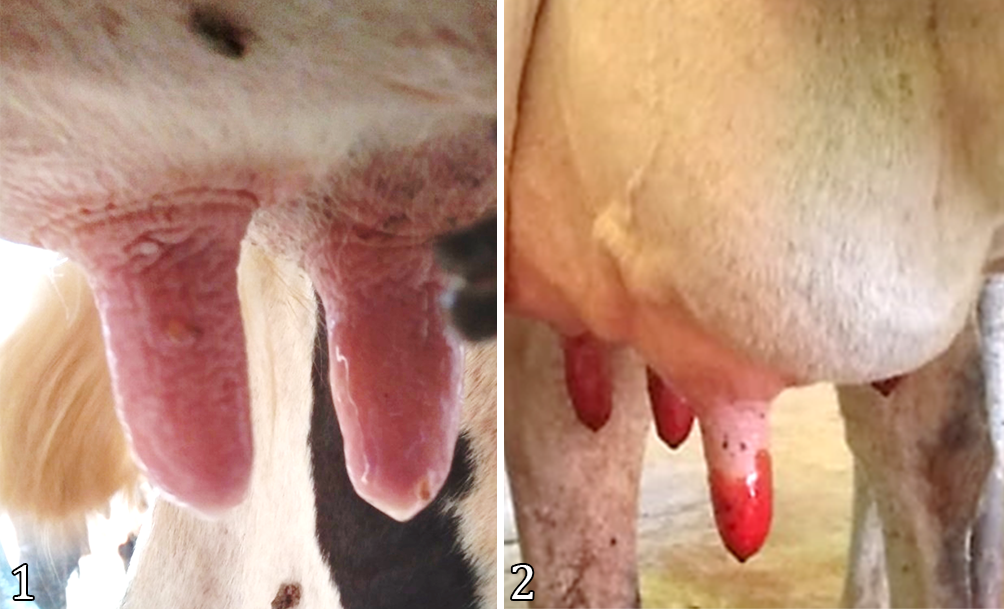
Ten multiparous Holstein and Jersey cows at different stages of lactation were used. The animals were housed in a tie-stall system in individual stalls and milked twice a day at 6:00 a.m. and 3:00 p.m. Two groups were used: group 1 was treated with iodine and designated as the control group, and group 2 was treated with a post-dipping disinfectant containing Origanum vulgare L. and designated EFOV. The applications were made by immersing the teat after milking. Milk samples were collected for physicochemical analysis of the milk somatic cell count (SCC) on days 1, 7, 14, 21 and 28 (Fig. 1-2).
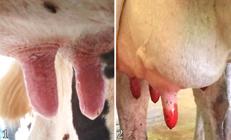
Application of post-dipping to lactating cattle. (1) Formulated phytotherapeutic emulsion of Origanum vulgare oil (EFOV) applied as a post-dipping treatment on teats after milk collection. (2) Iodine applied as a post-dipping treatment on teats after milk collection.
Physicochemical composition and SCC analysis of milk. Milk samples were analyzed for pH, titratable acidity, composition (Ekomilk) and somatic cell count (Ekoscan) (Brasil 2018).
Statistical analysis. The results of the analyses of pH, lactic acid, composition, and SCC were submitted to statistical analysis using SAS® Academic Software, and the means were compared using the Tukey test at the 5% significance level.
Results and Discussion
Determination of the lipid composition (fatty acids) of essential oil (EO) by gas chromatography with flame ionization detector (GC-FID)
The chromatographic profile of the sample’s fatty acids shows higher percentages of myristicenoic acid, palmitoleic acid and myristicenoic acid (Table 2). The acids obtained are consistent with the manufacturer’s report and corroborate the methodology data reported by Tebaa et al. (2017), Stešević et al. (2018), Geneva et al. (2021), Almadiy & Nenaah (2022), and Moghrovyan et al. (2022). It was possible to check the fatty acid composition in accordance with ANVISA Resolution RDC 270/05 and Normative Instruction 49/2006 of the “Ministério da Agricultura, Pecuária e Abastecimento” (Ministry of Agriculture, Livestock and Supply - MAPA) (Table 2).
Determination of the composition of volatile substances in EO by GC-FID
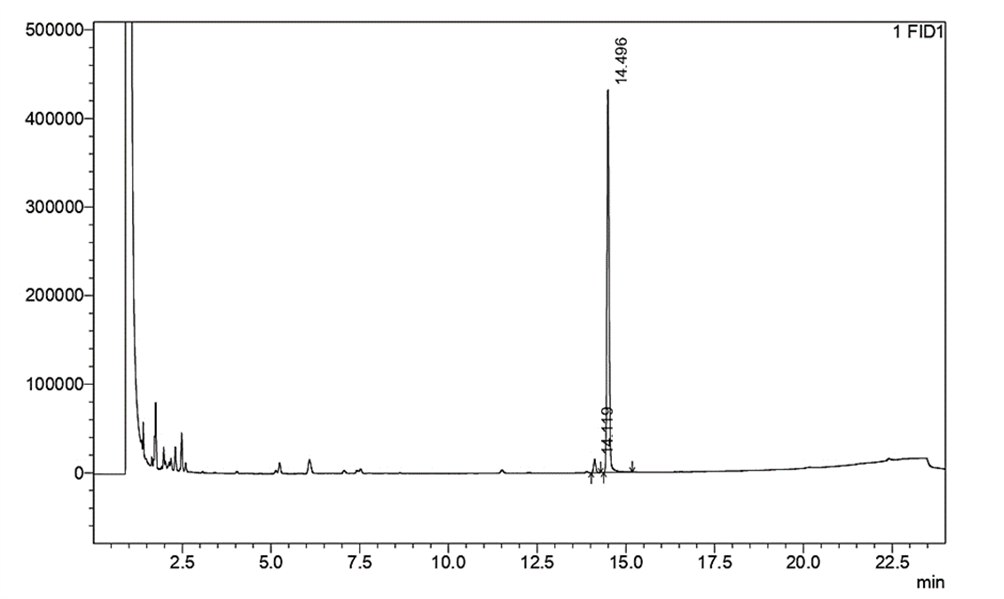
The chromatographic profile of volatile substances determines the quantification of thymol and carvacrol in the sample (Khan et al. 2020). The first peak refers to thymol, and the second peak refers to carvacrol (Fig. 3). The concentration of the major products obtained in the GC-FID analysis was a mean ± standard deviation of 34.98 ± 0.07 for thymol and 480.49 ± 0.79 for carvacrol (mg/g). The concentrations obtained corroborate the literature (Stešević et al. 2018, Geneva et al. 2021), in which thymol and carvacrol are the predominant products of oregano and thyme EO (Budri et al. 2015, Tuttolomondo et al. 2016, Pimenta et al. 2024).
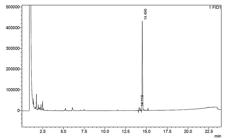
Chromatographic profile of the essential oil by gas chromatography with flame ionization detector (GC-FID).
In vitro antimicrobial activity of EO by the disk diffusion method
The mean values obtained for the antimicrobial susceptibility of the oils were higher than the antibiotic tested: 11.90 ± 2.85 mm for the control and 13.02 ± 2.77 mm for the oil, demonstrating EO efficiency (Fig. 4). Pentabiotics (control) contain Penicillin G and Benzylpenicillin; a halo of 11.90 mm in the CLSI interpretation (< 28 mm) is classified as resistant (DME 2025). The study by Bolzan et al. (2016) corroborates the antimicrobial effect observed in the test; the authors reported a difference of 29.0 ± 0.0 mm in the inhibition capacity of the essential oil for Staphylococcus aureus. The inhibitory properties of Origanum vulgare L. EO have been demonstrated by other researchers. Pesavento et al. (2015) obtained antimicrobial susceptibility effects capable of suppressing concentrations of < 102CFU/g, and Pimenta et al. (2024) managed to inhibit about 0.625% of S. aureus using oregano EO. The antimicrobial activity obtained by the authors corroborates the results of this study.

In vitro study of antimicrobial activity against Staphylococcus aureus using the disk diffusion method. Disc with pentavalent antibiotic (A). Disc with Origanum vulgare oil (B).
Development of post-dipping product
The formulations developed in Figure 5 were stored for 24 hours at 5 °C under refrigeration, after which the samples were subjected to characterization studies.
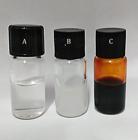
Formulations for post-dipping application. White formulation, composed of Carbopol© and water (A). Phytotherapeutic emulgel formulated from Carbopol© combined with Origanum vulgare oil (B). Iodine routinely used in the milking sector as a post-dipping agent (C).
In vitro studies of the post-dipping product
The antimicrobial activity of the EFOV was evaluated against the S. aureus strain in Mueller-Hinton agar solution in the proportions of 5% and 10% v/v of the EFOV, with no significant difference in the antimicrobial activity of the bioadhesive phytotherapeutic post-dipping product (10%) when compared to the control. For this analysis, the mean ± standard deviation in log10 was 8.97B± 0.41 for 5% EFOV agar, 9.03A± 0.14 for 10%, and 9.14A± 0.20 for the control with only bacteria. Different letters denote significant differences (p< 0.05), as determined by the Tukey test. Dal Pozzo et al. (2011) corroborated the EO activity reported in this study, demonstrating antimicrobial activity of oregano oil against the pathogen S. aureus isolated from bovine mastitis.
The microbial reduction occurred due to the presence of bioactive compounds in oregano EO, carvacrol and thymol, which are the majority products (Kozics et al. 2019, Khan et al. 2020). Enayatifard et al. (2021) studied the activity of Origanum vulgare EO incorporated into a nanoemulsion. The results obtained corroborate the antimicrobial capacity against the S. aureus strain. Saffarian et al. (2024) reported that, by combining oregano oil with alginate, it was also possible to obtain an antimicrobial effect. Sajimon et al. (2023) tested a whey protein film combined with O. vulgare oil, resulting in a nanoemulsion system that, when tested, showed an effect of 25.36 ± 0.52 mm against S. aureus.
Continuous shear rheology
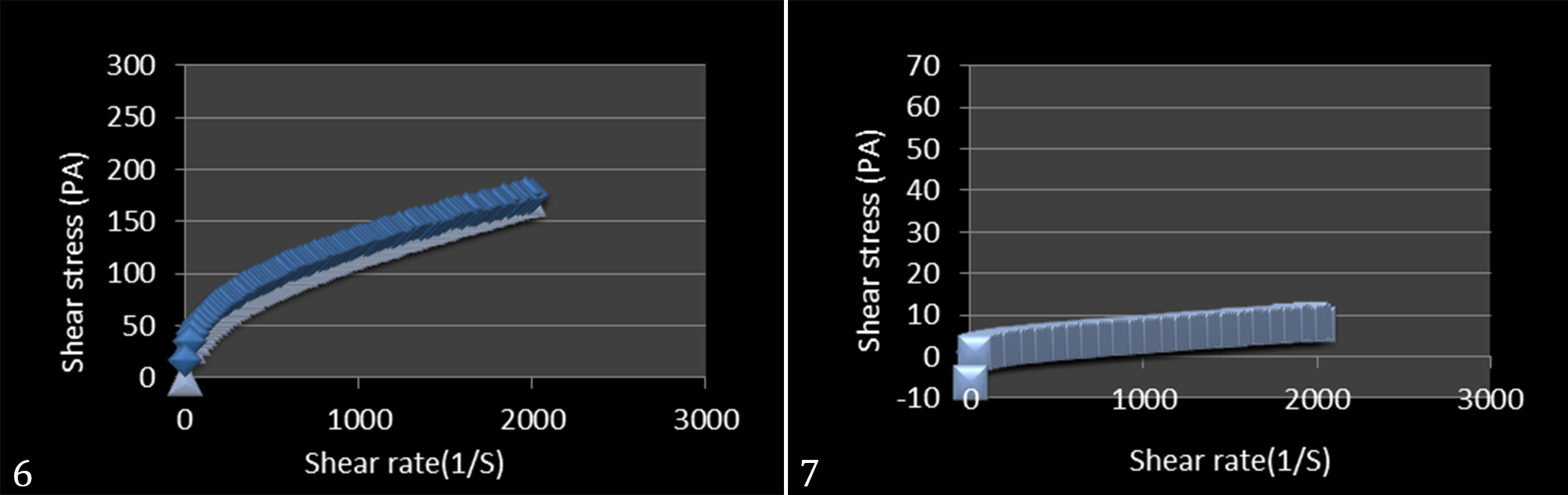
Concerning rheological analysis, continuous shear experiments provide information about the processing stage of the formulation, such as viscosity behavior under vigorous stirring, ease of filling, and temporal properties of the system at the molecular level under manipulation (De Souza Ferreira et al. 2016). The flow rheograms are shown in Figure 6-7, and the fits of the upward curves are presented in Table 3 for statistical comparison. The material formulated for post-dipping showed pseudoplastic behavior with thixotropy, making it an appropriate semisolid for surface application and suitable for pharmaceutical use (De Souza Ferreira et al. 2017). For Iodine was used as the control group, the material showed pseudoplastic behavior.
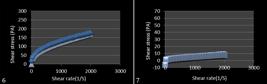
Continuous shear reogram at 37 °C. (6) Formulated phytotherapeutic emulsion of Origanum vulgare oil (EFOV). (7) Iodine formulation. Direction of analysis = outward in dark blue and return in light blue.
The profile shown in Figure 6-7 results from the displacement of the polymeric chains of the Carbopol polymeric network (in lamellar mode) with the application of shear stress (applied force) on the formulation. As a result of the force, the initially tangled polymer chains become aligned towards the flow, reducing the overall viscosity of the post-dipping (according to the non-linear behavior of the graph) (De Souza Ferreira et al. 2016, Campanholi et al. 2023).
The non-linear behavior and the value of n < 1 (Table 3) classify the material as non-Newtonian. Pseudoplastic behavior is a desirable factor for pharmaceutical formulations, typical of ointments, creams, gels and other semisolids, as the tension applied to evade the storage bottle will allow the apparent viscosity to decrease, allowing for easier application without generating continuous flow and loss of material on the applied surface (De Souza Ferreira et al. 2016).
The EFOV proposed has different mechanical characteristics compared to Iodine. The area of hysteresis in both materials is small and positive, which indicates thixotropy, which is the absence of overlap between the upward and downward curves, a desirable behavior for pharmaceutical formulations, as it contributes to the release of the drug which is diffused in the sites present in the polymeric networks of the formulation (Bruschi et al. 2006, De Souza Ferreira et al. 2016).
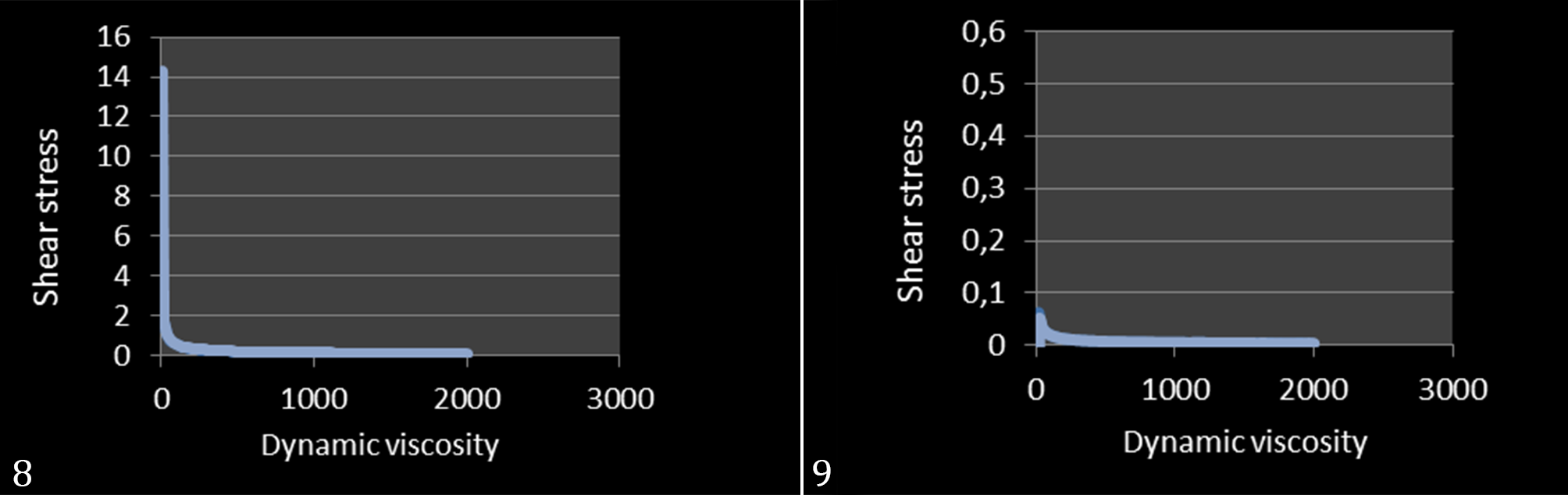
Based on continuous rheology analysis, it is also possible to assess the dynamic viscosity, a material property that refers to the ability and resistance of a fluid to flow when subjected to a shear stress or force (Bruschi et al. 2006, Said dos Santos et al. 2021). In response to an applied force, the EFOV showed higher viscosity than the Iodine; its higher dynamic viscosity led to lower flow under the applied stress.
Thus, based on the data obtained, there is evidence of greater Iodine flow after the application of tension (Fig. 8-9). This analysis allows us to understand the behavior of the material after it has been applied; for example, the Iodine drains more than the post-dipping EFOV, giving us a glimpse of the material’s behavior after application. There is a partial loss of Iodine after application, whereas the EFOV, under force, shows greater flow resistance, remaining on the surface of the teat, forming a kind of film with no loss of material. The study of Campanholi et al. (2022a) corroborates the data obtained in this study.
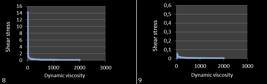
Viscosity reogram at 37 °C. (8) Flow curve diagram of the formulated phytotherapeutic emulsion of Origanum vulgare oil (EFOV). (9) Flow curve diagram of the Iodine formulation. Direction of analysis = outward in dark blue and return in light blue.
Texture profile analysis (TPA)
The texture analysis profile allows the material’s characteristics to be determined - hardness and compressibility, which refer to the material’s ability to undergo deformation in relation to the continuous stress applied during the processing of the formulation, or in storage situations when the material is in the packaging and undergoes compression during the filling process or application stages (Bruschi et al. 2006, Özgüney & Kardhiqi 2014). The ability to resist deformation and to withstand compression is related to the parameters of cohesivity and elasticity (Campanholi et al. 2018).
Adhesiveness is the ability of the material to adhere to a surface. It is related to the force applied to remove the formulation from the original bottle, and its ability to remain on surfaces (Özgüney & Kardhiqi 2014, Said dos Santos et al. 2021). The texture of the post-dipping EFOV treatment was compared with that of the White and Iodine post-dipping treatments to determine whether the percentage of oil incorporated into the polymer would cause significant changes in the material’s mechanical and physical characteristics (Table 4) (Jones et al. 2009). All these properties are crucial for the final clinical effectiveness of products. Therefore, texture profile analysis is important to predict sample behavior under different environmental and physiological conditions (Özgüney & Kardhiqi 2014).
In Table 4, the letters refer to the statistical analysis by column, comparing products according to property. There were significant differences between the formulations of polymer White, Emulgel of Origanum vulgare essential oil (EFOV) and Iodine in solution in relation to the evaluated texture properties. Hardness, measured in Newtons (N), indicates the gel’s resistance to deformation under an applied force. The White had the highest hardness (0.29 ± 0.0093 N). This property is determined by the concentration of the polymer used, as increasing it alters the hardness (Çağlar et al. 2023).
The presence of the oil reduced the hardness of the EFOV gel by 670% compared to the White sample (p< 0.0001). This characteristic may be important in determining how easily the gel can be handled during application. The change in hardness is due to the presence of the oil (Cook et al. 2017). The material must have low hardness to be easy to apply (Erel-Akbaba et al. 2022).
Compressibility, measured in Newton-seconds (N-s), represents the gel’s ability to deform under pressure (Bruschi et al. 2006). The presence of oil significantly decreased the compressibility of the gel (p< 0.0001). Although the EFOV sample (0.34-0.048 N-s) had a compressibility value 10 times greater than Iodine (0.039-0.017 N-s), this will only be a problem if, at the time of application, there is difficulty in spreading the product over the udder.
Adhesiveness, also measured in Newton-seconds (N-s), indicates the gel’s ability to adhere to surfaces (Said dos Santos et al. 2021). It was observed that gel White showed the highest adhesiveness value (0.92 ± 0.073 N-s), post-dipping EFOV (0.071 ± 0.027 N-s) and Iodine (0.0097 ± 0.0015 N-s) (p< 0.0001). This may be relevant to the effectiveness of the gel in remaining on the skin or other applied surfaces.
There was no significant difference on elasticity (measured in seconds - s), which indicates the gel’s ability to return to its original shape after deformation (Bruschi et al. 2006, Junqueira et al. 2016) and cohesiveness, which quantifies the stability of the EFOV under shear.
The significant difference in texture between White and post-dipping EFOV suggests that the presence of oil can alter the mechanical aspects of the material, corroborating the improvement of its properties and its aspects for application, as already observed by Said dos Santos et al. (2021) and Souza Campanholi et al. (2022). The authors investigated the variation in the texture of Carbopol combined with copaiba oil or andiroba oil with propolis, showing that the polymer changed its behavior.
Bioadhesion in ex vivo skin
The maximum force N-s showed no significant difference between the groups. However, the bioadhesion work of EFOV, White, and Iodine showed a significant difference between White and EFOV (Table 5).
The presence of the oil altered the bioadhesive capacities of the polymer, reducing its interaction with the skin surface. However, EFOV has better bioadhesive properties than Iodine. Such characteristics are linked to the mechanical properties of the material, in which the adhesiveness of Iodine was lower, following the same behavior on the skin. The bioadhesive properties of the polymer and its ability to release the active ingredients for topical administration were also studied by Said dos Santos et al. (2020). By using different oils in their formulations, they observed changes in the mechanical and bioadhesive characteristics, which corroborates what was observed in this study. The data obtained by the authors (0.05-0.07 N) were lower than those in this study, and the difference in bioadhesion and the characteristics of the polymer can be attributed to the different active ingredients used and their interactions with the polymer (Safitri et al. 2021).
Physicochemical composition and SCC analysis of milk
The composition and SCC values were in line with those recommended by current regulations (Brasil 2018). There was no significant difference between the treatments in terms of milk quality parameters and SCC, showing that there was no mastitis in the animals that received the EFOV as a post-dipping treatment, because there were no changes in the fat, protein, lactose and mineral content of the milk when compared to the Iodine (Table 6).
Studies using Carbopol as a base for herbal active ingredients for post-dipping application also suggest that the bioadhesive polymer contributed to the antibacterial action of the ceiling surface, as its presence creates a bioadhesive film, generating more time for the active ingredient to act on the skin, which protects the animal until the next application (Said dos Santos et al. 2021, Souza Campanholi et al. 2022). Enayatifard et al. (2021) have obtained SCC using oregano oil formulation. Dal Pozzo et al. (2011) corroborate the data from this study and reaffirm the efficacy of EO as a treatment to prevent bovine mastitis. The study by Cao et al. (2023) investigated the mechanism of action of oregano EO and its molecular fit to the targets of mastitis development, and the data support its use to treat the disease. The studies by Albuquerque et al. (2023) found that oregano EO against clinical strains of S. aureus was not cytotoxic and stimulated the growth of MAC-T cells, in addition to exhibiting antimicrobial activity. The studies by Kovačević et al. (2021) corroborate the use of oregano EO in the treatment of mastitis. After verifying the complete composition of the oil, the authors identified its antimicrobial activity against bacteria that cause mastitis.
Conclusion
The phytotherapeutic post-dipping bioadhesive emulgel of Origanum vulgare essential oil (EFOV) showed greater viscosity, making it an easy-to-apply material with pseudoplastic and thixotropic behavior. Comparing the texture profile of the Iodine and the EFOV, the herbal post-dipping EFOV showed higher adhesion, compressibility, and hardness values, making it a viable material for topical use. In ex vivo studies, its bioadhesiveness was higher due to the presence of the polymer and the combination with the oil. The in vivo studies of the herbal EFOV were similar to Iodine when used as a post-dipping agent over eight weeks.
Acknowledgments
“Instituto Nacional de Ciência e Tecnologia para a Cadeia Produtiva do Leite” (INCT-LEITE), “Universidade Estadual de Londrina”, Rodovia Celso Garcia Cid-Campus Universitário, Cx. Postal 10011, Londrina, PR 86057-970, Brazil. Also, Brazilian funding agencies, including the “Conselho Nacional de Desenvolvimento Científico e Tecnológico” (CNPq) and the “Coordenação de Aperfeiçoamento de Pessoal de Nível Superior” (CAPES).
Reference
-
Albuquerque KRS, Purgato GA, Píccolo MS, Rodrigues FF, Pizziolo VR, Muñoz GD, Rossi CC, Diaz MAN. Formulations of essential oils obtained from plants traditionally used as condiments or traditional medicine active against Staphylococcus aureus isolated from dairy cows with mastitis. Lett Appl Microbiol 2023; https://doi.org/10.1093/lambio/ovad034
» https://doi.org/10.1093/lambio/ovad034 -
Almadiy AA, Nenaah GE. Essential oil of Origanum vulgare, its nanoemulsion and bioactive monoterpenes as eco-friendly novel green pesticides for controlling Aedes aegypti, the common vector of Dengue virus. J Essent Oil Res 2022; https://doi.org/10.1080/10412905.2022.2091673
» https://doi.org/10.1080/10412905.2022.2091673 -
Avila RC, Almeida LH, Leite JP, Sousa TTC, Menezes FSR, Grael CFF, Simões V, Gonçalves JF, Marino LL, Marques A, Laia ML. Compostos presentes em óleo essencial de folhas de eucalipto podem ter relação com a resistência/suscetibilidade ao percevejo bronzeado (Thaumastocoris peregrinus). Sci For 2022; https://doi.org/10.18671/scifor.v50.38
» https://doi.org/10.18671/scifor.v50.38 -
Barros MV, Salvador R, Maciel AM, Ferreira MB, Paula VR, Francisco AC, Rocha CHB, Piekarski CM. An analysis of Brazilian raw cow milk production systems and environmental product declarations of whole milk. J Clean Prod 2022; https://doi.org/10.1016/j.jclepro.2022.133067
» https://doi.org/10.1016/j.jclepro.2022.133067 -
Brasil. Instrução Normativa nº 76, de 26 de novembro de 2018. Regulamentos Técnicos que fixam a identidade e as características de qualidade que devem apresentar o leite cru refrigerado, o leite pasteurizado e o leite pasteurizado tipo A. Ministério da Agricultura, Pecuária e Abastecimento (MAPA), Gabinete do Ministro, Diário Oficial da União; 2018. Accessed on Jun 19, 2024. https://wp.ufpel.edu.br/inspleite/files/2019/04/INSTRUÇÃO-NORMATIVA-Nº-76-DE-26-DE-NOVEMBRO-DE-2018-Diário-Oficial-da-União-Imprensa-Nacional.pdf
» https://wp.ufpel.edu.br/inspleite/files/2019/04/INSTRUÇÃO-NORMATIVA-Nº-76-DE-26-DE-NOVEMBRO-DE-2018-Diário-Oficial-da-União-Imprensa-Nacional.pdf -
Bruschi ML, Jones DS, Panzeri H, Gremião MPD, Freitas O, Lara EHG. Semisolid systems containing propolis for the treatment of periodontal disease: in vitro release kinetics, syringeability, rheological, textural, and mucoadhesive properties. J Pharm Sci. 2007; https://doi.org/10.1002/jps.20843
» https://doi.org/10.1002/jps.20843 -
Bruschi ML, Panzeri H, Freitas O, Lara EHG, Gremião MPD. Sistemas de liberação de fármaco intrabolsa periodontal. Rev Bras Ciênc Farm 2006; https://doi.org/10.1590/S1516-93322006000100004
» https://doi.org/10.1590/S1516-93322006000100004 -
Budri PE, Silva NCC, Bonsaglia ECR, Fernandes Júnior A, Araújo Júnior JP, Doyama JT, Gonçalves JL, Santos MV, Fitzgerald-Hughes D, Rall VLM. Effect of essential oils of Syzygium aromaticum and Cinnamomum zeylanicum and their major components on biofilm production in Staphylococcus aureus strains isolated from milk of cows with mastitis. J Dairy Sci 2015; https://doi.org/10.3168/jds.2015-9442
» https://doi.org/10.3168/jds.2015-9442 -
Buldain D, Buchamer AV, Marchetti ML, Aliverti F, Bandoni A, Mestorino N. Combination of cloxacillin and essential oil of Melaleuca armillaris as an alternative against Staphylococcus aureus Front Vet Sci 2018; https://doi.org/10.3389/fvets.2018.00177
» https://doi.org/10.3389/fvets.2018.00177 -
Çağlar EŞ, Karaotmarli Güven GK, Üstündağ Okur N. Preparation and characterization of carbopol based hydrogels containing dexpanthenol. Ankara Universitesi Eczacilik Fakultesi Dergisi 2023; https://doi.org/10.33483/jfpau.1195397
» https://doi.org/10.33483/jfpau.1195397 -
Campanholi KSS, Braga G, Silva JB, Rocha NL, Francisco LMB, Oliveira ÉL, Bruschi ML, Castro-Hoshino LV, Sato F, Hioka N, Caetano W. Biomedical platform development of a chlorophyll-based extract for topic photodynamic therapy: mechanical and spectroscopic properties. Langmuir 2018; https://doi.org/10.1021/acs.langmuir.8b00658
» https://doi.org/10.1021/acs.langmuir.8b00658 -
Campanholi KSS, Silva Junior RC, Gonçalves RS, Oliveira MC, Pozza MSS, Leite AT, Silva LH, Malacarne LC, Bruschi ML, Castilha LD, Santos T, Caetano W. Photo-phytotherapeutic gel composed of Copaifera reticulata, chlorophylls, and k-carrageenan: a new perspective for topical healing. Pharmaceutics 2022b; https://doi.org/10.3390/pharmaceutics14122580
» https://doi.org/10.3390/pharmaceutics14122580 -
Campanholi KSS, Silva Junior RC, Jaski JM, Silva JB, Oliveira MC, Santos RS, Pozza MSS, Castro-Hoshino LV, Baesso ML, Cardozo-Filho L, Bruschi ML, Caetano W. Thermo and photoresponsive emulgel loaded with Copaifera reticulata Ducke and chlorophylls: rheological, mechanical, photodynamic and drug delivery properties in human skin. Pharmaceutics 2022a; https://doi.org/10.3390/pharmaceutics14122798
» https://doi.org/10.3390/pharmaceutics14122798 -
Campanholi KSS, Silva Junior RC, Morais FAP, Gonçalves RS, Rodrigues BM, Pozza MSS, Castro-Hoshino LV, Leite SM, Capeloto OA, Baesso ML, Pozza PC, Caetano W. Copaiba oil-based emulsion as a natural chemotherapeutic agent for the treatment of bovine mastitis: in vivo studies. Pharmaceutics 2023; https://doi.org/10.3390/pharmaceutics15020346
» https://doi.org/10.3390/pharmaceutics15020346 -
Caneschi A, Bardhi A, Barbarossa A, Zaghini A. Plant essential oils as a tool in the control of bovine mastitis: an update. Molecules 2023; https://doi.org/10.3390/molecules28083425
» https://doi.org/10.3390/molecules28083425 -
Cao G, Liu J, Liu H, Chen X, Yu N, Li X, Xu F. Integration of network pharmacology and molecular docking to analyse the mechanism of action of oregano essential oil in the treatment of bovine mastitis. Vet Sci 2023; https://doi.org/10.3390/vetsci10050350
» https://doi.org/10.3390/vetsci10050350 -
Cerioli MF, Moliva MV, Cariddi LN, Reinoso EB. Effect of the essential oil of Minthostachys verticillata (Griseb.) Epling and limonene on biofilm production in pathogens causing bovine mastitis. Front Vet Sci 2018; https://doi.org/10.3389/fvets.2018.00146
» https://doi.org/10.3389/fvets.2018.00146 -
Dal Pozzo M, Viégas J, Santurio DF, Rossatto L, Soares IH, Alves SH, Costa MM. Atividade antimicrobiana de óleos essenciais de condimentos frente a Staphylococcus spp isolados de mastite caprina. Ciência Rural 2011; https://doi.org/10.1590/S0103-84782011005000029
» https://doi.org/10.1590/S0103-84782011005000029 -
De Souza Ferreira SB, Da Silva JB, Borghi-Pangoni FB, Junqueira MV, Bruschi ML. Linear correlation between rheological, mechanical and mucoadhesive properties of polycarbophil polymer blends for biomedical applications. J Mech Behav Biomed Mater 2017; https://doi.org/10.1016/j.jmbbm.2017.02.016
» https://doi.org/10.1016/j.jmbbm.2017.02.016 -
De Souza Ferreira SB, Moço TD, Borghi-Pangoni FB, Junqueira MV, Bruschi ML. Rheological, mucoadhesive and textural properties of thermoresponsive polymer blends for biomedical applications. J Mech Behav Biomed Mater 2016; https://doi.org/10.1016/j.jmbbm.2015.10.026
» https://doi.org/10.1016/j.jmbbm.2015.10.026 -
DME. Antibiograma: interpretação das zonas de inibição e concentração inibitória mínima. Bula de Bancada, Clinical and Laboratory Standards Institute (CLSI), Diagnóstico de Microbiologia Especializada; 2025. Accessed on Nov 2, 2025. https://www.dme.ind.br/wp-content/uploads/BULA-DE-BANCADA-CLSI-2025.pdf
» https://www.dme.ind.br/wp-content/uploads/BULA-DE-BANCADA-CLSI-2025.pdf -
Enayatifard R, Akbari J, Babaei A, Rostamkalaei SS, Hashemi SMH, Habibi E. Anti-microbial potential of nano-emulsion form of essential oil obtained from aerial parts of Origanum vulgare L. as food additive. Adv Pharm Bull 2021; https://doi.org/10.34172/apb.2021.028
» https://doi.org/10.34172/apb.2021.028 -
Erel-Akbaba G, Akbaba H, Keselik E, Bahceci SA, Senyigit Z, Temiz TK. Octaarginine functionalized nanoencapsulated system: in vitro and in vivo evaluation of bFGF loaded formulation for wound healing. J Drug Deliv Sci Technol 2022; https://doi.org/10.1016/j.jddst.2022.103343
» https://doi.org/10.1016/j.jddst.2022.103343 -
Geneva M, Zayova E, Hristozkova M, Stancheva I. Antioxidant capacity of Origanum heracleoticum L. flower and leaf extracts and their essential oil profiles of plants from micropropagation and collection from natural habitats. Curr Appl Sci Technol 2021; https://doi.org/10.55003/cast.2022.01.22.015
» https://doi.org/10.55003/cast.2022.01.22.015 -
Jones DS, Bruschi ML, Freitas O, Gremião MPD, Lara EHG, Andrews GP. Rheological, mechanical and mucoadhesive properties of thermoresponsive, bioadhesive binary mixtures composed of poloxamer 407 and carbopol 974P designed as platforms for implantable drug delivery systems for use in the oral cavity. Int J Pharm 2009; https://doi.org/10.1016/j.ijpharm.2009.01.006
» https://doi.org/10.1016/j.ijpharm.2009.01.006 -
Junqueira MV, Borghi-Pangoni FB, Ferreira SBS, Rabello BR, Hioka N, Bruschi ML. Functional polymeric systems as delivery vehicles for methylene blue in photodynamic therapy. Langmuir 2016; https://doi.org/10.1021/acs.langmuir.5b02039
» https://doi.org/10.1021/acs.langmuir.5b02039 -
Khan AR, Huang K, Jinzhong Z, Zhu T, Morsi Y, Aldalbahi A, El-Newehy M, Yan X, Mo X. PLCL/Silk fibroin based antibacterial nano wound dressing encapsulating oregano essential oil: fabrication, characterization and biological evaluation. Colloids Surf B Biointerfaces 2020; https://doi.org/10.1016/j.colsurfb.2020.111352
» https://doi.org/10.1016/j.colsurfb.2020.111352 -
Kõljalg S, Naaber P, Mikelsaar M. Antibiotic resistance as an indicator of bacterial chlorhexidine susceptibility. J Hosp Infect 2002; https://doi.org/10.1053/jhin.2002.1204
» https://doi.org/10.1053/jhin.2002.1204 -
Kovačević Z, Kladar N, Čabarkapa I, Radinović M, Maletić M, Erdeljan M, Božin B. New perspective of Origanum vulgare L. and Satureja montana L. essential oils as bovine mastitis treatment alternatives. Antibiotics 2021; https://doi.org/10.3390/antibiotics10121460
» https://doi.org/10.3390/antibiotics10121460 -
Kozics K, Bučková M, Puškárová A, Kalászová V, Cabicarová T, Pangallo D. The effect of ten essential oils on several cutaneous drug-resistant microorganisms and their cyto/genotoxic and antioxidant properties. Molecules 2019; https://doi.org/10.3390/molecules24244570
» https://doi.org/10.3390/molecules24244570 -
Lopes TS, Fontoura PS, Oliveira A, Rizzo FA, Silveira S, Streck AF. Use of plant extracts and essential oils in the control of bovine mastitis. Res Vet Sci 2020; https://doi.org/10.1016/j.rvsc.2020.04.025
» https://doi.org/10.1016/j.rvsc.2020.04.025 -
Moghrovyan A, Parseghyan L, Sevoyan G, Darbinyan A, Sahakyan N, Gaboyan M, Karabekian Z, Voskanyan A. Antinociceptive, anti-inflammatory, and cytotoxic properties of Origanum vulgare essential oil, rich with β-caryophyllene and β-caryophyllene oxide. Korean J Pain 2022; https://doi.org/10.3344/kjp.2022.35.2.140
» https://doi.org/10.3344/kjp.2022.35.2.140 -
Motaung TE, Petrovski KR, Petzer I-M, Thekisoe O, Tsilo TJ. Importance of bovine mastitis in Africa. Anim Health Res Rev 2017; https://doi.org/10.1017/S1466252317000032
» https://doi.org/10.1017/S1466252317000032 -
Özgüney I, Kardhiqi A. Properties of bioadhesive ketoprofen liquid suppositories: preparation, determination of gelation temperature, viscosity studies and evaluation of mechanical properties using texture analyzer by 4 × 4 factorial design. Pharm Dev Technol 2014; https://doi.org/10.3109/10837450.2013.846373
» https://doi.org/10.3109/10837450.2013.846373 -
Pesavento G, Calonico C, Bilia AR, Barnabei M, Calesini F, Addona R, Mencarelli L, Carmagnini L, Di Martino MC, Lo Nostro A. Antibacterial activity of Oregano, Rosmarinus and Thymus essential oils against Staphylococcus aureus and Listeria monocytogenes in beef meatballs. Food Control 2015; https://doi.org/10.1016/j.foodcont.2015.01.045
» https://doi.org/10.1016/j.foodcont.2015.01.045 -
Pimenta PA, Silva APS, Andrade GB, Souto RB, Mota MD. Avaliação da atividade antimicrobiana e potencial conservante do óleo essencial de orégano (Origanum vulgare). Scientia Plena 2024; https://doi.org/10.14808/sci.plena.2024.026201
» https://doi.org/10.14808/sci.plena.2024.026201 -
Reyhani Y, Iranshahi M, Taghizadeh SF, Saberi S, Farhadi F. An evaluation of qH NMR: A complementary approach to GC-FID for quantification of Thymol and trans-Anethole in essential oils and supplements. J Pharm Biomed Anal 2022; https://doi.org/10.1016/j.jpba.2022.114992
» https://doi.org/10.1016/j.jpba.2022.114992 -
Saffarian H, Rahimi E, Khamesipour F, Dehkordi SMH. Antioxidant and antimicrobial effect of sodium alginate nanoemulsion coating enriched with oregano essential oil (Origanum vulgare L.) and Trachyspermum ammi oil (Carum cupticum ) on food pathogenic bacteria. Food Sci Nutr 2024; https://doi.org/10.1002/fsn3.3979
» https://doi.org/10.1002/fsn3.3979 -
Safitri FI, Nawangsari D, Febrina D. Overview: application of carbopol 940 in gel. Proceedings of the International Conference on Health and Medical Sciences (AHMS 2020), Atlantis Press, Paris, France. 2021. https://doi.org/10.2991/ahsr.k.210127.018
» https://doi.org/10.2991/ahsr.k.210127.018 -
Said dos Santos R, Silva JB, Rosseto HC, Vecchi CF, Campanholi KSS, Caetano W, Bruschi ML. Emulgels containing propolis and curcumin: the effect of type of vegetable oil, poly(acrylic acid) and bioactive agent on physicochemical stability, mechanical and rheological properties. Gels 2021; https://doi.org/10.3390/gels7030120
» https://doi.org/10.3390/gels7030120 -
Said dos Santos R, Vecchi CF, Rosseto HC, Silva JB, Dano MEL, Castro-Hoshino LV, Baesso ML, Bruschi ML. Emulgels containing Carbopol 934P and different vegetable oils for topical propolis delivery: bioadhesion, drug release profile, and ex vivo skin permeation studies. AAPS PharmSciTech 2020; https://doi.org/10.1208/s12249-020-01748-3
» https://doi.org/10.1208/s12249-020-01748-3 -
Sajimon A, Edakkadan AS, Subhash AJ, Ramya M. Incorporating oregano (Origanum vulgare L.) essential oil onto whey protein concentrate based edible film towards sustainable active packaging. J Food Sci Technol 2023; https://doi.org/10.1007/s13197-023-05763-7
» https://doi.org/10.1007/s13197-023-05763-7 -
Schwenker JA, Schotte U, Hölzel CS. Minimum inhibitory concentrations of chlorhexidine- and lactic acid-based teat disinfectants: an intervention trial assessing bacterial selection and susceptibility. J Dairy Sci 2022; https://doi.org/10.3168/jds.2021-20824
» https://doi.org/10.3168/jds.2021-20824 -
Silva AA, Bergamo L, Camargo LP, Fernandes C, Mussato D, Canazart D, Abreu Filho BA. Atividade microbiológica de óleos essenciais obtidos por arraste a vapor. Uningá Review 2014; https://www.mastereditora.com.br/periodico/20141130_221811.pdf
» https://www.mastereditora.com.br/periodico/20141130_221811.pdf -
Silva Junior RC, Campanholi KSS, Rando FS, Gonçalves RS, Lazarin-Bidóia D, Morais FAP, Silva APAS, Nakamura CV, Pozza MSS, Caetano W. Antimicrobial photoinactivation approach based on Safranine-O loaded F127 copolymeric micelles for control of gram-negative and gram-positive bacteria. Dyes Pigments 2022; https://doi.org/10.1016/j.dyepig.2021.109900
» https://doi.org/10.1016/j.dyepig.2021.109900 -
Souza Campanholi KS, Silva Junior RC, Braga G, Morais FAP, Balbinot RB, Caetano W. Minireview about medicinal copaiba oil in the treatment of skin diseases. J Dermatol Skin Sci 2022; https://doi.org/10.29245/2767-5092/2022/1.1148
» https://doi.org/10.29245/2767-5092/2022/1.1148 -
Stešević D, Jaćimović Ž, Šatović Z, Šapčanin A, Jančan G, Kosović M, Damjanović-Vratnica B. Chemical characterization of wild growing Origanum vulgare populations in Montenegro. Nat Prod Commun 2018; https://doi.org/10.1177/1934578X1801301031
» https://doi.org/10.1177/1934578X1801301031 -
Tebaa L, Douma M, Tazart Z, Manaut N, Mouhri K, Loudiki M. Algicidal effects of Achillea ageratum L. and Origanum compactum Benth. plant extracts on growth of Microcystis aeruginosa Appl Ecol Environ Res 2017; https://doi.org/10.15666/aeer/1504_719728
» https://doi.org/10.15666/aeer/1504_719728 -
Tuttolomondo T, La Bella S, Leto C, Bonsangue G, Leone R, Gennaro MC, Virga G, Inguanta R, Licata M. Effects of plant density on the number of glandular trichomes and on yield and quality of essential oils from oregano. Nat Prod Commun 2016; https://doi.org/10.1177/1934578X1601100638
» https://doi.org/10.1177/1934578X1601100638