 Bovine enzootic hematuria in the Southern Cone of Rondônia
ABSTRACT:
Radiomimetic plants are those that can mimic the effects of radiation. Ferns of the genus Pteridium are the main plants with this characteristic. The ingestion of bracken fern results in three forms of clinical disease in cattle: one acute, called hemorrhagic diathesis, and two chronic ones, in the form of squamous cell carcinomas in the digestive system and bovine enzootic hematuria (BEH). Although Pteridium spp. occur in the state, there are no reports of poisoning in Rondônia. The objective of this study is to describe the epidemiological, clinical, and pathological features of BEH caused by Pteridium spp. consumption in Rondônia. The investigation began with the histories of rural properties in the Southern Cone of Rondônia that had cattle with diseases compatible with BEH. These properties were visited, the pastures and herd were inspected, and the disease history was compiled. Epidemiological and pasture data from seven rural properties were analyzed. Pteridium esculentum invaded grazing areas on seven properties, and all owners reported hematuria in cattle on these properties. On one property, a nine-year-old female Nelore cow presenting clinical signs of BEH was euthanized and necropsied. The gross damage was confined to the urinary bladder and characterized by marked, diffuse thickening of the bladder wall and mucosal nodules. Histopathology and immunohistochemistry revealed nonpapillary and infiltrating transitional cell carcinoma. On three rural properties with a history of BEH, Pteridium was absent in the pastures, but ferns characterized as Christella conspersa and Pityrogramma calomelanos were present. The epidemiological, clinical, and pathological findings confirm the occurrence of BEH associated with the consumption of Pteridium spp. in the Southern Cone of Rondônia. Further research is needed to determine the role of other ferns in the development of BEH.
INDEX TERMS:
Pteridium spp.; neoplasia; ptaquiloside; cancer
RESUMO:
Plantas radiomiméticas são aquelas que possuem a capacidade de mimetizar o efeito da radiação. Samambaias do gênero Pteridium são as principais plantas com essa característica. O consumo de Pteridium spp. está associado a ocorrência de três quadros clínicos: um agudo, chamado diátese hemorrágica e dois crônicos, na forma de carcinomas de células escamosas no sistema digestório e de hematúria enzoótica bovina (BEH). Apesar da ocorrência de Pteridium spp. no estado, não há relatos de quadros de intoxicação em Rondônia. O objetivo deste trabalho é descrever os achados epidemiológicos, clínicos e os aspectos lesionais referentes ao quadro de BEH pelo consumo de Pteridium spp. em Rondônia. O processo de investigação iniciou-se a partir de históricos de propriedades rurais que apresentavam bovinos com enfermidades compatíveis com BEH na região do Cone Sul de Rondônia. Estas propriedades foram visitadas, as pastagens e o rebanho foram vistoriados e o histórico da doença foi levantado. Foram analisados os dados epidemiológicos e pastagens de sete propriedades rurais. Nessas propriedades, havia invasão das áreas de pastejo por Pteridium esculentum e em todas elas os proprietários relataram hematúria em bovinos. Em uma propriedade, um bovino, fêmea, Nelore de nove anos apresentou o quadro clínico de BEH e foi submetido a eutanásia e necropsia. As lesões macroscópicas estavam restritas a vesícula urinária e foram caracterizadas por espessamento acentuado e difuso da parede da vesícula urinária e nódulos multifocais na mucosa O exame histopatológico e imunohistoquímico confirmou o diagnóstico de carcinoma de células de transição infiltrativo e não papilar. Em três propriedade rurais com histórico de BEH não havia Pteridium nas pastagens e sim samambaias caracterizadas como Christella conspersa and Pityrogramma calomelanos. Os achados epidemiológicos, clínicos e patológicos confirmam a ocorrência de BEH associada ao consumo de Pteridium spp. no Cone Sul de Rondônia. Novas pesquisas são necessárias para estudar a participação de outras samambaias como causa de BEH.
TERMOS DE INDEXAÇÃO:
Samambaia; Pteridium spp.; neoplasia; ptaquilosídeo; câncer
Introduction
Poisonous plants are important causes of livestock mortality in Brazil (Riet-Correa et al. 2023, 2024, Scheid et al. 2023), and among the various plants described as toxic, bracken fern poisoning is described in several regions (Tokarnia et al. 2012, Riet-Correa et al. 2023, 2024).
Ferns and lycophytes are vascular plants without flowers, fruits, or seeds that reproduce by spores. There are approximately 13,000 species of ferns and lycophytes distributed worldwide, of which 1,425 occur in Brazil (Flora e Funga do Brasil 2025, Hassler 2025). Some species in this group are toxic to cattle, with Pteridium species being the most frequently reported (Tokarnia et al. 2012, Riet-Correa et al. 2023).
The plant, commonly known in Brazil as “samambaia” or “samambaia-do-campo,” worldwide as fern, bracken, or bracken fern, Pteridium spp. is a cosmopolitan plant whose occurrence is reported on all continents except Antarctica. (Tryon 1941, Thomson 2000). Its full development occurs in acidic soils, with good drainage and in regions of high rainfall (Gliessman 1978, Tokarnia et al. 2012). Plants of this genus, based on genomic characteristics, have undergone significant changes in their taxonomic delimitation over the last 25 years, and currently four species are described: Pteridium aquilinum, Pteridium esculentum, Pteridium caudatum, and Pteridium rostratum (Thomson 2000, 2012, Thomson et al. 2008). In South America, Pteridium poisoning is associated with consumption of P. esculentum var. arachnoideum and P. caudatum (Riet-Correa et al. 2023, 2024).
The toxicity of Pteridium spp. is associated with a colorless, amorphous, and highly hygroscopic norsesquiterpene glycoside of the illudane type called ptaquiloside (PTQ). Ptaquiloside can be detected in all parts of the plant, and its concentration varies significantly, being lowest in the rhizomes and highest in the fiddlehead (Ribeiro & Soto-Blanco 2020). Young fronds have a higher concentration of PTQ, and its concentration is directly proportional to the level of stress to which the plant is exposed (Rasmussen et al. 2003, Rasmussen & Pedersen 2017). Also, genetic factors may contribute to variation in concentration levels (Smith et al. 1994, Fletcher et al. 2011, Vetter 2022).
Three distinct clinical syndromes associated with Pteridium spp. consumption has been reported. The first of acute evolution is associated with the consumption of large quantities of the plant in short periods and manifests as a hemorrhagic disease (Tokarnia et al. 1967, Anjos et al. 2008, Furlan et al. 2014b). The other two clinical diseases of chronic evolution occur after the consumption of small quantities of the plant for long periods and are manifested as squamous cell carcinoma in the digestive system and as bovine enzootic hematuria (BEH) (Döbereiner et al. 1967, Pamukcu et al. 1967, Tokarnia et al. 1969, Jarrett 1980, Faccin et al. 2017).
BEH affects adults and senile animals and is clinically characterized by progressive weight loss associated with liquid to viscous reddish urine that may contain clots of varying sizes. It is an intermittent disease that can last for months to years and has a 100% fatality rate. Lesions occur primarily in the urinary bladder mucosa and range from small, reddish nodules to polypoid masses to large, irregular masses. These masses may be associated with extensive mucosal hemorrhages, submucosal hemorrhages, and urinary bladder wall thickening. Extravesical lesions such as renal cysts and hydronephrosis may be observed in advanced cases of BEH (Datta 1934, Pamukcu 1955, Tokarnia et al. 1969, Galvão et al. 2012, Furlan et al. 2014a). Histologically, neoplastic and non-neoplastic damage (inflammation, hyperplasia, and dysplasia) are observed, which usually occur simultaneously. In addition to the concomitant occurrence of neoplastic or non-neoplastic processes, there may be different neoplasms that may or may not have the same cellular origin (mesenchymal or epithelial), as well as benign and malignant neoplasms in the same urinary bladder (Pamukcu 1955, Peixoto et al. 2003, Gabriel et al. 2009).
This species is recognized as a major global concern, exhibiting high toxicity and pronounced invasiveness across modified habitats, including fallow farmland, deforested sites, and disturbed natural ecosystems (Johnson 2001, Marrs & Watt 2006, Tokarnia et al. 2012). Plant poisoning is considered an important cause of cattle mortality in the state of Rondônia (Schons et al. 2012); however, there are few studies on toxic plants in the state. Therefore, this study aims to describe the epidemiological profile of rural properties with pastures invaded by Pteridium spp., as well as the clinical and pathological aspects of BEH in the Southern Cone of Rondônia.
Materials and Methods
Ethical approval. This study is part of the project entitled “Study on the health of domestic and wild animals in the Brazilian central western and north regions,” approved by the Ethics Committee on the Use of Animals (CEUA) of the “Universidade Federal de Mato Grosso” (UFMT), according to dispatch 5838902 process SEI no. 2308.031812/2023-07.
Property selection and anamnesis. Through a survey of veterinarians (both public and private services) working in cattle farming, rural properties in the Southern Cone region of Rondônia were selected that had a history of disease consistent with a clinical syndrome caused by Pteridium spp. poisoning. All the properties were visited for anamnesis and visual monitoring of the animals’ urination.
Clinical evaluation, necropsy, and histopathologic and immunohistochemical evaluation. One sick, Nelore breed, 9-year-old cow was clinically evaluated and euthanized in extremis and immediately necropsied. Fragments of organs were collected and fixed in 10% formalin and processed according to histological routine, embedded in histological paraffin, cut in 5 μm, and stained with hematoxylin-eosin (HE) (Prophet et al. 1992).
Selected sections of the urinary bladder were submitted to immunohistochemistry (IHC) to confirm the origin of the neoplastic cells. For the urinary bladder epithelium, the primary monoclonal antibody anti-Pan keratin (Clone AE1/AE3, Dako Co., Copenhagen, Denmark; dilution 1:300) was used.. Antigen retrieval was performed under heating with a tris EDTA buffer (pH 9.0) in a high-power pressure cooker for 10 minutes. To block endogenous peroxidase, hydrogen peroxide (10 volumes) was used in an oven at 37 °C for 30 minutes, with the reaction protected from light. Non-specific reactions were blocked with a 5% solution of powdered milk (Molico®) at 37 °C for 30 minutes. The primary antibodies were incubated in a humid chamber at 5 °C in a refrigerator overnight (18 hours). The universal polymer system method marked with peroxidase (MACH 4 Universal HRP, Biocar Medical, Concord/CA, USA) was used consecutively and incubated at room temperature in a humid chamber for 20 minutes each. The development was carried out using the chromogen 3,3’-diaminobenzidine-tetrahydrochloride-dihydrate (DAB) in a humid chamber for 5 minutes, followed by counterstaining with Mayer’s hematoxylin. As a positive control, a section of the urinary bladder previously tested was used, and the same sample was used as a negative control, by replacing the primary antibody with phosphate-buffered saline. The immunolabeling intensity was classified as absent, mild, moderate, or marked.
Pasture assessment, plant collection, and taxonomic identification. Plants sampling were carried out on all visited properties, as well as inspection and classification of pasture fern invasion as follows: Grade 0 (no invasion); Grade 1 (invasion ≤ 25%); Grade 2 (invasion between 26% and 50%); Grade 3 (invasion between 51% and 75%); and Grade 4 (invasion ≥ 75%). The collected plants were stored in exsiccates (Santos et al. 2023) and sent to the NX Herbarium of the James Alexander Ratter Zoobotanic collection of “Universidade do Estado de Mato Grosso” (UNEMAT), Campus of Nova Xavantina, Mato Grosso, for taxonomic classification and depositum. The taxonomic classification was performed by Francisco de Paula Athayde Filho according to Salino et al. (2020) (Christella spp.), Schwartsburd & Pena (2020) (Pteridium spp.), and Prado & Hirai (2020) (Pityrogramma spp.).
Results
Epidemiological study and botanical identification
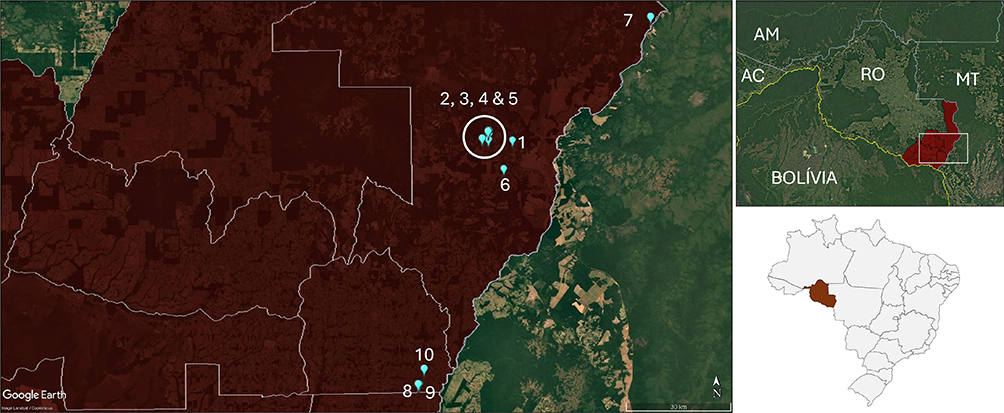
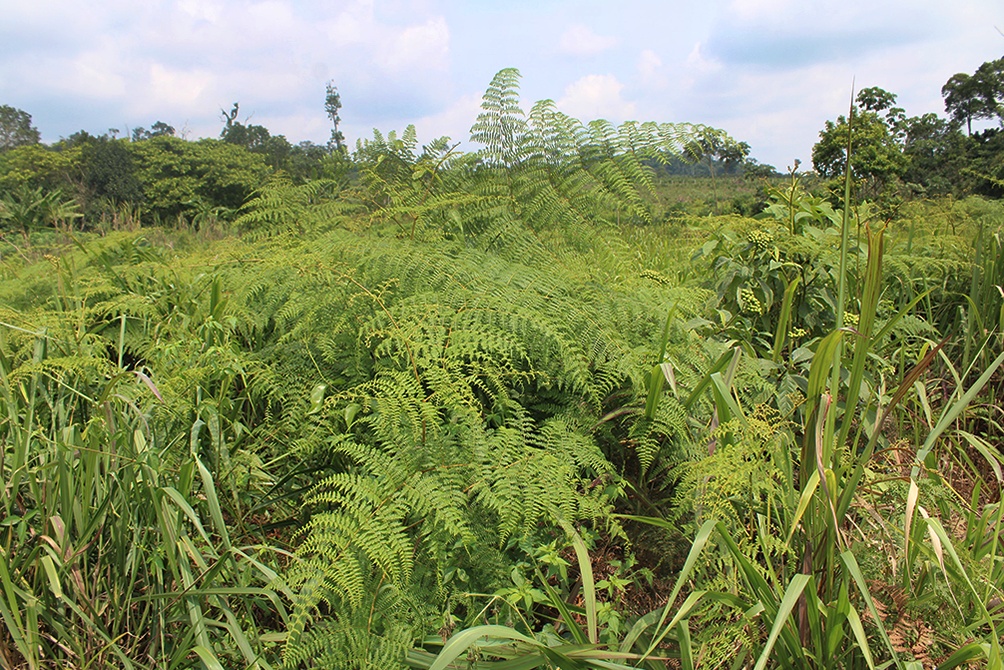
Southern Cone in Rondônia refers to a geographic region in the south of the state, composed of the municipalities of Vilhena, Chupinguaia, Colorado do Oeste, Cabixi, Cerejeiras, Corumbiara, and Pimenteiras do Oeste. Seven rural properties in this region were identified as having pastures invaded by bracken and a history of Pteridium spp. poisoning (Fig. 1 and 2). All properties evaluated were in the municipality of Vilhena and were characterized by plains with sandy soils. Four properties (Properties 2-5) belonged to a small rural settlement. All properties operate as small-scale livestock farms, with animals raised in pastoral systems and minimal use of technology. Milk production was the primary focus on 6/7 (85.7%) properties; on the other hand, Property 1 was engaged in a cow-calf operation. During the property visits, from November 2024 to February 2025, pasture invasion by Pteridium spp. was classified as Grade 1 on 1/7 (14.3%) of the properties; Grade 2 on 5/7 (71.4%) properties, and on one (14.3%) property the plant had been eradicated (Grade 0). Epidemiological data are summarized in Table 1. Taxonomic evaluation classified all samples collected on these properties as P. esculentum var. arachnoideum.
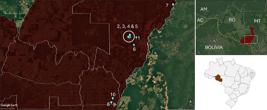
Mapping of the seven properties with a history of bovine enzootic hematuria (BEH) and invasion of pastures by ferns. The circle indicates the properties located in the same rural settlement. Properties 1-7: the pasture was invaded by Pteridium esculentum; Properties 8-10: the pastures were invaded by Christella conspersa and Pityrogramma calomelanos. Inset: location of the Southern Cone of Rondônia relative to the state of Rondônia and Rondônia’s location within Brazil.
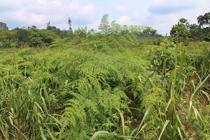
Bovine enzootic hematuria (BEH) in the Southern Cone of Rondônia. Property 4, note the pasture invaded by Pteridium esculentum.
Efforts were made to control P. esculentum invasion on pastures across all properties. Three owners disclosed using mechanical control methods for the ferns, specifically mowing (Properties 2 and 7) and/or manual weeding (Properties 2 and 6). Six owners reported using herbicides, and the combination of dichlorophenoxyacetic acid (2,4-D) and Picloram applied by backpack sprayer was the most commonly used method (Properties 2, 3, 4, 5, and 7). Liming was used to combat the plant on two properties (Properties 2 and 6). Effective control of pasture invasion by P. esculentum (invasion ≤ 25%) was observed on two properties (Properties 2 and 6). On Property 6, satisfactory control was observed, with a progressive decrease in P. esculentum invasion (Grade 1) due to management based on soil liming associated with manual weeding of the ferns. On the other hand, on Property 2, the plant had been completely eradicated. This property has undergone an intensive pasture reclamation process over the past five years, including liming, herbicide application, and manual fern removal.
Regarding the occurrence of Pteridium spp. poisoning, all owners reported that they had cattle on the property with clinical signs consistent with BEH, characterized by reddish urine and progressive weight loss. Three of them reported that the animals died due to these clinical signs. Two owners reported having sold animals with hematuria after temporary recovery from clinical conditions. Regarding the origin of the sick animals, 6/7 owners reported that the cattle with red urine were born on the property. One owner reported that the sick cow was purchased from another municipality at approximately 18 months of age.
Clinical and pathological evaluation
A bovine presenting with a clinical presentation suggestive of enzootic hematuria was selected for clinical assessment. The animal exhibited progressive weight loss and difficulty urinating. When it was able to urinate, it urinated in small streams of viscous, reddish urine, often with blood clots. Rectal palpation revealed thickening of the bladder wall and, within the bladder, a firm nodule largely occupying the bladder lumen. Due to the poor prognosis, euthanasia in extremis was decided, and the necropsy was performed immediately.
Grossly, the major damage was noted within the urinary bladder. The mucosa was irregular, with many whitish and yellowish nodules. There was severe thickening of the urinary bladder wall, with the cut surface showing white areas interspersed with irregular yellowish areas (Fig. 3 and 4).

Bovine enzootic hematuria (BEH) in the Southern Cone of Rondônia. (3) Fresh urinary bladder of a cow with BEH. Note the severe thickening of the bladder wall and the irregular mucosa containing many whitish and yellowish nodules. (4) Cut surface of a formalin-fixed urinary bladder from a cow with BEH. The wall is thickened, with white areas interspersed among irregular yellowish areas. (5-6) Histologic section of the urinary bladder from a cow with BEH. (5) Transitional cell carcinoma (asterisk) invading the lamina propria-submucosa, forming nests composed of polygonal neoplastic cells (arrows). (6) Lamina propria-submucosa exhibiting nests of polygonal neoplastic cells (arrows) interspersed with abundant fibrous connective tissue (asterisk). HE, obj. 10x.
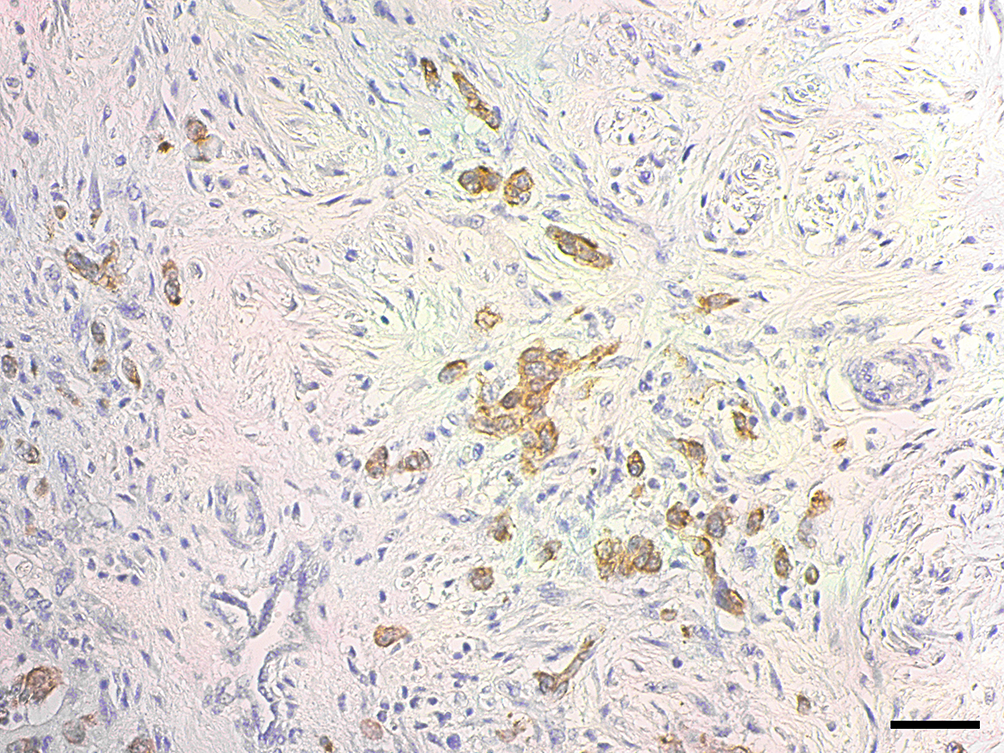
Histologically, invading and expanding into the lamina propria-submucosa, muscularis, and adventitia, a transitional cell carcinoma (TCC) was observed (Fig. 5). There were polygonal neoplastic cells forming nests interspersed with abundant fibrous connective tissue (Fig. 6). Anisocytosis, anisokaryosis, and cellular pleomorphism were mild, and two mitotic figures were observed in 2.37 mm². Additionally, the lamina propria-submucosa contained a moderate to severe multifocal lymphocytic inflammatory infiltrate. The neoplastic cells showed strong cytoplasmic immunolabeling for Pan-Keratin (Fig. 7).

Histological section of the urinary bladder from a cow with bovine enzootic hematuria (BEH). The epithelial neoplastic cells from transitional cell carcinoma exhibited strong cytoplasmic immunostaining. IHC, anti-Pan Keratin antibody (AE1/AE3), obj. 20x.
Enzootic hematuria in Pteridium spp.-free areas
Interestingly, on three other rural properties (Properties 8 and 9 in the municipality of Cabixi and Property 10 in Colorado do Oeste), there was a recent clinical history of animals presenting an intermittent disease characterized by reddish urine and progressive weight loss. However, during a visit to these properties, we found that their pastures were free of Pteridium spp. These properties were in mountainous regions and had flooded areas invaded by plants the owners called samambaia-do-brejo (swamp fern), which, after taxonomic evaluation, were classified as Christella conspersa and Pityrogramma calomelanos.
Discussion
Fern poisoning includes three clinical syndromes; among them, the most common in South America is BEH (Riet-Correa et al. 2023). This study describes the epidemiological, clinical, and pathological findings of BEH outbreaks in the Southern Cone of Rondônia. Although there are reports of BEH in the Brazilian Amazon region due to the consumption of P. caudatum (Tokarnia et al. 2012) and P. esculentum (Furlan et al. 2014a), to date, BEH caused by P. esculentum consumption has not been characterized in the Brazilian northern region. In Rondônia, BEH is not related in the central region (Schons et al. 2012) and, as demonstrated in this study, is endemic in the Southern Cone of this state. This study is the result of interinstitutional cooperation between the UFMT and the “Instituto Federal de Rondônia”, Campus Colorado do Oeste. It highlights the importance of diagnostic laboratories for understanding livestock diseases in Brazil, as described by Riet-Correa et al. (2025). The prevalence of BEH in the studied region showed a wide range, from 2.22% to 50%, as reported in other studies that describe a range of 0.8% to 70% (Furlan et al. 2014a, Riet-Correa et al. 2023).
Most farms with a history of BEH were dairy farms. BEH cases are typically observed on dairy farms (Tokarnia et al. 2012, Riet-Correa et al. 2023), particularly in cows, as these animals remain on the farm for long periods, which is essential for the development of the disease, as they require prolonged consumption of small amounts of the plant (Pamukcu et al. 1967, Tokarnia et al. 2012). However, as observed in this study, less frequently, the disease may occur in beef cattle (Tokarnia et al. 2012, Reis et al. 2016, Riet-Correa et al. 2023), mainly affecting cows on farms designated for cow-calf operation, since this animal category, as well as dairy cows, remain for long periods of time on the property, which allows the ingestion of small amounts of the plant.
Controlling pasture invasion by Pteridium spp. is complex. It frequently requires the use of different mechanisms for complete success, which involves not only the destruction of fronds but also the progressive reduction of rhizome biomass (Lowday 1987) by combining mechanical, chemical, and soil management methods (Tokarnia et al. 2012, Riet-Correa et al. 2024), as observed in Properties 2 and 7, where the fern was considered controlled.
Regarding fern control using herbicides, the owners reported that localized application with a backpack sprayer yielded better results than generalized spraying, which may be a limiting factor depending on the area to be treated (Le Duc et al. 2000). The use of herbicides alone yields satisfactory results but can be costly, as constant applications are required to completely eradicate the plants (Ducatti 2016, Boabaid et al. 2018). On properties located in the same rural settlement as Property 2 and which also used the same combination of herbicides (Properties 3, 5, and 6), despite the reduction in pasture invasion, there were still significant amounts of Pteridium spp. on the paddocks. In this study, costs may have influenced the efficiency of fern control with herbicides, since the predominant type of rural property (small-scale livestock farming) does not allow for high investments.
Correcting soil acidity through liming, as carried out on Properties 2 and 7, is an important way to contain the spread of Pteridium spp., as they grow best in soils with greater acidity; however, there is evidence that liming alone is not sufficient to eradicate the plant (Tokarnia et al. 2012).
In addition to using herbicides and liming for soil management, the owners of Properties 2 and 7 also mechanically destroyed the plants, either by mowing or manual weeding.
Clearly, this is a viable and efficient practice only on smaller properties, considering the physical strain on the workers performing this work. Fern mechanical destruction was constant on Properties 2 and 7. This practice was important because it allowed the plant to be exhausted through successive regrowth, which probably makes chemical control more efficient, as observed in other studies (Lowday 1987, Lowday & Lakhani 1987). Manual weeding practice alone is complex because, to be fully effective, it requires removing the entire rhizome, which is deep and highly branched (Grange & Swallow 2018). It is necessary to note that care must be taken with cattle’s access to recently mown pastures, as Pteridium sprouts are highly palatable and contain a high level of ptaquiloside. If large amounts of sprouts are consumed, the hemorrhagic syndrome may occur (Marçal et al. 2001, Boabaid et al. 2018).
On two farms, owners reported selling sick animals during the intermittent disease period, as cows showed clinical improvement and regained weight. The sale of sick animals during these periods, when they appeared healthy and in better body condition, has been observed in other regions (Galvão et al. 2012, Furlan et al. 2014a). Although some authors indicate that vitamin E and selenium supplementation can improve hematuria (Moreira-Junior et al. 2024), there is no treatment for BEH. Intermittent clinical manifestation occurs during periods of hematuria interruption, but 100% of animals with BEH die from clinical consequences of the disease (Galvão et al. 2012).
In all properties with a history of BEH, as well as in the cow evaluated, the clinical signs and macroscopic and microscopic findings were similar to those described in studies of BEH due to Pteridium spp. poisoning (Döbereiner et al. 1967, Tokarnia et al. 1969, Peixoto et al. 2003, Gabriel et al. 2009, Reis et al. 2016, Riet-Correa et al. 2023). The urinary bladder lesion is due to the radiomimetic effect of Pteridium spp., which is expressed during the metabolism of PTQ. Once in the organism, PTQ is metabolized in alkaline environments, forming an intermediate called dienone, which is subsequently converted to Pterosin B, a process that depends on the alkylation of a target molecule (Ojika et al. 1987, Yamada et al. 2007). It is believed that chemical carcinogenesis results from the alkylation of nucleosides, leading to weakening and subsequent rupture of the DNA chain (Kushida et al. 1994).
On three farms, despite reports of BEH, there were no Pteridium sp. in the pastures. The active principle present in Pteridium spp. (PTQ) is not exclusive to this genus and has been detected in other ferns of the genera Diplazium, Polystichum, Dryopteris, Onychium, Pseudocyclosorus, Athyrium, Hypodematium, Pteris, Cheilanthes, Cibotium, Dennstaedtia, Histiopteris, Hypolepis, Microlepia, as well as in Pityrogramma calomelanos, one of the “samambaias-do-brejo” (swamp ferns) observed on these farms (Ojika et al. 1987, Panthania et al. 2012, Saito et al. 1989, Somvanshi et al. 2006, Yamada et al. 2007). Although the principle occurs in several fern species, cases of poisoning are described mainly related to the genera Pteridium and, less frequently, Cheilanthes, Pteris, Adiantopsis, and Onychium (Dawra et al. 2001, Micheloud et al. 2017, Rai et al. 2017, Oliveira et al. 2020, Riet-Correa et al. 2023, Cope 2025). Further research is needed to study the involvement of P. calomelanos as a possible cause of BEH.
Conclusion
Bovine enzootic hematuria (BEH) has occurred on cattle farms invaded by Pteridium spp. in the Southern Cone of Rondônia and occurs as an endemic disease.
Acknowledgments
This work was partially funded by the “Coordenação de Aperfeiçoamento de Pessoal de Nível Superior” (CAPES), “Conselho Nacional de Desenvolvimento Científico e Tecnológico” (CNPq), and “Pró-Reitoria de Pesquisa” of the “Universidade Federal de Mato Grosso” (PROPESQ-UFMT).
References
-
Anjos BL, Irigoyen LF, Fighera RA, Gomes AD, Kommers GD, Barros CSL. Intoxicação aguda por samambaia (Pteridium aquilinum) em bovinos na Região Central do Rio Grande do Sul. Pesq Vet Bras 2008; https://doi.org/10.1590/S0100-736X2008001000010
» https://doi.org/10.1590/S0100-736X2008001000010 -
Boabaid FM, Oliveira LGS, Dalto AGC, Bandarra PM, Souza FS, Sonne L, Driemeier D. Achados clínico-patológicos e métodos de controle da intoxicação por Pteridium (aquilinum) arachnoideum em uma propriedade do Rio Grande do Sul. Pesq Vet Bras 2018; https://doi.org/10.1590/1678-5150-PVB-5709
» https://doi.org/10.1590/1678-5150-PVB-5709 -
Cope RB. Poisonous plants of Australia and New Zealand. In: Gupta RC. Veterinary Toxicology: basic and clinical principles. 2025; https://doi.org/10.1016/B978-0-443-29007-7.00073-X
» https://doi.org/10.1016/B978-0-443-29007-7.00073-X - Datta SCA. The etiology of enzootic bovine haematuria, Part I. J Vet Sci Anim Husb 1934;4:341-361.
-
Dawra RK, Sharma OP, Somvanshi, R. A preliminary study on the carcinogenicity of the common fern Onychium contiguum Vet Res Commun 2001; https://doi.org/10.1023/a:1010650911942
» https://doi.org/10.1023/a:1010650911942 -
Döbereiner J, Tokarnia CH, Canella CFC. Ocorrência da hematúria enzoótica e de carcinomas epidermóides no trato digestivo superior em bovinos no Brasil. Pesq Agropec Bras 1967; https://shre.ink/qyFU
» https://shre.ink/qyFU - Ducatti KR. Controle químico de Pteridium arachnoideum em pastagens do médio norte Matogrossense. Tese de Doutorado, Universidade Federal de Mato Grosso, Cuiabá, 2016, 65p.
-
Faccin TC, Masuda EK, Piazer JVM, Melo SMP, Kommers GD. Annular stenotic oesophageal squamous cell carcinoma in cattle exposed naturally to bracken fern (Pteridium arachnoideum). J Comp Pathol 2017; https://doi.org/10.1016/j.jcpa.2017.07.008
» https://doi.org/10.1016/j.jcpa.2017.07.008 -
Fletcher MT, Brock IJ, Reichmann KG, McKenzie RA, Blaney BJ. Norsesquiterpene glycosides in bracken ferns (Pteridium esculentum and Pteridium aquilinum subsp. wightianum) from eastern Australia: reassessed poisoning risk to animals. J Agric Food Chem 2011; https://doi.org/10.1021/jf104267c
» https://doi.org/10.1021/jf104267c -
Flora e Funga do Brasil. Jardim Botânico do Rio de Janeiro; 2025. Accessed on Apr 4, 2025. http://floradobrasil.jbrj.gov.br
» http://floradobrasil.jbrj.gov.br -
Furlan FH, Costa FL, Torres Jr SCS, Kerber FL, Damasceno ES, Salino A, Riet-Correa F. Perfil de propriedades rurais com pastos invadidos por Pteridium arachnoideum na região norte de Mato Grosso e prevalência de hematúria enzoótica bovina. Pesq Vet Bras 2014a; https://doi.org/10.1590/s0100-736x2014000800008
» https://doi.org/10.1590/s0100-736x2014000800008 -
Furlan FH, Mendes ERS, Ducatti KR, Marcon GC, Dombrosky T, Amorim TM, Riet-Correa F. Intoxicação aguda por Pteridium arachnoideum e Pteridium caudatum em bovinos e distribuição das plantas em Mato Grosso. Pesq Vet Bras 2014b; https://doi.org/10.1590/S0100-736X2014000400008
» https://doi.org/10.1590/S0100-736X2014000400008 -
Gabriel AL, Kommers GD, Masuda EK, Fighera RA, Piazer JVM, Barros CSL, Martins TB, Rosa FB. Aspectos clínico-hematológicos e lesões vesicais na intoxicação crônica espontânea por Pteridium aquilinum em bovinos. Pesq Vet Bras 2009; https://doi.org/10.1590/S0100-736X2009000700005
» https://doi.org/10.1590/S0100-736X2009000700005 -
Galvão A, Brito MF, Aragão AP, Yamasaki EM, Peixoto PV, Tokarnia CH. Sobrevivência/viabilidade de bovinos com hematúria enzoótica após transferência para região livre de Pteridium arachnoideum Pesq Vet Bras 2012; https://doi.org/10.1590/S0100-736X2012000900013
» https://doi.org/10.1590/S0100-736X2012000900013 -
Gliessman SR. The establishment of bracken following fire in tropical habitats. Am Fern J 1978; https://doi.org/10.2307/1546778
» https://doi.org/10.2307/1546778 -
Grange ID, Swallow K. Bracken control in the first year is as good as it gets! Asp Appl. Biol 2018; https://rau.repository.guildhe.ac.uk/id/eprint/16088/1/AAB_Grange__Swallow_2018.pdf
» https://rau.repository.guildhe.ac.uk/id/eprint/16088/1/AAB_Grange__Swallow_2018.pdf -
Hassler M. Checklist of Ferns and Lycophytes of the World. (version 25.04). Catalogue of Life; 2025. https://doi.org/10.48580/dgplc-3dc
» https://doi.org/10.48580/dgplc-3dc -
Jarrett WFH. Bracken fern and papilloma virus in bovine alimentary cancer. Br Med Bull 1980; https://doi.org/10.1093/oxfordjournals.bmb.a071618
» https://doi.org/10.1093/oxfordjournals.bmb.a071618 -
Johnson PN. Vegetation recovery after fire on a southern New Zealand peatland. N Z J Bot 2001; https://doi.org/10.1080/0028825X.2001.9512736
» https://doi.org/10.1080/0028825X.2001.9512736 -
Kushida T, Uesugi M, Sugiura Y, Kigoshi H, Tanaka H, Hirokawa J, Ojika M, Yamada K. DNA damage by ptaquiloside, a potent bracken carcinogen: detection of selective strand breaks and identification of DNA cleavage products. J Am Chem Soc 1994; https://doi.org/10.1021/ja00081a007
» https://doi.org/10.1021/ja00081a007 -
Le Duc MG, Pakeman RJ, Putwain PD, Marrs RH. The variable responses of bracken fronds to control treatments in Great Britain. Ann Bot 2000; https://doi.org/10.1006/anbo.1999.1052
» https://doi.org/10.1006/anbo.1999.1052 -
Lowday JE, Lakhani KH. The effects of cutting pre-treatments on the performance of asulam on bracken (Pteridium aquilinum). Ann Appl Biol 1987; https://doi.org/10.1111/j.1744-7348.1987.tb02018.x
» https://doi.org/10.1111/j.1744-7348.1987.tb02018.x -
Lowday JE. The effects of cutting and asulam on numbers of frond buds and biomass of fronds and rhizomes of bracken Pteridium aquilinum Ann Appl Biol 1987; https://doi.org/10.1111/j.1744-7348.1987.tb03245.x
» https://doi.org/10.1111/j.1744-7348.1987.tb03245.x - Marçal WS, Gaste L, Reichert Netto NC, Marques MCG, Fernandes RP, Monteiro AA. Ocorrência de intoxicação aguda em bovinos pela samambaia (Pteridium aquilinum, L. Kuhn) no norte do Paraná-Brasil. Semina: Ciênc Agrár 2001;22(2):139-144.
-
Marrs RH, Watt AS. Biological flora of the British Isles: Pteridium aquilinum (L.) Kuhn. J Ecol 2006; https://doi.org/10.1111/j.1365-2745.2006.01177.x
» https://doi.org/10.1111/j.1365-2745.2006.01177.x -
Micheloud JF, Colque-Caro LA, Martinez OG, Gimeno EJ, Ribeiro DSF, Soto-Blanco B. Bovine enzootic haematuria from consumption of Pteris deflexa and Pteris plumula in northwestern Argentina. Toxicon: X 2017; https://doi.org/10.1016/j.toxicon.2017.05.023
» https://doi.org/10.1016/j.toxicon.2017.05.023 -
Moreira-Junior CA, Oliveira EV, Cardoso CA, Miranda MPB, Guedes NA, Burak DL, Pfister JA, Nunes LC. Supplementation with increasing doses of selenium associated with vitamin E in the treatment of bovines with enzootic hematuria. Pesq Vet Bras 2024; https://doi.org/10.1590/1678-5150-PVB-7349
» https://doi.org/10.1590/1678-5150-PVB-7349 -
Ojika M, Wakamatsu K, Niwa H, Yamada K. Ptaquiloside, a potent carcinogen isolated from bracken fern Pteridiumaquilinum var. latiusculum: structure elucidation based on chemical and spectral evidence, and reactions with amino acids, nucleosides, and nucleotides. Tetrahedron 1987; https://doi.org/10.1016/S0040-4020(01)87702-4
» https://doi.org/10.1016/S0040-4020(01)87702-4 -
Oliveira LGS, Boabaid FM, Kisielus V, Rasmussen LH, Buroni F, Lucas M, Schild CO, Lopes F, Machado M, Riet-Correa F. Hemorrhagic diathesis in cattle due to consumption of Adiantopsis chlorophylla (Swartz) Fée (Pteridaceae). Toxicon: X 2020; https://doi.org/10.1016/j.toxcx.2020.100024
» https://doi.org/10.1016/j.toxcx.2020.100024 -
Pamukcu AM, Göksoy SK, Price JM. Urinary bladder neoplasms induced by feeding bracken fern (Pteris aquilina) to cows. Cancer Res 1967; https://shre.ink/qyMp
» https://shre.ink/qyMp -
Pamukcu AM. Investigations on the pathology of enzootic bovine haematuria in Turkey. Zentralblatt Für Veterinärmedizin 1955; https://doi.org/10.1111/J.1439-0442.1955.TB00083.X
» https://doi.org/10.1111/J.1439-0442.1955.TB00083.X -
Panthania S, Kumar P, Singh S, Khatoon S, Rawat AKS, Punetha N, Jensen DJ, Lauren DR, Somvanshi R. Detection of ptaquiloside and quercetin in certain Indian ferns. Curr Sci 2012; https://www.jstor.org/stable/24084825
» https://www.jstor.org/stable/24084825 -
Peixoto PV, França TN, Barros CSL, Tokarnia CH. Histopathological aspects of bovine enzootic hematuria in Brazil. Pesq Vet Bras 2003; https://doi.org/10.1590/S0100-736X2003000200004
» https://doi.org/10.1590/S0100-736X2003000200004 -
Prado J, Hirai RY. Pityrogramma calomelanos in Flora do Brasil 2020. Jardim Botânico do Rio de Janeiro; 2020. Accessed on Oct 21, 2025. http://floradobrasil2020.jbrj.gov.br/reflora/floradobrasil/FB91963
» http://floradobrasil2020.jbrj.gov.br/reflora/floradobrasil/FB91963 - Prophet EB, Mills B, Arrington JB, Sobin LH. Laboratory Methods in Histotechnology. Washington: American Registry of Pathology; 1992.
-
Rai SK, Sharma R, Kumari A, Rasmussen LH, Patil RD, Bhar R. Survey of ferns and clinico-pathological studies on the field cases of enzootic bovine haematuria in Himachal Pradesh, a north-western Himalayan state of India. Toxicon 2017; https://doi.org/10.1016/j.toxicon.2017.08.010
» https://doi.org/10.1016/j.toxicon.2017.08.010 -
Rasmussen LH, Kroghsbo S, Frisvad JC, Hansen HCB. Occurrence of the carcinogenic Bracken constituent ptaquiloside in fronds, topsoils and organic soil layers in Denmark. Chemosphere 2003; https://doi.org/10.1016/S0045-6535(02)00694-x
» https://doi.org/10.1016/S0045-6535(02)00694-x -
Rasmussen LH, Pedersen HÆ. Screening for ptaquiloside in ferns: using herbarium specimens for qualitative mapping purposes. Phytochem Anal 2017; https://doi.org/10.1002/PCA.2707
» https://doi.org/10.1002/PCA.2707 -
Reis SDS, Macêdo JTSA, Oliveira RS, Peixoto TC, Ferreira MM, Gasper AL, Pedroso PMO. Enzootic hematuria in cattle from northeastern Brazil. Braz J Vet Pathol 2016; https://shre.ink/qyCK
» https://shre.ink/qyCK -
Ribeiro DSF, Soto-Blanco B. Intoxicação por plantas do gênero Pteridium (Dennstaedtiaceae) em animais de produção. Rev Bras Hig San Anim 2020; https://doi.org/10.5935/1981-2965.20200009
» https://doi.org/10.5935/1981-2965.20200009 -
Riet-Correa F, Lemos RAA, Guizelini CC. The importance of veterinary diagnostic laboratories for disease surveillance, research, and postgraduate studies in animal health in Brazil. Pesq. Vet. Bras 2025; https://doi.org/10.1590/1678-5150-PVB-7633
» https://doi.org/10.1590/1678-5150-PVB-7633 -
Riet-Correa F, Machado M, Micheloud JF. Plants causing poisoning outbreaks of livestock in South America: a review. Toxicon: X 2023; https://doi.org/10.1016/j.toxcx.2023.100150
» https://doi.org/10.1016/j.toxcx.2023.100150 - Riet-Correa F, Micheloud JF, Macchado M, Mendonça FS, Schild AL, Lemos RAA. Intoxicaciones por plantas, micotoxinas y otras toxinas en rumiantes y équidos de Sudamérica. Gurnee: Davis-Thompson Foundation; 2024.
-
Saito K, Nagao T, Matoba M, Koyama K, Natori S, Murakami T, Saiki Y. Chemical assay of ptaquiloside, the carcinogen of Pteridium aquilinum, and the distribution of related compounds in the Pteridaceae. Phytochem 1989; https://doi.org/10.1016/S0031-9422(00)97808-7
» https://doi.org/10.1016/S0031-9422(00)97808-7 -
Salino A, Fernandes RS, Moura IO, Moura LC, Almeida TE, Paixão LC, Souza MI. Thelypteridaceae in Flora do Brasil 2020. Jardim Botânico do Rio de Janeiro; 2020. Accessed on Oct 21, 2025. http://floradobrasil2020.jbrj.gov.br/reflora/floradobrasil/FB602680
» http://floradobrasil2020.jbrj.gov.br/reflora/floradobrasil/FB602680 -
Santos MG, Santiago ACP, Sylvestre LS. Samambaias e licófitas no Brasil: biologia e taxonomia. 2023; https://doi.org/10.7476/9788575115848
» https://doi.org/10.7476/9788575115848 -
Scheid HV, Ribeiro LS, Venâncio FR, Bohm BC, Engelmann TM, Brum FRP, Sallis ESV, Schild AL. Evolution of cattle intoxications in southern Rio Grande do Sul: Spatial distribution and trends over 42 years. Pesq Vet Bras 2023; https://doi.org/10.1590/1678-5150-PVB-7395
» https://doi.org/10.1590/1678-5150-PVB-7395 -
Schons SV, Lopes TV, Melo TL, Lima JP, Riet-Correa F, Barros MÂB, Schild ALP. Intoxicações por plantas em ruminantes e equídeos na região central de Rondônia. Ciência Rural 2012; https://doi.org/10.1590/S0103-84782012005000047
» https://doi.org/10.1590/S0103-84782012005000047 -
Schwartsburd PB, Pena NTL. Dennstaedtiaceae in Flora do Brasil 2020. Jardim Botânico do Rio de Janeiro; 2020. Accessed on Oct 21, 2025. http://floradobrasil2020.jbrj.gov.br/reflora/floradobrasil/FB90941
» http://floradobrasil2020.jbrj.gov.br/reflora/floradobrasil/FB90941 -
Smith BL, Seawright AA, Ng JC, Hertle AT, Thomson JA, Bostock PD. Concentration of ptaquiloside, a major carcinogen in bracken fern (Pteridium spp.), from eastern Australia and from a cultivated worldwide collection held in Sydney, Australia. Nat Toxins 1994; https://doi.org/10.1002/nt.2620020602
» https://doi.org/10.1002/nt.2620020602 -
Somvanshi R, Lauren DR, Smith BL, Dawra RK, Sharma OP, Sharma VK, Singh AK, Gangwar NK. Estimation of the fern toxin, ptaquiloside, in certain Indian ferns other than bracken. Curr Sci 2006; https://www.jstor.org/stable/24093859
» https://www.jstor.org/stable/24093859 -
Thomson JA, Mickel JT, Mehltreter K. Taxonomic status and relationships of bracken ferns (Pteridium: Dennstaedtiaceae) of Laurasian affinity in Central and North America. Bot J Linn Soc 2008; https://doi.org/10.1111/j.1095-8339.2008.00791.x
» https://doi.org/10.1111/j.1095-8339.2008.00791.x -
Thomson JA. Morphological and genomic diversity in the genus Pteridium (Dennstaedtiaceae). Ann Bot 2000; https://doi.org/10.1006/anbo.1999.1101
» https://doi.org/10.1006/anbo.1999.1101 -
Thomson JA. Taxonomic status of diploid southern Hemisphere Brackens (Pteridium: Dennstaedtiaceae). Telopea 2012; https://doi.org/10.7751/telopea2012007
» https://doi.org/10.7751/telopea2012007 - Tokarnia CH, Brito MF, Barbosa JD, Peixoto PV, Döbereiner J. Plantas Tóxicas do Brasil para Animais de Produção. 2ª ed. Rio de Janeiro: Helianthus; 2012.
-
Tokarnia CH, Döbereiner J, Canella CFC. Ocorrência da hematúria enzoótica e de carcinomas epidermóides no trato digestivo superior em bovinos no Brasil. II. Estudos complementares. Pesq Agropec Bras 1969; https://shre.ink/qyzT
» https://shre.ink/qyzT -
Tokarnia CH, Döbereiner J, Canella CFC. Ocorrência da intoxicação aguda pela “samambaia” (Pteridium aquilinum (L) Kuhn) em bovinos no Brasil. Pesq Agropec Bras 1967; https://apct.sede.embrapa.br/pab/article/view/17929/12011
» https://apct.sede.embrapa.br/pab/article/view/17929/12011 -
Tryon RM. A revision of the genus Pteridium Rhodora 1941; https://shre.ink/qyRL
» https://shre.ink/qyRL -
Vetter J. The norsesquiterpene glycoside ptaquiloside as a poisonous, carcinogenic component of certain ferns. Molecules 2022; https://doi.org/10.3390/MOLECULES27196662
» https://doi.org/10.3390/MOLECULES27196662 -
Yamada K, Ojika M, Kigoshi H. Ptaquiloside, the major toxin of bracken, and related terpene glycosides: Chemistry, biology and ecology. Nat Prod Rep 2007; https://doi.org/10.1039/b614160a
» https://doi.org/10.1039/b614160a
Edited by
-
Editor-in-Chief
Fabiano José Ferreira de Sant’Ana
Epidemiological data and clinical and morphological findings are available from the corresponding author upon reasonable request.