
 Ideological Predictors and Reasons for Voting in the 2022 Brazilian Elections
ABSTRACT
Many factors influence people’s voting behavior, but studies in social psychology have identified Right-Wing Authoritarianism (RWA) and Social Dominance Orientation (SDO) as key individual difference predictors of voting. Here, we examined whether RWA and SDO predict voting behavior in the second round of the 2022 Brazilian presidential election. Retrospective self-reports of voting for Jair Messias Bolsonaro or Luiz Inácio Lula da Silva were assessed, with latent paths indicating that RWA and SDO positively predicted voting for Bolsonaro when compared to voting for Lula. Moreover, qualitative reasons for voting for Bolsonaro or Lula indicated that, while reasons for voting for Lula focused on the reestablishment of democratic principles in Brazil, voting for Bolsonaro focused on maintaining the status quo.
KEYWORDS:
Voting behavior; Brazil; SDO; RWA; Bolsonaro; Lula; Ideology
RESUMO
Muitos fatores influenciam o comportamento de voto, mas estudos em psicologia social apontaram o Autoritarismo de Direita (RWA) e a Orientação à Dominância Social (SDO) como os principais preditores do comportamento eleitoral. Aqui examinamos se RWA e SDO predisseram o comportamento eleitoral no segundo turno das eleições presidenciais de 2022 no Brasil. Autorrelatos retrospectivos de votação em Bolsonaro ou Lula foram avaliados, com análises latentes indicando que RWA e SDO predisseram positivamente o voto em Bolsonaro quando comparado ao voto em Lula. Além disso, as razões qualitativas para votar em Bolsonaro ou Lula indicaram que, enquanto as razões para votar em Lula focaram no restabelecimento de princípios democráticos no Brasil, as razões para votar em Bolsonaro focaram na manutenção do status quo.
PALAVRAS-CHAVE:
Comportamento eleitoral; Brasil; SDO; RWA; Bolsonaro; Lula; Ideologia
On October 30th, 2022, the world witnessed a significant political change in Brazil. Luiz Inácio Lula da Silva, the former president of Brazil between 2003 and 2010, was once again a presidential candidate and won the election against Jair Messias Bolsonaro. Bolsonaro was globally known for his far-right policies, such as support of mass incarceration, budget reduction for agencies that monitor the deforestation of the Amazon rainforest, and promotion of distrust in the electronic voting system (Marques, 2022). Lula, on the other hand, won the election with a distinct political platform, focusing on combating poverty, increasing funding for environmental agencies, and promoting democratic principles (Atlantic Council, 2022).
Recent political events may have contributed to the election of Lula to a third term. For instance, on April 7th, 2018, Lula was arrested on corruption allegations, remaining in prison for more than one year and legally forbidden to participate in the presidential elections at the end of that year, in which he was the leading candidate. Meanwhile, on October 28th, 2018, Bolsonaro was elected president of Brazil for a four-year term on a conservative political platform of “God, homeland, family”. Notably, Bolsonaro appointed the judge in charge of Lula’s case, Sérgio Moro, as the Minister of Justice and Public Security, raising a debate about the impartiality of the process against Lula. Unexpectedly, in 2019, private messages of Sérgio Moro were released by the news portal The Intercept, allegedly indicating biased judicial decisions against Lula, rigged by federal law enforcement agencies and Moro. The Brazilian Supreme Court considered Sérgio Moro suspicious and dismissed the judicial process against Lula, setting him free on November 8th, 2019. In the following year, the outburst of the COVID-19 pandemic took place, and President Jair Bolsonaro was criticized for how he was handling the pandemic. For instance, Bolsonaro answered “So what?” when asked by journalists about the rapidly increasing number of COVID-19 cases, claiming that people needed to care about the economy instead of the “Chinese virus” when Brazil had the most COVID-19 deaths in Latin America. Lula thus stood out as an alternative to Jair Bolsonaro, proposing an international coalition against COVID-19 and the rapid negotiation of vaccines, remaining an opponent of Bolsonaro’s government until the 2022 national elections (Pombo, 2022; The Intercept Brasil, 2020; The Lancet, 2020).
Although the political and ideological distinctions between Bolsonaro and Lula are clear, the predictors of voting for the 2022 election remain unexplored. Previous studies in political science indicated that ideologies were key predictors of support to and voting for Bolsonaro in the 2018 presidential elections (e.g., Amaral, 2020; Layton et al., 2021), and in particular two ideologies were pointed out as central predictors of voting behavior: strict coercive measures (Silva et al., 2022) and the endorsement of hierarchies in society (Franco & Pound, 2022). In social psychological research, these ideologies are indexed by the Right-Wing Authoritarianism (RWA; Altemeyer, 1988) and Social Dominance Orientation (SDO; Pratto et al., 1994), respectively.
In brief, RWA is defined as the endorsement of harsh coercive measures, submission to authority, and traditional moral values (Duckitt et al., 2010), pointed out as a significant predictor of religious fundamentalism (Altemeyer, 1998), support of nuclear weapons, and expulsion of illegal immigrants (Duckitt et al., 2010). Complementarily, SDO is defined as the general support to establish and maintain hierarchically structured intergroup relations in society (Sidanius & Pratto, 1999), pointed out as a significant predictor of political attitudes such as patriotism (Altemeyer, 1998), elitism, and military censorship (Pratto et al., 1994).
As preliminary studies indicated that ideologies conceptually linked to RWA and SDO predicted voting for Bolsonaro in the 2018 presidential elections, our pre-registered hypothesis (https://osf.io/ng9d6/?view_only=5e634554b33945d1a95fc6b581559cac) is that RWA and SDO would be positively associated with voting for Bolsonaro (compared to voting for Lula). Our hypothesis is based on the classic conceptualization of RWA and SDO as separate unidimensional constructs (Altemeyer, 1988; Sidanius & Pratto, 1999), but it is worth noting that there is a theoretical debate about their dimensionality.
International scholars (Duckitt et al., 2010; Mavor et al., 2010) indicated that the endorsement of harsh, coercive measures, submission to authority, and traditional moral values, as indexed by RWA, are better conceptualized when assessed separately. RWA is thus formed by three distinct dimensions: “Authoritarianism” (indexing the endorsement of harsh coercive measures), “Conservatism” (indexing the support for uncritical submission to authorities), and “Traditionalism” (indexing the support for traditional moral values). This model presented a good fit to data collected in New Zealand, the United States of America, and Israel, but had a poor fit to data collected in Romania (Duckitt et al., 2010) and Brazil (Vilanova et al., 2018). The evidence for cultural variability in RWA dimensionality was thoroughly assessed in Brazil by Vilanova et al. (2020), who argued that the three-dimensional model is insufficient to address the ambiguous attitudes towards submission and contestation of authorities in that country. A four-dimensional model was thus proposed and tested across distinct Brazilian samples. The rationale is that the original Conservatism dimension conflates distinct tendencies to submit to and contest authorities in the Brazilian context, being thus divided to assess separately the tendency to submit to authorities (indexed by the Submission to Authority dimension) and the tendency to contest authorities (indexed by the Contestation to Authority dimension). Accordingly, the original Authoritarianism-Conservatism-Traditionalism model should be replaced by a four-factor model comprising Authoritarianism, Traditionalism, Submission to Authority and Contestation to Authority in the Brazilian context (Vilanova et al., 2020).
Similar to RWA, some studies (e.g., Ho et al., 2015; Jost & Thompson, 2000) indicated that the support to establish and maintain hierarchically structured intergroup relations in society indexed by SDO is better conceptualized when divided into two dimensions: “Dominance” (indexing the endorsement of dominant groups actively oppressing subordinate groups), and “Antiegalitarianism” (indexing the endorsement of subtle hierarchy-enhancing beliefs and social policies) (but see Berry, 2023 for opposite evidence). This bidimensional model was originally proposed based on samples from the United States of America, but it also had a good fit to data collected in Brazil, as indicated by Vilanova et al. (2022). Therefore, we also provided exploratory evidence for the predictive role of each dimension of RWA and SDO on the vote.
Finally, we also provide unregistered exploratory evidence for the qualitative reasons for voting for Bolsonaro or Lula. Although the predictive effect of established measures such as RWA and SDO is commonly assessed, the qualitative reasons are often overlooked, so the present work also aimed to address this in an exploratory fashion.
Method
Participants and Procedure
The sample was recruited through convenience sampling in Brazil, and the study design was approved by the Institutional Review Board of the university associated with this project. The link to the online survey was advertised on Instagram and Facebook as an invitation to participate in research on social attitudes, being available in November 2022, immediately after the presidential elections.
A total of 1,732 participants accessed the online survey, but 412 were excluded because they answered less than 80% of the survey, and 29 were less than 18 years old. Hence, the final sample was composed of 1,291 participants (63.5% female), whose ages ranged from 18 to 83 years old (M = 44.22; SD = 14.10). The sociodemographic characterization of the sample in terms of educational level, ethnicity, socioeconomic class, and political self-categorization is depicted in Table 1.
Measures
As mentioned above, a sociodemographic questionnaire assessing educational level, ethnicity, socioeconomic class, and political self-categorization was initially presented. Afterward, participants had to indicate which candidate they voted for in the second round of the 2022 presidential elections. Notably, the Brazilian voting system has two rounds, such that multiple presidential candidates participate in the first round and if none of the candidates receives more than 50% of the votes, a second round between the two top-voted candidates takes place. The first round of the 2022 election was held on October 2nd, had 11 presidential candidates, and Bolsonaro and Lula advanced to the runoff as the two candidates with the most votes (43.2% and 48.4% of the votes, respectively). The second round was held on October 30th, when voters could choose between Bolsonaro and Lula or vote blank, and Lula ultimately won the election with 50.90% of the votes. So, our online survey was made available soon after the election, and participants first indicated if they voted for Bolsonaro, Lula, blank, or did not vote in the second round of the elections. Vote for Bolsonaro was coded as 1, and vote for Lula as 0, and participants who voted blank or did not vote were excluded from subsequent analyses (n = 82). Participants (n total = 1,209) were then asked, “Why did you vote for [Bolsonaro/Lula] in the second round of the presidential elections in 2022?”
After the two election-specific questions, participants completed a 12-item RWA scale based on the Authoritarianism-Conservatism-Traditionalism measure proposed by Duckitt et al. (2010), which was adapted to the Brazilian context by Vilanova et al. (2023). Participants rated the items using a 5-point agreement scale ranging from 1 (totally disagree) to 5 (totally agree), and the RWA scale had good internal consistency (Cronbach’s α = .79). Participants also completed the 8-item SDO7 scale (Ho et al., 2015), which has been adapted to the Brazilian context (Vilanova et al., 2022). Participants rated the agreement to each item on a seven-point agreement scale ranging from 1 (totally disagree) to 7 (totally agree), and the SDO scale had good internal consistency (Cronbach’s α = .85).
Data Analysis
First, factor scores of RWA and SDO were obtained through the regression method. Then, zero-order Pearson correlations between the factor scores and voting for Bolsonaro were assessed. Software G*Power 3.1.9.2 indicated that to conduct this analysis with a .05 α error probability, .80 statistical power, and .21 effect size (the average effect size of studies in social psychology according to Richard et al., 2003), at least 173 participants would be necessary, so our sample fulfills this requirement. Complementing this initial analysis, we also computed partial correlations between RWA and vote for Bolsonaro, controlling for SDO, and between SDO and vote for Bolsonaro, controlling for RWA. Afterward, a latent path model considering RWA and SDO as predictors of the vote for Bolsonaro as the outcome was performed. The sample size calculator for Structural Equation Model (SEM) proposed by Soper (2022) indicated that at least 411 participants are required to detect a .15 effect size ― the smallest significant effect size reported by previous studies assessing the predictive effect of RWA and SDO on voting (e.g., Franco & Pound, 2022) ― considering a model with two latent variables, 21 observed variables and .80 statistical power, so our sample fulfills this requirement.
To test the predictive effects of RWA dimensions on voting for Bolsonaro, the original three-dimensional Authoritarianism-Conservatism-Traditionalism model (Duckitt et al., 2010) was tested, as well as the culture-specific Authoritarianism-Traditionalism-Submission to Authority-Contestation to Authority model (Vilanova et al., 2018, 2020). To address the distinct dimensionality of SDO, the bidimensional SDO model (Ho et al., 2015; Vilanova et al., 2022) was used. Therefore, a latent path model considering the three original dimensions of RWA and the two dimensions of SDO as predictors was performed. Afterward, another latent path model, considering the four culture-specific dimensions of RWA and the two dimensions of SDO as predictors, was performed. The SEM sample size calculator proposed by Soper (2022) indicated that at least 742 participants are required to detect a .15 effect size, the smallest significant effect size reported by previous studies assessing the predictive effect of RWA and SDO on voting intention (Franco & Pound, 2022; Womick et al., 2018) considering a model with 6 latent variables, 21 observed variables and .80 statistical power, so our sample fulfills this requirement. Model fits were assessed, and values of χ²/degrees of freedom (χ²/df) < 2.00, CFI and TLI > .90, and RMSEA < .08 were deemed adequate (Holgado-Tello et al., 2010). Considering the potential ordinal nature of the model indicators, we used the weighted least squares mean and variance adjusted (WLSMV) estimation method.
To assess the qualitative reasons for voting for Bolsonaro or Lula, the corpus (i.e., text formed by the answers) was prepared by excluding numbers, punctuation, and Portuguese grammar conjunctions and pronouns from the original texts (e.g., “que” [that], “com” [with], “porque” [because],“para” [for],“e” [and]) to focus on the substantive and verbs mentioned. Two distinct qualitative analyses were then conducted: a word cloud analysis and a descending hierarchical classification. Word clouds are visual representations of word frequency, such that the more often a term appears within the text analysed, the larger the word appears in the cloud (Atenstaedt, 2012). This analysis was conducted using the “Wordcloud” package (Fellows, 2018) in RStudio 2022.07.2, and a limit of the 50 most-frequently mentioned words in the cloud was specified for better visualization. Complementarily, descending hierarchical classification was conducted - a cluster analysis that categorizes text segments (i.e., active words) into similar lexical groups or classes (Reinert, 1987). The classes are formed by Elementary Contextual Units (ECUs), successive occurrences of word combinations in 2-3 lines, indicating the presence of relevant combinations in the text. These combinations are then refined and split into distinct classes according to their recombinations across the corpus, indicating meaningful classes of words. The classes are illustrated by dendrograms, and the connection between each active word and each class is measured by the chi-square statistic. This analysis was conducted using the IRAMuTeQ software (Ratinaud, 2023).
Results
Both RWA (r (1,207) = .65, p < .001) and SDO (r (1,207) = .67, p < .001) were positively correlated with vote for Bolsonaro (compared to vote for Lula), and the correlations remained high (r > .45) when controlling for each of the ideological variables (see Table 2).
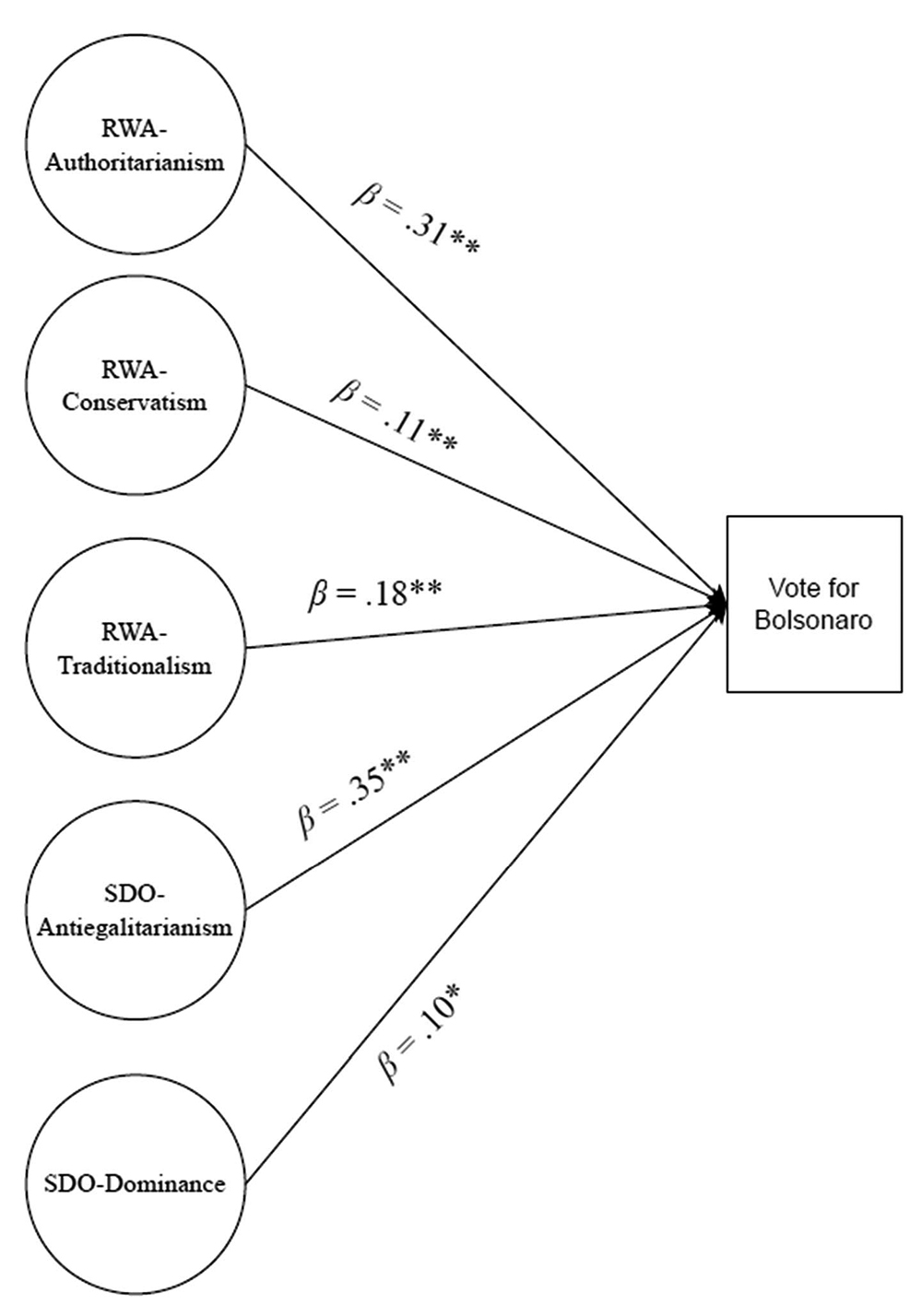
As hypothesized, RWA (B = .50, 95% CI [.40, .60], S.E. = .05, β = .48, p < .001) and SDO (B = .13, 95% CI [.11, .15], S.E. = .01, β = .41, p < .001) significantly predicted vote for Bolsonaro, but the model presented inadequate fit to the data (χ²/df = 13.09, RMSEA = .10 [90% C.I. = .097, .104], CFI = .77, TLI = .74). To improve model fit, the three original dimensions of RWA (i.e., Authoritarianism-Conservatism-Traditionalism) and the two distinct dimensions of SDO (i.e., Dominance and Antiegalitarianism) were inserted as predictors of vote, but this model (see Figure 1) also had inadequate fit to the data (χ²/df = 12.78, RMSEA = .11 [90% C.I. = .102, .109], CFI = .79, TLI = .75).
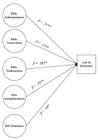
Latent Path Model Assessing the Original Three-Dimensional RWA Model and the Two-Dimensional SDO Model
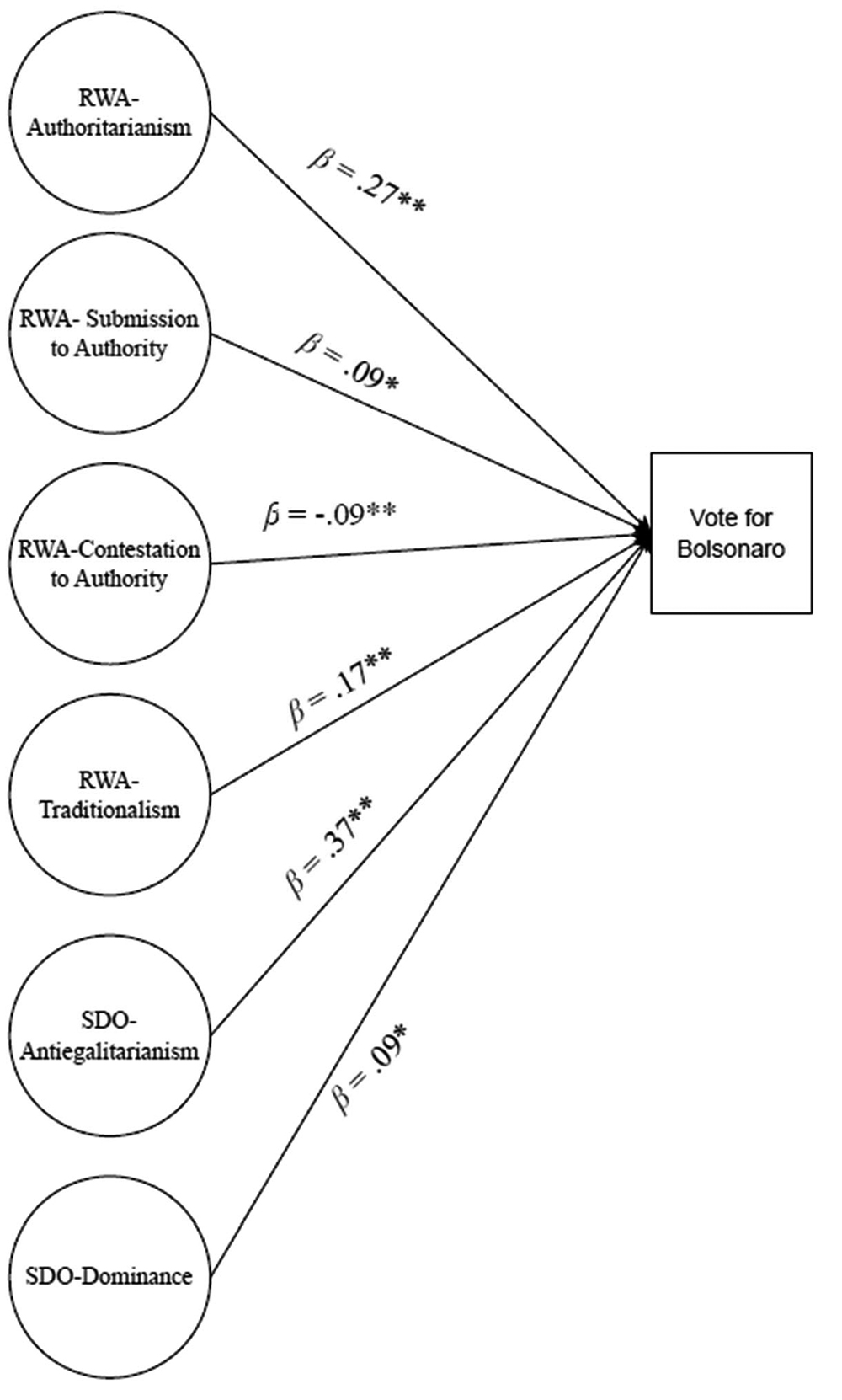
Afterward, a latent path model, considering the four culture-specific dimensions of RWA (i.e., Authoritarianism-Traditionalism-Submission to Authority-Contestation to Authority) and the two dimensions of SDO, was assessed. Contrary to our expectations, this latent path model had better - yet inadequate - fit to the data (χ²/df = 6.90, RMSEA = .08 [90% C.I. = .071, .079], CFI = .90, TLI = .87). As illustrated in Figure 2, the SDO dimension of Antiegalitarianism was the strongest predictor (B = .12, 95% CI [.09, .16], S.E. = .02, β = .37, p < .001), followed by the RWA dimensions of Authoritarianism (B = .18, 95% CI [.09, .27], S.E. = .04, β = .27, p < .001), Traditionalism (B = .10, 95% CI [.07, .14], S.E. = .02, β = .17, p < .001), Submission to Authority (B = .06, 95% CI [.00, .11], S.E. = .03, β = .09, p = .04), Contestation to Authority (B = -.09, 95% CI [-.14, -.07], S.E. = .03, β = -.09, p = .001), and the SDO dimension of Dominance (B = .02, 95% CI [.00, .05], S.E. = .01, β = .09, p = .04). Modification indices suggested changes on RWA factor structure to improve overall model fit, so we decided to assess the model fit of RWA separately through Confirmatory Factor Analyses (CFA).
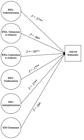
Latent Path Model Assessing the Culture-Specific Four-Dimensional RWA Model and the Two-Dimensional SDO Model
Three distinct models of RWA were assessed through CFA: the unidimensional model proposed by Altemeyer (1981), the three-dimensional model (Authoritarianism-Conservatism-Traditionalism) proposed by Duckitt et al. (2010), and the culture-specific four-dimensional model proposed by Vilanova et al. (2018). As expected, CFA indicated inadequate fit to the data for both the unidimensional RWA model (χ²/df = 30.72, RMSEA = .16 [90% C.I. = .150, .163], CFI = .58, TLI = .49), as well as the three-dimensional model (χ²/df = 28.45, RMSEA = .15 [90% C.I. = .144, .157], CFI = .72, TLI = .63). However, the culture-specific four-dimensional model also had inadequate fit (χ²/df = 12.98, RMSEA = .10 [90% C.I. = .093, .107], CFI = .85, TLI = .80). Further inspection of the modification indices indicated that one particular item had to be removed to improve model fit: “The more people there are that are prepared to challenge the government, the better it is for society”. When this item was removed, the four-dimensional model fit improved (χ²/df = 6.35, RMSEA = .07 [90% C.I. = .059, .075], CFI = .95, TLI = .92) and remained better than the fit for the unidimensional (χ²/df = 30.72, RMSEA = .16 [90% C.I. = .150, .163], CFI = .81, TLI = .77) and three-dimensional models (χ²/df = 28.45, RMSEA = .16 [90% C.I. = .149, .163], CFI = .72, TLI = .63). This item may have reduced model fit because data was collected right after the elections, and as the government would soon change, participants may have felt confused about the government to which the item referred, providing theoretically coherent reasons for removing it. After removing this item from the RWA four-dimensional structure, the predictive latent paths of RWA and SDO were assessed again. Indeed, model fit improved (χ²/df = 5.90, RMSEA = .06 [90% C.I. = .060, .068], CFI = .91, TLI = .90), and predictive effects remained similar (i.e., Antiegalitarianism [B = .12, 95% CI [.09, .15], S.E. = .02, β = .36, p < .001], Authoritarianism [B = .18, 95% CI [.09, .26], S.E. = .04, β = .26, p < .001], Traditionalism [B = .10, 95% CI [.07, .13], S.E. = .02, β = .17, p < .001], Submission to Authority [B = .06, 95% CI [.00, .11], S.E. = .03, β = .09, p = .04], Contestation to Authority [B = -.04, 95% CI [-.06, -.02], S.E. = .01, β = -.10, p < .001], and Dominance [B = .03, 95% CI [.00, .05], S.E. = .01, β = .09, p = .04]), indicating that the removed item was an important source of misfit to the model.
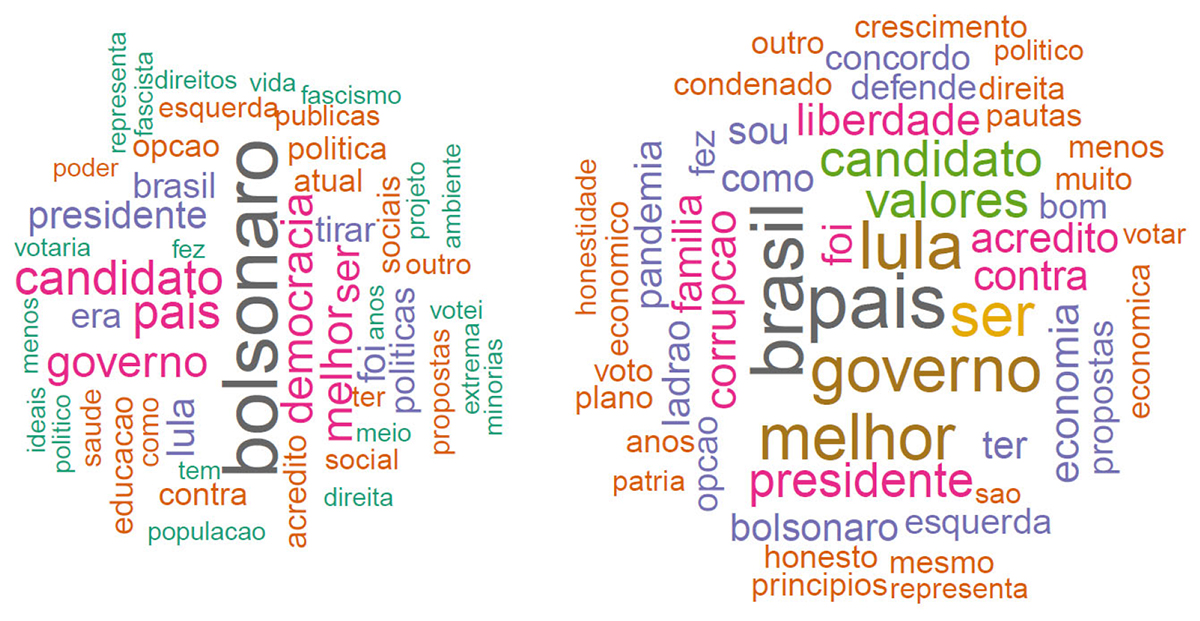
Finally, distinct patters emerged in the qualitative results. First, word cloud analysis indicated differences in the words mentioned as reasons for voting for Bolsonaro or Lula. For instance, the ten most frequently mentioned words for voting for Bolsonaro were “país” [country; n = 77], “Brasil” [Brazil; n = 74], “Lula” [n = 65]”, “governo” [government; n = 59], “melhor” [better; n = 58], “valores” [values; n = 43], “candidato” [candidate; n = 42], “presidente” [president; n = 38], “corrupção” [corruption; n = 35], and “liberdade” [freedom; n = 34]. On the other hand, the ten most frequently mentioned words for voting for Lula were “Bolsonaro” [n = 179], “candidato” [candidate; n = 86], “país” [country; n = 86], “democracia” [democracy, n = 80], “melhor” [better; n = 78], “governo” [government; n = 78], “presidente” [president; n = 63], “lula” [n = 62], “Brasil” [n = 49], and “políticas” [policies; n = 47]. The word clouds for voting for each candidate are depicted in Figure 3.
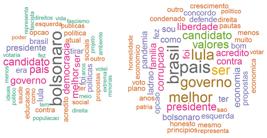
Word Clouds Indicating the Most Frequent Words to vote for Lula (left) or Bolsonaro (right)
The descending hierarchical classification confirmed the different classes of reasons for voting for Bolsonaro or Lula. As depicted in Figure 4, the corpus containing the words mentioned for voting for Bolsonaro was initially composed of 535 text segments, and 492 (91.96%) were retained to form Elementary Contextual Units. Notably, five classes were formed based on the reasons for voting for Bolsonaro. The first class, formed by 162 ECUs (32.93%), was named “Lula is corrupt” as it was formed by ECUs indicating the perception that Lula is a corrupt politician (e.g., “corruption”, “thief”, “to convict”). The second class, formed by 131 ECUs (26.63%), was named “Bolsonaro handled the economy well despite the pandemic” as it comprised ECUs indicating the perception that the economic outcomes of the Bolsonaro government were positive despite the pandemic (e.g., “pandemic”, “good”, “economy”). The third class, formed by 57 ECUs (11.50%), was named “Bolsonaro is the only honest candidate”, comprising ECUs indicating the perception that he was the only honest candidate in the election (e.g., “unique”, “honest”, “candidate”). The fourth class, formed by 60 ECUs (12.20%), was named “fear of socialism” as it comprised ECUs indicating the fear that a socialist left-wing candidate would win the election (e.g., “fear”, “socialism”, “candidate”). Finally, the fifth class was formed by 82 ECUs (16.67%) and named “Bolsonaro endorses conservative values”, as it comprised ECUs indicating the endorsement of Bolsonaro for traditional morality (e.g., “god”, “honesty”, “homeland”).

Dendrogram of Classes Obtained From the Descending Hierarchical Classification of Reasons for Voting for Bolsonaro
On the other hand, four classes were formed based on the reasons for voting for Lula (see Figure 5). The first class was formed by 104 ECUs (20.31%), and it was named “We need to defeat Bolsonaro” as it comprised ECUs indicating the perception that it was important to win the election against Bolsonaro in 2022 (e.g., “to defeat”, “Bolsonaro”, “to win”). The second class was formed by 139 ECUs (27.15%), and it was named “Lula has a democratic and public program”, as it comprised ECUs indicating that Lula’s program focused on the promotion of public and democratic institutions (e.g., “education”, “public”, “democracy”). The third class was formed by 141 ECUs (27.54%), and it was named “Lula represents the left-wing” as it comprised ECUs indicating that Lula was the only left-wing representative who could win the 2022 election (e.g., “left”, “current”, “to represent”). Finally, the fourth class was formed by 128 ECUs (25%), and it was named “Lula is the best option” as it comprised ECUs indicating that Lula was the best presidential candidate (e.g., “better”, “candidate”, “president”).

Dendrogram of Classes Obtained From the Descending Hierarchical Classification of Reasons for Voting for Lula
Discussion
To the best of our knowledge, this is the first study to assess the ideological predictors of voting for Bolsonaro or Lula in the 2022 Brazilian elections. Previous studies indicated that RWA and SDO significantly predicted votes for Bolsonaro in the 2018 elections (Franco & Pound, 2022; Silva et al., 2022), and our results indicated a similar pattern for the 2022 elections. Notably, RWA significantly predicted votes for Bolsonaro, indicating the predictive centrality of endorsement of harsh coercive measures, submission to authority, and traditional moral values. Similarly, SDO significantly predicted vote for Bolsonaro, indicating that support for hierarchically structured intergroup relations in society ― especially in its subtle forms ― remains a key ideological predictor. Both results are coherent, as equality-enhancing policies were defunded in the Bolsonaro government, and the support for strict punishment remained a key part of his speeches throughout his government, as well as constant references to the need to follow traditional religious values (Marques, 2022).
The qualitative data corroborated the conservative reasons for voting for Bolsonaro in opposition to the progressive reasons for voting for Lula. For instance, voting for Lula was frequently accompanied by references to “democracy” and the period when he was the president of Brazil, indicating a desire to reestablish the Brazilian political system as it was when Lula was governing, allegedly focused on promoting social equality. On the other hand, the reasons for voting for Bolsonaro were mostly based on “country”, “values”, and “corruption”, indicating an attempt to maintain the status quo focused on traditional morality. It is worth noting that the ideological dissimilarity was accompanied by intense out-group derogation in important ways. For instance, those who voted for Bolsonaro constantly indicated the fear that Lula would be a corrupt left-wing politician who could implement socialism in Brazil, whereas those who voted for Lula indicated that Bolsonaro had to be defeated and that Lula was the only feasible candidate to achieve this objective. The intergroup animosity was so fierce that Lula won over just 1.8% of votes, indicating that the dissimilar political agendas may remain disputed in national politics.
The present study updates previous literature by indicating that RWA and SDO remain key ideological predictors of voting behavior, and in particular, vote for Bolsonaro in the Brazilian context. Furthermore, it advances the topic by specifying the predictive role of each dimension of RWA and SDO on voting, as well as by outlining the dissimilar qualitative reasons for voting for Bolsonaro or Lula in the second round of the 2022 presidential elections. Despite its contributions, some limitations are worth mentioning. For instance, the sample is not representative of the Brazilian sample, as most participants were self-classified as white and had university degrees. Furthermore, although we provided statistical power analysis calculations using the software G*Power, it is worth noting that its results are based on random sampling techniques, and our findings are based on convenience sampling. Moreover, the model fit of the latent path models was inadequate, but it considerably improved when one item was removed.
Another important limitation is that we conducted exploratory analyses, deviating from our original analytic plan in three main ways. First, as our pre-registered hypothesis focused on RWA and SDO as unidimensional constructs, we did not initially aim to assess the predictive effects of their distinct dimensions. We later decided to do this because the questionnaires used could assess RWA and SDO in both their unidimensional and multidimensional forms (Vilanova et al., 2022, 2023), providing novel insights about the predictive role of each dimension on voting, so we decided to complement our initial pre-registered analyses by reporting these additional results. Second, we did not initially aim to analyze the qualitative reasons for voting for Bolsonaro or Lula. After we had pre-registered our analytical plan, we decided to complement our survey with the open question “Why did you vote for [Bolsonaro/Lula] in the second round of the presidential elections in 2022?” This decision was taken because, to the best of our knowledge, there are no studies addressing the qualitative reasons for voting in this Brazilian election. It indeed advanced the literature on the topic as it preliminarily indicated dissimilar reasons for voting for the candidates. Finally, it should be mentioned that we initially aimed to assess the predictive effects of ideologies and worldviews on voting. The idea was thus to assess not only RWA and SDO, but also their underlying worldviews - Dangerous World Beliefs and Competitive World Beliefs, respectively (see Duckitt & Sibley, 2017, for a review). These worldviews are worth assessing because, while they have not yet been explored as predictors of voting behavior, they are key predictors of RWA and SDO. Therefore, their assessment may provide novel insights about the relationship between voting, ideologies, and worldviews. Nevertheless, there was an issue with the Qualtrics platform, and the data about worldviews was not saved, so unfortunately, we could not assess its predictive effects. Hence, our pre-registered hypothesis that Dangerous World Beliefs and Competitive World Beliefs predict voting for Bolsonaro should be tested in future studies.
As a concluding remark, it is worth noting that our results contribute to the broad psychological literature by pointing out similar and dissimilar psychosocial aspects of voting behavior. The predictors of voting for Bolsonaro, a far-right candidate in the Brazilian context, are similar to the predictors of voting for other far-right candidates such as Donald Trump in the United States (Womick et al., 2018) and extreme right-wing parties in Western Europe (Cornelis & Van Hiel, 2015). Notwithstanding the similarities, the contextual particularities must also be considered, as our results indicate that recent political events in Brazil, such as the arrest of Lula, were often mentioned as reasons for voting for Bolsonaro. Therefore, the predictive role of ideologies in voting behavior should be analyzed considering recent local political events.
References
- Altemeyer, B. (1988). Enemies of freedom: Understanding right-wing authoritarianism Jossey-Bass.
-
Altemeyer, B. (1998). The other “authoritarian personality.” In M. Zanna (Ed.), Advances in experimental social psychology (vol. 30, pp. 47-92). Academic Press. https://doi.org/10.1016/S0065-2601(08)60382-2
» https://doi.org/10.1016/S0065-2601(08)60382-2 -
Amaral, O. E. (2020). The victory of Jair Bolsonaro, according to the Brazilian Electoral Study of 2018. Brazilian Political Science Review, 14(1), e0004-1/13. https://doi.org/10.1590/1981-3821202000010004
» https://doi.org/10.1590/1981-3821202000010004 -
Atenstaedt, R. (2012). Word cloud analysis of the BJGP. British Journal of General Practice, 62(596), 148. https://doi.org/10.3399/bjgp12X630142
» https://doi.org/10.3399/bjgp12X630142 -
Atlantic Council (2022, October 30). Lula is back in Brazil. Here’s what’s coming. Atlantic Council https://www.atlanticcouncil.org/content-series/fastthinking/lula-is-back-in-brazil-heres-whats-coming/
» https://www.atlanticcouncil.org/content-series/fastthinking/lula-is-back-in-brazil-heres-whats-coming/ -
Berry, C. M. (2023). A critical examination and meta-analysis of the distinction between the dominance and antiegalitarianism facets of social dominance orientation. Journal of Personality and Social Psychology, 124(2), 413-436. https://doi.org/10.1037/pspp0000432
» https://doi.org/10.1037/pspp0000432 -
Cornelis, I., & Van Hiel, A. (2015). Extreme-right voting for Western Europe: The role of social-cultural and antiegalitarian attitudes. Political Psychology, 36(6), 749-760. https://doi.org/10.1111/pops.12187
» https://doi.org/10.1111/pops.12187 -
Duckitt, J., & Sibley, C. G. (2017). The dual process motivational model of ideology and prejudice. In C. G. Sibley & F. K. Barlow (Eds.), The Cambridge handbook of the psychology of prejudice (pp. 188-221). Cambridge University Press. https://doi.org/10.1017/9781316161579.009
» https://doi.org/10.1017/9781316161579.009 -
Duckitt, J., Bizumic, B., Krauss, S. W., & Heled, E. (2010). A tripartite approach to right-wing authoritarianism: The authoritarianism-conservatism-traditionalism model. Political Psychology, 31(5), 685-715. https://doi.org/10.1111/j.1467-9221.2010.00781.x
» https://doi.org/10.1111/j.1467-9221.2010.00781.x -
Fellows, I. (2018). Wordcloud https://CRAN.R-project.org/package=wordcloud
» https://CRAN.R-project.org/package=wordcloud -
Franco, A. B., & Pound, N. (2022). The foundations of Bolsonaro's support: Exploring the psychological underpinnings of political polarization in Brazil. Journal of Community & Applied Social Psychology, 32(5), 846-859. https://doi.org/10.1002/casp.2599
» https://doi.org/10.1002/casp.2599 -
Ho, A. K., Sidanius, J., Kteily, N., Sheehy-Skeffington, J., Pratto, F., Henkel, K. E., Foels, R., & Stewart, A. L. (2015). The nature of social dominance orientation: Theorizing and measuring preferences for intergroup inequality using the new SDO₇ scale. Journal of Personality and Social Psychology, 109(6), 1003-1028. https://doi.org/10.1037/pspi0000033
» https://doi.org/10.1037/pspi0000033 -
Holgado-Tello, F. P., Chacón-Moscoso, S., Barbero-García, I., & Vila-Abad, E. (2010). Polychoric versus Pearson correlations in exploratory and confirmatory factor analysis of ordinal variables. Quality & Quantity, 44(1), 153 - 166. https://doi.org/10.1007/s11135-008-9190-y
» https://doi.org/10.1007/s11135-008-9190-y -
Jost, J. T., & Thompson, E. P. (2000). Group-based dominance and opposition to equality as independent predictors of self-esteem, ethnocentrism, and social policy attitudes among African Americans and European Americans. Journal of Experimental Social Psychology, 36(3), 209-232. https://doi.org/10.1006/jesp.1999.1403
» https://doi.org/10.1006/jesp.1999.1403 -
Layton, M. L., Smith, A. E., Moseley, M. W., & Cohen, M. J. (2021). Demographic polarization and the rise of the far right: Brazil’s 2018 presidential election. Research & Politics, 8(1). https://doi.org/10.1177/2053168021990204
» https://doi.org/10.1177/2053168021990204 -
Marques, J. V. S. (2022, November 2). Why did half the voters in Brazil choose a man who served jail time for corruption. Euronews https://www.euronews.com/2022/10/31/analysis-why-did-half-the-voters-in-brazil-choose-a-man-who-served-jail-time-for-corruptio
» https://www.euronews.com/2022/10/31/analysis-why-did-half-the-voters-in-brazil-choose-a-man-who-served-jail-time-for-corruptio -
Mavor, K. I., Louis, W. R., & Sibley, C. G. (2010). A bias-corrected exploratory and confirmatory factor analysis of right-wing authoritarianism: Support for a three-factor structure. Personality and Individual Differences, 48, 28-33. https://doi.org/10.1016/j.paid.2009.08.006
» https://doi.org/10.1016/j.paid.2009.08.006 -
Pombo, B. (2022, September 2). Entenda por que Lula Foi Preso e por que Ele foi Solto [Understand why Lula was arrested and why he was released]. Valor https://valor.globo.com/politica/noticia/2022/09/02/entenda-por-que-lula-foi-preso-e-por-que-ele-foi-solto.ghtml
» https://valor.globo.com/politica/noticia/2022/09/02/entenda-por-que-lula-foi-preso-e-por-que-ele-foi-solto.ghtml -
Pratto, F., Sidanius, J., Stallworth, L. M., & Malle, B. F. (1994). Social dominance orientation: A personality variable predicting social and political attitudes. Journal of Personality and Social Psychology, 67(4), 741-763. https://doi.org/10.1037/0022-3514.67.4.741
» https://doi.org/10.1037/0022-3514.67.4.741 -
Ratinaud, P. (2023). IRaMuTeQ - Interface de R pour les Analyses Multidimensionnelles de Textes et de Questionnaires [Software]. http://www.iramuteq.org/
» http://www.iramuteq.org/ -
Reinert, M. (1987). Classification descendante hierarchique et analvse lexicale par contexte - Application au corpus des poesies D'A. Rihbaud. Bulletin of Sociological Methodology, 13(1), 53-90. https://doi.org/10.1177/075910638701300107
» https://doi.org/10.1177/075910638701300107 -
Richard, F. D., Bond, C. F. Jr., & Stokes-Zoota, J. J. (2003). One hundred years of social psychology quantitatively described. Review of General Psychology, 7(4), 331-363. https://doi.org/10.1037/1089-2680.7.4.331
» https://doi.org/10.1037/1089-2680.7.4.331 -
Sidanius, J., & Pratto, F. (1999). Social dominance: An intergroup theory of social hierarchy and oppression Cambridge University Press. https://doi.org/10.1017/CBO9781139175043
» https://doi.org/10.1017/CBO9781139175043 -
Silva, B. C., Fuks, M., & Tamaki, E. R. (2022). So thin it’s almost invisible: Populist attitudes and voting behavior in Brazil. Electoral Studies, 75, 102434. https://doi.org/10.1016/j.electstud.2021.102434
» https://doi.org/10.1016/j.electstud.2021.102434 -
Soper, D. S. (2022). A-priori sample size calculator for structural equation models [Software]. https://www.danielsoper.com/statcalc
» https://www.danielsoper.com/statcalc -
The Intercept Brasil (2020, January 20th). Leia Todas as Reportagens que o Intercept e Parceiros Produziram para a Vaza Jato [Read all the reports that The Intercept and associates wrote to the Vaza Jato]. The Intercept Brasil https://www.intercept.com.br/2020/01/20/linha-do-tempo-vaza-jato/
» https://www.intercept.com.br/2020/01/20/linha-do-tempo-vaza-jato/ -
The Lancet (2020). COVID-19 in Brazil: “So What?”. The Lancet, 395(10235), 1461. https://doi.org/10.1016/S0140-6736(20)31095-3
» https://doi.org/10.1016/S0140-6736(20)31095-3 -
Vilanova, F., Almeida-Segundo, D. S., Duarte, M. Q., & Costa, A. B. (2022). Evidências de validade da escala de orientação à dominância social no Brasil. Psico-USF, 27(3), 437-449. https://doi.org/10.1590/1413-82712024270303
» https://doi.org/10.1590/1413-82712024270303 -
Vilanova, F., DeSousa, D. A., Koller, S. H., & Costa, A. B. (2018). Cross-cultural adaptation and factor structure of the Brazilian version of the right-wing authoritarianism. Trends in Psychology, 26(3), 1317-1334. https://doi.org/10.9788/TP2018.3-07En
» https://doi.org/10.9788/TP2018.3-07En -
Vilanova, F., Milfont, T. L., & Costa, A. B. (2023). Short version of the right-wing authoritarianism scale for the Brazilian context. Psicologia: Reflexão e Crítica, 36, 17. https://doi.org/10.1186/s41155-023-00260-4
» https://doi.org/10.1186/s41155-023-00260-4 -
Vilanova, F., Milfont, T. L., Cantal, C., Koller, S. H., & Costa, A. B. (2020). Evidence for cultural variability in right-wing authoritarianism factor structure in a politically unstable context. Social Psychological & Personality Science, 11(5), 658-666. https://doi.org/10.1177/1948550619882038
» https://doi.org/10.1177/1948550619882038 -
Womick, J., Rothmund, T., Azevedo, F., King, L. A., & Jost, J. T. (2019). Group-based dominance and authoritarian aggression predict support for Donald Trump in the 2016 U.S. Presidential Election. Social Psychological & Personality Science, 10(5), 643-652. https://doi.org/10.1177/1948550618778290
» https://doi.org/10.1177/1948550618778290

 Note: *p < .05, ** p < .001, f = frequency of word/linguistic radical in the class
 Note: *p < .05, ** p < .001, f = frequency of word/linguistic radical in the class