 Face Processing: Theoretical and methodological aspects
Abstract
Face processing is one of the most relevant aspects of our existence, as it allows the identification of others, as well as the understanding of their emotional states and behavioral dispositions, thus constituting a source of information for human interactions. Given the importance of facial recognition, this article presents a set of evidence that points to the highly specialized nature of this type of processing and the convergences and divergences between face processing models. The scope of this work also includes considerations on the representational nature of faces, relevant to the processes of encoding and decoding facial stimuli, the main statistical methods used in the area, and the challenges in research on the topic.
Keywords:
face processing; face processing models; face recognition
Resumo
O processamento de faces é um dos aspectos mais relevantes da nossa existência, pois permite a identificação de outros, bem como a compreensão dos seus estados emocionais e disposições comportamentais, constituindo assim uma fonte de informação para as interações humanas. Dada a importância do reconhecimento facial, este artigo apresenta um conjunto de evidências que apontam para a natureza altamente especializada deste tipo de processamento e para as convergências e divergências entre modelos de processamento facial. O escopo deste trabalho também inclui considerações sobre a natureza representacional das faces relevantes para os processos de codificação e decodificação de estímulos faciais, os principais métodos estatísticos utilizados na área e os desafios nas pesquisas sobre o tema.
Palavras-chave:
Processamento de faces; Modelos de processamento facial; reconhecimento facial
For highly social organisms such as humans, facial expressions represent a significant mode of communication. They convey critical information regarding an individual’s identity, mood, gender, age, emotions, and behaviors. The capacity to rapidly extract and interpret such a wealth of information from faces has been essential for the survival and evolution of the human species, contributing not only to its survival but also to its dominance over numerous other species. Empirical support for the significance of facial information is found in neurophysiological, neuropsychological, psychophysical, and behavioral research, which collectively endorse the face specificity hypothesis. This hypothesis posits that the perception of faces is processed in distinct regions of the brain that are dedicated solely to this function, thereby suggesting that facial perception occurs independently from the perception of other objects. Moreover, advocating for the specificity of face processing underscores not only how organisms respond to facial stimuli but also the intrinsic value of these stimuli in shaping human social cognition, distinguishing them from any other visual stimuli (Dobs et al., 2019; Downing et al., 2001; Kanwisher & Yovel, 2006, 2009; Saxe & Powell, 2006).
Grounded in the premise that faces constitute a set of stimuli of paramount importance for human survival (Hou & Liu, 2019; Tzourio-Mazoyer et al., 2002), which serve as sources of information about both the physical and social environment, the central themes of their processing will be outlined below. First, we will examine the indicators that underscore the significance of faces as informational sources. Next, we will explore the principal models that elucidate facial processing and discuss why, despite being part of the concrete world surrounding individuals, faces cannot be classified in the same manner as other objects. Finally, we will address the methodologies and technological approaches employed in the study of facial information processing, along with the limitations and challenges that have emerged in this field.
The three pillars of evidence on the specificity of faces
Neuropsychological Evidence
The initial evidence suggesting that face perception is governed by highly specialized mechanisms distinct from those utilized in object perception originated unexpectedly, not from investigation into normative brain processes, but from the study of prosopagnosia syndrome.
This condition is characterized by the inability to recognize faces following neurological damage, without a general loss of the conceptual understanding of individuals. Notably, individuals with prosopagnosia can still identify others through their voice or verbal descriptions. This specific impairment relates solely to facial recognition. As a clinical condition, prosopagnosia may co-occur with other neurological disorders, such as visual agnosia, language deficits, or executive dysfunction, due to the typically extensive lesions affecting various functional subdivisions of the cortex. While these conditions can also lead to impaired object perception, in alignment with the face specificity hypothesis, certain prosopagnosic patients exhibit highly selective deficits, demonstrating severe impairments in facial recognition abilities while maintaining intact capabilities for recognizing non-facial objects (Wada & Yamamoto, 2001).
Given the particularity and complexity of face recognition, could it be considered, then, that face recognition is one of the first skills to be lost in the case of brain injury? The answer to this question has been consistently understood as ‘no.’ As a clear example of this, Kanwisher and Yovel (2009) report the remarkable case of patient CK, who showed deficits in object recognition, but normal facial recognition, indicating a double dissociation between the recognition of faces and objects. In this case, patient CK, who had been a collector of toy soldiers, lost the ability to discriminate these stimuli, demonstrating the dissociation between facial recognition (preserved) and visual expertise (impaired). Both the case of patient CK and several others cited in the specialized literature (e.g., since Moscovitch’s classical studies in 1997) support the hypothesis of face specificity, aligning with solid empirical findings that reinforce this theory (Duchaine & Yovel, 2015; McKone et al., 2007).
Behavioral Evidence
Behavioral studies are so-called because they prioritize data collection through non-invasive means but are completely dependent on the responses of the individuals evaluated, as opposed to physiological or biochemical measures. In general, in this type of study, responses are taken based on a verbal or gestural indication from the participant, response time, psychophysical measurements, forced choice, or observations by the researcher.
Among behavioral research initiatives, the investigation of the effects of face inversion has emerged as one of the most widely recognized areas of study since the 1960s. In this group of studies, there was a greater decrease in the identification of inverted faces (that is, turned upside down) than when the stimuli were non-face (Yin, 1969). Studies of face inversion have led to a significant series of experiments regarding human facial processing, culminating in the understanding that this process not only differs from the other objects but also occurs holistically, as evidenced by the effect of global precedence (Rezlescu et al., 2017, Richler & Gauthier, 2014; Richler et al., 2011; Tanaka & Simonyi, 2016). In contrast to holistic processing, the theory of part-based processing posits that observers engage in the tracking and identification of individual facial components before concluding that they are viewing a face (Bradshaw & Wallace, 1971).
Additionally, several behavioral studies that differentiate the human face from other objects highlight the part-whole effect as key evidence for holistic processing (Tanaka & Farah, 1993, 2003). In their 1993 study, Tanaka and Farah found that participants were more adept at distinguishing between two parts of a face (e.g., two noses) when these parts were presented within the context of an entire face rather than in isolation, suggesting that facial features are perceived in relation to the whole.
A complementary finding supporting holistic processing is the composite effect (Young et al., 2013), which shows that participants take longer to identify half of a chimeric face when it is aligned with an inconsistent half than when the two halves are misaligned. This suggests that faces are perceived as unified wholes rather than as independent features. Building on these insights, Yovel et al. (2005) proposed the holistic hypothesis, which states that the probability of correctly identifying an entire face is greater than the sum of the probabilities of recognizing its halves. Together, these findings reinforce the idea that facial perception relies on an integrative process rather than on the isolated analysis of distinct features.
Following the face inversion effect, Thompson (1980) observed that when attributes of a face (e.g., eyes and mouth) were inverted, the changes were immediately noticeable when the faces were in normal orientation. However, these changes took longer to be noticed when the faces were inverted. In 1980, when Thompson conducted his study, he used images of then-Prime Minister Margaret Thatcher’s face to ensure it was easily recognizable to all research participants. Thus, the phenomenon became known as the Thatcher effect (Hicks et al.,2017; Psalta et al., 2014; Thompson, 1980; Yovel & Kanwisher, 2005). The Thatcher Effect suggests that face perception is specialized for faces in one orientation and that, as with the inverted face effect, by presenting the face upside down, we disrupt holistic processing. The face inversion effect extends beyond the inverted face effect, by presenting the behavioral responses; it has also been shown to alter or delay activation in brain regions that selectively respond to faces when inverted faces are presented (Leube et al., 2003; Rossion et al., 2002; Tanaka & Farah, 1993).
Neurophysiological Evidence
Neurophysiological studies tend to be highly valued among neurosciences and related sciences, because, when well executed and methodologically well designed, they are based on precise, expressive measurements that are relatively independent of any other measurement. This is the case for studies involving visual evoked potential (ERP), electroencephalography (EEG), or magnetoencephalography (MEG).
Among studies involving these techniques, it has been pointed out that the N170 component, in the EEG, and the M170, in the MEG, are particularly important in the processing of facial stimuli (e.g., Bentin et al. 1996; Downing et al., 2006; Liu et al., 2002). In adults, the N170 is a face-sensitive ERP component characterized by a negative deflection in wave amplitude that occurs around 170 ms after the presentation of a face (Bentin et al., 1996). Currently, we find electrophysiological responses indicating selectivity of responses to the face between 100 ms and 170 ms after the presentation of the facial stimulus (Downing et al., 2006). The existence of electrical responses in specific components and the rapidity of these responses have been considered evidence in support of the face specificity hypothesis.
Although it has been argued that the face-selective N170 response is sensitive to visual experience with non-face stimuli (Gauthier et al., 2003; Liu et al., 2002; Rossion et al., 2002), these studies are difficult to interpret because none of them includes all three experimental conditions critical for a reliable conclusion: faces, objects of expertise, and objects of control (McKone & Kanwisher, 2005). The only published study that included all three conditions investigated the face-selective magnetic response (M170). It did not find an elevated response to cars among subject matter experts, nor was there any correlation between M170 response amplitude and the expert’s successful identification of cars (Xu, 2005).
Neural plasticity and the nature of representational processes
Although faces are concrete and visually observable parts of the human environment, part of the understanding of these stimuli is done at the cortical level. To this extent, we must talk about representational processes of information, since the face will need to be encoded and translated into electrical stimuli, which, once taken to the brain areas responsible for decoding these stimuli, will finally be organized and understood by the observer. An important aspect to be considered regarding the processing of facial stimuli is how much the understanding of facial information depends on the neurological substrate that processes it. Therefore, understanding faces is a representational process, dependent not only on the presence of specific brain areas responsible for their processing (such as the Fusiform region) but also on cognitive abilities, such as memory, attention, and even executive abilities related to judgment and intellectual maturity. In this sense, an important question is what factors, both intrinsic and extrinsic to the cortex, ensure that: (1) we develop types of specialized cognitive functions relevant to our survival, such as face and language processing; and (2) whether these specialized functions would be in approximately the same parts of the cortex. If so, what guarantees the continuity of this process? The most obvious answer to these questions is that specific genes are found in specific parts of the cortex and “encode” specific wiring patterns for certain computational functions. Although this type of explanation appears to be valid for specialized computations within subcortical structures, a variety of genetic, neurobiological, and cognitive neuroscience evidence indicates that it is, at best, only part of the explanation for cognitive functioning. For example, in adult humans, experience or practice in certain domains can alter the extent of cortical tissue activated during the performance of a given task (Johnson, 2003). At least three aspects of human development related to the ability to process facial information must be considered: maturational factors, learning processes, and environmental interaction. First, the cortex matures at varying rates and extents throughout human development (Segalowitz & Davies, 2004; Tamnes et al., 2017). Examples of this were provided by Piaget's (1954) classic experiments, in his studies on the acquisition of skills in childhood. As described by the author, infants under nine months of age often cannot accurately retrieve a hidden object after a short delay if the location of the object is changed. Instead, infants persevere by reaching the location where the object was found in the immediately preceding trial. As the years go by, children begin to have a better idea of the permanence of objects and, little by little, they stop expressing any difficulty in locating hidden objects or those with a changed location. Maturation within the frontal lobes is responsible for the leap in child development that promotes advances in the ability to reach for desirable objects at the end of the first year. A general expectation is that the number of active areas will increase with development.
Despite the successful explanations that the maturational approach can offer and its almost intuitive simplicity, there are reasons to believe that it may not successfully explain all aspects of brain development. For example, a view of the functional development of the human brain that considers only that certain regions mature sequentially may not easily explain the changes in patterns of cortical activation observed during postnatal development, in which it is common for regions to alternate in expansion or activity.
Seeking to expand the understanding of human brain plasticity, from the “skill learning” perspective, it is predicted that there will be similarities between brain activation patterns in adults as they acquire a new skill. Likewise, we expect that the nervous system of children and babies also indicates variations in similarities between individuals whenever they are subjected to new experiences (Gauthier & Nelson, 2001; Sunday & Gauthier, 2017).
About the perceptual experience, Gauthier and colleagues (2004) showed that extensive training of adults with artificial objects, 'greebles', eventually results in the activation of a cortical region previously associated with face processing, the fusiform area. This suggests that the region is normally activated by faces in adults, not because it is predefined for face identification, but because of our extensive experience with this class of stimuli (Crookes & McKone, 2009; McKone & Kanwisher, 2005; McKone et al., 2007). Results open room for doubts regarding the development of the child's brain and how face processing skills develop in children (Gauthier et al., 1999, 2004; Gauthier & Nelson, 2001). Are there necessarily pre-established areas for processing certain information? Or would it be the training and acquisition of expertise that plays a relevant role in the acquisition of these functions? Certainly, the interrelationships between adult visual perception and child development still require study and clarification.
Finally, from the perspective of the “interactive specialization” view, it is understood that structural changes can occur throughout development. Thus, the structures responsible for certain processing in childhood do not necessarily need to be the same among adults. In some cases, increased specialization of function can even lead to a decrease in the number of active cortical areas during development (Johnson, 2003).
Models of Face Processing
Some face-processing models have already been built throughout history. One of the first and perhaps the most famous of them was developed by Vicki Bruce and Andy Young in 1986, derived from a previous model by Hay and Young from 1982. In the classic article Understanding Face Recognition, from 1986, the authors argue that there are two types of codes for processing faces. One of these types is the Pictorial code that contains information about the details and specificity of the inspected image, making an individual able to identify that it is a face. The structural code, on the other hand, contains the more abstract information necessary to verify the specific identity of the viewed face (Bruce & Young, 1986; Hole & Bourne, 2010).
According to the model by Bruce and Young (1986), the processing of facial information occurs in stages. Initially, information about the face is encoded, forming a representation of it in the eyes of the observer. According to the authors, part of the structural code is the formation of several representations, each serving different purposes. An important contribution of this model was to investigate how familiar and unfamiliar faces are identified. According to Bruce and Young (1986), as a face is processed, descriptions of the face are produced. The more representations we have of a given face, the more the facial recognition unit is activated, making this a familiar stimulus. Thus, familiar faces are processed differently from unfamiliar faces, with this divergent processing guided by directed visual attention.
Contrary to what would happen for unfamiliar faces, the processing of familiar faces would reach the most advanced stages, such as facial recognition units, name information, and personal identity nodes. Therefore, richer and more detailed information would be extracted from a familiar face about its structural analysis. While an unfamiliar face is limited to the formation of the pictorial code and the extraction of structural information, familiar faces would benefit from the formation of a semantic code, in addition to the information obtained from unfamiliar faces. A real familiarization would therefore depend, according to Bruce and Young (1986), on the generalization of recognition of a face across different angles of presentation, as well as variations in the face obtained by structural information associated with its representation (Young & Bruce, 2011). More recent research has contributed greatly to the understanding of the processing of familiar and unfamiliar faces. For instance, Katharina Dobs and collaborators (2019), in a study using magnetic encephalography, identified that familiarity is a quickly identified variable in the processing of facial stimuli. In other words, the initial stages of processing facial stimuli appear to be directed towards recognizing familiar faces or at least facilitating this recognition. Furthermore, gender and identity directly influence the speed of perception of familiar faces, but, on the other hand, age is not an important variable in this process (Dobs et al., 2019).
Another relevant model in the area is the Interactive Activation and Competition Model (ACI), proposed by Burton and Bruce in 1993, which is considered an update of the previous model proposed by Bruce and Young in 1986. The ACI was developed to be just a computer simulation of the Bruce and Young model, but it far exceeded these expectations. In this model, the processing and identification of a face comes from the analysis of its main components, an analysis technique to be discussed later (Burton et al., 1990; Burton & Bruce, 1993).
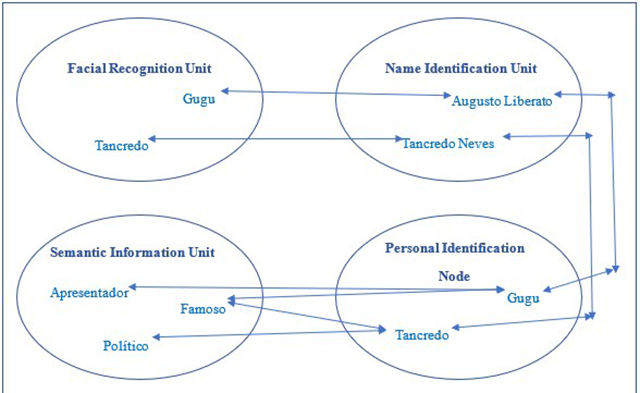
The ACI model recognizes, as in the theory proposed by Bruce and Young in 2006 and updated in 2011, that each human face is assigned a facial recognition unit and a personal identity node. These are terms related to the structural code of the 1986 Bruce and Young model, which indicates that the recognition of a face and identification of an observed individual are uniquely performed by the observer. In other words, each observed face generates a record of a single individual for the observer. The ACI model then simulates a series of possible interactions between environmental information and observed details to accurately identify a familiar face or confirm its unfamiliarity. As illustrated in Figure 1 below, imagine you are facing a familiar person in Brazilian culture. According to the ACI model, to effectively recognize a face, the human brain can weave together available visual and semantic information, thereby facilitating facial recognition.

Schematic example of the Activation and Interactive Competition Model (Adapted from Burton et al., 1990)
A third model emerged in 1991, proposed by Valentine and his collaborators, the Multidimensional Spatial Face Model, which seeks to understand how we represent faces in human memory. In short, this is a reasonably simple model, which assumes that we store information about faces, based on a continuum of evaluations about their characteristics. For example, imagine that we store facial information, considering the color of the eyes of the person we observe. So, in this case, we would have a one-dimensional model in which the variation in eye colors would classify the observed face.
Add to this other dimensions such as lip thickness, nose size, and skin color, and, as a result, we would have a multidimensional model based on the stored characteristics. Despite being simple, the model proposed by Valentine and colleagues brought interesting discussions about how we store information about faces. An effect that has been extensively studied based on this model is the caricature effect. Now, professional caricaturists do nothing more than distort aspects of the human face, without affecting the ability to recognize it. What studies show about caricatures is that, regardless of how good the secondary details are, caricaturists have something in common: they know how to distort exactly the most striking characteristics, or dimensions, of each face. Another interesting effect studied using the multidimensional model is the race effect, according to which it is easier for us to recognize dimensions between faces that we consider to be more similar to our faces or those of our race (Rhodes et al., 2009; Valentine, 1991; Wallis et al., 2012; Zhao et al., 2014). The primary explanation for this effect lies in the fact that, when decoding a facial image, we create multiple spatial vectors that aid in interpreting the stimulus. Consequently, faces of the same race tend to have more similar vectors, making it easier to group them in memory as a single group (Valentine, 1991; Valentine & Endo, 1992).
Finally, Haxby et al. (2000) proposed a model of face processing at a neural level, also composed of systems: a central system (core system), in which the face would be analyzed at a basic visual level; and, an extended system, in which more sophisticated processing would occur, giving meaning to the information obtained through prior visual analysis.
Initially, basic visual information would be extracted from the face, with facial elements and spatial configurations being processed in the inferior occipital gyrus, which would then forward the information to the superior temporal sulcus and the fusiform gyrus, structures responsible for processing static and dynamic aspects of the face. (i.e., elements such as facial expression, lip movement, and direction of gaze). As for the extended system of the model by Haxby et al. (2000), four areas are considered, each one involved in the processing of distinct elements, but in interaction with the striate visual cortex. They are: the anterior temporal region, which is involved in processing identity and biographical information; the limbic system, the insula cortex and the amygdala, all involved in processing emotional expressions and emotions; the intraparietal sulcus, involved in perceptual processing and spatial attention; and the auditory cortex, involved in processing the perceived movement of the lips (Gobbini & Haxby, 2007; Haxby et al., 2000, 2002).
Statistical methods used for facial recognition
Human beings use facial recognition naturally, and the face is the focus of this recognition, which is done uniquely, including the search for geometric patterns between the distances of the eyes, lips, eyebrows, and nostrils, which can also include accessories such as glasses, earrings, hats, among others. Throughout their lives, people identify familiar faces using facial recognition through constant learning, constantly viewing such stimuli, and identifying patterns that are recorded in their memories, competing, at a glance, to identify a person. Facial recognition models are based on algorithms that check the existence of patterns in a digital image or video based on a data source that serves as a parameter. In general, they can be divided into three main steps: Detection, Extraction, and Facial Classification (e.g., Lien et al., 2000; Rajan et al., 2019; Zhao & Zhang, 2016). The first step is to check with the help of the algorithm whether an image contains a face or not. This is a categorical process, in which the result will be “yes” when it is a face, or “no" when it is any image other than a face. In the extraction part, the algorithm analyzes and extracts specific characteristics of the face that are important to, in the next phase, be able to recognize it and determine its identity.
Finally, the last step of facial classification compares the face in the digital image or video with the data source to measure the accuracy of the data and conduct the classification.
Nowadays, facial recognition is used in different ways, from unlocking cell phones to banking transactions, recognizing criminals, and facial reconstruction. All of this is only possible because there are image processing models that are based on statistical or artificial intelligence techniques. To understand how these analyses work, it is necessary to start with facial geometry. Through geometric analysis, the facial image is transformed into a set of vectors whose values will serve as a basis for comparative calculations with parameter vectors in the database. In other words, the main strategy of processing models is to transform a visual stimulus into a set of vector-matrix data that can be compared to the stimulus adopted as a reference. So, if we want to know whether a certain face belongs to an individual, we compare a captured image of his face with a photo of him. This process may sound quite simple when we think about comparing one stimulus with another, which can be done with the naked eye. However, when we talk about processing models, the aim is to develop systems capable of comparing thousands of faces with robust databases, in fractions of seconds, making police forces capable of identifying criminals at airports or unlocking your cell phone, regardless of the makeup or face mask you are using.
The statistical techniques most used in processing models are Principal Component Analysis - PCA, Linear Discriminative Analysis - LDA, and Local Binary Patterns - LBP. Artificial intelligence techniques are based on the concept of machine learning to process facial recognition. Among these techniques, we have Artificial Neural Networks - ANN, Hidden Markov Model - HMM, and Support Vector Machine - SVM.
To exemplify image processing models, two of these techniques will be discussed in this paper: Principal Component Analysis (PCA), which is a statistical technique, and the Artificial Neural Network, which is an artificial intelligence technique. Principal Component Analysis uses linear algebra and multivariate statistical formulas to reduce the set of vectors that make up a facial image. For example, imagine a database with 1,000 faces of the same individual. ACP will identify the most recurring features among all images and will define these vectors as the most important for recognizing the face in question. Thus, instead of analyzing all thousands of vectors, ACP will be restricted to analyzing only the most relevant vectors. In other words, the primary purpose of ACP is to reduce the dimensionality of the image while retaining as much information as possible without sacrificing the overall variability of the data. It serves as a method of data compression by emphasizing the most significant information. According to Devi and Hemachandran (2014), ACP brings some advantages in its applicability in facial recognition, such as reducing data redundancy, reducing the complexity of grouping facial images, compressing images in data storage, and reducing noise and the image feature vector. However, PCA also has disadvantages, such as, for example, certain imprecision in the analysis of the covariance matrix; high sensitivity to different image datasets used for training, and a need for more time to complete data processing.
Another technique that can be combined or used independently for facial recognition is the Artificial Neural Network, which uses machine learning to train images and identify recognition patterns, then test them to measure the accuracy of image results. According to Haykin (2001), a neural network processes information directly and in parallel, to which weights are assigned, to store experimental data. Its use is similar to the human brain in two ways. The first refers to the learning process, from which the network absorbs and retains information made available by the environment. The second similarity is related to the acquired knowledge that is stored by the connection forces between neurons. This connection strength can vary depending on the relevance of the information retained, known as synaptic weights (Haykin, 2001). According to Reis and collaborators (2001), the artificial neural network is analogous to the human nervous system, as it is a set of synaptic connections linked by neurons that form a system divided into three parts: (1) input neurons, in which the patterns are inserted into the network, (2) internal neurons, where the processing is carried out and (3) output neurons, which present and conclude the result. Most neural network models have training rules, that is, the patterns presented to adjust the weights of the connections and can be understood as learning through examples (Reis et al., 2001).
To get an idea of the potential of ANNs, Rowley and his collaborators (1996) show how the artificial neural network algorithm they developed managed to detect between 78% and 90% of the faces in a set of 130 test images, even limited to the recognition of faces that were looking directly at the camera. For pattern recognition, artificial neural networks have some advantages over other more traditional techniques from the perspective of adaptability, which is the ability to adapt to new information; the speed of processing diverse information in parallel; fault tolerance, which is the ability to produce good results even in the face of missing, confusing or noisy data; and, finally, optimality, related to low error rates. Given these benefits, image processing techniques can be used together with artificial neural networks to develop even better pattern recognition.
In short, when discussing facial recognition, it is important to distinguish between three distinct problems or tasks. The first task is detection and localization, namely, determining whether a face is present and where it is (Yang et al., 2002). The second task is identification, that is, naming a person in a new image. The third task is verification, that is, deciding whether a person in a new image is who they claim to be (Beveridge et al., 2006). Currently, statisticians, engineers, mathematicians, and data scientists have sought to overcome the limits of cost, data storage, processing speed, and operational costs to bring efficient and effective solutions to these issues.
Face processing throughout development and abnormalities
The face is such a relevant stimulus for humans that the preference for it has been observed from a very early age (e.g., Farroni et al., 2006; Pereira et al., 2017). The tendency for newborns, as young as just 10 hours old, to prefer faces, even schematic ones, to scrambled faces or parts of faces has been highlighted since the mid-19th century. Much has also been asked about the tendency, innate or learned, of human beings to identify with other faces. In addition to questioning how much “innate knowledge” about faces humans have, studying the development of facial perception skills during childhood has proven to be fertile ground for expanding theories on perceptual and cognitive development. In this sense, studies on facial perception have investigated theories about learning mechanisms, pubertal peaks and drops in performance, the longitudinal stability of learned patterns, and even the functional specialization of cortical regions (Rhodes et al., 2012).
It is known, to date, that at least some aspects of face perception appear to be innate, as babies under 24 hours of age can demonstrate a preference for faces (real or schematic) compared to visually scrambled or scrambled faces (Johnson et al., 1991). Given such results, Johnson et al. (1991) developed the two-stage processing theory, in which they suggest that there is a first intrinsic stage, when newborns are intuitively attracted to human faces, and a second stage when they begin to learn to observe faces and develop expertise in the task. Its hypothesis is that the first phase exists precisely to guide the maturation of the cortical circuitry necessary for greater expertise to be developed (Johnson et al., 1991; Morton & Johnson, 1991). On the other hand, there are aspects of face perception that seem to be more influenced by experience than by biological issues per se. Studies have shown, in the so-called “race effect”, that face perception, both in neural responses (Golby et al., 2001) and in behavioral performance, occurs differently for faces of a familiar person than for an unknown race. This duality between biological and environmental influence on the processing of facial information occupies a large place on the agenda of researchers interested in this area of knowledge. Two fairly recent discoveries suggest, however, a greater role for genes than many would have imagined.
A well-known research methodology to identify the difference between biological and environmental influence on individuals is the study of twins, given the genetic similarity between the individuals investigated. In this regard, Polk and colleagues (2007) compared the spatial distribution of response to various stimulus categories across the ventral visual pathway in monozygotic and dizygotic twins. Their results indicate that for faces and places, the response pattern was more similar for monozygotic twins than for dizygotic twins, with the same not occurring for pseudowords and chairs, which suggests genetic influences, partly due to fur, on the response pattern to faces in the ventral visual pathway. However, note that this result does not argue against the relevance of training and building expertise in the development of the fusiform region. On the contrary, it only contributes to highlighting possible multifactorial explanations regarding face recognition. In other words, biological aspects have an unquestionable role, but there is also relevance in the training and experience acquired through exposure to environmental stimuli. Illustrating this overlap of innate and acquired aspects, let us return to one aspect to delve deeper into it. Previously in this article, we discussed acquired prosopagnosia, a condition that is very informative about face perception and widely studied. However, it is important to add that in addition to the acquired form, there is also a condition called developmental prosopagnosia (PD), which refers to deficits in facial recognition in the absence of brain damage (Manippa et al., 2023). This condition affects about 2% of the population and usually occurs within the same families. PD studies have contributed greatly to the identification of cognitive and neural features of the disorder (Susilo & Duchaine, 2013).
The nature of the perceptual deficit observed in PD remains poorly understood. One possibility considered is that these individuals experience difficulties recognizing faces because they are unable to process them holistically, therefore having difficulty integrating information from different regions into a unified perceptual whole (Kress & Daum, 2003). If this hypothesis is true, a possible consequence for people with PD is that they would need to base their perceptual decisions on a gradual and slow analysis of local facial features. However, in a study conducted by Tsantani et al. (2020) with 22 participants with PD and 25 controls, it was observed that, contrary to the prediction that people with PD would have difficulty processing faces holistically, prosopagnosic individuals demonstrated more accurate perceptual decisions in the full-face condition than when the targets were partially seen. Surprisingly, they were also less able to accumulate perceptual evidence from a serial region-by-region analysis than typical observers. Thus, study results suggest that the perceptual problems seen in this population arise from inaccurate descriptions of local regions, not from failures in holistic processing (Tsantani et al., 2020). We raise these points in an effort to clarify the overlap between intrinsic and environmental factors related to facial perception, as well as to highlight the progress still needed in research on this topic. For example, individual facial recognition (RFI) occurs when an individual identifies another according to their distinctive facial characteristics. It is a key function in the human brain, involving complex processes of perception and memory. Although it is not yet consensual, RFI has been seen as a great advantage in the species, since typical human adults have only limited knowledge of unfamiliar faces. Familiarity with individual faces provides a large advantage in generalization or invariance for facial recognition, but this advantage may be based on associated semantic, affective, and lexical (rather than visual) processes/representations. Comparing the population of face experts (adults) with a non-expert population (young children, patients with prosopagnosia, and other animal species), typical human adults have a remarkable ability to readily understand the visual features of an unfamiliar face (Rossion, 2018). While they are faster and more accurate, primarily due to holistic processing, it remains uncertain whether children with developmental prosopagnosia can recognize faces through training (Tsantani et al., 2020). The contrast of this information highlights how much we still need to deepen the understanding of which steps are part of the process of developing face perception, and which parts of this process can be changed and improved by plasticity and/or training.
Current challenges and the future of studies on facial information processing
Since the 2000s were defined as the decade of the brain and greater amounts of funding were invested in the knowledge of the central nervous system, much progress has been made in terms of knowledge about face perception. The study of the human face and its recognition has been the focus of great curiosity and investment among interested parties for some years, and the face is certainly a unique stimulus for human beings, given the richness and complexity of the information it transmits. In recent years, a lot of technologies have been developed aimed at facial recognition and identification, but it is still unclear how much progress can be made. For example, the advent of new technologies for noninvasive functional imaging of infants and children potentially opens new perspectives for addressing basic questions about plasticity and the development of visual cognition (Johnson, 2003).
Recently, new technologies have been incorporated into the study of facial recognition. For example, Sanchez and colleagues (2021) sought to assess genetic and environmental influences on white matter bundles connecting atlas-defined and functionally defined facial response areas in the brain. To this end, images of 408 twins (monozygotic and dizygotic) were obtained from the WU-Minn Human Connectome Project. The fractional anisotropy - a widely used measure of fiber quality - of seven white matter tracts in the face network and ten global white matter tracts was analyzed using Structural Equation Modeling for twin data. The results revealed small to moderate genetic effects on the fiber quality of the facial network, in addition to its shared variation with the global integrity of the brain's white matter. Furthermore, a theoretically expected common latent factor was responsible for the limited genetic and greater environmental variation in multifaceted network fibers. The findings suggest that genetic and environmental factors explain individual differences in fiber quality within the facial network, compared to much larger genetic effects on the overall quality of the brain's white matter.
Wang and collaborators (2020) brought together anatomical and functional connectivity with behavioral assays to create a global model of the facial connectome. They dissected nerve tissue related to facial processing, at the nerve fiber level, and built a model for the flow of information within the neural network. According to the study, the processing of faces, throughout neural networks, occurs in a parallel and reciprocal manner. Although long-range fiber pathways are important, the neural network related to face identification and recognition is dominated by short-range fibers. Furthermore, communication between neurons is dynamic and conducted through highly structured fiber tracts, allowing fast, coherent, and efficient face processing, which supports behavior and cognition (Wang et al., 2020).
However, although there have been many advances, there are still other answers to be found. A challenge that is still far from being understood is the development of a valid taxonomy for developmental prosopagnosia that facilitates the understanding and study of this phenomenon (Susilo & Duchaine, 2013). To date, several concepts involved in this situation are not yet adequately known or categorized, such as degrees of severity of limitation, functionality, description of neurological topography or even training potential for face identification skills do not yet exist.
Another challenging issue in the area is the use of ecological stimuli since the visualization of faces in the laboratory and real life is quite different. Some studies use images closer to natural ones for ecological validity or even natural ones (e.g., Campbell & Tanaka, 2021; Zimmermann et al., 2019). However, such stimuli can introduce confounding effects, as they are images with a low level of experimental control compared to highly controlled artificial facial stimuli.
Another major challenge is measurement accuracy concerning response times for viewing stimulus. When investigating the start of extraction of various face dimensions, it is difficult to conclude when processing is completed, since the end time can indicate both a longer processing time and a longer latency time for the start of the task. Finally, studies that investigate familiarity generally use known faces, such as those of artists, in contrast to unfamiliar faces. However, divergences in results can be found when changing the race, body type, or secondary aspects of the faces, making it difficult to achieve the real generalizing potential of the findings (Dobs et al., 2019; McKone et al., 2007).
References
-
Bentin, S., Allison, T., Puce, A., Perez, E., & McCarthy, G. (1996). Electrophysiological studies of face perception in humans. Journal of Cognitive Neuroscience, 8(6), 551-565. https://doi.org/10.1162/jocn.1996.8.6.551
» https://doi.org/10.1162/jocn.1996.8.6.551 - Beveridge, J. R., Draper, B. A., Givens, G. H., & Fisher, W. (2006). Introduction to the statistical evaluation of face-recognition algorithms. In W. Zhao & R. Chellappa (Eds.), Face processing - Advanced modeling and methods (pp.87-124). Elsevier Inc.
- Bradshaw, J. L., & Wallacei, G. (1971). Models for the processing and identification of faces. Perception & Psychophysics, 9, 443-448.
- Bruce, V., & Young, A. (1986). Understanding face recognition. British Journal of Psychology, 77(3), 305-327.
-
Burton, A. M., & Bruce, V. (1993). Naming faces and naming names: Exploring an interactive activation model of person recognition. Memory, 1(4), 457-480. https://doi.org/10.1080/09658219308258248
» https://doi.org/10.1080/09658219308258248 -
Burton, A. M., Bruce, V., & Johnston, R. A. (1990). Understanding face recognition with an interactive activation model. British Journal of Psychology , 81(3), 361-380. https://doi.org/10.1111/j.2044-8295.1990.tb02367.x
» https://doi.org/10.1111/j.2044-8295.1990.tb02367.x -
Campbell, A., & Tanaka, J. W. (2021). When a stranger becomes a friend: Measuring the neural correlates of real-world face familiarisation.Visual Cognition,29(10), 689-707. https://doi.org/10.1080/13506285.2021.2002993
» https://doi.org/10.1080/13506285.2021.2002993 -
Crookes, K., & McKone, E. (2009). Early maturity of face recognition: No childhood development of holistic processing, novel face encoding, or face-space. Cognition, 111(2), 219-247. https://doi.org/10.1016/j.cognition.2009.02.004
» https://doi.org/10.1016/j.cognition.2009.02.004 - Devi, N. S., & Hemachandran, K. (2014). Face recognition using principal component analysis. International Journal of Computer Science and Information Technologies, 5(5), 6491-6496.
-
Dobs, K., Isik, L., Pantazis, D., & Kanwisher, N. (2019). How face perception unfolds over time. Nature Communications, 10(1), Article 1258. https://doi.org/10.1038/s41467-019-09239-1
» https://doi.org/10.1038/s41467-019-09239-1 -
Downing, P. E., Chan, A. W., Peelen, M. V., Dodds, C. M., & Kanwisher, N. (2006). Domain specificity in visual cortex. Cerebral Cortex, 16, 1453-1461. https://doi.org/10.1093/cercor/bhj086
» https://doi.org/10.1093/cercor/bhj086 -
Downing, P. E., Jiang, Y., Shuman, M., & Kanwisher, N. (2001). A cortical area selective for visual processing of the human body. Science, 28(293), 2470-2473. https://doi.org/10.1126/science.1063414
» https://doi.org/10.1126/science.1063414 - Duchaine, B., & Yovel, G. (2015). A revised neural framework for face processing. Annual Review of Vision Science,1, 393-416.
- Farroni, T., Menon, E., & Johnson, M. H. (2006). Factors influencing newborns’ preference for faces with eye contact. Journal of Experimental Child Psychology, 95(4), 298-308.
-
Gauthier, I., Behrmann, M., & Tarr, M. J. (2004). Are Greebles like faces? Using the neuropsychological exception to test the rule. Neuropsychologia, 42, 1961-1970. https://doi.org/10.1016/j.neuropsychologia.2004.04.025
» https://doi.org/10.1016/j.neuropsychologia.2004.04.025 -
Gauthier, I., Curran, T., Curby, K. M., & Collins, D. (2003). Perceptual interference supports a non-modular account of face processing. Nature Neuroscience, 6(4), 428-432. https://doi.org/10.1038/nn1029
» https://doi.org/10.1038/nn1029 -
Gauthier, I., & Nelson, C. A. (2001). The development of face expertise. Current Opinion in Neurobiology, 11(2), 219-224. https://doi.org/10.1016/S0959-4388(00)00200-2
» https://doi.org/10.1016/S0959-4388(00)00200-2 -
Gauthier, I., Tarr, M. J., Anderson, A. W., Skudlarski, P., & Gore, J. C. (1999). Activation of the middle fusiform "face area" increases with expertise in recognizing novel objects. Nature Neuroscience , 2(6), 568-573. https://doi.org/10.1038/9224
» https://doi.org/10.1038/9224 -
Gobbini, M. I., & Haxby, J. V. (2007). Neural systems for recognition of familiar faces. Neuropsychologia, 45(1), 32-41. https://doi.org/10.1016/j.neuropsychologia.2006.04.015
» https://doi.org/10.1016/j.neuropsychologia.2006.04.015 -
Golby, A. J., Gabrieli, J. D. E., Chiao, J. Y., & Eberhardt, J. L. (2001). Differential responses in the fusiform region to same-race and other-race faces. Nature Neuroscience , 4(8), 845-850. https://doi.org/10.1038/90565
» https://doi.org/10.1038/90565 -
Haxby, J. V., Hoffman, E. A., & Gobbini, M. I. (2000). The distributed human neural system for face perception. Trends in Cognitive Sciences, 4(6), 223-233. https://doi.org/10.1016/S1364-6613(00)01482-0
» https://doi.org/10.1016/S1364-6613(00)01482-0 - Haxby, J. V., Hoffman, E. A., & Gobbini, M. I. (2002). Human neural systems for face recognition and social communication. Biological Psychiatry, 51, 59-67.
- Hay, D. C., & Young, A. W. (1982). The human face. In W. W. Ellis (Ed.), Normality and pathology in cognitive functions (pp.173-202). Academic Press.
- Haykin, S. (2001). Redes neurais: Princípios e prática Bookman Editora.
-
Hicks, R. E., Alexander, V., & Bahr, M. (2017). Facial recognition and visual processing as we age: Using the Thatcher Illusion with famous and non-famous faces.International Journal of Psychological Studies, 9(2), 26-36. doi:10.5539/ijps.v9n2p26
» https://doi.org/10.5539/ijps.v9n2p26 - Hole, G., & Bourne, V. (2010). Face processing - Psychological, neuropsychological, and applied perspectives Oxford University Press.
- Hou, C., & Liu, Z. (2019). The survival processing advantage of face: The memorization of the (un) trustworthy face contributes more to survival adaptation. Evolutionary Psychology, 17(2), 1474704919839726.
- Johnson, M. K. (2003). Plasticity and functional brain development: The case of face processing. In N. Kanwisher & J. Duncan (Eds.), Functional Neuroimaging of Visual Cognition (pp. 257-263). Oxford University Press.
- Johnson, M. H., Dziurawiec, S., Ellis, H., & Morton, J. (1991). Newborns' preferential tracking of face-like stimuli and its subsequent decline. Cognition , 40(1-2), 1-19.
-
Kanwisher, N., & Yovel, G. (2006). The fusiform face area: A cortical region specialized for the perception of faces. Philosophical Transactions of the Royal Society B: Biological Sciences, 361(1476), 2109-2128. https://doi.org/10.1098/rstb.2006.1934
» https://doi.org/10.1098/rstb.2006.1934 -
Kanwisher, N., & Yovel, G. (2009). Face Perception. In G. G. Berntson & J. T. Cacioppo (Eds.), Handbook of Neuroscience for the Behavioral Sciences (pp. 841-857). John Wiley & Sons. https://doi.org/https://doi.org/10.1002/9780470478509.neubb002043
» https://doi.org/https://doi.org/10.1002/9780470478509.neubb002043 - Kress, T., & Daum, I. (2003). Developmental prosopagnosia: A review. Behavioural Neurology, 14(3-4), 109-121.
-
Leube, D. T., Yoon, H. W., Rapp, A., Erb, M., Grodd, W., Bartels, M., & Kircher, T. T. J. (2003). Brain regions sensitive to the face inversion effect: A functional magnetic resonance imaging study in humans. Neuroscience Letters, 342(3), 143-146. https://doi.org/10.1016/S0304-3940(03)00232-5
» https://doi.org/10.1016/S0304-3940(03)00232-5 -
Lien, J. J. J., Kanade, T., Cohn, J. F., & Li, C. C. (2000). Detection, tracking, and classification of action units in facial expression. Robotics and Autonomous Systems, 31(3), 131-146. https://doi.org/10.1016/S0921-8890(99)00103-7
» https://doi.org/10.1016/S0921-8890(99)00103-7 -
Liu, J., Harris, A., & Kanwisher, N. (2002). Stages of processing in face perception: An MEG study. Nature Neuroscience , 5(9), 910-916. https://doi.org/10.1038/nn909
» https://doi.org/10.1038/nn909 -
Manippa, V., Palmisano, A., Ventura, M., & Rivolta, D. (2023). The neural correlates of developmental prosopagnosia: Twenty-five years on. brain Sciences, 13(10), Article 1399. https://doi.org/10.3390/brainsci13101399
» https://doi.org/10.3390/brainsci13101399 - McKone, E., & Kanwisher, N. (2005). Does the human brain process objects of expertise like faces? A review of the evidence. In S., Dehaene, J. R., Duhamel, M., Hauser, & G., Rizzolatti (Eds.), From monkey brain to human brain (pp. 339-356). Bradford Books.
-
McKone, E., Kanwisher, N., & Duchaine, B. C. (2007). Can generic expertise explain special processing for faces? Trends in Cognitive Sciences, 11(1), 8-15. https://doi.org/10.1016/j.tics.2006.11.002
» https://doi.org/10.1016/j.tics.2006.11.002 - Morton, J., & Johnson, M. H. (1991). CONSPEC and CONLERN: A two-process theory of infant face recognition. Psychological Review, 98(2), 164-181.
-
Moscovitch, M., Winocur, G., & Behrmann, M. (1997). What is special about face recognition? Nineteen experiments on a person with visual object agnosia and dyslexia but normal face recognition. Journal of Cognitive Neuroscience , 9, 555-604. https://doi.org/10.1162/jocn.1997.9.5.555
» https://doi.org/10.1162/jocn.1997.9.5.555 - Pereira, S. A., Pereira, A., Costa, M. F. D., Monteiro, M. D. V., Almeida, V. A. D., Fonseca, G. G. D., & Simion, F. (2017). A comparison between preterm and full-term infants' preference for faces. Jornal de Pediatria,93, 35-39.
- Piaget, J. (1954). The construction of reality in the child Basic Books.
-
Polk, T. A., Park, J., Smith, M. R., & Park, D. C. (2007). Nature versus Nurture in ventral visual cortex: A functional magnetic resonance imaging study of twins. The Journal of Neuroscience, 27(51), 13921-13925. https://doi.org/10.1523/JNEUROSCI.4001-07.2007
» https://doi.org/10.1523/JNEUROSCI.4001-07.2007 -
Psalta, L., Young, A. W., Thompson, P., & Andrews, T. J. (2014). The Thatcher Illusion reveals orientation dependence in brain regions involved in processing facial expressions. Psychological Science,25(1), 128-136.https://doi.org/10.1177/0956797613501521
» https://doi.org/10.1177/0956797613501521 -
Rajan, S., Chenniappan, P., Devaraj, S., & Madian, N. (2019). Facial expression recognition techniques: A comprehensive survey. IET Image Processing, 13(7), 1031-1040. https://doi.org/10.1049/iet-ipr.2018.6647
» https://doi.org/10.1049/iet-ipr.2018.6647 - Reis, C. F., De Albuquerque, M. P., & De Castro, S. B. (2001). Introdução ao reconhecimento de padrões utilizando redes neurais CBPF, publicação CBPF-NT-002/01.
-
Rezlescu, C., Susilo, T., Wilmer, J. B., & Caramazza, A. (2017). The inversion, part-whole, and composite effects reflect distinct perceptual mechanisms with varied relationships to face recognition. Journal of Experimental Psychology: Human Perception and Performance, 43(12), 1961-1973. http://dx.doi.org/10.1037/xhp0000400
» http://dx.doi.org/10.1037/xhp0000400 - Rhodes, G., Calder, A., Johnson, M., & Haxby, J. V. (2012). Oxford Handbook of Face Perception Oxford University Press.
-
Rhodes, G., Locke, V., Ewing, L., & Evangelista, E. (2009). Race coding and the other-race effect in face recognition.Perception, 38(2), 232-241. https://doi.org/10.1068/p6110
» https://doi.org/10.1068/p6110 - Richler, J. J., Cheung, O. S., & Gauthier, I. (2011). Holistic processing predicts face recognition. Psychological Science ,22(4), 464-471.
-
Richler, J. J., & Gauthier, I. (2014). A meta-analysis and review of holistic face processing. Psychological Bulletin,140(5), 1281-1302. https://doi.org/10.1037/a0037004
» https://doi.org/10.1037/a0037004 -
Rossion, B. (2018). Humans Are Visual Experts at Unfamiliar Face Recognition. Trends in Cognitive Sciences, 22(6), 471-472. https://doi.org/10.1016/j.tics.2018.03.002
» https://doi.org/10.1016/j.tics.2018.03.002 -
Rossion, B., Curran, T., & Gauthier, I. (2002). A defense of the subordinate-level expertise account for the N170 component. Cognition , 85(2), 189-196. https://doi.org/10.1016/S0010-0277(02)00101-4
» https://doi.org/10.1016/S0010-0277(02)00101-4 - Rowley, H. A., Baluja, S., & Kanade, T. (1998). Neural network-based face detection. IEEE Transactions on Pattern Analysis and Machine Intelligence, 20(1), 23-38.
-
Sanchez, J. F.Q., Liu, X., Zhou, C., & Hildebrandt, A. (2021). Nature and nurture shape structural connectivity in the face processing brain network: Face processing structural network ontogeny. NeuroImage, 229, Article 117736. https://doi.org/10.1016/j.neuroimage.2021.117736
» https://doi.org/10.1016/j.neuroimage.2021.117736 -
Saxe, R., & Powell, L. J. (2006). It's the thought that counts: Specific brain regions for one component of theory of mind. Psychological Science , 17, 692 - 699. https://doi.org/10.1111/j.1467-9280.2006.01768.x
» https://doi.org/10.1111/j.1467-9280.2006.01768.x - Segalowitz, S. J., & Davies, P. L. (2004). Charting the maturation of the frontal lobe: an electrophysiological strategy. Brain and Cognition , 55(1), 116-133.
- Sunday, M., & Gauthier, I. (2017). The neural underpinnings of perceptual expertise. In D. Z., Hambrick, G., Campitelli, & B. M., Macnamara (Eds.), The science of expertise: Behavioral, neural, and genetic approaches to complex skill (pp. 200-237). Routledge.
-
Susilo, T., & Duchaine, B. (2013). Advances in developmental prosopagnosia research. Current Opinion in Neurobiology , 23(3), 423-429. https://doi.org/10.1016/j.conb.2012.12.011
» https://doi.org/10.1016/j.conb.2012.12.011 - Tamnes, C. K., Herting, M. M., Goddings, A. L., Meuwese, R., Blakemore, S. J., Dahl, R. E., Güroğlu, B., Raznahan, A., Sowell, E. R., Crone, E. A., & Mills, K. L. (2017). Development of the cerebral cortex across adolescence: A multisample study of inter-related longitudinal changes in cortical volume, surface area, and thickness. Journal of Neuroscience, 37(12), 3402-3412
- Tanaka, James W., & Farah, M. J. (1993). Parts and wholes in face recognition. The Quarterly Journal of Experimental Psychology Section A, 46(2), 225-245.
- Tanaka, J. W., & Farah, M. (2003). Holistic face recognition. In M., Peterson, & G., Rhodes (Eds.), Analytic and holistic processes in the perception of faces, objects and scenes (pp. 53-74). Oxford University Press.
-
Tanaka, J. W., & Simonyi, D. (2016). The "parts and wholes" of face recognition: A review of the literature. The Quarterly Journal of Experimental Psychology, 69(10), 1876-1889. https://doi.org/10.1080/17470218.2016.1146780
» https://doi.org/10.1080/17470218.2016.1146780 -
Thompson, P. (1980). Margaret Thatcher: A new illusion. Perception, 4, 483-484. https://doi.org/10.1068/p090483
» https://doi.org/10.1068/p090483 -
Tsantani, M., Gray, K. L. H., & Cook, R. (2020). Holistic processing of facial identity in developmental prosopagnosia. Cortex, 130, 318-326. https://doi.org/10.1016/j.cortex.2020.06.003
» https://doi.org/10.1016/j.cortex.2020.06.003 - Tzourio-Mazoyer, N., De Schonen, S., Crivello, F., Reutter, B., Aujard, Y., & Mazoyer, B. (2002). Neural correlates of woman face processing by 2-month-old infants. Neuroimage, 15(2), 454-461.
-
Valentine, T. (1991). A unified account of the effects of distinctiveness, inversion, and race in face recognition. The Quarterly Journal of Experimental Psychology Section A, 43(2), 161-204. https://doi.org/10.1080/14640749108400966
» https://doi.org/10.1080/14640749108400966 -
Valentine, T., & Endo, M. (1992). Towards an exemplar model of face processing: The effects of race and distinctiveness. The Quarterly Journal of Experimental Psychology Section A , 44(4), 671-703. https://doi.org/10.1080/14640749208401305
» https://doi.org/10.1080/14640749208401305 -
Wada, Y., & Yamamoto, T. (2001). Selective impairment of facial recognition due to a haematoma restricted to the right fusiform and lateral occipital region. Journal of Neurology, Neurosurgery, and Psychiatry, 71, 254 - 257. https://doi.org/10.1136/jnnp.71.2.254
» https://doi.org/10.1136/jnnp.71.2.254 -
Wallis, J., Lipp, O. V., & Vanman, E. J. (2012). Face age and sex modulate the other-race effect in face recognition.Attention, Perception, & Psychophysics,74, 1712-1721. https://doi.org/10.3758/s13414-012-0359-z
» https://doi.org/10.3758/s13414-012-0359-z -
Wang, Y., Metoki, A., Smith, D. V., Medaglia, J. D., Zang, Y., Benear, S., Popal, H., Lin, Y., & Olson, I. R. (2020). Multimodal mapping of the face connectome. Nature Human Behaviour, 4(4), 397-411. https://doi.org/10.1038/s41562-019-0811-3
» https://doi.org/10.1038/s41562-019-0811-3 -
Xu, Y. (2005). Revisiting the role of the fusiform face area in visual expertise. Cerebral Cortex , 15, 1234-1242. https://doi.org/10.1093/cercor/bhi006
» https://doi.org/10.1093/cercor/bhi006 -
Yang, M., Kriegman, D. J., & Ahuja, N. (2002). Detecting faces in images: A survey. IEEE Transactions on Pattern Analysis and Machine Intelligence, 24(1), 34-58. https://doi.org/10.1109/34.982883
» https://doi.org/10.1109/34.982883 -
Yin, R. K. (1969). Looking at upside-down faces. Journal of Experimental Psychology, 81(1), 141-145. https://doi.org/10.1037/h0027474
» https://doi.org/10.1037/h0027474 -
Young, A. W., & Bruce, V. (2011). Understanding person perception Psychology Press. https://doi.org/10.1111/j.2044-8295.2011.02045.x
» https://doi.org/10.1111/j.2044-8295.2011.02045.x -
Young, A. W., Hellawell, D., & Hay, D. C. (2013). Configurational information in face perception. Perception, 42(11), 1166-1178. https://doi.org/10.1068/p160747n
» https://doi.org/10.1068/p160747n -
Yovel, G., & Kanwisher, N. (2005). The neural basis of the behavioral face-inversion effect. Current Biology, 15(24), 2256-2262. https://doi.org/10.1016/j.cub.2005.10.072
» https://doi.org/10.1016/j.cub.2005.10.072 -
Yovel, G., Paller, K. A., & Levy, J. (2005). A whole face is more than the sum of its halves: Interactive processing in face perception. Visual Cognition , 12(2), 337-352. https://doi.org/10.1080/13506280444000210
» https://doi.org/10.1080/13506280444000210 -
Zhao, M., Hayward, W. G., & Bülthoff, I. (2014). Holistic processing, contact, and the other-race effect in face recognition.Vision Research,105, 61-69. https://doi.org/10.1016/j.visres.2014.09.006
» https://doi.org/10.1016/j.visres.2014.09.006 -
Zhao, X., & Zhang, S. (2016). A review on facial expression recognition: feature extraction and classification. IETE Technical Review, 33(5), 505-517. https://doi.org/10.1080/02564602.2015.1117403
» https://doi.org/10.1080/02564602.2015.1117403 -
Zimmermann, F. G., Yan, X., & Rossion, B. (2019). An objective, sensitive and ecologically valid neural measure of rapid human individual face recognition.Royal Society Open Science, 6(6), 181904. https://doi.org/10.1098/rsos.181904
» https://doi.org/10.1098/rsos.181904
The data supporting the findings of this study can be requested from the corresponding author upon reasonable request