 LEAN HEALTHCARE EFFICIENCY ASSESSMENT IN BRAZILIAN PUBLIC HOSPITALS WITH A DATA ENVELOPMENT ANALYSIS (DEA) APPROACH
ABSTRACT
The main goal of this study is to determine the relative efficiency of the application of Lean Healthcare, based on a set of Brazilian public hospitals, using Data Envelopment Analysis (DEA). The study methodology consisted of establishing na analysis of the efficiency of Lean Healthcare, comparing the hospitals that applied it before and after, establishing the time and displacement as inputs and value as output, expressed in number of hospitalizations, to simulate the development conditions of the Lean in health. For this, the non-oriented SBM-DEA model was used, simulating the conditions of the medical clinics of the established DMUs. As a result, it was possible to observe that the hospitals were all inefficient before the application of Lean and had na improvement in efficiency after the application, but only a part actually became efficient. Thus, it is concluded that a metric that aligns the development of the Lean Healthcare application with DEA may be interesting, given the possibility of improvement arising from the benchmarks for the group of hospitals that remained inefficient.
Keywords:
Lean Healthcare; Data Envelopment Analysis (DEA); Slack-based Measure Data Envelopment Analysis (SBM-DEA); public hospitals
1 INTRODUCTION
The Mass Production system is characterized by the large-scale production of standardized products and aims to serve a broad consumer market. While this system has been a cornerstone of successful American production practices-and in other economically similar countries -its adaptation for the Japanese market proved infeasible due to significant economic and population disparities (Ohno, 1997).
Consequently, Lean Production, also known as Lean Manufacturing, was introduced as an alternative production method. This approach prioritizes the elimination of waste -now referred to as non-value-added activities -while maintaining product quality, known as value-added activities. Lean Production aims to reduce costs for organizations while meeting consumer approval (Womack et al., 2007).
Over time, Lean has proven applicable across various production areas, service provision, and decision-making processes, provided there is a well-conducted implementation. It soon extended into the healthcare sector under the name Lean Healthcare. Managers and policymakers have faced challenges in controlling rising costs while ensuring quality healthcare (Colldén et al., 2017).
The literature reveals various applications of Lean Healthcare, which differ depending on the hospital’s area or region (Costa et al., 2017; Gupta et al., 2018; Régis et al., 2019). However, many of these systematizations are primarily focused on Lean management and do not incorporate other tools to quantify the impacts of Lean on healthcare processes involving professionals such as doctors, nurses, and paramedics. The aim is to enhance hospital efficiency.
It is important to note that the non-parametric linear approach defines the boundary of programming use, from which outputs and efficiencies are calculated (Coelli et al., 2005). Data Envelopment Analysis (DEA), introduced by Charnes et al. (1978), is a prominent non-parametric method that evaluates the relative efficiency or performance of a Decision-Making Unit (DMU) within a particular domain, often the healthcare sector.
The integration of Lean Healthcare with DEA can be advantageous for hospital processes. Lean Healthcare focuses on the continuous improvement of activities by eliminating waste, while DEA assesses the relative efficiency of Lean implementation. Despite numerous studies evaluating hospitals with DEA (Drei & Angulo-Meza, 2021), there is limited research on combining DEA with Lean in healthcare, with scant information available for replication in other studies (Ngee-Wen et al., 2020).
Thus, the primary objective of this study is to determine the relative efficiency of Lean Healthcare application in Brazilian public hospitals using Data Envelopment Analysis (DEA). Additionally, this study will establish inputs and outputs for evaluation, addressing the lack of systematic approaches in the literature regarding the interaction between DEA and Lean Healthcare.
2 THEORETICAL REFERENCE
2.1 Lean Healthcare (LH)
According to Womack et al. (2007), the application of Lean philosophy in healthcare is entirely appropriate. The initial step involves incorporating time and comfort as key factors in evaluating the system. Similar to manufacturing, healthcare management aims to eliminate errors, inadequate procedures, and delays. Lean philosophy promotes the creation of a continuous flow to address these issues and enhance value for the patient (Graban, 2016).
Moreover, the healthcare system is continuously exposed to a seemingly endless stream of investments aimed at improving its organizational and operational aspects through changes in processes, organization, or management principles, given the sector’s dynamic nature (Colldén et al., 2017).
Therefore, it is essential to understand how waste manifests within the healthcare field (Table 1).
Despite the increasing application of Lean in healthcare (Drei & Ignácio, 2019), the literature indicates that its implementation is often limited to small, simple, and closed projects (Radnor, 2010). This focus on specific tools tends to overshadow a more comprehensive, systemic implementation related to strategic planning (Burges & Radnor, 2013; Matthias & Brown, 2016).
For instance, Souza et al. (2019) outlined four steps to achieve their objective, which was to identify the profile of project leaders in the hospital sector through an exploratory study conducted in a hospital in southeastern Brazil. These steps included: (i) a workshop to define the roles and competencies of project leaders in Lean Healthcare, (ii) a workshop to outline the DMAIC method to be followed in projects, (iii) an analysis of the workshop results, and (iv) the development of the proposed framework.
Similarly, Vashi et al. (2019) conducted visits to the study hospital, applied a structured questionnaire to employees in relevant areas, and performed both quantitative and qualitative analyses on the responses to initiate the application process. In contrast, Siqueira et al. (2019) employed a case study approach, using a survey to identify root causes through the 5 Whys tool, targeting professionals in the focus unit who had been in the role for at least three months.
While the primary goal of Lean Healthcare is to enhance process efficiency, the resource consumption during its implementation is unavoidable (Mazzocato et al., 2014), often prioritizing activities over efficiency improvements (Costa & Godinho Filho, 2016). Therefore, integrating systemic applications of Lean Healthcare with methods for measuring efficiency-such as Data Envelopment Analysis (DEA) - within a structured methodology can benefit hospital processes.
Lean Healthcare emphasizes continuous improvement and waste elimination, while DEA can evaluate the relative efficiency of Lean Healthcare applications.
2.2 Data Envelopment Analysis (DEA)
Data Envelopment Analysis (DEA) emerged in the 1970s from the work of Charnes, Cooper, and Rhodes, who proposed using linear programming to empirically estimate a production efficiency frontier (Charnes et al., 1978). Their approach was built on the work of Farrell et al. (1957), who suggested that comparing a company’s efficiency against the best observed performance levels is more practical than against an unattainable ideal.
A key feature of DEA is its focus on relative efficiency, which does not disadvantage smaller units. In this context, multiple units can be deemed efficient, forming what is known as the relative efficiency frontier. This frontier serves as a benchmark for improving other, less efficient units (Cooper et al., 2011).
For units identified as inefficient, DEA provides improvement suggestions based on the performance of efficient units, setting specific objectives for enhancement. This allows for a detailed analysis of factors contributing to their low performance and provides targeted recommendations for improvement (Casado, 2007).
The DEA approach fundamentally assumes that if a Decision-Making Unit (DMU) can generate outputs using a given set of inputs, other units should be able to do the same if they are efficient (Cooper et al., 2011).
The CCR model, named after its developers Charnes, Cooper, and Rhodes, is widely used in DEA. It is a model of Constant Returns to Scale (CRS), where the efficiency measure for any DMU is determined by the maximum ratio of weighted outputs to weighted inputs, with the constraint that this ratio must be less than or equal to one for inefficient units and equal to one for efficient units.
To evaluate the efficiency of a set of DMUs, one can use either an output-oriented model, which maximizes outputs while keeping inputs fixed, or an input-oriented model, which minimizes inputs while maintaining outputs fixed (Cooper et al., 2007).
Over time, various models have been developed to better suit specific situations based on organizational characteristics. One such model is the Slack-based Measure Data Envelopment Analysis (SBM-DEA), developed by Tone (2001). The SBM-DEA model, unlike the CCR model, incorporates Variable Returns to Scale (VRS), making it more suitable for representing sectors such as healthcare (Ngee-Wen et al., 2020).
In addition to the traditional input and output orientations found in the CCR model, the SBM-DEA can also be non-oriented, as demonstrated by its formulations in equations (1.1)-(1.5).
Thus, in (1.3) and (1.4) one uses input excesses and output deficits between a DMU and its benchmark, so the SBM model determines the weights and provides an efficiency score that is unit invariant and evaluated across 0 and 1 (Tone, 2001). Finally, (1.5) represents the positive values - or zero - of its parameters.
2.3 Lean-DEA parameters in healthcare
2.3.1 DEA in the health sector
The literature on Data Envelopment Analysis (DEA) in healthcare is extensive, beginning shortly after the introduction of the first DEA model in 1978 by Charnes, Cooper, and Rhodes. Early applications include Nunamaker’s (1983) study, which assessed the efficiency of routine nursing services in Wisconsin hospitals, and Sexton et al.’s (1989) evaluation of nursing home efficiency in Maine before and after implementing a prospective payment system.
In the 1990s, the application of DEA in healthcare continued to evolve with various approaches. For instance, Ozcan and Bannick (1994) utilized a cross-sectional design with longitudinal data to explore factors influencing hospital technical efficiency within the U.S. Department of Defense across Army, Air Force, and Navy components.
Geographical and sector-specific studies also became prevalent. Baharona-Urbina (2011) examined the technical efficiency of hospitals in Chile using DEA, while Kalogeropoulou, Ioannidis, and Mourdoukoutas (2012) evaluated the efficiency of 26 general public hospitals in Greece’s National Health System. In Brazil, DEA has been extensively used to analyze the efficiency of the public health sector, addressing issues such as the disparity between neoliberal government perspectives and healthcare operators’ focus (Fernandes et al., 2007).
DEA studies have extended beyond hospitals to other sectors. Quariguasi Frota Neto and Angulo-Meza (2007) compared three DEA models-traditional radial, structured preference, and multi-objective models-through efficiency analysis of public dental services in Rio de Janeiro. DEA has also been applied to water and sewage services, as demonstrated by Scaratti, Michelon, and Scaratti (2013), who evaluated municipal water and sewage service efficiency.
Other public health programs evaluated using DEA include Silva, Almeida, and Araújo Júnior’s (2019) analysis of regional resource allocation in Brazil’s Popular Pharmacy Program, considering both program availability and regional needs. Lins, Netto, and Lobo (2019) employed a mixed-methods approach to assess healthcare performance in Brazilian municipalities.
The COVID-19 pandemic has prompted numerous DEA studies focusing on healthcare system responses, highlighting regional differences and historical contexts. Notable studies in this area include those by Revuelta et al. (2021), Breitenbach, Ngobeni, and Aye (2021), Souza et al. (2022), da Silveira Pereira and de Mello (2021), and Mariano et al. (2021).
In the context of Brazilian healthcare, DEA studies have explored the distinct characteristics of public and private hospitals, particularly within the Unified Health System (SUS). To systematically review relevant articles, the PRISMA method was employed (e.g., Drei & Angulo-Meza, 2022), which facilitates the reporting of systematic reviews and other research types. PRISMA provides a comprehensive and efficient approach to literature retrieval, enabling researchers to evaluate the adequacy and reliability of findings and assisting policymakers in assessing their applicability (Page et al., 2021).
The development of this method involved several strategies to enhance data presentation, including incorporating reporting guidelines into postgraduate curricula, endorsing guidelines by journal editors and regulators, and utilizing online writing tools for complete data presentation (Page et al., 2021).
The identification phase involved selecting data sources and repositories, choosing search terms, and applying filters to define the research scope. Scopus, Web of Science (WoS), and PubMed were chosen for their extensive coverage of influential journals and biomedical research. Search terms such as ”Data Envelopment Analysis” and ”health” were used to maximize result inclusivity, with filters applied to focus on Brazilian studies, considering the specificities of the public health system.
From the identified studies, duplicates were removed, and inaccessible or tangential articles were excluded, focusing on applied studies. This process resulted in the selection of seven application studies, five of which provided accessible data. This segmentation aligns with the objective of examining the choice of inputs and outputs in Brazilian DEA healthcare literature.
Macrini et al. (2018) aimed to increase hospital admissions by maintaining inputs such as beds and staff, highlighting the direct impact of these indicators. Similarly, Soares, Pereira, and Milagre (2017) sought to enhance efficiency by expanding general services while maintaining inputs like annual revenue and personnel, emphasizing the importance of reducing hospitalization time to free up resources.
Souza, Scatena, and Kehrig (2016, 2017) focused on increasing admissions and high-complexity procedures while maintaining inputs, noting the direct implications of these variables. Gonçalves et al. (2007) uniquely analyzed efficiency by focusing on reducing mortality and hospitalization time, arguing that these reductions would generate value and financial support for improving outputs.
These studies illustrate the direct relationship between inputs and outputs in DEA, where improvements in efficiency directly impact one or the other, depending on the model’s orientation.
2.3.2 DEA in association with Lean Manufacturing (LM)
The literature presents a wide range of individual studies focusing on Lean and Data Envelopment Analysis (DEA); however, research exploring the intersection between these two techniques is considerably limited. Initially, it is necessary to concentrate on manufacturing, analyzing the combination of LM and DEA, as LH evolved from this domain.
A bibliometric systematic review was conducted on available literature using DEA in conjunction with LM. The PRISMA method, which aids in reporting systematic reviews and other research types, was employed (Page et al., 2021).
For this research, Scopus and Web of Science (WoS) were chosen as databases due to their comprehensive coverage of impactful journals across various fields, excluding PubMed at this stage as it does not cover the health sector. The search terms included “Data Envelopment Analysis” and “Lean Manufacturing” or “Lean Production”. No filters for segmentation or publication date were applied, as all resulting articles were to be included in the analysis.
Additionally, the metric identified duplicate studies across databases for elimination, and automatic tools were used to filter out undesirable articles (Page et al., 2021). While automatic tools were not used in the study, the accessibility filter was applied to obtain available articles, eliminating non-accessible and duplicate entries.
In the selection phase, additional filtering criteria were developed to exclude irrelevant articles and recover those previously excluded. It is crucial to ensure that the study selection aligns rigorously with the research objectives (Page et al., 2021). In this study, no articles were recovered, and another filter, focusing on the relevance of the theme, was applied to exclude articles outside the proposed topic.
In the final phase, the total number of studies included in the review was presented. This step concludes the search, selection, and inclusion of studies, providing an overview of the scope and breadth of the review (Page et al., 2021). For this research, 23 articles were identified that address the intersection of LM and DEA. Upon individual analysis, it became evident that the interaction between this improvement approach and efficiency analysis utilizes existing concepts in the literature.
For example, studies by Zalatar and Clark (2018), Zalatar and Clark (2020), and Silva et al. (2021) use efficiency analysis to evaluate applications with a focus on LM sustainability, known as Green and Lean. Another case involves using DEA to assess the relative efficiency of applying specific LM techniques in real-world situations, such as Value Stream Mapping (VSM) (Pattanayak & Koteswarapavan, 2020) or DMAIC (Guo et al., 2019).
Furthermore, other DEA applications after LM implementation focus on evaluating organizational performance changes following LM adoption (Azadeh et al., 2015; Anvari et al., 2014; Pan & Su, 2014) and assisting in decision-making for supplier selection (Galankashi et al., 2016; Abdollahi et al., 2015).
Notably, only Wan and Chen (2006) and Wan and Chen (2008) proposed a more integrated approach between LM and DEA, where an efficiency metric was introduced to analyze Lean efficiency improvements, proposing a unitary measure of “leanness” with an independent benchmark, differing only in the models used.
From the presented review, it is apparent that although the literature on the intersection of LM and DEA is limited, there is a broad range of study approaches. However, clear differences are observed between manufacturing and the healthcare sector, as concepts common in manufacturing have begun to be applied to healthcare with some adaptations. In the UK, the National Health Service advocated the core Lean idea of driving cultural transformation along with structural change to achieve desired improvements (Scott et al., 2003).
Consequently, there has been a growing implementation of Lean techniques in healthcare services, initially in the United States and the UK, playing a significant role in the new healthcare paradigm. It is notable that this change requires considerable time investment, and the need for change in healthcare services is relatively recent compared to manufacturing. However, the emergence of this idea outlines the ongoing changes (Womack et al., 2007).
Moreover, the significant shift from Lean manufacturing to healthcare is the difference between manufacturing and services. While Lean Manufacturing encompasses service characteristics, manufacturing delivers a tangible product at the end of its chain, unlike services, which are characterized mainly by intangibility (Normann, 1993).
The core principles of Lean, focused on eliminating waste and optimizing processes, can be effectively adapted to healthcare settings. However, the healthcare sector’s unique characteristics - such as its intangible outputs and complex service interactions - require a more nuanced application of these techniques. To fully leverage the benefits of Lean and DEA in healthcare, further research is needed to address these sector-specific challenges and adapt the methodologies to meet the distinct needs of healthcare services. This will ensure that efficiency improvements align with the unique operational and service delivery aspects of the healthcare industry.
2.3.3 DEA in association with Lean Healthcare (LH)
Based on the analysis of the literature on Data Envelopment Analysis (DEA) and Lean Healthcare (LH), it is evident that there is a need for a more focused investigation into the application of DEA within the context of Lean Healthcare. Keywords such as “Lean Healthcare”, “Lean”, “Health”, and “Data Envelopment Analysis” were used, with Scopus, WoS, and PubMed as the primary databases. The same filters and adjustments applied in previous searches were used, and the search was conducted on the same date. The results were systematically presented using the PRISMA flowchart.
The number of studies related to Lean Healthcare is notably smaller compared to Lean Manufacturing. This disparity is due to Lean Healthcare concepts emerging significantly later than Lean Manufacturing, resulting in a more recent and limited body of literature, despite including PubMed. Among the three relevant studies found.
Lent et al. (2012) explores the use of Lean tools to enhance patient logistics in Dutch hospitals. The study reveals that while many hospitals utilize Lean approaches, including care pathways and flowcharts, they often seek external support for process analysis and patient logistics guidance. Around 50% of hospitals report achieving their efficiency goals through occasional DEA analyses, flow times, and financial outcomes. The study highlights the need for further research to identify the most effective approaches and procedures for improving patient logistics, although no integrated Lean and DEA approach was observed.
Azadeh et al. (2017) investigates the impact of Integrated Resilience Engineering (IRE) on Lean Manufacturing principles. Using an intelligent algorithm capable of handling both crisp and fuzzy data, the study incorporates DEA as a secondary analysis tool. The research, conducted with a real pipe manufacturer, finds that combining IRE principles with Lean Manufacturing results in higher efficiency scores for Decision Making Units (DMUs). This suggests that integrating resilience engineering with Lean Manufacturing can enhance performance across various industries.
Ngee-Wen et al. (2020) evaluates the efficiency of public emergency departments in Malaysia using an SBM-DEA model, assessing the impact of Lean Healthcare before and after its implementation. The study shows a positive effect of Lean Healthcare on the efficiency of some emergency departments. The SBM-DEA model offers valuable benchmarking and insights into slack elimination, complementing Lean’s continuous improvement philosophy.
Despite the positive outcomes, the study also highlights that some hospitals did not achieve efficiency improvements even after implementing Lean Healthcare, revealing the limitations of DEA in capturing all aspects of Lean improvements. The inputs and outputs used were not always justified, suggesting that more robust criteria need to be established.
While there are existing studies on Lean Healthcare and its practices (Augusto & Tortorella, 2019), it is proposed an integration of LH with DEA. To develop this, is important to notice that many aspects of Lean Healthcare are abstract and qualitative, making them challenging to quantify. Therefore, a focused approach that combines both Lean Healthcare and DEA is necessary to address these challenges and achieve a comprehensive evaluation of efficiency improvements.
3 MODELING OF THE PROPOSED STUDY
According to Golany & Roll (1989) the application of DEA in any problem follows three steps: (i) the definition and selection of DMUs, (ii) the selection of inputs and outputs that are relevant and appropriate to establish efficiency Relative of selected DMUS and (iii) the application of DEA models, with higher or lower level of sophistication.
Thus, this study built the proposed study based on these choices. To achieve its goal, it was necessary to determine DMUs that could serve as a basis of analysis of the influence of the application of Lean Healthcare on the relative efficiency of hospitals.
Therefore, it was established that data from Brazilian public hospitals would be used, before and after the application of Lean Healthcare in its processes (Drei & Angulo-Meza, 2022). This determination is necessary, given that the gains on each activity that has received the impact of a Lean tool can impact hospital efficiency in order to better direct future Lean Healthcare applications.
Relative efficiency analysis was also among hospitals before and after application, since the goal of Lean Healthcare is not linked to this improvement, and hospitals may not become efficient after its application, showing that there is space for approaches that align these two metrics.
3.1 DMUs, inputs and outputs selection
Thus, in relation to the definition of DMUs, it was chosen to use data of 6 public hospitals that underwent Lean interventions, since the health system is characteristic of each country. The data used were established before and after the implementation of Lean in each hospital, before and after March 2020, due to a study previously done in one of the group hospitals, which occurred in this period of time (Martins Drei & Sérgio de Arruda Ingácio, 2022; Drei et al., 2021).
All the six hospitals are located in Brazil, in the state of São Paulo. They are public institutions and vary in size, categorized as small, medium, and large. Therefore, 12 DMUs were established, 6 before application and 6 after the application of the Lean Healthcare, called as H1b-H6b - representing the values before the application of Lean Healthcare - H1a-H6a - representing the values after the application of Lean Healthcare.
Moreover, to determine the inputs and outputs of this study, the study of Wan & Chen (2008) was used as a basis, as they explore the measure of efficiency in DEA linked to the Lean Manufacturing. In the context of hospital healthcare, where indicators can be quantified by DEA in association with LH, it is possible to represent the composition of processes in terms of the time spent executing the activities involved.
In this regard, two common inputs are considered for this proposal:
-
Input 1 (I1) - Time: The average time spent on hospitalization’s activities (expressed in minutes).
-
Input 2 (I2) - Displacement: The average displacement of staff during the evaluated activities (expressed in steps).
The choice of I1 is based on the fact that, during a hospital stay, several critical processes occur involving staff from various departments and are observable by patients and their companions. Therefore, this indicator is a crucial measure of hospital service quality and shows direct improvement with the coherent application of LH, making it quantifiable for DEA efficiency analysis.
Similarly, the choice of I2 is justified by the importance of displacement within the hospital as an indicator of efficiency and activity execution, and it has been examined in various LH studies. Additionally, its average value (expressed in steps, as it is typically presented in LH literature) can be quantified for DEA analysis.
To establish a single value for inputs I1 and I2, given that multiple activities or processes can be addressed in a Lean application, an average of the time spent (for I1) and displacement (for I2) was calculated during the implementation of Lean. In other words, an average will be used for the time and displacement before the implementation of LH, and a new average will be calculated post-intervention to reflect the new values for each hospital, before and after Lean’s intervention.
The outputs, in turn, should be linked to what the patient identifies as value, as proposed in the model. Since this is a subjective measure that can be quantified in various ways (Wan & Chen, 2008), this application establishes the following quantifiable value parameter:
-
Output 1 (O1) - Average Number of Hospitalizations: The number of hospitalizations performed in the hospitals.
Based on the presented variables, the values for each DMU representing the set of hospitals were calculated using their averages, as shown in Table 2.
It is recommended to use this output as it represents an important indicator for the efficient operation of hospital processes. The average number of hospitalizations tends to improve with the application of LH. Moreover, as proposed for the inputs, these average values can be obtained from the hospitals’ own indicators and quantified for DEA.
The choice of these variables is also justified by the direct relationship between the inputs and the output. By reducing I1, we decrease the time wasted in patient hospitalizations, obtaining more available time for the hospitalization of others. Furthermore, when we reduce I2, there is a decrease in non-value-added actions by staff due to their displacement, freeing them to attend to new patients admitted to the hospital.
This number of cares within a hospital may vary, given the different existing wings. For this study, the focus will be on the medical clinic, and these cares will be expressed in the number of hospitalizations.
Finally, two inputs and one output were chosen to adhere to the “golden rule” which stipulates that the number of DMUs should be at least twice the sum of the number of inputs and outputs (Golany & Roll, 1989). This rule is fundamental in ensuring the robustness and reliability of the Data Envelopment Analysis (DEA) model. By maintaining a sufficient number of DMUs relative to the total inputs and outputs, we avoid issues of overfitting and ensure that the efficiency scores are meaningful and comparable.
The “golden rule” serves as a guideline to prevent the DEA model from becoming overly complex with too few DMUs. If the number of inputs and outputs were too high relative to the number of DMUs, it could lead to nearly all DMUs being classified as efficient, thus diminishing the discriminative power of the analysis. This situation occurs because, with an excessive number of dimensions (inputs and outputs), the DEA model has too much flexibility in fitting the data, resulting in efficiency scores that do not accurately reflect true performance differences.
In our study, by choosing two inputs and one output, we ensure that the number of DMUs is at least twice the sum of these inputs and outputs. This choice enhances the validity of our efficiency measurements. The selected inputs and output are critical in capturing the essential aspects of hospital performance while maintaining a manageable level of complexity in the analysis. The inputs, such as resources utilized and time spent, directly impact the output, which in this case is the average number of hospitalizations. This relationship aligns well with the principles of LH, where reducing waste and optimizing resource use are key objectives.
Moreover, adhering to the ”golden rule” allows for better comparative analysis among the DMUs. It ensures that the efficiency scores derived from the DEA model provide a clear and consistent benchmark for assessing the relative performance of different hospital units. This benchmarking is crucial for identifying best practices and areas for improvement, ultimately leading to enhanced healthcare delivery and patient outcomes.
3.2 Model and orientation selection
This study proposes the use of the SBM-DEA model (Tone, 2001) with Variable Returns to Scale (VRS), due to its capability to both minimize resource usage and maximize results, while employing a non-oriented approach. This model is particularly suited for the dynamic environment of hospitals, where resource allocation may fluctuate based on the availability of inputs from policy formulators (Ngee-Wen et al., 2020). Consequently, the modeling for this study is defined by equations (2.1)-(2.6):
Where: (i) τlean=score Lean; (ii) x T0 =Input DMU0 (Time), (iii); x_D0=Input DMU0 (Displacement); (iv) y V0 =output DMU0 (value); (v) N=Number of DMUs; (vi) λ=SBM weights for DMUs; (vii) S T- , S D- , S V+ =slacks associated with inputs/outputs; (viii) t=multiplier.
Efficiency of a DMU is determined by the slacks. When slacks are equal to zero, the DMU is considered efficient, with an efficiency score of 1. If slacks are different from zero, the DMU is deemed inefficient, with an efficiency score ranging between 0 and 1. For inefficient DMUs, targets are set based on the slack values, which need to be adjusted to approach zero in order to achieve the efficiency targets.
Benchmarks, on the other hand, are determined by the multipliers in the SBM-DEA model. In this context, an efficient DMU will serve as a reference for an inefficient DMU whenever its multipliers are different from zero. It is important to note that efficient DMUs have all their multipliers equal to zero, except for their own, which is equal to 1.
To execute this model, the Dear: Data Envelopment Analysis in R from the University of Valencia was used, available at https://rbensua.shinyappps.io/dear/.
4 RESULTS AND DISCUSSIONS
4.1 DMUs efficiency
The previously collected data were input into deaR and analyzed using its parameters. It is important to note that all DMUs were included in the model simultaneously to facilitate comparisons and highlight the impact of Lean Healthcare.
The non-oriented SBM-DEA model produced results for each DMU both before and after the Lean Healthcare intervention. The analysis revealed that only three DMUs were classified as efficient, while the remaining twelve were identified as inefficient, as illustrated in Table 3.
A notable finding from the SBM-DEA model is that none of the DMUs were classified as efficient prior to the application of LH (HB1 to HB6). Efficiency was observed only among the hospitals after the implementation of Lean (HA1 to HA6), specifically hospitals 1, 2, and 3.
This is significant because, according to the literature, some hospitals were already efficient before the Lean intervention, meaning they were on the efficiency frontier but had not integrated Lean Healthcare’s best management practices for improving efficiency in less effective DMUs.
The results underscore the importance of carefully establishing inputs and outputs for DEA evaluation. The inputs and outputs proposed in this study proved effective for analyzing Lean Healthcare’s impact, as evidenced by the improved values observed in hospitals post-implementation compared to their pre-implementation performance.
However, it is also important to note that despite implementing Lean Healthcare and achieving positive management outcomes, some hospitals, such as hospitals 4, 5, and 6, did not become efficient from the DEA perspective. This observation aligns with existing literature, which notes that even with proper Lean execution, some hospitals may not achieve efficiency. This result is anticipated, as the literature indicates that resource consumption during Lean application is unavoidable. Therefore, establishing metrics for controlling and evaluating Lean applications is crucial.
4.2 Benchmarks
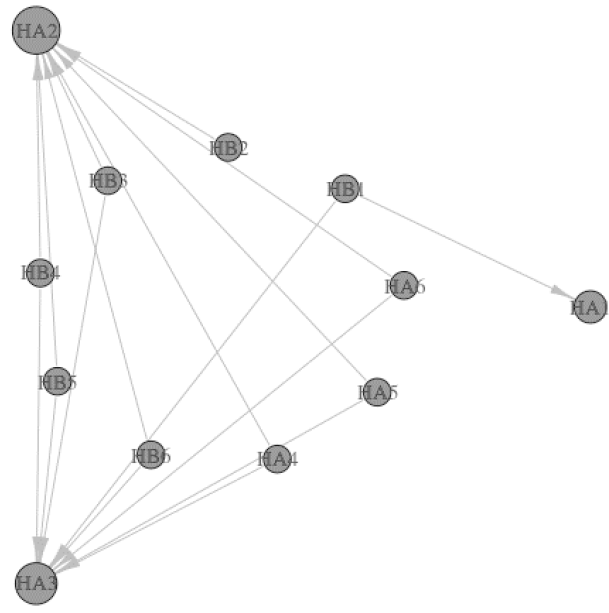
In addition to analyzing the efficiency of each hospital, it is also crucial to examine the set of benchmarks for each inefficient hospital to understand their behavior before and after the implementation of Lean Healthcare. Figure 1 presents a graph illustrating which efficient DMUs serve as benchmarks for the inefficient ones. This comparison provides insights into how the benchmarks influence the performance of inefficient hospitals both prior to and following the Lean Healthcare intervention.
As shown, Hospital 2 and Hospital 3 predominantly feature as benchmarks for other hospitals, including their own benchmarks before the Lean Healthcare application, as well as for Hospitals 4 and 5 after the Lean implementation-hospitals that did not achieve efficiency. Hospital 1, on the other hand, is only present as a benchmark for its own performance before the Lean intervention.
For a more detailed analysis, Table 4 provides a breakdown of the benchmarks for each inefficient hospital.
First, it is important to highlight Hospital 3 before the Lean intervention (H3b). It is notable that, in addition to including itself (H3a) in its benchmarks, Hospital 3 also references Hospital 2 (H2a) as a model of best practices. This suggests that Hospital 3 may benefit from adopting similar managerial improvements in future applications.
Moreover, the absence of Hospitals 4 and 5 from the efficient group post-application indicates that these hospitals also consider Hospitals 2 and 3 as benchmarks. This suggests a potential for better management practices, which could enhance the effectiveness of Lean Healthcare applications if these practices were integrated.
Therefore, it is evident that employing a coherent methodology with well-aligned inputs and outputs, tailored to the characteristics of Lean in healthcare, can facilitate the identification and implementation of best practices. This approach has the potential to improve overall healthcare outcomes.
5 FINAL CONSIDERATIONS
This study successfully determined the relative efficiency of Lean Healthcare application across a set of Brazilian public hospitals using Data Envelopment Analysis (DEA). The non-oriented SBM-DEA model proved effective in identifying and comparing hospital efficiencies, even within the complex and varied environment of the public sector, considering the disparities among Decision-Making Units (DMUs) and differences in their inputs and outputs.
The efficiency analysis, which compared hospitals before and after Lean Healthcare implementation, highlighted significant improvements. The analysis demonstrated that while some hospitals achieved efficiency through Lean application, this outcome was not universal, with some hospitals remaining inefficient.
The study was limited to analyzing only those hospitals that achieved efficiency and were considered benchmarks. Future research should aim to establish metrics that allow for the representation of inefficient hospitals on the efficiency frontier, to better understand their behavior post-application. Additionally, it would be beneficial to include hospitals using other techniques besides Lean Healthcare in the dataset for comparative analysis.
For future studies, it is recommended to develop methodologies that more accurately align Lean Healthcare improvements with enhancements in hospital efficiency, including setting ideal projections for inefficient hospitals. Furthermore, exploring alternative DEA models with different orientations, while maintaining the proposed inputs and outputs, could offer insights into variations in results and should include hospitals that had not previously implemented Lean Healthcare.
References
- ABDOLLAHI M, ARVAN M & RAZMI J . 2015. DEA-based decision support for supplier selection in Lean environments. Computers & Industrial Engineering, 82: 252-259.
- ANVARI M. 2014. Efficiency analysis of Lean Manufacturing implementation using DEA. Procedia CIRP, 17: 354-359.
- AUGUSTO B & TORTORELLA G. 2019. Literature review on lean healthcare implementation: assessment methods and practices. International Journal of Services and Operations Management, 32(3): 285-306.
- AZADEH A, ASADZADEH S & SABERI M. 2017a. Assessing the impact of integrated resilience engineering on Lean Manufacturing principles. Journal of Manufacturing Processes, 29: 196-205.
- AZADEH A, YAZDANPARAST R, ZADEH S & ZADEH A. 2017b. Performance optimization of integrated resilience engineering and lean production principles. Expert Systems with Applications, 84: 155-170.
- BAHARONA-URBINA R. 2011. Análisis de la eficiencia técnica en hospitales de Chile mediante el uso del modelo DEA. Salud Pública de México, 53(1): 1-10.
- BREITENBACH M, NGOBENI V & AYE G. 2021. The impact of COVID-19 on health system efficiency: A DEA approach. Health Care Management Science, 24(4): 567-578.
- CASADO F. 2007. Análise envoltória de dados: conceitos, metodologia e estudo da arte na educação superior. Revista Sociais e Humanas, 20(1): 59-71.
- CHARNES A, COOPER W & RHODES E. 1978. Measuring the efficiency of decision-making units. European Journal of Operational Research, 2(6): 429-444.
- COELLI T, RAO D, O’DONNELL C & BATTESE G. 2005. An introduction to efficiency and productivity analysis. Springer Science & Business Media.
- COLLDÉN C, GREMYR I, HELLSTRÖM A & SPORRAEUS D. 2017. A value-based taxonomy of improvement approaches in healthcare. Journal of Health Organization and Management, 31(4): 445-458.
- COOPER W, SEIFORD M & ZHU J. 2011. Handbook on data envelopment analysis.
- COSTA L, FILHO M, RENTES A, BERTANI T & MARDEGAN R. 2017. Lean healthcare in developing countries: evidence from Brazilian hospitals. The International Journal of Health Planning and Management, 32(1): 99-120.
- COSTA L & GODINHO FILHO M. 2016. Lean healthcare: review, classification and analysis of literature. Production Planning & Control, 27(10): 823-836.
- DREI S & ANGULO-MEZA L. 2022a. Lean Healthcare efficiency assessment in Brazilian public hospitals using Slack-based Measure Data Envelopment Analysis (SBM-DEA). In: XXI Latin Ibero-American Conference on Operations Research (CLAIO).
- DREI S & ANGULO-MEZA L. 2022b. Levantamento bibliométrico sobre o uso da Análise Envoltória De Dados (DEA) associada ao Lean Healthcare. In: VIII Congresso Internacional de Logística e Operações do IFSP.
- DREI S, ARRUDA IGNÁCIO P, JÚNIOR A, MIN L & OLIVEIRA SILVA T. 2021. Lean Healthcare Applied Systematically in the Basic Image Examination Process in a Medium-Sized Medical Clinic. In: Advances in Production Management Systems. Artificial Intelligence for Sustainable and Resilient Production Systems: IFIP WG 5.7 International Conference. Springer International Publishing.
- DREI S & IGNÁCIO P. 2019. Avaliação de um procedimento sistemático para o Lean Healthcare. Anais do XXXIX Encontro Nacional de Engenharia de Produção.
- DREI S & MEZA L. 2021. Estudo da eficiência de hospitais públicos brasileiros de diferentes portes utilizando análise envoltória de dados (DEA). Simpósio Brasileiro de Pesquisa Operacional.
- FARRELL M. 1957. The measurement of productive efficiency. Journal of the Royal Statistical Society: Series A (General), 120(3): 253-281.
- GOLANY B & ROLL Y. 1989. An application procedure for DEA. Omega, 17(3): 237-250.
- GRABAN M. 2016. Lean hospitals: improving quality, patient safety, and employee engagement. CRC Press.
- GUPTA S, KAPIL S & SHARMA M. 2018. Improvement of laboratory turnaround time using lean methodology. International Journal of Health Care Quality Assurance.
- KALOGEROPOULOU D, IOANNIDIS J & MOURDOUKOUTAS P. 2012. Assessing hospital efficiency in the Greek National Health System: A DEA approach. International Journal of Health Care Quality Assurance, 25(5): 385-399.
- LENT R, JANSEN J & SCHUURMAN R. 2012a. Lean thinking in patient logistics: A case study of Dutch hospitals. International Journal of Health Care Quality Assurance, 25(2): 143-155.
- LENT W, SANDERS E & HARTEN W. 2012b. Exploring improvements in patient logistics in Dutch hospitals with a survey. BMC Health Services Research, 12(1): 1-9.
- MACRINI R. 2018. Estudo da eficiência hospitalar utilizando DEA: Uma abordagem orientada a outputs. Revista Brasileira de Economia de Empresas, 18(2): 45-58.
- MARIANO M. 2021. Avaliação da eficiência hospitalar durante a pandemia de COVID-19 usando DEA. Cadernos de Saúde Pública, 37(3): 00234520.
- MARTINS DREI S & ARRUDA IGNACIO P. 2022. Lean healthcare applied systematically in a medium-sized medical clinic hospitalization. Journal of Health Organization and Management, 36(5): 666-689.
- MATTHIAS O & BROWN S. 2016. Implementing operations strategy through Lean processes within health care: The example of NHS in the UK. International Journal of Operations & Production Management.
- MAZZOCATO P, THOR J, BÄCKMAN U, BROMMELS M, CARLSSON J, JONSSON F & SAVAGE C. 2014. Complexity complicates lean: lessons from seven emergency services. Journal of Health Organization and Management.
- NGEE-WEN T, KHUONG T & HAN C. 2020a. Evaluating emergency department efficiency using SBM-DEA model: The impact of Lean Healthcare. Journal of Healthcare Management, 65(3): 192-203.
- NGEE-WEN T, ZAILANI S, AZIZ A & AHMAD R. 2020b. Lean public emergency department efficiency evaluation by slack-based measure data envelopment analysis. Malaysian Journal of Medicine and Health Sciences, 16(2).
- OHNO T. 1997. O sistema Toyota de produção além da produção. Bookman.
- RADNOR Z. 2010. Review of business process improvement methodologies in public services. London: Aim Research. 1-94 pp.
- RÉGIS T, SANTOS L & GOHR C. 2019. A case-based methodology for lean implementation in hospital operations. Journal of Health Organization and Management.
- SCOTT T. 2003. Lean thinking in the NHS: Improving service delivery. International Journal of Health Care Quality Assurance, 16(6): 301-311.
- SILVA E, ALMEIDA R & ARAÚJO JÚNIOR J. 2019. Análise da alocação regional dos recursos do Programa Farmácia Popular do Brasil utilizando DEA. Cadernos de Saúde Pública, 35(3): 00121318.
- SIQUEIRA C, SIQUEIRA F, LOPES G, GONÇALVES M & SARANTOPOULOS A. 2019. Enteral diet therapy: use of the Lean Healthcare philosophy in process improvement. Revista Brasileira de Enfermagem, 72: 235-242.
- SOARES A, PEREIRA M & MILAGRE C. 2017. Avaliação da eficiência hospitalar utilizando DEA: Fatores que influenciam o desempenho. Revista de Administração Hospitalar e Inovação em Saúde, 14(3): 20-35.
- SOUZA M, SCATENA J & KEHRIG R. 2016. Análise da eficiência dos hospitais públicos: Um estudo utilizando DEA. Revista Brasileira de Economia de Empresas, 17(4): 78-92.
- SOUZA M, SCATENA J & KEHRIG R. 2017. Análise da eficiência dos hospitais públicos: Comparação de diferentes retornos em DEA. Revista Brasileira de Economia de Empresas, 18(1): 50-64.
- TONE K. 2001. A slacks-based measure of efficiency in data envelopment analysis. European Journal of Operational Research, 130(3): 498-509.
- VASHI A, LERNER B, URECH T, ASCH S & CHARNS M. 2019. Lean Enterprise Transformation in VA: a national evaluation framework and study protocol. BMC Health Services Research, 19(1): 1-11.
- WAN H & CHEN F. 2006. An application of slacks-based measure on quantifying leanness. In: Annual Industrial Engineering Research Conference. p. 20-24.
- WAN H & FRANK CHEN F. 2008. A leanness measure of manufacturing systems for quantifying impacts of lean initiatives. International Journal of Production Research, 46(23): 6567-6584.
- WOMACK J, JONES D & ROOS D. 2007. The machine that changed the world: The story of lean production-Toyota’s secret weapon in the global car wars that is now revolutionizing world industry. Simon & Schuster.
- ZALATAR A & CLARK J. 2018. Efficiency analysis and sustainability in Lean Manufacturing: The Green and Lean approach. Journal of Cleaner Production, 174: 348-359.
- ZALATAR A & CLARK J. 2020. Green and Lean in manufacturing: A review and future research directions. International Journal of Production Economics, 227: 107626.
-
1
Data Availability: The data used in the paper is fully available at Martins Drei & Sérgio de Arruda Ignácio (2022).