 Recent advances in natural fiber treatments for enhanced composite performance
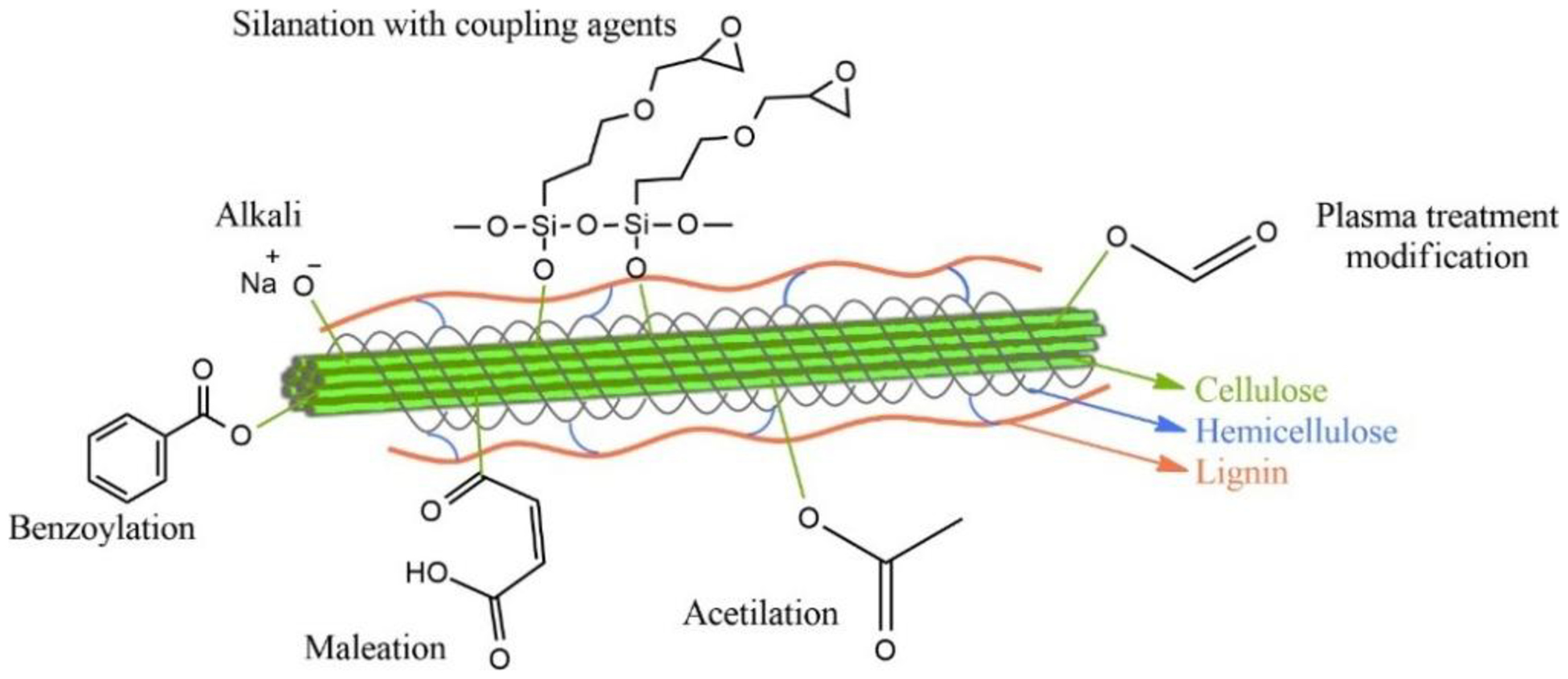
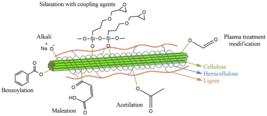
Natural fibers have attracted growing attention due to their sustainability, low cost, and low density, yet their hydrophilic nature limits compatibility with polymer matrices and constrains broader applications. To overcome this challenge, diverse surface modification techniques-including chemical, enzymatic, and physical treatments- have been developed to improve fiber–matrix interfacial adhesion. These modifications are crucial for significantly enhancing the mechanical performance and environmental robustness of the resulting composite materials.This review critically evaluates established and emerging strategies, highlighting their effectiveness, advantages, and limitations. Among the various approaches, alkali treatment remains the most widely adopted, demonstrating consistent improvements in composite performance through impurity removal, enhanced surface roughness, improved fiber–matrix adhesion, and superior load transfer capabilities.
Keywords:
chemical treatments; enzyme treatments; fiber-matrix interaction; natural fibers; physical treatments
 Thumbnail
 Thumbnail
 Thumbnail
 Thumbnail