
 SOCIAL SKILLS TRAINING AND SELF-ESTEEM IN ADOLESCENCE: A CASE STUDY
 ABSTRACT.
Social Skills Training (SST) in the school context can be effective and relevant for increasing adolescents’ self-esteem. Therefore, this article aimed to reveal, in a single case study format, the intervention techniques applied and to analyze a teenager's behavioral and emotional achievements in an SST group. The participant of this study was a female adolescent in the ninth grade of elementary school at a private school. Qualitative and quantitative data obtained at pre and post-test evaluations allowed us to describe the therapeutic intervention process and observe the improvement of social skills accompanied by increased self-esteem. In the studied case, the SST process contributed to overcoming interpersonal difficulties. The SST applied can be considered a viable technical resource to increase adolescents' self-esteem in the school context.
Keywords:
Social skills; self-esteem; cognitive training
RESUMO
A aplicação do Treinamento de Habilidades Sociais (THS), no contexto escolar, pode ser eficaz e relevante para o aumento da autoestima em adolescentes. Diante disso, o objetivo do presente artigo foi revelar, no formato de um estudo de caso único, as técnicas de intervenção aplicadas e analisar as evoluções comportamentais e emocionais de uma adolescente no grupo de THS. A participante deste estudo cursava o nono ano do ensino fundamental II de uma escola privada. Por meio de medidas qualitativas e quantitativas obtidas em avaliações pré e pós-teste, foi possível descrever o processo terapêutico de intervenção do THS e observar, como resultado, o aprimoramento de habilidades sociais acompanhado do aumento do nível de autoestima. No caso analisado, o processo do THS contribuiu para a superação de dificuldades interpessoais. Discute-se que o THS realizado pode ser considerado recurso técnico viável para elevar a autoestima de adolescentes no contexto escolar.
Palavras-chave:
Habilidades sociais; autoestima; treinamento cognitivo
RESUMEN
La aplicación de un Entrenamiento en Habilidades Sociales (EHS) en el contexto escolar puede ser efectiva y relevante para aumentar la autoestima en los adolescentes. Siendo así, el objetivo de este artículo fue revelar, en el formato de un estudio de caso único, las técnicas de intervención aplicadas y analizar las evoluciones comportamentales y emocionales de una adolescente del grupo de EHS. La participante en este estudio es una adolescente, en el noveno grado de una escuela privada de Enseñanza Fundamental. A partir de las mediciones cualitativas e cuantitativas obtenidas de las evaluaciones pre e pos entrenamiento fue posible observar la mejoría de sus habilidades sociales y el aumento de los niveles de autoestima. Se concluyó que, en el caso estudiado, el EHS contribuyó para la superación de dificultades interpersonales. Se considera que el Entrenamiento en Habilidades Sociales (EHS), realizado en el contexto escolar, puede considerarse un recurso técnico efectivo para elevar la autoestima de los adolescentes.
Palabras clave:
Habilidades sociales; autoestima; entrenamiento cognitivo
Introduction
During the transition from childhood to adulthood, adolescents experience important psychosocial transformations that can lead to difficulties in family, social, and school interactions (Moreira, 2018). Understanding school as a space of interactions, challenges, and difficulties, Cid, Squassoni, Gasparini and Fernandes (2019, p. 4) consider it “[…] one of the main contexts in the lives of children and adolescents today, thus having a relevant psychosocial character that must be assumed and explored”. In this context and transitional stage, adolescents spend a significant part of their time at school, where they experience experiences that are decisive in their quality of life and the development of self-esteem (Silva, 2018).
Considering the influence of affective-emotional factors on learning, Nedel, Mattos and Marin (2020) conducted a survey with 74 elementary school students. One of their objectives was to analyze the relationship between self-esteem and academic performance. In this study, the authors found that students with high self-esteem performed better at school than those with low levels. In addition to affecting school performance, self-esteem can also influence the health of adolescents.
Vieira and Freitas (2017) highlight that self-esteem is essential for the integral and healthy development of human beings, as, at low levels, they are more likely to develop inappropriate behaviors, insecurity, and anxiety. Researchers see self-esteem as an important indicator of mental health as it plays a relevant role in combating bullying (Terroso, Wendt, Oliveira, & Argimon, 2016), often associated with social adaptation (Nedel et al., 2020; Vieira & Freitas, 2017). Thus, characterized as a changeable feeling and acquired through positive reinforcers and of social origin (Guilhardi, 2002), self-esteem is built from the perception that the subject has of themselves in the face of their social interactions (Silva, 2018). Therefore, deficits in the repertoire of social skills can lead to rejection by colleagues (Campos, Del Prette, & Del Prette, 2014), depressive behaviors (feelings) (Wagner, Dalbosco, Wahl, & Cecconello, 2019) and contribute to the perception of low self-esteem in adolescents (Morowatisharifabad, Sharifzadeh, Miri, & Dastjerdi, 2019; Seema & Kumar, 2018).
Social skills (SS) are defined by Del Prette and Z. A. P.Del Prette (2017) as classes of social behaviors that result in favorable consequences for the individual, community, and social group. As Feitosa (2020) highlights, behaving in a socially skillful way results in benefits for interlocutors, making it a culturally desirable behavior. According to the World Health Organization [WHO] (2021), the development of coping skills, solving interpersonal problems, and managing emotions are fundamental aspects of maintaining the psychological well-being of adolescents.
Thus, developing SS has been considered a relevant tool for quality of life and suicide prevention (Fernandes et al., 2020; Leme et al., 2019). In national research, social skills training has been suggested in the school context as a protective factor, psychosocial adjustment, and academic competence (Barbosa & Cognetti, 2017; Longhini, Rios, Peron, & Neufeld, 2017; Pasche, Fernández, Schott, Barbosa, & Vasconcellos, 2019).
Considering that the acquisition of SS may not occur through natural contingencies, its learning can take place in programmed environments through the so-called Social Skills Training (SST), which consists of intervention strategies and techniques to expand the behavioral repertoire with a focus on SS (Del Prette & Del Prette, 2017). Although studies demonstrate the relevance of SS and self-esteem for the mental health, academic performance, and social adaptation of adolescents, there is a lack of research on stable and direct relationships between SS and self-esteem.
In the international literature, inconsistencies were found about the relationship between SS and self-esteem in studies with SST. In Iran, Yavari (2019) carried out an intervention with 30 female adolescents and concluded that SST was insignificant in increasing self-esteem. Similar results were reported by Seema and Kumar (2018), who found no significant differences between the control group and the experimental group in the assessment of self-esteem based on an SST intervention with 200 adolescents. However, Morowatisharifabad et al. (2019) carried out a cross-sectional correlational study with 364 adolescents and identified which life skills educational programs impacted the self-esteem and mental health of adolescents.
In Brazil, to date, only one intervention work has been identified testing the hypothesis that an SST can be a viable technical resource to increase the self-esteem of adolescents (Rodrigues et al., 2021). Given the inconclusive results and to contribute to preventive studies on the psychological well-being of adolescents, a survey was carried out with ten high school students from a private school in the state of Rondônia. The SST intervention took place in ten sessions of 50 minutes each, and the results showed effectiveness in increasing the participants’ self-esteem (Rodrigues et al., 2021).
Considering the importance of SS and self-esteem in mental health, academic development, and social adaptation of adolescents, as well as the scarcity of works that present the discussion and dissemination of qualitative analysis of therapeutic processes of SST (Feitosa, 2020), the present study aimed to reveal, from a single case study, the intervention techniques applied and analyze the behavioral and emotional developments of an adolescent in the SST group.
Method
The case study is considered an appropriate method for understanding individual and group phenomena, allowing the researcher to systematically analyze the procedures and results achieved (Andrade et al., 2017). According to Carneiro (2018, p. 314), the case study “[…] aims to understand complex social and psychological phenomena, in which multiple variables intervene […]”, and it will be used here as a strategy to evaluate the direct relationships between an SST and the promotion of self-esteem in adolescents.
Participants
An intervention was carried out with a non-clinical sample, with a pre- and post-test design. Ten adolescents (08 girls and 02 boys) aged between 13 and 15 years old (M= 14.20; SD= 0.6) participated in the intervention, students in the ninth grade of high school at a private school in the state of Rondônia. For this study, a single case was selected, a female teenager, adopting the criteria: presenting low self-esteem at the beginning of the intervention, deficit in social skills, and significant behavioral and emotional developments during and after the therapeutic process of SST.
Instruments
To assess the level of self-esteem, the Rosenberg Self-Esteem Scale (RSE) was used, adapted, and validated by Hutz (2000) as it presents satisfactory internal consistency (Hutz & Zanon, 2011): α = 0.90. To assess the frequency of social skills, the Social Skills Inventory for Adolescents - IHSA-Del-Prette (Del Prette & Del Prette, 2015) was used, which presents good internal consistency (α = 0.89 for full scale and 0.68 to .085 for frequency factors). Both were applied pre- and post-intervention. The following instruments were also used:
Initial questionnaire: consisting of seven open questions to identify deficient skills and how adolescents perceived themselves, consisting of the following questions: ‘In your opinion, what are your main qualities?’; ‘In your opinion, what are your main defects?’; ‘What would you like to change about yourself?’; ‘How do you evaluate your relationship with your family?’; ‘How do you evaluate your relationship with friends and teachers?’; ‘Are you satisfied with the living? Why?’ and ‘Do you understand that you have a good level of self-esteem?’.
Final questionnaire: a questionnaire with the same questions as the initial questionnaire, plus the following: ‘How did you feel during the training sessions?’; ‘Was the training useful to you? Why?’; ‘In the last two months, have you noticed changes in yourself? If yes, describe!’; ‘If you could give one suggestion to other people with low self-esteem, what would it be?’; and ‘Would you like to leave any comments or suggestions about the training?’ This instrument was based on the work of Pereira-Guizzo, Del Prette, Del Prette and Leme (2018), in which they suggest interviews to evaluate the process and effects of the intervention to monitor the maintenance of learning and effectiveness.
Field diary: notebook used to describe, analyze, and record relevant events during each training session (attendance/frequency, execution of activities, reports, and personal progress), also serving to record responses and evolution of adolescents during the intervention.
Procedure
The ethical procedure followed in the present study was approved by the Research Ethics Committee of the Federal University of Rondônia, CAAE 11254419.2.0000.5300. Initially, together with the institution’s psychologist, the group that participated in the present study was pre-selected. The selected class was from the ninth grade because, according to the teaching staff, it presented many interpersonal demands. Soon after, in the classroom, the students were invited and informed that they would be subjected to an assessment and that, subsequently, ten people would participate in the research, with a draw or the use of technical decisions for the final selection of students who fit the inclusion criteria. Legal guardians were contacted by telephone and invited to participate in a meeting, the objective of which was to talk about the importance of self-esteem and social skills in adolescence, as well as to present the objectives and procedures of the research. As all calls were not successful, notes were given to the students with information about the meeting, highlighting that participation was voluntary and confirmed by the signatures of the adolescents and their legal guardians on the Informed Assent (IA) and Informed Consent (IC), respectively. After meeting with the guardians and obtaining signatures on the legal terms, the intervention was carried out with pre-test and post-test evaluation, which took place in three moments.
1st moment: before the intervention, and divided into three stages, the first stage being the application of the RSE in the classroom with all students in the pre-selected class. Of the 24 students who responded to the scale, 18 met the inclusion criteria. The inclusion criterion adopted was to present low levels of self-esteem (percentiles between 05 and 25). Subsequently, as an additional criterion, the ten adolescents who had the lowest levels of low self-esteem were selected for the intervention group. In the second stage, the collective application of the IHSA-Del-Prette took place with the ten participants included in the SST group. Finally, in the third stage, an individual interview was carried out to build a bond with each participant, collect sociodemographic data, and clarify doubts about the training. At this stage, the initial questionnaire was applied individually.
2nd moment: carrying out the intervention, which also took place on the institution’s premises, through group sessions. For the best performance of the group, there was the voluntary participation of a co-therapist (an undergraduate in the eighth period of psychology who was previously trained and instructed on the intervention procedures), who, through the field diary, recorded and described the relevant events during each session. All stages of the intervention were carried out during class time in common agreement with all students, their guardians, and the pedagogical team.
3rd moment: it took place after the intervention and consisted of two stages. In the first stage, the RSE and IHSA-Del-Prette were collectively reapplied. In the second stage, the final questionnaire was individually administered.
Intervention program
The program consisted of ten group sessions lasting 50 minutes each, one meeting per week. The training of deficient social skills occurred gradually, in which the SS are organized in increasing order of complexity, according to the progression of the objectives of the SST sessions, as suggested by Del Prette and Del Prette (2017). The main techniques used were experiences, shaping, modeling, role-play, behavioral rehearsal, psychoeducation, interpersonal homework tasks (IHT), feedback, etc. The sessions followed the following structure: discussion of homework, presentation of the theme and objectives of the session, application of activities, and reflections on what was learned.
Data processing
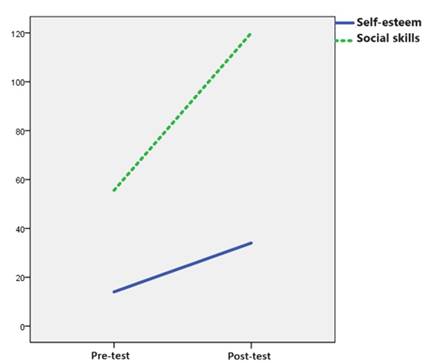
Qualitative data obtained through the initial questionnaire, final questionnaire, and field diary were analyzed and gathered to meet the objective of this study and distributed synthetically throughout the descriptions presented below. Quantitative data obtained with the applications of the IHSA-Del-Prette and RSE instruments were tabulated in the IBM Statistical Package for the Social Sciences for Windows (SPSS, version 24.0) software to generate a figure (see Figure 1) with their total scores. Thus, the results could be compared in the analysis of the therapeutic process established in the SST group discussed below.
Results and discussion
The therapeutic process is understood here as the method of managing intervention techniques applied in a structured session and the changes observed (Feitosa, 2020). Thus, based on the proposed case study, a report was presented on the experience of conducting the therapeutic process established in an SST group, describing the techniques administered and highlighting the behavioral changes observed in the adolescent who constituted the case analyzed. Thanks to the positive results achieved in this group intervention (Rodrigues et al., 2021), the present case study, called by the pseudonym Alice, was prepared in a format that could illustrate the conduct of an SST program to enable replications.
Next, the SST techniques and the results recorded as positive changes expected in Alice’s behavioral repertoire over the ten sessions of the program were presented:
1st session: the ethical aspects were explained, the therapeutic contract was presented, and the participants were integrated into a dynamic in which each person had to speak their name and a personal quality. After introducing everyone, each person would have to choose a member and remember the quality mentioned. Different forms of communication were exemplified through audiovisual media. As an IHT, they should observe aggressive, passive, or assertive behaviors in their social circle.
In this meeting, Alice explained that she used to be inappropriate with people but wanted to change, as she did not like being treated rudely. As a personal defect, she highlighted ‘being rude’, and as a quality, she cited ‘helping people’. Aggressive behavior was part of her behavioral repertoire; however, she did not know how to act differently and more appropriately in social interactions.
The report highlighted the need for SST programs in a school context since adolescents, as was the case with Alice, may have the intention of improving the way they relate to their peers. However, they require formal assistance in this change process to move from an aggressive way to a more adequate or socially skilled pattern of social interaction. According to Feitosa (2020), the socially skilled form results in benefits for the interlocutors, which makes it a culturally desirable pattern of behavior. Thus, socially skilled behavior becomes desired by the adolescent herself, who also identifies the need to avoid the aggressive pattern, making her engage in the process of change that will have implications for her self-perception or self-esteem (Terroso et al., 2016).
2nd session: firstly, the IHT was exposed in which the participants had to analyze whether the observed behaviors were socially acceptable, and if they were not, they were encouraged to think of alternatives that could improve them. Soon after, they watched the video Reports of a girl who was bullied at school being encouraged to talk about their personal experiences about aversive contexts. The facilitator asked them to reflect on the feelings emerging in these circumstances, and at home, they were asked to think about the negative consequences they could have caused.
In the IHT discussion, Alice reported a family case and was able to identify that the behavior was aggressive based on the person’s tone of voice and facial expression. As an alternative, she said that they did not need to scream and much less ‘scowl at me’ because, if the person had asked politely, she would have resolved the problem without a fight. In her account of experiences of aversive contexts, she explained that she had been bullied because she was thin and therefore ‘hated’ her physical appearance.
In these reports, Alice discriminated against the presence of a social environment where the aggressive pattern of social interaction is present in her life and that her experiences, as a whole, made her negatively evaluate her body image, which certainly affected her self-esteem. Thus, the notion that self-esteem is built from self-perception within the context of social interactions was confirmed (Silva, 2018), so that deficits in the SS repertoire can lead to rejection by colleagues (Campos et al., 2014).
3rd session: began with the discussion about IHT from the previous session, with the group encouraged to think about strategies to express feelings in a healthy way and face similar moments. There was the application of the ‘Legacy’ dynamic in which a personal problem was written on paper. Soon after, the papers were drawn and each teenager picked ‘a problem’, read it out loud, and tried to propose a solution. A reflective moment was held asking them whether the solutions could be effective and how they felt when putting themselves in someone else’s shoes. Later, they formed pairs to participate in a dramatization in which one participant would create a hypothetical situation of a person suffering and the other would act empathetically. In the end, it was proposed to play roles and they were asked to go home to practice empathy.
As negative consequences of bullying, Alice highlighted in this session that she relatively frequently had feelings of anger, shame, and sadness. In the dynamic ‘Legacy’, she found it difficult to propose a solution to the problem drawn, as she felt ‘shy and nervous’ in the same way. Even in the face of difficulty, she wished her colleague that everything would pass soon, showing empathy.
In a similar way to what was observed in the previous session, Alice’s case illustrated the description by other authors that deficits in the repertoire of social skills can lead to rejection by peers (Campos et al., 2014), depressive feelings (Wagner et al., 2019) and contributing to the perception of low self-esteem in adolescents (Morowatisharifabad et al., 2019; Seema & Kumar, 2018). And, with low self-esteem, there is a greater chance of developing inappropriate behaviors, insecurity, and anxiety (Vieira & Freitas, 2017).
It is now possible to follow, from session 4 to session 10, Alice’s gradual gain in SS repertoire during her participation in the SST group, as well as the interpersonal difficulties reported along with the manifestations of her initial low self-esteem.
4th session: adolescents were asked to mention the factors that impede good interpersonal relationships, aiming to contextualize civility and social resourcefulness. Once these problems were defined, they received a sheet with examples of relevant behaviors in social interactions, such as ‘eye contact; voice tone; body posture; ask for permission; give compliments, etc.’ Open and closed groups were explained based on the Interpersonal Effectiveness WorkSheet (Linehan, 2018). Through role-playing, a situation was enacted in which the group stood in a circle and imagined themselves having a birthday. Two volunteers were tasked with pretending not to know the group members, assessing whether it was open or closed, and, if possible, introducing themselves and joining. When they returned home, they were encouraged to practice the skills they had learned
Alice was interacting more with her colleagues and was more receptive to the proposed activities. As for difficulties in social interactions, she pointed out shame and fear of not being accepted. In role-playing, she was part of the closed group and showed interest in the topics covered by her colleagues; even though she remained silent, she smiled and made positive expressions.
5th session: the importance of giving and receiving compliments was discussed; to this end, the different ways of praising were exemplified, which could be personal characteristics (for example: ‘Alice, your hair looks so beautiful; did you do anything different?’), positive qualities (e.g., ‘John, you are so polite, I really admire the way you treat people’), and personal skills (e.g., ‘Has anyone ever told you that you dance very well?’). A ‘compliment draw’ was held, the aim of which was to praise the person drawn. When finished, it was proposed that everyone express what they felt during this activity. The homework consisted of praising two people, whether they were acquaintances or not.
When presenting the theme of the session, Alice explained that she ‘hated’ receiving compliments, as she did not consider them to be true. During the activity, she felt embarrassed when praising her colleague but managed to express herself by praising the person as ‘educated and studious’. When praised as ‘a girl who always helps others’, she smiled and thanked her. At the end of the session, she explained that it was more difficult to accept a compliment than to give it; however, when asked if she believed in the compliment received, she said yes.
6th session: divided into two moments and aimed to train assertiveness. In the first, psychoeducation was carried out where important points were mentioned to be analyzed before making requests and invitations, highlighting the right to ask, the possibility of being accepted, how to deal with refusals, be objective and clear, provide all necessary information, etc. Through modeling, the facilitator demonstrated models of how to be assertive on these occasions and, later, invited the participants to train, giving them hypothetical situations that involved speaking with authority, making invitations, denying abusive requests, and showing displeasure. In the second moment, the same procedure was carried out, however, addressing the topic of ‘denying request’. When they went home, they were challenged to request someone.
Alice reported that she was able to praise her parents and that she felt very good, as the relationship was not very good. In the proposed activity, she had to invite a participant; however, her fear of having the invitation denied was evident. In search of acceptance, Alice offered all possible conditions, such as picking up the person at home, paying for cinema tickets, and buying popcorn, soda, and ice cream. At the end of the invitation, she added: ‘You’re going, right?’ At this point, the therapist shaped the behavior and stressed the importance of dealing with refusals, respecting the other person’s wishes, giving the person time to decide, etc.
7th session: worked on assertiveness and self-control with a focus on dealing with criticism. It began with questions about feelings in the face of criticism and how they used to act. Subsequently, a paper was handed out containing important points on how to deal with such situations, including evaluating whether the criticism is constructive or destructive; accepting or refusing; recognizing the error; thanking constructive criticism; asking for suggestions on how to improve; exposing feelings; not reacting in an offensive way, among others. Then, they were trained on how to give negative feedback. In the end, they were invited to practice the skills they had learned and were given two hypothetical situations where they would have to write negative feedback for each case.
Alice did not have assertive skills to deal with criticism. She highlighted that due to the bullying episodes, she became ashamed of her body, which triggered a feeling of inferiority. She felt sad but was unable to express her discontent and, as a result, verbally attacked. She explained that she once felt like taking her life and that she could not explain why it hurt so much to be ‘so thin’.
Alice’s case reveals and reinforces, at this moment, the demand for SST programs to promote SS and self-esteem to improve the quality of life of adolescents and prevent suicide (Fernandes et al. 2020; Leme et al., 2019), contributing to their mental health by also playing an important role in combating bullying (Terroso et al., 2016), strategically from schools (Cid et al., 2019; Moreira, 2018).
8th session: situations that elicit negative feelings were worked on to identify strategies for assertive expression of emotions and facing aversive moments. A circle was formed where at the center there was a box with ten questions such as: ‘Think about a moment in your life when you were very hurt; if you could say something to that person, what would it be?’; ‘Think about a situation that made you sad. What did you feel? If it were today, how would you act?’ etc. After the reports, diaphragmatic breathing was trained, and at the end, they were encouraged to express what they felt during the experience. At home, they were suggested to think about aversive situations in the past and that they could apply what they learned to stay calm. They were recommended to analyze their feelings during the week to report on the strategies used in challenging situations in the next session.
In this session, Alice demonstrated more confidence when talking about her feelings and explained that she should not care too much about what people say because not everything could be true. There was an understanding of constructive and destructive criticism, which may have generated greater acceptance of her way of being and physical appearance.
9th session: the aim was to stimulate self-esteem through the expression of feelings and improve self-knowledge about personal skills. A dynamic called ‘Who I would like to be’ was carried out to identify desired characteristics and qualities. Through psychoeducation, the possibilities of changing behaviors and possible reinforcing consequences of persisting in their desires and dreams were highlighted. A balloon was given containing the beginnings of sentences which they had to complete, for example: ‘I would like that...’, ‘I would be happier if…’, ‘If I could change, I would change...’ Next, the activity ‘Exploring my skills’ (Virgolim, Fleith, & Neves-Pereira, 1999) was worked on. For homework, each participant was asked to choose three important people in their life and ask them to answer: ‘In your opinion, what are my main qualities?’
Alice did not attend this meeting but contacted the facilitator justifying her absence. During contact, the facilitator explained what had been worked on in the session and gave the activity ‘Exploring my skills’ so that she could do it at home together with IHT.
10th session: the final evaluation of the SST was carried out through feedback from participants. In a circle, each participant verbalized what they learned from the group and how they felt about the activities carried out. At the end of the reports, the facilitator thanked everyone for their participation and handed out chocolates with positive phrases said by them during the intervention. Soon after, the last moment of the research took place, which consisted of the collective reapplication of the RSE and the IHSA-Del-Prette, and the individual application of the final questionnaire.
Alice reported that SST was very significant in her life, as she came to understand that everyone has problems and that they can be solved. She explained that at many times she felt ashamed to participate in the activities but that the group and the facilitators helped her to lose her fear. She rated the program as ‘very good’ and wrote in the final questionnaire that it was “[…] amazing to spend time learning new things, especially how to deal with problems and challenges”. As a suggestion to other teenagers with low self-esteem, she expressed: “Ending your life is not a solution”.
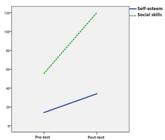
The qualitative observations carried out revealed Alice overcoming some interpersonal difficulties, and gains in SS and self-esteem. In line with these results, the quantitative assessments illustrated these gains, as shown in Figure 1. At the beginning of the SST group, Alice’s SS score was ‘Below lower average’ (55.58) and changed to ‘Highly elaborated’ (120) at the end of the intervention process, while her level of self-esteem started as ‘Low’ (14) and rose to the level ‘High’ (34), according to the classification criteria of the instruments used.
More specifically, the participant developed more empathy with the group members, demonstrating solidarity, non-punitive listening, and acceptance throughout the program. Related to the different SS classes, there was a low occurrence of socially skilled behaviors in the initial sessions concerning civility, and after working on the topic, she began to greet, say goodbye, thank favors and compliments. Regarding social resourcefulness, there was an improvement in her ability to interact socially with the group, and around the fourth meeting, she asked more questions, clarified doubts, and volunteered to perform tasks. The changes are attributed to the consequences of encouragement and reinforcement from the facilitators and the group. As for the acquisitions obtained related to self-control and assertiveness, the learning about constructive and destructive criticism stands out, in which Alice began to identify her socially inappropriate behaviors, using monitoring to improve them when necessary: “They say I’m very rude, insensitive, I have received a lot of criticism before I would remain silent or fight, now I think about whether it is true and respond without rudeness”. At the last meeting, Alice invited the facilitator to hold more sessions, highlighting the development of the affective approach, specifically, making invitations.
Taking into account the importance of SS and self-esteem in the mental health, academic development, and social adaptation of adolescents, as well as the scarcity of works that present the discussion and dissemination of qualitative analysis of the therapeutic processes of SST (Feitosa, 2020), the present case study revealed the intervention techniques applied and analyzed Alice’s behavioral and emotional developments in the SST group she participated in. The international literature presents inconsistencies about the relationship between SS and self-esteem in studies with SST (Morowatisharifabad et al., 2019; Seema & Kumar, 2018; Yavari, 2019). While in Brazil, the present intervention work followed and reinforced the evidence that an SST can be an effective technical resource for raising the self-esteem of adolescents (Rodrigues et al., 2021).
Final considerations
The present case study described the therapeutic process of an SST to increase adolescents' self-esteem and can be replicated in new studies to promote the quality of life and academic and social adaptation of this population. Measures of bullying, anxiety, depressive symptoms, and self-esteem should be included in future research with SST, considering that these were emerging themes during the intervention.
References
-
Andrade, S. R. D., Ruoff, A. B., Piccoli, T., Schmitt, M. D., Ferreira, A., & Xavier, A. C. A. (2017). O estudo de caso como método de pesquisa em enfermagem: uma revisão integrativa.Texto & Contexto-Enfermagem , 26(4), e5360016. doi: 10.1590/0104-07072017005360016
» https://doi.org/10.1590/0104-07072017005360016 -
Barbosa, W. R. O., & Cognetti, N. P. (2017). Habilidades sociais e contexto educativo: treino de habilidades sociais no ensino fundamental I. Psicologia - Saberes & Práticas, 1(1), 1-7. Recuperado de: https://unifafibe.com.br/revistasonline/arquivos/psicologiasaberes&praticas/sumario/60/21022018194313.pdf
» https://unifafibe.com.br/revistasonline/arquivos/psicologiasaberes&praticas/sumario/60/21022018194313.pdf -
Campos, J. R., Del Prette, A., & Del Prette, Z. A. P. (2014). Depressão na adolescência: habilidades sociais e variáveis sociodemográficas como fatores de risco/proteção.Estudos e Pesquisas em Psicologia,14(2), 408-428. Recuperado de: https://www.redalyc.org/pdf/4518/451844508003.pdf
» https://www.redalyc.org/pdf/4518/451844508003.pdf -
Carneiro, C. (2018). O estudo de casos múltiplos: estratégia de pesquisa em psicanálise e educação.Psicologia USP , 29(2), 314-321. doi: 10.1590/0103-656420170151
» https://doi.org/10.1590/0103-656420170151 -
Cid, M. F. B., Squassoni, C. E., Gasparini, D. A., & Fernandes, L. H. O. (2019). Saúde mental infantil e contexto escolar. Pro-Posições , 30, e20170093. doi: 10.1590/1980-6248-2017-0093
» https://doi.org/10.1590/1980-6248-2017-0093 - Del Prette, A., & Del Prette, Z. A. P. (2015). Inventário de habilidades sociais para adolescentes (IHSA-Del-Prette): manual de aplicação, apuração e interpretação São Paulo, SP: Casa do Psicólogo.
- Del Prette, A., & Del Prette, Z. A. P. (2017).Competência social e habilidades sociais: manual teórico-prático Petrópolis, RJ: Vozes.
- Feitosa, F. B. (2020). Terapia de habilidades sociais em saúde mental: um relato de experiência. In J. C. B. Silva, & F. A. A. C. Campos(Eds.), Saberes e fazeres em saúde mental: uma visão multiprofissional(p. 231-248). Curitiba, PR: CRV.
-
Fernandes, M. A., Soares, J., Campos, L. R. B., Nepomuceno, V. M. S., Vasconcelos, A. C. B., & Oliveira, A. L. C. B. (2020). Prevenção ao suicídio: vivências de estudantes universitários.Revista Cuidarte , 11(2), e791. doi: 10.15649/cuidarte.791
» https://doi.org/10.15649/cuidarte.791 - Guilhardi, H. J. (2002). Auto-estima, autoconfiança e responsabilidade. In M. Z. S. Brandão, F. C. S. Conte, & S. M. B. Mezzaroba(Orgs.), Comportamento humano: tudo (ou quase tudo) que você precisa saber para viver melhor(p. 63-98). São Paulo, SP: ESETec.
- Hutz, C. S. (2000). Adaptação da escala de autoestima de Rosenberg(Manuscrito não publicado). Universidade Federal do Rio Grande do Sul, Porto Alegre.
-
Hutz, C. S., & Zanon, C. (2011). Revisão da adaptação, validação e normatização da escala de autoestima de Rosenberg.Avaliação Psicológica,10(1), 41-49. Recuperado de: http://pepsic.bvsalud.org/scielo.php?script=sci_arttext&pid=S1677-04712011000100005
» http://pepsic.bvsalud.org/scielo.php?script=sci_arttext&pid=S1677-04712011000100005 -
Leme, V. B. R., Chagas, A. P. S., Penna-de-Carvalho, A., Padilha, A. P., Alves, A. J. D. C. P., Rocha, C. S., & Fernandes, L. M. (2019). Habilidades sociais e prevenção do suicídio: Relato de experiência em contextos educativos.Estudos e Pesquisas em Psicologia,19(1), 284-297. Recuperado de: https://www.redalyc.org/jatsRepo/4518/451859860016/451859860016.pdf
» https://www.redalyc.org/jatsRepo/4518/451859860016/451859860016.pdf - Linehan, M. M. (2018). Treinamento de habilidades em DBT: manual de terapia comportamental dialética para o paciente Porto Alegre, RS: Artmed.
-
Longhini, L. Z., Rios, B. F., Peron, S., & Neufeld, C. B. (2017). Caracterização das habilidades sociais de adolescentes em contexto escolar.Revista Brasileira de Terapias Cognitivas , 13(2), 131-137. Recuperado de: http://pepsic.bvsalud.org/scielo.php?script=sci_arttext&pid=S1808-56872017000200008
» http://pepsic.bvsalud.org/scielo.php?script=sci_arttext&pid=S1808-56872017000200008 -
Moreira, P. D. M. (2018).Violência e funcionamento psicológico na adolescência: o papel moderador do suporte social (Dissertação de Mestrado). Universidade Lusófona do Porto, Porto, Portugal. Recuperado de: https://recil.ensinolusofona.pt/bitstream/10437/8791/1/Patr%c3%adciaMoreira_disserta%c3%a7%c3%a3ofinal_abril18.pdf
» https://recil.ensinolusofona.pt/bitstream/10437/8791/1/Patr%c3%adciaMoreira_disserta%c3%a7%c3%a3ofinal_abril18.pdf -
Morowatisharifabad, M. A., Sharifzadeh, G. R., Miri, M., & Dastjerdi, R. (2019). Investigating the life skills and self-esteem in teenage girls in Birjand, Iran.International Journal of Pediatrics, 7(6), 9623-9630. doi: 10.22038/ijp.2019.37425.3259
» https://doi.org/10.22038/ijp.2019.37425.3259 -
Nedel, R., Mattos, D. A., & Marin, A. H. (2020). Autoestima e autoconceito infantil, escolaridade parental e sua relação com desempenho escolar no ensino fundamental I.Revista Psicologia em Pesquisa,14(1), 149-168. doi: 10.34019/1982-1247.2020.v14.26180
» https://doi.org/10.34019/1982-1247.2020.v14.26180 -
Pasche, A. D., Fernández, J. V., Schott, F., Barbosa, T. P., & Vasconcellos, S. J. L. (2019). Treinamento de habilidades sociais no contexto escolar - um relato de experiência.Revista de Psicologia da IMED, 11(2), 166-179. doi: 10.18256/2175-5027.2019.v11i2.2850
» https://doi.org/10.18256/2175-5027.2019.v11i2.2850 -
Pereira-Guizzo, C. D. S., Del Prette, A., Del Prette, Z. A. P., & Leme, V. B. R. (2018). Programa de habilidades sociais para adolescentes em preparação para o trabalho.Psicologia Escolar e Educacional,22(3), 573-581. doi: 10.1590/2175-35392018035449
» https://doi.org/10.1590/2175-35392018035449 -
Rodrigues, A. S., Feitosa, F. B., Wagner, M. F., Pedroso, R., Rodríguez, T. D. M., Bezerra, G. S. (2021). Social Skills Training in the promotion of self-esteem in adolescents.Research, Society and Development,10(2), e10710212212. doi: 10.33448/rsd-v10i2.12212
» https://doi.org/10.33448/rsd-v10i2.12212 -
Seema, G. B., & Kumar, G. V. (2018). Impact of social skills training on self-esteem among male and female adolescent students.Indian Journal of Positive Psychology, 9(1), 147-151. doi: 10.15614/ijpp.v9i01.11761
» https://doi.org/10.15614/ijpp.v9i01.11761 -
Silva, M. D. L. (2018). Corporeidade e adolescência: estudo sobre a autoestima a partir das experiências vividas de alunos do ensino médio em escolas de Aracaju-SE (Dissertação de Mestrado). Universidade Federal de Sergipe, São Cristóvão, Sergipe. Recuperado de: https://ri.ufs.br/handle/riufs/9005
» https://ri.ufs.br/handle/riufs/9005 -
Terroso, L. B., Wendt, G. W., Oliveira, M. S., & Argimon, I. I. L. (2016). Habilidades sociais e bullying em adolescentes.Temas em Psicologia, 24(2), 251-259. Recuperado de: http://repositorio.pucrs.br/dspace/bitstream/10923/15964/2/Habilidades_sociais_e_bullying_em_adolescentes.pdf
» http://repositorio.pucrs.br/dspace/bitstream/10923/15964/2/Habilidades_sociais_e_bullying_em_adolescentes.pdf -
Vieira, P. L. R. A., & Freitas, M. C. M. A. (2017). A criança e o desenvolvimento da autoestima.Revista Educação, Ciência e Inovação, 2(1), 108-119. Recuperado de: http://anais.unievangelica.edu.br/index.php/pedagogia/article/view/4464
» http://anais.unievangelica.edu.br/index.php/pedagogia/article/view/4464 - Virgolim, A. M. R., Fleith, D. S., & Neves-Pereira, M. S. (1999). Toc, toc... plim, plim: lidando com as emoções, brincando com o pensamento através da criatividade Campinas, SP: Papirus.
-
Wagner, M. F., Dalbosco, S. N. P., Wahl, S. D. Z., & Cecconello, W. W. (2019). Treinamento em habilidades sociais: resultados de uma intervenção grupal no ensino superior.Aletheia , 52(2), 215-225. Recuperado de: http://www.periodicos.ulbra.br/index.php/aletheia/article/view/5593/3646
» http://www.periodicos.ulbra.br/index.php/aletheia/article/view/5593/3646 -
World Health Organization [WHO]. (2021). Adolescent mental health Recuperado de: https://www.who.int/news-room/fact-sheets/detail/adolescent-mental-health
» https://www.who.int/news-room/fact-sheets/detail/adolescent-mental-health -
Yavari, A. (2019). The effect of social skills training on reducing aggression and increasing the self-esteem of adolescent female under coverage of Welfare Hostel Centers in Tehran.Medical Science , 23(95), 114-124. Recuperado de: http://www.discoveryjournals.org/medicalscience/current_issue/v23/n95/A20.pdf
» http://www.discoveryjournals.org/medicalscience/current_issue/v23/n95/A20.pdf

 Source: Prepared by the authors.