
 PROCESS OF CONSTRUCTION OF AN INTERVENTION TO PROMOTE FORGIVENESS
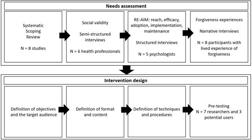
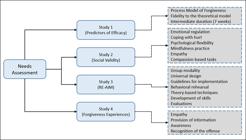
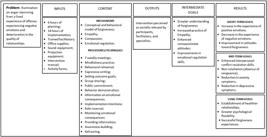
The objective of the present study was to describe the process of developing an intervention to promote forgiveness, based on a prior needs assessment. In the needs assessment, four qualitative studies were carried out. The first study mapped systematic reviews of interventions to promote forgiveness, in order to describe the predictors of the effectiveness of these interventions. The second interviewed professionals working in mental health care services about the perception of social relevance of interventions of this nature. The third sought to raise potential facilitators and barriers to reach, efficacy / effectiveness, adoption, implementation and maintenance of these types of interventions. In the fourth study, narrative interviews were conducted with potential users of interventions of this kind, about the elements that facilitated or hindered their personal experiences of forgiveness. The findings indicated the perception of social relevance of studies of this type, pointed out theoretical and methodological elements that can support the planning of interventions focused on promoting forgiveness and signaled the elements perceived as facilitators or barriers in successful or unsuccessful experiences of forgiveness. Based on the results of the needs assessment, an intervention proposal was developed, designed for an adult population that has experienced at least one situation of offense of varying nature and severity. It is suggested studies that evaluate effects and the implementation process of the developed intervention, in order to expand the services based on theory, directed to the community.
Keywords:
Forgiveness; intervention; emotional regulation
 Thumbnail
 Thumbnail
 Thumbnail
 Source: The authors.
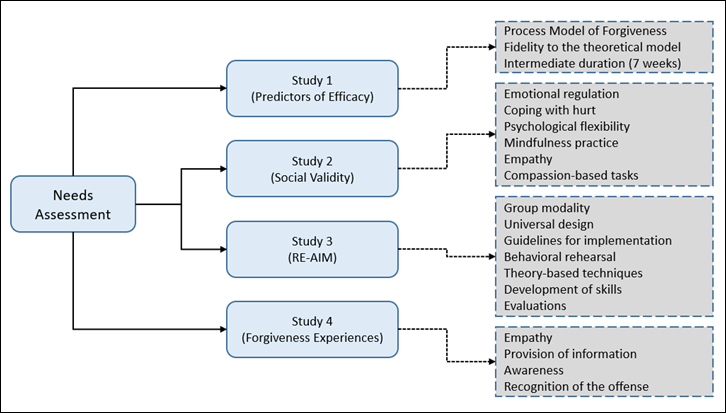 Source: The authors.
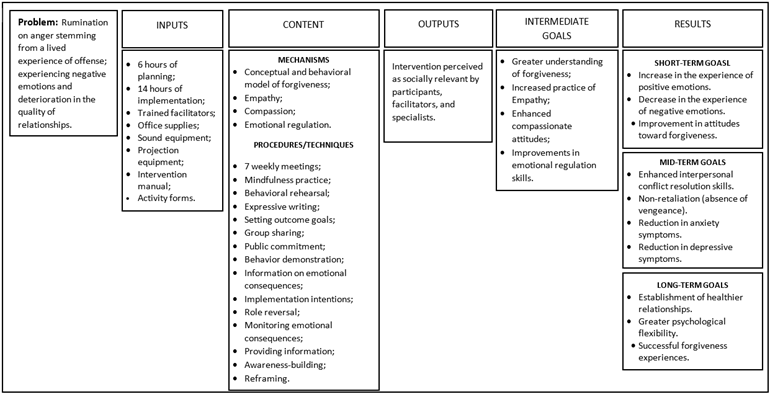 Source: The authors.