
 PROCESS OF CONSTRUCTION OF AN INTERVENTION TO PROMOTE FORGIVENESS
ABSTRACT
The objective of the present study was to describe the process of developing an intervention to promote forgiveness, based on a prior needs assessment. In the needs assessment, four qualitative studies were carried out. The first study mapped systematic reviews of interventions to promote forgiveness, in order to describe the predictors of the effectiveness of these interventions. The second interviewed professionals working in mental health care services about the perception of social relevance of interventions of this nature. The third sought to raise potential facilitators and barriers to reach, efficacy / effectiveness, adoption, implementation and maintenance of these types of interventions. In the fourth study, narrative interviews were conducted with potential users of interventions of this kind, about the elements that facilitated or hindered their personal experiences of forgiveness. The findings indicated the perception of social relevance of studies of this type, pointed out theoretical and methodological elements that can support the planning of interventions focused on promoting forgiveness and signaled the elements perceived as facilitators or barriers in successful or unsuccessful experiences of forgiveness. Based on the results of the needs assessment, an intervention proposal was developed, designed for an adult population that has experienced at least one situation of offense of varying nature and severity. It is suggested studies that evaluate effects and the implementation process of the developed intervention, in order to expand the services based on theory, directed to the community.
Keywords:
Forgiveness; intervention; emotional regulation
RESUMO
O objetivo do presente estudo foi descrever o processo de desenvolvimento de uma intervenção para promoção do perdão, baseada em uma avaliação de necessidades prévia. Na avaliação de necessidades, foram realizados quatro estudos qualitativos. O primeiro estudo mapeou revisões sistemáticas sobre intervenções para promoção do perdão, com o intuito de descrever os preditores de eficácia dessas intervenções. O segundo entrevistou profissionais inseridos em serviços de atenção à saúde mental sobre a percepção de relevância social de intervenções dessa natureza. O terceiro buscou levantar potenciais facilitadores e barreiras para o alcance, eficácia/efetividade, adoção, implementação e manutenção desse tipo de intervenções. No quarto estudo foram realizadas entrevistas narrativas com potenciais usuários de intervenções desse gênero, acerca dos elementos que facilitaram ou dificultaram suas experiências pessoais de perdão. Os achados indicaram a percepção de relevância social de estudos desse tipo, apontaram elementos teórico-metodológicos que podem subsidiar o planejamento de intervenções com foco na promoção do perdão e sinalizaram os elementos percebidos como facilitadores ou barreiras em experiências bem-sucedidas ou malsucedidas de perdão. Com base nos resultados da avaliação de necessidades, foi desenvolvida uma proposta de intervenção, desenhada para uma população adulta que tenha vivenciado ao menos uma situação de ofensa de natureza e grau de severidade diversos. Sugerem-se estudos que avaliem os efeitos e o processo de implementação da intervenção desenvolvida, de forma a ampliar os serviços baseados em teoria, dirigidos à comunidade.
Palavras-chave:
Perdão; intervenção; regulação emocional
RESUMEN
El objetivo del presente estudio fue describir el proceso de desarrollo de una intervención para promover el perdón, basado en una evaluación previa de necesidades. En la evaluación de necesidades se llevaron a cabo cuatro estudios cualitativos. El primer estudio mapeó revisiones sistemáticas de intervenciones para promover el perdón, con el fin de describir los predictores de la efectividad de estas intervenciones. El segundo entrevistó a los profesionales que trabajan en los servicios de salud mental sobre la percepción de relevancia social de intervenciones de esta naturaleza. El tercero buscó plantear posibles facilitadores y barreras para el alcance, eficacia / efectividad, adopción, implementación y mantenimiento de este tipo de intervenciones. En el cuarto estudio se realizaron entrevistas narrativas a potenciales usuarios de intervenciones de este tipo, sobre los elementos que facilitaron o dificultaron sus experiencias personales de perdón. Los hallazgos indicaron la percepción de relevancia social de estudios de este tipo, señalaron elementos teóricos y metodológicos que pueden subsidiar la planificación de intervenciones enfocadas en la promoción del perdón y señalaron los elementos percibidos como facilitadores o barreras en experiencias de perdón exitosas o no exitosas. Con base en los resultados de la evaluación de necesidades, se desarrolló una propuesta de intervención, diseñada para una población adulta que ha experimentado al menos un delito de diferente naturaleza y gravedad. Se sugieren estudios que evalúen los efectos y el proceso de implementación de la intervención desarrollada, con el fin de ampliar los servicios basados en la teoría, dirigidos a la comunidad.
Palabras clave:
Perdón; intervención; regulación emocional
Introduction
Systematic studies in psychology have addressed forgiveness as a central theme in everyday life (Worthington Jr. & Wade, 2020). In fact, personal experiences that are perceived as situations of offense and hurt are common in people's daily lives, both in family relationships, work relationships, and friendships. In such situations, forgiveness has been shown to support the process of conflict resolution and the management of hurt feelings, as the willingness to forgive directly influences the quality of the relationships that people establish with each other (Abu-Nimer & Nasser, 2023; Rapp et al., 2022).
A point of consensus among researchers regarding the operational definition of forgiveness is that forgiveness occurs when a person, after suffering an injustice, can reduce anger and begin to see the other person from a new perspective (Rique et al., 2010), gradually reducing negative feelings, judgments, and behaviors and developing respect, generosity, and possibly love for the person who unfairly hurt them (Enright & Knutson, 2010), proving to be an effective strategy in the process of regulating negative emotions (Barcaccia et al., 2018). Considering its potential, a genuine experience of forgiveness may provide multiple benefits to those who experience it, as forgiveness is associated with a reduction in anger, depressive symptoms (Barcaccia et al., 2019), and anxiety (Jarrett et al., 2017). It is also associated with a greater sense of purpose in life (Van Tongeren et al., 2015) and subjective well-being, based on the reduction of negative feelings, the experience of positive emotions, and the establishment of more positive interpersonal relationships (Akhtar et al., 2017).
Given what is known about the potential benefits of forgiveness, the challenge is to find strategies that will elicit people's desire to forgive and provide them with tools that will help them put into practice their willingness to forgive their offenders. To this end, interventions focused on promoting forgiveness have been developed and implemented in diverse contexts, such as: women who are victims of psychological abuse (Reed & Enright, 2006), adolescents who experience their parents' divorce (Freedman & Knupp, 2003), students who are victims of ethnic conflict (Shechtman et al., 2009), and divorced adults who have suffered various offenses at the hands of their ex-spouses (Rye et al., 2012).
However, this myriad of studies does not reflect the reality of academic production in Brazil. According to Pinho and Falcone (2015), in a systematic review study, no reports of interventions of this type were found in the national and Latin American literature. Therefore, the implementation of interventions with this purpose can contribute to the expansion of mental health services offered to the community. This implementation can be based on interventions with evidence of effectiveness already available in the literature, taking care to adapt them to the culture or target population, if necessary. If there are no interventions designed to solve the problem in question or to serve a specific target population, the development of an innovative intervention can be considered (Murta & Santos, 2015).
Theoretical choices must be made in the process of developing interventions. The most widely used theoretical models in the construction of interventions to promote forgiveness are the Process Model of Forgiveness, developed by Enright and The Human Development Study Group (1991), and the REACH Model proposed by Worthington Jr. and Wade (2020). In this study, the Process Model of Forgiveness was adopted, which is based on the understanding that forgiveness is a complex phenomenon that occurs in the context of deep, personal, and unjust hurts that can result in psychological, emotional, physical, or moral damage. Another aspect taken into consideration is that forgiveness refers to a choice and an individual process that does not happen overnight and requires a significant investment of time in reflection, depending on the lived experience of offense (Worthington Jr. & Wade, 2020).
Process Model of Forgiveness
The Process Model of Forgiveness (Enright & The Human Development Study Group, 1991) consists of 20 steps, divided into 4 phases: discovery, decision, work and deepening, which should not be understood as a rigid sequence of steps to be experienced universally, but rather as a flexible set of steps that can be experienced in their entirety or not, once or repeatedly. Therefore, this model seeks to illustrate how complex and individual the journey to forgiveness is and that this process does not happen overnight.
The discovery phase, which consists of eight steps, is characterized by a detailed examination of the offense, in which the victim analyzes the strategies used to distance themselves from the offender (1), recognizing that these defenses are gradually becoming maladaptive. The victim is then encouraged to confront their anger in order to express it appropriately (2), admitting any feelings of shame and/or guilt they may have about the offense, when appropriate (3). The next steps are to recognize that emotional energy may be drained because of the hurt (4), which keeps the victim emotionally and cognitively trapped in the experience of pain (5). Based on the lived pain, the offended person may make comparisons between their current situation and the better situation of the offender (6), which may increase their perception of injustice and their pain. As a result of the offensive situation, the person may notice lasting changes in themselves (7), which may initially be perceived as negative (8), in addition to a positive view of the world changed by the experience of pain.
The decision-making phase begins with the (9) realization that the strategies used to deal with the hurt have not been effective. Thus, the victim is encouraged to (10) consider forgiveness as an option. At this stage, it is important to be clear about what forgiveness is and what it is not, to make it easier for the victim (11) to make a personal commitment to forgive the offender, even if they do not yet feel ready to forgive.
Strategies for developing forgiveness are the focus of the work phase. Here, the offended person (12) strives to contextualize the offender at the time of the experience of the offense, which may change their assessment of the offense and its perpetrator. In this reframing, the victim can also recognize the humanity and value of the offender as a human being, which can facilitate the (13) development of empathy and (14) compassion toward the offender. These steps are two of the most difficult in the forgiveness process. The next step is characterized by (15) acceptance and absorption of pain. This involves recognizing that the painful event is part of the victim's history and that it is necessary to find appropriate ways to deal with the pain, rather than seeking revenge.
In the deepening phase, the victim (16) finds meaning in the suffering and the process of forgiveness for themselves and others, including the realization that he/she is imperfect and that (17) at some point they needed the forgiveness of others. This phase is also characterized by (18) the realization that the experience of pain, although personal, is similar to that of other people and may contribute to (19) the development of a new purpose in life due to the offense, until (20) the experience of emotional freedom as a result of the decrease in negative affects and, perhaps, an increase in positive affects directed toward the offender.
Based on these assumptions, the present study aimed to describe the processes of needs assessment and development of an intervention focused on promoting forgiveness, addressed to adults who have experienced offenses of any type and/or severity, as a strategy to promote health and prevent negative mental health outcomes.
Method
Needs assessment
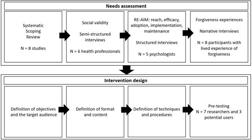
Four exploratory and qualitative studies were conducted with health professionals working in psychosocial care services, specialists in the development and/or evaluation of psychosocial interventions, and potential users of such interventions. This phase also aimed to verify whether the findings of the previously consulted literature, most of which was international, were similar to the Brazilian culture. Figure 1 presents a visual diagram of the method used to conduct the studies.
Literature review
The first study mapped studies on interventions to promote forgiveness published in the international literature, to identify implications for the design of interventions with this focus. This was a systematic scoping review that identified 75 studies, which, after applying the inclusion and exclusion criteria and conducting an active search of the references, constituted a final sample of 8 studies (Luz et al., 2019).
Social validity
The second study was conducted to determine the perception of the social validity of interventions focused on promoting forgiveness, according to the opinion of professionals working in health prevention and promotion services, and to identify possible elements capable of favoring the attractiveness of the intervention for the populations served by the services in which they are located. Semi-structured interviews were conducted with six health professionals working in different health services, contacted by the researcher by telephone and e-mail. The respondents were from the areas of psychology, psychiatry, and nursing. The interviews lasted a total of 103 minutes, all of which were recorded and later transcribed.
RE-AIM Model: Reach, Efficacy, Adoption, Implementation, and Maintenance
The third study aimed to explore with professionals potential barriers and facilitators to the reach, effectiveness, adoption, implementation, and maintenance of such interventions. Five psychology professionals with experience in the field of the development and/or evaluation of prevention and health promotion interventions participated in this study. A structured interview script, developed based on the dimensions of the RE-AIM model, was used for the interviews.
Forgiveness experiences
The fourth study examined reports of successful and unsuccessful experiences of forgiveness experienced by potential users of this type of intervention. The goal was to identify elements in participants' reports that facilitated and hindered the experience of forgiveness. In this study, narrative interviews were conducted with eight participants whose inclusion criterion was having experienced an offense that had already been forgiven or that still caused some type of emotional discomfort.
The thematic analysis model proposed by Braun and Clarke (2017) was used to analyze the results of all studies, where it was possible to identify categories and subcategories from repeated readings of the transcribed material, which were refined in discussions with the research team.
Intervention design
Defining objectives and the target audience
This was an intervention aimed at adults who had experienced some form of offense, regardless of the context in which they were inserted, the perceived severity of the offense suffered, and the type of relationship they had with the offender. According to Pinho and Falcone (2015), interventions focused on promoting forgiveness were aimed at different audiences, such as adolescents, adults, and the elderly. However, they were implemented in homogeneous groups, taking into account the specificities of the context in which these audiences were placed and the reported offenses. These findings are supported by other systematic review studies in the field (Akhtar & Barlow, 2018; Lundahl et al., 2008; Wade et al., 2014).
The developed needs assessment studies also contributed to the definition of the intervention objectives, as follows: (a) to promote awareness of the pain and impact caused by offending experiences; (b) to promote the development of emotional regulation skills; (c) to increase participants' awareness of the benefits of forgiveness and to create new awareness of the motivations for experiencing forgiveness; (d) to increase attitudes of empathy and compassion toward the offender; (e) to promote personal commitment to expressing forgiveness and the establishment of strategies to maintain more compassionate attitudes.
Definition of format and content
The intervention design adopted the theoretical model developed by Enright and the Human Development Study Group (1991), which describes the forgiveness process in four distinct phases - anger discovery, decision, work, and outcome - consisting of 20 steps. The overall structure of the intervention was initially designed with the steps described in the process model of forgiveness in mind.
Similarly, the content of the intervention was planned to cover the four phases of the process model of forgiveness, in addition to considering the elements and strategies found in the studies that comprised the needs assessment. The themes for each of the meetings were as follows: (1) forgiveness in life and the literature, (2) understanding forgiveness better, (3) why forgive?, (4) restoring the way, (5) developing empathy, and (6) commitment to forgiveness.
Definition of techniques and procedures
Mindfulness exercises, Socratic dialogue, self-observation and self-assessment exercises, behavioral rehearsal, and self-monitoring activities were used to develop the themes. It was also based on the data from the needs assessment that the decision was made to implement a medium-term intervention (six meetings), in group format, focusing on the context of common offenses.
Pre-testing
After defining the objectives, target audience, format, content, and techniques of the intervention, it was subjected to pre-testing. The intervention proposal was presented to seven researchers and three potential users for assessment of its structure, content, and techniques in order to improve the initial formatted design. They were asked to evaluate the quality of the content and procedures, taking into account the criteria of attractiveness, relevance, clarity, and coherence with the proposed objectives. The informants expressed their opinions and suggestions on the content and structure through free verbalizations, records sent by e-mail, and meetings with the research team. The results of these evaluations were used to refine the content and format of the intervention.
Ethical care
The studies included in this manuscript were approved by the Research Ethics Committee for Human and Social Sciences (CEP/CHS) of the University of Brasília, Opinion 2731624. Participants were informed of the objectives of the study and their rights, and then agreed to participate by signing the appropriate informed consent.
Results and Discussion
Needs assessment
Literature review: predictors of efficacy
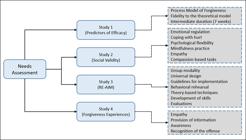
The results of Study 1 identified some elements as predictors of the efficacy of interventions of this type, which help guide the development of new interventions or the adaptation of existing interventions. Considering the theoretical models found in the literature, interventions that adopted the model developed by Enright and the Human Development Study Group (1991) showed better outcomes than control groups and alternative treatments (Akhtar & Barlow, 2018; Lundahl et al., 2008; Wade et al., 2014). Other important findings suggest that fidelity to the theoretical model enhances the results of interventions (Rainey et al., 2012).
About the target population, the findings show that interventions of this type have been implemented in a variety of contexts and with different perceptions of severity, such as sexual violence, psychological abuse, abortion, marital conflict, and deprivation of parental love. They suggest that homogeneous groups that report violations of the same type and with a higher degree of severity may experience better results, without excluding the benefits experienced by participants in groups in which the situations of violations and degrees of severity are diverse (Lundahl et al., 2008), which seems to be an appropriate strategy for proposing actions focused on promoting health and expanding services to the community.
As for the characteristics of the interventions, the results show that long-term interventions, delivered individually, were more effective than medium- and short-term interventions delivered in pairs or groups. However, group interventions with six or more sessions were considered adequate, as they showed moderate or large effect sizes. These findings suggest a direct relationship between effect size and intervention duration (Lundahl et al., 2008).
Social validity: optimizing objectives, procedures, and effects
The analysis of study participants' reports on social validity indicates the perceived relevance of interventions focused on promoting forgiveness, which can be targeted to populations in specific contexts as well as to the community as a whole. Such interventions may be considered socially relevant if their goals include: (a) developing emotional regulation skills, coping with hurt and resentment; (b) promoting greater psychological flexibility; (c) enabling the development of empathy, compassion and hope; (d) fostering self-knowledge; and (e) contributing to the prevention of relationship problems, anxiety, depression and other negative mental health events.
In terms of procedures that might demonstrate the relevance of the intervention, the use of behavioral rehearsal, mindfulness techniques, cognitive restructuring activities, and compassion-focused tasks was reported. Regarding potential effects and impacts that the intervention could produce, improvements in interpersonal, family, and marital relationships were mentioned; increased self-efficacy beliefs and improved self-satisfaction; increased awareness of oneself, feelings, and strategies for dealing with such feelings to reduce the negative impact on participants' lives.
These findings are supported by the literature, which points to the proposition of socially significant goals, socially acceptable procedures, and socially significant effects as a crucial aspect in the implementation of interventions (Francisco & Butterfoss, 2007). It is worth noting that an intervention that is perceived as socially relevant in its objectives, procedures, and outcomes becomes more viable, facilitating its adoption in different scenarios.
RE-AIM model: Strategies to Enhance Reach, Efficacy, Adoption, Implementation, and Sustainment
The interviewees' reports point to some characteristics that can facilitate the implementation of an intervention, including: universal design, with a focus on health promotion or even a customized design when dealing with a specific audience; the involvement of several stakeholders in the development of the intervention; the use of language appropriate to the audience and technological innovations, both in the development of activities and in recruitment; the clear disclosure of the potential benefits for participants and a schedule that does not compete with the routine of the target population. The main barriers identified are related to a culture of treatment to the detriment of prevention, the perception that it is good and necessary, but not a priority because there is no specific demand to be addressed.
In terms of efficacy/effectiveness, respondents identified as potential facilitators: the use of multiple theories to support the design of the intervention; the use of strategies and techniques that allow for the development of skills, the evaluation of the individual process and the transfer of learning to the participant's daily life; the proposal of concrete goals and feasible tasks. Conversely, the following were identified as possible barriers: proposing activities that are meaningless to the participants without taking into account the needs of the target population; poor or no planning of activities; and offering activities without theoretical support.
To promote the adoption of an intervention, the analysis of the respondents' reports suggests that broad dissemination of the potential benefits to the organization, integration of the intervention into the organization's routine, and participation of the institution's professionals in a brief intervention format would act as facilitators. Conversely, interventions that require a lot of resources, the lack of information about benefits, competition with the institution's routine, and a culture of non-prevention would be potential barriers to adoption.
The production of guidelines, accompanied by the training and supervision of professionals responsible for implementation, was identified as a facilitating element for the implementation of an intervention at the organizational level. The alignment of the intervention with the values of the institution, the provision of group activities, and the participation of a multidisciplinary team in the development and implementation of the proposed activities were also mentioned. At the individual level, commitment to the intervention and the perception of personal benefits were highlighted. At the organizational level, the following barriers were reported: the perception of the intervention as an imposition by the organization, the lack of alignment with actions already developed by the team, and the lack of structure or resources. At the individual level, the failure of the implementers to meet the needs of the participants and the suggestion of unfeasible tasks were considered barriers.
Regarding maintenance, at the organizational level, the results suggest that institutional support, integration into the reality of the institution, and the adoption of mechanisms to evaluate the impact of the intervention would facilitate its maintenance. On the other hand, a team overloaded with tasks and functions and the lack of impact evaluation, could jeopardize the maintenance of the intervention. At the individual level, the following facilitating elements were mentioned: follow-up and impact on the participant's life, as well as individual commitment to homework assignments. On the other hand, little or no participant involvement in completing the tasks, lack of perceived benefits or need, and lack of adequate monitoring by the implementation team would make maintenance unlikely.
Among the suggestions made by the experts, some of them are supported by specialized literature, with emphasis on the universal nature, which would expand the scope of interventions of this type, including non-clinical populations, and would fill a gap in the field, as most interventions are developed for specific contexts (Akhtar & Barlow, 2018; Pinho & Falcone, 2015). Another recommendation observed in the experts' reports is the use of a group approach when implementing interventions of this type. Although Lundahl et al. (2008) suggest that individually delivered interventions are associated with better outcomes than group interventions, group interventions with six or more sessions can also be considered adequate (Lundahl et al., 2008; Wade et al., 2014).
Experiences of Forgiveness: Facilitators and Barriers to Forgiveness
The results of the narrative interviews allowed for the identification of four major categories that, according to the interviewees, contributed to or hindered the experience of successful forgiveness: (1) taking the perspective of the offender - being able to contextualize the offender and the experience of the offense; (2) clarity of the offense - being able to accurately describe the situation of the offense experienced; (3) awareness of the pain and its effects - being able to assess and understand the pain felt and the damage it causes in the victim's daily life; and (4) conceptual understanding of the phenomenon - being aware of the structural elements of forgiveness and their implications for the willingness to forgive the offender. These dimensions, when present in personal experience, act as facilitators of the experience of forgiveness and as barriers when absent.
Findings such as these appear to be consistent with the recommendations of the Process Model of Forgiveness (Enright & The Human Development Study Group, 1991), which identifies as essential elements the development of an empathetic attitude toward the offender and an increased awareness of the offense and its impact on the offended person's life. Luskin (2002) also emphasizes the conceptual clarity of forgiveness as a facilitator of the willingness to forgive offenses suffered.
Intervention design
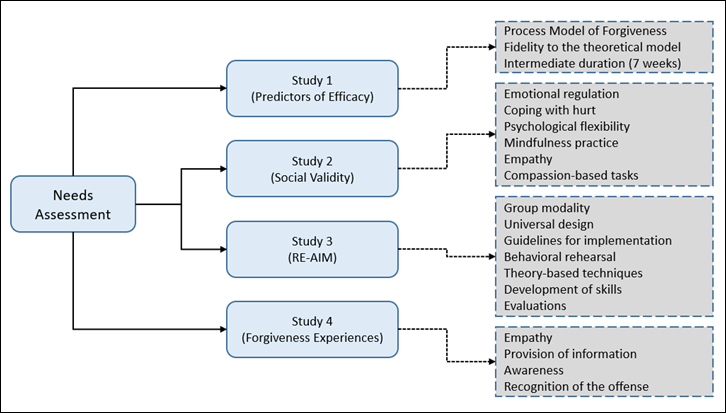
According to Pinho and Falcone (2015), interventions focused on promoting forgiveness were aimed at diverse audiences, such as adolescents, adults, and the elderly. However, they were implemented in homogeneous groups, taking into account the specificities of the context in which these audiences were placed and the reported offenses. These findings are supported by other systematic review studies in this area (Akhtar & Barlow, 2018; Lundahl et al., 2008; Wade et al., 2014). Based on the results of the needs assessment, it was initially decided to develop a new forgiveness intervention that could be applied to different offending contexts, as most interventions found in the literature focused on offenses of the same type. Figure 2 illustrates how the results of the needs assessment were incorporated into the intervention design.
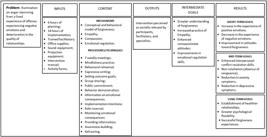
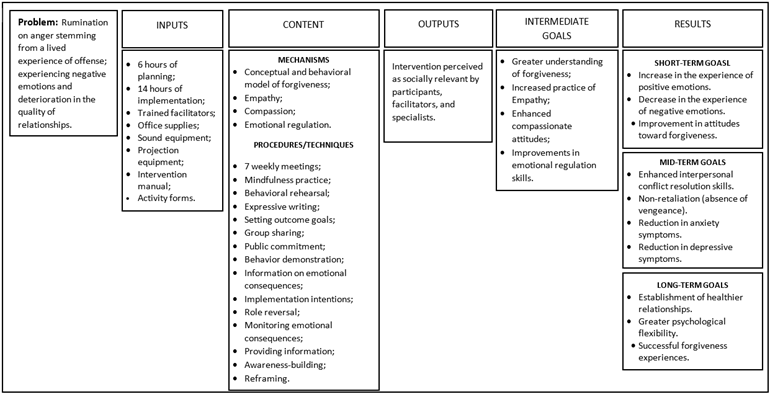
Still in light of the studies that comprised the needs assessment, the logical model of the intervention, shown in Figure 3, was developed, representing its components, inputs, mechanisms of action, and expected outcomes.
The initial design of the intervention included six meetings to develop the proposed activities, followed by a post-meeting assessment. Although the literature on interventions to promote forgiveness suggests that longer interventions have a stronger impact (Lundahl et al., 2008), the choice of a short intervention is supported by the possibility of expanding its reach and increasing its acceptance.
The first meeting focused on a general understanding of the phenomenon: the models of forgiveness found in literature and everyday life, the personal experiences of the participants about the topic, and the social representation of the phenomenon. Activities were proposed that would present ideas and beliefs about forgiveness, as well as reports of successful experiences of forgiveness, to provide models that could be compared with each participant's personal experience. The following techniques were used in preparing this meeting: providing information (Bartholomew et al., 2013), practicing mindfulness (Kabat-Zinn, 2021), monitoring emotional consequences, and demonstrating behavior (Michie et al., 2015).
The second meeting focused on the construction of the personal concept of forgiveness and its influences on the decision to engage in the forgiveness process. Short texts were prepared to present definitions that resemble forgiveness but, upon closer analysis, turn out to be false and may influence the personal decision to forgive, as well as experiential scripts to encourage participants to reevaluate their experiences of offense by observing them in a contextualized way. Awareness raising (Bartholomew et al., 2013), mindfulness practice (Kabat-Zinn, 2021), information on emotional consequences, and monitoring of emotional consequences (Michie et al., 2015) were used in preparing this meeting.
The focus of meeting 3 was to present the possible benefits of the act of forgiveness, to contribute to a personal analysis of the reasons for forgiveness, and to promote the development of skills necessary in the forgiveness process. Experiential exercises were proposed to motivate the participants to consider forgiveness as an option, since the strategies adopted by the participants to deal with the offense and its consequences proved ineffective. The design of this meeting was based on the adoption of techniques such as offering information, raising awareness (Bartholomew et al., 2013), practicing mindfulness (Kabat-Zinn, 2021), informing about emotional consequences, and monitoring of emotional consequences (Michie et al., 2015).
In the fourth meeting, the debate revolved around reframing the offensive situation, based on adopting a more empathetic and compassionate stance toward the offender. The guidance offered to the participants was aimed at motivating them to contextualize the offense and the offender to facilitate a new reading of the lived experience, with a view supported by empathy and compassion. Techniques such as expressive writing (Pennebaker & Beall, 1986), mindfulness practices (Kabat-Zinn, 2021), information about emotional consequences, monitoring of emotional consequences, reframing, behavioral demonstrations (Michie et al., 2015), and awareness (Bartholomew et al., 2013) were used in the construction of this meeting to facilitate the achievement of the goals.
The fifth meeting expanded the discussion on strategies for promoting empathy and its role in the forgiveness process. Additionally, the guidelines proposed a personal assessment of situations in which participants found themselves in the role of the offender under the condition of receiving forgiveness from another person. In preparing this meeting, role shifting, implementation intentions (Bartholomew et al., 2013), expressive writing (Pennebaker & Beall, 1986), mindfulness practice (Kabat-Zinn, 2021), awareness, monitoring of emotional consequences, and behavioral rehearsal (Michie et al., 2015) were used.
The sixth meeting focused on personal commitment to forgiveness, based on an assessment of the benefits achieved and potential, as well as the improvement of skills acquired as a result of the forgiveness process. The tasks proposed were designed to stimulate reflection on strategies for maintaining altruistic attitudes. The following activities were used: setting outcome goals, monitoring emotional consequences (Michie et al., 2015), providing information, raising awareness, public commitment (Bartholomew et al., 2013), practicing mindfulness (Kabat-Zinn, 2021), and expressive writing (Pennebaker & Beall, 1986). To finalize the intervention design, a post-meeting was proposed to assess the personal experience within the intervention, as well as the process of implementing the intervention. The objectives of each of the techniques used are listed in Table 1.
The structure and content of the proposed intervention were submitted for evaluation by experts and potential users, who pointed out a mismatch between the choice of some techniques and the achievement of the proposed objectives; an excessive use of cognitive exercises in the two initial meetings; a positive bias in the approach to the topic, not considering other possible interpretations of the phenomenon; the absence of strategies for managing emotions after some proposed exercises; and the use of technical language in some instructions. In addition to these problems, this preliminary evaluation indicated that the structure and content were perceived as relevant, pertinent, and with the potential to promote reflection and self-reference.
In response to these observations, an adjustment was made to the initial sessions in terms of the objectives and techniques chosen, a reorganization of the proposed activities in terms of content and format, the replacement of some cognitive exercises with experiential activities, and a readjustment of the language used in the instructions.
Final considerations
The purpose of this study was to describe the development of a forgiveness intervention for adults who had experienced situations of offense and hurt. The results of the needs assessment studies guided the decisions made in the development process, regarding the characteristics of the intervention (average duration, group delivery method); the structure and content (techniques based on theories, proposal of concrete objectives, feasible and meaningful activities), and the characteristics of the target population (universal design, non-specific offense experience), thus contributing to the construction of an intervention proposal that is more relevant and more sensitive to the needs of the users.
The main contribution of this study lies in the systematic process of developing an innovative intervention aimed at the experience of forgiveness in the face of different interpersonal offenses. Decisions regarding the goals, format, content, and techniques of the intervention were based on the triangulation of evidence from multiple studies, taking into account not only findings from the literature but also the perspectives of health professionals and people with lived experience in the process of (not) forgiving. It is expected that these measures will ensure the potential benefits of the intervention for a greater number of people over time, as opposed to interventions that are created based solely on the literature or the singular experience of one researcher.
Refinements after pre-testing resulted in an intervention that can be subjected to future waves of efficacy and effectiveness evaluation to determine the extent to which the intermediate goals and short-, medium-, and long-term outcomes predicted in the intervention's logical model are achieved. Likewise, the prediction of the intervention's content, through its procedures, techniques, and mechanisms of action indicated in the intervention's logical model (conceptual and behavioral model of forgiveness, empathy, compassion, and emotional regulation), points to central dimensions of the intervention's process evaluation in its future implementations. Thus, the systematic design of the intervention, in addition to generating the intervention, provides the basis for a general plan for evaluating the process and outcomes, by indicating variables to be covered in future evaluations of the intervention.
The intervention proposed here focuses on interpersonal forgiveness. Therefore, addressing collective offenses or violence perpetrated against entire segments of society is outside the scope of this intervention. This includes the various forms of social injustice associated with xenophobia, racism, sexism, homophobia, and other forms of prejudice and discrimination directed at minority groups. There is also violence that results in mass extermination, such as genocide and civil war, which results in intergenerational trauma. In these cases, interpersonal forgiveness is not a direct solution. Nevertheless, it is possible that interpersonal forgiveness can serve as a measure of resistance for subsequent social struggles.
Several implications of this study could be the subject of further research. First, future studies should focus on experiences of forgiveness in the context of collective offenses and whether and how these are related to interpersonal forgiveness. Second, more comprehensive studies could examine in depth and contrast successful and unsuccessful experiences of forgiveness, as well as their antecedents and consequences. These findings could support new interventions, both educational and psychotherapeutic. Third, it is suggested that new initiatives to develop interventions to promote forgiveness could adopt participatory methodologies that involve other stakeholders in the various stages of intervention construction, such as the co-production model (Hawkins et al., 2017). Involving other stakeholders can minimize barriers related to delivery strategies and ensure that the content meets the real needs of the population, thereby increasing the viability, acceptability, and quality of the intervention.
References
-
Abu-Nimer, M., & Nasser, I. (2023) Considerations in education for forgiveness and reconciliation: lessons from Arab and Muslim majority contexts, Journal of Peace Education, 20(1), 30-52. doi: 10.1080/17400201.2022.2140648
» https://doi.org/10.1080/17400201.2022.2140648 -
Akhtar, S., & Barlow, J. (2018). Forgiveness therapy for the promotion of mental well-being: a systematic review and meta-analysis. Trauma, Violence, and Abuse, 19(1), 107-122. doi:10.1177/1524838016637079
» https://doi.org/10.1177/1524838016637079 -
Akhtar, S., Dolan, A., & Barlow, J. (2017). Understanding the relationship between state forgiveness and psychological well-being: A qualitative study. Journal of Religion and Health, 56(2), 450-463. doi:10.1007/s10943-016-0188-9
» https://doi.org/10.1007/s10943-016-0188-9 -
Barcaccia, B., Pallini, S., Baiocco, R., Salvati, M., Saliani, A. M., & Schneider, B. H. (2018). Forgiveness and friendship protect adolescent victims of bullying from emotional maladjustment. Psicothema, 30(4), 427-433. doi:10.7334/psicothema2018.11
» https://doi.org/10.7334/psicothema2018.11 -
Barcaccia, B., Pallini, S., Pozza, A., Milioni, M., Baiocco, R., Mancini, F., & Vecchio, G. M. (2019). Forgiving adolescents: Far from depression, close to well-being. Frontiers in Psychology, 10, 1-9. doi:10.3389/fpsyg.2019.01725
» https://doi.org/10.3389/fpsyg.2019.01725 - Bartholomew, L. K., Parcel, G. S., Kok, G., Gottlieb, N. H., & Fernádez, M. E. (2013). Planning health promotion programs an intervention mapping approach. Jossey-Bass
- Braun, V., & Clarke, V. (2017). Evaluating and reviewing TA research: a checklist for editors and reviewers. The University of Auckland.
-
Enright, R. D., & Knutson, J. (2010). The journey toward forgiveness and love: a guided curriculum for children ages 10 - 12 [Program of studies]. https://internationalforgiveness.com/product-category/curriculum-guides/
» https://internationalforgiveness.com/product-category/curriculum-guides/ - Enright, R. D., & The Human Development Study Group. (1991). The moral development of forgiveness. In W. Kurtines & J. Gewirtz (Eds.), Handbook of moral behavior and development(pp. 123-152). Lawrence Erlbaum.
-
Francisco, V. T., & Butterfoss, F. D. (2007). Social validation of goals, procedures, and effects in public health. Health Promotion Practice, 8(2):128-133. doi:10.1177/1524839906298495
» https://doi.org/10.1177/1524839906298495 -
Freedman, S., & Knupp, A. (2003). The impact of forgiveness on adolescent adjustment to parental divorce. Journal of Divorce & Remarriage, 39(1-2), 135-165. doi:10.1300/J087v39n01_08
» https://doi.org/10.1300/J087v39n01_08 -
Hawkins, J., Madden, K., Fletcher, A., Midgley, L., Grant, A., Cox, G., Moore, L., Campbell, R., Simon Murphy, S., Bonell, C., & White, J. (2017). Development of a framework for the co-production and prototyping of public health interventions. BMC Public Health, 17(1), 1-11. doi:10.1186/s12889-017-4695-8
» https://doi.org/10.1186/s12889-017-4695-8 -
Jarrett, N. L., Pickett, S. M., Amsbaugh, H., & Afzal, B. (2017). Mindfulness and forgiveness buffer distress: Associations with interpersonal transgression blameworthiness. Counseling and Values, 62(2), 198-215. doi:10.1002/cvj.12059
» https://doi.org/10.1002/cvj.12059 -
Kabat-Zinn, J. (2021). The liberative potential of mindfulness. Mindfulness, 12, 1555-1563. doi:10.1007/s12671-021-01608-6
» https://doi.org/10.1007/s12671-021-01608-6 -
Lundahl, B. W., Taylor, M. J., Stevenson, R., & Roberts, K. D. (2008). Process-based forgiveness interventions: a meta-analytic review. Research on Social Work Practice, 18(5), 465-478. doi:10.1177/1049731507313979
» https://doi.org/10.1177/1049731507313979 - Luskin, F. (2002). Forgive for good: a proven prescription for health and happiness. HarperCollins.
- Luz, J. M. O., Murta, S. G., Fontaine, A. M. G. V., & Rique, J. (2019). Preditores de eficácia de intervenções para promoção do perdão: lições para o desenho de novas intervenções. In C. Antloga, K. Brasil, S. Lordello, M. Neubern, & B. Queiroz(Eds.), Psicologia clínica e cultura contemporânea4 (1a ed., p. 575-595). Technopolitik.
-
Michie, S., Wood, C. E., Johnston, M., Abraham, C., Francis, J. J., & Hardeman, W. (2015). Behaviour change techniques: The development and evaluation of a taxonomic method for reporting and describing behaviour change interventions (a suite of five studies involving consensus methods, randomised controlled trials and analysis of qualitative da. Health Technology Assessment, 19(99), 1-187. doi:10.3310/hta19990
» https://doi.org/10.3310/hta19990 - Murta, S. G., & Santos, K. B. (2015). Desenvolvimento de programas preventivos e de promoção em saúde mental. In S. G. Murta, C. Leandro-França, K. B. Santos, & L. Polejack(Eds.), Prevenção e promoção em saúde mental: fundamentos, planejamento e estratégias de intervenção (pp. 168-191). Sinopsys.
-
Pennebaker, J. W., & Beall, S. K. (1986). Confronting a traumatic event: toward an understanding of inhibition and disease. Journal of Abnormal Psychology, 95(3), 274-281.doi:10.1037/0021-843X.95.3.274
» https://doi.org/10.1037/0021-843X.95.3.274 - Pinho, V. D., & FaIcone, E. M. O. (2015). Intervenciones para la promoción del perdón y la inserción de la empatía: revisión de la literatura. Revista Argentina de Clínica Psicológica, 24(2),111-120.
- Rainey, C. A., Readdick, C. A., & Thyer, B. A. (2012). Forgiveness-based group therapy: A meta-analysis of outcome studies published from 1993-2006. Best Practice in Mental Health, 8(1), 29-51.
-
Rapp, H., Wang Xu, J., & Enright, R. D. (2022). A meta-analysis of forgiveness education interventions' effects on forgiveness and anger in children and adolescents. Child Development. 93(5), 1249-1269. doi:10.1111/cdev.13771
» https://doi.org/10.1111/cdev.13771 -
Reed, G. L., & Enright, R. D. (2006). The effects of forgiveness therapy on depression, anxiety, and posttraumatic stress for women after spousal emotional abuse. Journal of Consulting and Clinical Psychology, 74(5), 920-929.doi:10.1037/0022-006X.74.5.920
» https://doi.org/10.1037/0022-006X.74.5.920 - Rique, J., Camino, C., Formiga, N., Medeiros, F., & Luna, V. (2010). Consideração empática e tomada de perspectiva para o perdão interpessoal. Revista Interamericana de Psicologia, 3, 411-418.
-
Rye, M. S., Fleri, A. M., Moore, C. D., Worthington, E. L., Wade, N. G., Sandage, S. J., & Cook, K. M. (2012). Evaluation of an intervention designed to help divorced parents forgive their ex-spouse. Journal of Divorce and Remarriage, 53(3), 231-245. doi:10.1080/10502556.2012.663275
» https://doi.org/10.1080/10502556.2012.663275 -
Shechtman, Z., Wade, N., & Khoury, A. (2009). Effectiveness of a forgiveness program for arab israeli adolescents in israel: an empirical trial. Peace and Conflict, 15(4), 415-438. doi:10.1080/10781910903221194
» https://doi.org/10.1080/10781910903221194 -
Van Tongeren, D. R., Green, J. D., Hook, J. N., Davis, D. E., Davis, J. L., & Ramos, M. (2015). Forgiveness increases meaning in life. Social Psychological and Personality Science, 6(1), 47-55. doi:10.1177/1948550614541298
» https://doi.org/10.1177/1948550614541298 -
Wade, N. G., Hoyt, W. T., Kidwell, J. E. M., & Worthington, E. L. (2014). Efficacy of psychotherapeutic interventions to promote forgiveness: a meta-analysis. Journal of Consulting and Clinical Psychology, 82(1), 154-170. doi:10.1037/a0035268
» https://doi.org/10.1037/a0035268 -
Worthington Jr., E. L., & Wade, N. G. (Eds.). (2020). Handbook of forgiveness. Routledge. doi:10.4324/9781351123341-32
» https://doi.org/10.4324/9781351123341-32

 Source: The authors.
 Source: The authors.
 Source: The authors.