 Comparative Evaluation of Postoperative Pain Following Nonsurgical Endodontic Therapy with Calcium Silicate-Based Sealer and Traditional Sealers: A Systematic Review and Meta-Analysis
ABSTRACT
Objective: To systematically review and compare postoperative pain levels following NSET using calcium silicate-based sealers versus traditional sealers.
Material and Methods: This systematic review adhered to PRISMA 2020 guidelines and was registered with PROSPERO (CRD42024607698). A comprehensive search of the PubMed, Scopus, and Web of Science databases was conducted to identify clinical trials comparing postoperative pain following obturation with calcium silicate-based versus traditional sealers. Studies including patients with symptomatic irreversible pulpitis or retreatment cases were selected. Pain outcomes were assessed using visual analog scales (VAS) or numeric rating scales (NRS) at 24 hours to 7 days postoperatively. Risk of bias was evaluated using RoB-2 for randomized trials and ROBINS-I for non-randomized trials. Meta-analysis was conducted where appropriate.
Results: Five studies met the inclusion criteria. Meta-analysis indicated that calcium silicate-based sealers significantly reduced postoperative pain at 24 hours (SMD: -0.34; 95% CI: -0.63 to -0.04; p=0.02) but not at 48 hours (SMD: -0.26; 95% CI: -0.62 to 0.11; p=0.17). Overall, calcium silicate-based sealers demonstrated lower postoperative pain, especially within the first 24-72 hours. However, variability among study designs, patient conditions, and obturation techniques influenced outcomes.
Conclusion: Calcium silicate-based sealers may offer short-term advantages in reducing postoperative pain after NSET. Nevertheless, findings were inconsistent across studies, and further high-quality randomized controlled trials are needed to confirm these results and establish long-term clinical relevance.
Keywords:
Dental Pulp Diseases; Postoperative Pain; Root Canal Filling Materials.
Introduction
Postoperative pain is a prevalent and clinically significant concern among patients undergoing nonsurgical endodontic therapy (NSET), affecting both patient comfort and overall treatment outcomes [1]. The incidence and severity of postoperative pain are influenced by multiple factors, including chemical, mechanical, and microbial stimuli, all of which contribute to periapical inflammation and discomfort [2]. Among these factors, the selection of an endodontic sealer plays a critical role, as it directly impacts the quality of root canal obturation, the integrity of the apical and coronal seal, and the extent of post-treatment tissue irritation and inflammation [3].
Endodontic sealers, in conjunction with core filling materials, are essential for achieving a hermetic seal within the root canal system. Traditional sealers, such as those based on zinc oxide-eugenol, epoxy resin, and glass ionomer, have been widely utilized for decades [4]. However, these materials present inherent limitations, including shrinkage, solubility, and cytotoxicity, which may adversely affect periapical tissue response and potentially contribute to postoperative pain and delayed healing [3,5]. In response to these challenges, calcium silicate-based sealers, commonly referred to as bioceramic sealers, have been developed as an alternative. These materials are engineered to overcome the limitations of conventional sealers by providing superior biocompatibility, bioactivity, and enhanced sealing properties [6].
Calcium silicate-based sealers exhibit bioactivity by interacting with periapical tissues and forming hydroxyapatite upon contact with tissue fluids, thereby promoting biological sealing and facilitating periapical healing [7]. Evidence suggests that these sealers elicit a favorable biological response, reducing periapical inflammation and enhancing tissue regeneration [8]. Moreover, their dimensional stability, minimal shrinkage, and ability to set even in the presence of moisture make them particularly advantageous in clinical scenarios where moisture control is challenging [9]. Given these properties, calcium silicate-based sealers have been proposed as a potential solution for minimizing postoperative pain compared to traditional sealers. However, the available evidence remains inconsistent, with some clinical studies reporting variable outcomes regarding their influence on postoperative pain levels [10].
Considering these discrepancies, a systematic review is necessary to comprehensively assess and compare the incidence and intensity of postoperative pain associated with different types of endodontic sealers. Evaluating the comparative effectiveness of calcium silicate-based and conventional sealers is crucial for evidence-based clinical decision-making and optimizing patient care. Therefore, this systematic review aims to synthesize existing literature on postoperative pain following obturation with calcium silicate-based sealers versus traditional sealers in NSET. By critically appraising current evidence, this review seeks to provide clinicians with a well-founded basis for selecting sealers that minimize postoperative discomfort and enhance patient outcomes.
Material and Methods
Study Design
This systematic review and meta-analysis were conducted in accordance with the Preferred Reporting Items for Systematic Reviews and Meta-Analyses (PRISMA) 2020 guidelines. The protocol for this review was prospectively registered with the International Prospective Register of Systematic Reviews (PROSPERO) under the registration number CRD42024607698.
Structured Research Question (PICO Framework)
-
Population (P): Patients undergoing nonsurgical endodontic therapy (NSET) in permanent teeth, including cases diagnosed with symptomatic irreversible pulpitis, pulp necrosis, or requiring retreatment.
-
Intervention (I): Root canal obturation performed using calcium silicate-based sealers, including TotalFill BC Sealer, EndoSequence BC Sealer, Nishika Canal Sealer BG, and Bio-C Sealer.
-
Comparison (C): Root canal obturation using traditional sealers such as AH Plus (epoxy resin-based sealer), zinc oxide eugenol-based sealers, AH26, Endomethasone, and Roekoseal.
-
Outcome (O): Postoperative pain assessed within 7 days of obturation, utilizing validated patient-reported outcome measures such as the Visual Analog Scale (VAS) or Numeric Rating Scale (NRS).
Eligibility Criteria
The following inclusion criteria were established: 1) Randomized controlled trials (RCTs), prospective controlled clinical trials, and split-mouth clinical trials; 2) Studies involving patients undergoing nonsurgical endodontic therapy in permanent teeth (either primary treatment or retreatment cases); 3) Studies evaluating postoperative pain following root canal obturation with calcium silicate-based sealers compared to traditional sealers; 4) Studies using calcium silicate-based sealers, including: TotalFill BC Sealer (Brasseler USA); EndoSequence BC Sealer (Brasseler USA); Nishika Canal Sealer BG (Nishika Co., Japan); and Bio-C Sealer (Angelus, Brazil); 4) Studies using traditional sealers, including: AH Plus (epoxy resin-based sealer); Zinc oxide eugenol-based sealers; AH26 Sealer; Endomethasone; and Roekoseal; 5) Postoperative pain must be assessed using a validated pain scale (VAS, NRS, or equivalent) within 24 hours to 7 days of surgery; 6) Studies where pain was assessed by patient self-report using standardized questionnaires, direct interviews, or telephonic surveys; and 7) Studies published in the English language.
The following parameters were adopted as exclusion criteria: 1) In vitro, ex vivo, animal, retrospective observational study, case report, case series, narrative review, systematic review, and meta-analysis; 2) Studies focusing exclusively on primary teeth, vital pulp therapies (e.g., pulpotomy, pulp capping), or surgical endodontic procedures (e.g., apicoectomy, periapical surgery); 3) Studies evaluating parameters unrelated to postoperative pain, such as sealing ability, antimicrobial properties, material characteristics, or radiographic outcomes, without patient-reported pain data; 4) Studies that did not assess postoperative pain using validated pain scales or did not assess pain within 7 days post-treatment; 5) Studies comparing only different obturation techniques without assessing different sealer materials; and 6) Studies published in languages other than English.
Search Strategy
An extensive electronic search was performed across PubMed, Scopus, and Web of Science databases up to February 2025. In addition, a manual search was conducted in selected endodontic specialty journals to identify potentially relevant articles not captured in the electronic search. The search strategy utilized a combination of keywords and Medical Subject Headings (MeSH) terms, including: “postoperative pain,” “post-endodontic pain,” “nonsurgical endodontic therapy,” “calcium silicate sealer,” “bioceramic sealer,” “bioactive glass sealer,” “traditional root canal sealer,” “epoxy resin sealer,” along with specific product names such as “TotalFill,” “Nishika Sealer BG,” and “AH Plus.” Boolean operators (“AND” and “OR”) were applied to refine and optimize the search sensitivity (Chart 1).
Study Selection
Two independent reviewers performed the initial screening of titles and abstracts. Full-text articles were retrieved for studies deemed potentially eligible. A subsequent eligibility assessment was conducted in accordance with predefined inclusion and exclusion criteria. Disagreements between reviewers were resolved through discussion or consultation with a third reviewer to achieve consensus.
Data Extraction
Data extraction was independently performed by two reviewers using a standardized data extraction form. The following information was collected from each included study: Author(s), year of publication; Study design; Sample size and demographic characteristics (e.g., age group, gender distribution); Tooth type and diagnosis (e.g., symptomatic irreversible pulpitis, pulp necrosis, retreatment); Root canal instrumentation and obturation techniques; Type of sealer used (calcium silicate-based vs. traditional); Pain assessment methods (VAS, NRS, or other validated scales); Time points for postoperative pain assessment; and Principal outcomes and conclusions.
Risk of Bias Assessment
The methodological quality of randomized controlled trials was evaluated using the RoB-2 tool (Cochrane Risk of Bias 2.0). Non-randomized studies were assessed with the ROBINS-I tool (Risk Of Bias In Non-randomized Studies - of Interventions). Domains assessed included the randomization process, deviations from intended interventions, missing outcome data, measurement of the outcome, and selective reporting. Risk of bias evaluation was performed independently by two reviewers, with disagreements resolved by consensus.
Data Synthesis and Meta-Analysis
Where sufficient data were available, a meta-analysis was conducted using Review Manager software (RevMan, version 7.12.0). For continuous data (pain scores), standardized mean differences (SMD) with 95% confidence intervals (CI) were calculated. Statistical heterogeneity was assessed using the I2 statistic, with predetermined thresholds for interpretation. Where appropriate, subgroup analyses were performed by type of calcium silicate-based sealer.
Results
Five studies [11-15] met the eligibility criteria and were included in this systematic review (Figure 1). These studies assessing the incidence and severity of postoperative pain in patients undergoing nonsurgical endodontic therapy (NSET) using calcium silicate-based sealers compared to traditional sealers.

Characteristic of Included Studies
The five included studies investigated the incidence and intensity of postoperative pain following root canal obturation with various endodontic sealers. The studies varied in methodology, including differences in sample population, comparator sealers, and postoperative follow-up periods. The primary objective of these studies was to evaluate the effectiveness of bioactive glass-based and calcium silicate-based bioceramic sealers in reducing postoperative pain compared to traditional epoxy resin-based sealers. The characteristics of the included studies are illustrated in Table 1 and Table 2.
Key details of the included studies, including study design, tooth type, diagnosis, instrumentation, irrigation protocol, obturation technique, and country.
The studies evaluated pain over varying periods, ranging from 24 hours to 7 days, utilizing either the Visual Analog Scale (VAS) or the Numeric Rating Scale (NRS) for assessment. Most studies reported a significant reduction in postoperative pain within the first 24 to 72 hours when calcium silicate-based sealers were used. Specifically, Supreet et al. [14] and Nagpal et al. [15] found that bioceramic sealers, such as Bio-C and Nishika BG, resulted in lower pain levels, particularly in cases of symptomatic irreversible pulpitis. Conversely, Yu et al. [13] and Graunaite et al. [11] observed no statistically significant difference in postoperative pain between calcium silicate-based and traditional sealers, suggesting that the analgesic effect of bioceramic sealers may not be universal. The reduction in pain associated with calcium silicate-based sealers has been attributed to their superior biocompatibility and bioactivity, which facilitate hydroxyapatite formation, enhance biological sealing, and promote periapical healing.
Additionally, their dimensional stability and ability to set in moist environments may minimize tissue irritation and inflammation, further contributing to lower postoperative pain. However, variability in pain outcomes was influenced by several factors, including preoperative conditions (e.g., symptomatic irreversible pulpitis or apical periodontitis), variations in root canal morphology, operator experience, and patient-specific characteristics (e.g., age, gender, and pain perception). Furthermore, procedural aspects, including sealer extrusion during warm vertical compaction, were suggested as potential contributors to postoperative discomfort, irrespective of the sealer type. While calcium silicate-based sealers show promise in reducing early postoperative pain, inconsistent findings highlight the need for additional high-quality randomized controlled trials to establish their definitive clinical advantages in pain reduction following NSET.
Split-Mouth Comparison of Bioceramic and Epoxy Resin-Based Sealers
Graunaite et al. [11] conducted a split-mouth clinical trial in patients requiring root canal therapy for at least two single-rooted teeth. Each patient received obturation with AH Plus Sealer in one tooth and TotalFill Bioceramic Sealer in the contralateral tooth. Postoperative pain was measured using the Visual Analog Scale (VAS). The results showed postoperative pain scores of 80 for AH Plus and 72 for TotalFill. By 72 hours post-treatment, neither group reported pain, indicating no statistically significant difference in postoperative pain reduction beyond this time point between the two sealers.
Assessment of a Single Bioceramic Sealer
Washio et al. [12] exclusively evaluated postoperative pain outcomes associated with Nishika BG Sealer in a large cohort of 555 teeth undergoing pulpectomy or retreatment due to infection. Patients were asked to report any pain or discomfort experienced during and immediately after obturation. The findings revealed that during the procedure, 95% of patients experienced no pain, 22% reported discomfort, and 1% reported pain. Immediately post-obturation, without analgesics, 98.5% of patients remained pain-free, 1% experienced mild discomfort, and 0.5% reported pain. These results indicate that Nishika BG Sealer is well tolerated, with minimal postoperative pain.
Short-Term Pain Assessment
Yu et al. [13] compared postoperative pain levels following obturation with calcium silicate-based bioceramic sealers and epoxy resin-based sealers over a 48-hour follow-up period. The study reported no significant differences in postoperative pain between the two sealer types, indicating comparable short-term pain outcomes.
Long-Term Pain Assessment
Supreet et al. [14] investigated postoperative pain over an extended follow-up period of seven days. The study findings indicated that patients obturated with bioceramic sealers experienced lower pain levels than those treated with epoxy resin-based sealers, suggesting that bioceramic sealers may offer superior long-term pain reduction.
Comparative Evaluation of Multiple Sealers
Nagpal et al. [15] conducted a clinical trial comparing the postoperative pain associated with three different sealers: a commercially available bioactive glass-based bioceramic sealer (Nishika Sealer BG), a novel calcium silicate-based bioceramic sealer (Bio-C Sealer), and the conventional epoxy resin-based sealer (AH Plus). The study included patients diagnosed with symptomatic irreversible pulpitis or symptomatic apical periodontitis in mandibular first and second molars. Postoperative pain was assessed at 24, 48, and 72 hours. Results indicated that Bio-C Sealer was associated with the lowest postoperative pain levels, followed by Nishika BG Sealer, while AH Plus Sealer resulted in the highest pain scores. These findings suggest that bioceramic sealers, particularly Bio-C Sealer, contribute to improved postoperative comfort compared to epoxy resin-based sealers.
The included studies yield varying conclusions about the effects of different endodontic sealers on postoperative pain. While some studies, such as those by Supreet et al. [14], Nagpal et al. [15], suggest that bioceramic sealers - particularly Bio-C Sealer and Nishika BG Sealer - may reduce postoperative pain compared to epoxy resin-based sealers, other investigations, including those by Graunaite et al. [11] and Yu et al. [13], indicate no significant differences beyond the initial 48-72 hours. Additionally, the large-scale study by Washio et al. [12] highlights the favorable pain outcomes associated with Nishika BG Sealer.
These findings suggest that bioceramic sealers offer certain advantages in minimizing postoperative pain, particularly in the early and extended postoperative periods. However, inconsistencies in study methodologies, patient populations, and pain assessment protocols underscore the need for further well-controlled clinical trials to establish definitive conclusions regarding their superiority over conventional epoxy resin-based sealers.
Risk of Bias Assessment
The risk of bias in the included RCTs was appraised using RoB-2 (version 2 of the risk of bias assessment tool developed by the Cochrane Collaboration) as depicted in Figure 2. The following areas were considered: randomization, blinding, attrition, selective reporting of results, and other potential sources of bias. It was determined whether the risk of bias for each element (domain) was low, high, or uncertain. Each RCT was designated an overall score, which was divided into three categories: low risk (low for all key elements), high risk (high for at least one key element), and unclear risk (unclear-> 1 key element), as shown in Figure 2.

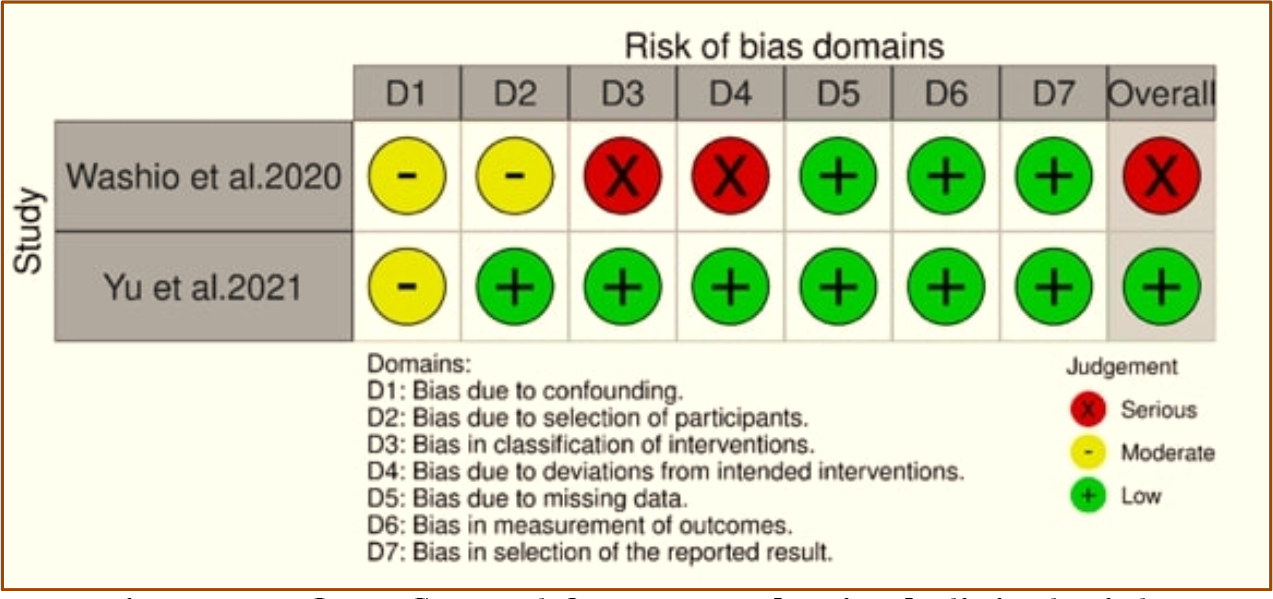
The risk of bias of the included non-randomized controlled clinical trial was appraised by the ROBIN-I. The risk of bias at various stages of the intervention is considered, and the domains assessed are depicted in Figure 3. The risk of bias assessment and scoring were performed separately by two investigators.

Results of Meta-Analysis
The meta-analysis (Figure 4) assessed postoperative pain levels following root canal treatment with calcium-based sealers compared to other sealers at 24 and 48 hours post-treatment, based on data from two randomized controlled trials (RCTs). At the 24-hour mark, calcium-based sealers demonstrated a statistically significant reduction in pain, with a standardized mean difference (SMD) of -0.34 (95% CI: -0.63 to -0.04; p = 0.02), indicating a moderate analgesic effect. However, at 48 hours, the pain reduction was not statistically significant (SMD: -0.26; 95% CI: -0.62 to 0.11; p = 0.17), suggesting that the early pain-relieving benefits of calcium-based sealers diminished over time.

A prospective controlled trial included in the analysis did not show statistically significant differences in pain reduction at either 24 hours (p = 0.78) or 48 hours (p = 0.68), further indicating variability in outcomes. Heterogeneity among studies was noted due to differences in methodological approaches: Graunaite et al. [11] and Nagpal et al. [15] reported pain scores as mean differences, whereas Supreet et al. [14] used odds ratios, which were later converted to a consistent metric to maintain consistency across the meta-analysis. Notably, none of the included studies reported any patient experiencing pain beyond seven days, indicating effective pain resolution in all groups.
Time points at 6 and 72 hours were excluded from the meta-analysis due to insufficient data, as only one study reported pain levels at these time points. Overall, the findings suggest that while calcium-based sealers may provide short-term pain relief within the first 24 hours post-treatment, their advantage over traditional sealers is not sustained beyond this period.
Discussion
This systematic review aimed to evaluate the impact of calcium silicate-based sealers compared with traditional sealers on postoperative pain after nonsurgical endodontic therapy (NSET). Postoperative pain is a common concern among patients undergoing root canal treatment, significantly influencing their perception of treatment success and overall satisfaction [2]. Endodontic sealers play a crucial role in achieving high-quality obturation, preventing apical and coronal leakage, and minimizing tissue irritation, all of which are essential for long-term treatment success [16].
The findings of this review indicate that calcium silicate-based sealers, commonly referred to as bioceramic sealers, generally result in lower postoperative pain levels than traditional sealers, such as epoxy resin-based and zinc oxide-eugenol sealers. Studies by Supreet et al. [14] and Nagpal et al. [15] reported significant pain reduction within 24 to 72 hours following obturation with bioceramic sealers, particularly with newer formulations such as Bio C and Nishika BG. These results suggest that bioceramic sealers may improve early postoperative outcomes by minimizing discomfort and facilitating healing [17].
The meta-analysis further reinforced these findings, demonstrating a statistically significant reduction in pain at 24 hours post-treatment in patients receiving calcium-based sealers. The analysis of two randomized controlled trials (RCTs) revealed a standardized mean difference (SMD) of -0.34 (95% CI: -0.63 to -0.04; p = 0.02), indicating a moderate reduction in pain. However, by 48 hours, the difference was no longer statistically significant (SMD: -0.26; 95% CI: -0.62 to 0.11; p = 0.17), suggesting that while bioceramic sealers provide early pain relief, their advantage may diminish over time. Furthermore, a prospective control trial included in the meta-analysis reported no statistically significant difference in pain at both 24 and 48 hours, highlighting potential variability in clinical outcomes. These results emphasize that while calcium-based sealers may offer short-term pain relief, the overall clinical significance may be limited as the healing process progresses.
One of the key advantages of bioceramic sealers is their superior biocompatibility and bioactivity [17]. These sealers interact favorably with periapical tissues, promoting a biological response that enhances healing [8]. A major mechanism underlying this effect is the ability of calcium silicate-based sealers to form hydroxyapatite upon contact with tissue fluids, thereby facilitating biological sealing and promoting periapical healing [4]. This process contributes to the formation of a stable and bioactive interface between the sealer and surrounding tissues, reducing inflammation and promoting tissue regeneration [18]. In contrast, traditional sealers, such as epoxy resin-based materials, lack bioactivity and may cause tissue irritation due to their shrinkage and potential cytotoxicity [19].
Beyond bioactivity, calcium silicate-based sealers exhibit superior dimensional stability and minimal shrinkage, which are critical for maintaining obturation integrity and preventing apical and coronal leakage [4]. These properties are particularly relevant in clinical scenarios where moisture control is challenging. Unlike traditional sealers that may degrade in moist environments, bioceramic sealers are designed to set in the presence of moisture, providing a more stable, fluid-tight seal. This helps minimize microleakage, a key factor contributing to postoperative pain and endodontic failure [20]. Additionally, bioceramic sealers have been shown to reduce post-obturation inflammatory reactions, thereby further decreasing the likelihood of postoperative discomfort [21]. Conversely, traditional sealers, such as zinc oxide-eugenol, are associated with more pronounced inflammatory responses due to their cytotoxic potential, leading to delayed healing and increased postoperative pain [22].
However, not all studies included in this review demonstrated a statistically significant advantage for bioceramic sealers in reducing postoperative pain. Research by Yu et al. [13] and Graunaite et al. [11] reported no significant differences in pain levels between calcium silicate-based and epoxy resin-based sealers within the first 48 to 72 hours post-treatment. These findings suggest that while bioceramic sealers offer notable benefits in terms of bioactivity and sealing properties, the observed pain reduction may not always translate into clinically significant differences, particularly in short-term assessments [23]. This raises questions regarding the practical implications of these findings, as minor differences in pain levels may not always be perceptible to patients.
In conclusion, the findings of this systematic review and meta-analysis suggest that calcium silicate-based sealers offer an advantage in reducing postoperative pain, particularly during the first 24 hours after root canal treatment. However, this advantage is not consistently significant at later time points, emphasizing the need for individualized treatment decisions based on specific clinical conditions. Further long-term clinical studies with larger sample sizes are needed to confirm the superiority of calcium silicate-based sealers and to explore their potential benefits across diverse clinical settings. By synthesizing current evidence, this review provides valuable insights into selecting endodontic sealers, ultimately contributing to improved patient comfort and treatment success in nonsurgical endodontic therapy.
To further enhance the clinical applicability of these findings, future investigations should extend beyond short-term postoperative pain and examine broader clinical outcomes associated with calcium silicate-based sealers. These include long-term periapical healing rates, radiographic evidence of lesion resolution, and the overall success of root canal therapy over extended follow-up periods. Evaluating the antimicrobial efficacy of bioceramic sealers against resistant endodontic pathogens such as Enterococcus faecalis is also critical, as persistent infection remains a key factor in treatment failure [24]. Additionally, assessing their effectiveness in challenging clinical scenarios - such as retreatment cases, teeth with complex root canal anatomies, or large periapical lesions - could provide valuable insights into their versatility and limitations. The influence of different obturation techniques, including single-cone, warm vertical compaction, and carrier-based systems, on the sealing ability and pain outcomes of these sealers also merits further exploration [25].
Moreover, the potential for synergistic effects when calcium silicate-based sealers are used in conjunction with contemporary irrigation protocols - such as sonic or ultrasonic activation, photon-initiated photoacoustic streaming, or photodynamic therapy - should be investigated, as these combinations may enhance disinfection and sealing efficacy [26]. At the biological level, studies examining the interactions of bioceramic sealers with host tissues, including their effects on stem cell recruitment, cytokine modulation, and periapical tissue regeneration, could expand our understanding of their healing potential [27]. Finally, there is a need for greater consistency in research methodology, particularly regarding pain measurement scales, assessment time intervals, and reporting standards. Such standardization would facilitate more accurate comparisons across studies and strengthen the quality of future systematic reviews and meta-analyses.
Conclusion
This systematic review and meta-analysis indicate that calcium silicate-based sealers, particularly newer formulations, may provide superior short-term pain relief following nonsurgical endodontic therapy, with a statistically significant reduction in pain at 24 hours (SMD = -0.34, p = 0.02). However, by 48 hours, the difference was not statistically significant (SMD = -0.26, p = 0.17), suggesting that their advantage in pain reduction is primarily limited to the early postoperative period. The biocompatibility, bioactivity, and moisture tolerance of these sealers likely contribute to their potential for reducing tissue irritation and promoting periapical healing. Nonetheless, the lack of consistent long-term benefits compared to traditional sealers highlights the need for further research. Future studies should focus on larger, more diverse patient populations and assess long-term clinical outcomes to better define the role of calcium silicate-based sealers in optimizing postoperative pain management.
-
Financial Support
None.
Data Availability
The data used to support the findings of this study can be made available upon request to the corresponding author.
References
-
[1] AlRahabi MK. Predictors, prevention, and management of postoperative pain associated with nonsurgical root canal treatment: A systematic review. J Taibah Univ Med Sci 2017; 12(5):376-384. https://doi.org/10.1016/j.jtumed.2017.03.004
» https://doi.org/10.1016/j.jtumed.2017.03.004 -
[2] Nandakumar M, Nasim I. Effect of intracanal cryotreated sodium hypochlorite on postoperative pain after root canal treatment: A randomized controlled clinical trial. J Conserv Dent 2020; 23(2):131-136. https://doi.org/10.4103/JCD.JCD_65_20
» https://doi.org/10.4103/JCD.JCD_65_20 -
[3] Monteiro CMC, Martins ACR, Reis A, de Geus JL. Effect of endodontic sealer on postoperative pain: A network meta-analysis. Restor Dent Endod 2023; 48(1):e5. https://doi.org/10.5395/rde.2023.48.e5
» https://doi.org/10.5395/rde.2023.48.e5 -
[4] Lim M, Jung C, Shin DH, Cho YB, Song M. Calcium silicate-based root canal sealers: A literature review. Restor Dent Endod 2020; 45(3):e35. https://doi.org/10.5395/rde.2020.45.e35
» https://doi.org/10.5395/rde.2020.45.e35 -
[5] Błaszczyk-Pośpiech A, Struzik N, Szymonowicz M, Sareło P, Wiśniewska-Wrona M, Wiśniewska K, et al. Endodontic sealers and innovations to enhance their properties: A current review. Materials (Basel) 2025;18(18):4259. https://doi.org/10.3390/ma18184259
» https://doi.org/10.3390/ma18184259 -
[6] Dong X, Xu X. Bioceramics in endodontics: Updates and future perspectives. Bioengineering 2023; 10(3):30354. https://doi.org/10.3390/bioengineering10030354
» https://doi.org/10.3390/bioengineering10030354 -
[7] Pandey R, Kararia N, Sharma DK, Rathod V, Bansod AV, Desai D. Comparative evaluation of postoperative pain and periapical healing after root canal treatment using three different endodontic sealers: A randomized controlled clinical trial. J Conserv Dent Endod 2024; 27(9):962-969. https://doi.org/10.4103/JCDE.JCDE_334_24
» https://doi.org/10.4103/JCDE.JCDE_334_24 -
[8] Khandelwal A, Janani K, Teja K, Jose J, Battineni G, Riccitiello F, et al. Periapical healing following root canal treatment using different endodontic sealers: A systematic review. Biomed Res Int 2022; 2022:3569281. https://doi.org/10.1155/2022/3569281
» https://doi.org/10.1155/2022/3569281 -
[9] Sfeir G, Zogheib C, Patel S, Giraud T, Nagendrababu V, Bukiet F. Calcium silicate-based root canal sealers: A narrative review and clinical perspectives. Materials 2021; 14:3965. https://doi.org/10.3390/ma14143965
» https://doi.org/10.3390/ma14143965 -
[10] Hegde VR, Hegde SR, Fanibunda UE, Vartak MA. Comparative evaluation of postoperative pain and healing following root canal obturation with calcium silicate and bioactive glass-based sealers to epoxy resin-based sealers: A systematic review and meta-analysis. J Conserv Dent Endod 2025; 28(3):211-221. https://doi.org/10.4103/JCDE.JCDE_8_25
» https://doi.org/10.4103/JCDE.JCDE_8_25 -
[11] Graunaite I, Skucaite N, Lodiene G, Agentiene I, Machiulskiene V. Effect of resin-based and bioceramic root canal sealers on postoperative pain: A split-mouth randomized controlled trial. J Endod 2018; 44(5):689-693. https://doi.org/10.1016/j.joen.2018.02.010
» https://doi.org/10.1016/j.joen.2018.02.010 -
[12] Washio A, Miura H, Morotomi T, Ichimaru-Suematsu M, Miyahara H, Hanada-Miyahara K, et al. Effect of bioactive glass-based root canal sealer on the incidence of postoperative pain after root canal obturation. Int J Environ Res Public Health 2020; 17(23):8857. https://doi.org/10.3390/ijerph17238857
» https://doi.org/10.3390/ijerph17238857 -
[13] Yu YH, Kushnir L, Kohli M, Karabucak B. Comparing the incidence of postoperative pain after root canal filling with warm vertical obturation with resin-based sealer and sealer-based obturation with calcium silicate-based sealer: A prospective clinical trial. Clin Oral Investig 2021; 25(8):5033-5042. https://doi.org/10.1007/s00784-021-03814-x
» https://doi.org/10.1007/s00784-021-03814-x -
[14] Supreet K, Kishan KV, Shah NC, Shah R, Shroff MG, Volety S. Comparative evaluation of the effect of calcium silicate and epoxy resin-based root canal sealers on postoperative pain in patients with primary endodontic lesion: A randomized clinical study. J Conserv Dent 2023; 26(2):194-198. https://doi.org/10.4103/jcd.jcd_602_22
» https://doi.org/10.4103/jcd.jcd_602_22 -
[15] Nagpal R, Taneja S, Bhalla VK. The effect of bioactive glass-based, bioceramic-based and epoxy amine resin-based root canal sealers on post-obturation pain: A double-blinded randomized controlled trial. J Conserv Dent Endod 2024; 27(6):591-597. https://doi.org/10.4103/JCDE.JCDE_115_24
» https://doi.org/10.4103/JCDE.JCDE_115_24 -
[16] AL-Haddad A, Che Ab Aziz Z. Bioceramic-based root canal sealers: A review. Int J Biomater 2016; 2016:9753210. https://doi.org/10.1155/2016/9753210
» https://doi.org/10.1155/2016/9753210 -
[17] Estivalet MS, de Araújo LP, Immich F, da Silva AF, Ferreira NS, da Rosa WL de O, et al. Bioactivity potential of bioceramic-based root canal sealers: A scoping review. Life 2022; 12(11):1853. https://doi.org/10.3390/life12111853
» https://doi.org/10.3390/life12111853 -
[18] Ielo I, Calabrese G, De Luca G, Conoci S. Recent advances in hydroxyapatite-based biocomposites for bone tissue regeneration in orthopedics. Int J Mol Sci 2022; 23(17):9721. https://doi.org/10.3390/ijms23179721
» https://doi.org/10.3390/ijms23179721 -
[19] Álvarez-Vásquez JL, Erazo-Guijarro MJ, Domínguez-Ordoñez GS, Ortiz-Garay ÉM. Epoxy resin-based root canal sealers: An integrative literature review. Dent Med Probl 2024; 61(2):279-291. https://doi.org/10.17219/dmp/156654
» https://doi.org/10.17219/dmp/156654 -
[20] Kachari M. Bioceramic root canal sealers: A brief review. Int J Appl Dent Sci 2023; 9(3):418-419. https://doi.org/10.22271/oral.2023.v9.i3f.1838
» https://doi.org/10.22271/oral.2023.v9.i3f.1838 -
[21] Supare M, Pawar AM, Sawant K, Wahjuningrum DA, Arora S, Elmsmari F, et al. Effect of bioceramic-based and resin-based sealers on postoperative discomfort following root canal therapy: A systematic review and meta-analysis. PeerJ 2024; 12:e18198. https://doi.org/10.7717/peerj.18198
» https://doi.org/10.7717/peerj.18198 -
[22] Vinola SMJ, Karthikeyan K, Mahalaxmi S. A novel petasin-modified zinc oxide eugenol sealer. J Conserv Dent 2019; 22(5):490-494. https://doi.org/10.4103/JCD.JCD_475_19
» https://doi.org/10.4103/JCD.JCD_475_19 -
[23] Kirthiga M, Thomas G, Jose S, Adarsh VJ, Nair S. Antimicrobial efficacy of calcium silicate-based bioceramic sealers against Enterococcus faecalis and Staphylococcus aureus: An in vitro study. J Conserv Dent Endod 2024; 27(7):737-742. https://doi.org/10.4103/JCDE.JCDE_215_24
» https://doi.org/10.4103/JCDE.JCDE_215_24 -
[24] Suwartini T, Santoso J, Widyarman AS, Ratnasari D. Efficacy of bioceramic and calcium hydroxide-based root canal sealers against pathogenic endodontic biofilms: An in vitro study. Contemp Clin Dent 2022; 13(4):322-330. https://doi.org/10.4103/ccd.ccd_198_21
» https://doi.org/10.4103/ccd.ccd_198_21 -
[25] Eid D, Medioni E, De-Deus G, Khalil I, Naaman A, Zogheib C. Impact of warm vertical compaction on the sealing ability of calcium silicate-based sealers: A confocal microscopic evaluation. Materials 2021; 14(2):372. https://doi.org/10.3390/ma14020372
» https://doi.org/10.3390/ma14020372 -
[26] Silva IA, Só GB, Weissheimer T, Mendes A, Hashizume LN, Só MVR, et al. Does the ultrasonic activation of calcium silicate-based sealers affect their physicochemical properties? Braz Dent J 2022; 33(6):20-27. https://doi.org/10.1590/0103-6440202205100
» https://doi.org/10.1590/0103-6440202205100 -
[27] Guo J, Peters OA, Hosseinpour S. Immunomodulatory effects of endodontic sealers: A systematic review. Dent J 2023; 11(2):54. https://doi.org/10.3390/dj11020054
» https://doi.org/10.3390/dj11020054
Edited by
-
Academic Editor:
Alessandro Leite Cavalcanti