
 Evaluation of Physicochemical, Optical, and Ultrastructural Characteristics of Different Dental Whitening Toothpastes
ABSTRACT
Objective: To compare optical, morphological, and physicochemical characteristics of whitening and conventional toothpaste.
Material and Methods: The following groups were established: G1: Colgate Máxima Proteção; G2: Closeup White Now; G3: Sorriso Xtreme White 4D; G4: Colgate Luminous White; G5: Closeup Extra Whitening; G6: Oral-B Complete; G7: Oral-B 3D White; G8: Sensodyne Whitening. Scanning Electron Microscopy (SEM) with an X-Ray Energy-Dispersive Spectrometer (EDS) was used to characterize the morphology of the abrasive particles. Images were adjusted by spectral-domain Optical Coherence tomography (OCT) from each toothpaste to characterize the different phases present in the samples. Images of different toothpastes were also compared using an optical microscope (OM). Physical-chemical analysis was performed using Fourier Transform Infrared Spectroscopy (FTIR) to characterize the main components in each toothpaste analyzed.
Results: The FTIR analysis showed a high content of silica and calcium carbonate as abrasive agents in toothpastes, especially silica in whitening toothpastes. OCT demonstrated the presence of reflective particles in G2, G4, and G7. SEM with EDS confirmed the high content of large silica (abrasive) particles in all whitening toothpastes except G5.
Conclusion: All analyses revealed the absence of whitening agents in the composition of the whitening toothpastes and a significant amount of abrasives, such as silica and reflective particles, which are mainly responsible for the apparent whitening effect on the tooth structure.
Keywords:
Toothpastes; Tooth Bleaching; Tomography; Optical Coherence.
Introduction
Having whiter teeth has become an aesthetic requirement nowadays. Patients are constantly seeking beauty, and, consequently, there is excellent acceptance of tooth whitening procedures [1]. Commonly used by dentists, in-office tooth bleaching with hydrogen peroxide (H2O2) achieves brighter teeth by eliminating stains through diffusion into the enamel and dentin [2]. However, evidence indicates that high concentrations of this substance can cause side effects and severe biological risks [3], including tooth sensitivity and damage to pulp cells due to the diffusion of H2O2 [4,5].
Among the main whitening techniques, cosmetic products available over the counter (OTC) are considered an alternative to tooth whitening. These OTC products, such as toothpastes, mouthwashes, and whitening dental strips, can be easily purchased at markets and pharmacies without the need for dentist guidance [6].
In general, the active components of whitening toothpastes include surfactants, polyphosphates, and enzymes [7]. However, previous studies indicate that the most crucial stain-removal component in these toothpastes is the abrasive agent [8,9]. The daily use of abrasive and bleaching agents in whitening dentifrices, combined with improper brushing technique and excessive force, may cause undesirable effects, such as dentin hypersensitivity and mineral loss, leading to areas of depression, porosity, reduced microhardness values, and exposure of enamel prisms [10].
In a recent study combining clinical and in vitro analyses, the authors found that tooth sensitivity and gum irritation were the most frequently reported issues in clinical trials of OTC products [11]. These effects may be associated with the components of toothpastes and their pH, considering that the main active ingredients in these OTC whitening products are: abrasive particles such as hydrated silica, calcium carbonate, and activated charcoal; hydrogen peroxide, with concentrations ranging from 1.5 to 6%; blue covarin; and titanium dioxide [12].
There is a lack of studies assessing the benefits and harms of the uninterrupted and indiscriminate use of whitening toothpastes. Therefore, a more accurate understanding of these products is relevant to identifying their properties, effects, and risks. Thus, the present study aimed to compare whitening with conventional toothpastes in terms of their optical, morphological, and physicochemical characteristics.
Material and Methods
This in vitro study compared eight commercial toothpaste brands: two conventional and six whitening, as described in Table 1.
Distribution of groups according to the toothpastes evaluated in the study and their composition.
The toothpastes underwent FTIR, pH, Optical Microscopy (OM), and Optical Coherence Tomography (OCT) analyses conducted in the Physics Department Laboratories. Scanning Electron Microscopy (SEM) analysis was carried out at the Keizo Asami Immunopathology Laboratory (LIKA). Both facilities are part of the Federal University of Pernambuco (UFPE)
Fourier Transform Infrared Spectroscopy (FTIR)
For the FTIR analysis, 1 g of each toothpaste was placed using a spatula (Golgran: Instrumentais Odontológicos e Cirúrgicos, São Paulo, SP, Brazil) in a thin, uniform layer on a porcelain crucible. The samples were dehydrated in an oven: initially for 3 minutes at 100 °C with a heating rate of 30 °C/min, followed by 3 minutes at 150 °C at the same rate, and finally a cycle at 200 °C at the same rate, until a moisture-free powder was obtained. The drying time of this final step varied depending on the sample. The resulting powder was placed in a desiccator containing silica gel for 24 hours to ensure complete moisture removal. Subsequently, the samples were oven-dried again for 3 hours and stored in a silica gel desiccator to maintain dryness. Each sample was then mixed with potassium bromide (KBr) at a ratio of 1 mg of powder to 50 mg of KBr using a mortar and pestle. The resulting mixture was placed into a mold and pressed at 3 atm for 10 minutes to form pellets. These pellets were analyzed using an IRTracer-100 FTIR spectrophotometer, which generated spectra from the samples' infrared absorption. This method was adapted from a previous study [13].
Scanning Electron Microscopy (SEM) with Energy Dispersive X-ray Detector (EDS)
Before preparation, each sample was desiccated for 2 hours. A random portion of the resulting powder was then placed on specific supports (stubs) covered with double-sided carbon tape and vacuum metallized (Q150T, Quorum Technologies Ltd., Laughton, East Sussex, United Kingdom) for 6 minutes, resulting in an average deposition thickness of 20 nm. After preparation, the specimens were examined under a scanning electron microscope (EVO LS15, Hitachi High-Tech America, Tokyo, Japan), and the surface was analyzed using the BSE (backscattered electrons) method for morphological characterization of the abrasive particles present in the material. Additionally, six random areas from each sample were analyzed by EDS to identify the main chemical components in each region [14].
Optical Coherence Tomography (OCT)
A thin layer of each toothpaste was placed on a glass coverslip for image acquisition using an OCT spectral domain system (THORLABS - center wavelength: 930 nm, axial scan rate: 1.2 kHz, maximum imaging depth: 1.7 mm, axial resolution in air/water: 7 µm / 5.3 µm) for optical characterization. Three-dimensional images were obtained using the MIP (Maximum Intensity Projection) technique for subsequent comparison.
Optical Microscope (OM)
For this analysis, a thin layer of toothpaste was placed on a glass coverslip and examined under an optical microscope (Reflected Light Brightfield/Darkfield Illuminator BX-RLA2, Olympus Corp., Shinjuku City, Tokyo, Japan) to obtain images for comparison with those acquired through OCT.
Results
Fourier Transform Infrared Spectroscopy (FTIR)
After obtaining the absorption spectra of all analyzed samples, as illustrated in Figure 1, the software generated an interpretation table listing the 20 most prevalent substances in the scanned content. Among these, substances commonly found in toothpaste were identified, including therapeutic agents (e.g., tetrasodium pyrophosphate) and thickeners (e.g., diatomaceous earth, methylcellulose, and carboxymethylcellulose), as well as a significant and predominant amount of abrasives, represented by hydrated silica and calcium carbonate.

Scanning Electron Microscopy (SEM)
The SEM images are shown in Figure 2. When desiccated, the dentifrices exhibited their inorganic components in different morphologies. G1 presented spherical, regularly machined particles with small spicules at their extremities and without conglomerates. G5 and G8 also contained particles with shapes and textures similar to those of G1; however, they were conglomerated and included larger, non-sharp particles ranging from spheroidal to rhomboidal (yellow arrows). In G2, G3, and G4, particles of varying sizes, from small to large, were observed, predominantly spheroidal and non-conglomerated (red arrows). In G6 and G7, particles similar to those in G1 were identified, but with amorphous shapes, forming conglomerates of variable size. Additionally, in G7, a particle with a sharp end was observed (blue arrow).

Energy Dispersive X-ray Detector (EDS)
The EDS analysis (Figure 3) revealed that only G1 lacked silica, unlike the other groups. This finding is consistent with the specifications provided on the manufacturer's label. Sodium (Na) and titanium (Ti) were detected only in G5, G6, G7, and G8, whereas oxygen (O) and carbon (C) were present in all groups evaluated.
Optical Coherence Tomography (OCT) and Optical Microscope (OM)
The images revealed a similarity in the refractive index of the materials in G2, G4, G7, and G8 under polarized-light optical microscopy. These groups share the presence of silica in their composition. The OCT images display the object in 3D due to light scattering, allowing the visualization of inorganic particles in G4, similar to those observed in the OM images. The OCT images of the remaining groups evaluated showed comparable patterns (Figure 4).

Discussion
Tooth color is influenced by a combination of its intrinsic shade and the presence of extrinsic stains [2]. In this context, new products with rapid whitening claims have emerged, aiming to lighten discolored teeth without dental supervision. These products, known as over-the-counter (OTC), are available directly to consumers in pharmacies, supermarkets, and online, and are marketed in various forms [7,15]. Industrial marketing has increasingly promoted these products through the media, attracting consumers [5] and encouraging their indiscriminate use without adequate knowledge of their composition, properties, effects, and risks - particularly in the case of whitening toothpastes.
Brushing with fluoride toothpaste is an essential method for preventing dental caries and periodontal disease, both by removing bacterial biofilm and by delivering chemical agents such as fluoride salts and antimicrobials [16]. A wide variety of toothpastes with different chemical formulations is available on the market. Therefore, dentists must have detailed knowledge of toothpaste composition and understand when and how to recommend each type.
Toothpaste, in general, is composed of abrasives, humectants, water, thickeners, binders, detergents, flavors, sweeteners, preservatives, and preventive and therapeutic agents (anticaries, antiplaque, anti-tartar, and desensitizing) [17]. In this study, all toothpastes evaluated contained abrasives such as silica, calcium carbonate, and calcium bicarbonate; however, only a few included hydrogen peroxide (whitening agent) in their composition. These findings corroborate previous studies showing that most commercially available whitening toothpastes do not contain hydrogen peroxide, the active agent used in conventional tooth whitening [18].
The use of abrasives is well recognized for reducing dental biofilm. However, the extent of this abrasiveness depends on the quantity and nature of the particles used [19]. Abrasives are insoluble components that act to remove extrinsic stains from the surface of dental enamel [20]. This cleaning process is highly dependent on the size, shape, hardness, pH, and concentration of the particles present in toothpastes [21]. SEM image analysis revealed differences in the regularity, shape, and size of the abrasive particles in the dentifrices evaluated. The presence of small, uniform particles without conglomerates may indicate lower abrasiveness, whereas irregular, larger particles may indicate greater abrasiveness [14].
According to previous studies, there is a direct relationship between the degree of wear produced and the presence of abrasives in toothpastes [12]. Daily use of toothpaste containing silica and calcium carbonate, applied with excessive force, can cause damage to hard and soft tissues, as well as to dental restorations, the most common being gingival margin recession and cervical abrasion - both generally associated with dentin hypersensitivity [12,20].
The immediate whitening effect of most whitening toothpastes is due to the incorporation of pigments into their formulation. According to a previous study [22], pigments are added to toothpastes to provide an immediate, transient, and passive optical whitening effect. Blue covarine is one such pigment that simulates whitening through enamel reflection. However, this effect is only noticeable while traces of toothpaste remain on the tooth surface, as saliva progressively inhibits it over time. All toothpastes evaluated contained at least one type of pigment, except Colgate Máxima Proteção. The blue pigment (CI 74160) was present in most groups, except Sensodyne Whitening. Titanium dioxide, a white pigment (CI 77891), was absent in Closeup White Now. The green pigment (CI 74260) was found only in Oral-B Complete. Finally, the pigments Red 30 (CI 73360), Red Acid 33 (CI 17200), and Acid Blue 3 (CI 42051) were present in Colgate Luminous White.
Optical coherence tomography (OCT) was used to visualize this effect, offering advantages such as higher resolution, faster image acquisition, high sensitivity, and the capability for three-dimensional reconstruction [23]. OCT and optical microscopy analyses of the toothpastes revealed reflective particles in G2, G4, and G7, characterized by regions of increased reflectance in the images.
To characterize the materials, present in the toothpastes, Fourier Transform Infrared (FTIR) spectroscopy was used. In this method, the sample is mixed with a vehicle (KBr), which is selected because it does not alter the material's crystallinity and does not interfere with the results [24]. The analysis revealed a marked predominance of abrasive agents, such as calcium carbonate and silica, along with other components, including binders (gum arabic), thickeners (carboxymethylcellulose, methylcellulose, diatomaceous earth), therapeutic agents (zinc sulfate), tetrasodium pyrophosphate, polymers, and pigments.
The pH is an important factor to evaluate because it is related to a product's erosive potential. Based on the results reported by Dawes [25], who described critical pH values of 5.5 for enamel and 6.5 for dentin, we observed that the dentifrices analyzed as a whole exhibited pH values ranging from neutral to slightly alkaline (7.01-8.03). Whitening toothpaste is generally alkaline, and its alkalinity increases with the duration and diluent used [26]. This type of pH causes less change to the tooth surface, while acidic pH toothpaste causes greater alteration and even dissolution of enamel and dentin [7].
pH is an essential factor to evaluate because it directly affects a product's erosive potential. According to a previous study [25], the critical pH values are 5.5 for enamel and 6.5 for dentin. In the present study, all dentifrices analyzed exhibited neutral or slightly alkaline pH values (7.01-8.03). Whitening toothpastes are generally alkaline, and their alkalinity increases over time and with the diluent used [26]. A neutral or alkaline pH causes minimal changes to the tooth surface, whereas an acidic pH can lead to greater alterations and even dissolution of enamel and dentin [7].
All EDS results from electron microscopy revealed oxygen as the predominant element, possibly due to oxidation occurring during sample preparation. A high level of silica was detected in both whitening and non-whitening toothpastes, including Oral-B Complete. Notably, only Colgate Máxima Proteção did not contain a significant amount of this abrasive. The proportions of silica detected were 37.98% (G4), 34.07% (G7), 33.79% (G2), 31.44% (G3), 30.92% (G6), 25.40% (G8), and 6.07% (G5), with G5 presenting the lowest silica content among the whitening formulations.
Calcium was detected in only three toothpastes: G1 (33.07%) and G5 (8.30%), likely due to the abrasive calcium carbonate; and G8 (10.59%), presumably attributable to the bioactive compound calcium phosphosilicate, which has a desensitizing effect by depositing ionic salts. Titanium was another frequently detected element among the toothpastes studied, associated with the presence of the white pigment titanium dioxide in G5, G6, G7, and G8. The addition of titanium dioxide alters the perceived overall tooth color but, unlike hydrogen peroxide, does not produce actual tooth whitening [27].
Phosphorus detected in Sensodyne Whitening (1.52%) was likely associated with the presence of tetrasodium pyrophosphate, which acts as a control agent for dental calculus formation [28]. Similarly, the low potassium concentrations in Oral-B 3D White (1.68%), Colgate Luminous White (0.53%), and Closeup Extra Whitening (0.51%) may be due to the therapeutic agent tetrapotassium pyrophosphate, which also functions as a biofilm inhibitor [28].
This study reaffirms that most toothpastes marketed with whitening claims act primarily as abrasive agents, promoting the removal of extrinsic pigmentation [12]. Such stain removal occurs on the free surfaces of the teeth. Still, it is ineffective against aesthetically undesirable stains that develop near the gingival margins, in interproximal spaces [18], or in cases of intrinsic discoloration. The treatment of intrinsic stains requires tooth whitening with hydrogen peroxide or carbamide peroxide, performed either in-office or under professional supervision [29]. Moreover, when used daily, abrasive toothpastes can wear down tooth surfaces, which, over time, may lead to tooth sensitivity [20]. The SEM images obtained in this study corroborate these findings, revealing different morphological characteristics among the dentifrices evaluated - even within the same product and among those with similar abrasive compositions. This result is noteworthy, as irregular and non-uniform abrasive particles may exacerbate mechanical aggression or tooth structure abrasion [14,21].
Overall, OTC products are widely available because they do not require a prescription, facilitating continuous, unsupervised use by patients. Classified as cosmetic products, they are generally subject to less stringent regulatory frameworks than pharmaceutical agents and, in most jurisdictions, do not require prior approval from health regulatory authorities. Accordingly, the establishment of standardized labeling policies incorporating rigorous, objective criteria to delineate a 'whitening effect' is warranted. Such regulatory measures would help minimize consumer and patient misconceptions about anticipated outcomes and curtail the indiscriminate use of these OTC products.
This in vitro study employed a range of laboratory analyses better to understand the abrasiveness and erosive potential of whitening toothpastes. However, further studies are needed to support these findings, particularly through in situ and in vivo evaluation.
Conclusion
Fourier Transform Infrared Spectroscopy (FTIR) revealed a high content of silica and calcium carbonate as abrasive agents in toothpastes in general, with silica being particularly prevalent in formulations with a whitening proposal. In addition, OCT and MO analyses revealed reflective particles in the toothpastes Oral-B 3D White, Colgate Luminous White, and Closeup White Now. EDS analysis confirmed a high content of large, abrasive silica particles in all whitening toothpastes, except Colgate Maxima Protection. Furthermore, SEM revealed particles with diverse morphologies and sizes.
-
Financial Support
None.
Data Availability
The data used to support the findings of this study can be made available upon request to the corresponding author.
References
-
[1] Tin-Oo MM, Saddki N, Hassan N. Factors influencing patient satisfaction with dental appearance and treatments they desire to improve aesthetics. BMC Oral Health 2011; 11:6. https://doi.org/10.1186/1472-6831-11-6
» https://doi.org/10.1186/1472-6831-11-6 -
[2] Nogueira JS, Lins-Filho PC, Dias MF, Silva MF, Guimarães RP. Does consumption of staining drinks compromise the result of tooth whitening? J Clin Exp Dent 2019; 11(11):e1012-e1017. https://doi.org/10.4317/jced.56316
» https://doi.org/10.4317/jced.56316 -
[3] Vaz MM, Lopes LG, Cardoso PC, Souza JB, Batista AC, Costa NL, et al. Inflammatory response of human dental pulp to at-home and in-office tooth bleaching. J Appl Oral Sci 2016; 24(5):509-517. https://doi.org/10.1590/1678-775720160137
» https://doi.org/10.1590/1678-775720160137 -
[4] Martini EC, Parreiras SO, Szesz AL, Coppla FM, Loguercio AD, Reis A. Bleaching-induced tooth sensitivity with application of a desensitizing gel before and after in-office bleaching: A triple-blind randomized clinical trial. Clin Oral Investig 2020; 24(1):385-394. https://doi.org/10.1007/s00784-019-02942-9
» https://doi.org/10.1007/s00784-019-02942-9 -
[5] Dias MF, Martins BV, de Oliveira Ribeiro RA, Leite ML, Ortecho-Zuta U, Hebling J, et al. A new approach for professional dental bleaching using a polymeric catalyst primer. J Esthet Restor Dent 2023; 35(2):406-415. https://doi.org/10.1111/jerd.12972
» https://doi.org/10.1111/jerd.12972 -
[6] Silva JVBS, Melo VA, Dias MF, Lins-filho PC, Souza FB, Guimarães RP. Clinical evaluation of domestic dental whitening strategies. Res, Soc and Dev 2021; 10(5):e35610514948. https://doi.org/10.33448/rsd-v10i5.14948
» https://doi.org/10.33448/rsd-v10i5.14948 -
[7] Hilgenberg SP, Souza SC, Farago PPV, Santos FA, Wambier DS. Physical-chemical characteristics of whitening toothpaste and evaluation of its effects on enamel roughness. Braz Oral Res 2011; 25(4):288-294. https://doi.org/10.1590/S1806-83242011005000012
» https://doi.org/10.1590/S1806-83242011005000012 -
[8] Menezes M, Turssi CP, Hara AT, Messias DC, Serra MC. Abrasion of eroded root dentine brushed with different toothpastes. Clin Oral Investig 2004; 8(3):151-155. https://doi.org/10.1007/s00784-004-0262-7
» https://doi.org/10.1007/s00784-004-0262-7 -
[9] Demarco FF, Meireles SS, Masotti AS. Over-the-counter whitening agents: A concise review. Braz Oral Res 2009; 23(Suppl 1):64-70. https://doi.org/10.1590/s1806-83242009000500010
» https://doi.org/10.1590/s1806-83242009000500010 -
[10] Shamel M, Al-Ankily MM, Bakr MM. Influence of different types of whitening tooth pastes on the tooth color, enamel surface roughness and enamel morphology of human teeth. F1000Res 2019; 8:1764. https://doi.org/10.12688/f1000research.20811.1
» https://doi.org/10.12688/f1000research.20811.1 -
[11] Barbosa LMM, Amâncio Filha MBG, Leite JVC, Santos JVDN, De Medeiros JM, De Oliveira ILM, et al. Over-the-counter products in tooth bleaching: A scoping review. J Dent 2024; 145:104989. https://doi.org/10.1016/j.jdent.2024.104989
» https://doi.org/10.1016/j.jdent.2024.104989 -
[12] Sobral-Souza DF, Garcia RM, Vieira MOS, Ferraz LN, Aguiar FHB, Lima DANL. Effect of whitening dentifrices with different active principles on the physical properties of enamel and dentin. J Clin Dent Res 2021; 18(3):56-76. https://doi.org/10.14436/2447-911x.18.3.056-076.oar
» https://doi.org/10.14436/2447-911x.18.3.056-076.oar -
[13] Kanwal N, Brauer DS, Earl J, Wilson RM, Karpukhina N, Hill RG. In-vitro apatite formation capacity of a bioactive glass - containing toothpaste. J Dent 2018; 68:51-58. https://doi.org/10.1016/j.jdent.2017.10.015
» https://doi.org/10.1016/j.jdent.2017.10.015 -
[14] Pinto SC, Hilgenberg SP, Wambier DS, Farago PV, Bandéca MC, Santos FA. Characterization of dentifrices containing desensitizing agents, triclosan or whitening agents: EDX and SEM analysis. Braz Dent J 2014; 25(2):153-159. https://doi.org/10.1590/0103-6440201302209
» https://doi.org/10.1590/0103-6440201302209 -
[15] Karadas M, Duymus ZY. In vitro evaluation of the efficacy of different over-the-counter products on tooth whitening. Braz Dent J 2015; 26(4):373-377. https://doi.org/10.1590/0103-64402013x0111
» https://doi.org/10.1590/0103-64402013x0111 -
[16] Lippert F. An introduction to toothpaste - its purpose, history and ingredients. Monogr Oral Sci 2013; 23:1-14. https://doi.org/10.1159/000350456
» https://doi.org/10.1159/000350456 -
[17] Muntean A, Sava S, Delean AG, Mihailescu AM, Dumitrescu LS, Moldovan M, et al. Toothpaste composition effect on enamel chromatic and morphological characteristics: In vitro analysis. Materials 2019; 12(16):2610. https://doi.org/10.3390/ma12162610
» https://doi.org/10.3390/ma12162610 -
[18] Horn BA, Bittencourt BF, Gomes OM, Farhat PA. Clinical evaluation of the whitening effect of over-the-counter dentifrices on vital teeth. Braz Dent J 2014; 25(3):203-206. https://doi.org/10.1590/0103-6440201300053
» https://doi.org/10.1590/0103-6440201300053 -
[19] Pascaretti-Grizon F, Mabilleau G, Chappard D. Abrasion of 6 dentifrices measured by vertical scanning interference microscopy. J Appl Oral Sci 2013 ;21(5):475-481. https://doi.org/10.1590/1679-775720130204
» https://doi.org/10.1590/1679-775720130204 -
[20] Lima DA, Silva AL, Aguiar FH, Liporoni PC, Munin E, Ambrosano GM, et al. In vitro assessment of the effectiveness of whitening dentifrices for the removal of extrinsic tooth stains. Braz Oral Res 2008; 22(2):106-111. https://doi.org/10.1590/S1806-83242008000200003
» https://doi.org/10.1590/S1806-83242008000200003 -
[21] Joiner A. Whitening toothpastes: A review of the literature. J Dent 2010; 38(Suppl 2):e17-24. https://doi.org/10.1016/j.jdent.2010.05.017
» https://doi.org/10.1016/j.jdent.2010.05.017 -
[22] Bortolatto JF, Dantas AA, Roncolato Á, Merchan H, Floros MC, Kuga MC, et al. Does a toothpaste containing blue covarine have any effect on bleached teeth? An in vitro, randomized and blinded study. Braz Oral Res 2016; 30:S1806-83242016000100226. https://doi.org/10.1590/1807-3107BOR-2016.vol30.0033
» https://doi.org/10.1590/1807-3107BOR-2016.vol30.0033 -
[23] Min JH, Inaba D, Kwon HK, Chung JH, Kim BI. Evaluation of penetration effect of resin infiltrant using optical coherence tomography. J Dent 2015; 43(6):720-725. https://doi.org/10.1016/j.jdent.2015.03.006
» https://doi.org/10.1016/j.jdent.2015.03.006 - [24] Romão BMV, Diniz MF, Azevedo MFP, Lourenço VL, Pardini LC, Dutra RCCL, et al. Caracterização por FT-IR de agentes de cura utilizados em resinas epoxídicas-II-polimercaptana, poliaminoamida e amina modificada. Polímeros 2006; 13(3):173-180. [In Portuguese].
- [25] Dawes C. What is the critical pH and why does a tooth dissolve in acid? J Can Dent Assoc 2003; 69(11):722-724.
-
[26] Dezotti MSG, Souza Júnior MHS, Nishiyama CK. Avaliação da variação de pH e da permeabilidade da dentina cervical em dentes submetidos ao tratamento clareador. Pesqui Odontol Bras 2002; 16(3):263-268. https://doi.org/10.1590/S1517-74912002000300014 [In Portuguese].
» https://doi.org/10.1590/S1517-74912002000300014 -
[27] Vaz VTP, Jubilato DP, Oliveira MRM, Bortolatto JF, Floros MC, Dantas AAR, et al. Whitening toothpaste containing activated charcoal, blue covarine, hydrogen peroxide or microbeads: Which one is the most effective? J Appl Oral Sci 2019; 27:e20180051. https://doi.org/10.1590/1678-7757-2018-0051
» https://doi.org/10.1590/1678-7757-2018-0051 -
[28] Choo A, Delac DM, Messer LB. Oral hygiene measures and promotion: Review and considerations. Aust Dent J 2001; 46(3):166-173. https://doi.org/10.1111/j.1834-7819.2001.tb00277.x
» https://doi.org/10.1111/j.1834-7819.2001.tb00277.x -
[29] Vieira-Junior WF, Lima DA, Tabchoury CP, Ambrosano GM, Aguiar FH, Lovadino JR. Effect of toothpaste application prior to dental bleaching on whitening effectiveness and enamel properties. Oper Dent 2016; 41(1):E29-38. https://doi.org/10.2341/15-042-L
» https://doi.org/10.2341/15-042-L
Edited by
-
Academic Editor:
Wilton Wilney Nascimento Padilha

 1. Colgate Máxima Proteção; 2. Closeup White Now; 3. Sorriso Xtreme White 4D; 4. Colgate Luminous White; 5. Closeup Extra Whitening; 6. Oral-B Complete; 7. Oral-B 3D White; 8. Sensodyne Whitening.
 G1: Colgate Máxima Proteção; G2: Closeup White Now; G3: Sorriso Xtreme White 4D; G4: Colgate Luminous White; G5: Closeup Extra Whitening; G6: Oral-b Complete; G7: Oral-b 3D White; G8: Sensodyne Whitening.
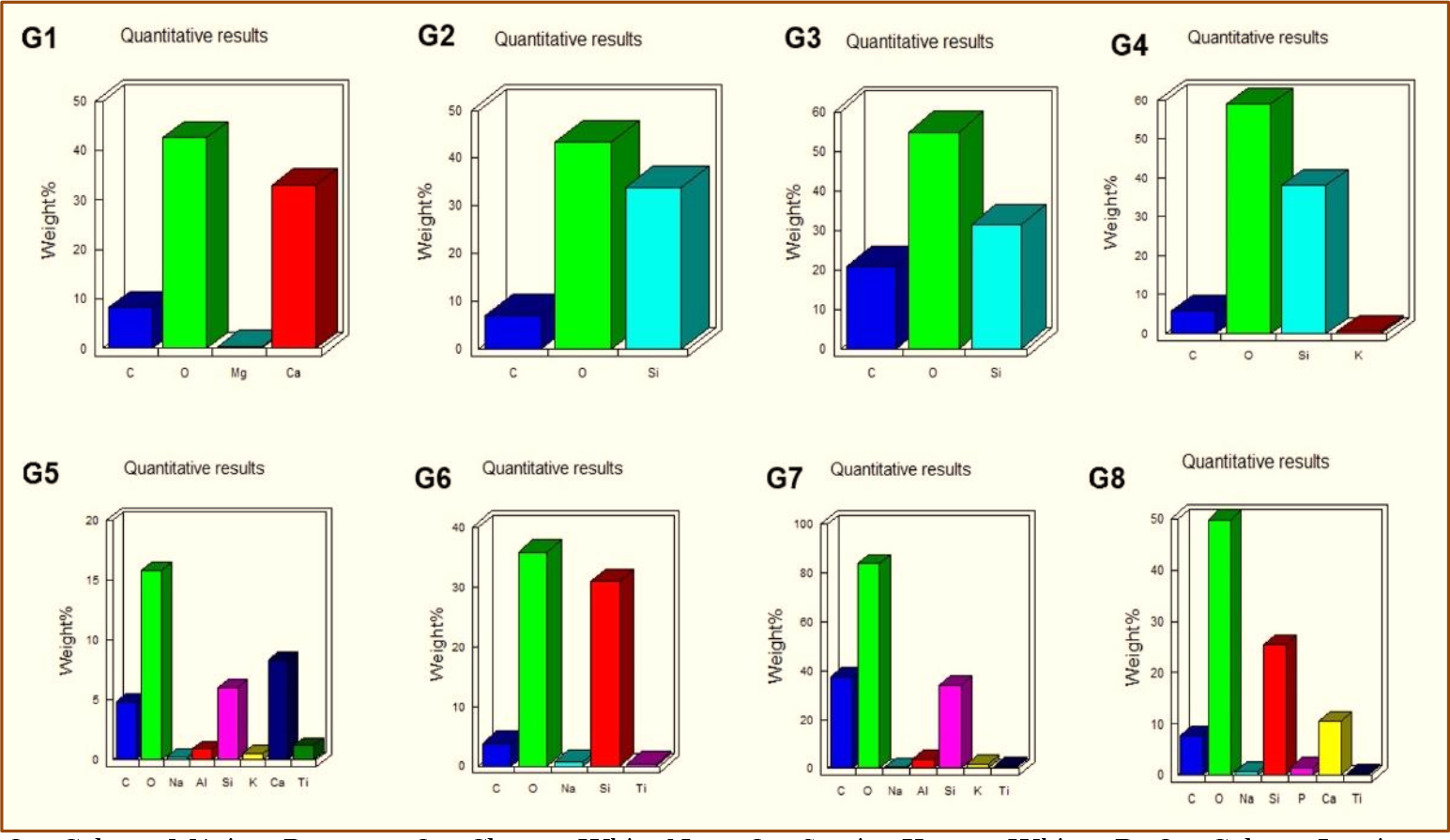 G1: Colgate Máxima Proteção; G2: Closeup White Now; G3: Sorriso Xtreme White 4D; G4: Colgate Luminous White; G5: Closeup Extra Whitening; G6: Oral-b Complete; G7: Oral-b 3D White; G8: Sensodyne Whitening.
 G1: Colgate Máxima Proteção; G2: Closeup White Now; G3: Sorriso Xtreme White 4D; G4: Colgate Luminous White; G5: Closeup Extra Whitening; G6: Oral-b Complete; G7: Oral-b 3D White; G8: Sensodyne Whitening.