 Evaluating Traumatic Dental Injuries among Nigerian Children Attending Two Tertiary Dental Centres
ABSTRACT
Objective: To evaluate the pattern of traumatic dental injuries (TDI) among Nigerian children.
Material and Methods: This was a cross-sectional prospective study in which data were collected from 66 children aged 1 to 16 years who presented at the two tertiary dental centres. Data on age, sex, cause and place of trauma, time of presentation and reason for delay in presentation to the dental clinic, involved tooth, and radiographic findings were collected from July 2021 to May 2023 using a questionnaire. Garcia-Godoy’s classification was used to record the type of TDI. Chi-square test was conducted and factors associated with immediate presentation were considered significant when p < 0.05.
Results: More males (57.6%) than females (42.4%) had TDI. Many children (62.1%) sustained TDI at home and falls (77.3%) were the major cause. Only nine (13.6%) children presented within 24 hours following the trauma. There was a significant association between age (p=0.03) and immediate dental visit.
Conclusion: Traumatic dental injuries occurred more in boys and at home. Fall was the commonest cause, and few presented within 24 hours following the trauma. Age was a predictor of immediate presentation to the dental clinic.
Keywords:
Child; Wounds and Injuries; Tooth Fractures; Dental Clinics.
Introduction
Traumatic dental injuries are common in children. It is a public health condition [1] and can result from falls, fights, road traffic accidents (RTA), Non-Accidental injury (NAI), sports, and iatrogenic causes [2-4]. Complicated traumatic dental injury affects the quality of life of an individual [5,6]. It can occur at home, school, or any other place [7,8]. Again, children with Angles’s class II division, increased overjet and incompetent lips had a greater risk of tooth fracture [4,9,10].
The prevalence of traumatic dental injuries in children varies from region to region, as behavioural or cultural activities affect it [11]. In the UK, the prevalence was 9% [12], while in India, it was 14.5% [4] and 10.5% [13]. In the US, it was 47% among preschool children [14], while it ranged from 6.5 to 19.5% in Nigeria [10,15-17].
It occurs more often in children aged 8-10 years due to greater physiological growth and increased outdoor activities during this period [18]. Traumatic dental injuries occur more in males than females [4,7,18-21], probably because they are more active and mature later than females [18]. It has, however, been shown to increase in females because of their involvement in contact sports [22,23]. Being from a low socioeconomic status reduces the risk of TDI [21], but there was no significant association between socioeconomic status and living with a single parent, increasing the risk of TDI [21]. Also, the types of dental fractures vary across study populations. It was also observed that the most common tooth involved is the maxillary central incisor [4,21].
With the established regional variation of TDI and its effect on the quality of life, this study evaluated the pattern of presentation of traumatic dental injuries in children residing in two states in the southeastern region of Nigeria. It also assessed the associated factors of traumatic dental injuries in these children.
Material and Methods
Study Design and Ethical Clearance
For the development of this cross-sectional and prospective study, ethics approval was obtained from the University of Nigeria Teaching Hospital, Enugu on the 18th of June, 2021. The protocol number is UNTH/HREC/2021/06/565. Informed consent was obtained from the caregivers, while assent was obtained from children aged 8 years or older.
Scenario
The study area was two of the five States of the Southeastern region of Nigeria. The two cities involved are Enugu in Enugu State and Abakiliki in Ebonyi State. Enugu is located at 6.30' North of the equator and 7.30' East of the Prime Meridian, while Ebonyi State is located at 6.26' North of the equator and 8.01' East of the Prime Meridian. Both States are neighbors, and their inhabitants are mainly Igbo, with some non-Igbo residents. They engage in farming, trading, and a few are civil servants.
Study Population
This comprised children with traumatic dental injuries attending the University of Nigeria Teaching Hospital, Enugu, and Alex Ekwueme Federal Teaching Hospital, Abakiliki, Ebonyi State, from July 2021 to May 2023. These hospitals are referral hospitals used by indigenes and people from neighbouring States. The Paediatric Dental units in the various hospitals are covered by Paediatric Dentists. All children with traumatic dental injuries who attended the paediatric dental clinic, whose parents provided consent, and who gave assent participated in the study.
Sample Size Determination
This was determined using the formula N= pxq/(SE)2 by Akpala [25], where p is prevalence, q is (100 - p), and SE is the tolerated standard error of 5% at 95% Confidence interval =1.96. Based on the 11.4% prevalence of TDI in children from a previous study [8], the minimum sample size is calculated as follows: N = 11.4 x (100-11.4)/ 1.962 = 266. To account for 10% attrition, the final number was 293 children.
Data Collection and Variables
A questionnaire adapted from a previous study [3] was developed. It consisted of three sections. Section one contained questions that elicited information on the child's biodata (age, sex, and level of education), while section two contained questions on the time of injury, place of injury, cause of injury, time elapsed between injury and presentation at the hospital, and reason for seeking treatment. Section three contained questions about the involved teeth using Garcia-Gordoy’s classification [26]. The classification is as follows; I: Enamel crack, II: Enamel fracture, III: Enamel Dentine fracture without pulp exposure, IV: Enamel Dentine fracture with pulp exposure, V: Enamel Dentine cementum fracture without pulp exposure, VI: Enamel Dentine cementum fracture with pulp exposure, VII: Root fracture, VIII: Concussion, IX: Luxation, X: Lateral displacement, XI: Intrusion, XII: Extrusion, XIII: Avulsion.
History of oral habits, lip incompetence, presence of discolouration, mobility, fistula/sinus tract, swelling, Angles classification of malocclusion, overjet, sensibility, tenderness to percussion, radiographic findings such as periapical radiolucency, pulp canal obliteration, open apex and root resorption were recorded. Assessing care within 24 hours was considered immediate care in this study, whereas assessing care after 24 hours was considered delayed care. The independent variables included age, sex, cause of injury, and place of injury, while the dependent variable was the immediate visit to the dental clinic.
Clinical Data
The children were seated on the dental chairs in the clinic, while information on biodata (age, sex, level of education), when, where, and how the TDI occurred was obtained using an interviewer-administered questionnaire. Intra-oral examination was conducted using a mirror and probe, and a radiograph was taken to assess the level of crown fracture, root fracture, and periapical pathology.
Data Analysis
It was analyzed using SPSS version 26 (IBM Corporation, Armonk, NY, USA). The data were subjected to descriptive analysis in the form of frequencies, percentages, cross-tabulations, mean, and standard deviation. An association between age, sex, cause of injury, place of injury, and immediate visit to the dental clinic was conducted. Chi-square test was also conducted, and p<0.05 was considered significant. Predictor of immediate presentation to the dental clinic was determined by including factors with P values<0.2 [27] in multivariate logistic regression.
Results
A total of 645 children attended both dental clinics within the study period, and 66 of them had traumatic dental injuries, giving a prevalence of 10.2%. The age range was 1 to 16 years, with a mean age of 9.57±3.90 years. Table 1 shows that many of the study participants with TDI were 9 years old (16.7%) and 8 years old (12.1%). There were more male (57.6%) than female study participants (42.4%). Many (47.0%) were in secondary schools, and most injuries (62.1%) occurred at home. Fall (77.3%) was the major cause of traumatic dental injury.
Table 2 shows that only (13.6%) children presented within 24 hours after the trauma. Many of the study participants (24.2%) presented within 1 -8 months after the traumatic dental injury, followed by a year (18.2%). ‘No pain’ (39.4%) was the main reason for the delay in presentation to the dental clinic. However, 50.0% of the study participants did not respond to the question. Other reasons for delay included ‘no money’ (6.2%), ‘school in session’ 1(1.5%), ‘not properly informed’ (1.5%), and weekend (1.5%). The most common reasons for later presentation to the dental clinic were pain and other associated features (53.1%), followed by aesthetic reasons (21.2%).
Distribution of study participants by time of presentation to the dental clinic, major reasons for delay, and later presentation to the dental clinic.
Table 3 shows that 104 teeth had TDI. There were (87.5%) permanent teeth and (12.5%) primary teeth. The most commonly involved permanent teeth were 11 (35.6%) and 21 (30.8%), while the least affected teeth were 24, 25, 32, and 34 (1.0% each). Tooth 51 (7.8%) was the commonest affected in the primary dentition.
Figure 1 shows that the most common types of traumatic dental injury were enamel-dentine fractures without pulpal involvement (26%) and enamel-dentine fractures with pulpal involvement (14.4%).
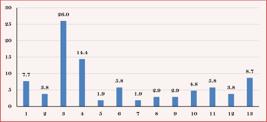
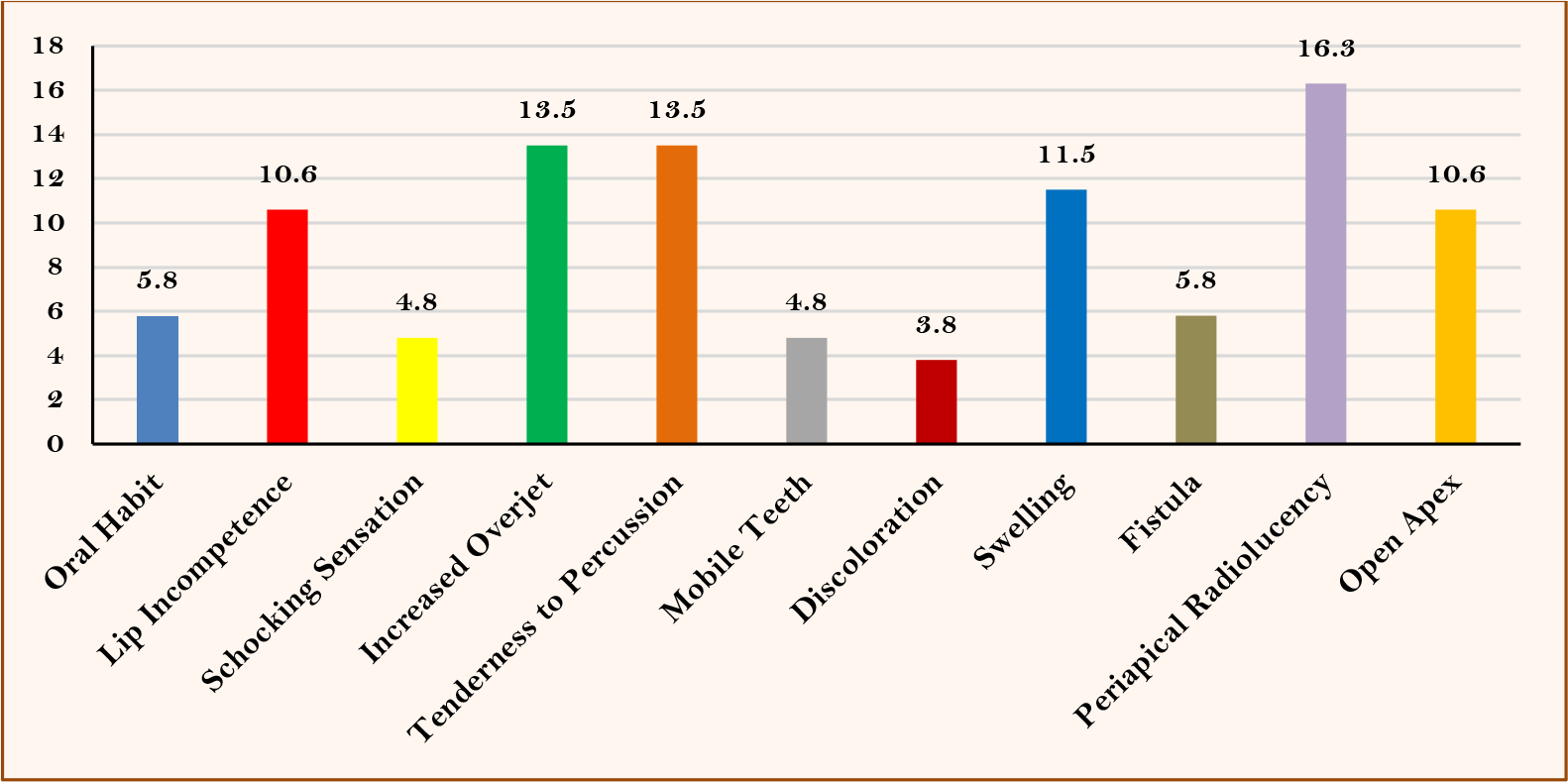
Figure 2 shows the main findings, highlighting increased overjet (13.5%), tenderness to percussion (13.5%), swelling (11.5%) and teeth with periapical pathology (16.3%).

Table 4 shows that a greater percentage of children aged 1-5 years (40.0%), males (15.8%), those who had a fall (9.8%), and those who were at home (17.1%) visited the dental clinic immediately after sustaining traumatic dental injury. There was a significant association between age (p=0.03) and immediate visits to the dental clinic after sustaining a traumatic dental injury. There was no significant association between sex (p=0.55), cause of injury (p=0.22), place of injury (p=0.10), and immediate visit to the dental clinic after sustaining traumatic dental injury.
Association between age, sex, cause of trauma, place of trauma, and immediate presentation to the dental clinic.
Table 5 reveals that children aged 1-5 years (AOR=13.366, CI: 0.981-182.138, p=0.05) have increased odds of making an immediate visit to the dental clinic for management of traumatic dental injury when compared to other children and this was statistically significant.
Multivariate logistic regression analysis of factors associated with immediate presentation to the dental clinic.
Discussion
Many of the study participants were aged 8 and 9 years, and there were more male than female participants with TDI. It occurred more at home, and ‘fall’ was the major cause of TDI. Few children presented within 24 hours following trauma, while ‘no pain’ was the main reason for delayed presentation to the dental clinic. The commonest type of fracture seen was ‘enamel dentine fracture without pulp exposure.’ Age was significantly associated with the immediate visits to the dental clinic after sustaining TDI.
Many of the study participants were between 8 and 9 years old, which is similar to the findings of Oyedele et al. [21]. Children at this stage play many outdoor games, which increases the risk of tooth fractures. However, it is worth noting that children at various age limits presented with traumatic dental injury. It was observed more often in males than in females, as in previous studies [7,18,19,21]. This may be that males are more active, energetic, violent, and sportive [28] and mature later than females [18]. Fall was a major aetiological factor of TDI in this study, similar to the prior finding by Malak et al [28] but contrary to the finding by Warren et al. [29], in which ‘accident during play’ was the main aetiological factor.
TDI occurred mostly at home, similar to prior findings [8,16,30,31], and may be attributed to the fact that children feel freer at home than in school, where they are restricted. However, this finding does not corroborate that of Gupta et al. [32], which found it occurred more in the playground. Ogordi et al. [8] found that it occurred more often at school, likely because children were not supervised during break time.
Again, only 13.9% presented to the clinic within 24 hours, which is close to the finding in a previous study [33] in which 11% of the children presented for treatment on the day of trauma. This immediate presentation to the dental clinic was significantly associated with age. Many of the youngest children presented immediately in this study, compared to other children, probably because their caregivers were more anxious. Low dental awareness among caregivers may also contribute to late presentation. In Austria [31], almost two-thirds of patients (n = 144, 65.2%) arrived within the first 24 hours after TDI at the clinic, indicating that the caregivers in that clinic were more dentally aware. Some of the children in this study presented within 1 to 8 months of the injury, while others presented a year or more later. This finding is quite contrary to the study by Ajayi et al. [34] in which many of the participants presented within a week of the traumatic dental injuries.
A third of the participants, however, asserted that 'no pain' was the reason they did not seek dental care immediately. Many studies in the country have shown that many people make symptomatic visits because of unperceived needs, cost and time [35,36]. Preventive dental visits are not valued by the population. About half of the study participants eventually presented to the clinic when they had pain and other clinical symptoms. It is paramount to increase awareness of asymptomatic visits in the study population. Children’s oral health-seeking behaviour is dependent on the oral health-seeking behaviour of their caregivers.
The commonest tooth affected in the permanent dentition was the upper right central incisor, similar to prior studies [21,37], and the upper right primary central incisor tooth was also the commonest tooth affected in the primary dentition [3]. The reason may be that the maxilla is fixed and cannot move, even when an impact is imminent. The reason for the right-sided effect cannot be explained.
Lip incompetence was found in 10% of the study participants, and increased overjet was observed in 13.5% of them, results that corroborate the findings of Otuyemi et al. [38]. These two conditions are predisposing factors for dental injuries and such children would have benefited from orthodontic treatment. A few of them also had oral habits that would be stopped with habit breakers if they visited the dental clinic. Other clinical findings included tooth sensitivity. Some of those TDIs involving dentine were sensitive to thermal changes. A few teeth were discoloured, indicating loss of vitality. There were associated swellings and a fistula suggestive of a dentoalveolar abscess. Radiographically, 16.3% had periapical pathology, indicating late presentation, while 10.6% had open apex, showing that they were young permanent teeth and would require pulp therapy.
The commonest type of fracture seen was enamel dentine fracture, which is similar to the finding by Enabulele et al. [3] but contrary to prior findings [8,21,22] where enamel fracture was the most common type of fracture. In India, Elis IV fracture; the non-vital tooth was the commonest type of fracture seen [39]. It is worth noting that only one root fracture was observed in this study, despite radiographs being taken for all cases. This may be because the alveolar bones of these children are not yet very dense. There is a need to investigate the factors that increase the risk of TDI at home. Children who sustained TDI should be taken to the dental clinic by their caregivers for immediate care.
The small sample size was a limitation, although the study gave an insight into the pattern of traumatic dental injuries in the study area. The strengths of this study are its prospective design and the use of radiographs to identify periapical pathologies.
Conclusion
Traumatic dental injuries occurred more often in males and at home. The major reason for late presentation to the dental clinic was "no pain," and the most common type of traumatic dental injury seen in this population was "enamel dentine fracture". Age was a predictor of immediate presentation to the dental clinic.
-
Financial Support
None.
Data Availability
The data used to support the findings of this study can be made available upon request to the corresponding author.
References
- [1] Petersen PE, Bourgeois D, Ogawa H, Estupinan-Day S, Ndiaye C. The global burden of oral diseases and risks to oral health. Bull World Health Organ 2005; 83(9):661-669.
- [2] Gutmann JL, Gutmann MS. Cause, incidence and prevention of trauma to teeth. Dent Clin North Am 1995; 39(1):11-13.
-
[3] Enabulele JE, Oginni AO, Sede MA, Oginni FO. Pattern of traumatized anterior teeth among adult Nigerians and complications from late presentation. BMC Res Notes 2016; 9:70. https://doi.org/10.1186/s13104-016-1871-3
» https://doi.org/10.1186/s13104-016-1871-3 -
[4] Dua R, Sharma S. Prevalence, causes and correlates of traumatic dental injuries among seven to twelve-year-old children in Derra Bassi. Contemp Clin Dent 2012; 3(1):38-41. https://doi.org/10.4103/0976-237X.94544
» https://doi.org/10.4103/0976-237X.94544 -
[5] Cortes MI, Marcenes W, Sheiham A. Impact of traumatic injuries to the permanent teeth on the oral health-related quality of life in 12-14-year-old children. Community Dent Oral Epidemiol 2002; 30(3):193-198. https://doi.org/10.1034/j.1600-0528.2002.300305.x
» https://doi.org/10.1034/j.1600-0528.2002.300305.x -
[6] Milani AJ, Fonseca Alves N, Martins do Espirito-Santo T, Gonçalves Ribeiro L, Ammari MM, Antunes LS, et al. Impact of traumatic dental injuries on oral health-related quality of life of preschool children and their families attending a dental trauma care program. Port J Public Health 2019; 37(1):19-25. https://doi.org/10.1159/000501525
» https://doi.org/10.1159/000501525 -
[7] Sari M E, Ozmen B, Koyuturk AE, Tokay U, Kasap P, Guler D. A retrospective evaluation of traumatic dental injury in children who applied to the dental hospital, Turkey. Niger J Clin Pract 2014; 17(5):644-648. https://doi.org/10.4103/1119-3077.141438
» https://doi.org/10.4103/1119-3077.141438 -
[8] Ogordi PU, Ize-Iyamu I N, Adeniyi EO. Prevalence of traumatic dental injury to the anterior teeth in children attending paramilitary and non paramilitary schools in Nigeria. Ann Afr Med 2019; 18(2):80-85. https://doi.org/10.4103/aam.aam_27_18
» https://doi.org/10.4103/aam.aam_27_18 -
[9] Nguyen QV, Bezemer PD, Habets L, Prahl-Andersen B. A systematic review of the relationship between overjet size and traumatic dental injuries. Eur J Orthod 1999; 21(5):503-515. https://doi.org/10.1093/ejo/21.5.503
» https://doi.org/10.1093/ejo/21.5.503 -
[10] Otuyemi OD. Traumatic anterior dental injuries related to incisor overjet and lip incompetence in 12-year-old Nigerian children. Int J Paediatr Dent 1994; 4(2):81-85. https://doi.org/10.1111/j.1365-263x.1994.tb00109.x
» https://doi.org/10.1111/j.1365-263x.1994.tb00109.x -
[11] Bastone Eb, Freer TJ, McNamara JR. Epidemiology of dental trauma - A review of literature. Aust Dent J 2000; 45(1):2-9. https://doi.org/10.1111/j.1834-7819.2000.tb00234.x
» https://doi.org/10.1111/j.1834-7819.2000.tb00234.x -
[12] Blokland A, Watt RG, Tsakos G, Heilmann A. Traumatic dental injuries and socioeconomic position - findings from the Children's Dental Health Survey 2013. Community Dent Oral Epidemiol 2016; 44(6):586-591. https://doi.org/10.1111/cdoe.12252
» https://doi.org/10.1111/cdoe.12252 -
[13] Juneja P, Kulkarni S, Raje S. Prevalence of traumatic dental injuries and their relation with predisposing factors among 8-15 years old school children of Indore city, India. Clujul Med 2018; 91(3):328-335. https://doi.org/10.15386/cjmed-898
» https://doi.org/10.15386/cjmed-898 -
[14] Born CD, Jackson TH, Koroluk LD, Divaris K. Traumatic dental injuries in preschool-age children: Prevalence and risk factors. Clin Exp Dent Res 2019; 5(2):151-159. https://doi.org/10.1002/cre2.165
» https://doi.org/10.1002/cre2.165 - [15] Agbelusi GA, Jeboda SO. Traumatic fracture of anterior teeth in 12-year-old Nigerian children. Odontostomatol Trop 2005; 28(111):23-27.
-
[16] Adekoya-Sofowora CA, Adesina OA, Nasir WO, Oginni AO, Ugboko VI. Prevalence and causes of fractured permanent incisors in 12-year-old suburban Nigerian schoolchildren. Dent Traumatol 2009; 25(3):314-317. https://doi.org/10.1111/j.1600-9657.2008.00704.x
» https://doi.org/10.1111/j.1600-9657.2008.00704.x -
[17] Taiwo OO, Jalo HP. Dental injuries in 12-year-old Nigerian students. Dent Traumatol 2011; 27(3):230-234. https://doi.org/10.1111/j.1600-9657.2011.00997.x
» https://doi.org/10.1111/j.1600-9657.2011.00997.x -
[18] Patel MC, Sujan SG. The prevalence of traumatic dental injuries to permanent anterior teeth and its relation with predisposing risk factors among 8-13 years school children of Vadodara city: An epidemiological study. J Indian Soc Pedod Prev Dent 2012; 30(2):151-157. https://doi.org/10.4103/0970-4388.99992
» https://doi.org/10.4103/0970-4388.99992 - [19] Ravishankar TL, Kumar MA, Ramesh N, Chaitra TR. Prevalence of traumatic dental injuries to permanent incisors among 12-year-old school children in Davangere, South India. Chin J Dent Res 2010; 13(1):57-60.
-
[20] Nagarajappa R, Ramesh G, Uthappa R, Kannan SP, Shaikh S. Risk factors and patterns of traumatic dental injuries among Indian adolescents. J Dent Sci 2020; 15(1):96-103. https://doi.org/10.1016/j.jds.2019.07.003
» https://doi.org/10.1016/j.jds.2019.07.003 -
[21] Oyedele TA, Jegede AT, Folayan MO. Prevalence and family structures related factors associated with crown trauma in school children resident in suburban Nigeria. BMC Oral Health 2016; 16:116. https://doi.org/10.1186/s12903-016-0314-9
» https://doi.org/10.1186/s12903-016-0314-9 -
[22] Glendor U. Epidemiology of traumatic dental injuries - A 12-year review of the literature. Dent Traumatol 2008; 24(6):603-611. https://doi.org/10.1111/j.1600-9657.2008.00696.x
» https://doi.org/10.1111/j.1600-9657.2008.00696.x -
[23] Traebert J, Bittencourt DD, Peres KG, Peres MA, de Lacerda JT, Marcenes W. Aetiology and rates of treatment of traumatic dental injuries among 12-year-old school children in a town in southern Brazil. Dent Traumatol 2006; 22(4):173-178. https://doi.org/10.1111/j.1600-9657.2006.00359.x
» https://doi.org/10.1111/j.1600-9657.2006.00359.x -
[24] Blokland A, Watt RG, Tsakos G, Heilmann A. Traumatic dental injuries and socioeconomic position - findings from the Children's Dental Health Survey 2013. Community Dent Oral Epidemiol 2016; 44(6):586-591. https://doi.org/10.1111/cdoe.12252
» https://doi.org/10.1111/cdoe.12252 - [25] Akpala CO. Epidemiologic Research: A practical approach for the medical and nursing sciences, Enugu. 1st ed. University of Nigeria; 1994. 64-65p.
-
[26] Garcia-Godoy FM. Prevalence and distribution of traumatic injuries to the permanent teeth of Dominican children from private schools. Community Dent Oral Epidemiol 1984; 12(2):136-139. https://doi.org/10.1111/j.1600-0528.1984.tb01426.x
» https://doi.org/10.1111/j.1600-0528.1984.tb01426.x - [27] Altman DG. Practical statistics for medical research. 1st. ed. New York: Chapman and Hall/CRC;1990. 624p.
-
[28] Malak CA, Chakar C, Romanos A, Rachigi S. Prevalence and etiological factors of dental trauma among 12- and 15-year-old schoolchildren of Lebanon: A National Study. Sci World J 2021; 5:5587431. https://doi.org/10.1155/2021/5587431
» https://doi.org/10.1155/2021/5587431 -
[29] Warren M, Idmer R, Arora M, Hibbert S. After-hours presentation of traumatic dental injuries to a major paediatric teaching hospital. Aust Dent J 2014; 59(2):172-179. https://doi.org/10.1111/adj.12166
» https://doi.org/10.1111/adj.12166 - [30] Agbor AM, Nfondang NM, Sonkeng TE, Kouamouo J, Bengodo CM, Songo B et al. Etiology and management of traumatic dental injuries in children less than 12 years old in Yaoundé. Rom J Oral Rehabil 2021; 13(1):7-24.
-
[31] Lembacher S, Lettner S, Bekes K. Prevalence and patterns of traumatic dental injuries in primary teeth: A 3year retrospective overview study in Vienna. Clin Oral Investig 2022; 26(2):2085-2093. https://doi.org/10.1007/s00784-021-04190-2
» https://doi.org/10.1007/s00784-021-04190-2 -
[32] Gupta R, Kaur N, Sharma V, Bhalla M, Srivastava M, Sisodia S. Prevalence and risk factors associated with traumatic dental injuries among 12-15 year old school going children, Mathura city. J Indian Assoc Public Health Dent 2021; 19(1):76-80. https://doi.org/10.4103/jiaphd.jiaphd_87_19
» https://doi.org/10.4103/jiaphd.jiaphd_87_19 - [33] Osuji OO. Traumatised primary teeth in Nigerian children attending University Hospital: the consequences of delays in seeking treatment. Int Dent J 1996; 46(3):165-170.
-
[34] Ajayi DM, Abiodun Solanke IM, Sulaiman AO, Ekhalufoh EF. A retrospective study of traumatic injuries to teeth at a Nigerian tertiary hospital. Niger J Clin Pract 2012; 15(3):320-325. https://doi.org/10.4103/1119-3077.100631
» https://doi.org/10.4103/1119-3077.100631 -
[35] Akaji EA, Oredugba FA, Jeboda SO. Utilization of dental services among secondary school students in Lagos, Nigeria. Nig Dent J 2007; 15(2):87-91. https://doi.org/10.61172/ndj.v15i2.193
» https://doi.org/10.61172/ndj.v15i2.193 -
[36] Onyejaka NK, Folayan MO, Folaranmi N. Barriers and facilitators of dental service utilization by children aged 8 to 11 years in Enugu State, Nigeria. BMC Health Serv Res 2016; https://doi.org/10.1186/s12913-016-1341-6
» https://doi.org/10.1186/s12913-016-1341-6 -
[37] Okolo CC, Oredugba FA, Denloye OO, Adeyemo YI. The risk factors and pattern of traumatic dental injuries in 10-12-year olds in Kano, Nigeria. Niger Postgrad Med J 2022; 29(3):272-277. https://doi.org/10.4103/npmj.npmj_145_22
» https://doi.org/10.4103/npmj.npmj_145_22 - [38] Otuyemi OD, Segun-Ojo IO, Adegboye AA. Traumatic anterior dental injuries in Nigeria preschool children. East Afr Med J 1996; 73(9):604-606.
-
[39] Patidar D, Sogi S, Patidar DC, Patidar DC, Malhotra A. Traumatic dental injuries in pediatric patients: A retrospective analysis. Int J Clin Pediatr Dent 2021; 14(4):506-511. https://doi.org/10.5005/jp-journals-10005-2004
» https://doi.org/10.5005/jp-journals-10005-2004
Edited by
-
Academic Editor:
Alessandro Leite Cavalcanti