 Oral Health and Associated Factors Among Brazilian Homeless: Evidence from a Vulnerable Population
ABSTRACT
Objective: To assess the prevalence of oral health problems and associated factors among Brazilian homeless.
Material and Methods: This cross-sectional study included 133 participants aged 18 years or older, both sexes, from a medium-sized city in the Northeastern region of Brazil. Sociodemographic and behavioral data were obtained using a structured questionnaire administered through interviews. The DMFT index was used to diagnose dental caries; the PUFA index was used to assess the consequences of untreated caries; and the Community Periodontal Index and the Periodontal Attachment Loss Index were used to assess periodontal alterations. Possible associations between dental caries, its consequences, and periodontal disease, and the independent variables were verified using Pearson's Chi-square and Fisher's exact tests, with a significance level of 5%.
Results: Regarding dental services, 75.9% reported having no access. All participants reported experiencing dental caries and periodontal changes. The prevalence of dental caries and the consequences of untreated caries were 87.2% and 83.9%, respectively. Dental calculus was the most prevalent among the identified periodontal conditions (91.0%), followed by bleeding on probing (60.9%). Dental caries was associated with self-perception need for treatment (p=0.028) and the presence of fractured teeth (p<0.001). Sex, age group, skin color, oral hygiene, and self-perception of gingival bleeding/edema and tooth mobility were associated with distinct periodontal alterations.
Conclusion: A high prevalence of oral health problems was identified, with dental caries and periodontal diseases being the most prominent. Additionally, demographic, behavioral, and self-perception factors related to oral health were associated with these outcomes.
Keywords:
Social Vulnerability; Ill-Housed Persons; Oral Health; Dental Caries; Periodontal Diseases.
Introduction
Homelessness is a globally recognized social challenge [1]. This reality is characterized by clear vulnerabilities related to social determinants, especially economic ones, which lead to stigmatization and social isolation [2]. Although it presents variations across contexts, in Brazil, the homeless population is defined as a heterogeneous group of individuals who, in addition to experiencing extreme poverty, face the rupture of family ties, a lack of regular housing, and the need to rely on public spaces for their permanence and livelihood [3].
In Brazil, official data has revealed a growth in the number of homeless people nationwide. In 2014, a total of 35,934 people were estimated [4], and in 2024, a total of 292,144 individuals were identified under this condition [5]. The complexity inherent in the street situation contributes to the occurrence of physical and mental disorders among those experiencing this reality [6]. The barriers identified in health care, such as the lack of personal documents and discriminatory approaches [7], influence the well-being of homeless people, causing distress, low self-esteem, and limited access to basic rights [2].
Regarding dental conditions, the prevalence of oral health problems and their consequences has been investigated, including dental caries [8], the consequences of untreated caries [9], dental pain [10], and periodontal diseases [11]. These conditions negatively impact the quality of life of this population, with distinct repercussions ranging from difficulty chewing to repeated episodes of pain [12,13]. Therefore, there is a high demand for dental treatments [14], but because oral health needs are given low priority [15], tooth loss is a common outcome among homeless people [8,14,16].
Although there are Brazilian studies on the oral health of homeless people [8,9,11,15,17], given the specificities of each territory and context, the dental literature lacks further evidence regarding the distribution of oral health problems among these extremely vulnerable individuals. Given the above, the present study aimed to assess the oral health status and associated factors among homeless adults in a medium-sized Brazilian municipality.
Material and Methods
This manuscript was prepared in accordance with the STROBE (Strengthening the Reporting of Observational Studies in Epidemiology) guidelines [18].
Study Design and Scenario
A cross-sectional study was conducted in the municipality of Campina Grande, state of Paraíba, in the Northeastern region of Brazil. The municipality is the second-most populous in the state, with 419,379 inhabitants [19]. In 2010, it had a Human Development Index of 0.720 and a Gini Index of 0.58 [20].
To assist the homeless population, the municipality has a Specialized Reference Center for the Homeless Population (Centro POP) and three local temporary shelter units, one under the municipal government's responsibility and the others operated by philanthropic organizations. Public institutions had multidisciplinary teams responsible for providing social assistance, psychological support, and legal aid, as well as food and spaces for personal hygiene.
In the health field, two Street Outreach teams (in Portuguese: Equipes de Consultório na Rua) were linked to the municipality, composed of a coordinator, two doctors, two nurses, two nursing technicians, two psychologists, two social workers, and a social action agent (harm reduction). The teams were responsible for ensuring and enabling access to health care for homeless people in the municipality.
Population and Sample
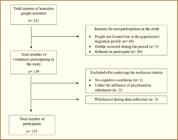
The population consisted of homeless people with active registrations and was monitored by the Street Outreach teams operating in the municipality. According to information from the Municipal Health Department, this total corresponded to 211 people in August 2025, who constituted the initial recruitment for the study. Given the migratory profile of the population, the occurrence of deaths during the study period, and refusals to participate, 139 people agreed to participate in the research.
All individuals aged 18 or older who used any service offered by the Street Outreach teams were included. Those who presented cognitive, psychological, or behavioral limitations, or who were under the influence of psychoactive substances at the time of the approach, were excluded. After applying the eligibility criteria, the non-probabilistic sample comprised 133 homeless individuals (Figure 1).
Studied Variables
Sociodemographic variables included gender, age (19 to 34 years, 35 to 44 years, 45 to 59 years, and 60 and over), skin color (white and non-white), and time under the homelessness condition (less than 1 year, between 1 and 5 years, between 6 and 10 years, 11 or more years). Oral health data included oral hygiene, items used for oral hygiene (toothbrush, toothpaste, dental floss, and mouthwash), dental visits, time since last dental visit, access to dental services, reported toothache in the last 6 months, self-perceived need for treatment, and self-perceived oral conditions (fractured teeth, tooth sensitivity, gingival bleeding/edema, tooth mobility, dental abscess) [21].
Dental caries experience was assessed using the DMFT index [22], with the presence of the disease being considered when the decayed teeth (D) was ≥1. The consequences of untreated caries were diagnosed using the PUFA index [22]. Periodontal status was assessed using the Community Periodontal Index (CPI) and Clinical Attachment Loss (CAL) [22], according to criteria of the 2023 National Oral Health Survey [23]. The indicators evaluated were bleeding on probing (0= absent and 1= present), dental calculus (0= absent and 2= present), and periodontal pockets measuring 4-5 mm and ≥6 mm (0= absent and 3 or 4= presence of the respective pockets). The different stages of periodontal pockets were grouped into a single variable, periodontal pocket. CAL assessed periodontal disease by measuring attachment loss stages and included only individuals aged ≥35 years [23].
Data Collection
The study was conducted between September 2024 and April 2025 at the POP Center, temporary shelter units, and the main congregating sites. A questionnaire was administered through interviews to obtain sociodemographic and behavioral information, as well as self-perception of oral health. Subsequently, an intraoral clinical examination was performed by two trained and calibrated examiners using No. 5 mouth mirrors, WHO probes, and a portable headlamp (Vonder Ledcob LCV 120; Grupo OVD, Curitiba, PR, Brazil). The Kappa coefficient resulted in inter-examiner values of ≥0.75 for DMFT, ≥0.64 for CPI, and 0.75 for PUFA; and intra-examiner values of 0.90 for DMFT, ≥0.83 for CPI, and ≥0.64 for PUFA.
Data Analysis
The analysis was performed using IBM SPSS Statistics (Windows, version 21.0; IBM Corp., Armonk, NY, USA). Pearson's chi-square and Fisher's exact tests were used to assess possible associations between dental caries outcomes, consequences of untreated caries, and indicators of periodontal changes (bleeding on probing, dental calculus, periodontal pockets, and attachment loss) and independent variables. The significance level was set at 5%.
Ethical Aspects
The research was approved by the Research Ethics Committee (Opinion no. 6.782.003) and was conducted in accordance with the Declaration of Helsinki.
Results
Among the 133 participants, the majority were male (82.7%), with a mean age of 40.9 years (SD=12.2), ranging from 19 to 72 years, non-white (77.4%), and with time under the homelessness condition of less than 1 year (38.9%) (Table 1).
More than two-thirds (67.7%) reported practicing oral hygiene, with toothbrushes (98.9%) and toothpaste (97.8%) being the most frequently used items. Approximately 90.0% had visited a dentist at some point in their lives, and their last visit was three or more years ago (49.2%). Regarding dental services, 75.9% reported no access, 53.4% reported an episode of toothache in the last six months, and 95.5% perceived the need for dental treatment. Fractured teeth (79.5%) were the main self-perceived condition (Table 2).
All individuals had experienced dental caries, with DMFT index ranging from 2 to 32 (median=16), with predominance of missing teeth (93.2%). High prevalence of dental caries (87.2%) was observed. The median value for decayed teeth was higher among women than among men (6 versus 3). The median PUFA index was 3, with pulp involvement being the most frequent consequence (Table 3).
Frequencies and measures of central tendency and variability of dental caries and conditions resulting from untreated carious lesions.
All subjects exhibited periodontal alterations, with dental calculus predominating (91.0%), followed by bleeding on probing (60.9%). Periodontal pockets were observed in 21.1% of participants, while 48.1% had clinical attachment loss (Table 4).
Statistically significant associations were observed between dental caries and self-perceived need for treatment (p=0.028) and self-perceived fractured teeth (p<0.001). The "consequences of untreated caries" outcome was also associated with fractured teeth (p=0.003) (Table 5).
Tooth loss due to dental caries was associated with age group (p=0.041). It was observed that all individuals aged 35 - 44 years had at least one tooth lost due to dental caries. In the age groups of 45 - 59 years and 60 years or more, the prevalence of loss was 94.4% and 92.9%, respectively, while among the youngest, from 19 - 34 years, the percentage was 85.4%.
Bleeding on probing was associated with oral hygiene practices (p=0.049). Dental calculus was associated with age (p<0.001), oral hygiene (p=0.019), and self-perceived gingival bleeding or edema (p=0.005). Clinical attachment loss was associated with gender (p=0.010), age group (p=0.003), skin color (p=0.007), and self-perceived tooth mobility (p=0.017) (Table 6).
Discussion
The homeless population represents a vulnerable group, heavily affected by social and economic inequalities, and has a history of invisibility for both government authorities and society in general [2]. Despite being constantly exposed to oral health risk factors, homeless people face structural, emotional, and administrative barriers in accessing dental services [7]. In this sense, investigations conducted with this population group can enhance the support of strategies sensitive to their social context. However, homeless people are still under researched in epidemiological studies on oral health, which contributes to gaps in knowledge about their care needs.
The population under study showed predominance of male individuals, a predominantly young age profile, and a high proportion of non-white individuals. Similar aspects were observed in studies conducted in Brazil [8,10] and in other countries, such as Scotland [12] and England [21]. In the Brazilian context, the period following the abolition of slavery was a precursor to the emergence of homelessness, since the newly freed population was relegated to social marginalization in the absence of state support for housing and work [5]. It is very likely that this historical process constitutes the foundation of contemporary social inequalities.
Family conflicts and unemployment are the main reasons for people living on the streets in Brazil, and are also the most prevalent among males [4]. In addition, the working-age population is expected to be most affected by the labor market's challenges. Consequently, limited access to health, education, employment, and income policies can hinder social reintegration, contributing to the perpetuation of this population profile.
The experience of dental caries, as indicated by a DMFT index greater than 1, was diagnosed in all study participants. A similar prevalence was observed in another Brazilian municipality, Teresina (PI), where 98.9% of homeless people presented this condition [9]. In the present study, the median DMFT index was 16, with the missing component predominating. In an investigation conducted in Malaysia, which also used the median as a measure of central tendency, a lower value was identified, corresponding to 8 [24]. On the other hand, studies that used the mean DMFT value reported differences among homeless people. In Brazil, mean values of 14.41 and 10.95 were observed in the Mid-Western [15] and Southern [8] regions, respectively. Internationally, mean values of 16.9 in Scotland [12], 15.5 in the United Kingdom [25], 15.6 in Romania [26], and 14.4 in Toronto [27] were reported.
Even so, despite socioeconomic variability, the predominance of the missing component in the DMFT index among homeless people is a relevant indicator in Brazil [8,15], Scotland [12], the United Kingdom [25], and Romania [26]. This pattern can be understood because people experiencing homelessness generally seek health services only in more severe and urgent situations [4], with dental caries being one of the main reasons for emergency dental visits [29].
The association between dental caries and self-perceived need for treatment may be related to the presence of noticeable clinical symptoms and signs, such as pain or tooth fractures. In this study, more than half (53.4%) of respondents reported dental pain in the last 6 months. In another Brazilian municipality, Goiânia (GO), the prevalence of dental pain was almost five times higher among homeless people who perceived a need for treatment, and although they did not assess dental caries, the authors suggested that it was likely the main cause of pain in the study sample [10]. This assumption suggests that, in vulnerable contexts, oral health care tends to be perceived as reactive to painful symptoms, rather than preventive.
An association between increasing age and the prevalence of tooth loss in homeless people has been reported [16]. In the present sample, although a higher prevalence of tooth loss due to dental caries was observed in the older age groups, a high percentage was also identified among younger individuals, specifically those aged 19 - 34 years (85.4%). This fact may result from a combination of factors, such as long periods without dental care, difficulties faced by homeless people in accessing health services, and the scarcity of resources for maintaining oral hygiene, which can favor the rapid progression of caries.
In this study, dental caries was prevalent in 87.2% of participants, and 83.9% presented lesions resulting from untreated caries, with a median PUFA index score of 3. Pulp involvement and a fistula were identified as consequences. A Brazilian study conducted in Teresina (PI) revealed a mean of 1.2 in the PUFA index, with a prevalence of 86.9% of caries and 42% of consequences of untreated caries, with ulceration being the most frequent [9]. These differences may reflect particularities related to geographic location, time of onset, and progression of carious lesions in the absence of treatment.
In the present sample, 49.2% of individuals reported that their last dental visit had occurred 3 years or more ago. In Canada, specifically in Toronto, 35.6% of homeless people had not visited the dentist for 4 years or more [27], while in the United States, 40.5% had not visited a dentist for more than 5 years [16]. This pattern of late access to oral health services underscores the relevance of using the PUFA index to assess the homeless population, given their greater vulnerability to barriers to dental treatment.
Despite this relevance, a gap exists in the literature, as the PUFA index has been used infrequently in studies of the homeless population. A possible hypothesis for this low use is the predominance of epidemiological investigations focused solely on measuring caries experience, in which the DMFT index is widely accepted as the parameter. Furthermore, the application of the PUFA index requires additional time during data collection, as its assessment is conducted in a complementary manner to the diagnosis of dental caries. In this context, on the streets, given operational adversities and limitations, the time constraints during clinical examinations may hinder the incorporation of complementary indices.
Self-perception of fractured teeth was verified in 79.5% of cases and was associated with caries and its consequences. A divergent result was observed in the study developed with homeless people in London, England, where the prevalence was 10.5% [21]. This association is believed to reinforce the progressive nature of the disease, in which coronal destruction is characteristic of advanced stages. This aspect may reflect limited access to dental care, favoring the progression of caries lesions and the emergence of clinical conditions resulting from the absence of treatment, until they become visually or functionally perceptible to the individual.
Regarding periodontal conditions, the entire sample showed alterations, with dental calculus being the predominant finding (91.0%). Studies that also used the CPI as a parameter identified similar scenarios, such as in the Brazilian Mid-Western region, where 83.3% had alterations, highlighting dental calculus (84.2%) and bleeding on probing (67.6%) [11], and in the Northeastern region, where only 1.1% of those examined presented healthy periodontium, with dental calculus being the most prevalent indicator (88.7%) [9]. In a study conducted by Brazilian researchers in the Southeastern region, the Community Oral Health Indicator (COHI) was adopted as a diagnostic instrument, which identified that 70.5% of homeless people presented with periodontal inflammation and 65.7% with dental calculus [17]. In the international context, Bleeding on Probing (BOP) was used for periodontal assessment in a study conducted in Italy, where 73.2% of the evaluated homeless people presented periodontitis and 21.6% had gingivitis [14].
Although the use of different indices makes direct comparisons across studies difficult, dental biofilm accumulation was observed in individuals with vulnerable socioeconomic conditions [30]. Additionally, the scarcity of regular oral hygiene products, limited access to water, and the lack of regular dental appointments can influence oral health maintenance. Furthermore, the cost of complementary tooth-brushing items important for periodontal health, such as dental floss, is also a limitation.
In the survey conducted in Rome [14], although 49% performed dental hygiene, only 15.3% had satisfactory oral hygiene. Furthermore, flossing is associated with a lower prevalence of bleeding on probing [11]. Considering this finding, only 9.0% of participants used this resource. Therefore, it is assumed that oral hygiene alone does not guarantee its effectiveness, given the lack of guidance and limited access to necessary resources.
Dental calculus and periodontal attachment loss were associated with age: the prevalence of calculus decreased with age, while attachment loss affected all participants aged 60 or older. These indicators may manifest differently throughout life, so that dental calculus formation may be influenced by behavioral and physiological changes, as well as by punctual, albeit non-periodic, dental interventions. However, cumulative periodontal damage is likely to result in attachment loss, a consequence of advanced periodontal disease, reinforcing its destructive nature.
Self-perceived gingival bleeding/edema and tooth mobility were, respectively, associated with dental calculus and attachment loss. In England, the perception of gingival bleeding or edema among homeless people was related to pain, altered taste, discomfort during eating, embarrassment, and stress [21]. It is suggested that the discomfort caused by inflammation and/or loss of support from periodontal tissues impacts the individual's daily activities and contributes to the self-perception of these conditions.
Clinical attachment loss was observed in almost half of the participants, affecting 39.5% of homeless people aged 35 - 44 years. Compared to the general population, the prevalence of attachment loss greater than 3 mm in this age group was 9.03% in the Northeastern region and 11.38% in João Pessoa, Brazil [23]. This higher proportion among homeless people may be related to the difficulties this group faces in accessing preventive and therapeutic oral health care.
Gender and skin color were associated with attachment loss, with self-identified non-white men being more affected. Although this condition is rarely identified among homeless people and there is no solid evidence in the literature on these associations, historically, these individuals tend to be more exposed to homelessness [4,5], facing challenges in accessing dental care.
The current findings provide support for expanding knowledge related to the oral health of homeless people, especially by addressing oral health problems that are still underexplored in this population, such as clinical attachment loss and the consequences of untreated dental caries. Among its strengths, its methodological rigor and the investigation of relevant dental outcomes to improve oral health care for socially vulnerable individuals should be highlighted. Furthermore, these findings constitute an instrument to aid in planning health care and assistance policies for homeless people.
On the other hand, some limitations are pertinent. Since this is a cross-sectional study, it is not possible to establish a cause-and-effect relationship between the variables under study. In addition, because homeless people are transient, a non-probabilistic sample was used, making it impossible to extrapolate the results to individuals who did not participate in the research. However, despite recognizing the methodological limitations of a convenience sample, this approach is very common in studies of homeless people [8-14,21]. The migratory profile of this group makes it difficult to design a longitudinal study and perform a sample size calculation, as there is no defined territorial link among homeless people.
Conclusion
The sociodemographic and behavioral profile of the homeless population of this study reinforces their vulnerability characteristics. A high prevalence of oral health problems, particularly dental caries, was observed, with a predominance of missing teeth and pulp involvement as consequences of untreated caries. Among periodontal alterations, dental calculus was more frequent. The investigated health problems showed individual associations with variables related to demographic profile, self-perceived need for treatment, self-perceived oral health conditions, and oral hygiene.
-
Financial Support
This study was financed by the Coordination for the Improvement of Higher Education Personnel - Brazil (CAPES) - Finance Code 001, the Foundation of the State of Paraíba (Notice No. 52/2024/ SECTIES/FAPESQ/PB - MCTIC/CNPq - Processo de Seleção de Equipes para o Programa Celso Furtado de Inovação Educacional e Desenvolvimento Regional - Outorga 672/2025) and the National Council for Scientific and Technological Development - CNPq (Process no. 401635/2024-4)
Acknowledgments
The authors would like to thank the Street Outreach teams (in Portuguese: Equipes de Consultório na Rua) of Campina Grande, Paraíba.
Data Availability
The data used to support the findings of this study can be made available upon request to the corresponding author.
References
-
[1] Lino F. Movimento Nacional de População em Situação de Rua do Rio de Janeiro - MNPR/RJ. Pesquisa de Dados da População em situação de Rua dentro do bloco do G20 [Internet]. [Rio de Janeiro]: MNPR/RJ; 2024. Available at: https://www.gov.br/participamaisbrasil/pesquisa-de-dados-da-populacao-em-situacao-de-rua-dentro-do-bloco-do-g203 [Accessed on June 09, 2025] [In Portuguese].
» https://www.gov.br/participamaisbrasil/pesquisa-de-dados-da-populacao-em-situacao-de-rua-dentro-do-bloco-do-g203 -
[2] Brito C, Da Silva LN. Unhoused people: Stigma, prejudice, and health care strategies. Cien Saude Colet 2022; 27(1):151-160. https://doi.org/10.1590/1413-81232022271.19662021
» https://doi.org/10.1590/1413-81232022271.19662021 - [3] Brasil. Decreto nº 7.053, de 23 de dezembro de 2009. Institui a Política Nacional para a População em Situação de Rua e seu Comitê Intersetorial de Acompanhamento e Monitoramento, e dá outras providências. Diário Oficial da União. 2009 dez 23. [In Portuguese].
-
[4] Natalino MAC. A População em situação de rua nos números do Cadastro Único [Internet]. [Rio de Janeiro]: Instituto de Pesquisa Econômica Aplicada - IPEA; 2024. Available at: https://repositorio.ipea.gov.br/bitstream/11058/13504/1/EmQuestao_Disoc_n24_Por_que.pdf [Accessed on June 09, 2025] [In Portuguese].
» https://repositorio.ipea.gov.br/bitstream/11058/13504/1/EmQuestao_Disoc_n24_Por_que.pdf - [5] Brasil. Cadernos de Estudos. População em Situação de Rua: Conceitos, Métodos de Contagem e Políticas Públicas - N. 37 Brasília: Ministério do Desenvolvimento e Assistência Social, Família e Combate à Fome; 2024. 200p. [In Portuguese].
-
[6] Himsworth C, Paudyal P, Sargeant C. Risk factors for unplanned hospital admission in a specialist homeless general practice population: case-control study to investigate the relationship with tri-morbidity. Br J Gen Pract 2020; 70(695): e406-e411. https://doi.org/10.3399/bjgp20X710141
» https://doi.org/10.3399/bjgp20X710141 -
[7] Paisi M, Kay E, Plessas A, Burns L, Quinn C, Brennan N, et al. Barriers and enablers to accessing dental services for people experiencing homelessness: A systematic review. Community Dent Oral Epidemiol 2019; 47(2):103-111. https://doi.org/10.1111/cdoe.12444
» https://doi.org/10.1111/cdoe.12444 -
[8] Comassetto MO, Hugo FN, Neves M, Hilgert JB. Dental pain in homeless adults in Porto Alegre, Brazil. Int Dent J 2021; 71(3):206-213. https://doi.org/10.1111/idj.12626
» https://doi.org/10.1111/idj.12626 -
[9] Bernardino RMP, Silva AM, Costa JF, Silva MVB, Santos ITD, Dantas Neta NB, et al. Factors associated with oral health-related quality of life in homeless persons: A cross-sectional study. Braz Oral Res 2021; 35:e107. https://doi.org/10.1590/1807-3107bor-2021.vol35.0107
» https://doi.org/10.1590/1807-3107bor-2021.vol35.0107 -
[10] Freire MCM, Lawder JAC, de Souza JB, de Matos MA. Dental pain in adult and elderly homeless people: Prevalence, associated factors, and impact on the quality of life in Midwest Brazil. J Public Health Dent 2022; 82(2):211-219. https://doi.org/10.1111/jphd.12452
» https://doi.org/10.1111/jphd.12452 -
[11] Machado TGO, Lawder JAC, Souza JB, Matos MA, Freire MCM. Periodontal status of temporarily institutionalized homeless adults and associated factors. Cien Saude Colet 2022; 27:1347-1358. https://doi.org/10.1590/1413-81232022274.04172021
» https://doi.org/10.1590/1413-81232022274.04172021 -
[12] Beaton L, Coles E, Freeman R. Homeless in Scotland: An oral health and psychosocial needs assessment. Dent J 2018; 6(4):67. https://doi.org/10.3390/dj6040067
» https://doi.org/10.3390/dj6040067 -
[13] Boeskov Øzhayat E, Elmongy A, Tanderup L, Bordorff SL, Thiesen H. A cross-sectional study on oral health-care habits and oral-health-related quality-of-life in marginalized persons in Copenhagen. Acta Odontol Scand 2024; 83:7-12. https://doi.org/10.1080/00016357.2023.2282648
» https://doi.org/10.1080/00016357.2023.2282648 -
[14] Lione R, Ralli M, De Razza FC, D’amato G, Arcangeli A, Carbone L, et al. Oral health epidemiological investigation in an urban homeless population. Dent J 2024; 12(10):374. https://doi.org/10.3390/dj12100324
» https://doi.org/10.3390/dj12100324 -
[15] Lawder JAC, Matos MA, Souza JB, Freire, MCM. Impact of oral condition on the quality of life of homeless people. Rev Saude Publica 2019; 53:22. https://doi.org/10.11606/S1518-8787.2019053000718
» https://doi.org/10.11606/S1518-8787.2019053000718 -
[16] Freitas DJ, Kaplan LM, Tieu L, Ponath C, Guzman D, Kushel M. Oral health and access to dental care among older homeless adults: results from the HOPE HOME study. J Public Health Dent 2019; 79(1):3-9. https://doi.org/10.1111/jphd.12288
» https://doi.org/10.1111/jphd.12288 -
[17] Paiva KC, Lima LS, Leite ICG. Self-declared oral health conditions and oral health-related quality of life of the Brazilian homeless population: A cross-sectional study. Pesqui Bras Odontopediatria Clin Integr 2022; 22:e220007. https://doi.org/10.1590/pboci.2022.060
» https://doi.org/10.1590/pboci.2022.060 -
[18] Von Elm E, Altman DG, Egger M, Pocock SJ, Gøtzsche PC, Vandenbroucke JP; STROBE Initiative. The Strengthening the Reporting of Observational Studies in Epidemiology (STROBE) statement: Guidelines for reporting observational studies. J Clin Epidemiol 2008; 61(4):344-349. https://doi.org/10.1016/j.jclinepi.2007.11.008
» https://doi.org/10.1016/j.jclinepi.2007.11.008 -
[19] Instituto Brasileiro de Geografia e Estatística (IBGE). Cidades: Campina Grande-PB, Panorama [Internet]. [Brasília, DF]: IBGE; 2022. Available at: https://cidades.ibge.gov.br/brasil/pb/campina-grande/panorama [Accessed on June 02, 2025] [In Portuguese].
» https://cidades.ibge.gov.br/brasil/pb/campina-grande/panorama -
[20] Atlas de Desenvolvimento Humano do Brasil. Perfil: Campina Grande, PB [Internet]. [Rio de Janeiro, RJ]: PNUD, IPEA, 2010. Available at: http://www.atlasbrasil.org.br/perfil/municipio/250400 [Accessed on June 03, 2025] [In Portuguese].
» http://www.atlasbrasil.org.br/perfil/municipio/250400 -
[21] Yusuf H, Golkari A, Kaddour S. Oral health of people experiencing homelessness in London: A mixed methods study. BMC Public Health 2023; 23(1):1701. https://doi.org/10.1186/s12889-023-16648-x
» https://doi.org/10.1186/s12889-023-16648-x -
[22] World Health Organization (WHO). Draft global oral health action plan (2023-2030): WHO discussion paper, version dated 12 August 2022 [Internet]. [Geneva]: WHO, 2022. Available at: https://apps.who.int/gb/ebwha/pdf_files/EB152/eb152-draft-global-oral-health-action-plan-en.pdf [Accessed on August 30, 2025]
» https://apps.who.int/gb/ebwha/pdf_files/EB152/eb152-draft-global-oral-health-action-plan-en.pdf - [23] Brasil. Ministério da Saúde. Secretaria de Atenção Primária à Saúde. Departamento de Estratégias e Políticas de Saúde Comunitária. SB Brasil 2023: Pesquisa Nacional de Saúde Bucal: relatório final. Brasília: Ministério da Saúde; 2024. 537p. [In Portuguese].
- [24] Kamarozaman DMS, Ab-Murat N, Danaee M, Nor NAM. Factors Affecting oral health-related quality of life among the homeless population in Malaysia: A structural equation modelling analysis. MJMHS 2022; 18(1):83-90.
-
[25] Daly B, Newton T, Batchelor P, Jones K. Oral health care needs and oral health-related quality of life (OHIP-14) in homeless people. Community Dent Oral Epidemiol 2010; 38(2):136-144. https://doi.org/10.1111/j.1600-0528.2009.00516.x
» https://doi.org/10.1111/j.1600-0528.2009.00516.x - [26] Sfeatcu R, Dumitrache A, Dumitraşcu L, Lambescu D, Funieru C, Lupuşoru M. Aspects of oral and general health among a community center for the underserved. J Med Life 2011; 15;4(2):168-171.
-
[27] Figueiredo RL, Hwang SW, Quiñonez C. Dental health of homeless adults in Toronto, Canada. J Public Health Dent 2012; 73(1):74-78. https://doi.org/10.1111/j.1752-7325.2012.00355.x
» https://doi.org/10.1111/j.1752-7325.2012.00355.x -
[28] UNDP (United Nations Development Programme). Human Development Report 2025: A matter of choice: People and possibilities in the age of AI [Internet]. [New York]: UNDP, 2025. Available at: https://hdr.undp.org/system/files/documents/global-report-document/hdr2025overviewen.pdf [Accessed on February 05, 2026].
» https://hdr.undp.org/system/files/documents/global-report-document/hdr2025overviewen.pdf -
[29] Figueiredo R, Dempster L, Quiñonez C, Hwang S. W. Emergency department use for dental problems among homeless individuals: A population-based cohort study. J Health Care Poor Underserved 2016; 27(2):860-868. https://doi.org/10.1353/hpu.2016.0081
» https://doi.org/10.1353/hpu.2016.0081 -
[30] Peršić Bukmir R, Paljević E, Pezelj-Ribarić S, Brekalo Pršo I. Association of the self-reported socioeconomic and health status with untreated dental caries and the oral hygiene level in adult patients. Dent Med Probl 2022; 59(4):539-545. https://doi.org/10.17219/dmp/138908
» https://doi.org/10.17219/dmp/138908
Edited by
-
Academic Editor:
Wilton Wilney Nascimento Padilha