 Influence of Dental Aesthetics on Psychosocial Well-being in the North Indian Population
ABSTRACT
Objective: To assess the impact of dental aesthetics and to identify the factors that contribute to overall well-being in the North Indian population.
Material and Methods: The psychosocial impact of dental aesthetics was evaluated using the PIDAQ, a validated questionnaire. The content validity of the PIDAQ was established using the content validity index (CVI), and its reliability was assessed using Cronbach's alpha. The PIDAQ consists of four domains: Dental Self-Confidence (DSC), Social Impact (SI), Psychological Impact (PI), and Aesthetic Concern (AC). Descriptive statistics and chi-square tests were employed to analyse the relationship between age groups (18-35, 36-50, and 50+) and gender with the PIDAQ scores.
Results: A total of 568 dental patients (60.4%% females and 39.6% males) participated in the study. The questionnaire showed good validity. The 18-35 age group reported higher dental self-confidence, while the 36-50 age group expressed higher concerns about social impact. The 18-35 age group reported lower psychosocial impact and aesthetic considerations. Females were more likely to express aesthetic concern.
Conclusion: Younger individuals have more positive views of their teeth than older individuals. However, females are more concerned about aesthetic concerns, while males experience a higher psychological impact and are more dissatisfied. This shows the connection between dental health, society, and self-esteem.
Keywords:
Oral Health; Orthodontists; Orthopedics; Dental Health Services.
Introduction
Facial features, especially the eyes and mouth, are crucial elements of physical appearance that significantly influence social interactions. They serve as the primary focal points for communication and interaction, playing a vital role in how we perceive and interact with others. A person's smile is often the first facial feature noticed, and the overall attractiveness of the face can be assessed very quickly. The orofacial region is a key focus during social interactions. It's the primary source of communication, including speech, gestures, and emotional expressions [1].
In contemporary society, there is a pervasive need for social acceptance. Individuals are significantly influenced by their peers, friends, and social networks. This desire for acceptance can impact various aspects of an individual's life, including their self-esteem, behaviour, and overall well-being [2]. Deviations from societal beauty standards, even minor ones, can have a detrimental effect on the self-esteem and self-confidence of individuals, particularly younger individuals. These negative psychological consequences can ultimately impact quality of life [3]. Studies have shown a link between negative feelings about one's orofacial appearance and low self-esteem, as well as mental health problems like anxiety and depression [4]. Evidence from the literature suggests that dental aesthetics play a significant role in the quality of life for young people. Even minor problems with tooth appearance can negatively affect their oral health-related quality of life. This can lead to concerns about how others perceive them, dissatisfaction with their appearance, and a lower sense of self-esteem [3,5,6]. Due to concerns about appearance, there is a growing demand for cosmetic dental treatments, such as teeth whitening and orthodontics [7,8].
Treatment plans for cosmetic dental procedures should be based on clinical needs and a careful examination of the reasons behind the patient's desire for treatment. This is crucial for achieving successful outcomes that meet both clinical standards and patient expectations. It's essential to understand the actual need for the desired procedures, as dentists and patients may have different perspectives. A thorough evaluation of the treatment need and patient expectations is essential for achieving a satisfactory outcome [9]. The PIDAQ, developed by Klages et al., assesses the psychosocial impact of dental aesthetics across four domains: Dental Self-Confidence, Social Impact, Psychological Impact, and Aesthetic Concern. It evaluates positive feelings, social fears, feelings of inferiority, and concerns related to appearance [10]. While created for orthodontics, the PIDAQ has been used in various clinical and epidemiological studies [11,12].
Before starting treatment, it's essential to identify the factors that influence how dental aesthetics affect a person's overall well-being. This information can help create a personalized treatment plan that meets the patient's expectations. Studies have shown that gender and age can influence these factors [13,14]. Some studies have shown that gender may influence dental aesthetics and an individual's well-being [14,15]. However, other researchers have not found this same relationship [16]. Studies suggest that individuals with more severe dental aesthetic issues, such as misaligned teeth, gaps, or discoloration, are more likely to experience negative psychological consequences [16,17].
To date, no study has examined the psychosocial impact of dental aesthetics in the North Indian population. Thus, this study aimed to assess the impact of dental aesthetics and their well-being in the North Indian population. Given the use of the PIDAQ in dental clinics, this study also examined the role of clinical and demographic factors in influencing the psychological impact of dental aesthetics.
Material and Methods
Study Design and Ethical Clearance
This was a cross-sectional survey-based study. The study was initiated after obtaining institutional ethical clearance (Ref. No. MRDC/IEC/2024/96) and obtaining consent from participants prior to their participation in the study.
Participants, Sampling and Sample Size
Adults aged between 18 and 60 years who sought care at the Department of Orthodontics and Dentofacial Orthopedics, Manav Rachna Dental College (MRIIRS), Delhi NCR, India, were invited to participate in 2024. Individuals with severe cognitive impairment were not included.
A sample size of 550 participants was determined using Raosoft Inc.'s sample size estimation tool, considering a 5% margin of error, a 95% confidence level, and the population size of dental patients visiting the university dental clinic in Delhi NCR (≈ 1,00,000) [18]. Participants were chosen using a convenience sampling method.
Survey Design
The study consisted of standardized questionnaires, specifically the PIDAQ, to measure the psychosocial impact of dental aesthetics. The PIDAQ is a psychological tool with 23 questions divided into four sections. The first section, Dental Self-Confidence, includes questions 1 to 6. The second section, Social Impact, includes questions 7 to 14. The third section, Psychological Impact, includes questions 15 to 20. The final section, Aesthetic Concern, includes questions 21 to 23.
Translated Version of PIDAQ
The PIDAQ was translated into Hindi by two translators independently, who were fluent in both English and Hindi and had expertise in dental terminology and quality of life measures. To ensure accuracy, a back-translation was conducted by an English teacher who was unaware of the original English questionnaire. This process involved translating the Hindi version back into English to compare it with the original (Supplementary Figure 1).
Committee Review
To ensure accuracy, the translated versions of the PIDAQ were reviewed by a committee of experts in orthodontics, periodontology, and psychology. They compared the original and translated versions to make sure the words in both versions conveyed the same meaning. Based on the committee's recommendations, changes were made to the questionnaire. After confirming that the meaning was the same in both versions, the first Hindi version of the PIDAQ was created and used in a pilot study.
The pilot questionnaire was used with a group of 50 participants at a university dental clinic. The goal was to see if people could easily understand the questions. The responses from these participants were not included in the main study, as this sample was part of the pilot phase only. The results of the pilot test showed that people could understand the questionnaire well. The successful cross-cultural adaptation of the PIDAQ resulted in a questionnaire that was appropriate for use with the study participants.
Validity of Questionnaire
The committee of experts established the content validity of the questionnaire through a rigorous review process, resulting in a Scale-level CVI average based on the proportion relevance of 1, indicating perfect content validity. The experts agreed that all the questions in the questionnaire were highly relevant to the topic being studied.
Reliability of Questionnaire
PIDAQ's internal consistency was assessed using Cronbach's alpha (α). The overall Cronbach's alpha for the 23-item PIDAQ was 0.822, indicating excellent internal consistency. The scale was deemed to have good reliability when Cronbach's alpha coefficient was more than 0.7, indicating a satisfactory to excellent level of internal consistency. Removing or modifying any individual item did not improve the Cronbach's alpha, further confirming the high internal consistency of the questionnaire.
Questionnaire Distribution
The final version of the questionnaire (in an online Google Form) was distributed to the participants at the dental clinic. A consent and information sheet was also sent to participants explaining the purpose of the study and assuring confidentiality. The study was entirely voluntary, and participants were free to leave at any point. The online format of the questionnaire, using Google Forms, helped to ensure the anonymity of the respondents.
Statistical Analysis
The study assessed the psychosocial impact of dental aesthetics using the PIDAQ, calculated by summing scores from four domains: DSC, SI, PI, and AC. Scores ranged from low (low impact) to high (high impact) based on responses from "Little" to "Very strongly agree." Descriptive statistics summarized participant demographics and average PIDAQ scores, while chi-square tests compared scores across groups. The analysis explored the overall psychosocial impact and individual domain contributions, examining associations with gender, age, and self-esteem. The study highlighted sociodemographic influences on PIDAQ scores, providing insights into the relationship between dental aesthetics and psychosocial well-being. SPSS software, version 29 (IBM Corporation, USA), was used to perform statistical analyses, and the results were assessed at a 95% confidence level. P-values less than 0.05 were statistically significant.
Results
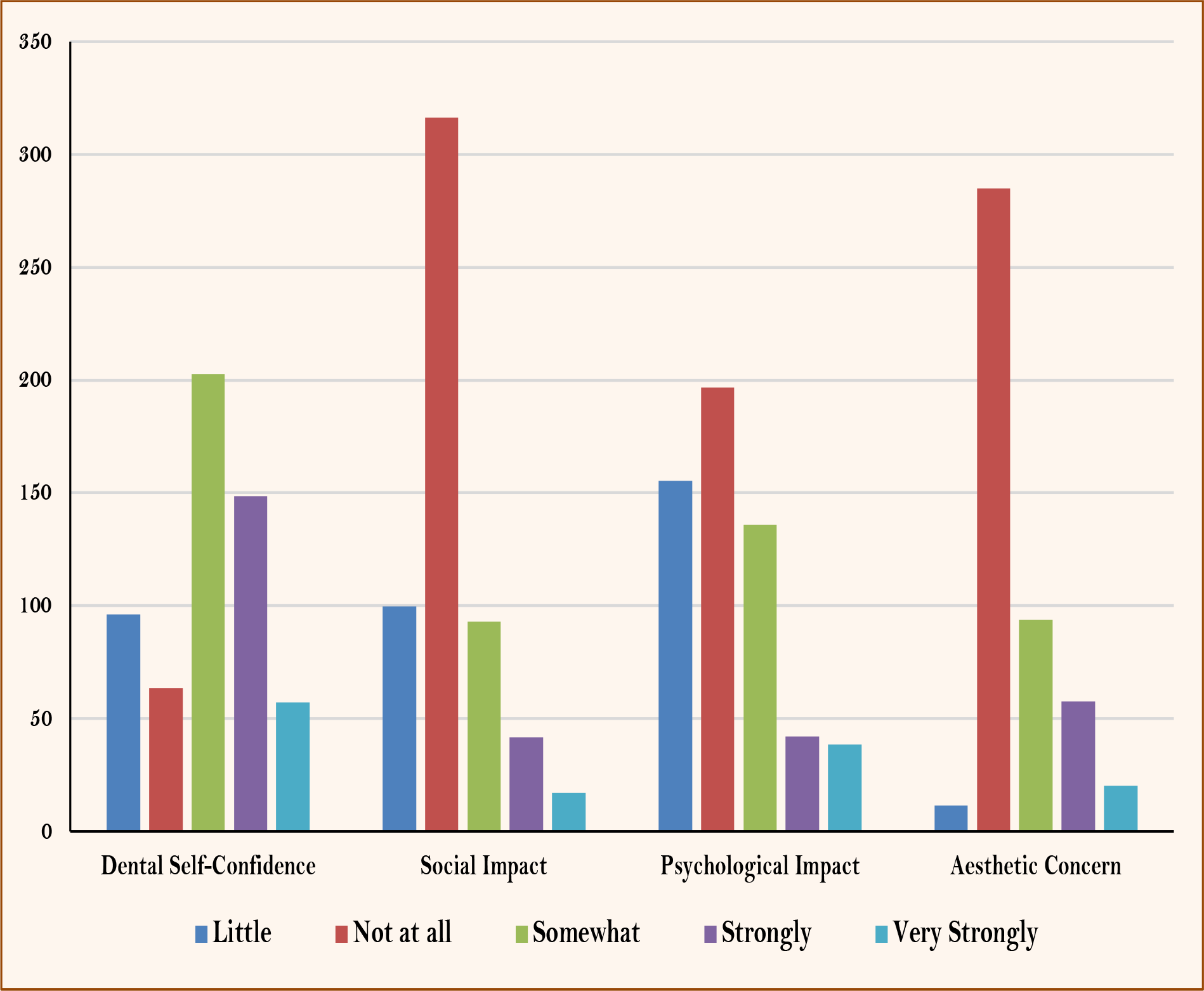
Of the 600 questionnaires distributed, 568 were completed, which resulted in a 94.66% response rate. The demographic characteristics of the participants are summarized in Table 1. Females were more prevalent in the sample than males, accounting for 60.4% of participants. The 18-35 age group was the most represented, with both males (51.1%) and females (61.2%) comprising 57.2% of the sample.
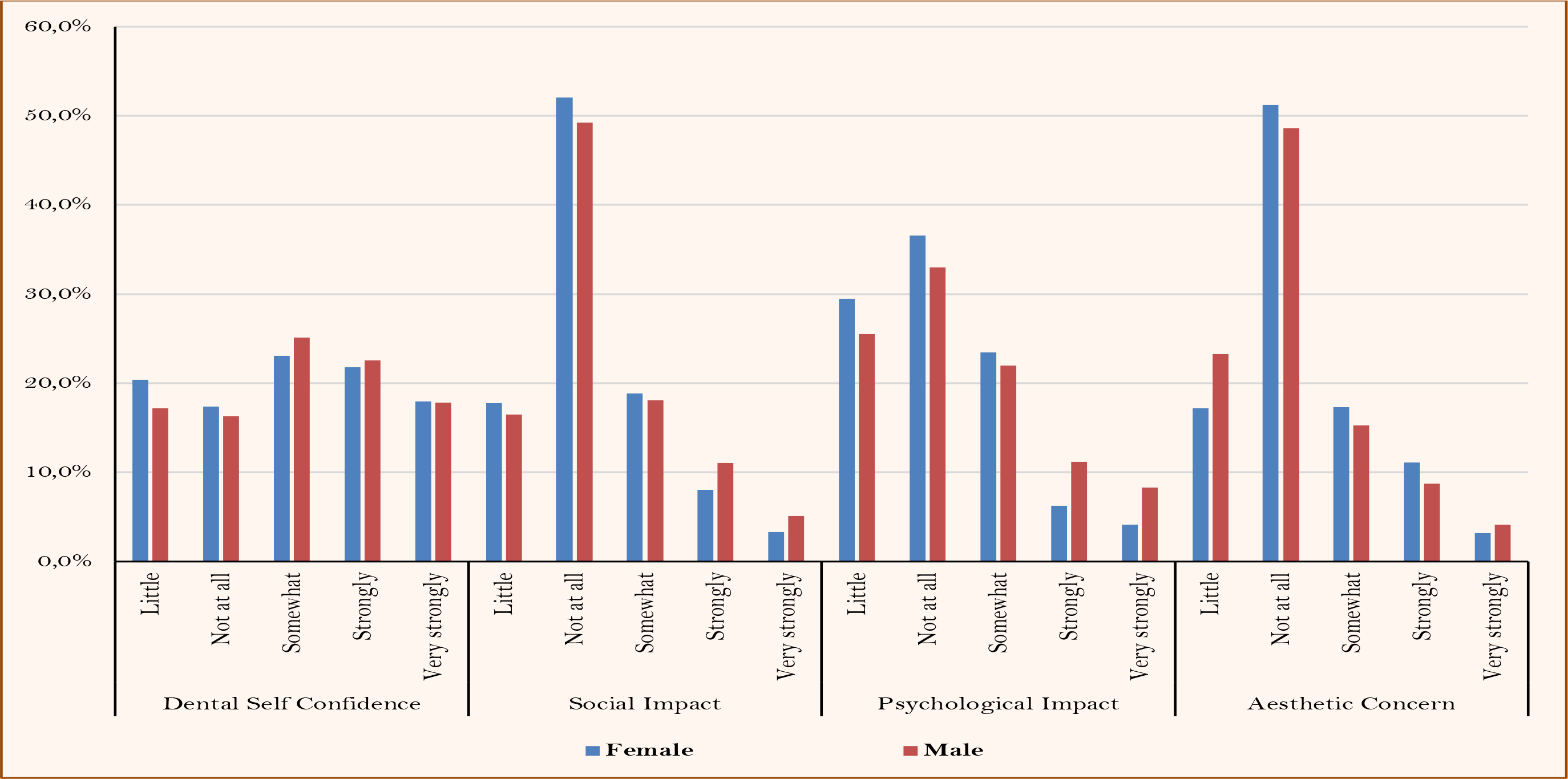
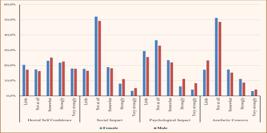
The Figure 1 presents a comparative analysis of male and female responses across four domains: Dental Self-Confidence, Social Impact, Psychological Impact, and Aesthetic Concern.
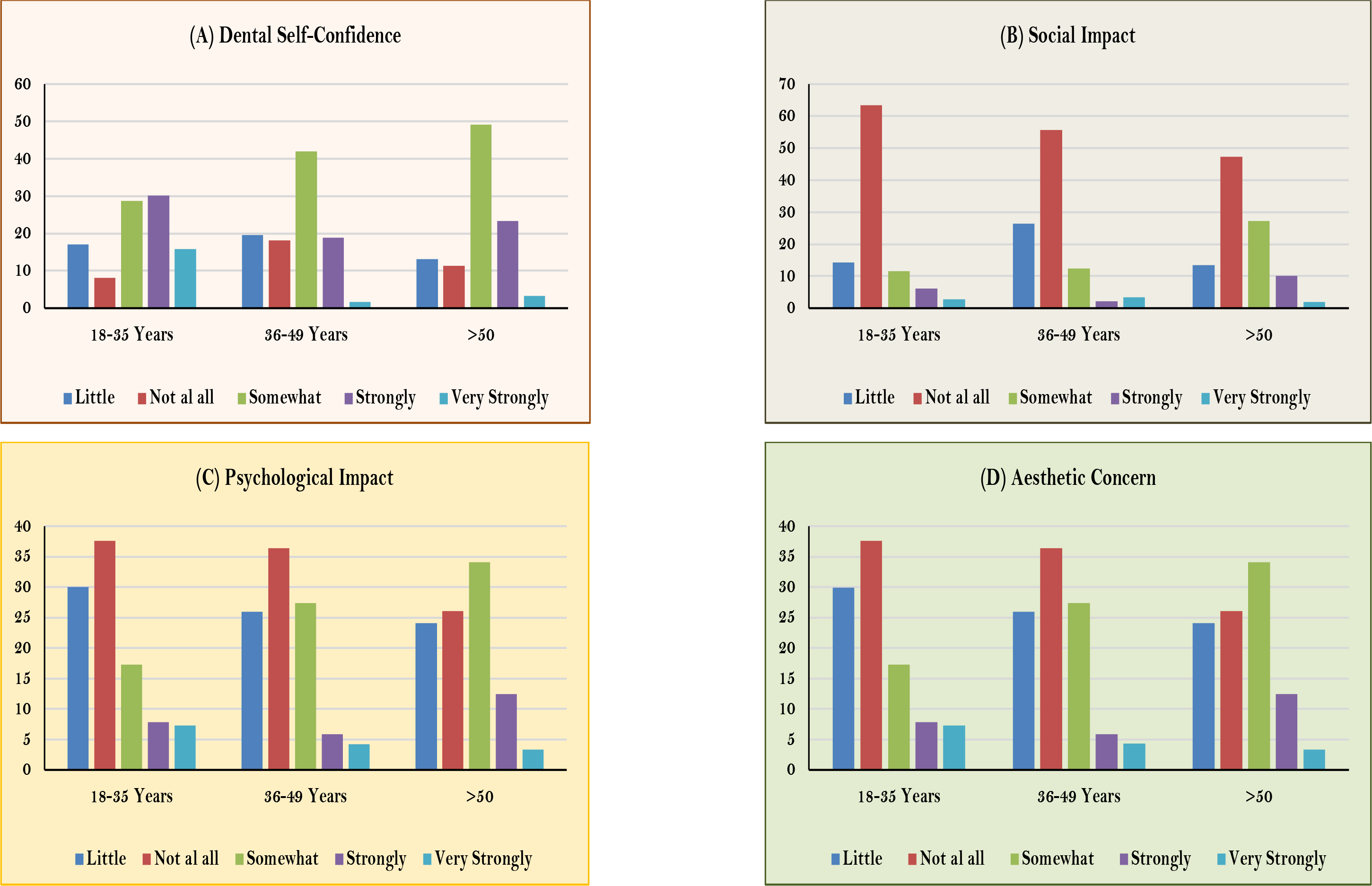
The study found significant differences in the overall PIDAQ scores based on gender and age. However, the 18-35 age group (30.15%) reported higher levels of satisfaction and pride (Dental Self-Confidence) in their teeth compared to the '36-50' years age group (1.58%) and the '50 years and above' age group (3.30%). In contrast, the 50 and above age group expressed more concerns and dissatisfaction with their teeth. There was a consistent trend for the ‘36-50 years’ age group (3.54%) reporting the highest average scores in ‘Social Impact’. This indicates that people in this age group are more concerned about their teeth compared to the ‘18-35’ years age group (2.80%) and ‘50 years and above’ age group (1.89%). For ‘Psychological Impact’, the ‘50 years and above’ age group expresses the highest levels of envy about others' teeth, suggesting a more negative perception of their own dental appearance compared to younger groups. In contrast, the ‘18-35’ age group (7.28%) consistently reports lower levels of distress, unhappiness, and feelings of comparison to the '36-50 years' age group (4.25%) and ‘50 years and above’ age group (3.30%). However, they do report higher scores for negative feelings about their teeth. The ‘18-35’ age group (7.28%) demonstrates the highest level of ‘Aesthetic Concerns’ regarding their teeth, particularly when it comes to their appearance in photographs and videos, suggesting a more critical self-perception and a potential generational difference in dental self-esteem (Table 2 and Figure 2).
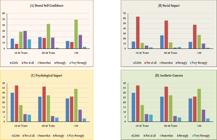
Association of three different age groups with PIDAQ. (A) Dental Self-Confidence, (B) Social Impact, (C) Psychological Impact, and (D) Aesthetic Concern.
The results revealed significant gender differences in several questions, suggesting distinct perspectives on DSC, where females were more likely to express dissatisfaction or concern. At the same time, men reported higher levels of satisfaction and pride (17.96%). The SI showed males consistently reported higher levels of dental anxiety, including self-consciousness, inhibition, and negative thoughts (5.21%). The PI depicted males were more likely to experience negative emotions related to their teeth, such as envy, distress, and unhappiness (8.30%). For AC, females were more likely to dislike seeing their teeth in a mirror. Although not statistically significant, females tended to dislike seeing their teeth in videos more than males (14.30%) (Table 3 and Figure 3).
Discussion
The increased focus on appearance in today's world, driven by social media and idealized images, has created a culture where striving for perfect aesthetics can be very important. Dental aesthetics, which are an important part of overall appearance, are no exception to this trend. A beautiful smile is often associated with attractiveness, confidence, and success [19].
The study found significant differences in PIDAQ scores based on age and gender in the North Indian population. Younger individuals (18-35 years) reported lower PIDAQ scores, indicating a lower psychosocial impact of dental aesthetics compared to older age groups (36-50 and 50+). Additionally, females exhibited higher dental self-confidence and aesthetic concerns. At the same time, males showed a greater social impact and psychological impact, suggesting a more significant psychosocial impact of dental aesthetics among both males and females [20,21]. This contrasts with the findings of Alsagob et al. [4], who observed that senior students have the most pronounced impact.
Moreover, the results from this study indicate that the findings align with previous research, highlighting the significant effect of dental aesthetics on individuals' well-being. The higher PIDAQ scores among older individuals and females in the North Indian population emphasize the need for tailored interventions to address their specific concerns and improve their quality of life. The study found that the psychosocial impact of dental aesthetics is influenced by gender, aligning with previous research by Ellakany et al. [22] in Saudi Arabia. Research consistently indicates that women tend to have more stringent standards of beauty compared to men and are more sensitive to perceived flaws in their appearance [23].
The study revealed significant age-related differences in dental self-confidence, psychological impact, and aesthetic concern. Individuals aged 18-35 exhibited higher self-confidence and lower distress, with a greater concern for appearance, which is likely due to societal pressure. The 36-50 group emphasized social norms, valuing a perfect smile. Those aged 50+ reported more negative feelings, higher envy, and lower satisfaction, potentially due to dental issues and changing expectations. These findings highlight how age influences dental self-perception and societal pressures, shaping attitudes toward dental aesthetics.
The overall appearance of teeth is influenced by their colour, alignment, shape, and association of teeth, especially the front teeth. A beautiful smile depends on all of these factors, as well as the upper lip position, the number of visible teeth, and the amount of gingiva that can be seen [24,25]. The study found that only 37.1% of participants were satisfied with the appearance of their teeth, which is lower than a previous study in Saudi Arabia [22]. Both studies identified teeth alignment and color as the main reasons for dissatisfaction. In this study, 22.4% of participants avoided showing their teeth, 11.8% were unhappy with their teeth's appearance, and 8% didn't like seeing their teeth in the mirror [22,24,26].
Individuals seeking dental aesthetic treatments may prioritize the appearance of their teeth, especially if they value their smiles. When a problem with a tooth is fixed through a cosmetic procedure, the patient's perception of their tooth can change, and their expectations can be met. If people like their own smiles, it can reduce the negative impact that dental appearance has on their lives. It is believed that orthodontic or cosmetic dental treatments could improve their satisfaction with their smiles [27]. The study found that younger individuals had more positive views of their teeth, while older individuals reported lower satisfaction, linking dental health to self-esteem. Gender differences revealed that females had higher dental self-confidence and aesthetic concerns, while males expressed more negative feelings, emphasizing the need for personalized treatment plans.
The study has several limitations, including the reliance on subjective self-perception of dental aesthetics, which may introduce bias in the responses. Additionally, the gender distribution in the sample could influence the results, potentially skewing findings related to gender-specific concerns and perceptions. Furthermore, the sample size was not adequate to fully represent the diverse population, which may limit the generalizability of the findings. A larger, more balanced sample would be necessary to provide more robust and representative insights into the psychosocial impact of dental aesthetics.
Future research could include more participants from private hospitals and clinics to obtain more detailed findings. Additionally, exploring factors like socioeconomic status, lifestyle, ongoing treatments, and treatment expectations could provide a more comprehensive understanding of dental aesthetics. Moreover, future studies should correlate these findings with socioeconomic status, particularly in developing countries, to gain a deeper understanding of the psychological impact of dental aesthetics on diverse populations.
Conclusion
The questionnaire study revealed distinct age and gender differences in dental self-perception. Younger individuals generally hold more positive views, while females report higher levels of dental self-confidence and related aesthetic concerns, and males exhibit a greater psychological impact. These findings highlight the interplay between dental health, societal pressures, and individual self-esteem.
-
Financial Support
None.
Data Availability
The data used to support the findings of this study can be made available upon request to the corresponding author.
References
-
[1] Richards MR, Fields HW Jr, Beck FM, Firestone AR, Walther DB, Rosenstiel S, et al. Contribution of malocclusion and female facial attractiveness to smile esthetics evaluated by eye tracking. Am J Orthod Dentofacial Orthop 2015; 147(4):472-482. https://doi.org/10.1016/j.ajodo.2014.12.016
» https://doi.org/10.1016/j.ajodo.2014.12.016 -
[2] Yang CC, Holden SM, Ariati J. Social media and psychological well-being among youth: The multidimensional model of social media use. Clin Child Fam Psychol Rev 2021; 24(3):631-650. https://doi.org/10.1007/s10567-021-00359-z
» https://doi.org/10.1007/s10567-021-00359-z - [3] Zaidi AB, Karim AA, Mohiuddin S, Rehman K. Effects of dental aesthetics on psychosocial well-being among students of health sciences. J Pak Med Assoc 2020; 70(6):1002-1005.
-
[4] AlSagob EI, Alkeait F, Alhaimy L, Alqahtani M, Hebbal M, Ben Gassem AA. Impact of self-perceived dental esthetic on psychosocial well-being and dental self confidence: A cross-sectional study among female students in Riyadh city. Patient Prefer Adherence 2021; 15:919-926. https://doi.org/10.2147/PPA.S308141
» https://doi.org/10.2147/PPA.S308141 -
[5] Bittencourt JM, Martins LP, Bendo CB, Vale MP, Paiva SM. Negative effect of malocclusion on the emotional and social well-being of Brazilian adolescents: A population-based study. Eur J Orthod 2017; 39(6):628-633. https://doi.org/10.1093/ejo/cjx020
» https://doi.org/10.1093/ejo/cjx020 -
[6] Taibah SM, Al-Hummayani FM. Effect of malocclusion on the self-esteem of adolescents. J Orthod Sci 2017; 6(4):123-128. https://doi.org/10.4103/jos.JOS_16_17
» https://doi.org/10.4103/jos.JOS_16_17 -
[7] Al-Kharboush GH, Asimakopoulou K, AlJabaa AH, Newton JT. The role of social comparison in social judgments of dental appearance: An experimental study. J Dent 2017; 61:33-38. https://doi.org/10.1016/j.jdent.2017.04.003
» https://doi.org/10.1016/j.jdent.2017.04.003 -
[8] Simancas-Pallares M, John MT, Prodduturu S, Rush WA, Enstad CJ, Lenton P. Development, validity and reliability of the Orofacial Esthetic Scale - Spanish version. J Prosthodont Res 2018; 62(4):456-461. https://doi.org/10.1016/j.jpor.2018.05.003
» https://doi.org/10.1016/j.jpor.2018.05.003 -
[9] de Paula Júnior DF, Santos NC, da Silva ET, Nunes MF, Leles CR. Psychosocial impact of dental esthetics on quality of life in adolescents. Angle Orthod 2009; 79(6):1188-1193. https://doi.org/10.2319/082608-452R.1
» https://doi.org/10.2319/082608-452R.1 -
[10] Klages U, Claus N, Wehrbein H, Zentner A. Development of a questionnaire for assessment of the psychosocial impact of dental aesthetics in young adults. Eur J Orthod 2006; 28(2):103-111. https://doi.org/10.1093/ejo/cji083
» https://doi.org/10.1093/ejo/cji083 -
[11] Jha K, Saha S, Gv J, Narang R, Biswas G, Sood P, et al. Prevalence of malocclusion and its psychosocial impact among 12 to 15-year-old school children in Lucknow city. J Clin Diagn Res 2014; 8(10):ZC36-39. https://doi.org/10.7860/JCDR/2014/9814.5000
» https://doi.org/10.7860/JCDR/2014/9814.5000 -
[12] Wan Hassan WN, Yusof ZY, Shahidan SS, Mohd Ali SF, Makhbul MZ. Validation and reliability of the translated Malay version of the psychosocial impact of dental aesthetics questionnaire for adolescents. Health Qual Life Outcomes 2017; 15(1):23. https://doi.org/10.1186/s12955-017-0600-5
» https://doi.org/10.1186/s12955-017-0600-5 -
[13] Kovacevic Pavicic D, Pavlic A, Kinkela Devcic M, Lajnert V, Spalj S. Tooth color as a predictor of oral health-related quality of life in young adults. J Prosthodont 2019; 28(4):e886-e892. https://doi.org/10.1111/jopr.12666
» https://doi.org/10.1111/jopr.12666 -
[14] Romero-Maroto M, Santos-Puerta N, González Olmo MJ, Peñacoba-Puente C. The impact of dental appearance and anxiety on self-esteem in adult orthodontic patients. Orthod Craniofac Res 2015; 18(3):143-155. https://doi.org/10.1111/ocr.12091
» https://doi.org/10.1111/ocr.12091 -
[15] Campos LA, Costa MA, Bonafé FSS, Marôco J, Campos JADB. Psychosocial impact of dental aesthetics on dental patients. Int Dent J 2020; 70(5):321-327. https://doi.org/10.1111/idj.12574
» https://doi.org/10.1111/idj.12574 -
[16] Bellot-Arcís C, Montiel-Company JM, Almerich-Silla JM. Psychosocial impact of malocclusion in Spanish adolescents. Korean J Orthod 2013; 43(4):193-200. https://doi.org/10.4041/kjod.2013.43.4.193
» https://doi.org/10.4041/kjod.2013.43.4.193 -
[17] Gazit-Rappaport T, Haisraeli-Shalish M, Gazit E. Psychosocial reward of orthodontic treatment in adult patients. Eur J Orthod 2010; 32(4):441-446. https://doi.org/10.1093/ejo/cjp144
» https://doi.org/10.1093/ejo/cjp144 -
[18] Raosoft, Inc. Sample Size Calculator. Available from: http://www.raosoft.com/samplesize.html [Accessed on January 25, 2025].
» http://www.raosoft.com/samplesize.html -
[19] Baik KM, Anbar G, Alshaikh A, Banjar A. Effect of social media on patient's perception of dental aesthetics in Saudi Arabia. Int J Dent 2022; 2022:4794497. https://doi.org/10.1155/2022/4794497
» https://doi.org/10.1155/2022/4794497 -
[20] Ben Gassem AA, Aldweesh AH, Alsagob EI, Alanazi AM, Hafiz AM, Aljohani RS, et al. Psychosocial impact of malocclusion and self-perceived orthodontic treatment need among young adult dental patients. Eur J Dent 2023; 17(3):713-719. https://doi.org/10.1055/s-0042-1753452
» https://doi.org/10.1055/s-0042-1753452 -
[21] Garg K, Tripathi T, Rai P, Sharma N, Kanase A. Prospective evaluation of psychosocial impact after one year of orthodontic treatment using PIDAQ adapted for Indian population. J Clin Diagn Res 2017; 11(8):ZC44-ZC48. https://doi.org/10.7860/JCDR/2017/28720.10376
» https://doi.org/10.7860/JCDR/2017/28720.10376 -
[22] Ellakany P, Fouda SM, Alghamdi M, Bakhurji E. Factors affecting dental self-confidence and satisfaction with dental appearance among adolescents in Saudi Arabia: A cross sectional study. BMC Oral Health 2021; 21(1):149. https://doi.org/10.1186/s12903-021-01509-z
» https://doi.org/10.1186/s12903-021-01509-z -
[23] Cai Y, Du W, Lin F, Ye S, Ye Y. Agreement of young adults and orthodontists on dental aesthetics & influencing factors of self-perceived aesthetics. BMC Oral Health 2018; 18(1):113. https://doi.org/10.1186/s12903-018-0575-6
» https://doi.org/10.1186/s12903-018-0575-6 -
[24] Tin-Oo MM, Saddki N, Hassan N. Factors influencing patient satisfaction with dental appearance and treatments they desire to improve aesthetics. BMC Oral Health 2011; 11:6. https://doi.org/10.1186/1472-6831-11-6
» https://doi.org/10.1186/1472-6831-11-6 -
[25] Shetty A, Bhandary R, Ahuja D, Venugopalan G, Grossi E, Tartaglia GM, et al. The impact of unmet treatment need on oral health related quality of life: A questionnaire survey. BMC Oral Health 2024; 24(1):432. https://doi.org/10.1186/s12903-024-04169-x
» https://doi.org/10.1186/s12903-024-04169-x -
[26] El Mourad AM, Al Shamrani A, Al Mohaimeed M, Al Sougi S, Al Ghanem S, Al Manie W. Self-perception of dental esthetics among dental students at King Saud University and their desired treatment. Int J Dent 2021; 2021:6671112. https://doi.org/10.1155/2021/6671112
» https://doi.org/10.1155/2021/6671112 -
[27] Stojilković M, Gušić I, Berić J, Prodanović D, Pecikozić N, Veljović T, et al. Evaluating the influence of dental aesthetics on psychosocial well-being and self-esteem among students of the University of Novi Sad, Serbia: A cross-sectional study. BMC Oral Health 2024; 24(1):277. https://doi.org/10.1186/s12903-024-04002-5
» https://doi.org/10.1186/s12903-024-04002-5
Edited by
-
Academic Editor:
Wilton Wilney Nascimento Padilha