Biotic rather than abiotic factors influence ground-dwelling mygalomorph spider assemblages along an altitudinal gradient in the Brazilian semi-arid domain
Abstract
The species richness of organisms associated with altitudinal gradients tends to decline with increasing altitude, however, this pattern is not observed in mygalomorph. The present study tests the hypothesis that the richness and abundance of ground-dwelling mygalomorph spiders will be positively correlated with the increase in altitude, as well as will be influenced by variation of potential prey along an altitudinal gradient in the Brazilian semi-arid domain. Sampling took place during August 2020 to August 2021, through pitfall traps, totaling 50 traps/area/month. A total of 125 adult individuals belonging to 10 morphospecies were collected along the altitudinal gradient. Theraphosidae was the richest family in morphospecies, the most abundant mygalomorph was Neodiplotele caucaia Gonzalez-Filho, Lucas & Brescovit, 2015, Guyruita sp., and Diplura sanguínea (F.O. Pickard-Cambridge, 1896). Our results shows that mygalomorph abundance and species richness were affected by potential prey availability and not by altitude perse. Therefore, our results shows that the biotic (e.g., availability of potential preys) and no abiotic (e.g., elevation) may have a key factor to the mygalomorph spider assemblage modulation along an altitudinal gradient. The study opens precedents for further investigations on the distribution patterns of mygalomorph spiders in the Brazilian semiarid region.
Keywords
Araneae; Brejos de altitude; Tarantula; Edaphic arthropods; Caatinga
INTRODUCTION
The distribution of species is defined by biotic and abiotic patterns as a function of gradients, such as altitude, latitude or depth (Brown & Lomolino, 1998; Rahbek, 1995; Lomolino, 2001). Overall, species richness tends to decline as altitude increases (Rahbek, 1995), differing as a function of taxa (Owen, 1990) and localities (Almeida-Neto et al., 2006). For example, Salomão et al. (2023) found a decline in dung beetle species towards higher elevation in an Amazon table-top mountain. However, according to previous studies, peak of species richness in Intermediate altitudes followed by their decline appears to be the most common pattern (Rahbek, 1995, Almeida-Neto et al., 2006). Recently, this pattern was found for edaphic spider assemblages from Brazilian semi-arid region (Azevedo et al., 2024).
For semi-arid areas, it is observed that factors such as high evapotranspiration, intense solar radiation, low rainfall and seasonal water availability are constant (Reyes-López et al., 2003; Barrow & Par, 2008). In this scenario, however, the ‘Brejos de Altitude’ appear in areas inserted in Brazilian semi-arid region at altitudes above 500 m and are associated with a greater volume of rainfall (Prado, 2003; Leal et al., 2005), presenting flora and fauna different from those existing in the surrounding semi-arid region (Werneck, 2011). In these areas, an increase in species richness, density and activity in the rainy season is observed, especially for insect communities (Vasconcellos et al., 2007, 2010). Predatory arthropods, such as spiders and scorpions, also respond to increased rainfall because there is an increase in the amount of prey available (Araújo et al., 2010; Carvalho et al., 2015; Lira et al., 2018; Wise, 1993).
Spiders are directly influenced by abiotic factors such as rainfall and soil moisture (Langlands et al, 2006), relative humidity and temperature (Cardoso et al., 2007; Mineo et al., 2010), as well as prey availability, which influences their foraging activity (Romero & Vasconcellos-Neto, 2003; Carvalho et al., 2015). According to Malumbres-Olarte et al. (2018) spider assemblages associated with altitudinal gradients respond directly to changes in abiotic and biotic factors. Despite this, for mygalomorph spiders, the diversity patterns in altitudinal gradients diverge, with several individuals of some species recorded at higher elevation (Ferretti et al., 2018; Perafán et al., 2020; Kaderka et al., 2021). The infraorder Mygalomor-phae comprises 16 families and more than 3,000 species distributed in 298 genera (Pérez-Miles, 2020; World Spider Catalog, 2022). Representatives of this infraorder generally occur in tropical and subtropical regions (Foelix, 2011; Ferretti et al., 2012; Pérez-Miles, 2020). In addition, some groups are endemic to Neotropical region, such as members of the subfamily Theraphosinae (Miglio et al., 2013), representing about half of the known mygalomorph species (Pérez-Miles, 2020).
The present study aimed to document species richness and abundance of ground-dwelling mygalomorph spiders along an altitudinal gradient in Brazilian semi-arid domain. Specific objectives of this study were to: (1) assess whether the abundance, richness and diversity of ground-dwelling mygalomorph spiders varies along the altitudinal gradient and (2) to evaluate the influence of the abundance of potential prey in the abundance, richness and diversity of spider species. Our hypotheses are that, as altitude increases, the abundance, richness and diversity of ground-dwelling mygalomorph spider species also increases. Regarding the effect of available potential prey, our hypothesis is that there is a positive correlation between the abundance, richness, diversity of ground-dwelling mygalomorph spiders.
MATERIAL AND METHODS
Study area
The ‘Maciço do Baturité’ is one of the ‘Brejos de Altitude’ in the state of Ceará, Brazil (Moura-Fé, 2018). High rainfall is observed, with an average of 1,500 mm per year, with the occurrence of a rainy season corresponding to the period from December to March and a dry season in April to November, respectively (SEMACE, 2010). The predominant type of vegetation in the ‘Maciço de Baturité’ is the Atlantic Forest, whose flora is composed of 92 families, whose composition changes along the altitudinal strata, with a predominance of thorny deciduous vegetation in the lower part, which is gradually replaced by forest vegetation (Oliveira & Araújo, 2007).
We delimited five different areas according to their elevation in the “Maciço de Baturité”: two areas with Caatinga and Transition Forest vegetation respectively in the municipalities of Redenção (04°14’23,2”S, 38°45’55,4”W; 04°13’51,7”S, 38°49’33,5”W); one area in humid forest vegetation in the municipality of Pacoti (04°13’45,5”S, 38°53’27,9”W); and two areas with humid forest vegetation in the municipality of Guaramiranga (04°15’50,2”S, 38°54’56,9”W; 04°12’50,9”S, 38°57’59,0”W). The areas displaying the following altimetry: 374, 600, 700, 845 and 1,114 meters of altitude respectively.
Ground dwelling mygalomorph sampling
The fieldwork took place during the period from August 2020 to August 2021, making a monthly collection in each of the five research areas. At each area, sampling was performed using pitfall traps for terrestrial invertebrates, where each trap remained operational for 7 days/month, and each set of 5 traps arranged in a cross formed a sampling unit and a pitfall battery traps (Carvalho, 2015). In total, 10 batteries of pitfall traps were installed at each point of the altitudinal gradient, totaling 50 square meters of sampled area/altitudinal band. The batteries were installed in a linear fashion, with a minimum spacing of 10 m between each battery, thus avoiding spatial pseudo-replication (Hullbert, 1984).
Each pitfall trap consisted of a plastic container (10 × 15 cm deep), buried at ground level, in which 400 mL of supersaturated saline solution (1 kg of table salt per liter of water) was placed, in addition to drops of detergent to break the surface tension of water (Carvalho, 2015). Above each pitfall trap, an improvised roof made of styrofoam was installed, fixed with wood sticks, thus avoiding excessive sunlight under the pitfall traps, as well as helping to reduce the miscellaneous materials that eventually fall into the pitfall traps, such as leaves and animals that fall from nearby vegetation above the traps (Ferretti et al., 2012; Carvalho, 2015).
Abundance of potential prey
The abundance of potential preys observed corresponds to edaphic entomofauna individuals that fell into pitfall traps concomitantly with spiders, given that insects are among the main prey of mygalomorph spiders (Foelix, 2011; Hénaut & Machkour-M’Rabet, 2020). Of all the insects observed, only the abundance of insects of the following orders was used: Blattodea, Coleoptera, Dermaptera, Hemiptera, Hymenoptera, Isoptera, Orthoptera, Phasmatodea. We also consider caterpillars and beetle larvae recorded in pitfall traps. The sorting of insects in taxonomic resolution of order was performed using the identification key for insect order (Triplehorn et al., 2005).
Statistical Analysis
Firstly, we calculate the diversity using the 1D Hill numbers that corresponds to exponential of Shannon entropy, which considers the relative abundance of dominant species. The 1D was calculated through hillR package (Chao & Shen, 2004). The relationships between mygalomorph spider assemblage and biotic (e.g., potential prey availability) and abiotic (e.g., altitude) variables were performed through generalized linear models (GLMs). We used morphospecies richness, abundance and diversity as response variables and the biotic and abiotic variables as predictors in our GLMs. We used Poisson distribution for abundance and Binomial negative for morphospecies richness and diversity. The assumptions of normality of the residuals were visually analyzed with normal q-q plots and outliers were evaluated through Cooks distance. These analyses were performed through MASS package (Venables & Ripley, 2002). All analyses were performed by in R software (R Core Team, 2020).
RESULTS
A total of 137 individuals of ground-dwelling mygalomorph spiders of these 92% (n = 127) were adults. Were collected 10 morphospecies of ground-dwelling mygalomorphs along the altitudinal gradient in ‘Maciço do Baturité’ (Table 1). The family with the highest morphospecies richness was Theraphosidae with 5 morphospecies. The most abundant morphospecies were Neodiplothele caucaia Gonzalez-Filho, Lucas & Brescovit, 2015 (51 individuals), Guyruita sp. (18 individuals) and Diplura sanguinea (F.O. Pickard-Cambridge, 1896) (17 individuals) (Table 1). Among the observed species, only N. caucaia and Kochiana sp. occurred in all altitudinal extracts of the analyzed gradient. Hapalopus sp. and Tmesiphantes nordestinus Fabiano-da-Silva, Guadanucci & DaSilva, 2019 (Therasphosidae) occurred only in a single altitudinal extract, being represented by a single individual each species. While, D. sanguinea occurred only in the last portion of the altitudinal gradient.
Ground-dwelling mygalomorph spiders collected along the altitudinal gradient established in Maciço do Baturité, Ceará state, Brazil.
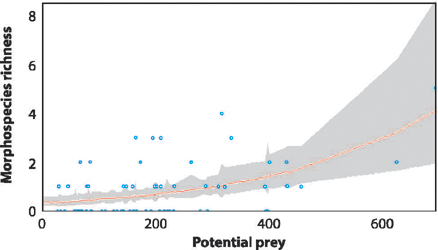
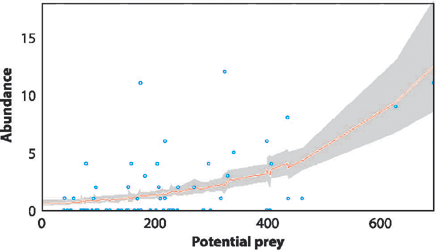
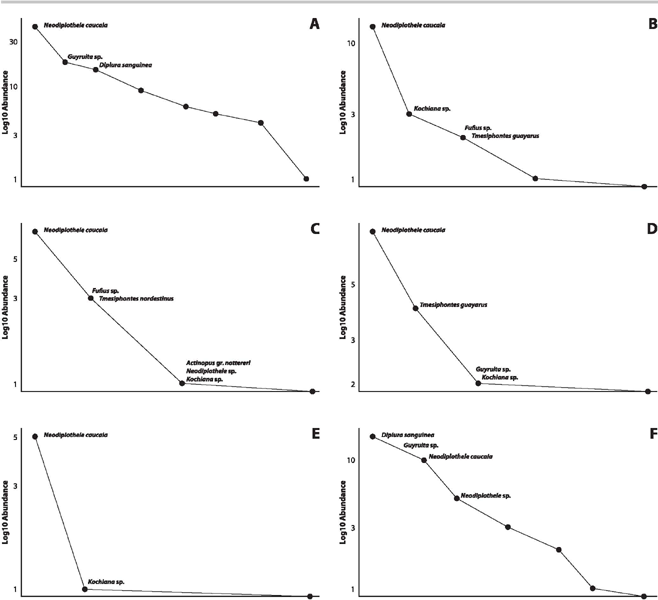
The number of morphospecies varied between 2 and 8, with the highest altitude (1,114 m) presenting 8 morphospecies (Table 1). The richness of morphospecies was influenced by the availability of potential prey (z = 3.77, p < 0.01, R2 = 0.22, Fig. 1) but not by altitude (z = 0.21, p = 0.82). In terms of abundance, a variation from 6 to 67 adult individuals was found, with the largest quantity collected at an elevation of 1,114 m and the smallest at 855 m. Ground dwelling mygalomorph abundance was positively related to the availability of potential prey (z = 7.37, p < 0.01, R2 = 0.30, Fig. 2) and was not related to altitude (z = 0.46, p = 0.64). Morphospecies diversity was similar among altitudinal bands not being affected by altitude (z = 0.42, p = 0.67) or availability of potential prey (z = 1.67, p = 0.09). Neodiplothele caucaia was dominant in all altitudinal bands, except in 1,114 m where D. sanguinea was dominant (Fig. 3).
Relationship between ground-dwelling mygalomorph spider abundance and availability of potential prey along an altitudinal gradient in Baturité Massif, Brasil.
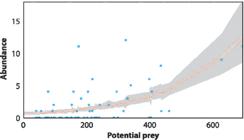
Relationship between ground-dwelling mygalomorph spider morphospecies richness and availability of potential prey along an altitudinal gradient in Baturité Massif, Brasil.
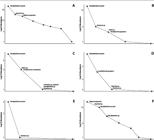
Rank-abundance curves of ground-dwelling mygalomorph spider morphospecies sampled along an altitudinal gradient in Baturité Massif, Brasil. (A) Entire gradient, (B) 374 m, (C) 600 m, (D) 700 m, (E) 855 m and (F) 1,114 m.
DISCUSSION AND CONCLUSION
In the present study, we assessed the effects of biotic (abundance of potential preys) and abiotic (elevation) in mygalomorph spiders richness, abundance and diveristy along an altitudinal gradient. Our study provides two key results. First, our result confirms our hypothesis that the abundance of individuals and the species richness of mygalomorph spiders are positively correlated with prey availability. Second, contrary to our hypothesis, abundance of individuals, species richness and diversity of spiders are not correlated with elevation. Studies related to the effects of altitudinal gradients in spider assemblages are scarce, and often not directed to the study of the effects of altitudinal gradients per se (Nogueira et al., 2021; Azevedo et al., 2024). This scarcity of scientific literature permeates deficits such as Linean, Wallacean, Huntchinsonian (Hortal et al., 2015), associated with sampling bias, and geographic distribution in altitude gradients (Lomolino, 2001).
The species richness observed for Theraphosidae (5 species) reflects the current state of knowledge of the group, given that it is the richest family in mygalomorph spiders group, comprising more than 1,000 species distributed in tropical and subtropical regions (Pérez-Miles, 2020, World Spider Catalog, 2022). We must take into account that the size of the pitfall traps used in the field may not be appropriate for collecting species from large genera, for example, the genres Acanthoscurria and Lasiodora of the family Theraphosidae. Spiders of these genre are relatively large that may be in the study area, but may not have been collected due to the size of the traps, so it is possible that the species richness of the site was undersampled. For the state of Ceará, 24 species of mygalomorph spiders are observed, of which the family Theraphosidae is represented by 13 morphospecies (Moura-Neto et al., 2021). Mygalomorph spider species richness and abundance were positively influenced by potential prey availability. A growing body of research suggests that the abundance of animal populations, ranging from herbivores to top predators, is constrained by food availability, which is, in turn, influenced by meteorological conditions (White, 2008). In spiders, on the one hand, similar results were obtained in the same ecosystem, semi-arid Caatinga vegetation, Brazil, where the total invertebrate abundance has a direct influence on spider richness and abundance (Carvalho et al., 2015). In temperate regions, the same positive correlation between prey availability and spider community richness and abundance was also recorded (Halaj et al., 1998; Spears & MacMahon, 2012). Probably, in our study area, the initiation of the rainy season within Atlantic Forest ecosystems provides optimal environmental circumstances for the proliferation of numerous organisms, particularly insects. The resurgence of plant growth during this period is directly correlated with an increase in insect reproductive activity and population density (Carvalho et al., 2015). This pattern of positive correlation between prey availability and predator abundance was also observed in other group like scorpions, where the abundance of different orders of hexapods was positively correlated with precipitation and with increased activity of scorpion species, also in semi-arid Caatinga ecosystem (Araújo et al., 2010). On the other hand, in the endangered tarantulas, Brachypelma klaasi and B. vagans (Araneae: Theraphosidae) in Mexico, it has been recorded that the availability of prey is almost unimportant when compared to soil quality or physical conditions such as temperature and humidity for burrow location (Yáñez & Floater, 2000; M’rabet et al., 2007). Unfortunately, there are few studies that evaluate the importance of prey availability specifically in the Mygalomorphae group, which makes it difficult to have a general pattern. Therefore, more future studies are needed to evaluate the effect of prey together with environmental variables.
In our study, contrary to our hypotheses, we did not record any correlation between elevation and abundance, species richness and diversity of mygalomorph spiders. Although the majority of tarantula species are distributed below 1,600 meters, three genres (Bistriopelma, Hapalotremus, and Antikuna) have been documented at extraordinary altitudes of 4,000-4,700 meters in the Peruvian Andes (Kaderka, 2015; Ferretti et al., 2018; Kaderka et al., 2021). These genera represent the highest elevation records for theraphosid spiders. This association between mygalomorph spiders and their habitats would still allow the occurrence of these arachnids in specific altitudinal ranges associated with altitudinal gradients (Ferretti et al., 2018; Kaderka et al., 2021). For example, we found that N. caucaia was the mygalomorph spider dominant in all elevational bands, except in higher sample site that was dominated by D. sanguinea. Neodiplothele caucaia shows a wider distribution in Brazilian dry region, such as Caatinga and Cerrado (Gonzalez-Filho et al., 2015), similar environmental conditions found in lower bands of our elevational gradient. However, D. sanguinea is found only in rainforests, being widespread in Amazon Forest and may be found in higher elevation in Ceará state (Brescovit et al., 2021). Therefore, considering the species-specific traits and that the availability of micro-habitats for ground-dwelling mygalomorphs is limited, this may influence the absence of altitude influence on the spider assemblage in the studied landscape, however this needs to be tested in future work.
Thus, the present work allows us to infer those biotic factors as availability of potential preys is more important that altitude per se for ground-dwelling mygalomorph spiders assemblages along an elevational gradient in the Brejo de Altitude existing in the Baturité Massif. An increase in availability of potential preys was determinant for mygalomorph abundance and morphospecies richness. This increase in resources may be related to the reproductive period, since many species reproduce when there is a greater supply of food. However, despite the information obtained, the study opens precedents for further investigations in order to fill the knowledge gaps associated with the distribution patterns of Mygalomorphae spiders in the Brejos de Altitude and Caatinga Domain.
-
FUNDING INFORMATION:
We would also like to thank the Instituto Nacional de Ciência e Tecnologia dos Hymenoptera Parasitoides da Região Sudeste Brasileira (HYMPAR/Sudeste – CNPq/FAPESP/CAPES), (FUNCAP: Proc. PS1-0186-00411.01.00/21, FC3-0198-00094.01.00/22, UNI-00210-00485.01.00/23), and to Dirección General de Asuntos del Personal Académico (DGAPA) from UNAM to a postdoctoral scholarship to A.F.A. Lira. FUNCAP/Conselho Nacional de Desenvolvimento Científico e Tecnológico CNPq, process number 150272/2023-5 (G.A.V.B).
ACKNOWLEDGMENTS:
We thank taxonomists Leonardo Carvalho and José Paulo Leite Guadanucci for identifying the specimens.
SUPPLEMENTARY MATERIAL
REFERENCES
-
Almeida-Neto, M.; Machado, G.; Pinto-Da-Rocha, R. & Giaretta, A.A. 2006. Harvestman (Arachnida: Opiliones) species distribution along three Neotropical elevational gradients: an alternative rescue effect for explain Rapoport’s rule? Journal of Biogeography, 33(2): 361-375. https://doi.org/10.1111/j.1365-2699.2005.01389.x
» https://doi.org/10.1111/j.1365-2699.2005.01389.x -
Araújo, C.S.; Candido, D.M.; Araújo, H.F.; Dias, S.C. & Vasconcellos, A. 2010. Seasonal variations in scorpion activities (Arachnida: Scorpiones) in an area of Caatinga vegetation in northeastern Brazil. Zoologia, 27(3): 372-376. https://doi.org/10.1590/S1984-46702010000300008
» https://doi.org/10.1590/S1984-46702010000300008 -
Azevedo, R.; Sales, L.G.; de Azevedo, F.R.; de Araújo Lira, A.F. & Sobczak, J.F. 2024. Rapoport effects in edaphic spiders (Araneae) diversity along an elevational gradient in Brazilian semiarid domain. Studies on Neotropical Fauna and Environment, (2024): 1-10. https://doi.org/10.1080/01650521.2024.2395717
» https://doi.org/10.1080/01650521.2024.2395717 -
Barrow, L. & Parr, C.L. 2008. A preliminary investigation of temporal patterns in semiarid ant communities: variation with habitat type. Austral Ecology, 33(5): 653-662. https://doi.org/10.1111/j.1442-9993.2008.01832.x
» https://doi.org/10.1111/j.1442-9993.2008.01832.x -
Brescovit, A.D.; Sherwood, D. & Lucas, S.M. 2021. First description of the males of Diplura sanguinea (F.O. Pickard-Cambridge, 1896) and Diplura nigra (F.O. Pickard-Cambridge, 1896) from Brazilian Amazonia, with notes on biogeography and opisthosomal patterning (Araneae: Dipluridae). Arachnology, 18(7): 681-689. https://doi.org/10.13156/arac.2020.18.7.681
» https://doi.org/10.13156/arac.2020.18.7.681 - Brown, J.H. & Lomolino, M.V. 1998. Biogeography. Massachutets, Sinauer Associates. 704p.
-
Cardoso, P.; Silva, I.; De Oliveira, N.G. & Serrano, A.R. 2007. Seasonality of spiders (Araneae) in Mediterranean ecosystems and its implications in the optimum sampling period. Ecological Entomology, 32(5): 516-526. https://doi.org/10.1111/j.1365-2311.2007.00894.x
» https://doi.org/10.1111/j.1365-2311.2007.00894.x - Carvalho, L.S. 2015. Aracnídeos: quem são, por que estudá-los e como coletá-los? In: Lima, M.S.C.S.; Carvalho, L.S. & Prezoto, F. (Orgs.). Métodos em ecologia ecomportamento animal. Teresina, EDUFPI. p. 103-140.
-
Carvalho, L.S.; Sebastian, N.; Araújo, H.F.; Dias, S.C.; Venticinque, E.; Brescovit, A.D. & Vasconcellos, A. 2015. Climatic variables do not directly predict spider richness and abundance in semiarid Caatinga vegetation, Brazil. Environmental Entomology, 44(1): 54-63. https://doi.org/10.1093/ee/nvu003
» https://doi.org/10.1093/ee/nvu003 -
Chao, A. & Shen, T.-J. 2004. Nonparametric prediction in species sampling. Journal of Agricultural, Biological, and Environmental Statistics, 9(3): 253-269. https://doi.org/10.1198/108571104X3262
» https://doi.org/10.1198/108571104X3262 -
Fabiano-da-Silva, W.; Guadanucci, J.P.L. & DaSilva, M.B. 2019. Taxonomy and phylogenetics of Tmesiphantes Simon, 1892 (Araneae, Theraphosidae). Systematics and Biodiversity, 17(7): 650-668. https://doi.org/10.10.1080/14772000.2019.1685021
» https://doi.org/10.10.1080/14772000.2019.1685021 -
Ferretti, N.; Cavallo, P.; Chaparro, J.C.; Ríos-Tamayo, D.; Seimon, T.A. & West, R. 2018. The neotropical genus Hapalotremus Simon, 1903 (Araneae: Theraphosidae), with the description of seven new species and the highest altitude record for the family. Journal of Natural History, 52(29-30): 1927-1984. https://doi.org/10.1080/00222933.2018.1506521
» https://doi.org/10.1080/00222933.2018.1506521 -
Ferretti, N.; Pompozzi, G.; Copperi, S.; Pérez-Miles, F. & González, A. 2012. Mygalomorph spider community of a natural reserve in a hilly system in central Argentina. Journal of Insect Science, 12: 31. https://doi.org/10.1673/031.012.3101
» https://doi.org/10.1673/031.012.3101 - Foelix, R.F. 2011. Biology of spiders. New York, Oxford University Press. 330p.
-
Gonzalez-Filho, H.M.; Lucas, S.M. & Brescovit, A.D. 2015. A revision of Neodiplothele (Araneae: Mygalomorphae: Barychelidae). Zoologia, Curitiba, 32(3): 225-240. https://doi.org/10.1590/S1984-46702015000300007
» https://doi.org/10.1590/S1984-46702015000300007 - Halaj, J.; Ross, D.W. & Moldenke, A.R. 1998. Habitat structure and prey availability as predictors of the abundance and community organization of spiders in western Oregon forest canopies. Journal of Arachnology, 26(2): 203-220.
-
Hénaut, Y. & Machkour-M’Rabet, S. 2020. Predation and other interactions. In: Pérez-Miles, F. (Ed.). 2020. New world Tarantulas: taxonomy, biogeography and evolutionary biology of Theraphosidae. p. 237-271. (Zoological Monographs, 6). https://doi.org/10.1007/978-3-030-48644-0_8
» https://doi.org/10.1007/978-3-030-48644-0_8 -
Hortal, J.; DeBello, F.; Diniz-Filho, J.A.F.; Lewinsohn, T.M.; Lobo, J.M. & Ladle, R.J. 2015. Seven shortfalls that beset large-scale knowledge of biodiversity. Annual Review of Ecology, Evolution, and Systematics, 46: 523-549. https://doi.org/10.1146/annurev-ecolsys-112414-054400
» https://doi.org/10.1146/annurev-ecolsys-112414-054400 -
Hullbert, J.H. 1984. Pseudoreplication and the design of field experiments in ecology. Ecological Monographs, 54: 187-211. https://doi.org/10.2307/1942661
» https://doi.org/10.2307/1942661 -
Kaderka, R. 2015. Bistriopelma, un género nuevo con dos nuevas especies de Perú (Araneae: Theraphosidae: Theraphosinae). Revista Peruana de Biología, 22(3): 275-288. https://doi.org/10.15381/rpb.v22i3.11432
» https://doi.org/10.15381/rpb.v22i3.11432 -
Kaderka, R.; Ferretti, N.; Hüsser, M.; Lüddecke, T. & West, R. 2021. Antikuna, a new genus with seven new species from Peru (Araneae: Theraphosidae: Theraphosinae) and the highest altitude record for the family. Journal of Natural History, 55(21-22): 1335-1402. https://doi.org/10.1080/00222933.2021.1936680
» https://doi.org/10.1080/00222933.2021.1936680 -
Langlands, P.R.; Brennan, K.E.C. & Pearson, D.J. 2006. Spiders, spinifex, rainfall and fire: Long-term changes in an arid spider assemblage. Journal of Arid Environments, 67: 36-59. https://doi.org/10.1016/j.jaridenv.2006.01.018
» https://doi.org/10.1016/j.jaridenv.2006.01.018 -
Leal, I.R.; Silva, J.M.C.; Tabarelli, M. & Lacher, T.E. 2005. Changing the course of biodiversity conservation in the Caatinga of Northeastern Brazil. Conservation Biology, 19(3): 701-706. https://doi.org/10.1111/j.1523-1739.2005.00703.x
» https://doi.org/10.1111/j.1523-1739.2005.00703.x -
Lira, A.F.A.; DeSouza, A.M. & Albuquerque, C.M.R. 2018. Environmental variation and seasonal changes as determinants of the spatial distribution of scorpions (Arachnida: Scorpiones) in Neotropical forests. Canadian Journal of Zoology, 96(9): 963-972. https://doi.org/10.1139/cjz-2017-0251
» https://doi.org/10.1139/cjz-2017-0251 -
Lomolino, M.V. 2001. Elevation gradients of species-density: historical and prospective views. Global Ecology and Biogeography, 10(1): 3-13. https://doi.org/10.1046/j.1466-822x.2001.00229.x
» https://doi.org/10.1046/j.1466-822x.2001.00229.x -
M’rabet, S.M.; Hénaut,Y.; Sepúlveda, A.; Rojo, R.; Calmé, S. & Geissen,V. 2007. Soil preference and burrow structure of an endangered tarantula, Brachypelma vagans (Mygalomorphae: Theraphosidae). Journal of Natural History, 41(17-20): 1025-1033. https://doi.org/10.1080/00222930701384547
» https://doi.org/10.1080/00222930701384547 -
Malumbres-Olarte, J.; Crespo, L.; Cardoso, P.; Szűts, T.; Fannes, W.; Pape, T. & Scharff, N. 2018. The same but different: equally megadiverse but taxonomically variant spider communities along an elevational gradient. Acta Oecologica, 88: 19-28. https://doi.org/10.1016/j.actao.2018.02.012
» https://doi.org/10.1016/j.actao.2018.02.012 -
Miglio, L.T.; Bonaldo, A.B. & Pérez-Miles, F. 2013. On Munduruku, a new Theraphosid genus from Oriental Amazonia (Araneae, Mygalomorphae). Iheringia, Série Zoologia, 103: 185-189. https://doi.org/10.1590/S0073-47212013000200013
» https://doi.org/10.1590/S0073-47212013000200013 -
Mineo, M.F.; Del-Claro, K. & Brescovit, A.D. 2010. Seasonal variation of ground spiders in a Brazilian Savanna. Zoologia, Curitiba, 27(3): 353-362. https://doi.org/10.1590/S1984-46702010000300006
» https://doi.org/10.1590/S1984-46702010000300006 - Moura-Fé, M.M. 2018. As serras úmidas na ocupação do território cearense. Revista da Casa da Geografia de Sobral, 20(2): 19-29.
-
Moura-Neto, C.; Azevedo, R.; Santiago, L.A; Sobczak, J.F.; Araújo-Júnior, J.M.C.; Falcão, K.A.; Silfarney, D.S.A.; Brescovit, A.D.; Carvalho, L.S.; Santos, A.J.; Russo, P. & Kury, A.B. 2021. Lista de Aracnídeos do Ceará. Fortaleza, Secretaria do Meio Ambiente do Ceará. Available: https://www.sema.ce.gov.br/fauna-do-ceara/invertebrados/aracnideos. Access: 01/11/2021.
» https://www.sema.ce.gov.br/fauna-do-ceara/invertebrados/aracnideos -
Nogueira, A.D.A.; Brescovit, A.D.; Perbiche-Neves, G. & Venticinque, E.M. 2021. Spider (Arachnida-Araneae) diversity in an amazonian altitudinal gradient: are the patterns congruent with mid-domain and rapoport effect predictions? Biota Neotropica, 21(4): e20211210. https://doi.org/10.1590/1676-0611-bn-2021-1210
» https://doi.org/10.1590/1676-0611-bn-2021-1210 - Oliveira, T.S. & Araújo, F.S. 2007. Diversidade e conservação da biota na Serra de Baturité, Ceará. Fortaleza: Edições UFC; COELCE, 2007.
-
Owen, J.G. 1990. Patterns of mammalian species richness in relation to temperature, productivity, and variance in elevation. Journal of Mammalogy, 71: 1-13. https://doi.org/10.2307/1381311
» https://doi.org/10.2307/1381311 -
Perafán, C.; Ferretti, N. & Hendrixson, B.E. 2020. Biogeography of New World Tarantulas. In: Pérez-Miles, F. (Ed.). New World Tarantulas: taxonomy, biogeography and evolutionary biology of Theraphosidae. Springer Nature. p. 153-190. https://doi.org/10.1007/978-3-030-48644-0_6
» https://doi.org/10.1007/978-3-030-48644-0_6 -
Pérez-Miles, F. (Ed.). 2020. New World Tarantulas: Taxonomy, Biogeography and Evolutionary Biology of Theraphosidae. Springer Nature. (Zoological Monographs, 6) https://doi.org/10.1007/978-3-030-48644-0
» https://doi.org/10.1007/978-3-030-48644-0 -
Pickard-Cambridge, F.O. 1896. On the Theraphosidae of the lower Amazons: being an account of the new genera and species of this group of spiders discovered during the expedition of the steamship “Faraday” up the river Amazons. Proceedings of the Zoological Society of London, 64(3): 716-766, pl. 33-35. https://doi.org/10.1111/j.1096-3642.1896.tb03076.x
» https://doi.org/10.1111/j.1096-3642.1896.tb03076.x - Prado, D. 2003. As caatingas da América do Sul. In: Leal, I.R.; Tabarelli, M. & Silva, J.M.C. (Eds.). Ecologia e conservação da Caatinga. Recife, Editora Universitária da UFPE. p. 3-73.
-
R Core Team. 2020. R: A language and environment for statistical computing. R Foundation for Statistical Computing, Vienna. Avaliable: https://www.R-project.org. Access: 10/06/2020.
» https://www.R-project.org -
Rahbek, C. 1995.The elevational gradient ofspecies richness: a uniform pattern? Ecography, 18(2): 200-205. https://doi.org/10.1111/j.1600-0587.1995.tb00341.x
» https://doi.org/10.1111/j.1600-0587.1995.tb00341.x -
Reyes-López, J.; Ruiz, N. & Fernández-Haeger, J. 2003. Community structure of ground-ants: the role of single trees in a Mediterranean pastureland. Acta Oecologica, 24(4): 195-202. https://doi.org/10.1016/S1146-609X(03)00086-9
» https://doi.org/10.1016/S1146-609X(03)00086-9 -
Romero, G.Q. & Vasconellos-Neto, J. 2003. Natural history of Misumenops argenteus (Thomisidae): seasonality and diet on Trichogoniopsis adenantha (Asteraceae). Journal of Arachnology, 31(2): 297-304. https://doi.org/10.1636/02-19
» https://doi.org/10.1636/02-19 -
Salomão, R.P.; Correa, C.M.D.A.; Santorelli-Junior, S.; Lima, A.P.; Magnusson, W.E.; Arruda, E.F.; Oliveira, A.P.V. & Cabral, R.C.C. 2023. Species diet and the effect of different spatial bait distribution on assemblage of dung beetles in Amazonian white-sand forest. International Journal of Tropical Insect Science, 43(3): 1153-1162. https://doi.org/10.1007/s42690-023-01012-8
» https://doi.org/10.1007/s42690-023-01012-8 -
Spears, L.R. & MacMahon, J.A. 2012. An experimental study of spiders in a shrub-steppe ecosystem: the effects of prey availability and shrub architecture. Journal of Arachnology, 40(2): 218-227. https://doi.org/10.1636/P11-87.1
» https://doi.org/10.1636/P11-87.1 -
Superintendência Estadual do Meio Ambiente (SEMACE). 2010. Área de Proteção Ambiental da Serra de Baturité. Fortaleza. Available: http://www.semace.ce.gov.br/2010/12/apa-da-serra-de-baturite. Access: 17/05/2022.
» http://www.semace.ce.gov.br/2010/12/apa-da-serra-de-baturite - Triplehorn, C.A.; Johnson, N.F. & Borror, D.J. 2005. Borror and DeLong’s Introduction to the study of Insects. Brooks/Cole Publishing Company.
-
Vasconcellos, A.; Araújo, V.F.; Moura, F. & Bandeira, A.G. 2007. Biomass and population structure of Constrictotermes cyphergaster (Silvestri) (Isoptera: Termitidae) in the dry forest of Caatinga, Northeastern Brazil. Neotropical Entomology, 36(5): 693-698. https://doi.org/10.1590/S1519-566X2007000500009
» https://doi.org/10.1590/S1519-566X2007000500009 -
Vasconcellos, A.R.; Andreazze, A.M.; Almeida, H.F.P.; Araújo, E.S. & Oliveira, U. 2010. Seasonality of insects in the semi-arid Caatinga of northeastern Brazil. Revista Brasileira de Entomologia, 54(3): 471-476. https://doi.org/10.1590/S0085-56262010000300019
» https://doi.org/10.1590/S0085-56262010000300019 -
Venables, W.N. & Ripley, B.D. 2002. Modern applied statistics with S. New York, Springer. https://www.stats.ox.ac.uk/pub/MASS4. https://doi.org/10.1007/978-0-387-21706-2_14
» https://doi.org/10.1007/978-0-387-21706-2_14» https://www.stats.ox.ac.uk/pub/MASS4 -
Werneck, F.P. 2011. The diversification of eastern South American open vegetation biomes: Historical biogeography and perspectives. Quaternary Science Reviews, 30 (13-14): 1630-1648. https://doi.org/10.1016/j.quascirev.2011.03.009
» https://doi.org/10.1016/j.quascirev.2011.03.009 -
White, T. 2008. The role of food, weather and climate in limiting the abundance of animals. Biological Reviews, 83(3): 227-248. https://doi.org/10.1111/j.1469-185X.2008.00041.x
» https://doi.org/10.1111/j.1469-185X.2008.00041.x -
Wise, D.H. 1993. Spiders in ecological Webs. New York, Cambridge University Press., 328p. https://doi.org/10.1017/CBO9780511623431
» https://doi.org/10.1017/CBO9780511623431 -
World Spider Catalog. 2022. World Spider Catalog. Natural History Museum Bern, Version 23.5. Available: http://wsc.nmbe.ch. Access: 17/10/2022.
» http://wsc.nmbe.ch -
Yáñez, M. & Floater, G. 2000. Spatial distribution and habitat preference of the endangered tarantula, Brachypelma klaasi (Araneae: Theraphosidae) in Mexico. Biodiversity & Conservation, 9(6): 795-810. https://doi.org/10.1023/A:1008976003011
» https://doi.org/10.1023/A:1008976003011