 Influence of soil organic matter on okra mineral nutrition and yield1
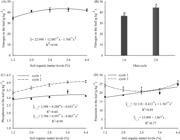
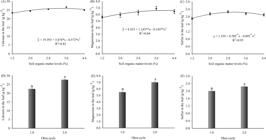
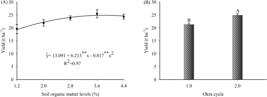
Low soil organic matter contents may harm several crops, including okra. However, the incorporation of organic materials has proven effective in increasing the availability of nutrients for plants, among other benefits. This study aimed to evaluate the mineral nutrition and yield of okra after supplying organic material (dry cattle manure) to the soil. Five soil organic matter levels (1.2, 2.0, 2.8, 3.6 and 4.4 %), provided by the addition of cattle manure, were assessed under field conditions in two crop cycles, using randomized blocks, in a 5 × 2 factorial design, with four replications. The leaf contents of N, P, K, Ca, Mg, S, B, Fe, Zn, Cu and Mn and fruit yield were analyzed. The increase in soil organic matter increased the macro and micronutrient contents in the okra leaves; however, excessive levels of soil organic matter reduced the concentrations of N, P, Ca, Mg, S, B, Fe, Mn and Cu, with variations between the crop cycles. Furthermore, the mineral nutrition and plant yield parameters were higher in the second cultivation cycle, when compared to the first one. Fruit yield peaked at 24.9 t ha-1 with 3.8 % of soil organic matter. Therefore, this concentration is recommended to achieve a high okra yield.
KEYWORDS:
Abelmoschus esculentus L.; soil macro and micronutrients; organic fertilization.
 Thumbnail
 Thumbnail
 Thumbnail
 Thumbnail
 Thumbnail