 Influence of soil organic matter on okra mineral nutrition and yield1
ABSTRACT
Low soil organic matter contents may harm several crops, including okra. However, the incorporation of organic materials has proven effective in increasing the availability of nutrients for plants, among other benefits. This study aimed to evaluate the mineral nutrition and yield of okra after supplying organic material (dry cattle manure) to the soil. Five soil organic matter levels (1.2, 2.0, 2.8, 3.6 and 4.4 %), provided by the addition of cattle manure, were assessed under field conditions in two crop cycles, using randomized blocks, in a 5 × 2 factorial design, with four replications. The leaf contents of N, P, K, Ca, Mg, S, B, Fe, Zn, Cu and Mn and fruit yield were analyzed. The increase in soil organic matter increased the macro and micronutrient contents in the okra leaves; however, excessive levels of soil organic matter reduced the concentrations of N, P, Ca, Mg, S, B, Fe, Mn and Cu, with variations between the crop cycles. Furthermore, the mineral nutrition and plant yield parameters were higher in the second cultivation cycle, when compared to the first one. Fruit yield peaked at 24.9 t ha-1 with 3.8 % of soil organic matter. Therefore, this concentration is recommended to achieve a high okra yield.
KEYWORDS:
Abelmoschus esculentus L.; soil macro and micronutrients; organic fertilization.
RESUMO
O baixo teor de matéria orgânica do solo pode prejudicar diversas culturas, incluindo o quiabeiro; mas a incorporação de materiais orgânicos tem se mostrado eficaz para aumentar a disponibilidade de nutrientes para as plantas, entre outros benefícios. Objetivou-se avaliar a nutrição mineral e a produtividade de quiabeiro com suprimento de material orgânico (esterco bovino seco) ao solo. Foram testados, em campo, cinco níveis de matéria orgânica do solo (1,2; 2,0; 2,8; 3,6; e 4,4 %), proporcionados pela adição de esterco bovino, em dois ciclos da cultura, utilizando-se delineamento em blocos casualizados, em esquema fatorial 5 × 2, com quatro repetições. Foram analisados os teores foliares de N, P, K, Ca, Mg, S, B, Fe, Zn, Cu e Mn e a produtividade de frutos. O aumento da matéria orgânica do solo elevou os teores de macro e micronutrientes nas folhas de quiabeiro; entretanto, níveis excessivos de matéria orgânica do solo reduziram a concentração de N, P, Ca, Mg, S, B, Fe, Mn e Cu, com variações entre os ciclos da cultura. Além disso, os parâmetros de nutrição mineral e a produtividade das plantas foram superiores no segundo ciclo de cultivo, em comparação ao primeiro. A produtividade de frutos atingiu um pico de 24,9 t ha-1 com 3,8 % de matéria orgânica do solo. Portanto, essa concentração é recomendada para alcançar maior produtividade de quiabo.
PALAVRAS-CHAVE:
Abelmoschus esculentus L.; macro e micronutrientes do solo; adubação orgânica.
INTRODUCTION
Okra (Abelmoschus esculentus L.) is a vegetable of great importance for tropical and subtropical regions. It is recognized for its health benefits arising from almost all parts of the plant, from leaves to seeds and fruits (Singh & Nigam 2023). This species is rich in vitamins, minerals, fibers and bioactive compounds, what makes it a valuable addition to the diet (Adekiya et al. 2020). Globally, the top producers of okra include India, Nigeria, Mali, Sudan, Pakistan, Côte d’Ivoire, Egypt, Cameroon and Iraq (FAO 2022).
In Brazil, the okra production in 2017 was 111,967 tons; however, the contribution of the Paraíba state was only 0.40 % of the national production (IBGE 2018), what can be attributed to several factors, including lack of knowledge on the agricultural potential of okra by local farmers and low levels of soil organic matter in the Brazilian semiarid region (Husein et al. 2021).
Low soil organic matter contents are a critical problem that may result in low okra yield, negatively affecting the farmers’ income (Adekiya et al. 2020). A viable solution to increase the okra production in the semiarid region is to improve the soil organic matter content using organic fertilizers, such as cattle manure, since it is essential for plant development (Barbosa et al. 2016, Santos et al. 2022).
Organic fertilization is an essential agronomic tool for increasing the yield of agricultural crops because, in addition to enriching the soil with organic matter, this practice is low-cost and promotes improvements in the soil physical, chemical and biological properties. Furthermore, the use of organic fertilizers improves the soil water retention and increases the availability of macro and micronutrients, favoring plant growth and production (Jwar & Neghamish 2021).
Studies have revealed that organic fertilizers improve the okra growth and production (Barbosa et al. 2016, Adekiya et al. 2020, Purbajanti & Fuskhah 2022). Purbajanti & Fuskhah (2022) observed that organic fertilization increases the nitrogen uptake, pod yield, agronomic efficiency, nitrogen recovery efficiency and nitrogen physiological efficiency in both green and red okra. However, the literature still lacks studies that specifically assess the influence of incorporation of organic matter into the soil on the accumulation of nutrients and production of okra in soils of the Brazilian semiarid region. Given this scenario, this study aimed to assess the mineral nutrition and production of okra fertilized with increasing levels of soil organic matter.
MATERIAL AND METHODS
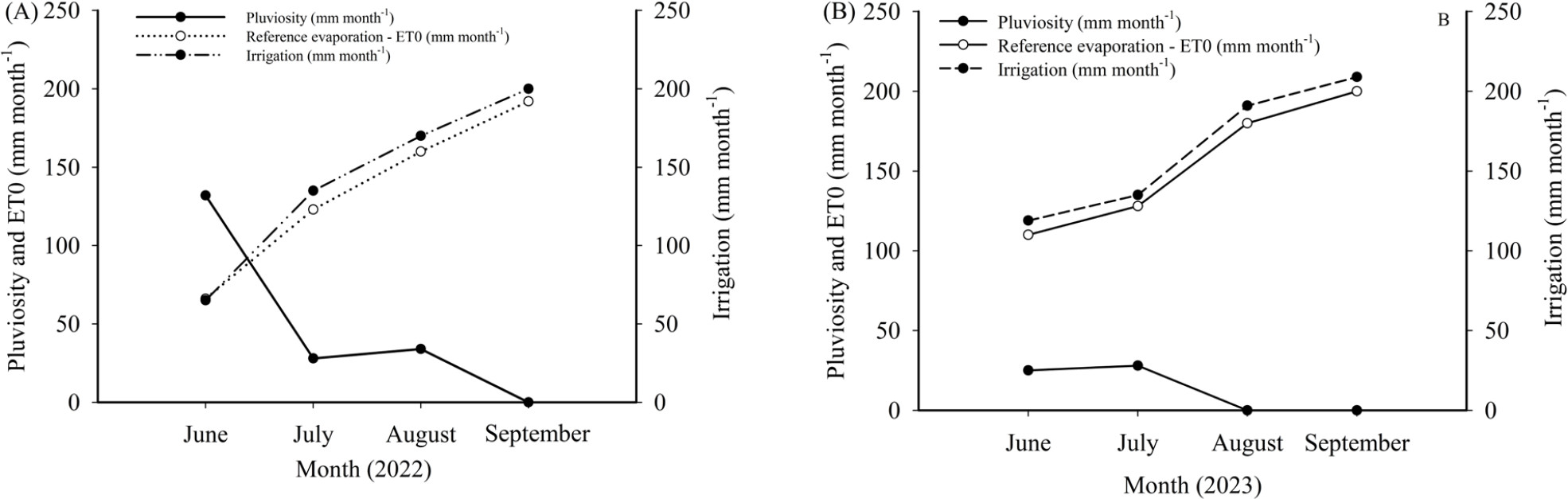
Two field experiments were conducted at the Universidade Estadual da Paraíba, in Catolé do Rocha, Paraíba state, Brazil (6º20’38”S, 37º44’48”W and altitude of 275 m). The first experiment took place between June and September 2022, and the second between June and September 2023. Figure 1 shows the climate data recorded at a meteorological station installed at the experimental area and the irrigation data during the experiments.

Rainfall, reference evaporation and irrigation data during the experiments in 2022 (A) and 2023 (B) (Catolé do Rocha, Paraíba state, Brazil).
The soil of the area was classified as Entisol (Fluvent) (USDA 2014). It has a sandy clay loam texture and presented the following physical properties: sand = 831.5 g kg-1; silt = 100.0 g kg-1; clay = 68.5 g kg-1; soil bulk density = 1.53 g cm-3; particle density = 2.61 g cm-3; total porosity = 0.42 m3 m-3; flocculation degree = 1,000 kg dm-3; and humidity at stresses of -0.01, -0.03 and -1.50 MPa of 65, 49 and 28 g kg-1, respectively. Regarding soil fertility, the soil presented the following characteristics: pH = 6.0; P = 16.63 mg dm-3; K+ = 0.08 cmolc dm-3; Ca2+ = 1.09 cmolc dm-3; Mg2+ = 1.12 cmolc dm-3; Na+ = 0.05 cmolc dm-3; sum of exchangeable bases = 2.34 cmolc dm-3; HAl3 = 1.24 cmolc dm-3; Al3 = 0 cmolc dm-3; cation exchange capacity (CEC) = 3.58 cmolc dm-3; base saturation (V) = 65.36 %; and organic matter = 13.58 g kg-1.
Five quantities of dry cattle manure were studied to increase the soil organic matter by 1.2, 2.0, 2.8, 3.6 and 4.4 %, in two crop cycles (first and second experiments), using randomized blocks, in a 5 × 2 factorial design (concentrations x cycles), with four replicates. The first and second experiments were conducted at the same site, maintaining the same experimental conditions. Each plot consisted of three rows 3.2 m long and 2 m wide, spaced 1 m apart, each containing 12 plants.
The cattle manure had the following characteristics: pH (H2O) = 7.7; electrical conductivity = 6.09 dS m-1; organic matter = 36.2 dag kg-1; organic carbon = 166.9 g kg-1; N = 13.9 g kg-1; C/N ratio = 12; P = 3.2 mg dm-3; K+ = 18.7 cmolc dm-3; Ca2+ = 16.2 cmolc dm-3; Mg2+ = 6.1 cmolc dm-3; S = 2.5 cmolc dm-3; CEC = 133.9 mmol dm-3; B = 11 mg kg-1; Fe = 129.9 mg kg-1; Cu = 19.3 mg kg-1; Mn = 491.4 mg kg-1; Zn = 65.3 mg kg-1; Si = 12.5 g kg-1; Na+ = 3.5 g kg-1.
The relative concentrations of soil organic matter were based on Barbosa et al. (2016). The cattle manure was air-dried, maintaining 5 % of moisture, and the amounts corresponding to each soil organic matter level were defined according to Bertino et al. (2015). For the organic matter levels of 1.2; 2.0; 2.8; 3.6; and 4.4 %, 0; 959; 1,917; 2,876; and 3,835 g of cattle manure per hole were used, respectively.
The studied plant material was okra [Abelmoschus esculentus (L.) Moench], ‘Santa Cruz 47’ Cultivar. Sowing was performed in polyethylene trays with cells of 0.0125 dm3 containing substrate composed of 50 % of earthworm humus and 50 % of soil material. At 15 days after sowing, the most vigorous seedlings, with two pairs of definitive leaves, were selected and transplanted to the field.
The holes were prepared with dimensions of 30 x 30 x 30 cm, spaced 0.8 m between plants and 1.0 m between rows, filled with soil from the first 30 cm, phosphorus and different levels of cattle manure, according to the treatment. Fertilization followed the recommendations of Filgueira (2013). Nitrogen and potassium were applied biweekly between 15 and 75 days after seedling transplant (DAT), using urea and potassium sulfate as sources. In each application, 3.55 g of urea and 1.81 g of potassium sulfate were used, totaling 17.75 g and 9.05 g plant-1, respectively, in each cycle. Phosphate fertilization was divided, with application of 20 g of simple superphosphate in the foundation and 20 g at 45 DAT, totaling 40 g plant-1 cycle-1.
The plants were daily irrigated with well water showing the following characteristics: electrical conductivity = 1.01 dS m-1; pH = 6.9; K+ = 1.21 mmolc L-1; Ca2+ = 2.5 mmolc L-1; Mg2+ = 1.48 mmolc L-1; Na+ = 6.45 mmolc L-1; Cl- = 8.1 mmolc L-1; HCO3- = 2.75 mmolc L-1; SO42- = 0.18 mmolc L-1; sodium adsorption ratio = 4.57 (mmol L-1)1/2.
A drip irrigation system was used, comprising two self-compensating drippers with a flow rate of 10 L h-1 for each plant, installed 0.2 m from the plant base on opposite sides, working at a service pressure of 1.5 MPa. The daily irrigation depth was calculated considering the crop evapotranspiration (ETc), estimated by the product between the reference evapotranspiration (ET0) and the crop coefficient (Kc) (Valipour 2017, Anwar et al. 2021). The Kc values were as it follows: in the first 40 days, 0.68; from 41 to 70 days, 0.79 (Paes et al. 2012). A meteorological station with a class “A” tank was installed near the experimental area to determine the ET0 by multiplying the daily evaporation by the adjustment coefficient of 0.75.
At 50 DAT, during the full flowering phase, four leaves were collected from the median part of the two central plants of each plot. After washing in distilled water, the leaves were dried with an air circulation oven at 60 ºC until constant mass, ground in a stainless-steel knife mill (Willey type) and stored in hermetically sealed containers, to determine the levels of macro (N, P, K, Ca, Mg and S) and micronutrients (B, Fe, Zn, Cu and Mn) (Silva 2009).
The N content was determined by the Kjeldahl method (dry digestion), P by molybdenum blue spectrometry and K by flame photometry, whereas the Ca, Mg, S, Fe and Cu contents were obtained using an atomic absorption spectrometer at wavelengths of 422.7, 285.2, 400.0, 508.0 and 327.4 nm, respectively. The B content was determined by UVvis spectrometry at a wavelength of 460.0 nm, and Zn was measured by acetylene flame atomic absorption spectrometry.
At 65 DAT, harvesting began. At this time, the fruits had reached commercial ripeness. At the end of each cycle, the okra yield was estimated by relating the production of each plot to the density of plants per hectare.
Initially, the data were subjected to analysis of variance, using the F test individually for each cycle, in order to verify homogeneity between residues (Pimentel-Gomes 2000). Subsequently, the data were subjected to the Shapiro-Wilk error normality test and Bartlett variance homogeneity test. Once the premises were met, the data were subjected to joint analysis of variance. For the quantitative factor, first and/or second-degree linear regression was applied, depending on the significance of the model. The F test was applied when the cycle factor (experiment), in isolation, proved to be significant. All statistical analyses were performed using the R software (R Core Team 2023).
RESULTS AND DISCUSSION
According to the analysis of variance, there was a significant effect of soil organic matter × cycles on P, K, Fe and Zn leaf contents, indicating dependence on the factors. The leaf contents of N, Ca, Mg, S, B, Mn and Cu, as well as fruit yield, responded to the organic matter and cycle factors in isolation.
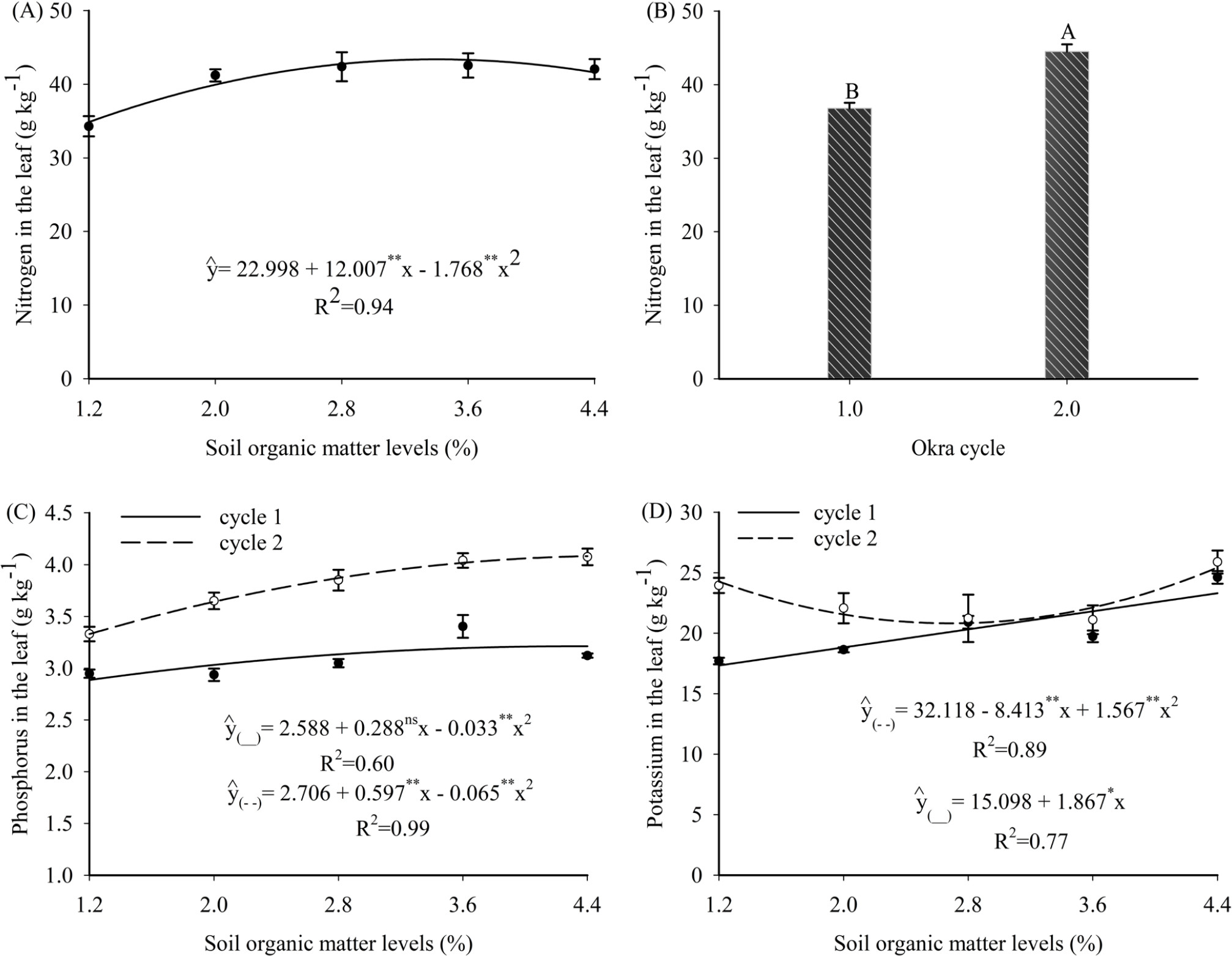
The organic material added to the soil provided an increase in the leaf nitrogen content of okra plants. The addition of cattle manure to raise the soil organic matter level to 3.4 % increased the leaf N content to 43.38 g kg-1 (Figure 2A), with a reduction from this point onwards. This increase may be related to the increase in the availability and absorption of N by the roots caused by organic matter (Santos et al. 2022). Barbosa et al. (2016) reported this effect and argued that increasing organic matter levels stimulated the N accumulation in okra, reaching a maximum value of 43.15 g kg-1 for a level of 3.8 % of soil organic matter.
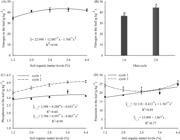
Nitrogen contents in okra leaves, as a function of soil organic matter levels (A) and cycles (B), and leaf phosphorus (C) and potassium (D) contents, as a function of soil organic matter levels and cycles. Different letters indicate statistically significant differences by the F test (p < 0.05). *, ** and ns: significant at p < 0.05, p < 0.01 and not significant, respectively, according to the linear regression analysis.
In the second cycle, the N concentration was 20.25 % higher, when compared to that of the first cycle, showing levels of 44.24 and 36.79 g kg-1, respectively (Figure 2 B). This can be attributed to the slow release of nitrogen from organic matter, which keeps the nutrient available for longer periods. Furthermore, soil organic matter reduces nitrogen losses through denitrification and/or leaching, a phenomenon that occurs more frequently when inorganic fertilizers are used (Barbosa et al. 2016).
The amounts of cattle manure used to increase the soil organic matter levels to 3.93 and 4.36 % provided the highest phosphorus concentrations in okra leaves: 3.93 and 3.22 g kg-1 in the first and second cycles, respectively (Figure 2C). This can be attributed to the negatively charged functional groups present in the soil organic matter, which interact with cations and alter P adsorption (Liu et al. 1999). Furthermore, the source of organic matter used here contains phosphorus in its chemical composition, which, once mineralized, becomes available to plants. Onah et al. (2023) reported similar results. Organic fertilization increased the available phosphorus, promoting okra growth and yield. Adewole & Adebayo (2018), in turn, reported an increase of more than 100 % in available P after the third consecutive cultivation of okra with organic fertilization, corroborating the data of this study, which show an increase in P content in the second cycle.
The potassium content in okra leaves in the first cycle showed a linear increasing trend, with an increase of 1.87 g kg-1 of K per unit increase in the soil organic matter level, resulting in a maximum content of 23.33 g kg-1 (Figure 2D). For the second cycle, the K content adjusted to the quadratic model, reducing to 20.82 g kg-1 at the level of 2.68 % of soil organic matter. From this point on, there was an increase in the K content to 25.43 g kg-1, with 4.4 % of soil organic matter. According to Tan (1978), humic and fulvic acids present in the humic fraction of organic matter help to release potassium fixed in soil minerals. In the present study, it is possible that, in the first cycle, mineral potassium was released in greater quantities together with the potassium contained in the organic material itself, resulting in the linear accumulation of K in the leaves. In the second cycle, the amount of available potassium in the soil may have decreased initially due to the greater release and uptake in the previous cycle, suggesting that a greater amount of organic matter was required to release additional potassium, possibly due to saturation or reduced availability of K in soil minerals.
The results obtained were lower than the K concentration of 26.2 g kg-1 observed by Cavalcante et al. (2010). However, this lower concentration may be related to the higher K content in the cattle manure used by the authors (26.2 g kg-1), when compared to the content found in the cattle manure used in the present research (18.7 g kg-1).
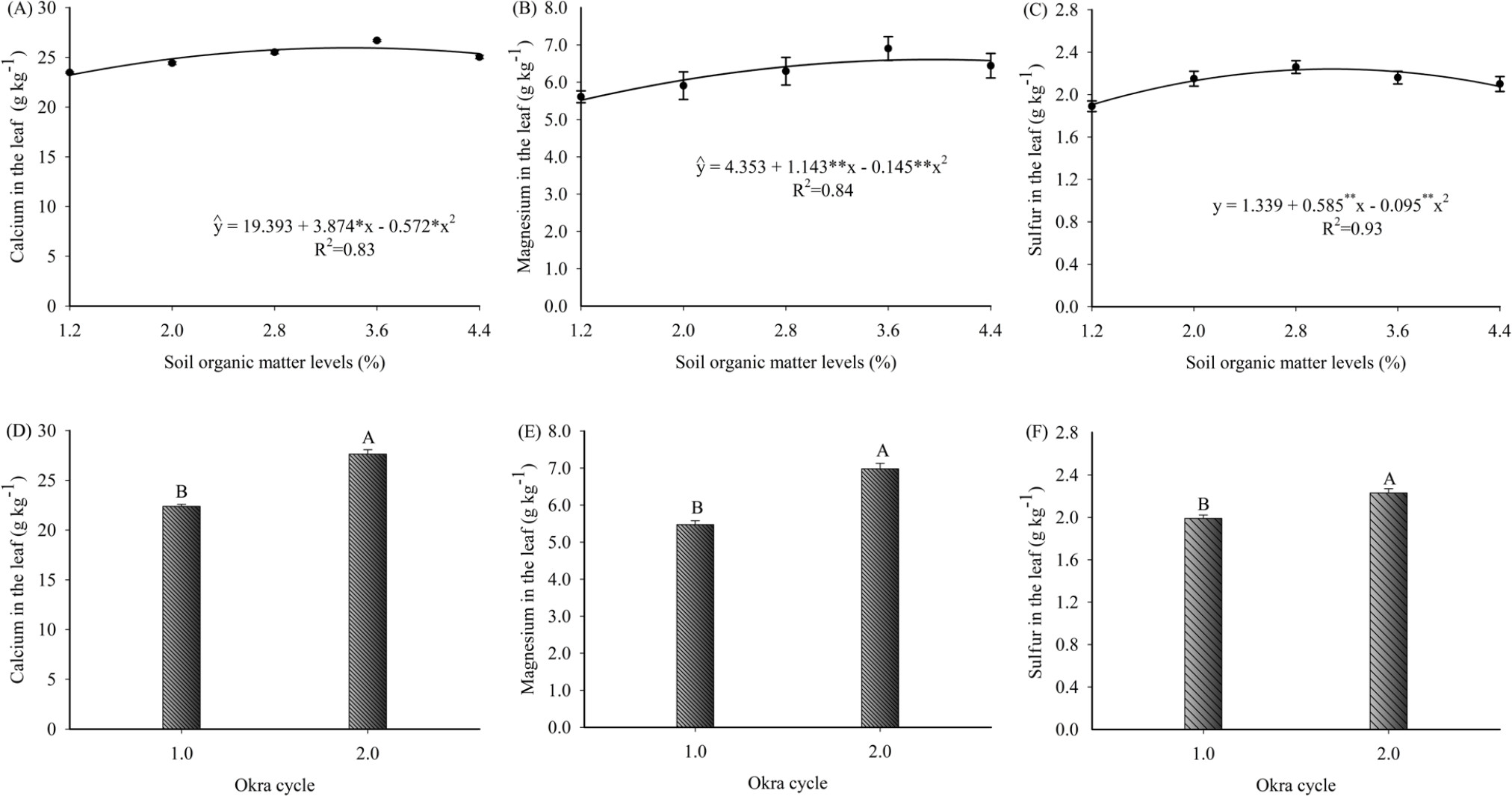
The Ca accumulation in okra leaves was stimulated by increased levels of organic material added to the soil. Plants subjected to 3.4 % of soil organic matter had a leaf Ca content of 25.95 g kg-1, with a reduction from this point onwards (Figure 3A). In the first cycle, the Ca content (22.38 g kg-1) was 23.45 % lower than the value recorded in the leaves in the second cycle (27.63 g kg-1) (Figure 3D). The results were superior to the observations of Cavalcante et al. (2010), who reported a content of 19.65 g kg-1 at the soil organic matter level of 5 %. The obtained values ranged between 22.38 and 27.63 g kg-1 and are within the limits, or even higher than the requirements of most horticultural plants (Malavolta et al. 1997).
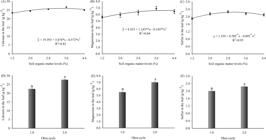
Leaf contents of calcium, magnesium and sulfur in okra, as a function of soil organic matter levels (A, B and C) and cycles (D, E and F). Different letters indicate statistically significant differences by the F test (p < 0.05). * and **: significant at p < 0.05 and p < 0.01, respectively, according to the linear regression analysis.
The magnesium concentration in okra leaves increased up to 6.62 g kg-1 with increasing soil organic matter supply up to the level of 3.94 %, then decreasing from that point on (Figure 3B). The initial increase in soil organic matter probably favored the availability of magnesium in the soil, which is an essential nutrient for photosynthesis and plant metabolism. However, the reduction after the peak point may be associated with nutritional antagonism, in which cations such as potassium and calcium compete with magnesium, limiting its absorption by plants (El-Naqma 2020). This hypothesis is corroborated by the increases previously observed in the Ca and K levels.
These results were similar to those obtained by Cavalcante et al. (2010), who observed an increase in the Mg2+ content in the dry matter of okra leaves with the increase in organic sources in the soil. In contrast, Barbosa et al. (2016) observed a decrease in the Mg2+ content in okra leaves with increasing soil organic matter levels.
The magnesium content in the second cycle was 27.61 % higher, when compared to that in the first cycle, showing values of 6.98 and 5.57 g kg-1 (Figure 3E). This increase is of great importance, considering that magnesium plays a fundamental role as the central atom of the chlorophyll molecule, which is equivalent to approximately 10 % of the total Mg in leaves (Malavolta et al. 1997).
The addition of cattle manure to raise the soil organic matter content to 3.06 % provided the highest sulfur content for okra leaves, reaching 2.24 g kg-1 (Figure 3C). Comparatively, the S content in the second cycle (2.23 g kg-1) was 12.06 % higher than that recorded in the first cycle (1.99 g kg-1) (Figure 3F). This happened because organic matter is an important source of S for plants. The vast majority of sulfur in soils is present in the organic matter, which is mineralized into SO42-, the only form that plant roots can absorb (Narayan et al. 2023).
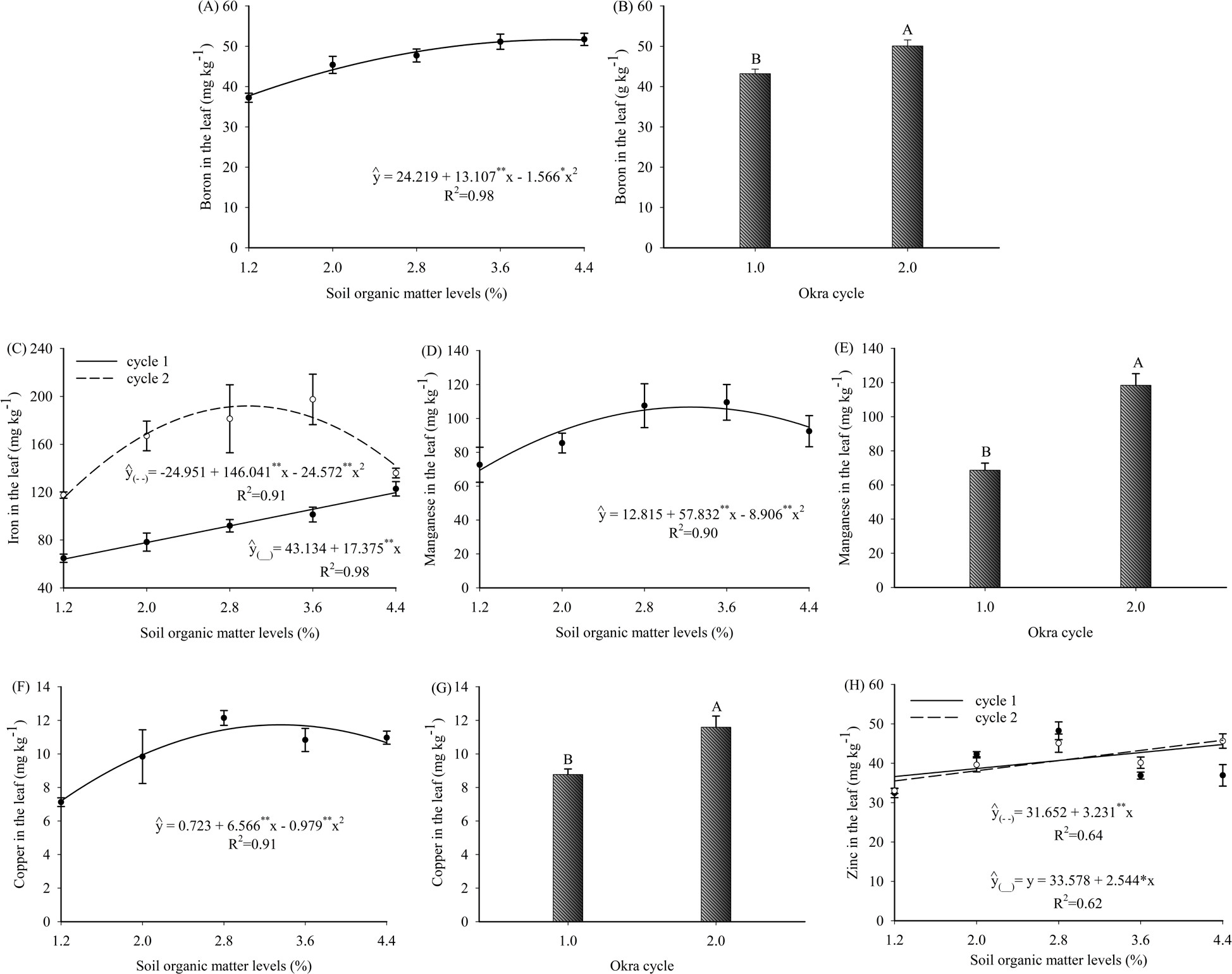
The organic material added to the soil also affected the leaf boron concentrations in okra. The highest content of this micronutrient was 51.64 mg kg-1, corresponding to the level of 4.19 % of soil organic matter, with a reduction from that point onwards. The B contents were 43.20 and 50.08 mg kg-1 in the first and second cycles , respectively (Figures 3A and 3B), with a superior percentage of 15.92 % for the second cycle. Most of the boron available to plants is present in the soil organic matter (Arunkumar et al. 2018). The increase observed in the second cycle can be explained by the continuous decomposition of the added organic material, which probably released boron more efficiently over time, thus increasing its soil availability.
According to Dhaliwal et al. (2019), the addition of soil organic matter increases the watersoluble and exchangeable forms of micronutrients in the soil, such as boron, resulting in the formation of more stable micronutrient complexes, what facilitates absorption by plants, as observed in the present study. These results are similar to those of Chaves et al. (2017), who reported boron contents of 52.1 and 46.5 g kg-1 in okra without and with water deficit, respectively.
Based on the obtained results, at the beginning of flowering, the plants presented adequate boron levels (Malavolta et al. 1997). According to Kohli et al. (2023), in addition to being crucial for plant metabolism, B affects the availability of other nutrients, and its deficiency may cause several problems.
Regarding Fe contents (Figure 4C), in the first okra cycle, the data had an increasing linear effect, with an increase of 17.35 g kg-1 for each unitary increase in the soil organic matter level, totaling a maximum Fe value of 119.58 mg kg-1 at the 4.4 % of soil organic matter. In contrast, in the second cycle, there was a quadratic effect, recording a maximum Fe content of 192.04 mg kg-1 at the level of 2.97 % of soil organic matter. There was an increase of 60.59 % between the second and first cycles for the Fe content of okra leaves, showing the benefit of organic fertilization to improve the soil physicalchemical and biological attributes in the long term, thus increasing its fertility.

Leaf contents of boron (A and B), iron (C), manganese (D and E), copper (F and G) and zinc (H) in okra, as a function of soil organic matter levels and cycles. Different letters indicate statistically significant differences by the F test (p < 0.05). * and **: significant at p < 0.05 and p < 0.01, respectively, according to the linear regression analysis.
The manganese accumulation in leaves of okra plants was stimulated by the increase in the soil organic matter levels provided by the addition of cattle manure (Figure 4D). The stand of plants at the 2.92 % of soil organic matter level obtained the highest Mn content in leaf dry matter (97.19 mg kg-1). This result corroborates Zhu et al. (2002), who reported that the availability of Mn in soils is determined by several factors, including organic matter. These factors favor the increase in reducing environments and the availability of this nutrient in the soil.
Concomitantly, the Mn content in okra leaves was higher in the second cycle, when compared to the first one, with values of 6.98 and 5.47 g kg-1, respectively, thus representing an increase of 27.61 % (Figure 4E). This highlights the beneficial effects of the accumulation of organic matter in the soil and its impact on the release of micronutrients.
The copper content in the okra leaf dry matter reached the highest value (11.73 mg kg-1) at the level of 3.35 % of soil organic matter (Figure 4F). Regarding cycles, the levels were 8.77 mg kg-1 in the first and 11.58 mg kg-1 in the second cycle, corresponding to an increase of 32.04 % (Figure 4G). These levels are considered adequate (Malavolta et al. 1997), and the results are in line with Chaves et al. (2017), who reported that soil organic matter levels affected the copper content in okra leaves and recorded Cu contents of 12.91 and 10.30 mg kg-1 at levels of 3.9 and 5.8 % of soil organic matter, respectively.
Copper is absorbed by plants after the binding of Cu2+ ions to specific transporters present on the surface of the plasmalemma of root cells. Its uptake is highly dependent on the availability of Cu in the soil, which is significantly influenced by the organic complexation of copper from organic matter (Tang et al. 1999, Boudesocque et al. 2007). This denotes the importance of organic matter in providing copper for okra crops.
The zinc contents in okra leaves increased by 2.54 mg kg-1 in the first cycle and 3.23 mg kg-1 in the second cycle for each unitary increment in the soil organic matter level (Figure 4H). The maximum recorded levels were 44.77 mg kg-1 in the first cycle and 45.86 mg kg-1 in the second one; these levels were obtained at the maximum soil organic matter level. These results are similar to those of Chaves et al. (2017), who reported a leaf Zn content for okra of 45.72 mg kg-1 at the level of 3.9 % of soil organic matter. According to Rizwan et al. (2019), the efficiency and absorption of Zn by plants are influenced by several soil properties, including the organic matter content and type. These findings highlight the importance of an adequate management of soil organic matter levels to optimize the zinc uptake by plants.
In general, the leaf nutrient contents of plants at the beginning of flowering followed the order N > Ca > K > Mg > P > S > Fe > B > Zn > Cu > Mn.
The increase in the accumulation of macro and micronutrients in okra leaves caused by soil organic matter reflected in the crop yield, whose data fit the quadratic model. The maximum yield of 24.9 t ha-1 of green fruits was recorded at the level of 3.8 % of soil organic matter, with a decrease observed from this point onwards (Figure 5A). In the first cycle, yield was 21.3 t ha-1; in the second, it was 24.9 t ha-1. This represents an increase of 16.9 % in the second harvest, if compared to the first one (Figure 5B). The increase in fruit yield can be attributed to the greater availability of nutrients promoted by the application of cattle manure to the soil.
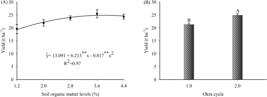
Okra yield as a function of soil organic matter levels (A) and cycles (B). Different letters indicate statistically significant differences by the F test (p < 0.05). ** Significant at p < 0.01, according to the linear regression analysis.
The yield values were higher than those presented by Barbosa et al. (2016), who reported yields of 13.58 t ha-1 in the presence of organic matter. However, they were similar to those of Onah et al. (2023), who observed an okra yield of 25 t ha-1 under organic cultivation.
Overall, the obtained results highlight the importance of adding organic material to the soil to improve the mineral nutrition of okra. The application of cattle manure not only increased the nutrient accumulation in the plants, but also had a positive impact on yield. The soil organic matter seems to optimize nutrient transport mechanisms, as evidenced by the increase in the leaf contents of almost all elements with the increase in cattle manure. This explains the higher yield observed.
CONCLUSIONS
-
1. The addition of cured cattle manure to the soil increases the organic matter content, leaf macro and micronutrient contents and yield of okra fruits; however, the excess of organic material reduces these parameters;
-
2. The nutritional state and okra yield were higher in the second cultivation cycle, when compared to the first one;
-
3. It is recommended to increase the level of organic matter in the soil up to 3.8 %, to obtain a greater okra yield.
REFERENCES
- ADEKIYA, A. O.; EJUE, W. S.; OLAYANJU, A.; DUNSIN, O.; ABOYEJI, C.; AREMU, C.; AKINPELU, O. Different organic manure sources and NPK fertilizer on soil chemical properties, growth, yield and quality of okra. Scientific Reports, v. 10, n. 1, e16083, 2020.
- ADEWOLE, M. B.; ADEBAYO, R. T. Sustaining soil organic matter for okra production in a forest ecology of Nigeria. International Journal of Plant & Soil Science, v. 22, n. 1, p. 1-7, 2018.
- ANWAR, S. A.; MAMADOU, O.; DIALLO, I.; SYLLA, M. B. Influence of vegetation cover changes and vegetation-runoff systems on the simulated summer potential evapotranspiration of tropical Africa using RegCM4. Earth Systems and Environment, v. 5, n. 4, p. 883-897, 2021.
- ARUNKUMAR, B. R.; THIPPESHAPPA, G. N.; ANJALI, M. C.; PRASHANTH, K. M. Boron: a critical micronutrient for crop growth and productivity. Journal of Pharmacognosy and Phytochemistry, v. 7, n. 2, p. 27382741, 2018.
- BARBOSA, M. A.; FERREIRA, N. M.; BERTINO, A. M. P.; MESQUITA, E. F.; CHAVES, L. H. G.; CAVALCANTE, L. F.; RIGOBELO, E. C. Effect of organic matter, irrigation and soil mulching on the nutritional status and productivity of okra (Abelmoschus esculentus L.) in the semiarid region of Brazil. African Journal of Biotechnology, v. 15, n. 48, p. 2720-2728, 2016.
- BERTINO, A. M. P.; MESQUITA, E. F.; SÁ, F. V. S.; CAVALCANTE, L. F.; FERREIRA, N. M.; PAIVA, E. P.; BRITO, M. E. B.; BERTINO, A. M. P. Growth and gas exchange of okra under irrigation, organic fertilization and cover of soil. African Journal of Agricultural Research, v. 10, n. 40, p. 3832-3839, 2015.
- BOUDESOCQUE, S.; GUILLON, E.; APLINCOURT, M.; MARCEAU, E.; STIEVANO, L. Sorption of Cu (II) onto vineyard soils: macroscopic and spectroscopic investigations. Journal of Colloid and Interface Science, v. 307, n. 1, p. 40-49, 2007.
- CAVALCANTE, L. F.; DINIZ, A. A.; SANTOS, L. C. F.; REBEQUI, A. M.; NUNES, J. C.; BREHM, M. A. S. Teores foliares de macronutrientes em quiabeiro cultivado sob diferentes fontes e níveis de matéria orgânica. Semina: Ciências Agrárias, v. 31, n. 1, p. 19-28, 2010.
- CHAVES, L. H. G.; MESQUITA, E. F.; FERREIRA, D. S.; MESQUITA SOBRINHO, S. O. M. Organic matter, irrigation and soil mulching in the nutritional status and production of okra. Chemical Engineering Transactions, v. 58, n. 1, p. 703-708, 2017.
- DHALIWAL, S. S.; NARESH, R. K.; MANDAL, A.; SINGH, R.; DHALIWAL, M. K. Dynamics and transformations of micronutrients in agricultural soils as influenced by organic matter build-up: a review. Environmental and Sustainability Indicators, v. 1, e100007, 2019.
- EL-NAQMA, K. The role of humate substances in controlling synergism and antagonism of nutrients uptake by potato plants. Environment, Biodiversity and Soil Security, v. 4, n. 1, p. 149-165, 2020.
- FILGUEIRA. F. A. R. Novo manual de olericultura: agrotecnologia moderna na produção e comercialização de hortaliças. 3. ed. Viçosa: Ed. UFV, 2013.
-
FOOD AND AGRICULTURE ORGANIZATION OF THE UNITED NATIONS (FAO). Crops and livestock products 2022. Available at: https://www.fao.org/faostat/en/#data/QCL/visualize Access on: May 04, 2024.
» https://www.fao.org/faostat/en/#data/QCL/visualize - HUSEIN, H. H.; LUCKE, B.; BÄUMLER, R.; SAHWAN, W. A contribution to soil fertility assessment for arid and semi-arid lands. Soil Systems, v. 5, n. 3, e42, 2021.
-
INSTITUTO BRASILEIRO DE GEOGRAFIA E ESTATÍSTICA (IBGE). Produção de quiabo 2018. Available at: https://www.ibge.gov.br/explica/producaoagropecuaria/quiabo/br Access on: May 05, 2024.
» https://www.ibge.gov.br/explica/producaoagropecuaria/quiabo/br - JWAR, A. S.; NEGHAMISH, R. G. Effect of levels organic fertilizers and kinds of bio-feritilizers in characterical of two classes of okra plant (Abelmoschus esculentus L.) growning in the plastic house. University of Thi-Qar Journal of Agricultural Research, v. 10, n. 1, p. 54-69, 2021.
- KOHLI, S. K.; KAUR, H.; KHANNA, K.; HANDA, N.; BHARDWAJ, R.; RINKLEBE, J.; AHMAD, P. Boron in plants: uptake, deficiency and biological potential. Plant Growth Regulation, v. 100, n. 2, p. 267-282, 2023.
- LIU, F.; HE, J.; COLOMBO, C. Competitive adsorption of sulfate and oxalate on goethite in the absence or presence of phosphate. Soil Science, v. 164, n. 3, p. 180-189, 1999.
- MALAVOLTA, E.; VITTI, G. C.; OLIVEIRA, S. A. Avaliação do estado nutricional das plantas: princípios e aplicações. Piracicaba: Potafos, 1997.
- NARAYAN, O. P.; KUMAR, P.; YADAV, B.; DUA, M.; JOHRI, A. K. Sulfur nutrition and its role in plant growth and development. Plant Signaling & Behavior, v. 18, n. 1, e2030082, 2023.
- ONAH, C. J.; NNADI, A. L.; EYIBIO, N. U.; OBI, J. O.; ORAH, A. I.; AMUJI, C. F.; OBALUM, S. E. Off-season heavy application of poultry manure to droughty-acid soils under heavily protective organic mulch later burnt to ash improves their productivity. West African Journal of Applied Ecology, v. 31, n. 1, p. 23-36, 2023.
- PAES, H. M. F.; ESTEVES, B. S.; SOUSA, E. F. Determinação da demanda hídrica do quiabeiro em Campos dos Goytacazes, RJ. Revista Ciência Agronômica, v. 43, n. 2, p. 256-261, 2012.
- PIMENTEL-GOMES, F. Curso de estatística experimental 14. ed. Piracicaba: Degaspari, 2000.
- PURBAJANTI, E. D.; FUSKHAD, E. Response of growth and production of red and green okra plants to effect of organic fertilization. International Journal of Plant & Soil Science, v. 34, n. 23, p. 57-63, 2022.
- R CORE TEAM. R: a language and environment for statistical computing. Vienna: R Foundation for Statistical Computing, 2023.
- RIZWAN, M.; ALI, S.; ALI, B.; ADREES, M.; ARSHAD, M.; HUSSAIN, A.; UR REHMAN, M. Z.; WARIS, A. A. Zinc and iron oxide nanoparticles improved the plant growth and reduced the oxidative stress and cadmium concentration in wheat. Chemosphere, v. 214, n. 1, p. 269-277, 2019.
- SANTOS, E. H. F.; SILVA, J. A. B.; GUIMARÃES, M. J. M.; MELONI, D. A.; CASTRO, J. L. G.; NEVES, A. V. F.; VIEIRA, N. Q. B.; SANTOS, A. S. Adubação orgânica como fator determinante de emergência e crescimento de mudas de maracujá-amarelo. Research, Society and Development, v. 11, n. 10, e360111032584, 2022.
- SILVA, F. C. Manual de análises químicas de solos, plantas e fertilizantes 2. ed. Brasília, DF: Embrapa, 2009.
- SINGH, J.; NIGAM, R. Importance of okra (Abelmoschus esculentus L.) and it’s proportion in the world as a nutritional vegetable. International Journal of Environment and Climate Change, v. 13, n. 10, p. 1694-1699, 2023.
- TAN, K. H. Effects of humic and fulvic acids on release of fixed potassium. Geoderma, v. 21, n. 1, p. 67-74, 1978.
- TANG, S.; WILKE, B. M.; HUANG, C. The uptake of copper by plants dominantly growing on copper mining spoils along the Yangtze River, the People’s Republic of China. Plant and Soil, v. 209, n. 2, p. 225-232, 1999.
- UNITED STATES DEPARTMENT OF AGRICULTURE (USDA). Soil Survey Staff. Keys to soil taxonomy Washington, DC: USDA, 2014.
- VALIPOUR, M. Calibration of mass transfer-based models to predict reference crop evapotranspiration. Applied Water Science, v. 7, n. 2, p. 628-635, 2017.
- ZHU, Y. G.; SMITH, F. A.; SMITH, S. E. Phosphorus efficiencies and their effects on Zn, Cu, and Mn nutrition of different barley (Hordeum vulgare) cultivars grown in sand culture. Australian Journal of Agricultural Research, v. 53, n. 2, p. 211-216, 2002.