 Yield, water-use efficiency and seed oil content in irrigated canola under a tropical high-altitude environment1
ABSTRACT
The expansion of canola into tropical regions requires an understanding of the relationships among yield, water-use efficiency, and oil content under irrigated conditions. This study aimed to evaluate the effects of sowing date, water replacement level, and genotype on the performance of irrigated canola. The experiment was conducted using a randomized complete block design, involving three sowing dates (April 25, May 11 and 25), three water replacement levels (100, 70, and 40 % of the crop evapotranspiration - ETc), and three hybrids. The aboveground biomass, seed yield, harvest index, water productivity, and oil content were evaluated. Sowing date was the main factor determining crop performance. The mean maximum temperatures during the last 45 days of the crop cycle increased from 24.0 to 26.6 °C between the earliest and latest sowing dates. Sowing on April 25 resulted in a greater biomass (15.6 Mg ha-1), seed yield (2.89 Mg ha-1), and oil content (30.2 %), whereas sowing on May 25 reduced the seed yield by nearly 60 %. The full ETc replacement maximized the seed yield, whereas the severe water deficit (40 % ETc) reduced the biomass and oil content. The seed water productivity ranged from 5.23 to 6.75 kg m-3, with the highest value observed at the intermediate sowing date. Diamond showed a greater yield, water productivity, and harvest index. The early sowing associated with the adequate water replacement maximized the yield and oil content.
KEYWORDS:
Brassica napus L.; water productivity; irrigation deficit
RESUMO
A expansão da canola para regiões tropicais requer a compreensão das relações entre produtividade, eficiência do uso de água e teor de óleo sob irrigação. Objetivou-se avaliar os efeitos da data de semeadura, reposição hídrica e genótipo no desempenho de canola irrigada. O experimento foi conduzido em delineamento de blocos casualizados, envolvendo três datas de semeadura (25 de abril, 11 e 25 de maio), três níveis de reposição hídrica (100, 70 e 40 % da evapotranspiração da cultura - ETc) e três híbridos. Foram avaliados a biomassa aérea, produtividade de sementes, índice de colheita, produtividade da água e teor de óleo. A data de semeadura foi o principal fator determinante no desempenho da cultura. As temperaturas máximas médias nos últimos 45 dias do ciclo aumentaram de 24,0 para 26,6 °C entre a semeadura mais precoce e a mais tardia. A semeadura em 25 de abril proporcionou maior biomassa (15,6 Mg ha-1), produtividade de sementes (2,89 Mg ha-1) e teor de óleo (30,2 %), enquanto a semeadura em 25 de maio reduziu a produtividade em quase 60 %. A reposição de 100 % da ETc maximizou a produtividade de sementes, enquanto o déficit severo (40 % ETc) reduziu a biomassa e o teor de óleo. A produtividade da água para sementes variou de 5,23 a 6,75 kg m-3, com maior valor na semeadura intermediária. Diamond apresentou maior produtividade, produtividade da água e índice de colheita. A semeadura precoce associada à adequada reposição hídrica maximizou a produtividade e o teor de óleo.
PALAVRAS-CHAVE:
Brassica napus L.; produtividade da água; déficit de irrigação
INTRODUCTION
Canola (Brassica napus L. var. oleifera) holds a prominent position among oilseed crops and is currently the third most important oil-producing crop worldwide, due to its high grain yield and elevated lipid content of the seeds (Guimarães et al. 2022, Morsi et al. 2023). Traditionally, its cultivation has been concentrated in temperate climate regions, where photothermal conditions favor a prolonged reproductive cycle, greater biomass accumulation, and high efficiency in allocating photoassimilates to productive structures (Elferjani & Soolanayakanahally 2018).
In Brazil, canola cultivation has expanded into high-altitude tropical regions, particularly in the Cerrado (Brazilian Savanna) and transition zones, where milder thermal conditions associated with altitude have enabled successful crop establishment and competitive yields, despite the low-latitude settings (Araújo et al. 2021, Laviola et al. 2022). In this context, adaptation strategies adopted by Brazilian research institutions have focused on the exploitation of subtropical high-altitude niches, especially above 600 m, where photothermal conditions allow satisfactory crop development and economically competitive yields during the off-season (Laviola et al. 2022, Pimentel et al. 2024). Accordingly, canola has been incorporated as a viable alternative in production systems seeking crop rotation and improved land-use efficiency, as well as diversification of the national oilseed portfolio (Guimarães et al. 2022, Pimentel et al. 2024).
Although high-altitude regions enable canola to adapt thermally in tropical environments, cultivation in these areas typically occurs during the off-season, a period characterized by reduced and irregular rainfall (Guimarães et al. 2022). Under these conditions, water deficit emerges as a primary factor limiting crop performance, particularly when combined with higher temperatures at specific stages of the crop cycle (Cattelan et al. 2024, Ferreira et al. 2022).
Among the abiotic stresses, water deficit is one of the most limiting factors in canola, and can impair metabolic development even at moderate intensities (Nazeri et al. 2019). This stress becomes particularly critical during flowering and silique filling, stages at which it may cause floral abortion, silique drop, and reductions in 1,000-seed weight and oil content (Aydinsakir et al. 2016, Pimentel et al. 2024).
In this context, supplemental irrigation emerges as an essential tool to mitigate yield losses and increase water-use efficiency, contributing to increases in plant height, biomass accumulation, and seed yield (Dogan et al. 2011, Sanches et al. 2014, Hergert et al. 2016, Mohtashami et al. 2020). However, severe or poorly distributed water deficits throughout the crop cycle may accelerate maturation, reduce yield, and compromise oil content, even though, in some cases, they may increase the apparent water-use efficiency (Faraji et al. 2009, Hergert et al. 2016, Djaman et al. 2018). Variables such as water productivity, harvest index, and seed oil content, therefore, assume strategic importance, as they integrate physiological and agronomic responses to water management.
Despite recent advances, much of the available evidence for Brazil is concentrated in studies that address sowing dates or irrigation levels separately, often with a narrow focus on seed yield, and, in many cases, conducted under rainfed conditions (Confortin et al. 2019, Dalmago et al. 2022, Oliveira et al. 2024). There is limited understanding of how the interaction among sowing date, water replacement, and genetic behavior simultaneously modulates biomass accumulation, reproductive partitioning, and seed oil content in high-altitude tropical environments, where phenology is strongly regulated by the combination of temperature and water availability (Deligios et al. 2013, Nazeri et al. 2019).
In this context, the present study aimed to evaluate the effects of sowing date, irrigation water replacement level, and genotype on the agronomic performance of irrigated canola grown under tropical high-altitude off-season conditions in southeastern Brazil. Aboveground biomass accumulation, seed yield, harvest index, seed and biomass water productivity, and seed oil content were assessed across contrasting sowing dates, irrigation levels, and commercial hybrids, testing the hypothesis that the sowing date would exert a greater influence on crop performance than irrigation level through its effects on the thermal environment experienced during reproductive development.
MATERIAL AND METHODS
The experiment was conducted in Diamantina, Minas Gerais state, Brazil (18°14’S, 43°36’W, and 1,387 m of altitude), from April to October 2023.
The region features a Cwb climate (Köppen-Geiger), characterized by dry winters and predominant summer rainfall (Santos et al. 2024). Meteorological data, including rainfall and maximum, minimum, and mean air temperatures, were obtained from a station near the site. The soil was classified as a Quartzarenic Neosol with sandy texture (Santos et al. 2025), corresponding to a Typic Quartzipsamment (USDA 2022), with its initial physical and chemical attributes determined prior to installation (Table 1).
The experimental design was randomized complete blocks, in a split-split plot scheme (3 x 3 x 3), with three replications. The main plots consisted of three sowing dates [April 25 (hereafter referred to as S1), May 11 (S2), and May 25 (S3), 2023], established at 15-day intervals, according to the agricultural climate risk zoning (ZARC) (Brasil 2021). Harvests occurred on September 6, October 1, and October 25, 2023, resulting in crop cycles of 134, 143, and 153 days, respectively. Subplots corresponded to three levels of irrigation water replacement, equivalent to 100, 70, and 40 % of the crop evapotranspiration (ETc), with water deficit treatments initiated at 30 days after sowing. Sub-subplots comprised three commercial canola cultivars: Diamond, Hyola 575 CL, and Nuola 300, resulting in a total of 27 treatments. Individual plots measured 15 m2 (1.5 × 10 m), with rows spaced 0.50 m apart and a sowing density of 20 seeds m-1, and the total experimental area, including borders, was approximately 2,250 m2.
Irrigation was applied using a drip system equipped with emitters, with a nominal discharge of 1.6 L h-1, installed at 0.20 m spacing along lateral lines positioned 0.50 m apart, coinciding with the crop rows. The system operated at 100 kPa, as recommended by the manufacturer to ensure the nominal emitter discharge. Crop evapotranspiration (ETc) was estimated from Class A pan evaporation data, an approach adopted due to the absence of an automated weather station at the experimental site during the study period. The pan evaporation was converted to reference evapotranspiration (ETo) using a pan coefficient (Kp = 0.75), following Doorenbos & Pruitt (1977), and multiplied by crop coefficients (Kc) specific to each canola phenological stage (López-Urrea et al. 2020). The adopted Kc values were 0.40 for the initial stages, 0.60 for the rosette stage, 0.70 at the onset of flowering, 1.02 during full flowering, and 1.13 during silique filling. The irrigation depth applied in each event was controlled by adjusting the valve opening time according to the calculated ETc, and the 70 and 40 % ETc treatments were defined as direct fractions of the full irrigation depth. Over the irrigated period, the total applied depths were approximately 404, 283, and 162 mm, respectively for the 100, 70, and 40 % ETc treatments.
Nutrient management was based on the results of the initial soil chemical analysis (Table 1). Basal fertilization consisted of applying 300 kg ha-1 of ammonium sulfate [(NH4)2SO4], 668.7 kg ha-1 of P2O5, and 112 kg ha-1 of potassium chloride (KCl) at sowing. Topdressing fertilization was performed at the B4 phenological stage (four-leaf stage), with the application of 150 kg ha-1 of ammonium sulfate and 48 kg ha-1 of potassium chloride (Guimarães et al. 2022). Weed control was carried out by manual hoeing, and pest control was performed using insecticides registered for canola. No disease incidence was observed during the experimental period. When more than 50 % of the plants reached physiological maturity, a diquat-based desiccant was applied to standardize harvest timing, after which siliques were manually threshed.
At maturity, three plants per plot were collected at the ground level for the determination of aboveground dry biomass. In the laboratory, plant components were separated into stems, siliques, and seeds, and dried in a forced-air circulation oven at 65 °C, for 72 h, until constant mass. Biomass was initially expressed in kg m-2 and subsequently converted to kg ha-1. Biomass water productivity was calculated as the ratio between the total aboveground dry biomass and the total irrigation water volume applied during the crop cycle, whereas the seed water productivity was calculated as the ratio between seed yield and the total irrigation water volume applied. The harvest index was calculated as the ratio between seed yield and total aboveground dry biomass.
Seed yield was determined from a net harvested area of 8 m2 per plot, corresponding to two central rows of 8 m in length. The seeds were cleaned using an air-column blower (South Dakota model), and yield was expressed in kg ha-1. The oil content was determined by triple mechanical pressing of whole seeds, using a semi-industrial stainless-steel press operating at 200 °C, and the seed oil content was calculated assuming an oil density of 0.92 g mL-1.
Statistical assumptions of normality and homogeneity of variances were assessed using the Shapiro-Wilk and Bartlett tests, respectively. Analysis of variance was performed according to the hierarchical structure of the split-split plot design, considering sowing date, irrigation water replacement level, and cultivar as fixed effects, and blocks as a random effect. When significant effects were detected, means were compared using the Scott-Knott test at the 5 % significance level. To explore the relationships among agronomic performance, water productivity, and seed oil content, Pearson correlation analysis was performed using the aboveground biomass, seed yield, harvest index, biomass water productivity, seed water productivity, and seed oil content. The significance of the correlations was evaluated using the t-test at the 5 and 1 % probability levels. All statistical analyses were performed using the R software, version 4.1.2 (R Core Team 2025).
RESULTS AND DISCUSSION
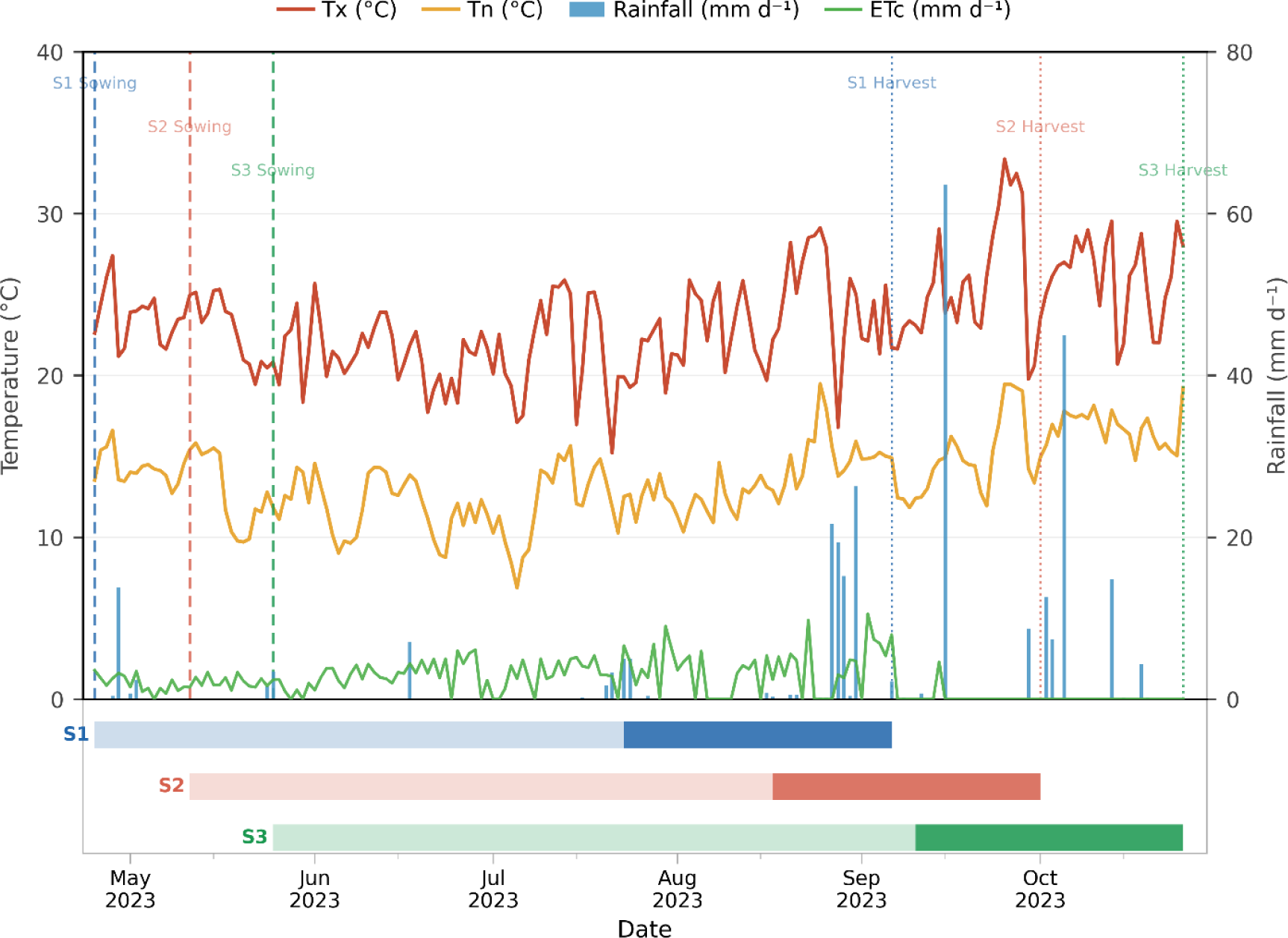
The experiment was conducted during the regional dry season, which allowed clear differentiation among irrigation treatments and reduced the influence of rainfall throughout most of the crop cycle. Rainfall remained low until late August and became more frequent from September onward, whereas the air temperature increased progressively throughout the experimental period, with a more pronounced rise between August and October (Figure 1). As a result of these climatic conditions, the later sowing dates exposed the grain filling and maturation stages to a more thermally stressful environment.

Daily maximum (Tx) and minimum (Tn) air temperature, rainfall, and crop evapotranspiration (ETc) during the experimental period, and growing cycles of three canola sowing dates (Diamantina, Minas Gerais state, Brazil, 2023). Horizontal bars represent the growing cycle of each sowing date (S1: 25 Apr.-6 Sep.; S2: 11 May-1 Oct.; S3: 25 May-25 Oct.); darker shading indicates the final 45 days of each cycle, corresponding to the grain filling and maturation phases. Dashed and dotted vertical lines indicate sowing and harvest dates, respectively.
Thermal conditions were similar among the sowing dates during flowering, with the mean daily maximum air temperature (Tx) ranging from 20.8 °C in S1 to 22.1 °C in S3, and no days with Tx ≥ 30 °C were recorded during this period. Differences among the sowing dates became more pronounced during the final 45 days before harvest. During this interval, the mean Tx increased from 24.0 °C in S1 to 25.2 °C in S2 and 26.6 °C in S3. Five days with Tx ≥ 30 °C were recorded in both S2 and S3, whereas no events of this magnitude occurred in S1. High temperatures during grain filling and maturation have been associated with reductions in seed yield and oil quality in late-sown canola (Righi et al. 2017), due to changes in assimilate partitioning and lipid accumulation in the seeds (Huang et al. 2023). In the present study, the observed thermal gradient during the final stages of the crop cycle coincided with reductions in aboveground biomass, seed yield, harvest index, and oil yield as sowing was delayed.
The crop evapotranspiration during the irrigated period totaled approximately 404 mm. The irrigation depths maintained the proportional differentiation among the 100, 70, and 40 % ETc treatments throughout the crop cycle, and irrigation was suspended when the plants approached physiological maturity.
The analysis of variance revealed significant effects of the main factors and their interactions for most of the agronomic traits evaluated (Table 2). Sowing date was the primary source of variation for aboveground biomass, seed yield, seed water productivity, and seed oil content. In contrast, irrigation regime exerted the greatest influence on biomass water productivity. For harvest index, a significant three-way interaction among sowing date, irrigation regime, and hybrid was detected (p = 0.0018), indicating that the physiological response of canola to water management and sowing date depends strongly on the genotype used.
Summary of the analysis of variance (Anova) for the variables aboveground biomass (AGB), biomass water productivity (BWP), seed water productivity (SWP), harvest index (HI), seed yield (SY), and seed oil content (SOC).
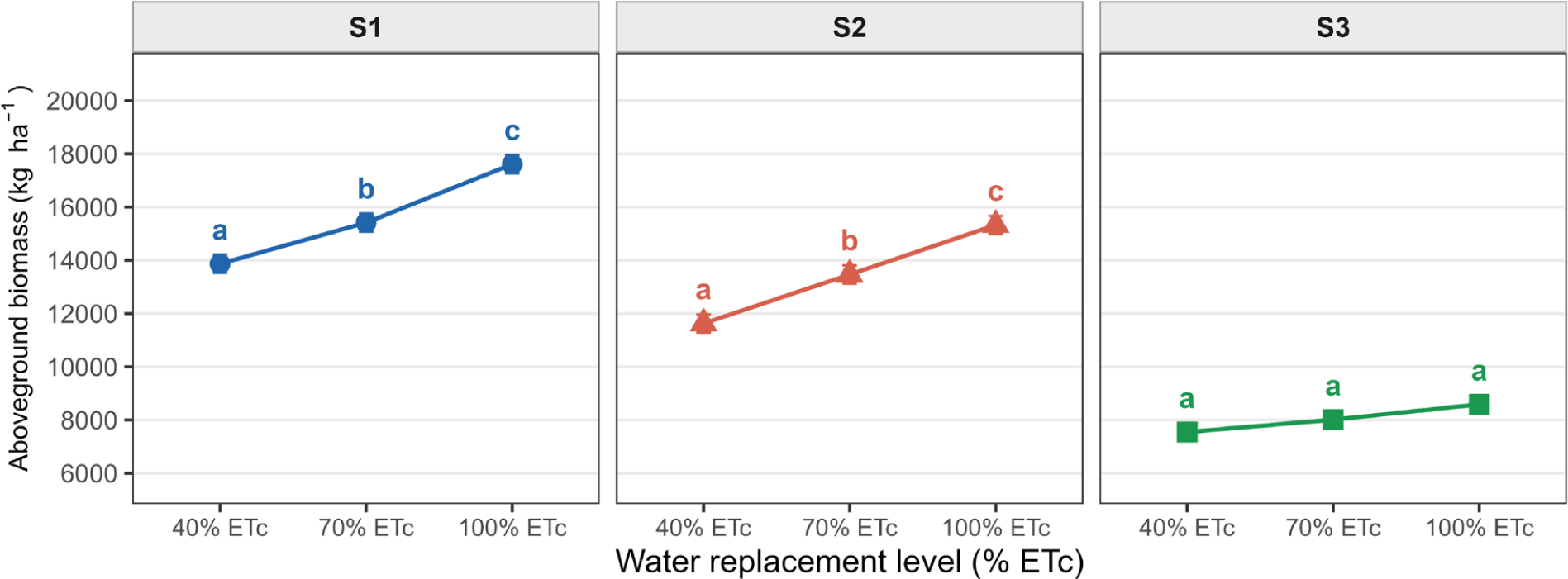
The aboveground biomass was significantly affected by sowing date, irrigation regime, and the interaction between these factors, and decreased from 15,630.9 kg ha-1 in S1 to 13,473.5 kg ha-1 in S2 and 8,050.1 kg ha-1 in S3, representing a 48.5 % reduction between the earliest and latest sowing dates. In S1 and S2, the biomass production responded positively to increasing water replacement levels, reaching its highest values under the 100 % ETc treatment. In contrast, the aboveground biomass remained consistently low in S3 across irrigation depths (Figure 2). This response indicates that the delayed sowing imposed severe constraints on crop growth that could not be overcome by increased water availability.
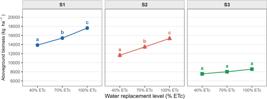
Aboveground biomass of irrigated canola as a function of the interaction between sowing date and water replacement level. Points represent adjusted means and vertical bars indicate the standard error of the model (SE = 343 kg ha-1). Different letters indicate statistically significant differences within each sowing date according to the Scott-Knott test (p ≤ 0.05).
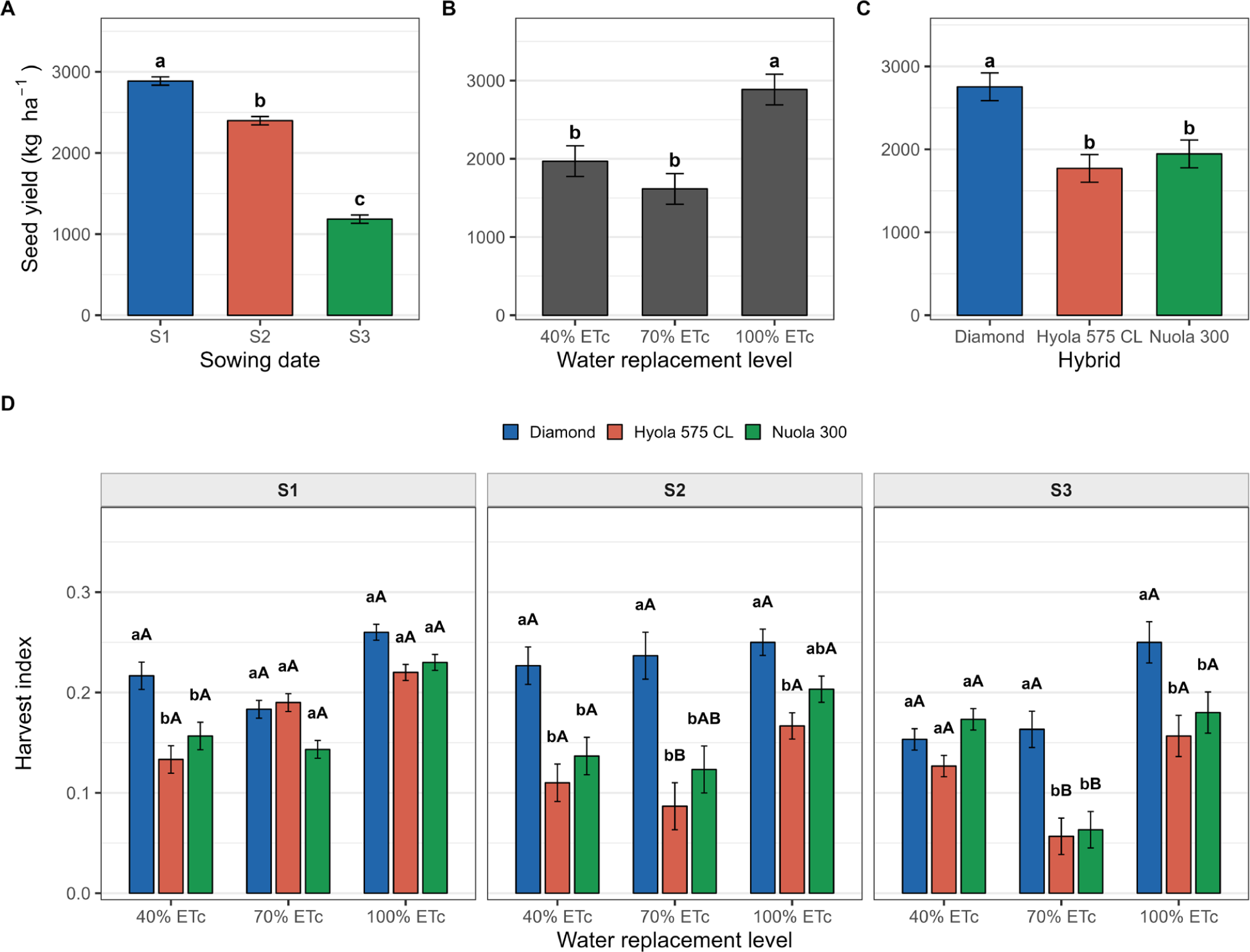
Seed yield followed a pattern similar to that observed for aboveground biomass (Figure 3A), averaging 2,886.6 kg ha-1 in S1, 2,398.0 kg ha-1 in S2, and 1,184.7 kg ha-1 in S3, representing a 59 % reduction between the earliest and latest sowing dates. The simultaneous decline in biomass accumulation and seed yield indicates that the environmental conditions associated with delayed sowing negatively affected both vegetative growth and reproductive performance. Although the thermal conditions during flowering were similar among the sowing dates, the later sowings were exposed to progressively warmer conditions during grain filling and maturation, as well as seasonal variations in solar radiation availability throughout the crop cycle. The displacement of reproductive stages into environments with greater thermal load is frequently associated with reduced reproductive performance in canola, resulting in lower seed yield (Battisti et al. 2013, Righi et al. 2017, Ahmadi & Sarhangi 2025).
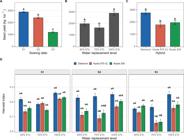
Seed yield as a function of sowing date (A), water replacement level (B), and hybrid (C), and harvest index as affected by the interaction among sowing date, water replacement level, and hybrid (D). Panels A-C represent adjusted means ± standard error. Panel D represents adjusted means ± standard error for each sowing date × water replacement level × hybrid combination. Different letters indicate significant differences according to the Scott-Knott test (p ≤ 0.05). Lowercase letters compare hybrids within each sowing date × water replacement level combination, whereas uppercase letters compare water replacement levels within each sowing date × hybrid combination.
The irrigation regime also affected seed yield (Figure 3B), with the highest value observed under 100 % ETc replacement (2,885.3 kg ha-1). The 40 and 70 % ETc treatments produced 1,969.0 and 1,615.0 kg ha-1, respectively. Although these treatments differed statistically, the seed yield did not respond monotonically to increasing water replacement levels. Because no significant interaction between sowing date and irrigation regime was detected for this variable (Table 2), this apparent inversion should not be interpreted as a consistent agronomic advantage of the 40 % ETc treatment over 70 % ETc, but rather as a reflection of the experimental variability associated with the average treatment responses. Regardless of this pattern, full evapotranspiration replacement resulted in the highest seed yield, confirming the importance of adequate water availability for maintaining yield in irrigated canola (Hergert et al. 2016, Djaman et al. 2018).
Among the hybrids, Diamond achieved the highest mean seed yield (2,754.0 kg ha-1), outperforming Nuola 300 (1,944.7 kg ha-1) and Hyola 575 CL (1,770.5 kg ha-1) (Figure 3C). This result suggests that differences among hybrids were not associated solely with biomass production, but also with their ability to convert accumulated biomass into seed yield. This relationship is illustrated by the harvest index results presented in Figure 3D.
Harvest index expresses the proportion of biomass converted into economic yield and helps to explain the differences observed in seed yield among treatments (Deligios et al. 2013). In the present study, the variation in the harvest index was influenced by a significant three-way interaction among sowing date, irrigation regime, and hybrid, highlighting the complexity of its regulation under combined management and genetic effects. The interaction breakdown showed that the effects of water deficit varied among hybrids and sowing dates. The most restrictive condition was observed in the latest sowing date (S3) under 70 % ETc, where Hyola 575 CL and Nuola 300 exhibited the lowest harvest index values of the experiment (0.057 and 0.063, respectively). In contrast, Diamond maintained a harvest index close to 0.163 under the same condition, reflecting a greater stability of reproductive performance under combined thermal and water stress. Under full irrigation (100 % ETc), harvest index values remained high (0.20-0.26) regardless of sowing date, suggesting that the irrigation mitigated the negative effects associated with the less favourable conditions observed in the later sowings.
The superiority of Diamond, in terms of harvest index, was consistent with its higher seed yield (Figure 3C) and suggests a greater efficiency in converting biomass into economic yield. This difference was also reflected in the water productivity metrics.
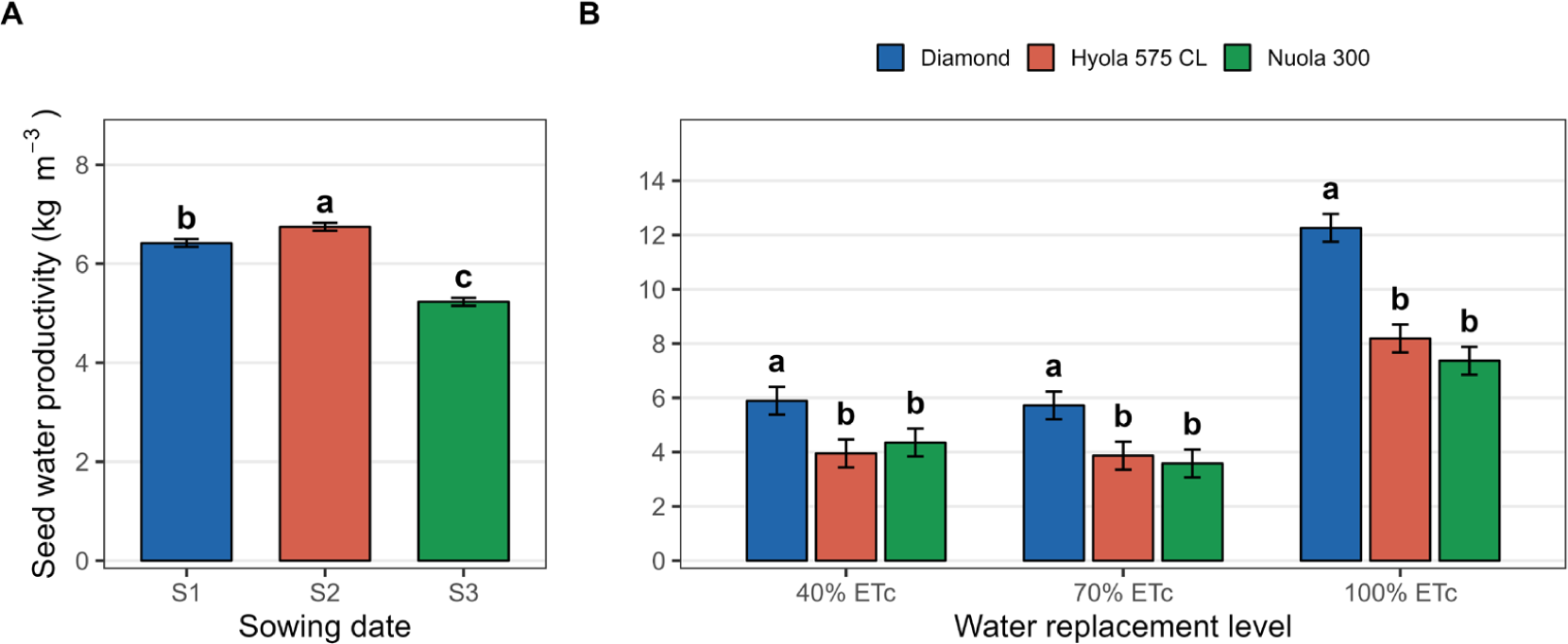
The seed water productivity exhibited a pattern distinct from that observed for absolute seed yield (Figure 4A). The highest value was recorded in S2 (6.8 kg m-3), followed by S1 (6.4 kg m-3) and S3 (5.2 kg m-3). Although S1 produced the highest absolute seed yield (Figure 3A), the greatest efficiency in converting applied water into yield was observed in S2, whose intermediate position in the sowing calendar combined high seed yield with a cumulative water demand relatively similar to that of the other sowing dates. This result reinforces that maximizing absolute yield does not necessarily coincide with maximizing water-use efficiency, reflecting the balance among water availability, crop growth, and seed production (Fereres & Soriano 2006, Djaman et al. 2018).
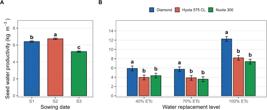
Seed water productivity of canola as a function of sowing date (A) and the interaction between water replacement level and hybrid (B). Bars represent adjusted means and vertical lines indicate the standard error of the model (SE = 0.08 kg m-3 for panel A; SE = 0.51 kg m-3 for panel B). Different letters indicate statistically significant differences according to the Scott-Knott test (p ≤ 0.05).
The interaction between irrigation regime and hybrid was significant for seed water productivity (Figure 4B). Under 100 % ETc replacement, Diamond reached approximately 12.3 kg m-3, exceeding the values observed for Hyola 575 CL (8.0 kg m-3) and Nuola 300 (7.4 kg m-3). Under water deficit conditions, differences among the hybrids were less pronounced, indicating that the Diamond’s ability to convert applied water into seed yield became more evident when water limitations were minimized. This pattern is consistent with its higher harvest index (Figure 3D) and greater efficiency in converting accumulated biomass into seed yield.
The biomass water productivity differed among the hybrids depending on water availability (Figure 5). Under full irrigation (100 % ETc), Diamond and Hyola 575 CL achieved mean values of 47.5 and 45.8 kg m-3, respectively, both exceeding that of Nuola 300 (38.1 kg m-3). Under water deficit conditions (40 and 70 % ETc), the differences among the hybrids were not significant, with mean values ranging from 27.3 to 32.6 kg m-3, indicating a convergence of genotypic responses under limited water availability. This pattern suggests that differences among hybrids in converting water into biomass become more apparent when water supply is not limiting. Under water deficit, the generalized reduction in growth tends to homogenize plant responses, thereby reducing differences among genotypes. The superior performance of Diamond and Hyola 575 CL under 100 % ETc was consistent with the greater biomass accumulation observed under non-limiting water conditions, indicating that the increase in water productivity resulted primarily from enhanced vegetative growth rather than from reductions in water consumption (Hergert et al. 2016, Djaman et al. 2018).
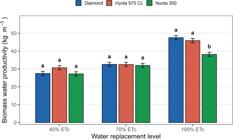
Biomass water productivity of canola hybrids under three irrigation levels. Bars represent adjusted means ± standard error of the model (SE = 1.18 kg m-3). Different letters indicate significant differences among hybrids within the 100 % ETc level according to the Scott-Knott test (p ≤ 0.05).
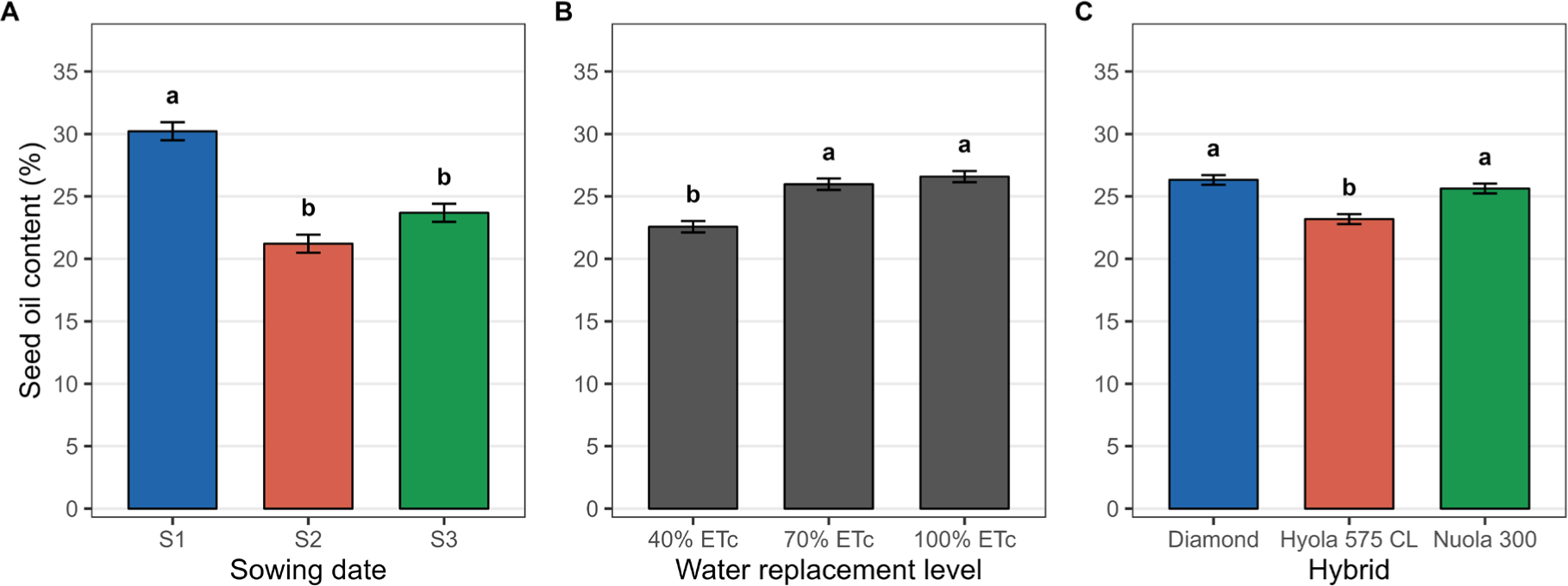
The seed oil content was affected by sowing date, irrigation regime, and hybrid, with no significant interactions among these factors (Figure 6). Regarding sowing date, S1 exhibited the highest mean oil content (30.2 %), significantly exceeding those observed in S2 (21.2 %) and S3 (23.7 %), which did not differ from each other (Figure 6A). This result is consistent with the exposure of the final stages of the crop cycle to progressively warmer conditions in the later sowings, which may have reduced the capacity for lipid synthesis and accumulation in the seeds. Elevated temperatures during grain filling can impair the activity of enzymes involved in fatty acid biosynthesis, thereby reducing seed oil content (Elferjani & Soolanayakanahally 2018, Page et al. 2021).

Seed oil content of irrigated canola as a function of sowing date (A), water replacement level (B), and hybrid (C). Bars represent adjusted means ± standard error of the model (SE = 0.72 % for A; SE = 0.46 % for B; SE = 0.39 % for C). Different letters indicate statistically significant differences according to the Scott-Knott test (p ≤ 0.05).
The irrigation regime also affected the seed oil content (Figure 6B). The 100 and 70 % ETc treatments did not differ significantly, with mean values of 26.6 and 26.0 %, respectively, whereas the 40 % ETc treatment showed the lowest value (22.6 %). These results indicate that only the severe water deficit was sufficient to impair the oil accumulation in the seeds, whereas the moderate deficit produced values comparable to those observed under full irrigation. Severe water stress during grain filling may reduce the availability of photoassimilates and limit lipid biosynthesis, resulting in lower seed oil content (Faraji et al. 2009, Elferjani & Soolanayakanahally 2018).
Among the hybrids, Diamond and Nuola 300 exhibited the highest mean seed oil contents (26.3 and 25.6 %, respectively), both exceeding that of Hyola 575 CL (23.2 %) (Figure 6C), with no significant interactions among the evaluated factors.
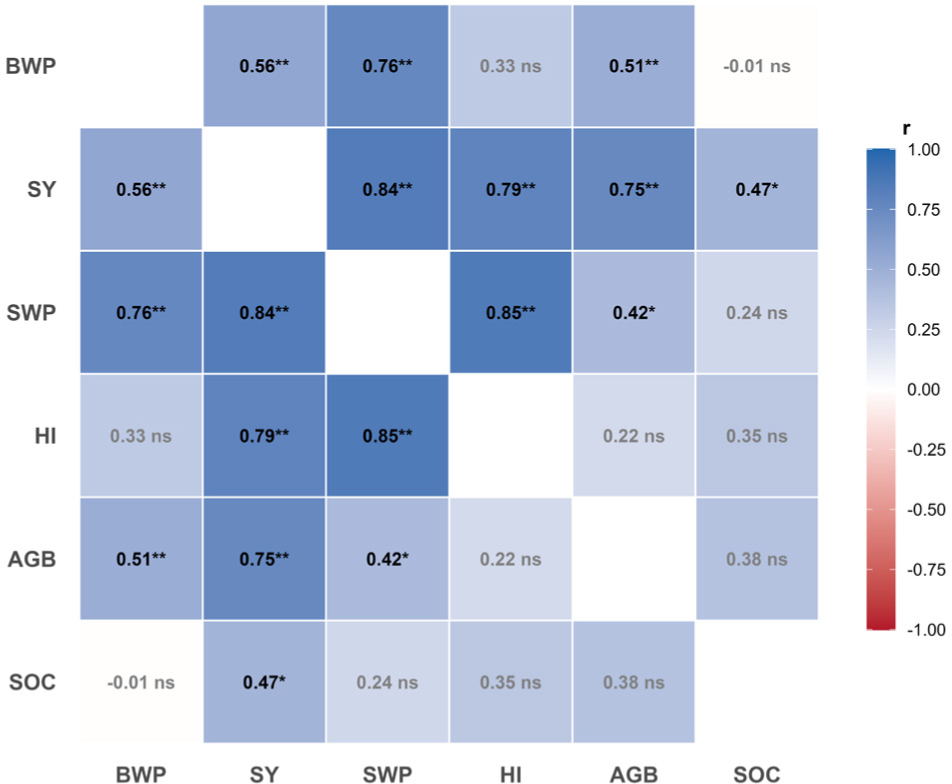
The Pearson correlation analysis (Figure 7) revealed positive associations among vegetative growth, yield, and water-use efficiency. The strongest correlations were observed between seed water productivity and harvest index (r = 0.85; p ≤ 0.01), seed yield and seed water productivity (r = 0.84; p ≤ 0.01), and seed yield and harvest index (r = 0.79; p ≤ 0.01). These strong correlations among seed yield, harvest index, and seed water productivity support the patterns discussed previously, indicating that treatments with a greater ability to convert biomass into economic yield also exhibited higher water-use efficiency.
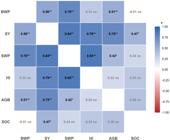
Pearson correlation coefficients (r) among aboveground dry biomass (AGB), biomass water productivity (BWP), seed yield (SY), seed water productivity (SWP), harvest index (HI), and seed oil content (SOC). ** p ≤ 0.01; * p ≤ 0.05; ns not significant (t test).
In contrast, the seed oil content was significantly correlated only with seed yield (r = 0.47; p ≤ 0.05), showing no association with aboveground biomass, harvest index, or water productivity metrics.
The absence of a significant correlation between seed oil content and harvest index indicates that the treatments with greater efficiency in converting biomass into seed yield did not necessarily produce seeds with higher oil content. These results suggest that seed oil content was influenced by factors distinct from those regulating vegetative growth and water-use efficiency, such that gains in yield and water use did not necessarily translate into proportional increases in seed oil content.
Taken together, the results indicate that sowing date was the primary management factor associated with crop performance, whereas irrigation regime and hybrid selection acted as complementary factors influencing yield, water-use efficiency, and seed oil content.
CONCLUSIONS
-
Sowing date was the main factor affecting irrigated canola performance. Sowing on April 25 resulted in the highest biomass production, seed yield, harvest index, and oil yield;
-
Full evapotranspiration replacement (100 % ETc) maximized seed yield, whereas the intermediate sowing date (May 11) provided the highest seed water productivity;
-
Diamond showed greater reproductive efficiency, with higher harvest index, seed yield, and seed water productivity, whereas Hyola 575 CL produced more vegetative biomass;
-
Under the conditions of Diamantina, Minas Gerais state, Brazil, sowing on April 25, combined with 100 % ETc replacement and the Diamond hybrid, was the most favorable strategy for maximizing seed and oil yield.
Data Availability Statement:
Research data are only made available by authors upon request.
ACKNOWLEDGMENTS
We thank the Fundação de Amparo à Pesquisa do Estado de Minas Gerais (Fapemig; APQ-01114-22) and Coordenação de Aperfeiçoamento de Pessoal de Nível Superior (Capes; Finance Code 001) for the financial assistance and support provided to conduct this research.
REFERENCES
- AHMADI, S. A. K.; SARHANGI, M. Optimizing sowing date for enhanced heat stress tolerance in canola (Brassica napus L.): investigating impacts on seed yield, oil content, and fatty acids composition. Helyon, v. 11, e42138, 2025.
- ARAÚJO, L. N.; ROSADO, T. B.; RODRIGUES, E. V.; SANTOS, A.; LAVIOLA, B. G. Tropicalization of canola (Brassica napus L.): commercial hybrids show potential for cultivation in the Brazilian Cerrado. UNCuyo, v. 53, n. 2, p. 20-26, 2021.
- AYDINSAKIR, K.; DINC, N.; BUYUKTAS, D.; BASTUG, R.; TOKER, R. Assessment of different irrigation levels on peanut crop yield and quality components under Mediterranean conditions. Journal of Irrigation and Drainage Engineering, v. 142, n. 9, p. 1-9, 2016.
- BATTISTI, R.; PILAU, F. G.; SCHWERZ, L.; SOMAVILLA, L.; TOMM, G. O. Floral dynamics and flower abortion in hybrids of canola and Indian mustard. Pesquisa Agropecuária Brasileira, v. 48, n. 2, p. 174-181, 2013.
-
BRASIL. Ministério da Agricultura, Pecuária e Abastecimento. Secretaria de Política Agrícola. Portaria n° 504, de 9 de novembro de 2021. Aprova o Zoneamento Agrícola de Risco Climático para a cultura de canola, em sistema de cultivo irrigado, no estado de Minas Gerais. Diário Oficial da União, Brasília, DF, 11 nov. 2021. Seção 1. Available at: https://www.in.gov.br/ Access on: Apr. 7, 2026.
» https://www.in.gov.br/ - CATTELAN, L. G.; MATTOS, C. R. C.; PAMPLONA, M. B.; HIROTA, M. Mapping climatic regions of the Cerrado: general patterns and future change. International Journal of Climatology, v. 44, n. 16, p. 5857-5872, 2024.
- CONFORTIN, T. C.; TODERO, I.; LUFT, L.; UGALDE, G. A.; MAZUTTI, M. A.; OLIVEIRA, Z. B.; BOTTEGA, E. L.; KNIES, A. E.; ZABOT, G. L.; TRES, M. V. Oil yields, protein contents, and cost of manufacturing oil obtained from different hybrids and sowing dates of canola. Journal of Environmental Chemical Engineering, v. 7, n. 2, e102972, 2019.
- DALMAGO, G. A.; GOUVÊA, J. A.; CUNHA, G. R.; KOVALESKI, S.; PASINATO, A. A data de semeadura influencia respostas fenológicas, vegetativas e produtivas de genótipos de canola Brasília, DF. Embrapa, 2022.
- DELIGIOS, P. A.; FARCI, R.; SULAS, L.; HOOGENBOOM, G.; LEDDA, L. Predicting growth and yield of winter rapeseed in a Mediterranean environment: model adaptation at a field scale. Field Crops Research, v. 144, n. 1, p. 100-112, 2013.
- DJAMAN, K.; O’NEILL, M.; OWEN, C.; SMEAL, D.; WEST, M.; BEGAY, D.; ANGADI, S. V.; KOUDAHE, K.; ALLEN, S.; LOMBARD, K. Seed yield and water productivity of irrigated winter canola (Brassica napus L.) under semiarid climate and high elevation. Agronomy, v. 8, n. 6, p. 90-98, 2018.
- DOGAN, E.; COPUR, O.; KAHRAMAN, A.; KIRNAK, H.; GULDUR, M. E. Supplemental irrigation effect on canola yield components under semiarid climatic conditions. Agricultural Water Management, v. 98, n. 9, p. 1403-1408, 2011.
- DOORENBOS, J.; PRUITT, W. O. Crop water requirements Rome: FAO, 1977.
- ELFERJANI, R.; SOOLANAYAKANAHALLY, R. Canola responses to drought, heat, and combined stress: shared and specific effects on carbon assimilation, seed yield, and oil composition. Frontiers in Plant Science, v. 9, e1224, 2018.
- FARAJI, A.; LATIFI, N.; SOLTANI, A.; RAD, A. H. S. Seed yield and water use efficiency of canola (Brassica napus L.) as affected by high temperature stress and supplemental irrigation. Agricultural Water Management, v. 96, n. 1, p. 132-140, 2009.
- FERERES, E.; SORIANO, M. A. Deficit irrigation for reducing agricultural water use. Journal of Experimental Botany, v. 58, n. 2, p. 147-159, 2006.
- FERREIRA, C. J. B.; SILVA, A. G.; OLIVEIRA, P. V. R.; TORMENA, C. A.; BRAZ, G. B. P.; FREITAS, S. M.; SILVA, A. L. B. R. Effects of second-season crops on soybean cultivation in compacted soil in Brazilian Cerrado. Agronomy, v. 13, n. 1, e79, 2022.
- GUIMARÃES, C. G.; SANTOS, A.; RODRIGUES, E. V.; LAVIOLA, B. G. Canola: panorama atual e tecnologias de produção no Brasil. Brasília, DF: Embrapa, 2022.
- HERGERT, G. W.; MARGHEIM, J. F.; PAVLISTA, A. D.; MARTIN, D. L.; SUPALLA, R. J.; ISBELL, T. A. Yield, irrigation response, and water productivity of deficit to fully irrigated spring canola. Agricultural Water Management, v. 168, n. 1, p. 96-103, 2016.
- HUANG, R.; YU, H.; YANG, Y.; LIU, H.; WU, X.; LIU, Z.; HE, H.; WU, G.; WANG, W.; WANG, H. Effects of heat stress during seed filling stage on Brassica napus seed oil accumulation and chlorophyll fluorescence characteristics. Phyton, v. 92, n. 2, p. 333-348, 2023.
- LAVIOLA, B. G.; RODRIGUES, E. V.; SANTOS, A.; TEODORO, L. P. R.; PEIXOTO, L. A.; TEODORO, P. E.; BHERING, L. L. Breeding strategies to consolidate canola among the main crops for biofuels. Euphytica, v. 218, e1, 2022.
- LÓPEZ-URREA, R.; SÁNCHEZ, J. M.; CRUZ, F.; GONZÁLEZ-PIQUERAS, J.; CHÁVEZ, J. L. Evapotranspiration and crop coefficients from lysimeter measurements for sprinkler-irrigated canola. Agricultural Water Management, v. 239, e106260, 2020.
- MOHTASHAMI, R.; MOVAHHEDI, D. M.; BALOUCHI, H.; FARAJI, H. Improving yield, oil content and water productivity of dryland canola by supplementary irrigation and selenium spraying. Agricultural Water Management, v. 232, e106046, 2020.
- MORSI, N. A. A.; HASHEM, O. S. M.; EL-HADY, M. A. A.; ABD-ELKREM, Y. M.; EL-TEMSAH, M. E.; GALAL, E. G.; GAD, K. I.; BOUDIAR, R.; SILVAR, C.; El-HENDAWY, S.; MANSOUR, E.; ABDELKADER, M. A. Assessing drought tolerance of newly developed tissue-cultured canola genotypes under varying irrigation regimes. Agronomy, v. 13, n. 3, e836, 2023.
- NAZERI, P.; RAD, A. H. S.; VALADABADI, S. A.; MIRAKHORI, M.; MASOULE, E. H. The effect of planting date and late season drought stress on eco-physiological characteristics of the new varieties of canola (Brassica napus L.). Journal of Agroecology, v. 11, n. 1, p. 261-276, 2019.
- OLIVEIRA, M. B.; POGORZELSKI, E. S.; PFEIFEMBERG, R.; KNIES, A. E.; OLIVEIRA, Z. B.; SANTOS, M. S. N.; ZABOT, G. L.; TRES, M. V. Analysis of the cultivation of canola hybrids at different sowing dates. Acta Scientiarum Agronomy, v. 46, n. 1, e67694, 2024.
- PAGE, E. R.; MELOCHE, S.; MORAN, M.; CALDBECK, B.; BARTHET, V. Effect of seeding date on winter canola (Brassica napus L.) yield and oil quality in southern Ontario. Canadian Journal of Plant Science, v. 101, n. 4, p. 490-499, 2021.
- PIMENTEL, G. V.; MARTINS, I. A.; SANTIAGO, A. C.; COSTA, N.; SILVA, R. N.; MOREIRA, S. G. Agronomic performance of canola hybrids in Campos das Vertentes - MG. Revista Ceres, v. 71, e71021, 2024.
- R CORE TEAM. R: a language and environment for statistical computing. Vienna: R Foundation for Statistical Computing, 2025.
- RIGHI, E. Z.; VAZATA, S.; DALMAGO, G. A.; MULLER, A. L.; CARVALHO, L. Z. G.; DAGA, J. Sowing times influence canola grain yield and oil quality. Agrometeoros, v. 25, n. 2, p. 415-425, 2017.
- SANCHES, A. C.; GOMES, E. P.; RAMOS, W. B.; MAUAD, M.; SANTOS, S.; BISCARO, G. A. Produtividade da canola sob irrigação e doses de adubação nitrogenada. Revista Brasileira de Engenharia Agrícola e Ambiental, v. 18, n. 7, p. 688-693, 2014.
- SANTOS, H. G.; JACOMINE, P. K. T.; ANJOS, L. H. C.; OLIVEIRA, V. A.; LUMBRERAS, J. F.; COELHO, M. R.; ALMEIDA, J. A.; ARAÚJO FILHO, J. C.; LIMA, H. N.; MARQUES, F. A.; OLIVEIRA, J. B.; CUNHA, T. J. F. Sistema brasileiro de classificação de solos 6. ed. Brasília, DF: Embrapa, 2025.
- SANTOS, L. C.; FIGUEIRÓ, L. S. P.; BENDER, F. D.; JOSÉ, J. V.; SANTOS, A. V.; ARAUJO, J. E.; MACHADO, E. L. M.; SILVA, R. S.; COSTA, J. O. Unveiling climate trends and future projections in Southeastern Brazil: a case study of Brazil’s historic agricultural heritage. Sustainability, v. 16, n. 11, e4811, 2024.
- UNITED STATES DEPARTMENT OF AGRICULTURE (USDA). Soil Survey Staff. Keys to Soil Taxonomy 13. ed. Washington, DC: USDA, 2022.
-
Editor:
Luis Carlos Cunha Junior