 Aqueous grape pomace extract as a sustainable strategy for controlling the germination of Leucaena leucocephala1
ABSTRACT
Leucaena leucocephala is an exotic species widely distributed in tropical regions, whose highly competitive potential compromises natural regeneration and highlights the need for sustainable strategies for the management of invasive species. This study aimed to evaluate the allelopathic effects of aqueous grape pomace extracts obtained through two extraction methods (cold and hot) and applied by seed immersion to L. leucocephala at different concentrations (0, 20, 40, 60, 80, and 100 %), in order to assess their potential for controlling seed germination and early seedling growth. Increasing extract concentrations reduced germination, and increased the proportion of abnormal seedlings and the percentage of non-germinated seeds. Growth variables exhibited a biphasic response, with stimulation at intermediate concentrations (50-60 %) and inhibition at higher concentrations (> 80 %). The hot extraction method showed a greater inhibitory effect, which was associated with higher total phenolic compounds.
KEYWORDS:
Vitis vinifera
; allelopathy; invasive species
RESUMO
Leucaena leucocephala é uma espécie exótica amplamente distribuída em regiões tropicais, cujo elevado potencial competitivo compromete a regeneração natural e evidencia a necessidade de estratégias sustentáveis de manejo de espécies invasoras. Objetivou-se avaliar os efeitos alelopáticos de extratos aquosos de bagaço de uva obtidos por dois métodos de extração (a frio e a quente), aplicados por meio da imersão de sementes de L. leucocephala em diferentes concentrações (0, 20, 40, 60, 80 e 100 %), a fim de verificar seu potencial no controle da germinação das sementes e do crescimento inicial das plântulas. O aumento das concentrações dos extratos reduziu a germinação, aumentou a proporção de plântulas anormais e o percentual de sementes não germinadas. As variáveis de crescimento apresentaram resposta bifásica, com estímulo em concentrações intermediárias (50-60 %) e inibição em concentrações mais elevadas (> 80 %). O método de extração a quente apresentou maior efeito inibitório, o que foi associado ao maior teor de compostos fenólicos totais.
PALAVRAS-CHAVE:
Vitis vinifera
; alelopatia; espécie invasora
INTRODUCTION
The use of agro-industrial residues in agriculture has gained attention as a sustainable alternative aimed at reducing environmental impacts and adding value to by-products that were previously discarded. Among these residues, grape pomace represents one of the most abundant by-products of the wine industry, accounting for approximately 20-30 % of the total weight of processed grapes (Schwartz et al. 2020, Zanini et al. 2024). Composed of skins, seeds, and pulp residues, grape pomace is rich in bioactive compounds, particularly polyphenols, flavonoids, anthocyanins, and tannins, which have attracted considerable interest due to their potential allelopathic effects on the growth of other plant species (Oliveira et al. 2024).
In this context, recent studies have demonstrated that winery residues, particularly grape pomace, exhibit allelopathic potential due to their high concentrations of phenolic compounds and other allelochemicals. Padureanu & Patras (2022) reported that aqueous grape pomace extracts reduced the germination and mitotic index of Triticum aestivum, while also inducing chromosomal alterations. Similarly, Troncozo et al. (2024) observed phytotoxic effects of grape pomace on the germination index and root growth of Lactuca sativa, highlighting the potential of this agro-industrial residue as a sustainable alternative for the management of plant species.
Allelopathic interactions have been widely studied as ecological alternatives for the management of weeds and invasive species, as they reduce the reliance on synthetic herbicides and promote more sustainable agricultural practices (Khamare et al. 2022, Duke et al. 2024, Mai & Xuan 2025). Leucaena leucocephala (Lam.) de Wit (Fabaceae) is an invasive leguminous species native to Mexico (Machado et al. 2020), commonly known as leucaena. Widely distributed throughout tropical and subtropical regions (Bageel et al. 2020), it was introduced into Brazil due to its rapid growth, high biomass production, and ability to fix atmospheric nitrogen, characteristics that made it attractive for use as forage and green manure (Sharma et al. 2022). However, these same traits contribute to its invasive behavior, enabling it to compete aggressively with native vegetation and form dense monospecific stands.
In Brazil, leucaena has spread across urban areas, roadsides, pastures, and natural ecosystems, where it causes ecological imbalance, biodiversity loss, and alterations in natural regeneration processes (Pinheiro & Linhares 2019). Furthermore, its residues and root exudates may release allelopathic compounds, such as mimosine, which inhibit the germination and growth of other plant species, hindering the recovery of degraded areas and enhancing its invasive potential (Kato-Noguchi & Kurniadie 2022, Martelli 2022).
Currently, the control of Leucaena leucocephala relies mainly on mechanical and chemical methods, including cutting, manual removal, and herbicide application, which may present limitations associated with the species’ high resprouting capacity, the need for repeated applications, and potential environmental impacts (Sharma et al. 2022, Eleutério et al. 2023). In this context, plant extracts derived from agro-industrial residues, such as grape pomace, have emerged as a sustainable alternative for exploring allelopathic compounds (Freitas et al. 2024). The use of aqueous extracts in seed bioassays enables direct contact between allelochemicals and embryonic tissues, allowing the assessment of their effects on seed germination and early seedling development.
Therefore, this study aimed to evaluate the allelopathic effects of concentrations of aqueous grape pomace extracts obtained through cold and hot extraction methods on the germination and early development of Leucaena leucocephala. Specifically, the study sought to answer the following research question: can aqueous grape pomace extract interfere with the germination and vigor of leucaena seeds? Based on the high concentration of phenolic compounds found in grape pomace and the allelopathic effects previously reported for this agro-industrial residue (Padureanu & Patras 2022, Troncozo et al. 2024), it was hypothesized that the extracts would reduce seed germination and vigor. Furthermore, it was expected that the hot extraction method would produce a stronger allelopathic effect than the cold extraction method due to the greater recovery of phenolic compounds under heating conditions (Fontana et al. 2013, Moutinho et al. 2023).
MATERIAL AND METHODS
The experiment was conducted at the Universidade Estadual de Goiás, in Ipameri, Goiás state, Brazil. Seeds of Leucaena leucocephala were collected between June and July 2025 from the municipal park of Ipameri and roadside areas within the municipality. Eight adult individuals distributed across two distinct populations, separated by approximately 3 km, were sampled in order to increase the genetic representativeness of the seed lot. After collection, only well-formed seeds were manually selected, presenting a moisture content of 11.0 %.
The grape pomace used in this study was obtained from the winery of the same university unit during the second semester of 2025, and its physicochemical, bromatological, and mineral characterization are presented in Table 1. Initially, the grape pomace was dehydrated and ground until a homogeneous powder was obtained. The stock solution (considered 100 %) was prepared at a ratio of 10 g of powder per 100 mL of distilled water (1:10 w/v), following the methodology described by Silveira et al. (2021), using two distinct extraction methods: cold extraction and hot extraction.
In the cold extraction method, grape pomace powder was immersed in distilled water at room temperature (25 ± 2 °C) for 24 h, followed by filtration through filter paper. In the hot extraction method, distilled water was heated to its boiling point (100 °C). Heating was then discontinued, and grape pomace powder was added, remaining under infusion for 1 h, before filtration through filter paper. From the initial solution (100 %), dilutions in distilled water corresponding to the treatments were prepared: control (0 %; distilled water), 20, 40, 60, 80, and 100 %.
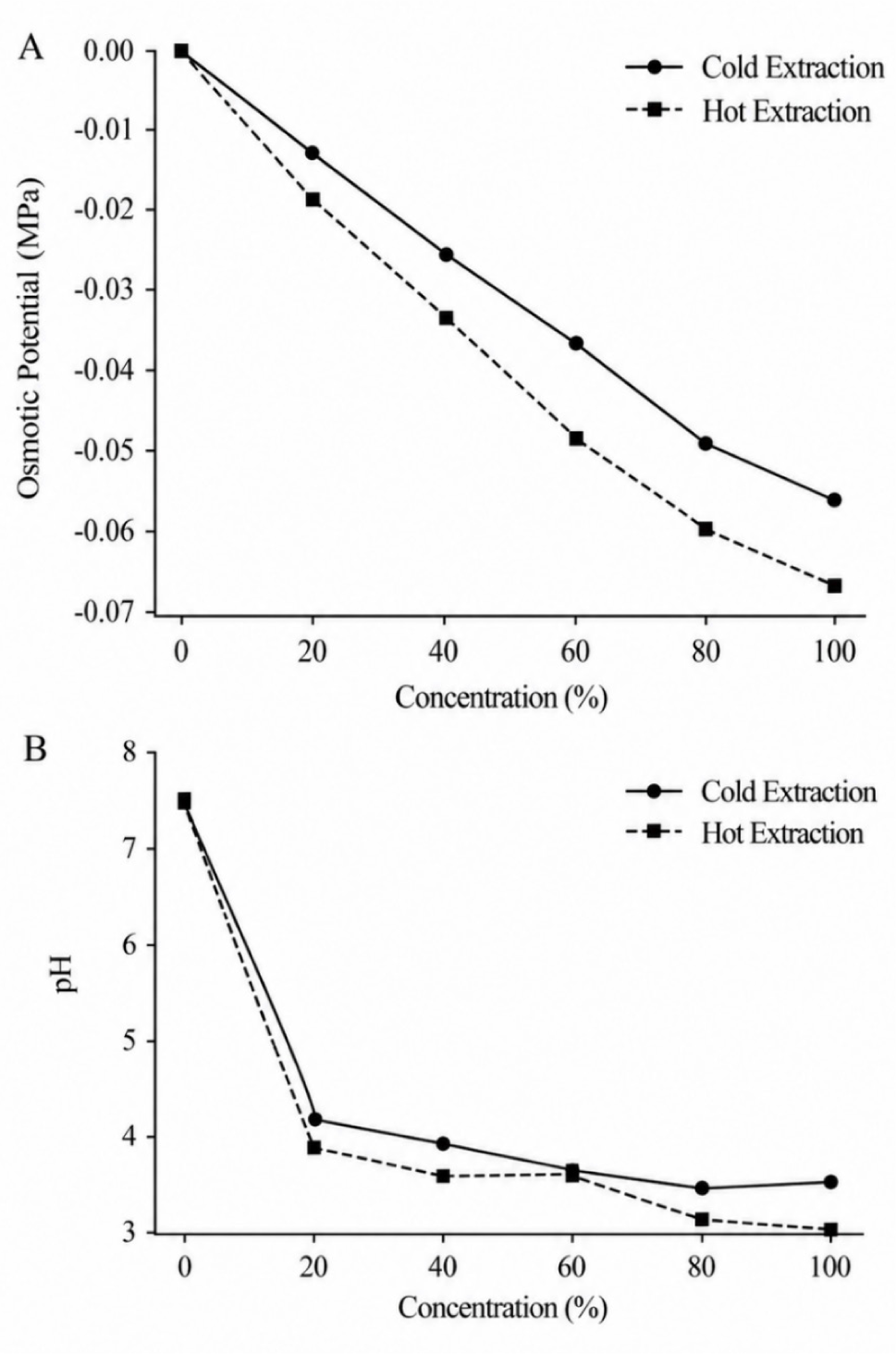
The osmotic potential (Figure 1A) and pH (Figure 1B) of the solutions were determined from the aqueous grape pomace extracts prepared at different concentrations. The pH was measured directly using a pH meter previously calibrated with standard buffer solutions at room temperature. The osmotic potential was determined from electrical conductivity readings and calculated according to the equation proposed by Ayres & Westcot (1994): Ψo = -0.036 × EC, where Ψo corresponds to the osmotic potential (MPa) and EC to the electrical conductivity of the solution (dS m-1), determined at 25 °C.
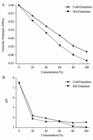
Osmotic potential (MPa; A) and pH (B) of the aqueous grape pomace extract as a function of concentration obtained by the cold and hot extraction methods.
The total phenolic content (Table 2) was also determined in the samples using the Folin-Ciocalteu colorimetric method, as described by Singleton & Rossi (1965) with adaptations by Rodrigues et al. (2023). Gallic acid (C7H6O5) was used as the standard for constructing the analytical calibration curve. Aliquots of 0.5 mL of the standard solutions or grape pomace samples received 2.5 mL of Folin-Ciocalteu reagent (1:10; v/v) and, after 5 min, 2.0 mL of sodium carbonate solution (Na2CO3; 7.5 %; w/v). After incubation for 30 min in the absence of light, absorbance was measured using a UV-Vis spectrophotometer at 760 nm, and the results were expressed as mg of gallic acid equivalents per liter of extract (mg GAE L-1).
Total phenolic content of the aqueous grape pomace extract obtained by cold and hot extraction, determined using the Folin-Ciocalteu method. Quantification was performed based on a gallic acid standard curve (y = 0.1856x + 0.0905; R2 = 0.97).
Before the application of the treatments, the seeds were subjected to physical scarification with sandpaper in the region opposite to the hilum to overcome seed coat dormancy, followed by disinfection with 2.5 % sodium hypochlorite for 5 min and rinsing with distilled water. Subsequently, the properly dried seeds were immersed in the respective solutions for 24 h, removed, blotted dry, and placed to germinate in paper towel rolls moistened with distilled water at a proportion of 2.5 times the weight of the dry paper. The experiment was conducted in a 2 × 6 factorial design, corresponding to two extraction methods and six concentrations (0, 20, 40, 60, 80, and 100 %), using four rolls containing 50 seeds each for every treatment. Thus, 12 experimental treatments (2 × 6) were evaluated, totaling 48 rolls and 2,400 seeds. The paper rolls were maintained in a biochemical oxygen demand (BOD) germination chamber at 25 °C, under a 12-h photoperiod, for 11 days.
The following variables were evaluated: germination (%) - percentage of normal seedlings according to Brasil (2009); abnormal seedlings - percentage of seedlings presenting deformities or abnormalities (Brasil 2009); percentage of non-germinated seeds (sum of dead and dormant seeds); first germination count - percentage of seeds germinated on the 4th day (Brasil 2009); germination speed index (GSI) - calculated according to the formula proposed by Maguire (1962); root, shoot, and total seedling length (cm) and dry mass (mg) (Krzyzanowski 2020).
The data were subjected to statistical analysis, with the assumptions of residual normality and homogeneity of variances being verified beforehand. Subsequently, analysis of variance (Anova) was performed in a 2 × 6 factorial design, considering two extraction methods and six concentrations of the aqueous extract. When significant effects were observed (p ≤ 0.05), regression models were fitted as a function of extract concentrations. The analyses were performed using the R software, version 2024.
RESULTS AND DISCUSSION
The aqueous grape pomace extract showed physicochemical variations as a function of concentration, with pH decreasing from 7.80 in the control treatment to values of 3.97 at the 20 % concentration and 3.78 at the 100 % concentration (Figure 1B), whereas the osmotic potential ranged from -0.014 to -0.066 MPa (Figure 1A).
These results indicate that, although the extract became more acidic as concentration increased, the osmotic potential remained at levels insufficient to cause direct water stress. Therefore, the observed effects can be attributed primarily to the action of allelochemical compounds present in the extract, although a possible contribution of the acidic pH of the solutions cannot be ruled out.
The chemical composition of the grape pomace revealed relevant levels of nitrogen and potassium, followed by lower concentrations of phosphorus, calcium, magnesium, and sulfur, as well as trace amounts of the remaining elements (Table 1). In addition, the total phenolic content increased with increasing extract concentration and was higher in the hot extraction method (Table 2), indicating that this extraction method allows the recovery of greater amounts of total phenolics than the cold extraction method.
The analysis of variance indicated a significant effect of aqueous extract concentration on most germination and early growth variables of L. leucocephala, whereas the extraction method showed a specific effect on some variables, particularly those related to early seedling growth (Table 3). The germination speed index, first germination count, shoot length, and total seedling length did not show significant differences among the treatments (p > 0.05) and were therefore excluded from the modeling.
Summary of the Anova results for the analyzed variables, presenting F-values and their corresponding p-values.
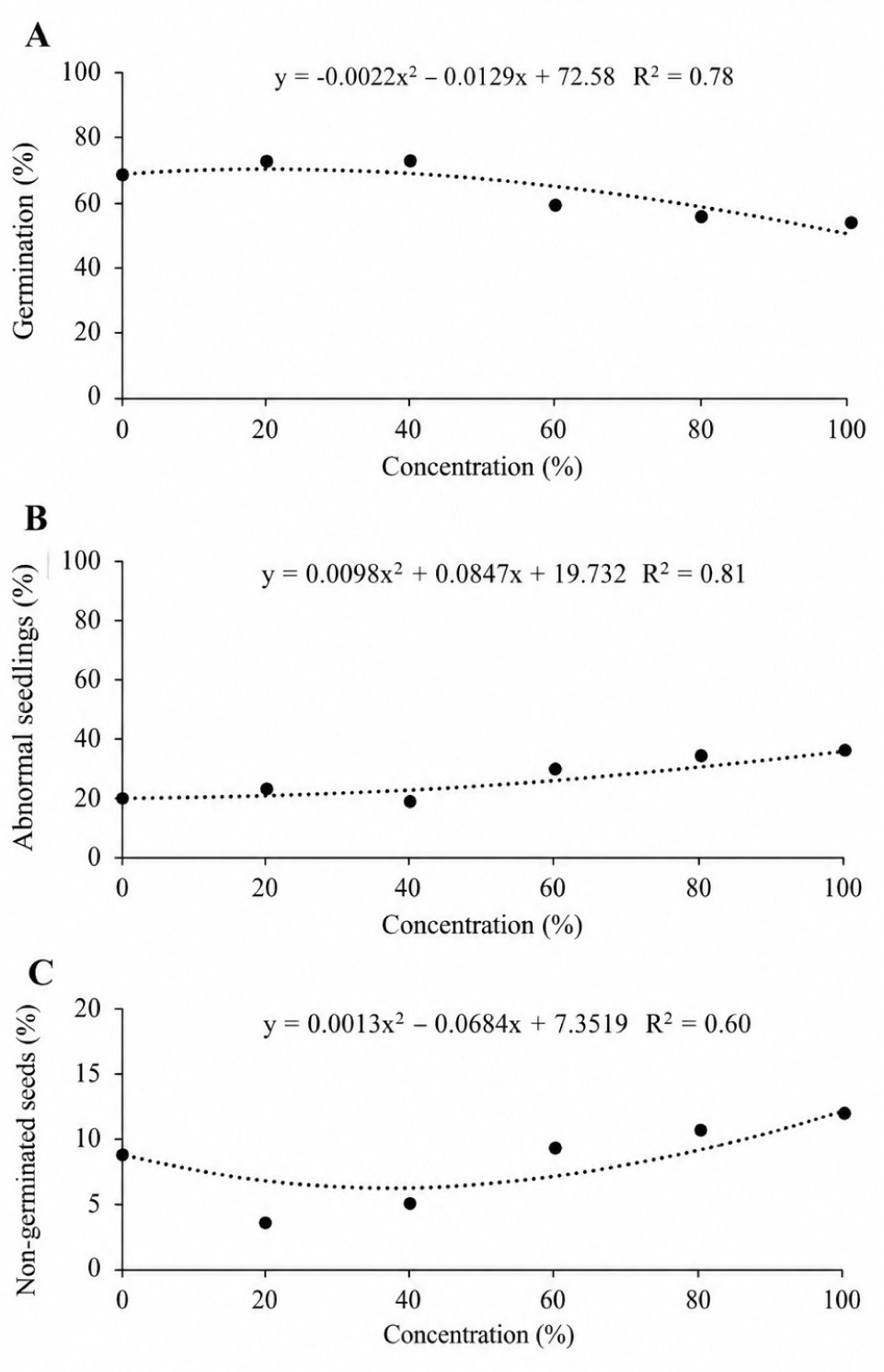
The germination of L. leucocephala seeds showed a decreasing trend as extract concentration increased (Figure 2A). Germination decreased from 73 % (control) to 52 % at the 100 % concentration, corresponding to a reduction of 21 percentage points, indicating a potential allelopathic effect. A similar pattern of germination inhibition by plant extracts rich in allelochemicals was discussed by Xuan et al. (2025), who highlighted the role of allelopathy as an ecological mechanism of chemical interference among plants. The percentage of abnormal seedlings increased from 20 % in the control treatment to 36 % at the highest extract concentrations (Figure 2B), whereas the percentage of non-germinated seeds increased from 7 to 12 % at the highest concentration (100 %) (Figure 2C).
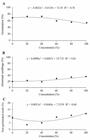
Effect of aqueous grape pomace extract concentration on the germination of Leucaena leucocephala seeds.
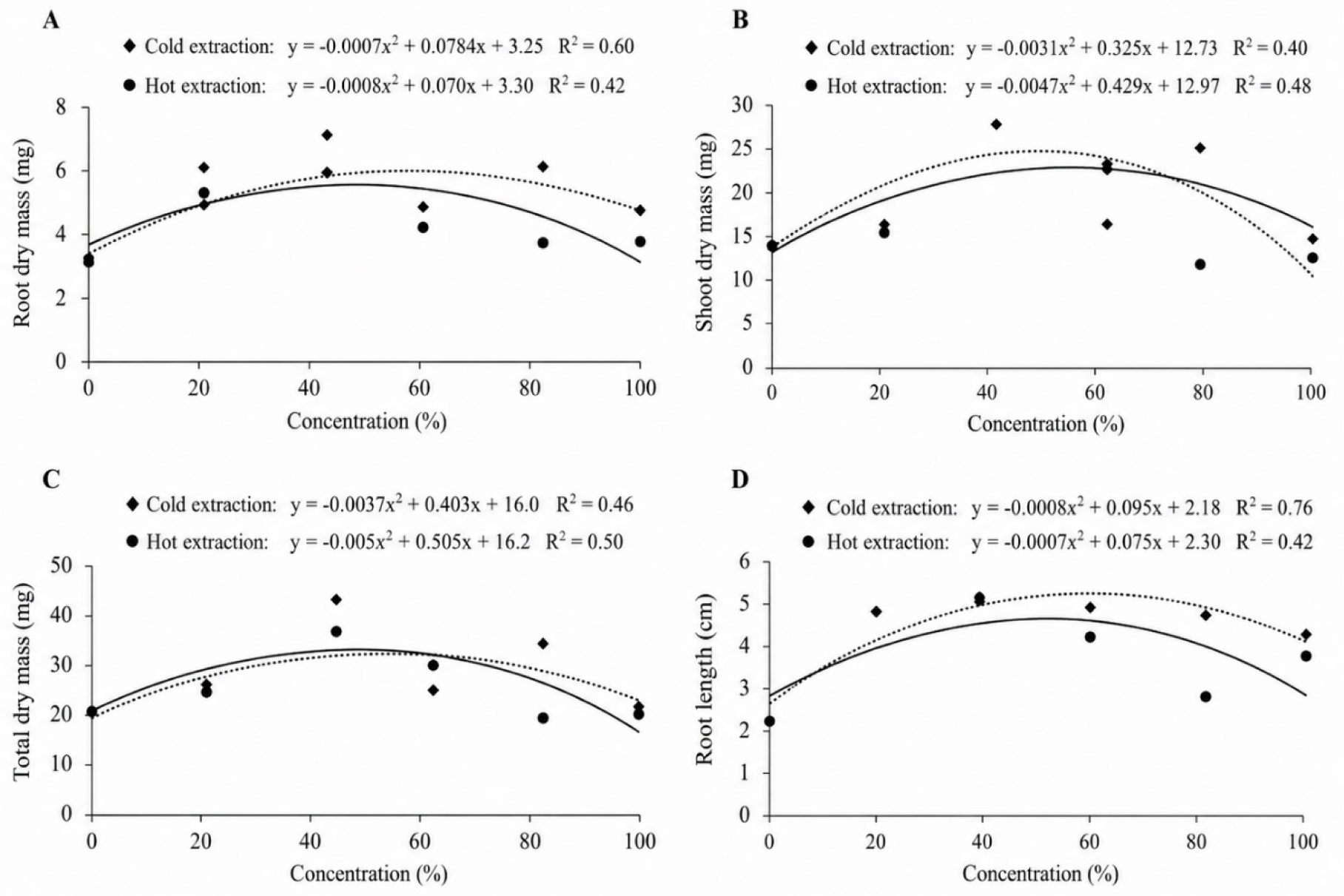
Leucaena leucocephala seedlings (Figure 3A) showed maximum root dry mass accumulation at a concentration of 56 % (5.45 mg) for the cold extraction and 44 % (4.83 mg) for the hot extraction, compared with 3.27 mg in the control treatment (0 %), followed by an inhibitory effect at the 100 % concentration (4.10 mg for the cold extraction and 2.90 mg for the hot extraction). These results indicate that the hot extraction promoted a greater reduction in root dry mass relative to the control, evidencing a stronger inhibitory effect. For shoot dry mass (Figure 3B), a biphasic response was observed with increasing extract concentration, characterizing a hormetic pattern. Maximum shoot dry mass accumulation occurred at a concentration of 52 % (21.3 mg) for the cold extraction and 46 % (22.8 mg) for the hot extraction, compared with 12.8 mg in the control treatment (0 %), followed by a reduction in biomass at the 100 % concentration (12.9 mg for the cold extraction and 12.4 mg for the hot extraction).
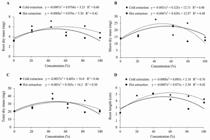
Effect of aqueous grape pomace extract concentration on the performance of Leucaena leucocephala seedlings.
A similar pattern was observed for the total dry mass of L. leucocephala seedlings (Figure 3C), with maximum values occurring at the 54 % concentration (27.0 mg) for the cold extraction and 51 % (29.0 mg) for the hot extraction, compared with the control (16.1 mg), followed by a reduction at higher concentrations to 17.5 and 15.8 mg for the cold and hot extraction methods, respectively. For root length (Figure 3D), the greatest lengths were observed at the 59 % concentration (5.0 cm) for the cold extraction and 54 % (4.3 cm) for the hot extraction, values higher than those found in the control treatment (2.2 cm), with a reduction in root growth occurring at higher concentrations.
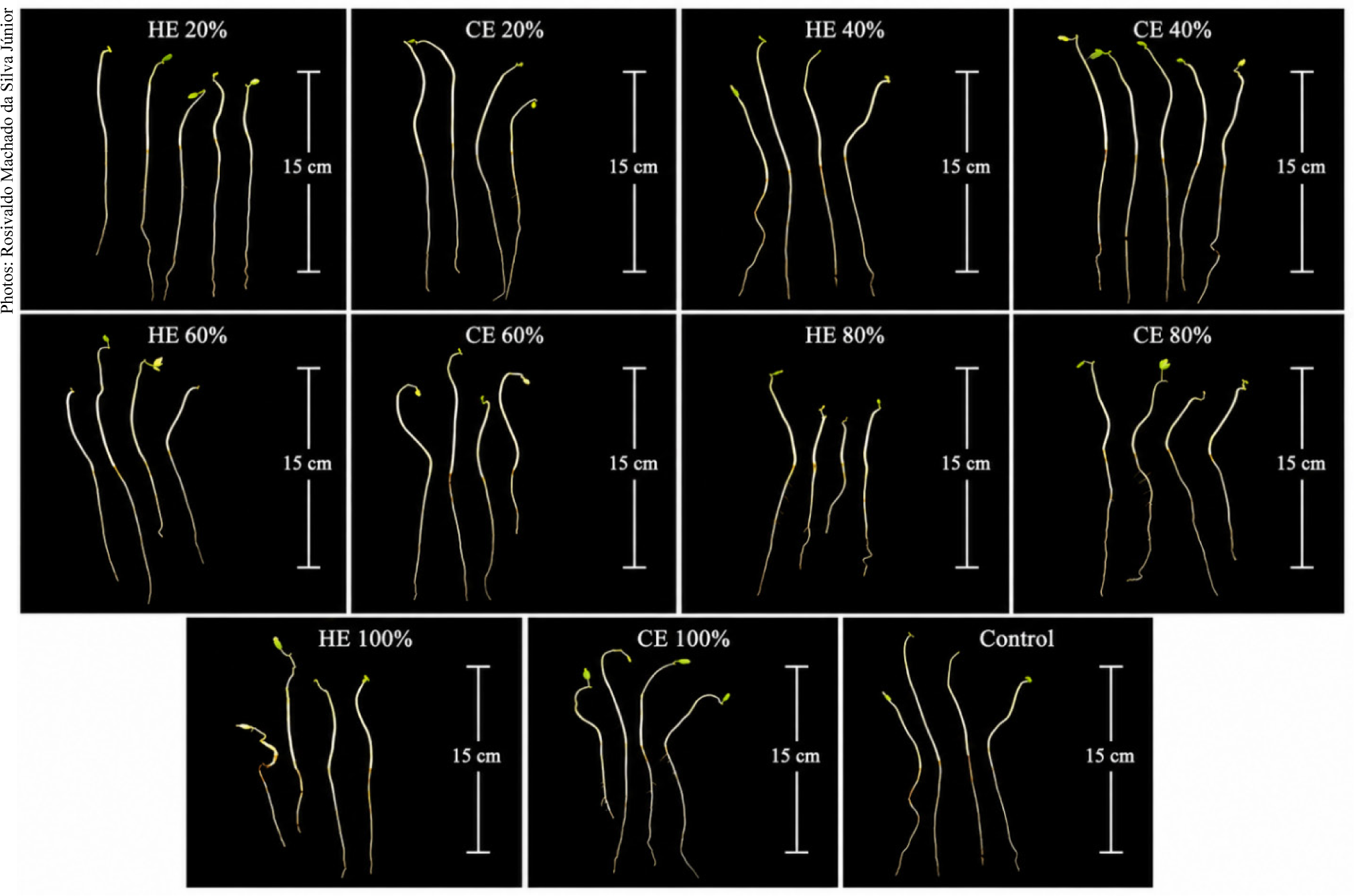
Figure 4 illustrates the morphological appearance of L. leucocephala seedlings resulting from seed immersion in the hot and cold extract at concentrations of 20, 40, 60, 80, and 100 %, as well as the control treatment (0 %). Visual comparison revealed changes in seedling growth and architecture as extract concentration increased, including modifications in root and shoot elongation, as well as in the uniformity of seedling development.
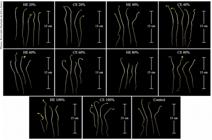
Morphological appearance of Leucaena leucocephala seedlings subjected to concentrations of aqueous grape pomace extract obtained by cold extraction (CE) and hot extraction (HE).
Although the intermediate concentration of approximately 50 % may promote an initial stimulation of L. leucocephala seedling growth, increasing concentrations of the aqueous grape pomace extract result in a consistent reduction in seedling growth relative to the control. Although Guardianelli et al. (2025) reported substantial levels of K, Ca, and P in grape pomace, the stimulation observed at intermediate concentrations in the present study cannot be attributed exclusively to the nutritional effect of these elements. It is possible that the positive responses observed at low concentrations are associated with the action of bioactive compounds present in the extract, whereas higher concentrations promote inhibitory effects. A comparable result was reported by Wang et al. (2022), who evaluated aqueous extracts of three herbs (Artemisia frigida, Stellera chamaejasme, and Achnatherum splendens) at concentrations of 0.005 and 0.05 g mL-1. The authors observed that, while the lower concentration maintained or slightly stimulated the biomass of Lactuca sativa seedlings, the higher concentration resulted in reduced root length and biomass, characterizing a dose-dependent inhibitory allelopathic effect.
The stimulation observed at lower concentrations may be associated with the presence of mineral nutrients and soluble organic compounds in the extract (Table 1), which favor enzymatic activation, energy metabolism, and cell expansion. Cui & Tcherkez (2021) demonstrated that potassium acts as an enzymatic activator and osmotic regulator, promoting the early growth of seedlings when available at adequate doses, which helps to explain the maxima observed at intermediate concentrations in the present study.
In the study by Liu et al. (2025), using aqueous extracts of Erigeron canadensis and E. annuus, the inhibition of germination and seedling growth increased with extract concentration, and, at the 100 g L-1 extract, the germination of wheat and rice was completely suppressed. This inhibitory pattern partially reflects the reduction in germination and seedling growth observed at high concentrations of the aqueous grape pomace extract in the present study, although a complete suppression of the growth and germination of L. leucocephala was not achieved. In this context, as the concentration of the aqueous grape pomace extract increases, an increase in total phenolic content is observed (Table 2), suggesting a greater availability of secondary metabolites potentially involved in allelopathic activity. However, the quantification of total phenolics does not allow the identification of the specific compounds responsible for the observed inhibitory effects, making more detailed chemical characterization analyses necessary. The total phenolic content increased from 2.86 to 4.20 mg GAE L-1 in the cold extraction and from 3.97 to 4.66 mg GAE L-1 in the hot extraction, representing an increase of 47 %.
Among the phenolic compounds present in grape pomace, gallic, caffeic, syringic, vanillic, p-coumaric, and chlorogenic acids stand out, as identified by Rodrigues et al. (2023), who also demonstrated their allelopathic potential. This reinforces the interpretation that the increasing phenolic load of the extract was a determining factor in the reduction of germination and growth of L. leucocephala observed in the present study. Similarly, Karastergiou et al. (2024) highlighted that, although grape pomace is a relevant source of bioactive compounds, its high phenolic content may limit the direct application of this residue due to its phytotoxic potential at high doses.
Based on the obtained results, future research may be directed toward evaluating the aqueous grape pomace extract under soil and field conditions, in order to verify the effectiveness of the allelopathic effect observed under laboratory conditions in more complex environmental settings. Additional studies are also recommended to test the response of invasive, native, and cultivated species, aiming to assess the selectivity of the extract and its potential as a sustainable management tool. Under field conditions, its application would require strategies to minimize effects on non-target species, such as localized applications directly onto L. leucocephala individuals or resprouts. Thus, the evaluation of extract selectivity constitutes a fundamental step in determining its feasibility for use in natural environments and degraded areas. Furthermore, investigations involving different application methods, as well as the identification of specific phenolic compounds potentially related to the observed inhibitory effects, may contribute to a deeper understanding of the extract’s mechanisms of action and to the development of more efficient strategies for the control of L. leucocephala.
CONCLUSIONS
-
The aqueous grape pomace extract exhibits a concentration-dependent allelopathic effect on the germination and early seedling development of Leucaena leucocephala, with the most pronounced effects observed at the 80 and 100 % concentrations;
-
The hot extraction method promoted greater inhibitory activity, when compared with the cold extraction method, possibly due to the higher extraction of phenolic compounds.
Data Availability Statement:
Research data are only made available by authors upon request.
ACKNOWLEDGMENTS
We thank the Universidade Estadual de Goiás for the financial support provided through Call/Notice PrP/UEG n° 01/2024 (Pro-Programs), Grant Agreement n° 7/2026 - UEG (90763860), and SEI Process n° 202400020007877. This study was partially financed by the Coordenação de Aperfeiçoamento de Pessoal de Nível Superior (Capes; Finance Code 001).
REFERENCES
- AYRES, R. S.; WESTCOT, D. W. Water quality for agriculture Rome: FAO, 1994.
- BAGEEL, A.; HONDA, M. D. H.; CARRILLO, J.; BORTHAKUR, D. Giant leucaena (Leucaena leucocephala subsp. glabrata): a versatile tree legume for sustainable agroforestry. Agroforestry Systems, v. 94, n. 1, p. 251-268, 2020.
- BRASIL. Ministério da Agricultura, Pecuária e Abastecimento. Regras para análise de sementes Brasília, DF: MAPA, 2009.
- CUI, J.; TCHERKEZ, G. Potassium dependency of enzymes in plant primary metabolism. Plant Physiology and Biochemistry, v. 166, n. 1, p. 522-530, 2021.
- DUKE, S. O.; TWITTY, A.; BAKER, C.; SANDS, D.; DODD, L.; TSVETNIN, M.; SESA, A. C.; POLIDORO, L. A.; JHALA, A. J.; KLOEPPER, J. W.; JACQ, X.; LIEBER, L.; LARELA, M. C.; LAZZARO, M.; MISRA, A.; GRASSEL, J.; LADNER, C. J.; FOUCHES, D.; BLAH, T.; GALLAZ, M.; GRESSEL, J.; PUTTA, K.; PHILLIP, Y.; SHUB, I.; BEN-CHANOCH, E.; DAYAN, F. E. New approaches to herbicide and bioherbicide discovery. Weed Science, v. 72, n. 5, p. 444-464, 2024.
- ELEUTÉRIO, W. J.; LACORTE, G. A.; SUZUKI, L. P. Z. L.; DUARTE, N. F. Análise de invasão biológica e uso de diferentes métodos de controle de Leucaena leucocephala (Lam.) de Wit. Agroecossistemas, v. 15, n. 1, p. 67-84, 2023.
- FONTANA, A. R.; ANTONIOLLI, A.; BOTTINI, R. Grape pomace as a sustainable source of bioactive compounds: extraction, characterization, and biotechnological applications of phenolics. Journal of Agricultural and Food Chemistry, v. 61, n. 38, p. 8987-9003, 2013.
- FREITAS, P. A. V.; MEYER, S.; HERNÁNDEZ-GARCÍA, E.; REBAQUE, D.; VILAPLANA, F.; CHIRALT, A. Antioxidant and antimicrobial extracts from grape stalks obtained with subcritical water: potential use in active food packaging development. Food Chemistry, v. 451, e139526, 2024.
- GUARDIANELLI, L. M.; SALINAS, M. V.; PUPPO, M. C.; HIDALGO, A.; PASINI, G. Nutritional and antioxidant valorization of grape pomace from Argentinian Vino de la Costa and Italian Cabernet wines. Foods, v. 14, e2386, 2025.
- KARASTERGIOU, A.; GANCEL, A. L.; JOURDES, M.; TEISSEDRE, P.-L. Valorization of grape pomace: a review of phenolic composition, bioactivity, and therapeutic potential. Antioxidants, v. 13, n. 9, e1131, 2024.
- KATO-NOGUCHI, H.; KURNIADIE, D. Allelopathy and allelochemicals of Leucaena leucocephala as an invasive plant species. Plants, v. 11, n. 13, e1672, 2022.
- KHAMARE, Y.; CHEN, J.; MARBLE, S. C. Allelopathy and its application as a weed management tool. Frontiers in Plant Science, v. 13, e1034649, 2022.
- KRZYZANOWSKI, F. C.; FRANÇA-NETO, J. B.; GOMES-JUNIOR, F. G.; NAKAGAWA, J. Testes de vigor baseados em desempenho de plântulas. In: KRZYZANOWSKI, F. C.; VIEIRA, R. D.; FRANÇA-NETO, J. B.; MARCOS-FILHO, J. (ed.). Vigor de sementes: conceitos e testes. Londrina: Abrates, 2020. p. 79-140.
- LIU, X.; YE, Y.; YANG, Z.; ZHANG, Y. Allelopathic effects of dominant native invaders on forage establishment: implications for alpine meadow restoration on the Qinghai-Xizang plateau. Plants, v. 14, n. 22, e3506, 2025.
- MACHADO, M.; DRUMMOND, J.; BARRETO, C. Leucaena leucocephala (Lam.) de Wit in Brazil: history of an invasive plant. Estudos Ibero-Americanos, v. 46, n. 1, e33976, 2020.
- MAGUIRE, J. D. Speed of germination: aid in selection and evaluation for seedling emergence and vigor. Crop Science, v. 2, n. 2, 176-177, 1962.
- MAI, N. P.; XUAN, T. D. A review on the utility potential of rice derived products in weed management. Weed Research, v. 65, n. 1, e12678, 2025.
- MARTELLI, A. A proposal to eradicate the invasive exotic species called leucena in an area of Itapira - SP and the favor of local biodiversity. Revista Verde Grande, v. 4, n. 2, p. 275-287, 2022.
- MOUTINHO, J.; GOUVINHAS, I.; DOMÍNGUEZ-PERLES, R.; BARROS, A. Optimization of the extraction methodology of grape pomace polyphenols for food applications. Molecules, v. 28, n. 9, e3885, 2023.
- OLIVEIRA, J. R. F.; TOMITA, F. M.; SCHAUN, N. B.; TUNES, L. V. M.; ALMEIDA, A. S.; TREMEA, M. G.; FACCIOLI, G. A. F.; ARRUA, B. M. V. Effects of substrates and seed treatments on Phaseolus vulgaris pinto germination test. Contribuciones a las Ciencias Sociales, v. 17, n. 10, e12015, 2024.
- PADUREANU, S.; PATRAS, A. Biological response of Triticum aestivum L. to the abiotic stress induced by winemaking waste. Agronomy, v. 12, n. 6, e1371, 2022.
- PINHEIRO, C. U. B.; LINHARES, J. F. P. Survey and mapping of invasive plants in São Luís island, Maranhão. Revista Brasileira de Geografia Física, v. 12, n. 4, p. 1484-1508, 2019.
- RODRIGUES, R. P.; SOUSA, A. M.; GANDO-FERREIRA, L. M.; QUINA, M. J. Grape pomace as a natural source of phenolic compounds: solvent screening and extraction optimization. Molecules, v. 28, n. 6, e2715, 2023.
- SCHWARTZ, C. G. K.; JESUS, J. L. L.; RAMOS, F. A. P.; MEZALIRA, T. S.; FERREIRA, R. G.; OTUTUMI, L. K.; SOARES, A. A. Compostos bioativos do bagaço de uva (Vitis vinifera): seus benefícios e perspectivas para o desenvolvimento sustentável. In: CORDEIRO, C. A. M. Tecnologia de alimentos: tópicos físicos, químicos e biológicos. São Paulo: Científica, 2020. p. 483-505.
- SHARMA, P.; KAUR, A.; BATISH, D. R.; KAUR, S.; CHAUHAN, B. S. Critical insights into the ecological and invasive attributes of Leucaena leucocephala Frontiers in Agronomy, v. 4, e890992, 2022.
- SILVEIRA, P. F. da; COELHO, M. de F. B.; MAIA, S. S. S.; CAMILI, E. C.; SPILLER, C.; VARGAS, S. H. Atividade alelopática de extratos de folhas e sementes de Prosopis juliflora na germinação de alface. Revista em Agronegócio e Meio Ambiente, v. 14, n. 2, p. 523-535, 2021.
- SINGLETON, V. L.; ROSSI, J. A. Colorimetry of total phenolics with phosphomolybdic-phosphotungstic acid reagents. American Journal of Enology and Viticulture, v. 16, n. 3, p. 144-158, 1965.
- TRONCOZO, M. I.; VIANNA, F.; SAPARRAT, M. Grape pomace transformed by specific fungi has the potential as a promising substrate for vermicomposting. International Journal of Recycling Organic Waste in Agriculture, v. 13, n. 1, e132408, 2024.
- WANG, K.; WANG, T.; REN, C.; DOU, P.; MIAO, Z.; LIU, X.; HUANG, D.; WANG, K. Aqueous extracts of three herbs allelopathically inhibit lettuce germination but promote seedling growth at low concentrations. Plants, v. 11, n. 4, e486, 2022.
- XUAN, T. D.; CHIEN, N. X.; KHANH, T. D.; VIET, T. D. Advancements and challenges in allelopathy: a global perspective on agricultural practices. Journal of Crop Health, v. 77, e151, 2025.
- ZANINI, M.; SILVESTRE, W. P.; BALDASSO, C.; TESSARO, I. C. Valorization of wastes generated in organic grape processing. Brazilian Archives of Biology and Technology, v. 67, e24230183, 2024.
-
Editor:
Luis Carlos Cunha Junior