 Selection of sugary cassava genotypes for ethanol production
Abstract
The objective of this work was to evaluate the genetic diversity of sugary cassava genotypes in relation to production parameters and the chemical composition of storage roots for ethanol production. A randomized complete block design was used to evaluate eight genotypes grown in two locations (municipalities) in the state of São Paulo, Brazil. Yield presented a positive correlation with number of roots per plant and average root weight, as well as a negative correlation with specific gravity, root dry matter, and starch content in storage roots. Genotype 597/10 showed a greater dissimilarity to cultivar BRS 438, mainly due to higher contents of dry matter, starch, and sugar in storage roots. The 1096/12, 999/12, and 1380/10 genotypes presented a greater similarity to cultivar BRS 438. Therefore, the evaluated sugary cassava genotypes show a significant genetic diversity. Due to its production characteristics and tuberous root chemical composition, genotype 597/10 has potential as raw material for alcoholic fermentation processes.
Index terms:
Manihot esculenta; alcohol; breeding; starch; yield.
Resumo
O objetivo deste trabalho foi avaliar a diversidade genética de genótipos de mandioca açucarada em relação aos parâmetros de produção e à composição química das raízes tuberosas para a produção de etanol. Utilizou-se delineamento em blocos ao acaso para avaliar oito genótipos cultivados em dois locais (municípios) do estado de São Paulo, Brasil. A produtividade teve correlação positiva como o número de raízes por planta e o peso médio das raízes, bem como correlação negativa com a gravidade específica, a matéria seca das raízes e o teor de amido nas raízes tuberosas. O genótipo 597/10 apresentou maior dissimilaridade com a cultivar BRS 438, principalmente devido ao maior teor de matéria seca, amido e açúcar nas raízes tuberosas. Os genótipos 1096/12, 999/12 e 1380/10 tiveram maior similaridade com a cultivar BRS 438. Portanto, os genótipos de mandioca açucarada avaliados apresentam significativa diversidade genética. Devido às suas caraterísticas de produção e à composição química das raízes tuberosas, o genótipo 597/10 apresenta potencial como matéria-prima para processos de fermentação alcoólica.
Termos para indexação:
Manihot esculenta; álcool; melhoramento genético; produtividade; amido.
Introduction
Cassava (Manihot esculenta Crantz) is a perennial and shrub crop, normally grown in tropical and subtropical regions of the world, such as the African continent that accounted for 62.87% of the total 338.83 million tons produced in 2023 (FAO, 2024). According to this same database, cassava is grown in all states of Brazil, where 18.5 million tons were produced in this same year, with an average yield of 15.41 Mg ha-1, ranking the country fifth in world production.
In Brazil, sugary cassava, known as “mandiocabas”, is presented as cultivars with a high yield, high sugar content, and low starch content (Carvalho et al., 2004; Aguiar et al., 2020). Although these cassava plants are not valued as raw material for the flour and starch industries (Souza et al., 2013; Moura et al., 2016), they show potential use for animal feed (silage and fodder grass), ethanol production, and the development of beverages (Vieira et al., 2008; Teixeira et al., 2017; Fernandes et al., 2021; Vieira et al., 2023). There is a promising market for cassava alcoholic beverages, based on the current trend in anthropology of revitalizing cultural beverages as a way of promoting local development and valuing crops (Keskin & Günes, 2021).
The estimated yield of ethanol from cassava is 4,100 L ha-1 per year, based on 25 tons of fresh roots per hectare per year, compared with that of 3,600-4,500 L ha-1 per year from sugarcane, based on 64-79 tons of sugarcane per hectare per year (Zhu et al., 2023; Alzate et al., 2024). Therefore, cassava, as a bioenergy crop, offers several advantages, including the ability to be planted and harvested all year round, as well as a high root productivity, tolerance to adverse soil fertility and climatic conditions, and high carbohydrate content, making it valuable as an alternative in regions where sugarcane cultivation is not viable (Fathima et al., 2023).
In this scenario, introducing sugary cassava into the production system as raw material to be industrialized for the alcoholic fermentation process is an important undertaking. Assessing the production of genotypes is a first step towards providing knowledge to producers and industrialists.
The objective of this work was to evaluate the genetic diversity of sugary cassava genotypes in relation to production parameters and the chemical composition of storage roots for ethanol production.
Materials and Methods
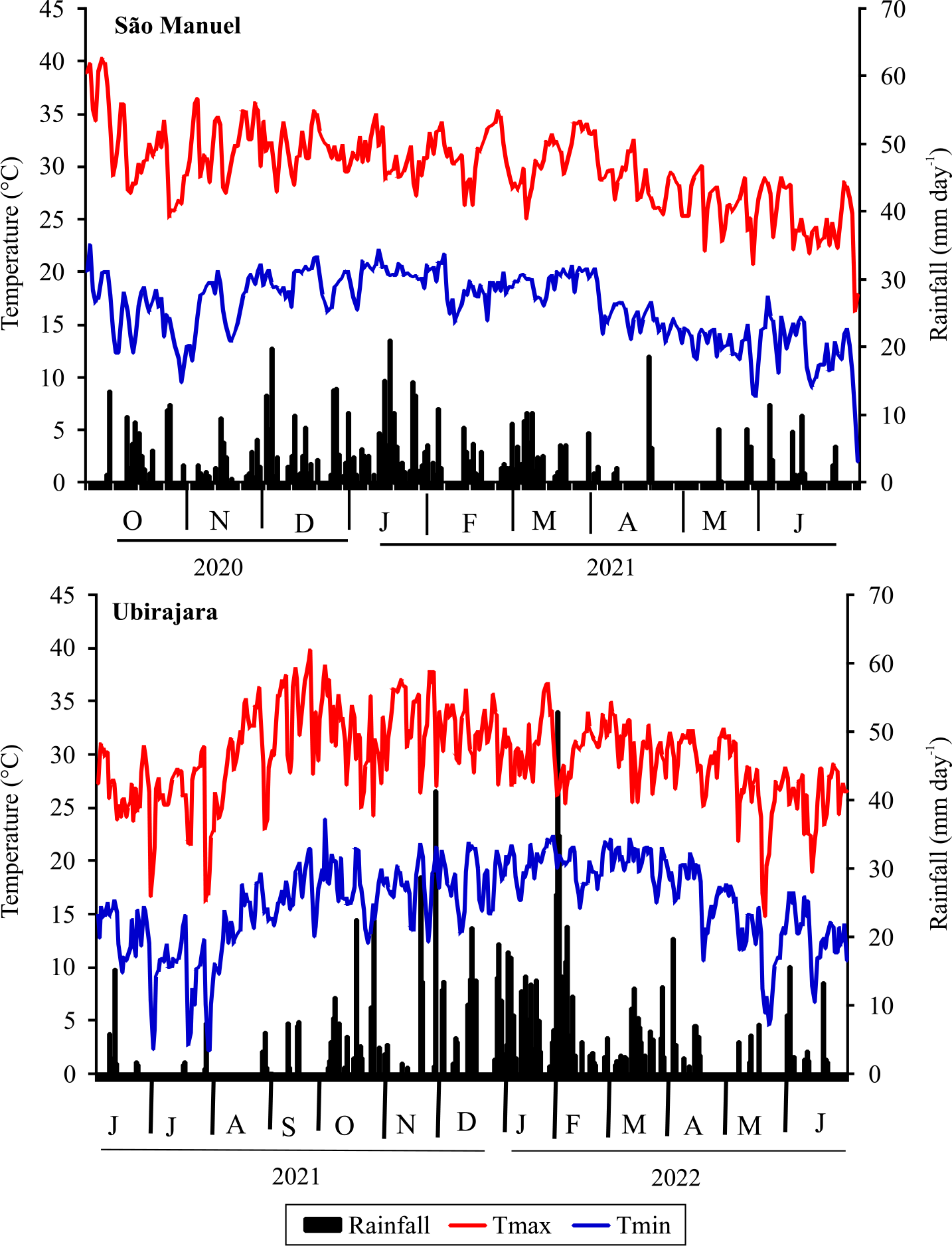
Two experiments were set up in different agricultural areas in the state of São Paulo, Brazil. The first experiment was conducted from October 2020 to June 2021 at the São Manuel experimental farm of Universidade Estadual Paulista in the municipality of São Manuel (22º77'S, 48º57'W, at 740 m above sea level). The aim was to evaluate the initial adaptation of the genetic materials to the climatic conditions of the region (Figure 1). The soil of this experimental area is classified as a Latossolo, according to the Brazilian Soil Classification System (Santos et al., 2006), equivalent to an Oxisol, with a sandy texture, and the previous crop was corn (Zea mays L.). The second experiment was carried out from June 2021 to June 2022 in an experimental area located in the municipality of Ubirajara (22º34'00"S, 49º37'22"W, 565 m above sea level). The soil at the site is a Neossolo, according to the Brazilian Soil Classification System (Santos et al., 2006), equivalent to an Entisol, with a sandy texture. The experimental area was cultivated with cassava (Manihot esculenta Crantz) in the previous harvest. The soil analysis was performed according Raij et al. (2001), as shown in Table 1.
Soil chemical attributes of the experimental areas at a depth of 0.0-0.2 m before cassava (Manihot esculenta) planting (n = 4) in the municipalities of São Manuel and Ubirajara in the state of São Paulo, Brazil.

Minimum and maximum temperatures and rainfall during the months in which the experimental trials were carried out in the municipalities of São Manuel and Ubirajara in the state of São Paulo, Brazil.
The climate in the two municipalities, according to Köppen’s classification, is of the Cwa type, high-altitude tropical, with a dry winter and a hot and rainy summer. Daily rainfall and temperatures during the experimental period were obtained from the meteorological station of Instituto Nacional de Meteorologia, located in the municipality of Bauru, in the state of São Paulo (Figure 1).
The experimental design used in both study areas was randomized complete blocks with four replicates. For the treatments, the BRS 438 sugary cassava cultivar was used (Vieira et al., 2023), as well as seven sugary cassava genotypes selected by Embrapa Cerrados from crossings between genotypes from the institution’s cassava germplasm bank (Table 2).
Parental cassava (Manihot esculenta) genotypes, their common name, origin, and classification, as well as the genealogy of the evaluated genotypes.
The plots were made up of four 8.0 m long cassava rows. For yield evaluation, the two central rows were considered, excluding 0.5 m at the end of each row of plants and one row on each side of the plots.
Subsequently, the experimental area was prepared conventionally through plowing and harrowing. Stem cuttings measuring 13 cm in length, with four to five buds each, were used for planting. Planting was carried out with the Bazuca 2 cassava-planting machine (Planti Center, Marialva, PR, Brazil), at a spacing of 0.90 m between rows and 0.80 m between plants in São Manuel and of 1.10 m between rows and 0.60 m between plants in Ubirajara.
In São Manuel, planting fertilization consisted of 200 kg ha-1 of the N-P-K fertilizer at a ratio of 4-30-10 + 0.5% Zn (8.0 kg ha-1 N, 60 kg ha-1 P2O5, 32 kg ha-1 K2O, and 1.0 kg ha-1 Zn, respectively). In Ubirajara, 50 kg ha-1 P2O5 via single superphosphate (18% P2O5, 16% Ca, and 10% S) were used for planting fertilization. Six days after planting, the Sinerge pre-emergence herbicide (FMC Química do Brasil Ltda., Campinas, SP, Brazil), consisting of ametryn + clomazone, was applied at a rate of 5.0 L ha-1, using a spray volume of 200 L ha-1.
In São Manuel, topdressing fertilization was applied two months after plant emergence, using 300 kg ha-1 of the N-P-K fertilizer at a ratio of 20-05-20 (60 kg ha-1 N, 15 kg ha-1 P2O5, and 60 kg ha-1 K2O). In Ubirajara, 185 kg ha-1 of the N-P-K fertilizer at a ratio of 20-05-20 (37 kg ha-1 N, 9 kg ha-1 P2O5, 37 kg ha-1 K2O) were applied as topdressing. Both experiments were carried out without irrigation.
The plants in the two experiments were harvested during the senescence of cassava in the first vegetative cycle, marked by a decline in the number of leaves. The final plant population was assessed in the two central 7.0 m long rows of the usable area of each plot. Subsequently, a 6.4 and 4.8 m section from these central rows were harvested (~eight plants per row) in São Manuel and Ubirajara, respectively, and plant shoot, planted stem cutting, and storage roots were separated. The roots were weighed, and the average root weight per plant was calculated by dividing total root weight by the number of plants per plot. Root yield was calculated by multiplying the fresh weight of roots per plant by the final plant population.
Samples of the central third of ten roots were sliced, placed in paper bags, weighed, and taken to an oven with air circulation, at 65ºC, until reaching a constant weight, in order to determine the dry mass of the storage roots. After drying, the samples were weighed again, and the dry matter content was obtained using the gravimetric method according to Association of Official Analytical Chemists (AOAC) (Latimer Jr., 2012).
The freshly harvested roots were separated into 5.0 kg samples, washed to remove excess soil, and then weighed in water using the hydrostatic balance method to determine the specific gravity of the samples through the weight ratio, according to the following equation (Silva et al., 2023): SG = IW/(IW - FW), where SG is specific gravity, WI is the initial weight of the sample in air, and FW is the weight obtained on the hydrostatic balance after the roots were submerged.
For the analysis of their chemical composition, the storage roots were peeled to remove their outer brown layer, sanitized in chlorinated water, and analyzed for the contents of moisture, ash, fiber, protein, lipids, total sugars, reducing sugars, and starch using methods 934.06, 923.03, 985.29, 920.152, 922.06, 968.28, 925.36, and 996.11, respectively, of AOAC (Latimer Jr., 2012).
The data on total sugars and starch in the storage roots and on the root yield of each genotype were used to estimate the theoretical ethanol production of the studied genotypes (Lima, 1975; Walker & Walker, 2018). For this, the theoretical percentage of fermentable sugars in the roots was obtained by adding the conversion of starch into glucose (1.11 g glucose per gram of starch) to the value of total sugars. Subsequently, the theoretical ethanol production was estimated (0.511 g ethanol per g glucose), and ethanol yield per genotype (1,000 L ha-1 per year) was calculated based on the storage root yield of each genotype and on ethanol density.
The data obtained for each experiment were analyzed separately through the analysis of variance, and means were grouped with the Scott-Knott clustering test at a 5% significance level using the SISVAR software (Ferreira, 2011). The cluster analysis, based on Ward’s method using squared Euclidian distance and the principal component analysis (PCA), was carried out to correlate and discriminate genotypes, as well as to identify the relationships between the different components through the Minitab, version 17, software (Minitab, LLC., State College, PA, USA).
Results and Discussion
The lowest numbers of roots was found for cassava genotypes 1378/10, 392/09, and 1096/12 and for cultivar BRS 438 in São Manuel (Table 3). In Ubirajara, genotype 1378/10 presented the lowest number of roots compared with the other genotypes from the crossbreeding between 'Iguaçu' and 'IAC 576-70', a behavior also observed in São Manuel. Genotypes 392/09 and 597/10 did not differ for this parameter, being similar to genotype 1096/12 in Ubirajara.
Number of roots per plant, yield, dry matter, and specific gravity of the storage roots of different sugary cassava (Manihot esculenta) genotypes grown in the municipalities of São Manuel and Ubirajara in the state of São Paulo, Brazil(1).
The average root yields of sugary cassava in São Manuel and in Ubirajara exceeded the average yields of 15.4 and 23.2 Mg ha-1 of cassava plants in Brazil and in the state of São Paulo, respectively (IBGE, 2023). In São Manuel, the highest yield was that of 61.87 Mg ha-1 obtained for 'BRS 438', followed by that of genotypes 1380/10, 706/10, and 597/10 from the crossing between the 'IAC 576-70' and the 'Iguaçu' sweet and sugary cassava, respectively. In Ubirajara, the BRS 438 cultivar also showed the highest yield.
The yields of the sugary cassava genotypes were within the averages obtained in studies with genotypes grown in different regions of Brazil and used for cooking (Mezette et al., 2009; Silva et al., 2011), in the industry (Vieira et al., 2015), and as sugary cassava (Vieira et al., 2023). Mezette et al. (2009) found an average yield of 23.14 Mg ha-1 for 12 cassava genotypes from the cassava breeding program of Instituto Agronômico de Campinas (IAC) that were used for cooking. In their research, Silva et al. (2011) observed that cultivar IAC 576-70 had the highest yield of 34.9 Mg ha-1. In an evaluation of industrial cassava genotypes from the Cerrado cassava germplasm bank of Embrapa Cerrados, high yields were reported, ranging from 23.19 to 56.25 Mg ha-1 in the first crop and from 25.93 to 39.64 Mg ha-1 in the second (Vieira et al., 2015). Working with sugary cassava, Vieira et al. (2023) obtained an average yield of 38.38 Mg ha-1 for the IAC 576-70 cultivar and of 99.29 Mg ha-1 for the BRS 438 sugary cassava cultivar, as well as values ranging from 33.24 to 43.58 Mg ha-1 for other sugary cassava genotypes. Since it is closely related to crop profitability, root yield is one of the most important traits for the selection of cassava genotypes (Andrade et al., 2022). Despite the shorter cultivation time and different soil and climatic conditions and crop management adopted in the present study, it can be inferred that the evaluated sugary genotypes show a yield potential close to that of previous studies, but lower than that of the BRS 438 sugary cultivar.
The sugary cassava evaluated in the present work showed a wide variation in dry matter content in storage roots, which ranged from 18.36 to 30.52% in the São Manuel crop and from 17.56 to 27.76% in the Ubirajara crop. Higher dry matter percentages were obtained for genotypes 392/09 and 597/10 in both areas, indicating their greater capacity to allocate assimilates in storage roots.
Important differences in dry matter content were also observed in other studies on cassava genotypes grown in the state of São Paulo. In the research carried out by Mezette et al. (2009), the IAC 576-70 cultivar showed 43.58% root dry matter, a high value comparable to that of 34.0 to 43.5% dry matter content found by Silva et al. (2023) for the IAC 14 and IAC 90 cultivars widely planted for industrialization in the state. For sugary cassava, Fernandes et al. (2021) reported a low dry matter content of 19.81% for genotype 617/08 (cultivar BRS 438), as verified in the present work. When selecting for ethanol production, genotypes with a higher dry matter content are of interest (Alzate et al., 2024).
Specific gravity varied according to the different cassava genotypes. In the field in São Manuel, the specific gravity of the storage roots ranged from 1.04 to 1.08, with the highest values found for genotypes 392/09 and 597/10. In the field in Ubirajara, specific gravity varied from 1.03 to 1.08, with the highest values obtained for genotypes 597/10, 392/09, 706/10, and 1378/10. However, the values in the present study were lower than those of 1.104 to 1.165 reported by Silva et al. (2023) for different cassava genotypes destined for industry use. Specific gravity is directly related to the dry matter content of storage roots, influencing processing efficiency and the quality of final products (Shittu, 2016; Maraphum et al., 2021).
There were significant differences in the chemical composition of the storage roots of the cassava genotypes in the two growing locations (Table 4). In both experimental areas, genotypes 1380/10 and 1096/12 did not differ from 'BRS 438', showing the highest moisture contents in storage roots. Lower moisture contents were observed for genotypes 392/09 and 597/10 in the two experimental areas, confirming the greater accumulation of dry matter in their storage roots, in addition to making them potential raw materials for ethanol production. These genotypes had moisture contents similar to that of 70 g 100 g-1 reported by Ceni et al. (2009) for the 'Casca Roxa' and 'BRS Dourada' cassava used for cooking. Bayata (2019) highlighted that the water content in cassava roots ranges from 60.3 to 87.1%.
Chemical composition and ethanol yield of the storage roots of sugary cassava (Manihot esculenta) genotypes grown in the municipalities of São Manuel and Ubirajara, in the state of São Paulo, Brazil(1).
The total mineral content of storage roots is represented by ash content, which has been shown to vary for cassava genotypes selected for cooking. Ceni et al. (2009), for example, observed variations of 0.87 to 1.06 g 100 g-1 ash in the storage roots of the BRS Rosada, Casca Roxa, BRS Dourada, BRS Gema de Ovo, and Saracura cassava cultivars. As in the present study, Teixeira et al. (2017) found ash contents varying from 0.11 to 0.46 g 100 g-1, with the lowest value for 'IAC 576-70'. Higher levels of minerals in cassava roots is a factor of interest when selecting genotypes for ethanol production since yeasts reproduce and ferment slowly when the amount of minerals is insufficient (Walker & Walker, 2018). Walker & Walker (2018) added that raw materials must provide yeasts not only with fermentable sugars, but also with a series of other nutrients such as nitrogen, minerals, vitamins, and accessory growth factors as lipids.
The highest lipid contents were found for genotypes 392/09 and 597/10 and for 'BRS 438' in São Manuel, as well as for genotype 597/10 in Ubirajara. These values are within the range from 0.1 to 0.3% (wet basis) reported by Bayata (2019) for cassava roots. The sugary genotypes also presented low levels of protein, within the range of 0.52 to 1.16 g 100g-1 obtained for fresh cassava roots (Teixeira et al., 2017).
Fiber content varied significantly between the genotypes, as also verified by Ceni et al. (2009), who found values of 2.2 to 9.5 g 100 g-1 (wet basis) for roots from different sweet cassava cultivars. In the ethanol production process using starchy raw materials, the concentration of the substrate, particularly the fibers present in cassava, can impair yield, making it necessary to use enzymes, such as cellulose, to increase the efficiency of mass and heat transfer (Zhu et al., 2012).
The sugar content of genotypes is an important selection criterion because lower levels can result in a lower ethanol production efficiency (Alzate et al., 2024). Reducing sugars accounted for a high percentage of total sugars for all evaluated cassava genotypes, which agrees with the results obtained by Souza et al. (2013). These authors observed contents, on a wet basis, of 3.92 to 5.84 g 100 g-1 total sugars and of 3.71 to 4.67 g 100 g-1 reducing sugars, with the latter accounting for 80 to 94.6% of total sugars.
A differentiating characteristic of sugary cassava genotypes is the low level of starch in storage roots (Vieira et al., 2008, 2018, 2023; Teixeira et al., 2017). In the present study, the average starch content was 14.22 g 100 g-1, being the highest for the genotypes derived from the crossing between the Castanhal sugary cultivar and the IAC 576-70 cultivar (genotypes 392/09 and 597/10, respectively) in the two growing areas (Tables 3 and 4). Since starch is converted to glucose in the production of ethanol from starchy raw materials (Murthy et al., 2011), sugary cassava genotypes with higher starch contents contribute to higher yields at the end of the process.
The data analysis showed different theoretical ethanol production yields for the genotypes in each experimental area, with values ranging from 2,040 to 6,580 L ha-1 per year in the field in São Manuel and from 1,970 to 6,220 L ha-1 per year in the field in Ubirajara. The BRS 438 cultivar stood out for this parameter due to its high root yield. However, because of their production characteristics and root chemical composition, genotypes 706/10 and 597/10 are considered as potential raw materials to produce ethanol. The estimated ethanol yields calculated in the present work are close to that of 4,100 L ha-1 per year reported in other studies, based on 25 tons of fresh roots per hectare and a conversion factor of 6.0 kg of fresh roots to 1.0 L of ethanol (Zhu et al., 2023; Alzate et al., 2024).
In the principal component analysis (PCA) graphs (Figure 2), a positive or negative correlation was observed for some parameters, which contributed the most to differentiating the genotypes. The correlation analysis showed that the yield of the sugary cassava genotypes in the two growing areas was positively correlated with number of roots per plant and average root weight, but negatively correlated with specific gravity, dry matter, and starch content in storage roots. These correlations are consistent with the findings in the literature that show that sugary cassava produces high root yields and low dry matter and starch contents (Fernandes et al., 2021; Vieira et al., 2023). Since specific gravity is directly related to the dry matter content of storage roots (Maraphum et al., 2021), the lower accumulation of dry matter in the roots of sugary cassava result in lower specific gravities.

Biplot principal component graphs (A and B) and cluster dendrograms (C and D) of sugary cassava (Manihot esculenta) genotypes grown in the respective fields in the municipalities of São Manuel and Ubirajara, in the state of São Paulo, Brazil. NRP, number of roots per plant; WR, weight of storage roots; SG, specific gravity; and DMR, dry matter of storage roots.
The PCA graph for São Manuel showed that the first and second main components (PC1 and PC2, respectively) represented 45.75 and 26.67% of variation, with an accumulated variation of 72.42%. The parameters that contributed to differentiating genotypes 597/10 and 706/10 were number of roots per plant and contents of dry matter, starch, reducing sugars, and lipids in storage roots. Genotype 597/10 showed a higher dissimilarity to the BRS 438 cultivar, forming isolated clusters, while the other genotypes showed a lower dissimilarity (Figure 2).
The PCA graph for Ubirajara revealed that PC1 and PC2 represented 51.41 and 23.56% of variation, respectively, with an accumulated variation of 74.97%. In this location, 'BRS 438' and genotype 597/10 were separated mainly by the yield aspects of the cultivar and by the dry matter, starch, and sugar accumulation of the genotype. Differently from the crop in São Manuel, the cluster separation method showed two distinct groups: genotypes 1378/10, 392/09, and 706/10 clustered together with genotypes 597/10 and 1096/12; and genotypes 999/12 and 1380/10 with cultivar BRS 438. Therefore, the genotypes grouped together with genotype 597/10 can be evaluated in future studies for exploitation as raw materials for ethanol production.
Conclusions
-
1. The average yield of the evaluated sugary cassava (Manihot esculenta) genotypes exceeds 30 Mg ha-1.
-
2. Genotypes 392/09 and 597/10 stand out for their higher dry matter content.
-
3. Considering productivity and ethanol yield potential, the 597/10 genotype is highlighted as a potential raw material for the cassava ethanol and alcoholic beverage industries.
Disclaimer/Publisher’s note
The statements, opinions, and data contained in all texts published in Pesquisa Agropecuária Brasileira (PAB) are solely those of the individual author(s) and not of the journal’s publisher, editor, and editorial team, who disclaim responsibility for any injury to people or property resulting from any referred ideas, methods, instructions, or products.
The mention of specific chemical products, machines, and commercial equipment in the texts published in this journal does not imply their recommendation by the publisher.
Declaration of use of AI technologies
No generative artificial intelligence (AI) was used in this study.
Acknowledgments
To Coordenação de Aperfeiçoamento de Pessoal de Nível Superior (CAPES), for financing, in part, this study (Finance Code 001) and to Conselho Nacional de Desenvolvimento Científico e Tecnológico (CNPq), for financial support (process number 302848/2021-5).
Data availability statement
Data available upon request: research data are only available upon reasonable request to the corresponding author.
References
-
AGUIAR, R.O.; CARRÉRA, A.G.P.; CUNHA, R.L.; OLIVEIRA, I.V. de; SILVA, C.R. da; SILVA, V.F.A.; SILVA, J.N. da; SILVA, J.P. da; CARVALHO, F.I.M.; MARTINS, L.H. da S.; SILVA, P.A.; MOURA, E.F. Optimization of the alcoholic concentration obtained from sugary cassava (Manihot esculenta Crantz) by response surface methodology. Journal of Agricultural Science, v.12, p.157-168, 2020. DOI: https://doi.org/10.5539/jas.v12n11p157
» https://doi.org/10.5539/jas.v12n11p157 -
ANDRADE, L.R.B. de; SOUSA, M.B. e; WOLFE, M.; JANNINK, J.-L.; RESENDE, M.D.V. de; AZEVEDO, C.F.; OLIVEIRA, E.J. de. Increasing cassava root yield: Additive-dominant genetic models for selection of parents and clones. Frontier in Plant Science, v.13, art.1071156, 2022. DOI: https://doi.org/10.3389/fpls.2022.1071156
» https://doi.org/10.3389/fpls.2022.1071156 -
ALZATE, J.L.M.; TRAN, T.; CEBALLOS, H.; NGUYEN, C.-N.; NGUYEN, T.C.; ZHANG, X.; NEWBY, J.; DUFOUR, D.; CHU-KY, S. Physicochemical characterization of special cassava starches and their application for bio-ethanol production through no-cook technology at very high gravity. Industrial Crops & Products, v.219, art.119095, 2024. DOI: https://doi.org/10.1016/j.indcrop.2024.119095
» https://doi.org/10.1016/j.indcrop.2024.119095 -
BAYATA, A. Review on nutritional value of cassava for use as a staple food. Science Journal of Analytical Chemistry, v.7, p.83-91, 2019. DOI: https://doi.org/10.11648/j.sjac.20190704.12
» https://doi.org/10.11648/j.sjac.20190704.12 -
CARVALHO, L.J.C.B.; SOUZA, C.R.B. de; CASCARDO, J.C. de M.; BLOCH JUNIOR, C.; CAMPOS, L. Identification and characterization of a novel cassava (Manihot esculenta Crantz) genotype with high free sugar content and novel starch. Plant Molecular Biology, v.56, p.643-659, 2004. DOI: https://doi.org/10.1007/s11103-004-4873-9
» https://doi.org/10.1007/s11103-004-4873-9 - CENI, G.C.; COLET, R.; PERUZZOLO, M.; WITSCHINSKI, F.; TOMICKI, L.; BARRIQUELLO, A.L.; VALDUGA, E. Avaliação de componentes nutricionais de cultivares de mandioca (Manihot esculenta Crantz). Alimentos e Nutrição, v.20, p.107-111, 2009.
-
FAO. Food and Agriculture Organization of the United Nations. Faostat: production crops. 2024. Available at: <http://www.fao.org/faostat/en/#home/>. Accessed on: Jan. 28 2025.
» http://www.fao.org/faostat/en/#home/ -
FERNANDES, F.D; GUIMARÃES JÚNIOR, R.; VIEIRA, E.A.; FIALHO, J. de F.; CARVALHO, M.A.; BRAGA, G.J.; FONSECA, C.E.L.; CELESTINO, S.M.C.; MALAQUIAS, J.V. Valor nutritivo e características fermentativas da silagem de capim-elefante com diferentes proporções de raízes de mandioca. Científica, v.49, p.92-101, 2021. DOI: https://doi.org/10.15361/1984-5529.2021v49n2p92-101
» https://doi.org/10.15361/1984-5529.2021v49n2p92-101 -
FATHIMA, A.A.; SANITHA, M.; TRIPATHI, L.; MUIRURI, S. Cassava (manihot esculenta) dual use for food and bioenergy: a review. Food and Energy Security, v.12, e380, 2023. DOI: https://doi.org/10.1002/fes3.380 FERREIRA, D.F. Sisvar: a computer statistical analysis system. Ciência e Agrotecnologia, v.35, p.1039-1042, 2011. DOI: https://doi.org/10.1590/S1413-70542011000600001
» https://doi.org/10.1002/fes3.380» https://doi.org/10.1590/S1413-70542011000600001 -
IBGE. Instituto Brasileiro de Geografia e Estatística. Produção Agrícola Municipal 2023. Available at: <https://www.ibge.gov.br/estatisticas/economicas/agricultura-e-pecuaria/9117-producao-agricola-municipal-culturas-temporarias-e-permanentes.html>. Accessed on: Apr. 5 2024.
» https://www.ibge.gov.br/estatisticas/economicas/agricultura-e-pecuaria/9117-producao-agricola-municipal-culturas-temporarias-e-permanentes.html -
KESKIN, B.; GÜNES, E. Social and cultural aspects of traditional drinks: a review on traditional Turkish drinks. International Journal of Gastronomy and Food Science, v.25, art.100382, 2021. DOI: https://doi.org/10.1016/j.ijgfs.2021.100382
» https://doi.org/10.1016/j.ijgfs.2021.100382 - LATIMER JR., G.W. (Ed.). Official Methods of Analysis of AOAC International 19th ed. Gaithersburg: AOAC International, 2012.
- LIMA, U. de A. Produção de etanol. In: AQUARONE, E.; BORZANI, W.; LIMA, U. de A. Tecnologia das fermentações São Paulo: E. Blucher, 1975. v.1, p.48-69. (Biotecnologia, 1).
-
MARAPHUM, K.; SAENGPRACHATANARUG, K.; WONGPICHET, S.; PHUPHUPHUD, A.; SIRISOMBOON, P.; POSOM, J. Modified specific gravity method for estimation of starch content and dry matter in cassava. Heliyon, v.7, e07450, 2021. DOI: https://doi.org/10.1016/j.heliyon.2021.e07450
» https://doi.org/10.1016/j.heliyon.2021.e07450 -
MEZETTE, T.F.; CARVALHO, C.R.L.; MORGANO, M.A.; SILVA, M.G. da; PARRA, E.S.B.; GALERA, M.S.V.; VALLE, T.L. Seleção de clones-elite de mandioca de mesa visando a características agronômicas, tecnológicas e químicas. Bragantia, v.68, p.601-609, 2009. DOI: https://doi.org/10.1590/S0006-87052009000300006
» https://doi.org/10.1590/S0006-87052009000300006 -
MOURA, E.F.; SOUSA, N.R.; MOURA, M.F.; DIAS, M.C.; SOUZA, E.D.; FARIAS NETO, J.T. de; SAMPAIO, J.E. Molecular characterization of accessions of a rare genetic resource: sugary cassava (Manihot esculenta Crantz) from Brazilian Amazon. Genetic Resources and Crop Evolution, v.63, p.583-593, 2016. DOI: https://doi.org/10.1007/s10722-016-0378-z
» https://doi.org/10.1007/s10722-016-0378-z -
MURTHY, G.D.; JOHNSTON, D.B.; RAUSCH, K.D.; TUMBLESON, M.E.; SINGH, V. Starch hydrolysis modeling: application to fuel ethanol production. Bioprocess and Biosystems Engineering, v.34, p.879-890, 2011. DOI: https://doi.org/10.1007/s00449-011-0539-6
» https://doi.org/10.1007/s00449-011-0539-6 - RAIJ, B. van; ANDRADE, J.C. de; CANTARELLA, H.; QUAGGIO, J.A. (Ed.). Análise química para avaliação da fertilidade de solos tropicais Campinas: Instituto Agronômico, 2001. 276p.
- SANTOS, H.G. dos; JACOMINE, P.K.T.; ANJOS, L.H.C. dos; OLIVEIRA, V.Á. de; OLIVEIRA, J.B. de; COELHO, M.R.; LUMBRERAS, J.F.; CUNHA, T.J.F. (Ed.). Sistema brasileiro de classificação de solos 2.ed. Rio de Janeiro: Embrapa Solos, 2006. 306p.
-
SHITTU, T.A.; ALIMI, B.A.; WAHAB, B.; SANNI, L.O.; ABASS, A.B. Cassava flour and starch: processing technology and utilization. In: SHARMA, H.K.; NJINTANG, N.Y.; SINGHAL, R.S.; KAUSHAL, P. (Ed.). Tropical roots and tubers: production, processing and technology. New Jersey: John Wiley & Sons, 2016. p.415-450. DOI: https://doi.org/10.1002/9781118992739.ch10a
» https://doi.org/10.1002/9781118992739.ch10a -
SILVA, J.V. da; MIGLIORANZA, É.; KANTHACK, R.A.D. Aspectos produtivos de cultivares mandioca na região de Presidente Prudente, SP, Brasil. Revista Eletrônica Científica Inovação e Tecnologia, v.1, p.29-34, 2011. DOI: https://doi.org/10.3895/recit.v2.n4.4118
» https://doi.org/10.3895/recit.v2.n4.4118 -
SILVA, R.M. da; FERNANDES, A.M.; LEONEL, M.; PELVINE, R.A.; FIGUEIREDO, R.T. de; RANGEL, M.A.S.; RINGENBERG, R.; OLIVEIRA, L.A. de; SANTOS, V. da S.; VIEIRA, E.A. Measurement of dry matter and starch in modern cassava genotypes during long harvest cycles. Horticulturae, v.9, art.733, 2023. DOI: https://doi.org/10.3390/horticulturae9070733
» https://doi.org/10.3390/horticulturae9070733 -
SOUZA, H.A.L. de; BENTES, Á. de S.; LADEIRA, T.M.S.; LOPES, A.S.; PENA, R. da S. Physicochemical properties of three sugary cassava landraces. Ciência Rural, v.43, p.792-796, 2013. DOI: https://doi.org/10.1590/S0103-84782013000500006
» https://doi.org/10.1590/S0103-84782013000500006 -
TEIXEIRA, P.R.G.; VIANA, A.E.S.; CARDOSO, A.D.; MOREIRA, G.L.P.; MATSUMOTO, S.N.; RAMOS, P.A.S. Physical-chemical characteristics of sweet cassava varieties. Revista Brasileira de Ciências Agrárias, v.12, p.158-165, 2017. DOI: https://doi.org/10.5039/agraria.v12i2a5433
» https://doi.org/10.5039/agraria.v12i2a5433 -
VIEIRA, E.A.; FIALHO, J. de F.; CARVALHO, L.J.C.B.; GONÇALVES, S.B.; FERNANDES, F.D.; OLIVEIRA, C.M. de; ANTONINI, J.C. dos A.; RINALDI, M.M.; MALAQUIAS, J.V. BRS 438: Sugary cassava cultivar for diversification of the use of storage roots. Crop Breeding and Applied Biotechnology, v.23, e46122342, 2023. DOI: https://doi.org/10.1590/1984-70332023v23n4c37
» https://doi.org/10.1590/1984-70332023v23n4c37 -
VIEIRA, E.A.; FIALHO, J. de F.; CARVALHO, L.J.C.B.; MALAQUIAS, J.V.; FERNANDES, F.D. Desempenho agronômico de acessos de mandioca de mesa em área de Cerrado no município de Unaí, região noroeste de Minas Gerais. Científica, v.43, p.371-377, 2015. DOI: https://doi.org/10.15361/1984-5529.2015v43n4p371-377
» https://doi.org/10.15361/1984-5529.2015v43n4p371-377 -
VIEIRA, E.A.; FIALHO, J. de F.; FALEIRO, F.G.; BELLON, G.; FONSECA, K.G. da; CARVALHO, L.J.C.B.; SILVA, M.S.; PAULA-MORAES, S.V. de; SANTOS FILHO, M.O.S. dos; SILVA, K.N. da. Divergência genética entre acessos açucarados e não açucarados de mandioca. Pesquisa Agropecuária Brasileira, v.43, p.1707-1715, 2008. DOI: https://doi.org/10.1590/S0100-204X2008001200010
» https://doi.org/10.1590/S0100-204X2008001200010 -
VIEIRA, E.A.; FIALHO, J. de F.; JULIO, L. de; CARVALHO, L.J.C.B.; CORTE, J.L.D.; RINALDI, M.M.; OLIVEIRA, C.M. de; FERNANDES, F.D.; ANJOS, J. de R.N. dos. Sweet cassava cultivars with yellow or cream root pulp developed by participatory breeding. Crop Breeding and Applied Biotechnology, v.18, p.450-454, 2018. DOI: https://doi.org/10.1590/1984-70332018v18n4c67
» https://doi.org/10.1590/1984-70332018v18n4c67 -
WALKER, G.M.; WALKER, R.S.K. Chapter Three - Enhancing yeast alcoholic fermentations. Advances in Applied Microbiology, v.105, p.87-129, 2018. DOI: https://doi.org/10.1016/bs.aambs.2018.05.003
» https://doi.org/10.1016/bs.aambs.2018.05.003 -
ZHU, L.; YI, H.; SU, H.; GUIKEMA, S.; LIU, B. Impacts of climate change on cassava yield and lifecycle energy and greenhouse gas performance of cassava ethanol systems: an example from Guangxi Province, China. Journal of Environmental Management, v.347, art.119162, 2023. DOI: https://doi.org/10.1016/j.jenvman.2023.119162
» https://doi.org/10.1016/j.jenvman.2023.119162 -
ZHU, M.; LI, P.; GONG, X.; WANG, J. A comparison of the production of ethanol between simultaneous saccharification and fermentation and separate hydrolysis and fermentation using unpretreated cassava pulp and enzyme cocktail. Bioscience, Biotechnology, and Biochemistry, v.76, p.671-678, 2012. DOI: https://doi.org/10.1271/bbb.110750
» https://doi.org/10.1271/bbb.110750
Edited by
-
Chief editor:
Edemar Corazza
-
Edited by:
Mírian Baptista