 Fruit yield and quality of strawberry plants cultivated in substrate with arbuscular mycorrhizal fungi, Ascophyllum nodosum, and Trichoderma harzianum
Abstract
The objective of this work was to evaluate the effect of arbuscular mycorrhizal fungi (AMF), the Ascophyllum nodosum seaweed extract, the Trichoderma harzianum fungus, and their combinations on the horticultural potential of strawberry plants grown in substrate in a greenhouse. Eight treatments were studied: the absence and presence of bioinputs, represented by AMF, A. nodosum (AN), T. harzianum (TH), AMF+AN, AMF+TH, AN+TH, and AMF+AN+TH, arranged in a randomized complete block design, with four replicates. Fruit yield and quality were evaluated. The use of bioinputs did not change fruit yield, but prolonged the end of the production cycle. Treatments TH and AMF improve fruit quality regarding total anthocyanin and flavonoid contents. The use of bioinputs improves fruit quality of strawberry plants, but has no effect on fruit yield.
Index terms:
Fragaria x ananassa; Ascophyllum nodosum; Trichoderma harzianum; mycorrhizae.
Resumo
O objetivo deste trabalho foi avaliar o efeito de fungos micorrízicos arbusculares (FMA), do extrato da alga Ascophyllum nodosum, do fungo Trichoderma harzianum e de suas combinações sobre o potencial hortícola de morangueiro cultivado em substrato, em ambiente protegido. Foram estudados oito tratamentos: a ausência e a presença de bioestimulantes, representados por FMA, A. nodosum (AN), T. harzianum (TH), FMA+AN, FMA+TH, AN+TH e FMA+AN+TH, arranjados em delineamento de blocos ao acaso, com quatro repetições. Foram avaliadas a produtividade e a qualidade dos frutos. O uso de bioestimulantes não alterou o rendimento de frutos, mas prolongou o fim do ciclo de produção. Os tratamentos TH e FMA melhoram a qualidade dos morangos quanto ao teor total de antocianinas e flavonoides. O uso de bioestimulantes melhora a qualidade dos frutos de morangueiro, mas não tem efeito sobre o rendimento de frutos.
Termos para indexação:
Fragaria x ananassa; Ascophyllum nodosum; Trichoderma harzianum; micorriza.
Introduction
Strawberry (Fragaria X ananassa Duch.) cultivation is a profitable alternative for producers in Brazil, as this crop shows high productivity and added value. To improve working conditions, yield, and fruit quality, strawberry growers in southern Brazil have shifted from establishing the crop directly in the soil to growing it in substrate (Chiomento et al., 2021).
The substrate cultivation system is characterized by a high demand for fertilizers, as this growing medium alone does not contain the necessary amounts of nutrients for the plants throughout their cultivation (Chiomento et al., 2021). Additionally, the cultivation in substrate is often set up in open-drainage systems, meaning that after fertigation, the excess nutrient solution is drained out of the substrate directly into the soil (Sambo et al., 2019). Besides wasting fertilizers, which account for a large part of production costs, nutrient leaching can contaminate the agroecosystem (Srivastav et al., 2024). An alternative to minimize these problems is the use of bioinputs, such as arbuscular mycorrhizal fungi (AMF), extract of Ascophyllum nodosum (L.) Le Jolis, and Trichoderma harzianum Rifai, which promote the production and quality of products in line with sustainability, by potentially reducing the fertilizer use during strawberry cultivation (Rouphael & Colla, 2020). According to Brazilian bioinput laws, A. nodosum is classified as a biostimulant, while AMF and T. harzianum are inoculants (Brasil, 2024).
In strawberries, AMF enhance plant growth, nutrient accumulation, and the synthesis of phytochemicals in leaves, roots, and fruits (Chiomento et al., 2021, 2022; Trentin et al., 2022). The use of Trichoderma spp. in strawberries has increased the plant growth, improved yield, and enhanced the levels of cyanidin-3-O-glucoside, pelargonidin-3-O-rutinoside, and pelargonidin-3-O-acetyl-glucoside in the fruit (Lombardi et al., 2020). The beneficial effects of A. nodosum extract include improvements for stress resistance in cultivated plants (Pereira et al., 2020), such as promoting plant growth, increasing nutrient absorption, and accumulating phytochemicals (Shukla et al., 2019).
Chiomento et al. (2024) investigated the effects of the combined use of AMF, A. nodosum, and T. harzianum on strawberry plants, for phyllochron, phenology, and sugar and acidity contents of fruit. However, more detailed is needed, regarding information on the action of these three bioinputs on the productive potential and phytochemical quality of strawberry fruit throughout their cultivation cycle.
Therefore, the objective of this work was to evaluate the effect of AMF, A. nodosum, T. harzianum, and their combinations, on the horticultural potential of strawberry plants grown in substrate, in greenhouse.
Materials and Methods
Bare-root daughter plants 'San Andreas' strawberry (classified as a day-neutral plant for flowering), sourced from the Llahuén nursery in Chile (33º50'15.41"S; 70º40'03.06"W), constituted the plant material for the present study.
The experiment was carried out in the municipality of Passo Fundo (28º15'41"S; 52º24'45"W), in the state of Rio Grande do Sul (RS), Brazil, from June (winter) 2023, to March (autumn) 2024, in a greenhouse (430 m2) with a semicircular roof, installed in a northwest-southeast orientation. The structure was made of galvanized steel and covered with low-density polyethylene film (150 µm), with an ultraviolet light inhibitor.
Eight treatments were performed, including the absence and presence of bioinputs represented by AMF, A. nodosum (AN), T. harzianum (TH), AMF+AN, AMF+TH, AN+TH, and AMF+AN+TH, arranged in a randomized complete block design, with four replicates. Each plot consisted of six plants (24 plants per treatment; n = 192 plants).
Based on a survey of AMF in soil cultivated with strawberries (Chiomento et al., 2019b), the AMF-based bioinput was represented by a multi-species on-farm inoculant, composed of eight species (Redecker et al., 2013): Acaulospora koskei Blaszk., Acaulospora rehmii Sieverding & Toro, Entrophospora aff. lutea, Entrophospora claroidea (N.C. Schenck & G.S. Sm.) Błaszk., Niezgoda, B.T. Goto & Magurno, Entrophospora etunicata (W.N. Becker & Gerd.) Błaszk., Niezgoda, B.T. Goto & Magurno, Funneliformis aff. mosseae, Glomus aff. versiforme, and Glomus sp. (caesaris like).
The extract-based bioinput of A. nodosum was represented by the commercial product Acadian (Koppert, Piracicaba, SP, Brasil), MAPA registration SP 002821-5.000004, composed of seaweeds harvested from the northern Atlantic Ocean waters in Nova Scotia, Canada.
The bioinput based in T. harzianum was represented by the commercial product Trichodermil (Koppert, Piracicaba, SP, Brazil), MAPA registration 2007, consisting of T. harzianum (Cepa ESALQ 1306).
Strawberry daughter plants were transplanted in June 2023, into containers measuring 1 m length x 0.5 m width, filled with the Dallemole substrate (Vacaria, RS, Brasil). The substrate showed the following characteristics: pH, 5.6; nitrogen, 0.82% (m m-1); phosphorus pentoxide, 0.58% (m m-1); potassium oxide, <0.25% (m m-1); organic carbon, 26.10% (m m-1); and electric conductivity, 1.05 mS cm-1. The plants were arranged with a spacing of 0.17 m, with one row of plants per container.
For the treatments inoculated with AMF, 5 g of on farm inoculant were added monthly to the planting bed of the seedlings (in June), at the time of transplanting and, thereafter, around the crown of the plants. Monthly inoculations were made based on the choice of using a low-production cost on-farm inoculant. Furthermore, considering that the soilless cultivation was established in an open system, the nutrient solution flow and its drainage outside the system can carry AMF spores with it. Therefore, the monthly inoculation may contribute to improving symbiosis efficiency (Chiomento et al., 2024). The AMF inoculant, produced by the on-farm method, was used to avoid associated costs with the buying of a commercial product (De Nardi et al., 2024). The on-farm inoculant can be developed under natural environmental conditions, multiplying mycorrhizal species native to a given ecosystem (Chiomento et al., 2021). Under these conditions, the fungal species and the plant host are physiologically more compatible, which can ensure greater benefits from the association (Chiomento et al., 2024).
For the treatments that received A. nodosum and T. harzianum, a solution was prepared monthly with 2.5 mL L-1 of H2O (Acadian) and 1.5 mL L-1 of H2O (Trichodermil), respectively. These doses were based on the specifications of each product. Subsequently, 10 mL of the Acadian solution and 10 mL of the Trichodermil solution were applied to each plant, at the base of the crown, aiming at running off into the substrate, using a micropipette.
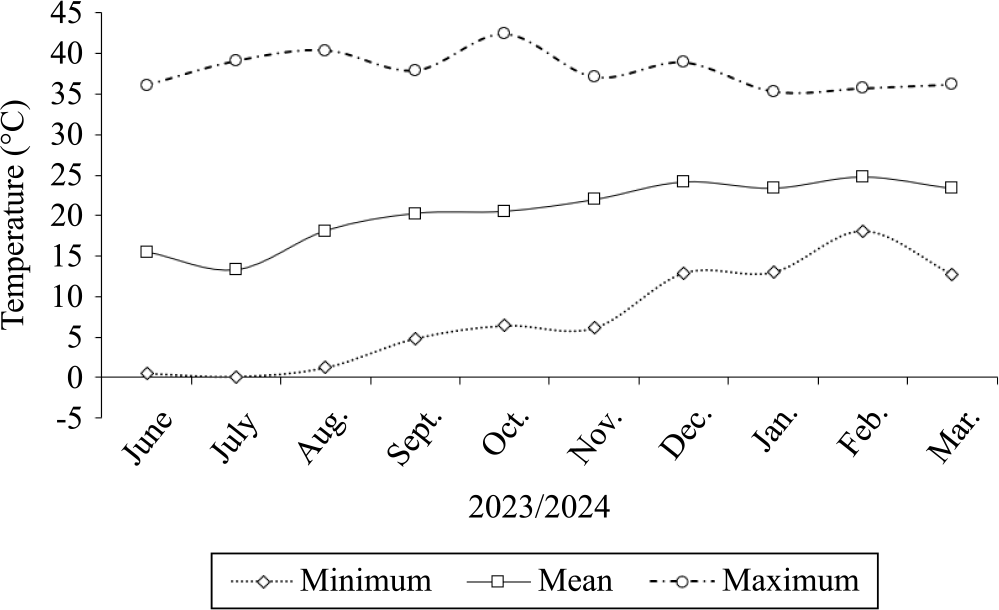
The irrigation used in the experiment was localized (drip tapes) in an automated system, with 1.41 L h-1 flow rate per dripper. The irrigation regime was activated five times a day, with total wetting for 10 min. The nutrient solutions, provided weekly to the plants, were prepared according to De Nardi et al. (2024). The nutrient solution was composed of calcium nitrate, potassium monobasic phosphate, potassium nitrate, magnesium sulfate, urea, and micronutrients (boron, copper, iron, manganese, molybdenum, and zinc). Air temperature in the greenhouse was monitored (Figure 1), using a mini weather station (WatchDog 2425, Spectrum Technologies, Inc., Aurora, Illinois, USA).

Minimum, average, and maximum monthly temperatures, inside the greenhouse, during the experiment.
To verify the AMF root colonization rate, root portions from the plants were prepared (Phillips & Hayman, 1970) and their mycorrhizal colonization percentage (MC) was determined (Trouvelot et al., 1986). To detect T. harzianum in plant roots, portions of the roots were removed from the substrate and washed in running water. Approximately 30 portions of roots (2 mm diameter) from each treatment were cut and added to 70% alcohol solution for 30 seconds. Roots were then subjected to asepsis in sodium hypochlorite + water (1:1 volume/volume), for 2 min, and rinsed with sterilized water and dried on filter paper. After these procedures, the roots were transferred to potato-dextrose-agar culture medium and incubated in a growth chamber (25°C, 12 hours of light) for seven days.
From fruiting, starting in August (winter) 2023, the total number of fruit per plant (TNF) was evaluated, along with the total production of fruit per plant in grams (TP), and harvested when they reached ¾ ripeness or when fully ripe. Fruit were weighed on an electronic digital scale. Additionally, the average fresh mass of fruit (AFMF, g) was determined by dividing TP by TNF.
Regarding the phytochemical composition, strawberries were subjected to an extraction procedure as described by Revilla et al. (1998), for subsequent detection of total anthocyanins (TA) and flavonoids (TF). The content of TA was measured by pH differential (Giusti & Wrolstad, 2001), and the results were expressed in milligrams of pelargonidin-3-O-glucoside equivalent per 100 grams of fresh fruit (mg PE 100 g-1 FF). The content of TF was determined according to Basílio et al. (2022), and the results were expressed in milligrams of rutin per 100 grams of fresh fruit (mg rutin 100 g-1 FF).
The data were subjected to the analysis of variance, and the treatment means were compared using the Tukey’s test, at 5% probability, with the aid of the R software (R Core Team, 2020). To illustrate the relationship among treatments, a hierarchical clustering analysis was performed using the Euclidean distance. The results were presented in a dendrogram created with the ‘factoextra’ package (R Core Team, 2020). To validate the clustering analysis, the cophenetic correlation coefficient (CCC) was obtained.
Results and Discussion
The plants subjected to inoculation with the AMF community exhibited mycorrhizal colonization higher than 97% (Table 1). This was possibly due to the monthly reinoculation.
Detection of AMF and Trichoderma harzianum in 'San Andreas' strawberry (Fragaria x ananassa) roots(1).
In general, when the inoculant is added only at crop establishment, mycorrhizal colonization of the root system is 20% to 40% during the cycle, and less than 1% at the end of the cultivation cycle (Robinson Boyer et al., 2016). Furthermore, the use of multi-species inoculants is also an important factor regarding the establishment and maintenance of mycorrhizal symbiosis, as the presence of only one or a few species can compromise the association, due to the lesser adaptation of the fungal species to the environment (Pedersen et al., 2017).
In the present study, the AMF structures observed in the roots included hyphae, vesicles, and arbuscules. Plants cultivated with T. harzianum showed an incidence (I) of 67% of this fungus in the roots (Table 1). In comparison with the dual combinations (AMF+TH and AN+TH), the association of all three bioinputs (AMF+AN+TH) represented an incidence of 40% of T. harzianum in strawberry roots. No contamination of T. harzianum was observed in the treatments without this rhizofungus (control, AMF, AN, and AMF+AN). Besides, the incidence of T. harzianum in roots coinoculated with AMF was lower than that of the use of T. harzianum alone, which showed an antagonistic effect between these two inoculants. This antagonistic relationship may result from modification of root exudates, the release of substances by extraradical micellar structures of AMF, and competition between both fungi in the initial stages of colonization (Martínez-Medina et al., 2009).
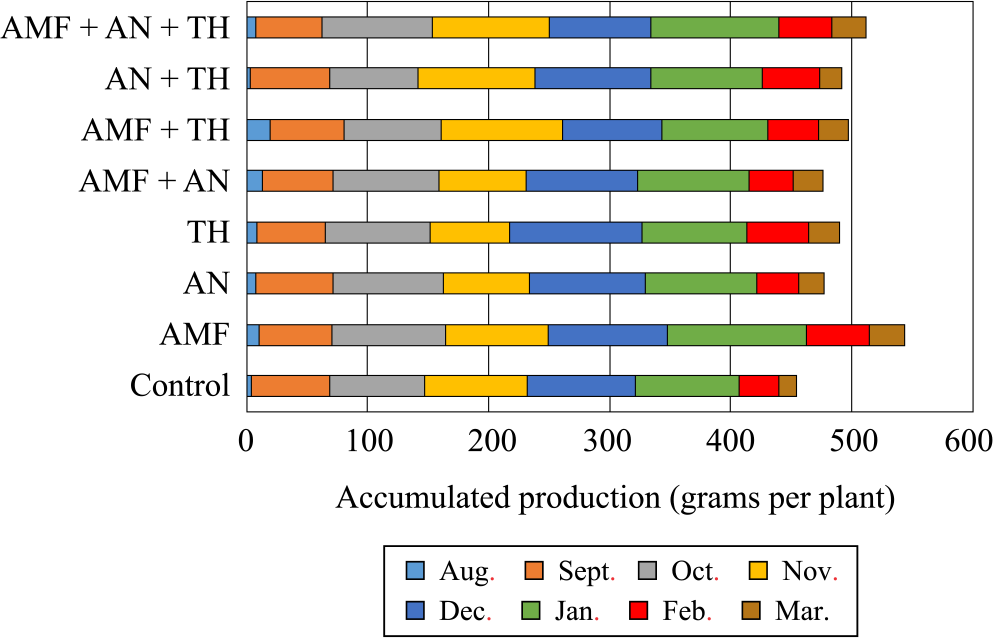
No significant effect of the bioinputs was observed regarding the attributes related to fruit production. Despite the absence of a significant effect between the absence and presence of bioinputs concerning total fruit production; however, the analysis of the monthly production showed that plants without bioinputs showed a lower monthly yield of strawberries from January to March (Figure 2). In general, the AMF use in the growing substrate improved the accumulated fruit production. However, plants grown without bioinputs exhibited the lowest-accumulated production of strawberry (Figure 2). AMF can increase strawberry yield (Roccuzzo et al., 2021; Chiomento et al., 2025; Shirdel et al., 2025), usually in prolonged crops (Robinson Boyer et al., 2016). Thus, maintaining plants for more than one consecutive crop cycle may contribute to significantly increasing strawberry yield in the soilless cultivation system. This is possible due to improvements in plant physiology (Whyle et al., 2022) and nutrient availability (Shirdel et al., 2020) provided by the symbiosis. To prove this hypothesis, future studies should focus on strawberry cultivation for prolonged crops (Robinson Boyer et al., 2016), with monthly reinoculation with AMF (Chiomento et al., 2024).

Accumulated production of 'San Andreas' strawberry (Fragaria x ananassa) produced both in the absence and in the presence of bioinputs. Bioinputs: AMF, arbuscular mycorrhizal fungi; TH, Trichoderma harzianum; AN, Ascophyllum nodosum; control: noninoculated plants.
Although all bioinputs increased the levels of TA (Figure 3 A) and TF (Figure 3 B), in comparison with the control, the plants cultivated with T. harzianum produced fruit with the highest contents of TA (3.10 mg PE 100 g-1 FF) and of TF (162.20 mg rutin 100 g-1 FF), which were 56% and 66% higher, respectively, than fruit from plants grown without bioinputs. The benefit of bioinputs on strawberry quality has already been reported in another research using AMF (Chiomento et al., 2021), T. harzianum (Lombardi et al., 2020), and A. nodosum (Soppelsa et al., 2019). The dynamics of these bioinputs, in the secondary metabolism of plants, results in the biosynthesis of phytochemicals with properties beneficial to health (Chiomento et al., 2019a). For instance, these higher concentrations of phytochemicals in the fruit can be attributed to the activation of a defense response of strawberry plants to mycorrhizal colonization (Adolfsson et al., 2017), observed in the roots of the plants analyzed. Furthermore, the synergistic effect of AMF and T. harzianum on wheat plants increased the total phenol content, stimulated the production of peroxidase and polyphenol oxidase enzymes, and improved growth and yield (El-Sharkawy et al., 2018).

Total levels of anthocyanins (TA) and flavonoids (TF), in fruit of plants treated with or without the use of bioinputs in 'San Andreas' strawberry (Fragaria x ananassa): A, TA; B, TF. Bioinputs: AMF, arbuscular mycorrhizal fungi; TH, Trichoderma harzianum; AN, Ascophyllum nodosum; control, noninoculated plants. Data are presented as mean ± standard deviation. Means followed by equal letters, in the columns, do not differ significantly by the Tukey’s test, at 5% probability.
The enhancement of anthocyanins and flavonoids in strawberries, produced with the three bioinputs (Figure 3), contributes to fruit quality improvement (Soppelsa et al., 2019; Lombardi et al., 2020; Chiomento et al., 2025). Therefore, results regarding the increase of secondary metabolites in strawberries, caused the use of AMF, T. harzianum, and A. nodosum indicate the importance of establishing sustainable crops with bioinputs, to enhance fruit quality. However, the compatibility among the bioinputs was not verified, as the anthocyanin and flavonoid contents were improved mainly using Trichoderma and the other bioinputs applied alone, while the combined applications (AMF+TH, AMF+AN, TH+AN, and AMF+TH+AN) showed inferior performance, indicating a possible incompatibility between bioinputs. Antagonism between the two inoculants (AMF and TH) can occur, due to Trichoderma mycoparasitism on the AMF mycelium (De Jaeger et al., 2010). Furthermore, the coinoculation of T. harzianum and AMF affects the hormonal profiles of host plants, since AMF represses the salicylic acidand jasmonic acid-dependent pathways, which are stimulated by T. harzianum (Martínez-Medina et al., 2011). Other antagonistic relationships are reported in the literature. The association of AMF and A. nodosum did not increase the phenolic content of pea plants (Pisum sativum L.), in comparison with the isolated use of these bioinputs (Rashad et al., 2022). Besides, the combination of Trichoderma and A. nodosum did not improve the production of phenolic compounds in tomato (Solanum lycopersicum L.) (Di Mola et al., 2023).
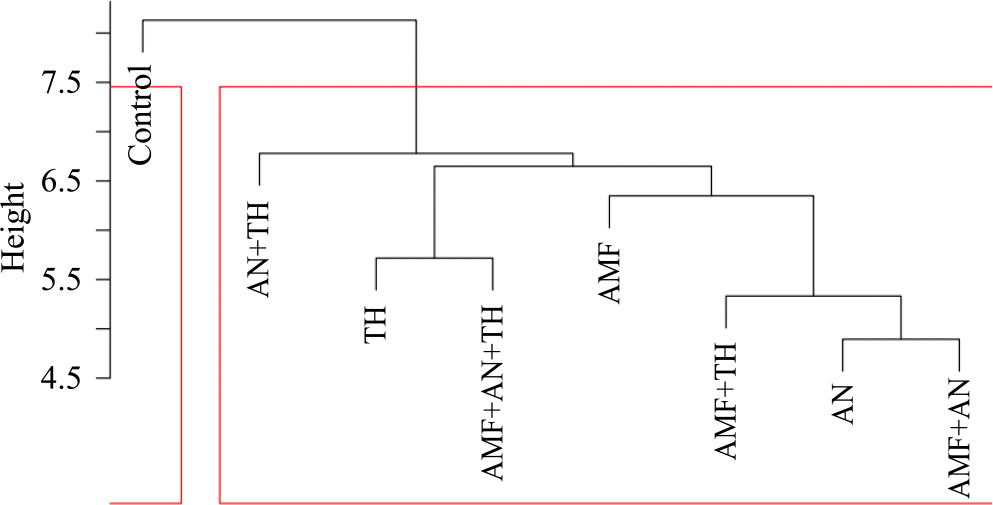
Regarding the multivariate analysis, the first nine principal components (PC) can be used to study the relationships among the variables analyzed in the experiment because the eigenvalues were greater than 1 (Table 2). The first two PCs had an accumulated proportion of 31.81%; the first PC explained 18.74% of the total variance and the second one explained 13.06% (Table 2). The dendrogram formed two groups, and one of them included only the control, that is, plants grown without bioinputs (Figure 4). This treatment presented the lowest total levels of anthocyanins and flavonoids in strawberries (Figure 3) and the lowest accumulated fruit production (Figure 2). The second group was formed by the seven treatments containing bioinputs alone or in combination (Figure 4). The dissimilarity among the eight treatments, adjusted by the data distance matrix from the CCC, was 75%, indicating adequacy of the grouping.
Principal components (PC), eigenvalues (λi), proportion of variance (PV), and proportion of accumulated variance (PVA) by components.

Dendrogram of eight treatments in 'San Andreas' strawberry (Fragaria x ananassa), in the absence and presence of the following bioinputs: AMF, arbuscular mycorrhizal fungi; TH, Trichoderma harzianum; AN, Ascophyllum nodosum; control: noninoculated plants.
The effects of AMF, A. nodosum, T. harzianum, and their combinations, on strawberry cultivation in substrate are little known, with only one study reported in the literature (Chiomento et al., 2024), in which the combination of AMF and T. harzianum increased the precocity to start harvesting fruit, shortened the crop cycle, and improved strawberry flavor. However, it was still necessary to understand the action of these three bioinputs on the yield and phytochemical quality of strawberry fruit throughout their entire cultivation cycle (June to March). Thus, in relation to the previous study (Chiomento et al., 2024), the understanding of the bioengineering effect of AMF, A. nodosum, and T. harzianum on the yield (Figure 2) and secondary metabolite levels (Figure 3) of strawberry plants, in the soilless cultivation system, was improved.
The addition of bioinputs to strawberry cultivation has the potential to increase the phytochemical quality of fruit by about 60%, which may be especially important for crop systems without microorganisms naturally present in the growth medium, like those that involve substrates supplied with nutrient solutions. The varied effects of bioinputs on strawberry yield and quality imply the need for further investigation of their modes of action, as well as ideal cultivation practices, such as dosage and timing of application. Bioinputs can play an important role in the commercial production of strawberry plants grown in substrate, and they can be a valuable tool for the sustainable cultivation of this important horticultural crop, especially in agroecological systems.
Conclusions
-
1. The bioinputs arbuscular mycorrhizal fungi (AMF), Trichoderma harzianum, Ascophylum nodosum, and their combinations, do not increase fruit production of strawberry (Fragaria x ananassa) cultivars, but extend the production peak until the end of the harvest.
-
2. Trichoderma harzianum and AMF enhance the quality of strawberries cultivars, with emphasis on the total levels of anthocyanins and flavonoids.
-
3. The compatibility among the bioinputs is not verified, since the anthocyanin and flavonoid contents are improved using bioinputs applied alone, while the combined applications show inferior performance.
Declaration of use of AI technologies
No generative artificial intelligence (AI) was used in this study.
Acknowledgments
To Conselho Nacional de Desenvolvimento Científico e Tecnológico (CNPq), Coordenação de Aperfeiçoamento de Pessoal de Nível Superior (CAPES, Finance Code 001), Fundação de Amparo à Pesquisa do Estado do Rio Grande do Sul (FAPERGS), and to the Universidade de Passo Fundo, for granting scientific initiation (A. J. S. Ely, N. A. Mandelli, and M. Welter), and doctoral (A. P. Klein) scholarships. This study was financed in part by CAPES (Finance Code 001).To Bioagro Comercial Agropecuária Ltda., for the supply of ‘San Andreas’ strawberry. To Koppert, for the supply of the Acadian and Trichodermil bioinputs. Arbuscular mycorrhizal fungi (AMF) used in the present work are regulated by the Sistema Nacional de Gestão do Patrimônio Genético e do Conhecimento Tradicional Associado (SisGen) of the Ministry of Environment and Climate Change, Brazil, according to the registration number A198F50.
Disclaimer/Publisher’s note
The statements, opinions, and data contained in all texts published in Pesquisa Agropecuária Brasileira (PAB) are solely those of the individual author(s) and not of the journal’s publisher, editor, and editorial team, who disclaim responsibility for any injury to people or property resulting from any referred ideas, methods, instructions, or products.
The mention of specific chemical products, machines, and commercial equipment in the texts published in this journal does not imply their recommendation by the publisher.
Data availability statement
Data available upon request: research data are only available upon reasonable request to the corresponding author.
References
-
ADOLFSSON, L.; NZIENGUI, H.; ABREU, I.N.; ŠIMURA, J.; BEEBO, A.; HERDEAN, A.; ABOALIZADEH, J.; ŠIROKÁ, J.; MORITZ, T.; NOVÁK, O.; LJUNG, K.; SCHOEFS, B.; SPETEA, C. Enhanced secondaryand hormone metabolism in leaves of arbuscular mycorrhizal Medicago truncatula Plant Physiology, v.175, p.392-411, 2017. DOI: https://doi.org/10.1104/pp.16.01509
» https://doi.org/10.1104/pp.16.01509 -
BASÍLIO, L.S.P.; BORGES, C.V.; MINATEL, I.O.; VARGAS, P.F.; TECCHIO, M.A.; VIANELLO, F.; LIMA, G.P.P. New beverage based on grapes and purple-fleshed sweet potatoes: use of non-standard tubers. Food Bioscience, v.47, art.101626, 2022. DOI: https://doi.org/10.1016/j.fbio.2022.101626
» https://doi.org/10.1016/j.fbio.2022.101626 - BRASIL. Lei n. 15.070, de 23 de dezembro de 2024. Dispõe sobre a produção, a importação, a exportação, o registro, a comercialização, o uso, a inspeção, a fiscalização, a pesquisa, a experimentação, a embalagem, a rotulagem, a propaganda, o transporte, o armazenamento, as taxas, a prestação de serviços, a destinação de resíduos e embalagens e os incentivos à produção de bioinsumos para uso agrícola, pecuário, aquícola e florestal; e altera as Leis nºs 14.785, de 27 de dezembro de 2023, 10.603, de 17 de dezembro de 2002, e 6.894, de 16 de dezembro de 1980. Diário Oficial da União, 24 dez. 2024. Seção1, p.3-5.
-
CHIOMENTO, J.L.T.; COSTA, R.C. da; DE NARDI, F.S.; TRENTIN, N. dos S.; NIENOW, A.A.; CALVETE, E.O. Arbuscular mycorrhizal fungi communities improve the phytochemical quality of strawberry. The Journal of Horticultural Science and Biotechnology, v.94, p.653-663, 2019a. DOI: https://doi.org/10.1080/14620316.2019.1599699
» https://doi.org/10.1080/14620316.2019.1599699 -
CHIOMENTO, J.L.T.; DE NARDI, F.S.; FANTE, R.; DAL PIZZOL, E.; TRENTIN, T. dos S.; BORBA, A.C.; BASÍLIO, L.S.P.; GARCIA, V.A. dos S.; LIMA, G.P.P. Building the microbiota in strawberry soilless cultivation systems with on-farm AMF inoculants: roles in yield, phytochemical profile, and root morphology. South African Journal of Botany, v.178, p.226-234, 2025. DOI: https://doi.org/10.1016/j.sajb.2025.01.035
» https://doi.org/10.1016/j.sajb.2025.01.035 -
CHIOMENTO, J.L.T.; DE NARDI, F.S.; FILIPPI, D.; TRENTIN, T. dos S.; ANZOLIN, A.P.; BERTOL, C.D.; NIENOW, A.A.; CALVETE, E.O. Mycorrhization of strawberry plantlets potentiates the synthesis of phytochemicals during ex vitro acclimatization. Acta Scientiarum. Agronomy, v.44, art.55682, 2022. DOI: https://doi.org/10.4025/actasciagron.v44i1.55682
» https://doi.org/10.4025/actasciagron.v44i1.55682 -
CHIOMENTO, J.L.T.; DE NARDI, F.S.; FILIPPI, D.; TRENTIN, T. dos S.; DORNELLES, A.G.; FORNARI, M.; NIENOW, A.A.; CALVETE, E.O. Morpho-horticultural performance of strawberry cultivated on substrate with arbuscular mycorrhizal fungi and biochar. Scientia Horticulturae, v.282, art.110053, 2021. DOI: https://doi.org/10.1016/j.scienta.2021.110053
» https://doi.org/10.1016/j.scienta.2021.110053 -
CHIOMENTO, J.L.T.; FRACARO, J.; GÖRGEN, M.; FANTE, R.; DAL PIZZOL, E.; WELTER, M.; KLEIN, A.P.; TRENTIN, T. dos S.; SUZANA-MILAN, C.S.; PALENCIA, P. Arbuscular mycorrhizal fungi, Ascophyllum nodosum, Trichoderma harzianum, and their combinations influence the phyllochron, phenology, and fruit quality of strawberry plants. Agronomy, v.14, art.860, 2024. DOI: https://doi.org/10.3390/agronomy14040860
» https://doi.org/10.3390/agronomy14040860 -
CHIOMENTO, J.L.T.; STÜRMER, S.L.; CARRENHO, R.; COSTA, R.C. da; SCHEFFER-BASSO, S.M.; ANTUNES, L.E.C.; NIENOW, A.A.; CALVETE, E.O. Composition of arbuscular mycorrhizal fungi communities signals generalist species in soils cultivated with strawberry. Scientia Horticulturae, v.253, p.286-294, 2019b. DOI: https://doi.org/10.1016/j.scienta.2019.04.029
» https://doi.org/10.1016/j.scienta.2019.04.029 -
DE JAEGER, N.; DECLERCK, S.; DE LA PROVIDENCIA, I.E. Mycoparasitism of arbuscular mycorrhizal fungi: a pathway for the entry of saprotrophic fungi into roots. FEMS Microbiology Ecology, v.73, p.312-322, 2010. DOI: https://doi.org/10.1111/j.1574-6941.2010.00903.x
» https://doi.org/10.1111/j.1574-6941.2010.00903.x -
DE NARDI, F.S.; TRENTIN, T. dos S.; TRENTIN, N. dos S.; COSTA, R.C. da; CALVETE, E.O.; PALENCIA, P.; CHIOMENTO, J.L.T. Mycorrhizal biotechnology reduce phosphorus in the nutrient solution of strawberry soilless cultivation systems. Agronomy, v.14, art.355, 2024. DOI: https://doi.org/10.3390/agronomy14020355
» https://doi.org/10.3390/agronomy14020355 -
DI MOLA, I.; OTTAIANO, L.; COZZOLINO, E.; MARRA, R.; VITALE, S.; PIRONTI, A.; FIORENTINO, N.; MORI, M. Yield and quality of processing tomato as improved by biostimulants based on Trichoderma sp. and Ascophyllum nodosum and biodegradable mulching films. Agronomy, v.13, art.901, 2023. DOI: https://doi.org/10.3390/agronomy13030901
» https://doi.org/10.3390/agronomy13030901 -
EL-SHARKAWY, H.H.A.; RASHAD, Y.M.; IBRAHIM, S.A. Biocontrol of stem rust disease of wheat using arbuscular mycorrhizal fungi and Trichoderma spp. Physiological and Molecular Plant Pathology, v.103, p.84-91, 2018. DOI: https://doi.org/10.1016/j.pmpp.2018.05.002
» https://doi.org/10.1016/j.pmpp.2018.05.002 -
GIUSTI, M.M.; WROLSTAD, R.E. Anthocyanins. Characterization and measurement of Anthocyanins by UV-visible spectroscopy. Current Protocols in Food Analytical Chemistry, v.1, p.F1.2.1-F1.2.13, 2001. DOI: https://doi.org/10.1002/0471142913.faf0102s00
» https://doi.org/10.1002/0471142913.faf0102s00 -
LOMBARDI, N.; CAIRA, S.; TROISE, A.D.; SCALONI, A.; VITAGLIONE, P.; VINALE, F.; MARRA, R.; SALZANO, A.M.; LORITO, M.; WOO, S.L. Trichoderma applications on strawberry plants modulate the physiological processes positively affecting fruit production and quality. Frontiers in Microbiology, v.11, art.1364, 2020. DOI: https://doi.org/10.3389/fmicb.2020.01364
» https://doi.org/10.3389/fmicb.2020.01364 -
MARTÍNEZ-MEDINA, A.; PASCUAL, J.A.; LLORET, E.; ROLDÁN, A. Interactions between arbuscular mycorrhizal fungi and Trichoderma harzianum and their effects on Fusarium wilt in melon plants grown in seedling nurseries. Journal of the Science of Food and Agriculture, v.89, p.1843-1850, 2009. DOI: https://doi.org/10.1002/jsfa.3660
» https://doi.org/10.1002/jsfa.3660 -
MARTÍNEZ-MEDINA, A.; ROLDÁN, A.; ALBACETE, A.; PASCUAL, J.A. The interaction with arbuscular mycorrhizal fungi or Trichoderma harzianum alters the shoot hormonal profile in melon plants. Phytochemistry, v.72, p.223-229, 2011. DOI: https://doi.org/10.1016/j.phytochem.2010.11.008
» https://doi.org/10.1016/j.phytochem.2010.11.008 -
PEDERSEN, A.C.; DE NARDI, F.S.; COSTA, R.C. da; ANTONIOLLI, R.; STÜRMER, S.L.; CALVETE, E.O. Diversity of arbuscular mycorrhizal fungi in strawberry crop systems detected in trap cultures. Acta Horticulturae, v.1170, p.1085-1092, 2017. DOI: https://doi.org/10.17660/ActaHortic.2017.1170.140
» https://doi.org/10.17660/ActaHortic.2017.1170.140 -
PEREIRA, L.; MORRISON, L.; SHUKLA, P.S.; CRITCHLEY, A.T. A concise review of the brown macroalga Ascophyllum nodosum (Linnaeus) Le Jolis. Journal of Applied Phycology, v.32, p.3561-3584, 2020. DOI: https://doi.org/10.1007/s10811-020-02246-6
» https://doi.org/10.1007/s10811-020-02246-6 -
PHILLIPS, J.M.; HAYMAN, D.S. Improved procedures for clearing roots and staining parasitic and vesicular-arbuscular mycorrhizal fungi for rapid assessment of infection. Transactions of the British Mycological Society, v.55, p.158-161, 1970. DOI: https://doi.org/10.1016/S0007-1536(70)80110-3
» https://doi.org/10.1016/S0007-1536(70)80110-3 -
R CORE TEAM. R: a language and environment for statistical computing. Vienna: R Foundation for Statistical Computing, 2020. Available at: <https://www.R-project.org>. Accessed on: Dec. 15 2024.
» https://www.R-project.org -
RASHAD, Y.M.; EL-SHARKAWY, H.H.A.; ELAZAB, N.T. Ascophyllum nodosum extract and mycorrhizal colonization synergistically trigger immune responses in pea plants against Rhizoctonia root rot, and enhance plant growth and productivity. Journal of Fungi, v.8, art.268, 2022. DOI: https://doi.org/10.3390/jof8030268
» https://doi.org/10.3390/jof8030268 -
REDECKER, D.; SCHUBLER, A.; STOCKINGER, H.; STÜRMER, S.L.; MORTON, J.B.; WALKER, C. An evidence-based consensus for the classification of arbuscular mycorrhizal fungi (Glomeromycota). Mycorrhiza, v.23, p.515-531, 2013. DOI: https://doi.org/10.1007/s00572-013-0486-y
» https://doi.org/10.1007/s00572-013-0486-y -
REVILLA, E.; RYAN, J.-M.; MARTÍN-ORTEGA, G. Comparison of several procedures used for the extraction of anthocyanins from red grapes. Journal of Agricultural and Food Chemistry, v.46, p.4592-4597, 1998. DOI: https://doi.org/10.1021/jf9804692
» https://doi.org/10.1021/jf9804692 -
ROBINSON BOYER, L.; FENG, W.; GULBIS, N.; HAJDU, K.; HARRISON, R.J.; JEFFRIES, P.; XU, X. The use of arbuscular mycorrhizal fungi to improve strawberry production in coir substrate. Frontiers in Plant Science, v.7, art.1237, 2016. DOI: https://doi.org/10.3389/fpls.2016.01237
» https://doi.org/10.3389/fpls.2016.01237 -
ROCCUZZO, G.; STAGNO, F.; FRASSINETI, C.; MALTONI, M.L.; ASSIRELLI, A.; SBRIGHI, P.; BARUZZI, G. Effects of arbuscular mycorrhizae Glomus iranicum var. tenuihypharum on strawberry fruit yield and quality. Acta Horticulturae, v.1309, p.613-620, 2021. DOI: https://doi.org/10.17660/ActaHortic.2021.1309.88
» https://doi.org/10.17660/ActaHortic.2021.1309.88 -
ROUPHAEL, Y.; COLLA, G. Biostimulants in agriculture. Frontiers in Plant Science, v.11, art.40, 2020. DOI: https://doi.org/10.3389/fpls.2020.00040
» https://doi.org/10.3389/fpls.2020.00040 -
SAMBO, P.; NICOLETTO, C.; GIRO, A.; PII, Y.; VALENTINUZZI, F.; MIMMO, T.; LUGLI, P.; ORZES, G.; MAZZETTO, F.; ASTOLFI, S.; TERZANO, R.; CESCO, S. Hydroponic solutions for soilless production systems: issues and opportunities in a smart agriculture perspective. Frontiers in Plant Science, v.10, art.923, 2019. DOI: https://doi.org/10.3389/fpls.2019.00923
» https://doi.org/10.3389/fpls.2019.00923 - SHIRDEL, M.; ESHGHI, S.; GHARAGHANI, A.; ZAREI, M. Morpho-physiological, quantitative and qualitative responses of two strawberry (Fragaria × ananassa) cultivars to heat stress in presence of arbuscular mycorrhiza fungus. Journal of Plant Process and Function, v.9, p.245-264, 2020.
-
SHIRDEL, M.; ESHGHI, S.; SHAHSAVANDI, F.; FALLAHI, E. Arbuscular mycorrhiza inoculation mitigates the adverse effects of heat stress on yield and physiological responses in strawberry plants. Plant Physiology and Biochemistry, v.221, art.109629, 2025. DOI: https://doi.org/10.1016/j.plaphy.2025.109629
» https://doi.org/10.1016/j.plaphy.2025.109629 -
SHUKLA, P.S.; MANTIN, E.G.; ADIL, M.; BAJPAI, S.; CRITCHLEY, A.T.; PRITHIVIRAJ, B. Ascophyllum nodosum-based biostimulants: sustainable applications in agriculture for the stimulation of plant growth, stress tolerance, and disease management. Frontiers in Plant Science, v.10, art.655, 2019. DOI: https://doi.org/10.3389/fpls.2019.00655
» https://doi.org/10.3389/fpls.2019.00655 -
SOPPELSA, S.; KELDERER, M.; CASERA, C.; BASSI, M.; ROBATSCHER, P.; MATTEAZZI, A.; ANDREOTTI, C. Foliar applications of biostimulants promote growth, yield and fruit quality of strawberry plants grown under nutrient limitation. Agronomy, v.9, art.483, 2019. DOI: https://doi.org/10.3390/agronomy9090483
» https://doi.org/10.3390/agronomy9090483 -
SRIVASTAV, A.L.; PATEL, N.; RANI, L.; KUMAR, P.; DUTT, I.; MADDODI, B.S.; CHAUDHARY, V.K. Sustainable options for fertilizer management in agriculture to prevent water contamination: a review. Environment, Development and Sustainability, v.26, p.8303-8327, 2024. DOI: https://doi.org/10.1007/s10668-023-03117-z
» https://doi.org/10.1007/s10668-023-03117-z -
TRENTIN, T. dos S.; DORNELLES, A.G.; TRENTIN, N. dos S.; HUZAR-NOVAKOWISKI, J.; CALVETE, E.O.; CHIOMENTO, J.L.T. Addition of arbuscular mycorrhizal fungi and biochar in the cultivation substrate benefits macronutrient contents in strawberry plants. Journal of Soil Science and Plant Nutrition, v.22, p.2980-2991, 2022. DOI: https://doi.org/10.1007/s42729-022-00861-5
» https://doi.org/10.1007/s42729-022-00861-5 - TROUVELOT, A.; KOUGH, J.L.; GIANINAZZI-PEARSON, V. Mesure du taux de mycorhization VA d’un système radiculaire: recherche de méthodes d’estimation ayant une signification fonctionelle. In: EUROPEAN SYMPOSIUM MICORRHIZAE, 1., 1985, Dijon. Physiological and genetic aspects of mycorrhizae: proceedings. Paris: INRA Press, 1986. p.217-221. Editors V. Gianinazzi-Pearson and S. Gianinazzi.
-
WHYLE, R.L.; TROWBRIDGE, A.M.; JAMIESON, M.A. Genotype, mycorrhizae, and herbivory interact to shape strawberry plant functional traits. Frontiers in Plant Science, v.13, art.964941, 2022. DOI: https://doi.org/10.3389/fpls.2022.964941
» https://doi.org/10.3389/fpls.2022.964941
Edited by
-
Chief editor:
Edemar Corazza
-
Edited by:
Mírian Baptista