 Development and characterization of two plant-based cheese analogs with full oat use
Abstract
The objective of this work was to develop and characterize two formulations of plant-based cheese analogs made from oat water-soluble extract (WSEA) and oat extraction residue (ERA). The ingredients added to the WSEA and ERA were nutritional yeast, extra-virgin olive oil, alcohol vinegar, and salt; the ERA also included dehydrated garlic powder and dehydrated onion powder. Oat flakes were mixed with water at a mass ratio of 1:5 and refrigerated for 2 hours at 3–6ºC, followed by grinding for 3 min and filtration. The WSEA and ERA ingredients were cooked under constant manual homogenization for 15 and 2 min, respectively, until obtaining semi-soft products. Both products present low sodium and energy contents. However, the ERA is slightly more acidic than the WSEA and presents a 3.4 times higher dietary fiber content. The instrumental color coordinates indicate that the WSEA is lighter, yellower, and greener than the ERA. The two products present a good sensory evaluation and a considerable purchase intention, reaching an acceptability index above 70%. According to the obtained results and consumer demands, the developed products are non-allergenic and clean label options similar to cheese, showing commercialization potential.
Index terms:
Avena sativa
; cheese alternatives; cheese substitutes; functional foods; vegans
Resumo
O objetivo deste trabalho foi desenvolver e caracterizar duas formulações de análogos de queijo de origem vegetal feitos de extrato hidrossolúvel de aveia (WSEA) e resíduo de extração de aveia (ERA). Os ingredientes adicionados ao WSEA e ao ERA foram levedura nutricional, azeite de oliva extra virgem, vinagre de álcool e sal; o ERA também incluiu alho desidratado em pó e cebola desidratada em pó. Flocos de aveia foram misturados com água na razão de massa de 1:5 e refrigerados por 2 horas a 3–6°C, seguido de trituração por 3 min e filtração. O WSEA e o ERA com seus ingredientes foram cozidos sob agitação constante por 15 e 2 min, respectivamente, até a obtenção de produtos em consistência de corte. Ambos os produtos apresentam baixos teores de sódio e energia. No entanto, o ERA é ligeiramente mais ácido que o WSEA e apresenta um conteúdo de fibra alimentar 3,4 vezes maior. As coordenadas de cor instrumental indicam que o WSEA é mais claro, mais amarelado e mais esverdeado que o ERA. Os dois produtos apresentam boa avaliação sensorial e considerável intenção de compra, atingindo um índice de aceitação acima de 70%. De acordo com os resultados e as demandas dos consumidores, os produtos desenvolvidos são opções não alergênicas e clean label semelhantes ao queijo, mostrando potencial de comercialização.
Termos para indexação:
Avena sativa
; queijo alternativo; substituto de queijo; alimentos funcionais; veganos
Introduction
According to the Food and Agriculture Organization (FAO, 2023), cheese is a dairy product popularly known and largely consumed, with worldwide exports pegged at 3.5 million tons in 2023. Defined as a fresh or ripened type of fermented milk-based food, obtained after coagulation and whey separation of milk, partly skimmed milk, buttermilk, cream, or a mixture of these products, cheese presents a nutritional composition that varies according to types, flavors, and forms, but that mainly comprises proteins, lipids, minerals as calcium and phosphorus, fat-soluble vitamins, and lactose (Hill & Ferrer, 2021).
Despite the great sensory acceptability of cheese, its intake can cause adverse reactions with a diverse etiology and vast symptomatology related to lactose intolerance or to allergy to casein (Rangel et al., 2016; Brooke-Taylor et al., 2017). Therefore, in the last few years, the plant-based diet has grown in popularity (Grossmann & McClements, 2021), being sought by different publics, including individuals intolerant to lactose or allergic to casein, as well as vegans. The main reasons for people to start adhering to a diet restricted to plant-based products are related to health and a good nutrition (Dyett et al., 2013), as well as to ethics concerning animal rights and the environment (Janssen et al., 2016).
In such diets, soymilk is used worldwide as a substitute for animal milk in the production of derivatives (Grossmann & McClements, 2021; Grasso et al., 2021). However, other plant-based raw materials have been gaining ground, such as almond (Prunus dulcis D.A.Webb), cashew (Anacardium occidentale L.) nut, pea (Pisum sativum L.), peanut (Arachis hypogaea L.), coconut (Cocos nucifera L.), rice (Oryza sativa L.), flax (Linum usitatissimum L.), quinoa (Chenopodium quinoa Willd.), and oat (Avena sativa L.) (Mäkinen et al., 2016; Craig & Fresán, 2021).
Compared with the other raw materials, oat presents a lower cost and can be fully used (both its water-soluble extract and extraction residue) as an ingredient in other formulations (Feiten, 2023). The use of the residual portion of oat is an excellent alternative for reducing food waste (Damiani et al., 2020), since it not only contributes to the development of new functional products at a reduced cost, but also encourages the food industry and consumers to adopt the habit of fully using foods (Feiten, 2023). This habit addresses three sustainable development goals of the United Nations (2015): good health and well-being, promoting healthy lives and well-being for everyone at all ages; industry, innovation, and infrastructure, aiming to develop a resilient infrastructure, sustainable industrialization, and innovation; and responsible consumption and production, to ensure sustainable economic practices.
Oat has received great attention due to its nutritional composition, for which it is recognized as a functional food, containing amino acids, fatty acids, vitamins, minerals, dietary fibers, and antioxidants (Kim et al., 2021; Tabela..., 2023), also reducing fat and sugar absorption, while preventing high cholesterol levels and diabetes (Kim et al., 2021). The hypoglycemic and serum cholesterol-lowering effects have been widely attributed to the soluble fiber fraction of the oat bran, in particular to the (1-3, 1-4)-β-D-glucan component, which, together with other non-starch polysaccharides, is found in the walls of the endosperm cells that surround the grain’s starch, protein matrix, and lipid reserves (Gangopadhyay et al., 2015). When the high molecular weight structure of β-D-glucan is preserved, its physicochemical properties, such as viscosity, are maintained, reducing the levels of glucose and low-density lipoprotein cholesterol in the blood, also providing a high satiety potential, which benefits the digestive system, suppresses inflammation, and improves the immune system (Gangopadhyay et al., 2015; Kim et al., 2021).
Among the few studies carried out on plant-based cheese analog products, only some have shown positive results. Oyeyinka et al. (2019), for example, developed formulations of tofu cheese by replacing soybean water-soluble extract with cashew nut extract at proportions ranging from 0.0 to 100%. The authors found that the plant-based cheese analog produced with 40% cashew nut milk had the highest protein and ash contents, also being preferred in terms of flavor, color, and overall acceptability. Mefleh et al. (2022) developed a clean label plant-based cheese analog using fractionated pea protein, water, and an emulsion composed of extra-virgin olive oil and inulin, added at different concentrations (10, 13, and 15%), as well as tapioca starch, xanthan gum, and dehydrated oregano or rosemary as flavorings. These products were high in protein (134 g kg-1), low in fat (52.2 g kg-1), and the addition of spices masked the legume flavor, enriching significantly their aroma.
In the theme-related literature, cheese analog formulations usually include nuts (cashew, walnut, and almond) or oilseeds (peanut and soybean) (Grossmann & McClements, 2021), which present allergenic potential or a long list of ingredients and additives (as artificial flavors, colors, preservatives, or other synthetic additives) that do not meet the clean label status (Chauhan & Rao, 2024).
The objective of this work was to develop and characterize two formulations of plant-based cheese analogs made from oat water-soluble extract (WSEA) and oat extraction residue (ERA).
Materials and Methods
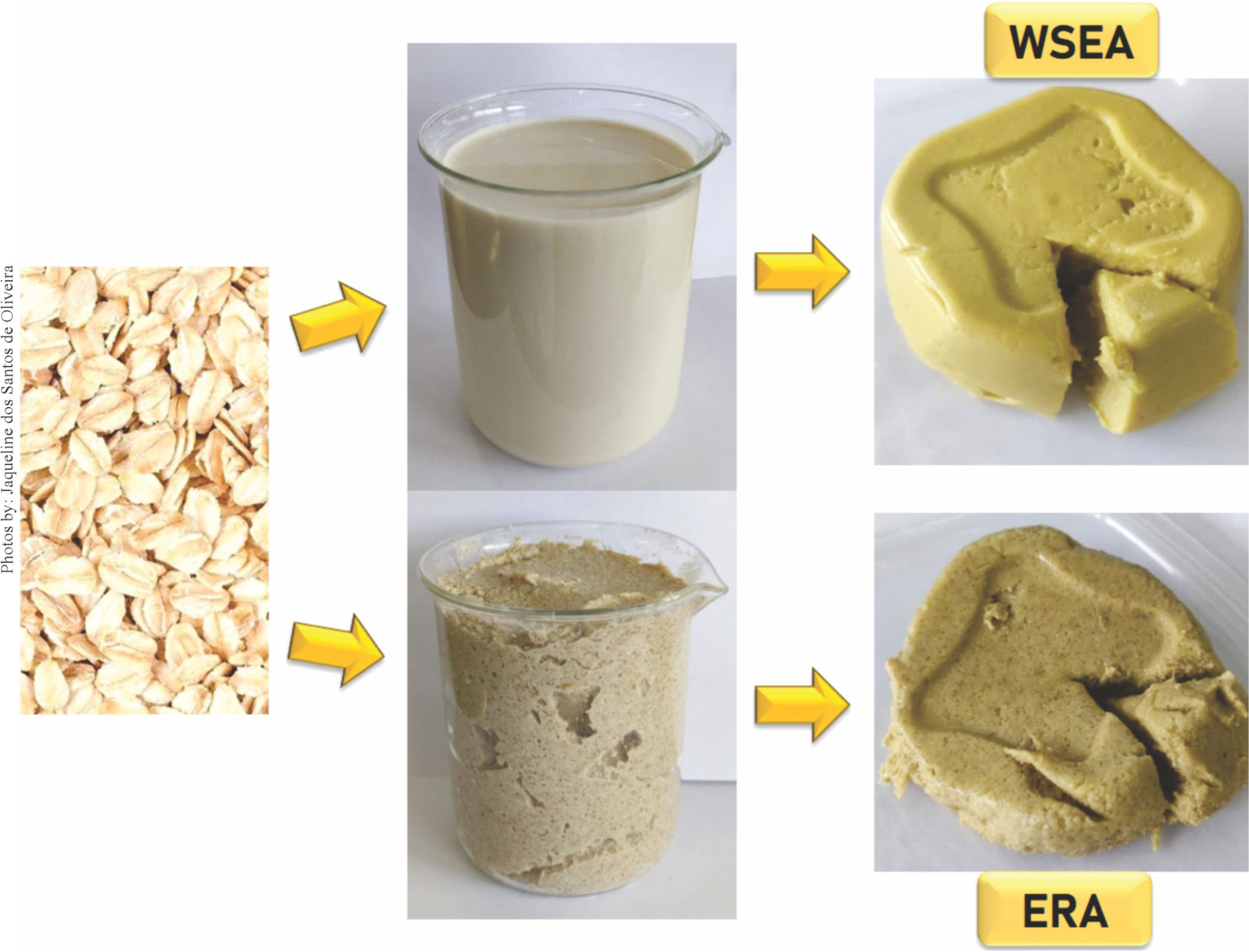
The flowchart for the production of the cheese analogs made from WSEA and ERA is shown in Figure 1.

Flowchart of the production process of the cheese analogs made from oat water-soluble extract (WSEA) and oat extraction residue (ERA).
The WSEA oat was obtained by submerging gluten-free oat flakes in mineral water, at a mass ratio of 1:5 for 2 hours under refrigeration between 3 and 6ºC, followed by grinding for 3 min in a conventional blender with a nominal power of 600 W. To separate the extract from the residue, a filtration step was conducted using a 200 mesh (0.0534 mm) polyamide strainer for vegetable cheese.
The WSEA of the strained oat was mixed with other ingredients commonly found in the local market: nutritional yeast flakes, extra-virgin olive oil with a maximum acidity of 0.3%, alcohol vinegar with 4.0% acetic acid, and iodized salt at the quantities shown in Table 1. The WSEA and all added ingredients were cooked at 98±2ºC on a conventional gas stove for 15 min under constant manual homogenization using a spoon, until reaching a semi-soft consistency.
Ingredients and their quantities used in the production of cheese analogs based on oat water-soluble extract (WSEA) and oat extraction residue (ERA).
A similar protocol was carried out for the production of the ERA, obtained by filtration (Figure 1), with the addition of the following ingredients: nutritional yeast flakes, extra-virgin olive oil with a maximum acidity of 0.3%, alcohol vinegar with 4.0% acetic acid, iodized salt, dehydrated garlic powder, and dehydrated onion powder. The mixture was cooked at 98±2ºC on a conventional gas stove for 2 min under constant manual homogenization using a spoon, until reaching a semi-soft consistency.
Both the WSEA and ERA cheese analogs were stored under refrigeration between 3 and 6ºC for at least 4 hours.
The proximate composition of the cheese analogs was determined according to Association of Official Analytical Chemists (AOAC) (Latimer Jr., 2023), using methods 925.09B, 923.03, 955.04, 920.39C, 985.29, and 985.29 to obtain, respectively: moisture content, by desiccating the samples in an oven, at 105ºC, until they reached a constant mass; ash content, using the muffle incineration method; protein levels, indirectly, by determining nitrogen content with the Kjeldahl method; total lipid content, extracted using the Soxhlet method after the samples were dried in the oven; and dietary fiber content, using the enzymatic-gravimetric method. Finally, total carbohydrate content was estimated by subtracting the sum of protein, moisture, dietary fiber, total fat, and ash in 100 g samples. The energy contents of the cheese analogs were obtained by summing the quantity of proteins, carbohydrates, fibers, and lipids converted to food energy using generally accepted factors that express the amount of available energy per unit of mass, i.e., 4.0, 4.0, 2.0, and 9.0 kcal g-1, respectively (FAO, 2003). Sodium contents were estimated by calculating the amount present in the ingredients added to the formulations according to the Brazilian food composition table (Tabela..., 2023).
For pH measurement, a bench digital pHmeter previously calibrated at pH 7.0 and with 4.0 buffer solutions was used. Total titratable acidity was measured based on method 942.15 of (Latimer Jr., 2023), which consisted of titrating the properly diluted samples against 0.1 mol L-1 sodium hydroxide to the equivalence point of pH 8.20–8.40.
The instrumental color of the cheese analogs was measured using the CR-400 colorimeter (Konica Minolta, Tokyo, Japan), through the CIE color coordinates: L* for lightness, a* for red/green, and b* for yellow/blue. L* varies from 0 (darker) to 100 (lighter), a* from redder (+60) to greener (-60), and b* from yellower (+60) to bluer (-60).
Before the sensory evaluation, the total coliform analysis was performed using 25 g of the products homogenized with 225 mL peptone water (0.10% w/v), carrying out successive dilutions (10-2 and 10-3) in tubes containing 9.0 mL peptone water (0.10% w/v) and 1.0 mL lauryl sulfate tryptose broth. The tubes were subjected to 35ºC for 24 hours, and the result was considered positive or negative if turbidity and gas formation were observed inside the tube or not, respectively (Erkmen, 2022).
The sensory analysis was conducted based on the ethical principles of Universidade Estadual de Maringá, under certificate of approval number 60475322.6.0000.0104. The analysis was carried out in the Sensory Analysis Laboratory of the university, in six individual cabins under bright light and at room temperature. The samples were served in disposable plastic cups duly coded with random three-digit numbers, along with a glass of water.
The acceptance test was carried out with 100 untrained tasters (56 females and 44 males) aged between 18 and 60. In order to better understand their habits, the tasters were asked to answer a short and direct questionnaire: “Do you usually consume plant-based products? If so, how often (once a month, once a week, 2 to 3 times a week, never).”
A structured hedonic scale from 1 to 9 points was used (1, “extremely disliked”; and 9, “extremely liked”) to evaluate the following attributes: color, aroma, flavor, texture, and overall acceptance. The acceptance index was calculated according to the following equation (Dutcosky, 2019):
where AI is the acceptance index, M is the average value of the responses from 1 to 9 on the hedonic scale, and K is the highest value mentioned by the tasters.
To evaluate the purchase intention of the cheese analogs, a 5 point scale was used, ranging from 1, “would certainly not buy”, to 5, “would certainly buy”.
All physicochemical and microbiologic analyses were performed in triplicate (n=3), and the sensory analysis was conducted with 100 tasters (n=100). The data were checked for assumptions of normality, homoscedasticity, and independence of errors using Shapiro-Wilk’s, Bartlett’s, and Durbin-Watson’s tests, respectively. All assumptions were met. The data were statistically treated with the one-way analysis of variance (ANOVA) for physicochemical and microbiologic analyses and the two-way ANOVA for sensory analysis by Tukey’s test, at a 5% significance level (α = 0.05), using the Statistica, version 7.0, software (TIBCO Software Inc., Palo Alto, CA, USA).
Results and Discussion
The composition, energy content, pH, total titratable acidity, and instrumental color coordinates of the products are shown in Table 2. The two formulations of the plant-based cheese analogs were classified as clean label due to their few ingredients and absence of additives. Images of the WSEA and ERA cheese analogs are shown in Figure 2.
Mean and standard deviation of physicochemical characteristics per 100 g of product and color coordinates of the cheese analogs based on oat water-soluble extract (WSEA) and oat extraction residue (ERA)(1).

Cheese analogs made from oat water-soluble extract (WSEA) and oat extraction residue (ERA).
The yields of the oat extract and residue for the preparation of the plant-based products were 76.1 and 18.8% on a weight basis, respectively. During processing, there was a 5.1% loss on a weight basis, composed of the residue that was retained in the polyamide strainer used for filtration. This loss could be reduced depending on the method adopted for filtration and may be minimized on a large-scale industrial level.
The moisture content of the cheese analogs was higher than that of cheese made from bovine milk, although the Brazilian law allows moisture contents up to 78% (Brasil, 2020). The WSEA and ERA differed significantly (p < 0.05) from each other, with the former presenting a higher content than the latter (Table 2). The ERA has a moisture content close to that of mozzarella cheese, which is of 60% (Brasil, 1997b). A similar result was obtained by Cunha et al. (2013), who found a moisture content of 62.2% in a cheese analog product made from calcium caseinate.
Regarding lipid content, the cheese analogs differed significantly (p < 0.05) from each other. The ERA showed a content four times higher than that of the WSEA (29.86 vs. 8.61% of lipids on a dry matter basis). Compared with cheese made from bovine milk, the WSEA presented less than 10% of lipids on a DM basis (Brasil, 1996), being classified as a skimmed cheese and, consequently, a good option for consumers in search for low-fat products. Contrastingly, the ERA presented at least 25% of lipids on a DM basis, a value lower than that of 35% of lipids on a DM basis of mozzarella from bovine milk (Brasil, 1997b), being classified as a cream cheese.
As to protein content, the WSEA and ERA cheese analogs presented similar results of 6.96 and 7.40%, respectively. This finding is probably due to the presence of oat flakes (15.70%), which is a known source of vegetable protein (Tabela..., 2023). Nutritional yeast flakes (Saccharomyces cerevisiae) are also a rich source of amino acids and proteins, as well as of several bioavailable minerals (such as chromium, selenium, zinc, iron, magnesium, copper, and manganese), and B vitamins (Jach et al., 2022).
In terms of ash content, a slight difference was observed between both cheese analogs (p < 0.05), which presented values of 1.71 and 1.99%, respectively. This difference may be due to the ash content of the spices garlic powder (3.54%) and onion powder (4.04%) added only to the ERA (Tabela..., 2023).
Although it was not measured in the laboratory, sodium content was calculated based on the proportion (mg sodium 100 g-1) found in each of the ingredients added either to the WSEA or the ERA, according to the Brazilian food composition table (Tabela..., 2023): 4.59 mg 100 g-1 for oat flakes, 39.94 mg 100 g-1 for iodized salt, 500 mg 100 g-1 for nutritional yeast, 60 mg 100 g-1 for dehydrated garlic, and 73 mg 100 g-1 for dehydrated onion. The results estimated for WSEA and ERA were 395.05 and 354.62 mg sodium 100 g-1, respectively. Food containing less than 600 mg sodium 100 g-1 may be labeled as low in sodium by the Brazilian legislation (Anvisa, 2020), which is the case of the evaluated cheese analogs.
A 3.4 times higher fiber content was found in the ERA since its main ingredient was oat flakes, containing 9.50 g dietary fiber per 100 g (Tabela..., 2023). Most of the fiber content of the ERA is insoluble fiber due to the amount of oat residue added, which is rich in insoluble fiber from the outer bran (Gangopadhyay et al., 2015).
The carbohydrate content of the WSEA was 3.6 times higher than that of the ERA.
The energy content of both cheese analogs was compared with that of cheeses made from bovine milk, according the Brazilian food composition table (Tabela..., 2023). The content of the ERA was lower than that of 320 kcal 100 g-1 of mozzarella cheese made from bovine milk, but 36.6% higher than that of the WSEA, whose energy was lower than that of 139 kcal 100 g-1 of ricotta made from bovine milk. These findings are an indicative that the cheese analogs can be used in low-energy diets to replace cheese made from dairy products.
The pH values of the cheese analogs ranged from 5.62 to 5.81, being close to that of 5.60 of mozzarella cheese made from bovine milk (Silva et al., 2019). Oyeyinka et al. (2019) found a slightly lower pH (5.25) in their cheese analog made from 100% soybean water-soluble extract. When the pH is greater than 4.50, the food can be considered of low acidity (Franco & Landgraf, 2023), which is the case of the studied cheese analogs. However, total titratable acidity results varied significantly among the evaluated cheese samples, which could be related to the addition of alcohol vinegar, a source of acetic acid, to the ERA.
In terms of color coordinates, the two cheese analogs showed a high L* value and a predominance of the yellow coordinate (b*) compared with the green coordinate (a*), resulting in a color similar to that of cheese made from bovine milk, which is yellowish (Figure 2). Both the WSEA and ERA presented colors close to those of the mozzarella and Brazilian Prato cheeses from bovine milk, which are white to yellowish (Brasil, 1997b) and yellowish or pale yellow (Brasil, 1997a), respectively. However, the studied cheese analogs still differed significantly (p < 0.05) from each other: the negative a* coordinate indicates that the green color varied highly between the WSEA (-3.84) and the ERA (-1.01), whereas the positive b* coordinate indicates that the ERA was less yellow (25.77) than the WSEA (38.70). Cunha et al. (2013) evaluated the instrumental color of a cheese analog made from butter oil, and found a b* parameter of 14.77, which indicates a less yellowish color than that of the WSEA and ERA.
Before the sensory evaluation, the used samples were subjected to total coliform analyses. The most probable number per gram of product for the cheese analogs was < 3, which represents a confidence interval of 95% (Erkmen, 2022). This result shows that both the WSEA and ERA were considered microbiologically safe and suitable for consumption without any cross-contamination or the presence of bacteria from the coliform group (Erkmen, 2022).
The hedonic scale scores obtained in the sensory acceptance test, the purchase intention of the WSEA and ERA, and the sensory acceptance index are presented in Table 3.
Mean and standard deviation of the 9 point hedonic scale for acceptance attributes and of the 5 point scale for purchase intention used to score the cheese analogs based on oat water-soluble extract (WSEA) and oat extraction residue (ERA)(1).
All investigated attributes reached scores between 6 and 7, corresponding to “slightly liked” and “moderately liked”, respectively. For both cheese analogs, the acceptance index was above 70%. Dutcosky (2019) highlighted that, for the product to be accepted in terms of its sensory attributes, this index must be of at least 70%. Therefore, given their overall score, the evaluated cheese analogs were well accepted.
Concerning the other attributes, such as color, flavor, texture, and aroma, the obtained scores were also satisfactory, with values ranging from 6.65 to 6.80 for the WSEA and from 6.15 to 6.97 for the ERA. The acceptance index ranged from 73.89 to 75.56% for the WSEA and from 68.33 to 77.44% for the ERA. Although the values obtained for this index indicate a good acceptability, the color attribute of ERA was only 68.33%, not reaching the recommended 70%. The color of the ERA also tends to be less yellow and darker than that of the WSEA (L* coordinate 66.86 against 74.86), probably due to the oat bran present in the residue (Table 2 and Figure 2). Color was the only attribute that differed significantly (p < 0.05) between the WSEA and ERA.
In the production of the cheese analogs, the added ingredients had three purposes: increase nutritional content, improve sensorial aspects, and compensate the quality variations of the raw material. The addition of yeast increases protein content and adds flavor and aroma to fermented products, which is reminiscent of traditional cheeses (Jach et al., 2022). Extra-virgin olive oil is a source of unsaturated fatty acids, increasing lipid content, while enhancing texture, flavor, and aroma. Alcohol vinegar gives an acidic taste, mimicking the acidity of bovine milk cheeses. Since the ERA used extraction residues, the variation in the quality of the used raw material was more pronounced, explaining the higher amount of alcohol vinegar and extra-virgin olive oil added to its formulation, in order to balance out its acidic taste, than to that of the WSEA, to balance out its semi-soft texture. Iodized salt and nutritional yeast were added in lower amounts to the ERA because their taste and flavor were exceedingly enhanced by the raw material, whereas the addition of dehydrated garlic and onion powder in this cheese analog aimed to mask the strong taste and odor of the used oat residues. Both of these spices were not added to the WSEA since the oat extract did not present the same problem. Therefore, the WSEA could be commercially presented in different versions, with or without flavorings.
Purchase intention did not differ significantly (p > 0.05) between the plant-based cheese analogs, with scores between 3 and 4, described as “maybe I would buy”/“maybe I would not buy” and “I would possibly buy” (Table 3). Since the sensory analysis was carried out with untrained tasters, mostly university students, who are not vegan and do not usually consume plant-based products according to the questionnaire answers, there may have been a negative influence on the acceptance and purchase intention of the tested cheese analogs. Despite this, the overall acceptance and acceptance index for both analogs were considered satisfactory. The tasters who responded that they did not know whether they would buy the product or not could be convinced to do so if specific attributes of the cheese analogs, such as color and flavor, were improved.
For the vegan niche market, the cheese analogs made from oats can be considered more viable options, mainly if compared with those made from nuts. Oyeyinka et al. (2019), for example, investigated the consumer acceptability of cheese analogs with different proportions of plant-based water-soluble extracts from cashew nut and soybean. When evaluating the 100% cashew nut cheese analog, the authors found a reduced acceptability compared with that of the analogs with a lower amount of cashew nut water-soluble extract. In an evaluation of cheese analogs from partially hydrogenated vegetable fat and soybean oil, Cunha et al. (2013) also reported a reduced overall acceptance.
Conclusions
-
Considering sodium and lipid contents, as well as diets with a low-energy requirement, the water-soluble extract (WSEA) and oat extraction residue (ERA) cheese analogs are better options than cheese made from milk or other plant-based ingredients.
-
The presence of dietary fiber in the WSEA and ERA give the cheeses functional and health-related characteristics.
-
The WSEA and ERA are cheese alternatives for vegans and people intolerant to lactose and allergic to casein.
Data availability statement
The data supporting the findings of this study are available in the article. Should any raw data be needed, they will be provided by the corresponding author upon reasonable request.
-
Declaration of use of AI technologies
No generative artificial intelligence (AI) was used in this study.
-
Disclaimer/Publisher’s note:
The statements, opinions, and data contained in all texts published in Pesquisa Agropecuária Brasileira (PAB) are solely those of the individual author(s) and not of the journal’s publisher, editor, and editorial team, who disclaim responsibility for any injury to people or property resulting from any referred ideas, methods, instructions, or products.The mention of specific chemical products, machines, and commercial equipment in the texts published in this journal does not imply their recommendation by the publisher.
References
-
ANVISA. Agência Nacional de Vigilância Sanitária. Instrução Normativa nº 75, de 8 de outubro de 2020. Estabelece requisitos técnicos para declaração da rotulagem nutricional nos alimentos embalados. Diário Oficial da União, 9 out. 2020. Seção1, p.113-124. Available at: <https://pesquisa.in.gov.br/imprensa/jsp/visualiza/index.jsp?data=09/10/2020&jornal=515&pagina=113&totalArquivos=135>. Accessed on: Aug. 20 2024.
» https://pesquisa.in.gov.br/imprensa/jsp/visualiza/index.jsp?data=09/10/2020&jornal=515&pagina=113&totalArquivos=135 -
Brasil. Ministério da Agricultura e do Abastecimento. Portaria nº 358, de 4 de setembro de 1997. [Aprova o Regulamento Técnico para Fixação de Identidade e Qualidade de Queijo Prato]. Diário Oficial [da] República Federativa do Brasil, 8 set. 1997a. Seção1, p.19690. Available at: https://pesquisa.in.gov.br/imprensa/jsp/visualiza/index.jsp?data=08/09/1997&jornal=1&pagina=42&totalArquivos=160 Accessed on: Aug. 20 2024.
» https://pesquisa.in.gov.br/imprensa/jsp/visualiza/index.jsp?data=08/09/1997&jornal=1&pagina=42&totalArquivos=160 -
Brasil. Ministério da Agricultura e do Abastecimento. Portaria nº 364, de 4 de setembro de 1997. [Aprova o Regulamento Técnico para Fixação de Identidade e Qualidade de Queijo Mozzarella (Muzzarella ou Mussarela)]. Diário Oficial [da] República Federativa do Brasil, 8 set. 1997b. Seção1, p.19694-19695. Available at: https://pesquisa.in.gov.br/imprensa/jsp/visualiza/index.jsp?data=08/09/1997&jornal=1&pagina=46&totalArquivos=160 Accessed on: Aug. 20 2024.
» https://pesquisa.in.gov.br/imprensa/jsp/visualiza/index.jsp?data=08/09/1997&jornal=1&pagina=46&totalArquivos=160 -
Brasil. Ministério da Agricultura, do Abastecimento e da Reforma Agrária. Instrução Normativa nº 146, de 7 de março de 1996. [Aprova os Regulamentos Técnicos de Identidade e Qualidade de Produtos Lácteos]. Diário Oficial [da] República Federativa do Brasil, 11 mar. 1996. Seção1, p.3977-3986. Available at: <https://pesquisa.in.gov.br/imprensa/jsp/visualiza/index.jsp?data=11/03/1996&jornal=1&pagina=22&totalArquivos=101>. Accessed on: Aug. 20 2024.
» https://pesquisa.in.gov.br/imprensa/jsp/visualiza/index.jsp?data=11/03/1996&jornal=1&pagina=22&totalArquivos=101 -
Brasil. Secretaria de Defesa Agropecuária. Instrução Normativa nº 71, de 24 de julho de 2020. Dispõe sobre a identidade e os requisitos de qualidade, que deve apresentar o produto denominado cream cheese Diário Oficial da União, 29 jul. 2020. Seção1, p.8. Available at: <https://www.in.gov.br/en/web/dou/-/instrucao-normativa-n-71-de-24-de-julho-de-2020-269156245>. Accessed on: Aug. 20 2024.
» https://www.in.gov.br/en/web/dou/-/instrucao-normativa-n-71-de-24-de-julho-de-2020-269156245 -
Brooke-Taylor, S.; Dwyer, K.; Woodford, K.; Kost, N. Systematic review of the gastrointestinal effects of A1 compared with A2 β-casein. Advances in Nutrition, v.8, p.739-748, 2017. DOI: https://doi.org/10.3945/an.116.013953
» https://doi.org/10.3945/an.116.013953 -
Chauhan, k.; Rao, a. Clean-label alternatives for food preservation: an emerging trend. Heliyon, v.10, e35815, 2024. DOI: https://doi.org/10.1016/j.heliyon.2024.e35815
» https://doi.org/10.1016/j.heliyon.2024.e35815 -
Craig, W.J.; Fresán, U. International analysis of the nutritional content and a review of health benefits of non-dairy plant-based beverages. Nutrients, v.13, art.842, 2021. DOI: https://doi.org/10.3390/nu13030842
» https://doi.org/10.3390/nu13030842 -
Cunha, C.R.; Grimaldi, R.; Alcântara, M.R.; Viotto, W.H. Effect of the type of fat on rheology, functional properties, and sensory acceptance of spreadable cheese analog. International Journal of Dairy Technology, v.66, p.54-62, 2013. DOI: https://doi.org/10.1111/j.1471-0307.2012.00876.x
» https://doi.org/10.1111/j.1471-0307.2012.00876.x - DAMIANI, C.; MARTINS, G.A. de S.; BECKER, F.S. (Org.). Aproveitamento de resíduos vegetais: potenciais e limitações. Palmas: EDUFT, 2020. 63p.
- Dutcosky, S.D. Análise sensorial de alimentos 5.ed. rev. e atual. Curitiba: PucPress, 2019. 540p.
-
Dyett, P.A.; Sabaté, J.; Haddad, E.; Rajaram, S.; Shavlik, D. Vegan lifestyle behaviors: an exploration of congruence with health-related beliefs and assessed health indices. Appetite, v.67, p.119-124, 2013. DOI: https://doi.org/10.1016/j.appet.2013.03.015
» https://doi.org/10.1016/j.appet.2013.03.015 -
Erkmen, O. Practice 4 - Most probable number technique. In: ERKMEN, O. Microbiological analysis of foods and food processing environments Massachusetts: Elsevier, 2022. p.31-37. DOI: https://doi.org/10.1016/B978-0-323-91651-6.00042-2
» https://doi.org/10.1016/B978-0-323-91651-6.00042-2 -
FAO. Food and Agriculture Organization of the United Nations. Chapter 3: Calculation of the energy content of foods: energy conversion factors. In: FAO. Food and Agriculture Organization of the United Nations. Food energy: methods of analysis and conversion factors: report of a technical workshop [in] Rome, 3-6 December 2002. Rome, 2003. (FAO. Food and Nutrition paper, 77). Available at: <https://www.fao.org/4/y5022e/y5022e04.htm>. Accessed on: Aug. 21 2024.
» https://www.fao.org/4/y5022e/y5022e04.htm -
FAO. Food and Agriculture Organization of the United Nations. Dairy market review: emerging trends and outlook in 2023. Rome, 2023. Available at: <https://openknowledge.fao.org/server/api/core/bitstreams/68f7f25d-b3cb-418e-b04d-5708e5bcea1e/content>. Accessed on: Aug. 21 2024.
» https://openknowledge.fao.org/server/api/core/bitstreams/68f7f25d-b3cb-418e-b04d-5708e5bcea1e/content -
FEITEN, M.C. Educação alimentar e nutricional: obtenção de extrato hidrossolúvel de aveia e aproveitamento do resíduo para produção de cookies. Revista Mundi Meio Ambiente e Agrárias, v.8, p.1-18, 2023. Available at: <https://revistas.ifpr.edu.br/index.php/mundimaa/article/view/1863>. Accessed on: Aug. 19 2024.
» https://revistas.ifpr.edu.br/index.php/mundimaa/article/view/1863 - Franco, B.D.G. de M.; Landgraf, M. Microbiologia dos alimentos 2.ed. São Paulo: Atheneu, 2023. 312p.
-
Gangopadhyay, N.; Hossain, M.B.; Rai, D.K.; Brunton, N.P. A review of extraction and analysis of bioactives in oat and barley and scope for use of novel food processing technologies. Molecules, v.20, p.10884-10909, 2015. DOI: https://doi.org/10.3390/molecules200610884
» https://doi.org/10.3390/molecules200610884 -
GRASSO, N.; ROOS, Y.H.; CROWLEY, S.V.; ARENDT, E.K.; O’MAHONY, J.A. Composition and physicochemical properties of commercial plant-based block-style products as alternatives to cheese. Future Foods, v.4, art.100048, 2021. DOI: https://doi.org/10.1016/j.fufo.2021.100048
» https://doi.org/10.1016/j.fufo.2021.100048 -
Grossmann, L.; McClements, D.J. The science of plant-based foods: approaches to create nutritious and sustainable plant-based cheese analogs. Trends in Food Science and Technology, v.118, p.207-229, 2021. DOI: https://doi.org/10.1016/j.tifs.2021.10.004
» https://doi.org/10.1016/j.tifs.2021.10.004 -
Hill, A.; Ferrer, M.A. Cheese making technology e-book Montreal: Pressbooks, 2021. Available at: <https://books.lib.uoguelph.ca/cheesemakingtechnologyebook/>. Accessed on: Aug. 19 2024.
» https://books.lib.uoguelph.ca/cheesemakingtechnologyebook/ -
Jach, M.E.; Serefko, A.; Ziaja, M.; Kieliszek, M. Yeast protein as an easily accessible food source. Metabolites, v.12, art.63, 2022. DOI: https://doi.org/10.3390/metabo12010063
» https://doi.org/10.3390/metabo12010063 -
Janssen, M.; Busch, C.; RÖdiger, M.; Hamm, U. Motives of consumers following a vegan diet and their attitudes towards animal agriculture. Appetite, v.105, p.643-651, 2016. DOI: https://doi.org/10.1016/j.appet.2016.06.039
» https://doi.org/10.1016/j.appet.2016.06.039 -
KIM, i.; HWANG, C.-W.; YANG, W.-S.; KIM, C.-H. Multiple antioxidative and bioactive molecules of oats (Avena sativa L.) in human health. Antioxidants, v.10, art.1454, 2021. DOI: https://doi.org/10.3390/antiox10091454
» https://doi.org/10.3390/antiox10091454 - LATIMER, JR., G.W. (Ed.). Official Methods of Analysis of AOAC International 22th ed. New York: AOAC International, 2023.
-
Mäkinen, O.E.; Wanhalinna, V.; Zannini, E.; Arendt, E.K. Foods for special dietary needs: non-dairy plant-based milk substitutes and fermented dairy-type products. Critical Reviews in Food Science and Nutrition, v.56, p.339-349, 2016. DOI: https://doi.org/10.1080/10408398.2012.761950
» https://doi.org/10.1080/10408398.2012.761950 -
Mefleh, M.; Pasqualone, A.; Caponio, F.; De Angelis, D.; Natrella, G.; Summo, C.; Faccia, M. Spreadable plant-based cheese analog with dry-fractioned pea protein and inulin-olive oil emulsion-filled gel. Journal of the Science of Food and Agriculture, v.102, p.5478-5487, 2022. DOI: https://doi.org/10.1002/jsfa.11902
» https://doi.org/10.1002/jsfa.11902 -
Oyeyinka A.T.; Odukoya, J.O.; Adebayo, Y.S. Nutritional composition and consumer acceptability of cheese analog from soy and cashew nut milk. Journal of Processing and Preservation, v.43, e14285, 2019. DOI: https://doi.org/10.1111/jfpp.14285
» https://doi.org/10.1111/jfpp.14285 -
Rangel, A.H. do N.; Sales, D.C.; Urbano, S.A.; Galvão Júnior, J.G.B.; Andrade Neto, J.C. de; Macêdo, C. de S. Lactose intolerance and cow’s milk protein allergy. Food Science and Technology, v.36, p.179-187, 2016. DOI: https://doi.org/10.1590/1678-457X.0019
» https://doi.org/10.1590/1678-457X.0019 -
Silva, T.E.; Silva, T.E.; Garcia, L.G.C.; Santos, P.A. dos. Estudo do comportamento de queijo mussarela durante armazenamento refrigerado. Revista do Instituto de Laticínios Cândido Tostes, v.74, p.135-148, 2019. DOI: https://doi.org/10.14295/2238-6416.v74i2.754
» https://doi.org/10.14295/2238-6416.v74i2.754 -
TABELA Brasileira de Composição de Alimentos (TBCA). São Paulo: Universidade de São Paulo; Food Research Center, 2023. Available at: <https://www.tbca.net.br/base-dados/composicao_alimentos.php>. Accessed on: Aug. 19 2024.
» https://www.tbca.net.br/base-dados/composicao_alimentos.php -
United Nations. Sustainable development goals 2015. Available at: <https://www.un.org/sustainabledevelopment/sustainable-development-goals/>. Accessed on: Aug. 20 2024.
» https://www.un.org/sustainabledevelopment/sustainable-development-goals/
Edited by
-
Chief editor:
Edemar Corazza
-
Edited by:
Daniel Kinpara