 Consumers’ sustainability perception in dairy purchases across socio economic contexts
Abstract
The objective of this work was to systematically review the literature to examine how consumers’ perception of sustainability influences their purchasing behavior in the dairy sector. The study explored cultural and economic contexts and also identified key barriers and opportunities influencing the shift from purchase intention to the actual behavior. The review followed the PRISMA 2020 guidelines, with searches conducted in the Scopus, Scielo, Web of Science, and Google Scholar databases. After screening 17 eligible studies, five analytical categories emerged: activation of ethical values, influence of cultural values and information access, clarity in communicating sustainable attributes and environmental literacy, trust in certifications and traceability, and the attitude-behavior gap. The findings indicate that ethical values - particularly a concern for animal welfare - strongly influence sustainable dairy choices, sometimes more than environmental arguments. Cultural and socioeconomic contexts shape how attributes such as traceability, naturalness, and resource efficiency are interpreted. Clear and verifiable communication enhances acceptance, whereas lack of trust, perceived costs, and limited information maintain the intention-action gap. Overcoming these barriers requires inclusive communication, economic incentives, and a greater market availability of sustainable options, enabling more coherent and equitable consumption systems aligned with local realities.
Index terms:
animal welfare perception; eco-label trust; environmental awareness; ethical food choices.
Resumo
O objetivo deste trabalho foi revisar sistematicamente a literatura para examinar como a percepção dos consumidores sobre sustentabilidade influencia o comportamento de compra no setor de laticínios. O estudo explorou os contextos culturais e econômicos e também identificou as principais barreiras e oportunidades que influenciam a transição da intenção de compra para o comportamento efetivo. A revisão seguiu as diretrizes do PRISMA 2020, com buscas nas bases Scopus, Scielo, Web of Science e Google Scholar. Após a triagem de 17 estudos elegíveis, emergiram cinco categorias analíticas: ativação de valores éticos, influência de valores culturais e acesso à informação, clareza na comunicação de atributos sustentáveis e alfabetização ambiental, confiança em certificações e rastreabilidade, e o hiato atitude-comportamento. Os achados indicam que valores éticos - particularmente a preocupação com o bem-estar animal - influenciam fortemente as escolhas sustentáveis de laticínios, às vezes mais do que argumentos ambientais. Os contextos culturais e socioeconômicos moldam a forma como atributos como rastreabilidade, naturalidade e eficiência no uso de recursos são interpretados. A comunicação clara e verificável aumenta a aceitação, enquanto a falta de confiança, os custos percebidos e a limitação de informações mantêm o hiato entre intenção e ação. Superar essas barreiras requer comunicação inclusiva, incentivos econômicos e maior disponibilidade de opções sustentáveis no mercado, possibilitando sistemas de consumo mais coerentes e equitativos, alinhados às realidades locais.
Termos para Indexação:
percepção de bem-estar animal; confiança em rótulos ambientais; consciência ambiental; escolhas alimentares éticas.
Introduction
Milk is one of the most traded foods worldwide, playing a strategic role in global food security and national economies, representing an important source of protein, income and employment (IDF, 2021; FAO, 2022). However, in recent decades, this sector has been criticized for its environmental impacts, such as greenhouse gas emissions, the use of water resources and animal welfare issues (Garnett, 2011).
At the same time, there has been a growing transformation in the consumers’ profile, who have come to consider attributes related to sustainability as part of the criteria for choosing food (Grunert et al., 2011; Aschemann-Witzel et al., 2019). Concerning dairy products, this perception is particularly ambiguous: while milk is seen as a traditional and nutritious food, it is also associated with environmental and ethical externalities (Saarinen et al., 2023; Sogari et al., 2023).
The literature has advanced in understanding the factors that influence consumption behavior toward sustainable foods, including aspects such as personal values, social norms and environmental labeling (Hartmann & Siegrist, 2017; López-Galán & de-Magistris, 2020). Studies show that consumers’ adherence and willingness to recognize and value attributes linked to sustainability have become central elements in this scenario (Gao et al., 2020).
As consumers become more aware of environmental, social and economic challenges, their purchasing decisions are increasingly influenced by the sustainability attributes of products. Andrade et al. (2024) observed that consumers of dairy products express concern about environmental issues and are open to marketing about sustainability. Therefore, consumers’ perception of sustainability has a significant influence on their decision to purchase dairy products. Thus, understanding how consumers interpret sustainability signals and how these factors influence their purchasing decisions is relevant for planning more effective actions in the sector (Goddard et al., 2019; Gao et al., 2020).
Understanding consumers’ perceptions of sustainability in the dairy sector is fundamental to assessing receptiveness to practices and products associated with this concept. This perception, in turn, is not uniform and can vary according to individual and contextual aspects, which reinforces the importance of investigations that explore this field systematically (Lombardi et al., 2017; Ammann et al., 2024). By identifying how consumers interpret and attribute value to sustainability, it is possible to guide actions more aligned with social demands and the improvement of the production chain (Zhao et al., 2020).
Despite advances in research into sustainable product consumption, there are still few studies that systematically synthesize the factors that mediate the relationship between perception of sustainability and purchasing behavior, specifically in the dairy sector, considering different cultural and economic contexts.
This makes it pertinent to investigate the relationship between perceptions of sustainability and consumer behavior in the context of dairy products. Identifying patterns, motivations and barriers can support decisions that are more in line with social demands and contribute to improving production practices, communication strategies and policy formulations aimed at sustainability in the sector.
The objective of this work was to systematically review the literature to examine how consumers’ perception of sustainability shapes purchasing behavior in the dairy sector. It explored cultural and economic contexts and identified key barriers and opportunities influencing the shift from purchase intention to actual behavior.
Materials and Methods
The methodology was a systematic review, following the recommendations of the PRISMA 2020 statement (Page et al., 2021) adapted to the field of consumer behavior research.
The central research question was: “How does consumers’ perception of sustainability influence their choices when purchasing dairy products?”. The review considered studies published in the last ten years, allowing the inclusion of all relevant works available until April 2025. The bibliographic search was carried out in March and April 2025, in major and widely recognized databases: Scopus, Scielo, Web of Science, and Google Scholar databases. In addition, the snowball technique was applied, examining the reference lists of the selected articles to identify relevant studies that had not been captured in the initial search (Wohlin et al., 2022).
The search strategy was designed using Boolean operators (“AND” and “OR”) to optimize the precision and comprehensiveness of the results, combining different descriptors related to consumer perception, sustainability, and dairy products.
The terms used included: (“consumer perception” OR “consumer attitude” OR “consumer behavior” OR “consumer preference” OR “consumer willingness to pay”) AND (“sustainability” OR “environmental impact” OR “carbon footprint” OR “sustainable production” OR “ethical consumption” OR “animal welfare”) AND (“dairy products” OR “milk” OR “cheese” OR “yogurt” OR “butter” OR “dairy industry”) AND (“purchase decision” OR “buying behavior” OR “consumer choice” OR “market trends”).
Inclusion criteria comprised peer-reviewed articles published in English, Spanish or Portuguese in the last 10 years, explicitly addressing the relationship between consumers and sustainability in the context of dairy products, and linking these aspects to purchasing decisions. Exclusion criteria included review articles, studies addressing organic products as inherently sustainable without discussing broader sustainability dimensions, articles unrelated to dairy products, and studies outside the scope of the research question.
The search retrieved 25 articles in Scopus, out of which three were excluded in Rayyan for not meeting the inclusion criteria. The Web of Science search retrieved seven articles, while Scielo did not return any results. Given the limited number of articles found in these databases, Google Scholar was included as an additional source, following the approach of Costa et al. (202 5), who also employed this database to enhance the comprehensiveness of their systematic review. Because of the large volume of records retrieved in this database, titles were first screened to identify potentially relevant studies, followed by a manual assessment to ensure compliance to the inclusion criteria.
All references were first imported into Mendeley software (version 2.106.0) for organization and duplicate identification. The deduplicated records were then exported to the Rayyan QCRI platform (Ouzzani et al., 2016), where titles and abstracts were screened blindly and independently by two reviewers. Discrepancies were resolved through discussion with a third reviewer, following the methodological recommendations for systematic reviews (Higgins et al., 2022).
From Scopus, eight articles were selected for full-text analysis, and from Web of Science, one article was retained. An additional eight articles were identified through manual selection in Google Scholar. This process resulted in 17 articles included in the final synthesis, all of which were reviewed and discussed by the three authors to ensure consistency and reliability in the analysis.
The five analytical categories presented in the Results section were defined inductively during the data synthesis stage using a thematic analysis approach, following the approach adopted by Hwang & Kim (2025). These categories were not predetermined in the review protocol, but emerged from patterns and recurring concepts across the included studies.
Results and Discussion
Despite the growing focus on sustainability in food consumption, only 17 studies have examined how sustainability perception influences dairy product choices. Table 1 provides an overview of these studies, which highlighting the diverse methodological approaches employed, including choice experiments, focus groups, and surveys, across different countries and cultural contexts.
Methodological approaches and key findings on how sustainability perception influences dairy product purchases.
According to Table 1, it is possible to note that choice experiments and surveys provided quantitative insights into consumers’ willingness to pay for sustainable attributes, while focus groups offered nuanced understanding of attitudes and ethical considerations. Despite methodological differences, consistent patterns emerged: experimental approaches often highlight premiums consumers are willing to pay for products with environmental or ethical labels, whereas survey-based studies emphasize the role of socio-demographic factors, cultural values, and information access. Overall, consumer decisions are influenced by an interplay of ethical, informational, and contextual factors, with the relative weight of each factor varying by method and region.
According to the analysis of the selected studies, five analytical categories emerged reflecting the main factors that condition the influence of the perception of sustainability on the decision to buy dairy products (Table 1). The analysis of the 17 studies included in this systematic review indicates that consumers’ perception of sustainability directly influences their dairy product purchasing decisions, shaped by interconnected cognitive, ethical, cultural, informational, and contextual factors. Five key themes emerged: (a) activation of ethical values, particularly regarding animal welfare (five studies); (b) influence of cultural values and disparities in information access (five studies); (c) clarity in communicating sustainable attributes and consumers’ environmental literacy (four studies); (d) relationship between trust, certification, and traceability (two studies); and (e) the gap between consumers’ attitudes and behaviors (one study). The temporal distribution of these themes across the reviewed studies is presented in Figure 1, highlighting shifts in research focus over time.

Temporal distribution of research themes on consumer perceptions of sustainability in dairy products (2017-2025).
Results reveal a notable concentration of publications in 2020, primarily focused on Clarity in Communicating Sustainable Attributes (c) and Influence of Cultural Values and Access to Information (b), with a smaller but still relevant contribution on Trust, Certifications, and Traceability (d). Interest in Activation of Ethical Values emerged in 2019 and showed consistent presence from 2021 onwards, with peaks in 2022 and 2024. The theme Gap Between Attitudes and Consumption Behaviors (e) appeared only recently, in 2025, suggesting an emerging research direction. Overall, the figure highlights shifting research priorities over time, with early emphasis on communication clarity evolving toward cultural and ethical considerations in recent years.
Clear communication of sustainable attributes is crucial for consumers to perceive value in these products. Lombardi et al. (2017) found that explicit labeling, such as the term “carbon neutral,” facilitates the incorporation of such attributes, increasing acceptance and willingness to pay. Conversely, Zhao et al. (2020) observed that environmental labels, when poorly understood, fail to guide choices, highlighting the need for greater environmental literacy. Jin et al. ( 2024) further reported that attributes such as environmental impact and traceability positively influence only consumers already aware of them or exposed to qualified information, underscoring the importance of accessible and tailored educational communication. Interactive QR codes, certified labels, illustrative narratives, and color-coded or schematic ratings can enhance understanding and trust, particularly for consumers with limited environmental literacy or lower educational attainment (Gloria et al., 2007; Up ham et al., 2011; Vlaeminck et al., 2014; Peschel et al., 2016; Dihr et al., 2021). This relationship between ethics and consumption is further highlighted by Ammann et al. (2024), who observed that, in certain contexts, ethical appeal exerts greater influence than environmental arguments. These contexts include: local culture and values, where, in countries such as Sweden and Switzerland, ethical concerns about animal welfare are prioritized in purchasing decisions; awareness and education. In markets where consumers are more informed about animal welfare; specific social segments, vegetarians and vegans, often prioritize ethical considerations over environmental ones; and inconsistencies in consumer behavior, where, despite an expressed concern for sustainability, the willingness to pay for ethical products may be a stronger motivator. Schiano et al. (2020) corroborate this pattern by identifying a strong association between purchase preferences and attributes such as recyclable packaging and humane treatment, which highlights the role of moral values as determinants of the perception of sustainability.
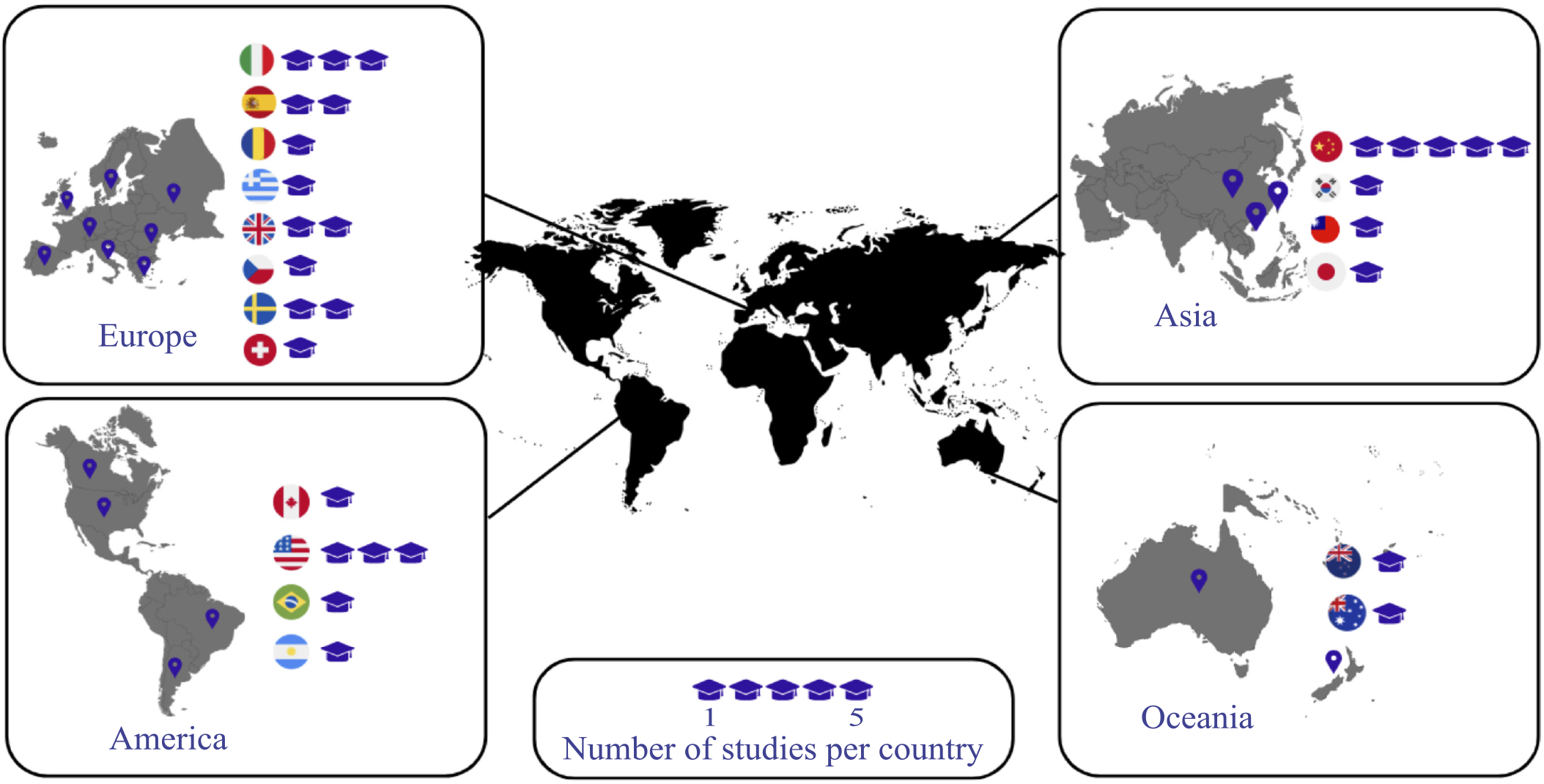
Socioeconomic diversity and access to information also play a significant role in shaping perceptions of sustainability, particularly given the cultural backgrounds of the majority of participants (Yue et al., 2024). This variation is also reflected in the geographical distribution of studies (Figure 2), covering Europe, the Americas, Asia, and Oceania.

Geographic distribution of the countries and continents where the studies in the systematic review were carried out.
According to Figure 2, most studies were conducted with participants from Europe, followed by Asia, the Americas, and Oceania, with great concentration in countries such as China, the United States, and Italy. The geographical distribution of studies reflects socioeconomic and cultural contexts rather than patterns of milk production or consumption, highlighting their influence on the availability of data on sustainability perceptions. The underrepresentation of regions such as Africa and parts of Latin America and Asia reveals gaps that limit the global generalization of the results, reinforcing and highlighting the need for further research in emerging markets.
In this context, income plays a central role in shaping food consumption patterns, influencing not only the quantity but also the quality and diversity of purchased products (Zhu et al., 2023). In the dairy sector, this relationship is particularly significant, with a high-income elasticity being observed for these products, especially in developing countries such as Brazil (Hoffmann & Ahn, 2021; Siqueira et al., 2022). In this context, increased purchasing power tends to stimulate consumption of dairy products, although this trend does not occur homogeneously among different population groups (IBGE, 2017; Duro et al., 2020). In regions marked by social inequality, such as Brazil, increased income alone does not guarantee equal access to foods with greater nutritional value or sustainable attributes. This is due to structural barriers, such as limited schooling, heterogeneous and limited access to information - all of which restrict consumer choice (Guiné et al., 2020; Headey et al., 2024).
In addition, although Brazil is classified as the upper-middle income category according to the World Bank Group ( 2025), its dairy consumption pattern is still below that of high-income countries, reflecting its high social and regional inequality ( Duro et al. 2020; IFCN, 2024). Siqueira et al. (2022) showed that, in Brazil, an increase in income has greater impact on dairy consumption than other protein sources, such as meat and fish, indicating the sector’s sensitivity to variations in purchasing power. Even so, access to products with greater added value, such as artisanal cheeses or milks with an ecological appeal, remains restricted to the more economically favored classes, reflecting a market segmentation that reinforces pre-existing inequalities (Hoffmann & Ahn, 2021). Thus, even in the face of economic growth, the ability to incorporate criteria such as sustainability, traceability, and artisanal production into food choices is challenged. It depends not only on absolute income but also on equitable access to information and infrastructure, highlighting the important nature of inequalities in dairy consumption.
Similarly, cultural values also play an important role in the consumer’s choice of products. Nam et al. (2020) showed that, in South Korea, there is a symbolic valuation of milk from mountainous areas, related to the idea of naturalness and traditional production. While Sánchez-Bravo et al. (2020) showed that education and income interfere with the attributes valuation such as traceability and artisanal production, revealing inequality in the capacity for critical evaluation. Aizaki & Takeshita (2023) complemented this dimension by indicating that attributes such as efficient water use or biodiversity conservation are perceived differently between countries, indicating that cultural values act as filters for reading sustainable attributes. These variations suggest that sustainability, as a criterion for choice, is mediated by specific socio-cultural contexts and cannot be understood as a homogeneous category.
Trust in certifications and traceability strongly influences consumer perceptions, as shown in China, where seals and production information are associated with food safety and product quality (Gao et al., 2020; Li et al., 2023). The presence of seals, information about the production process, and traceability practices are elements that reinforce this trust. In this way, the concept of sustainability expands beyond direct environmental impact, incorporating elements related to the origin, reliability, and transparency of production processes.
Finally, some studies reveal a misalignment between declared attitudes and actual consumer behavior, the so-called attitude-behavior gap. Burstow et al. (2025), when analyzing the Australian context, observed that although consumers recognize the environmental benefits of certain products, they tend to prioritize aspects such as brand and familiarity at the time of purchase, neglecting technical information. Cunha et al. (2024) reinforced this ambiguity by showing that, although the perception of sustainability in yogurts is mostly positive in different countries (Argentina, Brazil, China, France, and Italy), the specific motivations for this appreciation vary according to the cultural and socioeconomic context, which can lead to inconsistent behavior. Vaikma et al. (2025) point out that women and young people are more critical of the sustainability of conventional dairy products, but this criticality does not always translate into actual changes in consumption.
These results indicate that, despite the advance of environmental awareness, cognitive, economic and informational barriers still limit the systematic incorporation of sustainability as a decision-making criterion in everyday consumption. This phenomenon is widely recognized in the literature as a reflection of factors such as perceived cost, lack of trust in environmental claims, complexity of information and consolidated consumption habits (Vermeir & Verbeke, 2006; Carrington et al., 2010). In addition, consumer behavior takes place in specific social, emotional and temporal contexts, which are not always compatible with the ideals of ethical or sustainable consumption.
This gap between intention and action reinforces the importance of clearer communication strategies, as well as the creation of choice contexts that facilitate sustainable behavior, such as more accessible labeling, economic incentives, and greater availability of sustainable products at points of sale (White et al., 2019). Thus, overcoming this misalignment requires not only more conscious consumers but also consumption systems that are more consistent with the values these consumers claim to prioritize.
Despite the contextual differences, a consistent pattern emerges: when sustainable attributes are perceived as ethical, clear and verifiable, there is greater acceptance, regardless of the region. To sum up, studies gathered in this systematic review revealed that the perception of sustainability in dairy products is shaped by multiple interconnected factors. Clear communication of sustainable attributes, combined with environmental literacy, is a prerequisite for recognizing and valuing these products. Ethical values, especially those related to animal welfare, act as important motivators for choice, sometimes with greater impact than environmental arguments.
Understanding of sustainability is mediated by specific socio economic contexts, which influence the way consumers evaluate attributes such as traceability, naturalness, or efficiency in the use of resources, moderated by cultural aspects and informational inequalities. Trust in certifications and in the transparency of the production chain is becoming a determining factor in legitimizing sustainable claims, especially in times of uncertainty. Finally, the gap between attitudes and behavior shows that, even in the face of growing awareness, practical and cognitive barriers still make it difficult to convert intentions into action, reinforcing the need for more accessible communication strategies, economic incentives and greater availability of sustainable products. These five axes, although distinct, converge in the idea that making sustainable product consumption a daily practice depends not only on more informed consumers, but also on more equitable, coherent consumption systems that are sensitive to local realities.
Conclusions
-
1. Sustainability perception influences dairy purchase through five factors: ethical values, cultural values and access to information, communication clarity and environmental literacy, trust in certifications and traceability, and the attitude-behavior gap.
-
2. Ethical values, especially related to animal welfare, have the strongest influence on sustainable dairy purchase decisions.
-
3. The attitude-behavior gap is the main challenge for effective adoption of sustainable dairy consumption.
-
4. This review has limitations, including language bias, concentration of studies in the Global North, and absence of quantitative meta-analysis.
-
5. Longitudinal studies and approaches integrating public policies, inclusive labeling, and digital technologies can enhance sustainable dairy consumption.
Declaration of use of AI technologies
During the preparation of this work, the author(s) used ChatGPT for minor assistance in rephrasing and translating. After this use, the author(s) reviewed and edited the content as needed and take(s) full responsibility for it.
Disclaimer/Publisher’s note:
The statements, opinions, and data contained in all texts published in Pesquisa Agropecuária Brasileira (PAB) are solely those of the individual author(s) and not of the journal’s publisher, editor, and editorial team, who disclaim responsibility for any injury to people or property resulting from any referred ideas, methods, instructions, or products.
The mention of specific chemical products, machines, and commercial equipment in the texts published in this journal does not imply their recommendation by the publisher.
Data availability statement
The data supporting the findings of this study are available in the article. Should any raw data be needed, they will be provided by the corresponding author upon reasonable request.
References
-
AIZAKI, H.; TAKESHITA, H. Comparing consumer preferences for sustainable dairy activities among countries. Behaviormetrika, v. 50, p. 653-677, 2023. DOI: https://doi.org/10.1007/s41237-022-00192-w
» https://doi.org/10.1007/s41237-022-00192-w -
AMMANN, J.; MACK, G.; EL BENNI , N. ; JIN, S .; NEWELL-PRICE, P.; TINDALE , S.; HUNTER, E.; VICARIO-MO DRONÕ, V.; GALLARDO-COBOS, R.; SÁNCHEZ-ZAMORA, P.; MIšKOLCI, S.; FREWER, L. J. Consumers across five European countries prioritise animal welfare above environmental sustainability when buying meat and dairy products. Food Quality and Preference, v. 117, art.105179, 2024. DOI: https://doi.org/10.1016/j.foodqual.2024.105179
» https://doi.org/10.1016/j.foodqual.2024.105179 -
ANDRADE, M. S. A.; ALBINO, A. A.; SILVA, V. R. O.; CARVALHO, C. M. ; PEREIRA, D. C. de S.; CAMPOS, A. N. da R. Consumer behavior and the food market associated with sustainable marketing. Scientific Interfaces - Health and Environment, v.9, p.922-935, 2024. DOI: https://doi.org/10.17564/2316-3798.2024v9n3p922-935
» https://doi.org/10.17564/2316-3798.2024v9n3p922-935 -
ASCHEMANN-WITZEL, J.; VARELA, P.; PESCHEL, A. O. Consumers’ categorization of food ingredients: do consumers perceive them as ‘clean label’ producers expect? An exploration with projective mapping. Food Quality and Preference, v. 71, p.117 -128, 2019. DOI: https://doi.org/10.1016/j.foodqual.2018.06.003
» https://doi.org/10.1016/j.foodqual.2018.06.003 -
BRUMĂ, I. S.; VASILIU, C. D.; RODINO, S.; BUTU, M.; TANASĂ , L.; DOBOŞ , S.; BUTU, A.; COCA, O.; STEFAN, G. The behavior of dairy consumers in short food supply chains during COVID-19 pandemic in Suceava Area, Romania. Sustainability, v.13, art. 3072, 2021. DOI: https://doi.org/10.3390/su13063072
» https://doi.org/10.3390/su13063072 -
BURSTOW, A.; WITT, B. G.; THOMPSON, C. Food shopping is not a leisure activity: consumer heuristics and their impact on the effectiveness of ecolabels on Australian dairy products. Food and Humanity, v.4, art. 100531, 2025. DOI: https://doi.org/10.1016/j.foohum.2025.100531
» https://doi.org/10.1016/j.foohum.2025.100531 -
CARRINGTON, M. J.; NEVILLE, B.A.; WHITWELL, G.J. Why ethical consumers don’t walk their talk: towards a framework for understanding the gap between the ethical purchase intentions and actual buying behaviour of ethically minded consumers. Journal of Business Ethics, v.97, p.139-158, 2010. DOI: https://doi.org/10.1007/s10551-010-0501-6
» https://doi.org/10.1007/s10551-010-0501-6 -
CHANG, M.- Y.; CHEN, H.- S. Consumer attitudes and purchase intentions in relation to animal welfare-friendly products: evidence from Taiwan. Nutrients, v.14, art.4571, 2022. DOI: https://doi.org/10.3390/nu14214571
» https://doi.org/10.3390/nu14214571 -
COSTA, N. A. da S.; SIQUEIRA, K. B.; PAULA, V. R. de. Environmental labeling of dairy products in Brazil: challenges for implementation. International Journal of Life Cycle Assessment, v.30, p.43-53, 2025. DOI: https://doi.org/10.1007/s11367-024-02391-x
» https://doi.org/10.1007/s11367-024-02391-x -
CUNHA, C. F. da; XAVIER, L. dos S.; NUNES, R.; SILVA, V.L. Consumer attitudes in the ecological sociotechnical transition: a comparative study between Argentina, Brazil, China, France and Italy. British Food Journal, v. 126, p. 3070-3087, 2024. DOI: https://doi.org/10.1108/BFJ-01-2024-0070
» https://doi.org/10.1108/BFJ-01-2024-0070 -
DIHR, M.; BERTHOLD, A.; SIEGRIST, M.; SÜTTERLIN, B. Consumers’ knowledge gain through a cross-category environmental label. Journal of Cleaner Production, v. 319, art. 128688, 2021. DOI: https://doi.org/10.1016/j.jclepro.2021.128688
» https://doi.org/10.1016/j.jclepro.2021.128688 -
DURO, J. A.; LAUK, C.; KASTNER, T.; ERB, K.- H.; HABERL, H. Global inequalities in food consumption, cropland demand and land-use efficiency: a decomposition analysis. Global Environmental Change, v.64, art.102124, 2020. DOI: https://doi.org/10.1016/j.gloenvcha.2020.102124
» https://doi.org/10.1016/j.gloenvcha.2020.102124 -
FAO. Food and Agriculture Organization of the United Nations . Gateway to dairy production and products Rome , 2022. Available at: <https://www.fao.org/dairy-production-products/production/milk-production/en>. Accessed on: Aug. 14 2025.
» https://www.fao.org/dairy-production-products/production/milk-production/en -
GAO, Z.; LI, C.; BAI, J.; FU, J. Chinese consumer quality perception and preference of sustainable milk. China Economic Review, v. 59, art. 100939, 2020. DOI: https://doi.org/10.1016/j.chieco.2016.05.004
» https://doi.org/10.1016/j.chieco.2016.05.004 -
GARNETT, T. Where are the best opportunities for reducing greenhouse gas emissions in the food system (including the food chain)? Food Policy, v. 36, p. S23-S32, 2011. DOI: https://doi.org/10.1016/j.foodpol.2010.10.010
» https://doi.org/10.1016/j.foodpol.2010.10.010 -
GLORIA, T.P.; LIPPIATT, B.C.; COOPER, J. Life cycle impact assessment weights to support environmentally preferable purchasing in the United States. Environmental Science & Technology, v.41, p.7551-7557, 2007. DOI: https://doi.org/10.1021/es070750+.
» https://doi.org/10.1021/es070750 -
GODDARD, E.; MURINGAI, V.; BOAITEY, A. Moral foundations and credence attributes in livestock production: Canada. Journal of Consumer Marketing, v. 36, p. 418-428, 2019. DOI: https://doi.org/10.1108/JCM-02-2018-2550
» https://doi.org/10.1108/JCM-02-2018-2550 -
GRUNERT, K. G.; SCHOLDERER, J.; ROGEAUX, M. Determinants of consumer understanding of health claims. Appetite, v. 56, p. 269-277, 2011. DOI: https://doi.org/10.1016/j.appet.2011.01.009
» https://doi.org/10.1016/j.appet.2011.01.009 -
GUINÉ, R. P. F.; FLORENÇA, S. G.; CARPES, S.; ANJOS, O. Study of the influence of sociodemographic and lifestyle factors on consumption of dairy products: preliminary study in Portugal and Brazil. Foods, v.9, art. 1775, 2020. DOI: https://doi.org/10.3390/foods9121775
» https://doi.org/10.3390/foods9121775 -
HARTMANN, C.; SIEGRIST, M. Consumer perception and behaviour regarding sustainable protein consumption: a systematic review. Trends in Food Science & Technology, v. 61, p. 11-25, 2017. DOI: https://doi.org/10.1016/j.tifs.2016.12.006
» https://doi.org/10.1016/j.tifs.2016.12.006 -
HEADEY, D. D.; ALDERMAN, H.; HODDINOTT, J.; NARAYANAN, S. The glass of milk half-empty? Dairy development and nutrition in low and middle income countries. Food Policy, v.122, art.102585, 2024. DOI: https://doi.org/10.1016/j.foodpol.2023.102585
» https://doi.org/10.1016/j.foodpol.2023.102585 -
HIGGINS, E.; METAXAS, A.; SCHEIBLING, R. E. A systematic review of artificial reefs as platforms for coral reef research and conservation. PLoS ONE, v.17, e0261964, 2022. DOI: https://doi.org/10.1371/journal.pone.0261964
» https://doi.org/10.1371/journal.pone.0261964 - HOFFMANN, S.; AHN, J.- W. Updating economic burden of foodborne diseases estimates for inflation and income growth [Washington]: U.S. Department of Agriculture, 2021. 27p. (United States. Department of Agriculture. Economic research service, n.297).
-
HWANG, J.-S.; KIM, M. K. Consumer perceptions of ‘traditional doenjang’ using a free word association test. Journal of the Science of Food and Agriculture, v. 105, p. 3373-3381, 2025. DOI: https://doi.org/10.1002/jsfa.14103
» https://doi.org/10.1002/jsfa.14103 -
IBGE. Instituto Brasileiro de Geografia e Estatística. Pesquisa de orçamentos familiares 2017-2018 Rio de Janeiro, 2017. Available at: <https://www.ibge.gov.br/estatisticas/sociais/saude/24786-pesquisa-de-orcamentos-familiares-2.html>. Accessed on: Aug. 19 2025.
» https://www.ibge.gov.br/estatisticas/sociais/saude/24786-pesquisa-de-orcamentos-familiares-2.html -
IDF. International Dairy Federation . The world dairy situation report 2021 Brussels , 2021. Available at: <https://fil-idf.org/news_insights/idf-launches-world-dairy-situation-report-2021/>. Accessed on: Aug. 14 2025.
» https://fil-idf.org/news_insights/idf-launches-world-dairy-situation-report-2021/ -
JIN, S.; MATSUOKA, Y.; YUE, M.; JONES, G. ; FREWER, L. J. Does information about environmental considerations affect Chinese and UK consumers’ purchase intentions for traced foods? A path analysis. Environment, Development and Sustainability, v. 26, p. 32287-32318, 2024. DOI: https://doi.org/10.1007/s10668-024-05097-0
» https://doi.org/10.1007/s10668-024-05097-0 -
LI, X.; DU, J.; LI, W.; SHAHZAD, F. Green ambitions: a comprehensive model for enhanced traceability in agricultural product supply chain to ensure quality and safety. Journal of Cleaner Production, v.420, art. 138397, 2023. DOI: https://doi.org/10.1016/jjclepro.2023.138397
» https://doi.org/10.1016/jjclepro.2023.138397 -
LOMBARDI, G. V.; BERNI, R.; ROCCHI, B. Environmental friendly food. Choice experiment to assess consumer’s attitude toward “climate neutral” milk: the role of communication. Journal of Cleaner Production, v.142, p.257-262, 2017. DOI: https://doi.org/10.1016/j.jclepro.2016.05.125
» https://doi.org/10.1016/j.jclepro.2016.05.125 -
LÓPEZ-GALÁN, B.; DE-MAGISTRIS, T. Personal and psychological traits influencing the willingness to pay for food with nutritional claims: a comparison between vice and virtue food products. Foods, v.9, art. 733, 2020. DOI: https://doi.org/10.3390/foods9060733
» https://doi.org/10.3390/foods9060733 -
NAM, K.; LIM, H.; AHN, B.- I. Analysis of consumer preference for milk produced through sustainable farming: the case of mountainous dairy farming. Sustainability, v.12, art. 3039, 2020. DOI: https://doi.org/10.3390/su12073039
» https://doi.org/10.3390/su12073039 -
OUZZANI, M.; HAMMADY, H.; FEDOROWICZ, Z.; ELMAGARMID, A. Rayyan-a web and mobile app for systematic reviews. Systematic Reviews, v. 5, art. 210, 2016. DOI: https://doi.org/10.1186/s13643-016-0384-4
» https://doi.org/10.1186/s13643-016-0384-4 -
PAGE, M. J.; M CKENZIE, J. E.; BOSSUYT, P. M.; BOUTRON, I.; HOFFMANN, T. C.; MULROW, C. D.; SHAMSEER, L.; TETZLAFF, J. M.; AKL, E. A.; BRENNAN, S. E.; CHOU, R.; GLANVILLE, J.; GRIMSHAW, J. M.; HRÓBJARTSSON, A.; LALU, M. M.; LI, T.; LODER, E. W.; MAYO-WILSON, E.; M CDONALD, S.; M CGUINNESS, L. A.; STEWART, L. A.; THOMAS, J.; TRICCO, A. C.; WELCH, V. A.; WHITING, P.; MOHER, D. The PRISMA 2020 statement: an updated guideline for reporting systematic reviews. BMJ, v.372, e71, 2021. DOI: https://doi.org/10.1136/bmj.n71
» https://doi.org/10.1136/bmj.n71 -
PAPOUTSI, G.; NOULAS, P.; TSATOURA, K. Animals or humans: what do Greek consumers care more about when buying feta cheese? Sustainability, v.15, art.316, 2023 . DOI: https://doi.org/10.3390/su15010316
» https://doi.org/10.3390/su15010316 -
PESCHEL, A. O.; GREBITUS, C.; STEINER, B.; VEEMAN, M. How does consumer knowledge affect environmentally sustainable choices? Evidence from a cross-country latent class analysis of food labels. Appetite, v.106, p.78-91, 2016. DOI: https://doi.org/10.1016/j.appet.2016.02.162
» https://doi.org/10.1016/j.appet.2016.02.162 -
SAARINEN, M.; HEIKKINEN, J.; KETOJA, E.; KYTTA, V.; HARTIKAINEN, H.; SILVENNOINEN, K.; VALSTA, L.; LANG, K. Soil carbon plays a role in the climate impact of diet and its mitigation: the finnish case. Frontiers in Sustainable Food Systems, v.7, art. 904570, 2023. DOI: https://doi.org/10.3389/fsufs.2023.904570
» https://doi.org/10.3389/fsufs.2023.904570 -
SÁNCHEZ-BRAVO, P.; CHAMBERS V, E.; NOGUERA-ARTIAGA, L.; LÓPEZ-LLUCH, D.; CHAMBERS IV, E.; CARBONELL-BARRACHINA, A.A.; SENDRA, E. Consumers’ attitude towards the sustainability of different food categories. Foods, v.9, art. 1608, 2020. DOI: https://doi.org/10.3390/foods9111608
» https://doi.org/10.3390/foods9111608 -
SCHIANO, A. N.; HARWOOD, W. S.; GERARD, P. D.; DRAKE, M. A. Consumer perception of the sustainability of dairy products and plant-based dairy alternatives. Journal of Dairy Science, v.103, p.11228-11243, 2020. DOI: https://doi.org/10.3168/jds.2020-18406
» https://doi.org/10.3168/jds.2020-18406 -
SIQUEIRA, P. H. M.; OLIVEIRA, T. S. de C.; SIQUEIRA, K. B.; FARIA, W. R.; CARVALHO, G. R. Impacto da renda na demanda de proteína animal no Brasil: uma análise regional. Cadernos de Ciência & Tecnologia, v.39, e27128, 2022. DOI: https://doi.org/10.35977/0104-1096.cct2022.v39.27128
» https://doi.org/10.35977/0104-1096.cct2022.v39.27128 -
SOGARI, G.; ODDON, S. B.; GASCO, L.; HUIS, A. van; SPRANGHERS, T.; MANCINI, S. Review: recent advances in insect-based feeds: from animal farming to the acceptance of consumers and stakeholders. Animal, v.17, art. 100904, 2023. DOI: https://doi.org/10.1016/j.animal.2023.100904
» https://doi.org/10.1016/j.animal.2023.100904 -
UPHAM, P.; DENDLER, L.; BLEDA, M. Carbon labelling of grocery products: public perceptions and potential emissions reductions. Journal of Cleaner Production, v.19, p.348-355, 2011. DOI: https://doi.org/10.1016/j.jclepro.2010.05.014
» https://doi.org/10.1016/j.jclepro.2010.05.014 -
VAIKMA, H.; KERN, M.; HARWOOD, W.; ALMLI, V. L. Consumer perceptions of sustainability towards ingredients, packaging, labelling, and storage conditions in milk, burger products, and plant-based alternatives: a study in Sweden and Italy. Future Foods, v.11, art.100635, 2025. DOI: https://doi.org/10.1016/j.fufo.2025.100635
» https://doi.org/10.1016/j.fufo.2025.100635 -
VERMEIR, I.; VERBEKE, W. Sustainable food consumption: exploring the consumer “attitude-behavioral intention” gap. Journal of Agricultural and Environmental Ethics, v.19, p.169-194, 2006. DOI: https://doi.org/10.1007/s10806-005-5485-3
» https://doi.org/10.1007/s10806-005-5485-3 -
VLAEMINCK, P.; JIANG, T.; VRANKEN, L. Food labeling and eco-friendly consumption: experimental evidence from a Belgian supermarket. Ecological Economics, v.108, p.180-190, 2014. DOI: https://doi.org/10.1016/j.ecolecon.2014.09.019
» https://doi.org/10.1016/j.ecolecon.2014.09.019 -
WHITE, K.; HABIB, R.; HARDISTY, D. J. How to shift consumer behaviors to be more sustainable: a literature review and guiding framework. Journal of Marketing, v. 83, p. 22-49, 2019. DOI: https://doi.org/10.1177/0022242919825649
» https://doi.org/10.1177/0022242919825649 -
WOHLIN, C.; KALINOWSKI, M.; FELIZARDO, K. R.; MENDES, E. Successful combination of database search and snowballing for identification of primary studies in systematic literature studies. Information and Software Technology, v.147, art.106908, 2022. DOI: https://doi.org/10.1016/j.infsof.2022.106908
» https://doi.org/10.1016/j.infsof.2022.106908 -
WORLD B ANK GROUP. World Bank open data Available at: <https://data.worldbank.org/>. Accessed on: Aug. 14 2025.
» https://data.worldbank.org/ -
YUE, K.; CAO, Q.-Q.; SHAUKAT, A.; ZHANG, C.; HUANG, S.-C. Insights into the evaluation, influential factors and improvement strategies for poultry meat quality: a review. NPJ Science of Food, v.8, art.62, 2024. DOI: https://doi.org/10.1038/s41538-024-00306-6
» https://doi.org/10.1038/s41538-024-00306-6 -
ZHAO, R.; YANG, M.; LIU, J.; YANG, L.; BAO, Z.; REN, X. University students’ purchase intention and willingness to pay for carbon-labeled food products: a purchase decision-making experiment. International Journal of Environmental Research and Public Health, v.17, art.7026, 2020. DOI: https://doi.org/10.3390/ijerph17197026
» https://doi.org/10.3390/ijerph17197026 -
ZHU, Y.; WANG, Z.; ZHU, X. New reflections on food security and land use strategies based on the evolution of Chinese dietary patterns. Land Use Policy, v.126, art.106520, 2023. DOI: https://doi.org/10.1016/j.landusepol.2022106520
» https://doi.org/10.1016/j.landusepol.2022106520
-
Chief editor:
Edemar Corazza
-
Edited by:
Célia Tremacoldi