 Bioinputs and bioenergy: research’s contributions to Brazil’s transition to a green economy
Abstract
Green economy is a model designed for economic growth in line with socio-environmental equity. Practices, processes, and products characterized by low carbon consumption and emissions, innovation and efficiency in the management of natural resources and waste, as well as social inclusion and governance, contribute to this transition. Bioinputs and bioenergy represent two pillars of a more environmentally and socially sustainable economy, being intrinsically linked to the reduction and optimization of the use of chemical fertilizers, pesticides, and non-renewable components in production systems. Both topics will be addressed in this article, with emphasis on the contributions of Brazilian Agricultural Research Corporation (Embrapa). The corporation’s research into bioinputs and bioenergy began in the 1970s, and had resulted in knowledge and technology transfer for the production sector, and the development of innovative products through partnerships with both public and private sectors. The diversification of raw materials and processes, with a focus on agronomic efficiency, energy security, economic resilience, and reduced environmental impact, is contemplated in Embrapa’s research for a better use of biomass. A proposal for future advances and an overview of the challenges yet to be overcome in these areas are also presented in this article.
Index terms:
agriculture; bioeconomy; sustainability
Resumo
A economia verde é um modelo concebido para o crescimento econômico em consonância com a equidade socioambiental. Práticas, processos e produtos caracterizados por baixos consumo e emissões de carbono, inovação e eficiência na gestão de recursos naturais e resíduos, bem como inclusão social e governança, contribuem para esta transição. Bioinsumos e bioenergia representam dois pilares de uma economia ambiental e socialmente mais sustentável, estando intrinsecamente ligados à redução e à otimização do uso de fertilizantes químicos, pesticidas e componentes não renováveis em sistemas de produção. Ambos os temas serão abordados no presente artigo, com ênfase às contribuições da Empresa Brasileira de Pesquisa Agropecuária (Embrapa). As pesquisas da empresa em bioinsumos e bioenergia iniciaram na década de 1970, tendo resultado na transferência de conhecimentos e tecnologias para o setor produtivo, e no desenvolvimento de produtos inovadores por meio de parcerias com os setores público e privado. A diversificação de matérias-primas e processos, com foco na eficiência agronômica, segurança energética, resiliência econômica e redução do impacto ambiental, é contemplada nas pesquisas da Embrapa, para um melhor aproveitamento da biomassa. Uma proposição de futuros avanços e uma visão dos desafios ainda a serem superados nestas áreas também são apresentadas neste artigo.
Termos para indexação:
agricultura; bioeconomia; sustentabilidade
Introduction
According to the United Nations Environment Programme (UNEP, 2011), green economy is defined as a low-carbon, resource-efficient, and socially inclusive economy. This organization highlights that, in a country’s green economy, employment and income growth are driven by public and private investments in economic activities, infrastructure, and assets that enable the reduction of carbon emissions and pollution, enhance energy efficiency, improve resource use, and prevent losses in biodiversity and ecosystem services. This concept aligns with global trends towards a sustainable development, guided by an increasingly urbanized, well-informed, and demanding society (Dogaru, 2021).
As one of the world’s leading food producers, Brazil is also one of the greatest consumers of fertilizers and pesticides (Brasil, 2023). This high use of agricultural inputs is propelled by its tropical characteristics, as follows: soils with a predominantly low natural fertility, intense pest pressure, and a long agricultural period, with the possibility of harvesting up to three crops per year without the use of irrigation.
In this context, Brazil has directed efforts towards a greener and less environmentally harmful agriculture. The country stands out with successful examples of circular and sustainable practices in agriculture, such as biological nitrogen fixation (BNF), biological pest control, use of biomass for renewable energy production, and the intensification of land use with integrated production systems as crop-livestock integration and crop-livestock-forest integration (Pereira et al., 2022).
An alternative to synthetic fertilizers and pesticides are bioinputs. Brazilian Law number 15,070/24 (Brasil, 2024b) defines them as products, processes, or technologies obtained from natural sources (plant, animal, or microorganisms) or biotechnological processes (with a similar structure and identical function to those originated naturally) for use in the production, protection, storage, and processing of agricultural products or in aquatic-production or planted-forest systems.
The country became globally recognized as a hub of innovation in bioinputs due to a well-structured research and development network, composed of research institutes, universities, industries and companies of various sizes and technological levels, and the agricultural productive sector that includes producers, associations, cooperatives, and technical assistance. The evolution of the Brazilian law on bioinputs is a reflection of the strength of the sector in the country.
In addition to bioinputs, innovation in bioenergy also stands out in green economy, but as an important alternative to replace traditional fossil fuels. After playing a part in history with the production of first-generation ethanol from sugarcane, Brazil is currently searching for new bioenergy production, including biogas, biomethane, lignocellulosic ethanol, green gasoline and diesel, and biofuels for the maritime and aviation sectors (EPE, 2024). Urban and industrial waste and new sources of biomass, such as energy crops and animal fats, are also within the scope of recent studies on bioenergy production (Gollany et al., 2015). Due to its potential in generating renewable energy, the country is one of the world leaders in the transition to a more sustainable energy matrix (EPE, 2024).
Both bioinput and bioenergy solutions are geared towards reducing greenhouse gas emissions and the adaptation of production systems to climate change, representing an important portfolio of renewable and low-carbon technologies. As an innovation-oriented institution dedicated to the advancement of scientific knowledge and technological solutions, the Brazilian Agricultural Research Corporation (Embrapa), under the aegis of the Brazilian Ministry of Agriculture and Livestock (MAPA), has played a leading role in the sustainable development of bioinputs and bioenergy in Brazilian agriculture, serving as a strategic partner in fostering and applying expertise in these areas.
Bioinputs
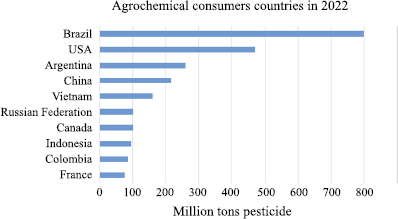
Although the tropical climate allows for year-round use of soils, its temperature and humidity also promote conditions for the life and multiplication of numerous pests (in this review, invertebrate pests, diseases, and weeds) that cause substantial damage to plant production. In this scenario, according to FAO (2024), in 2022, Brazil used approximately 800,000 tonnes of pesticides, representing the highest consumption globally, accounting for 70% more than the second-ranked country, the United States (Figure 1).

In addition to pesticide requirements, a considerable part of Brazilian soils is also originally poor in nutrients, demanding fertilizer inputs to meet crop nutritional requirements (Straliotto & Freitas, 2022). One of the drivers for the use of these products in agricultural production were the positive results of fertilizers in the Brazilian Cerrado biome in the 1970’s (Lopes & Guilherme, 2016).
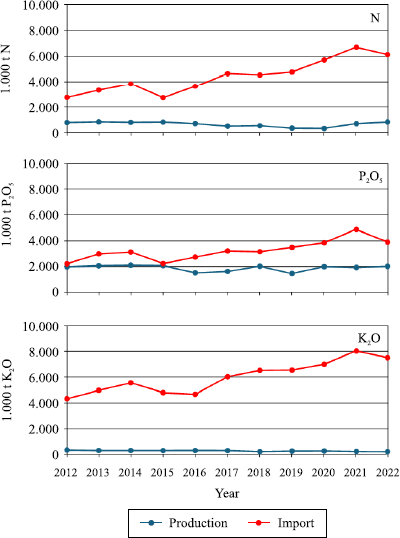
As a major player in food production and exports, Brazil is also responsible for around 8.0% of fertilizer consumption worldwide, making it the fourth largest consumer only behind China, India, and the United States (Brasil, 2020). More than 80% of the chemical fertilizers used the country are of foreign origin (Brasil, 2023), placing the Brazilian’s agriculture in a vulnerable position to global fluctuations in production, prices, exchange rates, and international freight. Imports of nitrogen, phosphorus, and potassium fertilizers are particularly significant (Figure 2).
Production and import of nitrogen, phosphorus, and potassium fertilizers in Brazil. Phosphorus and potassium are expressed as oxides P2O5 and K2O, respectively. Source: FAO (2025).
In order to make agriculture more sustainable and less dependent on chemical inputs, whether pesticides or fertilizers, the Brazilian government has strived to expand and strengthen the production and use of bioinputs in pest control and plant nutrition. The National Bioinputs Program (Brasil, 2020) and the National Fertilizer Plan (Brasil, 2023) are among the main policies for the sector, providing incentives for the use of bioinputs in agricultural, livestock, aquaculture, and forestry production, as well as by family farmers and agroecological-based systems. However, as discussed by Faria et al. (2023), the production of bioinputs for self-use, popularly known in Brazil as on-farm production, still requires advances in research, outreach, and governmental regulation.
This review will address bioinputs only for agricultural use, considering the following functions: control of agricultural pests, plant nutrition and growth, and plant tolerance to abiotic stress.
Since its establishment in 1973, Embrapa has been developing an internal ecosystem of innovation in bioinputs. The company enriches and maintains collections of microorganisms and plant extracts, which represent the central basis of its research (Alelo Recursos Genéticos, 2025). The carried-out studies encompass the identification of potential agents and molecules to be developed from laboratory, greenhouse, and experimental field stages into bioinputs. Embrapa also sustains a permanent dialogue with farmers, scientific organizations, government and civil leaders. Moreover, the partnerships with the production sector have resulted in the development of different commercial products, available in the national and international markets.
Agricultural pest control
Disease control in agricultural production has been predominantly carried out through cultural, genetic, and chemical management. However, the adopted set of strategies has not been completely efficient (Sarrocco, 2023), allowing the development of new products such as bioinputs
In addition to biological control agents, metabolites, extracts, and other components derived from plants, animals, or microorganisms can also be used for pest control (Brasil, 2024b). Semiochemicals, such as pheromones, along with other substances that have identical composition and structure to those of natural origin, are also considered as bioinputs. Many bioinputs are used as components of integrated pest management, contributing to agrochemical reduction and addressing the growing demand worldwide for sustainable food with no toxic residues, while preserving pollinators.
In a more digital world, to make it easier for suppliers and users to access information regarding commercial products available in Brazil, MAPA and Embrapa developed a mobile software application in 2020 (Bioinsumos, 2024). Over 700 biological products are currently available in the market for pest control, ranking the country among those with the highest number of bioinputs officially registered for this purpose. According to Blink Consulting (Mercado…, 2024), compared with the previous year, the use of commercial bioinputs was 15% higher in the 2023/2024 agricultural year, mainly in soybean [Glycine max (L.) Merr.], corn (Zea mays L.), and sugarcane (Saccharum officinarum L.) crops, respectively, and 6.0% in the cotton (Gossypium hirsutum L.), coffee (Coffea sp.), and citrus (Citrus spp.) crops. The production of biological control agents for self-use (on-farm use) is also showing a fast growth in Brazil (Produção…, 2021), where 3.1 million hectares were treated for pest control in the 2019/2020 agricultural year, with a rising number of adopters since then according to field observations (IHS Markit, 2021).
Virus, bacteria, and fungi-based products for pest control are being developed by Embrapa and its public and private partners, through open innovation projects (Table 1).
Most commercial bioinputs for phytosanitary use have been registered for insect control in annual crops. Embrapa has played a leading role in this area since the 1980s, when Baculovirus anticarsia was introduced for the control of the velvetbean caterpillar (Anticarsia gemmatalis) in soybean (Moscardi, 1989). Embrapa provided the farmers with instructions on how to use it, which consisted of collecting infected caterpillars in the field and keeping them under cold storage to be used whenever necessary. This biological control program was considered the largest in the world, covering more than one million hectares annually (Moscardi, 1999). Another active ingredient made available was Spodoptera frugiperda multiple nucleopolyhedrovirus (SfMNPV) for the control of the fall armyworm (Spodoptera frugiperda), one of the pests with the most negative impact on corn production.
Although phytopathogens can be responsible for many production losses, fungi and bacteria can also stand out as agents for the biological control of plant diseases. More recently, Embrapa, together with its partners, launched products containing the fungus Cordyceps javanica BRM27666 for whitefly (Bemisia tabaci) control and the fungus Beauveria bassiana CG1420 for sugarcane billbug (Sphenophorus levis) control. Different species of the fungus Trichoderma are among the most used in commercial products, mainly for root diseases control, nonetheless some strains are also capable of promoting plant growth. Biological fungicides, such as Biotrix (Trichoderma harzianum BRM-29600), used to control both fungi Sclerotinia sclerotiorum and Macrophomina phaseolina, and Habitat (Trichoderma afroharzianum CEN-287), used to control Rhizoctonia solani and Fusarium oxysporum were developed with Embrapa’s strains.
Bacillus is the major bacteria genus used for pest control in Brazil (Agrofit…, 2023). Since 2017, Embrapa has been a supplier of Bacillus thuringiensis S1450 to various companies that are developing commercial products for caterpillar control.
Although weeds are also capable of causing a significant negative impact on agriculture, the development of bioinputs for their selective control still needs to advance considerably. Since the 1990s, there has been a 121% increase in the global use of chemical herbicides, which currently accounts for approximately 50% of all pesticide applications worldwide (FAO, 2024). This global trend highlights the urgent need for research acceleration aiming at the development of biological control agents capable of controlling weed infestations.
In Latin America, Brazilian research institutions are mainly assessing phytopathogenic fungi as weed biological control agents, while the study of secondary metabolites is still in early stages (Campos et al., 2023). The current challenge lies not just in overcoming the limitations of mass inoculum production , but also in developing a product to control a wide variety of weeds in the field (Nechet et al., 2019; Melo et al., 2024). In the 1980s, Embrapa strived to develop a bioherbicide for wild poinsettia (Euphorbia heterophylla L.) control, but the research was discontinued at the time (Yorinori, 1985, 1987; Gazziero & Yorinori, 1993). Embrapa is currently searching for a mycoherbicide solution based on Cercospora aff. canescens to control Ipomoea spp. (Nechet & Halfeld-Vieira, 2019). This weed, commonly referred to as morning glory, not only affects the production and mechanical harvesting of sugarcane, but is becoming increasingly resistant to chemical control (Carneiro et al., 2020).
Plant nutrition and growth
Bioinputs are playing an increasingly strategic role in plant nutrition and growth. As a sustainable alternative to conventional synthetic inputs, they can promote nutrient availability and improve soil physical, chemical, and biological conditions, in addition to stimulating plant development by acting on: BNF, by fully or partially supplying the plant’s demand for nitrogen, reducing dependence on synthetic fertilizers; nutrient use efficiency, increasing phosphorus and potassium bioavailability for plant nutrition and optimizing the use of natural resources; and plant growth promotion, by supporting physiological processes such as root development, water absorption, and resistance to biotic and abiotic stresses.
Over the past few decades, Brazil has established itself as an international reference in the research, development, and use of bioinputs for plant nutrition and growth. Embrapa has led the development of BNF technologies, the inoculation of Poaceae family plants [such as corn, wheat (Triticum aestivum L.), and sugarcane], and phosphorus solubilization in the soil – all of which have direct impacts on the efficiency of nutrient use and on the sustainability of agricultural systems. Due to BNF (stimulated by inoculation and co-inoculation), the annual savings are estimated to be in the order of USD 15 billion, with an additional benefit of mitigating 183 million tonnes of carbon dioxide equivalent (CO2-e), providing competitiveness and sustainability for soybean cultivation in Brazil (Telles et al., 2023).
As tangible examples, Embrapa selected the strains SEMIA 5079 and SEMIA 5080 of Bradyrhizobium japonicum, which are large-scale inoculants recommended for soybean crops to meet the plants’ nitrogen requirements (Barbosa et al., 2017). Embrapa also selected the strains Ab-V5 and Ab-V6 of Azospirillum brasilense, which can be combined with Bradyrhizobium in a process called soybean co-inoculation (Hungria et al., 2013). Azospirillum strains have also been successfully used for plant growth promotion in non-leguminous crops, such as corn and wheat (Hungria & Nogueira, 2022). In corn crops, the inoculation with strains Ab-V5 and Ab-V6 can replace 25% of the fertilizer-nitrogen rate, avoiding the emission of 4.95 million tonnes of CO2-e per year in the country (Hungria et al., 2022). Therefore, the reduction of synthetic nitrogen fertilizer applications mitigates greenhouse gas emissions and contributes to environmental and economic gains. Through partnerships with the public and private sectors, Embrapa has developed commercial products formulated with bacteria or plant extracts to improve plant nutrition (Table 2).
Commercial products formulated with bacteria for plant nutrition, developed by Embrapa and its partners.
The use of bioinputs has also shown promising results in pastures, especially in low-fertility soil environments. Due to its ability to stimulate plant growth and increase nitrogen availability, Azospirillum spp. has been investigated in different forage plant species. Souza et al. (2023) reported that its inoculation promoted a significant increase in the biomass production of Mesosetum chaseae Luces, Paspalum oteroi Swallen, and Urochloa humidicola (Rendle) Morrone & Zuloaga, as well as in the foliar nitrogen and crude protein contents of M. chaseae in the Pantanal biome. These results highlight the potential of using growth-promoting microorganisms to improve the nutritive value of forages, also reflecting on livestock productivity.
Embrapa’s nutrient solubilization research has led to the development of BiomaPhos, a product formulated with Bacillus subtilis and Priestia megaterium (formerly Bacillus megaterium), as shown in Ferreira & Pereira (2018). This inoculant significantly solubilizes unavailable soil phosphorus, increasing its availability to plants and reducing the need for conventional phosphate fertilizers.
In the case of potassium, Brazilian agriculture is still highly dependent on imported supplies of this input and no specific bioinput has yet been developed to increase the nutrient’s solubilization from indigenous rocks for plant uptake (Alves et al., 2021). Potassium silicates are being used as potassium sources, but to a very limited extent since they are not so soluble. However, research on potassium silicate solubilization by microorganisms has been gaining more attention in the last years (Alves et al., 2021). Embrapa had positive results when evaluating the bacterium Burkholderia and the fungus Aspergillus, obtaining up to 70 and 30% of solubilized potassium from phonolite by bacteria and from potassium feldspar by fungi under in vitro conditions, respectively (Silva et al., 2015). In this line, Lodi et al. (2021) observed that potassium solubilization from potassium feldspar by Aspergillus niger increased by 172% when the silicate was mechanically activated (grinding) prior to fungal exposure. These recent findings highlight the promising potential of using microorganisms to enhance potassium solubilization from silicate rocks.
Abiotic stress tolerance in plants
In the tropics, abiotic stresses, such as excessive heat and drought, cause negative impacts on agricultural production, leading to the search for solutions to alleviate deleterious effects on crops.
Studies have shown that plants inoculated with certain bacteria are more tolerant to water-deficit stress (Koza et al., 2022). This bacteria-induced tolerance has been reported in several crop plants, including sugarcane, corn, and soybean (Ali & Khan, 2021). Screening for bacteria from dry environments is considered an interesting strategy, with the genus Bacillus and Priestia being frequently associated with plant drought tolerance (Ojuederie et al., 2019). Kavamura et al. (2013) found that Priestia aryabhattai CMAA 1363 (formerly Bacillus aryabhattai), obtained from the rhizosphere of Cactaceae plants from the Caatinga biome (semiarid), was able to promote corn growth in a soil moisture at 30% of field capacity (Kavamura et al., 2017). Based on P. aryabhattai, Embrapa and a private biotechnology company launched the inoculant Auras, the first Brazilian bioinput conceived to mitigate water-deficit stress in corn, soybean, and palisade grass [Urochloa brizantha (A.Rich.) R.D.Webster].
Although much has been discovered about how rhizobacteria induce drought tolerance in plants, such as through biofilm formation, accumulation of osmolytes, and the production of exopolysaccharides (Sati et al., 2023; Melo et al., 2024; Liu et al., 2025), the mechanisms involved in this process and the interaction between them still need to be further investigated. Since drought events have increased worldwide in recent years, studies and the development of new bioinputs related to plant tolerance to water-deficit stress should be encouraged. Meanwhile, these inoculants can reduce crop yield loss, indirectly decreasing forest clearing for agriculture and greenhouse gas emissions, contributing to climate change mitigation.
Bioenergy
The growing global demand for energy, combined with environmental concerns related to fossil fuels and the need for energy security, has driven the development and adoption of bioenergy sources in Brazil and around the world. Defined as energy obtained from biomass, bioenergy is a renewable and potentially more sustainable alternative (Azevedo & Lagarinhos, 2024; Islam, 2024; Suryawan & Lim, 2024).
Brazil has a diversified energy matrix, with a significant share of renewable sources, comprising 49.1% of the national primary energy production of 154 million tonnes of oil equivalent (EPE, 2024). As a leader in the bioenergy sector, 16.9% of the country’s primary energy production comes from sugarcane (EPE, 2024). In 2023, Brazil produced 29.5 billion liters of sugarcane ethanol (Brasil, 2024c), highlighting its global prominence in the production, use, and export of this type of ethanol. The country also processes corn for ethanol production, with a four-fold increase observed in the last four years, from 3.4 million tonnes in 2019 to 13.3 million in 2023, representing 10% of biofuel production and 17% of the domestic consumption of corn in the year (CONAB, 2024). The development of integrated food and energy production systems such as this one, which optimizes the use of land and natural resources, is also a worldwide request.
Biodiesel has gained traction in the Brazilian market, driven by official rules to blend it with fossil diesel (EPE, 2024). In 2023, 7.5 billion liters of biodiesel were consumed in Brazil, representing an increase of 19% compared with the value reported in 2022 (EPE, 2024). Soybean oil was the most important input for biodiesel production in 2023, accounting for 5.2 billion liters, corresponding to 69.2% of total production; the remaining 16.3% come from fatty materials, such as beef tallow (5.9%), palm oil (2.5%), and other inputs (6.2%) according to Agência Nacional do Petróleo, Gás Natural e Biocombustíveis (ANP, 2024) (Figure 3).
Brazil is an interesting example with previous, current, and future policies regarding biofuel production, as illustrated by Aguiar et al. (2024). The first experience with biofuels occurred during World War II, when anhydrous ethanol was blended to gasoline. In 1975, the federal government promoted the use of this combination by issuing Decree number 76,593 (EPE, 2024). Currently, the most recent and relevant legislation regarding the ethanol-gasoline blend in Brazil is Law 14.993/2024, known as the Future Fuel Law. The main change recently approved by the National Energy Policy Council (CNPE) is the increase in the mandatory percentage of anhydrous ethanol in gasoline, which rose from 27% to 30% (known as E30). This new blend has been in effect since August 1, 2025. Although there were economic and environmental benefits from these policies, the most important achievement was supporting the development of a mature ethanol supply chain, similar to that of oil (Aguiar et al., 2024).
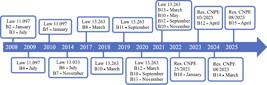
The stimulation of the blending of biodiesel with oil-based diesel began in 2005, with Brazilian Law number 11,097 (EPE, 2024). A 2.0% addition became mandatory in 2008, reaching 5.0% by 2010. Based on macroeconomic conditions, subsequent laws 13,033/2014 and 13,263/2017 have allowed the blended biodiesel percentage to fluctuate from 6.0%, in 2014, to a forecasted 15%, in effect since August 1, 2025 (Law 14.993/2024). Therefore, in general terms, Brazilian laws are favorable to the promotion of higher percentages of blended biodiesel. (Tibúrcio et al., 2023).
Both ethanol and biodiesel were benefited by RenovaBio, a government program created through Law number 13,576 in 2017, aiming to stimulate the use of private resources in a free market of carbon credits, in which carbon-positive fuel producers must buy credits from carbon-negative fuel producers (Tibúrcio et al., 2023; Aguiar et al., 2024). RenovaBio introduced Renovacalc, a tool developed with Embrapa’s support, enabling biofuel producers to calculate the carbon intensity of their production processes.
The future steps for Brazilian legislation according to Law number 14,993/2024 are to increase the amount of sustainable aviation fuel used by airplane companies, making flexible the amount of blended biodiesel in the market, and to stimulate the use of biomethane instead of natural gas (Brasil, 2024a). This new approach, differently from that of the 1970s legislation, does not provide state funding for the market; instead, it promotes a free market, in which the government sets goals, and the market is free to navigate towards the targets.
To foster knowledge development and integrated solutions, a continuous alignment between government policies and scientific research advancements is essential. In the Brazilian context, the vast biodiversity and agricultural resources of the country contribute to a more diversified and sustainable energy matrix. Brazil has made significant advances in diversifying its bioenergy feedstocks, optimizing conversion technologies, and establishing a supportive legal and institutional framework. As a company that carries out science-driven research, development, and innovation in agriculture, Embrapa also works on solutions for the production and use of bioenergy in the country.
Embrapa’s research and development in bioenergy
Through its diverse research initiatives, Embrapa propels substantial advancements within the sector of bionergy, particularly in the domain of plant genetic improvement. The corporation’s primary focus lies in the development of novel plant varieties, achieved through the integration of biotechnology techniques and established traditional genetic breeding methodologies. The overarching objective is to increase biomass production and to engineer microorganisms or plants capable of optimizing biomass processing, fostering a more efficient bioenergy use (Souza et al., 2019; Silva et al., 2020). The considerable progress in plant genetic improvement has yielded great qualitative and quantitative advancements in Brazilian agriculture over the past four decades, firmly establishing the nation’s excellence in research on a global scale.
Efforts are currently underway to develop more productive varieties of key crops, including sugarcane, corn, elephant grass (Pennisetum purpureum Schumach.), sorghum [Sorghum bicolor (L.) Moench], oilseeds [such as soybean, canola (Brassica napus L.), and palm oil (Elaeis guineensis Jacq.], and rapidly growing forest species as eucalyptus (Eucalyptus spp.). The goal of these initiatives is to achieve varieties with a superior biomass production capacity and an enhanced adaptability to diverse soil and climatic conditions (Rocha et al., 2017; Durães et al., 2021).
By connecting varieties to more efficient production systems, in order to maximize bioenergy feedstock yields and minimize environmental impact, Embrapa’s efforts target to improve agricultural practices, harvesting techniques, and sustainable land management strategies (Gollany et al., 2015).
Embrapa is also dedicated to optimize biofuel production processes by increasing the efficiency of ethanol and biodiesel production, reducing costs, valorizing by-products, and developing more sustainable technological routes. The latter include second-generation ethanol and microalgae biodiesel, which are important advancements in the field (Evaristo et al., 2016; Araújo et al., 2021; Laviola et al., 2022).
As the demand for new alternative sources of thermal energy grows, the use of solid biomass and of forestry plants in the sugar and ethanol industries becomes increasingly relevant (Santos et al., 2013). In this context, Embrapa also works on developing technologies for solid biomass use through processes such as pellet and briquette production, sustainable charcoal, gasification, and pyrolysis, aimed at energy generation and bioproduct production (Marafon et al., 2021).
Additionally, the organization invests in developing technologies for biogas production from agricultural, agro-industrial, and urban waste, including treatment and purification steps to convert biogas into biomethane, a viable substitute for natural gas (Mathias & Mathias, 2015; Silva & Godoy Jr., 2023).
Conversion processes and technologies
To be used, raw materials (including agro-industrial waste, such as sugarcane bagasse or vinasse, cottonseed cake or hulls, palm oil mill effluent, rice straw, and coconut shells) need to be characterized and pretreated for their composition to be determined and efficient methods developed for their conversion in subsequent stages of biorefinery (Souza et al., 2019; Hollas et al., 2024).
Integrated conversion routes for raw materials involve the exploration of biochemical (enzymatic hydrolysis, fermentation, and anaerobic digestion) and thermochemical (pyrolysis and gasification) processes, aiming to produce a variety of products from the same biomass. Examples include the integration of the production of second-generation ethanol from sugarcane bagasse with bioelectricity generation, as well as the production of higher added-value bioproducts from lignin (Aguiar et al., 2024).
The development of tools and methodologies to evaluate the sustainability of various production systems in the bioenergy sector, ensuring its environmental, social, and economic viability, encompasses life cycle assessment (LCA) studies. These consist in a systematic evaluation of the environmental burdens associated with a product, process, or service throughout its entire life cycle, from raw material extraction to final disposal or use, making it possible to identify environmental hotspots in different bioenergy options (Hollas et al., 2024). LCA studies address different production routes, analysis of land use, and environmental impact, allowing of the development of processes that minimize the generation of waste and effluents (Hollas et al., 2024). The economic analyses of different biorefinery configurations, considering production costs, markets for bioproducts, and public incentive policies, are essential for investments and the implementation of biorefineries on an industrial scale in Brazil. In this context, Embrapa has been actively involved in LCA studies in bioenergy systems (Souza et al., 2017; Cerri et al., 2022).
There are reports in the literature of the importance of applying processes that will extract both carbohydrates and lignin from plant biomass. Several authors pointed out the need to develop technologies to extract efficiently lignin for use in high-value processes, such as those for plant biostimulants and controlled-release chemicals (Ragauskas et al., 2014; Shi et al., 2025). More research is also necessary to improve the processes used to extract carbohydrates from plant biomass and convert them into biochemicals (Woźniak et al., 2025; Yu et al., 2025).
The presented findings are an indicative that, despite significant advances, the bioenergy sector in Brazil still faces challenges, including the need to increase the efficiency of production processes, reduce costs, ensure environmental and social sustainability, and overcome regulatory and market barriers. Nevertheless, bioenergy is a promising field in Brazil, with potential to expand the production of advanced biofuels (such as cellulosic ethanol and microalgae biofuels), increase the use of biogas and biomethane, and consolidate bioelectricity as an important source of renewable energy (Mathias & Mathias, 2015; Ahmed et al., 2021; Soares et al., 2022).
Concluding Remarks
The content of this review sought to reinforce the understanding that Brazilian agriculture is already part of the green economy, as shown by successful examples such as biological nitrogen fixation, biological pest control, and the use of biomass to produce renewable energy. However, new global sustainability challenges and metrics will require Brazilian agriculture to adopt new technologies.
The alignment of three fundamental pillars has been and will continue to be critical to Brazil’s success: a robust research, development, and innovation infrastructure, exemplified by Embrapa’s work; market-driven policy frameworks, such as RenovaBio; and inclusive technology outreach mechanisms.
Brazil’s pioneering integration of bioinputs and bioenergy systems shows how scientific innovation, when coupled with supportive policies, can promote a sustainable transformation of agriculture into a green economy.
Data availability statement
Data in article: research data are available in the published article.
-
Declaration of use of AI technologies
No generative artificial intelligence (AI) was used in this study.
-
Disclaimer/Publisher’s note
The statements, opinions, and data contained in all texts published in Pesquisa Agropecuária Brasileira (PAB) are solely those of the individual author(s) and not of the journal’s publisher, editor, and editorial team, who disclaim responsibility for any injury to people or property resulting from any referred ideas, methods, instructions, or products.The mention of specific chemical products, machines, and commercial equipment in the texts published in this journal does not imply their recommendation by the publisher.
References
-
AGROFIT: Sistema de Agrotóxicos Fitossanitários. 2023. Available at: <http://agrofit.agricultura.gov.br/agrofit_cons/principal_agrofit_cons>. Accessed on: Apr. 18 2025.
» http://agrofit.agricultura.gov.br/agrofit_cons/principal_agrofit_cons -
AGUIAR, D.R.D.; TAHERIPOUR, F.; SILVA, D.A.L. Ethanol fuel in Brazil: policies and carbon emission avoidance. Biofuels, v.16, p.248-258, 2024. DOI: https://doi.org/10.1080/17597269.2024.2405765
» https://doi.org/10.1080/17597269.2024.2405765 -
AHMED, S.F.; MOFIJUR, M.; TARANNUM, K.; CHOWDHURY, A.T.; RAFA, N.; NUZHAT, S.; KUMAR, P.S.; VO, D.-V. N.; LICHTFOUSE, E.; MAHLIA, T.M.I. Biogas upgrading, economy and utilization: a review. Environmental Chemistry Letters, v.19, p.4137-4164, 2021. DOI:https://doi.org/10.1007/s10311-021-01292-x
» https://doi.org/10.1007/s10311-021-01292-x -
ALELO RECURSOS GENÉTICOS. Available at: <https://alelo.cenargen.embrapa.br/>. Accessed on: May 12 2025.
» https://alelo.cenargen.embrapa.br/ -
ALI, S.; KHAN, N. Delineation of mechanistic approaches employed by plant growth promoting microorganisms for improving drought stress tolerance in plants. Microbiological Research, v.249, art.126771, 2021. DOI:https://doi.org/10.1016/j.micres.2021.126771
» https://doi.org/10.1016/j.micres.2021.126771 - ALVES, V.M.C.; GOMES, E.A.; RESENDE, A.V. de; OLIVEIRA-PAIVA, C.A. de; MARRIEL, I.E.; SOUSA, S.M. de; LANA, U.G. de P. Solubilização de potássio presente em minerais por microrganismos e efeitos no desenvolvimento de culturas agrícolas Sete Lagoas: Embrapa Milho e Sorgo, 2021. 20p. (Embrapa Milho e Sorgo. Documentos, 264).
-
ANP. Agência Nacional do Petróleo, Gás Natural e Biocombustíveis Informações de Mercado. Biodiesel 2024. Available at: <https://www.gov.br/anp/pt-br/centrais-de-conteudo/dados-abertos/producao-de-biocombustiveis>. Accessed on: Apr. 17 2025.
» https://www.gov.br/anp/pt-br/centrais-de-conteudo/dados-abertos/producao-de-biocombustiveis -
ARAÚJO, L.N.; RODRIGUES, E.V.; SANTOS, A.; LAVIOLA, B.G. Tropicalization of canola: commercial hybrids show potential for cultivation in the Brazilian Cerrado. Revista de la Facultad de Ciencias Agrarias, v.53, p.20-26, 2021. DOI: https://doi.org/10.48162/rev.39.035
» https://doi.org/10.48162/rev.39.035 -
AZEVEDO, L.P.; LAGARINHOS, C.A.F. Green energy from waste to promote decarbonization: a case study in Brazil. In: PRASAD, M.N.V.; ERICKSON, L.E.; NUNES, F.C.; RAMADAN, B.S. (Ed.). Decarbonization Strategies and Drivers to Achieve Carbon Neutrality for Sustainability Amsterdam: Elsevier, 2024. p.527-554. DOI: https://doi.org/10.1016/B978-0-443-13607-8.00027-4
» https://doi.org/10.1016/B978-0-443-13607-8.00027-4 -
BARBOSA, L. de P.; COSTA, P.F.; RIBEIRO, P.R.A.; RUFINI, M.; GUIMARÃES, A.A.; MOREIRA, F.M. de S. Symbiotic efficiency and genotypic characterization of variants of Bradyrhizobium spp. in commercial inoculants for soybeans. Revista Brasileira de Ciência do Solo, v.41, e0160572, 2017. DOI: https://doi.org/10.1590/18069657rbcs20160572
» https://doi.org/10.1590/18069657rbcs20160572 -
BIOINSUMOS. version 3.0.6. 2024. Available at: <https://play.google.com/store/apps/details?id=br.embrapa.bioinsumos&hl=pt_BR&pli=1> Accessed on: May 7 2025.
» https://play.google.com/store/apps/details?id=br.embrapa.bioinsumos&hl=pt_BR&pli=1 -
BRASIL. Lei nº 14.993, de 8 de outubro de 2024 Dispõe sobre a promoção da mobilidade sustentável de baixo carbono e a captura e a estocagem geológica de dióxido de carbono; institui o Programa Nacional de Combustível Sustentável de Aviação (ProBioQAV), o Programa Nacional de Diesel Verde (PNDV) e o Programa Nacional de Descarbonização do Produtor e Importador de Gás Natural e de Incentivo ao Biometano; altera as Leis nºs 9.478, de 6 de agosto de 1997, 9.847, de 26 de outubro de 1999, 8.723, de 28 de outubro de 1993, e 13.033, de 24 de setembro de 2014; e revoga dispositivo da Lei nº 10.438, de 26 de abril de 2002. 2024a. Available at: <https://www.planalto.gov.br/ccivil_03/_ato2023-2026/2024/lei/l14993.htm>. Accessed on: Apr. 30 2025.
» https://www.planalto.gov.br/ccivil_03/_ato2023-2026/2024/lei/l14993.htm -
BRASIL. Lei nº 15.070, de 23 de dezembro de 2024 Dispõe sobre a produção, a importação, a exportação, o registro, a comercialização, o uso, a inspeção, a fiscalização, a pesquisa, a experimentação, a embalagem, a rotulagem, a propaganda, o transporte, o armazenamento, as taxas, a prestação de serviços, a destinação de resíduos e embalagens e os incentivos à produção de bioinsumos para uso agrícola, pecuário, aquícola e florestal; e altera as Leis nºs 14.785, de 27 de dezembro de 2023, 10.603, de 17 de dezembro de 2002, e 6.894, de 16 de dezembro de 1980. 2024b. Available at: <https://www.planalto.gov.br/ccivil_03/_ato2023-2026/2024/lei/l15070.htm>. Accessed on: May 11 2025.
» https://www.planalto.gov.br/ccivil_03/_ato2023-2026/2024/lei/l15070.htm -
BRASIL. Ministério da Agricultura e Pecuária. Agroenergia Brasília, 2024c. Available at: <https://www.gov.br/agricultura/pt-br/assuntos/sustentabilidade/agroenergia>. Acessed on: Apr. 17 2025.
» https://www.gov.br/agricultura/pt-br/assuntos/sustentabilidade/agroenergia - BRASIL. Ministério da Indústria, Comércio Exterior e Serviços. Secretaria de Desenvolvimento Industrial, Inovação, Comércio e Serviços. Plano nacional de fertilizantes 2050: uma estratégia para os fertilizantes no Brasil. Brasília, 2023. 197p.
-
BRASIL. Secretaria Especial de Assuntos Estratégicos. Produção nacional de fertilizantes: estudo estratégico. Brasília, 2020. Available at: <https://www.gov.br/planalto/pt-br/assuntos/assuntos-estrategicos/documentos/estudos-estrategicos/sae_publicacao_fertilizantes_v10.pdf>. Accessed on: May 7 2025.
» https://www.gov.br/planalto/pt-br/assuntos/assuntos-estrategicos/documentos/estudos-estrategicos/sae_publicacao_fertilizantes_v10.pdf -
CAMPOS, P. de S.F.; VILELA, E.S.D.; HALFELD-VIEIRA, B. de A.; NECHET, K. de L. Efeitos da variação de concentrações de ágar em meio de cultura na produção de cercosporina por Cercospora aff. canescens In: CONGRESSO INTERINSTITUCIONAL DE INICIAÇÃO CIENTÍFICA-CIIC, 17., 2023, Campinas. Anais Campinas: Embrapa Territorial, 2023. nº 23412. Available at: <https://www.cnpm.embrapa.br/ciic/anais/arquivos/anais/anaisciic2023/RE23412.pdf> Accessed on: Apr. 28 2025.
» https://www.cnpm.embrapa.br/ciic/anais/arquivos/anais/anaisciic2023/RE23412.pdf -
CARNEIRO, G.D.O.P.; CASTRO, G.H.R.; COSTA, J.P.; SILVA, M.T.B.; SILVA, T.S.; TEÓFILO, T.M. da S.; MENDES, L. da S. Eficácia de herbicidas no controle pós-emergência de corda-de-viola. Revista Brasileira de Herbicidas, v.19, e666, 2020. DOI: https://doi.org/10.7824/rbh.v19i2.666
» https://doi.org/10.7824/rbh.v19i2.666 -
CERRI, C.E.P.; CHERUBIN, M.R.; DENNY, D.M.T.; CANTARELLA, H.; NOGUEIRA, L.A.H.; MATSUURA, M.I. da S.F.; GANDINI, M.; STUCHI, A.A. Carbon balance in the sugarcane sector - Conference Report. Journal of Cleaner Production, v.375, art.134090, 2022. DOI: https://doi.org/10.1016/j.jclepro.2022.134090
» https://doi.org/10.1016/j.jclepro.2022.134090 -
CONAB. Companhia Nacional de Abastecimento. Acompanhamento da Safra Brasileira: séries históricas. Brasília. 2024. Available at: <https://www.conab.gov.br/info-agro/safras/serie-historicadas-safras/itemlist/category/910-Milho>. Accessed on: Apr. 20 2025.
» https://www.conab.gov.br/info-agro/safras/serie-historicadas-safras/itemlist/category/910-Milho -
DOGARU, L. Green economy and green growth - Opportunities for sustainable development. Proceedings, v.63, art.70, 2021. DOI: https://doi.org/10.3390/proceedings2020063070
» https://doi.org/10.3390/proceedings2020063070 -
DURÃES, N.N.L.; NUNES, J.A.R.; BRUZI, A.T.; LOMBARDI, G.M.R.; FAGUNDES, T.G.; PARRELLA, N.N.L.D.; SCHAFFERT, R.E.; PARRELLA, R.A. da C. Heterosis for ethanol yield and yield components in sweet sorghum. Sugar Tech, v.23, p.360-368, 2021. DOI: https://doi.org/10.1007/s12355-020-00909-9
» https://doi.org/10.1007/s12355-020-00909-9 -
EPE. Empresa de Pesquisa Energética. Balanço Energético Nacional 2024 2024. Available at: <https://www.epe.gov.br/sites-pt/publicacoes-dados-abertos/publicacoes/PublicacoesArquivos/publicacao-819/topico-723/BEN2024.pdf>. Accessed on: Apr. 17 2025.
» https://www.epe.gov.br/sites-pt/publicacoes-dados-abertos/publicacoes/PublicacoesArquivos/publicacao-819/topico-723/BEN2024.pdf -
EVARISTO, A.B.; GROSSI, J.A.S.; PIMENTEL, L.D.; GOULART, S. de M.; MARTINS, A.D.; SANTOS, V.L. dos; MOTOIKE, S. Harvest and post-harvest conditions influencing macauba (Acrocomia aculeata) oil quality attributes. Industrial Crops and Products, v.85, p.63-73, 2016. DOI: https://doi.org/10.1016/j.indcrop.2016.02.052
» https://doi.org/10.1016/j.indcrop.2016.02.052 -
FAO. Food and Agriculture Organization of the United Nations Pesticides use and trade, 1990–2022. Rome, 2024. (FAOSTAT. Analytical Brief 89). Available at: <https://openknowledge.fao.org/items/262b96c8-eef0-4810-9c23-d8639a5dbf1b>. Accessed on: Apr. 25 2025.
» https://openknowledge.fao.org/items/262b96c8-eef0-4810-9c23-d8639a5dbf1b -
FAO. Food and Agriculture Organization of the United Nations. Faostat: fertilizers by nutrient [in Brazil (2012-2022)]. Available at: <https://www.fao.org/faostat/en/#data/RFN>. Accessed on: May 5 2025.
» https://www.fao.org/faostat/en/#data/RFN -
FARIA, M.; MASCARIN, G. M; BUTT, T.; LOPES, R. B. On-farm production of microbial entomopathogens for use in agriculture: Brazil as a case study. Neotropical Entomology, v.52, p.122-133, 2023. DOI: https://doi.org/10.1007/s13744-023-01033-5
» https://doi.org/10.1007/s13744-023-01033-5 - FERREIRA, D.M.; PEREIRA, R.T. Formulações avançadas para biofertilizantes: microencapsulamento e veículos de aplicação. Revista de Biotecnologia Aplicada, v.5, p.33-44, 2018.
-
GAZZIERO, D.L.P.; YORINORI, J.T. Experiência sobre controle biológico de Euphorbia heterophylla no Brasil. Jaboticabal: FCAVJ/UNESP, 1993. 18p. Available at: <https://www.alice.cnptia.embrapa.br/alice/bitstream/doc/445388/1/ID-2005.pdf>. Accessed on: Apr. 22 2025.
» https://www.alice.cnptia.embrapa.br/alice/bitstream/doc/445388/1/ID-2005.pdf -
GOLLANY, H.T.; TITUS, B.D.; SCOTT, D.A.; ASBJORNSEN, H.; RESH, S.C.; CHIMNER, R.A.; KACZMAREK, D.J.; LEITE, L.F.C.; FERREIRA, A.C.C.; ROD, K.A.; HILBERT, J.; GALDOS, G.V.; CISZ, M.E. Biogeochemical research priorities for sustainable biofuel and bioenergy feedstock production in the Americas. Environmental Management, v.56, p.1330-1355, 2015. DOI: https://doi.org/10.1007/s00267-015-0536-7
» https://doi.org/10.1007/s00267-015-0536-7 -
HOLLAS, C.E.; AMARAL, K.G.C. do; LANGE, M.V.; HIGARASHI, M.M.; STEINMETZ, R.L.R.; MARIANI, L.F.; NAKANO, V.; SANCHES-PEREIRA, A.; JANNUZZI, G. de M.; KUNZ, A. Environmental Science and Pollution Research, v.31, p.4705-4720, 2024. DOI:
» 10.1016/j.jclepro.2022.131654 -
HUNGRIA, M.; BARBOSA, J.Z.; RONDINA, A.B.L.; NOGUEIRA, M.A. Improving maize sustainability with partial replacement of N fertilizers by inoculation with Azospirillum brasilense Agronomy Journal, v.114, p.2969-2980, 2022. DOI: https://doi.org/10.1002/agj2.21150
» https://doi.org/10.1002/agj2.21150 - HUNGRIA, M.; NOGUEIRA, M.A. Inoculação do milho com as estirpes Ab-V5 e Ab-V6 de Azospirillum brasilense: redução na adubação nitrogenada de cobertura e mitigação na emissão de gases de efeito estufa. Londrina: Embrapa Soja, 2022. 36p. (Embrapa Soja. Documentos, 450).
-
HUNGRIA, M.; NOGUEIRA, M.A.; ARAUJO, R.S. Co-inoculation of soybeans and common beans with rhizobia and azospirilla: strategies to improve sustainability. Biology and Fertility of Soils, v.49, p.791-801, 2013. DOI: https://doi.org/10.1007/s00374-012-0771-5
» https://doi.org/10.1007/s00374-012-0771-5 -
IPPC Secretariat. International Plant Protection Convention. Secretariat. ISPM-5: Glossary of phytosanitary terms. Rome: FAO, 2023. (International Standards for Phytosanitary Measures). Available at: <https://openknowledge.fao.org/server/api/core/bitstreams/8995b0cd-d1b6-44a4-866b-1341823c30ac/content>. Accessed on: July 14 2025.
» https://openknowledge.fao.org/server/api/core/bitstreams/8995b0cd-d1b6-44a4-866b-1341823c30ac/content -
ISLAM, Z. Europe’s policy transition toward green steel development: prospective and challenges. International Journal of Green Energy, v.22, p.288-306, 2024. DOI: https://doi.org/10.1080/15435075.2024.2413684
» https://doi.org/10.1080/15435075.2024.2413684 -
KAVAMURA, V.N.; SANTOS, S.N.; SILVA, J.L. da; PARMA, M.M.; ÁVILA, L.A.; VISCONTI, A.; ZUCCHI, T.D.; TAKETANI, R.G.; ANDREOTE, F.D.; MELO, I.S. de. Screening of Brazilian cacti rhizobacteria for plant growth promotion under drought. Microbiological Research, v.168, p.183-191, 2013. DOI: https://doi.org/10.1016/j.micres.2012.12.002
» https://doi.org/10.1016/j.micres.2012.12.002 -
KAVAMURA, V.N.; SANTOS, S.N.; TAKETANI, R.G.; VASCONCELLOS, R.L.F.; MELO, I.S. Draft genome sequence of plant growth-promoting drought-tolerant Bacillus sp. strain CMAA 1363 isolated from the Brazilian Caatinga biome. Genome Announcements, v.5, e01534-16, 2017. DOI: https://doi.org/10.1128/genomea.01534-16
» https://doi.org/10.1128/genomea.01534-16 -
KOZA, N.A.; ADEDAYO, A.A.; BABALOLA, O.O.; KAPPO, A.P. Microorganisms in plant growth and development: roles in abiotic stress tolerance and secondary metabolites secretion. Microorganisms, v.10, art.1528, 2022. DOI: https://doi.org/10.3390/microorganisms10081528
» https://doi.org/10.3390/microorganisms10081528 -
LAVIOLA, B.G.; RODRIGUES, E.V.; SANTOS, A. dos; TEODORO, L.P.R.; PEIXOTO, L.A.; TEODORO, P.E.; BHERING, L.L. Breeding strategies to consolidate canola among the main crops for biofuels. Euphytica, v.218, art.1, 2022. DOI: https://doi.org/10.1007/s10681-021-02955-0
» https://doi.org/10.1007/s10681-021-02955-0 -
LIU, K.; DENG, F.; ZENG, F.; CHEN, Z.-H.; QIN, Y.; CHEN, G. Plant growth-promoting rhizobacteria improve drought tolerance of crops: a review. Plant Growth Regulation, v.105, p.567-581, 2025. DOI: https://doi.org/10.1007/s10725-025-01300-y
» https://doi.org/10.1007/s10725-025-01300-y -
LODI, L.A.; KLAIC, K.; RIBEIRO, C.; FARINAS, C.S. A green K-fertilizer using mechanical activation to improve the solubilization of a low-reactivity potassium mineral by Aspergillus niger Bioresource Technology Reports, v.15, art.100711, 2021. DOI: 10.1016/j.biteb.2021.100711
» 10.1016/j.biteb.2021.100711 -
LOPES, A.S.; GUILHERME, L.R.G. A career perspective on soil management in the Cerrado region of Brazil. Advances in Agronomy, v.137, p.1-72, 2016. DOI: https://doi.org/10.1016/bs.agron.2015.12.004
» https://doi.org/10.1016/bs.agron.2015.12.004 -
MARAFON, A.C.; AMARAL, A.F.C.; MACHADO, J.C.; CARNEIRO, J. da C.; BIERHALS, A.N.; GUIMARÃES, V. dos S. Chemical composition and calorific value of elephant grass varieties and other feedstocks intended for direct combustion. Grassland Science, v.67, p.241-249, 2021. DOI: https://doi.org/10.1111/grs.12311
» https://doi.org/10.1111/grs.12311 - MATHIAS, M.C.P.P.; MATHIAS, J.F.C.M. Biogas in Brazil: a governmental Agenda. Journal of Energy and Power Engineering, v.9, p.1-15, 2015.
-
MELO, I.S. de; MENDES, R; NECHET, K. de L.; VIEIRA JUNIOR, G.L.; SOUZA, D.T.; KOBA, J.F.; NOGUCHI, V.N.K. Bioprospecção de microrganismos com potencial de uso na agricultura. In: MORANDI, M.A.B.; PACKER, A.P.C.; MENDES, R.; TANURE, J.P.M.; ANDRADE, C.A. de; MENEZES, C. (Ed.). Agricultura & Meio ambiente: a busca pela sustentabilidade. Brasília: Embrapa, 2024. p.561-599. Available at: <https://ainfo.cnptia.embrapa.br/digital/bitstream/doc/1168446/1/Morandi-agricultura-meio-ambiente-2024.pdf>. Accessed on: Apr. 24 2025.
» https://ainfo.cnptia.embrapa.br/digital/bitstream/doc/1168446/1/Morandi-agricultura-meio-ambiente-2024.pdf -
MERCADO de bioinsumos cresceu 15% na safra 2023/2024. CropLife Brasil, June 26 2024. Available at: <https://croplifebrasil.org/mercado-de-bioinsumos-cresceu-15-na-safra-2023-2024/>. Accessed on: July 12 2025.
» https://croplifebrasil.org/mercado-de-bioinsumos-cresceu-15-na-safra-2023-2024/ -
MOSCARDI, F. Assessment of the application of baculoviruses for control of Lepidoptera. Annual Review of Entomology v.44, p.257-289, 1999. DOI: https://doi.org/10.1146/annurev.ento.44.1.257, 0066-4170.
» https://doi.org/10.1146/annurev.ento.44.1.257,0066-4170 - MOSCARDI, F. Use of viruses for pest-control in Brazil: the case of the nuclear polyhedrosis virus of the soybean caterpillar, Anticarsia gemmatalis. Memórias do Instituto Oswaldo Cruz, v.84, p.51-56, 1989.
-
NECHET, K. de L.; VITORINO, M.D.; VIEIRA, B.S.; HALFELD-VIEIRA, B. de A. Weeds. In: SOUZA, B.; VÁZQUEZ, L.L.; MARUCCI, R.C. (Ed.). Natural enemies of insect pests in neotropical agroecosystems: biological control and functional biodiversity. Cham: Springer, 2019. p.437-449. DOI: https://doi.org/10.1007/978-3-030-24733-1_35
» https://doi.org/10.1007/978-3-030-24733-1_35 -
NECHET, K.L.; HALFELD-VIEIRA, B.A. Development of Cercospora leaf spot on Ipomoea weed species for biological control. BioControl, v.64, p.185-195, 2019. DOI: https://doi.org/10.1007/s10526-018-09918-w
» https://doi.org/10.1007/s10526-018-09918-w -
OJUEDERIE, O.B.; OLANREWAJU, O.S.; BABALOLA, O.O. Plant growth promoting rhizobacterial mitigation of drought stress in crop plants: Implications for sustainable agriculture. Agronomy, v.9, art.712, 2019. DOI: https://doi.org/10.3390/agronomy9110712
» https://doi.org/10.3390/agronomy9110712 -
PEREIRA, V.F.; LOPES, D.B.; TORRES, D.A.P.; LOPES, M. Economia Verde. In: Visão de futuro do Agro Brasileiro 2022. Available at: <https://www.embrapa.br/visao-defuturo/sustentabilidade/sinal-etendencia/economia-verde>. Accessed on: May 8 2025.
» https://www.embrapa.br/visao-defuturo/sustentabilidade/sinal-etendencia/economia-verde -
PRODUÇÃO de microrganismos para uso próprio na agricultura (on-farm) - Official statements. Embrapa, Nov. 17 2021. Available at: <https://www.embrapa.br/en/esclarecimentos-oficiais/-/asset_publisher/TMQZKu1jxu5K/content/nota-tecnica-producao-de-microrganismos-para-uso-proprio-na-agricultura-on-farm->. Accessed on: July 12 2025.
» https://www.embrapa.br/en/esclarecimentos-oficiais/-/asset_publisher/TMQZKu1jxu5K/content/nota-tecnica-producao-de-microrganismos-para-uso-proprio-na-agricultura-on-farm- -
RAGAUSKAS, A.J.; BECKHAM, G.T.; BIDDY, M.J.; CHANDRA, R.; CHEN, F.; DAVIS, M.F.; DAVISON, B.H.; DIXON, R.A.; GILNA, P.; KELLER, M.; LANGAN, P.; NASKAR, A.K.; SADDLER, J.N.; TSCHAPLINSKI, T.J.; TUSKAN, G.A.; WYMAN, C.E. Lignin valorization: improving lignin processing in the biorefinery. Science, v.344, art.1246843, 2014. DOI: https://doi.org/10.1126/science.1246843
» https://doi.org/10.1126/science.1246843 -
ROCHA, J.R.A.S. de C.; MACHADO, J.C.; CARNEIRO, P.C.S.; CARNEIRO, J. da C.; RESENDE, M.D.V.; LÉDO, F.J. da S.; CARNEIRO, J.E. de S. Bioenergetic potential and genetic diversity of elephantgrass via morpho-agronomic and biomass quality traits. Industrial Crops and Products, v.95, p.485-492, 2017. DOI: https://doi.org/10.1016/j.indcrop.2016.10.060
» https://doi.org/10.1016/j.indcrop.2016.10.060 - SANTOS, F.; COLODETTE, J.; QUEIROZ, J.H. Bioenergy and biorefinery: sugarcane and forest species. Viçosa: Ed. da UFV, 2013. 551р.
-
SARROCCO, S. Biological disease control by beneficial (micro)organisms: selected breakthroughs in the past 50 years. Phitopathology, v.113, p.732-740, 2023. DOI: https://doi.org/10.1094/PHYTO-11-22-0405-KD
» https://doi.org/10.1094/PHYTO-11-22-0405-KD -
SATI, D.; PANDE, V.; PANDEY, S.C.; SAMANT, M. Recent advances in PGPR and molecular mechanisms involved in drought stress resistance. Journal of Soil Science and Plant Nutrition, v.23, p.106-124, 2023. DOI: https://doi.org/10.1007/s42729-021-00724-5
» https://doi.org/10.1007/s42729-021-00724-5 -
SHI, T.; LIU, Z.-H.; RAGAUSKAS, A.J.; YUAN, Y.-J.; LI, B.-Z. Versatile lignin valorization drives sustainable agriculture. Renewable and Sustainable Energy Reviews, v.215, art.115632, 2025. DOI: https://doi.org/10.1016/j.rser.2025.115632
» https://doi.org/10.1016/j.rser.2025.115632 -
SILVA, M.J. da; DAMASCENO, C.M.B.; CARNEIRO, J.E. de S.; PEREIRA, H.D.; CARNEIRO, P.C.S.; SCHAFFERT, R.E.; PARRELLA, R.A. da C. Combining ability of biomass sorghum in different crop years and sites for bioenergy generation. Agronomy Journal, v.112, p.1549-1563, 2020. DOI: https://doi.org/10.1002/agj2.20123
» https://doi.org/10.1002/agj2.20123 - SILVA, M.J.P.; GODOY JR., E. Revista de Política Agrícola, ano32, p.44-54, 2023.
- SILVA, U.C.; MARRIEL, I.E.; PAIVA, C.A. de O.; GOMES, E.A.; RESENDE, A.V. de; LANA, U.G. de P. Biossolubilização de potássio in vitro a partir da rocha fonolito por microrganismos do solo Sete Lagoas: Embrapa Milho e Sorgo, 2015. 29p. (Embrapa Milho e Sorgo. Documentos, 177).
- SOARES, I.P.; SCHULTZ, E.L.; GAMBETTA, R.; GONCALVES, S.B. Brasília: Embrapa Agroenergia, 2022. 29p. (Embrapa Agroenergia. Documentos, 49). ODS.
-
SOUZA, D.M. de; BRAGA, T.; FIGUEIRÊDO, M.C.B. de; MATSUURA, M.I.S.F.; DIAS, F.R.T.; UGAYA, C.M.L. Life cycle thinking in Brazil: challenges and advances towards a more comprehensive practice. International Journal of Life Cycle Assessment, v.22, p.462-465, 2017. DOI: https://doi.org/10.1007/s11367-016-1234-2
» https://doi.org/10.1007/s11367-016-1234-2 -
SOUZA, M.S.T. de; SANTOS, S.A.; BRASIL, M. da S. Desenvolvimento de pastagens inoculadas com a estirpe MAY1 de Azospirillum spp no Pantanal, sub-região Nhecolândia, Brasil. GeoPantanal, v.18, p.100-113, 2023. DOI: https://doi.org/10.55028/geop.v18i34
» https://doi.org/10.55028/geop.v18i34 -
SOUZA, W.R. de; PACHECO, T.F.; DUARTE, K.E.; SAMPAIO, B.L.; MOLINARI, P.A. de O.; MARTINS, P.K.; SANTIAGO, T.R.; FORMIGHIERI, E.F.; VINECKY, F.; RIBEIRO, A.P.; CUNHA, B.A.D.B. da; KOBAYASHI, A.K.; MITCHELL, R.A.C.; GAMBETTA, D. de S.R.; MOLINARI, H.B.C. Silencing of a BAHD acyltransferase in sugarcane increases biomass digestibility. Biotechnology Biofuels, v.12, art.111, 2019. DOI: https://doi.org/10.1186/s13068-019-1450-7
» https://doi.org/10.1186/s13068-019-1450-7 - STRALIOTTO, R.; FREITAS, P.L. de. A ciência do solo no Brasil: linha do tempo. In: TORRES, L.A.; CAMPOS, S.K. (Ed.). Megatendências da Ciência do Solo 2030 Brasília: Embrapa, 2022. p.17-22.
-
SURYAWAN, I.W.K.; LIM, J.W. Bioenergy’s role in the path to decarbonization. In: PRASAD, M.N.V.; ERICKSON, L.E.; NUNES, F.C.; RAMADAN, B.S. (Ed.). Decarbonization Strategies and Drivers to Achieve Carbon Neutrality for Sustainability Amsterdam: Elsevier, 2024. p.3-26. DOI: https://doi.org/10.1016/B978-0-443-13607-8.00030-4
» https://doi.org/10.1016/B978-0-443-13607-8.00030-4 -
TELLES, T.S.; NOGUEIRA, M.A.; HUNGRIA, M. Economic value of biological nitrogen fixation in soybean crops in Brazil. Environmental Technology & Innovation, v.31, art.103158, 2023. DOI: https://doi.org/10.1016/j.eti.2023.103158
» https://doi.org/10.1016/j.eti.2023.103158 -
TIBÚRCIO, R.S.; MACÊDO, T.R. de; PEREIRA NETO, A.M. Brazilian Biofuels Policy (RenovaBio): overview and generation of decarbonization credits by biodiesel production facilities. Energy for Sustainable Development, v.77, art.101334, 2023. DOI: https://doi.org/10.1016/j.esd.2023.101334
» https://doi.org/10.1016/j.esd.2023.101334 -
UNEP. United Nations Environment Programme. Towards a Green Economy: pathways to sustainable development and poverty eradication: a synthesis for policy makers. Saint-Martin-Bellevue, 2011. Available at: <www.unep.org/greeneconomy>. Accessed on: May 7 2025.
» www.unep.org/greeneconomy -
WOŹNIAK, A.; KULIGOWSKI, K.; ŚWIERCZEK, L.; CENIAN, A. Review of lignocellulosic biomass pretreatment using physical, thermal and chemical methods for higher yields in bioethanol production. Sustainability, v.17, art.287, 2025. DOI: https://doi.org/10.3390/su17010287
» https://doi.org/10.3390/su17010287 -
YORINORI, J.T. Biological control of milkweed (Euphorbia heterophylla) with pathogenic fungi. In: INTERNATIONAL SYMPOSIUM ON BIOLOGICAL CONTROL OF WEEDS, 6., 1984, Columbia. Proceedings Vancouver: Agriculture Canada, 1985. p.677-681. Editor Ernest S. Delfosse. Available at: <https://www.invasive.org/proceedings/pdfs/6_677-681.pdf>. Accessed on: Apr. 24 2025.
» https://www.invasive.org/proceedings/pdfs/6_677-681.pdf - YORINORI, J.T. Controle biológico de ervas daninhas com microorganismos. In: REUNIÃO SOBRE CONTROLE BIOLÓGICO DE DOENÇAS DE PLANTAS, 2., 1987, Piracicaba. Anais Piracicaba: Fundação Cargill, 1987. p.20-30.
-
YU, J.; LI, C.; CHENG, Y.; GUO, S.; LU, H.; XIE, X.; JI, H.; QIAO, Y. Mechanism and improvement of yeast tolerance to biomass-derived inhibitors: a review. Biotechnology Advances, v.81, art.108562, 2025. DOI: https://doi.org/10.1016/j.biotechadv.2025.108562
» https://doi.org/10.1016/j.biotechadv.2025.108562
Edited by
-
Chief editor:
Edemar Corazza
-
Edited by:
Daniel Kinpara