 Physiological and biochemical quality of paradise nut seed
Abstract
The objective of this work was to evaluate the physiological quality of Lecythis pisonis seed and their biochemical changes after being subjected to accelerated aging. Seed were arranged in a randomized block design consisting of seven accelerated aging durations (0, 24, 48, 72, 96, 120, and 144 hours), with four replicates of 25 seed each. Moisture content (%) was determined, and seed vigor, seedling emergence and growth (%), and the biochemical composition of seed were analyzed. Accelerated aging for 120 hours, at 40 °C, resulted in higher carbohydrate concentration and seedling emergence, and in one of the lowest lipid contents. Protein concentration decreased, whereas starch and fiber contents increased with accelerated seed aging. Seedling emergence from seed subjected to 144 hours of aging declined sharply, and seed moisture content rose significantly. Seed of L. pisonis exhibit high physiological quality.
Index terms:
Lecythis pisonis; phenotypic plasticity; seed biochemistry; seed physiology.
Resumo
O objetivo deste trabalho foi avaliar a qualidade fisiológica das sementes de Lecythis pisonis e suas alterações bioquímicas após serem submetidas ao envelhecimento acelerado. As sementes foram dispostas em delineamento de blocos ao acaso, composto por sete períodos de tempo de envelhecimento acelerado (0, 24, 48, 72, 96, 120 e 144 horas), com quatro repetições de 25 sementes cada uma. Determinou-se o teor de água (%), e analisaram-se o vigor, a emergência e o crescimento das plântulas (%) e a composição bioquímica das sementes. O envelhecimento acelerado das sementes por 120 horas, a 40 °C, resultou em maior concentração de carboidratos e emergência de plântulas, e em um dos menores teores de lipídios. A concentração de proteína diminuiu, enquanto os teores de amido e fibra aumentaram com o envelhecimento acelerado das sementes. A emergência de plântulas obtidas de sementes submetidas a 144 horas de envelhecimento declinou drasticamente, e o conteúdo de água das sementes aumentou acentuadamente. Sementes de L. pisonis apresentam alta qualidade fisiológica.
Termos de indexação:
Lecythis pisonis; plasticidade fenotípica; bioquímica de sementes; fisiologia de sementes
Introduction
Lecythis pisonis Cambess. is an unconventional tropical tree with the capacity to produce functional nuts. More than 14 types of phenolic compounds have been observed in its nuts, and 22 types in its shells, making it a source of natural antioxidants with a significant abundance of flavonoids, phenolic acids, and essential nutrients (Demoliner et al., 2018). Seed of L. pisonis are oleaginous and rich in unsaturated fatty acids, making them valuable sources of palmitic, linoleic, and oleic acids (Araujo et al., 2023).
Oil-rich seeds have a high lipid content, which makes storage conservation difficult due to crystallization processes (Ballesteros et al., 2019). Lipids are essential sources of energy during seed germination; however, they also make seeds more susceptible to deterioration during natural aging, due to lipid peroxidation (Naghisharifi et al., 2024). The chemical composition of seed influences their longevity during storage, making it essential both to understand the deterioration impacts on these reserves during aging and how this affects germination over time (Nadarajan et al., 2023).
Seed of L. pisonis exhibit germination difficulties associated with physical and physiological dormancy (Araujo et al., 2020; Duarte et al., 2022). They also require many days for seedling emergence, which occurs unevenly (Araujo et al., 2024). Currently, they are classified as intermediate seed, as they tolerate embryo dehydration to low moisture contents (15, 10, and 4%). However, they are sensitive to storage of about three months at low temperatures (-20 and -86 °C), according to Araujo (2024), who also observed that L. pisonis seed can be stored for up to one year at 6 °C, when packed in kraft paper bags.
Environmental factors have a direct influence on seed germination and can compromise essential attributes such as vigor. This parameter is strongly associated with the ability of seed to resist physiological damage, such as that caused by the natural aging process. In this context, the importance of the accelerated aging technique stands out, as it allows of the simulation of natural aging effects, enabling the identification of physiological damage that directly impacts seed vigor (Huang et al., 2020). The application of accelerated aging technique to L. pisonis seed is especially relevant, considering the scarcity of studies on the sensitivity of this species to storage and natural aging. In addition, L. pisonis seed have characteristics that suggest a high vulnerability to deterioration, such as high lipid content and high humidity (Araujo, 2024), factors that contribute to reduce their viability over time.
Therefore, the objective of this work was to evaluate the physiological quality of L. pisonis seed and their biochemical changes during deterioration, when they are subjected to accelerated aging.
Materials and Methods
Seed of L. pisonis were harvested from two parent trees located in the municipality of Laranja da Terra, in Espírito Santo state, Brazil, at the following geographical coordinates: tree 1 (19º47'5.49"S, 41º9'16.53"W), and tree 2 (19º47'1.0" S, 41º9'18.41"W). Seed were disinfested with alcohol at 70% for 1 min, and sodium hypochlorite at 2% for 10 min, followed by triple rinsing with distilled water.
Subsequently, the accelerated aging test was conducted in BOD (biochemical oxygen demand) germination chambers, regulated at 40 °C, and seed were placed on screens in Gerbox acrylic boxes filled with 40 mL of distilled water.
The experiment was carried out in a randomized complete block design, consisting of seven accelerated aging times (0, 24, 48, 72, 96, 120, 144 hours) and four replicates of 25 seed each.
Seed moisture content was determined at all accelerated aging times. Seed mass was weighed in an analytical balance, and then placed in an oven at 105±3 °C until a constant dry mass was achieved. The averages were applied to the following equation: U (%) = (FM-DM)/FM×100, where: U (%) is the percentage of water lost; FM is the fresh mass; and DM is the dry mass (Brasil, 2009).
After each accelerated aging period, seed were sown in 280 cm3 polyethylene tubes filled with Vivatto Slim Plus substrate (Technes, São Paulo, SP, Brazil), which were placed on benches covered with black shade cloth that provided 50% light intensity in a forest nursery. For each accelerated aging time, 100 seed divided into four replicates of 25 seed each were sown. After sowing, the parameters seedling emergence, emergence speed index (Maguire, 1962), and the mean time of emergence (MTE, days) (Labouriau, 1983) were evaluated daily for 120 days. For emergence calculations, the methodological guidelines described by Brasil (2009) were followed, with adaptations, considering emergence as the proportion of the total number of normal seedlings that emerged above the substrate, using the following equation: Emergence (%) = (number of normal emerged seedlings/total number of seed sown)×100.
After 120 days, the following analyses were conducted: shoot length (cm), primary root length (cm), stem diameter (mm), number of lateral roots, number of leaves, shoot dry mass (g), root dry mass (g), total dry mass (g), and Dickson’s quality index (DQI) (Dickson, 1960).
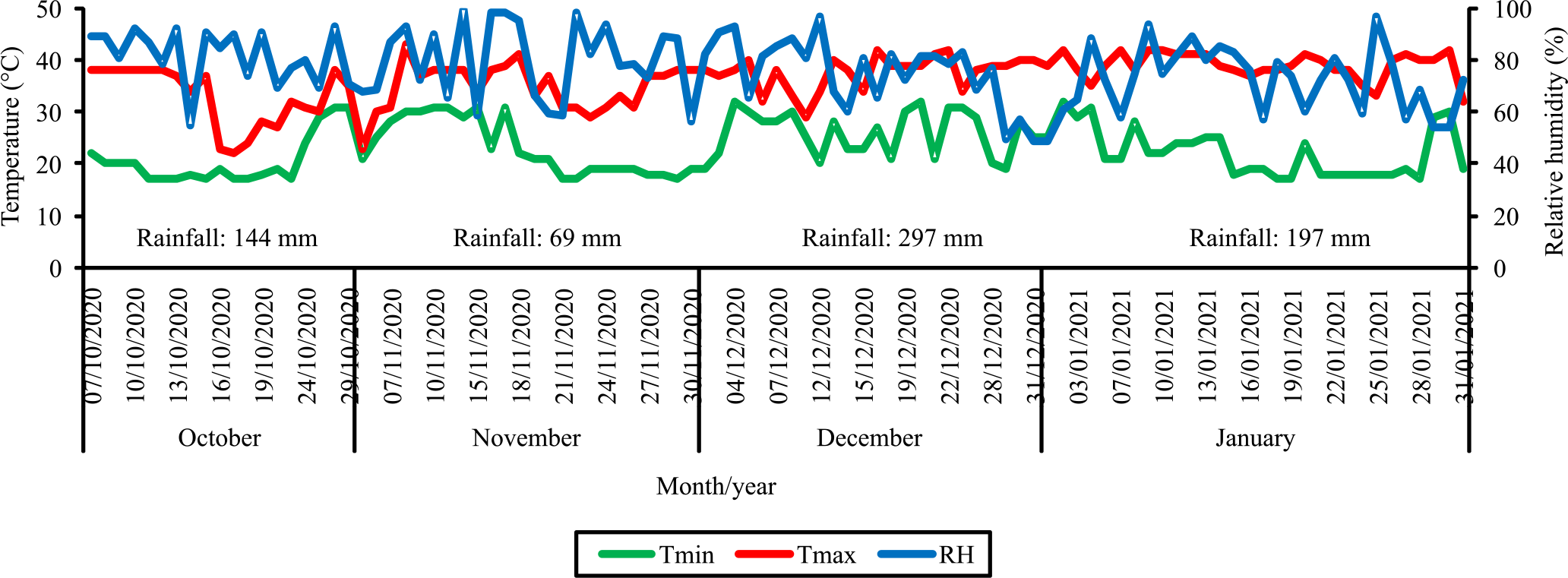
During the experiment evaluation period, the daily monitoring of climatic conditions was also performed (Figure 1) for the following data: maximum temperature (Tmax) and minimum temperature (Tmin), using an analog thermometer; relative humidity (RH, %) using a Lambrecht aspiration psychrometer (Göttingen, Germany); and precipitation measurement, using a 150 mm rain gauge for precipitation index calculation (mm).
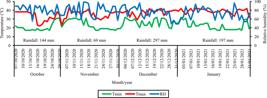
Climatic conditions during the evaluation period of seedling emergence in a forest nursery: Tmin, minimum temperature; Tmax, maximum temperature; RH: relative humidity.
The biochemical analysis was performed on endosperm samples from seed of each treatment, using the modified methodology of Bligh & Dyer (1959). Samples were weighed (0.250 g) and dried in an oven at 45 °C, with four replicates per treatment. Initially, ethanol series (98%, 80%, and 50%) were performed, followed by the addition of 1.5 mL of chloroform. The samples were then kept in water bath at 80 °C, for 20 min, followed by centrifugation at 10,000 rpm for 10 min to obtain a hydrophilic liquid phase and a hydrophobic phase.
The precipitated hydrophobic portion from the extraction was used for the measurement of lipid content (Bligh & Dyer, 1959); after 12 hours rest, it was placed in an oven at 60 °C until reaching a constant weight. The content of total soluble sugars content was determined by adding 80% ethanol and 0.2% anthrone to the hydrophilic solution, followed by a water bath at 100 °C, for 15 min, and measurement using a spectrophotometer (Femto 700 Plus) at 620 nm wavelength of (Yemm & Willis, 1954).
For total soluble phenolic content, the extraction solution was diluted twice in 80% ethanol, followed by the addition of 10% Folin-Ciocalteu, and 4% sodium carbonate. The samples were kept in a dark chamber for 30 min, after which they were analyzed using a spectrophotometer at 760 nm wavelength (Swain & Hills, 1959). Protein content was determined by adding 0.2 mol L-1 potassium hydroxide (KOH) to the pellet, followed by a water bath at 75 °C for two hours. After centrifugation at 10,000 rpm for 10 min, the supernatant was removed. The extract was then diluted in 0.2 mol L-1 KOH and Bradford solution and left to rest for 10 min (Bradford, 1976). The measurement was performed using a spectrophotometer at 595 nm wavelength.
Starch content was determined by adding 3% hydrochloric acid (HCl) to the pellet obtained from the protein extraction (Mello et al., 2022). The samples were incubated in a dark chamber for three hours, followed by centrifugation at 10,000 rpm for 10 min. The supernatant was used for measurement using a spectrophotometer at 620 nm wavelength. Fiber content was quantified by drying the pellet resulting from starch extraction in an oven at 60 °C, until reaching a constant mass (Mello et al., 2022).
All characteristics were analyzed using the Dunnett’s test, at 5% probability. This test was used for comparison because regression curves could neither be used to fit with linear nor nonlinear models. The means for the accelerated aging times from 24 to 144 hours were analyzed using the Scott-Knott’s clustering test, at 5% probability level, using the ‘Tratamentos.ad’ package (Azevedo et al., 2022; R Core Team, 2022).
Results and Discussion
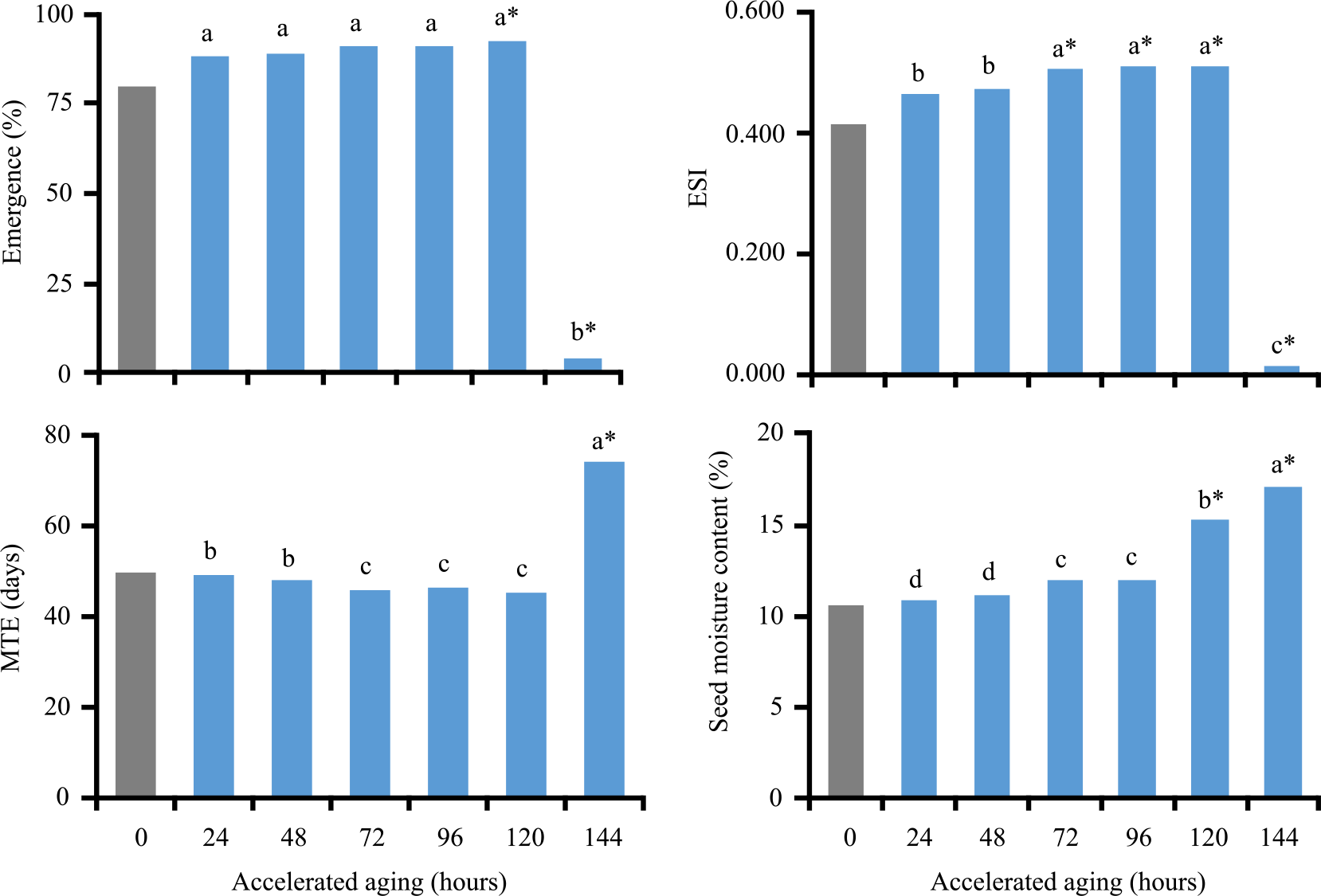
Lecythis pisonis seed showed the highest seedling emergence (92%) in the treatment of 120 hours of accelerated aging, surpassing that of the control (80%). In contrast, a drastic decline of seedling emergence (4%) was observed in 144 hours of aging (Figure 2).
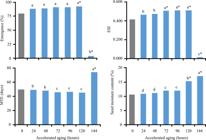
Lecythis pisonis seed aged at 40 °C, for periods of 0 (control), 24, 48, 72, 96, 120, and 144 hours: Emergence, seedling emergence (%); ESI, emergence speed index; MTE, mean time of emergence (days); and Seed moisture content (%). *Means differed significantly from the control, in the same column, by Dunnett’s test, at 5% probability. Means for the accelerated aging times from 24 to 144 hours, followed by equal letters in the columns, do not differ significantly from each other, by Scott-Knott’s mean grouping test, at 5% probability).
The emergence speed index was higher in seed aged from 72 to 120 hours. The MTE was higher in the treatment of 144 hours of aging than that of the control, and the treatments of 24 and 48 hours had the shortest ones. The drastic decrease of emergence coincided with the increase of seed moisture content at the 144 hours’ time point, which was 6.6% higher than the control.
The accelerated aging of L. pisonis seed acted as a stimulator of seedling emergence and vigor up to a certain period of time (120 hours) (Figure 2). One possible explanation is related to the resistance of L. pisonis seed to thermal stress conditions. These seed require thermal shocks at high temperatures, for short periods, to express their maximum vigor. However, the exposure to prolonged periods of stress leads to seed reduced viability and/or to abnormal seedling growth, with poorly developed root systems and shoots (Araujo et al., 2024).
The species L. pisonis exhibits slow and nonuniform seedling emergence, with low emergence rates (0 to 50%) when germinated at 25 °C (Rosa et al., 2020). Some authors suggest that this may be due to physical and/or physiological dormancy of its seed (Araujo et al., 2020; Duarte et al., 2022), which have a hard and thick seed coat and are rich in lignin, which potentially hinders the germination processes (Rosa et al., 2020). Recent findings by Araujo et al. (2024) highlight that L. pisonis seed exhibit a high variation of seedling emergence (0 to 88%), depending on the applied germination temperature. For maximum emergence rate and vigor within a shorter period, the application of thermal shocks, under alternating temperatures of 30-45 °C (20 hours/4 hours, and 21 hours/3 hours) has been recommended (Araujo et al., 2024). These findings are consistent with the data observed in the present study, in which the controlled stress, up to a certain period, enhanced seed vigor.
Decrease of vigor and emergence of L. pisonis seedlings also coincides with the increase of seed water content, making them more susceptible to deterioration processes and pathogen proliferation. Increased moisture reduces the seed longevity and their metabolic activities, consequently raising the production of ROS, which causes cell damage (Farahani et al., 2025). The cytoplasmic viscosity decreases with increased water content, leading to metabolic processes related to seed deterioration, mainly through the oxidation of macromolecules such as proteins, lipids, and genetic material (Rej et al., 2024).
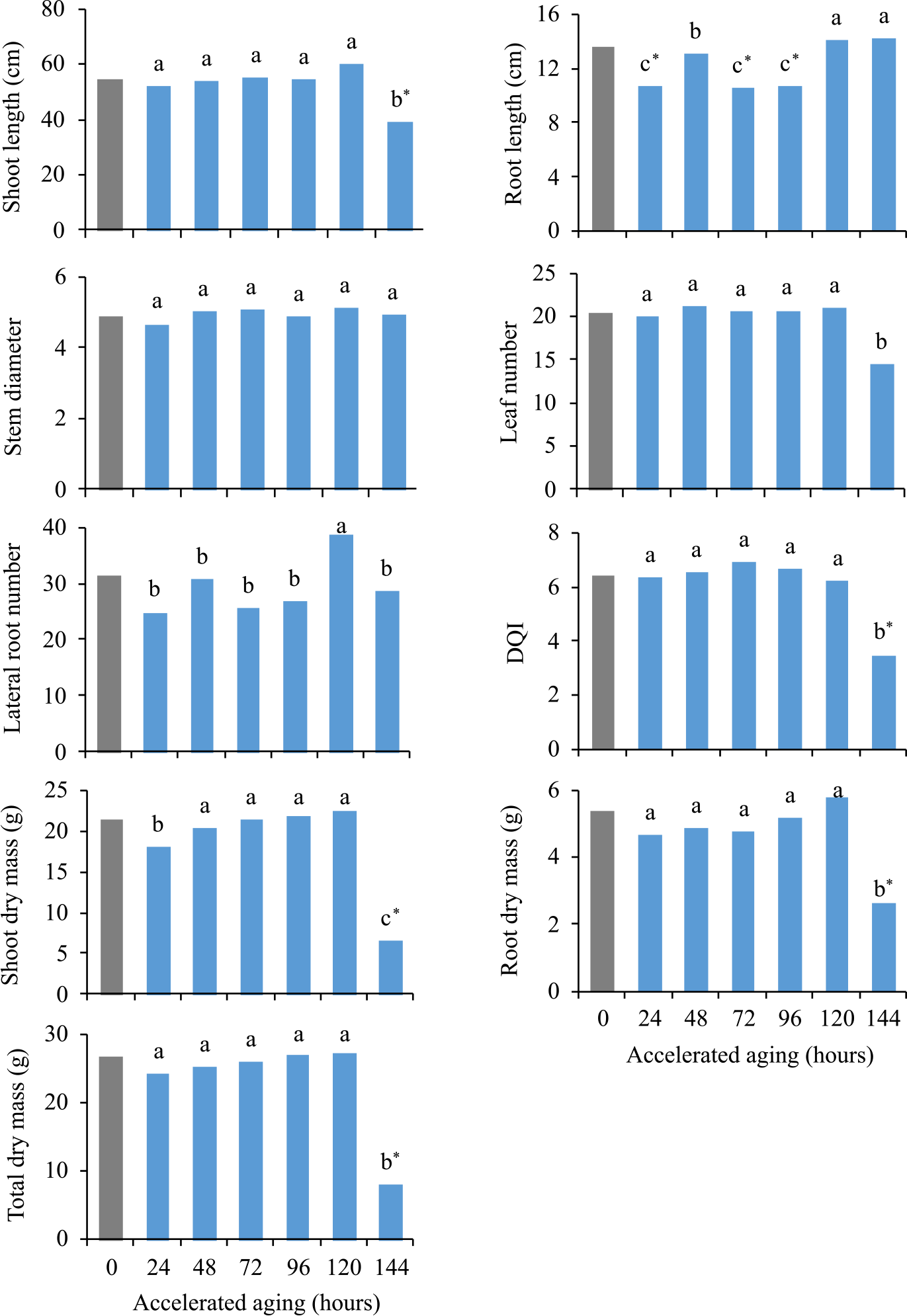
Seed accelerated aging of up to 120 hours did not negatively influence most of the growth characteristics analyzed in L. pisonis seedlings (Figure 3). The shoot length at aging times from 24 hours to 120 hours did not differ from the control, showing lower values at 144 hours. It was also observed that the root length was higher at 120 hours and 144 hours, with a higher number of lateral roots in the treatment of 120 hours. Stem diameter and leaf number did not differ among treatments, in comparison with the control, and total dry mass and DQI were not significant among seed aged from 24 hours to 120 hours, in comparison with the control, with lower values at 144 hours.

Growth characteristics of Lecythis pisonis seedlings whose seed were aged at 40 °C, for a period of 0 (control), 24, 48, 72, 96, 120, and 144 hours. *Means significantly differed from the control, in the same column, by Dunnett’s test, at 5% probability. Means for accelerated aging times from 24 to 144 hours, followed by equal letters in the columns, do not differ significantly by Scott-Knott’s mean grouping test, at 5% probability.
These results indicate that the accelerated aging of L. pisonis seed up to 120 hours did not cause a sufficient cellular damage to impair the normal growth of seedlings, which preserved their morphological and physiological characteristics. This can be explained by the high vigor of L. pisonis seed, whose enzymatic antioxidant system (catalase, peroxidase, and superoxide dismutase) proves to be effective under stressful high-temperature conditions (Araujo et al., 2024). Vigorous plants have a higher chance of success, when taken to the field, with the development of a well-formed root system and aerial parts (shoots) being essential (Guimarães et al., 2024).
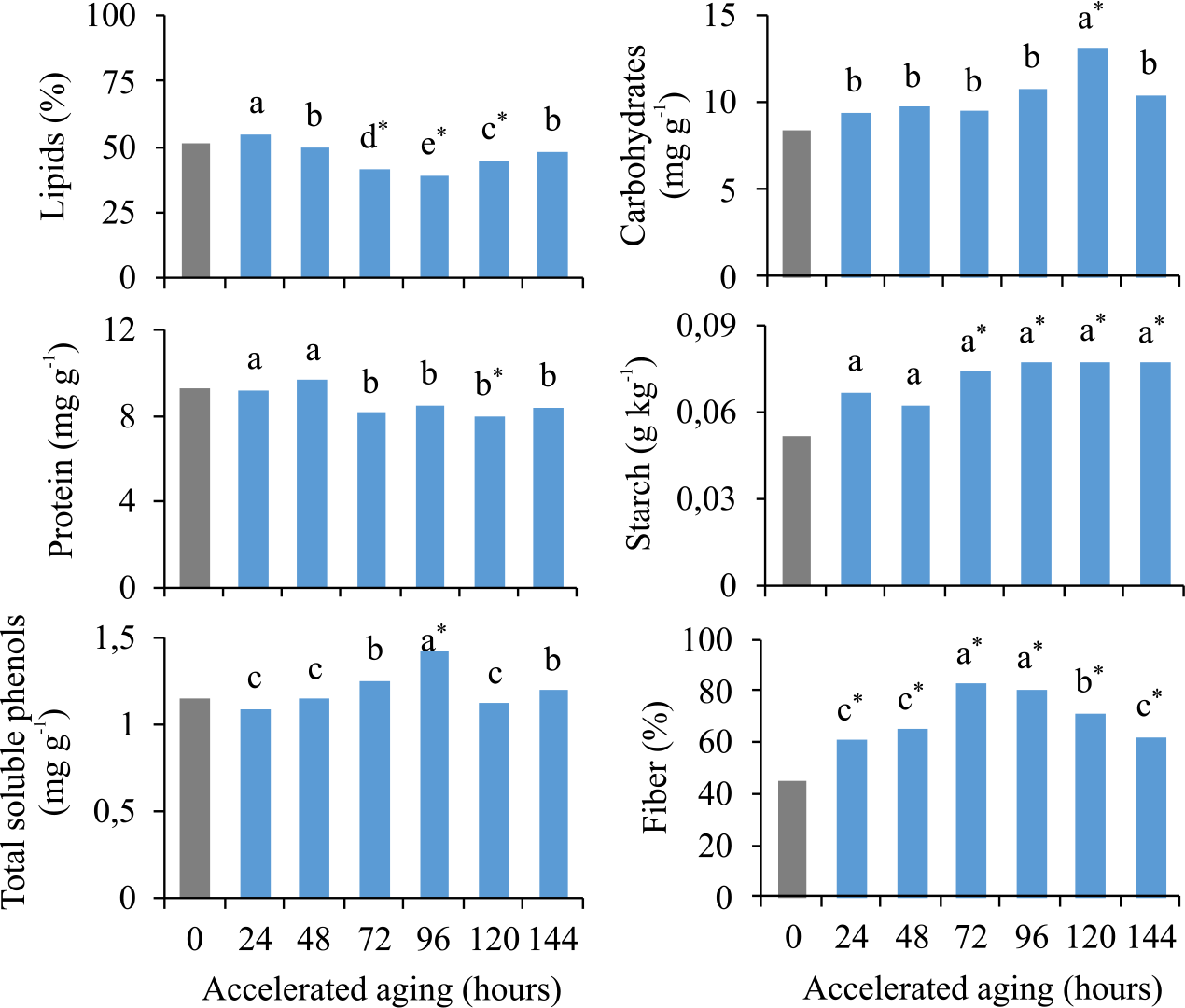
In the context of seed conservation, reserve compounds play an important role in maintaining viability and vigor during storage (Nadarajan et al., 2023). In the present study, the highest concentration of carbohydrates was observed in 120 hours of aging, with 4.7 mg g-1 increase in comparison with the control (0.47%) (Figure 4). Seed aged for 120 hours may have exhibited an adaptive response to the controlled stress, increasing the metabolic activity and the conversion of reserve substances into carbohydrates, allowing of energy accumulation and promoting germination. Carbohydrates are associated with the desiccation tolerance in seed (one example of which is the raffinose family of oligosaccharides); they contribute to embryo desiccation tolerance and provide greater stability to cell membranes, thereby preventing oxidative damage (Cai et al., 2025).
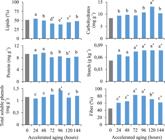
Biochemical characteristics of Lecythis pisonis seed aged at 40 °C, for a period of 0 (control), 24, 48, 72, 96, 120 and 144 hours. *Means differed significantly from the control, in the same column, by Dunnett’s test, at 5% probability. Means for accelerated aging times from 24 to 144 hours, followed by equal letters in the columns, do not differ from each other, by Scott-Knott’s mean grouping test, at 5% probability.
Accelerated aging caused a decrease of the percentage of lipids in seed after 24 hours, in the comparison with that of the control, which also showed a significant lipid decrease for the treatments of 72, 96, and 120 hours. The fluctuations observed in lipid reserves during the accelerated aging suggest possible events of lipid peroxidation. Even under low humidity conditions, the lipids in dry seed can undergo auto-oxidation (Garg et al., 2022). The species L. pisonis is an oilseed, and its seed are rich sources of unsaturated fatty acids (Araujo et al., 2023) which are more sensitive to oxidation, particularly during storage (Garg et al., 2022).
Protein concentration decreased after 48 hours of accelerated aging. Under high-temperature conditions, protein degradation is thermally induced, which may affect seed longevity, primarily due to the loss of enzymatic functions that are essential for cellular function and repair (Cai et al., 2025). In the present study, the seedling emergence of L. pisonis was not affected by the reduction of protein content; however, this decrease indicates the onset of physiological deterioration of seed, which is likely due to oxidative stress.
Starch concentration significantly increased in the aging times from 72 hours to 144 hours in comparison with the control. Whether artificial or natural, accelerated seed aging can compromise essential metabolic pathways for mobilizing energy reserves, such as starch degradation pathways, through the inactivation of α-amylase and β-amylase enzymes (Zhang et al., 2022). Therefore, the increase of starch content in aged L. pisonis seed is an indication of energy mobilization blockage of this reserve, hindering its conversion into simple sugars.
The highest concentration of total soluble phenols occurred at 96 hours of aging in comparison with the control. The fiber content averaged 45.26% in the control, increasing significantly at 72 hours (83%) and 96 hours (81%) of aging. The increase of fiber content in aged seed, in comparison with the control, may be related to structural changes in the cell wall of the endosperm, which indicates a physiological stress response. Fibers are present at significant amounts in nuts and seeds, along with lipids and proteins (Santos et al., 2023). Seed endosperm is rich in storage hemicelluloses, and cellulose is present in smaller amounts. Hemicelluloses act as carbohydrate reserves, providing energy during germination. In some cases, they may also contribute to water retention in the post-imbibition phase and protection against mechanical shocks (Otegui, 2007).
Conclusions
-
1. L. pisonis seed exhibit high vigor under stressful conditions of high temperature (40 °C) for up to 120 hours.
-
2. L. pisonis seed exposed to stressful conditions of high temperature (40 °C), for up to 120 hours, invest their reserves in root growth and formation of new roots.
-
3. The increase of moisture content favors the physiological deterioration and, consequently, the mortality of L. pisonis seed exposed to stressful conditions at high temperature (40 °C) for 144 hours.
-
4. L. pisonis seed exposed to stressful conditions at high temperature (40 °C) show a reduction of lipid and protein contents, while carbohydrates, starch, phenols, and fibers increase, especially up to 96 hours of exposure.
-
5. L. pisonis seed have the ability to tolerate stressful storage conditions without an immediate loss of vigor.
Declaration of use of AI technologies
No generative artificial intelligence (AI) was used in this study.
Acknowledgments
To Conselho Nacional de Desenvolvimento Científico (CNPq, Call n° 09/2022 - research productivity grants); to Coordenação de Aperfeiçoamento de Pessoal de Nível Superior, Brazil (CAPES, Code 001); to Fundação de Amparo à Pesquisa e Inovação do Espírito Santo (FAPES, Call n° 03/2021 Universal, Protocol 45216.706.19068.28042021, n° 467/2021).
Disclaimer/Publisher’s note
The statements, opinions, and data contained in all texts published in Pesquisa Agropecuária Brasileira (PAB) are solely those of the individual author(s) and not of the journal’s publisher, editor, and editorial team, who disclaim responsibility for any injury to people or property resulting from any referred ideas, methods, instructions, or products.
The mention of specific chemical products, machines, and commercial equipment in the texts published in this journal does not imply their recommendation by the publisher.
Data availability statement
Data in article: research data are available in the published article.
References
- ARAUJO, C.P. de. Conservação ex situ e tolerância à dessecação em sementes de Lecythis pisonis Cambess 2024. 152p. Tese (Doutorado) - Universidade Federal do Espírito Santo, Jerônimo Monteiro.
-
ARAUJO, C.P. de; ALEXANDRE, R.S.; ROSA, T.L.M.; SCHMILDT, E.R.; LOPES, J.C.; PEZZOPANE, J.E.M. Overcoming seed dormancy and rooting in air-layering polyembryonic seedlings of sapucaia (Lecythis pisonis Cambess.). Australian Journal of Crop Science, v.14, p.816-821, 2020. DOI: https://doi.org/10.21475/ajcs.20.14.05.p2262
» https://doi.org/10.21475/ajcs.20.14.05.p2262 -
ARAUJO, C.P. de; SIMÕES, I.M.; ROSA, T.L.M.; MELLO, T. de; CANAL, G.B.; FERREIRA, A.; OLIVEIRA, J.P.B. de; SCHMILDT, E.R.; LOPES, J.C.; SOUZA, T. da S. de; OTONI, W.C.; PINHEIRO, P.F.; NOVAES, F.J.M.; GONÇALVES, F.G.; SANTOS, A.R. dos; ALEXANDRE, R.S. Functional fruit trees from the Atlantic and Amazon forests: selection of potential chestnut trees rich in antioxidants, nutrients, and fatty acids. Foods, v.12, art.4422, 2023. DOI: https://doi.org/10.3390/foods12244422
» https://doi.org/10.3390/foods12244422 -
ARAUJO, C.P.; SIMÕES, I.M.; FAGUNDES, D.P.; COSTA, J.S.; CADE, E.S.; MORAES, E.B. de; ALMEIDA, M.R. de; ASSIS, J.P.V. de; SCHMILDT, E.R.; PEREIRA, W.V.S.; OLIVEIRA, J.B.R. e; SANTOS, H.O. dos; FERREIRA, M.F. da S.; PEZZOPANE, J.E.M.; LOPES, J.C.; ALEXANDRE, R.S. Thermal shock at a high temperature for a short period increases the germination success of the chestnut tree Lecythis pisonis Cambess. Scientia Horticulturae, v.338, art.113465, 2024. DOI: https://doi.org/10.1016/j.scienta.2024.113465
» https://doi.org/10.1016/j.scienta.2024.113465 -
AZEVEDO, A.M. Package ‘Tratamentos.ad’ Pacote para análise de experimentos com testemunhas adicionais. versão 0.2.4. 2022. 16p. DOI: https://doi.org/10.32614/CRAN.package.Tratamentos.ad
» https://doi.org/10.32614/CRAN.package.Tratamentos.ad -
BALLESTEROS, D.; HILL, L.M.; LYNCH, R.T.; PRITCHARD, H.W.; WALTERS, C. Longevity of preserved germplasm: the temperature dependency of aging reactions in glassy matrices of dried fern spores. Plant and Cell Physiology, v.60, p.376-392, 2019. DOI: https://doi.org/10.1093/pcp/pcy217
» https://doi.org/10.1093/pcp/pcy217 -
BLIGH, E.G.; DYER, W.J. A rapid method for total lipid extraction and purification. Canadian Journal of Biochemistry and Physiology, v.37, p.911-917, 1959. DOI: https://doi.org/10.1139/o59-099
» https://doi.org/10.1139/o59-099 -
BRADFORD, M.A. Rapid and sensitive method for the quantitation of microgram quantities of protein utilizing the principle of protein dye binding. Analytical Biochemistry, v.72, p.248-254, 1976. DOI: https://doi.org/10.1016/0003-2697(76)90527-3
» https://doi.org/10.1016/0003-2697(76)90527-3 - BRASIL. Ministério da Agricultura, Pecuária e Abastecimento. Regras para análise de sementes MAPA/ACS, 2009. 395p.
-
CAI, H.; SHAO, J.; SHEN, Y. Seed storability in forest trees: research progress and future perspectives. Forests, v.16, art.467, 2025. DOI: https://doi.org/10.3390/f16030467
» https://doi.org/10.3390/f16030467 -
DEMOLINER, F.; POLICARPI, P. de B.; VASCONCELOS, L.F.L.; VITALI, L.; MICKE, G.A.; BLOCK, J.M. Sapucaia nut (Lecythis pisonis Cambess) and its by-products: a promising and underutilized source of bioactive compounds. Part II: Phenolic compounds profile. Food Research International, v.112, p.434-442, 2018. DOI: https://doi.org/10.1016/j.foodres.2018.06.050
» https://doi.org/10.1016/j.foodres.2018.06.050 -
DICKSON, A.; LEAF, A.L.; HOSNER, J.F. Quality appraisal of white spruce and white pine seedling stock in nurseries. The Forestry Chronicle, v.36, p.10-13, 1960. DOI: https://doi.org/10.5558/tfc36010-1
» https://doi.org/10.5558/tfc36010-1 -
DUARTE, E.F.; ALMEIDA, D.S.; SANTOS, J.A. dos; AZEVEDO NETO, A.D. de; CRUZ, C.R.P.; PEIXOTO, C.P. Maturação de frutos e sementes de sapucaia (Lecythis pisonis Cambess. - Lecythidaceae). Revista de Biologia Neotropical, v.19, p.50-68, 2022. DOI: https://doi.org/10.5216/rbn.v19i2.72799
» https://doi.org/10.5216/rbn.v19i2.72799 -
FARAHANI, S.M.; REZAZADEH, A.; PARAVAR, A. Influence of seed moisture content and storage period on germination and biochemical indices: Lallemantia iberica and Lallemantia royleana Scientific Reports, v.15, art.4462, 2025. DOI: https://doi.org/10.1038/s41598-025-88881-w
» https://doi.org/10.1038/s41598-025-88881-w -
GARG, A.; SHARMA, R.; DEY, P.; KUMAR, A. Food auto-oxidation: an overview. In: NABAVI, S.M.; SILVA, A.S. (Ed.). Antioxidants Effects in Health Amsterdam: Elsevier, 2022. p.43-68. DOI: https://doi.org/10.1016/B978-0-12-819096-8.00013-6
» https://doi.org/10.1016/B978-0-12-819096-8.00013-6 -
GUIMARÃES, Z.T.M.; SILVA, D.C. da; FERREIRA, M.J. Seedling quality and short-term field performance of three Amazonian forest species as affected by site conditions. iForest - Biogeosciences and Forestry, v.17, p.80-89, 2024. DOI: https://doi.org/10.3832/ifor4317-016
» https://doi.org/10.3832/ifor4317-016 -
HUANG, F.; LI, J.; LI, H.; LIU, L.; SHI, W.; LI, Z. Assessment of genetic integrity of Siberian wild rye (Elymus sibiricus L.) germplasm conserved ex situ and under accelerated aging using microsatellite markers. Genetic Resources and Crop Evolution, v.67, p.367-379, 2020. DOI: https://doi.org/10.1007/s10722-019-00853-y
» https://doi.org/10.1007/s10722-019-00853-y - LABOURIAU, L.G. A germinação das sementes Washington: Secretaria-Geral da Organização dos Estados Americanos, Programa Regional de Desenvolvimento Científico e Tecnológico, 1983. 174p.
-
MAGUIRE, J.D. Speeds of germination-aid in selection and evaluation for seedling emergence and vigor. Crop Science, v.2, p.176-177, 1962. DOI: https://doi.org/10.2135/cropsci1962.0011183X000200020033x
» https://doi.org/10.2135/cropsci1962.0011183X000200020033x -
MELLO, T. de; ROSA, T.L.M.; SIMÕES, I.M.; LIMA, P.A.M. de; ANJOS, B.B. dos; ARAUJO, C.P. de; HEGEDUS, C.E.N.; SANTOS, H.O. dos; OTONI, W.C.; ALEXANDRE, R.S.; LOPES, J.C. Reserve mobilization and in vitro germination of Euterpe edulis (Martius) seeds at different maturation stages. Trees, v.36, p.415-426, 2022. DOI: https://doi.org/10.1007/s00468-021-02216-6
» https://doi.org/10.1007/s00468-021-02216-6 -
NADARAJAN, J.; WALTERS, C.; PRITCHARD, H.W.; BALLESTEROS, D.; COLVILLE, L. Seed longevity - the evolution of knowledge and a conceptual framework. Plants, v.12, art.471, 2023. DOI: https://doi.org/10.3390/plants12030471
» https://doi.org/10.3390/plants12030471 -
NAGHISHARIFI, H.; KOLAHI, M.; JAVAHERIYAN, M.; ZARGAR, B. Oxidative stress is the active pathway in canola seed aging, the role of oxidative stress in the development of seedlings grown from aged canola seed. Plant Stress, v.11, art.100313, 2024. DOI: https://doi.org/10.1016/j.stress.2023.100313
» https://doi.org/10.1016/j.stress.2023.100313 -
OTEGUI, M.S. Endosperm cell walls: formation, composition, and functions. In: OLSEN, O.-A. (Ed.). Endosperm: developmental and molecular biology. Berlin: Springer, 2007. (Plant Cell Monographs, v.8). DOI: https://doi.org/10.1007/7089_2007_113
» https://doi.org/10.1007/7089_2007_113 - R CORE TEAM. R: a language and environment for statistical computing. version 4.2.2. Vienna: R Foundation for Statistical Computing, 2022.
-
REJ, S.; BANERJEE, S.; LAL, S.K.; KUMAR, P.R. Understanding the significance of raffinose family oligosaccharides in seed physiology. Journal of Advances in Biology & Biotechnology, v.27, p.1463-1476, 2024. DOI: https://doi.org/10.9734/jabb/2024/v27i91420
» https://doi.org/10.9734/jabb/2024/v27i91420 -
ROSA, T.L.M.; ARAUJO, C.P. de; KAMKE, C.; FERREIRA, A.; FERREIRA, M.F. da S.; OLIVEIRA, J.P.B. de; SCHMILDT, E.R.; LOPES, J.C.; MENGARDA, L.H.G.; OTONI, W.C.; SANTOS, A.R. dos; ALEXANDRE, R.S. Sapucaia nut: morphophysiology, minerals content, methodological validation in image analysis, phenotypic and molecular diversity in Lecythis pisonis Cambess. Food Research International, v.137, art.109383, 2020. DOI: https://doi.org/10.1016/j.foodres.2020.109383
» https://doi.org/10.1016/j.foodres.2020.109383 -
SANTOS, O.V. dos; AZEVEDO, G.O.; SANTOS, Â.C.; LOPES, A.S. Development of a nutraceutical product derived from by-products of the lipid extraction of the Brazil nut (Bertolletia excelsa H.B.K). Foods, v.12, art.1446, 2023. DOI: https://doi.org/10.3390/foods12071446
» https://doi.org/10.3390/foods12071446 -
SWAIN, T.; HILLS, W.E. The phenolic constituents of Prunus domestica I.-The quantitative analysis of phenolic constituents. Journal of the Science of Food and Agriculture, v.10, p.63-68, 1959. DOI: https://doi.org/10.1002/jsfa.2740100110
» https://doi.org/10.1002/jsfa.2740100110 -
YEMM, E.W.; WILLIS, A.J. The estimation of carbohydrates in plant extracts by anthrone. The Biochemical Journal, v.57, p.508-514, 1954. DOI: https://doi.org/10.1042/bj0570508
» https://doi.org/10.1042/bj0570508 -
ZHANG, M.; LI, B.; WAN, Z.; CHEN, X.; LIU, C.; LIU, C.; ZHOU, Y. Exogenous spermidine promotes germination of aged sorghum seeds by mediating sugar metabolism. Plants, v.11, art.2853, 2022. DOI: https://doi.org/10.3390/plants11212853
» https://doi.org/10.3390/plants11212853
-
Chief editor:
Edemar Corazza
-
Edited by:
Mírian Baptista