 Exploring the influence of abiotic factors on growth and phenology in Gypsophila paniculata L. ‘Overtime®’
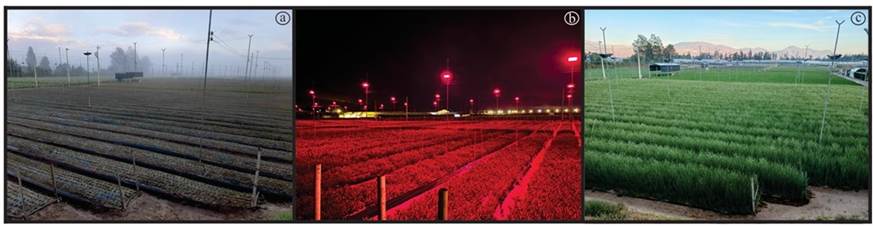
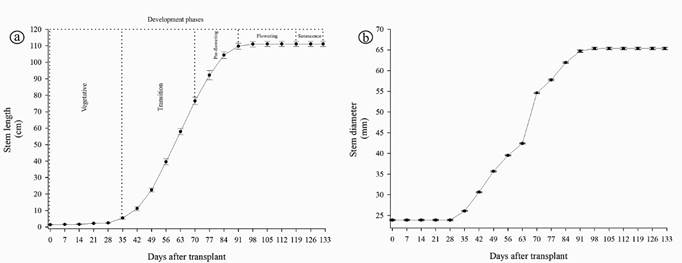
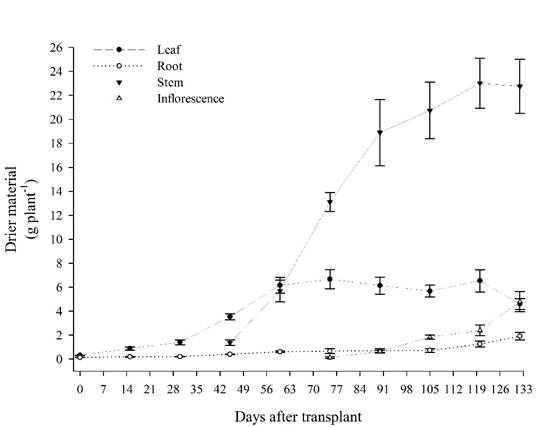
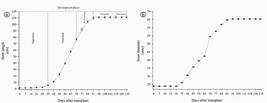
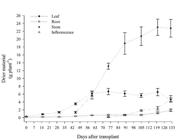
The aim of this research was to characterize the phenology and phenometric variables of Gypsophila paniculata L. ‘Overtime®’ in managed field conditions, as well as to determine the correlation between abiotic factors (mean temperature, relative humidity, vapor pressure deficit, growing degree days) and phenometric variables (stem length and diameter, number of nodes, internodes, leaves and shoots and dry matter) and to calculate growth rates absolute and relative. To collect field data, a randomized complete block design with six blocks was employed, each block contained four to five plants, which served as experimental units. The crop cycle of G. paniculata was evaluated from transplanting to the senescence phase, for a total duration of 132 days after transplanting. The developmental stages of the species were characterized in detail, with the commercial harvest stage reached at 91 days after transplanting during flowering, corresponding to a cumulative growing degree of 1255.1 °C day. A sigmoid growth pattern was observed throughout the successive phenological stages, with the maximum absolute growth rate occurring between 60 - 75 days after transplanting, during this period, exogenous factors were integrated, including supplemental artificial lighting and gibberellic acid treatment, to enhance growth and induce flowering. After 75 days after transplanting, the relative growth rate declines as assimilates shift toward flowering. Among the phenometric variables, only stem length was significantly affected by temperature, relative humidity, and vapor pressure deficit, indicating that these environmental factors modulate growth dynamics throughout the crop cycle. These findings provide new insights into the growth dynamics and developmental responses of the species and contribute to the refinement of agronomic management practices under variable environmental conditions.
Keywords:
Correlation; developing; dry matter; growth rate
 Thumbnail
 Thumbnail
 Thumbnail