 Impact of sewage sludge compost and biostimulants on the growth of Zoysiagrass in sod production systems
Abstract
To improve turfgrass development within the production system, it is essential to adopt sustainable alternatives that meet producers’ demands. These strategies should contribute to reducing production costs, improving product quality, and promoting crop sustainability. In this context, the use of sewage sludge compost and biostimulants has been widely studied for their application in agriculture. Thus, this study aims to evaluate the growth of Zoysiagrass cv. Esmeralda through the application of sewage sludge compost (SSC) combined with biostimulants as a nutrient source in the sod production in two cycles. The experiment was conducted under field conditions, in southwest of Brazil in February 2021, organized in a randomized block design with four repetitions. The treatments followed a 5 x 3 + 1 factorial scheme, consisting of five doses of SSC (0.0, 2.5, 5.0, 7.5, and 10.0 Mg ha-1) combined with the absence or presence of biostimulants: (i) the growth-promoting bacterium Azospirillum brasilense and (ii) seaweed extract from Ascophyllum nodosum, and a control. The evaluated parameters included leaf green color intensity, the normalized difference vegetation index, and the green cover rate on the soil. The growth and visual quality of the grass were significantly improved by the application of seaweed extract combined with higher doses of SSC during periods of lower rainfall
Keywords:
Bacteria; organic fertilization; seaweed; soil fertility
Resumo
Para aprimorar o desenvolvimento da grama no sistema produtivo, é fundamental adotar alternativas sustentáveis que atendam às demandas dos produtores. Essas estratégias devem contribuir para a redução dos custos de produção, a melhoria da qualidade do produto e a sustentabilidade do cultivo. Nesse contexto, o uso de composto de lodo de esgoto e de bioestimulantes tem sido amplamente estudado quanto à sua aplicação na agricultura. Assim, este estudo teve-se o objetivo de avaliar o crescimento da grama Esmeralda pela aplicação do composto de lodo de esgoto (CLE) associada ao bioestimulantes como fornecedor de nutrientes na produção de tapetes de grama Esmeralda em dois ciclos. O experimento foi instalado em condições de campo na região sudeste do Brasil, em fevereiro de 2021, organizados em blocos casualizados, com quatro repetições. Os tratamentos foram originados do esquema fatorial 5 x 3 + 1, sendo: cinco doses de CLE (0,0; 2,5; 5,0; 7,5; e 10,0 t ha-1), associado com ausência ou presença de bioestimulantes: (i) bactéria promotora de crescimento Azospirillum brasilense e (ii) extrato a base algas marinhas Ascophyllum nodosum, e um controle. Os parâmetros avaliados incluíram a intensidade da cor verde das folhas, o índice de vegetação por diferença normalizada e a taxa de cobertura verde do solo. O crescimento e a qualidade visual da grama foram significativamente melhorados pela aplicação de extrato de algas marinhas combinada com doses mais altas de SSC durante períodos de menor precipitação pluviométrica.
Palavras-chave:
Adubação orgânica; algas marinhas; bactéria; fertilidade do solo
Introduction
Currently, sod production is expanding, with estimates indicating that the cultivated area ranges from 30,000 to 35,000 hectares, with an average of 32,500 hectares across the country (Santos and Carribeiro, 2022), where Zoysiagrass cv Esmeralda (Zoysia japonica) accounts for 70%-80% of the sod planted, due to its versatility in meeting the demands of both residential areas and sports fields (Villas Bôas et al., 2022).
To ensure the efficiency of the sod production system, it is essential to seek sustainable alternatives that promote faster, more uniform, and healthier turfgrass growth, while also enhancing its physical and aesthetic characteristics. These improvements directly impact the final product by increasing the density and durability of the sod, boosting productivity, and contributing to the reduction of management and maintenance costs.
One of the prominent alternatives in agricultural production is the use of sewage sludge compost. This byproduct, rich in organic matter, enables nutrient recycling and improves the physical, chemical, and biological properties of the soil (Ma et al., 2022; Prates et al., 2022). These benefits are reflected in plant development, including turfgrasses, where the compost has proven to be an effective nutrient source for accelerating soil coverage (Mota et al., 2019). However, these studies focus on the application of high doses of sludge, which poses a challenge due to the high transportation costs, highlighting the need to study the application of this product.
Another alternative with great potential to improve turfgrass quality is the use of biostimulants, organic substances found in various products (Di Sario et al., 2024). According to international literature (Bosi et al, 2023; Mackiewicz-Walec and Olszewska, 2023; Di Sario et al., 2024), microorganisms, such as Azospirillum brasilense, as well as seaweed extracts, are studied within the general classification of biostimulants. The application of these biostimulants in agriculture can benefit crops by promoting plant development, stimulating root system growth, and increasing yield, allowing plants to fully express their genetic potential, contributing to a more sustainable agriculture (Gunasekaran and Paramasivam, 2024; Hasddin et al., 2025). Studies with seaweed extracts such as Ascophyllum nodosum on tufgrasses have shown promising results, especially under stress conditions such as water deficit, high radiation, and temperature variations. Ascophyllum nodosum helps stimulate the plant’s defense systems against oxidative stress, improving both the visual quality and physical resistance of the turf (Santos et al., 2024a; Santos et al., 2024b).
Although the benefits of Azospirillum brasilense on turfgrass are not yet fully understood, its use in other crops has proven to be a sustainable and low-cost alternative for promoting plant growth (Galindo et al., 2020). Although the benefits of Azospirillum brasilense in turfgrass are not yet fully understood, its use in other crops has been shown to be a sustainable and low-cost alternative for promoting plant growth (Galindo et al., 2020). This microorganism stimulates the production of phytohormones, promoting root growth, improving water uptake, enhancing root system development, and increasing plant tolerance to abiotic stresses (Hungria et al., 2016; Zaheer et al., 2022). Thus, strengthening the root system through the inoculation of this microorganism represents an excellent strategy to promote turfgrass growth, improve its overall development, and achieve a greener coloration.
This study aims to evaluate the application of biostimulants and sewage sludge compost in order to reduce the need for conventional mineral fertilization while maintaining adequate turfgrass growth within its production system.
Materials and Methods
Experimental Location, Treatments, and Characterization of SSC
The experiment was conducted under field conditions over two crop cycles, beginning in February 2021, in southwestern Brazil, at an altitude of 645 m, on flat terrain. The soil in the experimental area is classified as a Dystrophic Red Latosol, assuming an average available water capacity of approximately 1.5 mm cm-1 of soil. Before the study was established, soil samples were taken from the entire area at a depth of 0-0.10 meters for chemical characterization (Raij et al., 2001) (Table 1).
The study was arranged in a randomized block design, comprising 16 treatments with four replications, totaling 64 experimental units, with plots measuring 5 × 5 meters. The treatments were configured following a 5 x 3 + 1 factorial arrangement, encompassing: five different doses of SSC (0.0, 2.5, 5.0, 7.5, and 10.0 t ha-1 SSC wet basis), with the presence or absence of biostimulants: (i) Azospirillum brasilense, a growth-promoting bacterium, and (ii) Ascophyllum nodosum, a seaweed-based extract. Additionally, a control treatment was included.
The SSC was obtained from the commercial company. Before use, the compost underwent laboratory analyses to assess its chemical characteristics (pH, CEC, OM, organic C, moisture, N, P, K, Ca, Mg, S, As, Ba, Cd, Ca, Cr, Cu, Fe, Hg, Mg, Mn, Mo, Ni, Pb, Se, and Zn) and the presence of pathogenic microorganisms (thermotolerant coliforms, Salmonella, and viable helminth eggs), following the guidelines established in Conama Resolution No. 498 (CONAMA, 2020) (Table 2).
Study Development
Based on the results of the soil fertility assessment, liming was carried out (0.64 t ha-1) with the aim of raising the base saturation to 70% (0-10 cm layer), applied manually on the surface using agricultural lime with an effective neutralizing power (PRNT) of 85%. One week later, the treatments were applied, with the sewage sludge compost (SSC) manually distributed on the soil surface across the entire plot area, immediately after the application of biostimulants.
In both cycles, Azospirillum brasilense (AbV5) was applied using a commercial liquid inoculant, with a concentration of 3x10⁸ CFU mL-1 (Colony Forming Units per mL). This application was performed in two stages: during sprouting and seven months after the first application. The rate used was 400 mL-¹ of the liquid inoculant in each application.
For the application of Ascophyllum nodosum, the liquid extract from the commercial product was used (Potassium (K20) water soluble - 61,46 g L-1; Total organic carbon - 69,60 g L-1; pH - 8,0; and density at 20°C - 1,16 g mL-1; Salt index - 18%). Four applications were conducted, totaling 1 L ha-1 of extract in each application, resulting in a total of 4 L ha-1. The first and third applications coincided with the timing of the Azospirillum brasilense applications, while the second and fourth were carried out 30 to 40 days after the first and third, respectively.
Except for the control treatment, all treatments received supplemental N, P, and K through mineral fertilizer. The amount of N, P (P2O5 ), and K (K2O) applied was adjusted according to the difference between the total dose of mineral fertilizer and the concentration of nitrogen, phosphorus, and potassium in the SSC doses. In the first cycle of Zoysiagrass, for the treatment without SSC application, 440 kg ha-1 N (ammonium nitrate), 80 kg ha-¹ P2O5 (triple superphosphate), and 260 kg ha-1 K2O (potassium chloride) were applied. With the increase in SSC doses, the amount of mineral fertilizer was reduced to maintain the same amount of N, P, and K across treatments (Table 3). For the second cycle, the amount of mineral fertilizers applied was lower compared to the first cycle: 300 kg ha-1 N, 100 kg ha-1 P2O5 (triple superphosphate), and 200 kg ha-1 K2O (potassium chloride) were applied for the treatment without SSC application.
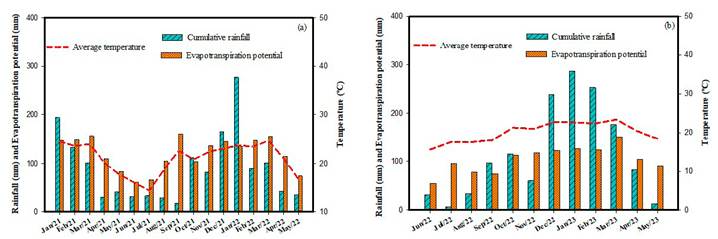
Climatic data, including average air temperature and accumulated rainfall, were recorded throughout the entire crop cycle, from the cutting of the previous sod to the final turf cutting of the present study (Fig. 1). The information was obtained from the Centro Integrado de Informações Agrometeorológicas, which belongs to the Agronomic Institute of Campinas (IAC), using data from the meteorological station located in the municipality of Tatuí, in the state of São Paulo, Brazil. The total precipitation recorded was 1,187 mm in the first cycle (15 months) and 1,358 mm in the second cycle (10 months). In the first cycle, a greater irregularity in rainfall distribution was observed compared to the second cycle. The monthly potential evapotranspiration was estimated using the method developed by Charles Warren Thornthwaite (1948), based on monthly average temperature data.
Total amount of mineral fertilizer (NPK) as a function of SSC doses applied during the first and second cycle of the Zoysiagrass sod production.

Cumulative Rainfall, Evapotranspiration potential, and average temperature, recorded during the first (a) and second cycle (b) of the sod production.
The phytosanitary management of the turfgrass was carried out according to the need and technical recommendations. Water application was carried out by means of a reel with a self-propelled cannon-type sprinkler, managed by the production farm, only to maintain the survival (“Survival Irrigation”) of the grass during the driest periods and after application of mineral fertilizer, applied on average at a depth of 10 mm.
Parameters evaluated: Index of relative chlorophyll content and normalized difference vegetation index
The determination of the Index of relative chlorophyll content (IRCC) of the leaf was carried out using the Field Scout CM-1000 chlorophyll meter equipment. During the same period, the Normalized Difference Vegetation Index (NDVI) was evaluated using the Trimble® GreenSeeker handheld device. For both determinations, five readings were carried out randomly in the plot, at a height of 1.0 m. GCI and NDVI readings were taken during the same period as the determination of the green coverage rate. It should be noted that, in the initial phase of sod formation, care was taken to take readings only in areas where the grass had already been formed. Furthermore, the readings were taken in the morning, between 8 am and 10 am.
Parameters evaluated: Green soil coverage rate
The evaluation of the soil green coverage rate was carried out monthly, after applying the treatments. The coverage rate was determined using digital images, captured with a 12 MP cell phone camera fixed to a structure known as a “light box”. The light box was positioned in the same location within the useful area, with the help of a ruler to ensure correct alignment. The collected images were analyzed with the aid of computer software, to determine the soil’s green coverage rate. All analysis was carried out in four periods for each cycle, on the following dates: 04/17/2021, 08/28/2021, 11/20/2021, 01/19/2022, 10/08/2022, 12/17/ 2022, 02/17/2023 and 04/18/2023.
Statistical analyzes
Statistical analysis for this study was performed using AgroEstat software (Barbosa and Malheiros, 2015). Data were subjected to analysis of variance (ANOVA) according to a randomized block design in a 5 × 3 + 1 factorial scheme. When significant effects were detected by the F-test (p ≤ 0.05), the qualitative factor (biostimulant treatments) was compared using Tukey’s test at the 5% significance level.
For the quantitative factor (SSC doses), polynomial regression analysis was performed. The best-fitting models were selected based on the significance of the regression coefficients (F-test, p < 0.05) and the highest coefficient of determination (R²). Hypothesis tests for the model parameters were performed using the F-test of the regression sum of squares. Differences among SSC doses within each biostimulant treatment were evaluated in comparison with the control using Dunnett’s test (p ≤ 0.05) only when a significant interaction between the factorial and the additional treatment was detected.
Results and Discussion
When comparing the application of SSC, biostimulants, and conventional fertilization with the control treatment, it was observed that all these treatments consistently exhibited higher IRCC values than the control throughout both crop cycles (Fig. 2). The difference is attributed to the absence of fertilization in the control treatments, highlighting that it is not possible to produce high-quality turfgrass without proper nutritional management, which underscores the importance of seeking alternative management strategies to improve the system’s productive quality in a more sustainable way.
During the first cycle, increases in the index were observed when higher doses of SSC were applied in combination with seaweed extract, especially during periods of lower rainfall, a condition that may indicate greater limitation in water availability for the turfgrass. (Fig. 1). This effect is likely due to the composition of seaweed-based biostimulants, which stimulate plant metabolism, including chlorophyll synthesis, which shows a strong correlation with IRCC (Santos et al., 2022; Santos et al., 2024a; Santos et al., 2024b).

Index of relative chlorophyll content of Zoysia japonica as a function of sewage sludge compost doses and biostimulant application in the (a, b, c, d) first cycle and (e, f, g, h) second cycle. The points represent the treatment means, and the lines indicate the fitted regression models. *, ** and NS indicate significance at p < 0.01, p < 0.05, and non-significant, respectively, for the fitted model. Means followed by the same letter do not differ significantly in the comparison among treatments with biostimulants (Tukey’s test, p < 0.05). Means marked with the same symbol (α ) do not differ significantly compared with the control treatment (x) (Dunnett’s test, p < 0.05). NoBio = No biostimulant application. (a) 04/17/2021 first cycle; (b) 08/28/2021 first cycle; (c) 11/20/2021 first cycle; (d) 01/19/2022 first cycle; (e) 10/08/2022 second cycle; (f) 12/17/2023 second cycle; (g) 02/17/2023 second cycle; (h) 04/18/2023 second cycle.
However, during periods of higher rainfall (January 19, 2022), the index decreased. In the second crop cycle, characterized by increased rainfall, the index declined with higher doses without biostimulant application and with seaweed extract application. This reduction may be attributed to a dilution effect in the plants (Fontana et al., 2025), resulting from the extremely vigorous vertical growth of the grass under more favorable climatic conditions, during which the mowing frequency applied for experimental purposes was lower than that normally adopted in the production system, leading to a greater turfgrass height at the time of evaluation.
However, as observed in the first cycle, during the periods of lowest rainfall in the second cycle, significant differences in IRCC were noted with the application of biostimulants, with seaweed extract standing out by producing the highest index values.
Significant increases in NDVI were observed for treatments with conventional fertilization, SSC, and biostimulants compared to the control treatment, which was significantly lower in all evaluated periods (Fig. 3). In the analysis of treatments with biostimulants, regardless of the SSC doses, the application of Azospirillum showed the highest NDVI on 04/14/2021. For the period of 11/20/2021, both the application of Azospirillum brasilense and seaweed extract achieved the best indices.

Normalized Difference Vegetation Index (NDVI) of Zoysia japonica as a function of sewage sludge compost doses and biostimulant application in the (a, b, c, d) first cycle and (e, f, g, h) second cycle. The points represent the treatment means, and the lines indicate the fitted regression models. *, ** and NS indicate significance at p < 0.01, p < 0.05, and non-significant, respectively, for the fitted model. Means followed by the same letter do not differ significantly in the comparison among treatments with biostimulants (Tukey’s test, p < 0.05). Means marked with the same symbol (α ) do not differ significantly compared with the control treatment (x) (Dunnett’s test, p < 0.05). NoBio = No biostimulant application (a) 04/17/2021 first cycle; (b) 08/28/2021 first cycle; (c) 11/20/2021 first cycle; (d) 01/19/2022 first cycle; (e) 10/08/2022 second cycle; (f) 12/17/2023 second cycle; (g) 02/17/2023 second cycle; (h) 04/18/2023 second cycle.
In the first cycle, NDVI readings showed that treatment responses varied according to the use of biostimulants and climatic conditions. In general, increasing SSC doses led to a reduction in the index in treatments without biostimulants, especially in November, and also in treatments with Azospirillum brasilense during autumn (April). In contrast, treatments with Ascophyllum nodosum extract showed a positive response during periods of lower rainfall (04/17/2021 and 08/28/2021), with a linear increase in NDVI at the beginning of the study and a positive quadratic trend in winter, with the 5 t ha-¹ dose resulting in the highest index value (0.45). However, during periods of higher rainfall (11/20/2021 and 01/19/2022), this beneficial effect was not maintained, and a reduction in NDVI was observed with increasing doses, particularly in spring and summer.
The combination of the extract with SSC promoted an increase in NDVI indices during periods of low rainfall and high potential evapotranspiration, conditions that indicate lower water availability for the grass. This result is particularly relevant because limiting growing conditions, such as water deficiency, restrict grass growth by impairing electron transport between photosystems, reducing stomatal conductance, and limiting CO2 diffusion in leaves, resulting in reduced leaf area (Iqbal et al., 2019; Zhu et al., 2024). Consequently, photosynthetic activity decreases, compromising plant development and vigor (Guo et al., 2018; Li et al., 2025).
In this context, it is important to highlight that water stress triggers a series of biochemical alterations that damage plant cells (Cordeiro et al., 2024). Among these, increased oxidative damage stands out, evidenced by elevated lipid peroxidation, hydrogen peroxide content, proline accumulation, electrolyte leakage, and disruption of the glyoxalase system (Cordeiro et al., 2024; Hasanuzzaman et al., 2025). On the other hand, the application of Ascophyllum nodosum extracts has been associated with the mitigation of these effects, reducing oxidative damage and enhancing the activity of antioxidant enzymes compared to untreated plants (Hasanuzzaman et al., 2025).
Additionally, the extract stimulates a more robust root system, enhancing nutrient absorption efficiency, which contributes to vigorous plant growth and greater adaptability (Santos et al., 2024a). In this context, NDVI is an essential monitoring tool, as it indirectly assesses vigor and water availability through biomass analysis (Straw et al., 2020). This monitoring is particularly relevant for species of the genus Zoysia; although well-adapted to tropical and subtropical regions, they experience significant stress during winter due to the combination of low temperatures and reduced rainfall, resulting in limited growth under severe cold conditions (Wang et al., 2024).
In the second cycle, it was generally observed that NDVI indices decreased with increasing CLE doses. Specifically, in the application of the compound with seaweed extract, a linear decline was recorded on August 10, 2022, as SSC doses increased. This can be explained by the fact that, in soils with good fertility and adequate irrigation, Ascophyllum nodosum-based seaweed extracts do not provide additional significant effects on turfgrass (Galindo et al., 2019). Furthermore, the increase in SSC doses was not sufficient to fully meet the nutritional needs due to the reduction of conventional fertilization, especially under conditions of full turfgrass growth favored by ideal climatic conditions, which negatively affected the plants’ response.
Like NDVI, the control treatment showed a significantly lower green cover rate compared to the fertilized treatments in all periods throughout both cycles (Fig. 4), not reaching complete turfgrass coverage on the soil and not exceeding 40% coverage in the final evaluations.

Green cover rate of Zoysia japonica as a function of sewage sludge compost doses and biostimulant application in the (a, b, c, d) first cycle and (e, f, g, h) second cycle. The points represent the treatment means, and the lines indicate the fitted regression models. *, ** and NS indicate significance at p < 0.01, p < 0.05, and non-significant, respectively, for the fitted model. Means followed by the same letter do not differ significantly in the comparison among treatments with biostimulants (Tukey’s test, p < 0.05). Means marked with the same symbol (α ) do not differ significantly compared with the control treatment (x) (Dunnett’s test, p < 0.05). NoBio = No biostimulant application. (a) 04/17/2021 first cycle; (b) 08/28/2021 first cycle; (c) 11/20/2021 first cycle; (d) 01/19/2022 first cycle; (e) 10/08/2022 second cycle; (f) 12/17/2023 second cycle; (g) 02/17/2023 second cycle; (h) 04/18/2023 second cycle.
When analyzing the green cover rate as a whole, it is observed that the application of biostimulants contributed to maintaining higher values in both evaluated periods. It was also verified that the control treatment consistently showed a significantly lower green cover rate compared to the other treatments, which directly affects the time required for harvest.
When evaluating the effect of increasing SSC doses, it was observed that bacterial application led to a reduction in the green cover rate during the first cycle, an effect that was not observed in the second cycle, which had higher rainfall (Fig. 1). These results indicate that, under conditions of reduced mineral fertilization and unfavorable climatic conditions, increasing SSC doses combined with the use of microorganisms was not effective in improving green cover. Studies report that the combination of different microorganisms does not always produce positive or promising responses, as their effects strongly depend on the interaction of factors such as climate, soil, plant, and management, which can limit the benefits to plant growth (Moncada et al., 2021; Redondo-Gómez et al., 2023). Furthermore, adverse climatic conditions, such as low temperatures and water scarcity, can reduce the mineralization of the substrate and organic fertilizer, limiting the adequate supply of nutrients to the plants.
In the first cycle, the application of the extract resulted in a positive quadratic trend for the spring and summer periods, with doses of 4.5 and 3.6 t ha-1 achieving the highest green cover rates of 40.7% and 94.1%, respectively (Fig. 4). When only SSC was applied, the green cover rate decreased both at the beginning of the study and during periods of higher precipitation as SSC doses increased. Similar results were observed in the NDVI, which shows a strong correlation with turfgrass coverage and the intensity of green color (Santos et al., 2024a).
Thus, during the winter period, characterized by lower rainfall, treatments with A. nodosum extract maintained good turf growth and visual quality. During this period, the reduction in rainfall associated with higher evapotranspiration values indicates lower water availability for the turfgrass. This benefit was not observed during periods of higher rainfall, highlighting the importance of the extract in maintaining turf growth under less favorable conditions. The effectiveness of using seaweed extract during this period is mainly associated with its ability to reduce and delay leaf senescence, which naturally increases at this time, possibly through its cytokinin activity. Cytokinins are known to delay senescence and chlorophyll degradation while stimulating its biosynthesis (Yao et al., 2025). In the study by Santos et al. (2024), a dose of 15 mL L-1 of seaweed extract promoted improvements in the development of Bermuda Discovery™ turf. The authors also emphasize that seaweed-based biostimulants are essential tools for promoting healthy turf growth, especially under adverse conditions.
Conclusions
The growth and visual quality of the turfgrass were significantly improved by the application of seaweed extract combined with higher doses of sewage sludge compost, especially under climatic conditions less favorable for turf growth and production. In contrast, during periods of higher and more consistent precipitation, conventional mineral fertilization resulted in superior turf performance. These findings suggest that the combining use of sewage sludge compost and biostimulants can be a promising strategy to enhance the sod production system for Zoysiagrass cv Esmeralda under adverse environmental conditions.
Acknowledgments
The authors thank CAPES for the doctoral scholarship and Qually Grama, Tera Ambiental, Acadian, and Vittia for their support in carrying out this research.
References
- BARBOSA, J.C.; MALHEIROS, E.B. AgroEstat: sistema para análises estatísticas de ensaios agronômicos. Versão 1.1.0.71. Jaboticabal: FCAV/UNESP, 2015.
- BOSI, S.; NEGRI, L.; ACCORSI, M.; BAFFONI, L.; GAGGIA, F.; DI GIOIA, D.; DINELLI, G.: MAROTTI, I. Biostimulants for sustainable management of sport turfgrass. Plants, v.12, n.3, p.539, 2023. https://doi.org/10.3390/plants12030539
-
CONAMA (CONSELHO NACIONAL DO MEIO AMBIENTE). Resolução nº 498, de 19 de agosto de 2020. Available at: <Available at: https://conama.mma.gov.br/index.php?option=com_sisconama&task=arquivo.download&id=797 >. Accessed on: feb. 15, 2020.
» https://conama.mma.gov.br/index.php?option=com_sisconama&task=arquivo.download&id=797 -
CORDEIRO, E.C.N.; MARQUES, H.M.C.; DE LARA, G.B.; de OLIVEIRA AMATUSSI, J.; MÓGOR, G.; REPKE, R.A.; MÓGOR, Á.F. CanAscophyllum nodosumextract application before or at drought stress trigger different metabolic adaptation responses in soybean plants? Journal of Applyed Phycology, v.36, p.2283-2293, 2024. https://doi.org/10.1007/s10811-024-03231-z
» https://doi.org/https://doi.org/10.1007/s10811-024-03231-z -
DI SARIO, L.; BOERI, P.; MATUS, J.T.; PIZZIO, G.A. Plant biostimulants to enhance abiotic stress resilience in crops. International Journal of Molecular Sciences, v.25, n.4, p.2420, 2024. https://doi.org/10.3390/ijms26031129
» https://doi.org/https://doi.org/10.3390/ijms26031129 -
FONTANA, M.; GUILLAUME, T.; STEINER, S.; BRAGAZZA, L.; BÉLANGER, G.; ZIADI, N.; CIAMPITTI, I. Critical dilution curves for phosphorus, potassium, and sulfur along with relationships to nitrogen for major crops. Plant and Soil, v.510, p.1-14, 2025. https://doi.org/10.1007/s11104-025-07929-y
» https://doi.org/https://doi.org/10.1007/s11104-025-07929-y -
GALINDO, F.S.; TEIXEIRA FILHO, M.C.M.; BUZZETI, S.; ALVES, C.J.; GARCIA, C.M. P.; NOGUEIRA, L.M. Extrato de algas como bioestimulante na nutrição e produtividade do trigo irrigado na região de Cerrado. Colloquium Agrariae, v.15, n.1, p.130-140, 2019. https://doi.org/10.5747/ca.2019.v15.n1.a277
» https://doi.org/https://doi.org/10.5747/ca.2019.v15.n1.a277 -
GALINDO, F.S.; TEIXEIRA FILHO M.M.; BUZETTI, S.; RODRIGUES, W.L.; FERNANDES, G.C.; BOLETA, E.H.M.; BARCO NETO, M.; PEREIRA, M.R.A.; ROSA, P.A.L.; PEREIRA, I.T.; GASPARETO, R.N. Azospirillum brasilense associated with silicon and nitrogen fertilization influences macronutrients concentration in corn shoot and root? Open Agriculture, v.5, p.126-137, 2020. https://doi.org/10.1515/opag-2020-0013
» https://doi.org/https://doi.org/10.1515/opag-2020-0013 -
GUNASEKARAN, G.; PARAMASIVAM, D. Biostimulants for sustainable crop production: a review. EPRA International Journal of Multidisciplinary Research (IJMR), v.10, n.1, p.115-121, 2024. https://doi.org/10.36713/epra2013
» https://doi.org/https://doi.org/10.36713/epra2013 -
GUO, Y.Y.; TIAN, S.S.; LIU, S.S.; WANG, W.Q.; SUI, N. Energy dissipation and antioxidant enzyme system protect photosystem II of sweet sorghum under drought stress. Photosynthetica, v.56, n.3, p.861-872, 2018. https://doi.org/10.1007/s11099-017-0741-0
» https://doi.org/https://doi.org/10.1007/s11099-017-0741-0 -
HASANUZZAMAN, M.; RUMMANA, S.; SINTHI, F.; ALAM, S.; HOSSAIN RAIHAN, M.R.; ALAM, M.M. Enhancing drought resilience in Brassica campestris: antioxidant and physiological benefits of Ascophyllum nodosum extract and alginic acid. Plant Physiology and Biochemistry, v.227, p.110198, 2025. https://doi.org/10.1016/j.plaphy.2025.110198
» https://doi.org/https://doi.org/10.1016/j.plaphy.2025.110198 -
HASDDIN; ULYASNIATI; MUKADDAS J.; MARJANI; MIRAD; KAN K.; EGA A. A. MUSADIA, A. Sustainable agriculture: the role of biostimulants in enhancing crop growth and resilience. Journal of Global Innovations in Agricultural and Social Sciences, v.13, n.2, p.561-563, 2025. https://doi.org/10.22194/JGIAS/25.1688
» https://doi.org/https://doi.org/10.22194/JGIAS/25.1688 -
HUNGRIA, M.; NOGUEIRA, M.A.; ARAUJO, R.S. Inoculation of Brachiaria spp. with the plant growth promoting bacterium Azospirillum brasilense: Na environment-friendly component in their clamation of degraded pastures in the tropics. Agriculture, Ecosystems & Environment, v.221, p.125-131, 2016. http://dx.doi.org/10.1016/j.agee.2016.01.024
» https://doi.org/http://dx.doi.org/10.1016/j.agee.2016.01.024 -
IQBAL, N.; HUSSAIN, S.; RAZA, M.A.; YANG, C.; SAFDAR, M.E.; BRESTIC, M.; LIU, J. Drought tolerance of soybean (Glycinemax L. Merr.) by improved photosynthetic characteristics and an efficient antioxidant enzyme system under a split-root system. Frontiers in Physiology, v.10, p.786, 2019. https://doi.org/10.3389/fphys.2019.00786
» https://doi.org/https://doi.org/10.3389/fphys.2019.00786 -
LI, X.; WANG, S.; ZHU, L.; ZHANG, P.; QI, H.; ZHANG, K.; SUN, H.; ZHANG, Y.; LEI, X.; LI, A.; WANG, Z.; LI, C.; LIU, L. Leaf hydraulic decline coordinates stomatal and photosynthetic limitations through anatomical adjustments under drought stress in cotton. Frontiers in Plant Science, v.16, p.1622308, 2025. https://doi.org/10.3389/fpls.2025.1622308
» https://doi.org/https://doi.org/10.3389/fpls.2025.1622308 -
MA, D.; WANG, Y.; YE, Y.; GE, X.; LU, X. Effects of three sludge products from co-treatment of wastewater on the soil properties and plant growth of silty loam. International Journal of Environmental Research and Public Health, v.19, n.7, p.4385, 2022. https://doi.org/10.3390/ijerph19074385
» https://doi.org/https://doi.org/10.3390/ijerph19074385 -
MACKIEWICZ-WALEC, E.; OLSZEWSKA, M. Biostimulants in the Production of Forage Grasses and Turfgrasses. Agriculture, v.13, n.6, p.1195, 2023. https://doi.org/10.3390/agriculture13091796
» https://doi.org/https://doi.org/10.3390/agriculture13091796 -
MONCADA, A.; MICELI, A.; VETRANO, F. Use of plant growthpromoting rhizobacteria (PGPR) and organic fertilization for soilless cultivation of basil. Scientia Horticulturae, v.275, p.109733, 2021. https://doi.org/10.1016/j.scienta.2020.109733
» https://doi.org/https://doi.org/10.1016/j.scienta.2020.109733 -
MOTA, F.D.; VILLAS BÔAS, R.L.; MATEUS, C.M.D.; SILVA, T.B.G. Sewage sludge compost in zoysia grass sod production. Revista Ambiente & Água, v.14, n.1, e2301, 2019. https://doi.org/10.4136/ambi-agua.2301
» https://doi.org/https://doi.org/10.4136/ambi-agua.2301 -
PRATES, A.R.; KAWAKAMI, K.C.; COSCIONE, A.R.; FILHO, M.C.M.T.; ARF, O.; ABREU-JUNIOR, C.H.; OLIVEIRA, F.C.; MOREIRA, A.; GALINDO, F.S.; HE, Z.; JANI, A.D.; CAPRA, G.F.; GANGA.A.; NOGUEIRA, T.A.R. Composted sewage sludge sustains high maize productivity on an infertile Oxisol in the Brazilian Cerrado. Land, v.11, n.8, p.1246, 2022. https://doi.org/10.3390/land11081246
» https://doi.org/https://doi.org/10.3390/land11081246 - RAIJ, B. van; ANDRANDE, J.C.; CANTARELLA, H.; GUAGGIO, J.A. Análise química para avaliação da fertilidade de solos tropicais. 1.ed. Campinas: Instituto Agronômico, 2001. 285p.
-
REDONDOGÓMEZ, S.; MESAMARÍN, J.; PÉREZROMERO, J.A.; MARISCAL, V.; MOLINAHEREDIA, F.P.; ÁLVAREZ, C.; PAJUELO, E.; RODRÍGUEZLLRENTE, I.D.; MATEOSNARANJO, E. Plant growthpromoting rhizobacteria improve rice response to climate change conditions. Plants , v.12, n.13, p.2532, 2023. https://doi.org/10.3390/plants12132532
» https://doi.org/https://doi.org/10.3390/plants12132532 -
SANTOS, P.L.F.; NASCIMENTO, M.V.L.; GODOY, L.J.G.; ZABOTTO, A.R.; TAVARES, A.R.; VILLAS BOAS, R.L. Influence of irrigation frequency and nitrogen concentration on Tifway 419 bermudagrass in Brazil. Revista Ceres, v.69, n.5, p.578-585, 2022. https://doi.org/10.1590/0034-737X202269050011
» https://doi.org/https://doi.org/10.1590/0034-737X202269050011 -
SANTOS, P.L.F.; TAVARES, A.R.; PRATES, A.R.; NASCIMENTO, M.V.L.; COSTA, J.V.; GODOY, L.J.G.; ZABOTTO, A.R.; VILLAS BÔAS, R.L. Biostimulant in the production of lawn seedlings and plant growth regulators in the development of Carpet grass. Ornamental Horticulture, v.30, e242793, p.1-10, 2024a. https://doi.org/10.1590/2447-536X.v30.e242793
» https://doi.org/https://doi.org/10.1590/2447-536X.v30.e242793 -
SANTOS, P.L.F.; ZABOTTO, A.R.; DA SILVA, P.S.T.; DO NASCIMENTO, M.V.L.; DE GODOY, L.J.G.; TAVARES, A.R.; BÔAS, R.L.V. Biostimulants in initial growth of DiscoveryTM Bermudagrass. Ornamental Horticulture , v.30, p.1-6, 2024b. https://doi.org/10.1590/2447-536X.v30.e242672
» https://doi.org/https://doi.org/10.1590/2447-536X.v30.e242672 - SANTOS, P.L.F; CARRIBEIRO, L.S. Atualidades na produção de Gramas. In: SANTOS, P.L.F.; GODOY, L.J.G.; VILLAS BÔAS, R.L.; CARRIBEIRO, L.S. Tópicos Atuais em Gramados V. Botucatu: FEPAF, 2022. p.35-51.
-
STRAW, C.M.; GRUBBS, R.A.; HENRY, G.M. Short-term spatiotemporal relationship between plant and soil properties on natural turfgrass sports fields. Agrosystems, Geosciences & Environment, v.3, n.1, p.1-11, 2020. https://doi.org/10.1002/agg2.20043
» https://doi.org/https://doi.org/10.1002/agg2.20043 -
THORNTHWAITE, C. W. An approach toward a rational classification of climate. Geographical Review, New York, v. 38, n. 1, p. 55-94, 1948. https://doi.org/10.2307/210739
» https://doi.org/https://doi.org/10.2307/210739 -
VILLAS BÔAS, R.L.; GODOY, L.J.G.; BACKES, C.; SANTOS, A.J.M.; CARRIBEIRO, L.S. Sod production in Brazil. Ornamental Horticulture , v.28, n.4, p.450-459, 2022. https://doi.org/10.1590/2447-536X.v26i3.2242
» https://doi.org/https://doi.org/10.1590/2447-536X.v26i3.2242 -
WANG, L.; YUAN, Y.; KIM, J. Molecular genetic insights into the stress responses and cultivation management of Zoysiagrass: illuminating the pathways for turf improvement. Agriculture , v.14, n.10, p.1718, 2024. https://doi.org/10.3390/agriculture14101718
» https://doi.org/https://doi.org/10.3390/agriculture14101718 -
YAO, H.; ZHONG, L.; LUO, J.; CHENG, Y.; BAO, M.; ZHANG, F. Molecular mechanisms and research advances of plant hormone regulation in cut flower senescence. Plant Hormones, v.1, e020, 2025. https://doi.org/10.48130/ph-0025-0021
» https://doi.org/https://doi.org/10.48130/ph-0025-0021 -
ZAHEER, M.S.; ALI, H.H.; IQBAL, M.A.; ERINLE, K.O.; JAVED, T.; IQBAL, J.; HASHMI, M.I.U.; MUMTAZ, M.Z.; SALAMA, E.A.A.; KALAJI, H.M.; WRÓBEL, J.; DESSOKY, E.S. Cytokinin production by Azospirillum brasilense contributes to increase in growth, yield, antioxidant, and physiological systems of wheat (Triticum aestivum L.). Frontiers in Microbiology, v.13, p.886041, 2022. https://doi.org/10.3389/fmicb.2022.886041
» https://doi.org/https://doi.org/10.3389/fmicb.2022.886041 -
ZHU, K.; ZUO, Q.; LIU, F.; QIN, J.; WANG, A.; ZHANG, J.; FLEXAS, J. Divergences in leaf CO2 diffusion conductance and water use efficiency of soybean coping with water stress and its interaction with N addition. Environmental and Experimental Botany, v.217, p.105572, 2024. https://doi.org/10.1016/j.envexpbot.2023.105572
» https://doi.org/https://doi.org/10.1016/j.envexpbot.2023.105572