 24-Epibrassinolide improves quality and antioxidant defense in cut Dendrobium ‘Khao Sanan’ flowers
Abstract
Cut flower longevity is influenced by hormonal regulation, among which brassinosteroids (BRs) play a pivotal role in enhancing the postharvest quality of floricultural crops. However, the impact of BRs on cut Dendrobium orchids remains unexplored. This study aimed to investigate the effects of 24-epibrassinolide (EBL) on the physiological responses and senescence of cut Dendrobium ‘Khao Sanan’ flowers. Flower buds were soaked in 2.5, 5, 10, and 20 µM EBL solutions for 1 h, while distilled water served as the control treatment (0 µM). Subsequently, all flowers were placed in distilled water and maintained at 25 °C. Flower quality and opening scores were determined for morphological observations. Furthermore, physiological changes were evaluated by measuring ethylene production, respiration rate, hydrogen peroxide (H2O2) content, lipid peroxidation, and antioxidant enzyme activities and capacity during and at the end of storage. The results showed that flowers treated with 2.5 and 5 µM EBL exhibited substantially lower ethylene production, respiration rate, H2O2 content, and lipoxygenase (LOX) activity, along with reduced malondialdehyde (MDA) content. Moreover, flowers treated with 2.5 and 5 µM EBL displayed significantly higher catalase (CAT) and ascorbate peroxidase (APX) activities, as well as increased antioxidant capacity than the other treatments, whereas flowers treated with 20 µM EBL exhibited adverse responses, including accelerated senescence, increased oxidative damage, and reduced flower quality. This study indicates that low concentrations of EBL delayed flower senescence through enhanced antioxidant capacity, whereas high concentrations accelerated senescence. Therefore, cut Dendrobium ‘Khao Sanan’ orchids responded differentially to EBL in a concentration-dependent manner.
Keywords:
Antioxidants; brassinosteroids; cut flower; flower senescence; lipid peroxidation
Resumo
A longevidade de flores de corte é influenciada pela regulação hormonal, entre os quais os brassinosteroides (BRs) desempenham um papel fundamental na melhoria da qualidade pós-colheita de culturas florícolas. No entanto, o impacto dos BRs em orquídeas Dendrobium de corte permanece inexplorado. Este estudo teve como objetivo investigar os efeitos do 24-epibrassinolídeo (EBL) sobre as respostas fisiológicas e a senescência de flores de corte de Dendrobium ‘Khao Sanan’. Os botões florais foram imersos em soluções de EBL nas concentrações de 2,5, 5, 10 e 20 µM durante 1 h, enquanto água destilada foi utilizada como tratamento controle (0 µM). Subsequentemente, todas as flores foram colocadas em água destilada e mantidas a 25 °C. A qualidade floral e os índices de abertura foram determinados por observações morfológicas. Além disso, alterações fisiológicas foram avaliadas pela mensuração da produção de etileno, taxa respiratória, conteúdo de peróxido de hidrogênio (H2O2), peroxidação lipídica e atividades e capacidade de enzimas antioxidantes durante e ao final do armazenamento. Os resultados mostraram que flores tratadas com 2,5 e 5 µM de EBL apresentaram produção de etileno, taxa respiratória, conteúdo de H2O2 e atividade da lipoxigenase (LOX) substancialmente menores, juntamente com redução do conteúdo de malondialdeído (MDA). Além disso, flores tratadas com 2,5 e 5 µM de EBL apresentaram atividades significativamente maiores de catalase (CAT) e ascorbato peroxidase (APX), bem como maior capacidade antioxidante do que os demais tratamentos, enquanto flores tratadas com 20 µM de EBL exibiram respostas adversas, incluindo aceleração da senescência, aumento dos danos oxidativos e redução da qualidade floral. Este estudo indica que baixas concentrações de EBL retardaram a senescência floral por meio do aumento da capacidade antioxidante, enquanto altas concentrações aceleraram a senescência. Portanto, orquídeas de corte Dendrobium ‘Khao Sanan’ responderam diferencialmente ao EBL de maneira dependente da concentração.
Palavras-chave:
Antioxidantes; brassinosteroides; flor de corte; peroxidação lipídica; senescência floral
Introduction
The deterioration of cut flowers due to senescence processes impacts their ornamental and economic value. The longevity of cut flowers is constrained by various factors, including environmental conditions, postharvest handling, and hormonal regulation (Costa et al., 2021; Janowska and Andrzejak, 2022), with particular emphasis on ethylene, which has been extensively studied for its role in flower senescence across many species (Dar et al., 2021). Besides ethylene, brassinosteroids (BRs) have been reported to be associated with a wide range of physiological and developmental processes, including senescence regulation and plant responses to biotic and abiotic stresses (Jiroutova et al., 2018). Recently, several studies have focused on the role of BRs as chemical elicitors for inducing defense against postharvest diseases (Song et al., 2022) and maintaining the quality of horticultural products, especially fruit and vegetable crops during postharvest storage (Gutiérrez-Villamil et al., 2023; Zhu et al., 2023). Treatments with 24-epibrassinolide (EBL), a highly bioactive, non-toxic and stable BR, have been reported to improve postharvest quality and extend longevity in many plant species (Hussain et al., 2020).
In broccoli, EBL treatment delayed yellowing and extended shelf life by maintaining chloroplast ultrastructure, reducing ethylene production (Cai et al., 2019) and enhancing superoxide dismutase (SOD), ascorbate peroxidase (APX), phenylalanine ammonia-lyase (PAL), and antioxidant capacity (Fang et al., 2021). Moreover, EBL improved antioxidant defense, reduced reactive oxygen species (ROS) accumulation and malondialdehyde (MDA) content, thereby delaying senescence in wucai (Yuan et al., 2021) and carambola fruit (Zhu et al., 2021).
However, there are only limited reports on the postharvest application of BRs in cut flowers. Recent evidence suggests that EBL application has the potential to maintain membrane integrity and enhance antioxidant enzyme activities in daylily flower buds during storage (Yao et al., 2017). Moreover, the balance of endogenous hormones such as gibberellic acid, zeatin riboside, and abscisic acid in daylily flower buds during storage was also maintained through EBL application. In addition, it was reported that EBL application enhanced or inhibited ethylene biosynthesis depending on its concentration in cut lisianthus flowers (Darvish et al., 2021). Furthermore, EBL could mitigate water deficit stress in cut Dendrobium orchid (Sukpitak et al., 2024).
Dendrobium orchids, an economically important cut flower crop, have been reported to be ethylene-sensitive flowers (Sukpitak and Seraypheap, 2023). Vase life of cut orchid flowers is mainly affected by external environmental factors and hormonal regulation, which accelerate flower senescence and decrease postharvest quality (Khunmuang et al., 2019). Hormonal signaling controlling petal senescence in orchids is not limited solely to ethylene but also involves other hormones, including BRs. While the role of BRs has been described in some cut flowers, there is no direct research evidence demonstrating their role in senescence of cut Dendrobium orchids, a major ornamental export product of Thailand. Thus, this study was conducted to investigate the effects of EBL application on postharvest physiological changes and flower senescence of Dendrobium ‘Khao Sanan’ orchid flowers. This work provides new insights into the role of BRs in cut orchid flower senescence and may contribute to future studies related to postharvest management in the cut flower industry.
Materials and methods
Plant material and treatments
Dendrobium ‘Khao Sanan’ inflorescences were harvested from a commercial farm in the central region of Thailand and delivered directly to the laboratory within 3 h. Healthy and uniform inflorescences with a similar number of floral buds and opened flowers were selected. The flower buds at the first position, counted from the uppermost opened flower, were carefully excised and placed in tubes containing distilled water until further treatment.
For the treatments, 24-epibrassinolide (EBL; purity ≥ 98%, MedchemExpress, NJ, USA) was first dissolved in 80% ethanol and then diluted with distilled water to final concentrations of 2.5, 5, 10, and 20 µM. All EBL solutions contained 0.05% (v v-1) Tween 20 as a surfactant. The control group consisted of distilled water supplemented with the same concentration of ethanol and 0.05% (v v-1) Tween 20, serving as a solvent control. Flower buds in each group were soaked in the respective EBL solutions for 1 h. After air-drying at room temperature for 10 min, the pedicels of individual flower buds were placed in distilled water and stored at 25 ± 1 °C and 80%-90% relative humidity under a 12 h photoperiod of fluorescent light at an intensity of approximately 10 µmol m-2 s-1.
Evaluation of flower quality and bud opening
The flower quality score was used to determine morphological changes of the flowers during the vase life period. Visible senescence symptoms, such as venation, wilting, color change, and water-soaked appearance, served as indicators for scoring according to the methodology of Sukpitak and Seraypheap (2023), as follows: 4 = no signs of senescence symptoms; 3 = one symptom present; 2 = two symptoms present; and 1 = more than two symptoms present.
The flower opening score was assigned following Kongklom et al. (2018), as follows: 1 = no opening; 2 = sepal, petal, and lip separating; 3 = sepal, petal, and lip blooming; and 4 = fully open.
Measurement of respiration rate and ethylene production
Carbon dioxide (CO2) production was measured to determine flower respiration rate by incubating flowers of known fresh weight in an airtight container for 2 h at 25 °C, after which a 1 mL headspace gas sample was withdrawn. After injection into a gas chromatograph (7890B, Agilent Technologies, Inc., USA), CO2 production was calculated and expressed as respiration rate (mg CO2 kg-1 s-1). For ethylene production, values were expressed as ng kg-1 s-1.
Assay of hydrogen peroxide content
With slight modifications, the method for measuring hydrogen peroxide (H2O2) in petals was followed as described by Junglee et al. (2014). Reaction mixture (1 mL) consists of 0.1 % (w v-1) trichloroacetic acid (TCA) (0.25 mL), 50 mM potassium phosphate buffer, pH 7 (0.25 mL), and 1 M potassium iodide (0.5 mL) were used for one-step extraction of 0.1 g fine grounded petals. The supernatant was collected and incubated in the dark at room temperature for 20 min after centrifuging at 12,000 × g for 20 min at 4 ˚C. The production of H2O2 was determined by measuring the absorbance at 350 nm and then was calculated expressed on a fresh weight basis as mmol kg-1 using the known concentration of H2O2 standard curve.
Assay of malondialdehyde content
The malondialdehyde (MDA) content in petal tissue was assayed following the method of Ummarat et al. (2011). Petal tissue (0.3 g) was homogenized in 5% (w v-1) TCA, and the homogenate was centrifuged at 12,000 × g for 20 min. The reaction mixture, consisting of supernatant (0.5 mL) and 15% (w v-1) TCA containing 0.5% (w v-1) thiobarbituric acid (TBA) (0.5 mL), was incubated at 95 °C for 30 min and then rapidly cooled on ice. Absorbance at 450, 532, and 600 nm was measured after centrifugation at 12,000 × g for 10 min. The MDA content was calculated and expressed on a fresh weight basis as mol kg-1 FW.
Determination of lipoxygenase activity
Lipoxygenase (LOX) was extracted and assayed following the methodology described by Sukpitak et al. (2024). An extraction buffer consisting of 100 mM potassium phosphate buffer (pH 8.0) with 1% (w v-1) polyvinylpolypyrrolidone (PVPP) was used to extract 0.3 g of petal tissue. The homogenate was then centrifuged at 12,000 × g for 25 min at 4 °C. For the enzyme assay, 100 mM potassium phosphate buffer (pH 6.8), 10 mM sodium linoleic acid, and the supernatant were mixed to initiate the reaction. Absorbance was measured at 234 nm, and the specific activity of LOX was expressed as U kg-1 protein.
Determination of DPPH scavenging activity
Free radical 2,2-dipheynl-1-picrylhydrazyl (DPPH) scavenging activity was assayed using 0.2 g of petal tissue powder extracted in cold 80% ethanol. The supernatant was prepared by centrifugation at 10,000 × g at 4 ºC for 20 min. An ethanolic solution of 0.2 mM DPPH (180 µL) was added to 20 µl of petal extract and then incubated for 20 min at room temperature (Wantat et al., 2022). The reduction of DPPH was measured at 520 nm using 80% ethanol as the blank. For the control, 80% ethanol was used instead of the crude extract. The percentage of DPPH inhibition was calculated using the following equation:
Determination of catalase and ascorbate peroxidase activities
Catalase (CAT) activity was assayed using the method of Song et al. (2014) with slight modifications. Approximately 0.3 g of petal tissue was homogenized in 50 mM potassium phosphate buffer (pH 7.0) containing 1% (w v-1) polyvinylpolypyrrolidone (PVPP), 4 mM dithiothreitol, and 1 mM phenylmethylsulfonyl fluoride. The homogenate was then centrifuged at 12,000 × g for 25 min at 4 °C. For the enzyme assay, the supernatant was added to a reaction mixture containing 50 mM potassium phosphate buffer (pH 7.0) and 10 mM H2O2 to initiate the reaction. The decrease in H2O2 absorbance was measured at 240 nm, and CAT activity was calculated and expressed as U kg-1 protein using the molar extinction coefficient (43.6 M-1 cm-1).
Ascorbate peroxidase (APX) activity was extracted and assayed using 50 mM potassium phosphate buffer (pH 7.0) comprising 1 mM ethylenediaminetetraacetic acid (EDTA), 1 mM ascorbic acid, and 1% (w v-1) PVPP. After centrifugation, APX activity was assessed using a reaction mixture containing the collected supernatant, 50 mM potassium phosphate buffer (pH 7.0), 10 mM EDTA, 20 mM ascorbic acid, and 10 mM H2O2. Enzyme activity was calculated from the change in absorbance at 290 nm using the molar extinction coefficient (2.8 mM-1 cm-1) and expressed as U kg-1 protein.
Statistical analysis
Flower quality and opening were evaluated with eight replicates (flowers) per treatment, while all other experiments were carried out in triplicate. Statistical analyses were performed using SPSS software version 28.0. Flower quality and opening scores were analyzed using the Kruskal-Wallis test, whereas all other data were analyzed using analysis of variance (ANOVA). Duncan’s multiple range test was applied to compare treatment means and identify significant differences at p < 0.05.
Results
Flower quality and opening
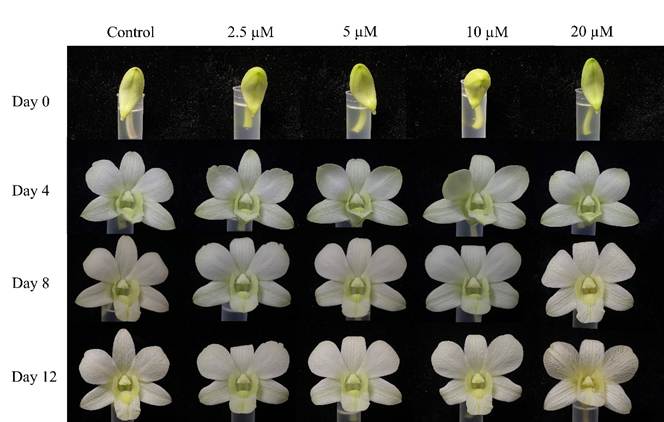
Morphological changes in Dendrobium ‘Khao Sanan’ flowers over the vase period for each treatment are illustrated in Fig. 1. With increasing storage time, senescence symptoms became more pronounced in flowers treated with 20 μM EBL, as evidenced by venation and the onset of water-soaking symptoms on the petals by day 12. In contrast, flowers treated with 2.5 and 5 μM EBL maintained better visual quality, with fewer senescence symptoms compared to the control throughout storage. However, no obvious differences in visual appearance were observed between flowers treated with 10 μM EBL and the control group.
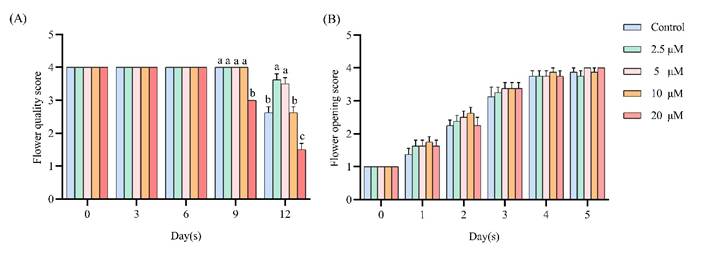
The quality of the flowers was assessed based on the degree of senescence symptoms. Flowers treated with 20 μM EBL showed a decrease in quality score by day 8, whereas a decline in the other treatments was observed only by day 12. On day 12, the highest quality scores were recorded in flowers treated with 2.5 and 5 μM EBL, while the lowest score was found in flowers treated with 20 μM EBL. There was no significant difference in quality between flowers treated with 10 μM EBL and the control group (Fig. 2A). These results indicate that low concentrations of EBL delayed flower senescence, whereas a high concentration (20 μM) accelerated senescence.
In terms of flower opening scores, no significant differences were observed among the treatments. These results suggest that EBL did not significantly influence flower opening under the conditions of this study (Fig. 2B).
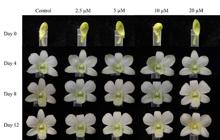
Representative images showing flower opening and senescence progression in cut Dendrobium flowers treated with different EBL concentrations during storage. Visual differences were subtle among treatments during early storage, while accelerated senescence symptoms became evident in 20 µM EBL by Day 12, consistent with quantitative flower quality assessments.
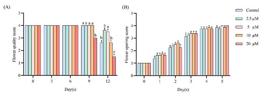
Flower quality score (A) and flower opening score (B) of Dendrobium ‘Khao Sanan’ flower in different concentrations of EBL (control, 2.5, 5, 10, and 20 μM EBL) during vase periods. Data shown are the mean values ± S.E. (n=8) and different letters indicates the statistically significant difference among treatments (p < 0.05).
Ethylene production and respiration rate
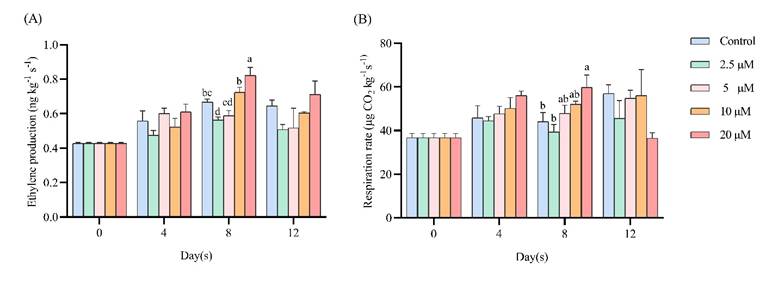
The level of ethylene production exhibited a significant increase in flowers treated with 20 μM EBL (0.82 ng kg-1 s-1), followed by those treated with 10 μM (0.72 ng kg-1 s-1) and the control flowers (0.67 ng kg-1 s-1), whereas flowers treated with 2.5 μM and 5 μM EBL showed lower ethylene content than the others (0.56 and 0.58 ng kg-1 s-1 respectively) on day 8 (Fig. 3A).
Flower respiration is shown in Fig. 3B. On day 8, flowers treated with 20 μM EBL displayed a significant increase in respiration rate compared to the other treatments, followed by a marked decrease on day 12. Conversely, the 2.5 μM EBL treatment tended to reduce the respiration rate by approximately 1.1-fold relative to the control on day 8, and this trend was maintained until day 12, although the reduction was not statistically significant.
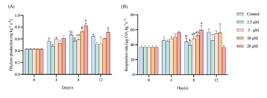
Ethylene production (A) and respiration rate (B) of Dendrobium ‘Khao Sanan’ flower in different concentrations of EBL (control, 2.5, 5, 10, and 20 μM EBL) during vase periods. Data shown are the mean values ± S.E. (n=3) and different letters indicates the statistically significant difference among treatments (p < 0.05)
Hydrogen peroxide content
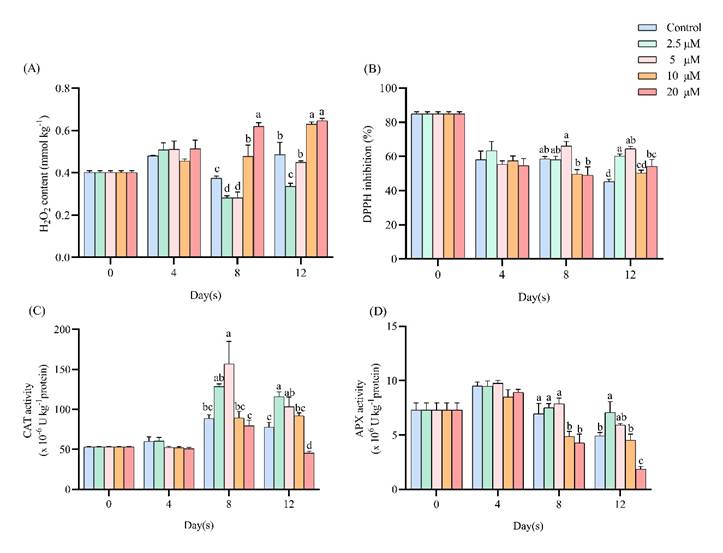
The changes in H2O2 content are shown in Fig. 4A. The application of 20 μM EBL led to a significant increase in H2O2 content (0.62 mmol kg-1) on day 8 compared with the control (0.37 mmol kg-1) and other EBL treatments (2.5 and 5 μM; 0.28 mmol kg-1; 10 μM: 0.47 mmol kg-1). Flowers treated with 10 μM EBL also exhibited higher H2O2 content than the control. In contrast, application of 2.5 and 5 μM EBL reduced H2O2 content by approximately 1.32-fold relative to the control
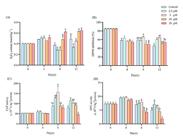
H2O2 content (A), DPPH inhibition (B), CAT activity (C), and APX activity (D) of Dendrobium ‘Khao Sanan’ flower in different concentrations of EBL (control, 2.5, 5, 10, and 20μM EBL) during vase periods. Data shown are the mean values ± S.E. (n=3) and different letters indicates the statistically significant difference among treatments (p < 0.05).
DPPH scavenging
As shown in Fig. 4B, DPPH inhibition in control flowers gradually decreased during storage. On day 8, the percentage of DPPH inhibition in flowers treated with 5 μM EBL was higher than that of the other treatments, and it remained high until day 12, whereas flowers treated with 10 and 20 μM EBL exhibited the lowest inhibition. On day 12, the 2.5 and 5 μM EBL treatments resulted in approximately 1.4-fold greater DPPH inhibition compared with the control.
Antioxidant activity
CAT activity increased gradually in the control and in flowers treated with 10 and 20 μM EBL, reaching comparable levels by day 8. In contrast, CAT activity in flowers treated with 2.5 and 5 μM EBL was significantly greater than that in the other treatments. On day 12, flowers treated with 2.5 μM EBL maintained approximately 1.5-fold higher CAT activity than the control, while the lowest CAT activity was observed in flowers treated with 20 μM EBL. However, no significant differences in activity were observed between the 10 μM treatment and the control (Fig. 4C).
APX activity in flowers from all groups gradually decreased during storage. Flowers treated with 10 and 20 μM EBL exhibited a noticeable decrease in APX activity on day 8, whereas no significant differences were observed among the 2.5 μM, 5 μM EBL, and control groups. However, on day 12, flowers treated with 2.5 μM EBL showed the highest APX activity, approximately 1.4-fold higher than the control, while the 20 μM EBL treatment showed the lowest activity, approximately 2.6-fold lower than the control. There was no significant difference between flowers treated with 10 μM EBL and the control group (Fig. 4D).
Malondialdehyde content and lipoxygenase activity
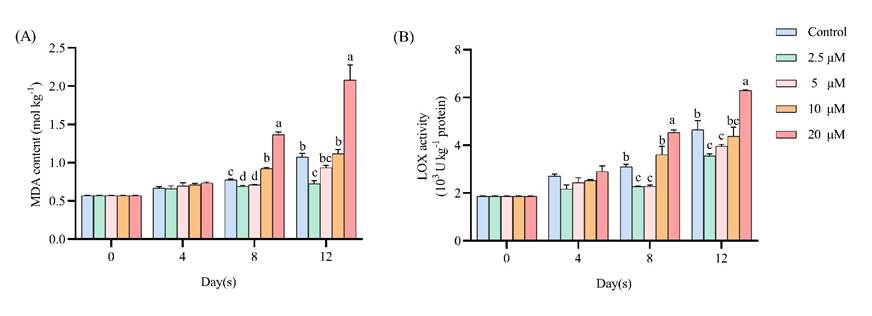
As shown in Fig. 5, flowers treated with 20 μM EBL exhibited a dramatic increase in MDA content on day 8 and day 12 compared with the other treatments. Conversely, lower MDA content was observed in flowers treated with 2.5 and 5 μM EBL on day 8 (0.68 and 0.70 mol kg-1, respectively), compared with the control (0.77 mol kg-1). Flowers treated with 10 μM EBL showed a slightly higher MDA content than the control (Fig. 5A).
LOX activity exhibited a similar pattern to MDA accumulation (Fig. 5B). A significant increase in LOX activity was observed in the 20 μM EBL treatment on both days 8 and 12 compared with the other treatments. In contrast, the 2.5 and 5 μM EBL treatments decreased LOX activity by approximately 1.3-fold compared with the control. Although the 10 μM EBL treatment showed slightly higher LOX activity than the control, the difference was not significant.
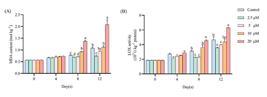
MDA content (A) and LOX activity (B) of Dendrobium ‘Khao Sanan’ flower in different concentrations of EBL (control, 2.5, 5, 10, and 20 μM EBL) during vase periods. Data shown are the mean values ± S.E. (n=3) and different letters indicates the statistically significant difference among treatments (p < 0.05)
Discussion
BRs are plant steroidal hormones that play a crucial role in plant growth and development (Jiroutova et al., 2018). Over the past decade, the role of BRs in postharvest horticultural products has been increasingly recognized for improving quality and postharvest life (He et al., 2018; Islam et al., 2022). In the present study, EBL application regulated flower senescence during storage. However, contrasting responses were observed between low and high EBL concentrations, indicating a concentration-dependent effect. Compared with the control, flowers treated with 2.5 and 5 μM EBL exhibited delayed senescence symptoms, whereas those treated with 20 μM EBL showed accelerated senescence. Flowers treated with 10 μM showed a similar appearance to those in the control group. Based on morphological changes, flower quality scores were positively associated with senescence symptoms. Higher quality scores were observed in the 2.5 and 5 μM EBL treatments, whereas the lowest score was recorded in the 20 μM EBL treatment. These findings are consistent with previous reports showing that different concentrations of BRs can exert distinct effects on senescence regulation (Cai et al., 2019; Darvish et al., 2021). This may reflect a concentration-dependent response, in which low EBL concentrations stimulate protective physiological responses, whereas supra-optimal concentrations may accelerate senescence. Therefore, our results suggest that EBL regulates flower senescence in cut Dendrobium ‘Khao Sanan’ orchids in a concentration-dependent manner, with low concentrations delaying senescence and a high concentration (20 μM) accelerating senescence.
It has been well documented that ethylene plays a key role in driving senescence progression in climacteric flowers (Dar et al., 2021). In this study, treatment with 20 μM EBL significantly increased ethylene production, hastening the onset of visible senescence symptoms. Conversely, treatments with 2.5 and 5 μM EBL reduced ethylene production to levels lower than the control. Likewise, in cut lisianthus flowers, low concentrations of EBL delayed senescence and extended vase life by inhibiting the activity of ACC oxidase (ACO), an enzyme involved in ethylene biosynthesis, thereby reducing ethylene production (Darvish et al., 2021). Furthermore, treatment of broccoli with a high concentration of EBL (20 μM) upregulated genes involved in ethylene biosynthesis, resulting in a substantial increase in ethylene production, whereas lower EBL concentrations showed opposite effects (Cai et al., 2019). Research in tomato (Zhu et al., 2015) and persimmon fruit (He et al., 2018) revealed that BR application induced ripening by increasing ethylene production and respiration rates. In contrast, recent research in pear fruit showed that BR treatment suppressed ethylene production and delayed ripening through regulation of BR-ethylene crosstalk. Specifically, BR-activated BZR1, a key transcription factor in the BR signaling pathway, inhibited ACO1 activity and downregulated expression of ACO1 and ACS1, major ethylene biosynthesis genes (Ji et al., 2021). In addition, low concentrations of BRs in Arabidopsis suppressed ethylene production and upregulated BES1/BZR1, whereas elevated BR levels reduced BES1/BZR1 expression, thereby promoting ethylene biosynthesis (Lv et al., 2018). Therefore, the induction or suppression of ethylene production by BRs appears to be concentration dependent.
It has been reported that an increase in respiration rate is accompanied by increased ethylene production in climacteric flowers and fruit during senescence or ripening (He et al., 2018; Wongjunta et al., 2021). Exogenous application of EBL has been shown to reduce respiration rate, contributing to the maintenance of quality and delayed senescence in fresh daylily flower buds during storage (Yao et al., 2017). Additionally, EBL treatment decreased respiration rate and prolonged the shelf life of carambola fruit by altering the activity of key enzymes in the respiratory pathway (Zhu et al., 2021). In the present study, respiration rate showed a pattern consistent with ethylene production. Flowers treated with 20 μM EBL exhibited the highest respiration rate, whereas application of 2.5 μM EBL tended to reduce respiration in cut flowers. These results suggest that low concentrations of EBL may help maintain flower quality, partly through reduced respiratory activity and delayed senescence.
Visible signs of petal senescence include color changes, venation, and wilting (Kirasak et al., 2023), which were likewise observed in this study by day 12 in orchid flowers treated with a high concentration (20 μM) of EBL. Before these visual symptoms become evident, several physiological and biochemical changes occur in petal cells, including loss of membrane integrity and degradation of proteins, lipids, and nucleic acids, often associated with excessive accumulation of ROS, such as superoxide (O2 -), hydroxyl radical (OH), and H2O2 (Rogers, 2012; Zou et al., 2014). For example, high production of ethylene and O2 - during senescence of sweet osmanthus flowers was positively associated with lipid peroxidation and DNA fragmentation, leading to cellular damage (Zou et al., 2014). Excessive ROS accumulation, particularly H2O2, can induce oxidative damage and membrane lipid peroxidation, resulting in loss of membrane integrity and cellular deterioration (Rogers, 2012). In our experiment, a high concentration of EBL (20 μM) led to increased H2O2 accumulation, accompanied by elevated MDA content, indicating enhanced lipid peroxidation. Conversely, treatment with low concentrations of EBL (2.5 and 5 μM) suppressed H2O2 accumulation and reduced MDA content. The 10 μM EBL treatment showed slightly higher levels than the control, although the differences were not significant. These results suggest that low EBL concentrations may alleviate oxidative damage, whereas a supra-optimal concentration promotes ROS accumulation associated with accelerated senescence.
The activity of the LOX enzyme, responsible for lipid breakdown, showed a pattern consistent with MDA levels in our study. Likewise, reductions in H2O2 and MDA content following EBL treatment during storage have also been reported in various postharvest horticultural products, including wucai (Yuan et al., 2021), daylily flower buds (Yao et al., 2017), carambola (Zhu et al., 2021), and blueberry (Min et al., 2022). Additionally, EBL has been reported to significantly decrease LOX activity, resulting in lower MDA accumulation, thereby suggesting improved membrane stability (Gao et al., 2017; Islam et al., 2022). Together, these findings suggest that EBL application, particularly at low concentrations, may alleviate lipid peroxidation and help preserve membrane integrity in Dendrobium ‘Khao Sanan’ flowers.
At the onset of flower senescence, antioxidant capacity may initially increase as a protective response; however, imbalance between ROS generation and scavenging systems ultimately leads to oxidative damage (Haq et al., 2024). Therefore, plants possess well-defined antioxidant defense mechanisms that help neutralize excess ROS within their cells. The results of our study demonstrated that treatment with low concentrations of EBL maintained higher antioxidant capacity, including increased activities of CAT and APX, two key antioxidant enzymes involved in H2O2 detoxification in plant cells (Mishra et al., 2023). These findings are consistent with previous studies showing that enhancement of antioxidant defenses is an important mechanism underlying delayed senescence. EBL treatment has been reported to significantly increase the activities of SOD, peroxidase (POD), CAT, and APX, thereby alleviating oxidative damage in daylily flowers (Yao et al., 2017). In addition, EBL treatment has been shown to increase total antioxidant capacity and the activity of ascorbate (AsA) -glutathione (GSH) cycle-related enzymes during storage, helping maintain redox homeostasis and extend the postharvest life of wucai (Yuan et al., 2021). Furthermore, EBL treatment delayed ripening in blueberries by upregulating the activities of SOD, CAT, and PAL (Min et al., 2022). In our experiment, increased CAT and APX activities induced by low EBL concentrations were associated with reduced H2O2 accumulation, which may have contributed to lower oxidative damage in the flowers. Therefore, EBL treatment may delay visible senescence symptoms in cut Dendrobium ‘Khao Sanan’ flowers by enhancing antioxidant defense systems, thereby maintaining ROS homeostasis and reducing lipid peroxidation.
Conclusions
In summary, the effect of EBL on flower senescence in cut Dendrobium ‘Khao Sanan’ showed a concentration-dependent response. A high concentration (20 μM) of EBL accelerated flower senescence, as evidenced by increased ethylene production, respiration rate, H2O2 accumulation, MDA levels, and LOX activity. Conversely, low concentrations of EBL (2.5 and 5 μM) delayed petal senescence by decreasing ethylene production, respiration rate, H2O2 accumulation, MDA levels, and LOX activity, while enhancing antioxidant defenses, including CAT and APX activities and overall antioxidant capacity. Additionally, flowers treated with 10 μM EBL showed no significant difference in quality compared with the control. Taken together, these findings suggest that low-concentration EBL treatment may help preserve postharvest quality in cut Dendrobium ‘Khao Sanan’ flowers, partly through enhanced antioxidant defense and reduced oxidative damage.
Acknowledgments
The authors gratefully acknowledge Mr. Year Bune Seraypheap for his valuable support in revising the manuscript and improving the language.
References
-
CAI, J.H.; LUO, F.; ZHAO, Y.B.; ZHOU, Q.; WEI, B.D.; ZHOU, X.; JI, S.J. 24-Epibrassinolide treatment regulates broccoli yellowing during shelf life. Postharvest Biology and Technology, v.154, p.87-95, 2019. https://doi.org/10.1016/j.postharvbio.2019.04.019
» https://doi.org/https://doi.org/10.1016/j.postharvbio.2019.04.019 -
COSTA, L.; ARAÚJO, F.; SOUTO-RIBEIRO,W.; SANTOS, M.; FINGER, F. Postharvest physiology of cut flowers. Ornamental Horticulture, v.27, n.3, p.365-373, 2021. https://doi.org/10.1590/2447-536x.v27i3.2372
» https://doi.org/https://doi.org/10.1590/2447-536x.v27i3.2372 -
DAR, R.A.; NISAR, S.; TAHIR, I. Ethylene: A key player in ethylene sensitive flower senescence: A review. Scientia Horticulturae, v.290, p.110491, 2021. https://doi.org/10.1016/j.scienta.2021.110491
» https://doi.org/https://doi.org/10.1016/j.scienta.2021.110491 -
DARVISH, M.; SHIRZAD, H.; ASGHARI, M.; NORUZI, P.; ALIREZALU, A.; PATEIRO, M.; TAKSHE, A.; LORENZO, J.M. 24-Epibrasinolide modulates the vase life of lisianthus cut flowers by modulating acc oxidase enzyme activity and physiological responses. Plants, v.10, p.995, 2021. https://doi.org/10.3390/plants10050995
» https://doi.org/https://doi.org/10.3390/plants10050995 -
FANG, H.; ZHOU, Q.; CHENG, S.; ZHOU, X.; WEI, B.; ZHAO, Y.; JI, S. 24-epibrassinolide alleviates postharvest yellowing of broccoli via improving its antioxidant capacity. Food Chemistry, v.365 p.130529, 2021. https://doi.org/10.1016/j.foodchem.2021.130529
» https://doi.org/https://doi.org/10.1016/j.foodchem.2021.130529 -
GAO, H.; CHAI, H.; CHENG, N.; CAO, W. Effects of 24-epibrassinolide on enzymatic browning and antioxidant activity of fresh-cut lotus root slices. Food Chemistry , v.217 p.45-51, 2017. https://doi.org/10.1016/j.foodchem.2016.08.063
» https://doi.org/https://doi.org/10.1016/j.foodchem.2016.08.063 -
GUTIÉRREZ-VILLAMIL, D.A.; BALAGUERA-LÓPEZ, H.E.; ÁLVAREZ-HERRERA, J.G. Brassinosteroids improve postharvest quality, antioxidant compounds, and reduce chilling injury in ‘Arrayana’ Mandarin fruits under cold storage. Horticulturae, v.9, p.622, 2023. https://doi.org/10.3390/horticulturae9060622
» https://doi.org/https://doi.org/10.3390/horticulturae9060622 -
HAQ, A.; FAROOQ, S.; LONE, M.L.; PARVEEN, S.; ALTAF, F.; TAHIR, I. Flower senescence coordinated by ethylene: An update and future scope on postharvest biology in the “Buttercup” Family. Journal of Plant Growth Regulation, v.43, p.402-422, 2024. https://doi.org/10.1007/s00344-023-11122-9
» https://doi.org/https://doi.org/10.1007/s00344-023-11122-9 -
HUSSAIN, M.A.; FAHAD, S.; SHARIF, R.; JAN, M.F.; MUJTABA, M.; ALI, Q.; AHMAD, A.; AHMAD, H.; AMIN, N.; AJAYO, B.S.; SUN, C.; GU, L.; AHMAD, I.; JIANG, Z.; HOU, J. Multifunctional role of brassinosteroid and its analogues in plants. Plant Growth Regulation, v.92 p.141-156, 2020. https://doi.org/10.1007/s10725-020-00647-8
» https://doi.org/https://doi.org/10.1007/s10725-020-00647-8 -
HE, Y.; LI, J.; BAN, Q.; HAN, S.; RAO, J. Role of brassinosteroids in persimmon (Diospyros kaki L.) fruit ripening. Journal of Agricultural and Food Chemistry , v.66, p.2637-2644, 2018. https://doi.org/10.1021/acs.jafc.7b06117
» https://doi.org/https://doi.org/10.1021/acs.jafc.7b06117 -
ISLAM, M.; ALI, S.; NAWAZ, A.; NAZ, S.; EJAZ, S.; SHAH, A.A.; RAZZAQ, K. Postharvest 24-epibrassinolide treatment alleviates pomegranate fruit chilling injury by regulating proline metabolism and antioxidant activities. Postharvest Biology and Technology , v.188, p.111906, 2022. https://doi.org/10.1016/j.postharvbio.2022.111906
» https://doi.org/https://doi.org/10.1016/j.postharvbio.2022.111906 -
JANOWSKA, B.; ANDRZEJAK, R. Cytokinins and gibberellins stimulate the flowering and post-harvest longevity of flowers and leaves of calla lilies (Zantedeschia Spreng.) with colourful inflorescence spathes. Agronomy, v.12, p.1859. 2022. https://doi.org/10.3390/agronomy12081859
» https://doi.org/https://doi.org/10.3390/agronomy12081859 -
JI, Y.; QU, Y.; JIANG, Z.; YAN, J.; CHU, J.; XU, M.; SU, X.; YUAN, H.; WANG, A. The mechanism for brassinosteroids suppressing climacteric fruit ripening. Plant Physiology, v.185, p.1875-1893, 2021. https://doi.org/10.1093/plphys/kiab013
» https://doi.org/https://doi.org/10.1093/plphys/kiab013 -
JIROUTOVA, P.; OKLESTKOVA, J.; STRNAD, M. Crosstalk between brassinosteroids and ethylene during plant growth and under abiotic stress conditions. International Journal of Molecular Sciences, v.19, p.3283, 2018. https://doi.org/10.3390/ijms19103283
» https://doi.org/https://doi.org/10.3390/ijms19103283 -
JUNGLEE, S.; URBAN, L.; HUGUETTE, S.; LOPEZ, F. Optimized assay for hydrogen peroxide determination in plant tissue using potassium iodide. American Journal of Analytical Chemistry, v.5 p.730-736, 2014. https://doi.org/10.4236/ajac.2014.511081
» https://doi.org/https://doi.org/10.4236/ajac.2014.511081 -
KIRASAK, K.; KUNYAMEE, S.; KETSA, S. 1-MCP prevents ultrastructural changes in the organelles of Dendrobium petals that are induced by exogenous ethylene. Plant Physiology and Biochemistry, v.200, p.107758, 2023. https://doi.org/10.1016/j.plaphy.2023.107758
» https://doi.org/https://doi.org/10.1016/j.plaphy.2023.107758 -
KONGKLOM, N.; CHUENSANGJUN, C.; CHISTI, Y.; SIRISANSANEEYAKUL, S. Improved keeping quality of Dendrobium “Bom” orchids using nutrients entrapped in a biodegradable hydrogel. Scientia Horticulturae , v.234, p.184-192, 2018. https://doi.org/10.1016/j.scienta.2018.02.031
» https://doi.org/https://doi.org/10.1016/j.scienta.2018.02.031 -
KHUNMUANG, S.; KANLAYANARAT, S.; WONGS-AREE, C.; MEIR, S.; PHILOSOPH-HADAS, S.; OREN-SHAMIR, M.; OVADIA, R.; BUANONG, M. Ethylene induces a rapid degradation of petal anthocyanins in Cut Vanda ‘Sansai Blue’ orchid flowers. Frontiers in Plant Science, v.10, 2019. https://doi.org/10.3389/fpls.2019.01004
» https://doi.org/https://doi.org/10.3389/fpls.2019.01004 -
LV, B.; TIAN, H.; ZHANG, F.; LIU, J.; LU, S.; BAI, M.; LI, C.; DING, Z. Brassinosteroids regulate root growth by controlling reactive oxygen species homeostasis and dual effect on ethylene synthesis in Arabidopsis PLOS Genetics, v.14, p.e1007144, 2018. https://doi.org/10.1371/journal.pgen.1007144
» https://doi.org/https://doi.org/10.1371/journal.pgen.1007144 -
MIN, Z.; JIANG, L.; ZHAO, Y.; WANG, X.; LIU, Q.; ZHANG, Y. Effects of 24-epibrassinolide on the postharvest quality and antioxidant activities of blueberry fruits. New Zealand Journal of Crop and Horticultural Science, v.53, p.53-66, 2022. https://doi.org/10.1080/01140671.2022.2128828
» https://doi.org/https://doi.org/10.1080/01140671.2022.2128828 -
MISHRA, N.; JIANG, C.; CHEN, L.; PAUL, A.; CHATTERJEE, A.; SHEN, G. Achieving abiotic stress tolerance in plants through antioxidative defense mechanisms. Frontiers in Plant Science , v.14, p.1110622, 2023. https://doi.org/10.3389/fpls.2023.1110622
» https://doi.org/https://doi.org/10.3389/fpls.2023.1110622 -
ROGERS, H.J. Is there an important role for reactive oxygen species and redox regulation during floral senescence? Plant Cell & Environment, v.35, p.217-233, 2012. https://doi.org/10.1111/j.1365-3040.2011.02373.x
» https://doi.org/https://doi.org/10.1111/j.1365-3040.2011.02373.x -
SONG, L.L.; LIU, H.; YOU, Y.L.; SUN, J.; YI, C.; LI, Y.B.; JIANG, Y.M.; WU, J.S. Quality deterioration of cut carnation flowers involves in antioxidant systems and energy status. Scientia Horticulturae , v.170, p.45-52, 2014. https://doi.org/10.1016/j.scienta.2014.02.035
» https://doi.org/https://doi.org/10.1016/j.scienta.2014.02.035 -
SONG. Y.; HU, C.; XUE, Y.; GU, J.; HE, J.; REN, Y. 24-epibrassinolide enhances mango resistance to Colletotrichum gloeosporioides via activating multiple defense response. Scientia Horticulturae , v.303, p.111249, 2022. https://doi.org/10.1016/j.scienta.2022.111249
» https://doi.org/https://doi.org/10.1016/j.scienta.2022.111249 -
SUKPITAK, C.; MUNNÉ-BOSCH S.; SERAYPHEAP, K. Brassinosteroids alleviate postharvestwater deficit stress in cut Dendrobium ‘Khao Sanan’ orchid through modulation of protective mechanisms, osmotic regulation, and endogenous hormonal levels. Postharvest Biology and Technology , v.211, p.112832, 2024. https://doi.org/10.1016/j.postharvbio.2024.112832
» https://doi.org/https://doi.org/10.1016/j.postharvbio.2024.112832 -
SUKPITAK, C.; SERAYPHEAP, K. Postharvest transient water deficit limits longevity of cut Dendrobium ‘Khao Sanan’ orchid. Scientia Horticulturae , v.309, p.111637, 2023. https://doi.org/10.1016/j.scienta.2022.111637
» https://doi.org/https://doi.org/10.1016/j.scienta.2022.111637 -
UMMARAT, N.; MATSUMOTO, T.K.; WALL, M.M.; SERAYPHEAP, K. Changes in antioxidants and fruit quality in hot water-treated ‘Hom Thong’ banana fruit during storage. Scientia Horticulturae , v.130, p.801-807, 2011. https://doi.org/10.1016/j.scienta.2011.09.006
» https://doi.org/https://doi.org/10.1016/j.scienta.2011.09.006 -
WANTAT, A.; SERAYPHEAP, K.; ROJSITTHISAK, P. Effect of chitosan coatings supplemented with chitosan-montmorillonite nanocomposites on postharvest quality of ‘Hom Thong’ banana fruit. Food Chemistry , v.374, p.131731, 2022. https://doi.org/10.1016/j.foodchem.2021.131731
» https://doi.org/https://doi.org/10.1016/j.foodchem.2021.131731 -
WONGJUNTA, M.; WONGS-AREE, C.; SALIM, S.; MEIR, S.; PHILOSOPH-HADAS, S.; BUANONG, M. Involvement of ethylene in physiological processes determining the vase life of various hybrids of Mokara orchid cut flowers. Agronomy , v.11, p.160, 2021. https://doi.org/10.3390/agronomy11010160
» https://doi.org/https://doi.org/10.3390/agronomy11010160 -
YAO, Y.; ZHAO, N.; XIAN, T.; TU, S.; PAN, L.; TU, K. Effect of 2,4-epibrassinolide treatment on the postharvest quality and physiological metabolism of fresh daylily flower buds during storage. Scientia Horticulturae , v.226, p.110-116, 2017. https://doi.org/10.1016/j.scienta.2017.08.039
» https://doi.org/https://doi.org/10.1016/j.scienta.2017.08.039 -
YUAN, L.; NIE, L.; JI, Q.; ZHENG, Y.; ZHANG, L.; ZHU, S.; HOU, J.; CHEN, G.; WANG, C. The effect of exogenous 24-epibrassinolide pretreatment on the quality, antioxidant capacity, and postharvest life of wucai (Brassica campestris L.). Food Science & Nutrition, v.9, p.1323-1335, 2021. https://doi.org/10.1002/fsn3.2075
» https://doi.org/https://doi.org/10.1002/fsn3.2075 -
ZHU, J.; LIU, X.; HUANG, W.; AN, R.; XU, X.; LI, P. 2,4-Epibrassinolide delays leaf senescence in pak choi (Brassica rapa subsp. chinensis) by regulating its chlorophyll metabolic pathway and endogenous hormones content. Gene, v.877, p.147531, 2023. https://doi.org/10.1016/j.gene.2023.147531
» https://doi.org/https://doi.org/10.1016/j.gene.2023.147531 -
ZHU, T.; TAN, W.R.; DENG, X.G.; ZHENG, T.; ZHANG, D.W.; LIN, H.H. Effects of brassinosteroids on quality attributes and ethylene synthesis in postharvest tomato fruit. Postharvest Biology and Technology , v.100, p.196-204, 2015. https://doi.org/10.1016/j.postharvbio.2014.09.016
» https://doi.org/https://doi.org/10.1016/j.postharvbio.2014.09.016 -
ZHU, X.; CHEN, Y.; LI, J.; DING, X.; XIAO, S.; FAN, S.; SONG, Z.; CHEN, W.; LI, X. Exogenous 2,4-epibrassinolide treatment maintains the quality of carambola fruit associated with enhanced antioxidant capacity and alternative respiratory metabolism. Frontiers in Plant Science , v.12, 2021. https://doi.org/10.3389/fpls.2021.678295
» https://doi.org/https://doi.org/10.3389/fpls.2021.678295 -
ZOU, J.J.; ZHOU, Y.; CAI, X.; WANG, C.Y. Increase in DNA fragmentation and the role of ethylene and reactive oxygen species in petal senescence of Osmanthus fragrans Postharvest Biology and Technology , v.93, p.97-105, 2014. https://doi.org/10.1016/j.postharvbio.2014.02.015
» https://doi.org/https://doi.org/10.1016/j.postharvbio.2014.02.015