Exotic aquatic species in the Patos Lagoon estuary and adjacent areas in Southern Brazil
Abstract
Exotic and invasive species are considered the second major cause of biodiversity loss in the world. In addition to damage to native biodiversity, impacts caused by exotic species can affect ecosystem services and socioeconomic activities. The Patos-Mirim lagoon system (PMLS) has great ecological importance and supports important socioeconomic activities in southern Brazil. This study aimed to compile historical records of the occurrence of exotic aquatic species in PMLS and to synthesize this bioecological information, means of introduction of such species, main impact mechanisms, and undertaken management measures. The data were obtained by a bibliographical review using the official list of Invasive Exotic Species of the Rio Grande do Sul State, the National Base of Invasive Exotic Species (Hórus Institute), and scientific information. We found records of 26 exotic aquatic species in the PMLS. Actinopterygii was the most representative (11 species), followed by Hydrozoa (three), Malacostraca (two) and Bivalvia (two), and other eight classes with only one species each. In total, nine species that had been registered in the study area were ignored by the official list of exotic species for the region. The main ways of introduction were associated with socioeconomic activities, such navigation and aquaculture. The main impact mechanisms of exotic aquatic species refer to competition (85% of species) and habitat modification (46% of species). Despite the undertaken management measures, occurrence of exotic aquatic species is growing and may seriously threaten native biodiversity and its ecosystem services.
Keywords:
Bioecological information; Impact; Invasive species; Management measures
INTRODUCTION
According to the International Convention on Biological Diversity at the 6th Conference of the Parties (CBD, 2002), introduced, exotic, non-native, non-indigenous, and alien species have the same biological meaning. Alien species refers to a species, subspecies, or lower taxon that has been introduced outside its natural past or current distribution; including any part, gametes, seeds, eggs, or propagules of such species that might survive and subsequently reproduce. An invasive species configures an exotic species that has established itself, is dispersing beyond the place in which it was introduced, has become abundant, and produces impacts either on the environment or on native biodiversity (Kolar and Lodge, 2001; Leão et al., 2011).
In Brazil, the Ministry of the Environment classifies exotic species into (a) contained, when their presence occurs in a controlled artificial environment that is totally or partially isolated from the environment; (b) Detected in the natural environment, when its presence is detected in the natural environment but without a subsequent increase in its abundance and/or dispersal; (c) Established, when the species has been detected on a recurring basis, with a complete life cycle in the wild and signs of population increase, but no impacts; and (d) Invasive, when the species has actually established itself, is abundant and geographically dispersed, and impacts the reproductive capacity of native species (Lopes et al., 2009).
The increase in exotic and invasive species outside their natural distribution gives rise to biological invasion processes (Zalba and Ziller, 2007), significantly threatening native biodiversity (Arndt et al., 2018). According to Andersen et al. (2004), the process of biological invasion can be divided into four phases: (1) arrival; (2) establishment; (3) propagation; and (4) impact. The first phase is characterized by the arrival of one or more individuals of the exotic species in a new environment, also known as the first record of occurrence. In the establishment phase, the exotic species manages to form a new, well-structured population, increasing its abundance and avoiding local extinction. The propagation phase is characterized by the dispersal of the exotic species from its initial area, culminating in the colonization of new habitats. Finally, the impact phase, when the established population starts to negatively impact native biodiversity and the environment.
Exotic species are considered the second cause of biodiversity loss worldwide (Matthews, 2005). Negative impacts on native biodiversity are caused because invasive exotic species may have advantages over native species (e.g., absence of natural predators in the new habitat, a wider diet, faster reproduction, earlier maturity, higher fecundity, higher dispersal capacity, wider physiological tolerance, and faster growth) (Kolar, 2004; Kolar and Lodge, 2002). These species are known for their ability to influence processes and interactions in ecosystems (e.g., predation and competition for resources such as food, space, and breeding grounds) (Latini et al., 2016; Leão et al., 2011; Welcomme, 1988), including the “invasional meltdown,” in which invasive species pave the way for invasions by other species (Havel et al., 2015). In addition to negatively affecting biodiversity and natural genetic heritage, their impacts on the environment can compromise human health (Lopes et al., 2009), the provision of ecosystem services, and socioeconomic activities (Santos and Calafate, 2018).
In recent years, many studies have recorded and documented an increase in the number of exotic species in aquatic environments (e.g., Bertaco and Azevedo, 2023; Cota, 2007; Sampaio and Schmidt, 2013; Teixeira and Creed, 2020; and Troca et al., 2012). In Brazil, the introduction of exotic species began in the late 19th and early 20th centuries, in which the first Asian carp Cyprinus carpio (Linnaeus, 1758) was intentionally introduced from North America (Nomura, 1977; Welcomme, 1988). Currently, 543 invasive exotic species have been registered in Brazil, including those that affect ecosystems (marine and continental waters), health, and production systems (agriculture, livestock, and forestry) (MMA, 2024). The best-known exotic aquatic species include the sun coral Tubastraea spp—introduced in the late 1980s via oil and gas platforms in Rio de Janeiro state (Barros and Pompei, 2015); the giant snail Achatina fulica (Férussac, 1821)—introduced due to human activities (e.g., agricultural transportation, illegal trade) in Paraná State in 1988 (Colley and Fischer, 2009; Teles and Fontes, 2002); and the golden mussel Limnoperna fortunei (Dunker, 1857)—introduced from Argentina, arriving in Brazil in 1999 (Mansur et al., 1999). In Rio Grande do Sul State, the first records of exotic species in freshwater occurred in 1965, with specimens of the sea bass Micropterus salmoides (Lacépéde, 1802) (Bertaco and Azevedo, 2023). In the following years, other exotic species were recorded, such as the carp C. carpio (Boulenger, 1897) and Coptodon rendalli (Bertaco and Azevedo, 2023) in 1968.
The main means of introducing exotic aquatic species (EAS) are linked to maritime and fluvial socio-economic activities such as transportation, ballast water, the construction of navigation channels, biofouling in transportation structures, aquariums, and aquaculture (Tavares and Mendonça Jr., 2004). Coastal areas are particularly susceptible, especially in areas occupied by large port developments (Stanski et al., 2022).
The Patos-Mirim lagoon system (PMLS) is located in southern Brazil and extends as far south as Uruguay. It is considered the most important hydrographic basin in southern Brazil and comprises the largest lagoon area on the South American continent (201,626 km2) that is connected to the Atlantic Ocean (Oliveira and Griep, 2005; Seeliger and Odebrecht, 1998). This region has a great variability of natural habitats such as flooded fields, marshes, lakes, rivers, estuaries and the adjacent marine coast, which provides favorable conditions for the development and support of a great biodiversity (Seeliger and Kjerfve, 2001) and the provision of ecosystem services (Lemos et al., 2022). The region has great primary production and represents a nursery site for countless marine species that support important fishing activities for the local economy (Garcia et al., 2001; Haimovici and Cardoso 2017; Mai and Possamai, 2022; Vieira and Castello, 1996). In addition to fishing and providing fresh water for human and agricultural supply, the region stands out from a socioeconomic point of view due to the Port of Rio Grande, considered one of the most important marine ports in Brazil (Antonio et al., 2020). Moreover, the PMLS provides inland international navigation between Uruguay and Brazil through the Mirim Lagoon (Pedreira et al., 2022).
Due to its importance, this system has been the focus of ecological and environmental studies since the 1970s (Lemos et al., 2022; Odebrecht et al., 2017). The Brazilian Long-Term Ecological Research program in the Patos Lagoon Estuary and Adjacent Marine Coast (PELD-ELPA in Portuguese) has monitored this ecosystem since the early 1990s (Lemos et al., 2022). Since then, the dynamics and functionality of this system have been object of study, but so far, information on EAS in this region remains scarce in the literature. Considering the importance of early detection of exotic species in the environment (MMA, 2024), this study aimed to review the records of occurrence of EAS in the Patos Lagoon estuary, the São Gonçalo channel, the northern portion of Mirim Lagoon, and the adjacent marine coast.
METHODS
Study area
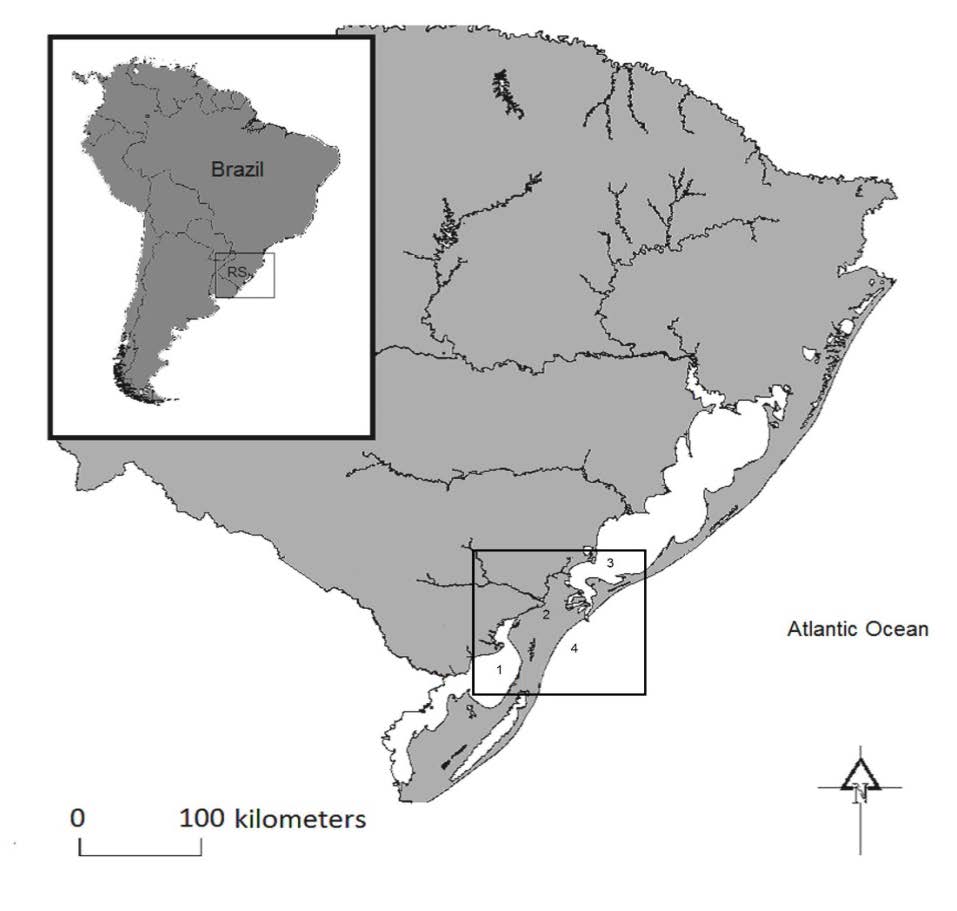
The PMLS is located in southern Brazil (30° and 32° S latitude and 50° and 52° W longitude) (Figure 1) and one of the most important water systems in Brazil (Marques, 2005). The PMLS drains an area of ~ 200,000 km2 (Marques et al., 2006). Patos Lagoon has a surface area of 10,227 km2 and is classified as the largest choked lagoon (sensu Kjerfve, 1986) in the world (Seeliger and Odebrech, 1998). This lagoon has an extensive estuarine region (971 km2) that connects to the Mirim Lagoon through the São Gonçalo channel (Fernandes, 2021; Asmus, 1998). Also, the estuarine zone of Patos Lagoon has a connection with the Atlantic Ocean via a 20-km-long and 0.5-3-km-wide channel through a pair of rock jetties built at the beginning of the 20th century to help stabilize the navigation channel that accesses the Port of Rio Grande (Asmus, 1998). The mean surface area of Mirim Lagoon is approximately 3,749 km2 (185 km long and 20 km wide). Its catchment basin includes almost 55,000 km2 (47% in Brazil, 53% in Uruguay). In the past, Patos Lagoon brackish waters could reach Mirim Lagoon through the São Gonçalo channel, damaging inundated rice crops in the region. To avoid salt penetration upstream, a dam was built across the channel in 1977 to block the entrance of brackish waters into the Mirim Lagoon but which still allowed surface fluxes and navigation (Hirata et al., 2010). The adjacent marine coast of the PMLS is a sandy, intermediate to dissipative beach with a length of 220 km, making it one of the longest marine coastlines in the world (Odebrecht et al., 2010b). The adjacent marine coast has a gentle slope and wide continental shelf and is greatly influenced by the outflow of water from Patos Lagoon and La Plata River, which positively influences the high phytoplankton biomass in the region (Ciotti et al., 1995).
The system is characterized by a low astronomical tidal range (40 cm) (Garcia, 1998) and by a salinity variation that is strongly influenced by rainfall and wind action (Costa et al., 1988). The region is also strongly influenced by the El Niño Southern Oscillation (Odebrecht et al., 2010a). The El Niño and La Niña phenomena directly influence the precipitation regime in South America (Ropelewski and Halpert 1987; Grimm et al., 2000), and, consequently, influence the water regime of the Patos Lagoon (Garcia 1998; Grimm et al., 2000). Hydrological changes associated with the El Niño Southern Oscillation, especially its warm phase (El Niño), are related to various impacts on species composition and abundance in the biota at different trophic levels in the Patos Lagoon estuary, such as primary producers (Lanari and Copertino, 2017; Odebrecht et al., 2015), zooplankton (Teixeira-Amaral et al., 2017), decapod crustaceans (Pereira and D’incao, 2012), and fish (Garcia et al., 2001).

Map of the study area: Patos-Mirim Lagoon System (PMLS). Southern portion of the Patos Lagoon, including the (1) northern Mirim Lagoon, (2) São Gonçalo channel, (3) Patos Lagoon estuary and (4) adjacent marine coast.
Data compilation
Initially, a basic list of possible EAS in the study area was compiled by searching the official list of Invasive Exotic Species of the Rio Grande do Sul State, published by the Government Environmental Agency (SEMA, 2013) and the National Database of Invasive Exotic Species (Horus Institute). The bibliographic survey was carried out on the ISI Web of Science, Google Scholar, and SciELO databases, which provide a multitude of academic studies (undergraduate, master’s, and doctoral theses; dissertations; and monographs) and publications in national and international journals. In addition to consulting official sources and reviewing the scientific literature, researchers from the Federal University of Rio Grande were consulted.
RESULTS
Who are they and where did they come from?
In total, 26 EAS (two kingdoms, seven phyla, and 12 classes) were found in the study area, which comprises the Patos Lagoon estuary, the northern portion of Mirim Lagoon, the São Gonçalo channel, and the adjacent marine coast. The class Actinopterygii was the most representative with 11 species, followed by phylum Cnidaria (class Hydrozoa) with three species, the phylum Arthropoda (class Malacostraca), and the phylum Mollusca (class Bivalvia) with two species each. The other groups were represented by only one species each (Table 1). A table with taxonomic details and the first record of occurrence in the study area is included as supplementary material to this article. Regarding reproductive biology, 19 species had exclusively sexual reproduction, whereas another six had both sexual and asexual reproduction. The mode of reproduction of Membraniporopsis tubigera (Osburn, 1940) remains unknown. Regarding feeding habits, EAS in PMLS were carnivorous (15 species, including zooplanktivorous, insectivores, and piscivores), omnivorous (six species), and herbivores (three species). In total, two species were autotrophic, representing the chromista kingdom: (Alexandrium tamarense (Lebour) Balech, 1995) and Coscinodiscus wailesii (Gran and Angst, 1931). Each feeding habit uses different feeding strategies, such as opportunist and generalist species.
Of these 26 species, 11 were exclusive to freshwater and two were marine (M. tubigera and A. tamarense). The other 13 exotic aquatic species were associated with the estuarine environment at some point in their lives (Figure 2). Except for three allochthonous fish species—Pachyurus bonariensis (Steindachner, 1876), Trachelyopterus lucenai (Bertoletti et al., 1995), and Acestrorhynchus pantaneiro (Menezes, 1992), native to other Brazilian hydrographic basins (Uruguay River Basin)—the other 20 species had a natural distribution or origin in various continents (America, Europe, Asia, Oceania, and Africa) and oceans and seas (Figure 2). The main means of introduction for EAS the study area were related to socioeconomic activities, with aquaculture (34%) and shipping (ballast water, fouling) (32%) being the main routes of introduction for these species. Intentional release into the environment (20%) and aquarism (12%) also constituted means of introduction for these species. In total, 11 species were self-spreading, and 12 species were spread by sea currents. In four of these species, currents play a fundamental role in the dispersal of their aquatic larvae. The species Hypophthalmichthys molitrix (Valenciennes, 1844) and M. tubigera lacks information on its means of dispersal.

Sankey model showing the original distribution of aquatic exotic species recorded in the Patos-Mirim lagoon system (PMLS), relating them to their habitat type.
Occurrence records
The first record of an EAS in the study area occurred in the early 1980s, referring to a small omnivorous crab native to the Northwestern Atlantic Rhithropanopeus harrisii (Gould, 1841). From 1981 to 1985, D’Incao and Martins (1998) collected 92 males and 61 females of R. harrisii in the Patos Lagoon estuary and suggested that the crab may have arrived in the estuary via the ballast water of ships. At the time of this study, the last record of an exotic aquatic species in the study area occurred in 2024, referring to the red-bellied piranha Pygocentrus nattereri (Kner, 1858) and the chinook salmon Oncorthynchus tshawyscha (Walbaum, 1792) (Gowert personal communication ) (Figure 3).

Chronology of the first records of occurrence of exotic aquatic species in the Patos-Mirim lagoon system (PMLS).
Environmental impact
The negative impacts caused by EAS in the PMLS and adjacent regions can be ecological, socioeconomic, and health-related. The main impact mechanisms mentioned in the literature for the 26 EAS refer to competition and habitat alteration (Figure 4). Competition (for food, habitat, and space to reproduce) is an impact mechanism identified for 85% of exotic species. In addition to competition, habitat alteration (46% of species), predation (23% of species), disease vectors (for other species and humans), and hybridization are other impact mechanisms recorded in the literature (Figure 4).
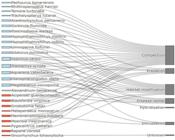
Sankey model showing the impact mechanisms of exotic aquatic species occurring in the Patos-Mirim lagoon system (PMLS). In blue, species on the official SEMA list n°79/2013, in red, species registered for the PMLS, and not classified by this official list.
Risk status and management measures
In total, nine of the 26 species in the study area were not listed in the official Rio Grande do Sul State list - SEMA n°79/2013 list of exotic species (Figure 4). All 17 species on the official SEMA n°79/2013 list have already been the subject of risk analysis and have an established risk status. Of the nine exotic species outside the official SEMA n°79/2013 list, only three—M. tubigera, Metapanaeus monoceros (Fabricius, 1798), and Rapana venosa (Valenciennes, 1846)—have an established risk status and only the last two M. monoceros and R.venosa have any management measures. Moreover, six other species outside official list lack any management measures.
Exotic fish already registered in the Patos Lagoon System
In the northern portion of the Patos lagoon system, six other EAS were found but they were yet to be recorded in the PMLS study area (the estuarine portion of Patos Lagoon, the São Gonçalo channel, the northern portion of the Mirim Lagoon, and the adjacent marine coast): largemouth black bass (achigã in Portuguese) M. salmoides (Bertaco and Azevedo, 2023), palometa (piranha amarela in Portuguese) Serrasalmus maculatus (Linnaeus, 1776) (Bertaco et al. 2022), the Nile tilapia Oreochromis niloticus (Linnaeus, 1758) (Bertaco and Azevedo, 2023), the rainbow trout Oncorhynchus mykiss (Walbaum, 1792) (Bertaco and Azevedo, 2023), the African catfish Clarias gariepinus (Burchell, 1822) (Braun et al.,2003), and the tilapia C. rendalli (Bertaco and Azevedo, 2023). The Horus Institute shows a record of C. rendalli in the Patos Lagoon, but the literature review provided no further details.
DISCUSSION
Analysis of the survey of EAS in the PMLS showed a great diversity of organisms. Among the 26 species identified, the class Actinopterygii stands out for its largest number of species. Except for the Russian sturgeon Acipenser gueldenstaedtii (Von Brandt and Ratzeburg, 1833) and O. tschawytscha, all other fish are freshwater species. Such prevalence of Actinopterygii could be explained by the fact that southern Brazil stands out as an important area in aquaculture production, including the breeding of various exotic species, such as carp and tilapia (Embrapa, 2017; Troca and Vieira, 2012). The different carp species recorded in 1998 (C. carpio), 1999 (Hypophthalichthys nobilis (Richardson, 1845), 2001 (H. molitrix), and 2003 (Ctenopharyngodon idella (Valenciennes, 1844) (Garcia et al., 2004) are the most cultivated species in the surroundings of the Patos Lagoon estuary (Troca and Vieira, 2012). Accidental escape from aquaculture enterprises is one of the main causes of the introduction of these species into the natural environment (Troca, 2013). More than half of the aquaculture activity in Brazil is carried out with exotic species (Embrapa, 2017; Troca and Vieira, 2012), which may explain the extent to which this process influences these introductions.
The introduction of an exotic species is often linked to activities of socioeconomic interest, such as maritime and river transportation, the use of ballast water for ships, aquaculture, and the aquarium trade (Tavares and Mendonça Jr., 2004). Except for fish (the main cause of introduction of which is aquaculture), the bullfrog Aquarana catesbeiana (Shaw, 1802), and the American turtle Trachemys scripta (Schoepff, 1792), the EAS in the study area have some risk of being introduced into the environment from maritime and fluvial transport, ballast water, or fouling. With the advance of international trade, 80% of consumer goods are transported by ship across the oceans of the world (PBMC, 2016). As a result, the ballast water of ships constitutes a major global concern as it is a major carrier of exotic species (FURG, 2014). Considering this, the International Maritime Organization and the Brazilian Directorate of Ports and Coasts have taken certain initiatives such as the “International Convention for the Management of Ships’ Ballast Water and Sediments” and the “Maritime Authority Rules on Water Pollution from Vessels, Platforms and their Support Facilities” – “NORMAM-20/DPC.”
These initiatives require ships operating off the coast of Brazil to have their own ballast water and sediment management plan (Nogueira, 2013). Although Brazil follows the guidelines issued by the International Maritime Organization regarding the prevention, minimization, and elimination of the risks of introducing harmful aquatic organisms and pathogens in the ballast water of vessels, and the NORMAM-20/DPC has been in effect since September 2017, exceptions to compliance with guidelines remain. NORMAM-20/DPC proposes preventive measures for six of the EAS in this study: Temora turbinata (copepod), R. harrisii (mud crab), M. monoceros (tiger shrimp), Megabalanus coccopoma (barnacles), C. wailesii (diatom), and A. tamarense (dinoflagellate), species whose main source of introduction is ballast water. However, NORMAM-20/DPC exempts from ballast water management (exchange/treatment) foreign-flagged long-haul vessels or maritime and port support vessels operating in Brazilian Jurisdictional Waters that have a Temporary Registration Certificate (an administrative act by the Maritime Authority to control foreign-flagged vessels that have been authorized to operate in Brazilian Jurisdictional Waters). These exemptions of ballast water management can compromise the effectiveness of preventing the occurrence and introduction of EAS. By implementing the port data system of the ‘No Paper Port’ program of the Special Secretariat for Ports (SEP/PR) in Brazil, information on oceanic ballast water exchange belongs to the data to be reported by ships before docking. However, many vessels fail to submit all the required data, which can increase the chances of colonization of a new species (FURG, 2014). According to the technical reports of this program, the growing increase in the R. harrisii species in the region is due to this factor.
For an exotic species to become truly invasive, it must have the ability to spread beyond the point in which it was introduced (Zalba and Ziller 2007). The means of propagation can be physical, associated with other species, or with the direct or indirect participation of human activities. Most EAS in our study show self-dispersal capacity, characterized by the intrinsic ability to spread to wider areas without relying on specific vectors or human intervention. Moreover, 12 use marine currents and/or freshwater streams as a means of dispersal, with four (Corbicula fluminea, L. fortunei, M. coccopoma, and R. venosa) highlighting the crucial role of currents in the spread of aquatic larvae. Understanding the dispersal mechanisms associated with these species is of great importance for targeting effective management and control strategies, such as ballast water management.
Exotic species represent the second leading cause of biodiversity loss worldwide (Magalhães and Silva-Forsberg, 2016; Matthews, 2005; Sampaio and Schmidt, 2013). The factors that enable this negative impact on native species include the fact that exotic species often have bio-ecological characteristics that support and promote the invasion process. In addition to their high dispersal capacity, they often have high physiological tolerance, a lack of natural predators, a generalist diet, among others (Kolar and Lodge, 2001, 2002). The main impact mechanisms of the EAS at our study site include competition (food resources or space) (for 85% of the species) and habitat alteration (46% of the species). These are followed by predation (23%), transmission of diseases to other species and humans, and hybridization. For example, the bullfrog A. catesbeiana, which has already been detected in the system, greatly impacts the native fauna whether by competition, predation, or as a vector of pathogens (Cunha and Delariva, 2009). An invasive process by this species would have disastrous consequences for this region. Knowing that the study area is a nursery for economically important species (Odebrecht et al., 2017), the establishment of species with these impact mechanisms could endanger not only native biodiversity but also economic activities and ecosystem services. In the same way that understanding the mechanisms of dispersal is important, as mentioned above, knowledge of the mechanisms of impact and its consequences contributes to a more comprehensive understanding of the challenges associated with the presence of exotic species in the system. This highlights the importance of a preventative and proactive approach to avoid establishment.
In several ecosystems, spread and/or impacts of non-native species occur several years or even decades following their introduction (Downing et al., 2013; Pelicice and Agostinho, 2009). Many EAS have become invasive and some have caused widespread environmental effects and economic harm (Pimentel et al., 2005). Risk analysis is a measure the main objective of which refers to preventing the introduction of exotic species as it considers the ecology, biology, history of invasion in other places, and environmental issues that can assess the potential for invasion and adaptation of these species (Zalba and Ziller, 2007). The risk analysis of exotic species cultivated around the Patos Lagoon showed that all the assessed species (grass carp, silver carp, bighead carp, and common carp) show some risk of introduction, and all have a high probability of being introduced into the natural environment by escapes related to fish farming (Troca, 2013). The effective implementation of risk analysis as a preventive tool offers a good start in dealing with biological invasion. Except for A. gueldenstaedtii, Blackfordia virginica, Cnidostoma fallax, Moerisia inkermanica, P. nattereri, and O. tshawyscha (not on the official SEMA n°79/2013 list), 20 exotic species that in the PMLS have a known risk status and analysis by the Environmental Impact Classification of alien taxa (Pró Espécies, 2022) or the categorization established by official SEMA n°79/2013 list. According to SEMA n°79/2013, the indication of invasiveness of a species can come from its history of invasion in any ecosystem in Brazil or beyond its borders.
L. fortunei stands out among the various impacts that these exotic species can cause. According to the Horus Institute (a national database of exotic species), this species can cause different types of impact, such as ecological, reducing the benthic biodiversity where it settles; economic as it increases the corrosion of pipes due to its proliferation; social, changing the fishing routine of traditional populations; and finally, social due to the massive mortality on the beaches.
In total, 17 exotic species in the system appear on the SEMA n°79/2013 list. Of these, 11 are classified as Risk Category 1 (species that are prohibited from transportation, breeding, release, translocation, cultivation, propagation by any form of reproduction, trade, donation, or intentional acquisition in any form) and five species are classified as Risk Category 2 (species that can be used under controlled conditions, such as restrictions, subject to specific regulations). In the Environmental Impact Classification of alien taxa categorization, three species in this review are in the category of data deficient - DD (in which the risk status eludes determination), the remainder are classified in one of five impact categories: massive - (A. catesbeiana), major - (L. fortunei), moderate - (M. monoceros, R. venosa, R. harrisii, and T. turbinata), and minor - (C. fluminea) according to the magnitude of the impacts on native biodiversity (GISD, 2023).
The absence of information on the risk status and management measures for certain species can be attributed to various factors, such as the recent recording of its occurrence in the environment, the absence of data on some species, and the failure to document occurrences. Logistic challenges, resource limitations, and the complexity of risk analysis can also contribute to the failure to implement management measures. First occurrence records and environmental monitoring are important steps in prevention and early detection (MMA, 2024). Assessments conducted after the introduction of exotic species indicate that up to 85% of the species currently classified as invasive could have been identified before their introduction (Zalba and Ziller, 2007). It is imperative that managers consider the importance of environmental monitoring, information dissemination, data management, and research to implement appropriate management measures to promote the preservation of biodiversity.
The Ministry of the Environment’s Species Department in Brazil plays a crucial role in formulating and implementing policies, standards, and strategies to prevent introduction and control the impact of invasive exotic species that threaten ecosystems, habitats, and native species. One example is the National Strategy for Invasive Alien Species, created by the Ministry of the Environment by CONABIO Resolution 07/2018 (MMA, 2024), an initiative that brings together guidelines from the Convention on Biological Diversity to guide the actions of various environmental entities in the country (MMA, 2024). It outlines a clear implementation plan until 2030, establishing priority actions to manage, prevent, and control invasive species, with the support of different spheres of government and sectors of society. The first stage for the implementation of the National Strategy for Invasive Alien Species was established by Ministry of Environment Ordinance 03/2018 and will last for six years (CONABIO, 2018). This act defines actions, targets, coordinators, and collaborators. Moreover, the Federative Units have a fundamental role to play in implementing local actions to prevent the proliferation of invasive exotic species throughout the national territory. This includes implementing state policies and compiling official lists that provide crucial information for the competent bodies.
However, this is not the case in the current scenario as the 11-year gap in relation to the official list for the state of Rio Grande do Sul - SEMA n°79/2013, highlights the need for environmental managers to pay more attention to exotic species. Considering that species already occur in the environment, with an unknown risk of introduction, the impacts of which after their eventual establishment in the environment could be significant.
CONCLUSION
Analysis of the occurrences of exotic aquatic species in the Patos Lagoon estuary, the São Gonçalo channel, the northern portion of the Mirim Lagoon, and the adjacent marine coast shows an alarming situation. The occurrence of 26 exotic aquatic species in the system, plus another six species (which occur in the system but outside our study area) should not be underestimated, considering their dispersal power, the potential impacts on native species in the event of eventual establishment processes, and the lack of invasion risk analysis. In a region as ecologically and socioeconomically important as the Patos-Mirim System, exotic species can significantly threaten the ecological balance and the provision of ecosystem services in aquatic ecosystems harboring high biodiversity in extreme southern Brazil. We emphasize the importance of disseminating scientific knowledge, data management, environmental monitoring, conservation policies, and effective management measures and redoubling the efforts to prevent exotic species in this system.
Data availability statement
The data used in our manuscript is available online. The compilation of bibliographic data carried out in this article is available at the Supplementary Material.
Supplementary material
Supplementary data to this article (Table S1. Exotic species in Patos-Mirim system) can be found online at Zenodo. https://doi.org/10.5281/zenodo.14262879.
Funding
Pesquisa Ecológica de Longa Duração no Estuário da Lagoa dos Patos e Costa Marinha Adjacente (PELD-ELPA), Conselho Nacional de Desenvolvimento Científico e Tecnológico (CNPq) (Process no. 442206/2020-8) and Fundação de Amparo à Pesquisa do Estado do Rio Grande do Sul (FAPERGS) (Process no. 21/2551-0000774-5). VM Lemos acknowledges the financial support of the Fundação de Amparo à pesquisa do Estado do Rio Grande do Sul - FAPERGS.
Acknowledgments
We would like to express our deep gratitude to the Long-Term Ecological Research Program in the Patos Lagoon Estuary and Adjacent Marine Coast (PELD-ELPA), as well as to all the researchers’ fundamental support to this study. We are also grateful for the suggestions and comments in an early version of the manuscript provided by Felipe Dumont and Renato Nagata. Moreover, we would like to extend our thanks to the Federal University of Rio Grande (FURG) for the provided research space and their continued institutional support. This study is a testament to the scientific community’s collaboration and commitment to advancing our understanding of alien species. Finally, we would like to thank the anonymous reviewers for their revisions and suggestions, which have made this work even more complete.
REFERENCES
- Andersen, M. C., Adams, H., Hope, B. & Powell, M. 2004. Risk assessment for invasive species. Risk Analysis, 24(4), 787-793.
-
António, M. H. P., Fernandes, E. H. & Muelbert, J. H. 2020. Impact of jetty configuration changes on the hydrodynamics of the subtropical Patos Lagoon estuary, Brazil. Water, 12(11), 3197. DOI: https://doi.org/10.3390/w12113197
» https://doi.org/10.3390/w12113197 - Arndt, E., Marchetti, M. P. & Schembri, P. J. 2018. Ecological impact of alien marine fishes: insights from freshwater systems based on a comparative review. Hydrobiologia, 817, 457–474.
- Asmus, M. L. 1998. A planície e a Lagoa dos Patos. In: Seeliger, U., Odebrecht, C., Catelo J. P. Os ecossistemas costeiro e marinho do extremo sul do Brasil (pp. 9-12). Rio Grande: Ecoscientia.
- Barros, G. M. & Pompei, C. 2015. Monitoramento extensivo e manejo do Coral-sol Tubastraea spp. (Cnidaria, Anthozoa) na Estação Ecológica de Tamoios, RJ, Brasil. In: VIII Congresso Brasileiro de Unidades de Conservação (p. 6).
- Bertaco, V. D. A. & Azevedo, M. A. 2023. Non-native freshwater fish from drainages of Rio Grande do Sul State, Brazil. Papéis Avulsos de Zoologia, 63, e202363003.
- Bertaco, V. A., Becker, F. G., Azevedo, M. A., Ferrer, J., Behr, E. R., De Moraes, T. R. & Malabarba, L. R. 2022. The record and threats of the invasion of palometa Serrasalmus maculatus (Characiformes: Serrasalmidae) in the Patos lagoon drainage, Southern Brazil. Journal of Fish Biology, 101(4), 1098–1103.
- Braun, A. S. Fernando Gertum Becker, Karin M. Grosser, Paulo CC Milani. 2003. Peixes. In F. G. Becker, R. A. Ramos & L. A. Moura (Orgs.), Regiões da Lagoa do Casamento e dos Butiazais de Tapes, Planície Costeira do Rio Grande do Sul (pp. 262-275). Ministério do Meio Ambiente.
- CBD (Convention of Biological Diversity). 2002. Report of the sixth meeting of the Conference of the Parties to the Convention on Biological Diversity. The Hague, Unep.
- Ciotti, Á. M., Odebrecht, C., Fillmann, G. & Moller Jr, O. O. 1995. Freshwater outflow and Subtropical Convergence influence on phytoplankton biomass on the southern Brazilian continental shelf. Continental Shelf Research, 15(14), 1737-1756.
- Costa, C. S. B., Seeliger, U. & Kinas, P. G. 1988. The effect of wind velocity and direction on the salinity regime in the lower Patos Lagoon estuary. Ciência e Cultura, 40(9), 909–912.
- Cota, L. R. 2007. Introdução de espécies no Brasil e no mundo: algumas iniciativas e propostas de combate e prevenção a espécies aquáticas invasoras. Belo Horizonte, Universidade Federal de Minas Gerais.
- Cunha, E. R. & Delariva, R. L. 2009. Introdução da rã-touro, Lithobates catesbeianus (Shaw, 1802): uma revisão. SaBios-Revista de Saúde e Biologia, 4(2), 34–46.
- Downing, A. S., Galic, N., Goudswaard, K. P., van Nes, E. H., Scheffer, M., Witte, F. & Mooij, W. M. 2013. Was Lates late? A null model for the Nile perch boom in Lake Victoria. PLOSONE, 8(10), e76847
-
Embrapa Pesca e Aquicultura (Palmas, TO) - Portal Embrapa. [S. l.], 2017. Recuperado de https://www.embrapa.br/tema-pesca-e-aquicultura/nota-tecnica
» https://www.embrapa.br/tema-pesca-e-aquicultura/nota-tecnica -
Fernandes, F. D. M., Collares, G. L. & Corteletti, R. 2021. A água como elemento de integração transfronteiriça: o caso da Bacia Hidrográfica Mirim-São Gonçalo. Estudos Avançados, 35(102), 59-77. ( https://doi.org/10.1590/s0103-4014.2021.35102.004 )
» https://doi.org/10.1590/s0103-4014.2021.35102.004) - FURG (Universidade Federal do Rio Grande). 2014. Projeto: Monitoramento das espécies invasoras no Estuário da Lagoa dos Patos (ELP). Rio Grande: Universidade Federal do Rio Grande.
- Garcia, A. M., Loebmann, D., Vieira, J. P. & Bemvenuti, M. A. 2004. First records of introduced carps (Teleostei, Cyprinidae) in the natural habitats of Mirim and Patos Lagoon estuary, Rio Grande do Sul, Brazil. Revista Brasileira de Zoologia, 21(1), 157–159.
- Garcia, A. M., Vieira, J. P. & Winemiller, K. O. 2001. Dynamics of the shallow-water fish assemblage of the Patos Lagoon estuary (Brazil) during cold and warm ENSO episodes. Journal of Fish Biology, 59(5), 1218–1238.
- Garcia, C. A. E. 1998. Características Hidrográficas. In: Seeliger, C., Odebrecth, c. & Castello J. P. (Org.). Os ecossistemas costeiro e marinho do extremo sul do Brasil (pp. 18–21). Rio Grande: Ecoscientia.
-
GISD (Global Invasive Species Database). [S. l.], 2023. Disponível em: https://www.iucngisd.org/gisd/about_eicat.php Acesso em: 17/11/2023.
» https://www.iucngisd.org/gisd/about_eicat.php - Grimm, A. M., Barros, V. R. & Doyle, M. E. 2000. Climate variability in southern South America associated with El Niño and La Niña events. Journal of climate, 13(1), 35–58.
- Haimovici, M. & Cardoso, L. G. 2017. Long-term changes in the fisheries in the Patos Lagoon estuary and adjacent coastal waters in Southern Brazil. Marine Biology Research, 13, 135-150.
- Havel, J. E., Kovalenko, K. E., Thomaz, S. M., Amalfitano, S. & Kats, L. B. 2015. Aquatic invasive species: challenges for the future. Hydrobiologia, 750, 147–170.
- Hirata, F. E., Möller Junior, O. O. & Mata, M. M. 2010. Regime shifts, trends and interannual variations of water level in Mirim Lagoon, southern Brazil. Panamjas, 5(2), 82-94.
-
Instituto Hórus. 2023. Base de dados. Available from: https://bd.institutohorus.org.br/ . Access date: 19 oct. 2023.
» https://bd.institutohorus.org.br/ - Kjerfve, B. 1986. Comparative oceanography of coastal lagoons. In: Wolfe, D. A. (Org.). Estuarine variability (pp. 63–81). San Diego: Academic Press.
- Kolar, C. 2004. Risk assessment and screening for potentially invasive fishes. Journal of Marine and Freshwater Research, 38(3), 391–397.
- Kolar, C. S. & Lodge, D. M. 2001. Progress in invasion biology: predicting invaders. Trends in Ecology & Evolution, 16(4), 199–204.
- Kolar, C. S. & Lodge, D. M. 2002. Ecological predictions and risk assessment for alien fishes in North America. Science, 298(5596), 1233–1236.
- Lanari, M. & Copertino, M. 2017. Drift macroalgae in the Patos Lagoon Estuary (southern Brazil): effects of climate, hydrology and wind action on the onset and magnitude of blooms. Marine Biology Research, 13(1), 36–47.
- Latini, A. O., Oporto, L. T., Lima-Junior, D. P., Resende, D. C. & Latini, R. O. 2016. Peixes. In: Latini, A. O. & Resende, D. C. (Org.). Espécies exóticas invasoras de águas continentais no Brasil (pp. 295-581). Brasília: Ministério do Meio Ambiente.
- Leão, T. C. C., Almeida, W. R., Dechoum, M. S. & Ziller, S. R. 2011. Espécies exóticas invasoras no nordeste do Brasil: contextualização, manejo e políticas públicas. Recife, Centro de Pesquisas Ambientais do Nordeste.
- Lemos, V. M., Lanari, M., Copertino, M., Secchi, E. R., De Abreu, P. C. O. V., Muelbert, J. H., Garcia, A. M., Dumont, F. C., Muxagata, E., Vieira, J. P., Colling, A. & Odebrecht, C. 2022. Patos Lagoon estuary and adjacent marine coastal biodiversity long-term data. Earth System Science Data, 14(3), 1015–1041.
- Lopes, R. M. C., Pombo, L., Cunha, V. B. & Rimoldi, D. (Org.). 2009. Informe sobre as espécies exóticas invasoras marinhas no Brasil. Brasília, Ministério do Meio Ambiente.
- Magalhães, L. C. S. & Silva-Forsberg, M. C. (2016). Espécies exóticas invasoras: caracterização e ameaças aos ecossistemas. Scientia Amazonia, 5(1), 63–74.
- Mai, A. C. G. & Possamai, B. 2022. Categorizing estuarine fish assemblages in the Warm Temperate Southwestern Atlantic Province: the case of Patos Lagoon Estuary, Brazil. Regional Studies in Marine Science, 54, e102482.
- Mansur, M. C. D., R ichinitti L. M. Z. & Santos C. P. 1999. Limnoperna fortunei (Dunker, 1857) molusco bivalve invasor na Bacia do Guaíba, Rio Grande do Sul. Brasil. Biociências, 7(2), 147–149.
- Marques, W. C. 2005. Padrões de variabilidade temporal nas forçantes da circulação e seus efeitos na dinâmica da Lagoa dos Patos, Rio Grande do Sul, Brasil. Rio Grande, Universidade Federal do Rio Grande.
- Marques, W. C., Monteiro, I. O., Moller Jr., O. O. & Fernandes, E. H. 2006. Modeling the hydrodynamics of the southern brazilian shelf. In: 8° International Conference on Southern Hemisphere Meteorology and Oceanography (pp. 1311-1314).
- Matthews, S. 2005. GISP, The Global Invasive Species Programme. Kobie Brand.
-
Ministério Do Meio Ambiente. Portaria n. °7, de 29 de maio de 2018. Disponível em Available from: https://www.ibama.gov.br/component/legislacao/?view=legislacao&legislacao=138909 . Access date: 09 oct. 9/10/2024.
» https://www.ibama.gov.br/component/legislacao/?view=legislacao&legislacao=138909 - MMA (Ministério do Meio Ambiente e Mudança do Clima). 2024. Sumário Executivo sobre a proposta de Programa Nacional de Alerta, Detecção Precoce e Resposta Rápida para Espécies Exóticas Invasoras. Brasília, Ministério do Meio Ambiente e Mudança do Clima.
- Nogueira, R. M. 2013. Gerenciamento de água de lastro e sedimentos de navio. Rio de Janeiro, Centro de Instrução Almirante Graça Aranha.
- Nomura, H. 1977. Vantagens e problemas da introdução de peixes alienígenas na piscicultura do Brasil. Acta Amazonica, 7, 144–147.
- Odebrecht, C., Bergesch, M., Rörig, L.R. & Abreu, P. C. 2010a. Variabilidade interanual do fitoplâncton na Praia do Cassino, sul do Brasil (1992-2007), com ênfase na diatomácea da zona de arrebentação Asterionellopsis glacialis. Estuários e Costas, 33, 570–583.
- Odebrecht, C., Abreu, P. C. & Carstensen, J. 2015. Retention time generates short term phytoplankton blooms in a shallow microtidal subtropical estuary. Estuarine, Coastal and Shelf Science, 162, 35–44.
- Odebrecht, C., Abreu, P. C., Bemvenuti, C. E., Copertino, M., Muelbert, J. H., Vieira, J. P. & Seeliger, U. 2010b. Estuário da Lagoa dos Patos: bióticas respostas aos impactos naturais e antrópicos nas últimas décadas (1979-2008). In: Kennish, M. J. & Paerl, H. W. (Ed.). Lagoas costeiras: habitats críticos de mudança ambiental (pp. 434–458). Boca Raton: CRC Press.
- Odebrecht, C, Secchi, E. R, Abreu, P. C, Muelbert, J. H. & Uiblen, F. 2017. Biota of the Patos Lagoon estuary and adjacent marine coast: long-term changes induced by natural and human-related factors. Marine Biology Research, 13, 3-8.
-
Oliveira, G. A. & Griep, G. 2005. Compilação de dados da Lagoa dos Patos (RS) e elaboração de mapas de sensibilidade ambiental para derrames de petróleo da margem leste lagunar. In: 3° Congresso Brasileiro de P&B em Petróleo e Gás. https://www.google.com/url?sat&source=web&rct=j&opi=89978449&url=https://pdpetro.com.br/anais/repositorio/3pdpetro/IBP0583_05.pdf&ved=2ahUKEwjlvumX18-LAxXCH7kGHZNTMmEQFnoECBUQAQ&usg=AOvVaw25NBjI7Oxl8OLsDGb5yEHE
» https://www.google.com/url?sat&source=web&rct=j&opi=89978449&url=https://pdpetro.com.br/anais/repositorio/3pdpetro/IBP0583_05.pdf&ved=2ahUKEwjlvumX18-LAxXCH7kGHZNTMmEQFnoECBUQAQ&usg=AOvVaw25NBjI7Oxl8OLsDGb5yEHE - PBMC (Painel Brasileiro de Mudanças Climáticas). 2016. Impacto, vulnerabilidade e adaptação das cidades costeiras brasileiras às mudanças climáticas: Relatório Especial do Painel Brasileiro de Mudanças Climáticas. Rio de Janeiro, PBMC.
- Pedreira, J. M., Ferreira, L. H. C., Medeiros, R. R., Calgaro, R. D., Gomes, V. C. & Rodrigues, V. L. 2022. Brazil–Uruguay waterway: challenges and opportunities in the integration with South system waterway. Repositório Digital do Transporte do Instituto de Transporte e Logística.
- Pelicice, F. M. & Agostinho, A. A. 2009. Fish fauna destruction after the introduction of a non-native predator (Cichla kelberi) in a Neotropical reservoir. Biological Invasions, 11(8), 1789-1801
- Pereira, N. & D’Incao, F. 2012. Relationship between rainfall, pink shrimp harvest (Farfantepenaeus paulensis) and adult stock, associated with El Niño and La Niña phenomena in Patos Lagoon, southern Brazil. Association of the United Kingdom, Journal of the Marine Biological, 92(7), 1451–1456.
- Pimentel, D., Zuniga, R. & Morrison, D. 2005. Update on the environmental and economic costs associated with alien-invasive species in the United States. Ecological economics, 52(3), 273-288.
-
Pró espécies. 2022. Metodologia EICAT é utilizada em oficina para classificar espécies exóticas Invasoras presentes no Brasil de acordo com a magnitude dos impactos ambientais. Available from: https://proespecies.eco.br/metodologia-eicat-e-utilizada-em-oficina-para-classificar-especies-exoticas-invasoras-presentes-no-brasil-de-acordo-com-a-magnitude-dos-impactos-ambientais/ . Access date: 23 nov. 2023.
» https://proespecies.eco.br/metodologia-eicat-e-utilizada-em-oficina-para-classificar-especies-exoticas-invasoras-presentes-no-brasil-de-acordo-com-a-magnitude-dos-impactos-ambientais/ - Ropelewski, C. F. & Halpert, M. S. 1987. Global and regional scale precipitation patterns associated with the El Niño/Southern Oscillation. Monthly Weather Review, 115(8), 1606–1626.
- Sampaio, A. B. & Schmidt, I. B. 2013. Espécies exóticas invasoras em unidades de conservação federais do Brasil. Biodiversidade Brasileira, 3(2), 32–49.
- Santos, A. I. & Calafate, L. 2018. Espécies Invasoras. Revista de Ciência Elemental, 6(1), e004.
-
Secretaria de Biodiversidade. 2018. Portaria CONABIO n. 3, de 16 de agosto de 2018. Available from: https://www.icmbio.gov.br/cbc/images/stories/Publica%C3%A7%C3%B5es/EEI/Guia_de_Manejo_de_EEI_em_UC_v3.pdf . Access date: 9 oct. 2024.
» https://www.icmbio.gov.br/cbc/images/stories/Publica%C3%A7%C3%B5es/EEI/Guia_de_Manejo_de_EEI_em_UC_v3.pdf - Seeliger, U. & Kjerfve, B. 2001. A summary of natural and human-induced variables in coastal marine ecosystems of Latin. In: Seeliger, U. & Kjerfve, B. (Ed.). Coastal marine ecosystems of Latin America (pp. 341–353). Berlin: Springer.
- Seeliger, U. & Odebrecht, C. 1998. Introdução e aspectos gerais: os ecossistemas costeiro e marinho do extremo sul do Brasil. Rio Grande: Ecoscientia.
-
SEMA (Secretaria do Meio Ambiente). 2013. Portaria n. 79, de 31 de outubro de 2013. Available from: https://www.sema.rs.gov.br/upload/arquivos/201612/23180118-portaria-sema-79-de-2013-especies-exoticas-invasoras-rs.pdf . Access date: 9 oct. 2024.
» https://www.sema.rs.gov.br/upload/arquivos/201612/23180118-portaria-sema-79-de-2013-especies-exoticas-invasoras-rs.pdf - Stanski, G., Boos, H. & Pinheiro, M. A. A. 2022. Animais marinhos exóticos invasores no Sul do Brasil. Itajaí: Revista CEPSUL.
- Tavares, M. & Mendonça Jr., J. B. 2004. [Introdução de Crustáceos Exóticos no Brasil: Uma Roleta Ecológica]. In: Silva, J. S. V. & Souza, R. C. C. L. Água de lastro e bioinvasão (pp. 59-76). Rio de Janeiro: Interciência.
- Teixeira-Amaral, P., Amaral, W. J. A., de Ortiz, D. O., Agostini, V. O. & Muxagata, E. 2017. The mesozooplankton of the Patos Lagoon Estuary, Brazil: trends in community structure and secondary production. Marine Biology Research, 13(1), 48–61.
- Teixeira, L. & J. Creed. 2020. A decade on: an updated assessment of the status of marine non-indigenous species in Brazil. Aquatic Invasions, 15, 30–43.
- Teles, H. M. S. & Fontes, L. R. 2002. Implicações da introdução e dispersão de Achatina fulica Bowdich, 1822 no Brasil. Boletim do Instituto Adolfo Lutz, 12(1), 3–5.
- Troca, D. F. A. 2013. Análise de risco de invasão de peixes exóticos cultivados no entorno da Lagoa dos Patos (RS) (Doutorado em Oceanografia biológica). Rio Grande: Universidade Federal do Rio Grande.
- Troca, D. F. A. & Vieira Sobrinho, J. P. 2012. Potencial invasor dos peixes não nativos cultivados na região costeira do Rio Grande do Sul, Brasil. Boletim do Instituto de Pesca, 38(2), 109–120.
- Vieira, J. P. & Castello, J. P. 1996. Fish fauna. Subtropical convergence environments, the coast and sea in the Southwestern Atlantic, 56–61.
- Welcomme, R. L. 1988. International introductions of inland aquatic species. Rome, Food & Agriculture Organization.
- Zalba, S. M. & Ziller, S. R. 2007. Propostas de ação para prevenção e controle de espécies exóticas invasoras. Natureza & Conservação, 5, 8–15.
-
Pesquisa Ecológica de Longa Duração no Estuário da Lagoa dos Patos e Costa Marinha Adjacente (PELD-ELPA), Conselho Nacional de Desenvolvimento Científico e Tecnológico (CNPq) (Process no. 442206/2020-8) and Fundação de Amparo à Pesquisa do Estado do Rio Grande do Sul (FAPERGS) (Process no. 21/2551-0000774-5). VM Lemos acknowledges the financial support of the Fundação de Amparo à pesquisa do Estado do Rio Grande do Sul - FAPERGS.
Edited by
-
Editor:
Rubens Lopes