Assessment of Mechanical Properties of Polypropylene-Based Blends Incorporating Disposable Nonwoven Caps
Abstract
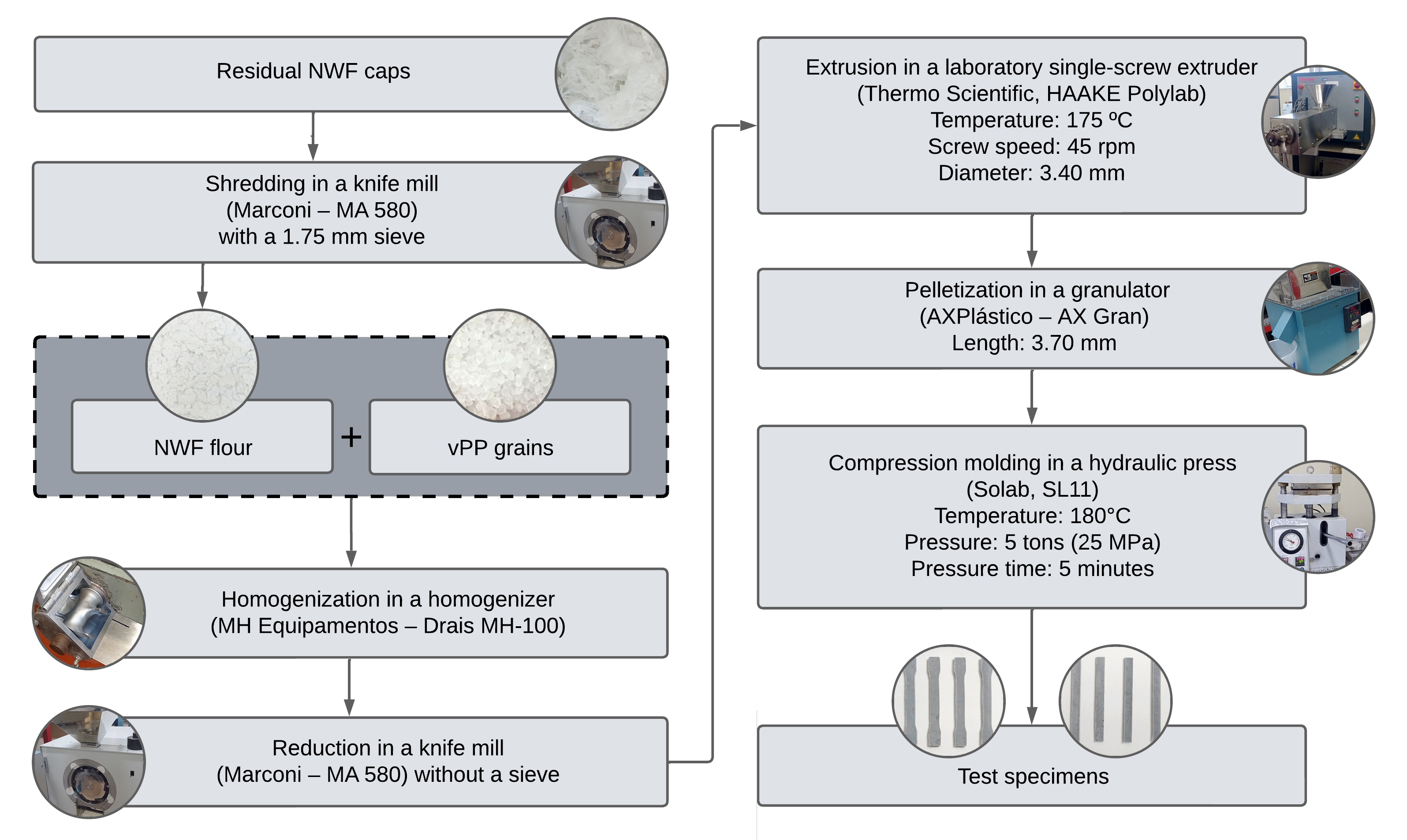
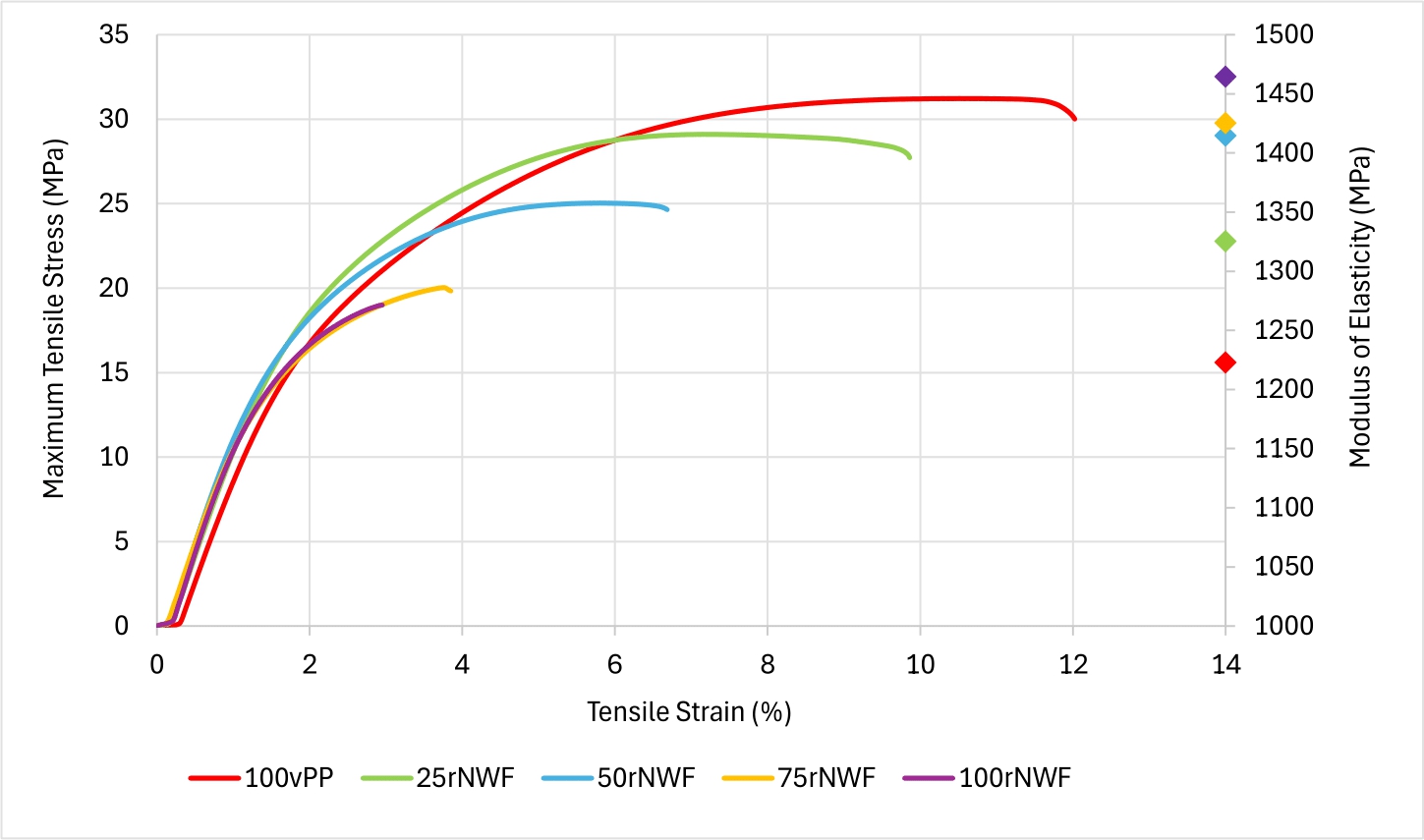
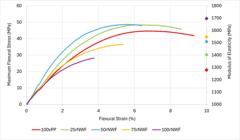
This study proposes a sustainable approach to repurposing plastic waste, focusing on nonwoven fabric (NWF) from disposable caps used in historic mine tours. These caps are essential for maintaining hygiene when sharing helmets but generate significant waste. Blends of virgin polypropylene (PP) and recycled NWF (rNWF) were developed with 25%, 50%, and 75%wt using thermokinetic homogenization, extrusion, and hot compression. The blends and control samples’ mechanical, physical, structural, and thermal properties were evaluated. Tests revealed that stiffness increases with rNWF addition, while tensile strength decreases. The 50rNWF blend (50% NWF) stood out with a higher modulus of elasticity than virgin PP in both tensile (1.42 GPa vs. 1.22 GPa) and flexural (1.51 GPa vs. 1.28 GPa) tests. These results highlight 50rNWF as a promising substitute for PP, reducing environmental impacts and promoting the circular economy.
Keywords:
Blend; Nonwoven fabric (NWF); Polypropylene (PP); Disposable caps; Waste repurposing
 Thumbnail
 Thumbnail
 Thumbnail
 Thumbnail
 Thumbnail