
 Optimizing Laser Welding of Dissimilar Aerospace Materials: A Multiphysical Modeling Approach for Heat Flux and Residual Stresses in AA6013/Ti-6Al-4V Joints
Abstract
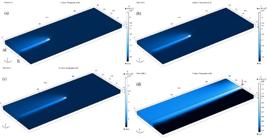
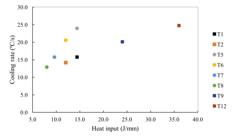
Optimizing laser welding of dissimilar materials is critical for aerospace applications, where high-performance joints are required under stringent weight and reliability constraints. This study presents a multiphysics modeling framework for predicting heat flux and residual stress development in laser-welded AA6013/Ti-6Al-4V dissimilar joints. A finite element model was implemented in COMSOL Multiphysics to simulate transient heat transfer, thermal gradients, and thermo-mechanical stress evolution, and was validated against experimentally measured thermal cycles, yielding deviations of 2.5–6%. The results demonstrate that heat input (HI) and beam offset strongly govern the temperature field, residual-stress distribution, and intermetallic-compound (IMC) formation at the Al/Ti interface. For condition T7 (HI = 9.6 J/mm; offset = 0.3 mm), the model predicted a peak temperature of 5950 K in the high-energy interaction region. A comparison between conditions T6 and T9 showed that, under identical beam intensity, reducing the welding speed increased the energy absorbed by the titanium side, with a 22% reduction in heat dissipated by conduction relative to T6. Residual stresses decreased with distance from the laser path; for a fixed offset, increasing HI increased compressive residual stress, reaching a maximum of 26 MPa (≈10% of the AA6013 yield strength) at HI = 24 J/mm and remaining nearly constant thereafter. In addition, higher cooling rates reduced IMC thickness from approximately 7 µm to 3 µm, indicating improved metallurgical conditions. Overall, the validated model provides a predictive tool for selecting process parameters to minimize residual stresses and control IMC growth, supporting the development of aerospace-grade AA6013/Ti-6Al-4V dissimilar laser welds.
Keywords:
Laser welding; Dissimilar joints; Multiphysical modeling; Residual stresses; Intermetallic compounds; AA6013; Ti-6Al-4V
 Thumbnail
 Thumbnail
 Thumbnail
 Thumbnail
 Thumbnail
 Thumbnail
 Thumbnail
 Thumbnail
 Thumbnail
 Thumbnail
 Thumbnail
 Thumbnail
 Thumbnail
 Thumbnail
 Thumbnail
 Thumbnail
 Thumbnail
 Thumbnail
 Thumbnail
 Thumbnail
 Thumbnail
 Thumbnail
 Thumbnail


