Enhancing Hydrogen Production from Sodium Borohydride: Optimizing MIL-100(Fe) Synthesis for Superior Catalytic Performance
Abstract
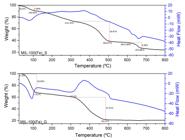
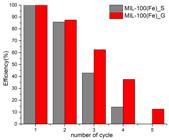
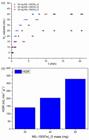
The MOF MIL-100(Fe) was successfully synthesized using both a conventional solvothermal method and an innovative green synthesis approach. It was characterized using FTIR, PXRD, TG-DTA, BET, and SEM techniques, and tested for hydrogen production through the hydrolysis of sodium borohydride (NaBH4). The catalyst produced through a green synthesis approach demonstrated superior catalytic performance, achieving a hydrogen generation rate of 443.46 mL min−1 gcat−1 at 340.15 K, with an activation energy of 16.2 kJ mol−1, and good recyclability over multiple cycles. This is attributed to its higher specific surface area (1224 m2/g) and greater porosity than the solvothermal synthesized material, which presented a higher activation energy (19.0 kJ mol−1). These findings position MIL-100(Fe) synthesized via green methods as a promising candidate for sustainable hydrogen production.
Keywords:
Catalysis; hydrogen; MIL-100(Fe); green synthesis; sodium borohydride
 Thumbnail
 Thumbnail
 Thumbnail
 Thumbnail
 Thumbnail
 Thumbnail
 Thumbnail
 Thumbnail
 Thumbnail
 Thumbnail
 Thumbnail
 Thumbnail