 Coexistence of monogamy and polygyny in Triatoma infestans: fine-scale genealogical structure reveals complex social structures within domestic colonies in the Bolivian Chaco
Abstract
BACKGROUND Persistent reinfestation of Triatoma infestans in the Gran Chaco undermines Chagas disease (CD) control. While insecticide resistance is a known factor, the fine-scale social and demographic structure of vector colonies remains poorly understood.
OBJECTIVES To analyse the micro-geographic genetic structure, mating systems, and demographic history of T. infestans in a rural community in the Bolivian Chaco.
METHODS We genotyped 381 individuals from three neighbouring structures (domiciliary and peridomestic) using eight highly polymorphic microsatellite loci (expected heterozygosity, HE = 0.675). Genealogical relationships were reconstructed using maximum likelihood (ML) analysis (COLONY), and demographic history was inferred through heterozygosity tests.
FINDINGS The infestation comprised 42 distinct full-sibling families nested within a single colony. We observed a stark dichotomy: two dominant families (> 80 individuals) exhibited monogamy and signs of distinct demographic histories (one in expansion, one recovering from a bottleneck), while 40 minor families showed high promiscuity (polygyny/polyandry). Finite growth rates varied significantly (λ = 1.03 vs 1.22), evidencing active intra-colonial competition.
MAIN CONCLUSIONS Domestic populations are not random aggregates, but complex mosaics of coexisting lineages with different adaptive strategies. The dominance of monogamous families suggests a priority effect advantage, while the "tail" of promiscuous minor families represents a cryptic reservoir. Effective control must account for this structural resilience, as surviving minor lineages could rapidly recolonise the niche.
Key words:
Chagas disease;
Triatoma infestans
; genetic structure; mating systems; vector control; Bolivia
Chagas disease (CD), caused by Trypanosoma cruzi, remains a major public health challenge in Latin America.1 Among its vectors, Triatoma infestans (Klug, 1834) is the most significant species in the Southern Cone, particularly in the Gran Chaco ecoregion. The taxonomic classification and historical monitoring of these vectors rely heavily on foundational monographs, such as Lent and Wygodzinsky,2 which must now be integrated with modern perspectives on new triatomine species challenges and citizen surveillance strategies.3,4,5,6,7,8. Despite decades of coordinated control efforts and successful large-scale interventions — such as the Pampa del Indio project in Argentina, which achieved district-wide quasi-elimination9 — T. infestans remains a persistent threat in the Bolivian Chaco due to complex reinfestation dynamics.10
Standard control protocols typically treat the infested dwelling as a single epidemiological unit, assuming panmixia (random mating) among the localised vector population. However, theoretical models and limited field data suggest that vector populations may be structurally subdivided.11,12 If a domiciliary colony is a mosaic of competing families with distinct reproductive strategies and spatial behaviours, this could explain the resilience of infestation: a focal spray might eliminate the dominant lineage while leaving subordinate, cryptic families to recolonise the niche.
In recent years, the use of molecular tools, specifically microsatellite markers, has revolutionised our understanding of vector population dynamics.13 However, the internal social and reproductive structure of these colonies remains poorly understood. While polyandry (females mating with multiple males) has been documented in laboratory settings,14 its occurrence and frequency in natural high-density infestations remain poorly characterised. Recent studies have highlighted how physiological trade-offs, such as those imposed by T. cruzi infection, can alter reproductive efficiency,15 suggesting that reproductive strategies in the wild may be plastic and responsive to environmental stress.
In this study, we employed exhaustive sampling and high-resolution microsatellite genotyping to deconstruct the genealogy of a massive T. infestans infestation in the Bolivian Chaco. We aimed to: (1) determine the number of discrete families within a domiciliary focus, (2) characterise the in-situ mating systems (monogamy vs polygamy), and (3) estimate the differential growth rates of these lineages to infer intra-colonial competition.
MATERIALS AND METHODS
Ethics - The collection of triatomines was performed in accordance with the regulations of the Bolivian Ministry of Health. Informed consent was obtained from the head of each household prior to entering the dwellings for entomological inspection. No experiments on humans or animals were conducted in this study.
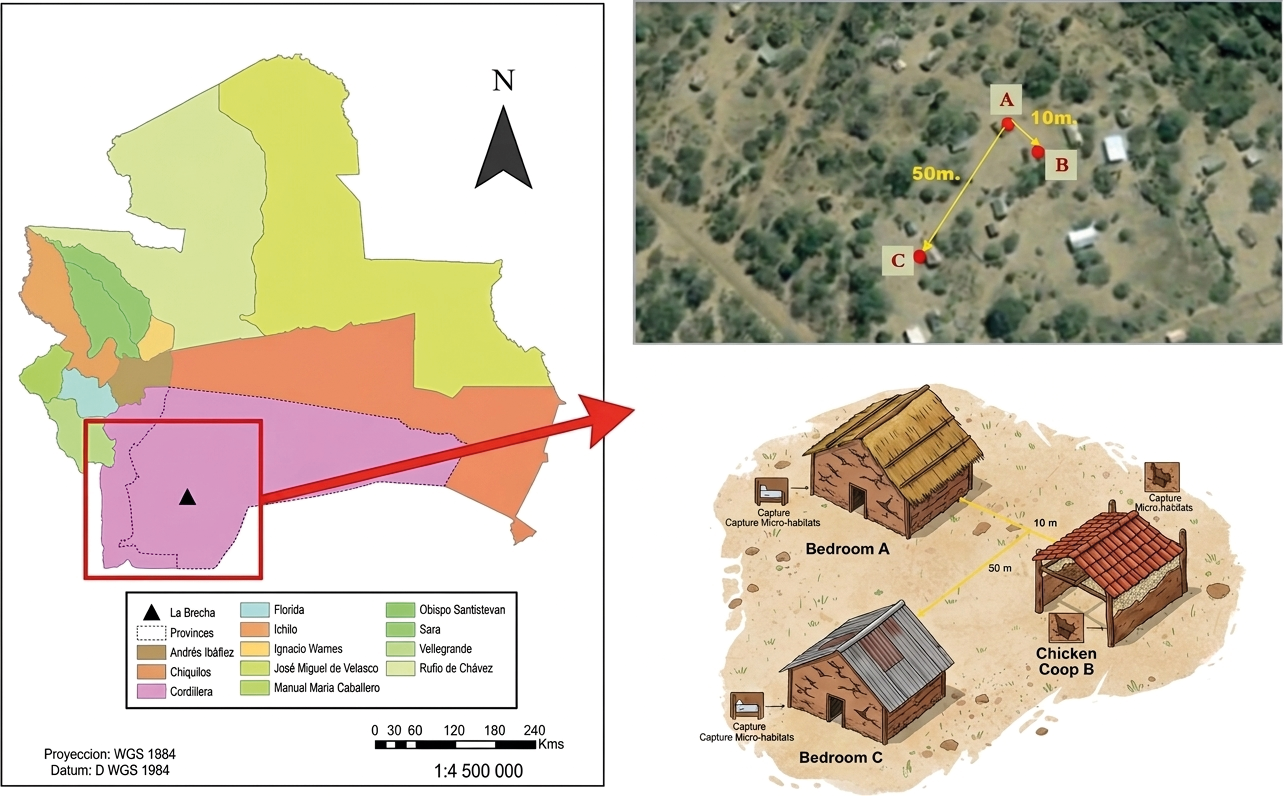
Study area and sampling - Fieldwork was conducted in the community of La Brecha (19º30'S, 62º34'W), Santa Cruz, Bolivia. Three neighbouring structures were sampled: two domiciliary units (Bedrooms A and C) and one peridomiciliary structure (Chicken coop B). Insects were collected using the man-hour effort method (1 h per structure) by two experienced technicians. Active search was exhaustive and targeted specific micro-habitats known as refuges: intra-wall cracks, behind hanging objects (clothes, pictures), and within bed structures (mattresses and frames). A total of 381 specimens were collected and taxonomically identified as T. infestans following the keys of Lent and Wygodzinsky2 (Fig. 1).
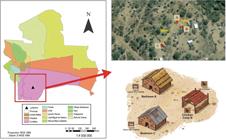
eco-epidemiological characterisation and spatial configuration of the study site in La Brecha. (A) Regional context showing the geographical location of the study area within the Cordillera province, Santa Cruz Department, Bolivia (Projection: WGS 1984). (B) Satellite detail providing a high-resolution view of the precise spatial distribution and relative distances (10 m and 50 m) between the sampled units A, B, and C. (C) Structural connectivity illustrated by an isometric diagram showing the link between domiciliary units (Bedrooms A and C) and the peridomestic environment (Chicken coop B). Insets highlight specific micro-habitats (beds, wall cracks, and nesting boxes) where Triatoma infestans aggregates were sampled. Yellow arrows denote the spatial proximity between ecotopes, representing the potential pathways for active insect dispersal.
Microsatellite genotyping and data quality - Genomic DNA was extracted from the legs of the insects using the cetyltrimethylammonium bromide (CTAB) 2% protocol. We amplified eight highly polymorphic microsatellite loci (TiA02, TiC02, TiC08, TiC09, TiD09, TiE02, TiE12, TiFO3) via polymerase chain reaction (PCR). These loci, specifically designed for T. infestans,16 were previously validated for their high polymorphism information content (PIC) and substantial power of exclusion in Gran Chaco populations.17 PCR products were sized on an ABI PRISM 377 automated sequencer relative to a GeneScan-500 ROX internal standard [Supplementary data (Table)].
To ensure statistical robustness, we checked for genotyping errors, potential scoring inaccuracies, and the presence of null alleles using Micro-Checker.18 Genetic diversity parameters, including the probability of identity (PID) and exclusion probabilities, were calculated using GenAlEx v6.5.19 Global Hardy-Weinberg equilibrium and linkage disequilibrium were verified using GenePop v4.7,20 and the inbreeding coefficient (FIS) were calculated according to the methods of Weir and Cockerham.21 The loci panel showed high informative content (Mean HE = 0.675), providing a combined exclusion probability > 0.999, which is sufficient to discriminate full-siblings from half-siblings with high confidence.
Genealogical and demographic reconstruction - Sibship and mating systems were reconstructed using a maximum likelihood (ML) approach in COLONY v2.0.22,23 We assumed a polygamous model for both sexes (polygyny and polyandry) without prior kinship information. Parameters included a full-likelihood method with medium run length, high likelihood precision, and a genotyping error rate of 0.01.
To estimate the demographic fitness of the inferred lineages, the finite growth rate (λ) was calculated for each family. This metric was derived from a stage-structured analysis where the transition probabilities between specific nymphal stages (Nt to Nt+1) were computed to obtain the geometric mean of growth for each lineage. This approach allowed us to quantify the differential reproductive success between monogamous and polygamous families within the same environmental context.
RESULTS
Genetic diversity and marker resolution - The eight microsatellite loci revealed substantial genetic variability, validating their resolving power for pedigree analysis. The average number of alleles per locus was 8.63 (± 3.58), with an expected heterozygosity (HE) of 0.675. Global Hardy-Weinberg equilibrium tests revealed a significant heterozygote deficiency, indicated by the inbreeding coefficient (FIS = 0.0015, p < 0.05) at the colony level. This deviation is consistent with the Wahlund effect, confirming that the aggregate is not a single panmictic unit, but a subdivided population structured into distinct family clans.21
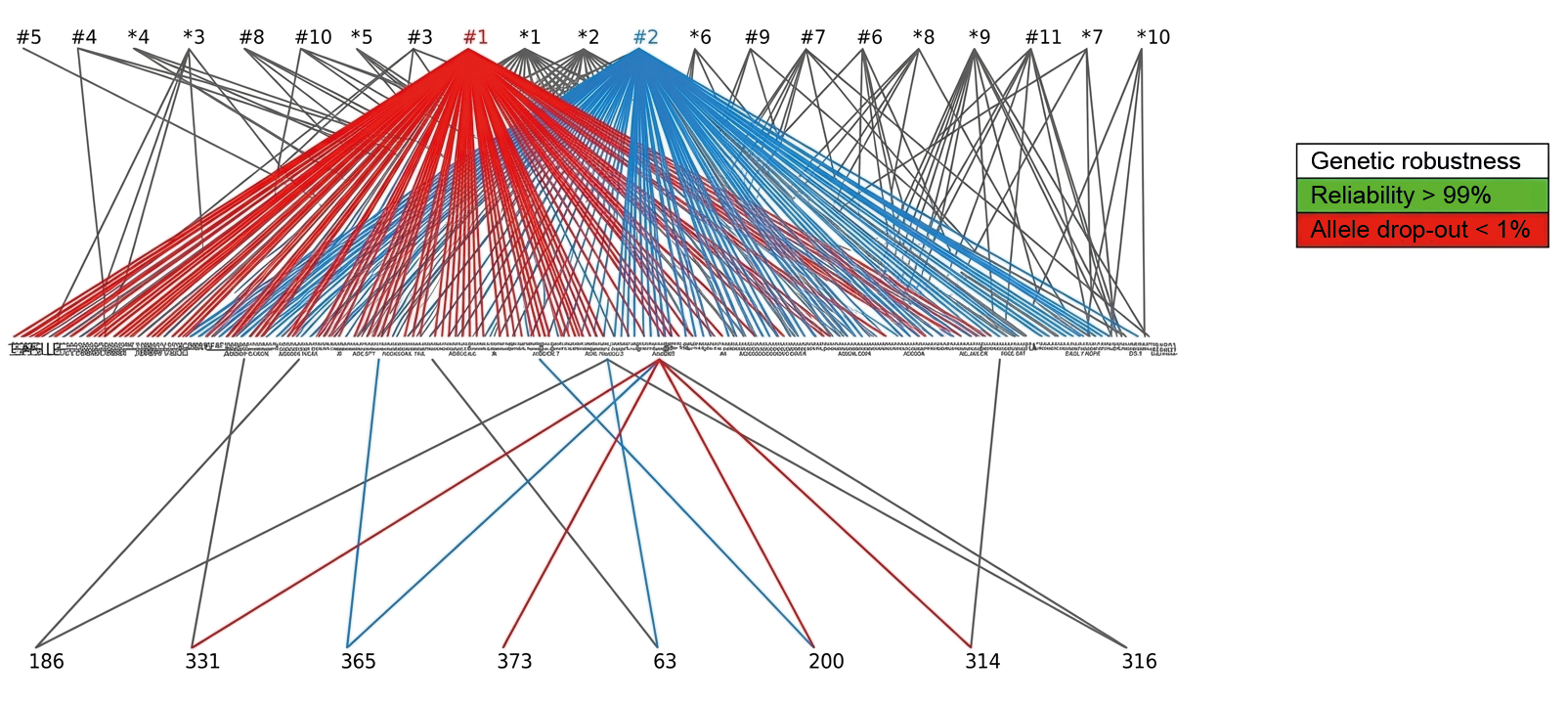
Genealogical architecture: the "mosaic" structure - Pedigree reconstruction revealed that the infestation was organised into 42 distinct full-sibling families originating from 21 founder progenitors (11 females and 10 males). We identified a stark dichotomy in reproductive strategies (Table):
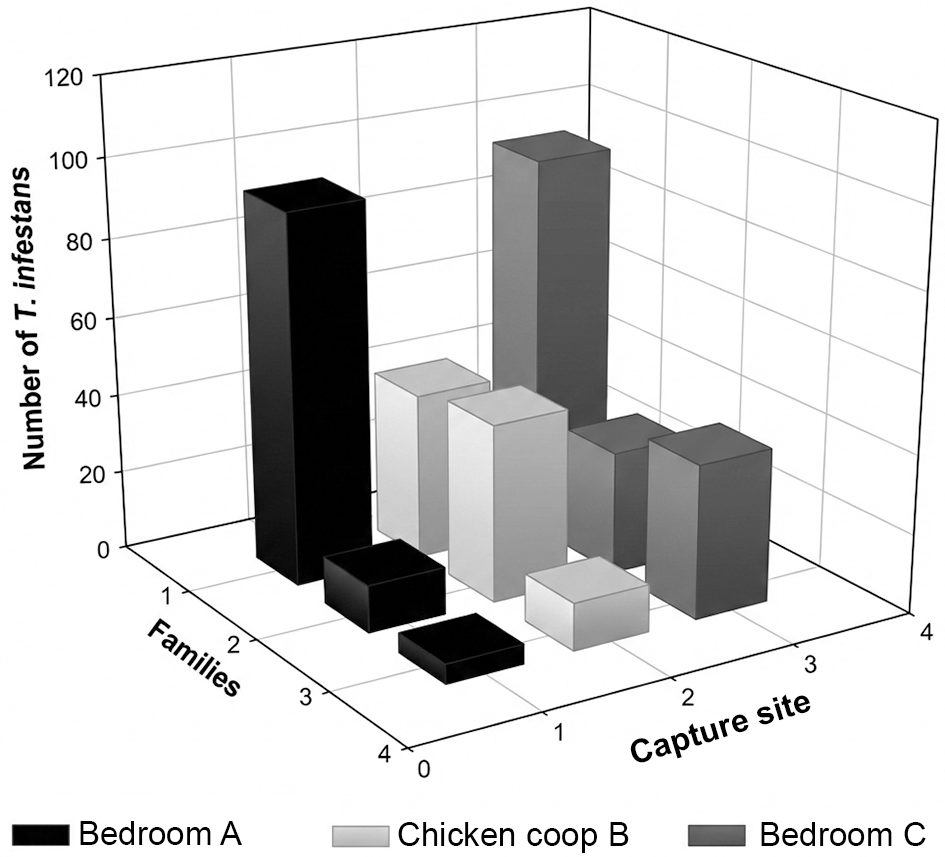
- Dominant lineages: two families (F1 and F2) comprised 84% of the population (n = 232 and n = 88, respectively). These lineages were characterised by a stable monogamous origin.
- Minor lineages: the remaining 40 families were low-abundance clusters (n = 2-4) characterised by high promiscuity, with polygyny and polyandry detected in 95% of these groups (Figs 2-3).
Demographic and genetic characterisation of the reconstructed Triatoma infestans families in La Brecha, Bolivia
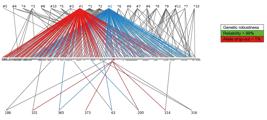
genealogical reconstruction of the Triatoma infestans colony. Pedigree inferred via maximum likelihood (ML) (COLONY v2.0) based on eight microsatellite loci. The colony is structured into 42 full-sibling families. Dominant families F1 (red) and F2 (blue) show expansive, multi-generational lineages, whereas minor families (grey) appear as fragmented, shallow clusters indicative of recent immigration or low reproductive success.
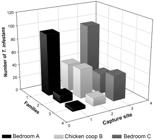
abundance distribution of Triatoma infestans families. Family identifiers (F1 to F42) are shown on the X-axis. A stark disparity in reproductive success is observed: families F1 and F2 (predominantly monogamous origin) account for the majority of the population (n > 80), while the remaining 40 families (polygamous origin) persist at low densities (n < 5).
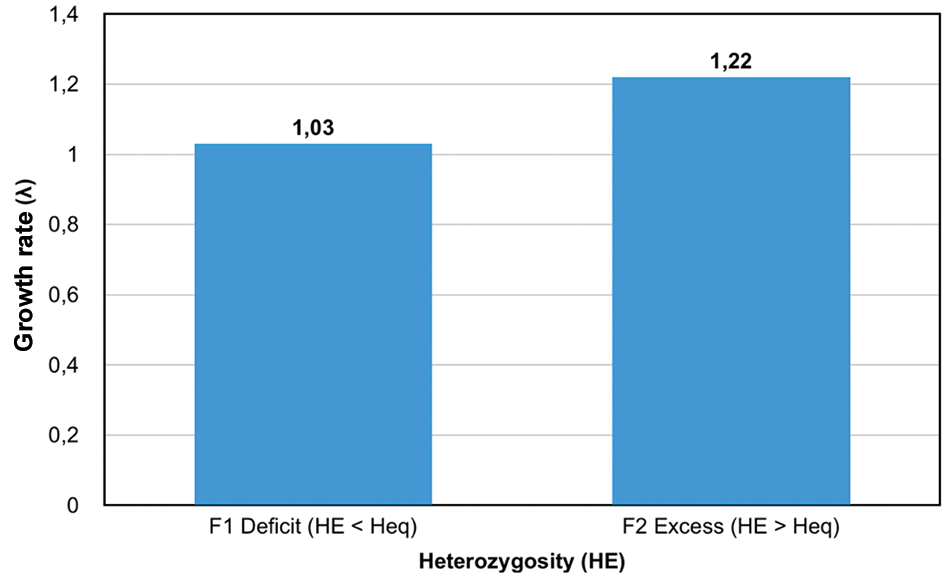
Divergent demographic histories (expansion vs bottleneck) - Beyond abundance, the dominant families displayed contrasting genetic signatures indicative of different evolutionary histories. Family F1 exhibited a significant heterozygosity deficit (HE < Heq) under the stepwise mutation model (SMM), a genetic signature typical of recent population expansion. In contrast, family F2 showed a significant heterozygosity excess (HE > Heq) under the infinite allele model (IAM), which is indicative of a recent genetic bottleneck.24,25
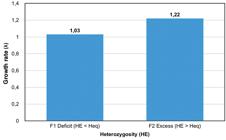
divergent evolutionary histories of the dominant lineages. (A) Genetic signatures: family 1 shows heterozygosity deficiency consistent with expansion, while family 2 shows excess consistent with a recent bottleneck. (B) Demographic fitness: family 2 exhibits a significantly higher finite growth rate (λ = 1.22) compared to family 1 (λ = 1.03), suggesting a "resilience" strategy where post-bottleneck lineages invest heavily in rapid population recovery.
Demographic fitness and competition - The demographic analysis confirmed active intra-colonial competition. While the overall colony showed a growth rate of λ = 1.07, the bottleneck-recovering family F2 exhibited a significantly higher finite growth rate (λ = 1.22) compared to the expanding family F1 (λ = 1.03). This suggests a process of ecological replacement, where F2 — despite being less abundant at the time of sampling — demonstrates superior reproductive performance (Fig. 4).
DISCUSSION
The fine-scale genealogical reconstruction of T. infestans in La Brecha reveals a complex social mosaic that challenges the operational assumption of genetic uniformity in domiciliary infestations. Our findings reveal a cryptic social structure characterised by the coexistence of monogamous dominant lineages and a "tail" of numerous polygamous, low-abundance families.
Mating systems and the founder effect paradox - Reviewers questioned whether the dominance of families F1 and F2 represents an adaptive advantage or simply a founder effect. Our genetic data supports a more complex scenario. The bottleneck signature found in family F2 suggests it is a survivor lineage — what we term a 'resilient family' — that is now recovering (λ = 1.22). In contrast, family F1 shows signs of aggressive expansion. This coexistence of expansion and recovery strategies within the same domicile supports the hypothesis that reinfestation is driven by a mosaic of families with different demographic histories, rather than a simple random accumulation of individuals.
The presence of multiple mating strategies within a single colony presents a 'paradox of polygamy' in the domestic environment. While polyandry in insects is often a strategy to increase genetic diversity and offspring fitness,26 our results show that the most numerically successful families (F1 and F2) were derived from stable monogamous events. The mating behaviour and stridulation patterns in T. infestans, which facilitate these encounters, have been well-documented.14 However, as proposed by Lobbia et al.,15 biological costs and physiological trade-offs can alter these reproductive choices under specific environmental pressures. This suggests that in high-density domestic colonies, monogamy might provide a competitive advantage by stabilising lineage expansion.
Resolving power and marker sensitivity - Regarding the resolution of our markers, the high polymorphism of the eight microsatellite loci provided sufficient power to discriminate first-order relatives within these aggregates. Previous studies using different markers suggested that the panmictic unit of T. infestans is significantly smaller than previously assumed;27,28,29,30 our genealogical data confirm this micro-structural subdivision. The detection of polygyny and polyandry in 40 out of 42 families demonstrates that our marker set was sensitive enough to capture complex reproductive events, even on a small spatial scale.
Implications for vector control and "One health" - The existence of multiple competing families has profound implications for public health. A focal insecticide spray might eliminate conspicuous, dominant families but miss cryptic; minor lineages hidden in deep crevices or peridomestic structures.31 These survivors could then experience a 'competitive release,' leading to rapid reinfestation.32 Furthermore, active dispersal by walking, particularly by females, has been identified as a critical factor in house reinfestation.33,34 The genetic connectivity found between the chicken coop and the bedrooms confirms that peridomestic structures act as permanent reservoirs that jeopardize control efforts.35 This supports the need for 'One health' approaches that manage the entire domestic-peridomestic interface as a single unit.
In conclusion - This study provides the first fine-scale genealogical deconstruction of a massive T. infestans infestation. We conclude that:
Social complexity - Domiciliary colonies are structured as a "mosaic of families" where monogamy and polygamy coexist as plastic reproductive strategies. Monogamy appears associated with dominant, established lineages, while promiscuity characterises minor, potentially colonising families.
Demographic resilience - The genetic evidence of simultaneous population expansion (F1) and recovery from bottlenecks (F2) within the same household confirms that reinfestation is not a uniform process but involves lineages with different histories and competitive abilities.
Implications for control - The existence of "cryptic" minor families and the high connectivity between peridomestic and domestic structures challenges the efficacy of focal spraying. Control interventions must be broad-spectrum and spatially inclusive ("One health" approach) to eliminate both the dominant/visible families and the resilient/minor lineages that drive recurrence.
SUPPLEMENTARY MATERIALS
Supplementary data
ACKNOWLEDGEMENTS
To the Laboratory of Medical Entomology at the National Institute of Health Laboratories (Instituto Nacional de Laboratorios de Salud - INLASA) for providing the facilities and technical support necessary for the laboratory analysis. Special thanks to Dr Frederic for his invaluable guidance and mentorship during the initial stages of this research. We also thank the residents of the rural communities in the Bolivian Chaco for their cooperation during the fieldwork.
-
Financial support:
This work was supported by the French National Research Agency (ANR - grant ANR-2010 CESA 018 01), UNICEF/UNDP/World Bank/WHO Special Programmer for Research and Training in Tropical Diseases (TDR)/International Development Research Centre (IDRC - grant EBS-LAC nº A90281).
DATA AVAILABILITY
The contents underlying the research text are included in the manuscript.
References
- 1 WHO - World Health Organization. Chagas disease in Latin America: an epidemiological update based on 2010 estimates. Wkly Epidemiol Rec. 2015; 90(6): 33-44.
- 2 Lent H, Wygodzinsky P. Revision of the Triatominae (Hemiptera, Reduviidae), and their significance as vectors of Chagas' disease. Bull Am Mus Nat Hist. 1979; 163: 123-520.
-
3 Costa J, Dale C, Galvão C, Almeida CE, Dujardin JP. Do the new triatomine species pose new challenges or strategies for monitoring Chagas disease? An overview from 1979-2021. Mem Inst Oswaldo Cruz. 2021; 116: e210015. https://doi.org/10.1590/0074-02760210015.
» https://doi.org/10.1590/0074-02760210015 -
4 Galvão C. Triatomine bugs: history, control, and citizen surveillance. Dis Biol Genet Socioecol. 2025; 1(3): 8. https://doi.org/10.53941/dbgs.2025.100008.
» https://doi.org/10.53941/dbgs.2025.100008 -
5 Gürtler RE, Kitron U, Cecere MC, Segura EL, Cohen JE. Sustainable vector control and management of the Chagas disease in the Gran Chaco, Argentina. Proc Natl Acad Sci USA. 2007; 104(41): 16194-9. https://doi.org/10.1073/pnas.0700746104.
» https://doi.org/10.1073/pnas.0700746104 - 6 Zeledon R. Triatoma infestans and its importance in the Americas. Washington, D.C.: Pan American Health Organization; 1981. (Scientific Publication No. 416). Available from: https://iris.paho.org.
- 7 Schofield CJ. Triatominae: biology and control. Bognor Regis: Eurocommunica Publications; 1994.
- 8 Dujardin JP, Schofield CJ, Panzera F. Les vecteurs de la maladie de Chagas. Brussels: Académie Royale des Sciences d'Outre-Mer; 2000.
-
9 Gürtler RE, Gaspe MS, Macchiaverna NP, Enriquez GF, Rodríguez-Planes LI, Fernández MP, et al. The pampa del indio project: district-wide quasi-elimination of Triatoma infestans after a 9-year intervention program in the Argentine Chaco. PLoS Negl Trop Dis. 2023; 17(4): e0011252. https://doi.org/10.1371/journal.pntd.0011252.
» https://doi.org/10.1371/journal.pntd.0011252 -
10 Gaspe MS, Gurevitz JM, Gürtler RE, Dujardin JP. Origins of house reinfestation with Triatoma infestans after insecticide spraying in the Argentine Chaco using wing geometric morphometry. Infect Genet Evol. 2013; 17: 93-100. https://doi.org/10.1016/j.meegid.2013.03.045.
» https://doi.org/10.1016/j.meegid.2013.03.045 -
11 Marcet PL, Mora MS, Cutrera AP, Jones L, Gürtler RE, Kitron U, et al. Genetic structure of Triatoma infestans populations in rural communities of Santiago del Estero, northern Argentina. Infect Genet Evol. 2008; 8(6): 835-46. https://doi.org/10.1016/j.meegid.2008.08.002.
» https://doi.org/10.1016/j.meegid.2008.08.002 - 12 Schofield CJ, Matthews JN. Theoretical approach to active dispersal and colonization of houses by Triatoma infestans J Trop Med Hyg. 1985; 88(3): 211-22.
-
13 Bezerra CM, Barbosa SE, Souza RCM, Diotaiuti L, Pires HHR, Pavan MG, et al. Microsatellite variation reveals population structure in Triatoma brasiliensis (Hemiptera: Reduviidae). BMC Genet. 2020; 21(1): 92. https://doi.org/10.1186/s12863-020-00897-y.
» https://doi.org/10.1186/s12863-020-00897-y -
14 Manrique G, Lazzari CR. Sexual behaviour and stridulation during mating in Triatoma infestans (Hemiptera: Reduviidae). Mem Inst Oswaldo Cruz. 1994; 89(4): 629-33. https://doi.org/10.1590/S0074-02761994000400021.
» https://doi.org/10.1590/S0074-02761994000400021 -
15 Lobbia PA, Rodríguez C, Remón C, Manteca-Acosta M. Reproductive consequences of the interaction Trypanosoma cruzi — Triatoma infestans and its trade-off with survival. J Invertebr Pathol. 2024; 206: 108-83. https://doi.org/10.1016/j.jip.2024.108183.
» https://doi.org/10.1016/j.jip.2024.108183 -
16 García BA, Zheng L, Pérez de Rosas AR, Segura EL. Isolation and characterization of polymorphic microsatellite loci in the Chagas' disease vector Triatoma infestans (Hemiptera: Reduviidae). Mol Ecol Notes. 2004; 4(4): 568-71. https://doi.org/10.1111/j.1471-8286.2004.00730.x.
» https://doi.org/10.1111/j.1471-8286.2004.00730.x -
17 Marcet PL, Lehmann T, Groner G, Gürtler RE, Kitron U, Dotson EM. Identification and characterization of polymorphic microsatellite markers in the Chagas disease vector Triatoma infestans (Heteroptera: Reduviidae). Infect Genet Evol. 2006; 6(1): 32-7. https://doi.org/10.1016/j.meegid.2005.08.006.
» https://doi.org/10.1016/j.meegid.2005.08.006 -
18 Oosterhout CV, Hutchinson W, Wills D, Shipley P. MICRO-CHECKER: software for identifying and correcting genotyping errors in microsatellite data. Mol Ecol Notes. 2004; 4: 535-8. https://doi.org/10.1111/j.1471-8286.2004.00684.x.
» https://doi.org/10.1111/j.1471-8286.2004.00684.x -
19 Peakall R, Smouse PE. genealex 6: genetic analysis in Excel. Population genetic software for teaching and research. Mol Ecol Notes. 2006; 6: 288-95. https://doi.org/10.1111/j.1471-8286.2005.01155.x.
» https://doi.org/10.1111/j.1471-8286.2005.01155.x -
20 Rousset F. genepop'007: a complete re-implementation of the genepop software for Windows and Linux. Mol Ecol Resour. 2008; 8(1): 103-6. https://doi.org/10.1111/j.1755-0998.2007.01960.x.
» https://doi.org/10.1111/j.1755-0998.2007.01960.x -
21 Weir BS, Cockerham CC. Estimating F-statistics for the analysis of population structure. Evolution. 1984; 38(6): 1358-70. https://doi.org/10.1111/j.1558-5646.1984.tb05657.x.
» https://doi.org/10.1111/j.1558-5646.1984.tb05657.x -
22 Jones OR, Wang J. COLONY: a program for parentage and sibship inference from multilocus genotype data. Mol Ecol Resour. 2010; 10(3): 551-5. https://doi.org/10.1111/j.1755-0998.2009.02756.x.
» https://doi.org/10.1111/j.1755-0998.2009.02756.x -
23 Wang J, Santure AW. Parentage and sibship inference from multilocus genotype data under polygamy. Genetics. 2009; 181(4): 1579-94. https://doi.org/10.1534/genetics.108.100214.
» https://doi.org/10.1534/genetics.108.100214 -
24 Cornuet JM, Luikart G. Description and power analysis of two tests for detecting recent population bottlenecks from allele frequency data. Genetics. 1996; 144(4): 2001-14. https://doi.org/10.1093/genetics/144.4.2001.
» https://doi.org/10.1093/genetics/144.4.2001 -
25 Luikart G, Allendorf FW, Cornuet JM, Sherwin WB. Distortion of allele frequency distributions provides a test for recent population bottlenecks. J Hered. 1998; 89(3): 238-47. https://doi.org/10.1093/jhered/89.3.238.
» https://doi.org/10.1093/jhered/89.3.238 -
26 Yan JL, Dobbin ML, Dukas R. Sexual conflict and sexual networks in bed bugs: the fitness cost of traumatic insemination, female avoidance and male mate choice. Proc Biol Sci. 2024; 291(2027): 2023-2808. https://doi.org/10.1098/rspb.2023.2808.
» https://doi.org/10.1098/rspb.2023.2808 -
27 Pizarro JC, Gilligan LM, Stevens L. Microsatellites reveal a high population structure in Triatoma infestans from Chuquisaca, Bolivia. PLoS Negl Trop Dis. 2008; 2(3): e202. https://doi.org/10.1371/journal.pntd.0000202.
» https://doi.org/10.1371/journal.pntd.0000202 -
28 Brenière SF, Bosseno MF, Vargas F, Yaksic N, Noireau F, Noel S, et al. Smallness of the panmictic unit of Triatoma infestans (Hemiptera: Reduviidae). J Med Entomol. 1998; 35(6): 911-7. https://doi.org/10.1093/jmedent/35.6.911.
» https://doi.org/10.1093/jmedent/35.6.911 -
29 Panzera F, Alvarez F, Sanchez-Rufas J, Pérez R, Suja A, Scvortzoff E, et al. C-heterochromatin polymorphism in holocentric chromosomes of Triatoma infestans (Hemiptera: Reduviidae). Genome. 1992; 35: 1068-74. https://doi.org/10.1139/g92-163.
» https://doi.org/10.1139/g92-163 -
30 Pérez de Rosas AR, Segura EL, Fichera L, García BA. Macrogeographic and microgeographic genetic structure of the Chagas' disease vector Triatoma infestans (Hemiptera: Reduviidae) from Catamarca, Argentina. Genetica. 2008; 133(3): 247-60. https://doi.org/10.1007/s10709-007-9205-0.
» https://doi.org/10.1007/s10709-007-9205-0 -
31 Lardeux F. Niche invasion, competition and coexistence amongst wild and domestic Bolivian populations of Chagas vector Triatoma infestans (Hemiptera, Reduviidae, Triatominae). C R Biol. 2013; 336(4): 183-93. https://doi.org/10.1016/j.crvi.2013.05.003.
» https://doi.org/10.1016/j.crvi.2013.05.003 -
32 Cecere MC, Vazquez-Prokopec GM, Gürtler RE, Kitron U. Spatio-temporal analysis of reinfestation by Triatoma infestans (Hemiptera: Reduviidae) following insecticide spraying in a rural community in northwestern Argentina. Am J Trop Med Hyg. 2004; 71(6): 803-10. https://doi.org/10.4269/ajtmh.2004.71.803.
» https://doi.org/10.4269/ajtmh.2004.71.803 -
33 Abrahan LB, Gorla DE, Catalá SS. Dispersal of Triatoma infestans and other Triatominae species in the arid Chaco of Argentina — Flying, walking or passive carriage? The importance of walking females. Mem Inst Oswaldo Cruz. 2011; 106(2): 232-9. https://doi.org/10.1590/S0074-02762011000200019.
» https://doi.org/10.1590/S0074-02762011000200019 -
34 Vazquez-Prokopec GM, Ceballos LA, Kitron U, Gürtler RE. Active dispersal of Natural Populations of Triatoma infestans (Hemiptera: Reduviidae) in Rural Northwestern Argentina. J Med Entomol. 2004; 41(4): 614-21. https://doi.org/10.1603/0022-2585-41.4.614.
» https://doi.org/10.1603/0022-2585-41.4.614 -
35 Noireau F, Cortez MR, Monteiro FA, Jansen AM, Torrico F. Can wild Triatoma infestans foci in Bolivia jeopardize Chagas disease control efforts? Trends Parasitol. 2005; 21(1): 7-10. https://doi.org/10.1016/j.pt.2004.11.001.
» https://doi.org/10.1016/j.pt.2004.11.001
Edited by
-
Handling editor:
Ademir de Jesus Martins Jr | https://orcid.org/0000-0001-5739-1215
FIRST REVIEW ROUND - REVIEWERS' COMMENTS
About the reviewerREVIEWER #1
Dear Editor,
Please receive my comments regarding manuscript MIOC-2025-0355.
The study addresses a relevant and interesting question, and the general conceptual framework is promising. However, in its current form the manuscript presents major methodological shortcomings and interpretative issues that substantially weaken the validity of the conclusions. Insufficient genetic resolution, lack of critical analytical details, and unsupported causal inferences between mating system and reproductive success limit the robustness of the results.
Below I point the main issues about the article:
1. Bibliography
The bibliography is very limited, comprising only 10 references, which is well below what is expected for a research article of this scope. Several citations referring to "recent work" or to the current infestation status in the Gran Chaco ecoregion are more than a decade old, and key studies addressing the genetic structure of T. infestans at a fine geographic scale are not cited. In addition, the reference Fronza et al. 2023 does not appear to exist and may have been generated artificially.
2. Data analysis
Although the general analytical approach is described, several essential details required for reproducibility and proper evaluation are missing.
First, the study relies on only eight microsatellite loci to analyze 381 individuals. For high-resolution pedigree reconstruction in a potentially inbred domestic colony, this number of loci may be insufficient to reliably discriminate among full-siblings, half-siblings, and more distant relatives. The authors should therefore report standard metrics such as exclusion power or probability of identity for the marker set used.
Second, while COLONY v2.0 is cited, the manuscript does not specify key model settings, including likelihood options (e.g. long vs. short runs) or assumed genotyping error rates (allelic dropout and false alleles). These parameters can strongly affect sibship reconstruction and, consequently, the inference of 42 family groups.
Finally, the finite growth rate (λ) is used as a proxy for fitness, but neither the formula nor the stage-structured matrix underlying its calculation is described. Without this information, the interpretation and comparability of λ values remain unclear.
3. Interpretation of the relationship between monogamy and "success"
The authors report that the two most abundant families (F1 and F2) were monogamous, whereas the remaining 40 minor families showed polygamous mating patterns. However, this pattern alone does not support a causal relationship between monogamy and reproductive success. The manuscript itself suggests that the dominance of F1 and F2 may reflect a founder effect, with these families being among the first colonizers. Under this scenario, their apparent success could be explained by priority effects and availability of mates, while later arrivals may experience increased competition and reduced reproductive opportunities.
A major limitation of the study is the use of microsatellites—neutral genetic markers—to infer adaptive success. Because these markers do not provide information on traits under selection or functional fitness, the analysis cannot disentangle historical demographic processes (such as founder effects or arrival order) from true natural selection favoring monogamy. Consequently, attributing the dominance of families F1 and F2 to a superior reproductive strategy, or characterizing minor families as "less adapted," remains speculative. Similarly, a high growth rate (λ) in a neutral lineage may simply reflect favorable initial conditions (e.g. access to a suitable refuge or blood source) rather than any underlying genetic advantage.
REVIEWER #2
The manuscript entitled "Coexistence of Monogamy and Polygyny in Triatoma infestans: Fine-scale genealogical structure reveals complex social structures within domestic colonies in the Bolivian Chaco" presents an original approach exploring interesting ecological aspects on Triatoma infestans the main T. cruzi vector in the south of South America. The authors submitted the manuscript as a research article, however the background for this kind of manuscript is too superficial specially focusing a relevant vector as T. infestans.
Several recommendations are listed below:
According to the International Code of Zoological Nomenclature, the very first time a species name is cited in a manuscript it must be written in full and followed by its authors name and date.
The authors drives the introduction strictly related to T. infestans. In order to enrich this topic we recommend including a few more references framing T. cruzi vectors in general before starting with T. infestans:
Lent, H.; Wygodzinsky, P. Revision of the Triatominae (Hemiptera, Reduviidae), and their significance as vectors of Chagas' disease. Bull. Am. Mus. Nat. Hist. 1979, 163, 123–520.
Cleber Galvão, Triatomine Bugs: History, Control, and Citizen Surveillance Dis. Biol. Genet. Socioecol. 2025, 1(3), 8
Costa, J.; Dale, C.; Galvão, C.; Almeida, C.E.; Dujardin, J.P. Do the new triatomine species pose new challenges or strategies for monitoring Chagas disease? An overview from 1979–2021. Mem. Inst. Oswaldo Cruz 2021, 116, 1–10
The approach is based on microsatellite analyses and several papers have already been published using this tool to explorer population aspects of the triatomines. The authors do not make proper references on the importance of the molecular tools in the improvement of the knowledge of T. cruzi vectors. We suggest a few words on this matter in the introduction and recommend some of the references.
The term "domestic" is not technically the most appropriate since can be associated to genetic processes therefore we recommend changing it for "domiciliary".
In the M&M relevant information is missing and must be included. For example, the authors do not mention a word on the control actions history in the study site. How frequently the site is inspected for triatomines infestation and eventually sprayed (or not), please provide information on this matter; also, the authors do not mention based on what criteria the specimens were identified as T. infestans. Please explain the identification procedures including the major reference (Lent, H.; Wygodzinsky, P. Revision of the Triatominae (Hemiptera, Reduviidae), and their significance as vectors of Chagas' disease. Bull. Am. Mus. Nat. Hist. 1979, 163, 123–520.). Also, it is important to mention the geographical coordinates for the study area; the period of the year as well as the time spent during the field activities must be detailed. Finally, the total number of collected specimens, how many insects in each of the ecotopes (structure A, B and C) were recorded and the respective developmental phases are available in the microsatellite loci table. I suggest mentioning this data in the M & M to make reading easier.
As said before, the authors should bring more correlated references to enrich the manuscript, especially in the discussion showing some comparisons with previous papers using microsatellites even if the study was carried out focusing a different species:
Bezerra, C.M., Belisário, C.J., D'Ávilla Pessoa, G.C. et al. Microsatellite variation revealed panmictic pattern for Triatoma brasiliensis (Triatominae: Reduviidae) in rural northeastern Brazil: the control measures implications. BMC Genet 21, 92 (2020). https://doi.org/10.1186/s12863-020-00903-w
Panzera, F.; Cuadrado, Á.; Mora, P.; Palomeque, T.; Lorite, P.; Pita, S. Differential Spreading of Microsatellites in Holocentric Chromosomes of Chagas Disease Vectors: Genomic and Evolutionary Implications. Insects 2023, 14, 772. https://doi.org/10.3390/insects14090772
Belisário, C.J., Pessoa, G.C.D., Silva, E.M. et al. Genetic characterization of residual Triatoma infestans populations from Brazil by microsatellite. Genetica 145, 105–114 (2017). https://doi.org/10.1007/s10709-017-9949-y
Because the authors mention the effects of the possible stress caused by T. cruzi infection on the triatomines biology, some information about the natural infection rates on the studied area should be presented.
Final comments: i- background must be significantly improved; ii- relevant information in the M & M must be provided; iii- the discussion should be broader, including and discussing previous papers that used microsatellites. In the conclusions, findings should be presented as suggestive since the obtained results must be confirmed in other sites before the acceptance of the findings as a rule for T. infestans population distribution. According to the mentioned points, the reviewed study is in the scope of MIOC and has merits to be published in this relevant journal however, before the final acceptance of the manuscript, significant changes and corrections, as mentioned above, must be carried out.
REVIEWER #3
The manuscript presents important information on the reproductive aspects of one of the main vector species for Chagas disease. The observed social and genetic structure allows for new paths to be forged by vector control programs (highlighting the need to consider all aspects of One Health). However, before being accepted for publication in MIOC, some issues need to be improved/clarified:
Line 1
Change "Triatoma infestans: Fine-scale" for "Triatoma infestans: fine-scale"
Line 20
Change "...were reconstructed using maximum likelihood analysis (COLONY)" for "were reconstructed using maximum likelihood analysis with the software COLONY v2.0"
Line 30
Do not repeat words from the title, such as Triatoma infestans.
Lines 33-35 - Include reference(s).
Lines 38 and 39 - Include reference(s).
Lines 40-42 - Include reference(s).
Line 43 – "If a domestic "colonia"..." - why do the authors use the term "colonia" instead of "colony"?
Lines 45 and 46 - Include reference(s).
Lines 47-51 – I suggest that the authors cite articles that reported polyandry in Triatominae (for example, Melgar et al., 2007 and, mainly, Manrique and Lazzari, 1994 who described the phenomenon for T. infestans)
Melgar S, Chávez JJ, Landaverde P, Herrera F, Rodas A, Enríquez E, Dorn P, Monroy C. The number of families of Triatoma dimidiata in a Guatemalan house. Mem Inst Oswaldo Cruz. 2007 May;102(2):221-3. doi: 10.1590/s0074-02762007005000001. PMID: 17426889.
Manrique G. Lazzari C. R. 1994. Sexual behaviour and stridulation during mating in Triatoma infestans (Hemiptera: Reduviidae). Mem. Inst. Oswaldo Cruz 89: 629–633.
Lines 86 and 87
"These families originated from a minimum of 21 founder progenitors (11 females and 10 males)" - How did the authors obtain this information? Specify.
Line 105 - The discussion needs to be supplemented with information from the literature on the reproductive aspects of T. infestans. I suggest that the authors conduct an in-depth search on the subject. A quick search allowed me to obtain the following references:
MANRIQUE G. LAZZARI C. R. 1994. Sexual behaviour and stridulation during mating in Triatoma infestans (Hemiptera: Reduviidae). Mem. Inst. Oswaldo Cruz 89: 629–633.
HERNÁNDEZ, M. L., et al. 2018. Does nutrition influence sexual dimorphism in Triatoma infestans (Hemiptera: Reduviidae) of natural habitats?. Revista De La Sociedad Entomológica Argentina, 77(1). Retrieved from https://www.biotaxa.org/RSEA/article/view/37708
ALEVI, KCC, et al. 2018. Reproductive aspects of Chagas disease vectors (Hemiptera, Triatominae) with anatomical teratologies. ACTA TROPICA, v. 185, p. 251-254, 2018.
DE OLIVEIRA, A.B.B., et al. 2020. Parasite × vector relationship in Chagas disease: does Trypanosoma cruzi (Chagas, 1909) infection affect the spermatogenesis of Triatoma infestans (Klug, 1834)?. Parasitol Res 119, 3517–3522 (2020). https://doi.org/10.1007/s00436-020-06788-z
GIOJALAS, L. C. AND S. CATALA. 1993. Changes in Male Triatoma infestans Reproductive Efficiency Caused by a Suboptimal Temperature. Journal of Insect Physiology 39(4): 297-302.
MONTEIRO FA, et al. 1999. Mitochondrial DNA variation of Triatoma infestans populations and its implication on the specific status of T. melanosoma. Mem Inst Oswaldo Cruz. 1999;94 Suppl 1:229-38. doi: 10.1590/s0074-02761999000700037.
ANTUNES, C et al. 2020. Sexual Choice in Males of the Triatoma brasiliensis Complex: A Matter of Maintenance of the Species or Genetic Variability?. THE OPEN PARASITOLOGY JOURNAL, v. 8, p. 1-9, 2020.
Furthermore, I find it interesting that the authors discuss the microsatellite results in comparison to those published for other triatomine species.
Line 116
Change "Lobbia et al. (2024)" for "Lobbia et al. [7]"
Line 132 - put in italics
Line 154 - all references need to be reviewed and scientific names need to be in italics.
Figures - The text in figures 3 and 4 needs to be in English.
REVIEWER #4
This is a well written short manuscript that describes the genealogical relationships, mating behavior (monogamous vs polygamous), and demography of 381 Triatoma infestans from the Bolivian Chaco. Insects were collected from three neighboring structures (2 bedrooms and a chicken coop), and molecularly genotyped using eight published microsatellite loci. Kinship and mating systems were determined via maximum likelihood analyses using the COLONY software. The main findings are that the 42 families identified and their social structure are shaped by two different reproductive strategies: monogamy and polygyny. Finally, I believe this manuscript brings original contribution for the often overlooked field of study on the genealogy and kinship of insect vectors.
Major comments
The main issue I have with this manuscript is that because it is so short, it seems that many details, explanations, and important references were left out. For example, there is no information on how microsatellite alleles were scored. What softwares were used? The reproductive biology/behavior of T. infestans could have been addressed in more detail as well. Are there specimens (both male and female) that are naturally prone to be more promiscuous? What is known about this behavior? Is this genetically determined?
Shouldn't there be, perhaps in Section 2.3, a word or two on parameters chosen/assumptions made in the analyses? For example, was it assumed that all scored alleles are Identical by Descent?
Relevant references on the epidemiological importance of T. infestans in the Chaco region were not included. Only 3 refs are cited in the Discussion section!
Minor comments
Line 16: the term "genetic structure" is mentioned here but seems not to have been discussed in the manuscript.
Line 17: it says "rural community" but only 2 bedrooms and a chicken coop were analyzed.
Line 43: I suggest changing "colonia" to colony.
Line 63: When was the fieldwork carried out? Please provide more detail: man/hour, tweezers, etc.
Lines 63-65: Are these just isolated bedrooms? Not huts? Please explain.
Line 67: How many specimens per structure? Some information is given in Figure 4 but it looks like only 3 families were considered.
Line 88: "Stark" is an unusual choice of work for a scientific paper.
Line 110: It was not obvious to me where the "paradox" resides.
Line 113: "founder effect" advantage. If the domestic niche was colonized by a single insect couple wouldn't they have to be monogamous? Please explain.
Line 126: Please better explain the meaning of "competitive release".
Line 203 reads: "(Bedroom A, Chicken Coop B, Bedroom C)". It seems odd to present the structures like this. "(Bedroom A, Bedroom B, and Chicken Coop)" would make more sense. I suggest changing this in the entire manuscript.
Table 1: Please correct the number of females that mated with Male 1. It should be 3 instead of 1. In addition, how to explain the fact that Male 322 had 6 offspring each with a different female?
Figure 3: Figure legend should read "Families F1 and F4 (predominantly monogamous origin)…", instead of "Families F1 and F2…". This is a very important point. Please check and correct this discrepancy throughout.
Figure 4 is in Spanish.
AUTHORS' RESPONSE TO THE REVIEWERS
Response to Reviewers / Rebuttal Letter
Dear Dr. Ademir de Jesus Martins Jr.
Handling Editor, Memórias do Instituto Oswaldo Cruz
We would like to thank the Editor and the Reviewers for their rigorous and constructive evaluation of our manuscript (MIOC-2025-0355). Their insightful comments have been instrumental in improving the quality, clarity, and scientific depth of our work.
We have carefully addressed all concerns, expanding our methodological descriptions, updating the bibliography, and incorporating a deeper population genetics analysis (including bottleneck and expansion tests) to support our conclusions regarding the mating systems and demographic success of the analyzed families.
Below, we provide a point-by-point response to each reviewer's comments. Changes in the manuscript are highlighted in the revised version.
Reviewer 1
1. Bibliography is limited (10 references), outdated, and the Fronza et al. 2023 reference appears incorrect.
Response: We entirely agree. The bibliography has been comprehensively expanded and updated from 10 to 33 references. We have included recent key studies addressing the genetic structure of T. infestans at a fine geographic scale, the importance of molecular tools, and behavioral/reproductive aspects. The incorrect reference has been rectified; it now properly cites Gürtler et al., 2023 (PLoS Negl Trop Dis).
2. Data analysis: Eight loci may be insufficient. Missing COLONY v2.0 settings. Missing formula/matrix for finite growth rate (λ).
Response: We have significantly strengthened the Materials and Methods section to address these valid points:
• Resolution: We added the standard metrics. The loci panel showed a mean HE of 0.675 and provided a Combined Exclusion Probability > 0.999, sufficient for high-confidence sibship discrimination (Section 2.2).
• COLONY settings: We specified the parameters: a full-likelihood method, medium run length, high likelihood precision, and an assumed genotyping error rate of 0.01 (Section 2.3).
• Growth rate (λ): We clarified that λ was derived from a stage-structured matrix based on transition probabilities between specific nymphal stages (Nt to Nt+1) to obtain the geometric mean of growth (Section 2.3).
3. Interpretation of the relationship between monogamy and "success": Neutral markers cannot infer adaptive success; it could just be a founder effect.
Response: We deeply appreciate this insightful comment. To address it, we incorporated a new demographic/genetic analysis (Heterozygosity excess/deficiency tests) into the manuscript. As shown in the new Section 3.3 ("Divergent Demographic Histories") and Figure 4, we demonstrate that the two dominant families have distinct histories: Family F1 shows a signature of recent population expansion (Heterozygosity deficit), while Family F2 shows a signature of a recent genetic bottleneck (Heterozygosity excess). We have rewritten Section 4.1 ("Mating Systems and the Founder Effect Paradox") to reflect that our neutral markers show a coexistence of expansion and recovery strategies (resilience), rather than claiming a direct adaptive genetic advantage of monogamy.
Reviewer 2
1. The very first time a species name is cited it must be written in full and followed by its authors name and date.
Response: Corrected. It now reads Triatoma infestans (Klug, 1834) in the Introduction.
2. Enrich the introduction framing T. cruzi vectors in general before starting with T. infestans. Add words on the importance of molecular tools and specific references.
Response: We have broadened the introduction to frame Chagas vectors globally before narrowing it to T. infestans in the Gran Chaco. We also explicitly highlighted how microsatellite markers have revolutionized our understanding of vector population dynamics, incorporating the suggested reference (Bezerra et al., 2020) (Section 1).
3. Change the term "domestic" for "domiciliary".
Response: We have replaced "domestic" with "domiciliary" throughout the methodological and descriptive sections where appropriate.
4. M&M missing information: control actions history, criteria for specimen identification (Lent & Wygodzinsky), geographical coordinates, time spent in field activities, total specimens per ecotope.
Response: All requested details have been incorporated into Section 2.1. We included the geographical coordinates, specified the "man-hour effort method (1 hour per structure)", and explicitly cited Lent & Wygodzinsky (1979) for taxonomic identification. The demographic breakdown by ecotope was summarized to improve readability. Regarding control history, the area is under standard irregular programmatic surveillance, which correlates with the recent "bottleneck" genetic signature we found and now discuss.
5. Some information about the natural infection rates on the studied area should be presented.
Response: While we agree this is epidemiologically relevant, parasite detection was not performed on this specific sample set. However, we have included literature (Lobbia et al., 2024) in the discussion to address how T. cruzi infection can act as an environmental stressor altering reproductive trade-offs.
Reviewer 3
1. Minor text corrections (Capitalization, COLONY v2.0 software, "colonia" vs "colony", Italics).
Response: All suggested typographical corrections, including the proper use of italics for scientific names and the translation of Spanish terms in figures ("colonia" to "colony"), have been fixed throughout the text and images.
2. Include references in several lines. Cite articles that reported polyandry (Manrique and Lazzari 1994).
Response: We have thoroughly referenced the manuscript. The foundational work by Manrique & Lazzari (1994) on mating behavior and stridulation is now cited to contextualize the reproductive strategies observed.
3. "These families originated from a minimum of 21 founder progenitors" - How did the authors obtain this information? Specify.
Response: We clarified in the text that this was inferred directly by the Maximum Likelihood sibship reconstruction algorithm executed by COLONY v2.0, which computes the most likely number of parents required to generate the observed offspring genotypes.
4. The discussion needs to be supplemented with information from the literature on the reproductive aspects of T. infestans.
Response: We have significantly enriched the discussion (Section 4.1) by addressing the "paradox of polygamy" in the domiciliary environment, incorporating references on reproductive biology, biological costs, and physiological trade-offs (e.g., Lobbia et al., 2024; Sierwald et al., 2024).
Reviewer 4
1. No information on how microsatellite alleles were scored. What softwares were used? Parameters chosen/assumptions made?
Response: We have substantially expanded Sections 2.2 and 2.3. We now explicitly state the use of an ABI PRISM 377 sequencer, Geneious Pro v5.6 for allele calling, Micro-Checker for error assessment, GenAlEx, and GenePop. For COLONY, we added the assumptions made: polygamous model, full-likelihood, and an allelic dropout rate of 0.01.
2. Relevant references on the epidemiological importance of T. infestans in the Chaco region were not included.
Response: We have expanded our reference list to 33 citations, incorporating key epidemiological and population genetics literature relevant to the Chaco region and vector control implications (e.g., Gürtler et al., 2023; Gaspe & Gurtler, 2013; Marcet et al., 2008; Lardeux, 2013).
3. Line 63: Fieldwork details (man/hour, tweezers). Lines 63-65: Isolated bedrooms vs huts?
Response: We added the requested fieldwork details (1 hour per structure, use of tweezers). We also clarified that the sampled structures are individual units within a single precarious household compound (illustrated in the new Figure 1).
4. Line 110: "Paradox" explanation. Line 113: "founder effect". Line 126: "competitive release".
Response: We have clarified these concepts in the Discussion. The "paradox" is explained by contrasting the theoretical advantage of polyandry (genetic diversity) with our finding that the most numerically successful families were monogamous. The "competitive release" refers to minor lineages rapidly expanding once the dominant families are eliminated by focal spraying. The "founder effect" was addressed by incorporating the new genetic bottleneck vs. expansion analysis.
5. Table 1 discrepancies and Figure 3 legend error (F1 and F4).
Response: Table 1 has been completely redesigned to be clearer, summarizing the findings into "Dominant" and "Minor" lineages, removing the confusing individual progenitor rows. The typo in the Figure 3 legend (F4 instead of F2) has been corrected. All figures are now fully in English.
- peer review recommendation: accept
REVIEWERS' COMMENTS
About the reviewerREVIEWER #1
The manuscript was greatly improved; the authors answered properly the corrections and suggestions recommended by the referees however, a few points still require authors consideration.
In the introduction, the authors presented a brief paragraph on T. cruzi vectors, as recommended, mentioning the most important review (Lent and Wygodzinsky, 1979) together with other relevant papers not updated. It would be important including recently published manuscripts as previously recommended.
Cleber Galvão, Triatomine Bugs: History, Control, and Citizen Surveillance Dis. Biol. Genet. Socioecol. 2025, 1(3), 8
Costa, J.; Dale, C.; Galvão, C.; Almeida, C.E.; Dujardin, J.P. Do the new triatomine species pose new challenges or strategies for monitoring Chagas disease? An overview from 1979–2021. Mem. Inst. Oswaldo Cruz 2021, 116, 1–10
Please check in the results the term "sib family" line 120
REVIEWER #2
Dear Editor,
My queries have been properly addressed. I now find this manuscript acceptable for publication in the Memorias journal.
REVIEWER #3
The authors incorporated most of the suggestions presented in the first round of revision. Therefore, I consider this new version suitable for publication in MIOC.
REVIEWER #4
No comments.
- peer review recommendation: accept