 Salicylic acid on the physiological and sanitary quality of high- and low-vigor maize seeds
ABSTRACT:
The success of a crop begins with the use of high-quality seeds, especially with regard to the physiological potential for germination and vigor, as well as genetic and sanitary purity, and is also fundamental for the transfer of technological innovations and genetic gains resulting from breeding works, whether traditional or the result of genetic engineering, to the field. New techniques have been studied in order to mitigate possible damage that may affect seeds until planting in the field. Thus, the objective of this study was to evaluate the effect of salicylic acid on the physiological and sanitary quality of high- and low-vigor maize seeds. High- and low-vigor seeds of the maize hybrid B2315PWU were subjected to soaking at salicylic acid concentrations of 0, 500, 1000, 1500, 2000, 2500, 3000, 3500 and 4000 uM (Micromolar). Evaluations of first count, germination, cold vigor, seedling length and mass, and sanity test were carried out. Salicylic acid doses up to 2000 uM improve germination potential in maize seeds. Treatment of maize seeds with salicylic acid may be a promising alternative for the control of Fusarium spp.
Index terms:
morphology; production; physiology; seedlings; Zea mays
RESUMO:
O sucesso de uma lavoura inicia-se com a utilização de sementes de alta qualidade, principalmente no que se refere ao potencial fisiológico para germinação e vigor, pureza genética e sanitária, sendo também fundamental para a transferência de inovações tecnológicas e dos ganhos genéticos resultantes dos trabalhos de melhoramento, seja ele tradicional ou resultado da engenharia genética, até o campo. Novas técnicas vem sendo estudas a fim de mitigar possíveis danos que possam acometer as sementes até sua implantação na lavoura. Com isso, o objetivo do trabalho foi avaliar o efeito do ácido salicílico na qualidade fisiológica e sanitária de sementes de milho de alto e baixo vigor. Foi utilizado sementes do híbrido de milho B2315PWU, submetidas a embebição nas concentrações de ácido salicílico de 0, 500, 1000, 1500, 2000, 2500, 3000, 3500 e 4000 uM (Micromolar), nas sementes de alto e baixo vigor. Foram realizadas avaliações de primeira contagem, germinação, vigor a frio, comprimento e massa de plântulas e teste de sanidade. Doses de ácido salicílico até 2000 uM melhoram o potencial germinativo em sementes de milho. O tratamento de sementes de milho com ácido salicílico pode ser uma alternativa promissora para no controle de Fusarium spp.
Termos para indexação:
morfologia; produção; fisiologia; plântulas; Zea mays
INTRODUCTION
In the world ranking, Brazil is the third largest producer and the fourth largest consumer of maize (Fiesp, 2023). For the 2023/2024 season, there was a 5% reduction in the total area to be cultivated, calculated at 21.1 million hectares, with an expected production of 119.1 million tons (Conab, 2024). The reduction in the cultivated area is due to climate uncertainties.
The success of a crop begins with the use of high-quality seeds, especially with regard to germination, vigor, as well as genetic and sanitary purity, and is also responsible for the transfer of technological innovations and genetic gains resulting from breeding work, whether traditional or the result of genetic engineering, to the field. In line with this, new management techniques have been studied in order to mitigate any damage that may affect the seeds until planting in the field. Also, seed quality is characterized as a primary factor in the establishment of the crop, as low-quality seeds, with reduced germination and vigor, give rise to crops with an inadequate plant population, resulting in instability and economic loss (Amaro et al., 2020).
Several factors affect crop performance under field conditions, such as climate, types of soil, balanced fertilizations, crop management, adequate water availability in the soil, quality of seeds used for sowing and, recently, the use of products for the incorporation of additives to seeds (Amaro et al., 2023). With this, it is increasingly important to have seeds with high physiological quality associated with hormones capable of potentiating/optimizing the establishment of the crop in the field.
Salicylic acid (SA) is an important hormone that acts directly on plant metabolism, influencing germination and development. SA plays a role during the plant’s response to abiotic stresses, such as drought, low-temperature stress, heavy metal toxicity, heat, and osmotic stress, and plays a crucial role in the regulation of physiological and biochemical processes throughout the plant’s lifespan (Silva et al., 2023). Low temperature can promote the production of proteins that help withstand stress and potentiate the effect of SA (Barbosa et al., 2020).
Studies and results with SA and its effect on the physiological quality of maize seeds are still scarce. In this context, the objective of this study was to evaluate the effect of salicylic acid on the physiological and sanitary quality of high- and low-vigor maize seeds.
MATERIAL AND METHODS
The study was carried out at the Didactic and Seed Research Laboratory of UFSM and at the LEPEP of Botany and Plant Science of the Federal Institute of Education, Science and Technology Farroupilha - Santo Augusto Campus. The experiment was carried out to evaluate the effect of salicylic acid at different concentrations on the physiological quality of high- and low-vigor maize seeds of the hybrid B2315PWU. The initial seed lot showed germination of 99% and vigor of 99%, constituting the high vigor. Low-vigor seeds were obtained by using the accelerated aging method, adopting the methodology described by Dutra and Vieira (2004), in plastic gerbox boxes (10x10x3 cm). The seeds were distributed in a single, uniform layer, on a wire screen fixed inside the plastic box containing 40 mL of distilled water. The boxes were closed and kept at 45 °C for 72 hours in BOD chamber. After this period, the seeds were removed and dried until reaching a moisture content of 13%, and then the evaluations began. At the end, the lot that went through accelerated aging had an average vigor percentage of 85%, constituting the low vigor.
High- and low-vigor seeds were subjected to imbibition at different concentrations of salicylic acid (SA), as shown in Table 1. SA was diluted in sterilized distilled water. In treatment 1 (0 uM), only distilled water in the defined standard amount was used. Considering the low water solubility of salicylic acid, the water was heated in a microwave oven for five minutes, and then the acid was added for complete dissolution.
High- and low-vigor seeds were placed to soak with salicylic acid in gerbox boxes on three sheets of germination paper moistened with 25 mL of SA solution at the previously mentioned concentrations, with a total of 50 seeds per box. The seeds remained soaking for 24 hours, in BOD chamber under constant light and temperature of 25 °C (Fernandes et al., 2018). At the end of the 24 hours, the evaluations began.
Vigor (first Count) and germination (final Count): The evaluation of the percentage of vigor and germination was conducted in rolls, in four replicates of 50 seeds, in a paper substrate, in a germinator regulated at 25 °C, soaked in water in an amount equivalent to 2.5 times the weight of the dry substrate, aiming at adequate wetting, with the counts performed on the 4th day (vigor) and on the 7th day (germination) after sowing, following the Rules for Seed Analysis - RAS (Brasil, 2009). The results were expressed as a percentage by the mean of the replicates.
Seedling length: To evaluate the seedling length, the test was performed at the end of the first germination count, by collecting 10 normal plants from each replicate and using a graduated ruler to measure shoot and root, and the results were expressed in centimeters according to Nakagawa (1999).
Seedling dry mass: Seedling dry mass was measured after drying the normal seedlings obtained from the first germination count tests. The replicates of each sample were packed in paper bags, identified, and taken to an oven with forced air circulation, maintained at a temperature of 65 °C for a period of 48 hours (Nakagawa, 1999). After this period, each replication had the mass evaluated on a scale with a precision of 0.0001 g, and the average results expressed in milligrams per seedling.
Sanity test: The analysis was carried out using the filter paper method (Blotter test), as described in RAS (Brasil, 2009). A sample of 200 seeds was divided into eight replicates of 25, placed in gerbox boxes, previously disinfested with alcohol (70%) and hypochlorite (1%), under two sheets of filter paper moistened with sterilized distilled water. The seeds were incubated in a BOD chamber at 25 ± 3 °C for 24 hours. Then, to inhibit germination, they were subjected to the freezing method for 24 hours. After this procedure, they were then incubated at 25 °C for seven days according to the methodology proposed by RAS (Brasil, 2009). The analyses were carried out with the aid of a magnifying glass and optical microscope to observe the morphological structures of the fungi, which were identified at the genus level.
Cold test: Conducted with four replicates of 50 seeds for each treatment, in rolls of Germitest® paper moistened with distilled water in an amount equivalent to 2.5 times the mass of the dry substrate and kept at a temperature of 10 °C for seven days and at 25 °C for four days, evaluating the percentage of normal seedlings at the end of the period, with results expressed as percentage (Vieira and Carvalho, 1994).
The data were statistically analyzed at 5% probability of error, by regression and comparison of means by Scott-Knott test using the statistical software R Core Team (2024).
RESULTS AND DISCUSSION
Table 2 presents the results of the analysis of variance between salicylic acid doses and vigor levels and the interactions between the factors for the evaluated variables.
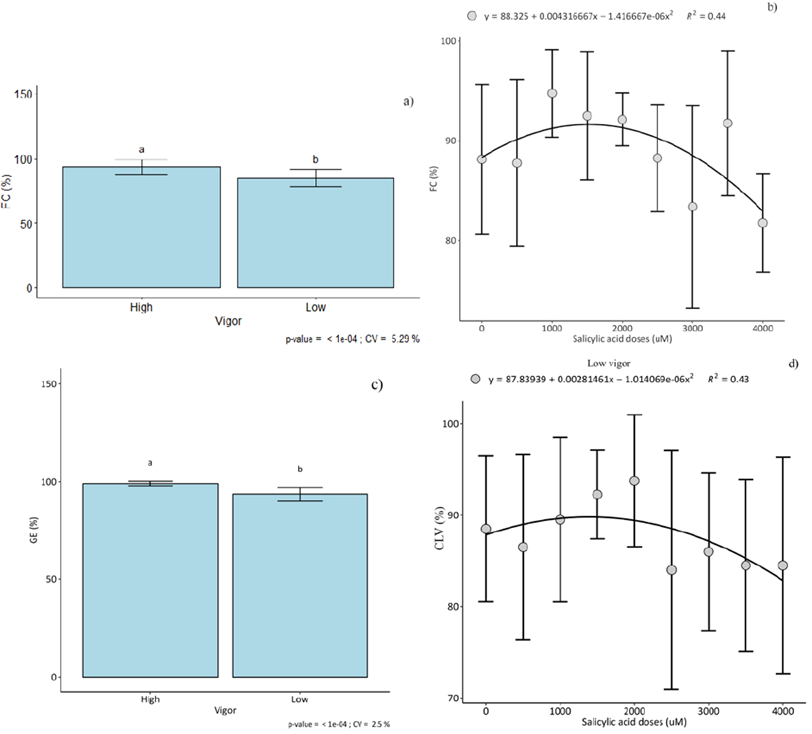
The results indicate that there was no interaction between the factors for the first count (FC) of germination; however, the simple effects of the factors vigor levels and salicylic acid doses were statistically significant. The percentage of vigor levels differed statistically, with averages of 93% for high-vigor seeds and 85% for low-vigor seeds (Figure 1a), showing that the accelerated aging process was effective and reduces the percentage of vigor of the seeds, according to the methodology described by Dutra and Vieira (2004). Figure 1b shows the significant effect of SA doses on maize seeds regardless of lot, increasing the counts with SA doses of up to 2000 uM, after which the effect was antagonistic, reducing the percentage. This result can be explained by the fact that the seeds already had high physiological indices, as the improvement was observed in seeds of low quality and that were under stress from accelerated aging, which had room for improvement, up to concentrations of 2000 uM, after which there was a decrease, so SA can be considered harmful.

Figure 1c shows the result for seed germination (GE), graphically expressing the effect of the vigor levels factor, which was statistically significant, and the means differed from each other, with values of 99% and 94% for the high-vigor and low-vigor seed lots, respectively. There was no significant effect of SA doses, which shows that there is no negative influence on germination with the addition of SA. In studies conducted by Rocha et al. (2018), the authors were able to observe the importance of SA interacting directly with the germination potential of an individual. These experiments studied the capacity of SA and its precise doses to generate resistance to stress in Schinus terebinthifolius (Aroeira) and Cedrela fissilis (Cedar) seeds during the germination process. The authors reported results obtained for SA in its potential related to photosynthetic activities in chlorophyll production, availability of CO2 concentration in the plant and water use in the photosynthesis process. In addition, the researchers were able to conclude that the application of extrinsic SA in smaller quantities promotes better results for seed germination, since high rates can generate negative effects on plant metabolism.
For cold vigor (CLV), there was a significant interaction between the factors vigor levels and SA doses; however, the high vigor level was not significant, only the low vigor, with the results showing an increase in vigor expression up to 2000 uM of SA (Figure 1d). Thus, low-vigor seeds improved the expression of physiological potential under conditions of higher stresses due to low temperature. However, after the SA dose of 2000 uM, a significant reduction in vigor values was observed up to the SA dose of 4000 uM. This result leads us to understand that under more unfavorable conditions for the seeds, SA at doses of 1000 to 1500 uM was an additional component to improve seed performance. In an experiment carried out with maize seeds, with coating treated with salicylic acid and subjected to heat stress (5 °C), the amounts of enzymes were higher than those found in seeds not treated with the acid, increasing the tolerance to cooling in the species (Guan et al., 2009). According to Radwan et al. (2010), salicylic acid plays an important role in inducing resistance in stressful situations.
The results for seedling dry mass indicated that there was no significant effect of vigor levels and salicylic acid doses. In a study carried out by Dalcin et al. (2019), doses between 250 and 1000 μmol of SA resulted in increments in the germination, seedling length and seedling biomass of soybean, with a reduction in these indices between doses of 1000 and 5000 μmol, and the authors inferred that SA doses between 500 and 750 μmol promoted the best results.
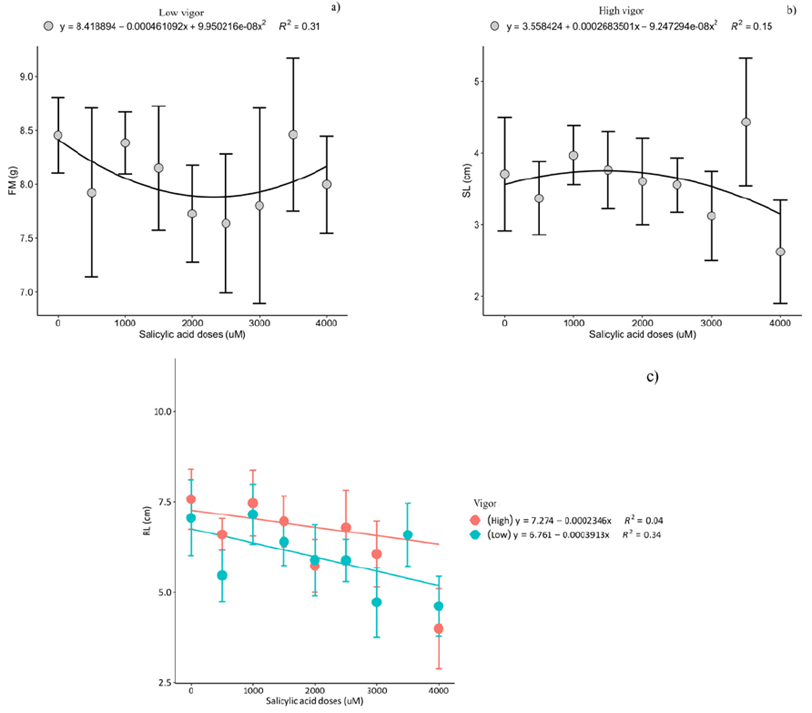
For seedling fresh mass (FM), the results demonstrate the effect of SA doses, with a significant interaction between the factors salicylic acid doses and vigor levels; however, only for the low vigor level (Figure 2a) was there a statistically significant effect, with a decrease in fresh mass up to 2500 uM, followed by an increase as SA dose increased.
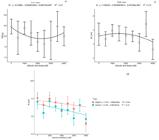
For seedling shoot length (SL), a significant interaction was obtained between the factors salicylic acid doses and vigor levels, but only for the high vigor level (Figure 2b) was there a statistically significant effect, with an improvement in seedling length up to the SA dose of 2000 uM, thus demonstrating its benefits on the aerial development of maize seedlings.
In the root length (RL) evaluations (Figure 2c), an interaction was observed between SA doses and vigor levels; with each increase in SA doses regardless of the vigor level of the seeds, there was a decrease in root length, highlighting in a way a difficulty associated with adding higher doses of SA to the seed, because it expresses toxicity in the root system of plants and impairs their development. In a study carried out by Camargo et al. (2022), wheat seeds soaked with SA at a concentration of 400 mg/L led to a higher average seedling height, with a difference of 1.15 cm when compared to water. In root length, SA resulted in lower values, with a difference of 5.06 cm when compared to water, which corroborates the result of the study.
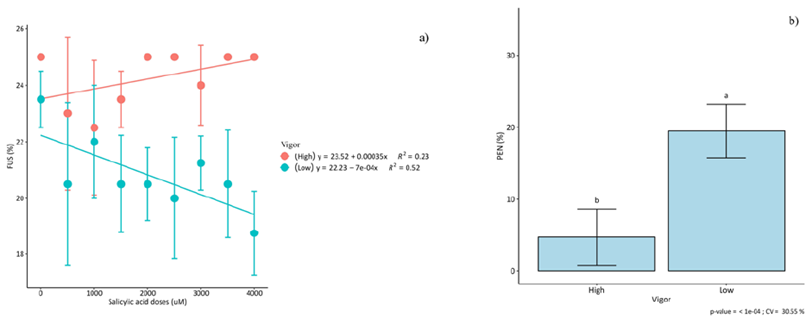
The results of the sanity test classified the fungi of the genera Fusarium spp. and Penicillium spp., so the significant results were presented only for the genera Fusarium spp. (Figure 3a) and Penicillium spp. (Figure 3b).
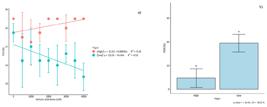
Evaluation of the sanity test for the fungal genera Fusarium spp. (a) and Penicillium spp. (b).
In the evaluation of the genus Fusarium spp. (FUS) (Figure 3a), it was observed that its incidence decreased in low-vigor seeds and increased in high-vigor seeds as the SA doses increased. Kouzai et al. (2018) studied the fungus R. solani and its pathogenicity with Oryza sativa and observed in their tests that SA can also be an excellent resistance aid for plants when it comes to fungi. In research carried out by El-Dougdoug et al. (2013), it was possible to observe a significant increase in SA in plants induced to infections by bacteria such as Bacillus subtilis, which generated a high level of acid accumulation in specimens of Cucumis sativus. In general, plants can be sensitive to the variety of diseases, and certain pathogens can immediately kill a plant upon exposure, while others use the plant as a living host (OSEI et al., 2021).
In the results of the sanity test for the presence of the genus Penicillium spp. (PEN), there was a statistically significant effect only for the vigor levels factor (Figure 3b), and the lot of low-vigor seeds showed a higher percentage, statistically differing from the high-vigor seeds. This may be due to the fact that the seeds had to go through the accelerated aging process to lose their vigor, under high temperature and humidity, which may have favored the appearance of Penicillium spp. The effect of SA doses was not significant. Seed treatment with growth regulators, especially salicylic acid, is a promising alternative to the seed sector because it is an important inducer of resistance to diseases and pests, in addition to acting significantly on seed quality and yield (Tavares et al., 2014).
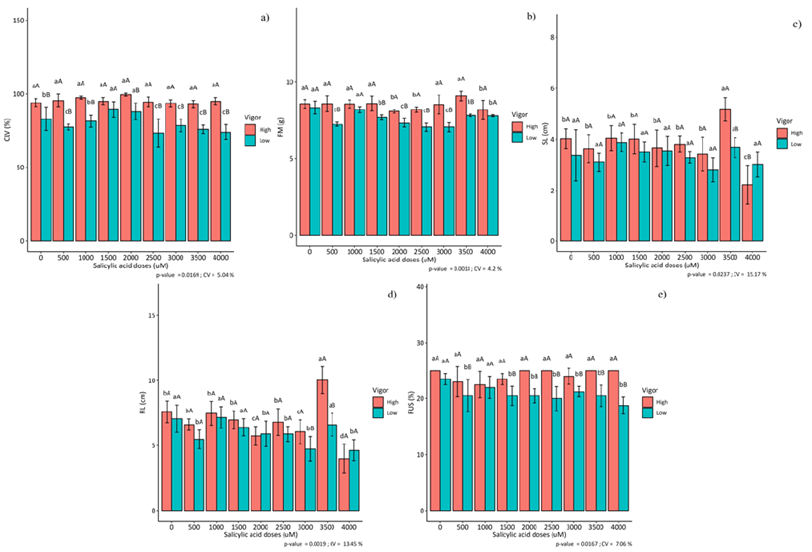
The decomposition of the interaction of vigor levels considering each dose of SA is presented in Figure 4, and Figure 4a shows that there was no statistical difference only at the SA dose of 2000 uM; at the others, seeds of the high-vigor lot differed statistically from and were superior to those of low vigor at each dose of SA. For fresh mass (Figure 4b), , there was no difference between high and low vigor at SA doses of 0, 1000 and 4000 uM, while at the others the lot with high vigor was statistically superior.
Analysis of salicylic acid doses considering the vigor levels, by comparison of means between vigor levels for each SA dose, for the variables Cold Vigor (a), Fresh Mass (b), Shoot Length (c), Root Length (d) and Fusarium spp. (e).
For shoot length (Figure 4c), there was a statistically significant difference between the SA doses of 3500 and 4000 uM, with the high-vigor lot being superior, while for the other doses there was no difference. Regarding root length (Figure 4d), the high-vigor lot was superior at the SA doses of 3000 and 3500 uM; at the others there was no statistically significant difference.
For the evaluation of Fusarium spp. (Figure 4e), the doses of 0 and 1000 uM did not differ, and the seeds with high vigor were superior to those with low vigor at all the doses of SA.
The results indicate that it is advantageous to use high- or low-vigor seeds treated with SA. Doses up to 2000 μM improve first count and cold vigor. In a situation of stress (cold) it is feasible to treat seeds of low or high vigor; however, there was no significance for the level of high vigor, only for the low vigor, with the results showing an increase in vigor expression up to 2000 uM of SA.
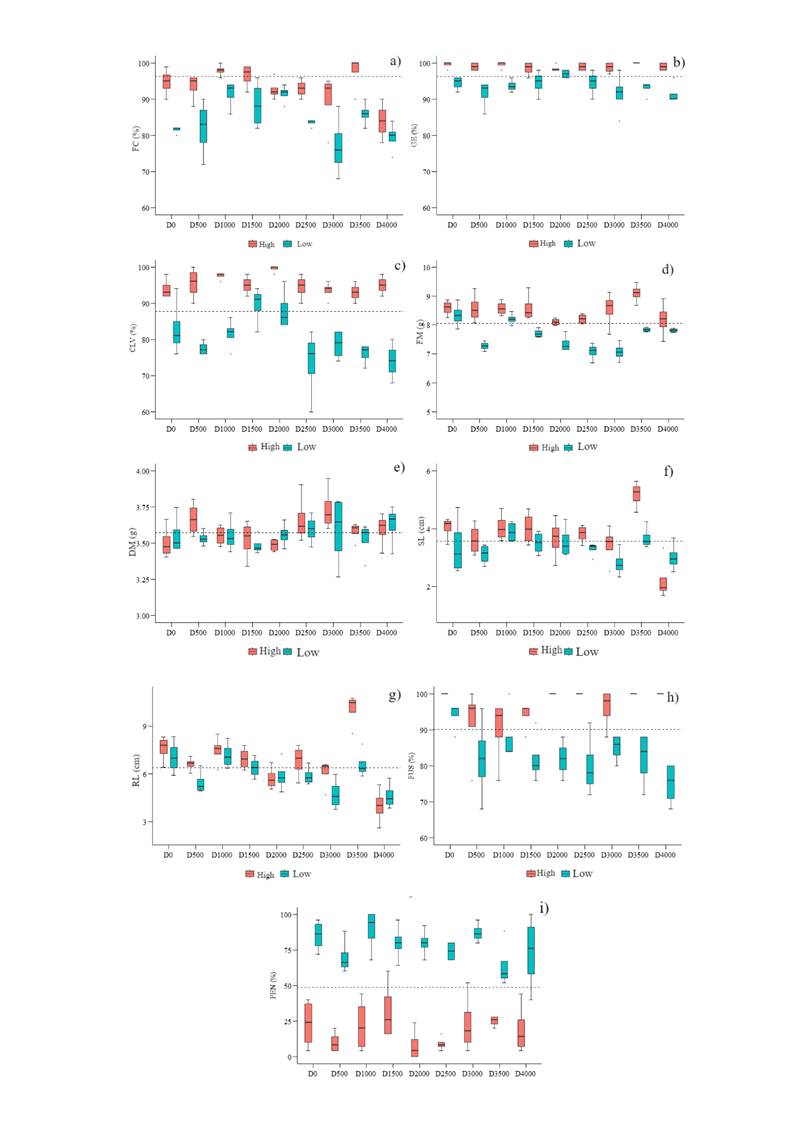
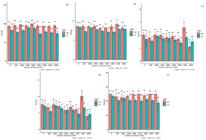
Figure 5 shows the descriptive analyses with the means, median, and standard deviations of the treatments for the variables under study. It can be observed that for the variables first count (a), germination (b), cold test (c) and seedling fresh mass (d), the lot with high-vigor seeds is almost entirely with higher values than the lot with low-vigor seeds. For the variables seedling dry mass (e), seedling shoot length (f) and seedling root length (g), the values of the seed lots were closer, but still with predominance of higher values for seeds of the high-vigor lot, and some doses for the low-vigor seeds being above the dotted line of the means. In the sanity evaluations for the genera Fusarium spp. (h) and Penicillium spp. (i), it can be observed that there is a high variation among the SA treatments in the levels of the high- and low-vigor lots.

Descriptive analysis of the variables, presenting their means and standard deviations for first count of vigor (a), Germination (b), Cold vigor (c), Seedling fresh mass (d), Seedling dry mass (e), Seedling shoot length (f), Seedling root length (g), Fusarium spp. (h) and Penicillium spp. (i)
CONCLUSIONS
Salicylic acid doses up to 2000 uM improve germination potential in low-vigor maize seeds. Treatment of maize seeds with salicylic acid may be a promising alternative for the control of Fusarium spp.
REFERENCES
-
AMARO, H.T.R.; FERNANDES, H.M.F.; ALMEIDA, P.M.A.; PORTO, E.M.V.; DAVID, A.M.S.S. Tratamento de sementes com bioestimulante e disponibilidade hídrica no desenvolvimento inicial do milho. Magistra, v.33, 2023. ISSN 2235-4420. https://periodicos.ufrb.edu.br/index.php/magistra/article/view/4427/2262
» https://periodicos.ufrb.edu.br/index.php/magistra/article/view/4427/2262 -
AMARO, H.T.R.; COSTA, R.C.; PORTO, E.M.V.; ARAÚJO, E.C.M.; FERNANDES. H.M.F. Tratamento de sementes com produtos à base de fertilizantes e reguladores de crescimento. Pesquisa Agropecuária Gaúcha, v.26, p.222-242, 2020. https://doi.org/10.36812/pag.2020261222-242
» https://doi.org/https://doi.org/10.36812/pag.2020261222-242 -
BRASIL. Ministério da Agricultura, Pecuária e Abastecimento. Regras para análise de sementes. Ministério da Agricultura, Pecuária e Abastecimento. Secretaria de Defesa Agropecuária. Brasília: MAPA/ACS, 2009. 399p. http://www.agricultura.gov.br/assuntos/insumos-agropecuarios/arquivos-publicacoes-insumos/2946_regras_analise__sementes.pdf
» http://www.agricultura.gov.br/assuntos/insumos-agropecuarios/arquivos-publicacoes-insumos/2946_regras_analise__sementes.pdf -
CAMARGO, A.F.C.P.; MADERS, L.R.; SOSTER, M.T.B. A influência do ácido salicílico no desenvolvimento inicial do trigo. Revista Perspectiva, v.46, n.175, p.7-13, 2022. https://doi.org/10.31512/persp.v.46.n.175.2022.199.p.7-13.
» https://doi.org/https://doi.org/10.31512/persp.v.46.n.175.2022.199.p.7-13 -
CONAB - Companhia Nacional de Abastecimento. Acompanhamento da safra brasileira. Safra 2023/24. https://www.conab.gov.br/info-agro/safras/graos
» https://www.conab.gov.br/info-agro/safras/graos -
BARBOSA, L.S.; DOMINGUES, P.; BEZERRA, A.C.; SANTOS, A.S.; LIMA, V.R.N.; LUNA, I.R.G.; LOPES, K.P. Efeito do ácido salicílico e choque a frio na germinação de sementes.Meio Ambiente (Brasil), v.1, n.2, 2020. ISSN: 2675-3065. https://meioambientebrasil.com.br/index.php/MABRA/article/view/29
» https://meioambientebrasil.com.br/index.php/MABRA/article/view/29 -
DALCIN, J.S.; NUNES, U.R.; ROSO, R.; MÜLLER, C.A.; BACKES, F.A.; BACKES, R.L.; STEFANELLO, R. Concentrações de ácido salicílico e seus efeitos na qualidade fisiológica de sementes de soja. Journal of Agricultural Science, v.11, n.17, p.271, 2019. ISSN 1916-9752. https://ijas-pdvagro.institutoidv.org/index.php/ijas/article/view/85/45
» https://ijas-pdvagro.institutoidv.org/index.php/ijas/article/view/85/45 -
DUTRA, A.S.; VIEIRA, R.D., Envelhecimento acelerado como teste de vigor para sementes de milho e soja. Ciência Rural, v.34, p.715-721, 2004. https://doi.org/10.1590/S0103-84782004000300010.
» https://doi.org/https://doi.org/10.1590/S0103-84782004000300010 -
EL-DOUGDOUG, K.A.; MEGAHED, A.A.; OTHMAN, B.A.; LASHIN, S.M.; IBRAHIM, M.A.; ATTITALLA, I.H. Induction of Salicylic Acid in Cucumber Plants Against Cucumber Mosaic Cucumovirus Using Biotic Inducers. American J of Biochemistry and Molecular Biology v.3, n.2, p.248-55, 2013. https://doi.org/10.3923/ajbmb.2013.248.255
» https://doi.org/https://doi.org/10.3923/ajbmb.2013.248.255 -
FERNANDES, T.S.; NUNES, U.R.; ROSO, R.; LUDWIG, E.J.; ZINI, P.B.; MENEGAES, J.F.; SANTOS, C.V.D. Physiological quality of common bean seeds subjected to different concentrations of salicylic acid. Journal of Agricultural Science , v.11, n.1, p.448, 2018. https://doi.org/10.5539/jas.v11n1p448
» https://doi.org/https://doi.org/10.5539/jas.v11n1p448 -
FIESP. Safra Mundial de Milho 2022/23 - 10º Levantamento do USDA. Available at: Available at: https://www.fiesp.com.br/arquivo-download/?id=288086 Access on: December 26, 2023.
» https://www.fiesp.com.br/arquivo-download/?id=288086 -
GUAN, Y.J.; HU, J.; WANG, X.J.; SHAO, C.X. Seed priming with chitosan improves maize germination and seedling growth in relation to physiological changes under low temperature stress. Journal of Zhejiang University Science B, v.10, n.6, p.427-433, 2009. https://doi.org/10.1631/jzus.B0820373.
» https://doi.org/https://doi.org/10.1631/jzus.B0820373 -
KOUZAI, Y.; KIMURA, M.; WATANABE, M.; KUSUNOKI, K.; OSAKA, D.; SUZUKI, T.; NOUTOSHI, Y. Salicylic acid-dependent immunity contributes to resistance Against Rhizoctonia solani, a necrotrophic fungal agent of sheath blight, in rice and Brachypodium distachyon. New Phytologist, v.217, n.2, p.771-83, 2018. https://doi.org/10.1111/nph.14849.
» https://doi.org/https://doi.org/10.1111/nph.14849 - NAKAGAWA, J. Testes de vigor baseados no desempenho das plântulas. In: KRZYZANOSKI, F.C.; VIEIRA, R.D.; FRANÇA NETO, J.B. (Ed.). Vigor de sementes: conceitos e testes. Londrina: ABRATES, 1999. p.2.1-2.24.
- OSEI, R., YANG, C., BOAMAH, S.; BOAKYE, T.A. Role of salicylic Acid in Plants Defense Mechanisms Against Pathogens. IJCIRAS v.4, n.6, p.31-47, 2021.
-
RADWAN, D.E.M.; FAYES, K.A.; MAHMOUD, S.Y.; LU, G. Modifications of antioxidant activity and protein composition of bean leaf due to bean yellow mosaic virus infection and salicylic acid treatments. Acta Physiologiae Plantarum, v.32, n.5, p.891-904, 2010. https://doi.org/10.1007/s11738-010-0477-y
» https://doi.org/https://doi.org/10.1007/s11738-010-0477-y -
ROCHA, M.E.L.; SOUZA, F.L.B.; DRANSKI, J.A.L.; ABADE, M.T.R.; COUTINHO, P.W.R.; CHIAPETTI, T.P.; MALAVASI, U.C. Photosynthetic Efficiency in Aroeira and Cedro After the Application of Salicylic Acid. Journal of Agricultural Science , v.10, n.11, p.532, 2018. https://doi.org/10.5539/jas.v10n11p532.
» https://doi.org/https://doi.org/10.5539/jas.v10n11p532 -
SILVA, A.A.D.; LIMA, G.S.D.; AZEVEDO, C.A.D.; GHEYI, H.R.; SOARES, L.A.D.A.; VELOSO, L.L.D.S. Salicylic acid improves physiological indicators of soursop irrigated with saline water. Rev bras eng agríc ambient v.26, n.6, p.412-419, 2022. https://doi.org/10.1590/1807-1929/agriambi.v26n6p412-419.
» https://doi.org/https://doi.org/10.1590/1807-1929/agriambi.v26n6p412-419 -
TAVARES, L.C.; CASSYO, C.A.; BRUNES, A.P.; OLIVEIRA, S.; VILLELA, F. A. Treatment of rice seeds with salicylic acid: seed physiological quality and yield. Journal of Seed Science, v.36, n.3, p.352-356, 2014. https://doi.org/10.1590/2317-1545v36n3636
» https://doi.org/https://doi.org/10.1590/2317-1545v36n3636 - VIEIRA, R.D.; CARVALHO, N.M. Testes de vigor em sementes Jaboticabal: FUNEP, 1994. 164p.
Data citations
FIESP. Safra Mundial de Milho 2022/23 - 10º Levantamento do USDA. Available at: Available at: https://www.fiesp.com.br/arquivo-download/?id=288086 Access on: December 26, 2023.