 Applicability of anthropometric indicators to assess physical fitness: proposal of percentiles for schoolchildren living at high altitude in Peru
Objective: a) To verify the applicability of anthropometric indicators to evaluate physical fitness in school children and b) Propose physical fitness reference values for Peruvian children living at high altitudes in Peru.
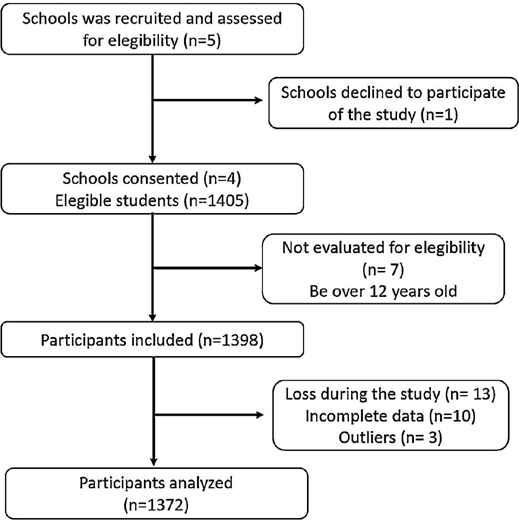
Methods: A cross-sectional study was carried out in children aged 6 to 12 years living at high altitude in Peru. A total of 1372 primary school children (785 males and 587 females) were evaluated. Weight, height and four physical tests [Hand grip strength (right and left HGS)], Horizontal jump (HJ), Round trip (5 × 10 repetitions), and the 6-minute walk test (6MWT)] were evaluated. Body Surface Area (BSA), Body Mass Index (BMI), and Triponderal Index (TPI) were calculated.
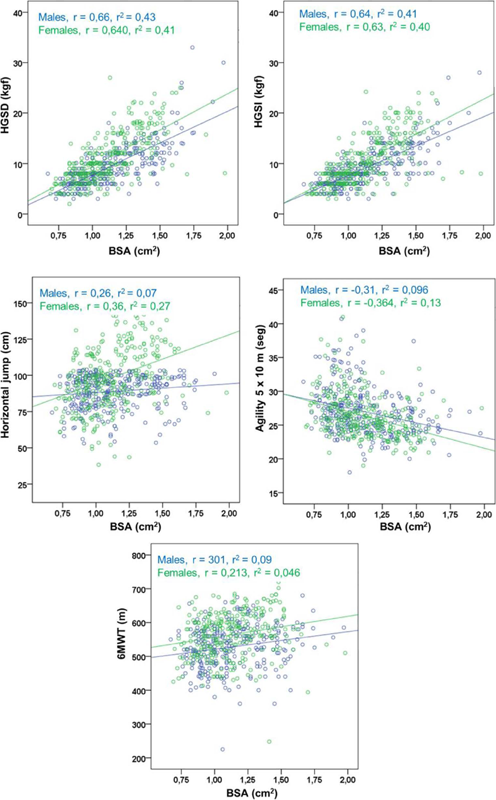
Results: The BSA presented a better comparative structure in relation to BMI and TPI with all physical tests. In males, HGS was related between r = 0.64 and 0.66; HJ (r = 0.26), agility (r = −0.31) and 6MWT (r = 0.30). In females, HGS was related between r = 0.63 and 0.64; HJ (r = 0.36), agility (r = −0.36), and 6MWT (r = 0.21). The predictive power in the four physical tests ranged from R2 = 9% to 43% in males, and from 5% to 41% in females. Percentiles by age and sex were proposed for BSA, HGS (right and left), HJ, agility, and 6MWT.
Conclusion: BSA is the best predictor of physical fitness in schoolchildren from high altitude areas in Peru, surpassing BMI and TPI. In addition, reference values were proposed to evaluate physical fitness in these children.
KEYWORDS
Anthropometric indicators; Physical fitness; Children; Percentiles; Altitude
 Thumbnail
 Thumbnail