
 SYSTEMATIC REVIEW ON PHYSICAL EDUCATION TEACHERS’ CONCERNS
ABSTRACT
The study aimed to map the scientific evidence regarding physical education teachers’ concerns linked to Fuller and Bown’s theory by a systematic review. The review study was based on the following guiding question: What is the evidence in the scientific literature on physical education teachers’ concerns? The search in the scientific bases was carried out between March 2019 and May 2024. The included studies publication years ranged from 1983 to 2024, wherein the studies have used predominantly a quantitative approach, applying the Teacher’s Concern Questionnaire. The highest physical education teachers’ concern was related to the Impact dimension. We could also verify the existence of new aspects that results in teacher’s concerns, but they are not present in the concerns theory.
Keywords:
Professores; Physical education; Teaching work
RESUMO
O estudo teve como objetivo mapear as evidências científicas sobre as preocupações dos professores de educação física vinculadas à teoria de Fuller e Bown por meio de uma revisão sistemática. O estudo de revisão foi baseado na seguinte questão norteadora: Quais são as evidências na literatura científica sobre as preocupações dos professores de educação física? A busca nas bases científicas foi realizada entre março de 2019 e maio de 2024. Os anos de publicação dos estudos incluídos variaram de 1983 a 2024, e os estudos utilizaram predominantemente uma abordagem quantitativa, aplicando o Teacher’s Concern Questionnaire. A maior preocupação dos professores de educação física foi relacionada à dimensão Impacto. Também foi possível verificar a existência de novos aspectos que resultam em preocupações dos professores, mas que não estão presentes na teoria das preocupações.
Palavras-chave:
Professores; Educação física; Trabalho docente
Introduction
The teaching duty has specific characteristics that range from the relationships established in the work environment, to the actions, infrastructure, and decisions to be made to carry out the labor activity1),(2. We may mention as roles of the teaching labor to instruct and train the individuals to act in the most diverse roles in society, promoting the full student development, as well as helping them to adapt to the current reality3),(4),(5.
It is also noteworthy that the teacher’s professional practice in Physical Education area presents some particularities, such as the class site and materials, the topics covered by the subject, the visibility that physical education has in the school staff, extracurricular events (choreographic composition, championships), vestment, grading method, and others3),(4),(6),(7.
From the inconsistences and diverse situations that occur in the teaching duty, including the topics disposition, relationships with the school social community, classroom management, and many others, the teachers build their careers, mediated by factors that are in fact limiting to their pedagogic performance, such as the teaching concerns1),(8.
The teaching concerns correspond to the feelings, problems and anguish realized by the teachers during the professional duties9),(10. These concerns arise from issues related to their personal and scholar realities, as human resources, relationships in the work environment, students’ learning and development, social scholar reality10),(11),(12.
Identifying the most frequent concerns among the teachers allow the understanding of the real teachers’ necessities, as well as the difficulties that influence their pedagogic performance. It is important to emphasize that despite the existence of one study in the literature that has reported a theoretical trial13 on this theme, that identified the importance of the theory, as well as some needs for updates. However, there is a lack of studies there is no study that has investigated and synthetized, through a search in scientific databases, publications on this specific issue aiming to identify which characteristics interfere in the teachers’ concerns and, consequently, develop a most robust scenario on the empiric studies on this theme.
As a precursor to studies on teaching concerns, Fuller10 began the research on this specific theme in a North American reality, and since then sought to understand teachers’ inquietudes and concerns evidenced during their professional development. These concerns are associated with social, political, economic, and personal aspects10.
It is significant that with the development of research on the theme, years later Fuller and Bown14 identified and condensed the teaching concerns in three distinct dimensions: Self Dimension, which addresses concerns related to survival and teacher fitting in the work environment; Task Dimension, in which it is manifested the concerns relative to the development, planning and execution of the many sort of tasks that have to be concluded through teachers’ obligation; and Impact Dimension, which approaches the empathy concerns in relation to the teacher and the real learning and development necessities of the students14. Each dimension presents their own markers and features regarding the teachers’ concerns and they may be related to the varied moments and phases of the teaching career7.
Thus, it is clear the importance of this theme for a better comprehension of the aspects, necessities and anxieties that may affect the teachers’ performance to propose actions that favor the profession exercise. Although there is a considerable and still growing body of evidence regarding this specific theme of study, there is a clear lack of systematization of the already existent knowledge about this issue. In this sense, the present study aims to map the evidence in the scientific literature on the of Physical Education teachers’ concerns linked to Fuller and Bown’s theory.
Methods
This study is characterized as a systematic review15. This database investigation occurs by means of methods, and it results in a synthesis of the relevant evidence and factors, providing an overview of what has been discussed on a given topic15),(16. The current systematic review has the following main question: What is the evidence in scientific literature about the physical education teachers’ concerns?
The searches were performed between March 2019 and May 2024 on the databases that are beacons for Qualis in area 21 of the Coordination for the Improvement of Higher Education Personnel (CAPES), in which Physical Education is inserted: Lilacs, Scielo, Redalyc, Web of Science, PubMED and Cinahl, as well as the Scopus and DOAJ databases, which made it possible to expand access to works in other languages due to the scope of these databases. Three search terms were used in the associated databases by Boolean operator ‘AND’, the first related to the concerns, the second related to the teacher, and the third referent to the physical education. The following keywords were applied in Portuguese: ‘preocupações’, ‘preocupações pedagógicas’, ‘aflições’, ‘dificuldades’, ‘angústia’, ‘agonia’, ‘apreensão’, ‘inquietações’, ‘docente’, ‘professor’, ‘educação física’, ‘educador físico’; in English: ‘concerns’, ‘apprehension’, ‘worry’, ‘unrest’, ‘difficulties’, ‘pedagogical concerns’, ‘afflictions’, ‘agony’, ‘anguish’, ‘uneasiness’, ‘disconfort’, ‘teacher’, ‘physical education’, ‘physical educator’ and in Spanish: ‘preocupaciones’, ‘dificultades’, ‘preocupaciones pedagógicas’, ‘aflicciones’, ‘agonía’, ‘angustia’, ‘docente’, ‘instructor’, ‘profesor’, ‘educación física’, ‘educador físico’. Boolean operator ‘NOT’ was also used for the terms: medicine; psychology; mathematics; and sciences, with the aim of better delimitate the search on the aforementioned databases.
Studies published in journals until May 2024 were considered in the literature search. It should be noted that the following were used as inclusion criteria: (1) studies that had as main outcome the physical education teachers’ concerns; studies that used the theoretical basis proposed by Fuller and Bown14; empirical studies. As exclusion criteria, opinions, theoretical trials, papers with a sample composed exclusively by intern students were not considered for inclusion and that applied different methodological processes to the samples.
Sequentially from the databases search, the studies were analyzed by title, abstract and full-text reading. The studies screening and assessment were performed by two reviewers independently. It is important to highlight that there were no discrepancies regarding the studies selection by the two reviewers. For data analysis, the Preferred Reporting Items for Systematic Review and Meta-Analysis Protocols (PRISMA-P) was used, which is a protocol that covers 17 items of articles analysis. Among the papers analysis items, the article must present title, abstract, introduction, methods, results, and discussion from observational studies17.
After searching in the electronic databases, 1211 references were identified for screening, wherein 796 references were excluded due to duplicate records. Sequentially, 381 references were excluded after title and abstract reading (38.7% did not address the teachers’ concerns; 21.2% had as sample teachers from another area of knowledge except physical education; 40.4% did not have the teachers’ concerns as the main research question; 0.2% were not empirical studies). Thereafter, 34 studies remained for full-text assessment, wherein 27 studies were excluded (22 studies did not use the teacher’ concerns s as the main research question as well as the theoretical model from Fuller and Bown14, and five studies did not use physical education teachers as sample). Then, seven articles were included for further analysis. Moreover, the reference lists from the included studies were assessed aiming to retrieve any potentially relevant study for inclusion. Thus, 13 studies were included in the present systematic review. Five of these were written in Portuguese and six in English (Figure 1).

Flowchart of the search process and selection strategy of articles on Physical Education Teachers’ Concerns.
The detailed full-text reading of the selected studies was performed by two reviewers, according to the inclusion criteria. The methodological assessment of the included studies was performed, and even though some studies18),(19),(20),(21 did not reach 100% of the methodological quality inclusion criteria established by Lockwood et al.22 and Munn et al.23, they were considered for this review, for the aim of the current study was to map the studies regarding this specific theme, which is novel in the literature. Hence, the final text was written based on the available evidence from the included studies, allowing the establishment of a proper scenario about the investigated issue.
Results and Discussion
From the studies found in the literature about the physical education teachers’ concerns, we were able to synthetize the information concerning this issue. Notably, to optimize the results presentation and discussion, we divided the themes in topics as following: studies characterization, teaching concerns; Self Dimension; Task Dimension; Impact dimension; and new dimensions of concerns. The studies description is detailed in Chart 1.
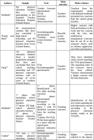


Studies characterization
After analyzing the studies found in the systematic review on the physical education teachers’ concerns, a geographical limitation was identified with studies carried out only in North American and Brazilian reality. It is important to highlight that the Concerns Theory, developed by Fuller and Bown14 emerged in the United States. This may explain the predominance of studies regarding this specific theme in this location, as well as the cultural reality linked to the English language context.
In this sense, it is evidenced that the spreading of the concerns theory by Fuller and Bown in 1975 was a determining aspect, having in mind that after this period some authors have begun to study this theme. The first research with physical education teachers was published in 198421.
In relation to Brazilian context, the first study found was from 201126, and since 2018 there was a considerable increase in the amount of research addressing this specific topic of discussion, trying to deepen the discussion on the national reality7),(18),(27),(28),(29),(30.
Regarding the research methodology, we could verify that the majority of the studies used a quantitative data analysis7),(9),(18),(19),(24),(25),(28. Among the tools used to perform the quantitative analysis, four research used sociodemographic questionnaires for the relation of these variables with the teachers’ concerns7),(9),(18),(19),(29.
Interestingly, the majority of the research used the TCQ and its derivations (i.e. TCQ-PE and EPP) to measure the concern levels7),(9),(18),(19),(21),(24),(25),(28. It is important to reiterate the importance of the quantitative research. It aids to describe and characterize the theme to be studied, allowing a deep analysis of the current scenario31. As an example, the evidence identified by the studies that used the quantitative approach provided a population characterization and its association with sociodemographic variables.
Some authors warned about the questionnaires (e.g. TCQ, TCQ-PE and EPP) due to the lack of adequation of these tools to the new necessities and circumstances faced by the physical education teachers18),(24),(25. The national reality and the new educational necessities may explain this evidence. Moreover, studies on the concerns with students interns and physical education teachers also evidenced the absence of feasibility of these assessment tools, requiring consideration of cultural and political aspects in which the population is inserted in and, among some questions of the instrument and the respective dimensions they represent32),(33.
Concerning the variables investigated alongside with the concerns, we highlight sex; employment bond7),(18),(28; time as being a teacher7),(9),(18),(19),(20),(24),(26),(27; teaching level28 and stressful events24.
Analyzing the qualitative assessment tools, we identified that the majority of the studies used semi structured interviews18),(20),(21),(25)-(27),(29),(30. In addition, some studies used observations from the teaching and report practices of these respective moments20),(21. One study from the North American reality applied the Problem and Stress Report Form24 along with other questionnaires.
The predominance of the utilization of semi structured interviews provides the deepening of the reality analysis, once this research type, and consequently, this assessment tool valued the experience, allowing a detailed analysis of this specific theme and sample 34),(35. Corroborating with this evidence, the studies that used the qualitative approach allowed to identify pertinent evidence that indicates the existence of new teaching concerns, which will be addressed later in this study.
After performing the characterization of the temporal period of publication from the included studies, it is possible to understand the temporal aspects that influenced in the development of these studies as well as the characteristics that permeate the increase or not of the concern levels of teachers. Additionally, by mapping the methodological approaches we could verify which type of research allows a deeper or integrate analysis of the theme, and which are the main assessment tools used to scale the concerns and whether they are consistent to what they aim to evaluate.
On the other hand, the evidence from the sociodemographic variables offers a basis that allows the proposition of consistent and specific actions to a specific population, optimizing the teaching practice.
Teachers’ Concerns
Fuller and Bown’s14 concern theory was used as basis in the included studies, evidencing the importance and contribution of this theory in the development of the research in this area. In this respect, it is necessary an analysis of the propositions and development behavior of the concerns that the model proposes.
In a sequential way, the development proposal of the concerns dimensions begins with the appearance of survival concerns in work environment (Self dimension), evolves to concerns with teaching tasks (Task dimension) and finishes the progression with the impact of teaching to the student (Impact dimension).
Regarding the affirmation of the theory by Fuller and Bown14 and the sequential progression of the concerns in the advance of the teaching experience, some studies refuted this hypothesis7),(9),(18),(19),(24),(26),(27. Somehow, the concerns progression from self to the task and posteriorly to the impact are not completely evident. However, it is important to underline that the dimensions proposed by Fuller and Bown14 are constantly present in the research.
Research that used teachers, advisors, and students/interns from diverse areas also refuted the sequential progression hypothesis proposed by the Fuller and Bown theory14),(36),(37),(38),(39),(40.
The national and temporal research reality may explain these evidences, given that the period and necessities that motivate the theory development have relation with that period of time and its characteristics9),(11),(12),(27.
To understand the tendency of the teachers’ concern levels evidenced in the research allows identifying its relationship with the theoretical model proposed by Fuller and Bown14 and whether it is still present in the current reality of physical education teachers. Furthermore, it shows the need to present the manifestations of the concerns dimensions of each work.
Self-Dimension
Having in mind the Self dimension, three studies in Brazilian context identified that this dimension promotes the least concern in teachers7),(18),(27. On the other hand, a study with teachers from Texas/USA demonstrated higher concerns with their performance at work, which might present association with Self dimension24.
The difference of the concern level regarding the Self dimension presented may be explained by the reality of both conditions and environment of each study. Moreover, another aspect that might be involved in this apparent alteration of the concern level in the Self dimension is the organization of the initial formation. Once it is presented completely unlinked to the reality, it causes a shock with the professional reality, and when it is closer associated with real teaching situations, it offers a higher support at the beginning of the teaching career39),(41.
Linked with the Self dimension, some studies evidenced that teacher with less experience presented higher concerns with this dimension7),(24),(27),(29. In addition, other studies showed that teachers in the beginning of their careers presented higher concerns related to the survival in the work environment10),(40),(41.
Based on this, it was evidenced that the impact of the work reality, the necessity of new adaptations to the pedagogic practice and the relationship with co-workers concern the newer teachers. Indeed, the beginning of the teaching profession generates a conflict to the new professionals, which may generate concerns related to Self dimension10),(42.
A study with teachers that were almost finishing their master’s degree, in the North American reality, compared the concerns of the physical education teachers with teachers from other areas. The program used a pedagogical practice experience with the monitoring of a supervisor. In this study they could identify higher concerns associated to survival in the work environment, short time of teaching by the teachers, and program supervision. Therefore, the study revealed the necessity of a constant monitoring of the teachers’ concerns aiming that teacher formation could be coherent to the pedagogical practice21.
Indentifying the concerns behavior associated with Self dimension provides a complete scenario of the relationship established in the professional practice and the way this work environment and its relationships affect the teaching practice. In this sense, understanding this dimension development allows the elaboration of actions that aid the professional practice and personal teaching life, mitigating the feeling and agonies, which when linked to this dimension proposes psychological characteristics.
Task Dimension
After analyzing the evidence related to the concerns with the teaching task, two studies showed the highest teaching concern with this dimension19),(26.
Additionally, two studies with teachers from Santa Catarina, Brazil, identified that the teachers in the beginning of their careers demonstrated higher concerns with the Task dimension11),(26. Hence, the concerns related to this dimension such as infrastructure, characterize governmental action plans from the city, state, and country, which are specific from each region or location.
When analyzing the Task dimension and its relation to the sociodemographic variables, Vieira et al.7) showed that the female teachers were more concerned with this dimension than their male counterparts. Corroborating with this, some studies also have identified that women are more concerned than men11),(43. The highest concern levels that women present may be related with the overload of tasks and activities that are given to them in both personal and professional life7.
According to the analysis regarding the teaching network in which the teachers are involved with, it was identified that teachers from the state school system are more concerned with the task dimension in comparison to teachers from the city school system. The reality between these contrasting school systems is different, wherein the state school system often presents poorer infrastructure, materials, and planning methods than the city school systems7.
Again, we highlight that the work conditions from each place, as well as the bureaucratic demands, material availability, and infrastructure are macro organizational aspects, which depend on government actions and public budget to its effectuation12. Moreover, a study with British physical education students suggested that the concerns related to the task may be understood as support to the Impact dimension concerns, such as the number of students per class32.
Lastly, McBride25 showed the poor factorial load for the Task dimension for the physical education teachers in the TCQ. In this sense, the author identified five new items to be added in the Task dimension. These new items provided a better adequation of the physical education teachers’ concerns in the Task dimension. Among them, we could identify the continuity in the Physical Education annual program, working with many students, the lack of administrative support, the poverty and inadequacy of physical education class organization, and the absence of a physical education consistent classification policy25. This caveat regarding the Task dimension in the questionnaire may be explained by the physical education teacher activity characteristic and singularity, as local and work material, which is different from other areas of knowledge9),(25.
Effectively, the knowledge of the teaching concern level linked to Task dimension allows to settle an overview of the difficulties directly related to the act of teaching. Thus, it is possible to identify which are the factors that concern the teachers in their main function, which is planning, organizing, assessing, and teaching.
Impact Dimension
The scientific literature reveals that the highest concern of the physical education teachers was with the Impact dimension28, regardless of their time working as a teacher 7),(9),(18),(27.
Accordingly, other research that also investigated the students’ or teachers’ concerns in many different areas has identified that the Impact dimension is the one that presents the highest levels of concern36),(43.
Gordon20 investigated two physical education professors, one in the first teaching year that demonstrated higher levels of self-concern and underwent an alternative formation process. The other teacher was in his second year of teaching and presented higher concerns regarding the impact of his teaching to the students. He has received a traditional teaching formation. According to the author, these differences might be established by the formation, and consequently the experiences that these teachers have faced.
It is identified a current lessening in the concerns referent to Self dimension, which reflects the concerns perceived in relation to the work environment, concomitantly to a tendency for the teachers to present higher concerns with the impact of teaching to the students, therefore, with the immediate product of their pedagogical performance.
Thereby, it is evidenced a contemporary inclination where the teachers are concerned with aspects that are more associated to them, and depend directly on them to its effectuation, such as the impact of their individual performance. This may be explained by the national and temporal features and necessities of the research, the social reality hardening in which the scholar community is inserted in13 and the naturalization of some teaching situation, as the high number of studenst per class, which has implicating in some teaching concerns that are not linked to the dimensions proposed by Fuller and Bown14.
New Concerns Dimensions
Despite the concerns present in the theoretical model by Fuller and Bown14, there is evidence in the scientific literature of new factors that promote concern in the teachers. Among the contemporary concerns identified, in both North American and Brazilian realities, we emphasize the violence, aggression to teachers, participation in strikes24, social issues of students26, health, social reality of students, public policies and discipline status27, and the concerns referent to the family structure/social context and the teaching formation18),(30.
The literature presents other studies with different samples (teachers and students/interns) that also showed concerns that are not present in Fuller and Bown’s theory14, such as the work conditions and public policies8),(12, the social problems that affect the scholar community11),(12),(37, the absence of the family in the student school life37, and the teaching learning and formation8),(12.
The presence of new concerns that influence the teaching practice may be associated with the new reality and need that the teachers face during their work, depending on the context in which the school is involved. Moreover, we highlight that Fuller and Bown’s theory14 was developed from the necessities and situations of the investigative period. Starting with a continuum in the evolution of the teacher profession, it is necessary to assess the new necessities and the educational scenario where the teacher and the school are inserted in.
On the basis of this indicators, the study of Vieira44 proposed two new concern dimensions: public policies, linked to the government issues from macro or micro organizational order, which are performed for the population; and Social Problems that represent the social context factors where the school is inserted in and are reflected in the school environment. Two new indicators were also proposed for the self dimension: Teacher Formation referring to the concerns regarding the initial and continued formation and its relation with the pedagogical performance, and lastly, Health, which is related to welfare issues which the environment and the work relationships present and affect the teachers’ health.
In addition, the contemporary findings of new concern factors to the teachers settle and portrait the emphatic connection between the school environment and the society. In this sense, the school becomes a big funnel of the context that occurs around it and finishes mirroring the daily community situations.
Conclusions
Using the current systematic review as basis, it is possible to delineate the overview of the research performed in the specific theme and the advance of the knowledge until now on the physical education teachers’ concerns.
It was identified that after the development of Fuller and Bown’s concern theory14 in the North American reality, the research about this theme has received attention from some researchers in this area. The questionnaires used to scale the concern levels were also developed from Fuller and Bown’s theory14 and helped in the development and understanding of this theme. However, it was clarified the tool’s need of adequacy for the current and national reality.
The physical education teachers’ concerns are in their majority related to the Impact dimension. Self dimension is present in the beginning of the teaching career, having, posteriorly, a gradual decrease on concerns levels.
The three dimensions proposed by Fuller and Bown’s theoretical model14 are still currently present, but they are not enough to explain the reality of the teachers’ concerns. We verified in the literature that there are concerns that do not fit in the three dimensions proposed by Fuller and Bown14. Among them, we may highlight the social problems that affect the students, public policies that affect the teaching reality, teachers’ health, and salubrity, as well as academic formation. The presence of new concerns according to the searched bibliography make arise the need to review the theory, to adequate the new teachers’ concerns that are currently present.
Additionally, it is necessary to consider the temporal aspects, having in mind that whilst the research in the Brazilian reality happened in the last three years, the research regarding the North American reality was performed two decades ago. We suggest as a possibility for further research the confrontation, by means of the documental and historical analysis, of the temporal existing differences in the development of the theoretical concerns model according to the current reality faced by the teachers. The limitations of the study are based on the exclusion criteria for the papers with a sample composed exclusively by intern students or articles that analyze other areas of teaching.
It is emphasized that studying the teachers’ concerns has us propose an analysis of which factors truly interfere in the teaching performance, aiming to improve the work processes. In other words, the main studies goal in this theme is to understand how to optimize the teachers’ work, diminishing the agony and worrying moment referent to the most variety of adversities present in the work environment.
In conclusion, it is evident the necessity to review Fuller and Bown’s concerns theory14, which is the studies basis in this theme, with the aim to expand and identify the contemporary teachers’ concerns. Consequently, there is the need to analyze the questionnaires that scale the concerns levels according to the new requirements established by the reality that the teachers face in schools.
References
-
1 Farias GO, Batista PM, Graça A, Nascimento JV. Ciclos da trajetória profissional na carreira docente em educação física. Mov (Online). 2018;24(2):441-54. DOI: 10.22456/1982-8918.75045.
» https://doi.org/10.22456/1982-8918.75045 - 1 Tardif M, Lessard C. O Trabalho Docente: Elementos para uma teoria da docência como profissão de interações humanas. Petrópolis: Editora Vozes; 2012.
-
1 Abrão RK, Baysdorf GC. O trabalho docente do professor de educação física em escolas com diferentes fatores socioeconômicos e demográficos: estratégias e saberes construídos. Rev Contexto Educ. 2013;28:37-57. DOI: 10.21527/2179-1309.2013.91.37-57.
» https://doi.org/10.21527/2179-1309.2013.91.37-57 -
1 Molina Neto V. A prática dos professores de educação física das escolas públicas de Porto Alegre. Mov (Online). 1998;5(9):31-46. DOI: 10.22456/1982-8918.2385.
» https://doi.org/10.22456/1982-8918.2385. - 1 Zarifian P. O modelo da competência: trajetória histórica, desafios atuais e propostas. SENAC; 2003.
- 1 Rosário LFR, Darido SC. A sistematização dos conteúdos da educação física na escola: a perspectiva dos professores experientes. Motriz. 2005;11(3):167-78.
-
1 Vieira SV, Beuttemmuller LJ, Both J. Preocupações de professores de educação física conforme os ciclos de desenvolvimento profissional e características sociodemográficas. J Phys Educ. 2018;29(1). DOI: 10.4025/jphyseduc.v29i1.2924.
» https://doi.org/10.4025/jphyseduc.v29i1.2924 -
1 Rufino LGB. O trabalho docente na perspectiva de professores de educação física: análise de alguns fatores condicionantes e suas restrições para o desenvolvimento da prática pedagógica. Mov (Online). 2017;23(4):257-70. DOI: 10.22456/1982-8918.66771.
» https://doi.org/10.22456/1982-8918.66771 - 1 Conkle T. Inservice physical educators' stages of concerns: a test of Fuller's model and the TCQ-PE. Phys Educ. 1996;53(3):122-32.
-
1 Fuller FF. Concerns of teachers: a developmental conceptualization. Am Educ Res J. 1969;6(2):207-26. DOI: 10.3102/00028312006002207.
» https://doi.org/10.3102/00028312006002207. -
1 Trusz RD. Preocupações de professores de educação física de Balneário Camboriú [dissertação de mestrado]. Florianópolis: Centro de Desportos, Universidade Federal de Santa Catarina; 2016. 162 p.[accessed 2023 nov 28]. Available from: Available from: https://repositorio.ufsc.br/xmlui/handle/123456789/167871
» https://repositorio.ufsc.br/xmlui/handle/123456789/167871 -
1 Vieira SV. Preocupações dos professores de educação física de Maringá (Paraná), conforme os ciclos de desenvolvimento profissional [dissertação de mestrado]. Londrina: Centro de Educação Física e Esportes, Universidade Estadual de Londrina; 2017. 146 p. [accessed 2023 nov 28]. Available from: Available from: http://repositorio.uem.br:8080/jspui/handle/1/5712
» http://repositorio.uem.br:8080/jspui/handle/1/5712 -
1 Trusz RD, Farias GO, Folle A, Both J. Preocupações de professores de educação física: reflexões acerca de estudos relacionados à temática. Mov (Internet). 2017;23(4):1471-84. DOI: 10.22456/1982-8918.64971.
» https://doi.org/10.22456/1982-8918.64971 - 1 Fuller F, Bown O. Becoming a teacher. In: Ryan K, editor. Teacher education. Yearbook of the National Society for the Study of Education. Chicago: University of Chicago Press; 1975. p. 25-52.
-
1 Sampaio RF, Mancini MC. Estudos de revisão sistemática: um guia para síntese criteriosa da evidência científica. Braz J Phys Ther. 2007;11(1):83-9. DOI: 10.1590/S1413-35552007000100013.
» https://doi.org/10.1590/S1413-35552007000100013 -
1 Galvão TF, Pereira MG. Revisões sistemáticas da literatura: passos para sua elaboração. Epidemiol Serv Saude. 2014;23:183-4. DOI: 10.5123/S1679-49742014000100018.
» https://doi.org/10.5123/S1679-49742014000100018 -
1 Moher D, Shamseer L, Clarke M, Ghersi D, Liberati A, Petticrew M, Stewart LA, PRISMA-P Group. Preferred reporting items for systematic review and meta-analysis protocols (PRISMA-P) 2015 statement. Syst Rev. 2015;4(1):1-9. DOI: 10.1186/2046-4053-4-1.
» https://doi.org/10.1186/2046-4053-4-1 -
1 Fernandes FH, Rowiecki AG, Vieira SV. Perfil sociodemográfico e preocupações dos professores de educação física do município de Cianorte-PR. Cad Educ Fís Esporte. 2019;17(1):119-28. DOI: 10.36453/2318-5104.2019.v17.n1.p119.
» https://doi.org/10.36453/2318-5104.2019.v17.n1.p119 - 1 Fung L. Concerns among physical educators with varying years of teaching experience. Phys Educ. 1993;50(1):8.
-
1 Gordon EJ. Concerns of the novice physical education teacher. Phys Educ. 2016;73(4): DOI: 10.18666/TPE-2016-V73-I4-7069
» https://doi.org/10.18666/TPE-2016-V73-I4-7069 -
1 McBride RE. Perceived teaching and program concerns among preservice teachers, university supervisors, and cooperating teachers. J Teach Phys Educ. 1984;3(3):36-43. DOI: 10.1123/jtpe.3.3.36.
» https://doi.org/10.1123/jtpe.3.3.36 -
1 Lockwood C, Munn Z, Porritt K. Qualitative research synthesis: methodological guidance for systematic reviewers utilizing meta-aggregation. Int J Evid Based Healthc. 2015;13(3):179-87. DOI: 10.1097/XEB.0000000000000062.
» https://doi.org/10.1097/XEB.0000000000000062 -
1 Munn Z, Moola S, Lisy K, Riitano D, Tufanaru C. Methodological guidance for systematic reviews of observational epidemiological studies reporting prevalence and cumulative incidence data. Int J Evid Based Healthc. 2015;13(3):147-53. DOI: 10.1097/XEB.0000000000000054.
» https://doi.org/10.1097/XEB.0000000000000054 -
1 Wendt JC, Bain LL. Concerns of preservice and inservice physical educators. J Teach Phys Educ. 1989;8(2):177-80. DOI: 10.1123/jtpe.8.2.177.
» https://doi.org/10.1123/jtpe.8.2.177 -
1 McBride RE. The TCQ-PE: An adaptation of the Teacher Concerns Questionnaire Instrument to a physical education setting. J Teach Phys Educ. 1993;12(2):188-96. DOI: 10.1123/jtpe.12.2.188.
» https://doi.org/10.1123/jtpe.12.2.188 -
1 Folle A, Nascimento JV. Preocupações ao longo da carreira docente: estudos de caso com professores de educação física do magistério público estadual. Rev Bras Ciênc Esporte. 2011;33(4):841-56. DOI: 10.1590/S0101-32892011000400004.
» https://doi.org/10.1590/S0101-32892011000400004 -
1 Favatto NC, Both J. Preocupações dos professores de educação física no início da carreira docente. Motrivivência. 2019;31(58):1-17. DOI: 10.5007/2175-8042.2019e56655.
» https://doi.org/10.5007/2175-8042.2019e56655 -
1 Trusz RD, Both J, Santos JH, Folle A, Nascimento JV, Farias GO. Preocupações de docentes de educação física: associação com o nível de ensino e o vínculo institucional. Rev Bras Ciênc Esporte. 2020;42. DOI: 10.1590/rbce.42.2019-092.
» https://doi.org/10.1590/rbce.42.2019-092 -
1 Vieira SV, Piovani VGS, Farias GO, Both J. Preocupações de professores de educação física ao longo da carreira. Rev Bras Ciênc Esporte. 2021;43. DOI: 10.1590/rbce.43.e007720.
» https://doi.org/10.1590/rbce.43.e007720 -
1 Vieira SV, Piovani VGS, Both J. Desenvolvimento profissional e preocupações docentes: uma análise com professores de educação física brasileiros. Pro-Posições. 2024;35. DOI: 10.1590/1980-6248-2022-0082BR.
» https://doi.org/10.1590/1980-6248-2022-0082BR - 1 Gil AC. Como elaborar projetos de pesquisa. São Paulo: Atlas; 2002.
-
1 Meek GA, Behets D. Physical education teachers’ concerns towards teaching. Teach Teach Educ. 1999;15(5):497-505. DOI: 10.1016/S0742-051X(98)00061-4.
» https://doi.org/10.1016/S0742-051X(98)00061-4 - 1 Vieira SV, Belem IC, Favatto NC, Both J. Análise fatorial exploratória da "Escala de Preocupações de Professores" com docentes de educação física. In: Anais do XXICongresso Brasileiro de Ciências do Esporte e do VII Congresso Internacional de Ciências do Esporte; 2024set 19; Natal, Brasil.
- 1 Minayo MCDS, organizadora. Pesquisa social: teoria, método e criatividade. Petrópolis: Editora Vozes ; 2016.
- 1 Thomas JR, Nelson JK, Silverman SJ. Métodos de pesquisa em atividade física. 6 ed.Porto Alegre: Artmed; 2012.
- 1 Costa LCA, Silva J, Oliveira VP, Cardoso AA, Resende R, Farias GO, Nascimento JV. Preocupações de professores supervisores de estágio curricular supervisionado em educação física. J Sport Pedagogy Res. 2019;5(3):21-7.
-
1 Piovani VGS, Both J, Nascimento JV. Preocupaciones pedagógicas de los estudiantes practicantes de Educación Física de diferentes domicilios sociales de Uruguay. Mov (Online). 2012;18(4):77-98. DOI: 10.22456/1982-8918.23380.
» https://doi.org/10.22456/1982-8918.23380 - 1 Capel S. Secondary students' development as teachers over the course of a PGCE year. Educ Res. 2001;43(3):247-61.
- 1 Certo JL. Beginning teacher concerns in an accountability-based testing environment. J Res Child Educ. 2006;20(4):332-49.
-
1 Boz Y. Turkish student teachers’ concerns about teaching. Eur J Teach Educ. 2008;31(4):367-77. DOI: 10.1080/02619760802420693.
» https://doi.org/10.1080/02619760802420693 - 1 Leone NM, Leite YUF. O início da carreira docente: implicações à formação inicial de professores. Rev Pesquiseduca. 2011;3(6):236-59.
-
1 Gonçalves HAPR. A motivação para a carreira docente: contributos para o estudo das principais preocupações em início de carreira [tese de doutorado]. Portugal: Universidade do Algarve Faculdade de Ciências Humanas e Sociais, Escola Superior de Educação Mestrado em Supervisão; 2007 [accessed 2023 nov 28]. Available from: Available from: http://hdl.handle.net/10400.1/548
» http://hdl.handle.net/10400.1/548 - 1 Farias GO, Folle A, Both J, Saad MA, Teixeira AS, Salles WN, et al. Preocupações pedagógicas de estudantes-estagiários na formação inicial em educação física. Motriz. 2008;14(3):310-19.
-
1 Vieira SV. Preocupações dos professores de educação física [tese de doutorado]. Londrina: Centro de Educação Física e Esportes, Universidade Estadual de Londrina; 2022. 288 p.[accessed 2024 jan 15]. Available from: Available from: https://repositorio.uel.br/items/4fa83cc8-5a19-405f-a4eb-4e76a7043c5e/full
» https://repositorio.uel.br/items/4fa83cc8-5a19-405f-a4eb-4e76a7043c5e/full

 Source: The authors.
 Source: The authors.

