
 ANALYSIS OF BALANCE IN OBESE AND NON-OBESE ELDERLY WOMEN PRACTICING A REGULAR PHYSICAL ACTIVITY PROGRAM
ABSTRACT
The objective was to analyze balance in obese and non-obese elderly women practicing a regular physical activity program. This is a descriptive study, with a cross-sectional design. The sample consisted of 32 elderly women, aged between 60 and 75 years, allocated into two groups, according to nutritional status. For the balance analysis, a force platform was used, in which the behavior of the center of pressure (COP) was obtained, in the bipedal position, in the conditions eyes open and eyes closed, and monopedal, with the right leg and left leg. The significance value adopted was 5%. The groups were homogeneous in terms of age and height. There was no significant difference in the anteroposterior (AP) and mediolateral (ML) displacements of the COP in both the eyes open and eyes closed conditions between obese and non-obese elderly women. As for COP speed, it was found that non-obese elderly women showed greater speed both in the condition with eyes open (p<0.001) and eyes closed (p<0.05) when compared to obese elderly women. There was no significant difference in the monopedal position in any of the variables between obese and non-obese elderly women. It is concluded that obesity positively affected the balance of obese elderly people in the bipedal condition and did not compromise balance in the singlepedal position.
Keywords:
Balance; Physical activity; Elderly
RESUMO
O objetivo foi analisar o equilíbrio em idosas obesas e não obesas praticantes de um programa de atividades físicas regulares. Trata-se de um estudo descritivo, com delineamento transversal. A amostra foi composta por 32 idosas, com idades entre 60 e 75 anos, alocadas em dois grupos, de acordo com o estado nutricional. Para a análise do equilíbrio foi utilizada a plataforma de força, na qual foi obtido o comportamento do centro de pressão (COP), na posição bipodal, nas condições olhos abertos e olhos fechados, e monopedal, com a perna direita e perna esquerda. O valor de significância adotado foi de 5%. Os grupos foram homogêneos quanto a idade e estatura. Não houve diferença significativa nos deslocamentos anteroposterior (AP) e médio-lateral (ML) do COP tanto na condição olhos aberto como olhos fechados entre idosas obesas e não obesas. Quanto à velocidade do COP, verificou-se que as idosas não obesas apresentaram maior velocidade tanto na condição de olhos abertos (p<0,001) como olhos fechados (p<0,05) quando comparadas as idosas obesas. Não houve diferença significativa na posição monopedal em nenhuma das variáveis analisadas entre idosas obesas e não obesas. Conclui-se que a obesidade afetou positivamente o equilíbrio de idosas praticantes de atividades físicas regulares na condição bipodal e não comprometeu o equilíbrio na posição monopedal.
Palavras-chave:
Equilíbrio; Atividade Física; Idosos
Introduction
Aging is a global phenomenon that has occurred at an accelerated rate. It is estimated that by 2025, the world's elderly population will exceed 30 million. Therefore, it is important to improve socioeconomic conditions, especially in emerging countries, such as Brazil, enabling a good quality of life for the elderly during their old age2.
Aging is not synonymous with illness or inactivity, but it can be considered an event that evolves gradually and is multifactorial3. Furthermore, the characteristics of aging vary from individual to individual, even if exposed to the same environmental variables. Aging is directly linked to several changes that affect functionality, mobility, autonomy and health4.
Among the various changes, aging is associated with an increase in postural instability in the elderly, increasing the risk of falls5. Falls occurring among the elderly are one of the main causes of morbidity and mortality in this population6. Lack of balance affects 30% of the elderly population in the world7, making them more trend to falls and, consequently, fractures. Furthermore, 70% of elderly people over 75 years of age who fall they end up being bedridden for months, dying shortly afterwards.
The positive effects of physical exercise for developing strength and muscular endurance capable of improving balance are well documented, being one of the health promotion strategies most recommended by the American College of Sports Medicine8. When the level of physical activity is lower due to aging, the performance of postural control is affected, as motor activity is reduced. Therefore, for the elderly, physical exercise is important to reduce the fragility of the locomotor system, adding muscle strength, gaining muscle mass and reducing probable functional deficits9, such as lack of balance. Additionally, physical exercise leads to increased lower limb strength, which is a protective factor for balance in the elderly10),(11.
The maintenance of postural balance is governed by coordination between the visual, vestibular and proprioceptive systems and its assessment is applied using the gold standard method of analyzing stabilometry obtained through a force platform12. The values that reflect human balance are obtained through the behavior of the center of pressure (COP), which is defined as the point of application of the resultant of vertical forces on the surface of a base of support 12.
In addition to the effects of aging, balance can be directly affected by body mass, which can impose biomechanical functional limitations on daily activities and can predispose the person to injuries13),(14. The main change is the increase in anteroposterior displacement due to a possible displacement of the center of mass due to the high distribution of fat, mainly in the abdominal region, affecting postural stability in response to this disturbance, having to quickly generate greater torque in the joint of the ankle in an attempt to retake balance15),(16. The buildup of adipose tissue near the joints increases the inertia of the body segments, affecting joint stiffness and limiting the range of movements, as a result, obese people may have less coordination and consequently less balance during intense movements that require more balance17.
Obesity can be characterized as the excessive accumulation of body fat, with a higher prevalence among women, and its peak occurring in middle age (50 to 65 years). Obesity is classified as belonging to the group of chronic non-communicable diseases (NCDs), having a multifactorial nature, and which can be defined as the excessive accumulation of fat in the body, causing damage to health18. The World Health Organization (WHO) considers obesity to be a global epidemic, with more than one billion adults overweight, with at least three hundred million of them clinically obese.
Although obesity is associated with negative effects on the health of the general population, the impact of obesity on the elderly is paradoxical19). If, on the one hand, obesity increases mortality in adults, in the elderly, the presence of excess weight offers a lower risk of mortality20. However, the impact of obesity on the postural balance of elderly people has been less investigated21),(22. In adults, obesity appears to negatively affect postural balance16),(23),(24. On the other hand, in the elderly, obesity appears to have a protective effect in maintaining postural control17, reducing the risk of falls and injuries14. Ostolin et al25 compared the balance of obese and non-obese middle-aged people and found no significant differences. The recent study by Palca et al26) with elderly physically active women demonstrated that the presence of obesity also did not affect negatively the muscle power of the lower limbs. It is believed that the morphofunctional adaptations promoted by additional load in the elderly could contribute to the maintenance of muscle mass and functionality, preserving some of the mechanisms related to the control of postural balance. Additionally, the regular practice of physical activities contributes to improving postural balance25, which could have a synergistic effect with the presence of obesity, leading to positive adaptations in mechanisms related to postural control11.
Considering that the risk of falls is one of the main factors of mortality in the elderly due to the comorbidities caused by this accident, and that there is a potential effect of obesity on the postural balance of the elderly, the purpose of the present study was to evaluate balance in obese and non-obese individuals practicing a regular physical activity program. Secondarily, we correlated balance with the body mass index (BMI) of elderly women. The hypothesis of this study was that obesity would positively affect the balance of elderly women who practice regular physical activities and that balance would be positively and significantly related to the BMI of elderly women.
Materials and methods
Participants
This research is characterized as an observational study with a cross-sectional design. The population was composed by elderly women (aged ≥60 years), participating in the “Caminhada do Idoso” Project, run by the Municipal Secretary of Ivaipora, Parana. The sample consisted of 32 elderly women, who were allocated into two groups, according to nutritional status: obese elderly women (n=17, BMI≥30 kg/m²) and non-obese elderly women (n=15, BMI<30kg/m² ).
The inclusion criteria were: being female, aged between 60 and 75 years-old and participating in regular physical activities. The exclusion criteria were: not being physically capable of carrying out the tests, having any pathology or disability that affected balance.
To participate in the study, participants signed the Free and Informed Consent Form (TCLE) and the research was previously approved by the Permanent Research Ethics Committee (COPEP), of the State University of Maringa, according to process number 2155877.
Instruments
Collections were carried out at the Center for the Best Age, at Ivaipora City Hall, on Mondays, Wednesdays and Fridays, from 7:45 am to 9:15 am. To assess balance, a force platform (EMG System do Brasil®) was used, capable of measuring the COP behavior of a person in a given posture. Body mass (BM) was measured using a Marte digital scale (LS200) and height (E) was obtained using a stadiometer attached to the same scale.
Procedures
To analyze balance, participants were instructed to remain on the force platform, with bare feet in a static posture for a period of 30s12. The location of the feet on the platform was marked so that there was a standardization in the positioning and distance between the feet12. The postures used were: bipedal with eyes open, bipedal with eyes closed, monopedal with eyes open and monopedal with eyes closed27. In the case of the condition with eyes open, the volunteer fixed his gaze on a fixed point positioned in front of him12.
During the collection time, the force platform recorded the ground reaction force and consequently its location. With the location of the ground reaction force, it was possible, through the platform software, to obtain the following values of the center of pressure (COP): the total displacement; the anteroposterior and mediolateral amplitudes; the area; and anteroposterior and mediolateral velocities. To evaluate the contribution of vision to posture stabilization, the Romberg Quotient (RQ) was calculated, which is a proportion of the values of the COP variables obtained in the “eyes closed” and “eyes open” conditions. In the RQ, a value of 1 corresponds to no contribution from vision28.
To obtain the participants' BW, a Marte scale (LS200) with a capacity of 201 kg and an accuracy of 0.05 kg was used. Height was obtained using a stadiometer attached to the same scale. BMI was calculated by dividing body mass by height squared [BMI=BW/E²]. To classify the nutritional status of elderly women into obese and non-obese the BMI values proposed by the World Health Organization (WHO) were used (BMI ≥ 30 kg/m² - obesity)18.
Data analysis
Data normality was verified using the Shapiro-Wilk test and data were presented as mean and standard deviation. Comparison of groups with normal distribution was performed using the Student's t test for independent samples and Levene's test for equality of variances. Comparison of groups with non-parametric data was performed using the Mann-Whitney U test for non-parametric data. Spearman's correlation was applied to verify the relationship between COP speed and BMI. Data were analyzed using the Statistical Package for Social Sciences (v.25.0, IBM-SPSS®, USA). The significance value adopted was 5%. Admitting an effect size of 90%, an observed power of 78% was obtained when comparing the groups.
Results
Anthropometric characteristics
The anthropometric characteristics of the two groups of participants are presented in Table 1. The groups were similar in terms of age and height.
Body mass and BMI were significantly higher in obese women compared to non-obese women (p<0.001).
COP parameters in the bipedal position in eyes open and eyes closed conditions
Table 2 presents the comparison of general COP parameters between obese and non-obese elderly women in the bipedal posture and in the “Eyes open” and “Eyes closed” conditions.
No statistically significant differences were observed between the obese and non-obese groups in the variables AP and ML Amplitude, Area and Sway Angle, in the two analysis conditions. However, a difference was observed for total displacement in the Eyes Open condition. The “Non-Obese” group showed greater total displacement (p=0.004) compared to the “Obese” group. The same difference was not observed in the Eyes Closed condition.
COP parameters in the monopedal position in the open eyes condition, left and right legs
Table 3 presents the comparison of general COP parameters between obese and non-obese elderly women in the monopedal posture and in the “Eyes open” and “Eyes closed” conditions.
There was no significant difference in the variables of AP and ML amplitude, total displacement, Area, Sway angle, in the “eyes open” condition, with either the left or right leg between obese and non-obese elderly women. Table 4 presents the comparison of the Romberg Quotient between the groups of elderly women.
No significant differences were observed for the Romberg Quotient in the variables of AP and ML amplitude, total displacement, area and Sway angle.
COP speed parameters in two-pedal and single-pedal positions, left and right, in the “eyes open” condition
Figure 1 shows the comparison of the speed of the Oscillation of the Center of Pressure (COP) in the “Eyes Open” conditions.

Center of Pressure Oscillation (COP) AP Speed Values (A) AP eyes open, (B) ML eyes open, (C) AP eyes closed and (D) ML eyes closed. *p<0.05.
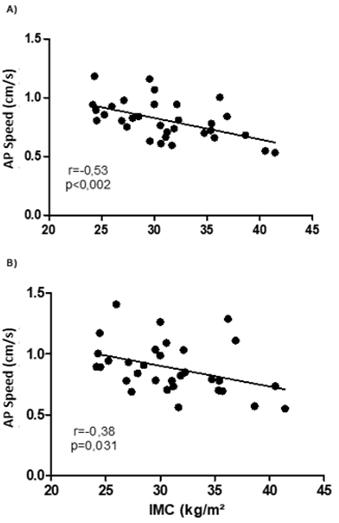
Regarding COP speed in the bipedal condition, it was found that non-obese elderly women had higher AP speed in both the “eyes open” (0.91±0.15; p<0.001) and “eyes closed” (0. 95±0.19; p<0.033) when compared, respectively, to obese elderly women (AO:0.72±0.13; OF:0.81±0.21) (Figure 1). Furthermore, an inverse and significant correlation was observed between COP speed in the AP direction in the bipedal condition and BMI (Figure 2).

Correlation between Anteroposterior (AP) AP Speed of the Oscillation of the Center of Pressure (COP) in conditions (A) eyes open and (B) eyes closed.
Discussion
The objective of this study was to evaluate balance in obese and non-obese elderly women practicing a regular physical activity program. Our findings revealed lower values in the total displacement and speed of the COP in the bipedal position in both the eyes open and eyes closed conditions. These results indicate less COP oscillation and, consequently, better balance in the bipedal position, suggesting better body balance in obese elderly women who practice regular physical activities.
Conventionally, it is assumed that the decrease in stability is represented by the increase in postural sway29. Obese individuals sway more than people with lower BMI during static posture, as they place greater demands on the positioning of the center of mass30. According to a literature review conducted by Alice et al24, body weight is a powerful predictor of postural balance, as an increase in postural sway was associated with a higher BMI.
However, these premises are not widely proven and may not be true in all circumstances25. It must be considered in this phenomenon that we are dealing with both the effect of age and body composition. Also, COP variability has been understood as a central mechanism of postural control in which changes in speed can represent strategies that the body tries to adapt to maintain postural stability30),(31.
Postural balance declines with age in both men and women from 40 years of age onwards, becoming more evident from 60 years of age onwards32. Among the mechanisms by which balance declines during aging are the loss of receptor cells in the vestibular system, reduced peripheral sensation, visual loss, increased reaction time and muscle weakness32.
Although obesity is associated with harmful effects on the health of young people and adults, the role of obesity in the elderly is paradoxical17, in which the presence of obesity could exert a protective factor in relation to mortality, especially cardiovascular33. However, studies have refuted this paradox in morbidity and mortality from cardiovascular diseases34. The presence of high body fat, more than just the presence of obesity, appears to have a deleterious effect on the cardiovascular system and contributes to adverse cardiovascular events34. Some studies have shown that mortality risks in the elderly are not associated with being overweight20. Therefore, higher BMI cut-off points are recommended for the elderly35. However, the impact of obesity on postural balance in the elderly is still unclear.
In young adults, the presence of obesity appears to negatively affect postural balance8),(16),(23),(36. These findings were initially reported in aviation school entrants in the 1960s, demonstrating that waist circumference, endomorphy and body mass negatively affect balance38. Subsequently, another study found that increasing body mass by 20%, artificially, negatively affected body balance32. The study by Garcia et al23 found no significant difference in balance between the group of obese and non-obese elderly people. Although the mechanisms by which obesity could affect balance are not fully understood, two hypotheses have been proposed. The first, proposed by Corbeil et al15, suggests that there is a greater mechanical strain on the body due to excess body mass overloading the ankle due to an increase in joint torque, generating a greater effort to cancel this disturbance through muscular torques. And the second hypothesis, proposed by Hue et al14, suggests that a body with high mass tends to increase plantar pressure, increasing the activation of mechanoreceptors, as a consequence, reducing their sensitivity due to the large continuous load affecting the postural control feedback control system. According to results found by Ostolin et al25, obesity has little influence on maintaining static balance and also does not seem to determine the occurrence of falls in individuals over 40 years of age.
On the other hand, it appears that obesity in the elderly has a protective effect in maintaining postural control, reducing the risk of falls and especially injuries. Blaszczyk et al16 found that obese women had less AP and ML displacement compared to the normal weight control group, suggesting a functional adaptation of upright postural control, with stability only being affected in a severe degree of obesity (>40 kg/m²). The authors also found a reduction in postural control oscillation and suggest the hypothesis that increased body mass generates biomechanical restrictions, however, these restrictions cause a reduction in postural oscillation16. These results corroborate our findings, in which we found less COP oscillation and speed in obese elderly women compared to non-obese women. Furthermore, we verified an inverse correlation and significant difference between BMI and COP speed, indicating that the higher the BMI in elderly women, the lower the COP oscillation speed.
When the elderly women were subjected to a monopedal support condition, there was no statistically significant difference between obese and non-obese women. This suggests that obese elderly women have preserved balance even in conditions of greater instability, as is the case with monopedal support. These results are against with those reported by Pereira et al.21 who found similar values in postural balance in the monopedal position of elderly women when compared in different nutritional states (low body mass vs normal weight vs pre-obese vs obese).
Considering the findings of the present study, obese elderly women present an improved postural balance in the bipedal and monopedal position similar to non-obese elderly women. These results reinforce the paradoxical effect of obesity, including on balance, in which in young people it seems to deteriorate balance parameters, but in elderly women who practice regular physical activities, the presence of obesity seems to be favorable in the bipedal condition and not harmful in the monopedal condition. Although these findings, in part, corroborate current literature, the paradoxical effect of obesity in the elderly is still the subject of much debate38. An important point for this discussion is the degree of obesity, the greater the degree of obesity, especially severe obesity (>40 kg/m²), the greater the loss of muscle mass and reduction in activities of daily living appears to be25. In this sense, Silva et al36 found that in adults with severe obesity, excess body fat was related to a worsening of dynamic balance and reduced functional mobility.
Although the sample in the present study was composed only of elderly women, the average age was 65 years old, being considered young elderly women35. Perhaps, in older women, obesity could have a deleterious effect, due to the association of the effects of aging added to the negative effects of obesity on postural balance. The elderly population with obesity has poor balance capacity and is associated with decreased strength in the lower limbs and compromised postural stability10. On the other hand, the morphofunctional adaptations promoted by the additional load in elderly women could contribute to improving balance, generating a greater protective effect in relation to falls and fractures35. And finally, the fact that they are physically active elderly women could contribute to positive adaptations in balance even in the presence of obesity, given the positive effects of regular physical exercise on the balance of elderly women11),(25),(37.
The present study has some limitations. First, the small sample size considering the type of study. Second, the elderly women's usual activities were not assessed, which could influence variables related to balance; however, they all regularly participated in a physical activity program. Third, the small number of studies that compare balance between obese and non-obese elderly people makes it difficult to compare our findings, with the majority of studies being carried out with young people or adults.
Conclusion
In summary, the present study demonstrated that the presence of obesity in elderly women participating in a regular physical activity program positively affected the balance of obese elderly women in the bipedal condition and did not affect the monopedal condition. These findings reinforce the paradoxical effect of obesity on body systems in the elderly population. Although obesity is associated with several harmful effects on health, the presence of obesity in physically active elderly women appears to contribute to the maintenance and/or improvement of postural balance. Future studies are needed to investigate the mechanisms by which obesity could affect postural balance, as well as confounding factors in the relationship between obesity and balance in the elderly.
Acknowledgment:
This study was funded by the Coordination for the Improvement of Higher Education Personnel - Brazil (CAPES) and the National Council for Scientific and Technological Development (CNPq).
References
-
1 Passinato ILM. Análise do equilíbrio em idosas obesas e não obesas praticantes de um programa de atividades físicas regulares [Internet]. Maringá: Universidade Estadual de Maringá; 2018[accessed2024 Jul 12]. Trabalho de Conclusão de Curso em Educação Física. Available from: Available from: https://crv.uem.br/cursos-de-graduacao/educacao-fisica/trabalhos-de-conclusao-de-curso/2018/ivo-leandro-de-melo-passinato.pdf/view
» https://crv.uem.br/cursos-de-graduacao/educacao-fisica/trabalhos-de-conclusao-de-curso/2018/ivo-leandro-de-melo-passinato.pdf/view - 2 Neri AL, Guariento ME. Fragilidade, saúde e bem-estar em idosos: dados do estudo FIBRA. São Paulo (SP): Campinas; 2011.
- 3 Sant’Anna RM, Câmara P, Braga MG. Mobilidade na terceira idade: como planejar o futuro. Textos sobre o envelhecimento. 2.ed.Rio de Janeiro: UNATI, 2003.
- 4 Carvalho J. Aspectos metodológicos no trabalho com idosos. In: Mota J, Carvalho J, editores. Actas do Seminário sobre a Qualidade de Vida no Idoso, FCDEF UP. Porto; 1999.
-
5 Meizer I, Benjuya N, Kaplanski J. Postural stability in the elderly: a comparison between fallers and nonfallers. Age Ageing2004;33(6):602-607. DOI: https://doi.org/10.1093/ageing/afh218
» https://doi.org/10.1093/ageing/afh218 -
6 Kenny RA, Romero-Ortuno R, Kumar P. Falls in older adults. Medicine2017;45(1):28-33. DOI: https://doi.org/10.1016/j.mpmed.2016.10.007
» https://doi.org/10.1016/j.mpmed.2016.10.007 -
7 Ruwer SL, Rossi AG, Simon LF. Equilíbrio no idoso. Rev Bras Otorrinolaringol 2005;71(3):298-03. DOI: https://doi.org/10.1590/S0034-72992005000300006
» https://doi.org/10.1590/S0034-72992005000300006 -
8 Garber CE, Blissmer B, Deschenes MR, Franklin BA, Lamonte MJ, Lee IM. American College of Sports Medicine position stand. Quantity and quality of exercise for developing and maintaining cardiorespiratory, musculoskeletal, and neuromotor fitness in apparently healthy adults: guidance for prescribing exercise. Med Sci Sports Exerc2011;43(7):1334-59. DOI: https://doi.org/10.1249/MSS.0b013e318213fefb.
» https://doi.org/10.1249/MSS.0b013e318213fefb -
9 Silva A, Simões M, Oliveira R, Lima P, Santos L, Ferreira M, et al. Equilíbrio, Coordenação e Agilidade de Idosos Submetidos à Prática de Exercícios Físicos Resistidos. Rev Bras Med Esporte. 2008;2(14):88-93. DOI: https://doi.org/10.1590/S1517-86922008000200001
» https://doi.org/10.1590/S1517-86922008000200001 -
10 Lee JJ, Hong DW, Lee SA, Soh Y, Yang M, Choi KM, Won CW, Chon J. Relationship Between Obesity and Balance in the Community-Dwelling Elderly Population: A Cross-Sectional Analysis. Am J Phys Med Rehabil. 2020;99(1):65-70. DOI: 10.1097/PHM.0000000000001292
» https://doi.org/10.1097/PHM.0000000000001292 -
11 Cimolin V, Cau N, Galli M, Capodaglio P. Balance Control in Obese Subjects during Quiet Stance: A State-of-the Art. Appl. Sci. 2020;10:1842. DOI: https://doi.org/10.3390/app10051842
» https://doi.org/10.3390/app10051842 -
12 Duarte M. Freitas; Sandra MSF. Revisão sobre posturografia baseada em plataforma de força para avaliação do equilíbrio. Braz J Phys Ther2010:3(14):183-92. DOI: https://doi.org/10.1590/S1413-35552010000300003
» https://doi.org/10.1590/S1413-35552010000300003 -
13 Wearing SC, Hennig EM, Byrne NM, Steele JR, Hills AP. The biomechanics of restricted movement in adult obesity. Obes Rev 2006;7(1):13-24. DOI: https://doi.org/10.1111/j.1467-789X.2006.00215.x
» https://doi.org/10.1111/j.1467-789X.2006.00215.x -
14 Hue O, Simoneau M, Marcotte J, Berrigan F, Dore J, Marceau P, et al. Body weight is a strong predictor of postural stability. Gait Posture. 2007Jun;26(1):32-8. DOI:https://doi.org/10.1016/j.gaitpost.2006.07.005
» https://doi.org/10.1016/j.gaitpost.2006.07.005 -
15 Corbeil P, Simoneau M, Rancourt D, Tremblay A, Teasdale N. Increased risk for falling associated with obesity: mathematical modeling of postural control. Trans Neural Syst Rehabil Eng 2001;9(2):126-36. DOI: https://doi.org/10.1109/7333.928572
» https://doi.org/10.1109/7333.928572 -
16 Błaszczyk JW, Cieślinska-Świder J, Plewa M, Zahorska-Markiewicz B, Markiewicz A. Effects of excessive body weight on postural control. J Biomech 2009;42(9):1295-300. DOI: https://doi.org/10.1016/j.jbiomech.2009.03.006
» https://doi.org/10.1016/j.jbiomech.2009.03.006 -
17 Pinheiro AR de O, Dias T, Pereira R, Santos L, Costa M, Silva A, et al. Uma abordagem epidemiológica da obesidade. Rev Nutr. 2004;4(14):523-33. DOI: https://doi.org/10.1590/S1415-52732004000400012
» https://doi.org/10.1590/S1415-52732004000400012 -
18 Organização Mundial de Saúde. Dieta, nutrição e prevenção de doenças crônicas não-transmissíveis [Internet]. Geneva: OMS; 2003 [accessed2024 Jul 12]. Available from: Available from: https://www.who.int/pt/health-topics
» https://www.who.int/pt/health-topics -
19 Dorner TE; Rieder A. Obesity paradox in elderly patients with cardiovascular diseases. Int J Cardiol2012;155(1):56-65. DOI: https://doi.org/10.1016/j.ijcard.2011.01.076
» https://doi.org/10.1016/j.ijcard.2011.01.076 -
20 Dutil M, Handrigan GA, Corbeil P, Cantin V, Simoneau M, Teasdale N. The impact of obesity on balance control in community-dwelling older women. Age (Dordr) 2013;35(3):883-90. DOI: https://doi.org/10.1007/s11357-012-9386-x
» https://doi.org/10.1007/s11357-012-9386-x -
21 Pereira C, Silva RAD, de Oliveira MR, Souza RDN, Borges RJ, Vieira ER. Effect of body mass index and fat mass on balance force platform measurements during a one-legged stance in older adults. Aging Clin Exp Res 2018;30(5):441-447. DOI: https://doi.org/10.1007/s40520-017-0796-6
» https://doi.org/10.1007/s40520-017-0796-6 - 22 Spirduso, W. Dimensões físicas do envelhecimento. São Paulo: Manole, 2005.
-
23 Garcia PA, Queiroz LL, Caetano MBD, Silva KHCVE, Hamu TCDDS. Obesity is associated with postural balance on unstable surfaces but not with fear of falling in older adults. Braz J Phys Ther. 2021;25(3):311-318. DOI: 10.1016/j.bjpt.2020.08.003
» https://doi.org/10.1016/j.bjpt.2020.08.003 -
24 Alice A, Yadav, M, Verma R, Kumari M, Arora S. Effect of obesity on balance: A literature review. Int. J. Health Sci2022;6(S4):3261-3279. DOI: https://doi.org/10.53730/ijhs.v6nS4.9126.
» https://doi.org/10.53730/ijhs.v6nS4.9126 -
25 Ostolin TLVP, et al. Efeitos da obesidade no equilíbrio postural e ocorrência de quedas em adultos assintomáticos. Fisioter Mov. 2020;33:e003350. DOI:https://doi.org/10.1590/1980-5918.033.AO50
» https://doi.org/10.1590/1980-5918.033.AO50 -
26 Palca JG, Silva R, Ferreira M, Oliveira A, Santos L, Lima F, et al. A presença de obesidade não afeta a potência muscular de membros inferiores de idosas fisicamente ativas. Conexões. 2024;22. DOI: https://doi.org/10.20396/conex.v22i00.8674691
» https://doi.org/10.20396/conex.v22i00.8674691 -
27 Teixeira CS, Lemos LFC, Lopes LFD, Rossi AG, Mota CB. Equilíbrio corporal e exercícios físicos: uma investigação com mulheres idosas praticantes de diferentes modalidades. Acta Fisiatr. 2008;15(3):156-9. DOI: https://doi.org/10.5935/0104-7795.20080003
» https://doi.org/10.5935/0104-7795.20080003 -
28 Souza Junior RO, Deprá PP, Silveira AM. Efeitos da hidroginástica com exercícios dinâmicos em deslocamento sobre o equilíbrio corporal de idosos. Fisioterapia E Pesquisa 2017;24(3), 303-310. DOI: https://doi.org/10.1590/1809-2950/16906724032017
» https://doi.org/10.1590/1809-2950/16906724032017 -
29 Panzer VP, Bandinelli S, Hallett M. Biomechanical assessment of quiet standing and changes associated with aging. Arch Phys Med Rehabil1995;76(2):151-7. DOI: https://doi.org/10.1016/s0003-9993(95)80024-7
» https://doi.org/10.1016/s0003-9993(95)80024-7 -
30 Handrigan GA, Berrigan F, Hue O, Simoneau M, Corbeil P, Tremblay A, Teasdale N. The effects of muscle strength on center of pressure-based measures of postural sway in obese and heavy athletic individuals. Gait Posture 2012;35(1):88-91. DOI: https://doi.org/10.1016/j.gaitpost.2011.08.012
» https://doi.org/10.1016/j.gaitpost.2011.08.012 -
31 Palmieri RM, Ingersoll CD, Stone MB, Krause BA. Center-of-pressure parameters used in the assessment of postural control. J Sport Rehabil. 2002[acesso 2024 Jul 12];11(1):51-66. Available from: https://sci-hub.se/10.1123/jsr.11.1.51.
» https://doi.org/10.1123/jsr.11.1.51 -
32 Era P, Sainio P, Koskinen S, Haavisto P, Vaara M, Aromaa A. Postural balance in a random sample of 7,979 subjects aged 30 years and over. Gerontology2006;52(4):204-13. DOI: https://doi.org/10.1159/000093652
» https://doi.org/10.1159/000093652 -
33 Shirahama Y, Takeda N, Yamamoto M, Saito K, Kawashima R, Matsumoto Y, et al. Validation of the obesity paradox by body mass index and waist circumference in patients undergoing percutaneous coronary intervention. Int J Obes. 2022;46(10):1840-7. DOI: https://doi.org/10.1038/s41366-022-01163-7
» https://doi.org/10.1038/s41366-022-01163-7 -
34 Medina-Inojosa JR, Mattar S, Lopez-Jimenez F, Cortes-Bergoderi M, Aguilar D, Sharma S, et al. Association Between Adiposity and Lean Mass With Long-Term Cardiovascular Events in Patients With Coronary Artery Disease: No Paradox. J Am Heart Assoc. 2018;7(10) DOI: https://doi.org/10.1161/JAHA.117.007505
» https://doi.org/10.1161/JAHA.117.007505 -
35 Sociedade Brasileira de Geriatria e Gerontologia. Quedas em Idosos: Prevenção. Associação Médica Brasileira e Conselho Federal de Medicina; 2008[accessed 2024 Jul 12. Available from: Available from: https://sbgg.org.br/queda-idosos-prevencao
» https://sbgg.org.br/queda-idosos-prevencao -
36 Silva BAB, Santos JCF, Cavalcanti TVO, Costa AS, Carvalho PRC. The influence of overweight on postural balance and mobility of candidates for bariatric surgery. Rev Bras Cineantropom Desempenho Hum 2023; 25:e90805. DOI: https://doi.org/10.1590/1980-0037.2023v25e90805
» https://doi.org/10.1590/1980-0037.2023v25e90805 -
37 Low DC, Walsh GS, Arkesteijn M. Effectiveness of Exercise Interventions to Improve Postural Control in Older Adults: A Systematic Review and Meta-Analyses of Centre of Pressure Measurements. Sports Med2017;47:101-112. DOI: https://doi.org/10.1007/s40279-016-0559-0
» https://doi.org/10.1007/s40279-016-0559-0

 Source: authors.
 Source: authors.