
 RESEARCH MODEL PROPOSAL ON COGNITIVE OVERLOAD, ANXIETY, COGNITIVE FATIGUE, AVOIDANCE BEHAVIOR, AND DATA LITERACY IN BIG DATA ENVIRONMENTS
ABSTRACT
This study analyzes how the Management and Information Systems literature has investigated the associations between Overload, Anxiety, Fatigue, Avoidance, and Literacy to develop a preliminary research model in Big Data environments to be tested in future studies. We identified 93 articles for analysis, and we found nine direct associations between these variables. These results served as a basis for us to appropriate their theoretical backgrounds and adapt them to develop a preliminary research model to investigate how Cognitive Overload, Anxiety, Cognitive Fatigue, Avoidance Behavior, and Data Literacy are associated in Big Data Environments.
Keywords:
Cognitive overload; Anxiety; Cognitive fatigue; Avoidance behavior; Data literacy; Big data
INTRODUCTION
Although the technological factor is essential, the human factor is also critical to the success of Big Data initiatives (Tabesh, Mousavidin, & Hasani, 2019, Božič & Dimovski, 2019). It is the responsibility of individuals to collect the right data, prepare it, analyze it, and interpret it in a way that gives meaning according to the business context and share it with stakeholders, to guide decision-making and create competitive advantage (Bumblauskas et al., 2017, Carillo, 2017, Akter et al., 2019). Therefore, an active process whereby individuals engage with the data and analytical tools is needed (Sivarajah et al., 2017). However, without a deep understanding of the factors that affect human behavior in the use of Big Data, it is difficult to maximize the potential of data for business (Boldosova & Luoto, 2019).
Qlik & Accenture’s (2020) report illustrates some cognitive, affective, and behavioral challenges for individuals in Big Data environments: 74% of professionals interviewed have already experienced Cognitive Overload when working with data and expressed symptoms of Anxiety and Cognitive Fatigue; Besides, 36% admitted spending at least an hour a week procrastinating their data-related tasks; 36% claimed they preferred alternative methods to accomplish their tasks over data usage; while 14% chose to avoid data-related tasks completely. This may be related to the fact that just 21% of the interviewed workforce expressed being fully confident in their ability to read, understand, question, and work with data.
In this sense, the individual may experience a state of Cognitive Overload (Cao & Sun, 2018, Sweller, Van Merriënboer & Paas, 2019, Yu et al., 2019) when the large volume, variety, and velocity of data exceed its processing capacity to deal with (Koltay, 2017, Merendino et al., 2018, Saxena & Lamest, 2018, Samuel et al., 2022). Feeling overwhelmed in an environment of cognitive overstimulation can be worrying and stressful for the individual in addition to involving a perception of threat (Levitin, 2014; Boldosova & Luoto, 2019, Zhang, Jia & Chen, 2019; Mikalef, Van De Wetering & Krogstie, 2021). Thus, the large volume, variety, and velocity of data can also raise Anxiety, i.e., feelings of concern, tension, apprehension, and frustration (Naveed & Anwar, 2020). Furthermore, Big Data environments requires extra cognitive resources from an individual and can quickly deplete them due to human cognitive limitations (Zhang, Jia & Chen, 2019; Ghasemaghaei & Turel, 2022). So, the use of a high level of attention for a prolonged period can lead the individual to a state of Cognitive Fatigue (Guo et al., 2020). Consequently, those cognitive and affective aspects can influence the individual's behavior, leading them to Avoidance Behavior as a way of coping with stressful situations (Dai, Ali, & Wang, 2020, Guo et al., 2020; Samuel et al., 2022). Among these Avoidance reactions, we can mention the hesitation, resistance, or reluctance to use data to make decisions and carry out their tasks (Božič & Dimovski, 2019, Boldosova & Luoto, 2019, Boldosova, 2019). Thus, there is a need to foster human capacities and abilities to deal with data abundance. According to Koltay (2017), given the notable gap between available data and useful data, knowing how to filter and critically process the data needed to guide activities is a decisive factor, which brings light to the concept of Data Literacy.
Therefore, the following Research Question arise: How has the literature in Management and Information Systems already discussed, proposed and/or found associations between the variables Overload, Anxiety, Fatigue, Avoidance and Literacy?
To answer this question, our Research Objective was to analyze how the Management and Information Systems literature has investigated the associations between Overload, Anxiety, Fatigue, Avoidance, and Literacy to develop a preliminary research model in Big Data environments to be tested in future studies. To this end, we carried out a Systematic Literature Review (SLR) to gather results from studies on analogous phenomena (such as "Information Overload", "Information Anxiety", etc.) that can pave the way for the development of new studies on cognitive, affective, and behavioral aspects involved in Big Data environments.
Our study is justified by the fact that the academic discussion on Cognitive Overload, Anxiety, Cognitive Fatigue, and Avoidance Behavior in Big Data environments still needs to be developed. These phenomena have been widely studied concerning information (e.g. "Information Overload" by Eppler & Mengis, 2004, "Information Anxiety" by Wurman, 2001, "Information Fatigue" by Oppenheim, 1997 and "Information Avoidance Behavior" by Case et al., 2005). But there is a gap in the literature regarding how individuals perceive, react, and deal with the abundance of data (Abbasi, Sarker & Chiang, 2016, Merendino et al., 2018, Boldosova & Luoto, 2019, Boldosova, 2019, Božič & Dimovski, 2019, Cezar & Maçada, 2021, Samuel et al., 2022). Furthermore, despite Data Literacy being a “hot topic” in leading commercial/professional publications (e.g., Panetta, 2019, Capone, 2019, Stevens, 2020, Bersin & Zao-Sanders, 2020, Brown, 2021), the literature on the subject is concentrated in the education and librarianship areas (Wang et al., 2019), with few studies in the Management and IS knowledge fields (Cezar & Maçada, 2021).
This article is organized as follows. After this introduction, we present 2) a conceptual background; 3) the methodological procedures adopted; 4) the SLR findings; 5) the proposal of a preliminary research model; and, finally, 6) our final remarks.
CONCEPTUAL BACKGROUND
Cognitive Overload
In general, the term Overload refers to a state caused by stimuli that exceed an individual's ability to cope (Cao & Sun, 2018). In this sense, Cognitive Overload results from the mismatch between the cognitive load imposed by some specific task and the individual's processing capacity, which is limited by nature (Miller, 1956, Galbraith, 1974, Tushman & Nadler, 1978, Sweller, Van Merriënboer, & Paas, 2019).
Individuals, since the early 2000s (Edmunds & Morris, 2000), were already dealing with the condition of Overload. However, the scale of the problem increased greatly with the computerization of business, which made professionals from different areas constantly bombarded with data in their work activities. This becomes a challenge as the human ability to interpret this avalanche of data and extract meanings of value has not evolved so quickly to keep up with society's ability to generate them and technology's ability to deliver them (Ledzińska & Postek, 2017).
Thus, in Big Data environments, Cognitive Overload occurs when the handling and processing of a large amount of data from multiple sources become complicated for individuals, who realize that this flow of data, both in terms of quantity and complexity, exceeds their ability to manage it effectively, which leads to a condition of stress (Zhang et al., 2016, Koltay, 2017, Merendino et al., 2018, Saxena & Lamest, 2018). In other words, occurs when available data become a hindrance rather than a help, even if they are potentially useful and relevant (Bawden & Robinson, 2009) and inhibit the individual's ability to optimally determine the best possible decision to be made (Eppler & Mengis, 2004, Savolainen, 2007, Roetzel, 2019).
Anxiety
The feeling of Anxiety comes from the individual's perception of self-inefficiency about their ability to cope with potentially harmful aspects of the environment (Bandura, 1988). The author (p. 77) defines Anxiety as “a state of anticipatory apprehension over possible deleterious happenings” and highlights that due to this perception of ineffectiveness, the individual is distressed, which restricts and impairs his level of performance.
In that regard, considering the “the ever-widening gap between what we understand and what we think we should understand. […] the black hole between data and knowledge” (Wurman, 2001, p. 14), in Big Data environments, Anxiety can be defined as the extensive concern, tension, and apprehension felt by the individual about their ability to successfully to access, understand, or make use of necessary data. In addition to keeping up with the amount of data and the need to always be updated and constantly informed (Naveed & Ameen, 2016). Therefore, Anxiety occurs when the individual tries to deal with a large and diverse amount of facts, events, data, images, documents, and/or messages available and cannot keep up or lack self-confidence, causing them psychological suffering (Bawden & Robinson, 2009).
Cognitive Fatigue
Fatigue is defined as a “subjective, unpleasant feeling of tiredness that has multiple dimensions varying in duration, unpleasantness, and intensity” (Piper, Lindsey, & Dodd, 1987, p. 19). This can manifest itself in physical forms, which consists of the “loss of maximum capacity to generate force during muscular activity” (Lewis & Haller, 1991, p. 99), or cognitive/ mental, which refers to the effects that individuals can feel after or during prolonged periods of intense cognitive activity (Boksem, Meijman, & Lorist, 2005).
Cognitive Fatigue, which is the focus of the present research, is defined by Ravindran, Kuan, & Lian (2014, p. 2317) as “a subjective, multidimensional experience comprising feelings such as tiredness, annoyance, anger, disappointment, guardedness, loss of interest, or reduced need/motivation”. Refers to the extent to which an individual feels exhausted with constant demands for cognitive effort and other cognitive activities (such as thinking, solving problems, finding answers, etc.) (Ackerman et al., 2010). In the digital age, the intense and extensive contact with IT artifacts and consequently the overexposure to an abundance of data, multitasking, and interruptions, individuals are subjected to deep cognitive stimulation, causing their defenses against external mental impact to weaken and their mental resources are exhausted (Ravindran, Kuan & Lian, 2014, Lee, Son, & Kim, 2016; Guo et al., 2020). Given this, data processing, information extraction, and idea generation become costly.
Avoidance Behavior
The individual, after evaluating a stressful situation as an opportunity or threat and considering what can be done to overcome or prevent damage or improve their perspectives of benefit from this stress, starts to put into practice strategies of coping. That is, behavioral responses to manage the demands or burdens of their relationship with the contextual environment (Folkman et al., 1986). In this sense, Endler & Parker (1990) suggest the existence of three categories of coping strategies: a) Coping strategies focused on the problem, directed to the stressful situation itself, aiming to manage or change it; b) Coping strategies focused on emotion, adopted aiming to regulate the relational meaning of the stressful situation to minimize emotional suffering, without properly altering the aspects that caused the stress; and, finally, c) Avoidance strategies, which involve attempts to escape the stressful situation. In the present research, we focus on the latter.
Considering stressful situations related to working with data, the individuals, thinking about their well-being may try to escape the negative feelings (Guo et al., 2020, Soroya et al., 2021). In this context, Avoidance Behavior can be defined as the deliberate action of the individual to ignore, prevent or delay to lead with data, whether useful and relevant or not, because there is so much to deal with or factors such as lack of time, energy, knowledge, or personal interest (Bawden & Robinson, 2009, Guo et al., 2020). In this sense, it can be manifested in the form of different behaviors such as ignoring, resisting, avoiding, and transferring responsibility (Guo et al., 2020) and in the form of inattention, biased interpretation, and forgetfulness (Dai, Ali, & Wang, 2020).
Data Literacy
The definition of Literacy, in its genuine form, is related to the ability to read and write. However, when analyzed from a functional perspective, it can be described as the individual's ability/competence in the effective performance of some activity that is relevant to the development of the context, group, or community in which he is inserted (Bawden, 2001).
The concept of Data Literacy emerges from the prominence of data in various sectors and disciplines, its increasing availability in terms of volume, variety, and speed, and the important role of the individual in the process of extracting value insights (Yang & Li, 2020). According to Mandinach & Gummer (2013, p. 30), Data Literacy can be defined as “the ability to understand and use data effectively to inform decisions. It is composed of a specific skill set and knowledge base that […] include knowing how to identify, collect, organize, analyze, summarize, and prioritize data. They also include how to develop hypotheses, identify problems, interpret the data, and determine, plan, implement, and monitor courses of action”. The same authors (2016, p. 367) add that the concept involves being able to transform data into information and that information into actionable knowledge and practices “by collecting, analyzing and interpreting all types of data”.
In the view of D'ignazio & Bhargava (2016) Data Literacy involves understanding what data is and what aspects of the world they represent. Therefore, the concept encompasses basic data knowledge regarding data formats, types, and characteristics, and, above all, skills related to each process or stage that make up the data life cycle. In addition, it can also understand knowledge about the use of tools and ethical issues such as security, privacy, laws, and regulations, as well as characteristics such as analytical reasoning and critical thinking (Wang, Wu, & Huang, 2019).
RESEARCH METHODOLOGY
Literature reviews are essential tools to synthesize scientific evidence accurately and reliably, but for that, they must be developed and reported completely and transparently so that they can be evaluated by readers (Liberati, et al., 2009). We adopted the Systematic Literature Review (SLR) as the research method which involves conducting rigorous, explicit, and reproducible procedures of collection, integration, and synthesis of evidence already published by previous research on a specific topic or the association between two or more specific variables (Tranfield, Denyer, & Smart, 2003, Snyder, 2019).
Thus, we choose to follow the Preferred Reporting Items for Systematic Reviews and Meta-Analyses (PRISMA) recommendations and standards, whose aim is “to ensure clear presentation of what was planned, done, and found in a systematic review” (Liberati, et al., 2009, p.2). PRISMA proposes performing the SLR in a four-phase flow, these are: 1) Identification, 2) Screening, 3) Eligibility, and 4) Inclusion. Figure 1 presents the flow developed in this SLR. We consider two digital repositories: Scopus (Elsevier) and Web of Science (Clarivate). We adopted the following search strings: “Overload”, “Anxiety”, “Fatigue”, “Avoidance”, and “Literacy” in the titles, abstracts, and/or keywords of the articles. We opted for a comprehensive search strategy, focusing on the main phenomenon, given the diversity of existing analogous terms such as “Data Overload”, “Information Overload”, “Cognitive Overload”, “Cognitive Anxiety”, “Mental Anxiety”, “Information Anxiety”, “Information Avoidance”, “Avoidance Behavior”, etc. To analyze the associations developed in the literature between the aforementioned variables, the searches were carried out from 10 double combinations between the five terms. The search strings are shown in Table 1.
We decided to limit the results by format (scientific article published in journals) seeking to obtain credible content and peer-reviewed, by the language of publication (English) for standardization purposes for further analysis, and by the research area (Management and Information Systems) because of the focus of this research. Therefore, we disregard the articles published in conference proceedings, book chapters, workshop proposals, conference calls, notes, etc., articles published in other languages, such as Portuguese, German, French, etc., and articles published in other areas of research such as medicine, psychology, engineering, etc.
In addition, we determined two criteria for the inclusion and exclusion of articles: Access and Content. The first criterion is based on the availability of free access to the entire article through the login of one of the authors with her enrollment as a student from a higher education institution registered with the publishers. Therefore, we disregarded articles that were charged a monetary fee to access them in their entirety. The second criterion concerns the content of the articles, in which the association between at least two of the variables of interest (Overload, Anxiety, Fatigue, Avoidance, and Literacy) must be central to the development of the study and addressed in depth. Furthermore, as a content criterion, we determined that the studied phenomena must be related to some kind of Data, Information, or Cognitive Load. That is, we didn’t consider the articles that focused on only one of the variables of interest and only briefly mentioned another variable, and the articles that focused on the phenomena of interest (Overload, Anxiety, Fatigue, Avoidance, and Literacy) related to aspects such as work/function, systems, networks, vision, muscular, attachment, etc. We concluded this process on 10/24/2022, therefore, studies published after that date were not considered by the present SLR. Figure 1 and Table 1 show the results of the search and selection process of articles.
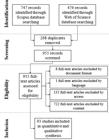
Of the total of 1,272 articles resulting from the 10 searches carried out in the two databases, 268 duplicate results were excluded (including articles that discussed, proposed, and/or found associations between three or more of the concepts of interest to this SLR and therefore resulted in more than one search and the articles that resulted in searches in both databases), 131 articles by the access criterion and 722 articles by the content criterion. Although the searches were configured with operators that restricted/limited the results only to articles published in scientific journals and English, it was still necessary to exclude 8 articles by the format criterion and 1 article by the language criterion.
Thus, we reached the final sample of 93 articles for analysis. We analyzed the articles them using the Biblioshiny tool from the RStudio package and the Nvivo12 software, which helped us extract the necessary information from each article.
RESULTS
Descriptive Results of Systematic Literature Review
The 93 articles selected for analysis in this SLR were published between the period 2000 and 2022. 55 different journals were identified, but the majority (n = 38) published only one article. None of the resulting journals are part of the AIS Basket of 8. A total of 240 different authors were identified, but the majority (n = 223) published only one article. Table 2 shows the main information about the 93 articles analyzed.
Regarding methodological, there was a predominance of Empirical studies (n = 83) compared to Theoretical (n = 10), as well as the Quantitative approach (n = 69) compared to Qualitative (n = 8) and Mixed Methods (n = 6). Among the quantitative articles, the Survey method (n = 62) and the Structural Equation Modeling data analysis technique (n = 50) stood out, mainly using the Partial Least Squares method (n = 32). Regarding qualitative data, the data collection method/technique of Interviews (n = 9) and the data analysis technique of Content Analysis (n = 7) stood out. Furthermore, we identified 334 different keywords. Among these, only 38 were used in more than one article and are listed in Table 3.
Keywords related to the Overload were the most frequent, used in 42 articles, with emphasis on “Information Overload” (n = 26), followed by “Overload” (n = 7), “Communication Overload” ( n = 4), “Social Overload” (n = 3), and “System Feature Overload” (n = 2). In the sequence, we visualize keywords alluding to Fatigue, used in 23 articles: “Social Media Fatigue” (n = 11), “Fatigue” (n = 5), “SNS Fatigue” (n = 5), and “Social Network Fatigue” (n = 2). Keywords related to Anxiety were used in 14 articles: “Anxiety” (n = 8), “Information Anxiety” (n = 4), and “Information Seeking Anxiety” (n = 2). The keywords alluding to Literacy were used in 13 articles: “Information Literacy” (n = 9), “Digital Literacy” (n = 2), and “Health Literacy” (n = 2). Finally, the keywords alluding to Avoidance were used in 9 articles: “Information Avoidance” (n = 5), “Avoidance Behavior” (n = 2), and “News Avoidance” (n = 2). Among the most frequent, there was no keyword related to data or Big Data. In fact, only 5 articles among the 93 analyzed investigated the phenomena of interest related to the context of Big Data environments.
Cezar & Maçada (2021) found that, in the context of data-rich business environments, professionals' Data Literacy is negatively associated to their perception of data-related burden. Similarly, Koltay (2017) discussed Data Literacy as a way to mitigate Overload. In the educational context, Sillence et al. (2022) analyzed how college students manage their academic digital data and found that Overload students to Anxiety. Cullen & Noonan (2021) explored the Overload related to algorithms and artificial intelligence (AI) in the perception of students and verified two ways of dealing with it: Avoidance and Literacy. Reeves & Chiang (2019) investigated the Data Literacy of educators and found a negative association with Anxiety in data-based decision-making.
It was therefore seen that the phenomena of interest were mostly analyzed concerning information, social media/social networks, communication, system functionalities, digital technologies, news, and health/covid-19. It is noteworthy that the keywords “Covid-19” (n = 13) and “Social Media” (n = 12) were the second and third most frequent.
Regarding the co-occurrence network presented in Table 4, we identified 20 keywords that connect directly or indirectly and are divided into 4 clusters. We verified that, in addition to being the most frequent keyword, “Information Overload” is the keyword with the highest Betweenness Degree, that is, the most central keyword in the network of co-occurrences, which connects different clusters (that are not directly connected), serving as a “bridge” between them and reducing distances in the network (Freeman, 1979). Overload (Information Overload) is directly connected with Anxiety (Anxiety, Information Anxiety), Fatigue (Fatigue, Social Media Fatigue), Avoidance (Information Avoidance), and Literacy (Information Literacy). Such results corroborate with Moore (2000), Karr-Wisniewski & Lu (2010), and Cao & Sun (2018) who point to Overload as a key element that promotes negative consequences for the psychological well-being of the individual, as well as it can provoke reactions behavioral.
Regarding the clusters, we identified that Overload, Fatigue, and Anxiety were analyzed together, as well as coping strategies, more precisely, in the context of social media. Besides, Avoidance was mostly analyzed in the context of Covid-19. In addition, we verified a connection between Literacy and Anxiety, more specifically in the Pakistani context. Furthermore, we identified that Anxiety and Fatigue are grouped with other cognitive, affective, and behavioral variables that are not considered in this research, such as Flow Experience, Depression, and Resilience.
Associations Between Overload, Anxiety, Fatigue, Avoidance, and Literacy
When analyzing how the articles discussed, proposed, and/or found associations between the variables of interest in this study, we identified 9 associations, as follows: 1) Overload and Anxiety, 2) Overload and Fatigue, 3) Overload and Avoidance, 4) Overload and Literacy, 5) Anxiety and Fatigue, 6) Anxiety and Avoidance, 7) Anxiety and Literacy, 8) Fatigue and Avoidance, and 9) Avoidance and Literacy. These are presented in Table 5.
Authors who discussed, proposed, and/or found the associations between Overload, Anxiety, Fatigue, Avoidance, and Literacy
The results of this SLR allowed an overview of the academic production on the associations between Overload, Anxiety, Fatigue, Avoidance, and Literacy, which allowed us to infer that these variables are considerably intertwined. This panorama showed that most of the studies that discussed, proposed, and/or found these associations did not focus on the Big Data environments, but focus in the context of information, social media/social networks, communication, functionalities of the system, digital technologies, news and health/covid-19. That is, it can be concluded that few studies investigate the associations between Overload, Anxiety, Fatigue, Avoidance, and Literacy in Big Data environments. Therefore, we appropriated the theoretical backgrounds of the articles analyzed, adapted them to the context of Big Data environments, and developed a preliminary research model presented below.
PRELIMINARY RESEARCH MODEL
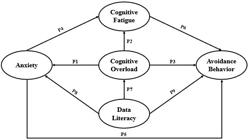
Considering the evidence obtained in this SLR, we propose a preliminary research model to be tested in future studies. Figure 2 shows the model and its respective propositions.
PROPOSITIONS
1 - The magnitude that data has currently reached affects the way people process and interpret them as it involves interactions so complex and massive that they exceed human cognitive capacity and can exert cognitive, affective, and behavioral impacts on individuals (Merendino et al., 2017, Boldosova, 2019, Boldosova & Luoto, 2019, Cezar & Maçada, 2021, Samuel et al., 2022). That is, the stress generated by Cognitive Overload can have adverse implications for the individual's psychological well-being (Song, Yao, & Wen, 2021, Soroya et al., 2021, Sillence et al., 2022). When demands for cognitive processing exceed human capacity, it has a profound impact on your physiology, emotions, and social relationships (Cao et al., 2021, Mao, Jia, & Huang, 2022). Thus, the overstimulation caused by data abundance can lead the individual to a state of Anxiety, that is, feelings of concern, tension, and/or apprehension regarding their ability to successfully use data to perform their activities (Bawden & Robinson, 2009). In this sense, we develop the following proposition:
P1. Cognitive Overload is positively associated with Anxiety in Big Data environments.
2 - In complex and dynamic information environments, people have to expend a lot of time and energy, resulting in exhaustion or even burnout. When the cognitive load demanded reaches the processing threshold of individuals, in terms of quantity, quality, or complexity, they may experience Cognitive Fatigue (Sheng et al., 2022). That is when the amount and complexity of data exceed the cognitive processing capabilities of individuals (Fu et al., 2020, Jiang, 2022). Considering the context of intense and extensive contact with IT artifacts and overexposure to the abundance of data, multitasking, and interruptions, it is noteworthy that individuals are constantly subjected to deep cognitive stimulation, weakening their defenses against external impact, and exhausting their mental resources (Guo et al., 2020, Ma et al., 2022, Zhang et al., 2022). In this sense, we develop the following proposition:
P2. Cognitive Overload is positively associated with Cognitive Fatigue in Big Data environments.
3 - The perception of being overwhelmed is very difficult to avoid (Bhambri, 2021). Cullen & Noonan (2021) cite two general approaches to dealing with the problem of Overload: (1) reducing the amount of cognitive load received and (2) improving the processing capabilities of recipients, the latter related to Data Literacy which we will discuss posteriorly. As exposure increases to higher levels of cognitive load and people gradually perceive the state of Cognitive Overload, they tend to protect themselves from the bombardment of data. To this end, they may choose to cognitively disconnect and deny the need for data or make less effort to acquire it (Park, 2019). In this sense, Avoidance may be a coping behavior by individuals who received a greater cognitive load than they could handle (Park, 2019, Guo et al., 2020, Lauri, Virkus, & Heidmets, 2020, Li, Wang & Zhang, 2020, Link, 2021, Song, Yao & Wen, 2021). Therefore, we develop the following proposition:
P3. Cognitive Overload is positively associated with Avoidance Behavior in Big Data environments.
4 - Cognitive Fatigue may be affected by both internal and external factors (Zhang et al., 2020). As a possible internal factor, people's negative affective tension can lead to mental exhaustion (Jiang, 2022). These worries consume psychological resources to face them, which can exhaust the individual (Zhang, He & Peng, 2022). In this sense, we raise the following proposition:
P4. Anxiety is positively associated with Cognitive Fatigue in Big Data environments.
5 - Given that Anxiety is an uncomfortable affective state, people who are faced with these negative emotions may come to adopt some coping strategies to reduce possible harm (Song, Yao & Wen, 2021, Soroya et al., 2021). Therefore, individuals tend to avoid situations that invoke feelings of Anxiety (Swar et al., 2017, Jiang, 2022). In this sense, feelings of concern, tension, apprehension, and/or frustration related to working with data may lead the individuals to Avoidance Behavior. Thus, the following proposition arises:
P5. Anxiety is positively associated with Avoidance Behavior in Big Data environments.
6 - As has been argued, avoiding a situation that is causing them discomfort is a measure often taken by individuals to control their emotional instability (Cao & Sun, 2018). People's negative affective tension can lead to behavioral outcomes that seek to avoid the state of exhaustion (Jiang, 2022). Considering Overload, coping strategies are evoked by the evolutionary instinct of the human being to retreat to safer ground, away from the complexity that demands greater cognitive efforts (Laato et al., 2020). Thus, once individuals feel stressed with a very high cognitive load, their motivation is reduced and they avoid making an extra effort to process it (Whelan, Islam & Brooks, 2020, Mao, Jia & Huang, 2022). When experiencing Cognitive Fatigue, individuals often experience negative emotions (Dhir et al., 2018), and therefore are more likely to adopt escape or Avoidance coping strategies (Zhang et al., 2021). So, to the extent that individuals feel tired after expending a lot of energy dealing with cognitive demands required by working with data, they may exhibit Avoidance Behavior as an escape valve (Guo et al., 2020). In this sense, we develop the following proposition:
P6. Cognitive Fatigue is positively associated with Avoidance Behavior in Big Data environments.
7 - Cognitive Overload has always been a challenge for entrepreneurs and professionals in all types of organizations. Even with search algorithms and artificial intelligence, there are still challenges related to effectively filtering, processing, interpreting, and analyzing an abundance of data. This brings out the importance of Data Literacy as one of the solutions to overcome the problem of Overload (Lauri, Virkus & Heidmets, 2020, Cullen & Noonan, 2021). Since the nature of Cognitive Overload is explained by the limited cognitive abilities of individuals, the literature has supported the association between individual cognitive capacity and Literacy (Mao, Jia & Huang, 2022). So, the human capacity to deal effectively and self-sufficiently with data is one of the critical cognitive skills that protect the individual against Cognitive Overload and its implications (Ledzińska & Postek, 2017, Soroya et al., 2021). Considering that an individual's Data Literacy significantly affects their cognition in terms of data processing (Swar, Hameed & Reychav, 2017, Li et al., 2019), it may reduce the Cognitive Overload (Cezar & Maçada, 2021). In this sense, we raise the following proposition:
P7. Data Literacy is inversely associated with Cognitive Overload in Big Data environments.
8 - Naveed & Anwar (2020), Xiao et al. (2020), and Soroya et al. (2021) argue that to reduce the negative consequences of Cognitive Overload it is necessary to enable individuals to critically deal with the abundance of data, filtering what is necessary. Therefore, improving the Data Literacy skills of individuals allows them to be prepared to synthesize and critically process large amounts of data because otherwise, they are likely to feel cognitive and affective pressures (Koltay, 2017, Wang, Wu & Huang, 2019, Lee, Lee & Lee-Geiller, 2020, Soroya et al., 2021). That is, greater self-efficacy and self-sufficiency in dealing with data can alleviate the tension, and apprehension felt by the individual related to their ability to successfully engage in working with data (Naveed & Ameen, 2016, Reeves & Chiang, 2019). In this sense, we develop the following proposition:
P8. Data Literacy is inversely associated with Anxiety in Big Data environments.
9 - As mentioned earlier, continuous exposure to high levels of cognitive load creates stressful conditions that lead to cognitive saturation of the individual, and, as a form of resistance or coping, they begin to avoid it (Lloyd & Hicks, 2022). However, Data Literate individuals who can deal critically with data and understand what questions to ask that data to meet their needs tend to face Overload situations by acting on the problem rather than looking for an escape valve like Avoidance Behavior (Lauri, Virkus & Heidmets, 2020, Soroya et al., 2021). Thus, we raise the following proposition:
P9. Data Literacy is inversely associated with Avoidance Behavior in Big Data environments.
CONCLUSION
In our SLR, we examined 93 articles and found that although most focused-on information (e.g., Information Overload, Information Anxiety, Information Avoidance Behavior) and the Covid-19 pandemic and the use of social networks, they could serve as the basis for future studies on cognitive, affective and behavioral factors related to a context of abundant data. Thus, we appropriated the theoretical background found in the analyzed studies and adapted it to develop a multidimensional model composed of 9 propositions based on the associations between Cognitive Overload, Anxiety, Cognitive Fatigue, Avoidance Behavior, and Data Literacy in Big Data environments.
In terms of theoretical contributions, this SLR provides an overview of the studies that have already been published on the associations between Cognitive Overload, Anxiety, Fatigue, Avoidance, and Literacy. We can conclude that Cognitive Overload is the central variable that serves as a bridge between the others, that is, we can consider it a cognitive challenge that emerges as a trigger for the occurrence of other affective and behavioral cognitive factors. So, by proposing a model that associates the variables of interest in Big Data environments, we were able to shed light on a possible dark side of Big Data, considering that cognitive, affective, and behavioral factors need to be better understood. In addition, we highlighted the importance of Data Literacy, a concept that is still being developed, mostly in the areas of education and information science/library research.
In terms of practical contributions, our multidimensional model can help organizations understand how the abundance of data can impact the workforce, inspiring and guiding practitioners’ actions. Hence, our study can help managers to deal with such challenges, minimizing their potential negative impacts as much as possible. Furthermore, by emphasizing the importance of Data Literacy, we hope to provide organizations with a theoretical basis for developing data-related knowledge and skills among professionals and managers.
However, there are a few limitations to our research. First, the return rate of articles selected for analysis was significantly lower than the number of search results. This is explained by the comprehensive search strategy adopted using only the phenomenon of interest and not specifying it. Another limitation of the study was the free access criterion, which may have led to the omission of relevant sources. The criterion was adopted because the financial resources required to access full-text articles were unavailable to the authors. The fact we did not use regular expressions, word permutations, or synonyms in the searches (e.g., overwhelm, anxieties, exhaustion, etc.) may also be considered a limitation, as it may have reduced the number of relevant results.
As suggestions for future studies, we recommend expanding this SLR with different search strings as well as other academic work formats. Just as developing a meta-analysis can be an interesting avenue of future study. Finally, it is also suggested that the model proposed in this study be tested empirically, both through an exploratory qualitative approach and a confirmatory quantitative approach.
REFERENCES
- Abbasi, A., Sarker, S., & Chiang, R. (2016). Big data research in information systems: Toward an inclusive research agenda. Journal of the association for information systems, 17(2).
- Ackerman, P., et al. (2010). Cognitive fatigue during testing: An examination of trait, time-on-task, and strategy influences. Human performance, 23(5), 381-402.
- Ackoff, R. (1989). From data to wisdom. Journal of Applied Systems Analysis, 16, 3-9.
- Aharony, N., & Gazit, T. (2019). Factors affecting students’ information literacy self-efficacy. Library Hi Tech
- Ahmed, R., et al. (2022). The Social Media Break-Up: Psycho-Behavioral Measures and Implications. IEEE Access, 10
- Akter, S., et al. (2019). How talent capability can shape service analytics capability in the big data environment?. Journal of Strategic Marketing, 27(6), 521-539.
- Alshammari, N., et al. (2022). Technology‐driven 5G enabled e‐healthcare system during COVID‐19 pandemic. IET Communications, 16(5), 449-463.
- Al-Youzbaky, B., & Hanna, R. (2022). The effect of information overload, and social media fatigue on online consumers purchasing decisions: the mediating role of technostress and information anxiety. Journal of System and Management Sciences, 12(2), 195-220.
- Anninou, I., & Foxall, G. (2019). The reinforcing and aversive consequences of customer experience. The role of consumer confusion. Journal of retailing and consumer services, 51
- Bandura, A. (2015). Self-efficacy conception of anxiety. In Anxiety and self-focused attention
- Bawden, D. (2001). Information overload. Library & information briefings, (92), 1-15.
- Bawden, D., & Robinson, L. (2009). The dark side of information: overload, anxiety and other paradoxes and pathologies. Journal of information science, 35(2), 180-191.
-
Bersin, J., & Zao-Sanders, M. (2020) Boost Your Team’s Data Literacy. Harvard Business Review Available at: https://hbr.org/2020/02/boost-your-teams-data-literacy
» https://hbr.org/2020/02/boost-your-teams-data-literacy - Bhambri, C. (2021). Information overload in business organizations and entrepreneurship: An analytical review of the literature. Business Information Review, 38(4), 193-200.
- Boksem, M., Meijman, T., & Lorist, M. (2005). Effects of mental fatigue on attention: an ERP study. Cognitive brain research, 25(1), 107-116.
- Boldosova, V. (2019). Deliberate storytelling in big data analytics adoption. Information Systems Journal, 29(6), 1126-1152.
- Boldosova, V., & Luoto, S. (2019). Storytelling, business analytics and big data interpretation: Literature review and theoretical propositions. Management Research Review
- Booker, L., Detlor, B., & Serenko, A. (2012). Factors affecting the adoption of online library resources by business students. Journal of the American Society for Information Science and Technology, 63(12).
- Božič, K., & Dimovski, V. (2019). Business intelligence and analytics for value creation: The role of absorptive capacity. International journal of information management, 46, 93-103.
-
Brown, S. (2021). How to build Data Literacy in your company. MIT Sloan School of Management Available at: https://mitsloan.mit.edu/ideas-made-to-matter/how-to-build-data-literacy-your-company
» https://mitsloan.mit.edu/ideas-made-to-matter/how-to-build-data-literacy-your-company - Bumblauskas, D., et al. (2017). Big data analytics: transforming data to action. Business Process Management Journal, 23(3), 703-720.
- Cao, J., et al. (2021). Toward street vending in post COVID-19 China: Social networking services information overload and switching intention. Technology in Society, 66
- Cao, X., & Sun, J. (2018). Exploring the effect of overload on the discontinuous intention of social media users: An SOR perspective. Computers in human behavior, 81, 10-18.
- Cao, Y., et al. (2021). Exploring elderly users’ MSNS intermittent discontinuance: A dual-mechanism model. Telematics and Informatics, 62
-
Capone, M. (2019). Why Data Management And Data Literacy Need To Go Together. Forbes Available at: https://www.forbes.com/sites/forbestechcouncil/2019/06/05/why-data-management-and-data-literacy-need-to-go-together/?sh=30d25e187021
» https://www.forbes.com/sites/forbestechcouncil/2019/06/05/why-data-management-and-data-literacy-need-to-go-together/?sh=30d25e187021 - Carillo, K. (2017). Let’s stop trying to be “sexy”-preparing managers for the (big) data-driven business era. Business Process Management Journal , 23(3), 598-622
- Case, D., et al. (2005). Avoiding versus seeking: the relationship of information seeking to avoidance, blunting, coping, dissonance, and related concepts. Journal of the Medical Library Association, 93(3), 353.
- Castañeda, J., et al. (2020). Online Marketing Effectiveness-the influence of information load and digital literacy, a cross-country comparison. Electronic Markets, 30(4), 759-773.
- Cezar, B., & Maçada, A. (2021). Data literacy and the cognitive challenges of a data-rich business environment: an analysis of perceived data overload, technostress and their relationship to individual performance. Aslib Journal of Information Management 73(5).
- Cho, H., Li, P., & Goh, Z. (2020). Privacy Risks, Emotions, and Social Media: A Coping Model of Online Privacy. ACM Transactions on Computer-Human Interaction, 27(6), 1-28.
- Cullen, A., & Noonan, P. (2021). Who owns and cares about the data? A method for identifying and gathering information for business research investigations. Business Information Review , 38(1), 21-27.
- Dai, B., Ali, A., & Wang, H. (2020). Exploring information avoidance intention of social media users: a cognition-affect-conation perspective. Internet Research
- Dhir, A., et al. (2018). Online social media fatigue and psychological wellbeing-A study of compulsive use, fear of missing out, fatigue, anxiety and depression. International journal of information management , 40, 141-152.
- D'Ignazio, C., & Bhargava, R. (2016). DataBasic: Design principles, tools and activities for data literacy learners. The Journal of Community Informatics, 12(3).
- Edmunds, A., & Morris, A. (2000). The problem of information overload in business organisations: a review of the literature. International journal of information management , 20(1), 17-28.
- Endler, N., & Parker, J. (1990). Multidimensional assessment of coping: a critical evaluation. Journal of personality and social psychology, 58(5), 844.
- Endo, S., & Fujinami, K. (2018). Realizing Loose Communication with Tangible Avatar to Facilitate Recipient’s Imagination. Information, 9(2), 32.
- Eppler, M., & Mengis, J. (2004). The concept of information Overload: a review of literature from organization science, accounting, marketing, MIS, and related disciplines. The Information Society, 20 (5), 325-344.
- Folkman, S., et al. (1986). Appraisal, coping, health status, and psychological symptoms. Journal of personality and social psychology , 50(3), 571.
- Freeman, L. (1978). Centrality in social networks conceptual clarification. Social networks, 1(3), 215-239.
- Fu, S., & Li, H. (2020). Understanding social media discontinuance from social cognitive perspective: Evidence from Facebook users. Journal of information science .
- Fu, S., et al. (2020). Social media overload, exhaustion, and use discontinuance: Examining the effects of information overload, system feature overload, and social overload. Information Processing & Management, 57(6).
- Galbraith, J. (1974). Organization design: An information processing view. Interfaces, 4(3).
- Garaus, M., & Wagner, U. (2016). Retail shopper confusion: Conceptualization, scale development, and consequences. Journal of Business Research, 69(9), 3459-3467.
- Ghasemaghaei, M., & Turel, O. (2022). Why Do Data Analysts Take IT-Mediated Shortcuts? An Ego-Depletion Perspective. Journal of Management Information Systems, 39(2), 483-512.
- Gori, A., Topino, E., & Caretti, V. (2021). The impact of COVID‐19 lockdown on perceived stress: The role of defence mechanisms and coping strategies. Journal of Contingencies and Crisis Management
- Goumopoulos, C., & Potha, N. (2022). Mental fatigue detection using a wearable commodity device and machine learning. Journal of Ambient Intelligence and Humanized Computing
- Gross, M., & Latham, D. (2007). Attaining information literacy: An investigation of the relationship between skill level, self-estimates of skill, and library anxiety. Library & Information Science Research, 29(3), 332-353.
- Guo, Y., et al. (2020). Information avoidance behavior on social network sites: Information irrelevance, overload, and the moderating role of time pressure. International journal of information management , 52
- Islam, A., Whelan, E., & Brooks, S. (2020). Does multitasking computer self-efficacy mitigate the impact of social media affordances on overload and fatigue among professionals?. Information Technology & People
- James, T., et al. (2021). The moderating effect of technology overload on the ability of online learning to meet students' basic psychological needs. Information Technology & People
- Janssen, M., Voort, H., & Wahyudi, A. (2017). Factors influencing Big Data decision-making quality. Journal of Business Research , 70, 338-345.
- Jeffrey, L., et al. (2011). Developing digital information literacy in higher education: Obstacles and supports. Journal of Information Technology Education: Research, 10(1), 383-413.
- Jiang, S. (2022). The Roles of Worry, Social Media Information Overload, and Social Media Fatigue in Hindering Health Fact-Checking. Social Media + Society, 8(3).
- Jiang, S., & Beaudoin, C. (2016). Health literacy and the internet: An exploratory study on the 2013 HINTS survey. Computers in human behavior , 58, 240-248.
- Kalwani, S. (2021). The effect of COVID fatigue on mental health in the public sector organizations: exploring compassion as a mediator. Decision, 48(4), 403-418.
- Khan, A. (2021). A Diary Study of Psychological Effects of Misinformation and COVID-19 Threat on Work Engagement of Working from Home Employees. Technological Forecasting and Social Change
- Kim, S., Park, H., & Choi, M. (2019). Negative impact of social network services based on stressor-stress-outcome: The role of experience of privacy violations. Future internet, 11(6).
- Kokubun, K., Ino, Y., & Ishimura, K. (2022). Social and psychological resources moderate the relation between anxiety, fatigue, compliance and turnover intention during the COVID-19 pandemic. International Journal of Workplace Health Management, 15(3), pp. 262-286
- Koltay, T. (2017). The bright side of information: ways of mitigating information overload. Journal of Documentation
- Lauri, L., Virkus, S., & Heidmets, M. (2020). Information cultures and strategies for coping with information overload: case of Estonian higher education institutions. Journal of Documentation
- Ledzińska, M., & Postek, S. (2017). From metaphorical information overflow and overload to real stress: Theoretical background, empirical findings, and applications. European Management Journal, 35(6), 785-793.
- Lee, A., Son, S., & Kim, K. (2016). Information and communication technology overload and social networking service fatigue: A stress perspective. Computers in human behavior , 55
- Lee, S., Lindsey, N., & Kim, K. (2017). The effects of news consumption via social media and news information overload on perceptions of journalistic norms and practices. Computers in human behavior , 75, 254-263.
- Lee, T., Lee, B., & Lee-Geiller, S. (2020). The effects of information literacy on trust in government websites: Evidence from an online experiment. International journal of information management , 52, 102098.
- Levitin, D. (2014). The organized mind: Thinking straight in the age of information overload Penguin.
- Lewis, S., & Haller, R. (1991). Physiologic measurement of exercise and anxiety with special reference to chronic anxiety syndrome. Reviews of infectious diseases, 13.
- Li, Q., et al. (2019). Data-driven decision making in graduate students’ research topic selection: Cognitive processes and challenging factors. Aslib Journal of Information Management .
- Li, X., Wang, C., & Zhang, Y. (2020). The dilemma of social commerce: Why customers avoid peer-generated advertisements in mobile social networks. Internet Research .
- Liberati, A., et al. (2009). The PRISMA statement for reporting systematic reviews and meta-analyses of studies that evaluate health care interventions: explanation and elaboration. Journal of clinical epidemiology, 62(10), 1-34.
- Lin, J., et al. (2020). The buffering effect of flow experience on the relationship between overload and social media users’ discontinuance intentions. Telematics and Informatics , 49
- Lin, S., et al. (2021). Juxtaposed Effect of Social Media Overload on Discontinuous Usage Intention: The Perspective of Stress Coping Strategies. Information Processing & Management , 58(1).
- Link, E. (2021). Information avoidance during health crises: Predictors of avoiding information about the COVID-19 pandemic among german news consumers. Information Processing & Management , 58(6).
- Liu, H., et al. (2021). COVID-19 information overload and generation Z's social media discontinuance intention during the pandemic lockdown. Technological Forecasting and Social Change, 166
- Lloyd, A., & Hicks, A. (2022). Saturation, acceleration and information pathologies: the conditions that influence the emergence of information literacy safeguarding practice in COVID-19-environments. Journal of Documentation , 78 (5), 1008-1026.
- Ma, X., et al. (2022). Understanding users’ negative responses to recommendation algorithms in short-video platforms: a perspective based on the Stressor-Strain-Outcome (SSO) framework. Electronic Markets , 32(1), 41-58.
- Mandinach, E., & Gummer, E. (2013). A systemic view of implementing data literacy in educator preparation. Educational Researcher, 42(1), 30-37.
- Mandinach, E., & Gummer, E. (2016). Every teacher should succeed with data literacy. Phi Delta Kappan, 97(8), 43-46.
- Mao, B., Jia, X., & Huang, Q. (2022). How do information overload and message fatigue reduce information processing in the era of COVID-19? An ability-motivation approach. Journal of information science .
- Merendino, A., et al. (2018). Big data, big decisions: The impact of big data on board level decision-making. Journal of Business Research , 93, 67-78.
- Mikalef, P., Wetering, R., & Krogstie, J. (2021). Building dynamic capabilities by leveraging big data analytics: The role of organizational inertia. Information & Management, 58(6).
- Miller, G. (1956). The magical number seven, plus or minus two: Some limits on our capacity for processing information. Psychological review, 63(2), 81.
- Murinska, S., Rožukalne, A., & Strode, I. (2022). From Lower Disease Risk Perception to Higher News Avoidance: Analysis of News Consumption and Attitude Toward COVID-19 News in Latvia. Online Journal of Communication and Media Technologies, 12(3).
- Nagar, K., & Gandotra, P. (2016). Exploring choice overload, internet shopping anxiety, variety seeking and online shopping adoption relationship: Evidence from online fashion stores. Global Business Review, 17(4), 851-869.
- Naveed, M. & Ameen, K. (2016). Measuring levels of students' anxiety in information seeking tasks. Pakistan journal of Internation management & libraries, 17, 56-68.
- Naveed, M., & Anwar, M. (2020). Towards Information Anxiety and Beyond. Webology, 17(1).
- Ndumu, A. (2020). Toward a new understanding of immigrant information behavior: A survey study on information access and information overload among US Black diasporic immigrants. Journal of Documentation .
- Oppenheim, C. (1997). Managers' use and handling of information. International journal of information management , 17(4), 239-248.
-
Panetta, K. (2019) A Data and Analytics Leader’s Guide to Data Literacy. Gartner Available at: https://www.gartner.com/smarterwithgartner/a-data-and-analytics-leaders-guide-to-data-literacy/
» https://www.gartner.com/smarterwithgartner/a-data-and-analytics-leaders-guide-to-data-literacy/ - Pang, H. (2021). How compulsive WeChat use and information overload affect social media fatigue and well-being during the COVID-19 pandemic? A stressor-strain-outcome perspective. Telematics and Informatics , 64
- Park, C. (2019). Does too much news on social media discourage news seeking? Mediating role of news efficacy between perceived news overload and news avoidance on social media. Social Media+ Society, 5(3).
- Pham, H., Brennan, L., & Furnell, S. (2019). Information security burnout: Identification of sources and mitigating factors from security demands and resources. Journal of Information Security and Applications, 46, 96-107.
- Piper, B., Lindsey, A., & Dodd, M. (1987). Fatigue mechanisms in cancer patients: developing nursing theory. Oncology nursing forum, 14(6), 17-23.
- Poirier, L., & Robinson, L. (2014). Informational balance: slow principles in the theory and practice of information behaviour. Journal of Documentation .
-
Qlik & Accenture (2020). The human impact of data literacy Available at: https://www.accenture.com/_acnmedia/PDF-115/Accenture-Human-Impact-Data-Literacy-Latest.pdf
» https://www.accenture.com/_acnmedia/PDF-115/Accenture-Human-Impact-Data-Literacy-Latest.pdf - Ravindran, T., Yeow Kuan, A., & Lian, D. (2014). Antecedents and effects of social network fatigue. Journal of the Association for Information Science and Technology, 65(11).
- Reeves, T., & Chiang, J. (2019). Effects of an asynchronous online data literacy intervention on pre-service and in-service educators’ beliefs, self-efficacy, and practices. Computers & Education, 136, 13-33.
- Rey-Merchán, M., & López-Arquillos, A. (2022). Occupational Risk of Technostress Related to the Use of ICT among Teachers in Spain. Sustainability, 14(14).
- Roetzel, P. (2019). Information overload in the information age: a review of the literature from business administration, business psychology, and related disciplines with a bibliometric approach and framework development. Business research, 12(2), 479-522.
- Sample, A. (2020). Using Augmented and Virtual Reality in Information Literacy Instruction to Reduce Library Anxiety in Non-Traditional and International Students.
- Samuel, J., et al. (2022). Adaptive cognitive fit: Artificial intelligence augmented management of information facets and representations. International journal of information management , 65
- Santharooban, S., & Premadasa, P. (2015). Development of an information literacy model for problem based learning. Annals of Library and Information Studies (ALIS), 62(3), 138-144.
- Savolainen, R. (2007). Filtering and withdrawing: strategies for coping with information overload in everyday contexts. Journal of information science , 33(5), 611-621.
- Savolainen, R. (2014). Emotions as motivators for information seeking: A conceptual analysis. Library & Information Science Research , 36(1), 59-65.
- Saxena, D., & Lamest, M. (2018). Information overload and coping strategies in the big data context: Evidence from the hospitality sector. Journal of information science , 44(3), 287-297.
- Shapiro, G., & Burchell, B. (2012). Measuring financial anxiety. Journal of Neuroscience, Psychology, and Economics, 5(2), 92.
- Sheng, N., et al. (2022). Too much overload and concerns: Antecedents of social media fatigue and the mediating role of emotional exhaustion. Computers in human behavior .
- Shin, J., & Shin, M. (2016). To be connected or not to be connected? Mobile messenger overload, fatigue, and mobile shunning. Cyberpsychology, Behavior, and Social Networking, 19(10), 579-586.
- Shokouhyar, S., Siadat, S., & Razavi, M. (2018). How social influence and personality affect users’ social network fatigue and discontinuance behavior. Aslib Journal of Information Management .
- Sillence, E., et al. (2022). How do students use digital technology to manage their university-based data: strategies, accumulation difficulties and feelings of overload?. Behaviour & Information Technology, 1-10.
- Sin, S. (2016). Social media and problematic everyday life information‐seeking outcomes: Differences across use frequency, gender, and problem‐solving styles. Journal of the Association for Information Science and Technology , 67(8), 1793-1807.
- Sivarajah, U., et al. (2017). Critical analysis of Big Data challenges and analytical methods. Journal of Business Research , 70, 263-286.
- Skulmowski, A., & Standl, B. (2021). COVID‐19 information fatigue? A case study of a German university website during two waves of the pandemic. Human Behavior and Emerging Technologies
- Snyder, H. (2019). Literature review as a research methodology: An overview and guidelines. Journal of Business Research , 104, 333-339.
- Song, S., Yao, X., & Wen, N. (2021). What motivates Chinese consumers to avoid information about the COVID-19 pandemic?: The perspective of the stimulus-organism-response model. Information Processing & Management , 58(1).
- Soroya, S., et al. (2021). From information seeking to information avoidance: Understanding the health information behavior during a global health crisis. Information Processing & Management , 58(2).
- Stanton, B., et al. (2016). Security fatigue. It Professional, 18(5), 26-32.
- Starcevic, V., et al. (2021). Cyberchondria in the time of the COVID‐19 pandemic. Human Behavior and Emerging Technologies, 3(1), 53-62.
-
Stevens, L. (2020). Why Data Literacy is a key ingredient to success in the age of data and analytics. Deloitte Available at: https://www2.deloitte.com/be/en/pages/strategy-operations/articles/data-literacy-is-key-to-success.html
» https://www2.deloitte.com/be/en/pages/strategy-operations/articles/data-literacy-is-key-to-success.html - Sundaray, B., Sarangi, P., & Patra, S. (2021). Psychological vulnerability and coping among management students during COVID-19 pandemic. The Journal of Mental Health Training, Education and Practice, 16(6), 454-467.
- Swar, B., Hameed, T., & Reychav, I. (2017). Information overload, psychological ill-being, and behavioral intention to continue online healthcare information search. Computers in human behavior , 70, 416-425.
- Sweller, J., van Merriënboer, J., & Paas, F. (2019). Cognitive architecture and instructional design: 20 years later. Educational Psychology Review, 31(2), 261-292.
- Tabesh, P., Mousavidin, E., & Hasani, S. (2019). Implementing big data strategies: A managerial perspective. Business Horizons, 62(3), 347-358.
- Teng, L., Liu, D., & Luo, J. (2021). Explicating user negative behavior toward social media: an exploratory examination based on stressor-strain-outcome model. Cognition, Technology & Work, 1-12.
- Tranfield, D., Denyer, D., & Smart, P. (2003). Towards a methodology for developing evidence‐informed management knowledge by means of systematic review. British journal of management, 14(3), 207-222.
- Tugtekin, U., et al. (2020). Associations Between Fear of Missing Out, Problematic Smartphone Use, and Social Networking Services Fatigue Among Young Adults. Social Media+ Society , 6(4).
- Tushman, M., & Nadler, D. (1978). Information processing as an integrating concept in organizational design. Academy of management review, 3(3), 613-624.
- Vafeas, M., & Hughes, T. (2021). Inertia, boredom, and complacency in business-to-business relationships: Identifying and interpreting antecedents and manifestations. Journal of Business Research , 130, 210-220.
- Vidolov, S. (2022). Uncovering the affective affordances of videoconference technologies. Information Technology & People .
- Vučetić, M., et al. (2022). Financial literacy and psychological disaster preparedness: applicability of approach based on fuzzy functional dependencies. Information Processing & Management , 59(2).
- Wang, B., Wu, C., & Huang, L. (2019). Data literacy for safety professionals in safety management: A theoretical perspective on basic questions and answers. Safety science, 117
- Wang, M., & Li, D. (2018). An empirical investigation of the continuance intention using the bullet curtain: Synchronicity vs information overload. Chinese management studies
- Whelan, E., Islam, A., & Brooks, S. (2020). Is boredom proneness related to social media overload and fatigue? A stress-strain-outcome approach. Internet Research .
- Wurman, R. (2001). Information anxiety 2. Indianapolis: Que
- Wylie, G., et al. (2021). Using signal detection theory to better understand cognitive fatigue. Frontiers in psychology, 11
- Xiao, L., Mou, J., & Huang, L. (2019). Exploring the antecedents of social network service fatigue: a socio-technical perspective. Industrial Management & Data Systems
- Xiao, L., et al. (2022). Understanding determinants of social networking service fatigue: an interpretive structural modeling approach. Information Technology & People .
- Xie, X., & Tsai, N. (2021). The effects of negative information-related incidents on social media discontinuance intention: Evidence from SEM and fsQCA. Telematics and Informatics , 56
- Xu, R., et al. (2022). Associations among eHealth literacy, social support, individual resilience, and emotional status in primary care providers during the outbreak of the SARS-CoV-2 Delta variant. Digital health, 8.
- Yang, H., & Lin, R. (2018). The impacts of SoLoMo services technostress on anxiety. Journal of Electronic Commerce Research, 19(2), 186-200.
- Yang, N., & Li, T. (2020). How stakeholders’ data literacy contributes to student success in higher education: a goal-oriented analysis. International Journal of Educational Technology in Higher Education, 17(1), 1-18.
- Yu, L., Shi, C., & Cao, X. (2019). Understanding the effect of social media overload on academic performance: a stressor-strain-outcome perspective. In: Proceedings of the 52nd Hawaii International Conference on System Sciences.
- Zhang, K., Jia, X., & Chen, J. (2019). Talent management under a big data induced revolution: The double-edged sword effects of challenge stressors on creativity. Management Decision
- Zhang, S., et al. (2016). Do you get tired of socializing? An empirical explanation of discontinuous usage behaviour in social network services. Information & Management , 53(7).
- Zhang, X., Ding, X., & Ma, L. (2022). The influences of information overload and social overload on intention to switch in social media. Behaviour & Information Technology, 1-14.
- Zhang, Y., He, W., & Peng, L. (2022). How perceived pressure affects users’ social media fatigue behavior: a case on WeChat. Journal of Computer Information Systems, 1-12.
- Zhang, Y., et al. (2020). A study of the influencing factors of mobile social media fatigue behavior based on the grounded theory. Information Discovery and Delivery
- Zhang, Y., et al. (2022). Complementary or supplementary? Understanding users’ unfollowing behavior from the perspective of person-environment fit. Information Processing & Management , 59(5).
- Zhou, B., & Tian, Y. (2022). Network matters: An examination of the direct and mediated influences of network size and heterogeneity on WeChat fatigue. Computers in human behavior .
- Zimmerman, M. (2021). Health information-seeking behavior in the time of COVID-19: information horizons methodology to decipher source path during a global pandemic. Journal of Documentation .
All data generated or analysed during this study are included in this published article

 Source: The authors
 Source: The authors
