Pediatric ACEs and Related Life-Events Screener (PEARLS-BR) latent domains and child health in a Brazilian sample: a confirmatory factor analysis and correlation study
ABSTRACT
Objectives Adverse Childhood Experiences (ACEs) significantly affect health outcomes. This study evaluates the psychometric properties of the Pediatric ACEs and Related Life Events Screener (PEARLS-BR) in Brazil, identifies latent domains, and explores their associations with pediatric health outcomes.
Methods A cross-sectional study was conducted in Reference Clinical Centers in Brazil, involving 202 caregivers of children and adolescents aged 0-18. Caregivers completed the PEARLS-BR, and additional questions regarding child health. Confirmatory Factor Analysis (CFA) identified latent domains, and measurement invariance was evaluated across age and gender. Logistic regression models were used to examine associations between ACEs domains and health outcomes.
Results The CFA supported a three-factor model encompassing maltreatment, household challenges, and social context, with good internal consistency and reliability. Measurement invariance was confirmed across age and gender. Higher scores in the social context domain significantly increased the odds of worse global health, while maltreatment and household challenges domains showed non-significant associations with most health outcomes.
Conclusions The PEARLS-BR is a valid and reliable instrument for assessing childhood adversities in Brazilian children. The findings highlight its potential for early identification and intervention, supporting public health initiatives to mitigate the long-term effects of ACEs.
KEYWORDS
Adverse Childhood Experiences; Psychometrics; Child Health; Factor Analysis, Statistical; PEARLS-BR
RESUMO
Objetivos Experiências Adversas na Infância (EAIs) impactam significativamente os desfechos de saúde. Este estudo avalia as propriedades psicométricas do Pediatric ACEs and Related Life Events Screener (PEARLS-BR) no Brasil, identifica domínios latentes e explora suas associações com desfechos de saúde na população pediátrica.
Métodos Foi realizado um estudo transversal em Centros Clínicos de Referência no Brasil, envolvendo 202 cuidadores de crianças e adolescentes de 0 a 18 anos. Os cuidadores responderam ao PEARLS-BR e questões adicionais sobre a saúde das crianças sob seus cuidados. Análises Fatoriais Confirmatórias (AFC) identificaram domínios latentes, e a invariância de medida foi avaliada entre faixas etárias e gênero. Modelos de regressão logística foram utilizados para examinar associações entre os domínios de EAIs e desfechos de saúde.
Resultados A AFC confirmou um modelo de três fatores, abrangendo maus-tratos, desafios no ambiente familiar e contexto social, com boa consistência interna e confiabilidade. A invariância de medida foi confirmada em relação à idade e gênero. Pontuações mais altas no domínio contexto social aumentaram significativamente as chances de pior saúde global, enquanto os domínios de maus tratos e desafios familiares apresentaram associações não significativas com a maioria dos desfechos de saúde.
Conclusões O PEARLS-BR é um instrumento válido e confiável para avaliar adversidades na infância em crianças brasileiras. Os achados destacam seu potencial para identificação precoce e intervenção, apoiando iniciativas de saúde pública para mitigar os efeitos de longo prazo das EAIs.
PALAVRAS-CHAVE
Experiências Adversas na Infância; Psicometria; Saúde Infantil; Análise Fatorial Estatística; PEARLS-BR
INTRODUCTION
Adverse Childhood Experiences (ACEs) refer to stressful or traumatic events, including abuse and household dysfunction, experienced during childhood and have been extensively linked to a wide range of long-term health outcomes 1,2. These early adversities can significantly impact neuro-endocrine-immune functions and genetic regulation, increasing the risk of physical and mental health problems across the lifespan3,4. The toxic stress response, involving alterations in neuro-endocrine-immune and genetic regulatory mechanisms, is considered a critical pathway through which cumulative exposures to early adversities elevate the risk of morbidity and mortality4,5. However, in Brazil, research on the burden of ACEs and their public health impact remains limited, underscoring the importance of understanding their prevalence and effects within this specific context.
Most studies have focused on high-income countries, potentially neglecting unique cultural and socio-economic factors that could influence the prevalence and impact of ACEs6. Consequently, there is a significant gap in the literature regarding the multidimensional impact of ACEs on Brazilian children, including their association with health outcomes and the effectiveness of tailored interventions. Addressing this gap requires studies that validate and adapt ACE assessment tools for children in the Brazilian context, ensuring their relevance and efficacy in capturing local experiences of adversity.
Existing studies on ACEs in Brazil have predominantly focused on adolescents, primarily using tools validated for older age groups such as the Childhood Trauma Questionnaire (CTQ), which is designed for individuals aged 12 and above7. Research involving Brazilian younger children are rare, and employs ACE assessment tools originally developed for adults, which may not fully capture the nuances of childhood adversity in this demographic, or even tools that are not validated in Brazil10. This reliance on adult-oriented tools highlights a critical need for age-appropriate instruments that are validated for use with the Brazilian population to accurately assess ACEs among younger children, ensuring that their unique experiences and developmental stages are adequately considered.
To address these gaps and facilitate the application and alignment of the Pediatric ACEs and Related Life Events Screener (PEARLS), known locally as “Experiências Adversas na Infância Pediátrico e Rastreador de Eventos de Vida Relacionados” (PEARLS-BR), toxic stress mitigation, and resource linkage in primary care, this study aims to: (1) conduct a psychometric analysis to derive a set of latent domains from the PEARLS-BR, providing evidence based on internal structure (construct validity); (2) demonstrate that these domains maintain measurement invariance across key factors relevant to pediatric care, such as age groups and gender; and (3) assess the association between these latent domains and various pediatric clinical, mental, and behavioral health outcomes. By doing so, this research aims to contribute to a comprehensive understanding of the unique challenges faced by Brazilian children, confirm the validity of the instrument for clinical assessment, and provide valuable insights for the development of targeted interventions to mitigate the adverse effects of early childhood experiences.
METHODS
Study population and design
This study used data from the PEARLS-BR Study, which was conducted as a cross-sectional analysis. The recruitment was carried out from June 2023 to January 2024, at both a Multidisciplinary Health Care Clinical Center and a General Hospital-Reference Center for Child and Adolescent Care. Families participating in the pilot study were recruited through a convenience sample in the waiting room, where they signed the consent form, and adolescents additionally signed the assent form. A total of 202 caregivers were included if they met specific criteria: aged over 18, primary caregiver of a child aged 18 or younger, Brazilian (Brazilian Portuguese speaker), and not having another child included in the study. Caregivers provided information on their children’s ACEs using the PEARLS-BR instrument and completed surveys on sociodemographic and health data. The entire process took approximately 25 minutes per participant. The Universidade de Caxias do Sul (UCS) Research Ethics Committee approved the research (approval number 6.090.525).
ACEs and related life events
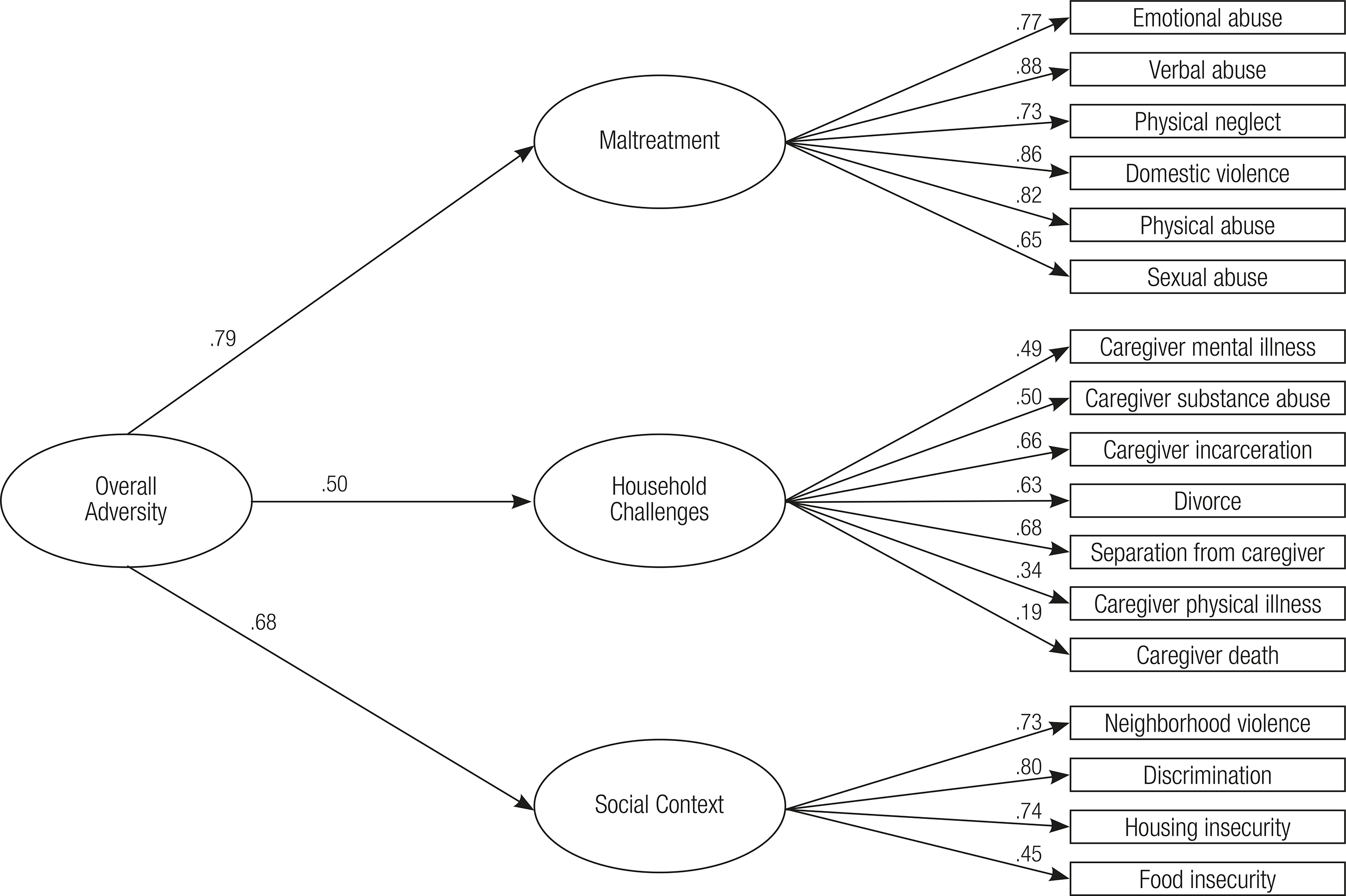
ACEs and related life events were assessed using the “Experiências Adversas na Infância Pediátrico e Rastreador de Eventos de Vida Relacionados” (PEARLS-BR) questionnaire, which has been validated in Brazil11. PEARLS-BR is a self-administered questionnaire designed to screen for ACEs and related life events in individuals from birth to eighteen years old. PEARLS-BR Child and PEARLS-BR Teen versions consist of seventeen questions, with PEARLS-BR Teen including an additional two questions. These items assess occurrences of violence, neglect, and family-related challenges, along with issues like housing instability and discrimination. PEARLS-BR Child and PEARLS-BR Teen are completed by a caregiver. Scoring involves summing the affirmative responses on the questionnaire (with each item dichotomized as yes or no). For the purposes of this study, only the 17 questions common to both versions were considered in the confirmatory factor analysis. A list of all 17 ACEs and related life events measured is provided in Figure 1.

Diagram of Confirmatory Three-Factor Model of the “Experiências Adversas na Infância Pediátrico e Rastreador de Eventos de Vida Relacionados” (PEARLS-BR)
Outcomes assessment
Child general health was measured using the Patient-Reported Outcomes Measurement Information System (PROMIS) Global Health 10-item questionnaire, which evaluates various aspects of physical, mental, and social health, alongside pain, fatigue, and perceived quality of life as reported by caregivers. This instrument, validated in Brazil12, was authorized for use in this study through an agreement signed between the copyright holder and UCS. Responses were categorized on a scale from excellent to poor, with each question assigned a numeric code: 5 for excellent, 4 for very good, 3 for good, 2 for fair, and 1 for poor. Once responses were recoded, scores were summed for each item. Summed scores were then divided into three categories: Global Physical Health, Global Mental Health, and overall Global Health. The raw scores were analyzed as continuous variables and converted into t-scores for norm-referenced comparisons13,14. Lower t-scores indicated poorer health, with a range of 23.5 to 57.7 for physical health, 21.2 to 59 for mental health, and similar ranges for the overall Global Health score.
The Swanson, Nolan, and Pelham (SNAP-IV) questionnaire, a public domain instrument, validated for use in Brazil, was used to assess potential symptoms of Attention Deficit Hyperactivity Disorder (ADHD)15. Comprising 18 items, each response is categorized as ‘not at all’ (unscored), ‘just a little’ (unscored), ‘quite a bit’ (scored as 1), and ‘very much’ (scored as 1). Total scores are then calculated across all items, with diagnostic criteria for ADHD established if the total attention or hyperactivity score reaches 6 or above.
Data on the presence of asthma, allergic rhinitis, and atopic dermatitis were gathered using the International Study of Asthma and Allergies in Childhood (ISAAC) questionnaire. This questionnaire has been validated and standardized for international use16. In order to utilize it in Brazil, an agreement was signed between the copyright holder of ISAAC and UCS, granting permission for its application. The individual pathologies (rhinitis, dermatitis, and asthma) were not evaluated separately; instead, the presence of any of these conditions was grouped under the variable “atopy”.
Height and weight data were extracted from the latest medical records, and sex - and age - specific body mass index (BMI) z-scores and percentiles were calculated using the World Health Organization BMI charts20. Children were classified as eutrophic, overweight, obese, and undernourished. For analysis, comparisons were made between obese and eutrophic children, excluding those classified as overweight or undernourished.
It was utilized caregiver-reported data to identify the presence of acute infections (including upper and lower respiratory infections, sinusitis, bronchiolitis, pneumonia, influenza and other viral infections, scarlet fever, otitis, and conjunctivitis), as well as gastrointestinal tract disorders (urinary tract infections, nausea, abdominal pain, epigastric pain, colic, and constipation) and headaches. The data collection spanned the 12 months preceding recruitment, with the presence or absence of each condition.
Covariates assessment
Socio-demographic covariates were identified a priori based on existing literature on childhood adversities and health outcomes24. They were child age (continuous), sex, race/ethnicity (categorized as White, Black, Brown, Indigenous, and Asian), caregiver education (categorized as never attended school, preschool, elementary school, high school, college or higher education), and family income per month, which was dichotomized as <R$2,589 vs. ≥R$2,590 based on the income threshold for personal income tax liability in Brazil and the criteria set by the Cadastro Único (Decree No. 6,135/2007) for defining low-income families.
Validation Process
Evidence Based on Internal Structure (Construct Validity)
A confirmatory factor analysis (CFA) was employed to evaluate the internal structure of the PEARLS-BR, identifying three latent domains: “maltreatment,” “household challenges,” and “social context.” These domains are supported by previous studies that have consistently demonstrated the theoretical validity of this factor structure.
Evidence Based on Relationships with External Variables (Criterion Validity)
Criterion validity was assessed through binomial logistic regression analyses, examining the associations between the PEARLS-BR latent domains and various pediatric health outcomes. This analysis provided insight into how these domains relate to external health variables, further validating the instrument.
Statistical analysis
A three-factor model was tested to evaluate the latent structure of the PEARLS-BR items, informed by prior studies that support this structure, encompassing “maltreatment,” “household dysfunction”, and “social stressors”24,25. The CFA was conducted using diagonally weighted least squares (DWLS) estimation in R (package “lavaan”).
Model fit was evaluated using several indices: the chi-square statistic to assess overall fit, the comparative fit index (CFI ≥ 0.95) and Tucker-Lewis index (TLI ≥ 0.95) for relative fit, the root mean square error of approximation (RMSEA ≤ 0.05) for absolute fit, and the standardized root mean square residual (SRMR < 0.08) to measure the average discrepancy between observed and predicted correlations26,27.
These latent domains, namely “maltreatment”, “household challenges”, and “social context”, were derived from the 17 PEARLS items. A standardized factor loading cutoff of ≥ 0.30 was applied for inclusion. Cronbach’s alpha (α) and McDonald’s omega (ω) were calculated to assess internal consistency for the items within each factor and reliability of the latent domains, with values above 0.75 indicating satisfactory consistency. The 95% Confidence intervals for α and ω were computed using the Bias-Corrected and Accelerated (BCa) Bootstrap Interval.
Once the domains were established, composite scores for each PEARLS-BR domain were calculated for each participant by summing the number of affirmative responses within each domain. Additionally, a second-order factor structure was incorporated into the CFA to represent an overarching summary measure of adversity, acknowledging the intercorrelation of items and the aggregate scoring commonly found in the literature26,27.
To evaluate the invariance of the model across different groups, multigroup CFA analyses were conducted. These analyses examined the model’s fit across different age ranges (<13 years vs. ≥13 years) and genders (male and female), using model fit indices such as chi-square, CFI, TLI, RMSEA, and SRMR.
The association between the latent domains and health outcomes were examined using a binomial logistic regression model, with the three risk factor domains and covariates as predictors. This analysis allowed for the estimation of the magnitude of the association between each risk factor and the probability of occurrence of the outcome, expressed as an Odds Ratio (OR). The Bootstrap technique was used to improve estimate precision. From these results, 95% confidence intervals (CIs) were calculated for the ORs, indicating the most plausible range of values for the true association between each risk factor and the outcome.
All the study data were collected and managed using REDCap (Research Electronic Data Capture), hosted at UCS. REDCap is a secure web-based software platform designed to support data capture for research studies28,29. Statistical analysis was conducted using R software version 3.5.2.
RESULTS
The characteristics of the children, adolescents, and their respective caregivers who participated in this study are detailed in Table 1. Participants reported experiencing an average of 3.4 ACEs and related life events (SD = 3.2).
Confirmatory Factor Analysis Structure
The CFA demonstrated an excellent fit for the three-factor model with a second-order summary factor, as indicated by fit indices (RMSEA = 0.000; CFI = 1.000; TLI = 1.001; SRMR = 0.130) (Table 2). The latent structure is depicted in Figure 1. The first domain, labeled “Maltreatment”, comprised six items related to abuse and neglect (score range 0–6). The second domain, labeled “Household Challenges”, included seven items representing disruptions in the child’s household, such as caregiver mental illness, substance abuse, incarceration, divorce or separation, child separation from caregiver, caregiver physical illness, and death of a caregiver (score range 0–7). The third domain, labeled “Social Context,” encompassed four items capturing environmental and social stressors like neighborhood violence, discrimination, housing insecurity, and food insecurity (score range 0–4).
The analysis indicated significant variances for each factor: 0.58 for “Maltreatment,” 0.23 for “Household Challenges,” and 0.54 for “Social Context.” Covariances between the factors were also significant: 0.37 between “Maltreatment” and “Household Challenges”, 0.43 between “Maltreatment” and “Social Context”, and 0.30 between “Household Challenges” and “Social Context”. These results suggest that the items are good indicators of their respective factors and that the factors are significantly related. All factor loadings and covariances were significant with p-values ≤ 0.007, except for the “caregiver death” item, which had a non-significant factor loading (p = 0.130).
The regressions for “overall adversity” on “maltreatment”, “household challenges”, and “social context” demonstrated statistical significance. The standardized factor loadings (β) for “maltreatment”, “household challenges”, and “social context” indicate significant linear relationships between these domains and overall adversity (Table 2). Reliability indices (Cronbach’s alpha and McDonald’s omega) demonstrated high internal consistency for the ‘Maltreatment’ factor, with more variable results for ‘Household Challenges’ and ‘Social Context’ (Table 2).
The average number of exposures for each domain was as follows: 1.2 for “Maltreatment” (SD = 1.6), 1.1 for “Household Challenges” (SD = 1.2), and 1.0 for “Social Context” (SD = 1.0). These exposure rates indicate the extent to which children in the sample experienced different types of adversities.
Assessment of Measurement Invariance Across Age Groups and Genders
Measurement invariance was confirmed across different age groups and genders, with excellent fit indices reported for both age groups (<13 years and ≥13 years) and genders (male and female) (Table 3). Gender-specific analyses revealed that the model fit for females was particularly strong, indicating an excellent fit, while, for males, the fit was slightly less precise, it still indicated a good fit overall. These results validate the robustness of the PEARLS-BR instrument in capturing adverse childhood experiences consistently across diverse demographic groups in Brazil.
Associations between PEARLS-BR domains and child outcomes
In a multivariable analysis adjusting for age, sex, family income, and caregiver’s level of education, maltreatment was associated with a non-significant increase in the odds of obesity, atopy, ADHD symptoms, infections, and mental health. Additionally, maltreatment did not show significant associations with other health outcomes, including global health, physical health, gastrointestinal conditions, and headaches. (See Table 4).
Household challenges were not significantly associated with most health outcomes. However, they were associated with a non-significant increase in the odds of physical health, infection, global health, gastrointestinal conditions, headaches, and ADHD symptoms. There were no significant associations with mental health, obesity, and atopy. (See Table 4).
The social context domain showed a significant association with global health, with an OR of 1.21 (95% CI 1.03; 1.51), indicating a significant increase in the odds of reporting worse global health status. Additionally, social context was associated with a non-significant increase in the odds of gastrointestinal conditions, mental health, infection, and headaches. However, no significant associations were found with physical health, ADHD symptoms, obesity, and atopy. (See Table 4).
DISCUSSION
This study aimed to evaluate the psychometric properties of the Brazilian version of the Experiências Adversas na Infância Pediátrico e Rastreador de Eventos de Vida Relacionados (PEARLS-BR), identify latent domains, and explore their associations with pediatric health outcomes. The findings underscore the importance of culturally adapting ACEs assessment tools to reflect the unique experiences of Brazilian children and adolescents.
The results from the CFA provide strong evidence based on internal structure (construct validity), confirming the robustness of the PEARLS-BR scale in capturing the multidimensional nature of childhood adversity. The CFA validated a three-factor model for PEARLS-BR, which includes “maltreatment”, “household challenges”, and “social context”. This model aligns with previous research in diverse cultural contexts that also identified these three domains as core components of childhood adversity24. Other studies have similarly identified two domains – “maltreatment” and “household challenges” - within the traditional ACEs categories. For example, a Canadian study using CFA found that the domains of child “maltreatment” and “household challenges” were associated with poor mental and physical health, but did not identify a social-environmental factor30. Conversely, Liming et al.25 examined three latent domains – “maltreatment”, “household dysfunction”, and “social stressors” - which closely relate to the domains it was examined in this current study, emphasizing the multifaceted nature of childhood adversity. However, only the original PEARLS study24 and the present study have specifically examined these three latent domains, providing a comprehensive view of the various dimensions of childhood adversity.
Although the SRMR value of 0.130 was slightly above the conventional threshold, it still indicates an acceptable fit. The internal consistency of the PEARLS-BR varied across domains, with robust Cronbach’s alpha and McDonald’s omega coefficients for “maltreatment,” while the other domains showed lower reliability, consistent with findings from the original PEARLS study23. Differences in reliability may be attributed to sample size variations across studies.
The results of the multigroup CFA demonstrated that the PEARLS-BR instrument maintains measurement invariance across different age groups and genders, suggesting its robustness and reliability in diverse Brazilian subpopulations. These findings align with previous studies that have explored the measurement invariance of instruments assessing ACEs. The original PEARLS study also confirmed the measurement invariance of a similar ACEs measurement tool across various demographic groups, highlighting the tool’s reliability in different contexts24. This similarity suggests that the PEARLS-BR is a stable and reliable instrument for assessing childhood adversity in Brazil, comparable to other validated tools used internationally24,31. However, some differences were noted. The original PEARLS study found strong invariance across age and gender24, while our study showed slightly better fit for females. This discrepancy might indicate subtle differences in how adverse experiences are reported or perceived across genders, which warrants further investigation.
The study examined the associations between the PEARLS-BR latent domains and pediatric health outcomes, providing strong evidence for criterion validity. Multivariable analysis revealed non-significant associations between “maltreatment” and most health outcomes, with odds ratios (OR) ranging from 1.09 (mental health) to 1.42 (obesity). Similarly, “household challenges” showed non-significant associations, with ORs between 0.78 (obesity) and 1.23 (physical health), indicating potential but inconclusive impacts on child health.
In contrast, the “social context” domain demonstrated a significant association with general and global health (OR 1.21, 95% CI 1.03; 1.51), highlighting the influence of social determinants, such as community violence and housing instability, on overall health status. These findings are consistent with the original PEARLS study, although that study also found significant associations with eczema and somatic symptoms, which were not observed here24.
The results underscore the complexity of the relationship between ACEs and child health, reinforcing the need for further investigation. The nuanced relationships observed in this study align with existing literature, which suggests that the impact of ACEs on health outcomes can vary widely depending on a range of factors, including the type and severity of adversity, as well as individual and contextual factors4,32. For instance, Anda et al.6 emphasize the importance of a multifaceted approach to understanding and addressing ACEs, incorporating both individual and community-level interventions to effectively mitigate their adverse effects 33. Similarly, other studies have demonstrated the profound influence of social determinants of health, such as economic stability, education, and community environment, on the long-term health outcomes of children exposed to ACEs34.
The validation of the PEARLS-BR opens new avenues for early identification and intervention strategies tailored to the Brazilian context. Healthcare providers can utilize this tool to screen for ACEs and related life events, facilitating timely referrals to appropriate support services. Furthermore, research indicates that early intervention can improve health outcomes and reduce the risk of developing chronic conditions associated with ACEs6,35,36. Policymakers can leverage these findings to design and implement public health initiatives aimed at mitigating the impact of ACEs on Brazilian children’s health and development. Community programs that enhance social support and reduce violence exposure improve resilience and well-being35. These strategies underscore the critical need for a comprehensive, culturally-sensitive approach to addressing childhood adversity in Brazil.
The present study has limitations that should be considered when interpreting the results. First, the reliance on caregiver reports may introduce bias, as caregivers might underestimate or overestimate both the exposure to adversities and the health outcomes of the children. To minimize potential response biases, it is important to consider using multiple sources of information, including self-reports from adolescents. Another limitation was the absence of invariance analyses due to the small sample size. Despite this, the robustness of the PEARLS-BR instrument across different age groups and genders within the sample provides a strong foundation for its use. Lastly, the confirmatory factor analysis was conducted only with the 17 common questions in both versions of the PEARLS-BR questionnaire, excluding the 2 additional questions in the TEEN version due to small sample size. Future research should use larger and more representative samples.
The validation of the PEARLS-BR opens new opportunities for implementing early identification and intervention strategies in the Brazilian context. Interventions targeting both individual and community levels can help mitigate the adverse effects of negative childhood experiences. Future research should also explore specific interventions addressing the social determinants of health, such as community programs and policy changes, to reduce the impact of adversities on the health of Brazilian children.
This study illuminates the complexity of childhood adversity and its diverse impacts on pediatric health outcomes in Brazil. These results affirm the utility of the PEARLS-BR as a valuable tool for early identification and tailored intervention strategies for Brazilian children, potentially mitigating long-term health effects. Moreover, the nuanced associations observed between identified latent domains and various health outcomes underscore the necessity of targeted public health initiatives addressing social determinants of health. These efforts are crucial for enhancing child well-being and fostering resilience in the face of adversity.
CONCLUSIONS
The PEARLS-BR is a valid and reliable instrument for assessing childhood adversities in Brazilian children and adolescents. The model demonstrated a good fit and effectively captured childhood adversity. These findings underscore its clinical importance in addressing ACEs in Brazil
ACKNOWLEDGEMENTS
To the medical students E. T. Rotta and G. S. Schramm for the help in the data collection. The authors also thank the patients and their parents/caregivers who participated in this study.
REFERENCES
-
1 Centers for Disease Control and Prevention. About Adverse Childhood Experiences | Adverse Childhood Experiences (ACEs) | CDC [Internet]. 2019 [cited 2024 May 31]. Available from: https://www.cdc.gov/aces/about/index.html
» https://www.cdc.gov/aces/about/index.html - 2 Thakur N, Hessler D, Koita K, Ye M, Benson M, Gilgoff R, et al. Pediatrics adverse childhood experiences and related life events screener (PEARLS) and health in a safety-net practice. Child Abuse Negl. 2020 Oct;108:104685.
- 3 Felitti VJ, Anda RF, Nordenberg D, Williamson DF, Spitz AM, Edwards V, et al. Relationship of childhood abuse and household dysfunction to many of the leading causes of death in adults. The Adverse Childhood Experiences (ACE) Study. Am J Prev Med. 1998 May;14(4):245-58.
-
4 Bethell CD, Newacheck P, Hawes E, Halfon N. Adverse childhood experiences: assessing the impact on health and school engagement and the mitigating role of resilience. Health Aff (Millwood) [Internet]. 2014 [cited 2024 Feb 27];33(12):2106-15. Available from: https://pubmed.ncbi.nlm.nih.gov/25489028/
» https://pubmed.ncbi.nlm.nih.gov/25489028/ - 5 Shonkoff JP, Garner AS, Siegel BS, Dobbins MI, Earls MF, Garner AS, et al. The Lifelong Effects of Early Childhood Adversity and Toxic Stress. Pediatrics. 2012 Jan 1;129(1):e232-46.
- 6 Anda RF, Felitti VJ, Bremner JD, Walker JD, Whitfield Ch, Perry BD, et al. The enduring effects of abuse and related adverse experiences in childhood. Eur Arch Psychiatry Clin Neurosci. 2006 Apr 29;256(3):174-86.
- 7 Grassi-Oliveira R, Cogo-Moreira H, Salum GA, Brietzke E, Viola TW, Manfro GG, et al. Childhood Trauma Questionnaire (CTQ) in Brazilian samples of different age groups: Findings from confirmatory factor analysis. PLoS One. 2014 Jan 27;9(1).
-
8 Grassi-Oliveira R, Stein LM, Pezzi JC. Tradução e validação de conteúdo da versão em português do Childhood Trauma Questionnaire Rev Saude Publica [Internet]. 2006 Apr [cited 2021 Aug 28];40(2):249-55. Available from: http://www.scielo.br/scielo.php?script=sci_arttext&pid=S0034-89102006000200010&lng=pt&tlng=pt
» http://www.scielo.br/scielo.php?script=sci_arttext&pid=S0034-89102006000200010&lng=pt&tlng=pt - 9 Stochero L, Moraes CL, Marques ES, Santos EB dos, Pacheco DL, Reichenheim ME, et al. Prevalência e coocorrência de Experiências Adversas na Infância: um inquérito de base escolar no município do Rio de Janeiro. Cien Saude Colet. 2021 Sep;26(9):4115-27.
- 10 Rocha HAL, Sudfeld CR, Leite ÁJM, Rocha SGMO, Machado MMT, Campos JS, et al. Adverse Childhood Experiences and Child Development Outcomes in Ceará, Brazil: A Population-based Study. Am J Prev Med. 2021 Apr;60(4):579-86.
-
11 Balico LCM, Thakur N, Long D, da Silva ER, de Souza VC. Pediatrics ACES and related life event screener (PEARLS): translation, transcultural adaptation, and validation to Brazilian Portuguese. J Pediatr (Rio J) [Internet]. 2024 Oct 29 [cited 2024 Oct 30]; Available from: https://linkinghub.elsevier.com/retrieve/pii/S002175572400130X
» https://linkinghub.elsevier.com/retrieve/pii/S002175572400130X - 12 Zumpano CE, Mendonça TM da S, Silva CHM da, Correia H, Arnold B, Pinto R de MC. Adaptação transcultural e validação da escala de Saúde Global do PROMIS para a língua portuguesa. Cad Saude Publica. 2017;33.
-
13 National Institutes of Health. GLOBAL HEALTH SCORING MANUAL -PROMIS [Internet]. 2023 [cited 2024 May 5]. Available from: https://www.healthmeasures.net/images/PROMIS/manuals/Scoring_Manual_Only/PROMIS_Global_Health_Scoring_Manual_22June2023.pdf
» https://www.healthmeasures.net/images/PROMIS/manuals/Scoring_Manual_Only/PROMIS_Global_Health_Scoring_Manual_22June2023.pdf -
14 National Institute of Health. PROMIS® Score Cut Points [Internet]. 2023 [cited 2024 May 5]. Available from: https://www.healthmeasures.net/score-and-interpret/interpret-scores/promis/promis-score-cut-points
» https://www.healthmeasures.net/score-and-interpret/interpret-scores/promis/promis-score-cut-points - 15 Mattos P, Serra-Pinheiro MA, Rohde LA, Pinto D. Apresentação de uma versão em português para uso no Brasil do instrumento MTA-SNAP-IV de avaliação de sintomas de transtorno do déficit de atenção/hiperatividade e sintomas de transtorno desafiador e de oposição. Revista de Psiquiatria do Rio Grande do Sul. 2006;28.
- 16 Vanna AT, Yamada E, Arruda LK, Naspitz CK, Solé D. International Study of Asthma and Allergies in Childhood: validation of the rhinitis symptom questionnaire and prevalence of rhinitis in schoolchildren in São Paulo, Brazil. Pediatr Allergy Immunol. 2001 Apr;12(2):95-101.
- 17 Solé D, Vanna A, Yamada E, Rizzo M, Naspitz C. International Study of Asthma and Allergies in Childhood (ISAAC) written questionnaire: validation of the asthma component among Brazilian children. J Investig Allergol Clin Immunol. 1998;8(6):376-82.
- 18 Yamada E, Vanna AT, Naspitz CK, Solé D. International Study of Asthma and Allergies in Childhood (ISAAC): validation of the written questionnaire (eczema component) and prevalence of atopic eczema among Brazilian children. J Investig Allergol Clin Immunol. 2002;12(1):34-41.
- 19 Ellwood P, Asher MI, Beasley R, Clayton TO, Stewart AW, ISAAC Steering Committee. The international study of asthma and allergies in childhood (ISAAC): phase three rationale and methods. International Journal Tuberculosis Lung Disease. 2005 Jan 9;9(1):10-6.
-
20 World Health Organization. BMI Boys: 5 to 19 years (z-score) [Internet]. [cited 2024 May 15]. Available from: https://cdn.who.int/media/docs/default-source/child-growth/growth-reference-5-19-years/bmi-for-age- (5-19-years)/cht-bmifa-boys-z-5-19years.pdf?sfvrsn=4007e921_4
» https://cdn.who.int/media/docs/default-source/child-growth/growth-reference-5-19-years/bmi-for-age- (5-19-years)/cht-bmifa-boys-z-5-19years.pdf?sfvrsn=4007e921_4 -
21 World Health Organization. BMI Girls:5 to 19 years (z-scores) [Internet]. [cited 2024 May 15]. Available from: https://cdn.who.int/media/docs/default-source/child-growth/growth-reference-5-19-years/bmi-for-age- (5-19-years)/cht-bmifa-girls-z-5-19years.pdf?sfvrsn=c708a56b_4
» https://cdn.who.int/media/docs/default-source/child-growth/growth-reference-5-19-years/bmi-for-age- (5-19-years)/cht-bmifa-girls-z-5-19years.pdf?sfvrsn=c708a56b_4 -
22 World Health Organization. Boys chart- BMI-for-age: Birth to 5 years (z-scores) [Internet]. [cited 2024 May 15]. Available from: https://cdn.who.int/media/docs/default-source/child-growth/child-growth-standards/indicators/body-mass-index-for-age/cht-bfa-boys-z-0-5.pdf?sfvrsn=2e1bd6a5_17
» https://cdn.who.int/media/docs/default-source/child-growth/child-growth-standards/indicators/body-mass-index-for-age/cht-bfa-boys-z-0-5.pdf?sfvrsn=2e1bd6a5_17 -
23 World Health Organization. Girls chart- BMI-for-age: Birth to 5 years (z-scores) [Internet]. [cited 2024 May 15]. Available from: https://cdn.who.int/media/docs/default-source/child-growth/child-growth-standards/indicators/body-mass-index-for-age/cht-bfa-girls-z-0-5.pdf?sfvrsn=cf716a4a_17
» https://cdn.who.int/media/docs/default-source/child-growth/child-growth-standards/indicators/body-mass-index-for-age/cht-bfa-girls-z-0-5.pdf?sfvrsn=cf716a4a_17 - 24 Ye M, Hessler D, Ford D, Benson M, Koita K, Bucci M, et al. Pediatric ACEs and related life event screener (PEARLS) latent domains and child health in a safety-net primary care practice. BMC Pediatr. 2023 Dec 1;23(1).
- 25 Liming KW. Examining the Differing Effects of Economic Hardship and Poor Maternal Wellbeing on Cumulative Exposure to Adverse Childhood Experiences. J Child Adolesc Trauma. 2019 Sep 21;12(3):307-21.
- 26 Bentler PM. Comparative fit indexes in structural models. Psychol Bull. 1990;107(2):238-46.
- 27 Hu L, Bentler PM. Cutoff criteria for fit indexes in covariance structure analysis: Conventional criteria versus new alternatives. Struct Equ Modeling. 1999 Jan;6(1):1-55.
- 28 Harris PA, Taylor R, Minor BL, Elliott V, Fernandez M, O'Neal L, et al. The REDCap consortium: Building an international community of software platform partners. J Biomed Inform. 2019 Jul;95:103208.
- 29 Harris PA, Taylor R, Thielke R, Payne J, Gonzalez N, Conde JG. Research electronic data capture (REDCap)--a metadata-driven methodology and workflow process for providing translational research informatics support. J Biomed Inform. 2009 Apr;42(2):377-81.
- 30 Afifi TO, Salmon S, Garcés I, Struck S, Fortier J, Taillieu T, et al. Confirmatory factor analysis of adverse childhood experiences (ACEs) among a community-based sample of parents and adolescents. BMC Pediatr. 2020 Dec 21;20(1):178.
- 31 Mei X, Li J, Li ZS, Huang S, Li LL, Huang YH, et al. Psychometric evaluation of an Adverse Childhood Experiences (ACEs) measurement tool: an equitable assessment or reinforcing biases? Health Justice. 2022 Nov 29;10(1):34.
- 32 Finkelhor D, Shattuck A, Turner H, Hamby S. A revised inventory of Adverse Childhood Experiences. Child Abuse Negl. 2015 Oct;48:13-21.
- 33 Anda RF, Butchart A, Felitti VJ, Brown DW. Building a Framework for Global Surveillance of the Public Health Implications of Adverse Childhood Experiences. Am J Prev Med. 2010 Jul;39(1):93-8.
- 34 Braveman P, Gottlieb L. The Social Determinants of Health: It's Time to Consider the Causes of the Causes. Public Health Reports. 2014 Jan 1;129(1_suppl2):19-31.
- 35 Asmussen K, McBride T, Waddell S. The Potential of Early Intervention for Preventing and Reducing ACE-Related Trauma. Social Policy and Society. 2019 Jul 2;18(3):425-34.
- 36 Jeung J, Hessler Jones D, Frame L, Gilgoff R, Long D, Thakur N, et al. A Caregiver-Child Intervention for Mitigating Toxic Stress ("The Resiliency Clinic"): A Pilot Study. Matern Child Health J. 2022 Oct 10;26(10):1959-66.
-
FUNDING SOURCES
L.B. was supported by CAPES: “This study was financed in part by the Coordenação de Aperfeiçoamento de Pessoal de Nível Superior - Brasil (CAPES) - Finance Code 001”.