Ectopic Cushing’s syndrome triggering a bipolar affective disorder
ABSTRACT
Objective To report the case of a patient with Cushing’s syndrome (CS) resulting from an ectopic tumor producing adrenocorticotropic hormone (ACTH) in an unusual topography, triggering bipolar affective disorder (BAD) in a previously healthy patient.
Method A case study. Interviews were conducted with the patient and family members to collect data. Information contained in medical records and exams was also used.
Results A 63-year-old man, previously healthy, with a positive family history of psychiatric disorders. He presented with clinical changes and a maniform syndrome. After extensive clinical investigation, he was diagnosed with CS due to an ACTH-secreting neuroendocrine tumor in the ileum topography. Surgery was performed to excise the lesion and the patient improved rapidly of his clinical and psychiatric symptoms. However, different from the expected evolution, the patient returned to present new manic and depressive episodes, and was then diagnosed with BAD. The main hypothesis is that the psychiatric disorder was triggered by exposure to high levels of cortisol resulting from an ectopic ACTH-producing tumor in a genetically susceptible patient.
Conclusions The present report illustrates the diagnostic difficulty of CS and draws attention to the frequent interface between CS and psychiatric manifestations. It highlights the importance of clinicians and psychiatrists to consider organic conditions such as CS as a differential diagnosis in the face of psychiatric symptoms with atypical presentation or an unsatisfactory response to treatment.
Bipolar disorder; mania; cushing; psychiatric symptoms; neuroendocrine tumor
RESUMO
Objetivo Relatar o caso de um paciente com síndrome de Cushing (SC) decorrente de um tumor ectópico produtor de hormônio adrenocorticotrófico (ACTH) em topografia inusual, o que desencadeou transtorno afetivo bipolar (TAB) em um paciente previamente hígido.
Método Estudo de caso. Para a coleta de dados foram realizadas entrevistas com o paciente e familiares. Também foram utilizadas informações contidas em prontuários e exames.
Resultados Homem de 63 anos, previamente saudável, com história familiar positiva para transtornos psiquiátricos. Apresentou alterações clínicas e síndrome maniforme. Após extensa investigação clínica ele foi diagnosticado com SC decorrente a um tumor neuroendócrino secretor de ACTH na topografia do íleo. Foi realizada cirurgia para excisão da lesão e o paciente apresentou rápida melhora dos sintomas clínicos e psiquiátricos. Entretanto, diferentemente da evolução esperada, o paciente voltou a apresentar novos episódios maníacos e depressivos, sendo então diagnosticado com TAB. A principal hipótese é que o transtorno psiquiátrico foi desencadeado pela exposição a altos níveis de cortisol resultantes de um tumor ectópico produtor de ACTH em um paciente geneticamente suscetível.
Conclusões O presente relato ilustra a dificuldade diagnóstica da SC e chama a atenção para a interface frequente entre SC e manifestações psiquiátricas. Ele destaca a importância de clínicos e psiquiatras considerarem condições orgânicas como a SC como um diagnóstico diferencial diante de sintomas psiquiátricos com apresentação atípica ou com resposta insatisfatória ao tratamento.
Transtorno bipolar; mania; cushing; sintomas psiquiátricos; tumor neuroendócrino
INTRODUCTION
Ectopic Cushing syndrome (ECS) is a rare condition responsible for about 5–20% of all Cushing syndrome (CS) cases. It is a type of primary CS, characterized by hypersecretion of adrenocorticotrophic hormone (ACTH) and/or corticotrophin-releasing hormone (CRH) outside of the hypothalamic-pituitary-adrenal (HPA) axis. In most cases, the source of ectopic production of ACTH is located in the lungs and mediastinum, but it can also be produced by tumors originating from other parts of the body, such as gastroenteropancreatic neuroendocrine tumors (GepNETs) and pheochromocytomas. Removal of the ACTH-producing source allows for curing or a significant reduction of symptoms and serum cortisol levels1.
CS is associated with a high risk of cardiovascular, metabolic, infectious, respiratory and neuropsychiatric complications, with a high degree of morbidity and mortality. Psychiatric symptoms are often comorbid with CS, but can also be the first manifestation of CS. The high prevalence of psychiatric symptoms in CS has been attributed to the deleterious effects of excess cortisol on the central nervous system, causing irreversible functional and structural changes2,3,4.
Although there are several studies in the literature showing changes in the HPA axis in patients with bipolar affective disorder (BAD)5, no specific study linked hypercortisolism as a trigger for BAD. In this study, we present a case report of a GepNET causing CS and triggering BAD in a previously healthy patient.
CASE REPORT
Patient information: A 63-year-old previously healthy man, with no history of previous use of psychoactive substances, was regarded as an entrepreneurial, innovative person with a “strong personality” and successful in his line of work. He had a positive family history of BAD, schizophrenia, suicide and alcoholism.
Clinical picture: In December 2019, he complained of ocular proptosis, upper-limb tremors, difficulty walking and generalized edema. His symptoms were gradually progressive and initially investigated in an out-patient setting, where hyperglycemia, arterial hypertension, and proximal weakness in the lower limbs were noted. He also gradually presented with significant behavioral changes characterized by increased energy, hyperactivity, reduced need for sleep, exalted mood, irritability, aggressiveness, grandiose ideas and unrealistic plans. He was finally admitted for diagnostic consideration in February 2020.
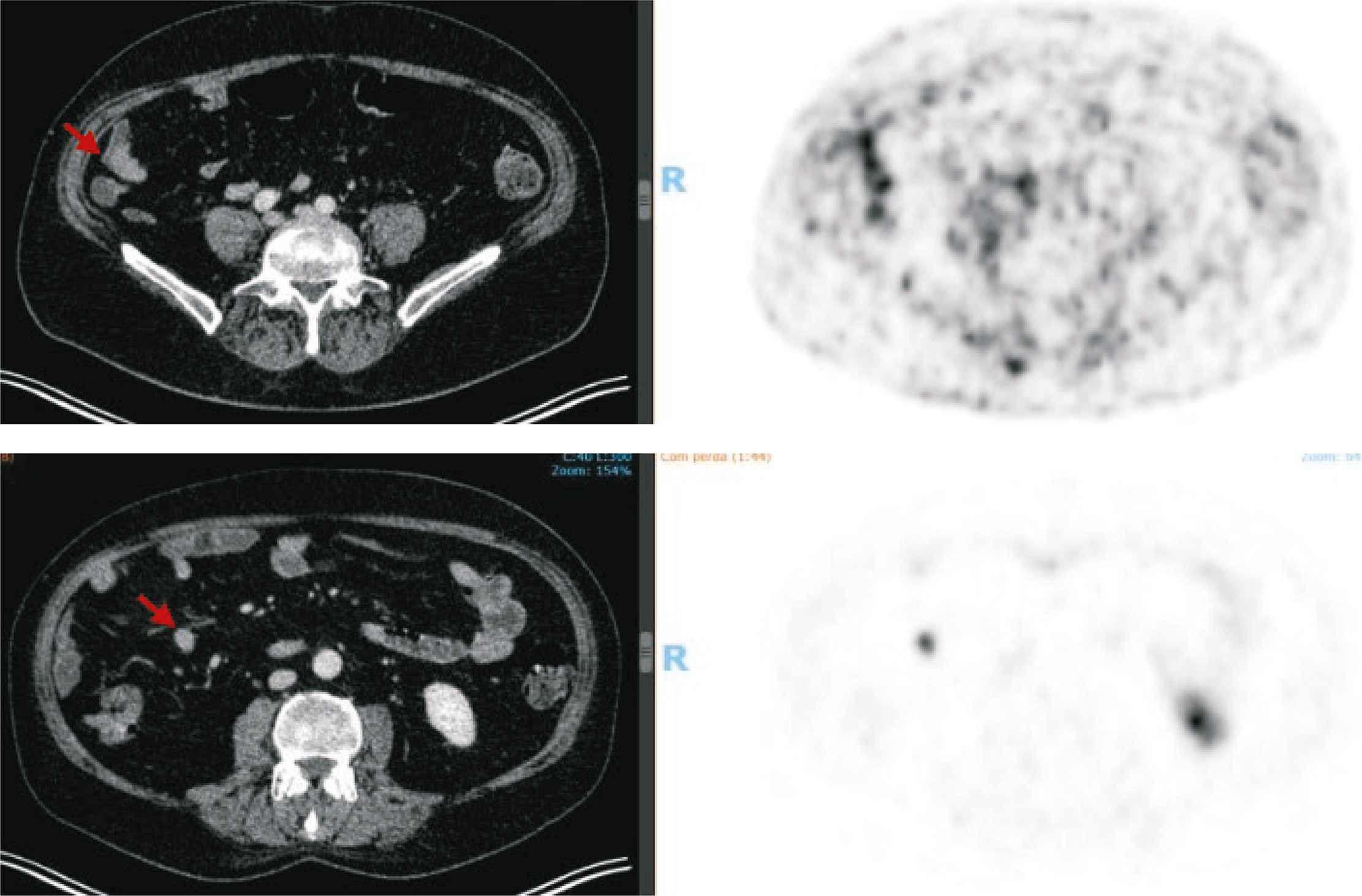
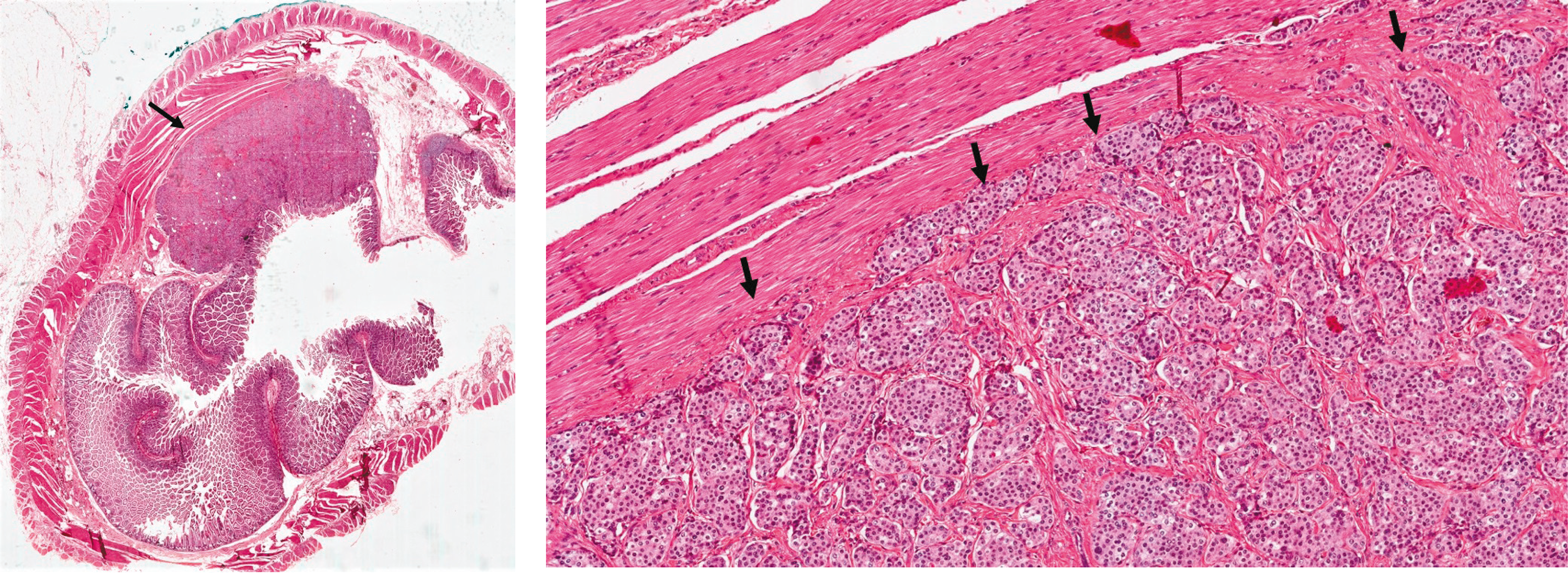
Diagnosis: Laboratory screening exams detected hyperglycemia (205 mg/dL), hypokalemia (2.7 mEq/L) and serum cortisol reduction (0.3 mcg/dL). CS was suspected, ACTH levels were high (147 pg/mL), prompting the search for a pituitary or ectopic tumor. Orbital and brain MRI were unrevealing. However, positron emission tomography (PET-CT) scans showed a slight focal increase in the uptake of the somatostatin analog in the small intestine, in the topography of the ileum, in the right flank, and a moderate focal increase in the uptake of the analog in a discrete single enlarged lymph node, located in the mesentery of the right flank (Figure 1). Lesion was excised and immunohistochemical examination showed a grade 1 GepNET (Figure 2). Surgery was considered curative, with no need for adjuvant chemotherapy or radiotherapy. Patient had a rapid improvement in clinical and laboratory abnormalities.
Intervention: Lesion was excised and immunohistochemical examination showed a grade 1 GepNET (Figure 2).
Outcome: Surgery was considered curative, with no need for adjuvant chemotherapy or radiotherapy. Patient had a rapid improvement in clinical and laboratory abnormalities. From a psychiatric point of view, the patient’s maniac manifestations completely improved after 5 days of surgery, but 7 months later he developed a depressive state, which was treated with mirtazapine. One month after mirtazapine introduction, he developed another maniac episode and was treated with olanzapine and valproic acid with a possible BAD diagnosis. However, response was not satisfactory, lithium was added with no benefit and he was subsequently started on risperidone instead of olanzapine. Patient was readmitted to hospital with worsening of symptoms with disorientation and memory complaints. Neurological examination was unrevealing and valproic acid was raised to 1 g/day with gradual improvement of another possible maniac episode. In the out-patient setting, due to the gradual improvement, valproic acid was suspended, but his led to a depressive episode treated with trazodone at this time. A new admission to hospital occurred with agitation, insomnia, suicidal ideation and grandiose ideas. Valproic acid was started again (1g/day) combined with olanzapine 10mg/day, zolpidem 10mg/day and clonazepam 0,5 mg/day with improvement, but without remission. In view of two successive episodes of mania triggered after the use of antidepressants and given that the patient’s endocrinological pathology was under control, a diagnosis of BAD was made. Three years after the diagnosis of CS, the patient still had a depressed mood. In addition to the persistent mood swings, the patient was dependent on his family for the minimum activities of daily living.
DISCUSSION
CS is a rare disorder with an annual incidence of 2-3 per million6. It is often accompanied by a range of psychiatric symptoms5,7, such as mood disorders, anxiety, cognitive abnormalities, suicidal ideation, personality changes and psychotic episodes7,8. Major depressive syndrome is observed in 50% to 70% of cases9. Hypomania is present in around 3% and mania and psychosis are even less common2,3,8. BAD has a prevalence of 2.4% if we consider the entire bipolar spectrum. Its diagnosis is based on the presence of at least one manic or hypomanic episode, in the absence of a detected organic cause10.
This is a case of a 63-year-old man who developed a manic syndrome as the initial manifestation of CS and this triggered other episodes of mania and depression heralding the diagnosis of BAD. CS developed due to an ectopic ACTH-producing tumor in the ileum. There are only a few studies reporting mania secondary to ectopic ACTH production secondary to neoplastic lesions. We have found only two reports of CS resulting from ectopic tumors, one being a case of a 70-year-old woman with small cell lung carcinoma with ectopic production of ACTH who presented with mania and another study with 10 cases of patients with ectopic production of ACTH and bronchial carcinoid tumors11,12.
Persistent exposure of elevated levels of cortisol may produce neuropsychiatric and cognitive symptoms and may induce hippocampal and limbic changes13. Complete resolution of neuropsychiatric symptoms is not achieved in between 10 to 28% of cases3. In our patient, a great improvement was achieved within 5 days after the surgical removal of the tumor, but the patient has not returned to his baseline functionality. Type 1 BAD diagnosis was suggested by the presence of maniac symptoms with depressive episodes even after the cure of CS. In addition, patient had positive family history for psychiatric problems in his first-degree relatives. The most significant factor associated with the development of BAD is the family history10. It depends on the presence of a set of susceptibility genes, which, when influenced by the external and/or internal environment, manifest themselves in a way that precipitates physiological changes whose expression characterizes the disease14.
CONCLUSION
This case illustrates the importance of clinicians and psychiatrists to consider organic conditions in the differential diagnosis when faced with psychiatric symptoms with an atypical presentation or an unsatisfactory response to treatment. In cases of refractory depression, manic syndromes or unexplained acute psychosis, it is worth monitoring cortisol levels to rule out a possible endocrinological alteration as the etiology of the condition.
REFERÊNCIAS
- 1 Steward PM. The Adrenal Cortex. In: Larsen R, Kronenberg HM, Melmed S, Polonsky KS, eds. Williams Textbook of Endocrinology. 10th ed. Philadelphia: Saunders, 2003. pp. 491-551.
- 2 Santos A, Resmini E, Pascual JC, Crespo I, Webb SM. Psychiatric Symptoms in Patients with Cushing's Syndrome: Prevalence, Diagnosis and Management. Drugs. 2017 May;77(8):829-842.
- 3 Lin TY, Hanna J, Ishak WW. Psychiatric Symptoms in Cushing's Syndrome: A Systematic Review. Innov Clin Neurosci. 2020 Jan 1;17(1-3):30-35.
- 4 Piasecka M, Papakokkinou E, Valassi E, Santos A, Webb SM, de Vries F, Pereira AM, Ragnarsson O. Psychiatric and neurocognitive consequences of endogenous hypercortisolism. J Intern Med. 2020 Aug;288(2):168-182.
- 5 Belvederi Murri M, Prestia D, Mondelli V, Pariante C, Patti S, Olivieri B, Arzani C, Masotti M, Respino M, Antonioli M, Vassallo L, Serafini G, Perna G, Pompili M, Amore M. The HPA axis in bipolar disorder: Systematic review and meta-analysis. Psychoneuroendocrinology. 2016 Jan;63:327-42.
- 6 Pivonello R, Isidori AM, De Martino MC, Newell-Price J, Biller BM, Colao A. Complications of Cushing's syndrome: state of the art. Lancet Diabetes Endocrinol. 2016 Jul;4(7):611-29.
- 7 Wu Y, Chen J, Ma Y, Chen Z. Case Report of Cushing's Syndrome with an Acute Psychotic Presentation. Shanghai Arch Psychiatry. 2016 Jun 25;28(3):169-172.
- 8 Tang A, O'Sullivan AJ, Diamond T, Gerard A, Campbell P. Psychiatric symptoms as a clinical presentation of Cushing's syndrome. Ann Gen Psychiatry. 2013 Jul 17;12(1):23.
- 9 Santos A, Webb SM, Resmini E. Psychological complications of Cushing's syndrome. Curr Opin Endocrinol Diabetes Obes. 2021 Jun 1;28(3):325-329.
- 10 Transtorno bipolar: teoria e clínica [recurso eletrônico] / Organizadores, Flávio Kapczinski, João Quevedo. - 2. ed. - Porto Alegre: Artmed, 2016. e-PUB.
- 11 Tsirona S, Tzanela M, Botoula E, Belenis I, Rondogianni D, Tsagarakis S. CLINICAL PRESENTATION AND LONG-TERM OUTCOME OF PATIENTS WITH ECTOPIC ACTH SYNDROME DUE TO BRONCHIAL CARCINOID TUMORS: A ONE-CENTER EXPERIENCE. Endocr Pract. 2015 Oct;21(10):1104-10.
- 12 Collins C, Oakley-Browne M. Mania associated with small cell carcinoma of the lung. Aust N Z J Psychiatry. 1988 Jun;22(2):207-9.
- 13 van der Werff SJ, Pannekoek JN, Andela CD, Meijer OC, van Buchem MA, Rombouts SA, van der Mast RC, Biermasz NR, Pereira AM, van der Wee NJ. Resting-State Functional Connectivity in Patients with Long-Term Remission of Cushing's Disease. Neuropsychopharmacology. 2015 Jul;40(8):1888-98.
- 14 Michelon L, Vallada H. Fatores genéticos e ambientais na manifestação do transtorno bipolar. Arch Clin Psychiatry (São Paulo) [Internet]. 2005;32:21-7.