Non-pharmacological interdisciplinary rehabilitation in dementia: a qualitative study of Brazilian non-professional caregivers’ perspectives
ABSTRACT
Objectives: This study evaluated the perceptions of non-professional caregivers regarding a community-based dementia care service and examined the preliminary effects and adherence to an interdisciplinary program with culturally adapted interventions in Brazil.
Methods: A retrospective textual analysis of 17 caregiver testimonials from 30 dyads was conducted using IRaMuTeQ software and descending hierarchical classification method. The Chi-square test assessed associations between words and lexical classes.
Results: Six categories emerged: Positive restructuring of disease perception and coping strategies; Learning and improving disease management; Learning and adapting to the caregiver role; Behavioral transformations and re-engagement in activities; Recognition and appreciation of the humanized and interdisciplinary approach; and Positive impacts of participation in rehabilitation programs. The average weekly attendance rate was 89.02% (±10.65%). Caregivers reported a shift from fear and stigma to acceptance and more proactive management, with increased confidence, emotional well-being, and preparedness. Shared experiences and support networks were valued, as was the person-centered care model. Participation was perceived as transformative and beneficial to family dynamics.
Conclusion: The program demonstrated high adherence and cultural appropriateness, with promising preliminary outcomes. Further studies are needed to evaluate its long-term effectiveness and potential applicability in broader settings.
KEYWORDS
Dementia; Alzheimer's disease; Interdisciplinary rehabilitation; Non-pharmacological intervention; Caregiver
SUMÁRIO
Objetivos: Este estudo avaliou as percepções de cuidadores familiares informais (não profissionais) em relação a um serviço comunitário de cuidado a pessoas que vivem com demência e examinou os efeitos preliminares e a adesão a um programa interdisciplinar com intervenções culturalmente adaptadas no Brasil.
Métodos: Foi realizada uma análise textual retrospectiva de 17 depoimentos de cuidadores provenientes de 30 díades, utilizando o software IRaMuTeQ e o método de Classificação Hierárquica Descendente. O teste do qui-quadrado avaliou associações entre palavras e classes lexicais. Emergiram seis categorias: Reestruturação positiva da percepção da doença e estratégias de enfrentamento; Aprendizagem e aprimoramento do manejo da doença; Aprendizagem e adaptação ao papel de cuidador; Transformações comportamentais e reengajamento em atividades; Reconhecimento e valorização da abordagem humanizada e interdisciplinar; e Impactos positivos da participação em programas de reabilitação.
Resultados: A taxa média de frequência semanal foi de 89,02% (±10,65%). Os cuidadores relataram mudança do medo e estigma para a aceitação e manejo proativo, com aumento da confiança, do bem-estar emocional e da preparação. As experiências compartilhadas e as redes de apoio foram valorizadas, assim como o modelo de cuidado centrado na pessoa. A participação foi vista como transformadora e benéfica para a dinâmica familiar.
Conclusão: O programa demonstrou alta adesão e adequação cultural, com resultados preliminares promissores. São necessários mais estudos para avaliar sua efetividade a longo prazo e a potencial aplicabilidade em contextos mais amplos.
PALAVRAS-CHAVE
Demência; Doença de Alzheimer; Reabilitação interdisciplinar; Intervenção não farmacológica; Cuidador
INTRODUCTION
Caregivers of people with dementia face emotional, financial, and physical challenges associated with burden, depression, anxiety, and insufficient support.1-3 Behavioral and psychological symptoms of dementia exacerbate these challenges, increasing the likelihood of institutionalization and abuse against care recipients.4,5 In low- and middle-income countries, dementia care is additionally constrained by underfunded healthcare systems, underdiagnosis in early stages, and a high prevalence of modifiable risk factors,6 often compounded by limited access to training and insufficient family support, despite caregivers’ interest in receiving guidance.7,8
Globally, families play a central role in dementia care.7 Thus, including family members in the rehabilitation process is essential for training and supporting them, with group interventions being particularly recommended due to their positive effects.9,10 However, most structured dementia interventions have been developed in high-income countries, frequently limiting their applicability to different sociocultural contexts.11 To address this gap, linguistic and cultural adaptations that consider local needs are essential.12 Within this framework, person-centered care is fundamental, as it acknowledges the dignity, values, and specific needs of people living with dementia while also recognizing caregivers as integral to comprehensive care. 9,13
Among caregiver-focused strategies, psychoeducation plays a key role by providing information and guidance on disease management, enhancing self-efficacy, and reducing anxiety, depression, and burden.14-16 When combined with psychoeducation, cognitive rehabilitation supports people with dementia in managing daily activities by reinforcing preserved abilities and promoting functionality and social participation, with an emphasis on meaningful goals rather than isolated cognitive skills.17,18
People with dementia often require simultaneous interventions from various healthcare services, and fragmented or poorly coordinated care may result in repetitive and inadequate services.19 In this scenario, integrated care emerges as a strategy to improve the quality of services by promoting effective coordination among different professionals.20,21
In Brazil, evidence on interdisciplinary non-pharmacological interventions in dementia care remains limited. Existing studies have focused primarily on individuals with Alzheimer's disease, often with limited integration of caregivers into intervention processes.22,23 Notably, a Brazilian controlled clinical trial examining a multidisciplinary cognitive stimulation program targeted individuals with mild Alzheimer's disease and their caregivers but adopted a broader inclusion criterion, encompassing participants classified as both CDR 0.5 and CDR 1.0.25 Despite these efforts, research on interdisciplinary rehabilitation programs that simultaneously address the needs of people with dementia and their caregivers remains scarce in Brazil.
Assessing service quality delivered to people with dementia is essential for improving care, allocating resources efficiently, and enhancing user experience, as it yields data on the impact of interventions on families and society.26 Thus, evaluating caregivers’ perceptions of community-based dementia care services is crucial, as they play a central role in daily care and decision-making processes.26 In this context, this study aims to advance knowledge by evaluating the perceptions of non-professional caregivers regarding community-based dementia care services. Within this framework, it examines the preliminary effects and participants’ adherence to an interdisciplinary program that incorporates person-centered and multicomponent interventions, which were culturally adapted for the Brazilian context.
METHOD
This was a retrospective and qualitative study that analyzed caregivers’ perceptions and the reported impacts. Participants were admitted to the Sarah International Center for Neurorehabilitation and Neuroscience in Rio de Janeiro, Brazil, and enrolled in the Integrated Activities - Neurocognition program, designed for Alzheimer's disease during the program's implementation period in 2024. The sample consisted of people diagnosed with AD according to the criteria of the Diagnostic and Statistical Manual of Mental Disorders (DSM-5),27 classified as being in the mild stage (CDR 1) according to the Clinical Dementia Rating,28,29 along with their respective caregivers, totaling 30 dyads.
Alzheimer's disease diagnoses were established during routine clinical care by experienced neurologists or geriatricians at the neurorehabilitation center, based on medical history, neurological examination, cognitive assessment, and structured diagnostic interviews using standardized templates routinely applied in the service. All participants underwent routine laboratory testing and structural magnetic resonance imaging (MRI) as part of the standard diagnostic workup. In addition, some participants underwent complementary diagnostic procedures available at the institution, such as comprehensive neuropsychological assessment, cerebrospinal fluid (CSF) analysis, and genetic testing, when clinically indicated. These additional procedures were not systematically performed in all participants and were not standardized for research purposes.
Program Description
The program was developed in response to growing demand for structured support for individuals with mild AD and training for their caregivers to manage the condition continuously. The interdisciplinary model, delivered over a fixed period, was designed to provide a holistic, personalized, and cost-effective group intervention. Prior to the program's implementation, people with AD and their families received assistance individually from various professionals at different times, without integrated planning or continuity of care. This approach resulted in increased rehabilitation costs, led to redundant care, and restricted opportunities for families to share experiences with others in similar situations.
The main significant challenge in establishing the program was the limited availability of physical space within the facility, as other groups operated simultaneously. This constraint required negotiations between programs, methodological adaptations, and intervention schedule reorganizations to ensure service quality. Overcoming this issue depends on external factors beyond the team, but it is expected to be mitigated in the future with the ongoing expansion of infrastructure.
As the program evolved, the team refined its approach by identifying more effective strategies, techniques, and communication methods to enhance caregiver training, increase engagement among people with AD, and optimize program management. The intervention was developed based on theoretical frameworks.10,30 However, the implementation was adapted to the Brazilian context, considering the specific needs and main concerns reported by caregivers, the clinical stage of the disease, and the composition of the team.
Furthermore, the adapted intervention incorporated context-sensitive language and included practical examples drawn from everyday Brazilian life. By reflecting the local culture, these elements not only enhanced participant engagement but also simplify the understanding of the guidelines. This approach ensures that participants can better relate to the material, making it easier for them to apply the guidelines in real-life situations. Ultimately, this cultural relevance is a key factor in promoting effective learning and long-term adherence.
In 2024, the program lasted eight weeks, with weekly 120-minute sessions conducted by an interdisciplinary team comprising a dance teacher, neuropsychologist, nurse, pharmacist, physical education teacher, and physiotherapist. Additionally, a geriatrician was available for specific cases. At the end of each session, the team held one-hour meetings to discuss cases, evaluate participants’ adherence, adjust interventions according to group profiles, and register in an electronic medical record.
Chart shows the distribution of activities across the intervention weeks. To monitor outcomes beyond program completion, a follow-up session was conducted 16 weeks after each program edition. Therefore, a group follow-up session was conducted to monitor adherence to recommendations, reinforce best practices, and identify potential changes in disease progression.
Procedure
Clinical and sociodemographic data were systematically collected from electronic medical records to offer a comprehensive profile of the participants involved in the program. As part of the program evaluation, on the final day of each 8-week program cycle, we collected video-recorded testimonials from caregivers, all of whom voluntarily chose to participate and provided written informed consent, including authorization for image use. These caregivers were interviewed through semi-structured formats, designed to create an open dialogue while ensuring that we focused specifically on the central question: "What is your perception of the program?"
During the first edition of the program, eight caregivers did not share testimonials, as this practice had not yet been implemented. In the second edition, one dyad missed the final session due to a prior engagement in another city. In the third edition, one caregiver opted out of recording due to discomfort speaking in public. In the fourth edition, two dyads missed the final session due to health issues, and one caregiver was replaced by a family member who participated for the first time. Consequently, 17 testimonials were collected from the 30 caregivers.
During the interviews, caregivers shared their experiences, impressions, and any changes they observed as a result of their involvement in the program. The recorded testimonials were meticulously transcribed for accuracy, and then manually refined to enhance clarity. This refining process involved eliminating non-communicative elements, such as filler words and repetitive statements, to ensure that the final analysis captured the essence of the caregivers’ perspectives more effectively. Through this detailed examination of their feedback, we aimed to gain valuable insights into the program's impact on those directly involved.
Ethical approval
This study adhered to the ethical principles of the Declaration of Helsinki.31 Confidentiality was ensured through data anonymization and the implementation of information security measures, with access restricted to authorized personnel. The study was approved by the Ethics Committee of the Institute of Psychiatry at the Federal University of Rio de Janeiro (IPUB/UFRJ), Brazil, under protocol number CAAE: 92966318.3.0000.5263.
Analysis
Statistical analyses were performed using Statistical Package for the Social Sciences.32 Categorical Variables were described as frequencies and percentages, while continuous variables were expressed as means and Standard Deviations (SD).
Textual analysis of the testimonials was conducted using the Interface de R pour les Analyses Multidimensionnelles de Textes et de Questionnaires (IRaMuTeQ), version 0.8-alpha-7. The Descending Hierarchical Classification (DHC)33 method was applied to identify elementary context unit classes with similar vocabulary within groups and distinct vocabulary between groups.34 Results were presented in dendrogram and DHC words lists. The Chi-square test (χ²) was used to evaluate associations between words and lexical classes, considering words significant when χ²>3.80 and p<0.05.34
RESULTS
The sample included 30 dyads. The mean educational level of people with dementia was 10.13 years (SD ± 4.91). Cognitive performance, assessed using the Mini-Mental State Examination (MMSE),35,36 showed an average score of 20.50 (SD ± 4.56), considering 28 individuals. Two individuals with AD were assessed using alternative cognitive assessment tools due to early-onset dementia syndrome. Table presents a detailed description of the participants’ characteristics.
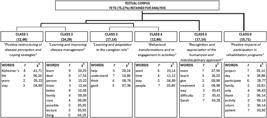
The general corpus consisted of 17 texts, divided into 93 text segments (TS), with 70 TS (75.27%) retained for analysis. A total of 3,248 lexical occurrences were identified, of which 790 words were unique, and 457 appeared only once. The textual content was analyzed using IRaMuTeQ and classified into six categories, qualitatively named as follows — Class 1: Positive restructuring of disease perception and coping strategies (9 TS; 12.86%); Class 2: Learning and improving disease management (17 TS; 24.29%); Class 3: Learning and adaptation to the caregiver role (12 TS; 17.14%); Class 4: Behavioral transformations and re-engagement in activities (9 TS; 12.86%); Class 5: Recognition and appreciation of the humanized and interdisciplinary approach (12 TS; 17.14%); and Class 6: Positive impacts of participation in rehabilitation programs (11 TS; 15.71%). Figure presents a dendrogram with the complete words lists for each class.
Positive restructuring of disease perception and coping strategies
Class 1 explores how participants coped with the initial impact of an AD diagnosis and its progression. Initially, the syndrome was associated with stigma, fears, and uncertainties, described as a challenging life event. In most accounts, this process evolved into a gradual acceptance of the disease as part of everyday life, accompanied by the adoption of practical strategies to manage it. Caregivers emphasized the fundamental role of knowledge, patience, and emotional support in promoting positive interactions and strengthening resilience in daily challenges. Furthermore, they recognized the importance of interventions in slowing disease progression and optimizing the quality of life of individuals with dementia.
"This chapter will close with sadness, but even more with joy, because I learned to recognize and deal with this disease. The word ‘Alzheimer's’ is frightening, but if you know how to handle it, it becomes easier to accept." (Caregiver 12).
"Alzheimer's, in reality, is just another disease, like any other. We must understand that it is simply another phase of life." (Caregiver 25).
"I see Alzheimer's today with a bit more ease. It is still difficult because there are times when my mother has crises and wants to leave the house, but I have learned to see the disease in a lighter way." (Caregiver 27).
Learning and improvement in disease management
Class 2 highlights knowledge gains about AD and strategies to handle caregiving challenges. Lectures, meetings, and a welcoming environment were identified as key elements in developing effective management and adaptation strategies. Testimonies indicate that caregivers feel more prepared to face daily challenges, reporting a reduction in previous anxiety and feelings of disorientation. Many emphasized that they learned to create a healthier and more harmonious environment, adopting empathetic approaches and avoiding unnecessary confrontations. Additionally, participants acknowledged that conscious acceptance of the disease, covered in Class 1, combined with the knowledge acquired, enables more humanized and effective management.
"I was feeling rebellious, I was lost. But at Sarah, through lectures, meetings, and the support we received, I started to shape my way of handling things and to better understand the situation. Honestly, after the program, I manage things much better now." (Caregiver 11).
"We learned how to handle the disease, to acknowledge and accept it. The anxiety and fear we had, in these two months at Sarah, have disappeared." (Caregiver 22).
"I am managing to take care of my father in a better and more welcoming way. I am learning how to deal with all of this." (Caregiver 23).
Learning and adaptation to the caregiver role
Developing a better understanding allowed caregivers to cultivate greater empathy and confidence, improving their ability to recognize both the individual's limitations and their own. Across multiple narratives, caregivers described this process as being associated with a perceived reduction in the emotional burden of caregiving. Additionally, interactions among families during program activities were identified as a crucial component. Sharing experiences helped caregivers relate to one another, strengthening their support network. The reframing of the disease (Class 1) and the acquisition of management skills (Class 2) facilitated self-acceptance and increased self-efficacy in caregiving, allowing family members to fully adapt to their roles (Class 3).
"We think we know everything, but we don't. We barely recognize the disease stages. This group was incredibly insightful, both in small details and major aspects, even in the bureaucratic part." (Caregiver 15).
"I found this experience very productive. I am deeply grateful to all professionals. We didn't just learn from them, but also from our relatives, other families, and the patients themselves." (Caregiver 18).
"Here, I felt welcomed, supported, and guided toward appropriate behavior to coexist with the disease and help my wife in the best way possible." (Caregiver 24).
Behavioral transformations and re-engagement in activities
Class 4 addresses potential behavioral changes in people with AD, particularly regarding their participation in daily and social activities. These transformations were attributed to enhanced autonomy in a safe environment and increased well-being.
"We started this project for both caregivers and patients, and it has been incredibly beneficial. Even though I work in healthcare, we often want to protect patients too much and end up preventing them from doing things. You showed us the opposite—that we need to provide them with a safe level of autonomy to remain as independent as possible." (Caregiver 9).
"I don't know if she noticed, but she was very discouraged, always lying down, with no interest in doing anything. Today, she is much more enthusiastic—she resumed her activities, wants to go out and interacts more. This follow-up was very important for us." (Caregiver 13).
"I have learned how to understand my mother's disease and how to live with it, even during crises. Sometimes she gets nervous and wants to leave and we didn't know how to handle that. There was a lot of conflict at home, but we started to learn how to act and shared that knowledge with other family members. Now, we are much better." (Caregiver 29).
Recognition and appreciation of the humanized and interdisciplinary approach
Humanized care was frequently mentioned as a key factor in addressing the challenges of the disease. Caregivers emphasized the importance of comprehensive and person-centered support, respecting the individual needs of each dyad.
"They forget the ‘I love you,’ they forget they had ice cream, but you teach us how to deal with this reality." (Caregiver 12).
"Everyone here is so kind. The care was excellent and the interdisciplinary team was incredible. They guided us on how to move forward." (Caregiver 13).
"We participated in the group for eight sessions, and it was a turning point for all of us. Not only for my mother, who, as a patient, was able to explore her potential and understand what keeps her present, but also for us as caregivers. This multidisciplinary perspective was crucial." (Caregiver 15).
Positive impacts of participation in rehabilitation programs
Testimonies indicate that the sessions helped empower caregivers in managing caregiving challenges, improve their skills, and strengthen social and family bonds. Additionally, the program was perceived not just as a set of clinical interventions, but as a space for personal and collective growth, emotional support, and improved quality of life.
"This was incredible. The way this team prepared us for the future—it felt like a school, teaching us and preparing us for what lies ahead. Please invite us to more of these meetings. These tips are incredible and truly make a difference." (Caregiver 14).
"I found the program extremely valuable." (Caregiver 18).
"I learned from you the best way to handle the disease. Before, I didn't have this awareness. My message is this: I think Sarah should have units throughout the entire country, not just in the capitals, for the benefit of the many Brazilians in remote areas. It would be invaluable to treat people who don't even realize they have Alzheimer's and that it is progressing." (Caregiver 24).
Critical reflections for program improvement
Although the software did not identify, within the statistical parameters, a set of text segments related to criticisms or negative aspects of the program, it is essential to present the excerpts in which participants express critical perceptions, challenges faced, and suggestions for improvement. A few participants offered critical insights regarding emotional discomfort, structural limitations, and accessibility of the program, reinforcing the importance of considering participant voices beyond the dominant lexical patterns statistically identified.
One caregiver highlighted the limited duration of the intervention, suggesting that an extended program could yield more sustained benefits while acknowledging the need to serve more families:
"It's a pity it lasts only eight weeks, but I understand that the time limit allows more families to participate." (Caregiver 18).
Another participant noted the emotional burden experienced by a patient with early-onset dementia, at age 54, when confronted with the progression of the disease:
"…but with my father, it's very different, and it was very good in every way—for us—but for him, I particularly feel that he doesn't like it, because when he comes here, he sees what awaits him in the future. And that is very painful for him. He doesn't say it, but his body speaks to us." (Caregiver 23).
Issues related to geographic accessibility were also raised. One caregiver expressed frustration with the concentration of services in major urban centers, emphasizing the need for expansion into underserved regions:
"My message is this: I think Sarah should have units throughout the entire country, not just in the capitals, for the benefit of the many Brazilians in remote areas." (Caregiver 24).
Another caregiver commented on the limited public awareness of the program, suggesting the need for broader dissemination of information to increase community access:
"…I really think Sarah should be more widely publicized, so people know about it — I didn't even know it was a hospital." (Caregiver 27).
DISCUSSION
This study examined the preliminary effects and participants’ adherence to an interdisciplinary program with multicomponent interventions. The results of the interdisciplinary rehabilitation program indicate benefits for participants. First, a positive transformation was observed in caregivers’ perception and coping strategies regarding the disease. This aspect is particularly important, as dysfunctional coping styles are associated with increased depressive and anxious symptoms, as well as greater caregiver burden.37 This shift in perception may contribute to alleviating behavioral and psychological symptoms of dementia, improving care quality, and potentially slowing disease progression.38
Additionally, an improvement in caregivers’ knowledge and ability to manage the disease was reported. Similar findings were reported in a five-week psychoeducational program for individuals with dementia and their caregivers, which demonstrated that educational approaches facilitated greater disease understanding, improved communication, and enhanced caregiving skills in daily life.39 Likewise, another six-week psychoeducational program for people in the early stages of dementia and their caregivers found improvements in mutual care planning, increased use of support services, reduced distressing emotions, and high levels of intervention acceptance and satisfaction.40
These changes facilitated caregiver role acceptance and recognition, aligning with studies that associate psychoeducational and multicomponent interventions with increased confidence and competence in dementia management.6,18 A systematic review highlighted the benefits of multicomponent interventions and occupational therapy in enhancing caregiver self-efficacy.41 These findings reinforce the potential benefit of including occupational therapists in the present program.
The testimonials also indicate behavioral changes and increased social engagement among individuals with dementia. However, the literature presents conflicting findings regarding multicomponent programs, with studies reporting positive effects, no impact, or even worsening of behavioral symptoms.42-45 Further research is needed to verify the occurrence of these divergent outcomes and, when improvements are observed, to determine whether they result directly from interventions targeting people with dementia or indirectly as a reflection of improvements in caregivers’ coping and management strategies. It would also be valuable to assess which specific components (e.g., physical, cognitive, or emotional activities) are more closely associated with these behavioral improvements.
The interdisciplinary approach, combined with a humanized and person-centered care model, emerged across multiple participant narratives as one of the perceived core strengths of the program. Previous studies emphasize the importance of personalizing interventions and addressing individual needs, avoiding an exclusive reliance on quantitative measures.46 However, more specific tools may be necessary to precisely assess the benefits of this approach in psychosocial programs for individuals with dementia. The inclusion of qualitative outcome measures, such as caregiver satisfaction scales and patient-reported experience metrics, should be considered to complement clinical assessments.
Participation in the program demonstrated potential for enhancing caregiving skills, providing emotional support, expanding support networks, and improving participants’ quality of life. These findings align with the literature, which suggests that dyadic and person-centered psychoeducational programs enhance cognitive, physical, and social functioning in individuals with dementia.47 The high attendance rate among dyads suggests cultural appropriateness, supporting previous evidence that emphasizes the importance of practical and accessible programs tailored to family needs to improve adherence.48
The inclusion of the manually constructed category Critical reflections for program improvement revealed relevant insights that, although less frequent, offer significant contributions to the refinement of dementia care programs. The emotional discomfort reported in relation to a participant with early-onset dementia, when confronted with the progression of Alzheimer's disease and engaged in activities alongside people with late-onset dementia, highlights the need for age-sensitive approaches that consider the psychological impact of group-based interventions. This finding is consistent with a study showing that individuals with young-onset dementia tend to exhibit greater awareness of their condition compared to those with late-onset dementia, even at similar levels of functional impairment.49 This preserved awareness, while facilitating a better understanding of one's condition, has also been associated with lower self-perceived quality of life, indicating greater emotional vulnerability.49 Thus, future designs could benefit from subgrouping participants not only by cognitive stage but also by age of onset and psychosocial profile.
Similarly, the criticism regarding the program's eight-week duration points to the need for follow-up strategies or extended care models that support the continued assistance of dyads. However, it is important to consider that the program's limited duration is also related to maintaining its feasibility and cost-effectiveness, balancing high-quality care with broader access for the greatest possible number of families. Short-cycle rotation allows for more users to be included over time, promoting equitable use of available resources. Nonetheless, the implementation of optional booster sessions or support groups after program completion could maintain benefits over time.
Additionally, issues such as limited geographic accessibility were raised by a participant who advocated for the decentralization of services. Although this demand is legitimate, it goes beyond the institution's scope of governance and depends on political and administrative commitment to secure public funding and infrastructure expansion — including the establishment of new units in underserved regions. It is worth noting that locating services in strategic urban centers enables the program to reach a significant number of individuals, thereby maximizing its coverage. Collaboration with primary care networks and telehealth strategies could partially mitigate geographic barriers and improve accessibility.
Regarding institutional visibility, while a participant expressed that the service could benefit from broader dissemination, it is important to highlight that the institution already operates with high demand and substantial waiting lists. Therefore, any increase in visibility must be accompanied by a proportional expansion of human resources and infrastructure to ensure service quality. In this context, organic dissemination by the families themselves, along with the dissemination of scientific findings — such as the present study — plays a meaningful role in strengthening the institution's image and raising public awareness about the importance of person-centered care and interdisciplinary intervention policies.
Adapting the program to the Brazilian context requires considering the country's socio-cultural and economic particularities, especially those of the Southeastern region where the study was conducted. Given that families in this region tend to be smaller compared to other parts of Brazil,50 the program aimed to build support networks among caregivers, fostering experience-sharing and strengthening bonds to compensate for the absence of extended family. Additionally, in a cultural context where social hierarchy is valued,50 promoting a more horizontal relationship between caregivers and healthcare professionals is essential, encouraging caregivers’ active participation in care-related decisions. Adapting the language and interventions using practical examples from Brazilian daily life and activities that reflect local culture can enhance participant engagement, and facilitate the comprehension and application of guidelines.12 Group interventions promote the program's economic sustainability and are generally more effective for caregivers.9 Still, future versions should consider tailoring approaches to low-income participants and rural populations who may face additional barriers.
The program also addressed common challenges, such as a lack of trust among professionals and the absence of a centralized database.19 Regular team meetings and the use of electronic medical records contributed to more integrated care. However, scheduling conflicts for dyad participation have been identified as an obstacle.51 Future studies should assess whether this factor is the primary reason for non-participation in the present program and whether expanding session availability could be a viable strategy to address this issue.
The retrospective and qualitative study design, combined with the absence of a control group, limits the generalizability of findings and the determination of program effectiveness. Brazil is a vast country with large economic and cultural differences, and the participants were from only one Brazilian city. This may have led to sampling bias, with findings not being representative of other settings across Brazil. Additionally, convenience sampling may introduce selection bias, reflecting predominantly the characteristics of included participants. Furthermore, the absence of 13 caregiver testimonials among the 30 participants may have resulted in unreported or underrepresented data, particularly with regard to certain caregiver experiences. Moreover, no quantitative data were collected on caregivers’ mood or burden, which could have offered further insights into the program's impact. Finally, it is essential to explore whether the benefits reported by caregivers are maintained over time, highlighting the need for longitudinal follow-up studies.
CONCLUSION
The high adherence rate, participants’ desire for continuity, and positive evaluations underscore the cultural relevance and acceptability of the intervention for the Brazilian context. These findings support the feasibility of adapting models originally developed in high-income countries to middle-income settings, provided they are culturally and contextually tailored. The successful implementation of similar initiatives on a broader scale will depend on sustained investment in infrastructure, funding, and the prioritization of non-pharmacological interventions within public health policies. Additionally, caregivers’ perceptions of the care provided in community-based centers are a key aspect, given their pivotal role in daily dementia management, rehabilitation efforts, and the identification of emerging needs.
Incorporating these perspectives can inform service refinement, contributing to more effective and compassionate care strategies that benefit both individuals with dementia and their caregivers. While the current results are promising, they remain preliminary. Further longitudinal and controlled studies are needed to rigorously evaluate the program's efficacy, explore its long-term outcomes, and determine the generalizability of these findings to other regions and populations.
ACKNOWLEDGMENTS
Thiago Correa Oliveira's time on the work was supported by Sarah International Center.
Marcia Cristina Nascimento Dourado is a researcher funded by the Brazilian National Council for Scientific and Technological Development (CNPq) and the Carlos Chagas Filho Foundation for Research Support of the State of Rio de Janeiro (Faperj) - E-26/204.059/2024.
Data availability statement
The data that support this study are available from the authors upon request.
REFERENCES
-
1 2024 Alzheimer's disease facts and figures. J Alzheimers Assoc 2024;20(5):3708-3821. doi:10.1002/alz.13809
» https://doi.org/10.1002/alz.13809 -
2 Harris ML, Titler MG, Hoffman GJ. Associations Between Alzheimer's Disease and Related Dementias and Depressive Symptoms of Partner Caregivers. J Appl Gerontol Off J South Gerontol Soc 2021;40(7):772-780. doi:10.1177/0733464820952252
» https://doi.org/10.1177/0733464820952252 -
3 Liu C, Fabius CD, Howard VJ, Haley WE, Roth DL. Change in Social Engagement among Incident Caregivers and Controls: Findings from the Caregiving Transitions Study. J Aging Health 2021;33(1-2):114-124. doi:10.1177/0898264320961946
» https://doi.org/10.1177/0898264320961946 -
4 Arthur PB, Gitlin LN, Kairalla JA, Mann WC. Relationship between the number of behavioral symptoms in dementia and caregiver distress: what is the tipping point? Int Psychogeriatr 2018;30(8):1099-1107. doi:10.1017/S104161021700237X
» https://doi.org/10.1017/S104161021700237X -
5 Stall NM, Kim SJ, Hardacre KA, et al. Association of Informal Caregiver Distress with Health Outcomes of Community-Dwelling Dementia Care Recipients: A Systematic Review. J Am Geriatr Soc 2019;67(3):609-617. doi:10.1111/jgs.15690
» https://doi.org/10.1111/jgs.15690 -
6 Livingston G, Huntley J, Liu KY, et al. Dementia prevention, intervention, and care: 2024 report of the Lancet standing Commission. The Lancet 2024;404(10452):572-628. doi:10.1016/S0140-6736(24)01296-0
» https://doi.org/10.1016/S0140-6736(24)01296-0 -
7 Chiao C -Y., Wu H -S., Hsiao C -Y. Caregiver burden for informal caregivers of patients with dementia: A systematic review. Int Nurs Rev 2015;62(3):340-350. doi:10.1111/inr.12194
» https://doi.org/10.1111/inr.12194 -
8 Burgdorf JG, Amjad H. Impact of diagnosed (vs undiagnosed) dementia on family caregiving experiences. J Am Geriatr Soc 2023;71(4):1236-1242. doi:10.1111/jgs.18155
» https://doi.org/10.1111/jgs.18155 -
9 NICE guideline. Dementia: assessment, management and support for people living with dementia and their carers. June 20, 2018. Accessed November 3, 2024. https://www.nice.org.uk/guidance/ng97
» https://www.nice.org.uk/guidance/ng97 -
10 World Health Organization. iSupport for Dementia: Training and Support Manual for Carers of People with Dementia World Health Organization; 2019. Accessed November 21, 2024. https://iris.who.int/handle/10665/324794
» https://iris.who.int/handle/10665/324794 -
11 Akinyemi RO, Yaria J, Ojagbemi A, et al. Dementia in Africa: Current evidence, knowledge gaps, and future directions. Alzheimers Dement 2022;18(4):790-809. doi:10.1002/alz.12432
» https://doi.org/10.1002/alz.12432 -
12 James T, Mukadam N, Sommerlad A, Guerra Ceballos S, Livingston G. Culturally tailored therapeutic interventions for people affected by dementia: a systematic review and new conceptual model. Lancet Healthy Longev 2021;2(3):e171-e179. doi:10.1016/S2666-7568(21)00001-5
» https://doi.org/10.1016/S2666-7568(21)00001-5 -
13 World Health Organization. Dementia toolkit for community workers in low-and middle-income countries : guide for community-based management and care of people with dementia. March 2018. Accessed November 24, 2024. https://www.who.int/publications/i/item/9789290618447
» https://www.who.int/publications/i/item/9789290618447 -
14 Sun Y, Ji M, Leng M, Li X, Zhang X, Wang Z. Comparative efficacy of 11 non-pharmacological interventions on depression, anxiety, quality of life, and caregiver burden for informal caregivers of people with dementia: A systematic review and network meta-analysis. Int J Nurs Stud 2022;129:01-13. doi:10.1016/j.ijnurstu.2022.104204
» https://doi.org/10.1016/j.ijnurstu.2022.104204 -
15 Frias CE, Garcia-Pascual M, Montoro M, Ribas N, Risco E, Zabalegui A. Effectiveness of a psychoeducational intervention for caregivers of People With Dementia with regard to burden, anxiety and depression: A systematic review. J Adv Nurs 2020;76(3):787-802. doi:10.1111/jan.14286
» https://doi.org/10.1111/jan.14286 -
16 World Health Organization. Integrated care for older people: guidelines on community-level interventions to manage declines in intrinsic capacity. January 1, 2017. Accessed November 24, 2024. https://www.who.int/publications/i/item/9789241550109
» https://www.who.int/publications/i/item/9789241550109 -
17 Clare L. Rehabilitation for people living with dementia: A practical framework of positive support. PLOS Med 2017;14(3):e1002245. doi:10.1371/journal.pmed.1002245
» https://doi.org/10.1371/journal.pmed.1002245 -
18 Clare L, Kudlicka A, Oyebode JR, et al. Goal-oriented cognitive rehabilitation for early-stage Alzheimer's and related dementias: the GREAT RCT. Health Technol Assess Winch Engl 2019;23(10):1-242. doi:10.3310/hta23100
» https://doi.org/10.3310/hta23100 -
19 Smith R, Martin A, Wright T, Hulbert S, Hatzidimitriadou E. Integrated dementia care: A qualitative evidence synthesis of the experiences of people living with dementia, informal carers and healthcare professionals. Arch Gerontol Geriatr 2021;97:104471. doi:10.1016/j.archger.2021.104471
» https://doi.org/10.1016/j.archger.2021.104471 -
20 Frost R, Rait G, Aw S, et al. Implementing post diagnostic dementia care in primary care: a mixed-methods systematic review. Aging Ment Health 2021;25(8):1381-1394. doi:10.1080/13607863.2020.1818182
» https://doi.org/10.1080/13607863.2020.1818182 -
21 Heintz H, Monette P, Epstein-Lubow G, Smith L, Rowlett S, Forester BP. Emerging Collaborative Care Models for Dementia Care in the Primary Care Setting: A Narrative Review. Am J Geriatr Psychiatry 2020;28(3):320-330. doi:10.1016/j.jagp.2019.07.015
» https://doi.org/10.1016/j.jagp.2019.07.015 -
22 Marinho V, Bertrand E, Naylor R, et al. Cognitive stimulation therapy for people with dementia in Brazil (CST-Brasil): Results from a single blind randomized controlled trial. Int J Geriatr Psychiatry 2021;36(2):286-293. doi:10.1002/gps.5421
» https://doi.org/10.1002/gps.5421 -
23 Naylor R, Spector A, Fisher E, et al. Experiences of cognitive stimulation therapy (CST) in Brazil: a qualitative study of people with dementia and their caregivers. Aging Ment Health 2024;28(2):238-243. doi:10.1080/13607863.2023.2231376
» https://doi.org/10.1080/13607863.2023.2231376 -
24 Viola LF, Nunes PV, Yassuda MS, et al. Effects of a multidisciplinary cognitive rehabilitation program for patients with mild Alzheimer's disease. Clin Sao Paulo Braz 2011;66(8):1395-1400. doi:10.1590/s1807-59322011000800015
» https://doi.org/10.1590/s1807-59322011000800015 -
25 Morris JC. The Clinical Dementia Rating (CDR): current version and scoring rules. Neurology 1993;43(11):2412-2414. doi:10.1212/wnl.43.11.2412-a
» https://doi.org/10.1212/wnl.43.11.2412-a -
26 Wang WF, Chen CM, Jhang KM, Su YY. Evaluating caregivers’ service quality perceptions: impact-range performance and asymmetry analyses. BMC Health Serv Res 2022;22(1):183. doi:10.1186/s12913-022-07594-2
» https://doi.org/10.1186/s12913-022-07594-2 -
27 American Psychiatric Association. Diagnostic and Statistical Manual of Mental Disorders Fifth Edition. American Psychiatric Association; 2013. doi:10.1176/appi.books.9780890425596
» https://doi.org/10.1176/appi.books.9780890425596 -
28 Maia ALG, Godinho C, Ferreira ED, et al. Aplicação da versão brasileira da escala de avaliação clínica da demência (Clinical Dementia Rating - CDR) em amostras de pacientes com demência. Arq Neuropsiquiatr 2006;64(2b):485-489. doi:10.1590/S0004-282X2006000300025
» https://doi.org/10.1590/S0004-282X2006000300025 -
29 Hughes CP, Berg L, Danziger W, Coben LA, Martin RL. A New Clinical Scale for the Staging of Dementia. Br J Psychiatry 1982;140(6):566-572. doi:10.1192/bjp.140.6.566
» https://doi.org/10.1192/bjp.140.6.566 -
30 World Health Organization. Package of interventions for rehabilitation: module 3: neurological conditions. June 2023. Accessed November 24, 2024. https://www.who.int/publications/i/item/9789240071131
» https://www.who.int/publications/i/item/9789240071131 -
31 The World Medical Association. Declaration of Helsinki - Ethical Principles for Medical Research Involving Human Participants. 2024. Accessed January 20, 2025. https://www.wma.net/policies-post/wma-declaration-of-helsinki/
» https://www.wma.net/policies-post/wma-declaration-of-helsinki/ - 32 IBM Corp. Released. IBM SPSS Statistics for Windows. Published online 2017.
-
33 Reinert PM. Classification Descendante Hierarchique et Analvse Lexicale par Contexte - Application au Corpus des Poesies D’A. Rihbaud. Bull Sociol Methodol Méthodologie Sociol 1987;13(1):53-90. doi:10.1177/075910638701300107
» https://doi.org/10.1177/075910638701300107 -
34 Camargo BV, Justo AM. IRAMUTEQ: Um software gratuito para análise de dados textuais. Temas Em Psicol 2013;21(2):513-518. doi:10.9788/TP2013.2-16
» https://doi.org/10.9788/TP2013.2-16 -
35 Brucki SMD, Nitrini R, Caramelli P, Bertolucci PHF, Okamoto IH. Sugestões para o uso do mini-exame do estado mental no Brasil. Arq Neuropsiquiatr 2003;61(3B):777-781. doi:10.1590/S0004-282X2003000500014
» https://doi.org/10.1590/S0004-282X2003000500014 -
36 Folstein MF, Folstein SE, McHugh PR. "Mini-mental state". A practical method for grading the cognitive state of patients for the clinician. J Psychiatr Res 1975;12(3):189-198. doi:10.1016/0022-3956(75)90026-6
» https://doi.org/10.1016/0022-3956(75)90026-6 -
37 Bussè C, Barnini T, Zucca M, et al. Depression, Anxiety and Sleep Alterations in Caregivers of Persons With Dementia After 1-Year of COVID-19 Pandemic. Front Psychiatry 2022;13:826371. doi:10.3389/fpsyt.2022.826371
» https://doi.org/10.3389/fpsyt.2022.826371 -
38 Monteiro AMF, Santos RL, Kimura N, Baptista MAT, Dourado MCN. Coping strategies among caregivers of people with Alzheimer disease: a systematic review. Trends Psychiatry Psychother 2018;40(3):258-268. doi:10.1590/2237-6089-2017-0065
» https://doi.org/10.1590/2237-6089-2017-0065 -
39 O’Connell B, Ghosh M, Dunham M, Smyth A. Evaluation of an educational program for people with dementia and their caregivers. Australas J Ageing 2023;42(3):517-526. doi:10.1111/ajag.13172
» https://doi.org/10.1111/ajag.13172 -
40 Whitlatch CJ, Heid AR, Femia EE, Orsulic-Jeras S, Szabo S, Zarit SH. The Support, Health, Activities, Resources, and Education program for early stage dementia: Results from a randomized controlled trial. Dementia 2019;18(6):2122-2139. doi:10.1177/1471301217743033
» https://doi.org/10.1177/1471301217743033 -
41 Vandepitte S, Van Den Noortgate N, Putman K, Verhaeghe S, Faes K, Annemans L. Effectiveness of Supporting Informal Caregivers of People with Dementia: A Systematic Review of Randomized and Non-Randomized Controlled Trials. J Alzheimers Dis 2016;52(3):929-965. doi:10.3233/JAD-151011
» https://doi.org/10.3233/JAD-151011 -
42 Kunik ME, Stanley MA, Shrestha S, et al. Aggression Prevention Training for Individuals With Dementia and Their Caregivers: A Randomized Controlled Trial. Am J Geriatr Psychiatry 2020;28(6):662-672. doi:10.1016/j.jagp.2020.01.190
» https://doi.org/10.1016/j.jagp.2020.01.190 -
43 Cornelis E, Gorus E, Beyer I, et al. A retrospective study of a multicomponent rehabilitation programme for community-dwelling persons with dementia and their caregivers. Br J Occup Ther 2018;81(1):5-14. doi:10.1177/0308022617728680
» https://doi.org/10.1177/0308022617728680 -
44 Logsdon RG, Pike KC, Korte L, Goehring C. Memory Care and Wellness Services: Efficacy of Specialized Dementia Care in Adult Day Services. The Gerontologist 2016;56(2):318-325. doi:10.1093/geront/gnu012
» https://doi.org/10.1093/geront/gnu012 -
45 Prick AE, De Lange J, Scherder E, Twisk J, Pot AM. The effects of a multicomponent dyadic intervention on the mood, behavior, and physical health of people with dementia: a randomized controlled trial. Clin Interv Aging Published online March 2016:383. doi:10.2147/CIA.S95789
» https://doi.org/10.2147/CIA.S95789 -
46 Villars H, Cantet C, De Peretti E, Perrin A, Soto-martin M, Gardette V. Impact of an educational programme on Alzheimer's disease patients’ quality of life: results of the randomized controlled trial THERAD. Alzheimers Res Ther 2021;13(1):152. doi:10.1186/s13195-021-00896-3
» https://doi.org/10.1186/s13195-021-00896-3 -
47 Ghosh M, Dunham M, O’Connell B. Systematic review of dyadic psychoeducational programs for persons with dementia and their family caregivers. J Clin Nurs 2023;32(15-16):4228-4248. doi:10.1111/jocn.16570
» https://doi.org/10.1111/jocn.16570 -
48 Coley N, Ngandu T, Lehtisalo J, et al. Adherence to multidomain interventions for dementia prevention: Data from the FINGER and MAPT trials. Alzheimers Dement 2019;15(6):729-741. doi:10.1016/j.jalz.2019.03.005
» https://doi.org/10.1016/j.jalz.2019.03.005 -
49 Baptista MAT, Santos RL, Kimura N, et al. Differences in Awareness of Disease Between Young-onset and Late-onset Dementia. Alzheimer Dis Assoc Disord 2019;33(2):129-135. doi:10.1097/WAD.0000000000000299
» https://doi.org/10.1097/WAD.0000000000000299 -
50 Trindade PGE, Johannessen A, Baptista MAT, Maffiolletti V, Dourado MCN. I do not enjoy too much being with people, it takes me a long time to interact : a qualitative analysis of awareness of relationships in people with dementia. Aging Ment Health 2023;27(6):1120-1126. doi:10.1080/13607863.2022.2084503
» https://doi.org/10.1080/13607863.2022.2084503 -
51 Maffioletti VLR, Baptista MAT, Abranches B, et al. Virtual day center for people with dementia and their caregivers during the COVID-19 pandemic. Dement Neuropsychol 2021;15(4):440-447. doi:10.1590/1980-57642021dn15-040003
» https://doi.org/10.1590/1980-57642021dn15-040003
Edited by
-
Handling Editor:
William Berger