 A Portable Method for Plant-Available Potassium Determination in Soil
Abstract
Brazilian territory is vast and mostly of the soil are acidic and poor in macronutrients (NPK). As a result, it is necessary to use high amounts of fertilizers to ensure good productivity. Extraction of available K from soil is usually done using Mehlich-1 solution and determination by inductively coupled plasma optical emission spectrometry (ICP OES). This work proposes a simple and robust method for available K extraction, allowing its determination in a fast and practical way by electrode ion selective (ISE-K), using low volume and less toxic reagents, aiming to be in accordance with the principles of Green Chemistry and portability. Considering these assumptions, available K extraction from soils with different characteristics was done using NaCl solution. The precision of the method is better than 10% and the agreement of the results varies from 80 to 100% in relation to those obtained by the Mehlich-1 solution and K determination by ICP OES. In this way, it was possible to determine the available K content in different types of soil in a fast, practical and robust way, using accessible and low-cost reagents. Therefore, the method can be used for K determination at the field.
Keywords:
soil; portability; potassium; macronutrients; ion selective electrode
Introduction
Potassium (K) is one of the nutrients present in the highest concentration in plants, where it plays important metabolic and physiological functions. In addition to being fundamental for plant nutrition, the element is also responsible for the activation of enzymes that regulate different processes of plant metabolism. On the other way, its deficiency causes some consequences for vegetables, mainly related to their growth and productivity. Potassium deficiency in plants is evidenced by yellowish spots on older leaves. The element is also characterized by the high mobility in plants, and can be redistributed, migrating from old to younger leaves.1-4
In soil, potassium is distributed in two main forms, being grouped into non-exchangeable and exchangeable or non-available and available K. The first form, characterized as non-exchangeable K, involves primary potassium minerals, such as micas and feldspars, or is fixed within the mineral structure or between layers of clays. The non-exchangeable fraction comprises about 98% of the total K concentration in soil. In weathered soils, which are characteristic of Brazilian soils, the main clay mineral is kaolinite and iron and aluminium oxides. In this case, due to the deficiency of K-fixing minerals, the equilibrium in this environment between the non-exchangeable K and the exchangeable K of the soil tends to be a very slow process that only occurs under conditions in which the exchangeable K is in very low concentration. This fact reduces productivity when agriculture is exclusively dependent on the natural process of K supply. Exchangeable K, or K present in soil solution, which represents about 2% of the total K in soil, is the main source of K for plants, since plants predominantly absorb this form of K. This supply to the plant is regulated by the equilibrium between the exchangeable and in-solution forms of potassium. In turn, this equilibrium is regulated by decreasing the concentration of K in the soil solution near the root system of the plant.5-8
Due to the territorial dimension of Brazil, the characteristics of soil are diverse, but, most of them are acidic and of low fertility. In relation to macronutrients, including potassium, the natural levels in soil are insufficient for plant development and a good productivity, being necessary to supplement it. This impact on the cost of production. One of the reasons associated with the lack of this macronutrient in Brazil is the fact that the available form can be easily lost as a result of leaching processes, which, in turn, is characteristic of soils exposed to large volumes of rainfall, common in tropical areas. Soils in tropical regions are affected by weathering, considering that, in these regions, rains are frequent and intense. The latosols of the Brazilian “cerrado” region, for example, are weathered soils in which the mineral reserves of K are at low levels or depleted.7-9
Considering the potassium equilibria in soil and consequent availability for plants, it is essential to have simple and reliable analytical methods for its extraction and quantification. Determination of the availability of K to plants is based on its exchangeable form, which can be obtained by extracting with solutions containing acid (H+), ammonium (NH4+), sodium (Na+), among others. These extractors, based on ion exchange, aim to remove the exchangeable amount of K present in the soil.10,11
Ammonium acetate (NH4OAc) 1.0 mol L-1, pH 7.0, is one of the solutions used as reference for K extraction, as it simulates the conditions of K uptake by the plants and results in a simple, fast, low-cost method, and is a non-toxic reagent. However, for routine analysis, solutions that extract other macronutrients are preferred, especially when analyte determination is done by multi-element analysis techniques, such as inductively coupled plasma optical emission spectrometry (ICP OES). Therefore, K extraction is done based on the use of ion exchange resins, dilute acids, such as Mehlich-1 and saline solutions. These methods are indicated to extract phosphorus, potassium, calcium, magnesium and other nutrients from soil.11-13
Most of the cations are retained on the colloids present in soil, whose affinity depends on their characteristics and which results in the so-called lyotropic series. The order of the cation retention follows: hydronium (H+) > aluminium (Al3+) > calcium (Ca2+) > magnesium (Mg2+) > K+ = ammonium (NH4+) > sodium (Na+). It shows the order of affinity of the cations to be more or less strongly bound to colloids. In this context, the interaction strength is related to the charge of the cations and the hydration radius. So, valence and hydrated ionic radius are the properties related to the dynamics of these ions in soil, defining the strength of attraction on the surface of negatively charged colloids. The strength of attraction increases with the charge of the ion, but decreases for ions with larger hydrated ionic radius. The mobility of K is higher in the soil. Accordingly, K+ is more mobile than Mg2+ and Ca2+ because it is a monovalent cation, while Ca2+ mobility is higher than Mg2+ because its greater hydrated ionic radius.4 The lyotropic sequence, in turn, changed by some factors such as the presence of specific sites that will have a higher adsorption affinity for a given cation. Vermiculites, for example, are of great importance in the equilibrium and consequent availability of various cations in soil. They retain K+ in the interlamellar spaces, and can change the concentration of cations in soil in relation to less selective ions, making potassium less available in soil compared to Na+. This characteristic allows the use of extractors such as sodium chloride (NaCl) for exchangeable K extraction from soil.13,14
A multielemental extraction method (Mehlich-1) was proposed in 1953,11 especially in acidic soils, which works well for elements such as phosphorus, potassium, sodium, manganese, zinc, calcium and magnesium. This solution consists of a mixture of dilute hydrochloric and sulfuric acids (0.05 mol L-1 HCl + 0.0125 mol L-1 H2SO4). The method was modified according to new studies15,16 and needs, in order to adapt it to other kinds of soils, elements and, as well, to the conditions of the laboratories for routine analysis.
In specific, in South of Brazil, a program with recommendations16 for correctives and fertilizers for potassium is stablished. These recommendations are based on studies carried out between the 1960s and 1980s in the conventional cropping system, which recommends the Mehlich-1 solution as the standard method for K extraction. In addition, there is a good correlation between the extraction of available K in soil with other methods of K extraction.16,17
In view of the necessity to evaluate the available K in soil, preferentially during the plant development, the present work aims to develop a simple and fast methodology for the extraction and subsequent determination of potassium, using less toxic reagents, following the concepts of Green Chemistry. To this end, it is proposed the extraction of K with sodium chloride from different kinds of soil using an extraction system based on mechanical stirring and K determination by ion selective electrode (ISE-K), aiming at the portability of the method in order to be used for routine analyses.
Experimental
Samples characterization
Twelve soil samples with different chemical, physical and mineralogical characteristics and from different regions were tested (Table 1). These samples were classified according to the texture, amount of clay and organic matter (OM). In addition, K concentration was determined according to the official method of soil analysis used in South of Brazil.16 These results were used as reference and analysis were caried out at the Analytical Laboratory of the University of Santa Cruz do Sul (UNISC), Rio Grande do Sul, Brazil.
Set of samples used in this work and respective texture, clay and organic matter concentration
Reagents and solutions
The water used for solutions preparation was previously distilled. The K stock solution (1000 mg L-1) was prepared from a potassium chloride solution (P.A., 99%, Dinâmica, Indaiatuba, Brazil). Extraction solutions were prepared from sodium chloride (P.A., Biosolve, Dieuze, France) and commercial salts (kitchen salt), hydrochloric acid (P.A., 37% m m-1, Darmstadt, Germany) and sulfuric acid (P.A., 95-98% m m-1, Darmstadt, Germany).
Instrumental
A potassium-ion selective electrode was used for K determination in soil extracts. The sensor of this electrode is based on a membrane containing valinomycin, which is selective to the K+ ion. The sensor (model LAQUAtwin K-11, HORIBA, Kyoto, Japan) has a cavity with capacity of approximately 1.0 mL of solution, and results for K+ are shown in approximately 10 s. The calibration curve is prepared with two concentrations of K (two points), and can be adjusted according to the concentration that will be measured in the samples. Therefore, calibration was done with 30 and 300 mg L-1 of K solution. Table 2 describes the main characteristics of the ISE-K used.
Methodology
The extraction apparatus is based on mechanical agitation and was developed with a minimotor (12 V DC, 350 mA, peristaltic dosing pump, model G328, Grothen, Germany), to which a small (10 mm diameter) steel rotor was adapted, which is responsible for stirring the solution containing the soil.
The soil samples, after manual removal of coarse material such as leaves, stones, among others, were dried at room temperature (25 ± 2 °C) up to a constant weight and then sieved through a sieve with a 2 mm opening. All samples were initially analyzed using the Mehlich-1 method, recommended as an official method16 for soil analysis in south of Brazil and potassium was determined by ICP OES. These results were used as reference to determine the concentration of available K by the proposed EIS-K method.
To establish the conditions of proposed method for K extraction using NaCl solution, initial experiments were carried out using the Mehlich-1 and Mehlich-1 diluted 1:1 solution in order to compare the performance to the reference method. For this purpose, 3.0 g of soil and 30 mL of extracting solution were used, stirring for 5 min and settling for 15 h, according to the procedure used by Bortolon and Gianelllo.16 After decantation of the solid material, an aliquot of 500 μL of the supernatant was transferred directly to the ISE-K cavity in order to cover the entire electrode sensor.
Based on the conditions established for K extraction with the Mehlich-1 method, four evaluations were made using NaCl solutions in order to optimize the extraction process and evaluate the best performance. The conditions were: (i) NaCl concentration of 0.01 to 1.00 mol L-1; (ii) soil:extractor ratio from 1:5 to 1:30; (iii) sample stirring time from 30 s to 5 min, and (iv) decanting time up to 5 min. These and other experiments were carried out with samples 11 and 12 (Table 1). Finally, the optimized conditions were applied to other soil types in order to evaluate the robustness of the method to soils with different physical, chemical and mineralogical characteristics.
All optimizations were made in a univariate way and the results of each test are the mean and standard deviation of three replicates (n = 3) of the sample. In order to choose the best condition for each variable studied, a statistical test (t-test) was applied with a confidence level of 90%.
Results and Discussion
As previously mentioned, the method for K determination in soil adopted as official for soil analysis used in South of Brazil16 is based on extraction with Mehlich-1 solution. Therefore, initially, the soils were analyzed by this method and K determined by ICP OES. The results of these analyses are shown in Table 3. Table 3 also shows the K results obtained by ISE-K after extraction with Mehlich-1 and Mehlich-1 diluted 1:1.
Potassium concentration in soil determined by the reference method16 and by ISE-K after extraction with Mehlich-1 and Mehlich-1 1:1
As can be observed in Table 3, the results of K obtained by the extraction with Mehlich-1 and Mehlich-1 1:1 solutions are in good agreement with those obtained by the reference method, which prove that the ISE-K method has a good performance. The exception were samples 2 and 6, where the agreement was lower than 80%, value which was considered reasonable for the present purpose. It is important to highlight that the K-ion selective electrode is of lower cost compared to the ICP OES technique, both considering the instrument value and the operating cost. In addition, ISE-K is easily to handle, requires low sample volume (less than 500 μL) and standards, and allows analysis at field. In addition, the method can be considered robust for the soils analyzed, since the results are similar for both Mehlich-1 and Mehlich-1 1:1 solution.
Effect of NaCl concentration for available K extraction
In water, NaCl dissociates forming hydrated Na+ and Cl-. Similar dissociations occur in soil with the addition of salt-based fertilizers when in contact with the soil solution, releasing respective cations and anions. Therefore, NaCl acts as a reagent capable of simulating the ion exchange that occurs in the soil. The possibility of ion exchange is a necessary characteristic to release/extract nutrients from the soil. On other words, NaCl can displace other ions present in the soil, especially those present in the soil solution and those that are easily exchangeable, which are available for uptake by plants. The use of NaCl as an extractor of K from soil was described in studies developed by Liu and Bates.18 In their work,18 the efficiency of K extraction with NaCl was compared with other solutions in order to predict the availability of K. From the results found in this study, 18 the efficiency of K extraction was ammonium bicarbonate-diethylene triamine pentaacetic acid (AB-DTPA) < NaCl < ammonium acetate (NH4OAc) < Mehlich-3 < nitric acid (HNO3).
In relation to other extraction solutions, such as Mehlich, sodium chloride can be considered a non-toxic reagent, which is in line with the aim of this study, where it was prioritized to establish a methodology capable of minimizing the environmental impacts by using reduced amounts of reagents in order to collaborate with a safe and environmentally friendly process. Therefore, firstly, the effect of the concentration of the extracting solution was evaluated, keeping the sample amount fixed at 3.0 g, extractor solution at 30 mL, stirring time of 5 min and decantation for 15 h. In these experiments, despite reducing the mass of the sample and the volume of extracting solution in relation to that proposed by Bortolon and Gianello16 the ratio of 1:10 (soil:extracting solution) was maintained. In this case, the aim was to reduce the volume of extracting solution, and, consequently, to reduce the cost and waste generated. Extractions of K in this test were made using soil 12 (Table 1), which has about 30% clay, 3.0 organic matter and class 3. The results can be seen in Figure 1.

Effect of NaCl concentration on K extraction from soil. Potassium was determined by ISE-K and results are the mean and standard deviation of three determinations (n = 3).
As shown in Figure 1, by increasing the concentration of NaCl, better agreement between the reference value was achieved. From 0.50 mol L-1 of NaCl solution, no significant difference (t-test at a 90% confidence level) in relation to the reference value is observed. Therefore, the 0.50 mol L-1 NaCl solution was chosen. By using this condition, the concentration of K extracted was 160 mg L-1, a value that corresponds to 87 ± 3% in relation of the value obtained by the reference method (179 mg L-1).
However, as described in the literature,19 the K+ electrode is also sensitive to Na+. Therefore, all NaCl solutions were previously analyzed, where it was observed that solutions with a concentration above 0.75 mol L-1 result in a value equivalent to less than 10 mg L-1 of K. Therefore, the interference from Na at 0.5 mol L-1 of NaCl solution is not significant and the results are in agreement with the reference method.
Evaluation of the soil:extractor ratio
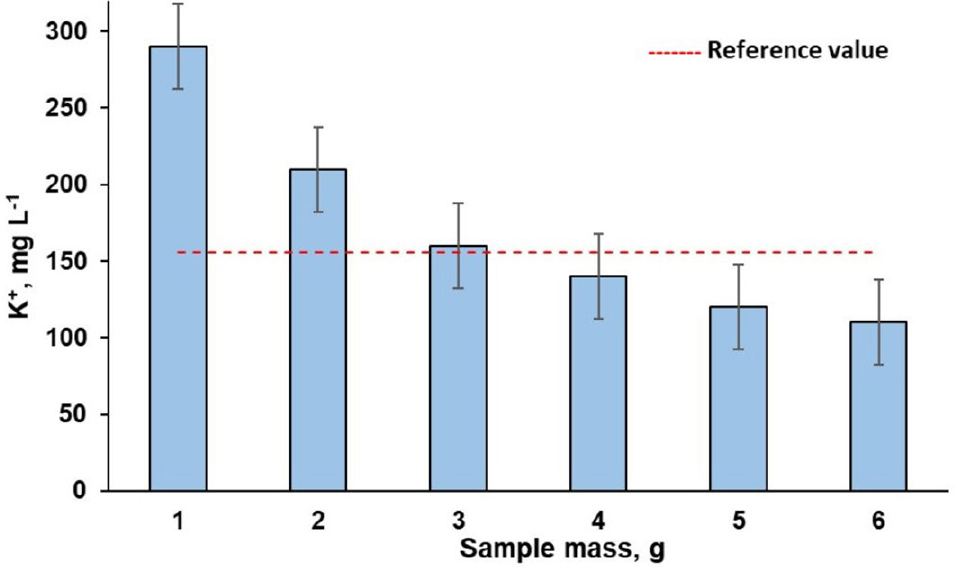
There are some proportions of the soil:extractor ratio indicated in the literature for nutrients extraction, which depends on soil composition, element, nutrient uptake by the plant, etc. For micronutrients extraction the suggested soil:extractor ratio is 1:5, while for macronutrients, such as NKP, a ratio of 1:10 is recommended.20 In a study carried out by Jalali,21 the extractions were made with a 1:20 ratio to estimate the availability of K in soil. Among the extractors tested, it was verified increasingly higher amounts of extracted K+ by using 0.1 M HNO3 (194 mg kg 1), 2 M NaCl (251 mg kg-1), 1 M NaOAc (295 mg kg-1), 1 M NH4OAc (312 mg kg-1) and 1 M HNO3 (737 mg kg 1). Potassium extracted by 0.1 M HNO3, 2 M NaCl and 1 M NaOAc showed higher correlation with K+ uptake by the crop. This difference of the soil:extractor ratio depends on the characteristics of the soil and the extractor. However, this turns difficult to evaluate the results, since the amounts extracted are different, depending on the ratio used, which does not simulate what the vegetable actually absorbs of K from soil. Due to the large territorial extension of Brazil, there is a great diversity of soils and the use of different extractors, such as ammonium acetate, ion exchange resins and the Mehlich-1 solution are indicated, maintaining the 1:10 ratio. Thus, ratios from 1:5 to 1:30 soil:extractor were evaluated. The concentration of the NaCl solution was maintained at 0.5 mol L-1. The results referring to soil 11 are shown in Figure 2.
Effect of the ratio soil:extractor on K extraction. Volume of extraction solution fixed at 30 mL while sample mass was changed (soil 11). Results are the average and respective standard deviation of n = 3.
As can be seen from the results shown in Figure 2, the amount of K extracted from soil increases as the soil:extractor ratio was increased. Therefore, when extraction is done with 1 g of soil and 30 mL of extractor, a ratio of 1:30, the amount of K extracted (290 ± 5 mg L-1) is higher compared to the amount extracted when higher amounts of soil are used, decreasing to about 110 ± 4 mg L-1 with the 1:5 ratio. This fact can be explained by considering the studies developed by Khasawneh and Adams,20 which relate an increase of the concentration of ions in soil solution with the increase of humidity of the soil. The effect of dilution of the ions in soil was related to the changes in the total amounts of ions or their concentrations in soil. There is a consensus that increasing the dilution, the total amount of K increases, with a corresponding decrease in exchangeable K. Therefore, it is possible to consider that this relationship also occurs during the extraction of K from soil; that is, by reducing the mass of soil, more K is extracted. However, the ratio that better represents the amount of K available to plants in Brazilian soils is 1:10, which is recommended and adopted as reference method.16 Due to this fact, although the proportions of 1:30 and 1:15, where 1 and 2 g of soil and 30 mL of 0.5 mol L-1 NaCl solution was used, provided higher K extraction, the ratio of 1:10 was used in the study, since the results not have significant differences (agreement better than 90%, t-test) with the reference values.
Effect of time on K extraction
The time, considering sample stirring and solid settling, usually indicated in the literature,16 ranges from 15 to 18 h. Therefore, in order to reduce the total time of the process, the stirring and decanting time of this steps was evaluated. For this purpose, times from 30 s to 10 min of stirring were evaluated. Samples were extracted using 3 g of soil and 30 mL of 0.5 mol L-1 NaCl solution. Stirring was always kept constant at 1000 rpm.
Considering that the electrode used for K determination is not sensitive to particles in solution, it is not necessary to have a clean solution for the analysis. Therefore, in order to reduce the time for analysis, decanting times of up to 5 min were considered. In this way, measurements of K were performed up to 5 min after stopping the stirring. For comparison with the conditions recommended by the official method,16 K measurements were also performed after 15 h of decanting. Figures 3a and 3b shows these effects on K extraction.

Effect of the stirring (a) and decanting (b) times on K extraction (soil 11). Results are the mean and standard deviation of three determinations (n = 3).
As can be observed in Figure 3a, the time of stirring does not have a significant influence on the amount of K extracted. The concentration of K extracted from soil ranged from 140 ± 6 to 147 ± 3 mg L-1, which is in accordance with the reference value (agreement higher than 90%, t-test). Therefore, the stirring time was set at 1 min and the influence of the decanting time was evaluated, which results are shown in Figure 3b. As can be seen in Figure 3b, K concentration determined immediately after stopping the stirring of the solution was 153 ± 5 mg L-1, which decreased to 130 ± 2 mg L-1 after 5 min of decanting. Contrary to these results, it was expected that the K concentration in the supernatant would remain or even increase over time. The cause of the decreasing in K concentration was not investigated, but it may be due to the adsorption of K on the soil particles that are still in contact with the extracted solution. However, after 1 min of decantation, it is possible to observe a relatively clear supernatant solution where most of soil particles sedimented at the bottom of the flask. Even so, the results were consistent with the reference value, obtaining a recovery higher than 85% of K for longer decanting times.
Therefore, according to these evaluations, the condition used for the proposed method was set at 3 g of soil, 30 mL of extractor (0.5 mol L-1 of NaCl), stirring for 1 min and settling for 1 min.
Analytical characteristics of the proposed method
As mentioned before, developing a method for extracting available K from soil in a practical, fast and low cost way and for field analysis, with the use of the lowest amount and less toxic reagents, was the aim of the present work. With the proposed method, it is possible to extract and determine K in less than 5 min, a better condition than those of the commonly recommended method,16 where 15 h is necessary to settling the solid material. In addition, less than 1 mL of solution is required for K determination by the ISE and, after analyzing the sample, the electrode is cleaned only with purified water and dried with soft paper, which facilitates the analytical operation.
As mentioned in the Experimental section, calibration curve was done with only two K solutions (30 and 300 mg L-1), which response was checked after each ten determinations. Once the conditions have been established, limit of detection (LOD) was determined, according to Midgley.22 The method is based on the linear response of the electrode, where part of the curve corresponds to the Nernstian response and other part is non-Nernstian. The intercept from interpolating the Nernstian segment with the non-Nerstian segment defines the instrumental LOD. However, this method of LOD estimation do not consider the precision of the ISE response. Therefore, calibration was done with 30 and 300 mg L-1 K solution and reference solutions from 5.0 to 50 mg L-1 K were measured. The ISE-K response is shown in Figure 4, where the LOD estimated is 10 mg L-1 K. Therefore, calibration curves, with good linearity, could be established from 10 mg L-1 K.
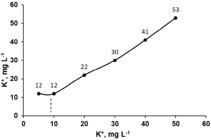
Procedure used to establish the LOD for the ISE-K. Values above each point indicate the K concentration measured using the calibration curve with concentrations of 30 and 300 mg L-1 K.
Instrumental precision was established by analyzing five (n = 5) 50 mg L-1 K standard solutions where the relative standard deviation (RSD) is lower than 5% while method precision is lower than 10% for n = 5 of sample solutions with about 30 mg L-1 K.
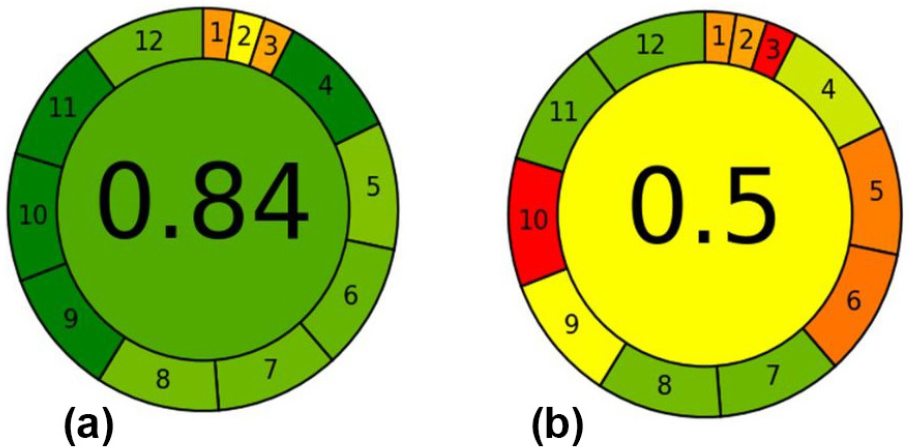
Analytical methods capable of mitigating, reducing or zeroing the generation of harmful waste, and, in this way, reducing environmental impacts, is a current trend. In this sense, there is a growing number of scientific publications focused on the principles of Green Chemistry.23,24 Therefore, with constant technological advancement, increasingly strict control is required in terms of waste generation, associated with procedures and equipment with lower energy consumption. In this sense, the control of analytical protocols, as well as the final product, guarantees not only quality, but significantly reduces the negative impacts on the environment. On the other hand, there is a growing concern with the sustainability of the production chain in agriculture, which become a common objective and with a strong commercial appeal among the different productive segments. Agriculture, in particular, has achieved great advances in the last years, increasing productivity, reducing the use of agrochemicals and fertilizers, lessening the generation of greenhouse gases and the application of sustainable practices.25 Therefore, low cost, portable and low energy consumption analytical methods can collaborate with a most sustainable agriculture. The principles of Green Chemistry are represented by color scales (red, yellow and green), whose scale is presented by a pictogram with values up to 1, where 1 is the best “green” condition. So, the dark green color indicates that the evaluated procedure meets the principles of Green Chemistry.26 Therefore, the concept was applied to the proposed ISE-K method and the ICP OES Mehlich-1 method used as reference for available K determination. The results can be seen in Figure 5.

Green Chemistry metric application (Analytical Greenness Calculator) to the proposed ISE-K (a) and ICP OES method (b).
As shown in Figure 5a, the proposed method meets good the principle of Green Chemistry, resulting in a value of 0.84, while K determination by ICP OES using Mehlich-1 extractor, this value is only 0.5 (Figure 5b). In this way, it is worth highlighting the importance of studies and establishment of analytical methods with milder reagents and detection techniques with lower energy consumption, the items with the greatest impact in the direction of the proposed method being “greener” than the ICP OES method, employed in most analytical laboratories. The two items with the greatest impact on this concept by the proposed method are the change of the K extractor from the mixture of hydrochloric acid and sulfuric acid by sodium chloride solution, and the use of ISE-K by the ICP OES technique, whose energy factor is extremely high when compared to the electroanalytical technique.
Method application for K determination in soil
In order to evaluate if the method is robust, soil samples with diverse characteristics were analyzed. These soils are of class 1, 2, 3 and 4 and have differences related to the amount of clay and OM (Table 1). The results obtained are shown in Table 4.
Determination of available K in soil of distinct characteristics. Results are the mean value with respective coefficient of variation (CV, %)
As can be observed from these results, available K extracted with 0.5 mol L-1 NaCl solution agrees well with the values obtained by extracting K with Mehlich-1 solution and determination by ICP OES, method usually recommended for this purpose. In this way, in comparison with the reference value, it is possible to observe that the K extracted vary in the range of 80 to 100% by the proposed method. Therefore, even considering the different soil classes, the NaCl solution proved to be efficient to determine the available K content in the soil samples, since the results obtained do not have significant differences at a 90% confidence level (t-test) in relation to the K values obtained by the reference method. That is, regardless of the physicochemical characteristics of the soil, the extractor system used was effective. In addition, aiming at field analysis, where access to laboratory reagents is often difficult, the same samples were analyzed in order to evaluate the feasibility of determining the available K using commercial salt (non-iodized cooking salt) and not purified water (bottled water). Both reagents were initially evaluated in relation to the presence of K as contaminant, where the concentrations were below the LOD of the EIS-K. Table 5 shows the results obtained.
Potassium in soil determined by ion selective electrode for potassium (ISE-K) after extraction with commercial salt and bottled water
As can be observed from the results shown in Table 5, there is no significant difference (t-test, 90%) between the results obtained by using analytical-grade NaCl solution and commercial salt in relation to the reference values. Therefore, it is possible to use commercial salt and bottled water to extract available K from soil.
Table 6 shows the characteristics of analytical methods for K determination in different samples. In summary, the proposed method has similar characteristics to the work for K determination by selective ion electrode and meets the proposal of the present work. Since the LOD for K in solution is 10 mg L-1 and the sample is diluted 10-fold in the extraction procedure, it is possible to determine the equivalent of 100 mg kg-1 of K in the soil. Therefore, the proposed method is applicable to different soils, as this element is generally present in concentrations ranging from 400 up to 30000 mg kg-1. However, the limit of detection cannot be low enough to determine available K in some soil types.
Conclusions
The feasibility of using an ISE-K and NaCl solution as extractor to determine available K in soil was evaluated. A simple extraction system under mechanical stirring, assembled to a small motor was suitable for extracting K in short time. According to the established conditions, the method proved to be suitable to reduce the stirring and decantation times, in addition to requiring a less toxic extracting solution than that used in the most common Mehlich-1 solution. With these conditions and K determination by ISE instead of ICP OES, the method is in line with the concepts of Green Chemistry. Besides, it is possible to use commercial salt and bottled water to extract K from the soil, reducing cost and facilitating analysis at field. However, it is recommended to verify possible contamination of these reagents with K. In this way, it was possible to determine the available K content in soil quickly, demanding about five minutes, in order to establish a routine and easy-to-apply analysis method.
Acknowledgments
The authors are grateful to the Coordenação de Aperfeiçoamento de Pessoal de Nível Superior (CAPES), Conselho Nacional de Desenvolvimento Científico e Tecnológico (CNPq, Process No. 310228/2021-2 for V. L. Dressler, 131372/2021-1 for A. B. Viana and 88887.974450/2024-00 for Taynara B. Riquiere) and Fundação de Amparo à Pesquisa do Estado do Rio Grande do Sul (FAPERS) for financial support and scholarship for the authors.
References
-
1 Andrade, A. C.; da Fonseca, D. M.; Gomide, J. A.; Alvarez, V. V. H.; Martins, C. E.; de Souza, D. P. H.; Rev. Bras. Zootec 2000, 29, 1589. [Crossref]
» Crossref -
2 Wendling, A.; Eltz, F. L. F.; Cubilla, M. M.; Amado, T. J. C.; Mielniczuk, J.; Rev. Bras. Cienc. Solo 2008, 32, 1929. [Crossref]
» Crossref -
3 Johnson, R.; Vishwakarma, K.; Hossen, Md. S.; Kumar, V.; Shackira, A. M.; Puthur, J. T.; Abdi, G.; Sarraf, M.; Hasanuzzaman, M.; Plant Physiol. Biochem. 2022, 172, 56. [Crossref]
» Crossref -
4 Römheld, V.; Kirkby, E. A.; Plant Soil 2010, 335, 155. [Crossref]
» Crossref -
5 Artuso, D. R.; Moterle, D. F.; Santos, D. R.; Tiecher, T.; Rev. Bras. Cienc. Solo 2024, 48, e0230125. [Crossref]
» Crossref -
6 Costa, S. E. V. G. A.; Souza, E. D.; Anghinoni, I.; Flores, J. P. C.; Andriguetti, M. H.; Rev. Bras. Cienc. Solo 2009, 33, 1291. [Crossref]
» Crossref -
7 Melo, V. F.; Schaefer, C. E. G. R.; Novais, R. F.; Singh, B.; Fontes M. P. F.; Commun. Soil Sci. Plant Anal. 2002, 33, 2203. [Crossref]
» Crossref -
8 Ferreira, A. C. B.; Borin, A. L. D. C.; Lamas, F. M.; Ferreira, G. B.; de Resende, Á. V.; Sci. Agric. 2022, 79, e20200339. [Crossref]
» Crossref -
9 Firmano, R. F.; Melo, V. F.; Montes, C. R.; de Oliveira Jr., A.; Castro, C.; Alleoni, L. R. F.; Clays Clay Miner. 2020, 68, 237. [Crossref]
» Crossref -
10 Kai-lou, L.; Tian-fu, H.; Jing, H.; Shah, A.; Da-ming, L.; Xi chu, Y.; Qing-hai, H.; Hui-cai, Y.; Hui-wen, H.; Zhi-hua, H.; Hui min, Z.; Soil Tillage Res. 2020, 197, 10448. [Crossref]
» Crossref -
11 Bortolon, L.; Gianello, C.; Schlindwein, J. A.; Rev. Bras. Cienc. Solo 2010, 34, 1753. [Crossref]
» Crossref -
12 Zebec, V.; Rastija, D.; Lončarić, Z.; Bensa, A.; Popović, B.; Ivezić, V.; Eurasian Soil Sci. 2017, 50, 1420. [Crossref]
» Crossref -
13 López-Piñeiro, A.; Navarro, A.; Soil Sci. 1997, 162, 912. [Crossref]
» Crossref -
14 Yang, G.; Li, Q.; Li, H.; Eurasian Soil Sci. 2021, 54, 1546. [Crossref]
» Crossref -
15 Soares, R.; Escaleira, V.; Campos, D. V. B.; Monteiro, M. I. C.; Carneiro, M. C.; Santelli, R. E.; Bernardi, A. C. C.; Rev. Bras. Cienc. Solo 2012, 36, 105. [Crossref]
» Crossref -
16 Bortolon, L.; Gianello, C.; Rev. Bras. Cienc. Solo 2010, 34, 125. [Crossref]
» Crossref -
17 Amorim, M. B.; Rogeri, D. A.; Gianello, C.; Comm. Soil Sci. Plant Anal. 2021, 52, 1790. [Crossref]
» Crossref -
18 Liu, L.; Bates, T. E.; Can. J. Soil Sci. 1990, 70, 607. [Crossref]
» Crossref -
19 Frant, M. S.; Ross Jr., J. W.; Science 1970, 167, 987. [Crossref]
» Crossref -
20 Khasawneh, F. E.; Adams, F.; Soil Sci. Soc. Am. J. 1967, 31, 172. [Crossref]
» Crossref -
21 Jalali, M.; Geoderma 2006, 135, 63. [Crossref]
» Crossref -
22 Midgley, D.; Trans. Inst. Meas. Control 1987, 9, 25. [Crossref]
» Crossref -
23 Gałuszka, A.; Migaszewski, Z.; Namieśnik, J.; TrAC, Trends Anal. Chem. 2013, 50, 78. [Crossref]
» Crossref -
24 Pena-Pereira, F.; Wojciech, W.; Tobiszewski, M.; Anal. Chem. 2020, 92, 10076. [doi: https://doi.org/10.1021/acs.analchem.0c01887>Crossref]
» https://doi.org/10.1021/acs.analchem.0c01887>Crossref -
25 Vaz Jr., S.; Soares, I. P.; Quim. Nova 2014, 37, 709. [Crossref]
» Crossref -
26 Cetinkaya, A.; Kaya, S. I.; Ozkan, S. A.; TrAC, Trends Anal. Chem. 2023, 168, 117330. [Crossref]
» Crossref -
27 Lu, Q.; Wang, R.; Li, M.; Wey, L.; Chang, Y.; Guo, H.; Cao, Q.; Chen, X.; Commun. Soil Sci. Plant Anal. 2024, 55, 2478. [Crossref]
» Crossref -
28 Das, P.; Chetry, B.; Paul, S.; Bhattacharya, S. S.; Nath, P.; Microchem. J. 2022, 172, 106949. [Crossref]
» Crossref -
29 McCole, M.; Bradley, M.; McCaul, M.; McCrudden, D.; Results Eng. 2023, 20, 101564. [Crossref]
» Crossref -
30 Moonrungsee, N.; Pencharee, S.; Jakmunee, J.; Talanta 2015, 136, 204. [Crossref]
» Crossref -
31 Pereira, C. K.; Viana, A. B.; Macedo, A. A.; Pardinho, R. B.; Dalla Vecchia, P.; Dressler, V. L.; Anal. Methods 2024, 16, 8037. [Crossref]
» Crossref -
32 Rosenberg, R.; Bono Jr., M. S.; Braganza, S.; Vaishnav, C.; Karnik, R.; Hart, A. J.; PLoS One 2018, 13, e0203862. [Crossref]
» Crossref
Edited by
-
Editor handled this article:
Maria das Graças A. Korn (Associate)