 Structural, Thermal and Physicochemical Properties of Medicinal and Aromatic Paliurus spina christi Mill. Seed Oils from Different Locations
Abstract
This investigation aimed to identify the physicochemical traits of Paliurus spina christi Mill. seed oils gathered over the course of two years from various areas around Turkey, and to assess their applicability in vegetable oil technology. The physicochemical properties of the obtained P. spina christi oils were determined as follows: oil yield (12.45-15.76%), specific gravity (0.902-0.905 g cm-3), refractive index (1.4630-1.4705 nD), color (L* 37.39-44.87, a* -5.20-9.62, b* 45.49-57.09), viscosity (577.38-712.19 mPa), free fatty acidity (1.08-1.92%), peroxide value (0.63-0.78 O2 kg-1), iodine value (109.65-115.24), saponification (160.31-182.75 mg KOH g-1) and unsaponifiable matter (2.41-3.92) numbers. The oils exhibited moderate oil yields and were characterized by low peroxide and free fatty acid values, indicative of favorable oxidative stability. Analysis of the fatty acid profile revealed a dominance of palmitic acid (7.402-8.354%), oleic acid (37.818-45.959%), and linoleic acid (38.671-45.645%). This composition suggests a nutritionally advantageous profile, comparable to those of commonly consumed edible oils. Moreover, the existence of distinctive functional groups associated with triglyceride structures was verified by Fourier transform infrared (FTIR) spectroscopy. Differential scanning calorimetry (DSC) results elucidated thermal behavior typical of unsaturated vegetable oils. Consistent with these findings, P. spina christi seeds show potential as a novel raw material source for vegetable oil technology, based on their physicochemical properties. It is recommended that future studies investigate their refining characteristics.
Keywords:
Paliurus spina christi Mill.; seed oils; physicochemical; characterization; thermal
Introduction
In botany, the Rhamnaceae family includes approximately 55-60 genera and ca. 900-1200 species worldwide with 5 genera and 27 species in Turkey. It was reported that these genera growing in Turkey are: Paliurus, Zizyphus, Sageretia, Frangula and Rhamnus.1-3 It has been stated that there are 5 species of Paliurus Tourn. ex Miller genera in the world and these are: P. spina christi, P. orientalis, P. ramosissimus, P. hirsutus and P. hemsleyanus. Paliurus spina christi Mill. is found only among these five species in Turkey.4,5
The perennial P. spina christi Mill. plant, which is a species from the family Rhamnaceae, grows up to three meters in height as a prickly, deciduous shrub or small tree. This plant is generally known among the public by different local names such as “blackthorn”, “messiah” or “Christ’s thorn”, “draga thorn”, “ox eye”, “ilme”, “çaltı/çaltı thorn”, “yellow bush”, “yellow thorn”, “sincan thorn”. P. spina christi is common in Mediterranean climate conditions; it is naturally dispersed over Southern Europe, North Africa and West Asia, and usually grows in barren soils, roadsides and under-forest formations.6,7 It grows widely in the Southeastern Anatolia, Mediterranean and Aegean regions in the Turkish flora. P. spina christi blooms yellowish-green flowers in May-June. Morphologically, its flowers are hermaphroditic in structure, the fruits are typically disk-shaped, winged, containing a nut-like hard seed in the center, woody in structure, and ripen in late July - early September.1,4,8
According to reports, P. spina christi has long been utilized as a plant in traditional folk medicine. Its fruit, leaves, and bark are used to cure rheumatism, diabetes, diarrhea, kidney disorders, hemorrhoids, stomach pain, nausea, uterine discharge, menstrual pain, skin diseases and respiratory tract infections.9-12 Research on the antidiabetic properties of the plant has revealed that in streptozotocin-induced diabetic rats, it lowers blood glucose levels and boosts antioxidant enzyme activity.13 The source of these pharmacological effects was determined to be the rich secondary metabolites such as phenolic compounds (ca. 75.9 mg GAE g-1 fruit, MeOH ca. 94.6 mg gallic acid equivalents (GAE) g-1 leaf, MeOH), flavonoids (total flavonoids in fruit extracts ca. 0.14 17.6 mg rutin equivalent (RE) g-1, quercetin ca. 233 µg g-1, rutin ca. 233 µg g-1), alkaloids, tannins and triterpenoids (lupeol ca. 19.5 mg, betulin + betulinic acid ca. 60.8 mg) contained in the plant.14,15 It has also been observed that especially fruit and leaf extracts show high levels of antioxidant and anti-inflammatory activity.14-17
There are limited studies on the physicochemical structure of P. spina christi seed oils. It was reported that the seeds of the plant contain 20% fixed oil, which is mostly composed of fatty acids including palmitic acid (7.7-8%), stearic acid (3.5-10.3%), oleic acid (35.3 36.9%), and linoleic acid (38.2-43.9%). According to reports, the sterol composition includes phytosterols such as β-sitosterol (66%), stigmasterol (13%), and campesterol (11%).18,19 Those components of P. spina christi oils, which are said to have a high phenolic and flavonoid concentration, were highlighted as crucial to the functional activity and nutritional value of the oil.18,19 As a result, fixed oils from aromatic and medicinal plants like P. spina christi are assessed as possible functional elements.20
As seen in the literature, although there are many studies on fruit and leaf extracts of this plant, research on seed oil is quite limited. This deficiency necessitates the investigation of both the physicochemical structure and the usability in vegetable oil technology of P. spina christi seed oil as a new raw material source. In line with this aim, P. spina christi fruits - the sole species naturally grown in Turkey with medicinal and aromatic properties - were collected from different locations with varying climatic and soil conditions over two harvest periods. This study investigated the characterization of the physicochemical properties of the of the seed oils and their potential usability in vegetable oil technology.
Experimental
Materials
In October and November of 2023 and 2024, P. spina christi (Christ’s thorn) fruits were gathered from natural populations in four distinct parts of Turkey: Marmara (Sındırgı-Balıkesir), Central Anatolia (Akşehir Konya), Mediterranean (Bucak-Burdur), and Aegean (Köyceğiz Muğla), with the permission of the Turkish Ministry of Agriculture and Forestry, following taxonomic identification by the relevant institutions. After the collection process, the dried fruits (40-50 kg) from each designated location were first crushed using a crushing machine for seeds; various-sized sieves were used to filter the resulting crushed fruit seeds, and the seeds were extracted by using ventilation to separate the shell pieces. After being cleaned of extraneous objects like fruit peels and crumbs, the seeds were put in sterile cloth bags and refrigerated (4-10 ºC).
Oil extraction and oil yield
Soxhlet extraction was used to assess the oil content of the seeds in accordance with the Am2-93 (Official Method of American Oil Chemists’ Society (AOCS)). A Lab312 (Çalışkan Lab, Ankara, Turkey) brand semi-automatic oil determination device was used. The samples were 1st ground. Approximately five grams of the material were measured, cut, and put on filter paper and then into the prepared section for the sample on the device. 50 mL of hexane (98% purity, Merck brand) were put into the containers and to collect the oil, the containers were inserted into the apparatus. The examples were first boiled at 90 °C for 50 min, then the samples were lifted up, and the device was run at 85 °C for another 40 min to extract the oil. In the last phase, the valves were shut and the solvent was collected by running at 80 °C for 20 min, and oil extraction was achieved. The amount of oil obtained by extraction was expressed as percentage by being proportioned to the dry seed weight.
Characterization analyses
Seed oil samples were analyzed with Fourier transform infrared (FTIR) spectroscopy (IRAffinity1S, Shimadzu Corp., Kyoto, Japan) employing functional group analysis using spectra with 4 cm-1 resolution and 15 scans in a spectrum of 850 to 4000 cm-1.21 FTIR measurements were carried out in attenuated total reflectance (ATR) mode. Liquid samples were analyzed by directly applying a drop onto the ATR crystal, and spectra were recorded in the range of 4000-400 cm-1.
The specific gravity of the seed oils was measured at 40 °C with a pycnometer, in accordance with AOCS Official Method Cc 10a-25. Temperature control was maintained using a thermostatic water bath.
The refractive index of the oils was measured at 20 °C employing a digital Abbe refractometer (ATAGO, PAL RI 3850, ATAGO Co., Ltd., Tokyo, Japan), in accordance with AOCS Official Method Cc 7-25. All measurements were carried out with temperature control in triplicate.
A Konica Minolta Chroma Meters CR-400 and CR 400 brand colorimeter was employed to define the color of the P. spina christi seed oil samples collected for the investigation. The results were evaluated as follows.22
L* is the color brightness coordinate and is a measure of the whiteness of the color (0 is black and 100 is white).
a* is the coordinate indicating green and red colors (-60 to 0 indicates green, and 0 to +60 indicates red).
b* is the coordinate indicating blue and yellow colors (-60 to 0 indicates blue, and 0 to +60 indicates yellow).
A Brookfield digital viscometer (Brookfield Engineering Laboratories, USA) was employed to analyze the viscosity of the seed oils at 20 °C.23 A suitable spindle with a steady rotating speed of 100 rpm was used for the measurements. Temperature control was maintained throughout the measurements. After stabilization, viscosity values were measured and reported in mPa.
The thermal behaviors of the oils were analyzed with a differential scanning calorimetry (DSC, Hitachi, model DSC7020, Japan). The purge gas utilized was nitrogen gas. The oil examples were heated at 10 °C s-1 rate from -60 to 150 °C. The onset, peak, and end temperatures of melting, as well as the enthalpy values, were determined.24,25
Titrimetric analysis was used to assess the free fatty acidity (FFA) of the seed oils in accordance with Ca 5a-40 AOCS Official Method. The seed oil samples (approximately 2.0 g) were put in a neutralized mixture of ethanol-diethyl ether (1:1, v/v) and titrated with 0.1 mol L-1 KOH using phenolphthalein as an indicator, and the proportion of oleic acid was used to express the results.
Iodometric titration was used to measure the peroxide value of the seed oils in accordance with AOCS Official Method Cd 8b-90. The findings were reported as active oxygen milliequivalents per kg of oil (meq O2 kg-1).
The iodine value of the seed oils was measured in accordance with Wijs method (Method 993.20 of Association of Official Agricultural Chemists (AOAC)).
The saponification value of the seed oils was measured in accordance with AOCS Method Cd3-25, and the results were calculated as potassium hydroxide milligrams needed to saponify one g of oil (mg KOH g-1).
Method Ca6a-40 of AOCS was used to assess the unsaponifiable matter content of the seed oils.
Method Ce1h-05 of AOCS was employed to determine the fatty acid makeup of the oil. To create fatty acid methyl esters (FAMEs), approximately 0.5 mL of oil was dissolved in 7 mL of n-heptane. Methylation was then performed by adding 1 mL of a 2 mol L-1 potassium hydroxide (KOH) solution in methanol. After methylation and vortexing, the mixture was let to stand until phase separation occurred. The upper n-heptane phase, containing the FAMEs, was utilized for gas chromatography (GC) analysis. FAME analyses were completed with gas chromatographs equipped with flame ionization detectors (FID), specifically a Shimadzu GC-2025 and an Agilent 8860, from Japan and the USA, respectively. Separation was achieved using a capillary column (e.g., DB-23, 60 m × 0.25 mm internal diameter (i.d.), 0.25 µm film thickness). The temperatures of detector and injector were preset at 200 °C, while the oven temperature was kept isothermally at 180 °C. Nitrogen served as the carrier gas at a flow ratio of 30 mL min-1. Hydrogen and air were provided at flow values of 28 and 220 mL min-1, respectively. The injection volume was 1 µL. By contrasting their retention durations with those of a typical FAME mixture, fatty acids were identified. Based on peak area normalization, the relative proportion of all detected fatty acids was utilized to define the fatty acid composition.
Statistical analyses were conducted with the Minitab Statistical Software (version 16; Minitab Inc., State College, PA, USA) according to the 4 × 2 × 2 × 13 experimental design. The data obtained were 1st analyzed with a one-way analysis of variance (ANOVA) test, and if a statistically notable variation was found (p < 0.05) as a result, multiple comparison and lettering were performed with the Tukey’s test to find out that the groups were different from each other.26
Results and Discussion
Oil yield of seeds
The oil content of P. spina christi seed oils are shown in Table 1. The average oil yields of the seeds were determined as 14.95% in Konya-Akşehir location, 15.44% in Burdur-Bucak, 12.45% in Muğla-Köyceğiz, and 15.76% in Balıkesir-Sındırgı. The crude oil amounts of the seeds varied between 10.03 and 14.77% in the 1st harvest year and between 14.86 and 16.78% in the 2nd harvest year. In both harvest years, there was a statistically notable (p < 0.05) difference among the locations in the seed oil yield. It was found that Muğla-Köyceğiz location had the lowest oil yield in both harvest years. While the oil yields of other locations (14.66-14.77%) except Muğla-Köyceğiz location (10.03%) in the 1st harvest year were close to each other, it was determined that Balıkesir-Sındırgı (16.78%) location had the highest oil yield in the 2nd harvest year. In a few earlier investigations, the oil content of P. spina christi seeds was reported to be 17-22%.18,19,27
These oil yield numbers indicate that P. spina christi seeds can be considered a moderate oil source. Variations observed between locations and harvest years may be linked to variations in climatic conditions, soil composition, and seed maturity, which are known to significantly influence oil accumulation in seeds.
FTIR spectroscopy
The FTIR spectra of P. spina christi seed oils are given in Figures 1 and 2. According to the wavelengths determined in this way, the ca. 721 cm-1 peak is the long-chain -(CH2)n- rocking mode and is an indicator of crystalline/semi-crystalline molecular ordering. Its presence is normal and indicates the existence of an aromatic character of vegetable oils.28 The peaks at 1236-1160-1118/1097 cm-1 are the vibrations of C-O/C-C ester bonds. The strong bands in this region indicate the dominant presence of triglycerides.29 The peaks observed at 1465 and 1377 cm-1 are vibrations that occur as the hydrogen atoms in the -CH2 groups approach and move away from each other in the same plane, and as the hydrogen atoms in the -CH3 groups move up and down showing angular changes, and indicate the chain order/body structure.28 The ester C=O stretching peak at ca. 1744 cm-1 is prominent, with no shift toward 1710 1715 cm-1, indicating that free fatty acids or secondary oxidation products are not predominant. In addition, the strong presence of 1744 cm-1 indicates that ester bonds are preserved without hydrolysis.30 The peaks observed at 2922 and 2853 cm-1 correspond to -CH2 asymmetric (movement of two hydrogen atoms in opposite directions) and symmetric (movement of two hydrogen atoms in the same direction) stretching vibrations, respectively, and indicate the long-chain aliphatic structure. The strong peaks in both years confirm that the triglyceride matrix of the oil is dominant.31 The cis =C-H stretching peak seen at ca. 3006 cm-1 indicates unsaturation. The intensity or area of this band reflects the relative unsaturation compared to the 2922 cm-1 band. There was no significant positional shift between the two years. However, it has been stated that small differences in relative intensity may be related to seasonal and ecological variations in the oleic/linoleic ratio.30,32

FTIR-ATR spectrum of P. spina christi seed oils in the 1st harvest year, (a) Konya-Akşehir location, (b) Muğla-Köyceğiz location, (c) Balıkesir-Sındırgı location, (d) Burdur-Bucak location.

FTIR-ATR spectrum of P. spina christi in the 2nd harvest year, (a) Muğla-Köyceğiz location, (b) Konya-Akşehir location, (c) Burdur-Bucak location, (d) Balıkesir-Sındırgı location.
In conclusion, as seen in both FTIR spectra (Figures 1 and 2), a typical vegetable oil profile was detected in both years (1744, 1236-1160, 1118 cm-1 emphasized; 2922/2853 strong). In this context, it has been determined in the sections mentioned in the explanation above that these seed oils have triacylglycerol, aromatic structure, chain structure, free fatty acidity formations and long-chain aliphatic structures. It is thought that the reason for the ±1-2 cm-1 deviations in wavelengths on a yearly basis may be due to small fluctuations in the fatty acid composition according to the difference in harvest year. Additionally, the absence of new prominent peaks indicative of oxidation suggests that the chemical integrity of the oils was preserved.
Physical properties
Table 2 lists the physical characteristics of P. spina christi seed oils.
The average specific gravity values of P. spina christi seed oils according to harvest years were found to be 0.905 g cm-3 for Akşehir location, 0.902 g cm-3 for Bucak, 0.902 g cm-3 for Köyceğiz, and 0.905 g cm-3 for Sındırgı (Table 2). It was observed that the specific gravity values varied between 0.886-0.898 g cm-3 in the 1st harvest year and between 0.906-0.913 g cm-3 in the 2nd harvest year. The increase observed in the 2nd harvest year may be associated with variations in fatty acid composition, particularly in the relative proportions of saturated and unsaturated fatty acids, which are known to influence oil density. There is a statistically notable variation (p < 0.05) among the regions in the specific gravity in both harvest years. These regional differences may be attributed to environmental factors such as climatic conditions or soil characteristics. It was found that Köyceğiz had the smallest value in the 1st harvest year, and Bucak had the smallest value in the 2nd harvest year. It was determined that the specific gravity values of the other three regions were close to each other except for Köyceğiz in the 1st harvest year, and Köyceğiz had the biggest value in the 2nd harvest year. In a previous study19 on P. spina christi seed oils, the specific gravity was determined as 0.9227 g cm-3. Limited literature is available regarding the specific gravity values of P. spina christi seed oils. However, studies examining the physical and chemical properties of Zizyphus spina christi fruit seed oil, a member of the same family (Rhamnaceae) as P. spina christi, have reported specific gravity values ranging from 0.79 to 0.933 g cm-3.33-35 Based on the Codex Alimentarius Standard for Named Vegetable Oils (CXS 210-1999, revised 2019),36 the specific gravity of vegetable oils varies between 0.898 0.935 g cm-3, and the values obtained in this study fall within this range, indicating acceptable oil quality and potential suitability for edible and industrial applications.
When the refractive index values are examined, the average values of the locations are observed as 1.4705 nD for Akşehir, 1.4640 nD for Bucak, 1.4630 nD for Köyceğiz and 1.4640 nD for Sındırgı (Table 2). It was observed that the values of the 1st harvest year varied from 1.4528 to 1.4675 nD, and the values of the 2nd harvest year varied from 1.4732 to 1.4736 nD. There is no statistically notable variation (p > 0.05) among the regions in the refractive index value in both harvest years. In the 1st harvest year, the lowest refractive index value belonged to Köyceğiz, while the biggest value belonged to Akşehir. It was observed that the refractive index values of the 2nd harvest year locations were close to each other. In a previous study19 on P. spina christi seed oils, they determined the refractive index as 1.4778 n20D (refractive index unit, 20 °C). Similar to specific gravity, limited literature is available regarding the refractive index scores of P. spina christi seed oils. However, studies on Z. spina christi fruit seed oil have reported refractive index values between 1.441 and 1.4681 n20D.33-37 The CXS 210-1999 (revised in 2019)36 specifies a refractive index range of 1.447 to 1.487 n20D for vegetable oils, and the values found in our study were determined to be within this range. The refractive index values are consistent with those reported for vegetable oils rich in unsaturated fatty acids, further supporting the compositional characteristics of P. spina christi seed oils.
Concerning the color values presented in Table 2, the average L* (brightness) values ranged from 37.39 to 44.87, with a decrease observed in all regions in the 2nd year compared to the 1st year. While no statistically significant difference was seen in L* value between locations in the 1st harvest year (p > 0.05), a statistically significant difference was seen in the 2nd harvest year (p < 0.05). Bucak had the highest L* value in the 1st harvest year, and Akşehir had the highest L* value in the 2nd harvest year. Sındırgı had the lowest value in the 1st harvest year, and Köyceğiz had the lowest value in the 2nd harvest year. The average a* (green/red) color values of P. spina christi seed oils ranged from -5.20 to 9.62 (Table 2). An increase was observed in Akşehir and Sındırgı compared to the previous year, while a decrease was observed in the other two locations. There is a statistically significant difference in a* color value between locations in both harvest years (p < 0.05). It was determined that Köyceğiz had the lowest a* color value in both harvest years, and Bucak had the highest a* value in the 1st year, and Akşehir in the 2nd year. The average b* (blue/yellow) color values in seed oils ranged from 45.49 to 57.09 (Table 2). The b* value for Bucak decreased compared to the previous year, while this value increased in other locations. There is a statistically significant difference in b* color value between locations in both harvest years (p < 0.05). It was observed that Köyceğiz had the lowest value in the 1st harvest year, and Bucak in the 2nd harvest year. It was found that Bucak had the highest b* value in the 1st year, and Akşehir in the 2nd harvest year. Overall, the variations observed in L*, a*, and b* values among locations and harvest years suggest that environmental factors and harvest conditions significantly influence the pigment composition and visual quality of P. spina christi seed oils. No study was found in the literature regarding the color values of P. spina christi seed oils. In a study conducted to determine the physical and chemical properties of the seed oil of Z. spina christi fruit, which belongs to the same family (Rhamnaceae) as P. spina christi; the color values of Z. spina christi seed oils were determined as 1.16 R and 20 Y.33 In another study,37 the color values were determined as 25.2 Y and 9.104 R. The color values of Z. spina christi seed oils were even found to be L* 38.41, a* 4.09, and b* 22.88.38
As seen in Table 2, the average viscosity values of P. spina christi seed oils were found to be 602 mPa for Akşehir, 595.31 mPa for Bucak, 712.19 mPa for Köyceğiz, and 577.38 mPa for Sındırgı. It was determined that the values of the 1st harvest year ranged from 355.30 to 519.20 mPa, and the values of the 2nd harvest year ranged from 674.33 to 1035.33 mPa. The pronounced increase in viscosity observed in the 2nd harvest year may be associated with variations in fatty acid composition, particularly variations in the degree of unsaturation and the existence of minor components such as free fatty acids and unsaponifiable matter. There is a statistically significant difference in viscosity value between locations in both harvest years (p < 0.05). These regional differences indicate that environmental conditions and seed characteristics significantly influence the rheological behavior of the oils. The Balıkesir-Sındırgı location had the biggest viscosity value in the 1st harvest year, but the smallest viscosity value in the 2nd harvest year. Viscosity is an important parameter affecting oil handling, and processing behavior; therefore, the observed variations may influence the suitability of P. spina christi seed oils for different food and industrial applications. No literature was found regarding the viscosity values of P. spina christi seed oils. In studies conducted to determine the physical and chemical properties of Z. spina christi fruit seed oil, which belongs to the same family (Rhamnaceae) as P. spina christi, the viscosity value of Z. spina christi seeds was determined as 33.26, 37.31 and 50.25 centipoise (cp).33,35,37
Melting and crystallization temperatures of P. spina christi seed oils are given in Table 3.
The melting temperature is defined as the temperature at which the oil begins to change from solid to liquid or completely changes. It has been stated that the melting temperature in vegetable oils is directly in relation with the fatty acid composition in triglycerides. It has been stated that the melting temperature is an important physical property for vegetable oils and has a decisive part in the structure, functional properties, technological processes, and usage conditions of the oil.25,39
As seen in Table 3, the melting temperatures of P. spina christi seed oils ranged from -21.6 to -23.9 °C, and no statistically significant difference was determined between regions (p > 0.05). The average melting temperature values of seed oils were found to be -23.3 °C for Akşehir, -22.3 °C for Bucak, -22.53 °C for Köyceğiz, and -23.03 °C for Sındırgı. Minor variations in melting temperatures were observed among locations and harvest years; however, these differences were not statistically significant, indicating a largely similar melting behavior across samples. There was no research on melting temperatures of P. spina christi seed oils. In a research in which the structure and thermal properties of Rhamnus seed oils, belonging to the same family (Rhamnaceae) as P. spina christi, were determined; it was emphasized that the oil melted at approximately 40 °C, remained stable up to 150 °C, and underwent more thermal changes at higher temperatures, therefore it was ideal for use in food processing, cosmetics and pharmaceuticals.40 The markedly higher melting temperature reported for Rhamnus seed oil compared to P. spina christi may be linked to differences in fatty acid structure, particularly a higher proportion of saturated fatty acids, highlighting the compositional diversity within the Rhamnaceae family.
The crystallization temperature, in vegetable oils, refers to the temperature at which triglycerides, waxes, and other crystallizable components in the oil begin to transition from a liquid state to a solid or semi-solid crystalline phase. It has been stated that the crystallization temperature is a critical parameter for the physical stability, clarity, and shelf life of the oil. It has been shown that this temperature determines the risk of turbidity, precipitation, or solidification under storage and transport conditions and guides the removal of undesirable components from the oil during refining processes. Furthermore, it has been determined that crystallization behavior plays a decisive role in the formation of the desired texture and sensory properties in products such as margarine and chocolate.41,42
The average crystallization temperatures of P. spina christi seed oils were defined to be -12.88 °C for Akşehir, -14.40 °C for Bucak, -13.88 °C for Köyceğiz, and -14.05 °C for Sındırgı (Table 3). Crystallization temperatures differed significantly among regions (p < 0.05). It has been stated that this may be due to the difference in saturated/polyunsaturated fatty acid ratios in the structure of the oils.24 In particular, Bucak and Sındırgı regions stand out with lower crystallization temperatures, while the Konya-Akşehir crystallized at a higher temperature. Lower crystallization temperatures indicate delayed solidification under cold conditions, which is desirable for maintaining oil clarity and flowability during low-temperature storage and transportation. Since there are not enough studies over the thermal stability properties of P. spina christi seed oils, a study on the melting and crystallization temperatures of Z. spina christi fruit seed oil from the same family (Rhamnaceae) was analyzed. In this study, three exothermic peaks were detected during cooling. When the crystallization temperatures were examined, it was determined that two tiny peaks appeared at higher temperatures (onset temperature (Ton) = -1.16 °C and Ton = -22.29 °C, respectively), while the main peak happened at a low temperature (Ton = -43.7 °C). There were two endothermic peaks found for the melting profile. The large peak was observed at -18.76 °C and the small peak at 1.18 °C.43
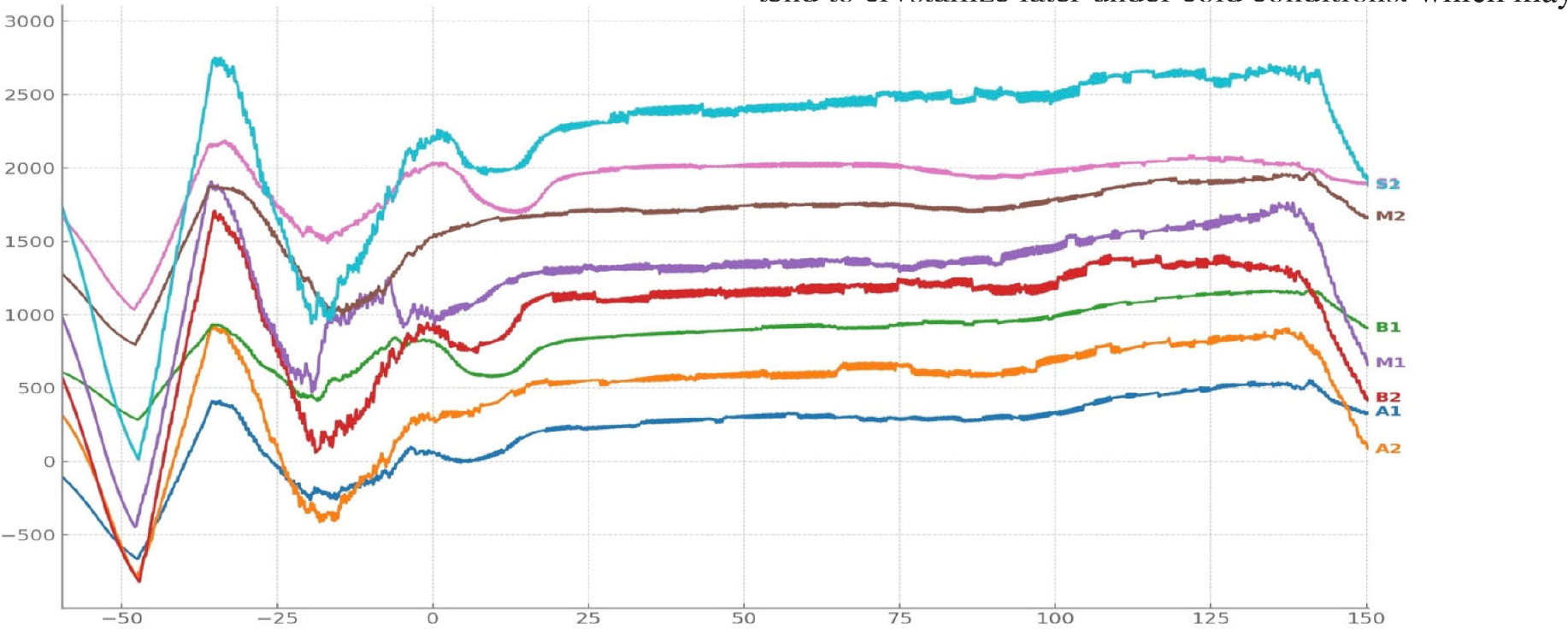
As seen in Figure 3, clear endothermic peaks were observed in all samples between -50 and 0 °C. This is generally reported to be correlated with the melting of unsaturated fatty acids with low melting points in oils.24 There was a primary melting transition between -40 and -10 °C on the curves, and clear endothermic peaks (downward signal) were observed. This part corresponds to the dissolution of the low melting point triglyceride fractions of the oils.44 A 2nd small endothermic transition was determined in some samples between -10 and 0 °C, and it was thought that this might be due to medium chain fatty acids.45 Above 0 °C, the curves become smoother, but small fluctuations are observed in some samples (e.g., Balıkesir-Sındırgı 2nd harvest year (S2), Muğla-Köyceğiz 2nd harvest year (M2)). This indicates multiple crystal melting transitions resulting from different fatty acid compositions. After 0 °C, the curves became smoother, transitioned more gently, and took on a more horizontal shape; that is, the melting process was completed.46 No significant transition appeared in the 50-150 °C range, the curves became more stable, and only baseline fluctuations were present; this showed that the system remained stable in the liquid phase.24 These DSC heating curves (Figure 3) demonstrated that P. spina christi seed oils exhibited different melting profiles (Table 3) depending on their fatty acid structure.

DSC heating curves of P. spina christi seed oils, A1: Konya-Akşehir 1st harvest year, A2: Konya-Akşehir 2nd harvest year, B1: Burdur-Bucak 1st harvest year, B2: Burdur-Bucak 2nd harvest year, M1: Muğla-Köyceğiz 1st harvest year, M2: Muğla-Köyceğiz 2nd harvest year, S1: Balıkesir-Sındırgı 1st harvest year, S2: Balıkesir-Sındırgı 2nd harvest year.
As depicted in Figure 4, multiple exothermic peaks formed in all samples as the temperature decreased. These peaks represent the beginning of crystallization of the triglyceride fractions of the oils.24 Clear transitions were observed in the graph below 0 °C, especially between -5 and -30 °C. This showed that the low melting point unsaturated fractions of the oils began to crystallize.24 Crystallization was completed in all samples by approximately -40 °C. These cooling curves clearly revealed that P. spina christi seed oils exhibited different crystallization behavior according to different saturated/unsaturated fatty acid ratios.47

DSC cooling chart of P. spina christi seed oils, A1: Konya-Akşehir 1st harvest year, A2: Konya-Akşehir 2nd harvest year, B1: Burdur-Bucak 1st harvest year, B2: Burdur-Bucak 2nd harvest year, M1: Muğla-Köyceğiz 1st harvest year, M2: Muğla-Köyceğiz 2nd harvest year, S1: Balıkesir-Sındırgı 1st harvest year, S2: Balıkesir-Sındırgı 2nd harvest year.
In conclusion, while there is no significant difference between species in melting temperatures, the variation in crystallization temperatures is important in oil storage and processing conditions. It is considered that species with particularly low crystallization temperatures will tend to crystallize later under cold conditions, which may affect shelf life and technological properties. Overall, the combination of low melting temperatures and relatively low crystallization temperatures suggests that P. spina christi seed oils possess favorable thermal properties, supporting their potential use in edible oil formulations as well as cosmetic and pharmaceutical applications where low-temperature stability is required.
Chemical properties
The chemical properties of P. spina christi seed oils are presented in Table 4. The average free fatty acidity amounts of the seed oils for the harvest years of the regions were measured to be 1.54% for Akşehir, 1.08% for Bucak, 1.92% for Köyceğiz, and 1.14% for Sındırgı (Table 4). While the 1st harvest year values were between 1.14 and 2.39%, the 2nd harvest year values ranged were from 0.92 to 1.22%. There is a statistically notable variation among the regions in free fatty acidity values in both harvest years (p < 0.05). It was observed that Köyceğiz had the biggest free fatty acidity values in both harvest years, and Bucak in the 1st harvest year and Akşehir in the 2nd harvest year had the lowest values. In a previous study19 on P. spina christi seed oils, the acid number was found to be 4.5 mg KOH g-1. Sufficient resources regarding free fatty acids of P. spina christi seed oils could not be seen. In studies regarding the physical and chemical properties of the seed oil of Z. spina christi fruit, which belongs to the same family (Rhamnaceae) as P. spina christi, the acid values of Z. spina christi seed oils were measured to be 1.19, 7.57 and 4.7 mg KOH g-1.33-35 According to the CXS 210 1999 (revised 2019),36 it is emphasized that the maximum acid value for cold-pressed and natural oils (excluding crude palm kernel oil and natural palm oil) should be 4.0 mg KOH g-1 oil, and it has been determined that the values found (average 2.15-3.81 mg KOH g-1) are below the desired maximum value for the quality criterion. The low free fatty acidity values indicate minimal hydrolytic degradation of the oils, suggesting good initial quality of the seeds and appropriate handling during harvesting and storage. Such values are desirable for edible oils, as high free fatty acidity negatively affects both sensory quality and shelf life.
As detailed in Table 4, the average peroxide values of P. spina christi seed oils varied by region: 0.63 meq O2 kg-1 for Akşehir, 0.71 meq O2 kg-1 for Bucak, 0.78 meq O2 kg-1 for Köyceğiz, and 0.68 meq O2 kg-1 for Sındırgı. During the 1st harvest year, the peroxide value was 0 meq O2 kg-1 across all regions, while in the 2nd harvest year, values ranged from 1.25 meq O2 kg-1 to 1.56 meq O2 kg-1. There is a statistically notable variation between the regions in the peroxide number in both harvest years (p < 0.05). While the peroxide number was determined to be 0 meq O2 kg-1 in all regions in the 1st harvest year, it was observed that Köyceğiz had the biggest peroxide value and Akşehir had the smallest value in the 2nd harvest year. Literature search yielded no sources regarding the peroxide values specific to P. spina christi seed oils. However, studies examining the physical and chemical properties of Z. spina christi fruit seed oil reported peroxide values of 0.5 meq O2 kg-1,33 0.8 meq O2 kg-1,35 2.83 meq O2 kg-1,37 and trace amounts in another study.34 The CXS 210-1999 (revised 2019)36 stipulates a maximum peroxide value of 15 meq O2 kg-1 oil for cold-pressed and virgin oils. The peroxide values determined in this study were well below this limit, indicating acceptable oil quality. The peroxide values remained well below the maximum limits established for edible vegetable oils, indicating that the oils were not subjected to significant primary oxidation. This suggests satisfactory oxidative stability, which is essential for both nutritional quality and potential industrial applications.
The average iodine number scores of P. spina christi seed oils were measured as 115.24 for Akşehir, 113.71 for Bucak, 109.65 for Köyceğiz, and 114.08 for Sındırgı (Table 4). In the 1st harvest year, iodine values ranged from 110.14 to 116.04, and in the 2nd harvest year, from 109.15 to 114.45. There is no statistically significant difference between the regions in the iodine value in both harvest years (p > 0.05). When comparing the years, it was observed that Köyceğiz had the lowest value and the Akşehir had the highest value in both years. A prior study19 on P. spina christi seed oils reported an iodine value of 102.6. There is limited research on the iodine content of P. spina christi seed oils. Studies investigating the chemical and physical characteristics of Z. spina christi seed oil, a species within the same family (Rhamnaceae) as P. spina christi, reported iodine values of 117.38, 86.40, and 88.33,34,37 According to the CXS 210-1999 (revised 2019),36 it is seen that the refractive indices of vegetable oils vary between 4 and 211, and it has been determined that the values found in our study are within this range. The iodine values reflect the unsaturation degree of the oils. The relatively high iodine values observed suggest a considerable proportion of unsaturated fatty acids, which is consistent with the fatty acid composition results and indicates potential nutritional benefits. However, higher unsaturation may also increase susceptibility to oxidation, highlighting the importance of proper storage conditions.
The average saponification number values of P. spina christi seed oils were found to be 182.75 mg KOH g-1 for Akşehir, 177.18 mg KOH g-1 for Bucak, 163.17 mg KOH g-1 for Köyceğiz, and 160.31 mg KOH g-1 for Balıkesir-Sındırgı (Table 4). The values for the 1st harvest year ranged between 141.69 177.41 mg KOH g-1, and the values for the 2nd harvest year ranged between 185.70-190.75 mg KOH g-1. The higher saponification numbers for the 2nd harvest year suggest a relative rise in shorter-chain fatty acids or changes in triglyceride structure, which may be influenced by environmental conditions and seed maturity. There is a statistically notable variation among the regions in the saponification number value in both harvest years (p < 0.05). Such regional variations indicate that geographical and climatic factors play an important role in determining the average fatty acid chain length of the oils. Sındırgı exhibited the lowest saponification number in the 1st harvest year, while Köyceğiz exhibited the lowest in the 2nd harvest year. Conversely, Akşehir consistently displayed the highest saponification number in both years. No source regarding the saponification number of P. spina christi seed oils has been detected. Research on the physical and chemical properties of Z. spina christi fruit seed oil, also belonging to the Rhamnaceae family, reported saponification values of 181.39, 184, 126.55, 159.6, and 176 mg KOH g-1 for Z. spina christi seed oil.3337 According to the CXS 210-1999 (revised 2019),36 it is seen that the saponification number values of vegetable oils vary between 75 and 265 mg KOH g-1, and it has been determined that the values found are within this range. Compliance with Codex Alimentarius limits indicate that P. spina christi seed oils possess acceptable structural characteristics and may be suitable for edible, cosmetic, and industrial applications.
When the average values of the unsaponifiable matter content of seed oils, as seen in Table 4, are examined, they were determined as 3.07% in Akşehir, 2.74% in Bucak, 3.92% in Köyceğiz, and 2.41% in Sındırgı. It was determined that the 1st harvest year varied between 0.45 and 0.75%, and the 2nd harvest year varied between 5.36 and 8.66%. The pronounced increase in unsaponifiable matter content observed in the 2nd harvest year may be attributed to higher accumulation of bioactive minor components including sterols, tocopherols, and phenolic compounds, which are influenced by environmental conditions and seed maturity. There was a statistically notable variation in unsaponifiable matter content between regions in both harvest years (p < 0.05). Across all regions, an increase in unsaponifiable matter content was noted in the 2nd harvest year compared to the 1st. It was observed that the lowest value in both harvest years belonged to the Sındırgı location, and the biggest value belonged to the Köyceğiz location. Such regional differences suggest that climatic and geographical factors significantly affect the biosynthesis of minor lipid constituents in P. spina christi seeds. In a previous study18 on P. spina christi seed oils, the amount of unsaponifiable matter was determined as 0.2%; in another study,48 the unsaponifiable fraction was determined as 1.2%. The existing literature is limited regarding the unsaponifiable matter content of P. spina christi seed oils. A study analyzing the physical and chemical properties of Z. spina christi fruit seed oil, belonging to the same family (Rhamnaceae) as P. spina christi, reported an unsaponifiable matter content of 11.96% for Z. spina christi seed oil.35 According to the CXS 210-1999 (revised 2019),36 the maximum allowable unsaponifiable matter content in vegetable oils is specified as 65 mg KOH g-1 (6.5%). The average results of the study fell below this threshold, demonstrating compliance with international quality standards.
It was reported that the differences observed in the specific gravity, refractive index, color, viscosity, melting and crystallization temperatures, free fatty acidity, peroxide, iodine, and saponification values, as well as the unsaponifiable matter content of the seed oils depending on the harvest years, may be attributed to variations in the structure of fatty acids and the proportions of other constituents (such as free fatty acids and triglycerides) in the seeds, which are impacted by factors including climatic conditions, soil structure, and harvest timing.49
Fatty acid composition
The fatty acid components of P. spina christi seed oils are given in Table 5. When the fatty acid profile of four locations and both harvest years was examined, it was observed that oleic (C18:1) and linoleic (C18:2) fatty acids were dominant. The total unsaturated fatty acids (UFA = monounsaturated fatty acids (MUFA) + polyunsaturated fatty acids (PUFA)) were high (ca. 85 87%) and the total saturated fatty acids (SFA) were low (ca. 13-15%) in all locations. Palmitoleic (C16:1), linolenic (C18:3) and eicosenoic (C20:1) fatty acids were found in small amounts in all locations.
When the general average values are examined, it is seen that Köyceğiz is significantly dominant in oleic fatty acid; it was determined that it was in the highest group for oleic fatty acid and MUFA, and in the lowest value for linoleic fatty acid and total PUFA. In contrast to Köyceğiz, Akşehir was found to be dominant in linoleic fatty acid, to have the highest value in linoleic fatty acid and total PUFA, and the lowest value in oleic acid. Bucak and Sındırgı regions presented a balanced profile with medium-high levels of MUFA and PUFA and lower SFA values.
The year effect lagged behind the species effect in magnitude; however, statistically significant trends were observed in some minor/medium value acids. These findings indicate that geographical location exerts a stronger influence on fatty acid composition than harvest year, likely due to differences in climatic conditions and soil characteristics. It was determined that Köyceğiz had the biggest value in oleic acid and the lowest value in linoleic acid in both years, and Akşehir had values in the opposite direction. When the palmitic acid values were examined, it was observed that Sındırgı had higher values than the other regions in both years. It was determined that stearic acid values decreased in the 2nd year compared to the 1st year in other regions except for Sındırgı, although in small proportions. Furthermore, linolenic fatty acid values tended to decrease across all regions, while eicosenoic (C20:1) acid values increased in the 2nd year compared to the 1st.
In a previous study,19 it was determined that the lipids of P. spina christi seeds also contained 20:1 (eicosenoic 0.3 2.9%), 18:1 (oleic acid 35.3-36.9%) and 18:2 (linoleic acid 38.2-43.9%) acids among the unsaturated fatty acids. The acylglycerol composition in the lipids of P. spina christi seeds collected in different years has been determined to be variable. The presence of eicosenoic acid (20:1) in P. spina christi lipids was reportedly the 1st instance of its identification in plants of the Rhamnaceae family.18,19 In a gas chromatography tandem mass spectrometry (GC-MS/MS) analysis of the methanolic extracts of P. spina christi leaves and seeds, palmitic, linoleic, oleic, and stearic acids were identified as the predominant fatty acids. The relative contents of these compounds were 36.32% (seed) and 46.08% (leaf) for palmitic acid, 28.46% (seed) and 29.93% (leaf) for linoleic acid, 27.89% (seed) and 15.51% (leaf) for oleic acid, and 7.34% (seed) and 7.39% (leaf) for stearic acid, respectively.50
A limited number of resources were identified regarding the fatty acid structure of P. spina christi seed oils. However, a research33 investigating the physical and chemical properties of Z. spina christi fruit seed oil, which belongs to the same family (Rhamnaceae) as P. spina christi, found oleic acid (57%) and linoleic acid (22%) as the primary unsaturated fatty acids. Palmitic acid (7.2%), stearic acid (4.7%), and arachidic acid (6.7%) were identified as the main saturated fatty acids. A study51 on Zizyphus lotus seed oils determined that the main fatty acids were oleic (61.93%), linoleic (18.31%), and palmitic (9.14%) acids. In an earlier study on seed oils of P. ramosissimus, a species of the same genus as P. spina christi, the component acids of the seed oils were examined. It was found that the unsaturated fatty acids oleic (45%) and linoleic acid (37%) and the saturated fatty acids palmitic (9%) and stearic (3%) acid were dominant.52
The dominance of oleic and linoleic acids indicates that P. spina christi seed oil can be classified as an oleic-linoleic type oil. Such a fatty acid profile is nutritionally favorable due to the well-documented health benefits of unsaturated fatty acids. Moreover, the relatively high oleic acid content may contribute positively to oxidative stability compared to oils richer in polyunsaturated fatty acids. The balance between oleic and linoleic acids observed among locations suggests that P. spina christi seed oils may offer a compromise between nutritional value and oxidative stability, which is advantageous for edible oil applications. A study on P. spina christi seeds reported that the phytochemical properties of the seeds and their oils vary depending on the location and harvest year.53
This investigation analyzed the physicochemical properties of P. spina christi seed oils for two consecutive years and in multiple locations; oil yield, specific gravity, refractive index, color, viscosity, free fatty acidity, peroxide value, iodine number, saponification number, and unsaponifiable matter content, and fatty acid composition were reported using standard methods. Furthermore, FTIR results confirmed that it has functional properties specific to vegetable oils, and melting/crystallization behaviors were revealed by thermal stabilization analysis. With this scope and method sequence, the results statistically show that the study achieved its initially defined purpose.
Conclusions
In conclusion, in our study on P. spina christi seed oils in different locations, it was determined that the oil yield of the seeds can be used in vegetable oil technology. The main physicochemical indicators (seed oil yield, specific gravity, color, viscosity, thermal stabilization, free fatty acidity, peroxide number, iodine and saponification numbers, as well as unsaponifiable matter and fatty acid composition) other than the refractive index and FTIR profiles, change statistically depending on the harvest year and location, and their specifications are of sufficient quality to serve as a reference in oil technology. It is thought that the physicochemical quality indicators of P. spina christi seed oils are suitable for vegetable oil technology in terms of refining potential and shelf life, along with appropriate storage and processing practices. In addition, the high unsaturation profile determined in terms of fatty acid composition also indicates that P. spina christi seed oils may exhibit functional properties. On the other hand, in addition to the very limited number studies on this subject, the fact that it is a two-year, multi-location and detailed parameter study significantly eliminates the lack of data in the literature; the findings revealed meet the basic technical requirements for bitterness, oxidation tendency and refining processes of crude vegetable oils. It is evaluated that these data, in addition to vegetable oil technology, can also serve as reference data in disciplines such as food science, chemistry and pharmacology. It is recommended that the refining and phytochemical profiles of P. spina christi seed oils be systematically examined in future studies.
Acknowledgments
Prof Dr Fatih Satıl from the Department of Botany, Faculty of Science and Letters, Balıkesir University, and M Eng Alime Divrik from the Isparta Regional Directorate of Forestry identified the species of P. spina christi samples that were collected from four different locations in Turkey. We would like to thank M Eng Alime Divrik and Prof Dr Fatih Satıl for their important contributions to this work. During the preparation of this manuscript, an artificial intelligence-based tool (ChatGPT, OpenAI) was used to assist in the creation of schematic diagrams shown in Figures 3 and 4. We thank ChatGPT AI program plus version for this contribution. The tool contributed only to the visual representation of information and did not influence the scientific analysis or interpretation. The authors take full responsibility for the content of the manuscript.
Data Availability Statement
Data is contained within the article. Further inquiries can be directed to the corresponding authors.
References
- 1 Davis, P. H.; Flora of Türkiye and the East Aegean Islands, vol. 2; Edinburgh University Press: Edinburgh, U.K., 1966, p. 523-540.
- 2 Roskov, Y.; Ower, G.; Orrell, T.; Nicolson, D.; Bailly, N.; Species 2000 & ITIS Catalogue of Life, 2019 Annual Checklist; Species 2000: Naturalis, Leiden, The Netherlands, 2019.
- 3 Akkemik, Ü.; Ok, T.; Fırat, M.; Eminagaoğlu, O.; In Türkiye’nin Bütün Ağaçları ve Çalıları; Türkiye İş Bankası Kültür Yayınları: Istanbul, Turkey, 2020, p. 852-880.
-
4 Schirarend, C.; Bot. Jahrb. 1994, 116, 333. [Link] accessed in February 2026
» Link -
5 Güner, N. D.: Paliurus spina christi Mill. üzerinde Farmakognozik Araştırmalar; MSc Thesis, Hacettepe University, Ankara, Turkey, 2005. [Link] accessed in January 2026
» Link - 6 Baytop, T.; Türkiye’nin Tıbbi ve Zehirli Bitkileri; İstanbul Üniversitesi Tıp Fakültesi Yayınları No. 59: İstanbul, Turkey, 1963.
-
7 Basbağ, M.; Cacan, E.; Sayar, M. S.; Karan, H.; Middle East J. Sci. 2017, 3, 115. [Crossref]
» Crossref - 8 Baytop, T.; Türkiye’de Bitkilerle Tedavi (Geçmişte ve Bugün); İstanbul Üniversitesi Eczacılık Fakültesi Yayınları No. 40: İstanbul, Turkey, 1984.
-
9 Şen, A.; J. Res. Pharm. 2018, 22, 328. [Link] accessed in February 2026
» Link -
10 Harşit, B.: Doğu Karadeniz Bölgesinde Halk Arasında Tıbbi Amaçlı Kullanılan Bazı Bitkilerin Antioksidan Aktivitelerinin İncelenmesi; MSc Thesis, Artvin Çoruh University, Artvin, Turkey, 2015. [Link] accessed in January 2026
» Link -
11 Arslan, L.: Kahramanmaraş ilindeki Paliurus spina christi Mill. Bitkisinin Antimikrobiyal ve Antioksidan Aktivitelerinin Araştırılması; MSc Thesis, Kahramanmaraş Sütçü İmam University, Kahramanmaraş, Turkey, 2019. [Link] accessed in January 2026
» Link -
12 Kaya, E.; J. Agric. Nat. 2021, 24, 1161. [Crossref]
» Crossref -
13 Takım, K.; J. Ethnopharmacol. 2021, 264, 113263. [Crossref]
» Crossref -
14 Zor, M.; Aydın, S.; Güner, N.; Başaran, N.; Başaran, A. A.; BMC Complement. Altern. Med. 2017, 17, 229. [Crossref]
» Crossref -
15 Zengin, G.; Fernández-Ochoa, Á.; Cádiz-Gurrea, M. L.; Leyva Jiménez, F. J.; Segura-Carretero, A.; Elbasan, F.; Yildiztugay, E.; Malik, S.; Halid, A.; Abdalla, A. N.; Mahomoodally, M. F.; Antioxidants 2023, 12, 255. [Crossref]
» Crossref -
16 Yüca, H.; Özbek, H.; Demirezer, L. Ö.; Güvenalp, Z.; Med. Chem. Res. 2022, 31, 1393. [Crossref]
» Crossref -
17 Oğuz, F.; Çamlı Pulat, Ç.; İlhan, S.; Atmaca, H.; Sakarya Univ. J. Sci. 2022, 26, 357. [Crossref]
» Crossref -
18 Dalakishvili, T. M.; Gusakova, S. D.; Chachanidze, N. I.; Kuparadze, K. G.; Kemertelidze, E. P.; Chem. Nat. Compd. 1985, 3, 300. [Crossref]
» Crossref -
19 Benidze, M.; Buliskeria, N.; Sakvarelidze, N.; Bereznyakova, A.; Kemertelidze, E.; Georgian Sci. 2024, 6, 118. [Crossref]
» Crossref -
20 Varlı, M.; Hancı, H.; Kalafat, G.; Res. J. Biomed. Biotechnol. 2020, 1, 24. [Link] accessed in January 2026
» Link -
21 Al-Alawi, A.; Van De Voort, F. R.; Sedman, J.; Appl. Spectrosc 2005, 59, 1295. [Crossref]
» Crossref - 22 Pomeranz, Y.; Meloan, C. E.; Food Analysis: Theory and Practice; Chapman & Hall: New York, USA, 1994.
-
23 Lazaridou, A.; Biliaderis, C. G.; Bacandritsos, N.; Sabatini, A. G.; J. Food Eng. 2004, 64, 9. [Crossref]
» Crossref -
24 Tan, C. P.; Che Man, Y. B.; J. Am. Oil Chem. Soc 2000, 77, 143. [Crossref]
» Crossref -
25 Nassu, R. T.; Gonçalves, L. A. G.; Grasas Aceites 1999, 50, 16. [Crossref]
» Crossref - 26 Minitab, version 16.1; Minitab Inc.: State College, Pennsylvania, USA, 2010.
-
27 Petkova, Z.; Antova, G. A.; Kulina, H.; Teneva, O.; Angelova Romova, M.; Molecules 2025, 30, 2893. [Crossref]
» Crossref -
28 Guillén, M. D.; Cabo, N.; J. Sci. Food Agric 1999, 75, 1. [Crossref]
» Crossref -
29 Poiana, M.-A.; Alexa, E.; Munteanu, M.-F.; Gligor, R.; Moigradean, D.; Mateescu, C.; Chem. J. 2015, 13, 689. [Crossref]
» Crossref -
30 Guillén, M. D.; Cabo, N.; J. Am. Oil Chem. Soc. 1997, 74, 1281. [Crossref]
» Crossref -
31 Tachie, C. Y. E.; Obiri-Ananey, D.; Alfaro-Cordoba, M.; Aryee, A. N. A.; Food Chem 2023, 431, 137077. [Crossref]
» Crossref -
32 Rohman, A.; Ghazali, M. A. B.; Windarsih, A.; Irnawati; Riyanto, S.; Yusof, F. M.; Mustafa, S.; Molecules 2020, 25, 5485. [Crossref]
» Crossref -
33 Elseed, A. S. K.; Shakak, M. A. S.; J. Agric. Res. 2016, 2, 22. [Link] accessed in February 2026
» Link -
34 Adedunni, E. S.; Olawumi, O. O.; Idoko, O.; Olufemi, A. A.; Asuquo, T. S.; Am. J. Appl. Ind. Chem. 2016, 2, 18. [Crossref]
» Crossref - 35 Hussein, A. S. In Wild Fruits: Composition, Nutritional Value and Products; Academic Press: London, UK, 2019, p. 175-197.
-
36 Codex Alimentarius Commission; Standard for Named Vegetable Oils (CXS 210-1999); FAO/WHO: Rome, 1999. [Link] accessed in February 2026
» Link -
37 Ahmed, A. I.; Babeker, A. M.; Elamin, A. M. A.; Ibrahim, E. A.; Turk. J. Agric. Food Sci. Technol. 2015, 3, 687. [Crossref]
» Crossref -
38 Sebii, H.; Karra, S.; Mokni Ghribi, A.; Danthine, S.; Blecker, C.; Attia, H.; Besbes, S.; Foods 2024, 13, 1402. [Crossref]
» Crossref -
39 Knothe, G. H.; Dunn, R. O.; J. Am. Oil Chem. Soc. 2009, 86, 843. [Crossref]
» Crossref -
40 Eisa, N.; Ismail, A. A. A.; Abubaker, A.; Moneem, A. A.; Li, G.; Int. J. Adv. Res. Innov. Ideas Educ. 2024, 10, 52. [Link] accessed in February 2026
» Link -
41 Zhang, Z.; Lee, W. J.; Zhou, H.; Wang, Y.; Food Funct. 2019, 10, 7553. [Crossref]
» Crossref -
42 Acevedo, N. C.; Marangoni, A. G.; Annu. Rev. Food Sci. Technol. 2015, 6, 71. [Crossref]
» Crossref -
43 Embaby, H. E.; Miyakawa, T.; Hachimura, S.; Muramatsu, T.; Nara, M.; Tanokura, M.; J. Sci. Food Agric. 2021, 102, 2660. [Crossref]
» Crossref -
44 Islam, M.; Kaczmarek, A.; Grygier, A.; Tomaszewska-Gras, J.; Foods 2023, 12, 2954. [Crossref]
» Crossref -
45 Tamási, K.; Marossy, K.; J. Therm. Anal. Calorim. 2021, 147, 2047. [Crossref]
» Crossref -
46 Tan, C. P.; Che Man, Y. B.; Phytochem. Anal. 2002, 13, 129. [Crossref]
» Crossref -
47 Islam, M.; Bełkowska, L.; Konieczny, P.; Fornal, E.; Tomaszewska-Gras, J.; J. Food Drug Anal. 2022, 30, 185. [Crossref]
» Crossref -
48 Kemertelidze, E. P.; Dalakishvili, T. M.; Gusakova, S. D.; Shalashvili, K. G.; Khatiashvili, N. S.; Bitadze, M. A.; Gogilashvili, L. M.; Berezyakova, A. I.; Pharm. Chem. J. 1999, 33, 591. [Crossref]
» Crossref -
49 Flagella, Z.; Rotunno, T.; Tarantino, E.; Di Caterina, R.; De Caro, A.; Eur. J. Agron. 2002, 17, 221. [Crossref]
» Crossref -
50 Yenigün, S.; Başar, Y.; Yılmaz, S.; Demirtaş, İ.; Özen, T.; Curr. Perspect. Med. Aromat. Plants 2024, 7, 96. [Crossref]
» Crossref -
51 Chouaibi, M.; Mahfoudhi, N.; Rezig, L.; Donsì, F.; Ferrari, G.; Hamdi, S.; J. Sci. Food Agric. 2012, 92, 1171. [Crossref]
» Crossref -
52 Gunstone, F. D.; Steward, S. R.; Corneliu, J. A.; Hammonds, T. W.; J. Sci. Food Agric. 1972, 23, 53. [Crossref]
» Crossref -
53 Çelebi, R. S.; Duman, E.; Molecules 2026, 31, 87. [Crossref]
» Crossref