 Incorporation of Natural Antioxidants into Biodegradable Food Packaging: Enhancing Food Quality and Shelf Life
Abstract
Food quality is a parameter determined by consumer acceptability, which can be influenced by various factors, including the oxidation of food components. To preserve food quality and prevent oxidation, the food industry has adopted several preservation techniques, including the use of natural antioxidants in biodegradable food packaging. Sustainable packaging significantly reduces the environmental impact caused by traditional packaging derived from fossil fuels and is correlated with the United Nations’ Sustainable Development Goals (SDGs). In addition to these materials, natural antioxidants (polyphenols, carotenoids, vitamins, and essential oils) are incorporated to neutralize free radicals that cause food oxidation, thereby extending the shelf life of food products while also offering health benefits to consumers. Natural antioxidants can exhibit color changes in response to pH variations in food, adding value to the packaging and providing consumers with a visual freshness indicator during storage. This review discusses the classification, extraction methods, and mechanisms of action of natural antioxidants, emphasizing their applicability and compatibility with biodegradable polymers, as well as their effectiveness as active packaging for various food products, providing barrier properties, stability, and enhanced sensory characteristics.
Keywords:
polyphenols; carotenoids; films; coatings; active; intelligent packaging
1. Introduction
Food quality is a parameter determined by consumer acceptability, which is significantly influenced by the sensory attributes of a food product, such as flavor, appearance, aroma, and odor, which can be affected by various factors, including the oxidation of food components.1
The oxidation process in food is associated with exposure to oxygen, which can generate free radicals that accelerate enzymatic browning and microbial proliferation in food products, leading to their degradation.2
Lipid oxidation is one of the main causes of food deterioration, severely affecting organoleptic characteristics, promoting rancidity, the formation of toxic aldehydes, and the loss of nutritional value in products.1,3 Protein oxidation can reduce juiciness and increase toughness in food products, particularly in meat products, as well as contribute to an unpleasant taste.4
Despite the use of conventional preservation techniques, there is a growing need for more sustainable and effective solutions to reduce oxidation and extend the shelf life of food. Traditional packaging methods, including synthetic plastic films and vacuum packaging, have shown limitations in effectively preventing oxidation and microbial contamination over time. Furthermore, the environmental impact of plastic waste and consumer pressure for eco-friendly alternatives reinforce the search for more sustainable options.
In this sense, incorporating natural antioxidants into biodegradable packaging represents an innovative and promising approach to preserving food quality. In general, natural antioxidants, when applied to food packaging, migrate to the food, or absorb oxidative radicals from the product, preventing oxidation and extending its shelf life.5 In addition to their antioxidant properties, the extraction of these compounds from agro-industrial waste contributes to the valorization of by-products, promoting a more sustainable production model. However, there is still a gap in understanding the efficiency, mechanisms of action, and compatibility of natural antioxidants with biodegradable polymers, as well as in exploring the active and intelligent properties of these packaging in different food systems.6
Biodegradable polymers, derived from polysaccharides and proteins, such as starch, chitosan, pectin, and κ-carrageenan, have been studied due to their ability to form films and coatings with barrier properties similar to conventional plastics and their biodegradability.5,7 Deshmukh et al.8 emphasize that the combination of biodegradable polymers with natural antioxidants is one of the most successful approaches for the development of new materials with desirable properties, which can result in active and intelligent packaging that inhibits spoilage and provides visual indicators of freshness. Furthermore, using biodegradable polymers reinforces the environmental appeal, offering a sustainable alternative to replace conventional petroleum-derived packaging.7
In this context, this study aims to provide a comprehensive review of natural antioxidants, addressing their classification, mechanisms of action, extraction methods, and applicability in biodegradable polymers. The review also seeks to elucidate recent advances in applying natural antioxidants in the development of sustainable packaging that improves food stability and quality, contributing to environmentally responsible solutions in the food industry.
2. Antioxidants: Mechanism of Action and Classification
Antioxidants are defined as substances that prevent or slow down oxidation reactions caused by free radicals.9-12 In food science, these compounds, even at low concentrations, can significantly reduce oxidation or prevent oxidative damage to target molecules.13
The fundamental structure of an antioxidant compound includes chemical groups capable of donating electrons or hydrogen atoms, enabling the neutralization of free radicals and protection against biomolecule oxidation.14 Antioxidants primarily act by neutralizing reactive oxygen species (ROS) and reactive nitrogen species (RNS), which are generated during oxidative processes. When they are not neutralized, these species can induce oxidative stress, leading to the formation of additional free radicals and triggering chain reactions.11,15
The effects of oxidative stress can cause significant damage to cellular structures in food, such as lipids and proteins.9,16 However, although food is not entirely protected against oxidation, they can contain naturally antioxidant compounds that neutralize free radicals. This mechanism occurs by donating electrons or hydrogen, converting free radicals into more stable molecules, interrupting oxidative chain reactions, or eliminating the initiators of these reactions, such as transition metals and singlet oxygen. In addition, some antioxidants act by regenerating other oxidized antioxidant compounds, enhancing the protective effect.17,18 This contributes to physiological benefits and helps extend the shelf life of the preoducts.12,19,20
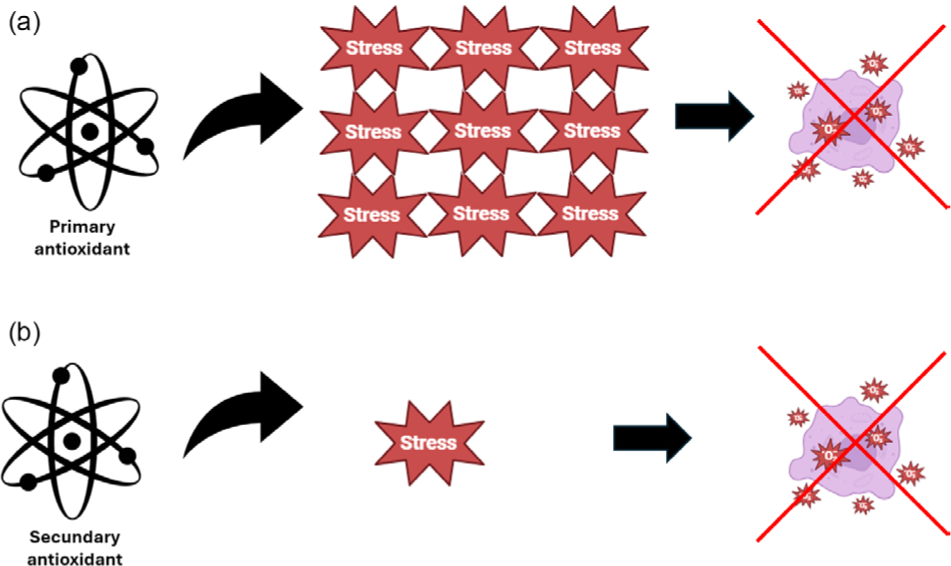
Thus, based on their mechanism of action, antioxidants can be classified into two main categories: primary and secondary,21 as illustrated in Figure 1.

Classification of the individual mechanisms of the main types of antioxidants. (a) Primary antioxidant; (b) secondary antioxidant.
Primary antioxidants delay or inhibit free radical reactions by donating electrons or hydrogen, thereby preventing the propagation of oxidation reactions.22 On the other hand, secondary antioxidants reduce the oxidation rate through indirect mechanisms, without directly converting free radicals into more stable products. Additionally, some antioxidants exhibit multiple mechanisms of action and are therefore referred to as multifunctional antioxidants.21
Primary antioxidants primarily interact with lipid and peroxyl radicals (ROO•, RO•, and R•), converting them into more stable products (ROOH, ROH, RH) and generating stable antioxidant radicals (A•), which are stabilized through resonance of the unpaired electron. Furthermore, these antioxidants can also interrupt lipid oxidation by converting unstable hydroperoxides into less reactive compounds.22
In contrast, secondary antioxidants act as chelators of pro-oxidant metal ions, such as ethylenediaminetetraacetic acid and citric acid, or neutralize reactive species, such as singlet oxygen, as in the case of β-carotene. Chelation prevents metals such as iron and copper from catalyzing oxidative reactions that result in the formation of highly reactive hydroxyl radicals. In this way, chelating antioxidants play an essential role in protecting against the oxidative degradation of lipids and proteins.17 However, secondary antioxidants tend to be depleted more easily, as they eliminate only one free radical at a time.20 In this context, antioxidant efficacy is closely linked to the molecular structure of the compounds, which plays a key role in extending the natural shelf life of foods.5,13
3. Potential Applications of Natural Antioxidants
Antioxidant sources can be either natural or synthetic.23 In the food industry, those of synthetic origin are widely used due to their stability, low cost, and easy obtainability. Among the most common are butylhydroxyanisole (BHA), butylhydroxytoluene (BHT), and tert-butylhydroquinone (TBHQ),22 which originate from organic synthesis, in which chemical compounds are combined in a laboratory.24
However, the use of synthetic additives is strictly regulated due to food safety concerns.22 In Brazil, for example, current legislation establishes a maximum limit of 200 mg kg-1 for the individual or combined use of BHA, BHT, and TBHQ in food.25,26 Justifications express that excessive or inadequate consumption of these chemical compounds should raise concerns, as high doses can cause deoxyribonucleic acid (DNA) damage and toxicity in certain tissues.22
Although widely used in the food industry for their effectiveness, there are concerns about potential adverse effects associated with the prolonged consumption of synthetic additives.27 Currently, there is a growing trend to replace synthetic antioxidants with natural alternatives, reflecting the increasing interest in healthier options.27,28 Natural antioxidants is found in fruits, vegetables, herbs, and other plants, offering a safe and effective alternative for preserving food quality without the risks associated with synthetics.9
Pruteanu et al.29 highlight that as the industry increasingly shifts from synthetic preservatives to natural alternatives, more studies are being conducted in this direction. The aim is to reduce unnecessary chemical burden on health while at the same time naturally preventing food spoilage. Additionally, studies indicate that the regular consumption of natural antioxidants, as part of a balanced diet, may aid in preventing chronic diseases, including cardiovascular and neurodegenerative conditions, thereby promoting sustained health over time.30,31
Natural antioxidants are biocompatible, biodegradable, and antimicrobial molecules that are widely available in nature, allowing for numerous applications in food products.23 Thus, the use of natural antioxidants is increasingly recognized as an essential preventive measure to mitigate the harmful effects of free radicals in food, preserving the integrity of lipids and other nutritional components.9
In addition to combating free radicals, natural antioxidants offer additional properties such as anti-inflammatory and immunomodulatory effects, which contribute to a healthier lifestyle and enhance food safety.9 Natural antioxidants can act preventively against various human diseases and, additionally, help extend the shelf life of fresh foods.28
Phenolic compounds such as myricetin, quercetin, rutin, carnosic acid, caffeic acid, catechins, and theaflavins demonstrated antioxidant activity comparable to or superior to BHT, BHA, and TBHQ in purified bulk oils.32 Natural antioxidants require high concentrations to achieve the same protection as synthetic antioxidants. Comparative studies were carried out by Yang et al.33 for the preservation of vegetable oil using 400 ppm of rosemary extract and 200 ppm of BHA:BHT mixture (50:50), attributing an effect on oxidative stability to rosemary extract during a longer induction period, including its antioxidant capacity and total phenolic content.34 Furthermore, BHT and BHA are widely used in combination with natural antioxidants, such as ascorbic acid.22
Similarly, 200 ppm of methanolic extract from sesame cake was compared in the same proportion with BHT, BHA, and TBHQ in vegetable oil storage, showing at least lower antioxidant activity than TBHQ compared to the natural source antioxidant.34 TBHQ shows superior antioxidant properties even compared to BHT and BHA in many studies. The biological properties of spices are mainly due to phenolic compounds. However, the use of spices or their plant extracts is limited because some natural compounds can interact with food components, altering flavor, aroma, or color, which may be undesirable in certain industrial formulations.32
Furthermore, the availability of natural antioxidants approved by health authorities is extensive, and many of these food compounds function both as flavoring agents and preservatives, contributing positively to the taste and aroma of products.21 However, the concentration of antioxidants in substrates may vary depending on harvest time, location, and environmental factors such as climate conditions, soil quality, and water availability, which directly influence plant growth.35
Antioxidant efficacy is related to the number of hydroxyl groups and other aromatic substituents, but the limited solubility of natural antioxidants in oils makes their use in higher concentrations difficult. Therefore, research has been investigating the lipophilization of phenolic compounds to improve their insertion into lipid systems.32
In this context, although natural antioxidants have some limitations, such as lower antioxidant activity compared to synthetic counterparts and the presence of compounds that may alter the sensory properties of food, they are widely accepted by consumers due to their perceived safety and health benefits.21
For bulk edible oil, an antioxidant must be effective at low concentrations, should not alter the color or flavor of the oil after addition, and should not present any toxicity to the consumer.32 In this regard, encapsulating compounds from natural sources presents a strategy to prevent their negative sensory effects by ensuring controlled release at low concentrations.36
Thus, the use of food as a source of functional ingredients, bioactive compounds, and nutraceuticals is becoming increasingly relevant.37 By fully utilizing food resources, waste reduction is promoted, aligning with more sustainable and health-conscious solutions.38,39
Sustainable practices such as the valorization of natural antioxidants contribute significantly to achieving the Sustainable Development Goals (SDGs) in the food packaging industry. These strategies can reduce exposure to potentially harmful packaging and favor the production of materials with functional characteristics that promote health and well-being (Goal 3). In addition, they favor sustainable innovation in the food industry (Goal 9) and encourage the replacement of synthetic additives with natural compounds extracted from by-products of the production chain, promoting more responsible production and consumption patterns and helping to reduce food waste (Goal 12). In the environmental context, these sustainable practices play an essential role in mitigating climate change by reducing greenhouse gas emissions associated with the production and disposal of conventional plastics (Goal 13). Furthermore, by reducing environmental pollution and contamination of aquatic and terrestrial ecosystems, these approaches contribute to preserving life in water (Goal 14) and life on land (Goal 15), reinforcing a balanced and sustainable production model.40
4. Main Natural Antioxidants
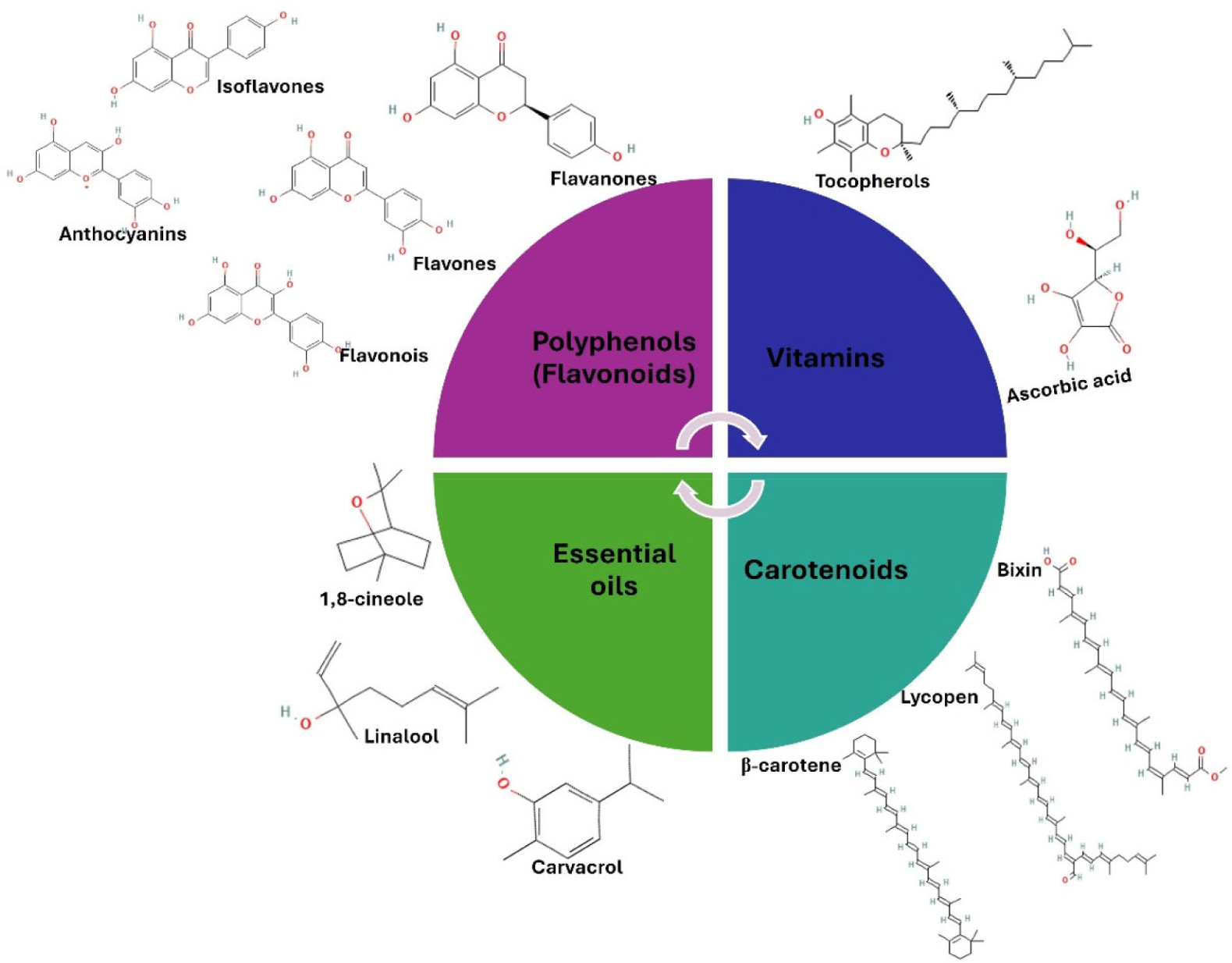
Among the main bioactive compounds, polyphenols, carotenoids, vitamins, and essential oils stand out, beacuse they can provide antioxidant activity in various food systems.23,41 The molecular structure of the most abundantly found natural antioxidants is presented in Figure 2.
The chemical diversity of polyphenols is characterized by a chemical structure composed of benzene rings and hydroxyl groups, which are responsible for their antioxidant properties. Thus, it is understood that antioxidant efficacy is directly related to the molecular structure of these compounds, which plays a crucial role in preserving the natural shelf life of food products.5,13 The combination of these components confers potent antioxidant capacities, which are relevant for food preservation.23,41
4.1. Polyphenols
Polyphenols are bioactive compounds widely found in fruits, vegetables, teas, cocoa, and red wine, known for their strong antioxidant activity. The food industry has been leveraging plant by-products rich in these compounds to develop functional foods, supplements, and bioactive packaging.28,42
Their structure consists of conjugated benzene rings and −OH groups, which allow the neutralization of free radicals and protection against oxidation. Polyphenols have two or more phenolic units, whose phenolic rings confer resonance stability.43 Structural differences directly influence their antioxidant capacity, classifying them into flavonoids (flavonols, flavones, flavanones, isoflavones, anthocyanins), which have three aromatic rings; stilbenes (such as resveratrol) with two rings; and phenolic acids (derived from benzoic and cinnamic acid), which contain only one ring.19,44
The mechanisms of action involve direct elimination of oxidants, stimulation of the natural antioxidant defenses of the body, and chelation of pro-oxidant metals. The effectiveness of these substances depends on the number and position of hydroxyl groups in the molecule, which determine its ability to donate electrons and stabilize free radicals.43
4.2. Carotenoids
Carotenoids are fat-soluble compounds found in yellow, orange, and red fruits and vegetables.45 In addition to providing color to foods, these bioactive molecules have antioxidant and antimicrobial properties, contributing to greater product shelf life.46 In the food industry, they are utilized in the development of bioactive packaging, reducing the reliance on synthetic preservatives and enhancing the stability of foods exposed to light and oxygen.47
Structurally, their molecules have a 40-carbon chain formed by eight isoprene units, which can reach 45-50 carbons in some cases. Including in its main structure a polyene chain with nine conjugated double bonds and a hydrocarbon ring termination at one or both ends. The bioavailability and stability of carotenoids depend on their chemical structure, steroidal linear chain, and degree of unsaturation, which influence their presence and organization in food matrices. Carotenoids are classified into two main groups: nonpolar compounds formed only by carbon and hydrogen atoms (carotenes: β-carotene, lycopene, and bixin; and xanthophylls), or polar compounds that contain oxygenated groups such as hydroxyls or ketones in their structure (xanthophylls: lutein, zeaxanthin, and astaxanthin).48
The antioxidant mechanism of carotenoids is based on the neutralization of singlet oxygen and the elimination of lipid peroxyl radicals, preventing the oxidation of cell membranes and lipids. Thus, they represent a sustainable solution to preserve the nutritional quality and safety of food.46
4.3. Vitamins
Antioxidant vitamins protect cells against oxidative damage caused by free radicals. Among the main ones used in packaging are vitamin E (tocopherol) and vitamin C (ascorbic acid).49,50 Tocopherol is a fat-soluble phenolic compound present in grains and nuts, as a biologically active form of vitamin E,51 while ascorbic acid is a water-soluble compound present mainly in the peel and pulp of citrus fruits.49
Tocopherol has a hydroxylated aromatic ring in its structure, capable of donating phenolic hydrogen and forming a stable α-tocopheroxyl radical, which interrupts lipid peroxidation.50 On the other hand, ascorbic acid has a lactone ring and two enol hydroxyls, whose structure facilitates efficient electron donation, neutralizing lipid peroxidation and forming the ascorbate radical by its mechanism of action and stabilization of radicals via conversion to quinones.52
The inhibition of lipid peroxidation by the interaction between lipid-soluble α-tocopherol and water-soluble ascorbic acid in emulsions is well documented.50 α-Tocopherol can be regenerated by polyphenols, such as vitamin C, which reduce the tocopheroxyl radical, restoring its antioxidant capacity and prolonging its protection against oxidative stress.50 Furthermore, the interaction between vitamins enhances cellular protection and provides health benefits to the consumer. With advances in research and development of functional materials, these solutions are expected to become increasingly viable and widely applied in sustainable food preservation.49,50
4.4. Essential oils
Essential oils, for the most part, exhibit an abundance of compounds such as phenols, monoterpenes, and terpenic alcohols, which contain hydroxyl (−OH) functional groups attached to unsaturated structures or aromatic rings, or even ethers linked to cyclic structures.23,41 The antioxidant properties can then be attributed to the high content of terpenic compounds such as α-pinene, β-pinene, 1,8-cineole (eucalyptol), menthol and linalool, in addition to phenolic compounds such as carvacrol, eugenol and thymol in essential oils. These are volatile compounds extracted from aromatic plants, such as rosemary, oregano, cinnamon, and cloves, and have strong antioxidant and antimicrobial action.53,54
The antioxidant mechanism of action of these compounds is attributed to their ability to donate electrons or hydrogen atoms to neutralize free radicals, interrupting harmful oxidative reactions. Phenolic compounds, such as carvacrol, eugenol, and thymol, have conjugated aromatic rings that promote the stabilization of radicals formed after the donation of hydrogen, preventing the propagation of oxidation. Monoterpenes and terpene alcohols, such as linalool and 1,8-cineole, exert antioxidant activity by interacting with ROS, reducing oxidative stress, although their efficacy may be lower compared to phenols.55
Furthermore, studies53,54 have shown that the phenolic hydroxyl groups of carvacrol, thymol, and eugenol are essential for their antimicrobial effect. This functional group allows interaction with the cell membrane of microorganisms, causing structural damage and leading to loss of cellular integrity. The electronic distribution of these compounds also influences their efficacy, since a system of displaced electrons contributes to their ability to cross bacterial cell membranes. Thus, when these compounds undergo methylation, that is, when the hydroxyl group is replaced by a methyl group, their antimicrobial activity is reduced. Similarly, menthol, an aliphatic analog of carvacrol and thymol, does not have the same antimicrobial effect due to the absence of the conjugated aromatic structure necessary for this interaction.53,54
5. Natural Antioxidant Extraction Methods
Proper extraction of antioxidants is crucial to ensuring maximum preservation of their concentration and effectiveness in food applications.56 The extraction plays an essential role in the isolation and identification of antioxidants. It can be performed through conventional methods that are widely used and effective but often have significant environmental impacts. On the other hand, emerging techniques present promising alternatives, aiming to optimize the process and to make it more sustainable and efficient.57
Thus, the main traditional extraction methods for antioxidants are maceration, magnetic stirring, Soxhlet extraction, infusion, decoction, hydrodistillation, and percolation. In maceration extraction, bioactive compounds are obtained from plant or mineral sources by soaking them in a solvent, such as water or alcohol, for a set duration. Throughout this process, the cellular structures of the raw material break down, allowing the targeted compounds to dissolve into the solvent. This technique is simple and efficient, but the extraction time can be relatively long.58
Extraction using magnetic stirring promotes solvent movement and facilitates the transfer of compounds from the raw material to the liquid, helping to keep the solvent in constant motion and increasing extraction efficiency. This method is generally used when the goal is to enhance the dissolution rate of compounds soluble in liquids. It is frequently used in laboratories for small sample quantities.59
Soxhlet extraction is a continuous and efficient method used to extract lipophilic compounds. In the process, a solvent is heated and vaporized, then condensed onto the solid sample. Upon contact, it dissolves the desired compounds. After dissolution, the solvent containing the extracted compounds is returned to the distillation flask. This extraction cycle can be repeated multiple times to increase efficiency. It is a highly precise technique but requires considerable time and specific equipment.60
Another simple and quick method is infusion, which extracts compounds that are soluble in water or aqueous solvents. The process consists of immersing the raw material in hot water for a short period of time. The temperature of the water facilitates the dissolution of the desired compounds, without the need for continuous heating or the use of complex equipment.61
Decoction extraction is ideal for obtaining heat-stable, water-soluble constituents from raw plant materials, where the raw material is boiled in water for an extended period, allowing the compounds to be extracted. In the hydrodistillation process, the raw material is placed in contact with steam, which has the ability to transport the volatile compounds present in the plant. The mixture of steam and essential oil is condensed and separated.62
Percolation is a continuous extraction method that involves passing a solvent through a column containing the material to be extracted and gradually introducing and slowly passing through the raw material. During this process, the desired compounds are dissolved in the solvent, which is collected at the end.58
Recent research has grown interest in green antioxidants, driven by the search for more sustainable alternatives to synthetic additives. This advance encourages the development of new solutions that reduce environmental impacts without compromising food preservation efficiency.63 Thus, in recent years, new, more sustainable extraction technologies have emerged, as they reduce the use of synthetic and organic chemicals, shorten the operating time, and provide higher yields and quality to the extract. In addition to optimizing efficiency and selectivity in the extraction of bioactive compounds from plant materials, these methods are becoming increasingly popular, as they have overcome some of the limitations of traditional processes. These approaches are classified as “technologies green or emerging” because they consume less energy, use fewer organic solvents, and are environmentally friendly.64
Emerging extractions include accelerated solvent extraction (ASE), enzyme-assisted extraction (EAE), high hydrostatic pressure extraction (HHPE), microwave-assisted extraction (MAE), ultrasound-assisted extraction (UAE), pulsed electric field extraction (PEF), and subcritical fluid extraction (SFE), as well as combinations of these techniques. These methods are considered environmentally safe, complying with current standards set by global environmental agencies and organizations.65
When analyzing the concepts of extraction techniques, ASE is a relatively new technique that uses low-boiling solvents or modifiers under high temperature and pressure, favoring the rapid penetration of the solvent into the plant cells and reducing the handling of polysaccharides in relation to traditional methods. This technique is advantageous because it makes removal faster, using less solvent.66 For instance, ASE utilizes low-boiling-point solvents under high temperature and pressure conditions. This environment facilitates the rapid penetration of the solvent into plant cells, making the process faster and reducing polysaccharide degradation while requiring less solvent compared to traditional methods.67
On the other hand, EAE relies on specific enzymes to break down the cell walls of plant matrices, releasing natural antioxidants. This process generally occurs under mild conditions, such as low temperatures, preserving the bioactive properties of the compounds and eliminating the need for aggressive solvents.58
HHPE applies uniform high pressures to a fluid, weakening the cohesion of cell wall molecules. This approach promotes the efficient release of bioactive compounds without requiring high temperatures, thus preserving the integrity of antioxidants.68
MAE also offers significant advantages, as it uses electromagnetic energy to directly heat polar solvents within plant cells. This technique leads to a rapid increase in temperature and pressure, causing cell rupture and the efficient release of antioxidant compounds through two mechanisms: dipole rotation and ionic conduction. As a result, the internal temperature and pressure within the cells increase, leading to their rapid rupture.69
Similarly, UAE employs high-frequency acoustic waves that generate vibrations and cavitation in liquids. The collapse of the microbubbles formed disrupts plant cells, efficiently releasing bioactive compounds.70
PEF involves the application of high-intensity electric field pulses to increase the permeability of plant cells. This stimulation enhances cellular permeability, allowing for the release of bioactive compounds without requiring heat, thereby preserving their nutritional and sensory properties.71
Finally, SFE utilizes substances in a supercritical state, such as carbon dioxide (CO2). In this state, the fluid exhibits both liquid and gas-like properties, enabling efficient penetration into plant cells and selective dissolution of bioactive compounds. This method offers high efficiency, minimizes sample oxidation, and reduces extraction time.72
Each extraction method has unique characteristics, varying depending on the target compound and the specific application. In addition, each technique has advantages and disadvantages, making it more appropriate for certain compounds.73 Understanding these nuances is the key to making informed decisions that value efficiency and sustainability in this area of research. Table 1 presents a comparison between the main extraction methods, highlighting their advantages, disadvantages, environmental impacts and possible applications in the development of innovative packaging.
Traditional low-impact methods include maceration, infusion, and decoction, which mainly use water or biodegradable solvents with minimal energy consumption. Maceration stands out for its simplicity and low cost, ideal for heat-sensitive compounds, although it requires long extraction times and offers lower efficiency for lipophilic compounds. Both infusion and decoction are quick and affordable, but infusion is preferable for volatile compounds, while decoction, which uses higher temperatures, is better for hard plant materials such as roots and peels.87
Despite these limitations, these techniques are quite effective in extracting bioactive compounds for use in packaging. Mariño-Cortegoso et al.74 studied the extraction of antioxidants from lemon and tomato by-products to develop active food packaging using polymers. The natural extracts enhanced the properties of the film by releasing antioxidant compounds, effectively extending the shelf life of fatty foods.
Soxhlet extraction, hydrodistillation, percolation, and magnetic stirring are considered to have medium to high environmental impact. Soxhlet, despite its high consumption of solvents and energy, offers excellent efficiency for lipophilic compounds, resulting in packaging with humidity control and antimicrobial properties.76 Hydrodistillation, with a moderate impact due to its high energy consumption and water waste, remains essential for the extraction of essential oils used in packaging with antimicrobial and aromatic properties. Percolation offers controlled extraction of soluble compounds, while magnetic stirring provides efficient homogenization with minimal risk of thermal degradation, both mainly aimed at the extraction of antioxidants for functional packaging.88
Advanced technologies based on electric waves and fields include MAE, UAE, and PEF. These methods share the characteristic of significantly accelerating the extraction process while reducing solvent consumption.89 MAE is fast and efficient for extracting antioxidants, although radiation can affect fragile compounds. UAE offers high efficiency with controlled thermal degradation, ideal for antioxidant compounds. PEF, despite its higher energy consumption, excels in the extraction of sensitive biomolecules that improve the mechanical properties of packaging, resulting in greater strength and durability of the materials.82
The most chemically advanced extraction methods include ASE, EAE and SFE. ASE provides rapid extraction with lower solvent consumption compared to Soxhlet, ideal for bioactive compounds intended for antibacterial packaging.8 EAE uses natural catalysts with minimal residue and high selectivity, without thermal degradation. SFE, considered the greenest of the advanced technologies, uses supercritical CO2 without solvent residues, showing excellent results for compound extractions.86
The trend in extraction points towards more sustainable, efficient and selective methods. However, the choice of the ideal method must balance factors such as the type of target compound, extraction efficiency, environmental impact and final application in food packaging.90 While traditional methods remain relevant due to their accessibility, emerging technologies represent the future of sustainable extractions, contributing to the development of functional and biodegradable packaging. When combined with natural polymers such as polysaccharides and proteins, extracts obtained from these sustainable technologies contribute to food preservation and the reduction of environmental pollution.91
6. Biodegradable Polymers for Sustainable Food Packaging
Biodegradable polymers, also known as biopolymers, present attractive alternatives for producing sustainable food packaging. These materials exhibit ease of film formation, flexibility, and renewable and biodegradable properties, along with compatibility with natural antioxidant substances.92,93
In general, biodegradable polymers demonstrate chemical compatibility as they do not react with food or other packaging components, including antioxidants. They also blend and adhere rapidly to other substances during the production process without losing their functional, mechanical, or barrier properties while preventing the release of toxic substances into the environment.94
The compatibility between biopolymers and natural antioxidants is related to the molecular interactions between the chemical structures of these components. Phenolic compounds, such as catechin, quercetin, gallic acid, and other flavonoids, have several hydroxyl groups linked to aromatic rings, which provide them with high reactivity against free radicals, in addition to the ability to form hydrogen bonds with functional groups present in the polymers, such as hydroxyls, carbonyls, and other amine groups.95
In films with starch matrices, for example, which have many available hydroxyl groups, phenolic compounds interact mainly through hydrogen bonds, providing good incorporation and stability to the system.96 In films made of polylactic acid (PLA), a moderately polar polyester, the interaction also occurs through hydrogen bonds between the hydroxyl groups of the antioxidants and the carbonyls of the polymers. This interaction contributes to improving the functional properties of the films, such as antioxidant activity, but in some cases, it also promotes the crystallinity and thermal stability of the packaging.97,98
In more hydrophobic polymers, such as polyhydroxy acids (PHA) and poly(ε-caprolactone) (PCL), the affinity with lipophilic antioxidants, such as tocopherols or rosemary extract, is greater, and compatibility occurs mainly through hydrophobic interactions, in addition to the possible uniform dispersion of the antioxidant phase in the polymer. This ensures good antioxidant activity and less migration of the active ingredient into the food, increasing the duration of action.99
Typically, biopolymers are used to produce composite films or multilayer coatings for food surfaces.95 Defined by their application characteristics, films are considered pre-formed structures derived from casting, extrusion, or compression molding, commonly used to package final products. In contrast, coatings are thin layers formed by spraying, dipping, or dispersing a solution onto the food surface.100 In both applications, biopolymers enhance food product stability by reducing lipid, moisture, volatile, and gas exchange between the food and its surrounding environment.101
Among the most used biopolymers in film and coating production are polysaccharides, proteins, and lipids.102 Packaging materials made from these matrices have been reported to exhibit mechanical, physical, optical, and barrier properties comparable to synthetic counterparts.103
Generally, polysaccharides are the most widely utilized biodegradable polymers for food preservation packaging due to their low cost, broad availability and accessibility, gel-forming capability, and ease of modifying their hydrophilic nature through the use of additives. These attributes result in materials with favorable mechanical and barrier properties.104 The polysaccharides employed as film-forming matrices include starch, pectin, cellulose, chitosan, carrageenan, alginate, and gums.105 Notably, pectin and chitosan are associated with antimicrobial properties.106,107
Protein-based matrices documented in the literature include films derived from collagen, gelatin, whey protein, and plant-based proteins such as soy, pea, and zein (corn protein).108 Protein-based packaging exhibits good resistance to oxygen gas transmission109 and superior structural properties due to their composition of more than twenty monomers, i.e., amino acids, which may enhance the nutritional value of the materials.108
Lipids, particularly waxes and resins, are primarily used for their hydrophobic properties, which impart moisture resistance to the material.102 Essential oils are also incorporated into biodegradable films, not only to provide barrier properties but also to impart antioxidant and antimicrobial activities, thereby extending the shelf life of packaged foods.110
However, due to their weak mechanical resistance and transparency, lipids have been effectively incorporated into composite packaging materials. Composite films are advantageous in mitigating the limitations of individual components and can significantly enhance film performance and processing efficiency.111
In addition to the previously cited essential oils, other compounds are incorporated into polymer-based film matrices to confer active properties (Figure 3). Among these compounds, metallic nanoparticles of gold, silver, and zinc oxide provide antimicrobial properties that inhibit microbial proliferation in food, consequently delaying spoilage.112 Additionally, extracts from various fruits and vegetables serve as sources of polyphenols, carotenoids, tocopherols, flavonoids, and other compounds that impart antioxidant activity to film-forming matrices.28
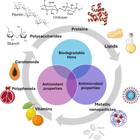
Polymeric matrices, antimicrobial agents, and antioxidants used in biodegradable films and coatings (adapted from Vieira et al.41).
Given the above, the use of biodegradable polymers and natural antioxidants can promote sustainability and offer fundamental properties for the integrity and preservation of food.113
7. Application of Natural Antioxidants in Sustainable Food Packaging
Currently, approximately one-third of the food produced globally is wasted due to various factors, such as mechanical damage, inadequate transportation, environmental conditions, microbial spoilage, and oxidation.114,115
The addition of natural antioxidants to food and packaging is a promising strategy for both sustainability and health, as it not only extends product shelf life but also reduces the use of synthetic additives.116,117 Table 2 presents some studies on the application of natural antioxidants in biodegradable food packaging.
As observed, bioactive compounds are widely incorporated into biodegradable polymeric matrices for the production of active packaging, exhibiting antioxidant113 and antimicrobial effects.148
Active packaging is a system in which the packaging is modified by the addition of active compounds to maintain or improve the sensory, safety, and quality aspects of food. These compounds interact with the packaged product, extending its shelf life. These materials may act as ethylene, oxygen, and moisture absorbers, as well as carbon dioxide emitters, antimicrobial, and antioxidant agents.149 The latter is presented in Table 2, exemplifying numerous natural plant-derived substances that reduce food oxidation rates.
Existing studies have demonstrated that natural antioxidant compounds derived from fruits and vegetables are rich in polyphenols, carotenoids, flavonoids, and other substances that efficiently eliminate free radicals responsible for food oxidation. These compounds are biocompatible with biodegradable polymers, allowing their incorporation without compromising the structural integrity of the packaging while enhancing the sensory attributes of products.115 Furthermore, they contribute to maintaining the physicochemical quality of food products for extended periods, reducing weight loss and preserving texture.110 Some studies also suggest improved mechanical, thermal, and barrier properties with the addition of natural antioxidant compounds.137,138 For example, chitosan-based films enriched with riceberry showed increased resistance to ultraviolet light, which is responsible for food photooxidation.137 While chitosan/pullulan/red cabbage films demonstrated greater moisture resistance and lower oxygen permeability, which delayed oxidative deterioration in sea bass.138 Similarly, packaging containing curcumin, quercetin, and gallic acid demonstrated the potential to inhibit the growth of microorganisms and reduce lipid oxidation in chicken meat during storage.132 In addition to improvements in barrier and oxidation properties, natural antioxidants have been associated with improved sensory attributes, such as preservation of color, aroma, and appearance of meat, with better sensory acceptance scores in tests of ground beef packaged with encapsulated green tea compared to the unpackaged product.150 These studies prove that natural antioxidants are a promising alternative to synthetic antioxidants, offering a more sustainable and less harmful solution to health, related to trends in conscious consumption and innovation in the food packaging sector. Among the methods used to assess antioxidant activity, notable ones include ABTS (2,2’-azino-bis(3-ethylbenzothiazoline-6-sulfonic acid)) radical scavenging, DPPH (2,2-diphenyl-1-picrylhydrazyl radical scavenging method) radical scavenging, ferric reducing antioxidant power (FRAP), thiobarbituric acid reactive substances (TBARS), and oxygen radical absorbance capacity (ORAC).41
It is worth noting that some studied antioxidant compounds have shown great potential for applications in smart packaging, mainly due to their ability to interact with the external environment and respond to changes in the packaged product.151 This will be addressed in the next section, where we will explore how smart packaging can ensure safe food consumption, as well as contribute to sustainability and the reduction of food waste.
7.1. Potential of natural antioxidants as matrices for sustainable intelligent packaging
To ensure real-time monitoring of food throughout the supply chain, various indicators and sensors have been explored, including pH indicators, gas, moisture, and temperature sensors. Additionally, tracking systems covering the entire food production chain have been reported through QR codes, barcodes, and radio frequency identification tags.152
Among specialized sensors, pH indicators are the most commonly used in the market and are widely applicable to natural antioxidant compounds, such as red cabbage, dragon fruit, and blackberry, as shown in Table 2. These compounds are used as sensors because they have sensitive pigments capable of changing color as the pH of the product changes, signaling the degradation of the food.6 Thus, these sensors not only extend the shelf life of food by inhibiting oxidation but also provide additional protection and control for consumers, facilitating purchasing decisions.153
This ability to monitor food quality accurately and immediately is a fundamental feature of intelligent packaging, which helps to ensure safe consumption and avoid risks to consumer health. Thus, the addition of natural antioxidants can add value to the product, providing additional benefits that can increase the perception of quality by the consumers, provide greater transparency and confidence regarding food safety and freshness, and reduce food waste. By enabling early identification of food unfit for consumption, intelligent packaging helps to minimize the disposal of products still suitable for consumption, reducing the environmental impact associated with waste and promoting more efficient use of resources throughout the food production chain.154
8. Final Considerations
This review comprehensively addressed natural antioxidants in the context of their functionalities for food preservation, health benefits, and sustainability, highlighting their importance in replacing synthetic materials. The valorization of natural compounds emerges as a promising strategy to reduce food waste and contribute to more ethical and sustainable practices. The use of modern and eco-friendly extraction techniques, combined with less toxic solvents, has demonstrated significant advances in obtaining natural antioxidants with high efficiency and minimal environmental impact.
Furthermore, the application of these compounds in biodegradable packaging reinforces the importance of combining technological innovation with environmental responsibility, as these materials do not only represent traditional packaging but also active systems that prevent deterioration reactions and preserve food quality, in addition to acting as intelligent systems, which indicate the freshness of food products and contribute to food safety. Thus, this study highlights the fundamental role of chemistry and food technology in the search for healthier, more economical, and environmentally responsible solutions, in line with the SDGs (SDG 12: Sustainable consumption and production; SDG 13: Climate action; SDG 14: Life in water; SDG 15: Life on Earth).
However, for natural antioxidants to become a viable and widely used alternative, especially in biodegradable films, more research will be needed. Future research should focus on improving extraction methods to increase efficiency and reduce costs, in addition to exploring the commercial scalability of these processes. The latter is a challenge, as it is necessary to ensure large-scale production without compromising standardization, quality and price competitiveness. Regulatory implications also required attention, clear guidelines will be needed for the use of natural antioxidants in packaging, ensuring their efficacy and food safety.
Acknowledgments
The authors would like to thank the Federal Institute of Paraná, the Coordenação de Aperfeiçoamento de Pessoal de Nível Superior (CAPES) (No. 88887.670644/2022-00 Talita Aparecida Campos Ferreira) and the Conselho Nacional de Desenvolvimento Científico e Tecnológico (CNPq) (No. 173731/2023-6-Eloize da Silva Alves, No. 316123/2023-4-Oscar Oliveira Santos) for funding.
References
-
1 Lai, W.-F.; Int. J. Mol. Sci. 2021, 23, 12. [Crossref]
» Crossref -
2 Liang, Z.; Veronica, V.; Huang, J.; Zhang, P.; Fang, Z.; Food Control 2022, 133, 108586. [Crossref]
» Crossref -
3 Grootveld, M.; Percival, B. C.; Leenders, J.; Wilson, P. B.; Nutrients 2020, 12, 974. [Crossref]
» Crossref -
4 Bao, Y.; Ertbjerg, P.; Crit. Rev. Food Sci. Nutr. 2019, 59, 3564. [Crossref]
» Crossref -
5 Rangaraj, V. M.; Rambabu, K.; Banat, F.; Mittal, V.; Food Biosci. 2021, 43, 101251. [Crossref]
» Crossref -
6 Medina-Jaramillo, C.; Ochoa-Yepes, O.; Bernal, C.; Famá, L.; Carbohydr. Polym. 2017, 176, 187. [Crossref]
» Crossref -
7 Shaikh, S.; Yaqoob, M.; Aggarwal, P.; Curr. Res. Food Sci. 2021, 4, 503. [Crossref]
» Crossref -
8 Deshmukh, R. K.; Gaikwad, K. K.; Biomass Convers. Biorefin. 2024, 14, 4419. [Crossref]
» Crossref -
9 Rahaman, M. M.; Hossain, R.; Herrera‐Bravo, J.; Islam, M. T.; Atolani, O.; Adeyemi, O. S.; Owolodun, O. A.; Kambizi, L.; Daştan, S. D.; Calina, D.; Sharifi‐Rad, J.; Food Sci. Nutr. 2023, 11, 1657. [Crossref]
» Crossref -
10 García-Caparrós, P.; De Filippis, L.; Gul, A.; Hasanuzzaman, M.; Ozturk, M.; Altay, V.; Lao, M. T.; Bot. Rev. 2021, 87, 421. [Crossref]
» Crossref -
11 Dias, M. C. F.; de Sousa, B. L.; Ionta, M.; Teixeira, R. R.; Goulart, T. Q.; Ferreira-Silva, G. Á.; Pilau, E. J.; dos Santos, M. H.; J. Braz. Chem. Soc. 2021, 32, 572. [Crossref]
» Crossref -
12 Leite-Legatti, A. V.; Batista, Â. G.; Dragano, N. R. V.; Marques, A. C.; Malta, L. G.; Riccio, M. F.; Eberlin, M. N.; Machado, A. R. T.; de Carvalho-Silva, L. B.; Ruiz, A. L. T. G.; de Carvalho, J. E.; Pastore, G. M.; Maróstica, M. R.; Food Res. Int. 2012, 49, 596. [Crossref]
» Crossref -
13 Gulcin, İ.; Arch. Toxicol. 2020, 94, 651. [Crossref]
» Crossref -
14 Sundaram Sanjay, S.; Shukla, A. K. In Potential Therapeutic Applications of Nano-Antioxidants; Springer: Singapore, 2021, p. 83-99. [Crossref]
» Crossref -
15 Pisoschi, A. M.; Pop, A.; Eur. J. Med. Chem. 2015, 97, 55. [Crossref]
» Crossref -
16 López-Alarcón, C.; Denicola, A.; Anal. Chim. Acta 2013, 763, 1. [Crossref]
» Crossref -
17 Adjimani, J. P.; Asare, P.; Toxicol. Rep. 2015, 2, 721. [Crossref]
» Crossref -
18 Nagaoka, S.; Bandoh, Y.; Nagashima, U.; Ohara, K.; J. Phys. Chem. A 2017, 121, 8069. [Crossref]
» Crossref -
19 Brito, J.; Hlushko, H.; Abbott, A.; Aliakseyeu, A.; Hlushko, R.; Sukhishvili, S. A.; ACS Appl. Mater. Interfaces 2021, 13, 41372. [Crossref]
» Crossref -
20 Zeb, A.; J. Food Biochem. 2020, 44 [Crossref]
» Crossref -
21 Eça, K. S.; Sartori, T.; Menegalli, F. C.; Braz. J. Food Technol. 2014, 17, 98. [Crossref]
» Crossref -
22 Gutiérrez-del-Río, I.; López-Ibáñez, S.; Magadán-Corpas, P.; Fernández-Calleja, L.; Pérez-Valero, Á.; Tuñón-Granda, M.; Miguélez, E. M.; Villar, C. J.; Lombó, F.; Antioxidants 2021, 10, 1264. [Crossref]
» Crossref -
23 Elshafie, H. S.; Camele, I.; Mohamed, A. A.; Int. J. Mol. Sci. 2023, 24, 3266. [Crossref]
» Crossref -
24 Amarachukwu Uzombah, T. In Natural Food Additives; Prieto, M.; Oteri, P., ed.; IntechOpen, 2022. [Crossref]
» Crossref -
25 Takemoto, E.; Teixeira Filho, J.; Godoy, H. T.; Quim. Nova 2009, 32, 1189. [Crossref]
» Crossref -
26 Agência Nacional de Vigilância Sanitária (Anvisa); Resolução No. 64, de 16 de setembro de 2008; Aprova Regulamento Técnico sobre Atribuição de Aditivos e seus Limites Máximos para Alimentos; Diário Oficial da União: Brasília, Brazil, 2008. [Link] accessed in April 2025
» Link -
27 Xu, X.; Liu, A.; Hu, S.; Ares, I.; Martínez-Larrañaga, M.-R.; Wang, X.; Martínez, M.; Anadón, A.; Martínez, M.-A.; Food Chem. 2021, 353, 129488. [Crossref]
» Crossref -
28 Khan, M. R.; Di Giuseppe, F. A.; Torrieri, E.; Sadiq, M. B.; Food Packag. Shelf Life 2021, 30, 100752. [Crossref]
» Crossref -
29 Pruteanu, L. L.; Bailey, D. S.; Grădinaru, A. C.; Jäntschi, L.; Antioxidants 2023, 12, 860. [Crossref]
» Crossref -
30 Pinilla-González, V.; Rojas-Solé, C.; Gómez-Hevia, F.; González-Fernández, T.; Cereceda-Cornejo, A.; Chichiarelli, S.; Saso, L.; Rodrigo, R.; Foods 2024, 13, 1999. [Crossref]
» Crossref -
31 Yadav, A.; Kumari, R.; Yadav, A.; Mishra, J. P.; Srivastava, S.; Prabha, S.; Res. Environ. Life Sci. 2016, 9, 1328. [Crossref]
» Crossref -
32 Mishra, S. K.; Belur, P. D.; Iyyaswami, R.; Int. J. Food Sci. Technol. 2021, 56, 1. [Crossref]
» Crossref -
33 Yang, Y.; Song, X.; Sui, X.; Qi, B.; Wang, Z.; Li, Y.; Jiang, L.; Ind. Crops Prod. 2016, 80, 141. [Crossref]
» Crossref -
34 Mohdaly, A. A. A.; Smetanska, I.; Ramadan, M. F.; Sarhan, M. A.; Mahmoud, A.; Ind. Crops Prod. 2011, 34, 952. [Crossref]
» Crossref -
35 Akbari, B.; Baghaei‐Yazdi, N.; Bahmaie, M.; Mahdavi Abhari, F.; BioFactors 2022, 48, 611. [Crossref]
» Crossref -
36 Nieto, G.; Martínez-Zamora, L.; Peñalver, R.; Marín-Iniesta, F.; Taboada-Rodríguez, A.; López-Gómez, A.; Martínez-Hernández, G. B.; Foods 2023, 13, 47. [Crossref]
» Crossref -
37 Rasera, G. B.; Bridi, R.; Danielski, R.; Shahidi, F.; de Camargo, A. C.; Curr. Opin. Food Sci. 2024, 57, 101163. [Crossref]
» Crossref -
38 Kiani, H. S.; Ali, B.; Al-Sadoon, M. K.; Al-Otaibi, H. S.; Ali, A.; Processes 2023, 11, 2721. [Crossref]
» Crossref -
39 Râpă, M.; Darie-Niță, R. N.; Coman, G.; Waste 2024, 2, 258. [Crossref]
» Crossref -
40 Nações Unidas Brasil (ONU); Objetivos de Desenvolvimento Sustentável - Sobre o nosso Trabalho para Alcançar os Objetivos de Desenvolvimento Sustentável no Brasil; Nações Unidas do Brasil: Brasília, Brazil. [Link] accessed in April 2025
» Link -
41 Vieira, I. R. S.; de Carvalho, A. P. A.; Conte‐Junior, C. A.; Compr. Rev. Food Sci. Food Saf. 2022, 21, 3673. [Crossref]
» Crossref -
42 Silva, R. F. M.; Pogačnik, L.; Antioxidants 2020, 9, 61. [Crossref]
» Crossref -
43 Dzah, C. S.; Zhang, H.; Gobe, V.; Asante-Donyinah, D.; Duan, Y.; Adv. Redox Res. 2024, 11, 100099. [Crossref]
» Crossref -
44 Durazzo, A.; Lucarini, M.; Souto, E. B.; Cicala, C.; Caiazzo, E.; Izzo, A. A.; Novellino, E.; Santini, A.; Phyther. Res. 2019, 33, 2221. [Crossref]
» Crossref -
45 Bashir, I.; Pandey, V. K.; Dar, A. H.; Dash, K. K.; Shams, R.; Mir, S. A.; Fayaz, U.; Khan, S. A.; Singh, R.; Zahoor, I.; Phytochem. Rev. 2024, 23, 1. [Crossref]
» Crossref -
46 Lu, W.; Shi, Y.; Wang, R.; Su, D.; Tang, M.; Liu, Y.; Li, Z.; Int. J. Mol. Sci. 2021, 22, 4945. [Crossref]
» Crossref -
47 de Oliveira Filho, J. G.; Bertolo, M. R. V.; Fernandes, S. S.; Lemes, A. C.; da Cruz Silva, G.; Bogusz Jr., S.; de Azeredo, H. M. C.; Mattoso, L. H. C.; Egea, M. B.; Food Chem. 2024, 434, 137454. [Crossref]
» Crossref -
48 N, S. K.; Dar, A. H.; Srivastava, S.; Dash, K. K.; Pandey, V. K.; Meas. Food 2024, 15, 100190. [Crossref]
» Crossref -
49 de Lima, A. C. A.; Caetano, V. F.; Vinhas, G. M.; Polym. Bull. 2024, 81, 14605. [Crossref]
» Crossref -
50 Becker, E. M.; Jørgensen, S. S.; Andersen, M. L.; Skibsted, L. H.; Eur. Food Res. Technol. 2025, 251, 227. [Crossref]
» Crossref -
51 Dumitriu, R. P.; Stoleru, E.; Mitchell, G. R.; Vasile, C.; Brebu, M.; Molecules 2021, 26, 5498. [Crossref]
» Crossref -
52 Santos, K. L. B.; Bragança, V. A. N.; Pacheco, L. V.; Ota, S. S. B.; Aguiar, C. P. O.; Borges, R. S.; J. Mol. Model. 2022, 28, 1. [Crossref]
» Crossref -
53 Zengin, H.; Baysal, A.; Molecules 2014, 19, 17773. [Crossref]
» Crossref -
54 Martucci, J. F.; Gende, L. B.; Neira, L. M.; Ruseckaite, R. A.; Ind. Crops Prod. 2015, 71, 205. [Crossref]
» Crossref -
55 de Sousa, D. P.; Damasceno, R. O. S.; Amorati, R.; Elshabrawy, H. A.; de Castro, R. D.; Bezerra, D. P.; Nunes, V. R. V.; Gomes, R. C.; Lima, T. C.; Biomolecules 2023, 13, 1144. [Crossref]
» Crossref -
56 Pateiro, M.; Gómez-Salazar, J. A.; Jaime-Patlán, M.; Sosa-Morales, M. E.; Lorenzo, J. M.; Antioxidants 2021, 10, 181. [Crossref]
» Crossref -
57 Pawar, K. R.; Nema, P. K.; Dadhaneeya, H. In Engineering Solutions for Sustainable Food and Dairy Production; Deka, S. C.; Nickhil, C.; Haghi, A. K., eds.; 2025, p. 489-513. [Crossref]
» Crossref -
58 Jha, A. K.; Sit, N.; Trends Food Sci. Technol. 2022, 119, 579. [Crossref]
» Crossref -
59 Nojavan, S.; Tahmasebi, Z.; Hosseiny Davarani, S. S.; RSC Adv. 2016, 6, 110221. [Crossref]
» Crossref -
60 Zaini, A. S.; Putra, N. R.; Idham, Z.; Mohd Faizal, A. N.; Che Yunus, M. A.; Mamat, H.; Abdul Aziz, A. H.; ChemEngineering 2022, 6, 73. [Crossref]
» Crossref -
61 Boukerche, H.; Malki, F.; Saidji, N.; Ghaliaoui, N.; Bensalem, A.; Mokrane, H.; Biomass Convers. Biorefinery 2024, 14, 18051. [Crossref]
» Crossref -
62 Dhotre, I.; J. Chem. Technol. Biotechnol. 2025, 100, 894. [Crossref]
» Crossref -
63 Chen, S.; Feng, J.; Liu, Y.; ACS Sustainable Chem. Eng. 2024, 12, 16126. [Crossref]
» Crossref -
64 Waseem, M.; Majeed, Y.; Nadeem, T.; Naqvi, L. H.; Khalid, M. A.; Sajjad, M. M.; Sultan, M.; Khan, M. U.; Khayrullin, M.; Shariati, M. A.; Lorenzo, J. M.; Food Front. 2023, 4, 1681. [Crossref]
» Crossref -
65 Alirezalu, K.; Pateiro, M.; Yaghoubi, M.; Alirezalu, A.; Peighambardoust, S. H.; Lorenzo, J. M.; Trends Food Sci. Technol. 2020, 100, 292. [Crossref]
» Crossref -
66 Sun, H.; Ge, X.; Lv, Y.; Wang, A.; J. Chromatogr. A 2012, 1237, 1. [Crossref]
» Crossref -
67 Gligor, O.; Mocan, A.; Moldovan, C.; Locatelli, M.; Crișan, G.; Ferreira, I. C. F. R.; Trends Food Sci. Technol. 2019, 88, 302. [Crossref]
» Crossref -
68 Pogorzelska-Nowicka, E.; Hanula, M.; Pogorzelski, G.; Food Chem. 2024, 460, 140456. [Crossref]
» Crossref -
69 Wen, C.; Zhang, J.; Zhang, H.; Dzah, C. S.; Zandile, M.; Duan, Y.; Ma, H.; Luo, X.; Ultrason. Sonochem. 2018, 48, 538. [Crossref]
» Crossref -
70 Naliyadhara, N.; Kumar, A.; Girisa, S.; Daimary, U. D.; Hegde, M.; Kunnumakkara, A. B.; Trends Food Sci. Technol. 2022, 122, 238. [Crossref]
» Crossref -
71 Picot-Allain, C.; Mahomoodally, M. F.; Ak, G.; Zengin, G.; Curr. Opin. Food Sci. 2021, 40, 144. [Crossref]
» Crossref -
72 Hessel, V.; Tran, N. N.; Asrami, M. R.; Tran, Q. D.; Van Duc Long, N.; Escribà-Gelonch, M.; Tejada, J. O.; Linke, S.; Sundmacher, K.; Green Chem. 2022, 24, 410. [Crossref]
» Crossref -
73 Ganjeh, A. M.; Pinto, C. A.; Casal, S.; Habanova, M.; Holovicova, M.; Saraiva, J. A.; J. Food Compos. Anal. 2025, 141, 107383. [Crossref]
» Crossref -
74 Mariño-Cortegoso, S.; Stanzione, M.; Andrade, M. A.; Restuccia, C.; Rodríguez-Bernaldo de Quirós, A.; Buonocore, G. G.; Barbosa, C. H.; Vilarinho, F.; Silva, A. S.; Ramos, F.; Khwaldia, K.; Sendón, R.; Barbosa-Pereira, L.; Food Control 2022, 140, 109128. [Crossref]
» Crossref -
75 Moalla, S.; Ammar, I.; Fauconnier, M.-L.; Danthine, S.; Blecker, C.; Besbes, S.; Attia, H.; Int. J. Biol. Macromol. 2021, 183, 254. [Crossref]
» Crossref -
76 Silva, I. D. L.; de Oliveira, F. S. M.; de Andrade, M. F.; Brito, A. M. S. S.; Hallwass, F.; Vinhas, G. M.; Matéria 2021, 26, e12924. [Crossref]
» Crossref -
77 Tanwar, R.; Gupta, V.; Kumar, P.; Kumar, A.; Singh, S.; Gaikwad, K. K.; Int. J. Biol. Macromol. 2021, 185, 451. [Crossref]
» Crossref -
78 Usman, I.; Hussain, M.; Imran, A.; Afzaal, M.; Saeed, F.; Javed, M.; Afzal, A.; Ashfaq, I.; Al Jbawi, E.; A. Saewan, S.; Int. J. Food Prop. 2022, 25, 1215. [Crossref]
» Crossref -
79 Chen, K.; Wu, W.; Lan, Y.; Liu, Z.; Han, F.; Xu, Y.; Int. J. Food Prop. 2022, 25, 1156. [Crossref]
» Crossref -
80 Chang, B. P.; Trinh, B. M.; Tadele, D. T.; Bandara, N.; Mekonnen, T. H.; Polym. Rev. 2023, 63, 961. [Crossref]
» Crossref -
81 Hashemirad, S.; Soltani, E.; Darbandi, A. I.; Alahdadi, I.; J. Appl. Res. Med. Aromat. Plants 2023, 35, 100465. [Crossref]
» Crossref -
82 Bisht, A.; Sahu, S. C.; Kumar, A.; Maqsood, S.; Barwant, M. M.; Jaiswal, S. G.; Food Phys. 2025, 2, 100047. [Crossref]
» Crossref -
83 Barzan, G.; Sacco, A.; Giovannozzi, A. M.; Portesi, C.; Schiavone, C.; Salafranca, J.; Wrona, M.; Nerín, C.; Rossi, A. M.; Food Chem. 2024, 432, 137088. [Crossref]
» Crossref -
84 Martiny, T. R.; Raghavan, V.; de Moraes, C. C.; da Rosa, G. S.; Dotto, G. L.; Foods 2020, 9, 1759. [Crossref]
» Crossref -
85 Lou, X.; Wen, X.; Chen, L.; Shu, W.; Wang, Y.; Hoang, T. T.; Yang, H.; Food Chem. 2023, 404, 134616. [Crossref]
» Crossref -
86 Cejudo-Bastante, C.; Arjona-Mudarra, P.; Fernández-Ponce, M. T.; Casas, L.; Mantell, C.; Martínez de la Ossa, E. J.; Pereyra, C.; Antioxidants 2021, 10, 216. [Crossref]
» Crossref -
87 Soquetta, M. B.; Terra, L. M.; Bastos, C. P.; CyTA - J. Food 2018, 16, 400. [Crossref]
» Crossref -
88 Sasidharan, S.; Chen, Y.; Saravanan, D.; Sundram, K.; Latha, L.; African J. Tradit., Complementary Altern. Med. 2010, 8, 1. [Crossref]
» Crossref -
89 Deshmukh, R. K.; Akhila, K.; Ramakanth, D.; Gaikwad, K. K.; Int. J. Biol. Macromol. 2022, 201, 1. [Crossref]
» Crossref -
90 Nasution, H.; Harahap, H.; Julianti, E.; Safitri, A.; Jaafar, M.; Polymers 2023, 15, 4103. [Crossref]
» Crossref -
91 Edo, G. I.; Nwachukwu, S. C.; Ali, A. B. M.; Yousif, E.; Jikah, A. N.; Zainulabdeen, K.; Ekokotu, H. A.; Isoje, E. F.; Igbuku, U. A.; Opiti, R. A.; Akpoghelie, P. O.; Owheruo, J. O.; Essaghah, A. E. A.; Ecol. Front. 2025, 45, 7. [Crossref]
» Crossref -
92 Bruni, A. R. S.; Augusto, G.; Friedrichsen, J. S. A.; de Jesus, G. A. M.; Alves, E. S.; da Costa, J. C. M.; Souza, P. R.; Santos Jr., O. O. S.; Bonafe, E. G.; Int. J. Biol. Macromol. 2023, 224, 1322. [Crossref]
» Crossref -
93 Friedrichsen, J. S. A.; Bruni, A. R. S.; Alves, E. S.; Saqueti, B. H. F.; Figueiredo, A. L.; de Souza, P. R.; Mikcha, J. M. G.; Scapim, M. R. S.; Bonafe, E. G.; Santos, O. O.; ACS Food Sci. Technol. 2024, 4, 365. [Crossref]
» Crossref -
94 Perera, K. Y.; Jaiswal, A. K.; Jaiswal, S.; Foods 2023, 12, 2422. [Crossref]
» Crossref -
95 Rangaraj, V. M.; Rambabu, K.; Banat, F.; Mittal, V.; Food Chem. 2021, 355, 129631. [Crossref]
» Crossref -
96 Jiménez, A.; Fabra, M. J.; Talens, P.; Chiralt, A.; Food Bioprocess Technol. 2012, 5, 2058. [Crossref]
» Crossref -
97 Siracusa, V.; Rocculi, P.; Romani, S.; Rosa, M. D.; Trends Food Sci. Technol. 2008, 19, 634. [Crossref]
» Crossref -
98 Schlemmer, D.; Angélica, R. S.; Sales, M. J. A.; Compos. Struct. 2010, 92, 2066. [Crossref]
» Crossref -
99 Ramos, M.; Valdés, A.; Beltrán, A.; Garrigós, M.; Coatings 2016, 6, 41. [Crossref]
» Crossref -
100 Friedrichsen, J. S. A.; Bruni, A. R. S.; Figueiredo, A. L.; dos Santos, E. O.; da Silva, G. A. R.; Gomes, E. S.; Silva, J. F.; Ientz, G. A. S.; Bulla, M. K.; Santos, O. O.; Res. Soc. Dev. 2022, 11, e468111335649. [Crossref]
» Crossref -
101 Mohamed, S. A. A.; El-Sakhawy, M.; El-Sakhawy, M. A. M.; Carbohydr. Polym. 2020, 238, 116178. [Crossref]
» Crossref -
102 Amin, U.; Khan, M. U.; Majeed, Y.; Rebezov, M.; Khayrullin, M.; Bobkova, E.; Shariati, M. A.; Chung, I. M.; Thiruvengadam, M.; Int. J. Biol. Macromol. 2021, 183, 2184. [Crossref]
» Crossref -
103 Yuan, G.; Chen, X.; Li, D.; Food Res. Int. 2016, 89, 117. [Crossref]
» Crossref -
104 Cazón, P.; Velazquez, G.; Ramírez, J. A.; Vázquez, M.; Food Hydrocoll. 2017, 68, 136. [Crossref]
» Crossref -
105 Díaz-Montes, E.; Polysaccharides 2022, 3, 480. [Crossref]
» Crossref -
106 Espitia, P. J. P.; Du, W.-X.; Avena-Bustillos, R. J.; Soares, N. F. F.; McHugh, T. H.; Food Hydrocoll. 2014, 35, 287. [Crossref]
» Crossref -
107 Priyadarshi, R.; Rhim, J. W.; Innov. Food Sci. Emerg. Technol. 2020, 62, 102346. [Crossref]
» Crossref -
108 Kaewprachu, P.; Osako, K.; Benjakul, S.; Tongdeesoontorn, W.; Rawdkuen, S.; Package Technol. Sci. 2016, 29, 77. [Crossref]
» Crossref -
109 Sajad Pirsa, K. A. S.; J. Chem. Lett. 2020, 1, 47. [Crossref]
» Crossref -
110 Hashim, R. H. R.; Gunny, A. A. N.; Sam, S. T.; Kamaludin, N. H. I.; Shamsuddin, M. R.; IOP Conf. Ser.: Earth Environ. Sci. 2021, 765, 012020. [Crossref]
» Crossref -
111 Thivya, P.; Gururaj, P. N.; Reddy, N. B. P.; Rajam, R.; Int. J. Biol. Macromol. 2024, 268, 131757. [Crossref]
» Crossref -
112 Dobrucka, R.; Ankiel, M.; J. Food Saf. 2019, 39, e12617. [Crossref]
» Crossref -
113 Lisdayana, N.; Rajabiah, R. R.; Mahendra, I. D.; Probowati, B. D.; IOP Conf. Ser.: Earth Environ. Sci. 2024, 1358, 012016. [Crossref]
» Crossref -
114 Hoseinnejad, M.; Jafari, S. M.; Katouzian, I.; Crit. Rev. Microbiol. 2018, 44, 161. [Crossref]
» Crossref -
115 Youssef, A. M.; El-Sayed, S. M.; Carbohydr. Polym. 2018, 193, 19. [Crossref]
» Crossref -
116 Lima, R. C.; de Carvalho, A. P. A.; Vieira, C. P.; Moreira, R. V.; Conte-Junior, C. A.; Polymers 2021, 13, 2675. [Crossref]
» Crossref -
117 Bouarab Chibane, L.; Degraeve, P.; Ferhout, H.; Bouajila, J.; Oulahal, N.; J. Sci. Food Agric. 2019, 99, 1457. [Crossref]
» Crossref -
118 Mehdizadeh, T.; Tajik, H.; Langroodi, A. M.; Molaei, R.; Mahmoudian, A.; Meat Sci. 2020, 163, 108073. [Crossref]
» Crossref -
119 Priyadarshi, R.; Riahi, Z.; Rhim, J.-W.; Postharvest Biol. Technol. 2022, 183, 111740. [Crossref]
» Crossref -
120 Piechowiak, T.; Grzelak-Błaszczyk, K.; Sójka, M.; Skóra, B.; Balawejder, M.; Food Control 2022, 138, 109015. [Crossref]
» Crossref -
121 Ansarifar, E.; Moradinezhad, F.; Int. J. Food Sci. Technol. 2021, 56, 4239. [Crossref]
» Crossref -
122 Kang, S.; Xiao, Y.; Wang, K.; Cui, M.; Chen, D.; Guan, D.; Luan, G.; Xu, H.; Food Packag. Shelf Life 2021, 30, 100768. [Crossref]
» Crossref -
123 Jridi, M.; Abdelhedi, O.; Salem, A.; Kechaou, H.; Nasri, M.; Menchari, Y.; Food Hydrocoll. 2020, 103, 105688. [Crossref]
» Crossref -
124 Galvão, M. B. F.; Stamford, T. C. M.; de Melo, F. A. B. R.; de Lima, G. S.; de Oliveira, C. E. V.; de Oliveira, I. L. N.; Bidô, R. C. A.; Pintado, M. M. E.; de Oliveira, M. E. G.; Stamford, T. L. M.; Foods 2024, 13, 2873. [Crossref]
» Crossref -
125 Gallego, M.; Arnal, M.; Talens, P.; Toldrá, F.; Mora, L.; Polymers 2020, 12, 1032. [Crossref]
» Crossref -
126 Rambabu, K.; Bharath, G.; Banat, F.; Show, P. L.; Cocoletzi, H. H.; Int. J. Biol. Macromol. 2019, 126, 1234. [Crossref]
» Crossref -
127 Assis, R. Q.; Rios, P. D.; Rios, A. O.; Olivera, F. C.; Ind. Crops Prod. 2020, 147, 112212. [Crossref]
» Crossref -
128 Sadi, A.; Ferfera-Harrar, H.; Int. J. Biol. Macromol. 2023, 242, 124964. [Crossref]
» Crossref -
129 Wang, D.; Wang, X.; Zhou, S.; Ren, L.; Meng, Y.; Ma, R.; Wang, S.; Liu, Z.; Alamri, A. S.; Alhomrani, M.; Zhang, Z.; Cui, F.; Li, T.; Li, J.; Int. J. Biol. Macromol. 2024, 273, 133107. [Crossref]
» Crossref -
130 Castro-Enríquez, D.; Miranda, J. M.; Trigo, M.; Rodríguez-Félix, F.; Aubourg, S. P.; Barros-Velázquez, J.; Antioxidants 2023, 12, 544. [Crossref]
» Crossref -
131 Dordevic, S.; Dordevic, D.; Sedlacek, P.; Kalina, M.; Tesikova, K.; Antonic, B.; Tremlova, B.; Treml, J.; Nejezchlebova, M.; Vapenka, L.; Rajchl, A.; Bulakova, M.; Polymers 2021, 13, 3388. [Crossref]
» Crossref -
132 Khan, M. R.; Sadiq, M. B.; Mehmood, Z.; CyTA - J. Food 2020, 18, 137. [Crossref]
» Crossref -
133 Velásquez, P.; Montenegro, G.; Valenzuela, L. M.; Giordano, A.; Cabrera-Barjas, G.; Martin-Belloso, O.; Food Hydrocoll. 2022, 124, 107250. [Crossref]
» Crossref -
134 Friedrich, J. C. C.; Silva, O. A.; Faria, M. G. I.; Colauto, N. B.; Gazzin, Z. C.; Colauto, G. A. L.; Caetano, J.; Dragunski, D. C.; Int. J. Biol. Macromol. 2020, 165, 1038. [Crossref]
» Crossref -
135 Sganzerla, W. G.; Pereira Ribeiro, C. P.; Uliana, N. R.; Cassetari Rodrigues, M. B.; da Rosa, C. G.; Ferrareze, J. P.; Veeck, A. P. L.; Nunes, M. R.; Biocatal. Agric. Biotechnol. 2021, 33, 101989. [Crossref]
» Crossref -
136 Ai, Y.; Wang, G.; Fang, F.; Zhang, F.; Liao, H.; J. Sci. Food Agric. 2022, 102, 5512. [Crossref]
» Crossref -
137 Eze, F. N.; Jayeoye, T. J.; Singh, S.; Food Chem. 2022, 366, 130574. [Crossref]
» Crossref -
138 Wu, C.; Jiang, H.; Zhao, J.; Humayun, M.; Wu, S.; Wang, C.; Zhi, Z.; Pang, J.; Food Hydrocoll. 2022, 133, 107998. [Crossref]
» Crossref -
139 Contini, L. R. F.; Zerlotini, T. S.; Brazolin, I. F.; dos Santos, J. W. S.; Silva, M. F.; Lopes, P. S.; Sampaio, K. A.; de Carvalho, R. A.; Venturini, A. C.; Yoshida, C. M. P.; J. Food Process. Preserv. 2022, 46, 1. [Crossref]
» Crossref -
140 Zhang, W.; Li, X.; Jiang, W.; Int. J. Biol. Macromol. 2020, 154, 1205. [Crossref]
» Crossref -
141 Rodríguez, G. M.; Sibaja, J. C.; Espitia, P. J. P.; Otoni, C. G.; Food Hydrocoll. 2020, 103, 105630. [Crossref]
» Crossref -
142 Yun, D.; Wang, Z.; Li, C.; Chen, D.; Liu, J.; Food Biosci. 2023, 51, 102319. [Crossref]
» Crossref -
143 Hamann, D.; Puton, B. M. S.; Comin, T.; Colet, R.; Valduga, E.; Zeni, J.; Steffens, J.; Junges, A.; Backes, G. T.; Cansian, R. L.; Meat Sci. 2022, 194, 108966. [Crossref]
» Crossref -
144 Alirezalu, K.; Hesari, J.; Nemati, Z.; Munekata, P. E. S.; Barba, F. J.; Lorenzo, J. M.; Food Res. Int. 2019, 120, 839. [Crossref]
» Crossref -
145 Majdinasab, M.; Niakousari, M.; Shaghaghian, S.; Dehghani, H.; Food Hydrocoll. 2020, 108, 106011. [Crossref]
» Crossref -
146 Frassinetti, S.; Castagna, A.; Santin, M.; Pozzo, L.; Baratto, I.; Longo, V.; Ranieri, A.; Nat. Prod. Res. 2021, 35, 6088. [Crossref]
» Crossref -
147 Veiga-Santos, P.; Antonio, K. J.; Santos, C. T.; Arruda, A. A.; de Barros, L. B.; Gonçalves, L. T.; Polysaccharides 2022, 3, 380. [Crossref]
» Crossref -
148 Motelica, L.; Ficai, D.; Ficai, A.; Oprea, O. C.; Kaya, D. A.; Andronescu, E.; Foods 2020, 9, 1438. [Crossref]
» Crossref -
149 Ahmed, M. W.; Haque, M. A.; Mohibbullah, M.; Khan, M. S. I.; Islam, M. A.; Mondal, M. H. T.; Ahmmed, R.; Food Packag. Shelf Life 2022, 33, 100913. [Crossref]
» Crossref -
150 Wrona, M.; Nerín, C.; Alfonso, M. J.; Caballero, M. Á.; Innov. Food Sci. Emerg. Technol. 2017, 41, 307. [Crossref]
» Crossref -
151 Fang, Z.; Zhao, Y.; Warner, R. D.; Johnson, S. K.; Trends Food Sci. Technol. 2017, 61, 60. [Crossref]
» Crossref -
152 Kalpana, S.; Priyadarshini, S. R.; Maria Leena, M.; Moses, J. A.; Anandharamakrishnan, C.; Trends Food Sci. Technol. 2019, 93, 145. [Crossref]
» Crossref -
153 Balbinot-Alfaro, E.; Craveiro, D. V.; Lima, K. O.; Costa, H. L. G.; Lopes, D. R.; Prentice, C.; Food Eng. Rev. 2019, 11, 235. [Crossref]
» Crossref -
154 Yao, Q.; Huang, F.; Lu, Y.; Huang, J.; Ali, M.; Jia, X.-Z.; Zeng, X.-A.; Huang, Y.; Trends Food Sci. Technol. 2024, 147, 104390. [Crossref]
» Crossref
Edited by
-
Editor handled this article:
Juliano Alves Bonacin (Associate)