 Soil Macrofauna and its Relationship with Trace Metals under Different Cacao Cultivation Management Systems in the Central Rainforest Region of Peru
Abstract
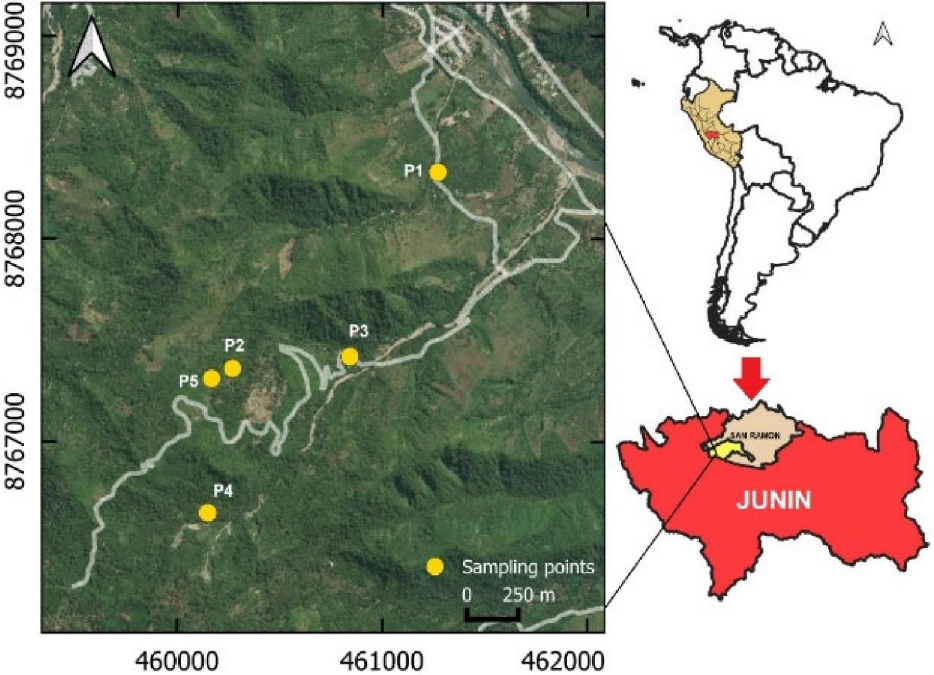
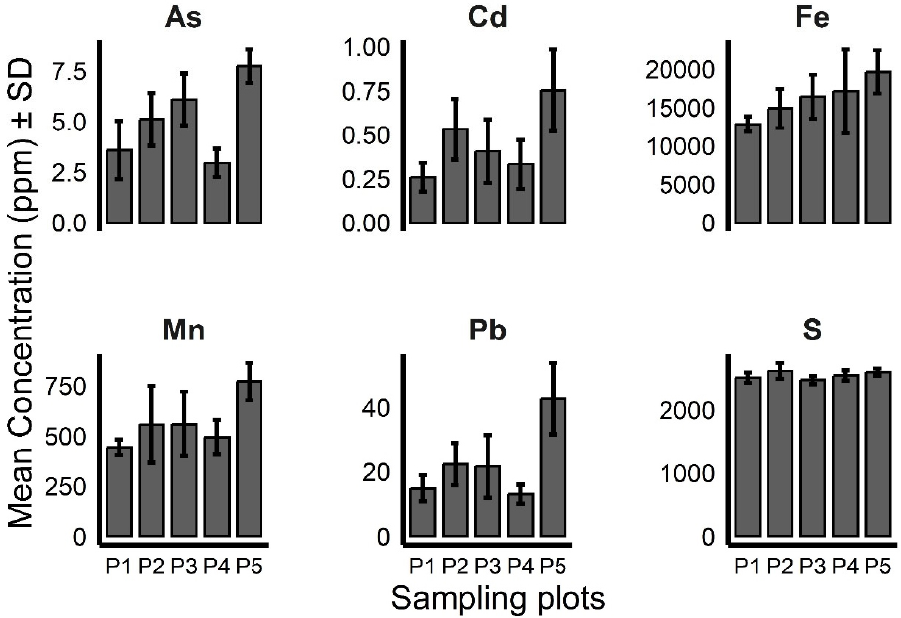
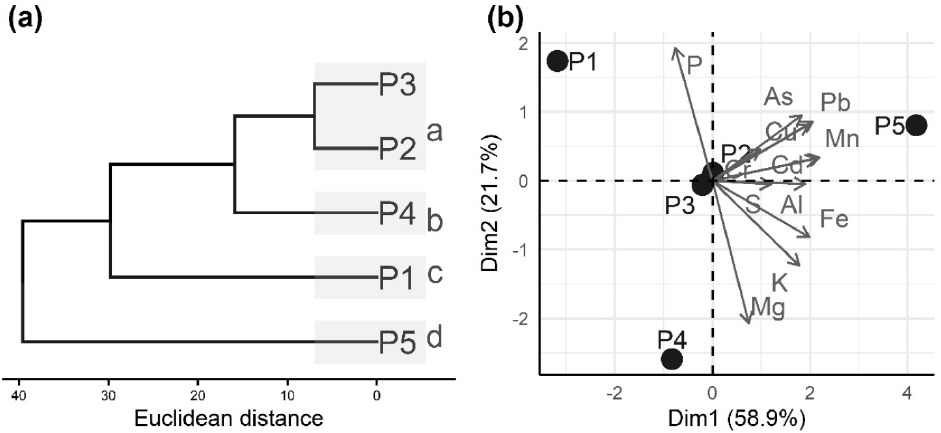
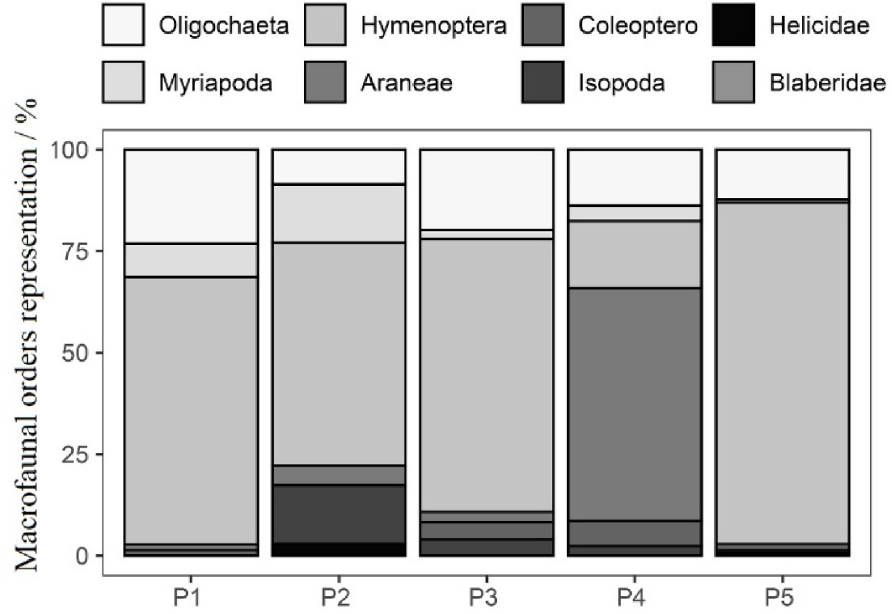
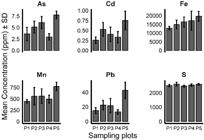
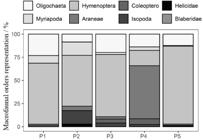
Few studies in the Peruvian Amazon have jointly evaluated soil macrofauna and heavy metal contamination in cacao agroecosystems. This study integrated ICP-MS (inductively coupled plasma mass spectrometer) multielement analysis, soil macrofauna assessment, and multivariate statistics in five cacao plots (113-1,102 m above sea level) under monoculture and diversified management with varying fertilization and pesticide inputs. Twelve elements were quantified in 25 composite soil samples, and macrofauna were collected from 25 soil monoliths (25 cm × 25 cm × 20 cm), yielding eight taxa. As, Cd, and Pb ranged from 1.74-8.42, 0.139-0.964, and 8.21-53.9 ppm, respectively, with peak concentrations in plot P05. Plot P02, under diversified management, showed the greatest macrofaunal diversity (S = 4.6 (species richness); H = 1.15 (Shannon diversity index). Hymenoptera (1,060 individuals) and Oligochaeta (257 individuals) dominated the community, while Coleoptera, Isopoda, and Blattodea were scarce. Most metal-macrofauna correlations were weak; however, significant positive associations were detected between sulfur and Helicidae (ρ = 0.401 (Spearman rank correlation coefficient), p < 0.05) and chromium and Coleoptera (ρ = 0.465, p < 0.05). These findings suggest that soil mineral composition and management practices, beyond toxic-metal loads alone, jointly shape macrofaunal structure, underscoring the need for sustainable soil monitoring in the Central Rainforest Region of Peru.
Keywords:
ICP-MS; soil biodiversity; cacao management; tropical agroecosystems; trace elements; Chanchamayo
 Thumbnail
 Thumbnail
 Thumbnail
 Thumbnail
 Thumbnail