 Chemotaxonomic Insights into Erythrina and Sophora Alkaloids Using Self Organizing Maps
Abstract
The Fabaceae family is characterized by remarkable chemical diversity, especially alkaloids, which play a central role in taxonomic studies and drug development. Among its genera, Erythrina and Sophora stand out for the structural variety of their alkaloids and their significant pharmacological potential. This study applied self-organizing maps (SOMs) to chemotaxonomic analysis, using a database of 650 alkaloids derived from 129 species and 747 botanical occurrences. Therefore, SOMs were applied to investigate structural patterns in alkaloids from the genera Erythrina and Sophora based on molecular descriptors. A dataset composed of occurrence-based records and unique molecular structures was analyzed to evaluate the influence of structural redundancy on model performance. The SOMs showed high classification consistency, achieving overall accuracy above 90% in both approaches, with comparable precision, recall, and F1 values for the two genera. Descriptor distribution analyses suggested that Erythrina alkaloids are characterized by a higher degree of unsaturation and a greater content of sp2 carbons, whereas Sophora alkaloids tend to present a higher proportion of sp3 carbons, larger ring systems, and non-aromatic imines. The similarity between the results obtained from occurrence data and unique molecules demonstrates that SOM performance is preserved even after the removal of redundant structures. These results indicate that SOMs constitute a robust exploratory tool for the chemotaxonomic analysis of these alkaloids, although additional validation using other datasets and the integration of a larger amount of biological data are required to confirm the observed patterns.
Keywords:
chemotaxonomy; alkaloids; Fabaceae; SOM’s; biosynthesis; activity biology
Introduction
The classification of organisms based on their chemical constituents has proven to be a valuable tool in the study of plant taxonomy, in this sense, chemotaxonomy is a systematic classification method that employs the analysis of chemical compounds present in organisms to determine their taxonomic affinities.1 This approach, combined with the analysis of natural products, can provide insights into the evolutionary relationships and ecological adaptations of plant species.2,3 In the case of the Fabaceae family (Leguminosae), a diverse group of plants known for their nitrogen-fixing abilities and rich chemical diversity, chemotaxonomy has been particularly useful in elucidating taxonomic relationships.4
The alkaloids possess complex and varied chemical structures, endowing these plants with significant potential for the development of novel pharmaceuticals. Erythrina and Sophora are renowned for their abundance of alkaloids, exhibiting a diverse range of pharmacological properties.5,6 These studies have indicated that the alkaloids present in Erythrina and Sophora may display intriguing biological activities, such as analgesic, anti-inflammatory, antimicrobial, and even anticancer properties.7,8 The structural diversity of these compounds, coupled with their bioactivity, makes these botanical genera promising targets for natural products research.
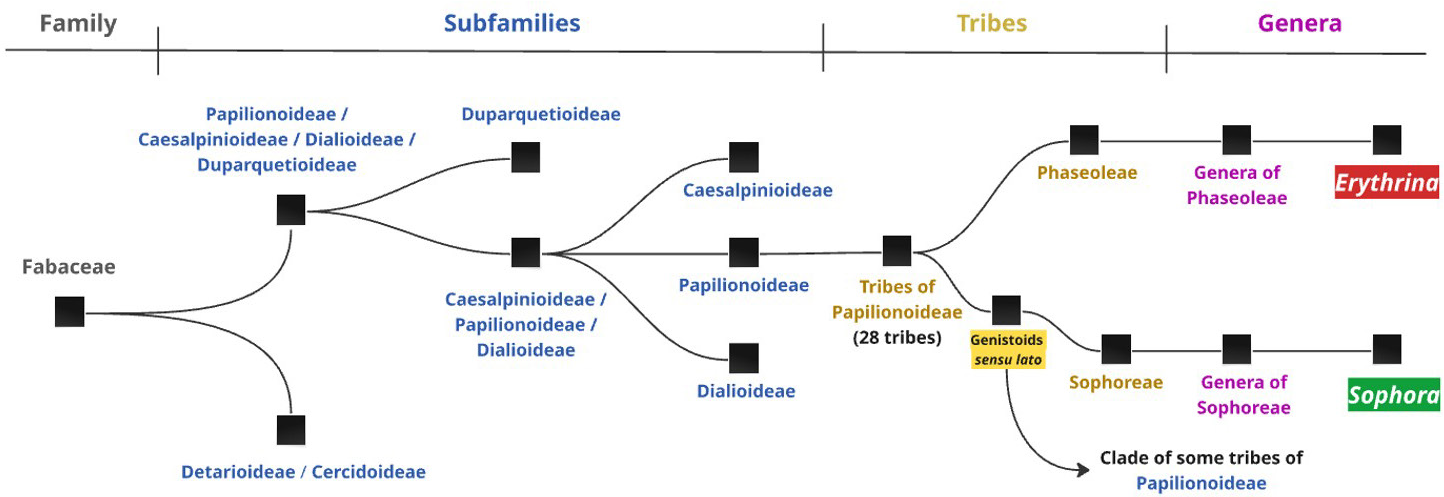
In terms of phylogeny, both Erythrina and Sophora are situated within well-defined tribes within the Fabaceae family. Molecular phylogenetic studies, exemplified by the work of Zhao et al.,4 have significantly advanced our understanding of the evolutionary relationships among these genera and other members of the family, uncovering patterns of speciation and divergence throughout their evolutionary history. The accurate phylogenetic placements of Erythrina and Sophora are crucial for comprehending the evolution of their morphological, physiological, and biochemical attributes, as well as for drawing inferences about the origin and diversification of the alkaloids found in these plants.9,10 A comprehensive overview of the Fabaceae family phylogeny is illustrated in Figure 1.

In this context, self-organizing maps (SOMs) emerge as an useful tool in modern chemotaxonomy.11 By analyzing the complex chemical profiles of secondary metabolites in different species, such as alkaloids, SOMs are capable of generating visual representations able to reveal the patterns and relationships among samples.11,12 This unique skill allows the identification of chemically similar species/groups, even when they belong to taxonomically distant genera or families, contributing to the construction of more accurate classifications.12 Based on that, SOMs can be applied to illustrate plant chemical evolution and guide the discovery of new natural compounds.13
In the present study, a total of 374 alkaloids found in 455 occurrences of the genera Erythrina and Sophora were compiled and then analyzed by SOMs. The main analysis was to identify chemical patterns of alkaloids along the two main genera, aiming to establish a robust classification system for these alkaloids. Our findings revealed significant differences in the alkaloids present in Erythrina and Sophora highlighting the presence of possible chemomarkers for both groups using SOMs.
Methodology
Alkaloid structures were initially represented as Simplified Molecular Input Line Entry System (SMILES) codes and fed into both MarvinSketch 23.8.0 (ChemAxon).14 Subsequently, the Knime 4.3.2 (KNIME AG) software was employed to standardize these structures.15 This process involved converting the diverse chemical structures into a consistent canonical representation, adding hydrogen atoms, aromatizing the structures, generating 2D representations, and finally saving the compounds in SDF format. Once the data was processed and organized by Knime 4.3.2, the 2D structures were utilized as input for the alvaDesc 2.0.016 (Alvascience) software.16 We employed SOM Toolbox 2.0 (AIRC) to analyze the previously selected molecular descriptors. This MATLAB 2024a toolkit facilitates the development and implementation SOMs, enabling their creation, visualization, and analysis.17-19
The map was structured as a 2D grid of 12 × 5 neurons, adopting a hexagonal topology to more efficiently preserve neighborhood relationships among neurons. The neighborhood function used was Gaussian, with the initial radius defined as approximately half of the largest axis of the map, which decreased automatically throughout the training process. Similarity between input vectors and neuron prototypes was assessed using the Euclidean distance. SOM training was performed using the batch algorithm, ensuring greater stability in weight updates. For the interpretation of the resulting clusters, a voting-based labeling method (vote) was employed, assigning to each neuron the class most prevalent among the mapped samples.
Initially, the dataset was fed into the network without any preliminary adjustments, meaning that no normalization or mean-centering of the molecular descriptors was applied. The dataset was then divided into subgroups based on the weight vectors of the map regions at each training stage. The accuracy of the predictions for these subgroups and for the dataset was evaluated, with accuracy defined as the ratio between the number of correctly classified samples and the total number of samples analyzed, thus representing a measure of the overall performance of the model.
For the most promising models, the dataset was split into training and testing sets to assess predictive performance. The training and testing accuracies were calculated as the proportion of correctly classified samples. To ensure robustness, 5-fold cross-validation was applied in Knime 4.3.2 to each map, randomly dividing the data into 80% for training and 20% for testing.15 Within the SOM framework, specific regions were identified that clustered molecules with similar descriptor values, revealing underlying chemical patterns.
Data collection and curation
Drawing on a comprehensive literature search, a collection of alkaloids isolated from the Fabaceae family was established. The search, conducted electronically between 2019 and 2024, utilized both SciFinder and Web of Science. This compiled database was subsequently incorporated into the web-based tool SistematX.20 It encompasses the chemical structures, SMILES codes, compound names, along with bibliographic references and detailed taxonomic information. This information includes the species classification (from family to individual species) and the geographical location where the compounds were isolated.
Structural curation was conducted through a series of steps to preserve the chemical consistency and suitability of the compounds for the modeling process. Initially, molecular representations were converted and cleaned by removing salts and inorganic species, neutralizing charges, and adjusting explicit and implicit hydrogens. Subsequently, chemical species were normalized, with emphasis on standardizing functional groups susceptible to structural variation, such as nitro groups, carboxylates, tautomeric forms, and aromatic systems, thereby ensuring uniformity in descriptor generation. These first two procedures were performed in Knime 4.3.2.15,21 In the following step, structural duplicates were identified and removed, preventing redundancy and reducing potential statistical bias during modeling. Finally, a complementary manual inspection was carried out to identify residual inconsistencies arising from the automated procedures, ensuring that the final compound set was chemically coherent and nonredundant.21
Results and Discussion
The database is composed of alkaloids isolated from species of the Fabaceae family, comprising 650 secondary metabolites and 747 botanical occurrences, distributed among 129 species and 33 different genera. In this context, botanical occurrence refers to the pattern of presence of a secondary metabolite across different plant species, as well as its distribution among families, genera, and even specific plant organs. This concept encompasses the set of characteristics and information related to the biosynthesis and presence of a natural product within the secondary metabolism of plant species.22 The four genera with the largest number of chemical structures are Erythrina, Sophora, Erythrophleum, and Lupinus. The distribution of alkaloids among these four genera is shown in Table 1. All data will be available in the SistematX web tool.23
Distribution of reported alkaloids among genera of the Fabaceae family, showing the number of species, total occurrences, and unique alkaloid structures for each genus
Molecular descriptors are quantitative measures obtained by applying mathematical functions to specific representations of chemical structures. These descriptors capture information about the molecules physical, chemical, and electronic properties.24 The calculated values of the descriptors were used as input data in the SOM Toolbox 2.0 software.17 For the construction of the self-organizing map, only the botanical occurrences of the genera with the larger number of chemical structures were selected, namely Erythrina and Sophora, totaling 455 occurrences and 374 alkaloids. A total of 104 different molecular descriptors were generated for the secondary metabolites corresponding to the occurrences, using the alvaDesc 2.0.016 software.16 Fragment descriptors were selected because they are the ideal ones to relate the generated values to the chemical structures of the molecules in the dataset.25
The self-organizing map constructed from the molecular descriptors generated from the alkaloids of Erythrina and Sophora shows the total hit rate of 98.5%. The SOM showed a clear separation between the chemical occurrences of the two genera, Erythrina and Sophora, which corroborates with the phylogenetic analysis performed by Zhao et al.4 Analyzing the map, it can be observed that the occurrences derived from the genus Erythrina occupy a substantially larger number of neurons, which is in accordance with the percentage present in the dataset and presented in Table 2, since the number of chemical occurrences presented by the genus Erythrina represents 73.8% of the total data used for the construction of the self-organizing map. However, it is also important to highlight that the larger number of neurons occupied may also be related to the greater structural chemical diversity presented by the occurrences of the genus Erythrina.
Results of the SOM analysis for alkaloid occurrences and unique molecular structures, including the distribution by genus, corresponding hit rates and metrics precision, recall and F1 score
Table 2 shows that the SOM achieved high performance in differentiating the genera Erythrina and Sophora. In the analysis considering all occurrences, the model correctly classified 448 out of 455 samples, corresponding to an overall accuracy of 98.5%. The individual accuracy was 99.4% for Erythrina and 98.8% for Sophora, with few misclassifications observed in the confusion matrix.
Similar results were obtained when only unique molecules were considered. In this case, 241 out of 245 molecules were correctly classified, resulting in an overall accuracy of 98.3%. Both genera showed the same accuracy rate (98.3%), and the confusion matrix again indicated a small number of errors.
Precision, recall, and F1 metrics remained high for both genera in both approaches. For Erythrina, these values were close to 0.98-0.99 in both the occurrence-based and unique-molecule analyses. For Sophora, F1 values ranged between 0.95 and 0.98. The close agreement between the results obtained in the two analyses indicates that the SOM performance was maintained even after the removal of redundant structures, as evidenced by the data presented.
The predictive performance of the SOM, based on five distinct training and testing sets derived from the database and divided as presented in Table 3, is shown in Table 4.
Summary of the five training and test datasets used for the SOM analysis, for total occurrences and unique molecules
Percentage of matching results obtained for training and test sets across five data splits for Erythrina and Sophora, considering total occurrences and unique alkaloid molecules
The results of the 5-fold cross-validation test demonstrate a similarity between the performances obtained by the models trained using all occurrences and those trained using only unique molecules. In both cases, the average accuracy for the training and test sets remained high and consistent across the five folds, indicating model stability with respect to variations in the sampled subsets. Although the model based on unique molecules shows, as expected, a slight reduction in average accuracy values, particularly in the test sets, the overall performance remains satisfactory and comparable to that obtained using occurrences. This similarity suggests that the removal of redundant structures does not substantially compromise the generalization ability of the SOM, reinforcing that both models are suitable for differentiating the genera Erythrina and Sophora based on the molecular descriptors employed.
The SOM shows the chemical occurrences of the genus Erythrina in red and Sophora in green, the black neurons represent regions on the map that were not filled in by the occurrences. The U-matrix displays the distance between neighboring unit maps, meaning that the higher the corresponding value, the greater the distance between the clusters. Conversely, the lower the corresponding value, the smaller the difference between the clusters. For the principal component analysis (PCA), which is measured using the highest eigenvectors and eigenvalues, neighboring units present in the map are interconnected by lines to facilitate data visualization, and consequently, by using two main variables for its construction, it is possible to see the distances between the map components in 2D. The data is presented in Figure 2.
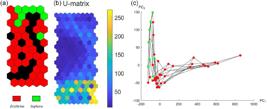
Self-organizing map obtained by classification of the genera Erythrina and Sophora: (a) SOM of the molecular descriptors; (b) U-matrix; (c) PCA projection of the SOM.
It is possible to see that the genus Sophora presents a smaller number of botanical occurrences (26.2% of the database) for the construction of the SOM and consequently of the PCA. However, it presented a great hit rate, as well as the genus Erythrina, besides the structural differences are perceptible, since the PCA presented well-defined regions for both the occurrences of Erythrina and Sophora. The PCA performed presented an explained variance of 95.55%, that is, using only two variables it is possible to visualize almost all the variation demonstrated by the data present in the SOM.
Figure 3 displays the most important molecular descriptors that differentiate the compounds found in Erythrina and Sophora. The three descriptors exhibited similar patterns, with higher values generally associated with Sophora alkaloids and lower values with Erythrina alkaloids.

Self-organizing map obtained by classification of the genus Erythrina and Sophora: (a) nCXr molecular descriptor; (b) nRC = N molecular descriptor; (c) nR10 molecular descriptor; (d) position of the compounds 1-6 in SOM.
The nCXr descriptor is related to the quantity of functional groups or atoms other than carbon, bonded to a carbon atom belonging to a sp3 hybridized ring. Consequently, it is evident that crystamidine (compound 1, Figure 4), located in the region described by Figure 3d, possesses lowest amount of nitrogen bonded to saturated carbons than matrine, (compound 2, Figure 4), which is also located in the region described by Figure 3d.5,6 This fact may be directly linked to the values indicated by the descriptor on the map, suggesting that the analyzed Sophora alkaloids, in general, exhibit a higher quantity of rings formed by carbons with only single bonds.

Chemical structure of two alkaloids represents the existing difference with respect to the nCXr descriptor.
For the descriptor nCR = N, which is related to the number of non-aromatic imines, it can be observed that alkaloid 3 (Figure 5), located in the region described by Figure 3d and known as erysodine, does not possess any imine functional groups in its structure. This pattern is generally repeated for alkaloids belonging to the Erythrina genus that were analyzed.6 In contrast, the presence of a non-aromatic imine in the structure of alkaloid 4 (Figure 5), which is in the region presented in Figure 3d and commonly known as flasevine I, is clearly observable.7

Chemical structure of two alkaloids represents the existing difference with respect to the nRC = N descriptor.
Regarding the nR10 descriptor, which is related to the number of ten-membered rings, it can be observed that alopecurin A (Figure 6) located in the region described by Figure 3d, possesses a ten-membered ring in its structure, while erysotrine, known as and located as shown in Figure 3d, does not.5,6 The presence of a ten-membered ring is a frequently observed pattern in the analyzed dataset for occurrences of the Sophora genus.

Chemical structure of two alkaloids represents the existing difference with respect to the nR10 descriptor.
The structural differences observed among the alkaloids can be tentatively associated with distinct biosynthetic pathways hypothesized to operate in the formation of different alkaloid cores within each genus. The presence of sp3-hybridized rings may plausibly reflect the contribution of a pathway starting from L-lysine leading to (-)-sparteine formation, as described by Huang et al.26 However, this relationship should be interpreted as a biosynthetically reasonable hypothesis rather than direct evidence of pathway activity in the analyzed species. This biosynthetic route has been proposed in the literature to underline the structural formation of Sophora quinolizidine alkaloids. The alternative pathway described by Huang et al.,26 which promotes the formation of piperideine intermediates, may likewise be consistent with the occurrence of non-aromatic imines observed in Sophora alkaloids. Taken together, these pathways provide a conceptual framework that is compatible with the observed structural features, although experimental biosynthetic validation is lacking. The biosynthetic pathways are presented in Figure 7.
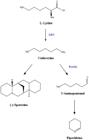
Conversely, Erythrina species are reported to be associated with a distinct biosynthetic route, starting from the amino acids phenylalanine and tyrosine and leading to the formation of isoquinoline alkaloids, as described by Chacon et al.27 This difference may help rationalize, at a structural level, the higher degree of unsaturation observed in the core ring systems of Erythrina alkaloids, a feature that correlates with the separation captured by the nCXr descriptor. It should be noted, however, that such correlations do not constitute direct biosynthetic proof and may also arise from convergent structural evolution. The discussed biosynthetic pathways are presented in Figure 8.

Sophora alkaloids have demonstrated promising potential in various pharmacological areas, including antitumor, antimicrobial, and anti-inflammatory activities, as highlighted by Wang et al.5 Specifically, alkaloids 2 (Figure 4) and 6 (Figure 6) have shown notable antitumor and anti-inflammatory effects, which may be attributed to their shared quinolizidine core structure. The proximity of these occurrences in the SOM, as shown in Figure 3d, may be related to the structural and activity similarities presented by the molecules.
Similarly, Erythrina alkaloids have been reported to possess a wide range of biological activities, such as antibacterial, antifungal, antiprotozoal, and anticonvulsant properties, as detailed by Rambo et al.6 Among the Erythrina alkaloids, compound 1 (Figure 4) exhibits promising antiprotozoal activity, while compounds 3 (Figure 5) and 5 (Figure 6) have demonstrated anxiolytic effects. The structural and activity similarities presented by compounds 3 and 5 may be related to the proximity of their positions in the SOM (Figure 3d), while the difference presented by compound 1 could be related to its greater distance on the map (Figure 3d) when compared to the positions of alkaloids 3 and 5.
Conclusions
This study utilized a comprehensive database of alkaloids from the Fabaceae family, which will be made available through the SistematX web tool. The database encompassed a staggering 650 secondary metabolites belonging to 129 distinct species, resulting in a total of 747 documented botanical occurrences. Employing SOMs and molecular descriptors, the researchers were able to effectively segregate the Sophora and Erythrina genera with exceptional accuracy (exceeding 90%). These findings align with prior phylogenetic studies.
In essence, SOMs constructed from encoded physicochemical properties of alkaloids constitute a powerful tool for identifying structures with specific characteristics. In general, Erythrina alkaloids exhibited structures with rings of up to six atoms, a higher proportion of sp2 carbons, and classical amines. Sophora species, in turn, displayed structures with a greater proportion of sp3 carbons in ring formation, rings containing more than six atoms, and imines. This approach shows potential for applications such as the identification of alkaloids with possible biological activity, especially when integrated with taxonomic and geographic data. However, the results obtained should be interpreted as an initial exploratory analysis, and further steps, such as model validation using independent datasets, incorporation of additional descriptors, and biological evaluations, are required to confirm and further elucidate the observed patterns.
Supplementary Information
Supplementary information is available free of charge at http://jbcs.sbq.org.br as file.
Supplementary PDF
Acknowledgments
The authors acknowledge CAPES for financial support to this research. The authors acknowledge financial support in the form of individual scholarships provided by the CAPES, Brazil - Finance Code 001.
Data Availability Statement
The data supporting the findings of this study are not publicly available and may be obtained from the corresponding author upon request.
References
-
1 Chen, Y.; Zou, C.; Mastalerz, M.; Hu, S.; Gasaway, C.; Tao, X.; Int. J. Mol. Sci. 2015, 16, 30223. [Crossref]
» Crossref -
2 Bhargava, V. V.; Patel, S. C.; Desai, K. S.; Int. J. Tradit. Herb. Med. 2013, 14. [Crossref]
» Crossref -
3 Al-Tameme, H. J. M.; AL-Qadisiyha J. Sci. 2015, 20, 88. [Crossref]
» Crossref -
4 Zhao, Y.; Zhang, R.; Jiang, K.-W.; Qi, J.; Hu, Y.; Guo, J.; Zhu, R.; Zhang, T.; Egan, A. N.; Yi, T.-S.; Huang, C.-H.; Ma, H.; Mol. Plant. 2021, 14, 748. [Crossref]
» Crossref -
5 Wang, H.; Xia, C.; Chen, L.; Zhao, J.; Tao, W.; Zhang, X.; Wang, J.; Gao, X.; Yong, J.; Duan, J.; Curr. Drug Targets 2019, 20, 1572. [Crossref]
» Crossref -
6 Rambo, D. F.; Biegelmeyer, R.; Toson, N. S. B.; Dresch, R. R.; Moreno, P. R. H.; Henriques, A. T.; Phytother. Res. 2019, 33, 1258. [Crossref]
» Crossref -
7 Abd-Alla, H. I.; Souguir, D.; Radwan, M. O.; Arch. Pharmacal Res. 2021, 44, 903. [Crossref]
» Crossref -
8 Majinda, R. R. T. In Progress in the Chemistry of Organic Natural Products 107; Kinghorn, A. D.; Falk, H.; Gibbons, S.; Jun’ichi Kobayashi, J.; Asakawa, Y.; Liu, J.-K., eds.; Springer: Cham, Switzerland, 2018, p. 95. [Crossref]
» Crossref -
9 Park, H.-S.; Jayakodi, M.; Lee, S. H.; Jeon, J.-H.; Lee, H.-O.; Park, J. Y.; Moon, B. C.; Kim, C.-K.; Wing, R. A.; Newmaster, S. G.; Kim, J. Y.; Yang, T.-J.; Sci. Rep. 2020, 10, 6112. [Crossref]
» Crossref -
10 Abdelsalam, N. R.; Salem, M. Z. M.; Ali, H. M.; Mackled, M. I.; El-Hefny, M.; Elshikh, M. S.; Hatamleh, A. A.; Ind. Crops Prod. 2019, 139, 111515. [Crossref]
» Crossref -
11 Correia, M. V.; Scotti, M. T.; Ferreira, M. J. P.; Alvarenga, S. A. V.; Rodrigues, G. V.; Emerenciano, V. P.; Nat. Prod. Commun. 2008, 3, 1723. [Crossref]
» Crossref -
12 Emerenciano, V. P.; Barbosa, K. O.; Scotti, M. T.; Ferreira, M. J. P.; J. Braz. Chem. Soc. 2007, 18, 891. [Crossref]
» Crossref -
13 Scotti, M. T.; Emerenciano, V.; Ferreira, M. J. P.; Scotti, L.; Stefani, R.; da Silva, M. S.; Mendonça Jr., F. J. B.; Molecules 2012, 17, 4684. [Crossref]
» Crossref - 14 MarvinSketch, v.23.8.0; Chemaxon, Hungary, 2025.
- 15 Berthold, M.; Knime, version 4.3.2; Knime, Switzerland, 2021.
- 16 Alvadesc, v2.0.016; Alvascience, Italy, 2018.
- 17 Vesanto, J.; Himberg, J.; Alhoniemi, E.; Parhankangas, J.; Self-Organizing Map in Matlab: the SOM Toolbox; Technical Report, Helsinki University of Technology: Helsinki, Finland, 2000.
-
18 Ballabio, D.; Consonni, V.; Todeschini, R.; Chemom. Intell. Lab. Syst 2009, 98, 115. [Crossref]
» Crossref - 19 Matlab, version 2024a; The MathWorks Inc., USA, 2024.
-
20 Scotti, M. T.; Acevedo, C. H.; Oliveira, T. B.; Costa, R. P. O.; Oliveira, S. Y. K.; Santos, E. S. K. O.; Rodrigues, R. P.; Scotti, L.; Da-Costa, F. B.; Molecules 2018, 23, 103. [Crossref]
» Crossref -
21 Fourches D.; Muratov E.; Tropsha A.; J. Chem. Inf. Model 2010, 50, 1189. [Crossref]
» Crossref -
22 Wink, M.; Botschen, F.; Gosmann, C.; Schafer, H.; Waterman, P. G. In Annual Plant Reviews Volume 40: Biochemistry of Plant Secondary Metabolism; Wiley-Blackwell: New Jersey, USA, 2010, p. 40. [Crossref]
» Crossref -
23 SistematX. [Link] accessed in February 2026
» Link -
24 Xue, L.; Bajorath, J.; Comb. Chem. High Throughput Screening 2000, 3, 363. [Crossref]
» Crossref -
25 Kim, Y. K.: Small Molecule-Based Approach to Chemistry and Biology: Synthesis, Measurement, and Analysis; PhD Thesis, Harvard University, Cambridge, MA, USA, 2005. [Link] accessed in February 2026
» Link -
26 Huang, X.; Rong, W.; Zhang, X.; Gao, Y.; Zhou, Y.; Su, J.; Luo, H.; Chu, G.; Wang, M.; Ind. Crops Prod. 2024, 212, 118365. [Crossref]
» Crossref -
27 Chacon, D. S.; Torres, T. M.; Silva, I. B.; Araújo, T. F.; Roque, A. A.; Pinheiro, F. A. S. D.; Selegato, D.; Pilon, A.; Reginaldo, F. P. S.; Costa, C. T.; Vilasboa, J.; Freire, R. T.; Voigt, E. L.; Zuannazzi, J. A. S.; Libonati, R.; Rodrigues, J. A.; Santos, F. L. M.; Scortecci, K. C.; Lopes, N. P.; Ferreira, L. D. S.; Giordani, R. B.; J. Adv. Res. 2021, 34, 123. [Crossref]
» Crossref
Edited by
-
Editor handled this article:
João Henrique Ghilardi Lago (Associate)