 Ionizing Radiation Dosimetry on Lunar Habitats: Analyzing Current Research
ABSTRACT
Establishing a permanent and sustainable human presence on the Moon has long been one of humanity’s most ambitious goals. The Moon is continuously exposed to ionizing radiation from the Sun and deep space, rendering it an extreme environment that poses significant radiological risks to future human exploration missions. Accurate radiation dosimetry is essential to ensure astronaut safety. This study aimed to assess the current state of research on radiation dosimetry for potential lunar environments and bases. A bibliometric analysis was conducted based on the results of various keyword searches in Scopus to identify key trends and research gaps related to lunar radiation dosimetry. The analysis revealed a growing body of research focused on radiation protection, the biological effects of ionizing radiation, and simulation models to assess radiation exposure on the Moon. Furthermore, the analysis highlighted an increasing involvement of various countries worldwide in these research areas, with the United States leading in the number of publications. This study provides a global overview of the current state of research in lunar radiation dosimetry, emphasizing areas where further investigation is required to support safe human exploration.
Keywords
Radiation dosage; Lunar bases; Ionizing radiation; Lunar missions
INTRODUCTION
For over six decades, since the beginning of space exploration, the challenge of establishing a permanent and sustainable human presence on the Moon has been one of the most ambitious and fascinating of humanity’s goals (Chen et al. 2021; Ruess et al. 2006). Several international missions, such as the ARTEMIS program, led by the National Aeronautics and Space Administration (NASA), are currently set on the lunar South Pole to develop the first space habitats (Creech et al. 2022). Achieving this objective would mark a milestone in human history and science, opening the doors to a new space exploration era.
The development of safe and sustainable lunar habitats should consider the hazards of the harsh space environment, such as ionizing radiation, meteorite impacts, moonquakes, and extreme temperature variations (Jablonski and Ogden 2008). These phenomena affect structures, astronauts, electronic devices, and plants (Chen et al. 2021). Developing seismic, thermal, or radiological protection methods is essential in designing safe lunar habitats (Benaroya 2018). The hostility of the lunar environment makes developing a permanent base a significant scientific, technological, and even economic challenge (Akisheva et al. 2021).
The Moon’s lack of atmosphere and significant magnetic field leaves astronauts and lunar infrastructure vulnerable to the harsh and unrelenting hazard of space radiation (Heiken et al. 1991). This radiation mainly comes from two sources: galactic cosmic rays (GCR) and solar particle events (SPE) (International Commission on Radiological Protection 2013). These forms of ionizing radiation pose significant health risks, generating adverse effects such as blindness, cancer, or other illnesses (WHO 2018). Various radiation mitigation methods have been proposed to protect astronauts and infrastructure on a lunar base, e.g., Akisheva and Gourinat (2021), Al Zaman et al. (2022), Bassez (2015), Koval et al. (2022), Miller et al. (2009), Montes et al. (2015), and Yang et al. (2015). Radiation mitigation strategies in a lunar base are crucial to ensure the safety and well-being of astronauts and infrastructure in a hostile and potentially dangerous space environment (Spillantini et al. 2007).
The effectiveness of radiation shielding methods must be evaluated, necessitating a deeper study and understanding of radiation dosimetry on the Moon and in lunar bases. Several studies and measurements have been carried out on radiation dosimetry on the Moon, e.g., Pham and El-Genk (2009), Schwadron et al. (2012), Cucinotta et al. (2012; 2017), Naito et al. (2020; 2023), Zaman et al. (2022), Isolan et al. (2024), and Pavlenko et al. (2024). The most common approach is simulation through computational programs based on the Monte Carlo method of particle transport. These programs allow the simulation of the radiation-matter interaction, which helps to estimate the radiation dose received by astronauts and structures. Despite ongoing research and numerous articles on lunar radiation dosimetry, a comprehensive survey of this literature is currently lacking. This bibliometric study provides a valuable foundation for future researchers in the field. It offers a comprehensive overview of the current state of knowledge and identifies key areas where further investigation is needed.
This paper presents a bibliometric analysis of research on ionizing radiation dosimetry on the Moon and in lunar habitats. It aims to identify trends in this field by examining publications from recent years. The analysis explores international collaboration patterns, publication rates by country, and publication trends over time. Additionally, the key findings from these publications shed light on the current state of knowledge and underscore the importance of this research area.
METHODOLOGY
This bibliometric analysis employs keyword searches in Elsevier’s Scopus database to identify relevant publications on lunar radiation dosimetry. Figure 1 depicts the search and filtering strategy. In the three search cases, different parameters were used to limit the documents. For the case of “Radiation Environment” and “Moon,” the search was limited to the years 2004-2024, given the pattern of publications per year, and the keywords using the OR connector were selected based on the common keywords present in the 333 documents. In the second search for “Radiation Dose” and “Moon,” the keyword “Monte Carlo Method” was used, as the focus was on simulation papers, and the search was limited to English because some of the papers were in languages such as Chinese, Japanese, and Russian. For the last search of “Radiation Dose” and “Lunar Missions,” “Moon” was first replaced with “Lunar Missions,” as this was the most commonly used keyword to refer to long-term lunar situations that do not explicitly mention lunar habitats; the search was then limited to the years 2009-2024, the period with the highest number of documents and the most recent publications. The total number of documents identified from the three searches is 24, as some publications appeared in more than one search. Finally, the analysis of the data obtained from these searches is presented in the sections named after each search, while the discussion of the findings is presented in the Discussion and Analysis section.

Radiation environment on the Moon
The initial search employed the keywords “radiation environment” AND “moon” across titles, abstracts, and keywords without any additional filters. This broad search yielded 333 papers published from 1975 to May 24, 2024 (last search). The analysis revealed participation from 27 countries across five continents (the Americas, Europe, Asia, and Oceania) over the past five decades. Many of these countries collaborated on research projects, as visualized in Fig. 2. This network visualization, created using the freely available VOSviewer software, highlights collaboration patterns. While some countries, such as Egypt (one paper) and the Czech Republic (two papers), have not yet collaborated internationally, the United States of America (USA) stands out with 17 co-authorship links, including partnerships with Colombia, Japan, and Switzerland. The visualization further identifies seven research clusters (represented by colors: blue, green, red, yellow, and purple). The red cluster, encompassing 10 countries across three continents, boasts the highest number of collaborating countries.

Collaboration network in lunar radiation dosimetry research (1975-2024) (“radiation environment” AND “moon”).
Figure 3 illustrates the distribution of publications on lunar radiation dosimetry from 1975 to 2024. Prior to 2004, research activity remained relatively low, averaging just 0.7 publications per year. This period accounts for only 22 publications, representing less than 7% of the total publications identified. Since 2004, however, there has been a significant increase in research output, although the annual publication rate fluctuates. Notably, 2007 and 2019 witnessed publication peaks with 24 and 28 papers, respectively. Conversely, excluding the ongoing year (2024), 2014 saw the lowest publication volume with only eight documents.

Figure 4 showcases the 10 countries with the highest publication output in lunar radiation dosimetry research. The USA leads the pack with a significant contribution, authoring 212 documents, constituting over 64% of the total publications identified. This is roughly 4.6 times the output of Germany, which occupies the second position with 38 documents. The remaining nine countries on the list exhibit a more balanced distribution, with publication counts ranging from 11 to 33. It is worth noting that some documents lack an associated country affiliation, resulting in the presence of “unknown” entries within the top 10.

Figure 5 presents a pie chart depicting the distribution of publications across various subject areas within lunar radiation dosimetry research. Notably, the top three areas exhibit a close range in their contribution. Engineering takes the lead with 28.6% of the publications, followed closely by earth and planetary sciences (25.3%) and physics and astronomy (24%). The remaining publications encompass diverse fields such as environmental sciences, materials science, medicine, and others.

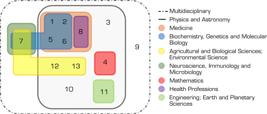
To refine the analysis, a follow-up search was conducted focusing on articles published from 2004 to 2024 that included any of the following keywords: “Radiation Dose” OR “Radiation Dosage” OR “Dosimetry.” This narrower search yielded 13 documents. Table 1 presents the titles and authors of these publications, along with corresponding reference numbers that link them to Fig. 6. The graph utilizes a Venn diagram to illustrate the relationships between different research areas explored within these documents.
Radiation dose and the Moon
A broader search was conducted using the keywords “radiation dose” AND “moon” across titles, abstracts, and keywords, with no additional filters applied. This yielded a total of 150 publications spanning 1986 to May 31, 2024 (last search). The analysis of these documents revealed participation from 24 countries across the America (North and Central only), Europe, and Asia. Notably, collaboration patterns differed from the previous search. While five countries (including Mexico, India, France, Canada, and Belgium) published independently, with publication counts ranging from one to seven, the remaining countries exhibited a more collaborative approach. As visualized in Fig. 7, the USA emerged as the most prominent collaborator, co-authoring publications with 12 other countries, including China, the Russian Federation, and the United Kingdom.

Figure 8 illustrates the distribution of publications on “radiation dose” and “moon” research across the years (1986-2024). Prior to 2004, research activity appeared limited, with an average of only one publication per year. This initial period accounts for roughly 10% of the total publications identified. However, a notable increase in research output is evident since 2004. While publication rates have not been constant year-to-year, there was a peak in 2020 with 14 documents. Excluding the ongoing year (2024), both 2006 and 2014 saw the lowest publication volume, with only three documents each.

Figure 9 shows the 10 countries with the highest publication output in “radiation dose” and “moon” research. The USA stands out as the leading contributor, authoring a significant 84 documents, which constitute over 56% of the total publications identified. This is roughly five times the output of China, which occupies the second position with 14 documents. The remaining nine countries on the list exhibit a more balanced distribution, with publication counts ranging from five to 14 documents.

Figure 10 presents a pie chart depicting the distribution of subject areas within the publications retrieved from the “radiation dose” AND “moon” search. The top three areas exhibit a close range in their contribution: physics and astronomy take the lead with 23.6%, followed by engineering (19.2%) and Earth and planetary sciences (16.2%). The remaining publications encompass diverse fields such as medicine, biochemistry, genetics and molecular biology, environmental science, materials science, and others.

To focus on publications that utilize the Monte Carlo method, an additional search was conducted using the keyword phrase “Monte Carlo Method” within titles, abstracts, and keywords, restricting results to articles written in English. This yielded a set of seven relevant documents. Table 2 lists the titles, authors, and publication years of these articles.
Radiation dose and lunar missions
To gain further insights, a broader search was conducted using the keywords “radiation dose” AND “lunar missions” within titles, abstracts, and keywords. This search was restricted to articles and retrieved a total of 17 publications spanning 1970 to May 31, 2024 (last search). Notably, the analysis of these documents in the Scopus database revealed that only six countries (the USA, India, Belgium, France, Canada, and the Russian Federation) actively published research on this specific topic within the past 54 years. Interestingly, none of these publications involved international collaboration, as evidenced by the absence of connections in Fig. 11.

Figure 12 shows the number of documents per year from 1970 to 2024. There is no increase in the number of documents per year, but the trend it is linear, with only one document per year, except for years with zero documents. During this period of 54 years, there are two peaks in 2020 and 2024, with three and two documents, respectively.

Figure 13 shows the number of documents per country. The country with the highest number of documents in this search is the USA, with 10 documents, accounting for 59% of all documents. In comparison, India, which holds the second position, has three documents, reflecting a significant difference of seven documents between them, roughly equivalent to twice the output of India. The other four countries on the list have only one document each.

Figure 14 presents a pie chart depicting the distribution of subject areas within the publications retrieved from the “radiation dose” AND “lunar missions” search. The top three areas stand out: physics and astronomy lead the way with a contribution of 22.9%, followed by engineering (20%) and earth and planetary sciences (14.3%). The remaining publications encompass diverse fields such as medicine, biochemistry, genetics and molecular biology, environmental science, and others.

To further refine the analysis, the search timeframe was narrowed to publications from 2009 to 2024. This yielded a more focused set of 10 documents. Table 3 lists the titles, authors, and publication years of these publications.
DISCUSSION AND ANALYSIS
One of the most significant challenges in space exploration remains protecting astronauts from GCRs and SPEs. This study provides valuable insights into current and future approaches for mitigating this hazard. The research highlights a trend in the study of innovative materials, advanced modeling techniques, and novel radiation shielding technologies. The analysis discusses how this research is interlinked, the efforts contributing to the current state of the knowledge, and how they can be harnessed to improve radiation protection for future lunar missions and habitats.
Materials for shielding and shielding effectiveness
Effective shielding against space radiation is critical for astronaut safety during lunar missions. Researchers have explored a wide range of materials to assess their potential for mitigating radiation exposure. Studies by Bassez (2015), Borella et al. (2023), DeWitt and Benton (2020), Ferrone et al. (2022), Giraudo et al. (2018), Koval et al. (2022), Miller et al. (2009), Montes et al. (2015), and Zaman et al. (2022) evaluated the effectiveness of various shielding materials. These materials include lithium hydrides, aerogels composed of simulated lunar regolith, “Regishell,” aluminum, copper, graphite, water, Kevlar, lunar regolith geopolymer binder, lunar soil, and regolith simulants. These findings are fundamental for lunar habitat design, as they inform the selection and optimization of materials based on their radiation shielding capabilities. Notably, the effectiveness of utilizing lunar in-situ materials is also being explored. This research topic holds great importance because different materials offer varying degrees of protection and pose different challenges for practical use in lunar habitats.
Advancements in precision dosimetry and real-time radiation monitoring
Accurate dosimetry and real-time radiation monitoring are crucial for effective space radiation protection during lunar missions. Studies emphasize the need for precise data to guide protective measures. Bahadori (2024) reviewed the transition to dose-based effective limits and the use of active pixel-reading detectors. This approach offers a more individualized assessment of radiation exposure, considering both the radiation dose and its biological effects, compared to traditional protection standards. Additionally, real-time monitoring capabilities provided by active detectors enable dynamic adjustments to radiation protection protocols, further enhancing astronaut safety.
Furthermore, the lunar lander neutron and dosimetry (LND) experiment on the Chang’e 4 mission, detailed by Hou et al. (2020), demonstrates significant progress in improving the accuracy of lunar surface radiation measurements. By utilizing Monte Carlo simulations, the LND experiment effectively removes background noise from onboard radioactive sources, resulting in highly accurate dosimetric data. This precise measurement of the lunar radiation environment is essential for planning future crewed missions, as it informs the development of effective shielding strategies. These two studies highlight the critical role of both accurate dosimetry and real-time monitoring in space radiation protection, emphasizing the importance of precise, real-time radiation data to optimize protective measures and ensure astronaut safety during extended space missions.
Biological effects and health risks
Understanding the biological effects and health risks of space radiation is paramount for safeguarding astronauts’ well-being on extended space missions. Space radiation, primarily composed of GCRs and SPEs, can penetrate spacecraft and human tissue, potentially causing significant harm. Prolonged exposure increases the risk of various health issues, including neurological damage, cancer, cardiovascular diseases (CVD), and cataracts (WHO 2018). Therefore, comprehensive research is crucial to mitigate these biological risks and develop effective protection strategies.
Researchers are actively investigating different aspects of these health risks. Khaksarighiri et al. (2020) investigated radiation dose distribution within the human brain, highlighting the potential for neurological damage. This research is critical for understanding the impact of radiation exposure on cognitive function and overall brain health. Similarly, Cucinotta (2024) used cancer risk models to assess the effects of GCRs and SPEs, emphasizing the significant increase in cancer risk due to non-targeted effects, such as damage to healthy cells. These findings underscore the need for effective mitigation strategies to protect astronauts from cancer during long-duration missions.
Furthermore, Delp et al. (2016) studied CVD mortality rates among Apollo astronauts, revealing a significantly higher rate in those exposed to deep space radiation compared to those in low-Earth orbit or on ground missions. This suggests a link between deep space radiation and sustained endothelial dysfunction, a precursor to CVD. Additionally, Dynlacht et al. (2011) examined radiation-induced cataracts in rats, revealing increased susceptibility in older animals and the influence of estrogen on cataract formation. These studies highlight the importance of considering hormonal and age-related factors when evaluating radiation risks.
To further explore these biological risks, Simonsen et al. (2020) described the development of NASA’s first ground-based GCR simulator. This critical tool enables researchers to investigate the biological impacts of chronic heavy ion exposure in a controlled environment, reducing uncertainties and validating countermeasures. By simulating the space radiation environment on Earth, researchers can better understand and mitigate the health risks posed to astronauts.
In conclusion, these interconnected studies emphasize the critical importance of understanding the biological effects and health risks of space radiation. These comprehensive studies provide a clear picture of the potential health problems faced by astronauts and underscore the need for effective mitigation strategies. Addressing these health risks is essential for the success and safety of long-duration space missions, ensuring astronaut health and mission capability in the challenging space environment.
Simulations and modeling of lunar mission scenarios
Sophisticated simulations and modeling are crucial for designing safe and efficient lunar missions, optimizing mission parameters while minimizing radiation exposure. These tools address the complex interplay between mission trajectories, shielding materials, and the lunar environment, ensuring astronaut safety and mission success. Mansell et al. (2020) employed advanced optimization techniques to design lunar transfer trajectories that minimize radiation exposure during transit while considering other crucial factors such as fuel efficiency and travel time. As previously discussed, understanding the effectiveness of various shielding materials is paramount. Simulations, exemplified by the work of Jia and Lin (2010) and Slaba et al. (2011), investigate the impact of lunar regolith composition and thickness on radiation dose. These studies reveal the effectiveness of hydrogen-rich materials, such as polyethylene, in mitigating exposure to albedo neutrons.
Furthermore, Hou et al. (2020) utilized Monte Carlo simulations in the LND experiment, as previously mentioned. Additionally, Lin and Adams Jr. (2007) studied uncertainties in fragmentation cross sections and their impact on radiation transport predictions. Accurate cross-section data is essential for refining radiation transport models, particularly in GCR environments during solar minima and maxima. In conclusion, the integration of advanced optimization techniques, effective shielding material analysis, and accurate dose modeling through comprehensive simulations is vital for lunar mission planning. These interconnected studies collectively enhance our understanding and mitigation of radiation risks, paving the way for safer and more successful lunar exploration endeavors.
Moon explorations
Lunar exploration missions are essential for advancing our understanding of the Moon and preparing for future crewed missions. These missions provide critical data on the lunar surface’s composition, topography, and radiation environment, all vital for mission planning and astronaut safety. The Chandrayaan-1 mission marked a significant milestone in Indian lunar exploration (Goswami and Annadurai 2009). It provided high-resolution data on the lunar surface’s mineralogy, chemical composition, and the presence of water ice in polar regions. Additionally, an onboard radiation dose monitor measured energetic particle flux during transit and lunar orbit. This data significantly improved understanding of the lunar radiation environment, informing the challenges astronauts will face on future missions.
Complementing this, Calla et al. (2021) discussed the use of remote sensors on both Chandrayaan-1 and NASA’s Lunar Reconnaissance Orbiter (LRO) to map the lunar surface and measure radiation doses. These sensors have been instrumental in characterizing the lunar soil’s topography, chemistry, and mineralogy. The comprehensive data obtained from these missions has greatly advanced understanding of the Moon’s evolution and provided critical information for planning future crewed missions, including aiding in landing site selection and risk assessment. These studies collectively underscore the importance of lunar exploration missions in gathering detailed and critical data for future human missions to the Moon. High-resolution maps and radiation measurements from Chandrayaan-1 and LRO have significantly advanced knowledge of the lunar environment, paving the way for safer and more successful future human lunar missions.
Future research directions and complementary areas
While significant progress has been made in lunar radiation dosimetry, further research is needed to ensure robust radiation protection strategies for future lunar habitats. This review provides a springboard for future investigations, highlighting several promising areas for exploration.
Research on novel radiation shielding materials has yielded promising results; further exploration is needed in two key areas: composite materials and material durability. Investigating how different materials interact and complement each other could lead to significantly more effective shielding solutions. Additionally, limited research exists on how these materials degrade over time under prolonged radiation exposure. Understanding material durability is crucial for ensuring long-term protection in lunar habitats. By addressing these knowledge gaps, the field of materials science can continue to contribute significantly to improved radiation protection strategies.
Another potential research gap identified in this search is the study of radiation’s impact on plants. Investigating plant responses to radiation could inform strategies for cultivating healthy and protected crops in lunar habitats. Conversely, while research has focused on improving radiation measurement techniques, it is equally important to study the effects of radiation on electronics within a lunar base. Research on electronic responses to radiation could lead to the development of improved measurement techniques and ensure the functionality of electronics in a lunar base. Therefore, research on the effects of space radiation should encompass not only human health and material integrity but also plant responses and electronic functionality to ensure a sustainable and functional lunar base.
CONCLUSION
This review highlights the multifaceted research landscape of space radiation protection, particularly for lunar missions. Significant progress has been made in mitigating radiation risks through advancements in shielding materials, sophisticated modeling techniques, and innovative dosimetry tools. Studies on the biological effects of space radiation underscore the critical need for effective mitigation strategies to safeguard astronaut health on extended missions. Furthermore, advanced simulations and lunar exploration missions provide crucial data for optimizing mission parameters and ensuring astronaut safety. The integration of these advancements is paramount for the success and safety of future lunar and deep space endeavors, paving the way for a sustainable human presence beyond Earth.
ACKNOWLEDGEMENTS
The authors would like to acknowledge the financial support for the presented work provided by a research grant from the Universidad del Valle (Colombia), as part of the project “Performance-based design of a lunar habitat under seismic loading” (C.I. 21186) and “Determining non-Markovianity through principal component analysis” (C.I. 71367).
-
DECLARATION OF USE OF ARTIFICIAL INTELLIGENCE TOOLS
Not applicable.
-
FUNDING
Universidad del ValleGrant Nos: C.I. 21186; C.I. 71367
-
Peer Review History
Single Blind Peer Review
DATA AVAILABILITY STATEMENT
The data will be available upon request.
REFERENCES
- [ICRP] International Commission on Radiological Protection (2013) Assessment of radiation exposure of astronauts in space. Ann ICRP 42(4).
-
[WHO] World Health Organization (2018) What is ionizing radiation? WHO. [accessed Apr 29 2024]. https://www.who.int/news-room/fact-sheets/detail/ionizing-radiation-and-health-effects
» https://www.who.int/news-room/fact-sheets/detail/ionizing-radiation-and-health-effects -
Akisheva Y, Gourinat Y (2021) Utilisation of moon regolith for radiation protection and thermal insulation in permanent lunar habitats. Appl Sci 11(9):3853. https://doi.org/10.3390/app11093853
» https://doi.org/10.3390/app11093853 - Akisheva Y, Gourinat Y, Foray N, Cowley A (2021) Regolith and radiation: the cosmic battle. London: Lunar Sci Habitat Hum.
-
Al Zaman MA, Islam MR, Maruf H, Nizam QMR (2022) Effectiveness of kevlar and water-soaked hygienic wipes in a combined radiation shield for manned long termed space missions. Radiat Phys Chem 201:110483. https://doi.org/10.1016/j.radphyschem.2022.110483
» https://doi.org/10.1016/j.radphyschem.2022.110483 -
Bahadori AA (2024) Space radiation protection in the modern era: new approaches to familiar challenges. Radiat Phys Chem 221:111764. https://doi.org/10.1016/j.radphyschem.2024.111764
» https://doi.org/10.1016/j.radphyschem.2024.111764 -
Bassez MP (2015) Water, air, earth and cosmic radiation. Orig Life Evol Biosph 45(1):5-13. https://doi.org/10.1007/s11084-015-9402-0
» https://doi.org/10.1007/s11084-015-9402-0 - Benaroya H (2018) Building habitats on the moon: engineering approaches to lunar settlements. Cham: Springer.
-
Borella L, Rozo A, Perfetti C, Iorio CS (2023) Characterization of composite freeze-dried aerogels with simulant lunar regolith for space applications. Materials 16(17):5797. https://doi.org/10.3390/ma16175797
» https://doi.org/10.3390/ma16175797 - Calla OPN, Sharma V (2021) Remote sensing of lunar surface. Indian J Radio Space Phys 49(3):59-78.
-
Chen M, Goyal R, Majji M, Skelton RE (2021) Review of space habitat designs for long term space explorations. Prog Aerosp Sci 122:100692. https://doi.org/10.1016/j.paerosci.2020.100692
» https://doi.org/10.1016/j.paerosci.2020.100692 - Creech S, Guidi J, Elburn D (2022) Artemis: an overview of NASA’s activities to return humans to the moon. Paper presented 2022 IEEE Aerospace Conference. IEEE; Big Sky, USA.
-
Cucinotta FA (2024) Non-targeted effects and space radiation risks for astronauts on multiple international space station and lunar missions. Life Sci Space Res 40:166-175. https://doi.org/10.1016/j.lssr.2023.08.003
» https://doi.org/10.1016/j.lssr.2023.08.003 - Cucinotta FA, Kim MHY, Chappell LJ (2012) Evaluating shielding approaches to reduce space radiation cancer risks. NASA Technical Memorandum 217361.
-
Cucinotta FA, To K, Cacao E (2017) Predictions of space radiation fatality risk for exploration missions. Life Sci Space Res 13:1-11. https://doi.org/10.1016/j.lssr.2017.01.005
» https://doi.org/10.1016/j.lssr.2017.01.005 -
De Angelis G, Clowdsley M, Nealy J, Tripathi R, Wilson J (2004) Radiation analysis for manned missions to the Jupiter system. Adv Space Res 34(6):1395-1403. https://doi.org/10.1016/j.asr.2003.09.061
» https://doi.org/10.1016/j.asr.2003.09.061 -
Delp MD, Charvat JM, Limoli CL, Globus RK, Ghosh P (2016) Apollo lunar astronauts show higher cardiovascular disease mortality: possible deep space radiation effects on the vascular endothelium. Sci Rep 6(1):29901. https://doi.org/10.1038/srep29901
» https://doi.org/10.1038/srep29901 -
DeWitt J, Benton E (2020) Shielding effectiveness: a weighted figure of merit for space radiation shielding. Appl Radiat Isot 161:109141. https://doi.org/10.1016/j.apradiso.2020.109141
» https://doi.org/10.1016/j.apradiso.2020.109141 -
DeWitt J, Benton E (2024) Secondary proton buildup in space radiation shielding. Life Sci Space Res 41:119-126. https://doi.org/10.1016/j.lssr.2024.02.005
» https://doi.org/10.1016/j.lssr.2024.02.005 -
Dynlacht JR, Valluri S, Garrett J, Mendonca MS, Lopez JT, Caperell-Grant A, Bigsby RM (2011) Age and hormonal status as determinants of cataractogenesis induced by ionizing radiation. I. Densely ionizing (high-LET) radiation. Radiat Res 175(1):37-43. https://doi.org/10.1667/RR2319.1
» https://doi.org/10.1667/RR2319.1 -
El-Jaby S, Lewis BJ, Tomi L (2019) On the decision making criteria for cis-lunar reference mission scenarios. Life Sci Space Res 21:25-39. https://doi.org/10.1016/j.lssr.2019.02.008
» https://doi.org/10.1016/j.lssr.2019.02.008 -
Ferrone K, Taylor A, Helvajian H (2022) In situ resource utilization of structural material from planetary regolith. Adv Space Res 69(5):2268-2282. https://doi.org/10.1016/j.asr.2021.12.025
» https://doi.org/10.1016/j.asr.2021.12.025 -
Giraudo M, Schuy C, Weber U, Rovituso M, Santin G, Norbury JW, et al. (2018) Accelerator-based tests of shielding effectiveness of different materials and multilayers using high-energy light and heavy ions. Radiat Res 190(5):526-537. https://doi.org/10.1667/RR15111.1
» https://doi.org/10.1667/RR15111.1 - Goswami J, Annadurai M (2009) Chandrayaan-1: India’s first planetary science mission to the moon. Curr Sci:486-491.
- Heiken G, Vaniman D, French BM (1991) Lunar sourcebook: a user’s guide to the moon. Cambridge: CUP Archive.
-
Horst F, Boscolo D, Durante M, Luoni F, Schuy C, Weber U (2022) Thick shielding against galactic cosmic radiation: a Monte Carlo study with focus on the role of secondary neutrons. Life Sci Space Res 33:58-68. https://doi.org/10.1016/j.lssr.2022.03.003
» https://doi.org/10.1016/j.lssr.2022.03.003 -
Hou D, Zhang S, Yu J, Wimmer-Schweingruber RF, Burmeister S, Lohf H, Yuan B, Shen G, Wang C, Hou X, Ren B (2020) Removing the dose background from radioactive sources from active dose rate measurements in the lunar lander neutron & dosimetry (LND) experiment on Chang’e 4. J Instrum 15(01):P01032. https://doi.org/10.1088/1748-0221/15/01/P01032
» https://doi.org/10.1088/1748-0221/15/01/P01032 -
Isolan L, Sumini V, Sumini M (2024) Monte Carlo analysis of dosimetric issues in space exploration. Radiat Phys Chem 221:111786. https://doi.org/10.1016/j.radphyschem.2024.111786
» https://doi.org/10.1016/j.radphyschem.2024.111786 -
Ivanov I, Burmistrov V, Matkevich E (2024) Assessment of the radiation situation during short-term flights to the moon. Med Radiol Radiat Saf 69(1):50-60. https://doi.org/10.33266/1024-6177-2024-69-1-50-60
» https://doi.org/10.33266/1024-6177-2024-69-1-50-60 -
Jablonski AM, Ogden KA (2008) Technical requirements for lunar structures. J Aerosp Eng 21(2):72-90. https://doi.org/10.1061/(ASCE)0893-1321(2008)21:2(72)
» https://doi.org/10.1061/(ASCE)0893-1321(2008)21:2(72) -
Jia Y, Lin Z (2010) The radiation environment on the moon from galactic cosmic rays in a lunar habitat. Radiat Res 173(2): 238-244. https://doi.org/10.1667/RR1846.1
» https://doi.org/10.1667/RR1846.1 -
Jun I, Garrett HB (2005) Comparison of high-energy trapped particle environments at the Earth and Jupiter. Radiat Prot Dosimetry 116(1-4):50-54. https://doi.org/10.1093/rpd/nci074
» https://doi.org/10.1093/rpd/nci074 -
Khaksarighiri S, Guo J, Wimmer-Schweingruber R, Narici L, Lohf H (2020) Calculation of dose distribution in a realistic brain structure and the indication of space radiation influence on human brains. Life Sci Space Res 27:33-48. https://doi.org/10.1016/j.lssr.2020.07.003
» https://doi.org/10.1016/j.lssr.2020.07.003 - Koval NE, Gu B, Muñoz-Santiburcio D, Da Pieve F (2022) Modeling radiation damage in materials relevant for exploration and settlement on the moon. In: Lunar science—habitat and humans. London: IntechOpen.
-
Lin Z, Adams J Jr (2007) Effects of nuclear cross sections at different energies on the radiation hazard from galactic cosmic rays. Radiat Res 167(3):330-337. https://doi.org/10.1667/RR0704.1
» https://doi.org/10.1667/RR0704.1 -
Luoni F, Boscolo D, Fiore G, Bocchini L, Horst F, Reidel CA, Rovituso M, Weber U, Durante M, Schuy C (2022) Dose attenuation in innovative shielding materials for radiation protection in space: measurements and simulations. Radiat Res 198(2):107-119. https://doi.org/10.1667/RADE-22-00147.1
» https://doi.org/10.1667/RADE-22-00147.1 -
Mansell JR, Dickmann S, Spencer DA (2020) Swarm optimization of lunar transfers from Earth orbit with operational constraints. J Astronaut Sci 67(3):880-901. https://doi.org/10.1007/s40295-019-00194-z
» https://doi.org/10.1007/s40295-019-00194-z -
Miller J, Taylor L, Zeitlin C, Heilbronn L, Guetersloh S, DiGiuseppe M, Iwata I. (2009) Lunar soil as shielding against space radiation. Radiat Meas 44(2):163-167. https://doi.org/10.1016/j.radmeas.2009.01.010
» https://doi.org/10.1016/j.radmeas.2009.01.010 -
Montes C, Broussard K, Gongre M, Simicevic N, Mejia J, Tham J, Davis G (2015) Evaluation of lunar regolith geopolymer binder as a radioactive shielding material for space exploration applications. Adv Space Res 56(6):1212-1221. https://doi.org/10.1016/j.asr.2015.05.044
» https://doi.org/10.1016/j.asr.2015.05.044 -
Naito M, Hasebe N, Shikishima M, Amano Y, Haruyama J, Matias-Lopes JA, Kobayashi S, Nishiyama T, Kodaira S (2020)Radiation dose and its protection in the Moon from galactic cosmic rays and solar energetic particles: at the lunar surface and in a lava tube. J Radiol Prot 40(4):947. https://doi.org/10.1088/1361-6498/abb120
» https://doi.org/10.1088/1361-6498/abb120 -
Naito M, Kusano H, Kodaira S (2023) Global dose distributions of neutrons and gamma-rays on the Moon. Sci Rep 13(1):13275. https://doi.org/10.1038/s41598-023-40405-0
» https://doi.org/10.1038/s41598-023-40405-0 -
Pavlenko VI, Sidelnikov RV, Kashibadze VV, Dobynde MI, Kartashov DA, Shurshakov VA (2024) A simulation study on neutron radiation shielding in space conditions. Radiat Phys Chem 215:111357. https://doi.org/10.1016/j.radphyschem.2023.111357
» https://doi.org/10.1016/j.radphyschem.2023.111357 -
Pham TT, El-Genk MS (2009) Dose estimates in a lunar shelter with regolith shielding. Acta Astronaut 64(7-8):697-713. https://doi.org/10.1016/j.actaastro.2008.12.002
» https://doi.org/10.1016/j.actaastro.2008.12.002 -
Ruess F, Schaenzlin J, Benaroya H (2006) Structural design of a lunar habitat. J Aerosp Eng 19(3):133-157. https://doi.org/10.1061/(ASCE)0893-1321(2006)19:3(133)
» https://doi.org/10.1061/(ASCE)0893-1321(2006)19:3(133) -
Schwadron NA, Baker TA, Blake JB, Case AW, Cooper JF, Golightly MJ, Jordan AP, Joy SP, Kasahara J, Mauk BH, et al. (2012) Lunar radiation environment and space weathering from the cosmic ray telescope for the effects of radiation (CRaTER). J Geophys Res Planets 117(E12). https://doi.org/10.1029/2011JE003978
» https://doi.org/10.1029/2011JE003978 -
Simonsen LC, Slaba TC, Guida P, Rusek A (2020) NASA’s first ground-based galactic cosmic ray simulator: enabling a new era in space radiobiology research. PLoS Biol 18(5). https://doi.org/10.1371/journal.pbio.3000669
» https://doi.org/10.1371/journal.pbio.3000669 -
Slaba T, Wilson J, Werneth C, Whitman K (2020) Updated deterministic radiation transport for future deep space missions. Life Sci Space Res 27:6-18. https://doi.org/10.1016/j.lssr.2020.06.004
» https://doi.org/10.1016/j.lssr.2020.06.004 -
Slaba TC, Blattnig SR, Clowdsley MS (2011) Variation in lunar neutron dose estimates. Radiat Res 176(6):827-841. https://doi.org/10.1667/RR2616.1
» https://doi.org/10.1667/RR2616.1 -
Spillantini P, Casolino M, Durante M, Mueller-Mellin R, Reitz G, Rossi L, Sorbi M (2007) Shielding from cosmic radiation for interplanetary missions: active and passive methods. Radiat Meas 42(1):14-23. https://doi.org/10.1016/j.radmeas.2006.04.028
» https://doi.org/10.1016/j.radmeas.2006.04.028 -
Yang J, Ma G, Li X, Liu C, Yang D, He S (2015) Effects of multilayer and multimaterial structures on space proton radiation protection. Nucl Instrum Methods Phys Res B 365:352-356. https://doi.org/10.1016/j.nimb.2015.08.054
» https://doi.org/10.1016/j.nimb.2015.08.054 -
Zaman F, Townsend LW, de Wet W, Looper MD, Brittingham J, Burahmah N, Smith S (2022) Modeling the lunar radiation environment: a comparison among FLUKA, GEANT4, HETC-HEDS, MCNP6, and PHITS. Space Weather 20(8). https://doi.org/10.1029/2021SW002895
» https://doi.org/10.1029/2021SW002895
Edited by
-
Section editor:
Alvaro Damião https://orcid.org/0000-0002-3011-1233

 Source: Elaborated by the authors.
 Source: Elaborated by the authors.
 Source: Elaborated by the authors.
 Source: Elaborated by the authors.
 Source: Elaborated by the authors.
 Source: Elaborated by the authors.
 Source: Elaborated by the authors.
 Source: Elaborated by the authors.
 Source: Elaborated by the authors.
 Source: Elaborated by the authors.
 Source: Elaborated by the authors.
 Source: Elaborated by the authors.
 Source: Elaborated by the authors.
 Source: Elaborated by the authors.